Last updated on
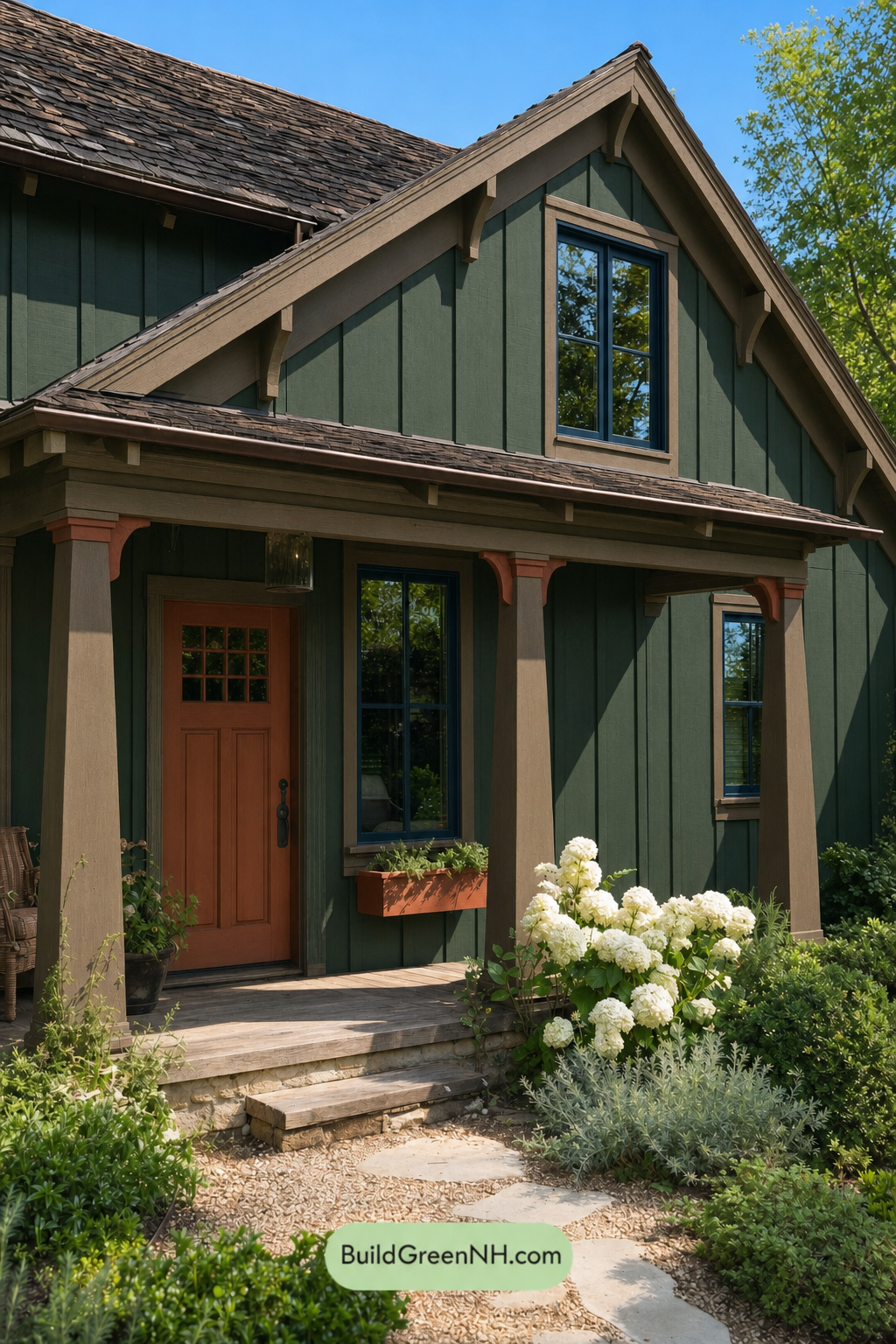

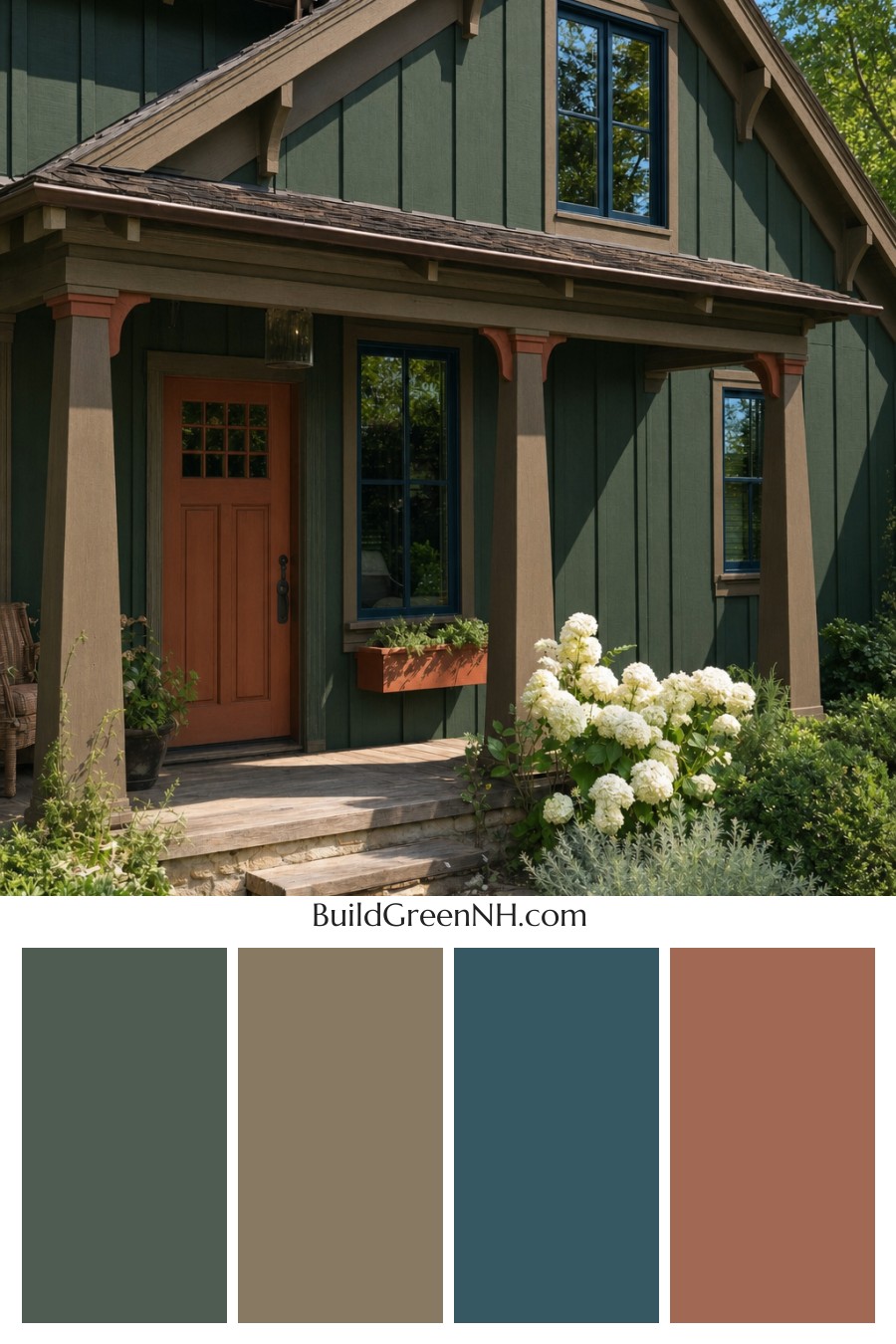
This rich green-and-brown exterior feels grounded, inviting, and beautifully connected to the surrounding landscape.
A Deep Green Siding That Feels Naturally at Home
The main siding is wrapped in a deep green shade that gives the house a calm, woodland character. It is bold enough to make the architecture feel intentional, but muted enough to settle gracefully into the garden around it. On the vertical siding, this green family shade adds depth and texture, especially as sunlight and shadow move across the facade.
Because the green leans earthy rather than bright, it feels timeless. It supports the home’s rustic charm without overwhelming the eye, making the exterior feel established, peaceful, and tucked into nature.
Warm Brown Trim Adds Structure and Softness
The trim, gable details, porch beams, and columns use warm brown shades that create a handsome frame around the green siding. These brown family tones are practical and visually comforting, adding definition to the rooflines, window surrounds, and porch structure.
The columns are especially important to the palette. Their medium brown shade gives the porch a sturdy, grounded presence, while still feeling softer than a stark light trim would. This choice keeps the home warm and approachable.
Dark Window Frames Bring Crisp Contrast
The window frames sit in a deep black shade, creating a crisp contrast against both the green siding and brown trim. This darker accent adds a modern edge without disrupting the home’s natural style. It also helps the windows read clearly from the street, giving the facade a polished, well-composed look.
That touch of black works like punctuation. It sharpens the overall scheme and keeps the earthy colors from blending too much into one another.
A Warm Brown Front Door Creates a Welcoming Focal Point
The front door introduces a warmer brown shade with a slightly richer undertone, making it a natural focal point beneath the porch. It feels inviting and handcrafted, perfectly suited to the home’s rustic character. Paired with the deeper green siding, the door brings warmth right where guests arrive.
Small accent areas in similar warm brown tones help repeat that welcoming note across the porch, making the color story feel cohesive instead of isolated.
The Roof Completes the Earthy Palette
The roof carries a dark brown shade with weathered variation, which ties beautifully into the trim and porch elements. Its textured appearance adds dimension and reinforces the natural, outdoorsy mood of the house. Rather than competing with the siding, the roof quietly supports the overall palette.
Overall Mood
This exterior color scheme feels earthy, relaxed, and confidently rustic. The deep green siding gives the home a strong connection to the landscape, while the warm brown trim and columns add comfort and architectural definition. The black window frames provide just enough contrast to make everything feel crisp.
Together, these shades create a home that feels both cozy and refined. It is a palette that suits garden paths, leafy trees, shaded porches, and quiet mornings outdoors.
Next, see how this color scheme looks under different lighting simulations throughout the day.
Overcast
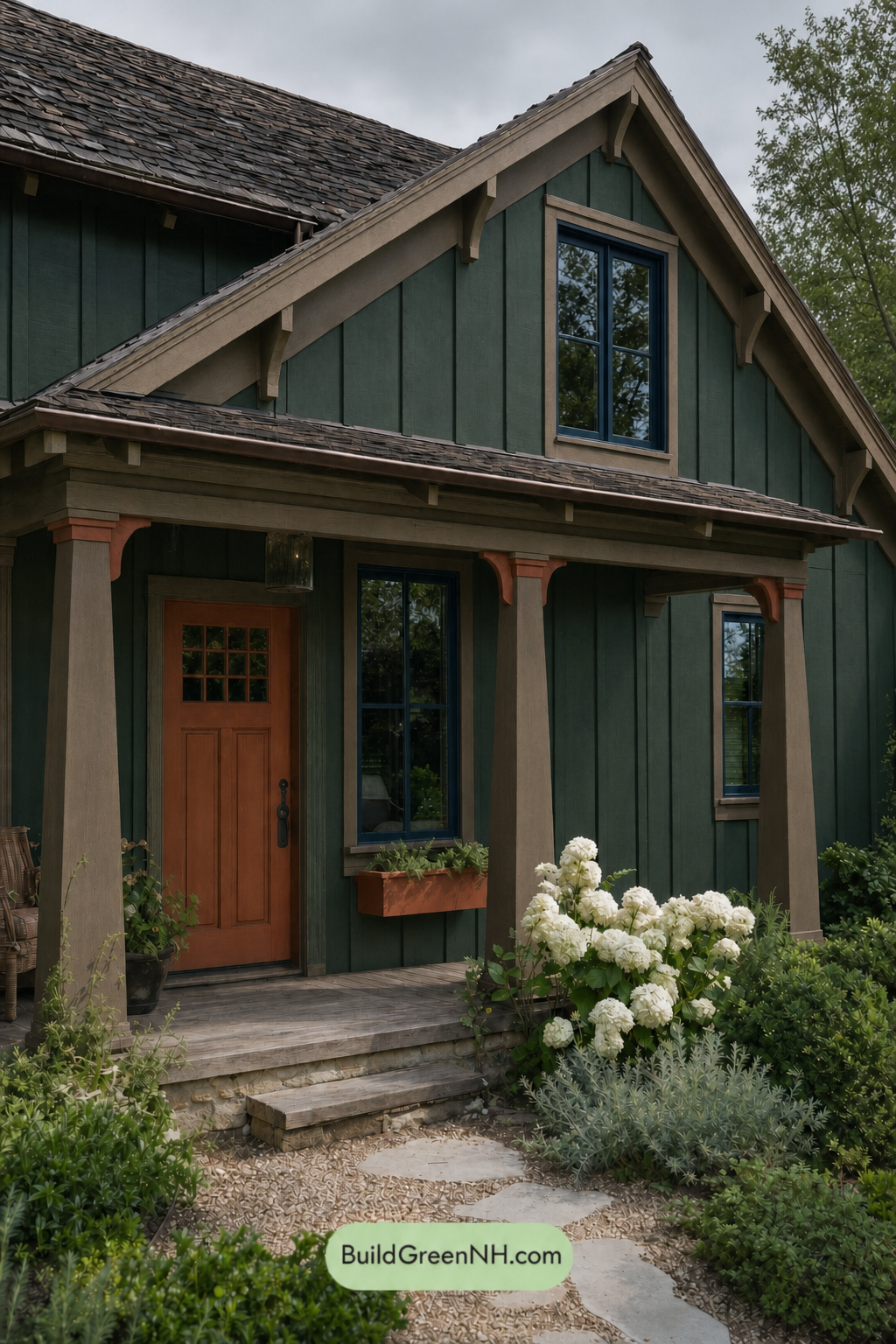
Under overcast light, the deep green siding looks more saturated and grounded than it would in neutral daylight, shifting cooler and slightly moodier. The softened sky reduces glare, so the vertical texture reads more evenly while the shaded areas deepen without becoming harsh.
The brown trim, columns, and door lose a bit of sunny warmth, feeling softer and more muted, while the black window frames appear crisp but less stark. Overall contrast drops slightly, giving the exterior a calm, woodsy, and cohesive mood with gentle shadows instead of sharp highlights.
Golden Hour
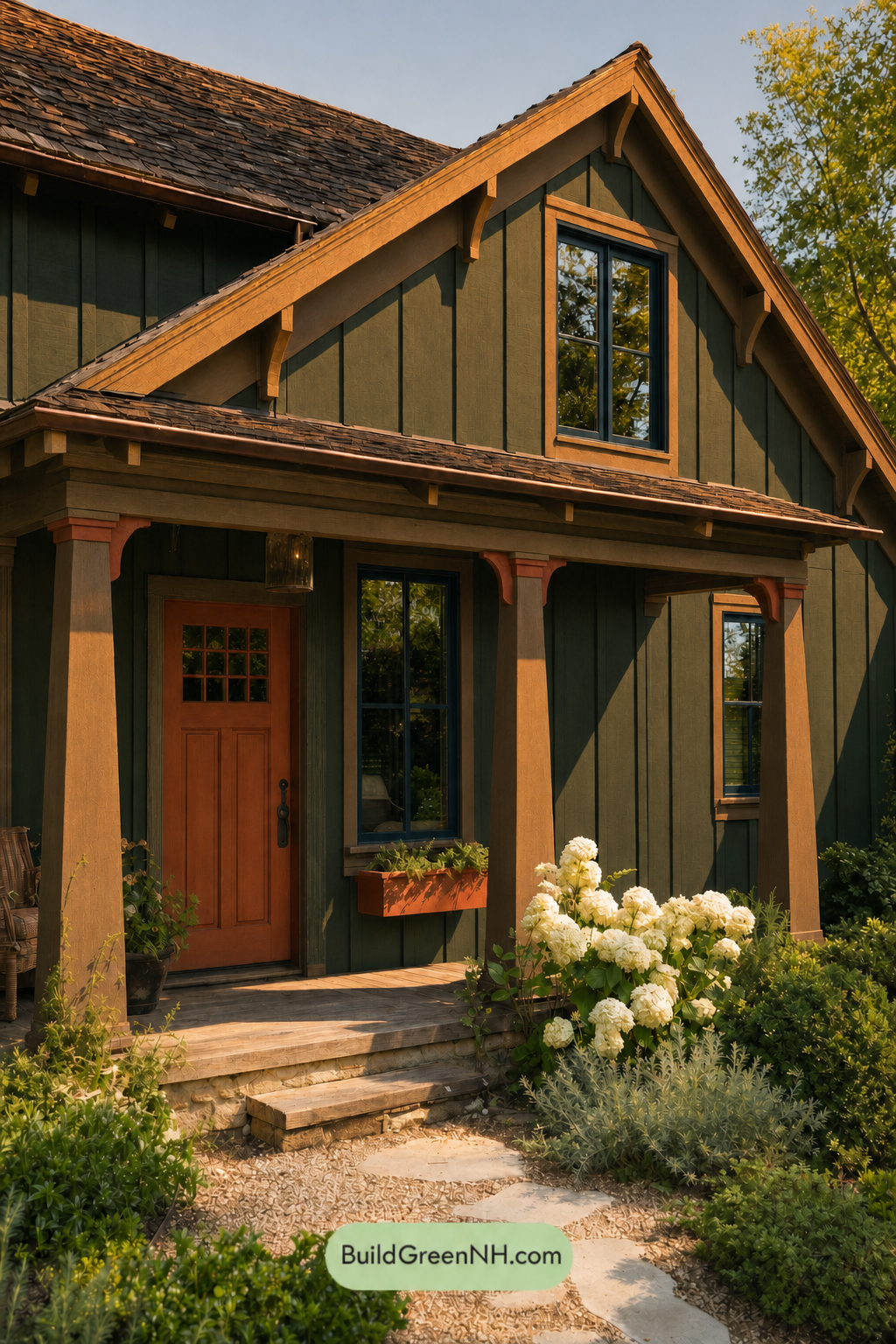
Under Golden Hour, the main green shade appears richer and more saturated than it would in neutral daylight, taking on a warmer, earthier feel. The brown trim, columns, and front door soften beautifully, with their warm shades feeling more inviting and dimensional.
Longer shadows deepen the green siding in recessed areas while bright edges catch a warm glow, creating stronger contrast across the gables, porch, and window details. The black window frames feel sharper against the warmed surfaces, giving the whole exterior a cozy, grounded mood.
Shade
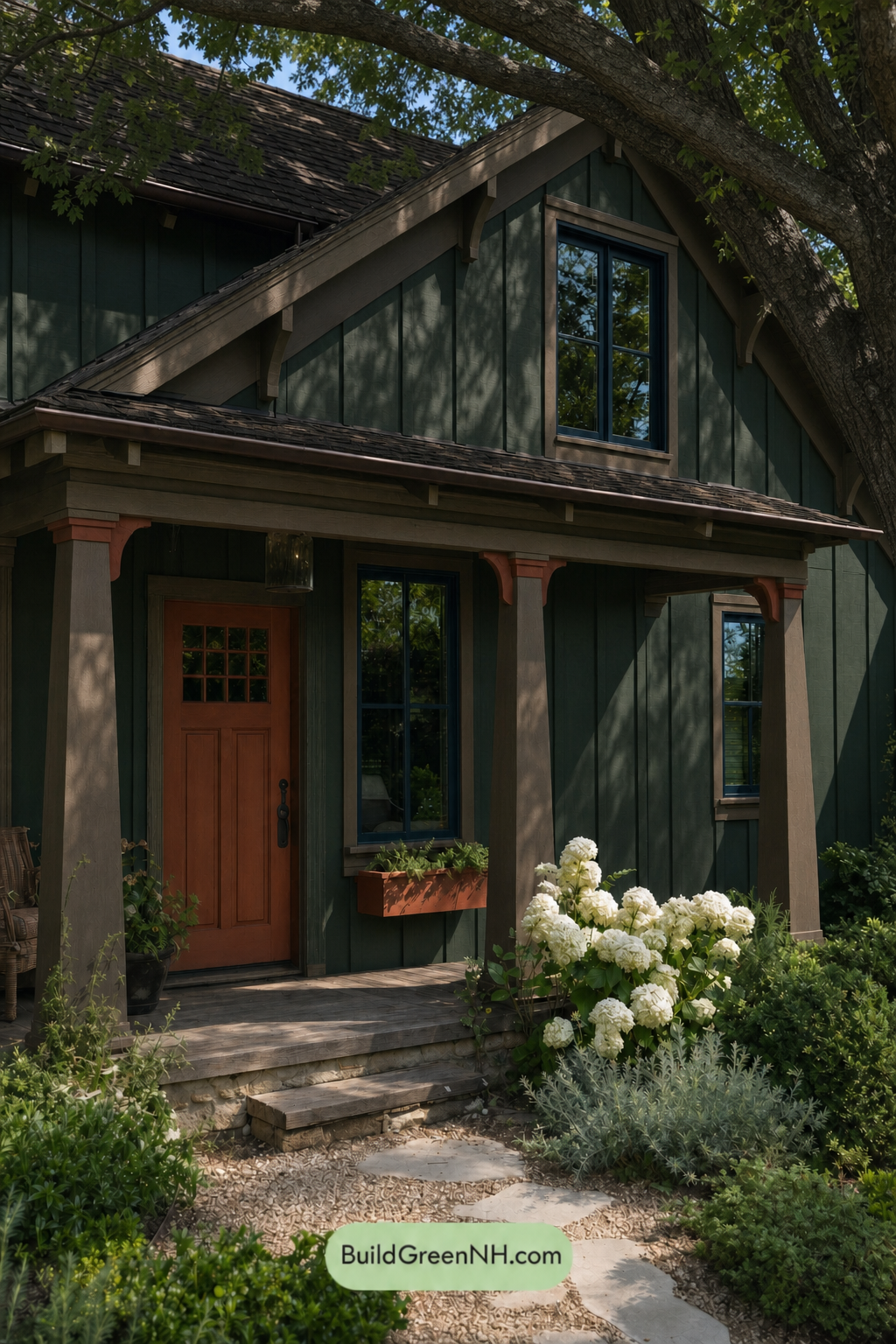
In shade, this dark green shade on the main siding deepens and feels more saturated, shifting from a clearer green in neutral daylight to a moodier, more grounded green. The cooler light softens any warmth, while the tree shadows add movement and layered contrast across the surface.
The brown trim, columns, and front door lose some of their sunlit warmth and read more muted and earthy, giving the exterior a calm, tucked-away feeling. The black window frames become quieter in the shadows, creating a refined contrast that feels less crisp than neutral daylight but more intimate and cozy.
Nighttime
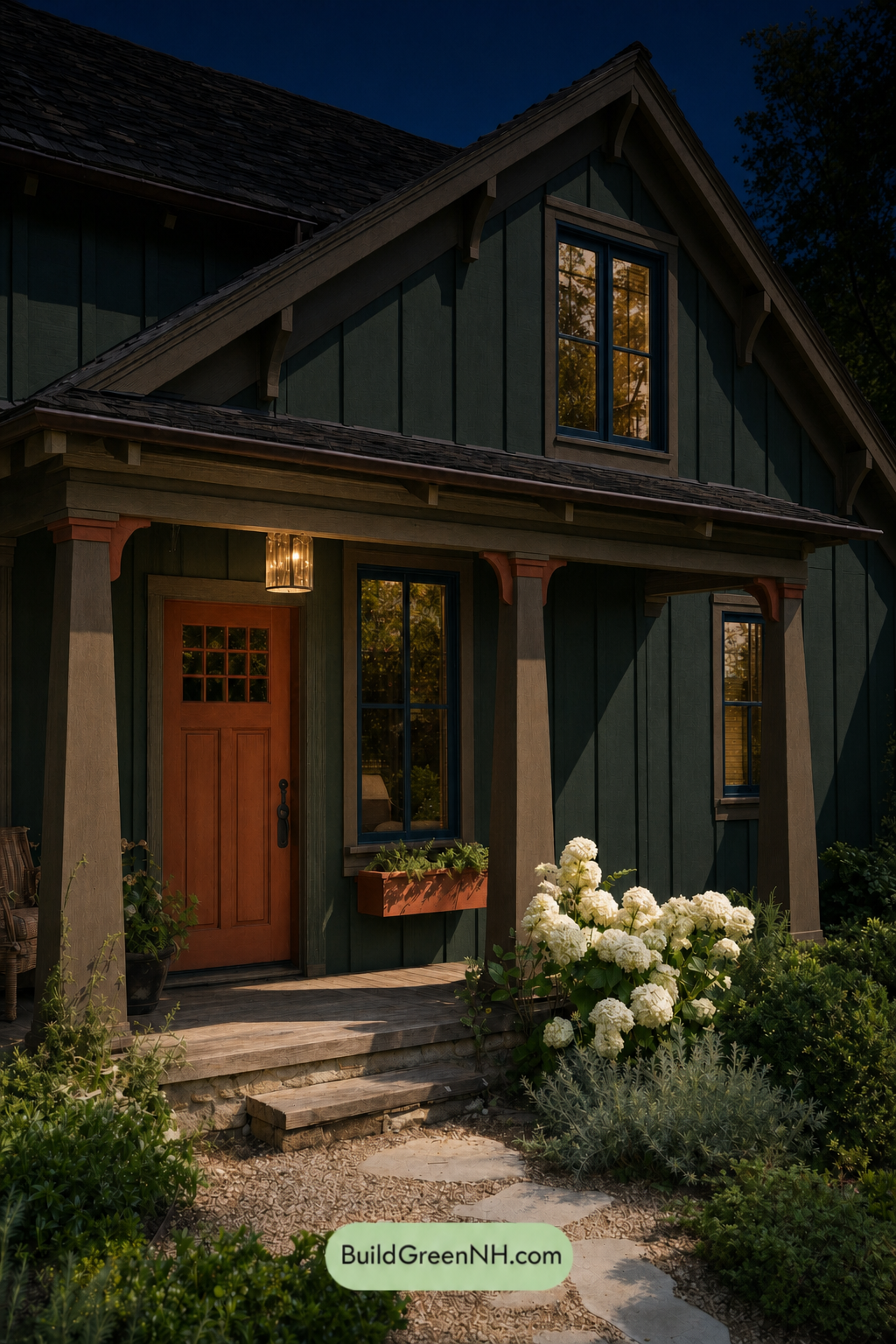
Under nighttime lighting, the green siding deepens and feels more saturated, shifting from a balanced daylight shade into a richer, moodier green. Shadows from the roofline and porch create stronger contrast across the vertical panels, making the darker areas feel cooler and more dramatic.
The brown trim, columns, and front door pick up warmth from the porch and window light, so these shades feel softer and more inviting than they would in neutral daylight. The black window frames become crisper against the glowing interiors, adding a clean, defined outline that gives the whole exterior a cozy, dramatic nighttime mood.
Pin these for later:
Want More?
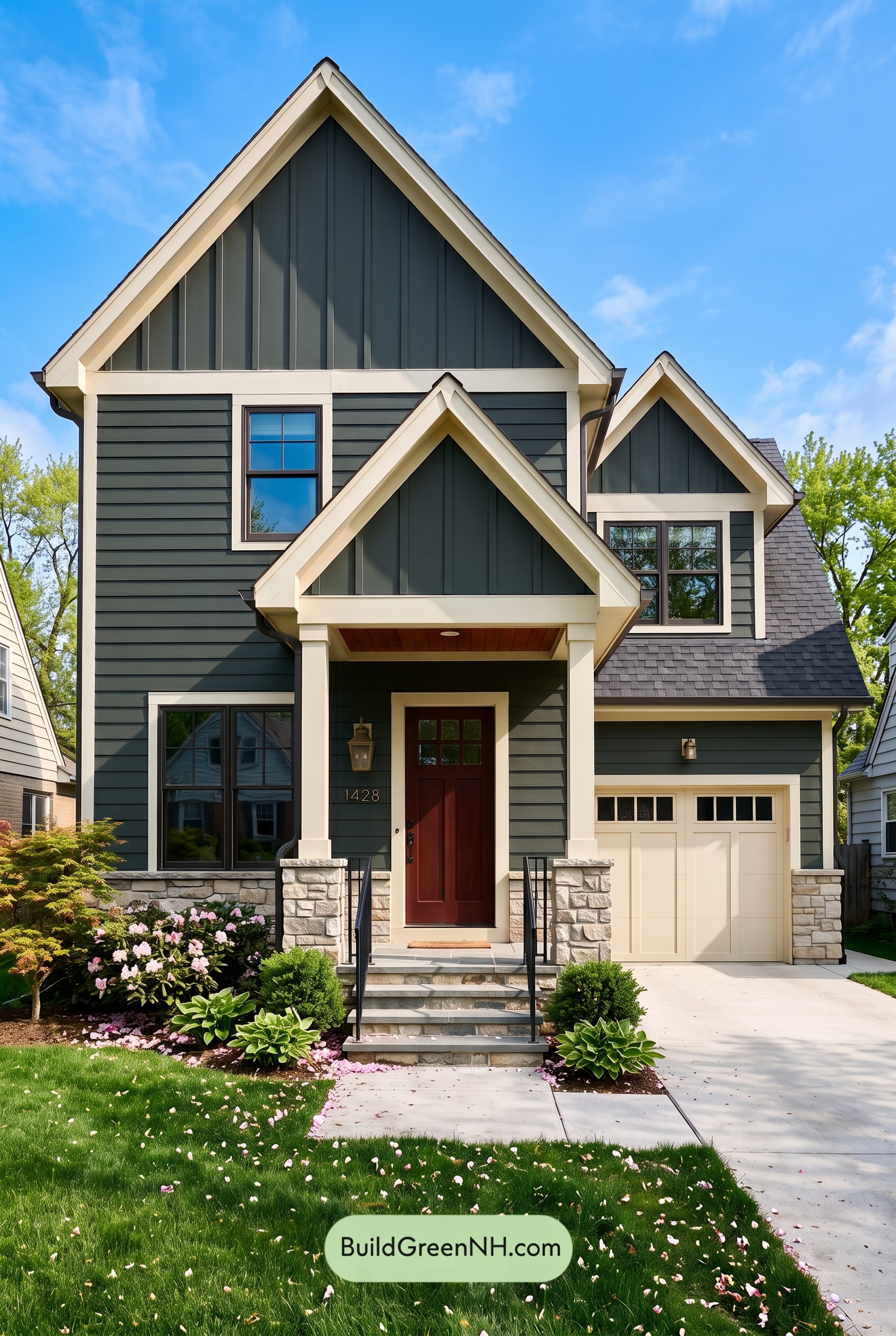 Exterior Color Scheme with Stone Accents: Pine Brass Threshold
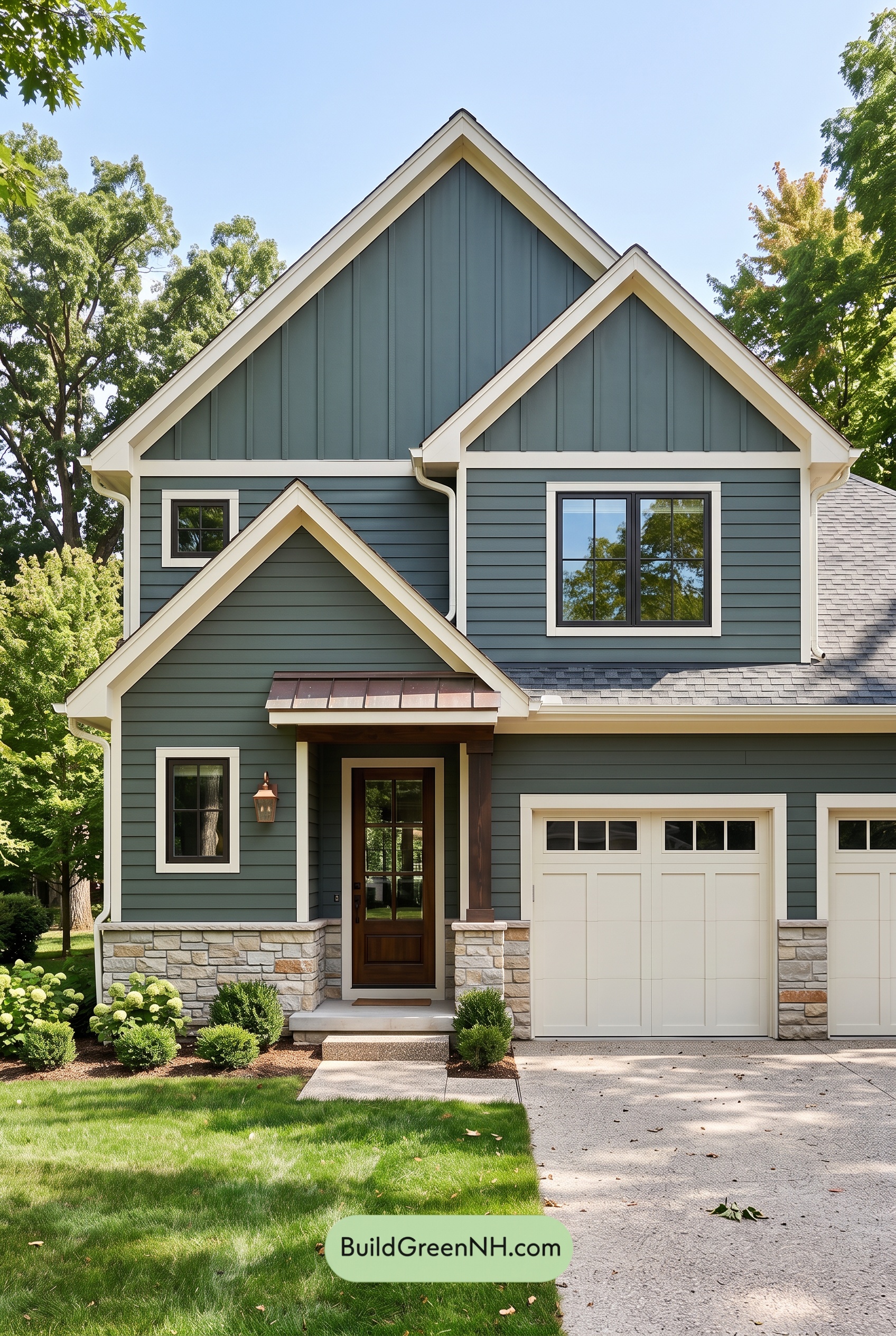 Exterior Color Scheme with Stone Accents: Evergreen Copper Welcome
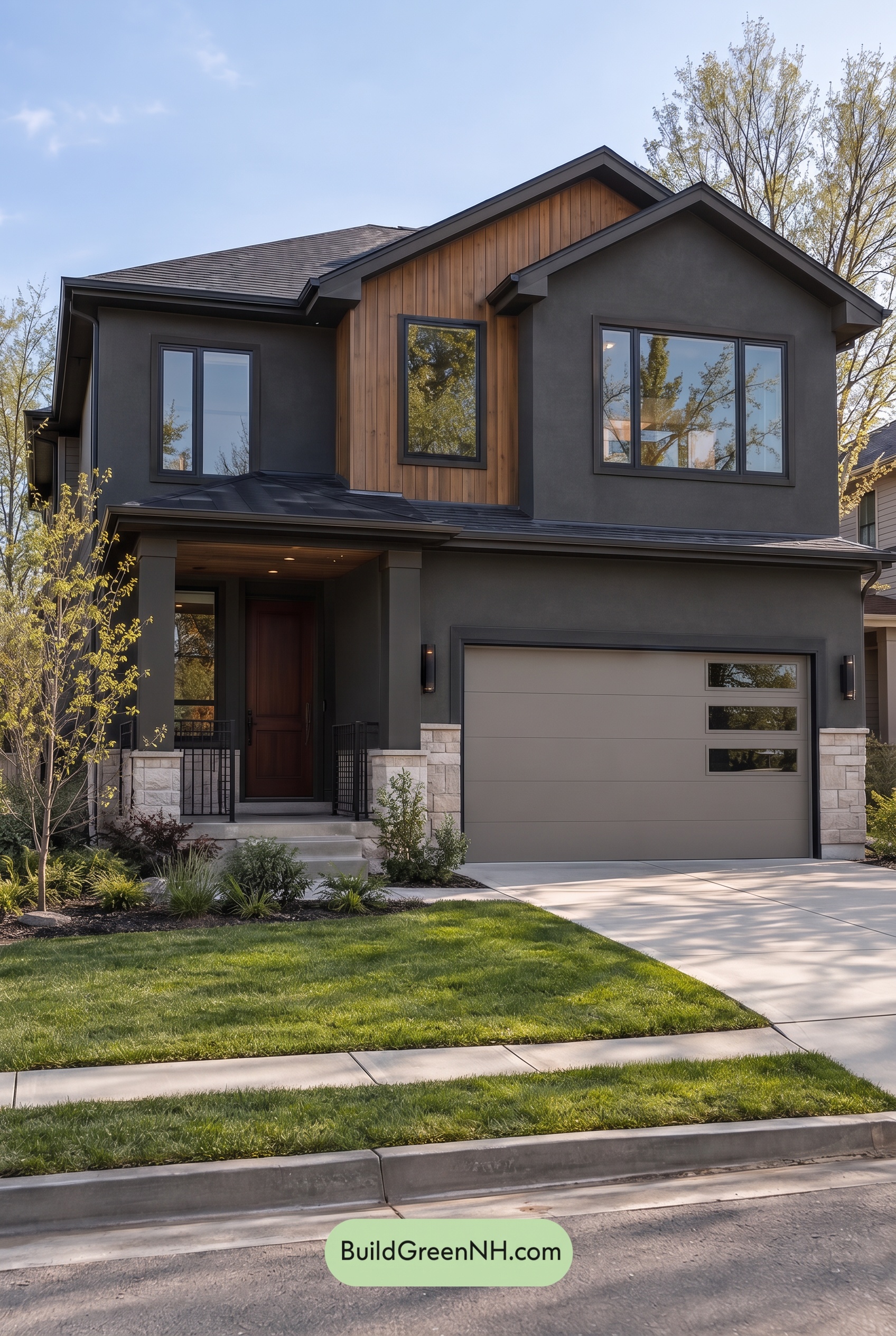 Dark Stucco House Exterior Color Scheme: Cedar Ember Calm
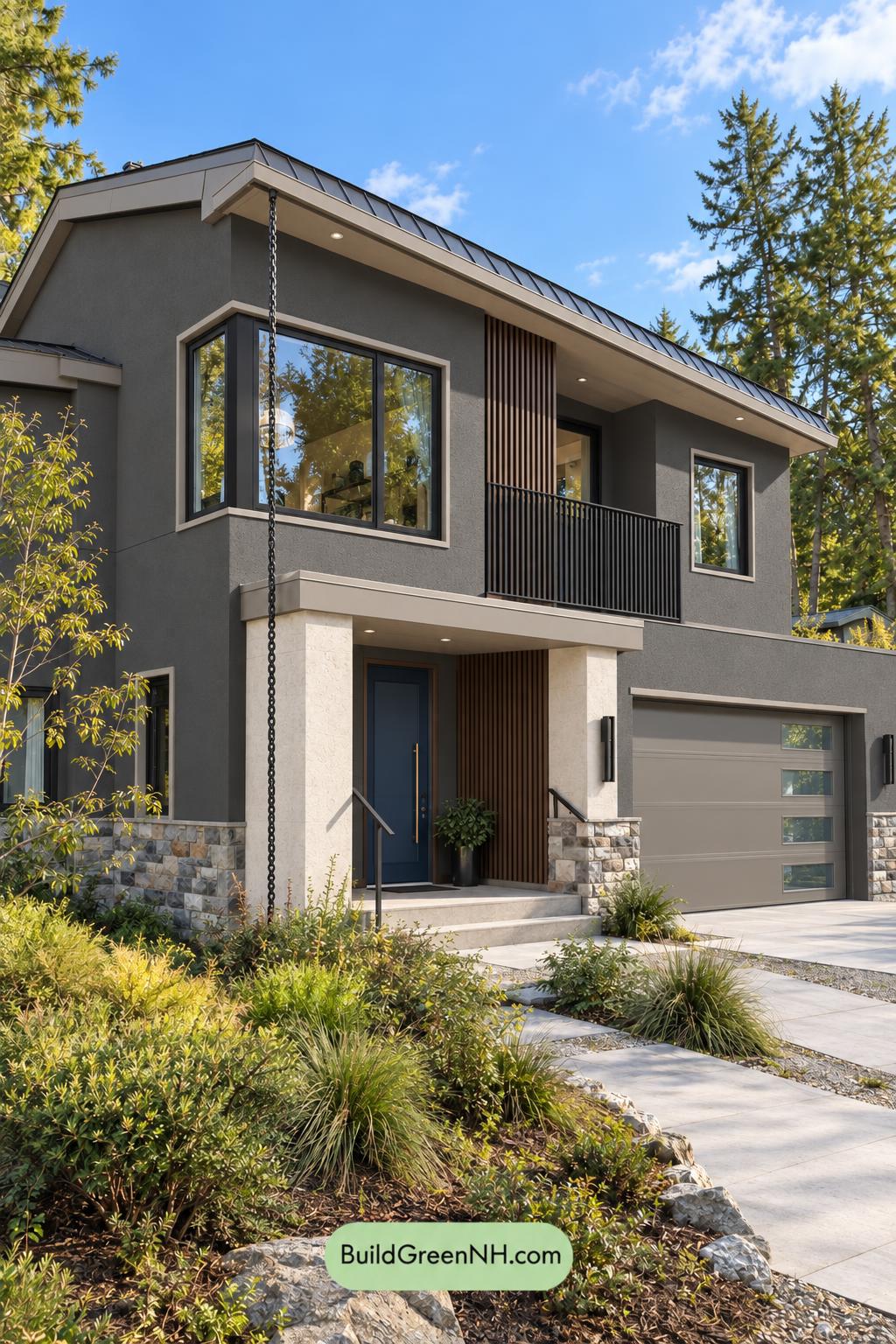 Dark Stucco House Exterior Color Scheme: Silver Pine Shelter
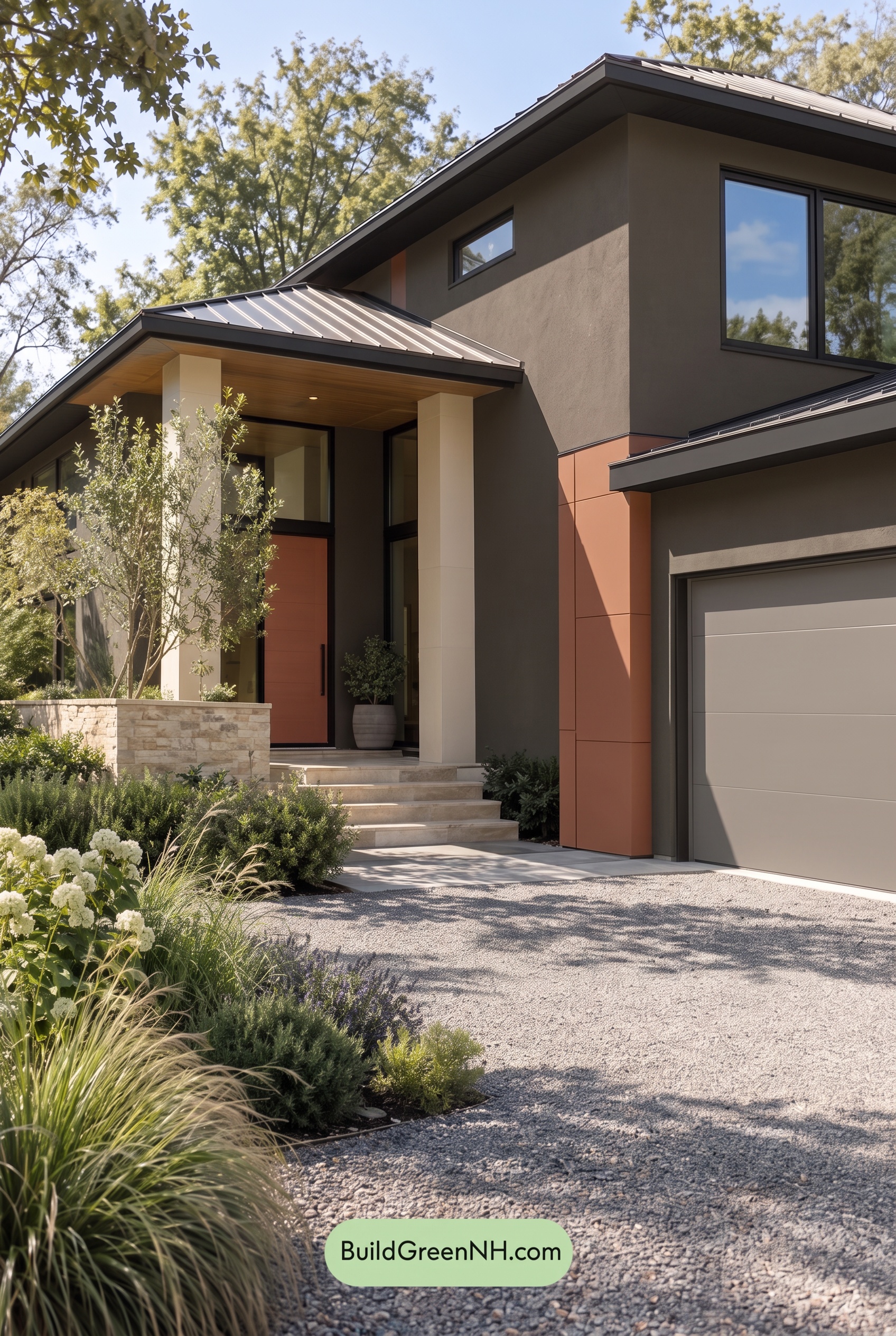 Dark Stucco House Exterior Color Scheme: Copper Orchard House
Table of Contents