Last updated on
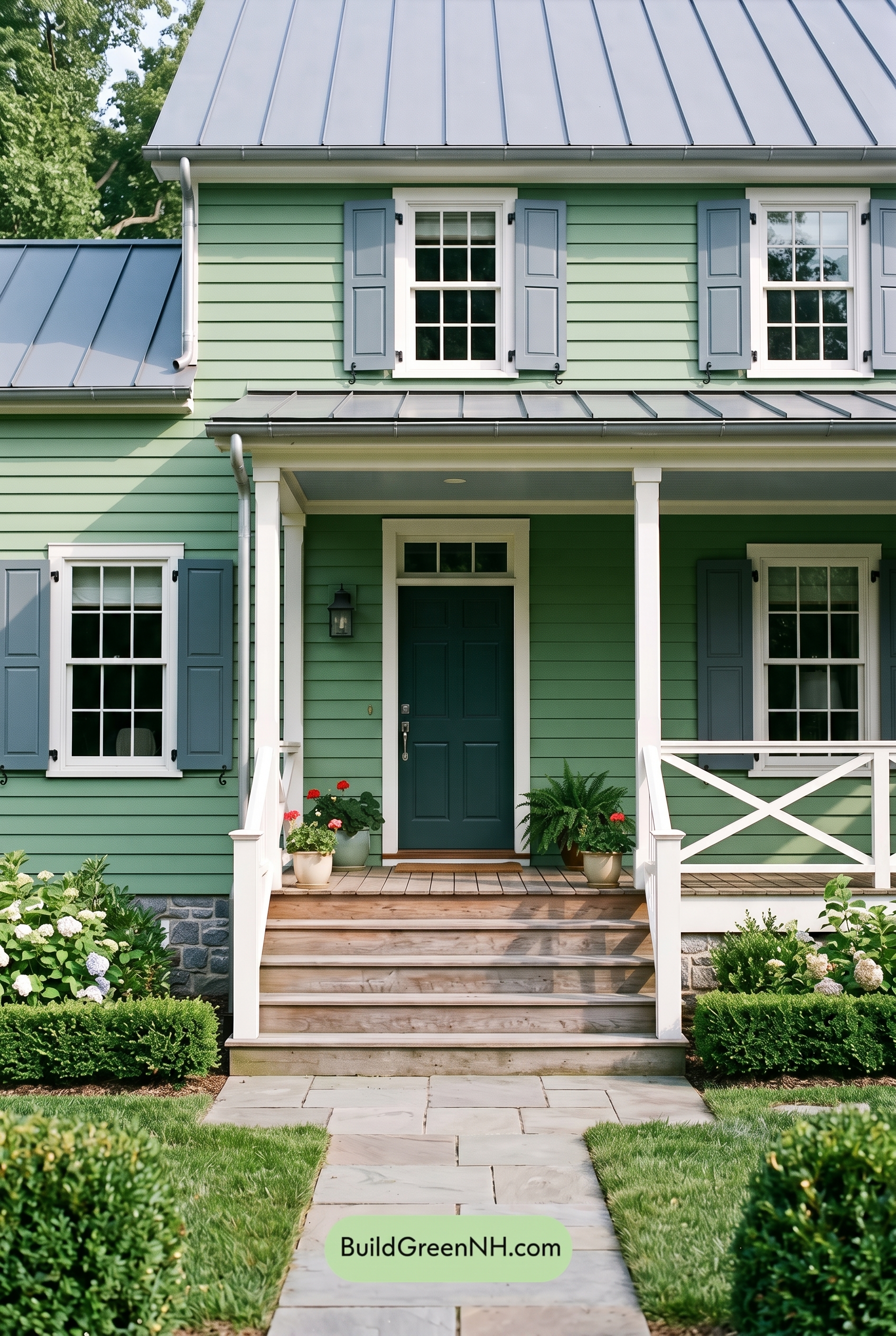

This green-forward exterior feels fresh, polished, and welcoming because its layered natural shades are balanced by cool blue accents and a sleek gray roof.
A Fresh Take on Green Siding
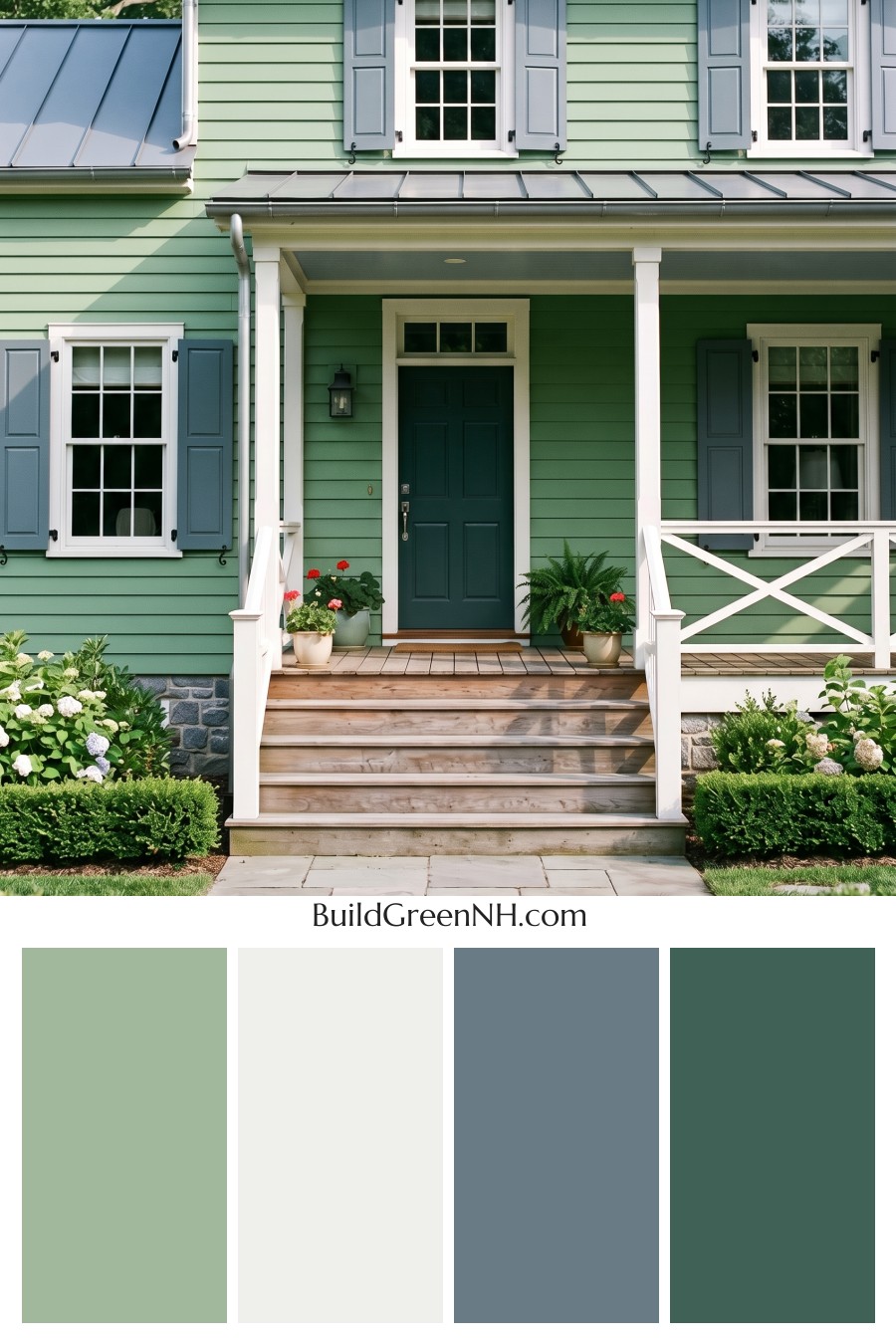
The main siding wears a soft, garden-inspired shade of green that immediately gives the home a lively yet relaxed personality. It feels cheerful in the sunlight without becoming too bright, and the horizontal siding lets the shade read clean and classic across the façade.
Because the green sits in a natural, leafy family, it connects beautifully with the surrounding shrubs, lawn, and trees. The house feels rooted in the landscape rather than separate from it, which is a big part of the scheme’s charm.
Soft Trim That Keeps Everything Crisp
The trim, window frames, columns, and railings use a very pale green-tinted shade that reads light and crisp against the siding. This lighter tone outlines the architecture, giving the windows, porch posts, and railing details a bright, tailored finish.
That contrast is key. The lighter trim keeps the green siding from feeling heavy, while the shared green undertone makes the whole exterior feel cohesive instead of stark.
Blue Shutters for Cool Contrast
The shutters introduce a muted blue-gray shade that adds just the right amount of contrast. It is calm, coastal, and slightly weathered in feeling, which pairs beautifully with the natural green siding.
This blue accent gives the windows extra presence without competing with the rest of the palette. It also brings a cool note to the exterior, balancing the warmth of the wood steps and the lush greenery around the entry.
A Deeper Green Front Door
The front door is painted in a deeper green shade, creating a grounded focal point at the center of the porch. It feels rich and welcoming, while still staying within the home’s overall green family.
Using a darker green here is a smart move. It gives the entry depth and definition, making the door feel intentional without relying on a high-contrast or overly bold color.
The Roof Ties It All Together
The roof brings in a cool silver-gray tone with a clean, modern edge. Its subtle sheen plays nicely with the blue-gray shutters and gives the home a polished finish.
Against the softer greens, the gray roof feels fresh and architectural. It keeps the palette from becoming too rustic and adds a refined layer to the overall look.
Overall Mood
This color scheme feels friendly, natural, and beautifully composed. The greens create a peaceful, garden-like backdrop, the pale trim adds brightness, the blue shutters offer gentle contrast, and the gray roof provides structure.
The result is a home that feels both classic and current. It has curb appeal that is easygoing but not plain, colorful but not loud, and perfectly suited to a leafy, welcoming setting.
Next, see how this color scheme looks under different lighting simulations throughout the day.
Overcast
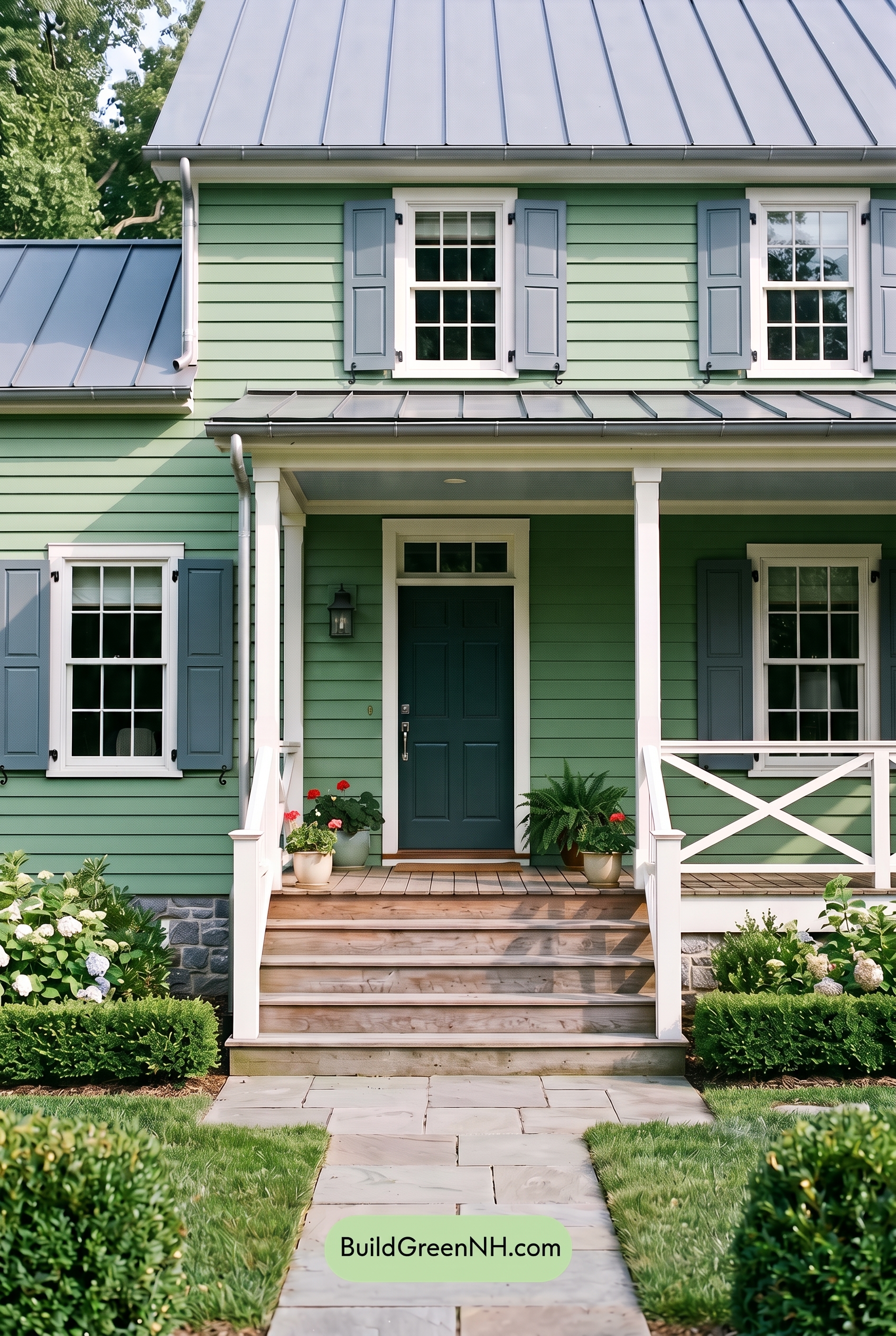
Under overcast light, the green family across the siding, trim, columns, and railings looks softer and less saturated than it would in neutral daylight. Any warm undertones quiet down, giving the exterior a cooler, more muted feel, while the deeper green on the front door appears richer but less crisp.
The blue shutters also settle into a calmer, slightly deeper shade, with fewer bright highlights to lift them. Shadows become broader and gentler, reducing contrast between the green and blue families and shifting the whole mood from fresh and lively to relaxed, understated, and serene.
Golden Hour
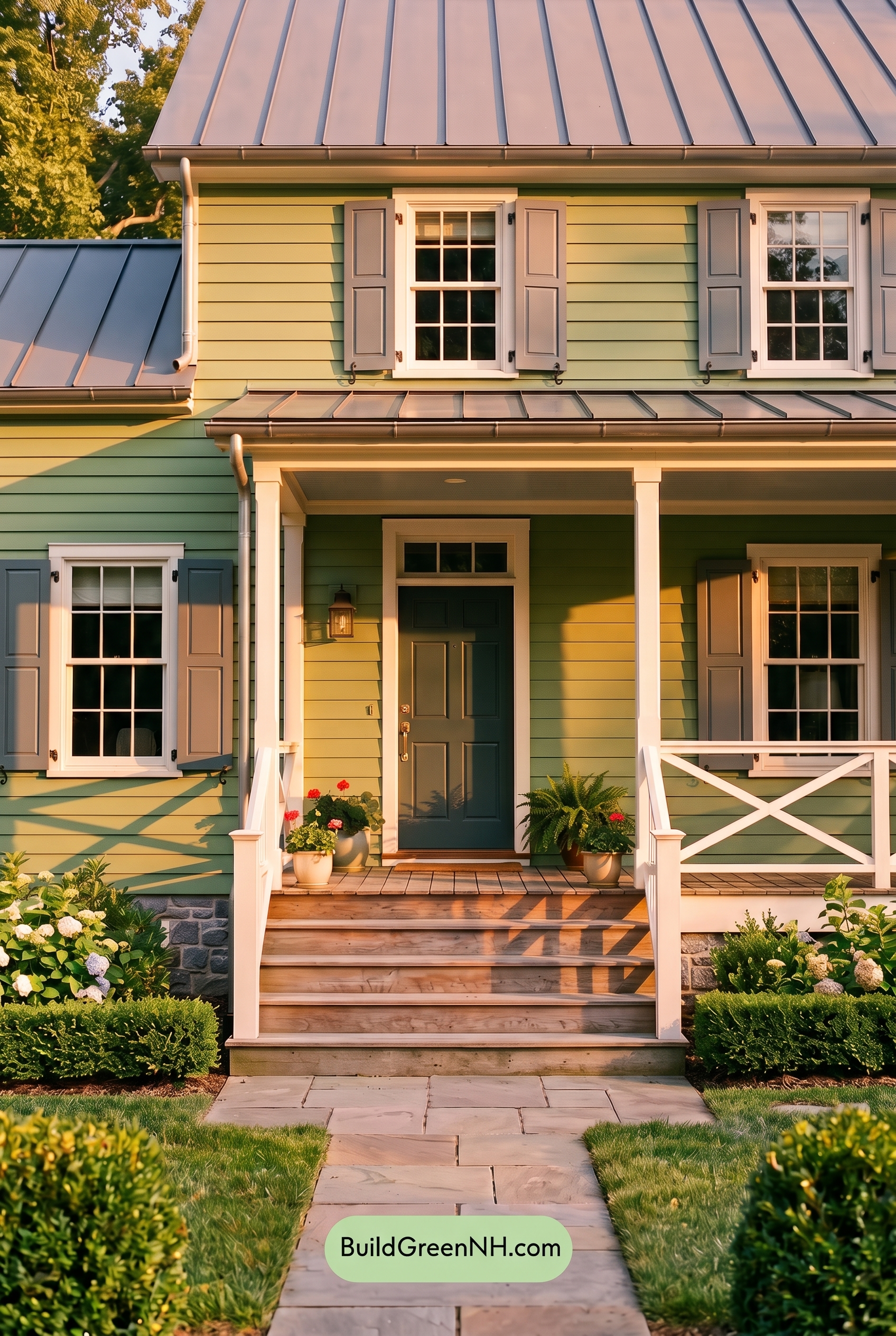
Under Golden Hour, the green family on the siding shifts from a cleaner, more balanced daylight read to a richer, sun-warmed shade with a soft golden cast. Saturation feels higher on the lit clapboards, while the pale green trim, columns, and railings glow more gently, reducing the crispness they would have in neutral daylight.
The blue family shutters take on a warmer, slightly muted cast, so they contrast less sharply with the greens but feel more layered and inviting. Long shadows deepen the darker green areas, increasing contrast across the facade and creating a cozy, dimensional mood that neutral daylight would make feel flatter and cooler.
Shade
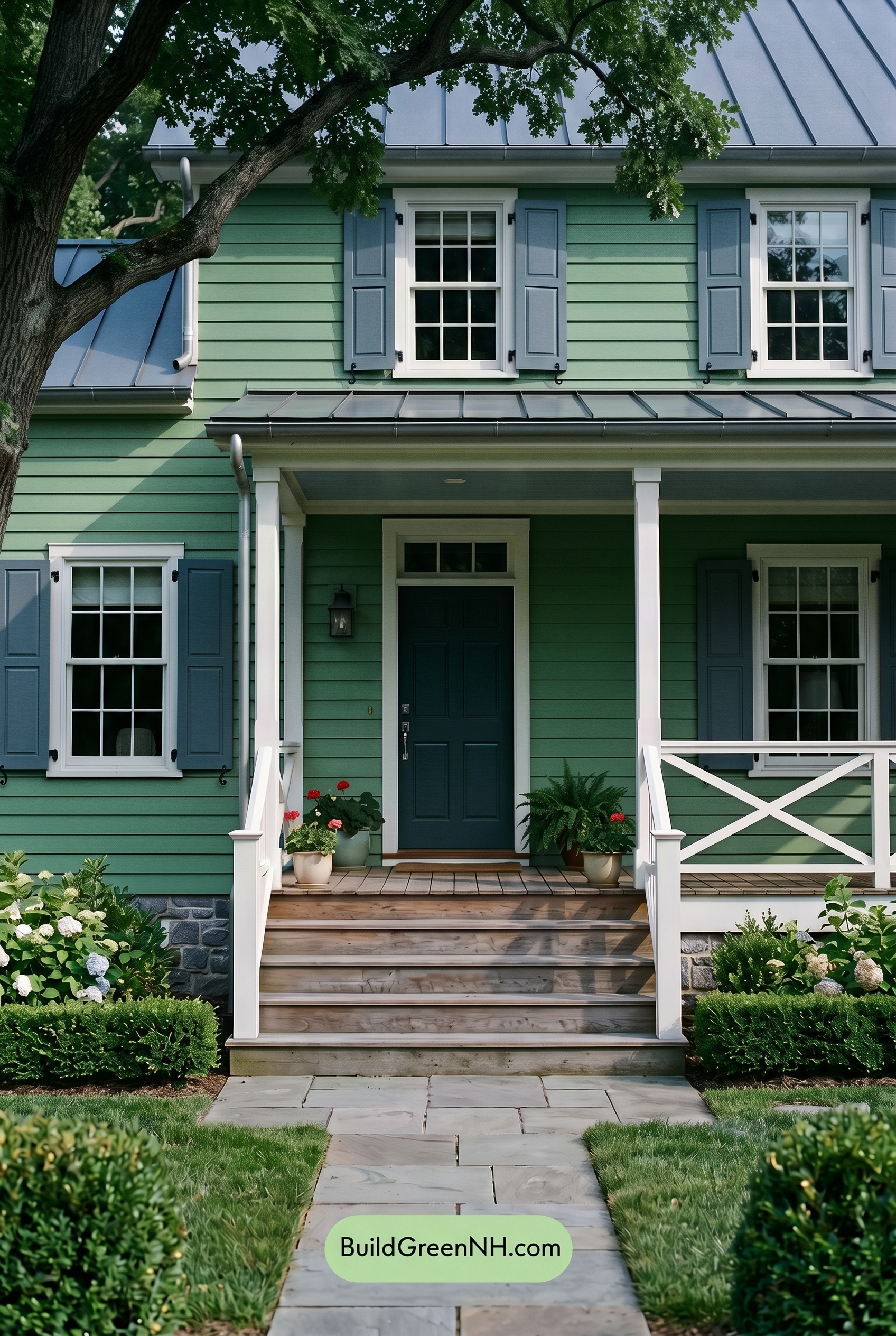
In shade, the green family on the siding appears deeper and cooler than it would in neutral daylight, with less brightness and a more muted saturation. The warmth softens, giving the façade a calmer, more grounded feel, while the darker green areas around the entry settle into richer shadow.
The blue family on the shutters also shifts cooler and more subdued, creating a gentler contrast against the surrounding green shades. Shade reduces crisp highlights but strengthens the mood, making the home feel quieter, more wooded, and slightly more dramatic than it would under even daylight.
Nighttime
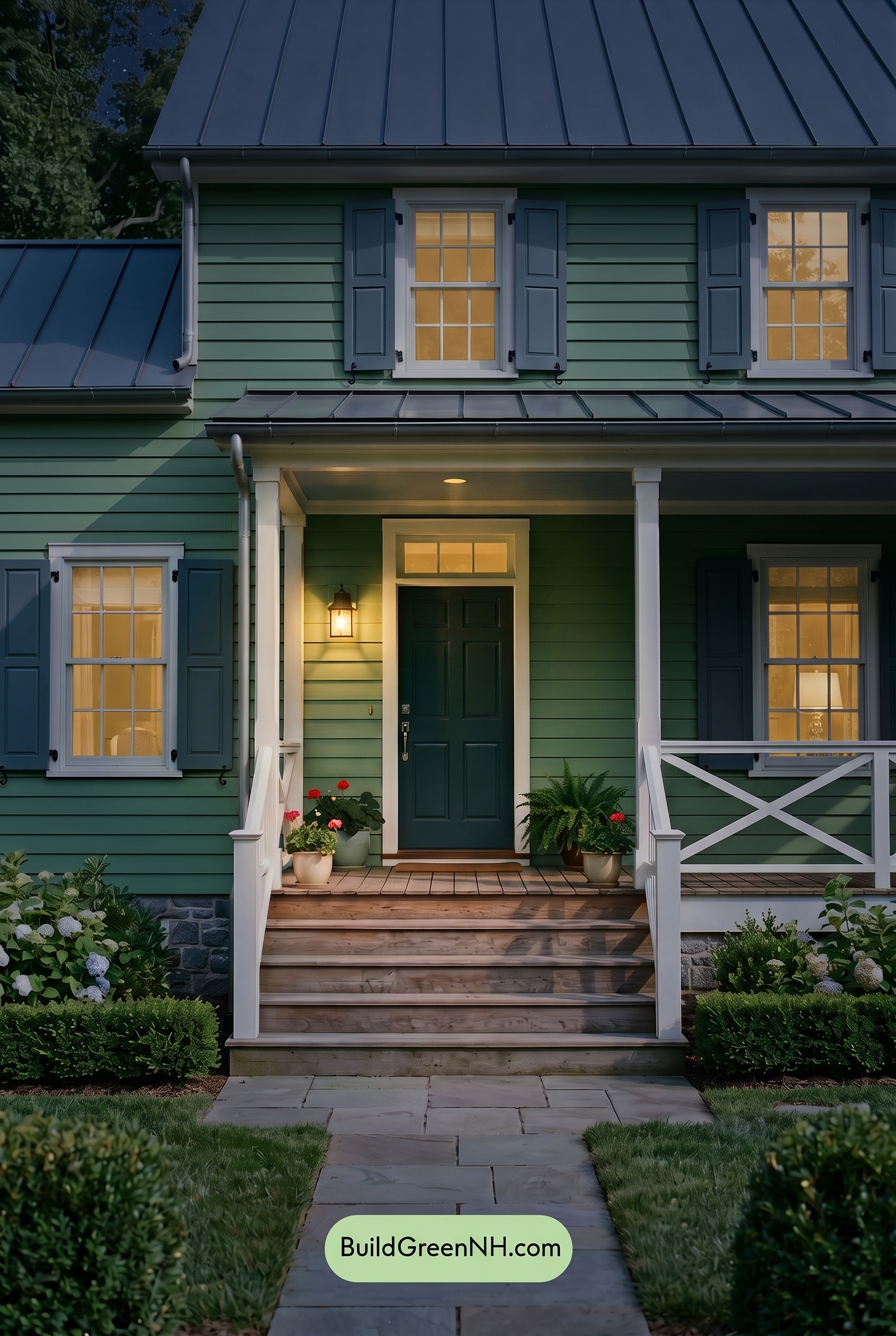
At nighttime, the green family on the main walls feels richer and more saturated than it would in neutral daylight, shifting into a deeper, cozier shade. The softer green trim, columns, and railings catch the warm porch and window light, which makes those lighter shades feel gentler and more inviting.
Shadows under the rooflines and around the shutters add stronger contrast, so the blue family reads moodier and more defined against the green siding. Compared with daylight’s flatter balance, the warm glow and deeper dark areas give the whole exterior a calm, welcoming, slightly dramatic mood.
Pin these for later:
Want More?
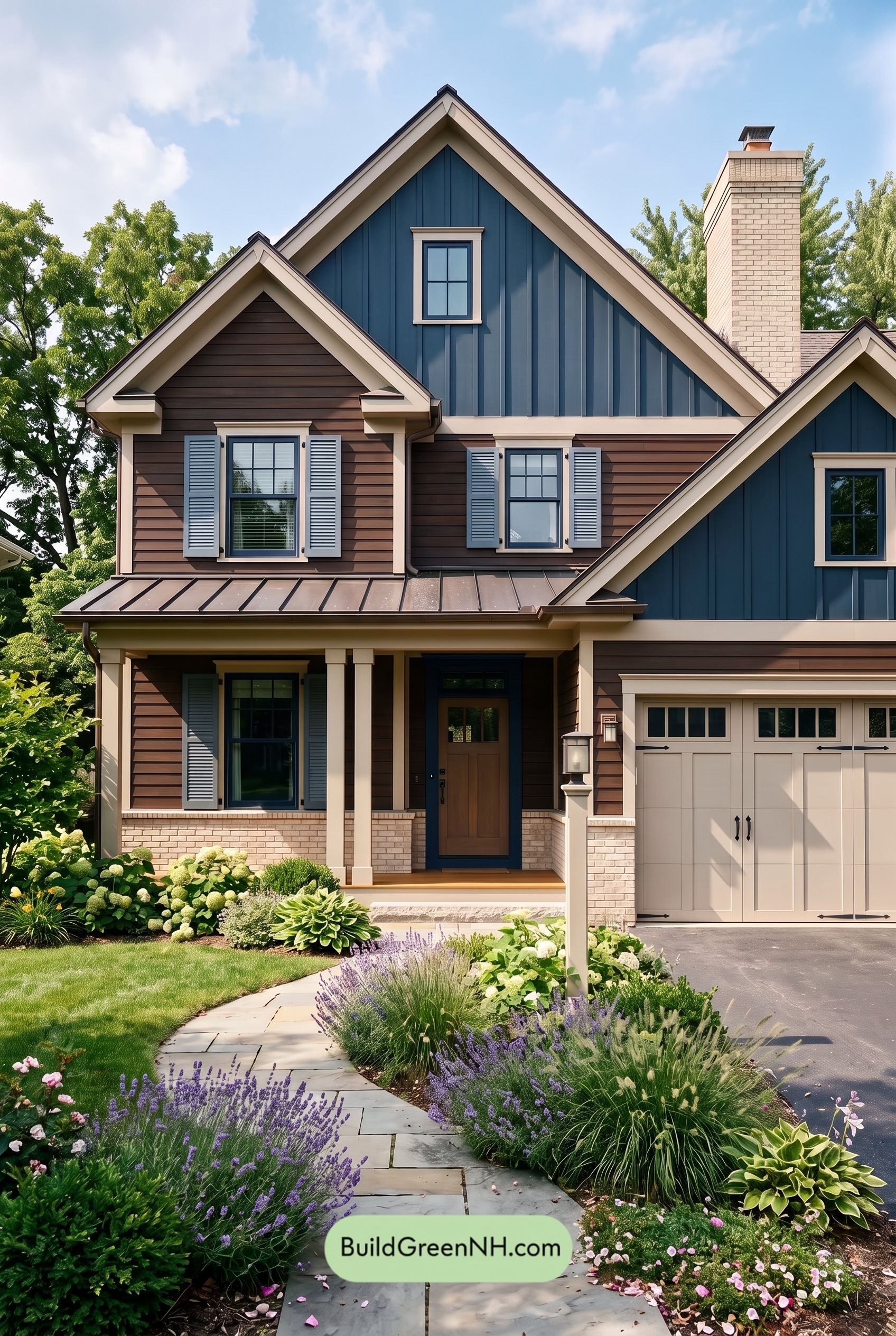 Dark Brown House Exterior Color Scheme: Inkwood Lantern
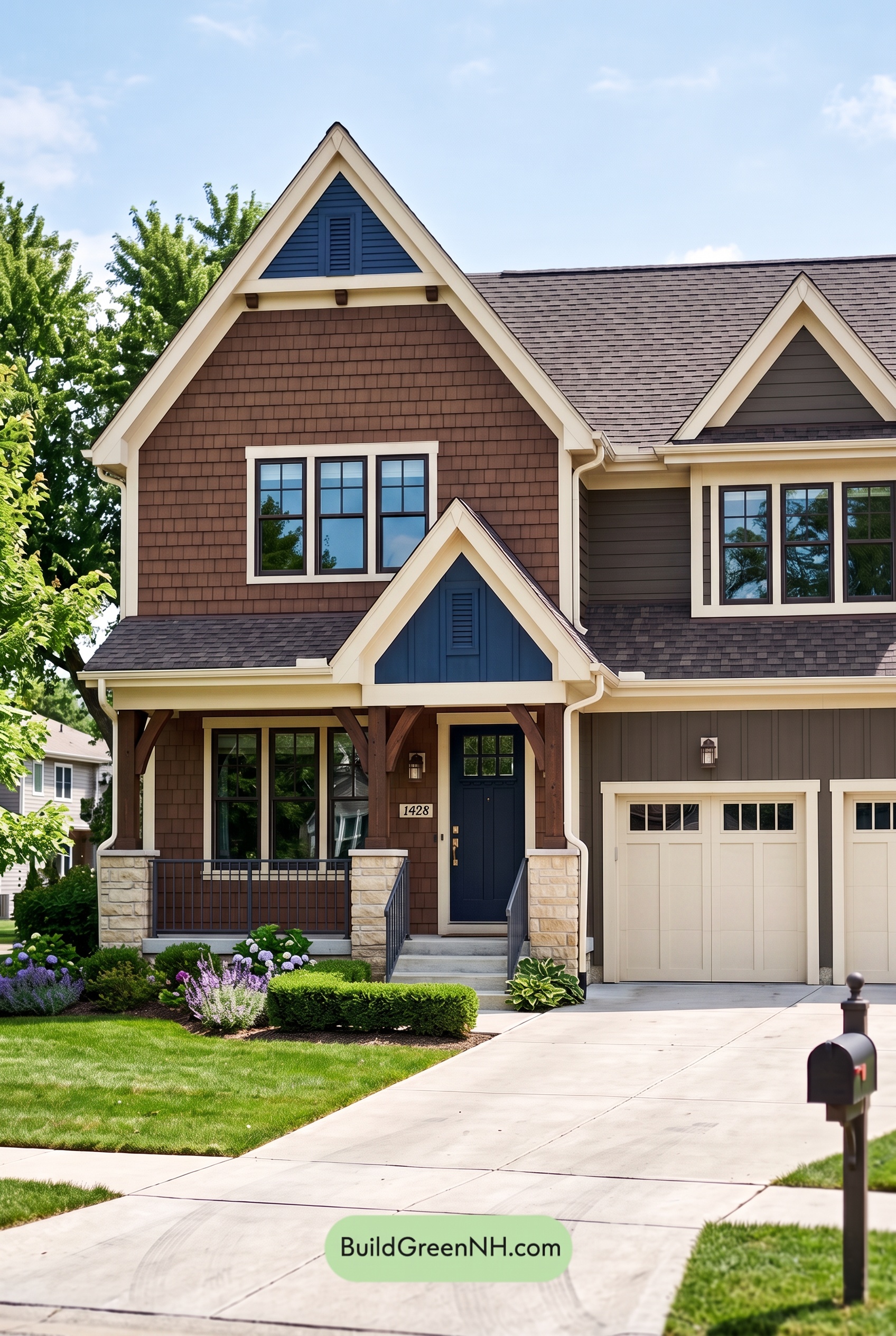 Dark Brown House Exterior Color Scheme: Bluebell Timberline
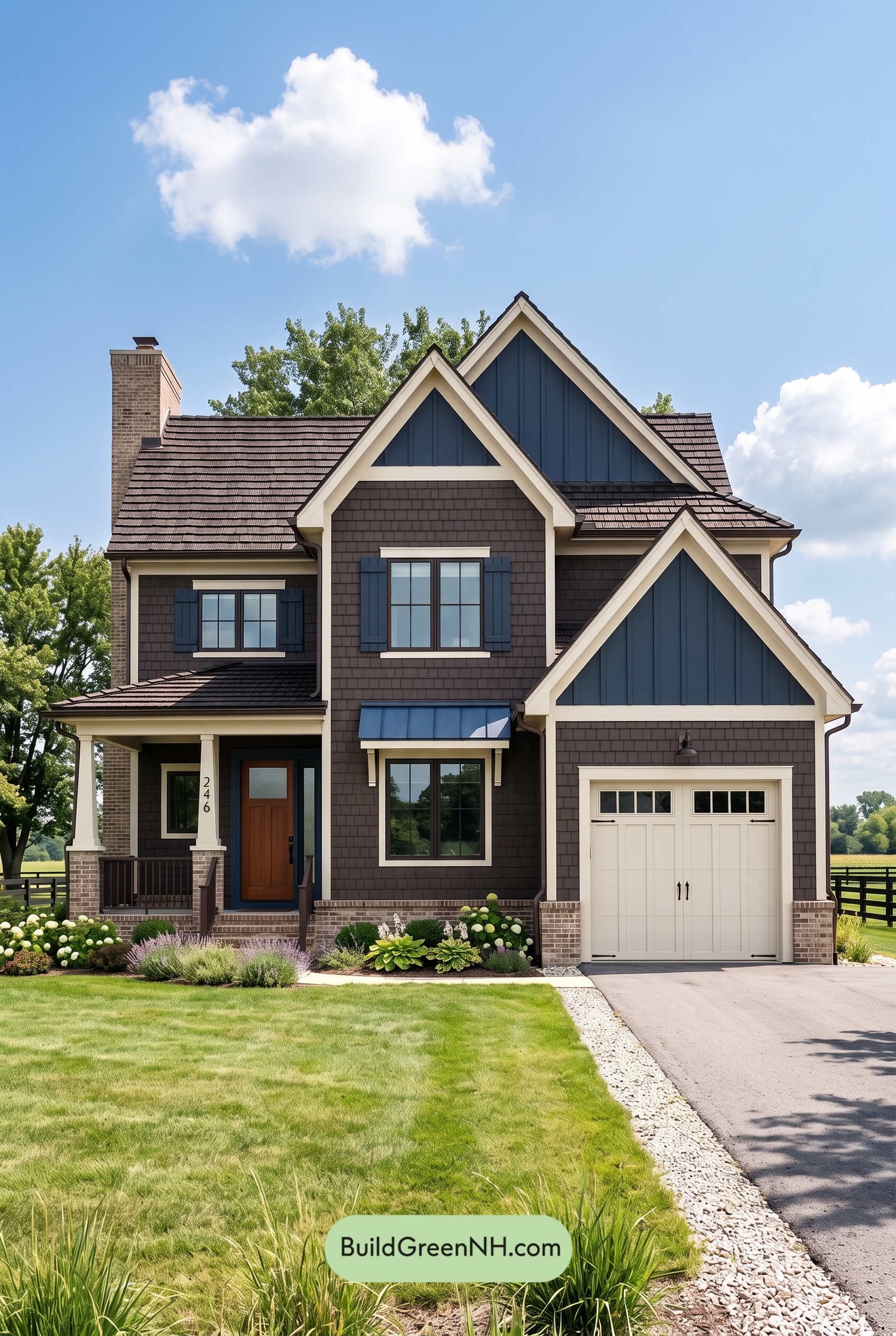 Dark Brown House Exterior Color Scheme: Sapphire Homestead
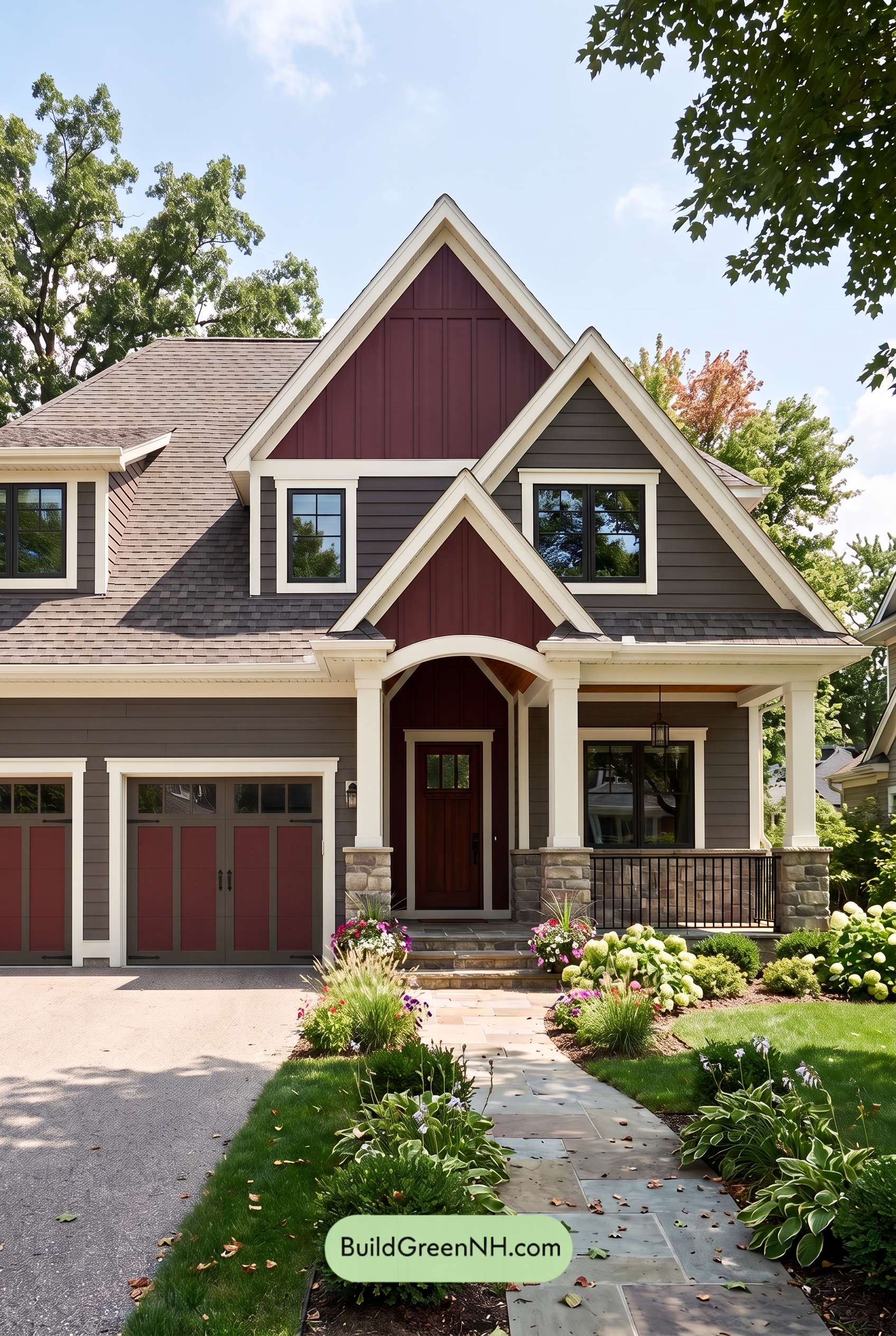 Dark Brown House Exterior Color Scheme: Hearthglow Arrival
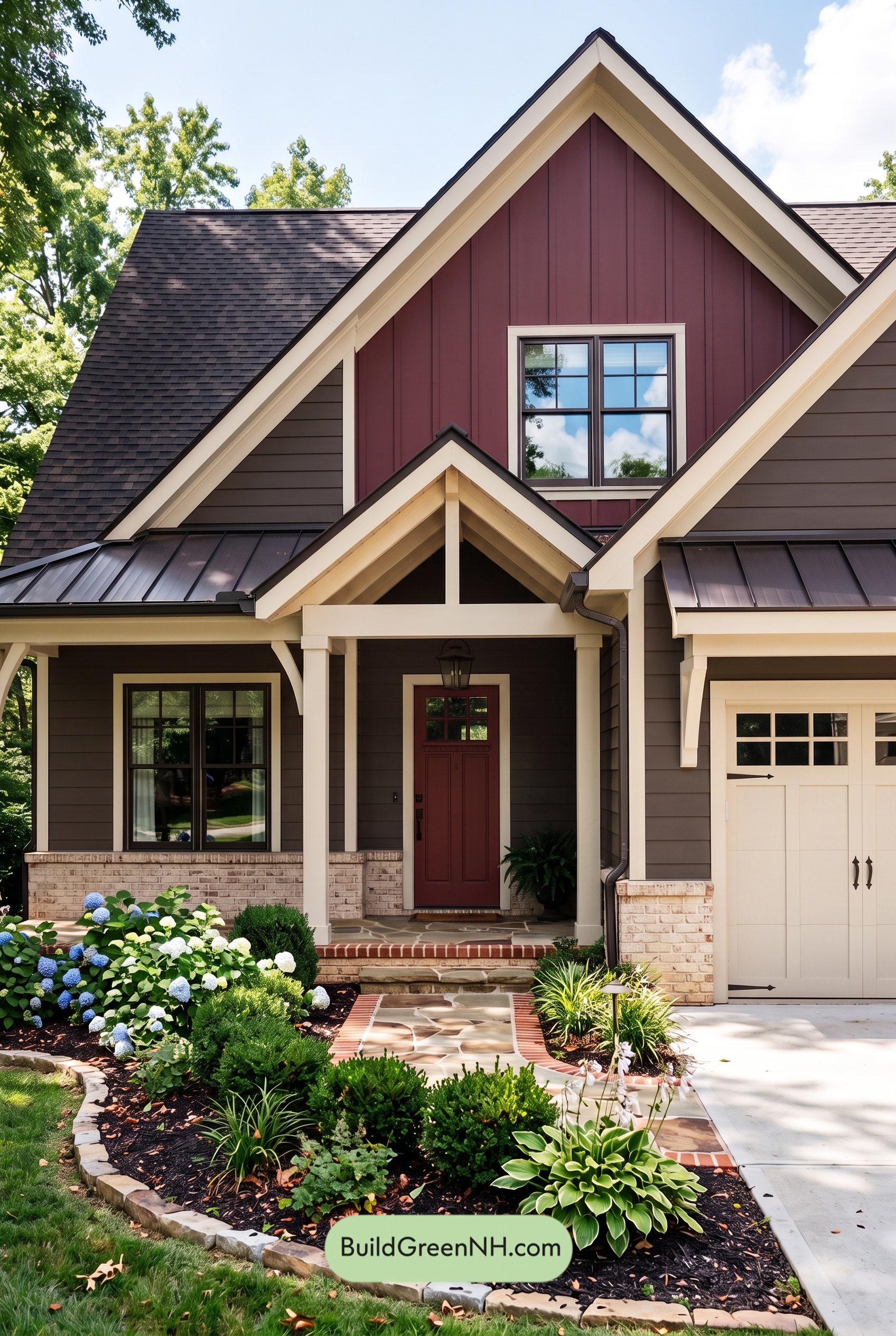 Dark Brown House Exterior Color Scheme: Embercrest Welcome
Table of Contents