Last updated on
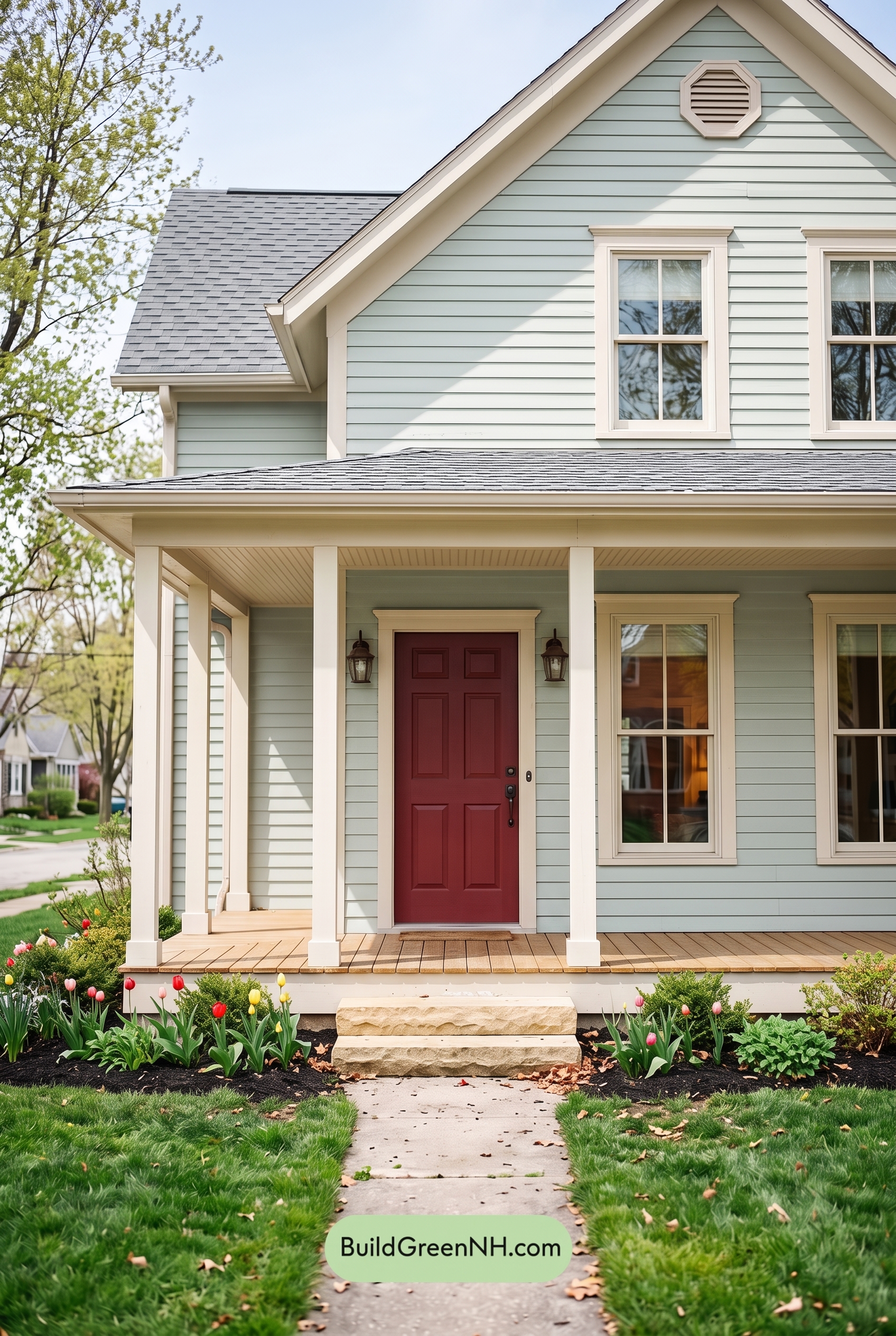

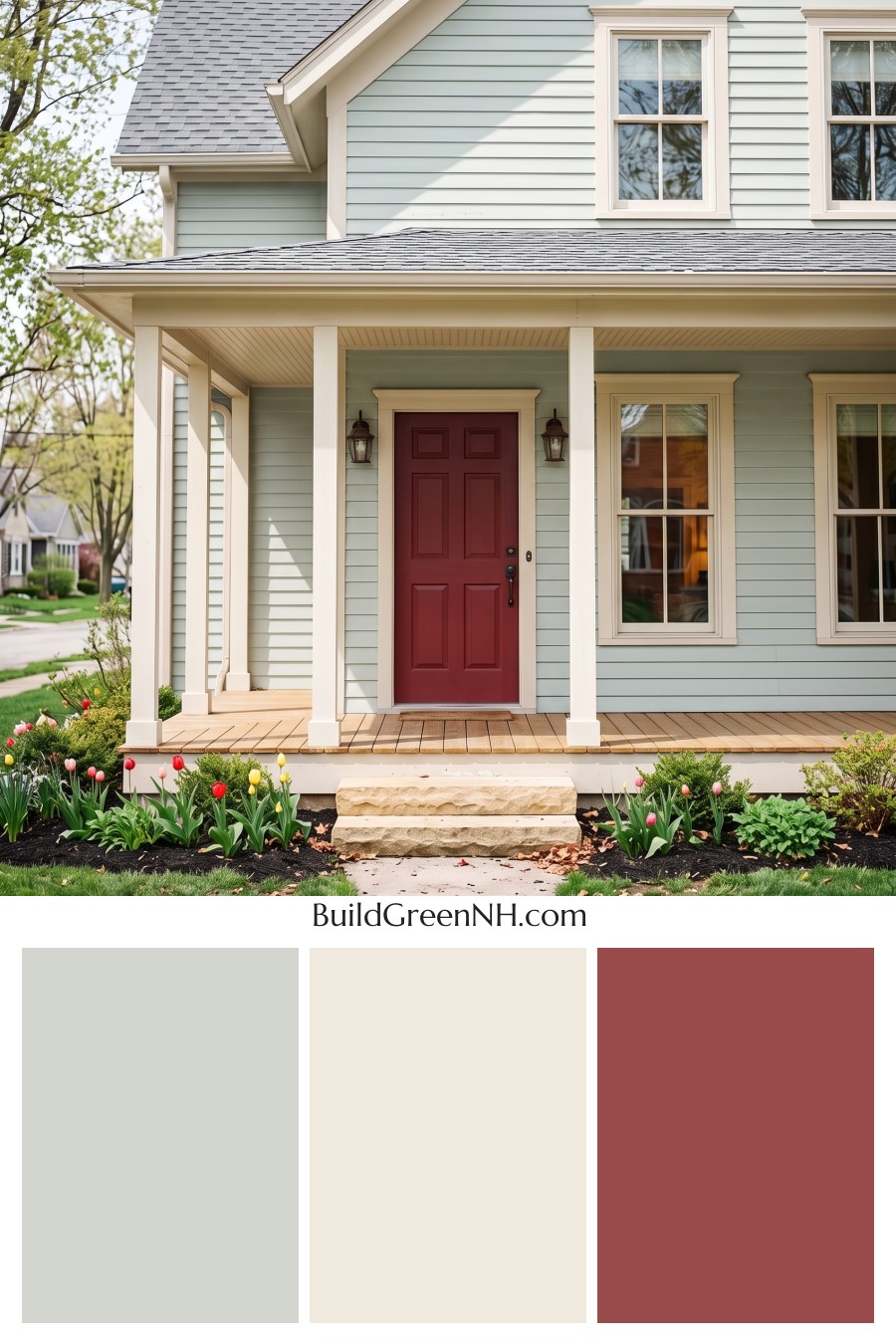
This exterior works so well because its soft gray siding, warm beige trim, and rich brown door create a calm, polished look with a welcoming pop of depth.
A Soft Gray Siding That Feels Fresh and Relaxed
The main siding is a light gray shade with a gentle, airy quality that keeps the home feeling bright without looking stark. It has just enough softness to pair beautifully with the surrounding greenery, giving the exterior a peaceful, garden-friendly presence.
Because the gray sits on the lighter side, it highlights the horizontal lines of the siding in a subtle way. The result is clean and classic, with a touch of cottage charm that feels especially inviting on a covered front porch.
Warm Beige Trim Adds Comfort and Definition
The warm beige trim is doing a lot of quiet work here. Around the windows, roofline, porch beams, and columns, this creamy beige shade frames the gray siding with softness rather than sharp contrast. It brightens the facade while keeping the overall palette gentle and cohesive.
The beige window frames and columns also give the home a more finished, architectural look. They outline each feature clearly, but because the tone is warm and muted, nothing feels too bold or busy.
A Rich Brown Door Creates the Perfect Focal Point
The front door brings in a deep brown shade with a warm, reddish undertone, adding personality and weight to the otherwise soft exterior. It immediately draws the eye to the entry, which is exactly what a great front door color should do.
This darker accent balances the pale siding and trim beautifully. Without it, the palette might feel a little too quiet; with it, the house feels grounded, welcoming, and full of character.
The Gray Roof Ties Everything Together
The roof stays in the gray family, which helps connect back to the siding while adding a slightly deeper layer of contrast. Its varied gray tones give the upper portion of the home texture and dimension, especially against the lighter trim along the gables and eaves.
Because the roof is neutral and understated, it does not compete with the front door or the soft body color. Instead, it acts as a steady backdrop that makes the whole scheme feel intentional.
The Overall Mood
This color scheme feels friendly, calm, and timeless. The light gray siding gives the house a fresh and relaxed personality, while the warm beige trim adds comfort and traditional charm. The deep brown door brings just enough richness to make the entry feel special.
Altogether, the palette is a lovely example of balanced contrast: light body color, warm trim, a grounded door, and a classic gray roof. It is approachable, polished, and easy to love from the sidewalk.
Next, see how this color scheme looks under different lighting simulations throughout the day.
Overcast
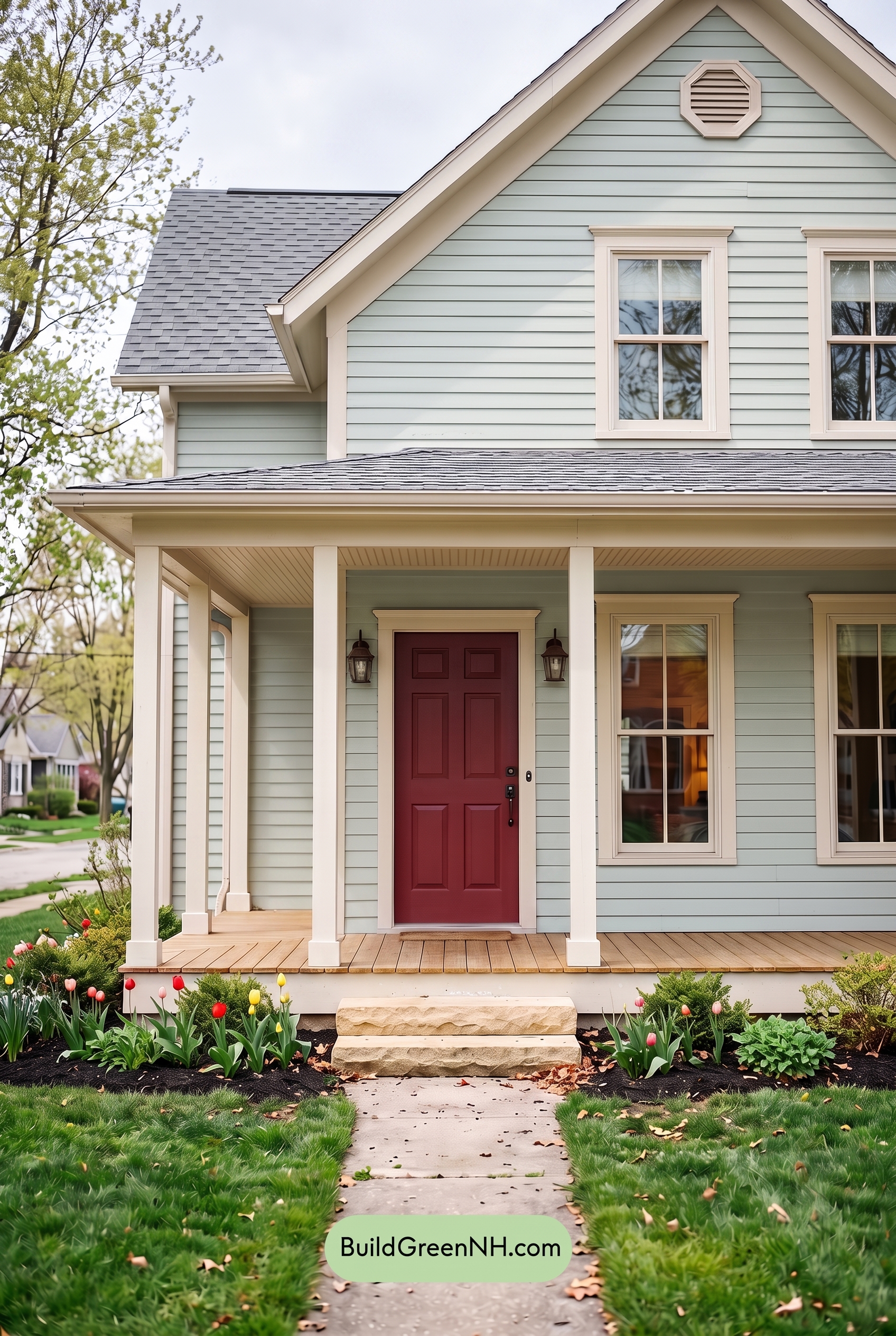
Under overcast skies, the gray exterior reads cooler and more muted than it would in neutral daylight, with saturation softened by the even cloud cover. The beige trim, window frames, and columns lose a bit of their sunlit warmth, shifting toward a gentler neutral that feels quieter and less crisp.
Because shadows are diffused, the siding lines and architectural edges appear less dramatic, reducing contrast across the facade. The brown front door still provides depth, but its warmth feels more grounded than glowing, giving the whole house a calm, cozy, softly elegant mood.
Golden Hour
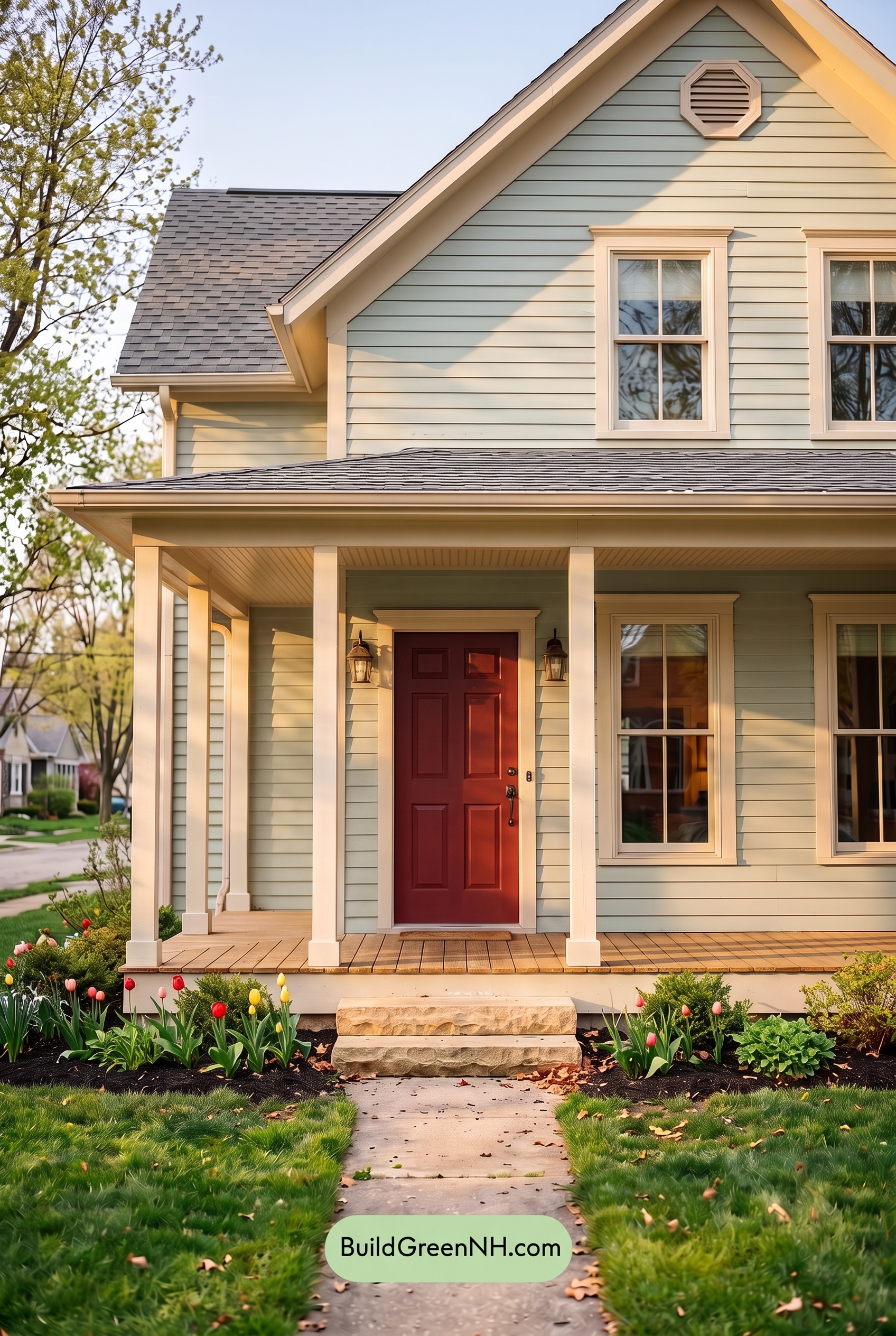
In Golden Hour light, the gray siding shifts warmer and more softly saturated than it would in neutral daylight, taking on a gentler, almost sun-kissed quality. The beige trim, window frames, and columns feel creamier and more luminous, while the low angle of the light creates longer shadows that make the siding grooves and rooflines appear deeper and more dimensional.
Contrast becomes richer but less harsh: shaded areas under the porch and eaves deepen, while sunlit edges glow with warmth. The brown front door looks fuller and more inviting, with its darker shade gaining depth against the softened neutrals, giving the whole exterior a calm, welcoming mood.
Shade
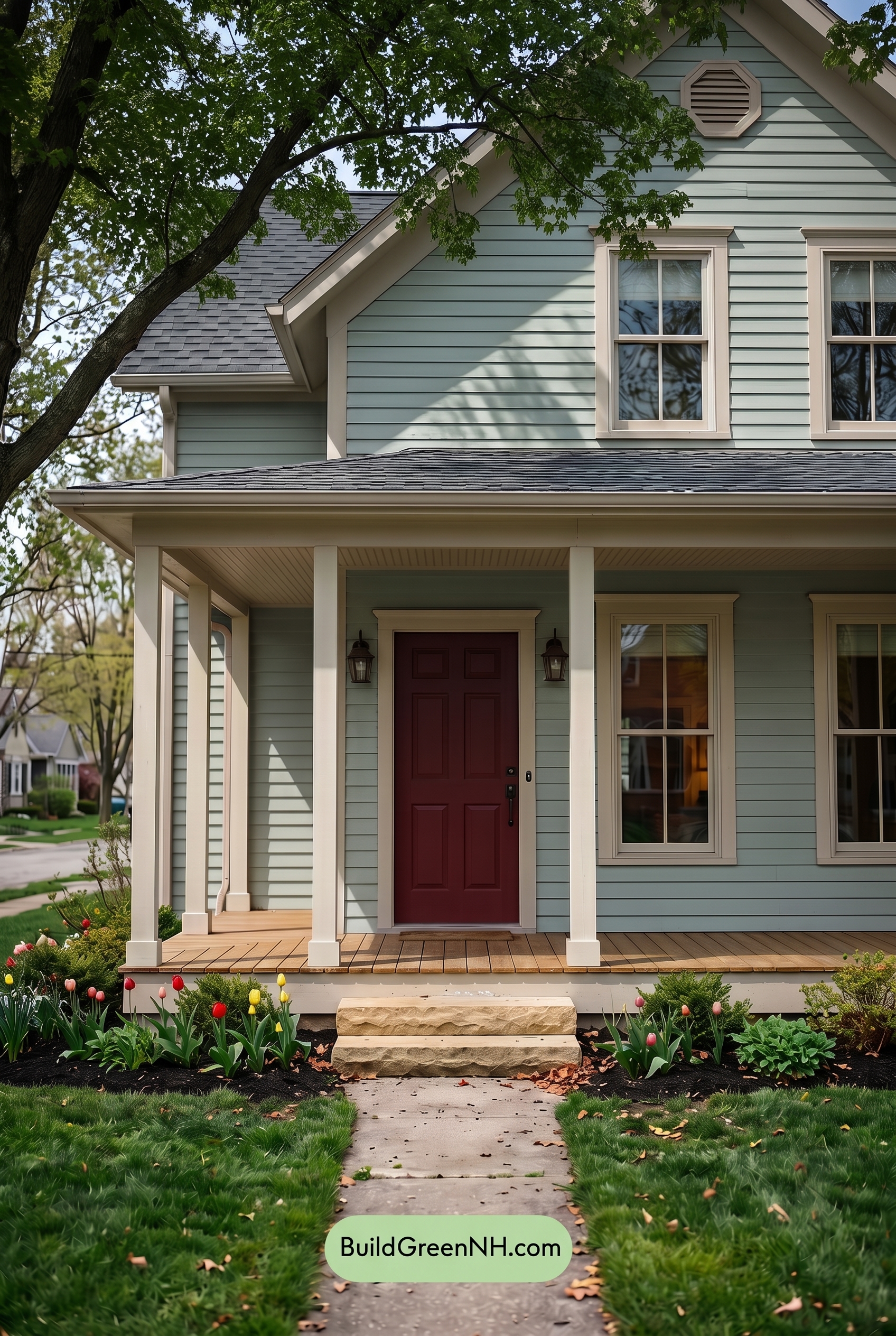
In shade, the gray siding appears cooler and a touch more saturated than it would in neutral daylight, with the shadowed clapboards giving the surface extra depth. The beige trim, window frames, and columns lose some of their sunlit warmth, reading softer and more muted, which gently lowers the overall contrast.
The brown front door deepens in shade, feeling richer and more grounded against the quieter gray and beige families. Compared to neutral daylight, the mood shifts from crisp and bright to calm, sheltered, and slightly more intimate.
Nighttime
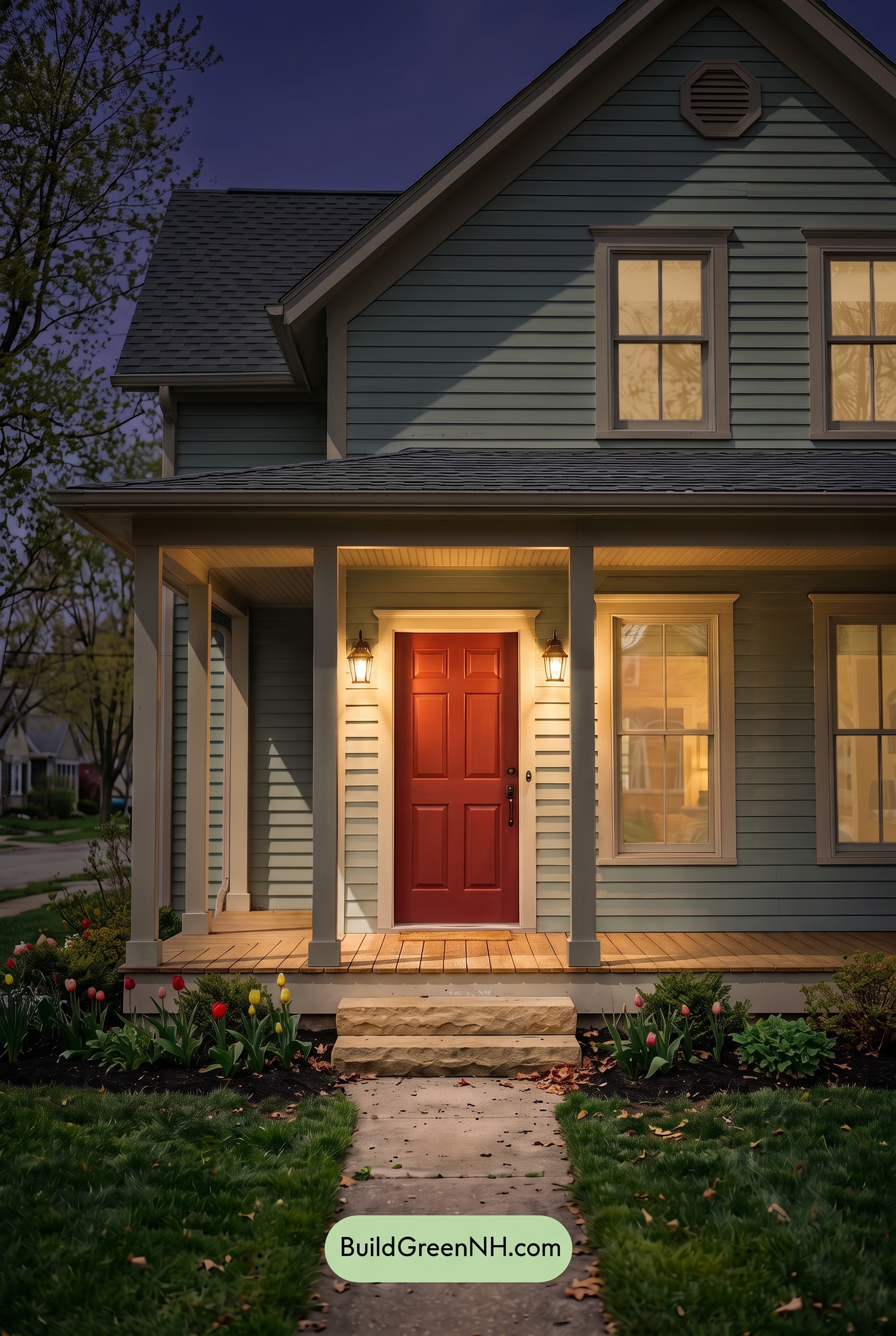
At night, the gray siding deepens and feels more saturated than it would in neutral daylight, taking on a quieter, cooler mood wherever the porch roof and gables cast shadow. The beige trim, window frames, and columns shift warmer under the exterior lights, softening their edges and creating a welcoming contrast against the darker wall shade.
The brown front door becomes richer and more dramatic in the warm light, standing out with stronger saturation while the surrounding shadows add depth. Compared to the balanced look of daylight, nighttime gives the whole palette more contrast, warmth, and a cozy, inviting atmosphere.
Pin these for later:
Want More?
 Blue House Front Door Color Scheme: Harbor Saffron
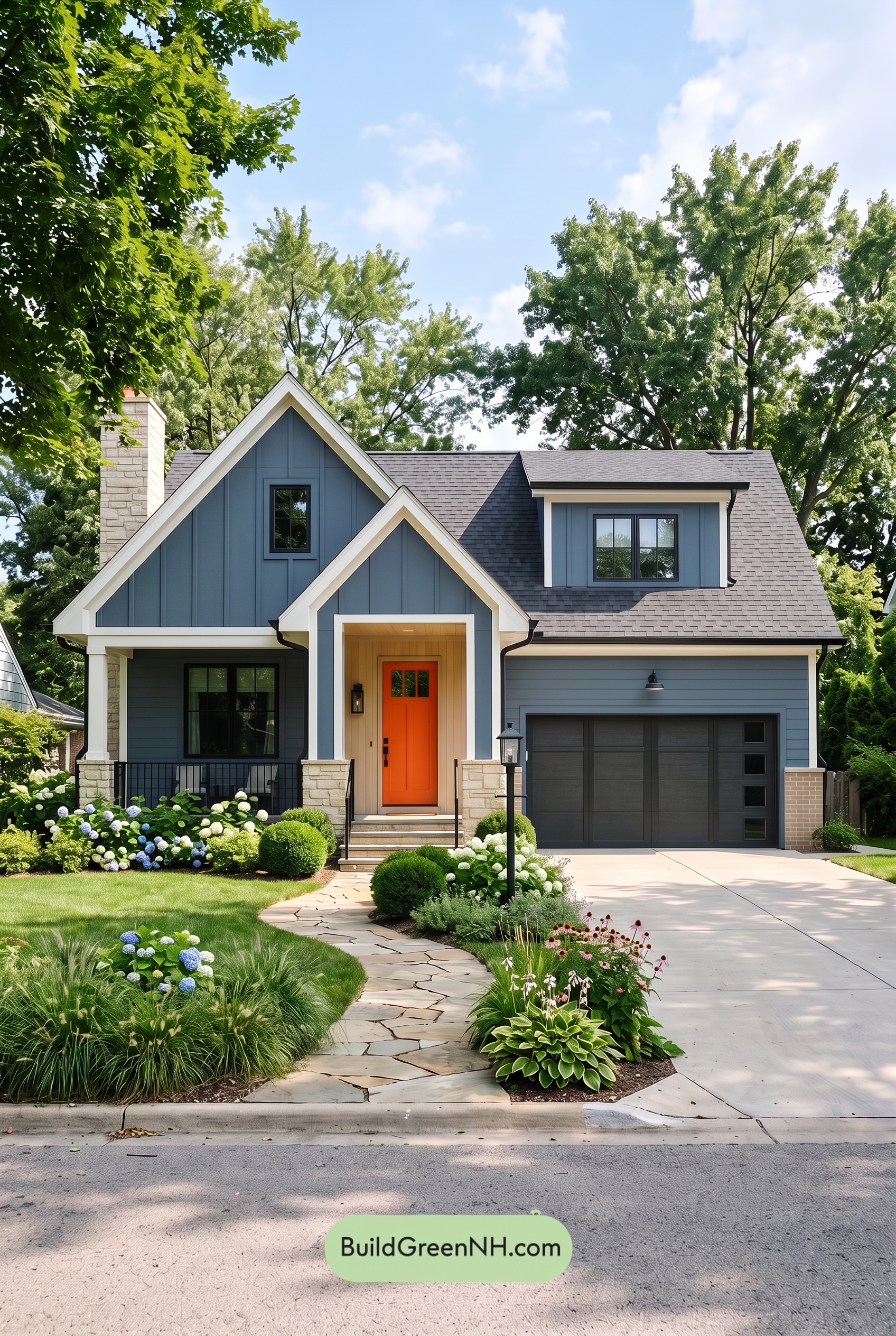 Blue House Front Door Color Scheme: Cobalt Persimmon
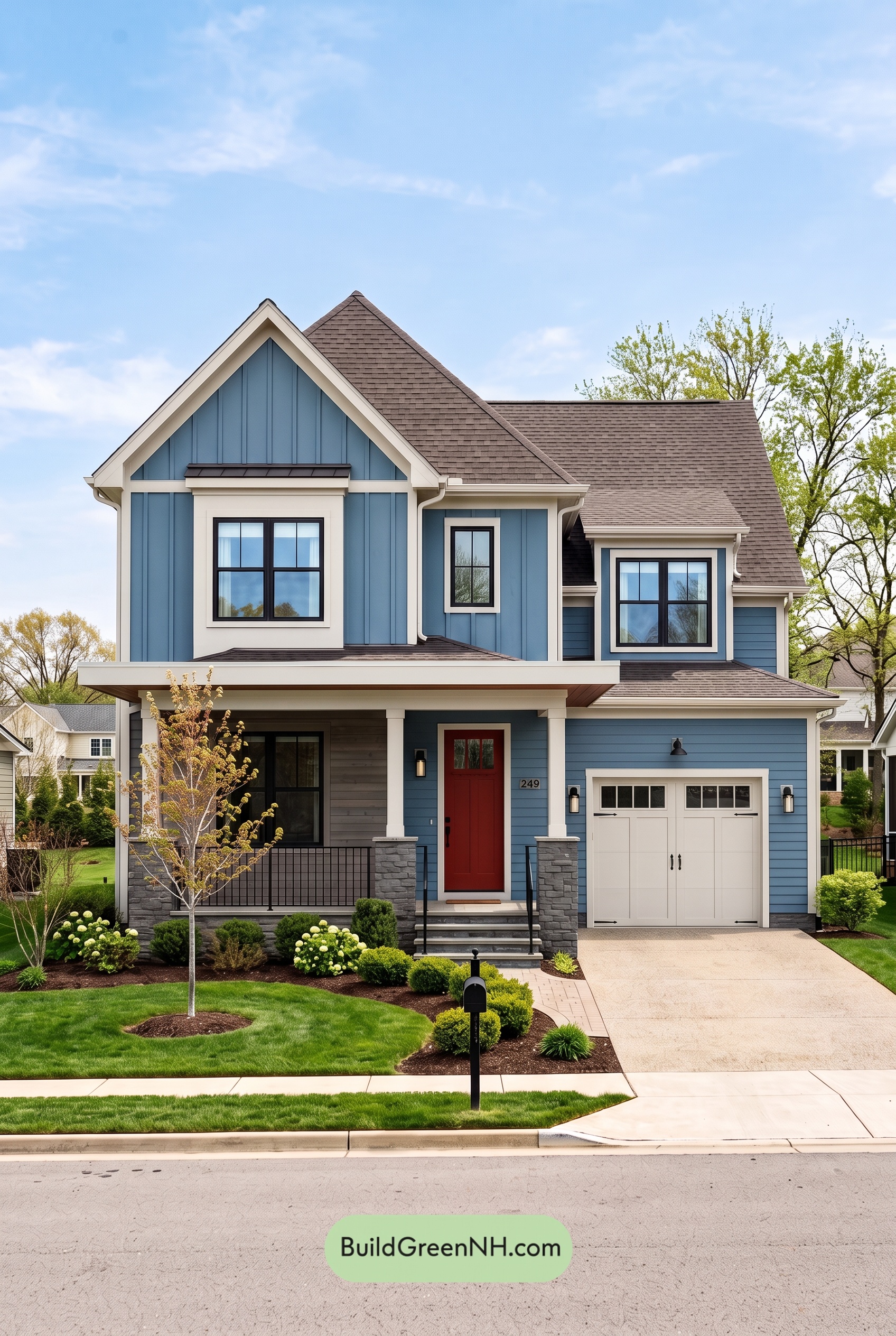 Blue House Front Door Color Scheme: Denim Poppy
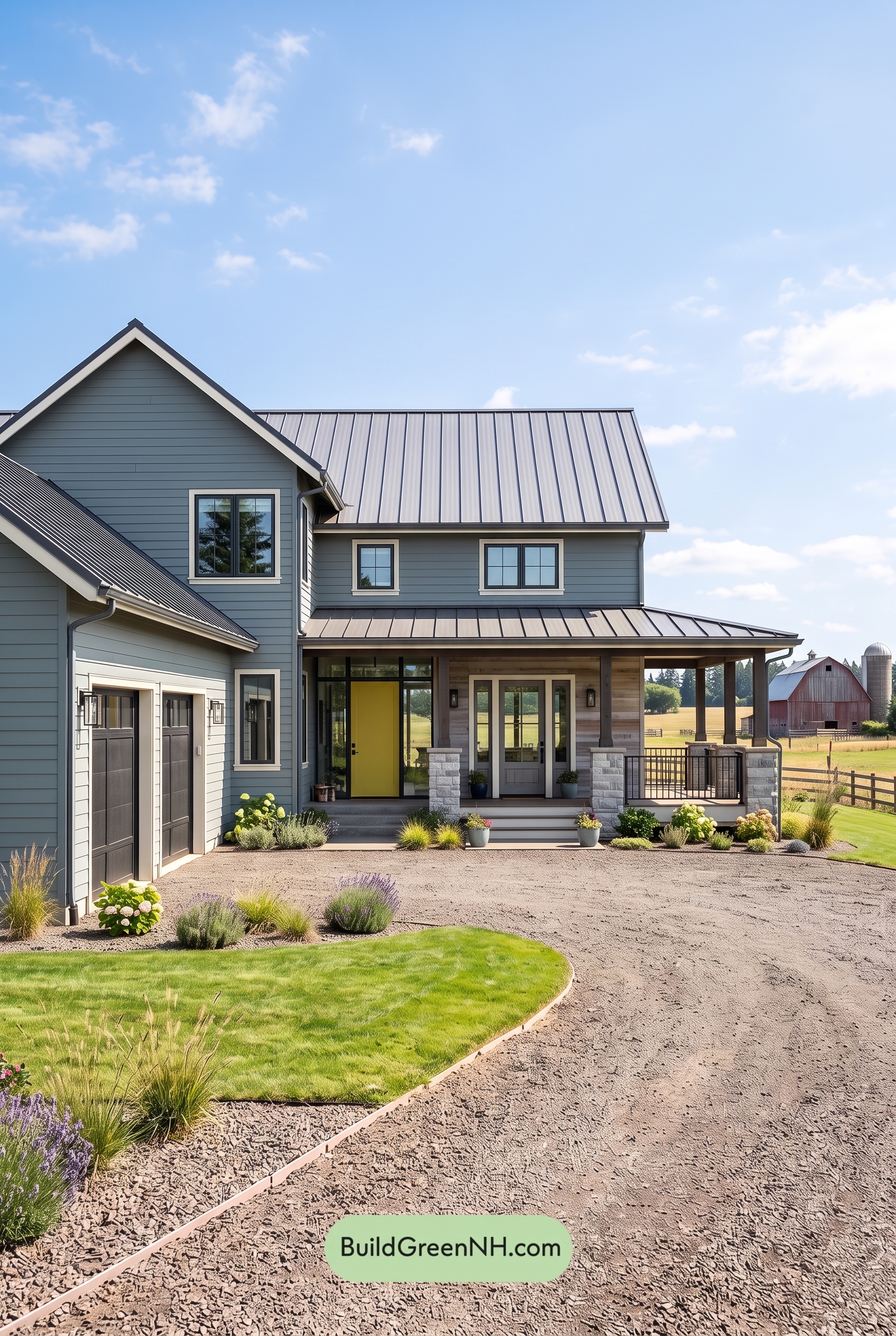 Blue House Front Door Color Scheme: Slate Citron
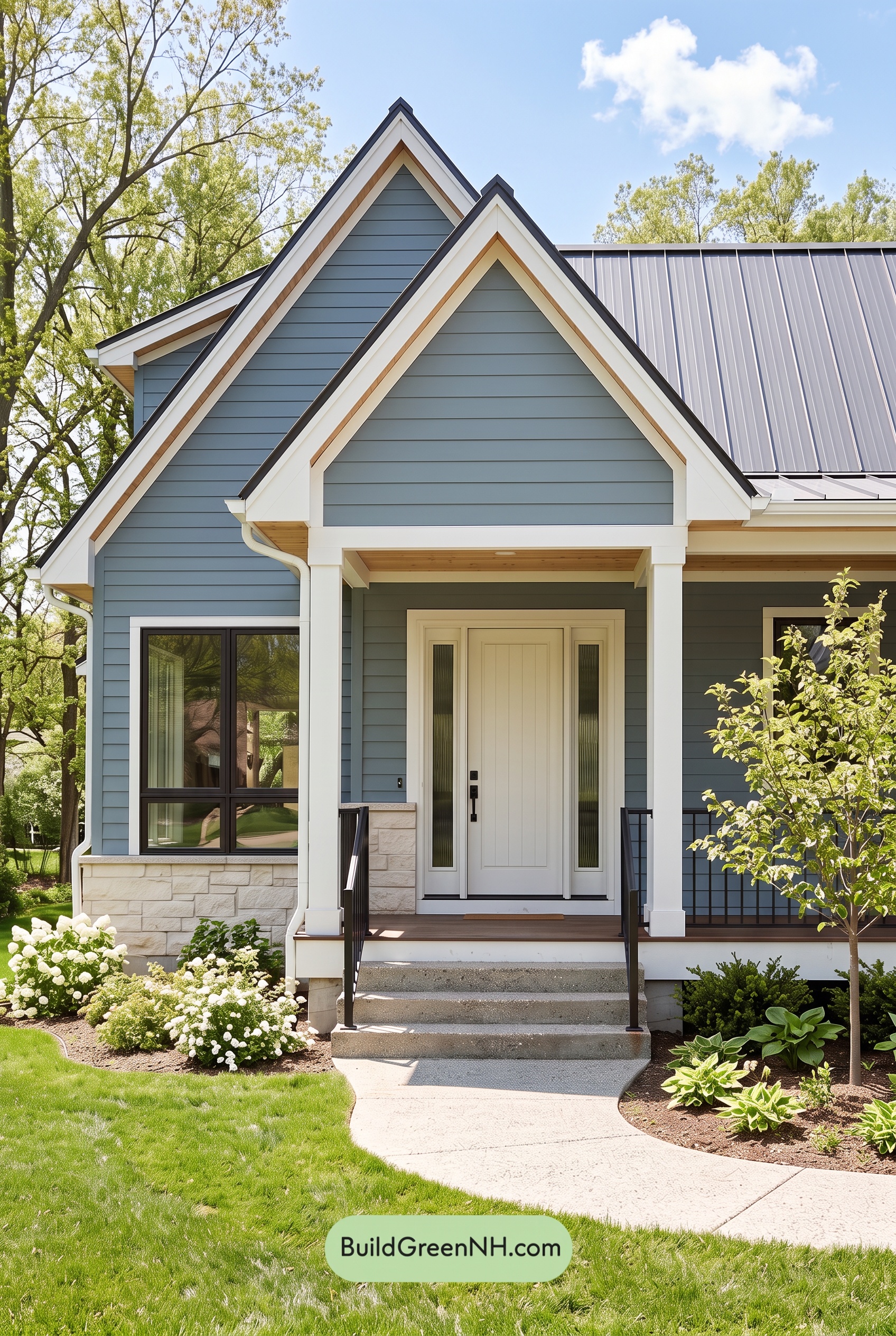 Blue House Front Door Color Scheme: Mist Blue Haven
Table of Contents