Last updated on
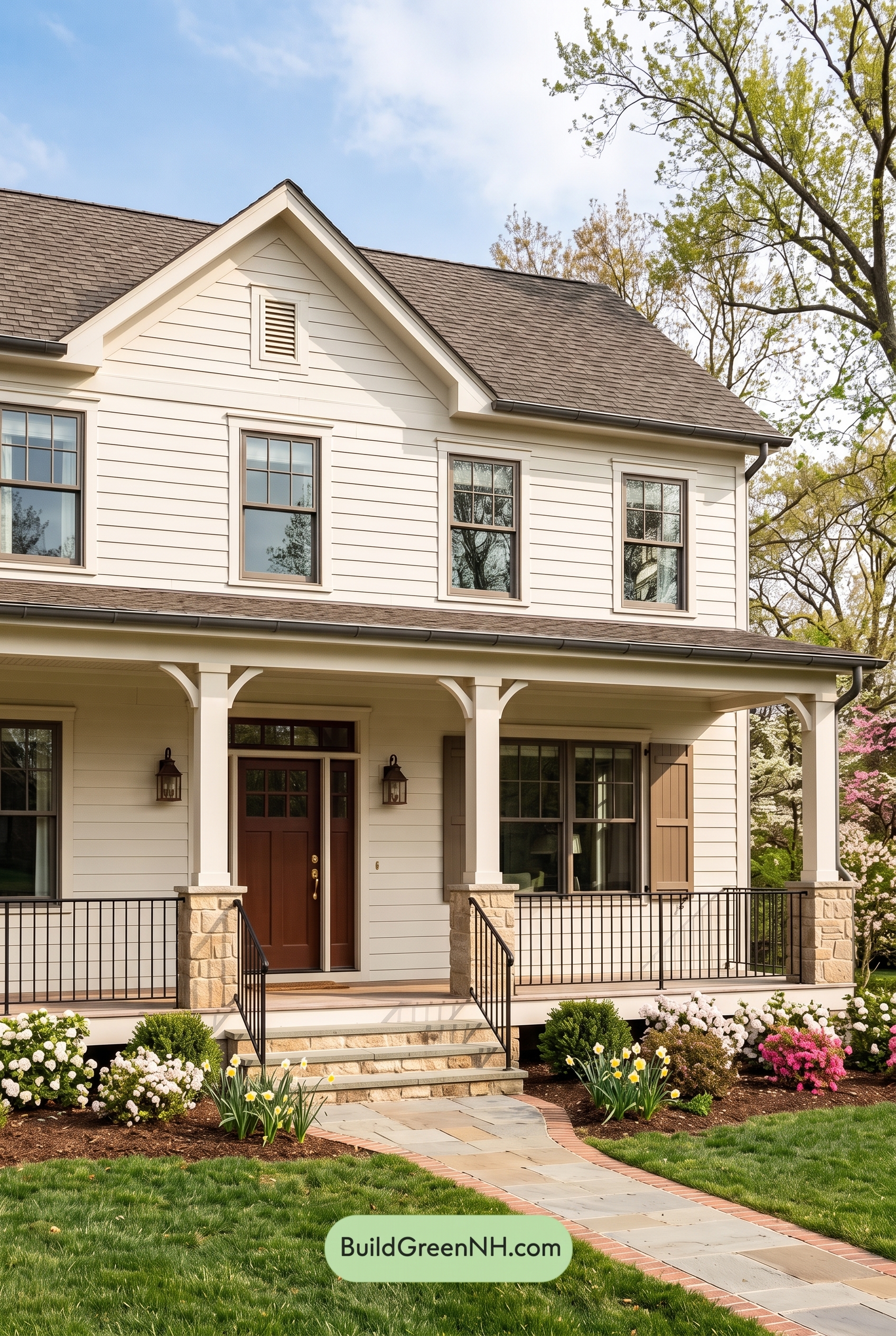

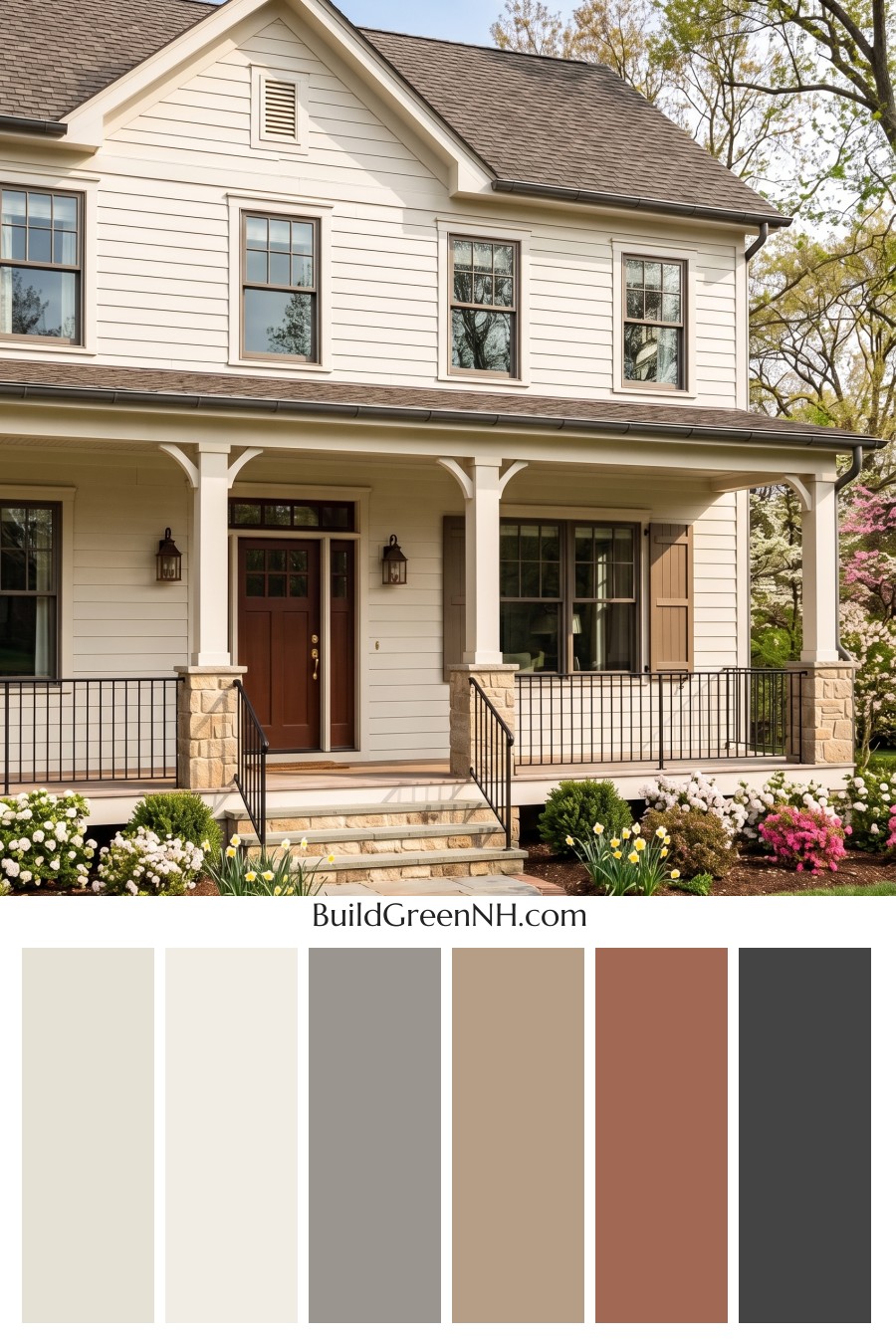
This soft beige-and-brown exterior works beautifully because it feels warm, timeless, and polished without ever looking heavy.
A Warm, Welcoming Base
The main siding is wrapped in a gentle beige family shade that gives the home an easy, inviting presence. It is light enough to feel fresh in the sunshine, but warm enough to avoid looking stark. On the horizontal siding, this shade also highlights the home’s classic lines and gives the façade a calm, orderly rhythm.
The trim stays within the same beige family, just in a lighter, cleaner shade. That subtle contrast is what makes the window surrounds, rooflines, porch details, and gable edges stand out without creating a high-contrast look. It feels refined, not busy.
Trim, Columns, and Architectural Details
The porch columns continue the soft beige palette, which helps them feel connected to the rest of the house rather than overly decorative. Because the columns, brackets, and trim all share a similar warmth, the front porch feels gracious and cohesive.
This layered beige approach is especially effective on a home with traditional detailing. Instead of using bold contrast, the design relies on shade variation. The result is quiet elegance with plenty of depth.
Gray Accents Add Definition
The window frames introduce a warm gray shade that gives the exterior a more tailored look. Against the beige siding and trim, the gray feels grounded and sophisticated. It also helps the windows read clearly from the street, adding structure to the soft color palette.
The railings bring in a deeper gray accent, giving the porch a crisp outline. This darker gray keeps the overall scheme from becoming too pale and adds just the right amount of contrast around the entry and steps.
A Rich Brown Front Door
The front door is the strongest warm accent on the house, finished in a deep brown family shade. It gives the entry a sense of depth and tradition, drawing the eye naturally toward the porch. Paired with the lighter beige siding, the door feels welcoming and substantial.
This brown accent also works beautifully with the roof, which carries a weathered brown-gray look. Together, the door and roof add an earthy balance to the lighter walls and trim.
Why the Palette Works
This exterior succeeds because every color feels related. The beige siding, lighter beige trim, warm beige shutters, gray window frames, deep gray railings, brown door, and brown-gray roof all sit in a calm, natural range. Nothing fights for attention, yet each element has a clear role.
The overall mood is classic, comfortable, and beautifully maintained. It is a color scheme that feels right at home among trees, stonework, flowering shrubs, and a welcoming front walk. Soft, warm, and timeless, this palette gives the house lasting curb appeal with a relaxed traditional charm.
Next, see how this color scheme looks under different lighting simulations throughout the day.
Overcast
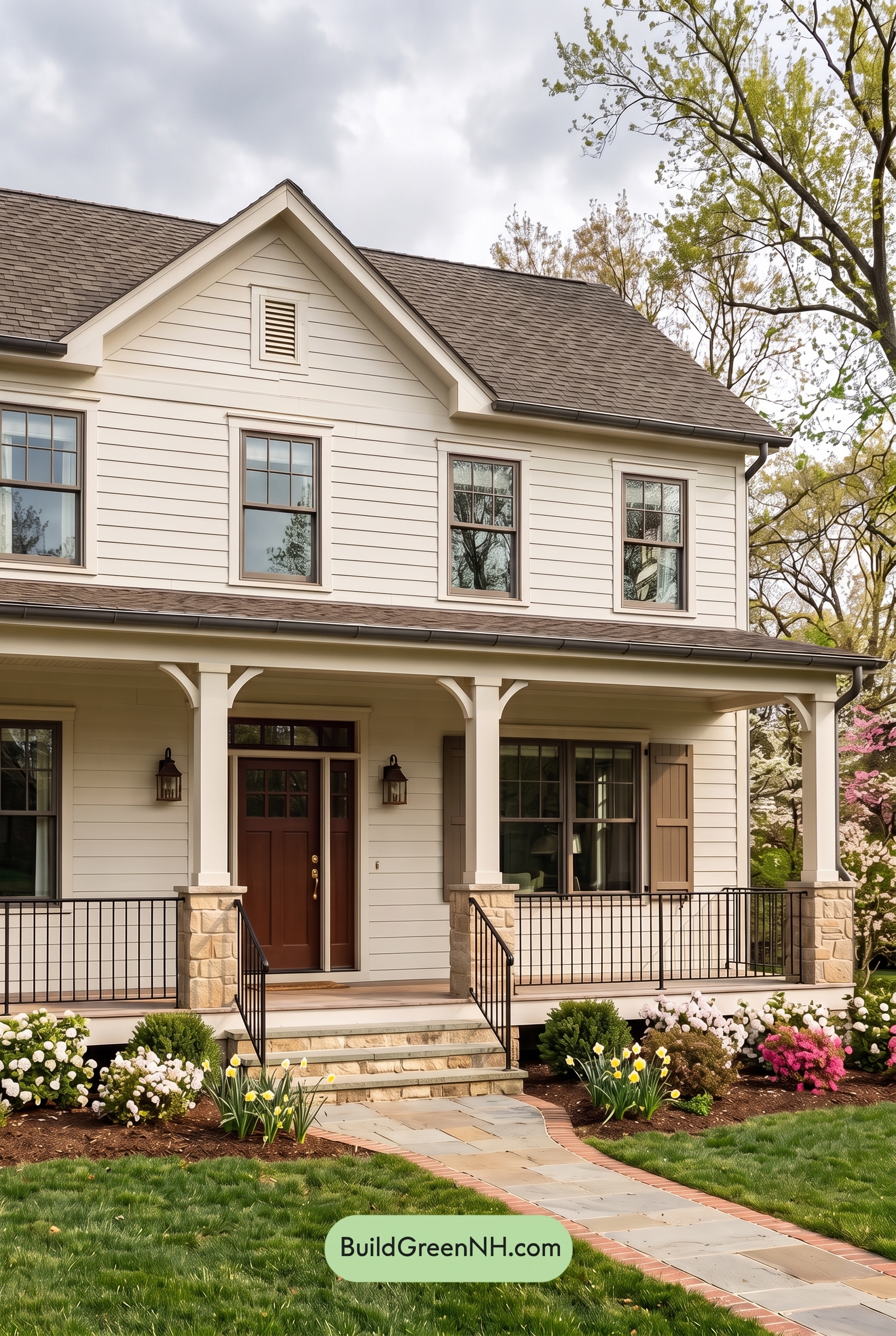
Under overcast light, the beige family on the siding, trim, columns, and shutters looks softer and less saturated than it would in neutral daylight. Its warmth is gently muted, shifting from sunny and creamy toward a calmer, more subdued neutral, while the gray family in the window frames and railings appears slightly cooler and more pronounced.
Because clouds diffuse the light, shadows become broader and softer, reducing the crisp contrast between trim, siding, and architectural details. The brown family on the front door deepens without feeling as warm or glowing, giving the whole exterior a quieter, cozier, and more relaxed mood.
Golden Hour
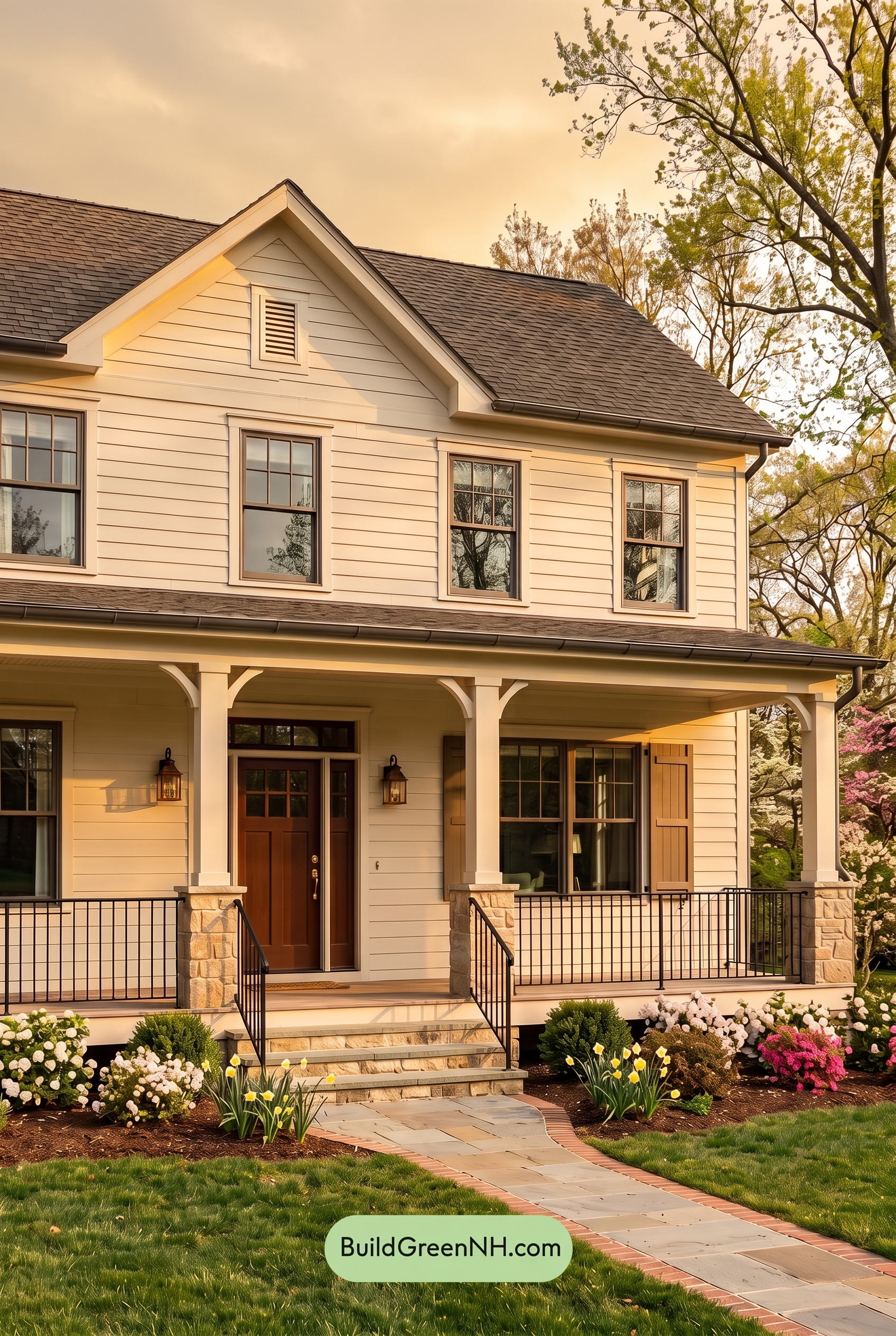
Under Golden Hour, the beige family across the siding, trim, columns, and shutters looks warmer and more saturated than it would in neutral daylight. What might read as a calm light neutral at midday takes on a soft, sunlit glow, making the exterior feel richer, creamier, and more inviting.
The low-angle light also stretches shadows under the porch, roofline, and window trim, increasing contrast without feeling harsh. The gray family on the window frames and railings appears deeper and more defined, while the brown front door gains extra warmth and depth, giving the whole house a cozy, welcoming mood.
Shade
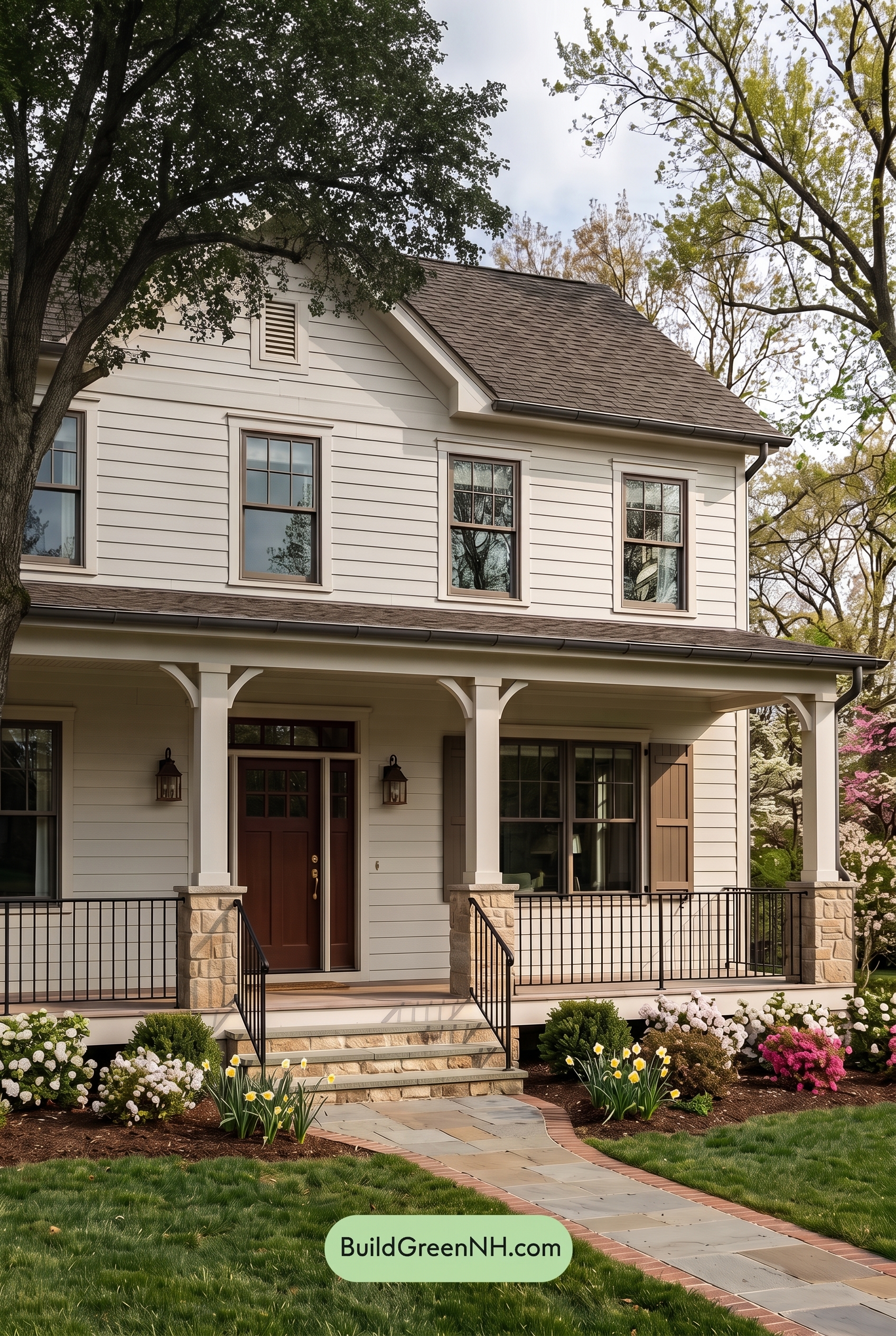
In shade, the beige family on the siding, trim, and columns looks softer and slightly cooler than it would in neutral daylight. Its warmth becomes more muted, with lower saturation and a gentler, creamier appearance, while the layered shadows from the trees add depth across the horizontal siding.
The gray family on the window frames and railings feels deeper and more defined in shade, increasing contrast against the lighter beige shades. The brown family at the front door also appears richer and moodier, giving the entry a cozy, grounded feel compared with the brighter, more balanced look of neutral daylight.
Nighttime
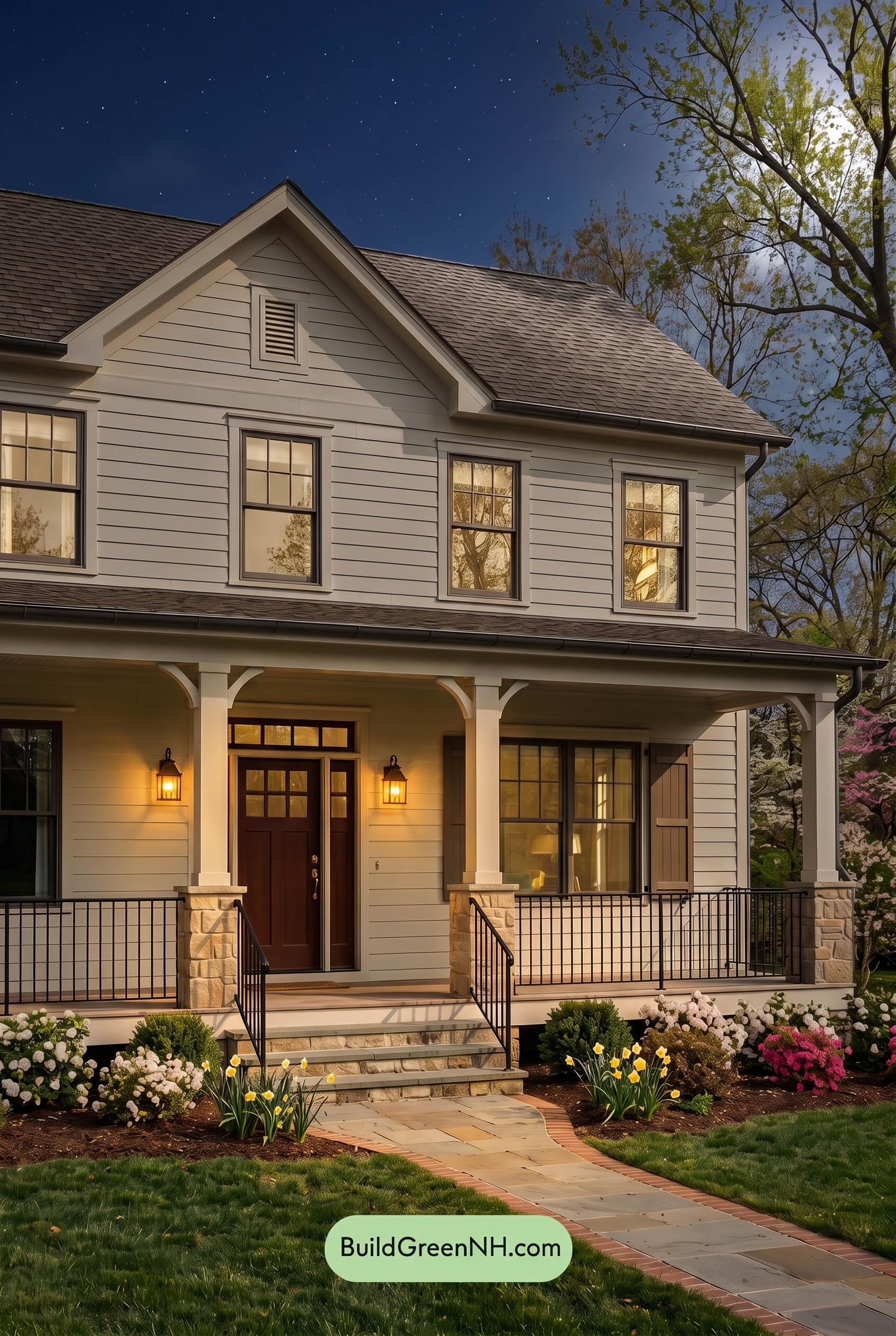
Under nighttime lighting, the beige family on the siding, trim, columns, and shutters feels warmer and softer than it would in neutral daylight, with porch lights drawing out creamy, golden undertones. Overall saturation drops on the upper walls and roofline, while illuminated areas gain a gentle glow that makes the home feel more welcoming.
Shadows deepen beneath the eaves, around the shutters, and along the porch, increasing contrast between the pale neutral surfaces and the darker gray window frames and railings. The brown front door appears richer and more grounded at night, giving the exterior a cozy, intimate mood compared with the clearer, more balanced look of daylight.
Pin these for later:
Want More?
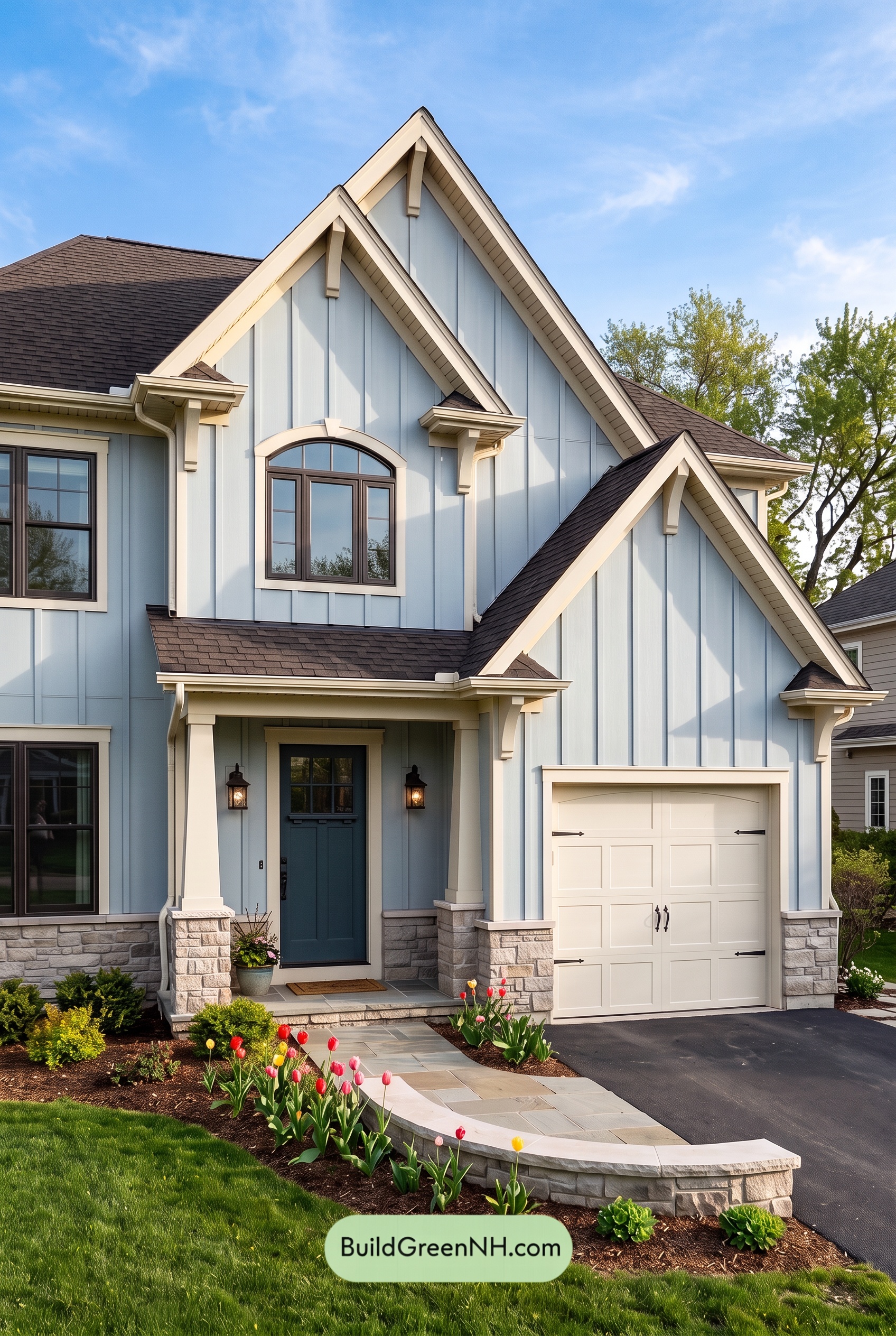 Exterior Color Scheme with Stone Accents: Bluebell Gable Song
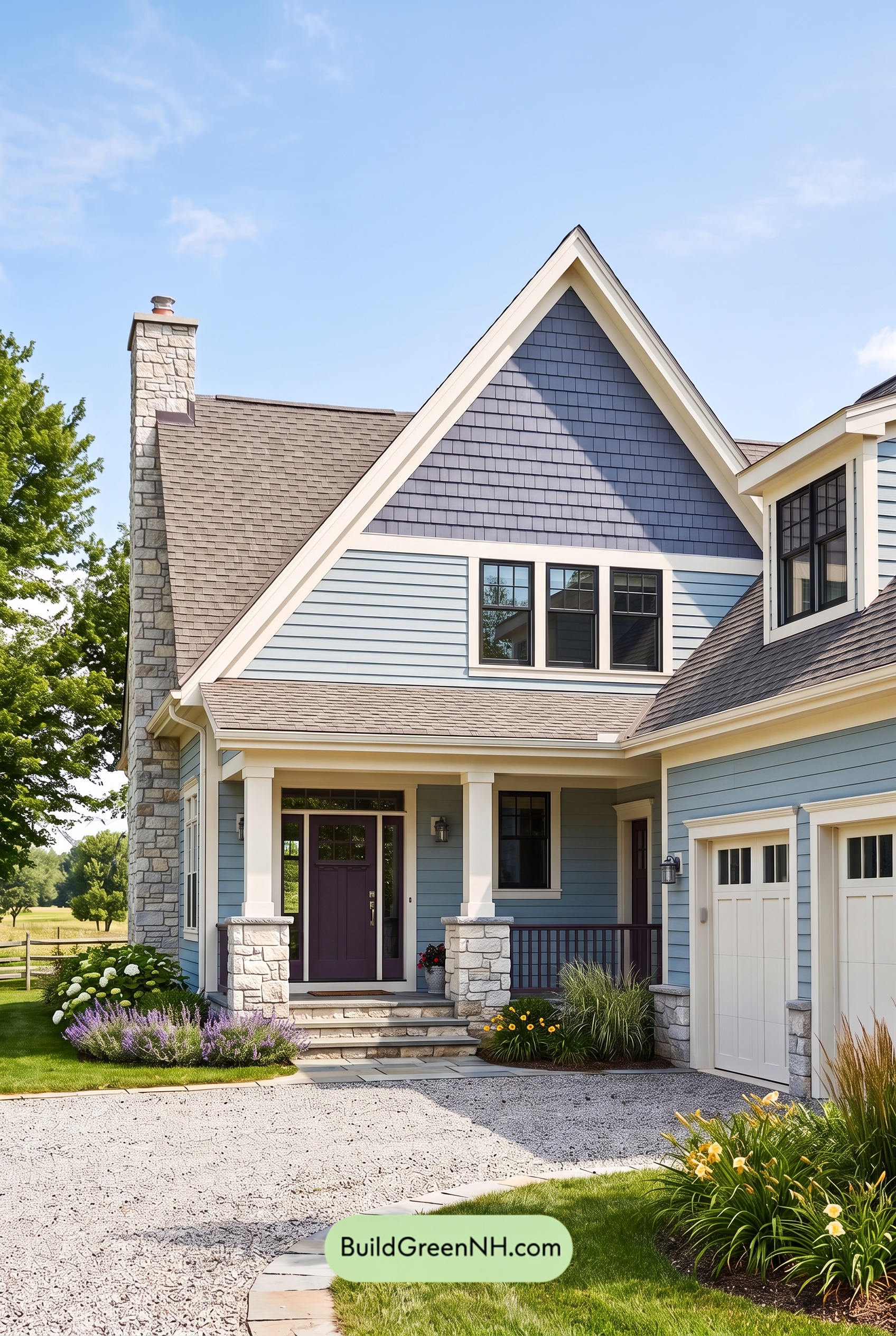 Exterior Color Scheme with Stone Accents: Meadow Bell Welcome
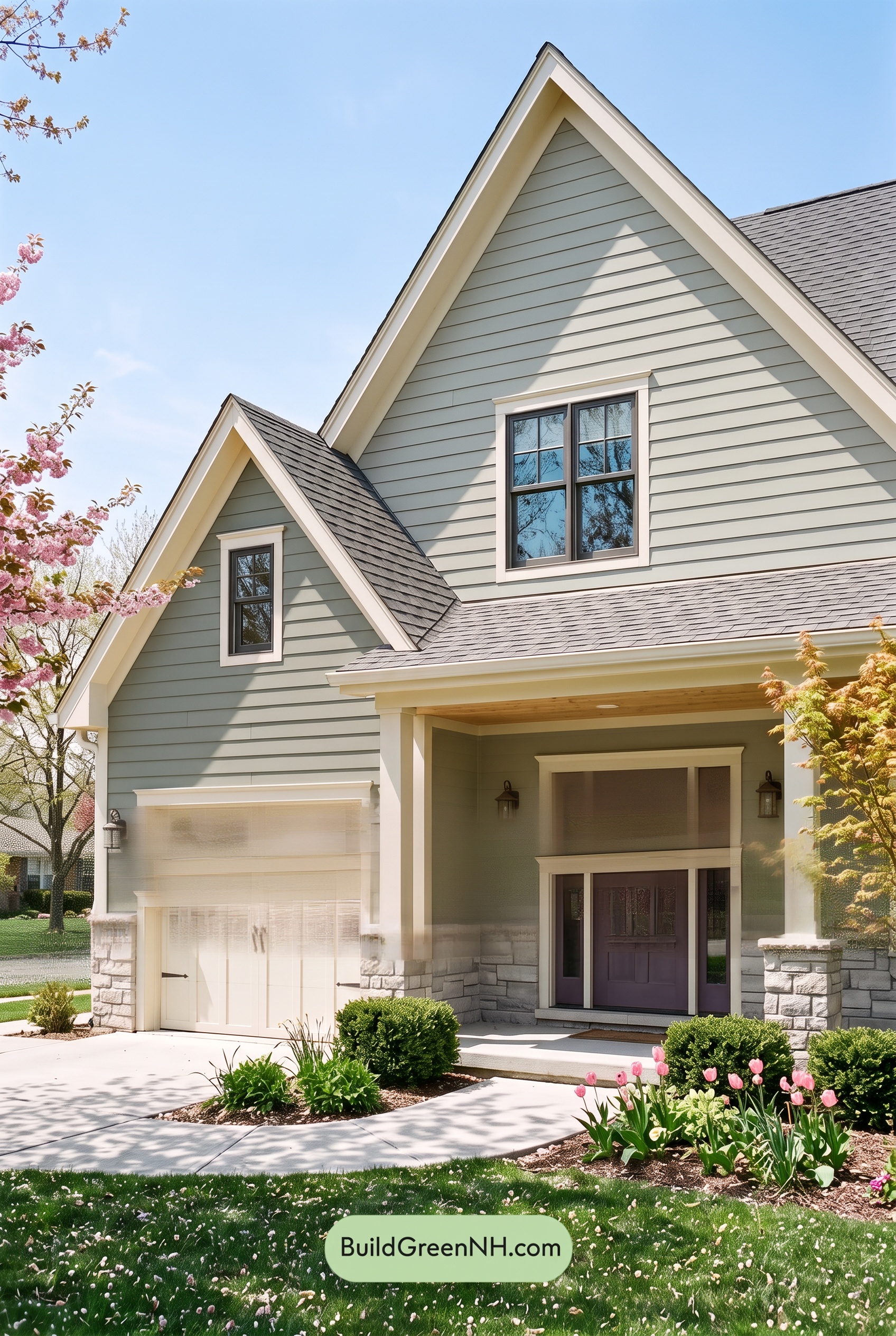 Exterior Color Scheme with Stone Accents: Willow Quartz Porch
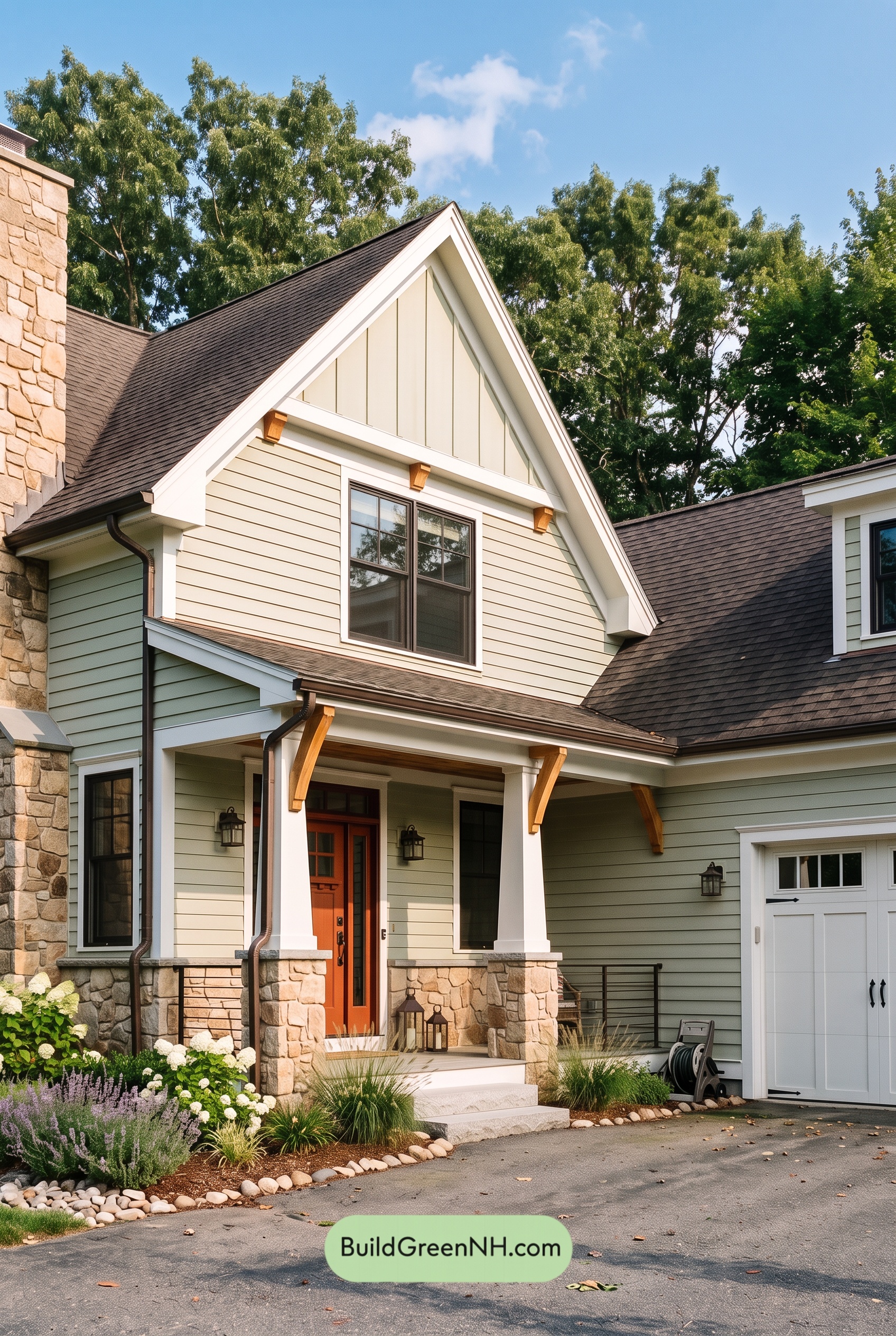 Exterior Color Scheme with Stone Accents: Celadon Ember Gable
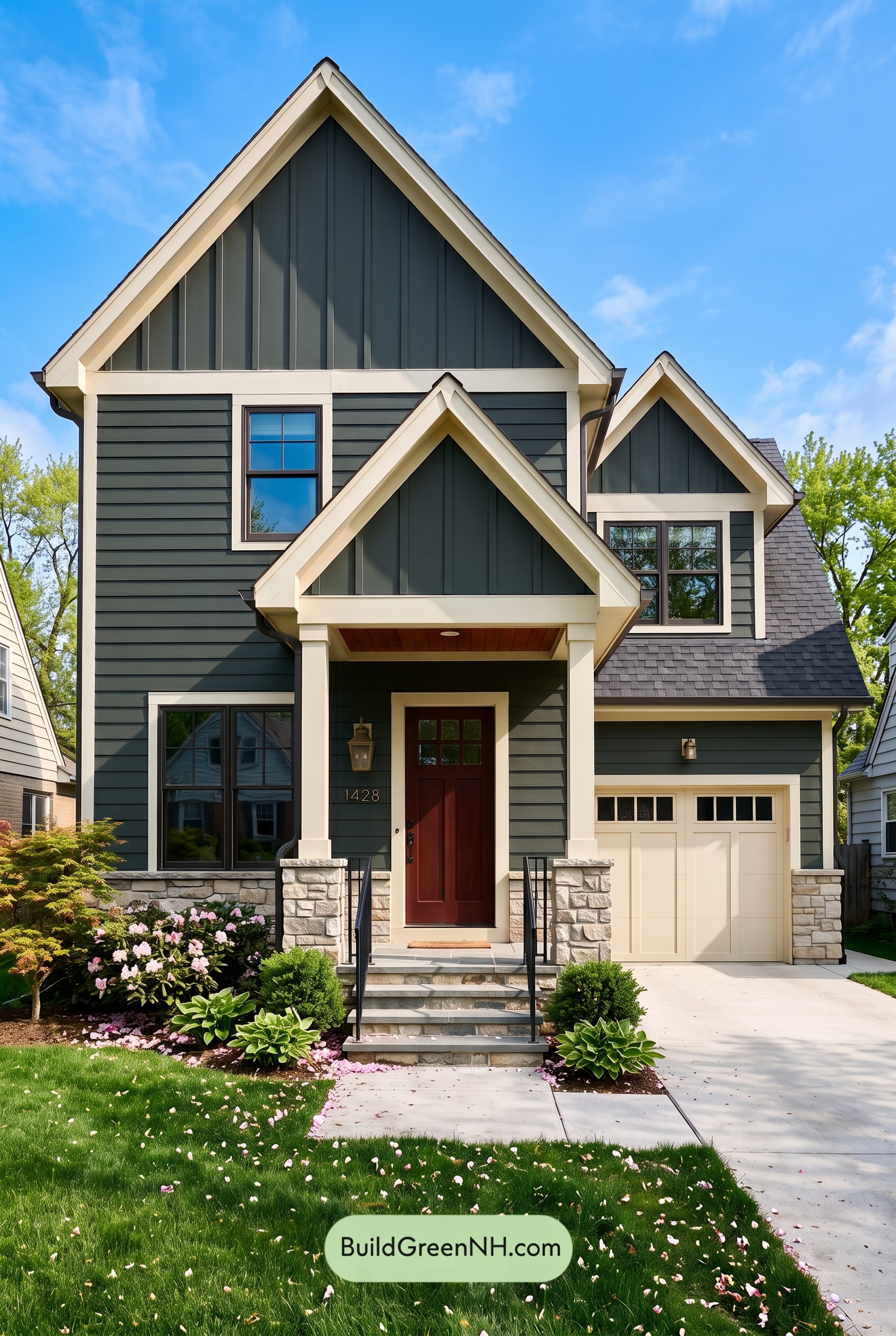 Exterior Color Scheme with Stone Accents: Pine Brass Threshold
Table of Contents