Last updated on
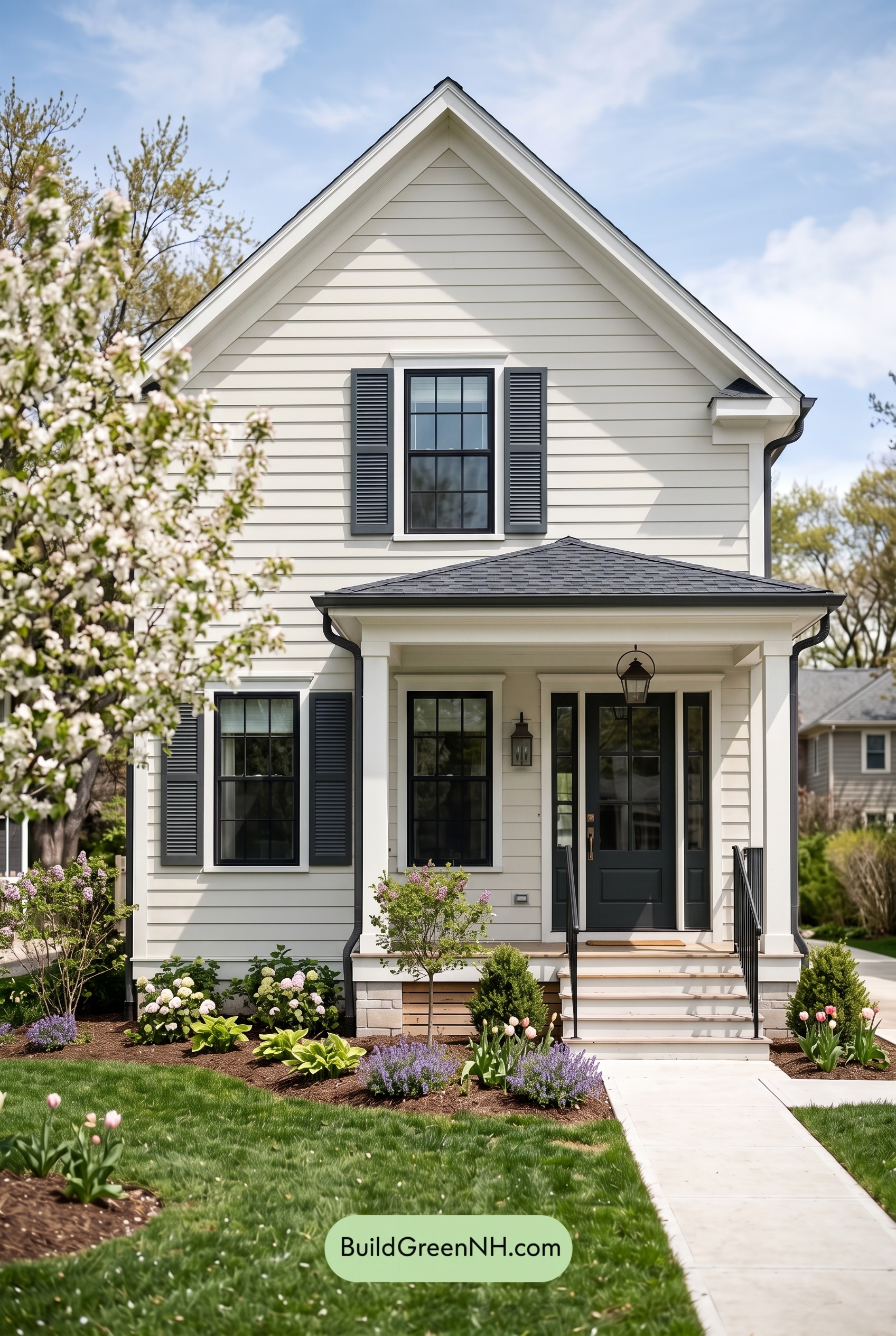

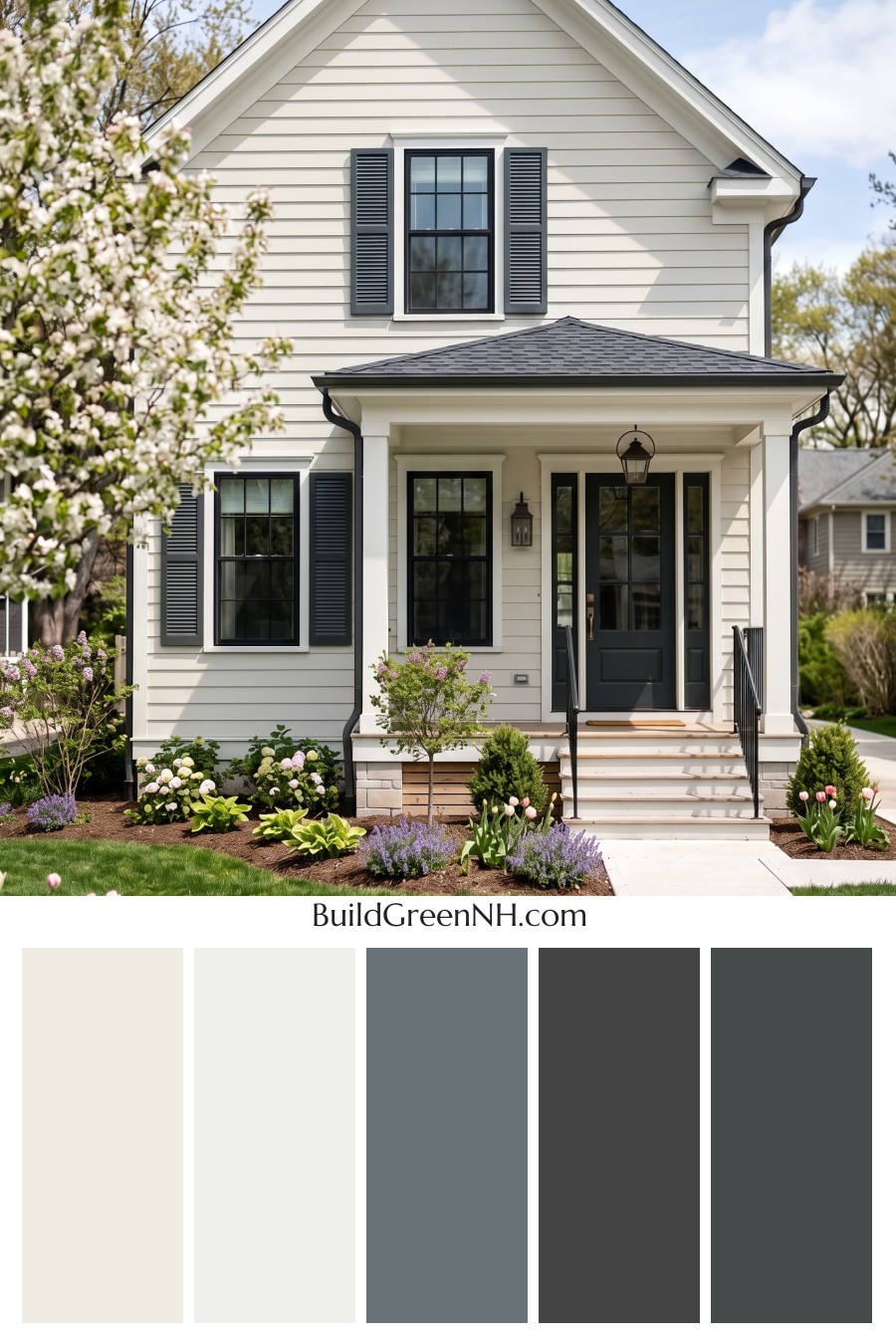
This exterior works beautifully because its crisp white siding, softened green trim, and layered gray accents create a fresh, classic look with just the right amount of contrast.
A Fresh, Timeless Foundation
The main siding sits in the white family, giving the home a bright, clean presence that feels welcoming from the sidewalk. Because the shade is slightly warm rather than stark, it softens the tall front gable and makes the horizontal siding feel inviting instead of severe.
This light backdrop also allows the architecture to shine. The peaked roofline, wide porch, and symmetrical windows all stand out clearly, creating a polished farmhouse-inspired look with plenty of curb appeal.
Soft Green Trim and Columns
The trim and porch columns lean into a very pale green family, subtle enough to feel neutral but still adding a gentle natural undertone. This is a smart choice for a home surrounded by lawn, shrubs, and flowering garden beds because it quietly connects the house to the landscape.
Used around the roofline, porch, window surrounds, and columns, this softened green shade brings warmth and depth to the white siding. It keeps the palette from feeling too plain while maintaining an airy, refined character.
Layered Gray Accents
The shutters, window frames, front door, and railings all draw from the gray family, creating a strong graphic contrast against the lighter body of the home. The shutters appear in a medium-to-deep gray shade, giving the windows definition without overwhelming the facade.
The front door takes on a deeper gray, anchoring the entry and making it feel substantial. Matching gray railings and window frames repeat that tone in smaller doses, so the whole exterior feels intentional and nicely balanced.
The Roof as a Grounding Element
The roof continues the gray story with a dark, textured shade that grounds the home from above. Its depth complements the shutters and door, while the subtle variation in the roofing material adds dimension to the otherwise crisp palette.
This darker roof also helps frame the white and pale green exterior, making the house feel finished and structured. It is classic, but not flat.
Overall Mood and Curb Appeal
The mood is fresh, graceful, and quietly sophisticated. The white siding brings brightness, the soft green trim adds a natural softness, and the gray accents provide the contrast needed to highlight the home’s best features.
What makes this scheme so appealing is its restraint. Nothing competes for attention, yet every color has a clear role. The result is a cheerful, well-composed exterior that feels timeless, garden-friendly, and beautifully suited to a sunny neighborhood setting.
Next, see how this color scheme looks under different lighting simulations throughout the day.
Overcast
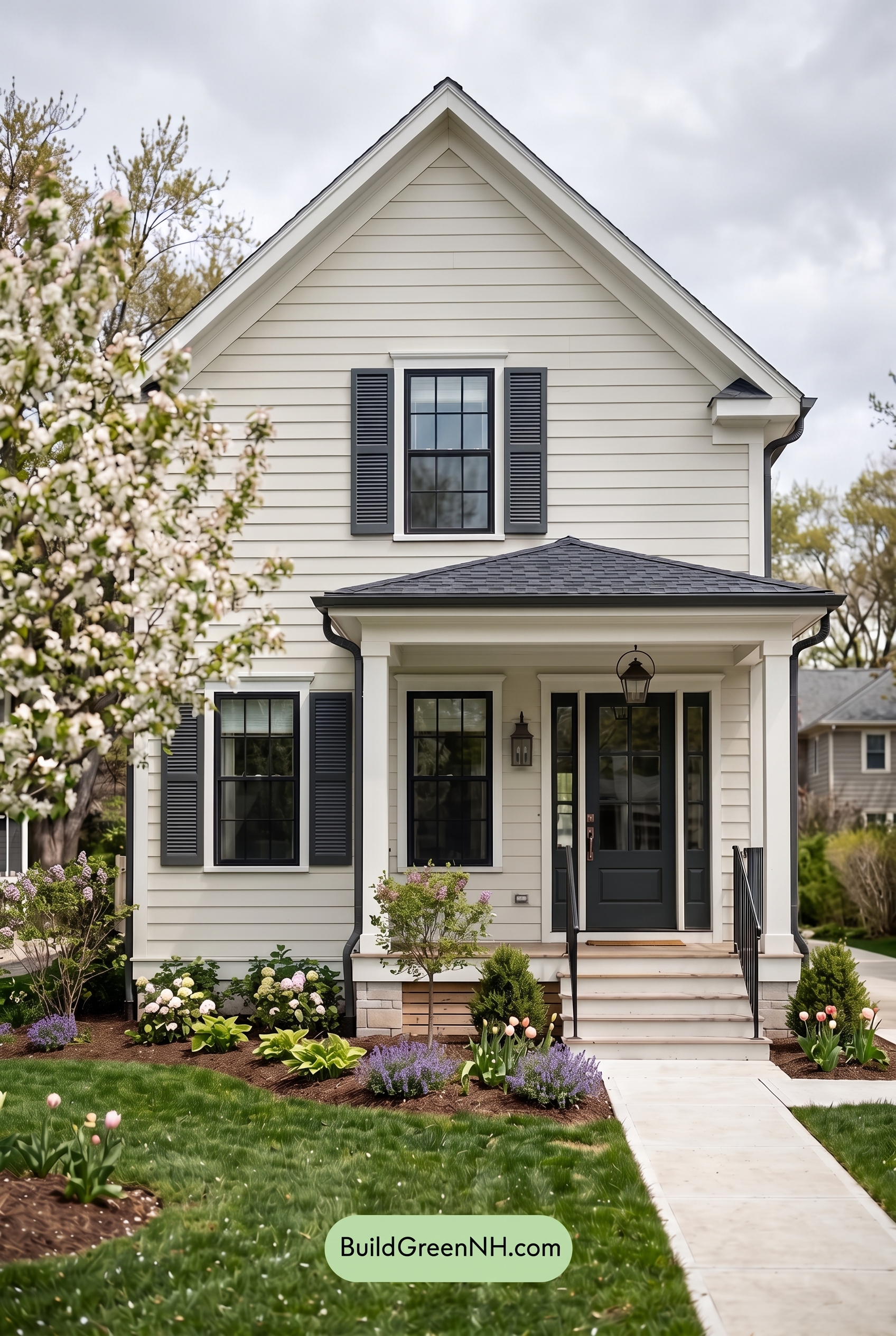
Under overcast light, the white-family siding loses some of the crisp brightness it would have in neutral daylight, reading softer and slightly muted. Its warmth feels more subdued, while the green-family trim and columns appear calmer and less saturated, with any yellow undertones gently cooled.
The gray-family shutters, window frames, door, and railings deepen a touch without harsh shadows, giving the exterior a quieter, more tailored contrast. Compared to neutral daylight, the whole palette feels less sharp and sunny, shifting toward a soft, composed mood with smoother shadows and a more understated finish.
Golden Hour
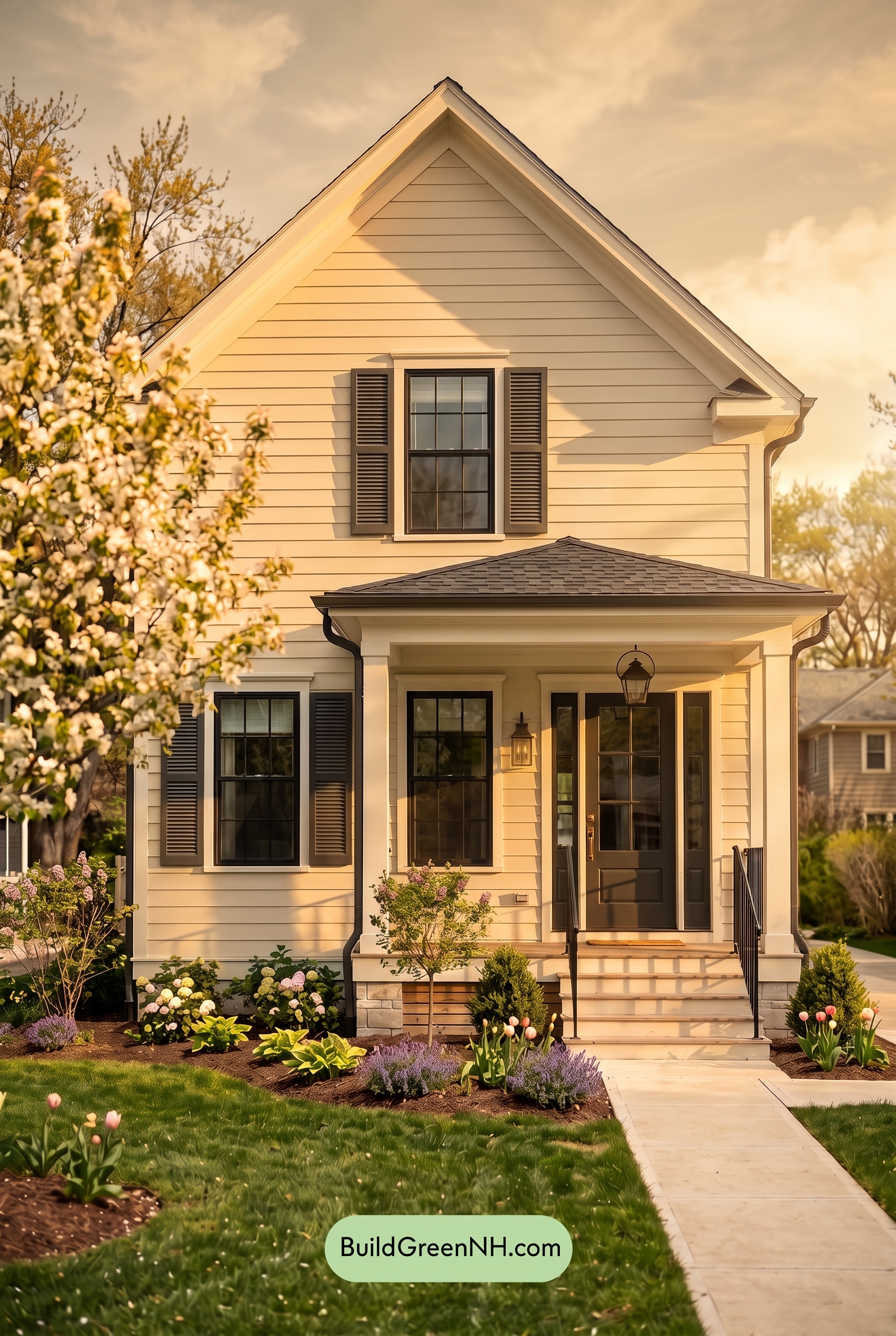
Under Golden Hour light, the white siding shifts from crisp and clean to a warmer, creamier shade, gaining a soft glow that feels more saturated than it would in neutral daylight. The green trim and columns pick up a sunlit richness, making their shade feel gentler and more inviting.
The gray shutters, window frames, door, and railings deepen in the longer shadows, creating stronger contrast against the warmed-up siding. Compared with the flatter balance of neutral daylight, the whole palette feels cozier, more dimensional, and quietly dramatic.
Shade
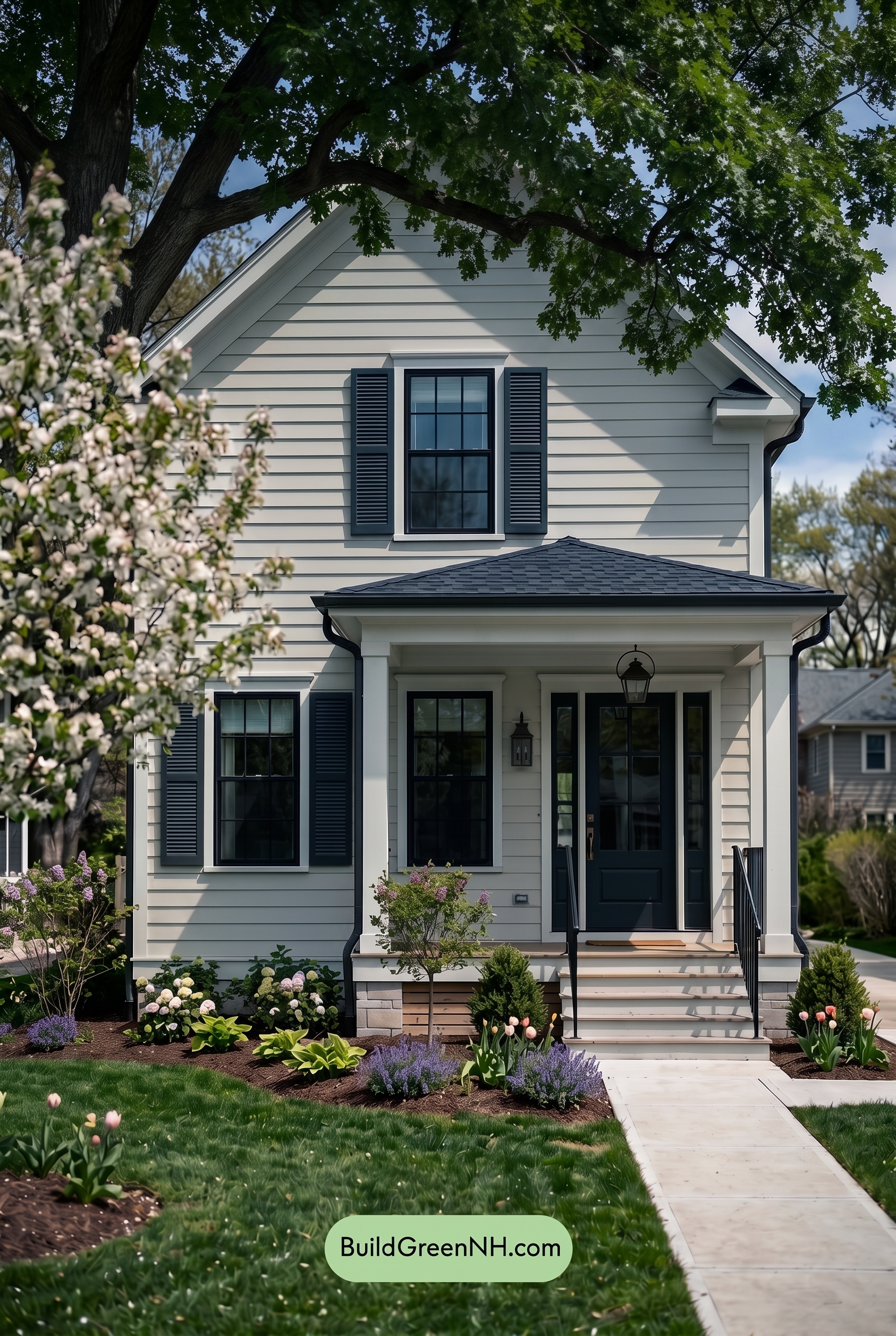
In shade, the white siding loses some of the crisp brightness it would have in neutral daylight and shifts softer, cooler, and more muted. The surrounding tree cover adds gentle shadowing that lowers warmth and saturation, making the surface feel calmer while the lap lines read with more depth.
The green trim and columns appear richer and more connected to the landscape, while the gray shutters, window frames, railings, and front door deepen into a moodier shade. Compared to neutral daylight, the overall contrast feels stronger in the shadowed areas, giving the exterior a quiet, refined, and slightly more dramatic presence.
Nighttime
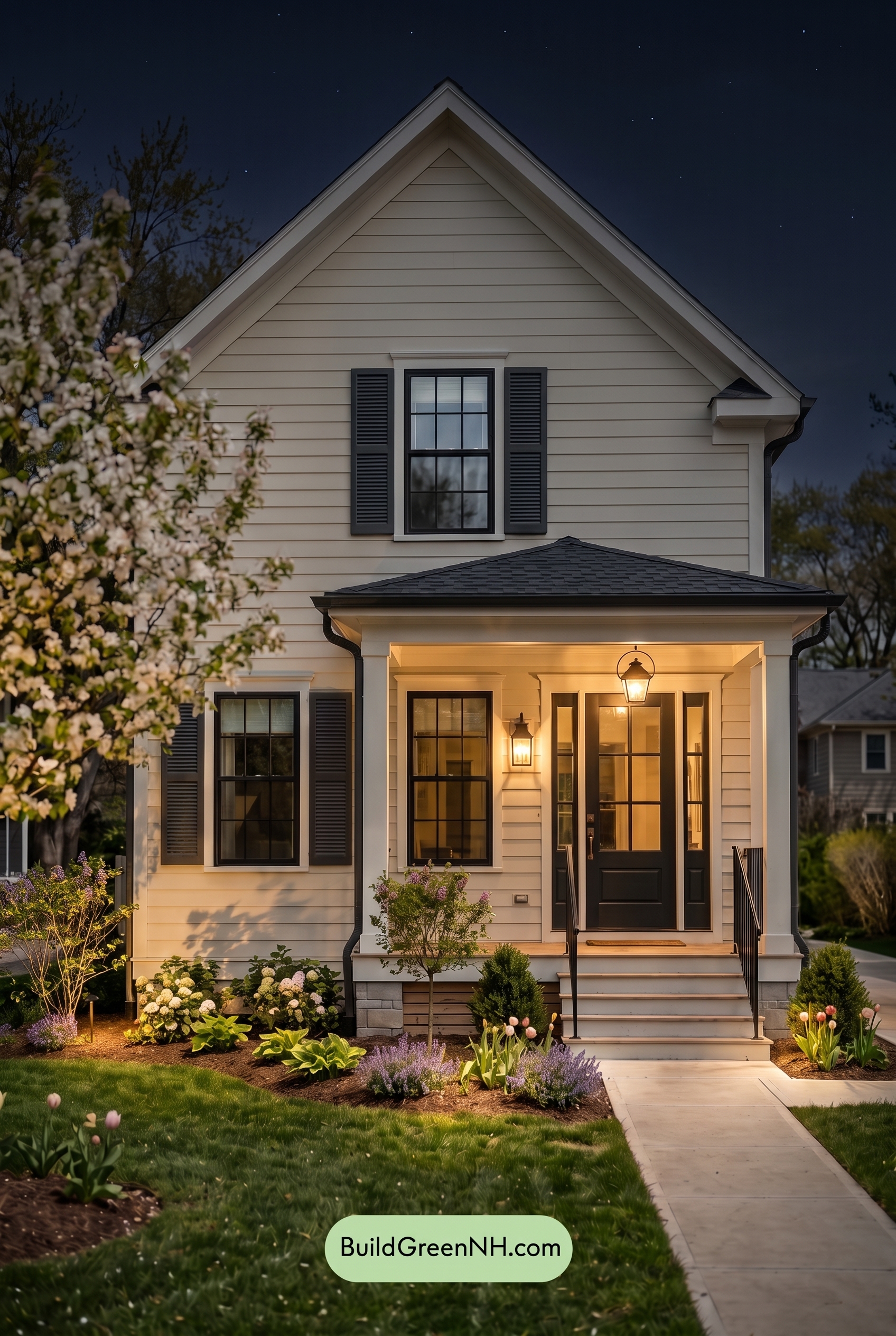
At nighttime, the white family siding shifts from crisp and clean in neutral daylight to a softer, warmer shade where the porch lights touch it. The glow adds gentle warmth and a bit more saturation, while areas farther from the fixtures fall into cooler shadows, making the surface feel layered and inviting.
The green family trim and columns become more subdued after dark, reading deeper and quieter, while the gray family shutters, railings, window frames, and door gain stronger contrast against the lighter walls. Shadows sharpen the architectural details, giving the home a cozier, more dramatic mood than it has in even daylight.
Pin these for later:
Want More?
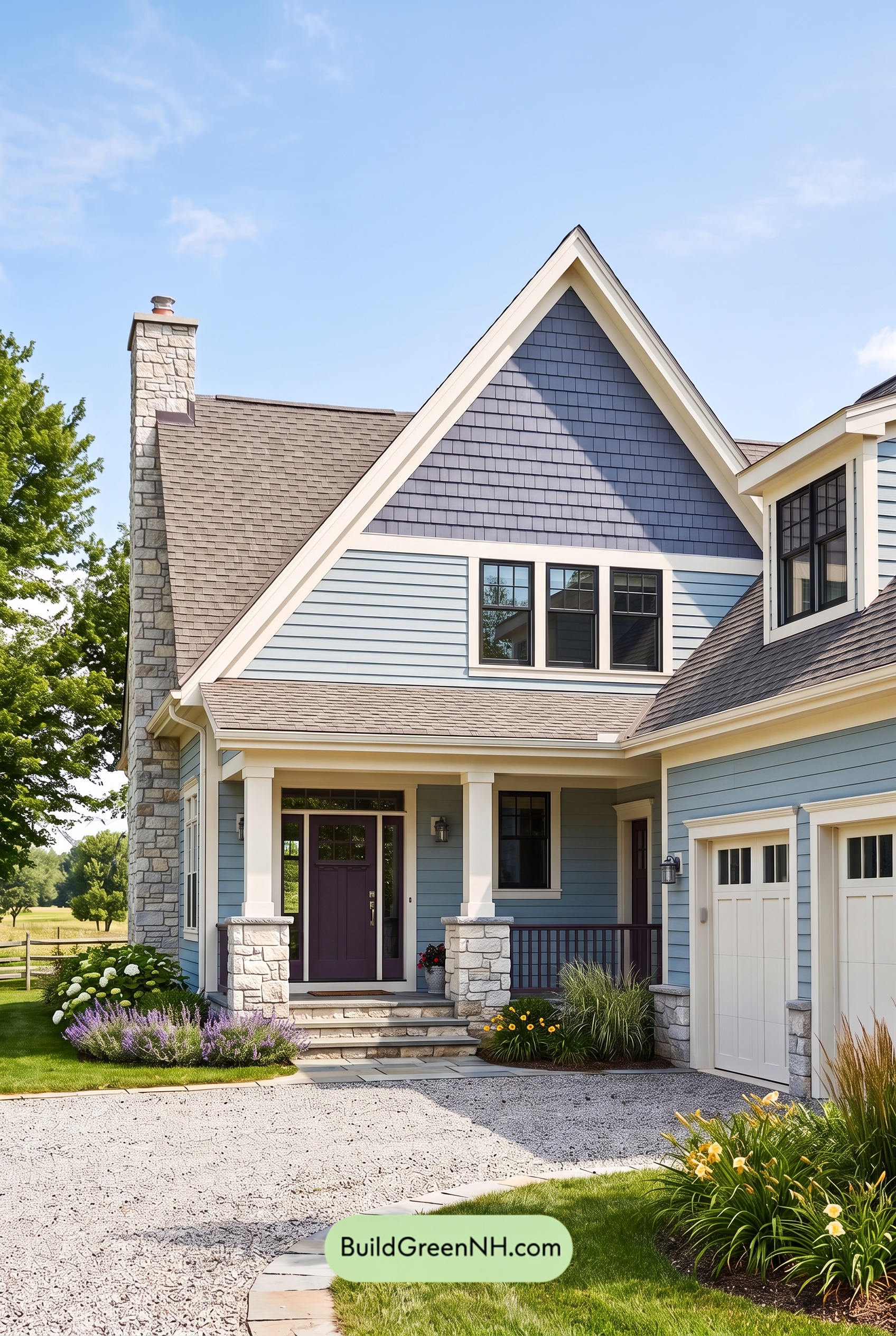
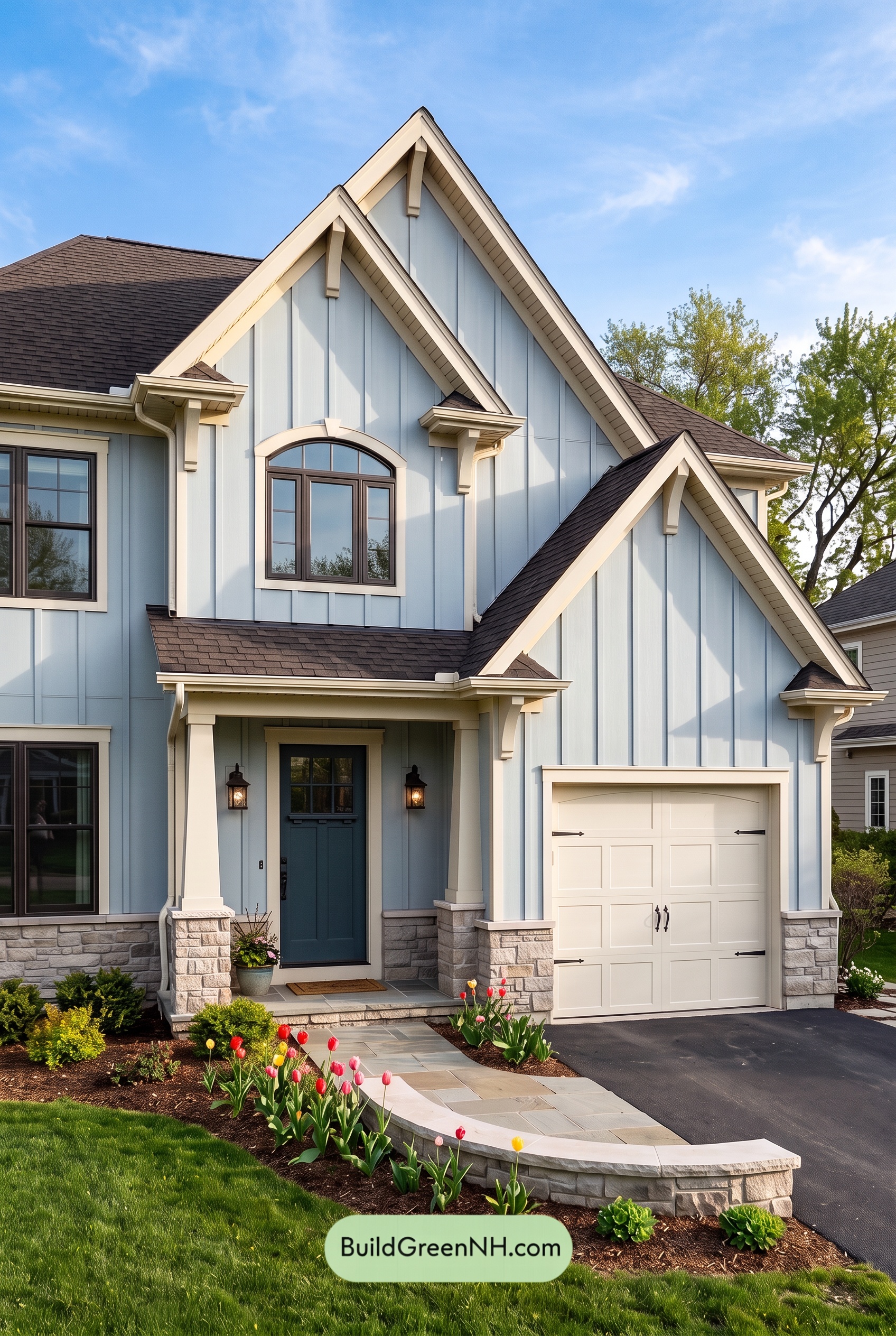 Exterior Color Scheme with Stone Accents: Bluebell Gable Song
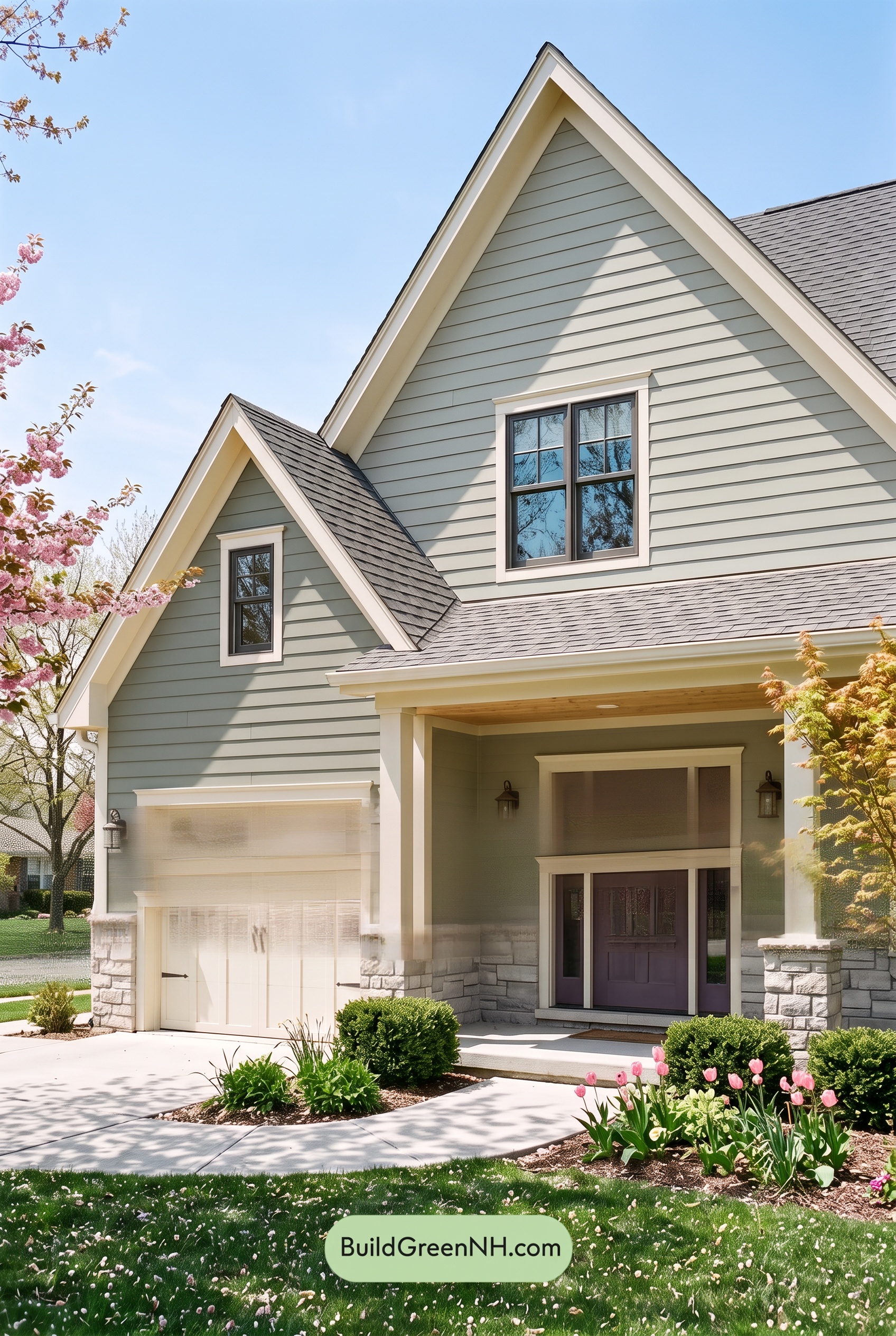
 Exterior Color Scheme with Stone Accents: Meadow Bell Welcome
 Exterior Color Scheme with Stone Accents: Willow Quartz Porch
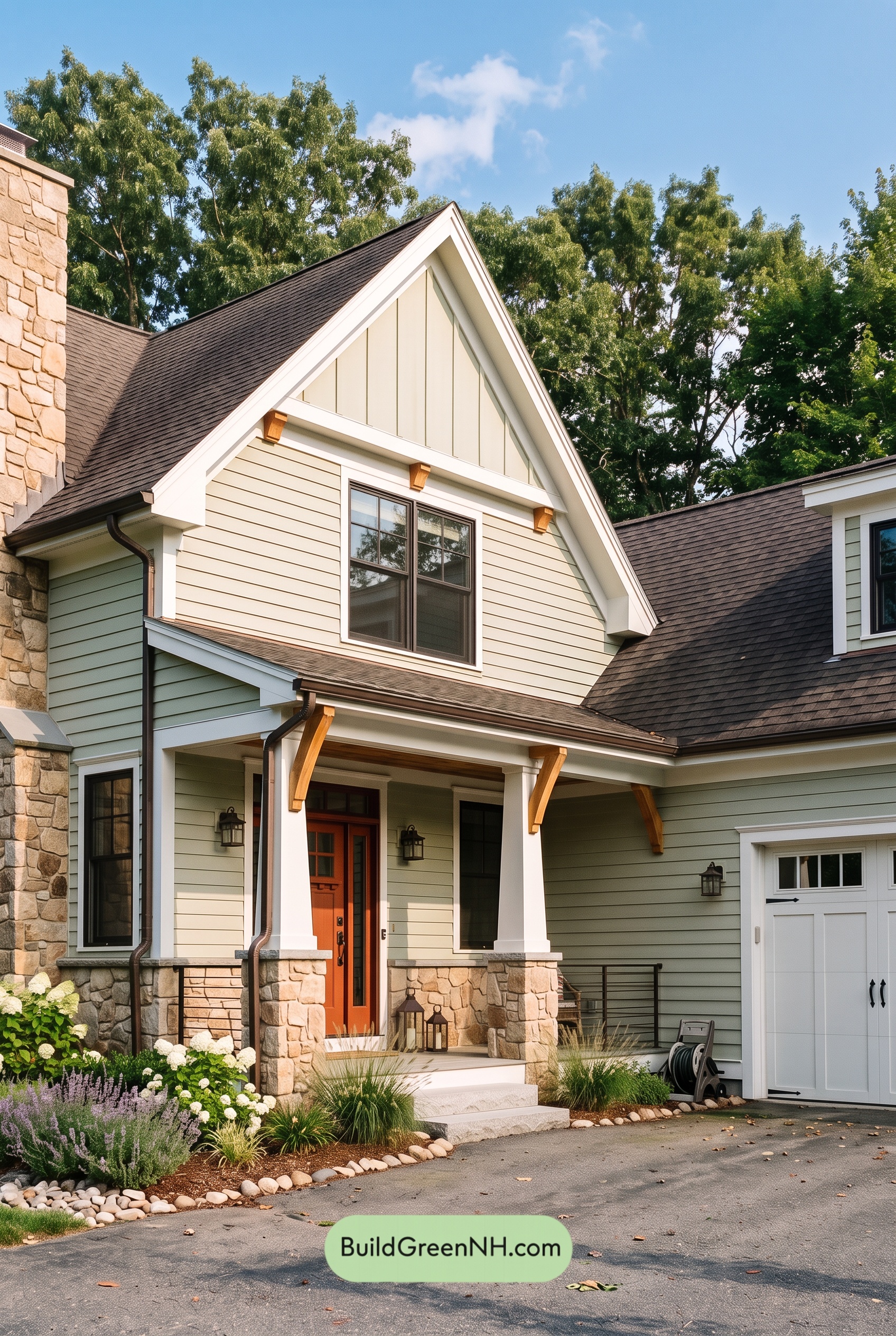 Exterior Color Scheme with Stone Accents: Celadon Ember Gable
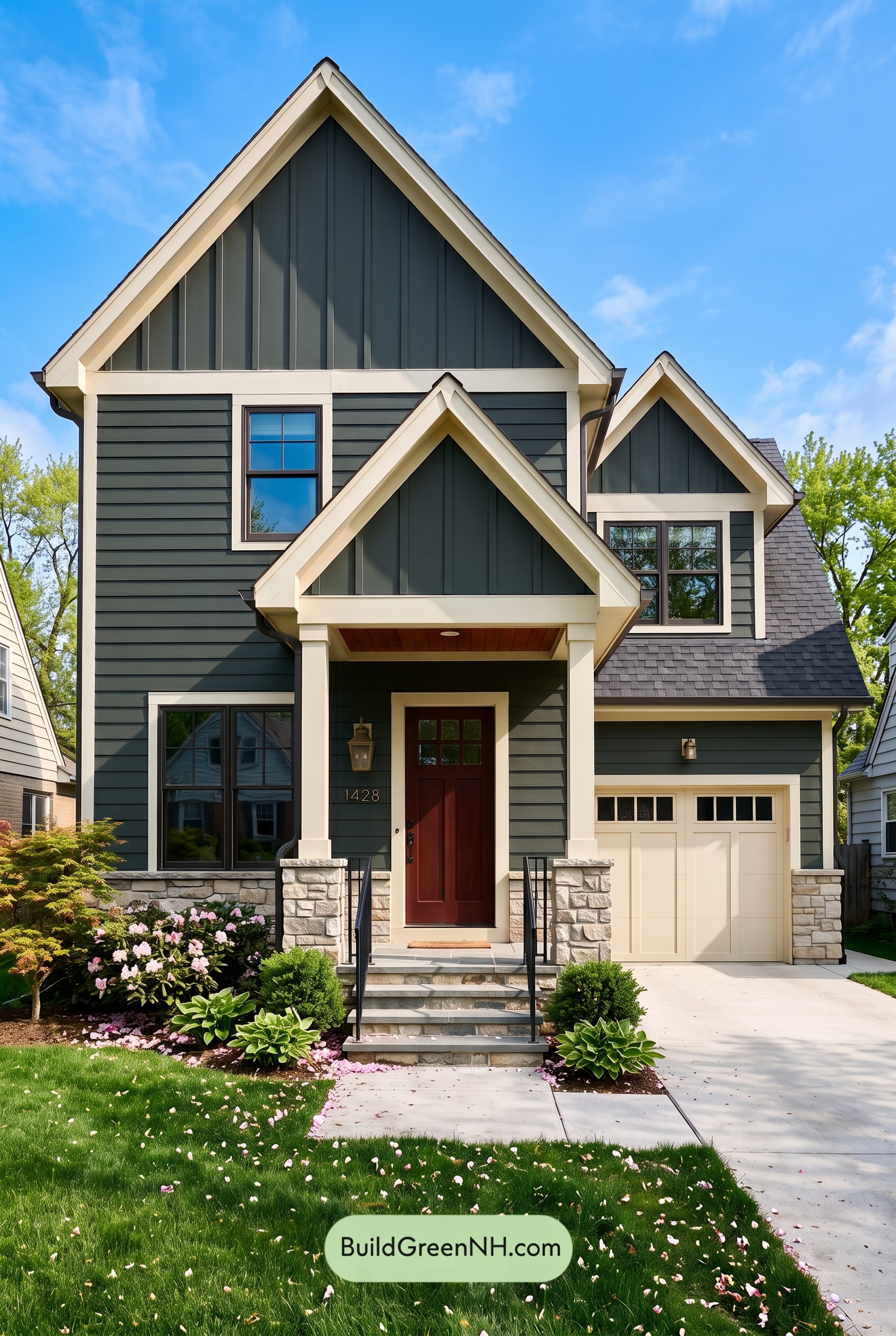 Exterior Color Scheme with Stone Accents: Pine Brass Threshold
Table of Contents