Last updated on
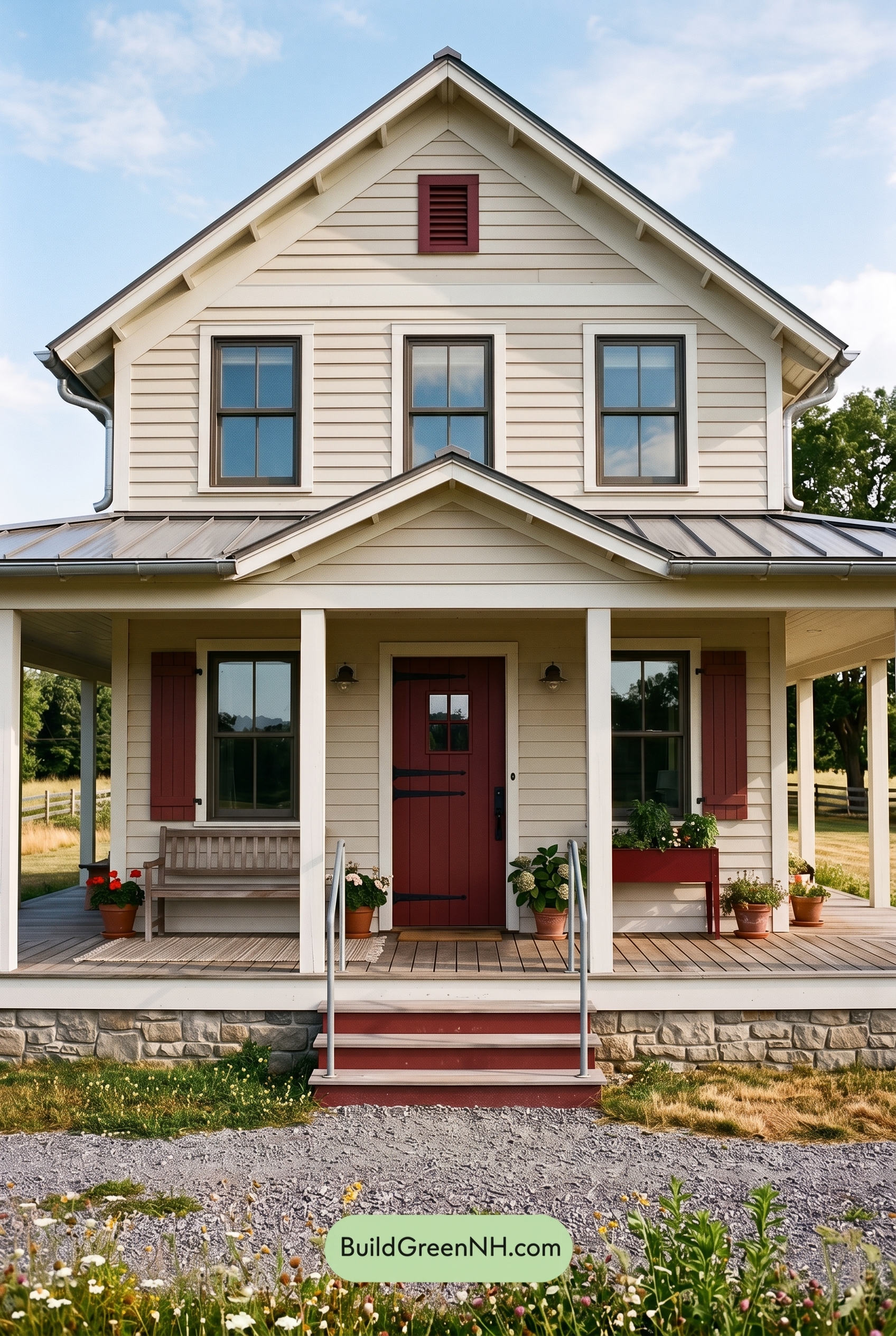

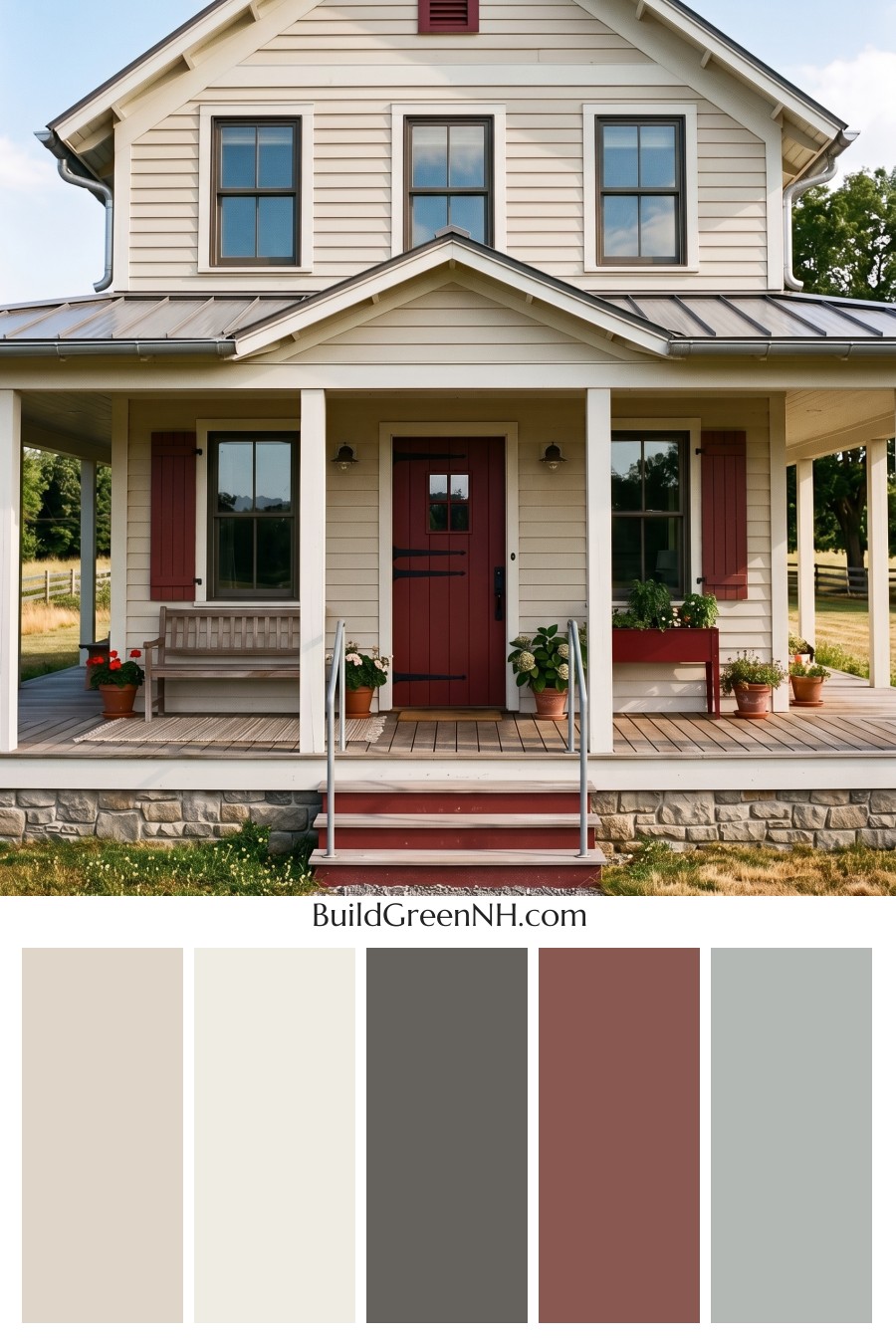
This exterior works beautifully because its creamy beige siding, crisp white detailing, cool gray framing, and rich brown accents create a farmhouse look that feels warm, balanced, and full of character.
A Warm, Welcoming Base
The main siding is wrapped in a soft beige shade that gives the house an easygoing, sunlit warmth. It feels classic without being too formal, and it gives the entire exterior a calm, inviting presence. The horizontal siding also lets the beige read with gentle depth as light and shadow move across the front of the home.
Crisp White Trim That Sharpens the Architecture
Bright white trim outlines the gables, windows, porch roof, fascia, and columns, adding fresh contrast against the beige siding. This white family shade is one of the reasons the home feels so clean and polished. It highlights the rooflines and gives the porch a strong, welcoming frame.
The white columns are especially important. They bring structure to the front porch and make the entry feel open, bright, and friendly. Against the warmer siding, the white details feel crisp but not stark.
Cool Gray for Balance and Definition
The window frames introduce a deep gray shade that grounds the lighter exterior colors. This cooler tone keeps the palette from feeling overly soft and adds a subtle modern edge. The gray railings and metal roof elements echo that same family, creating a cohesive thread from the windows to the porch and roofline.
The roof’s gray tones also work beautifully with the beige siding. They bring a practical, weathered quality that suits the home’s farmhouse character while adding just enough contrast at the top of the structure.
Rich Brown Accents With Personality
The front door and shutters bring in a rich, reddish brown shade that gives the home its personality. This accent color feels earthy, rustic, and cheerful all at once. It draws the eye straight to the entry, making the front door feel like a true focal point.
Repeating the brown family on the shutters creates rhythm across the facade. The accents are bold enough to stand out, but because they stay rooted in a warm natural shade, they still feel comfortable beside the beige siding and white trim.
Why the Palette Works So Well
This color scheme succeeds because it balances warmth, contrast, and charm. The beige siding provides softness, the white trim adds clarity, the gray details bring depth, and the brown accents deliver character. Nothing feels out of place.
The overall mood is welcoming and relaxed, with a polished farmhouse feel. It is a palette that looks comfortable in a rural setting, especially with natural wood tones, stone textures, greenery, and simple porch decor. Warm, classic, and full of curb appeal, this exterior color combination makes the home feel instantly approachable.
Next, see how this color scheme looks under different lighting simulations throughout the day.
Overcast
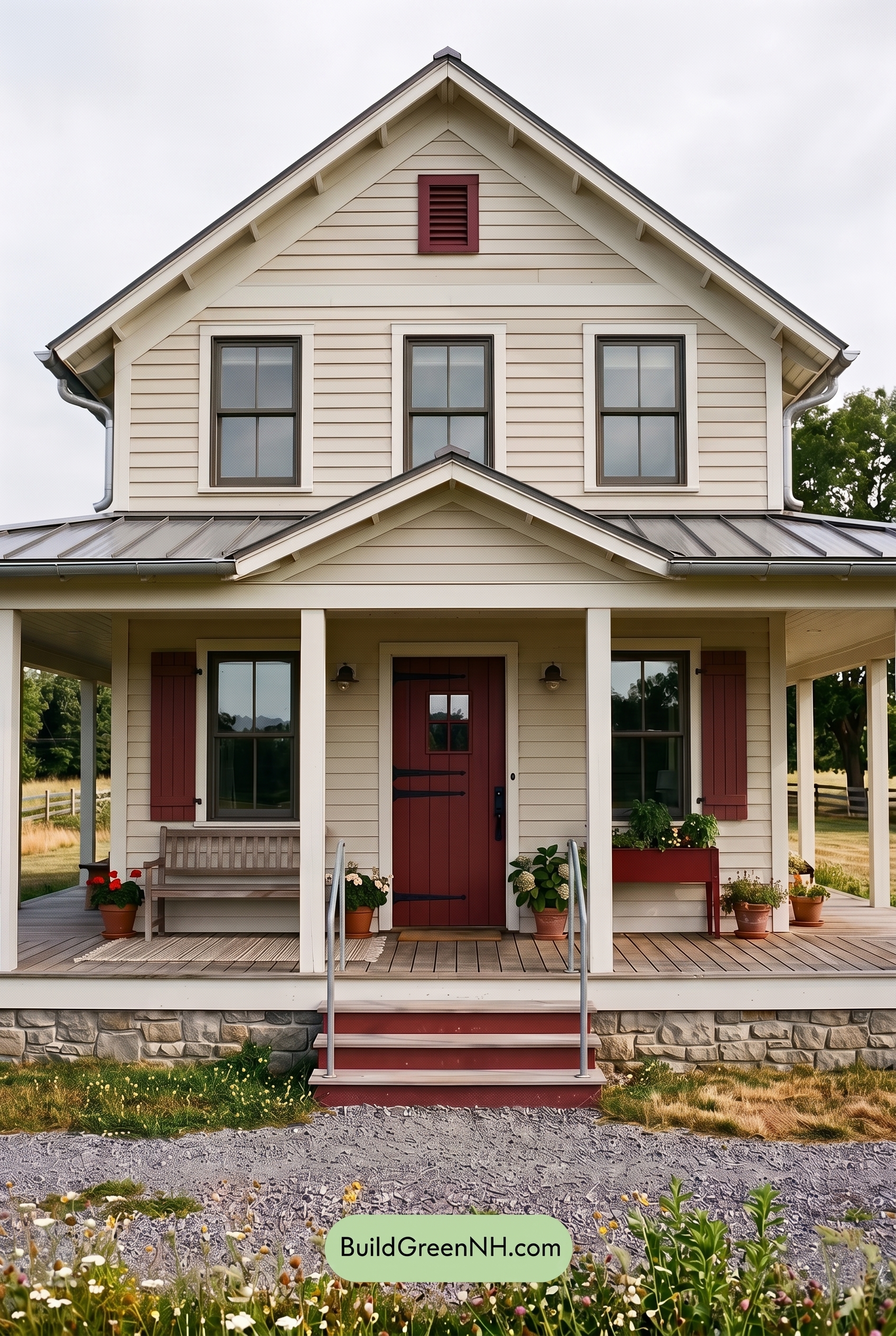
Under overcast light, the beige siding loses some of the sunlit warmth it would show in neutral daylight, settling into a softer, more muted neutral. The white trim and columns feel less crisp and bright, while the gray window frames and railings look slightly cooler and more blended, reducing the sharp contrast around the openings.
The brown door and shutters also appear deeper and less saturated, giving the façade a quieter, grounded feel. With shadows softened under the eaves and porch, the overall mood shifts from bright and defined to calm, cozy, and gently subdued.
Golden Hour
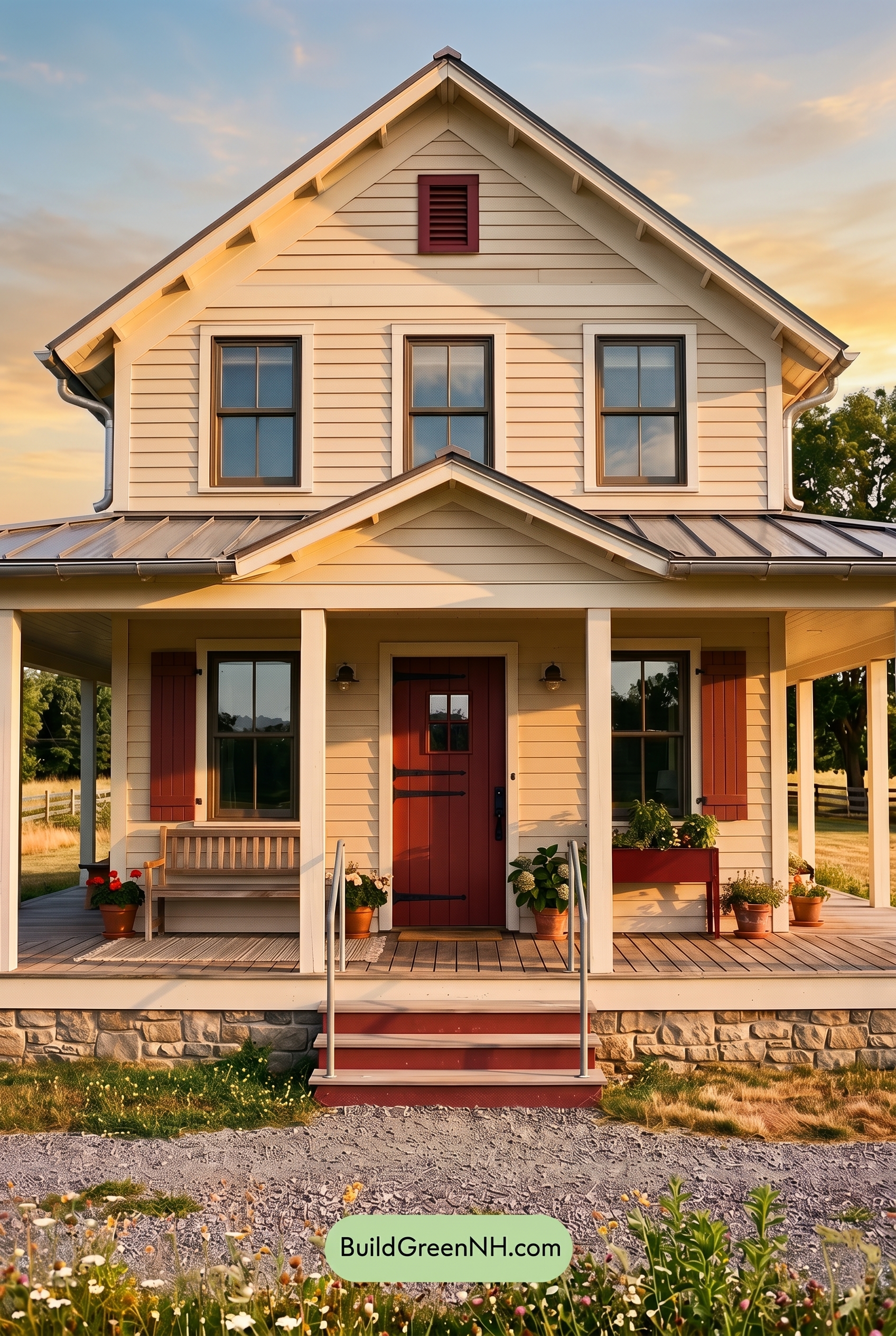
Under Golden Hour light, the beige family siding shifts from a calm neutral daylight look to a richer, warmer shade with a soft sunlit glow. The white family trim and columns feel creamier and less stark, while the brown family door and shutters gain saturation and depth, making them appear more inviting.
Compared to neutral daylight, the low warm light creates longer shadows that deepen the gray family window frames and railings, adding sharper contrast around the porch and rooflines. The overall mood becomes cozier and more dimensional, with warm highlights and gentle shadow play giving the exterior a welcoming evening character.
Shade
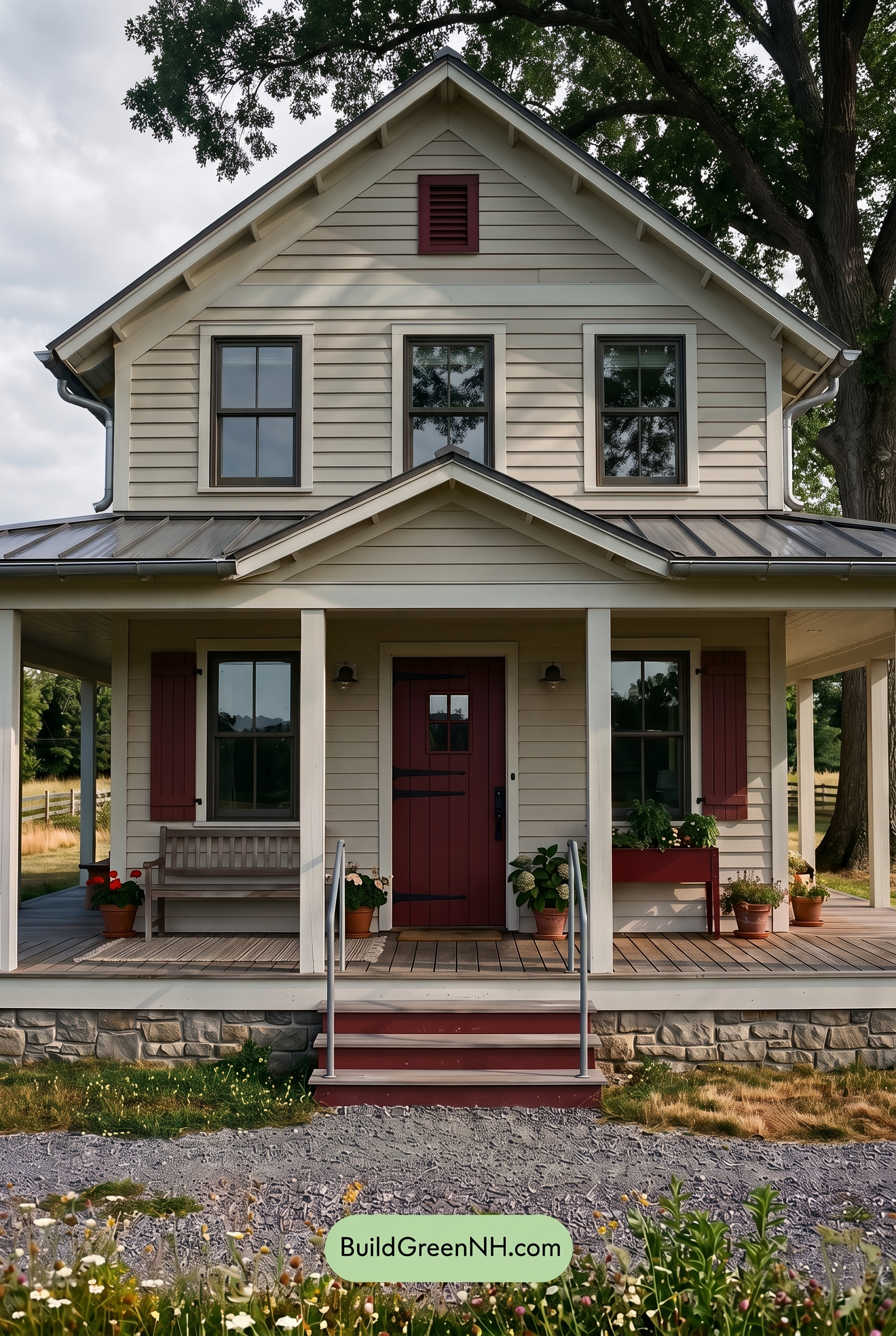
In shade, the beige siding loses a bit of its sunlit warmth and reads more muted and grounded than it would in neutral daylight. Its saturation softens, while the white trim and columns shift from crisp and bright to a gentler off-white impression, creating a calmer, lower-contrast exterior.
The gray window frames and railings appear deeper and cooler in the shadows, adding definition without feeling stark. Meanwhile, the brown door and shutters become richer and moodier, with their warmth slightly subdued, giving the home a cozy, tucked-away character beneath the tree canopy.
Nighttime
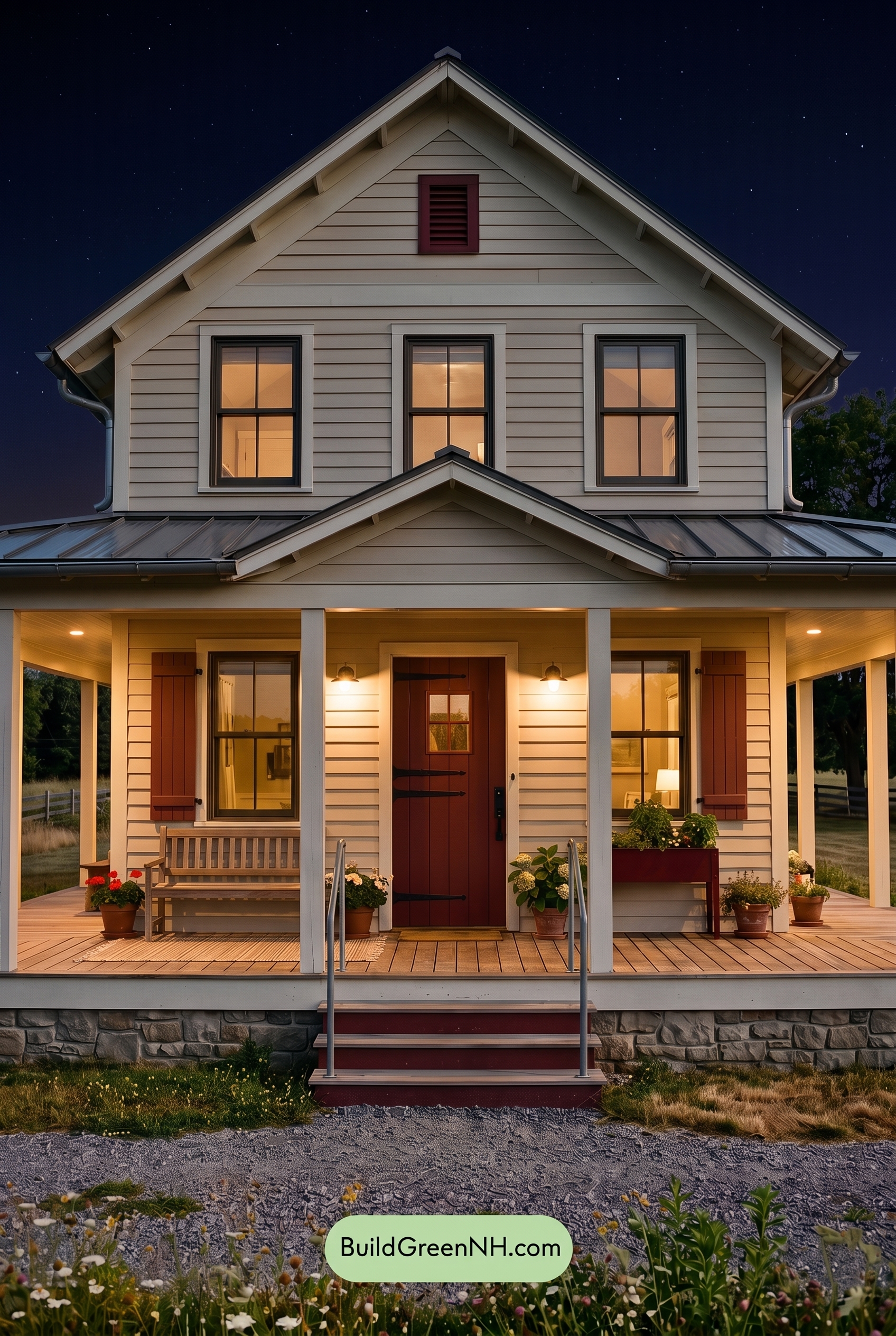
At nighttime, the beige siding loses some of its neutral daylight softness and takes on a deeper, warmer glow where the porch lights touch it. The white trim and columns feel creamier near the light, while shaded edges cool down and recede, making the rooflines and siding grooves look more dimensional.
The gray window frames and railings appear darker and crisper after sunset, creating stronger contrast against the lighter surfaces. The brown front door and shutters feel richer and more saturated, shifting the mood from bright and welcoming in daylight to cozy, dramatic, and warmly inviting at night.
Pin these for later:
Want More?
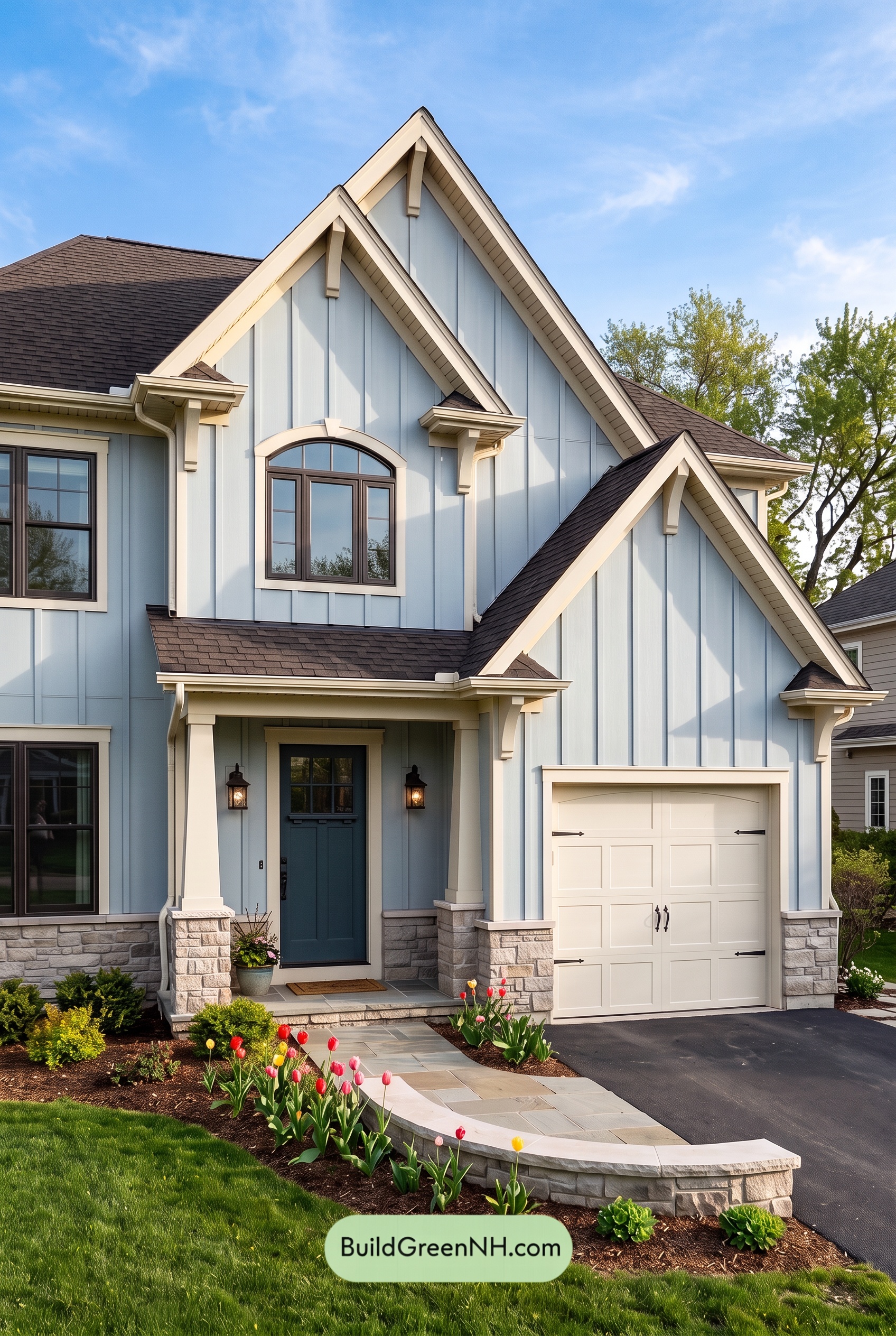 Exterior Color Scheme with Stone Accents: Bluebell Gable Song
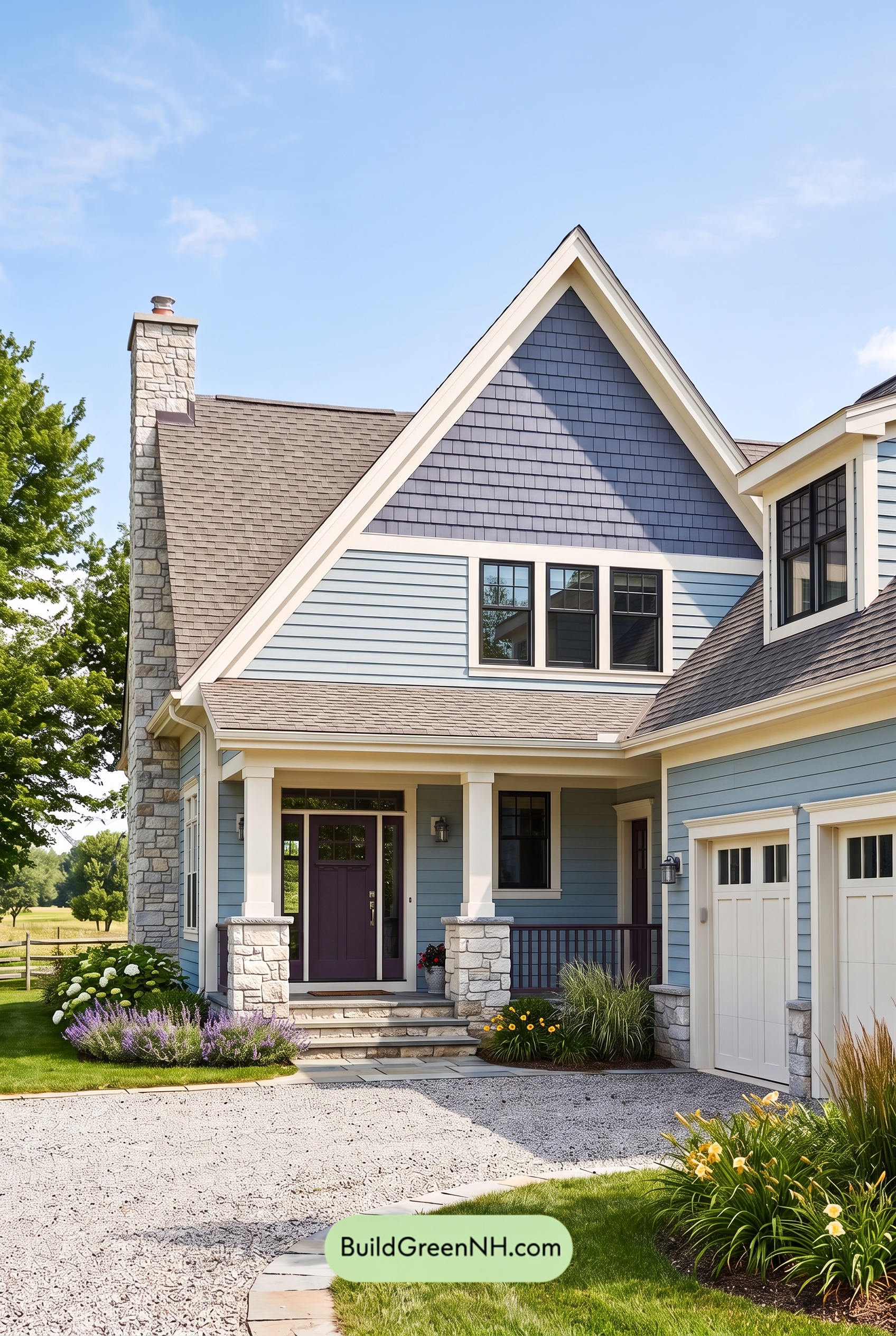 Exterior Color Scheme with Stone Accents: Meadow Bell Welcome
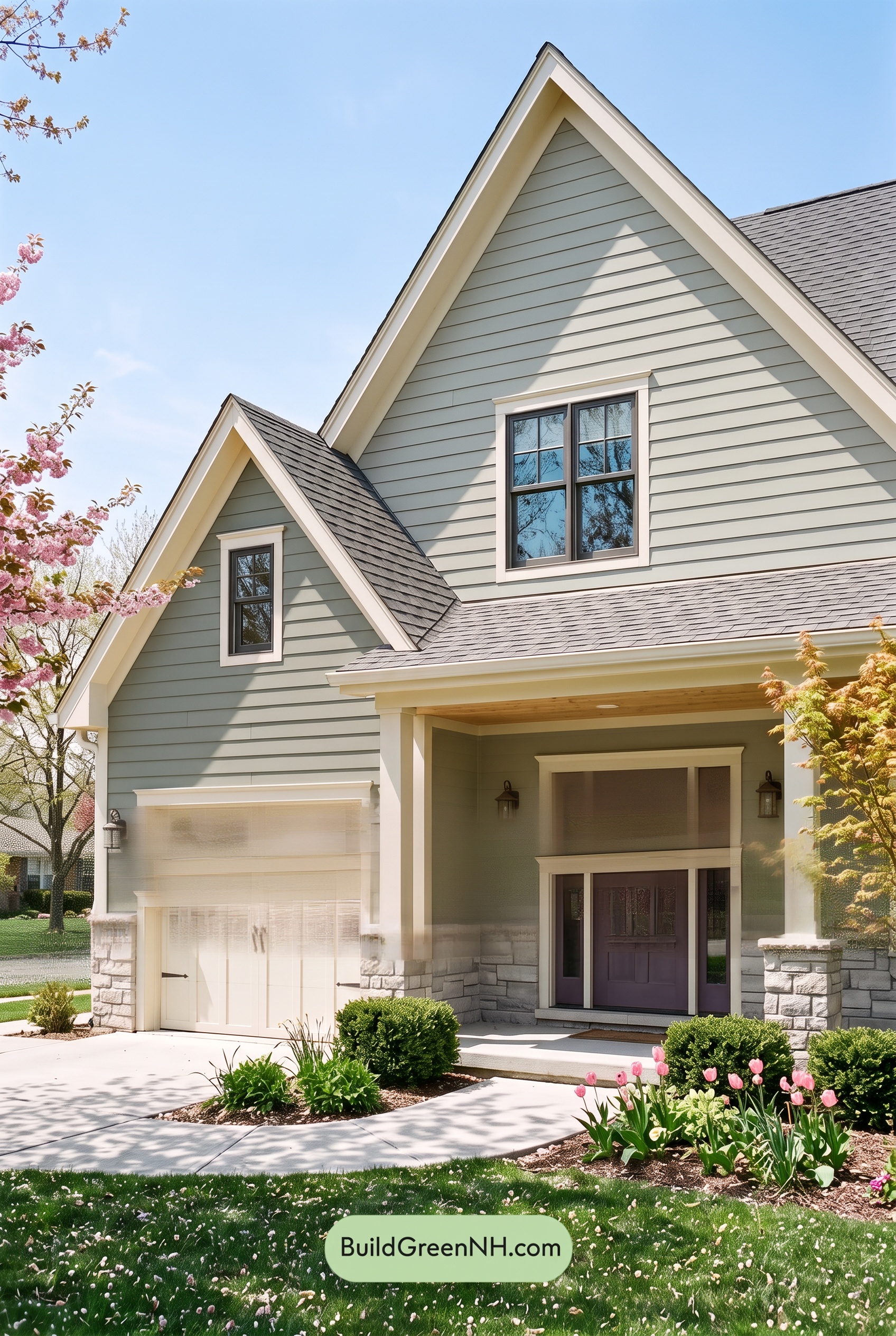 Exterior Color Scheme with Stone Accents: Willow Quartz Porch
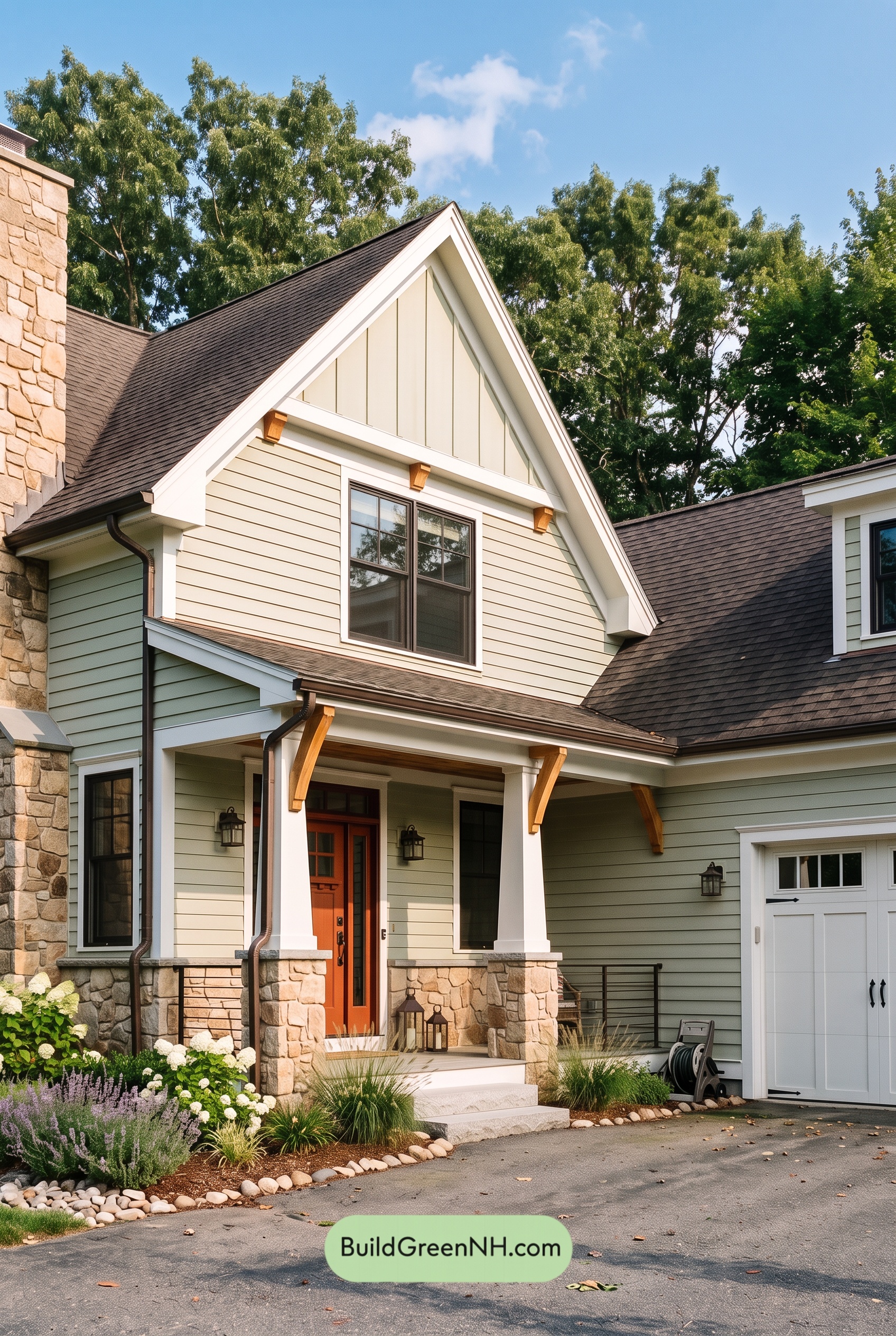 Exterior Color Scheme with Stone Accents: Celadon Ember Gable
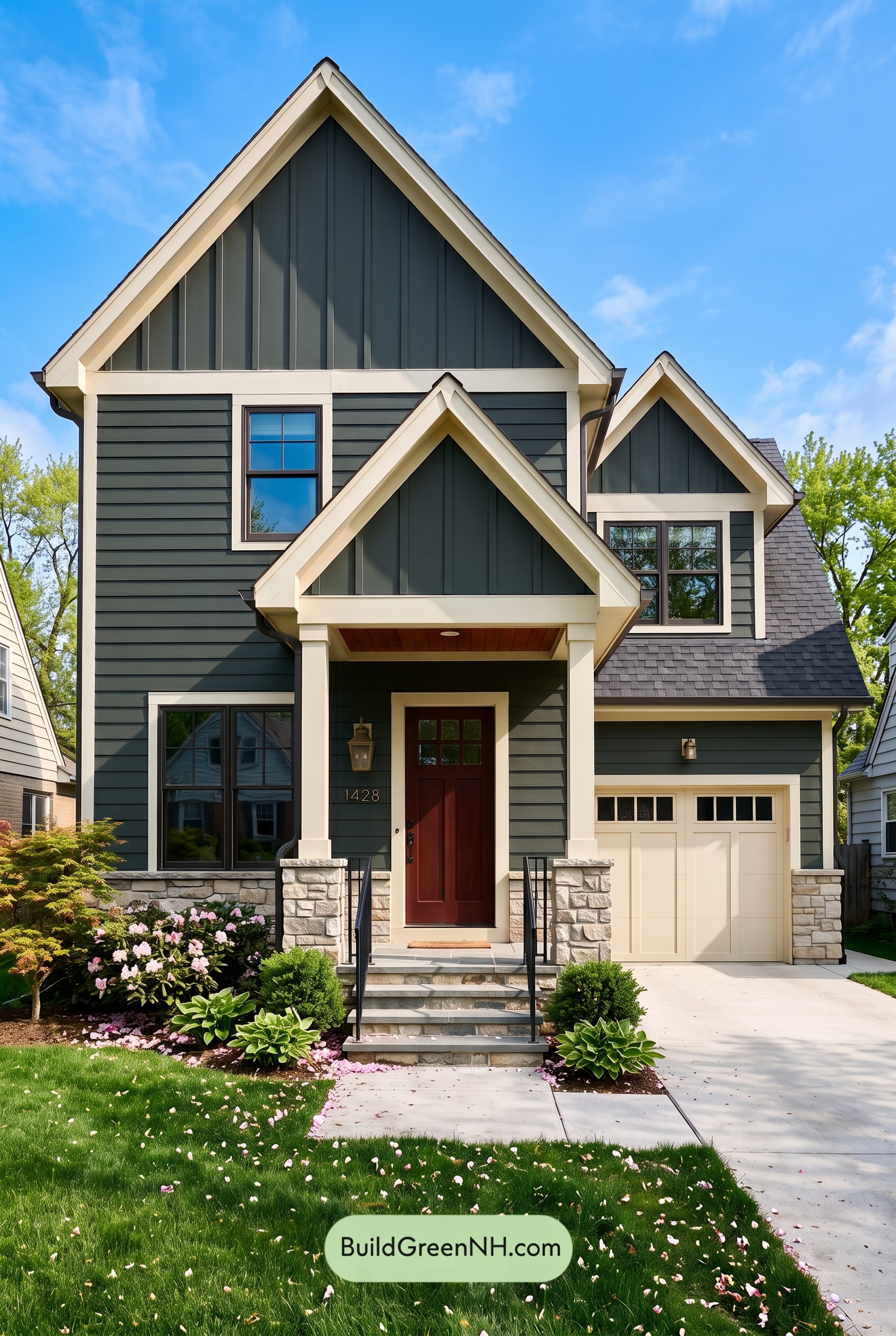 Exterior Color Scheme with Stone Accents: Pine Brass Threshold
Table of Contents