Last updated on
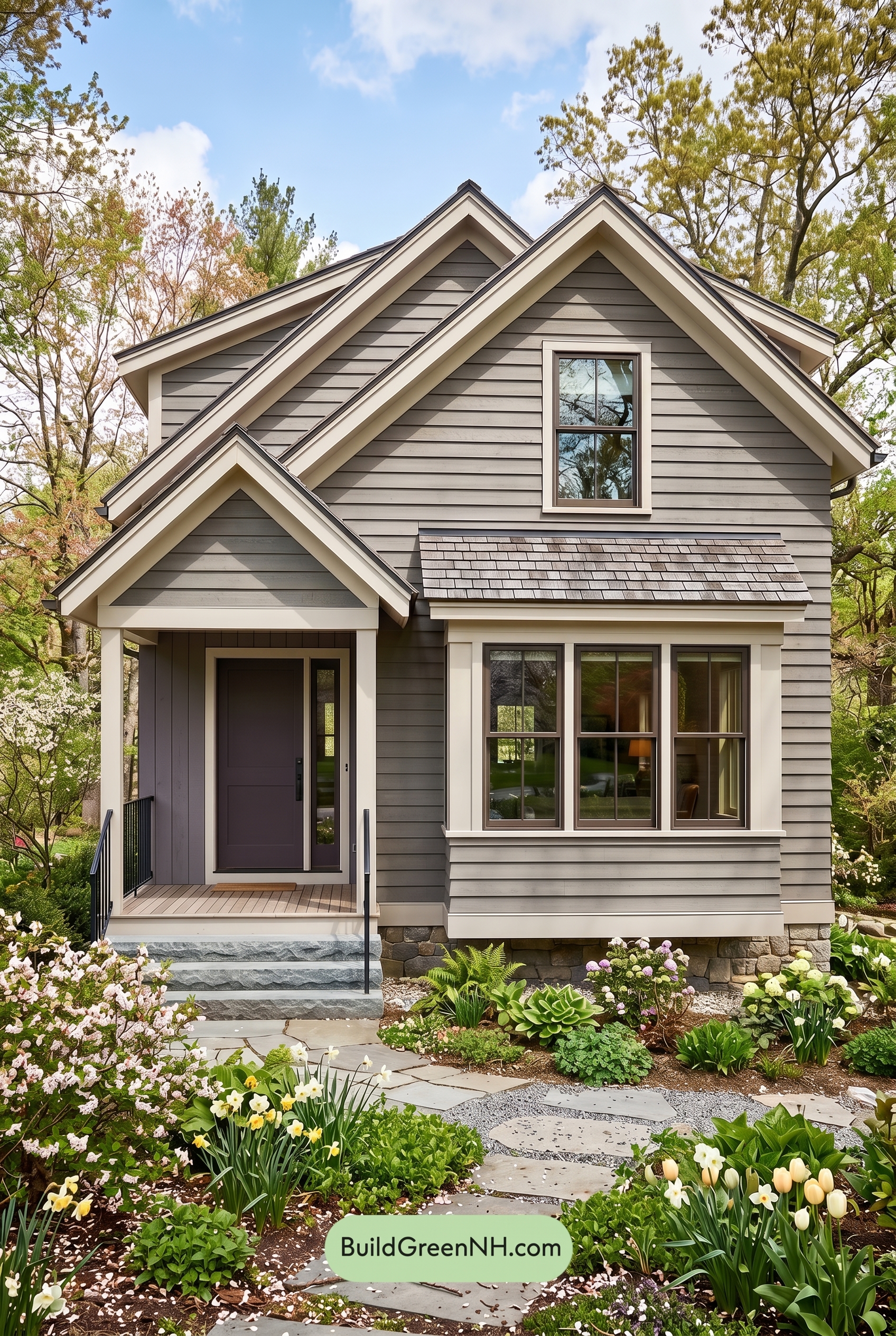

This gray-and-beige exterior works beautifully because it feels polished, timeless, and warmly connected to the wooded setting around it.
A Calm Gray Foundation
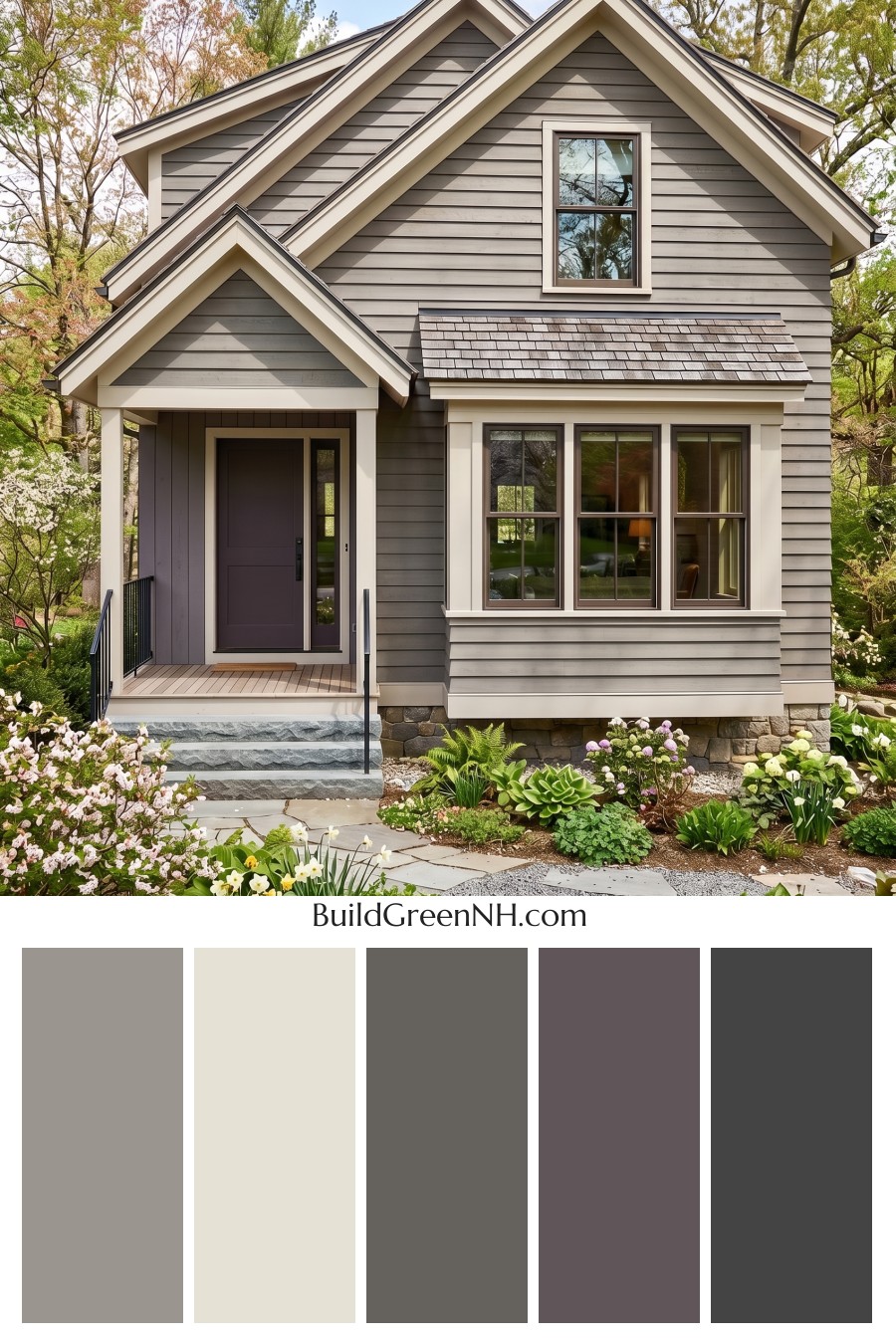
The main siding is wrapped in a warm medium gray that gives the house a grounded, tailored look. It has enough depth to define the horizontal siding and gabled peaks, but it stays soft enough to feel inviting rather than heavy.
This shade of gray is especially effective on a home with layered rooflines. Each gable catches light differently, creating subtle shifts across the siding. The result is a quiet sense of movement and dimension without relying on bold contrast.
Soft Beige Trim for Warmth
The trim brings in a light beige shade that brightens the entire exterior. Around the roof edges, window surrounds, porch opening, and lower trim boards, this warm beige acts like a clean frame for the gray siding.
Because the beige trim is soft rather than stark, it keeps the palette approachable. It highlights the architecture, especially the steep gables and deep eaves, while adding warmth that balances the cooler gray family on the walls.
Porch Columns and Entry Details
The porch columns continue the same light beige family, giving the entry a welcoming, substantial feel. This choice helps the porch read as an intentional focal point, especially against the darker gray siding tucked into the covered entry.
The front door uses a deep gray shade, creating a calm and sophisticated entrance. It blends smoothly with the overall palette while still feeling slightly more dramatic than the siding. The nearby gray side panel and darker entry shadows add depth without disrupting the soft, cohesive look.
Windows, Railings, and Roof Accents
The window frames stay in the gray family, leaning darker than the siding for crisp definition. This creates a refined outline around the glass and pairs beautifully with the beige trim surrounding each window.
The railings use a deep gray shade as well, giving the front steps a slender, modern accent. Since the railings are darker and more understated, they do their job visually without competing with the gables or trim.
The roof and roofline accents continue the gray story, with deeper gray tones that cap the house neatly. These darker shades help anchor the lighter trim and medium gray siding, adding a finished, balanced quality from top to bottom.
The Overall Mood
This color scheme feels peaceful, classic, and quietly upscale. The gray siding brings structure and sophistication, while the beige trim and columns soften the look with warmth. Together, they create a home that feels both fresh and enduring.
It is also a lovely palette for a garden setting. The gray tones echo stone paths and shaded tree trunks, while the beige details glow gently against surrounding greenery and flowers. Nothing feels too sharp or too trendy, which is exactly why the combination works so well.
Why the Palette Works
The success of this exterior comes from restraint. Instead of using many competing colors, the design relies on a thoughtful range of gray and beige shades. The main gray siding sets the tone, the light beige trim adds lift, and the deeper gray accents bring definition.
It is a refined, nature-friendly scheme with just enough contrast to show off the architecture. Warm, balanced, and easy to love, this exterior proves that a quiet palette can still make a memorable first impression.
Next, see how this color scheme looks under different lighting simulations throughout the day.
Overcast
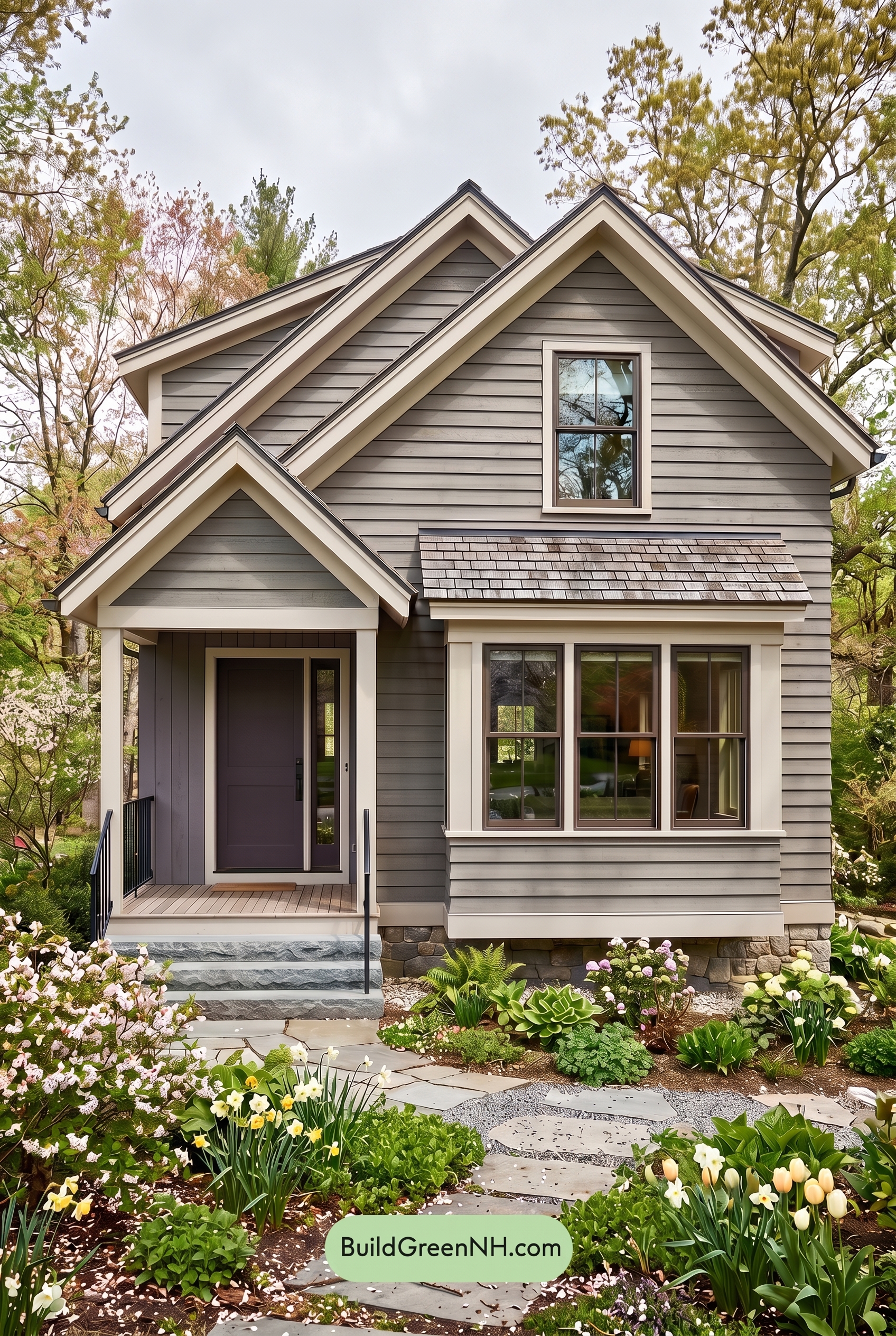
Under overcast lighting, the gray siding reads a bit cooler and more muted than it would in neutral daylight, with saturation gently dialed back. The beige trim and columns lose some of their sunny warmth, shifting into a softer, creamier neutral that feels calm rather than bright.
Because cloud cover diffuses the light, shadows become broader and less dramatic, so the contrast between the gray body, beige details, and darker gray accents feels smoother. The overall mood turns quieter and more refined, giving the exterior a cozy, understated look instead of the crisper definition seen in neutral daylight.
Golden Hour
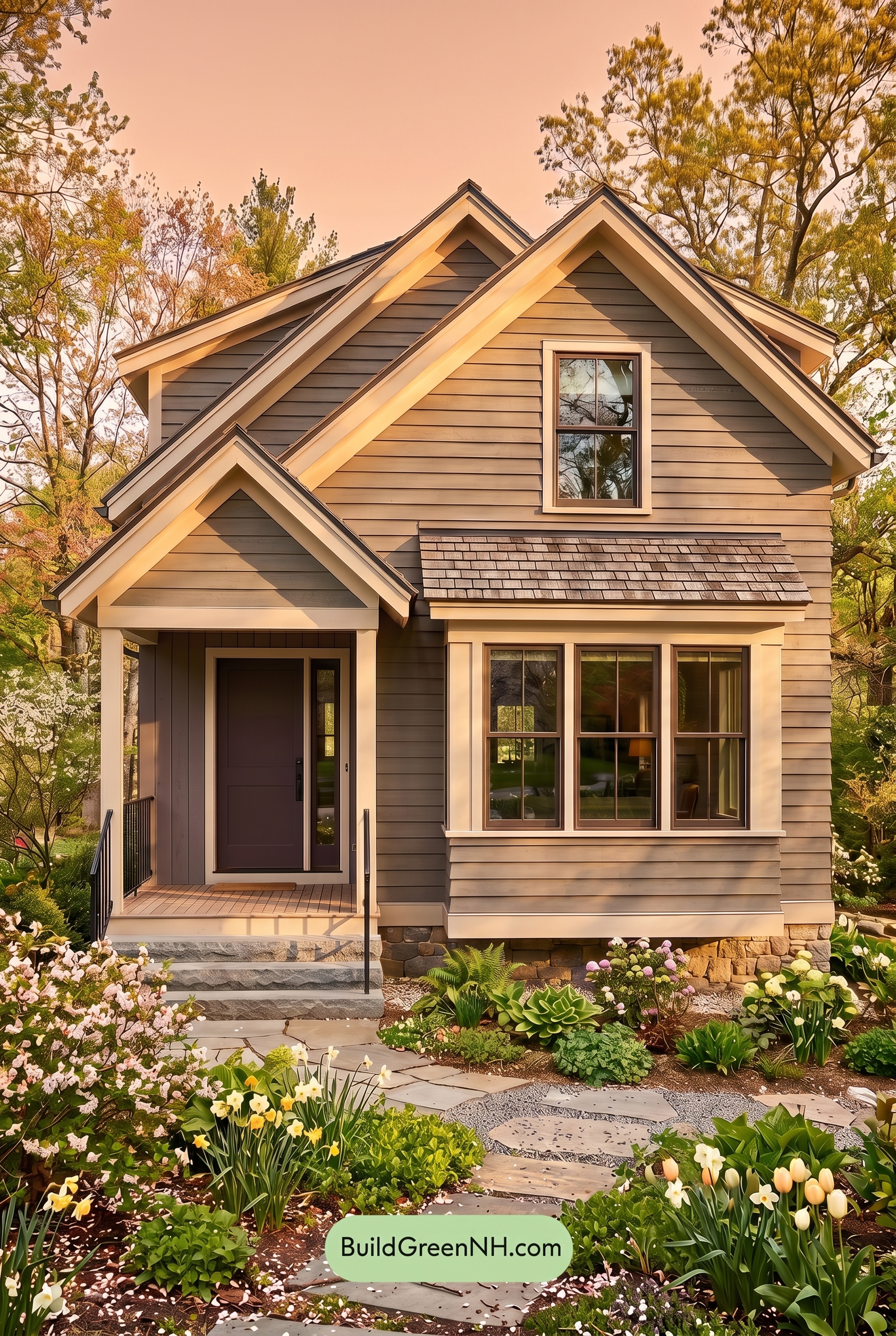
Under Golden Hour light, the gray siding shifts warmer and more saturated than it would in neutral daylight, taking on a softer, sun-washed depth. The beige trim and columns feel creamier and more luminous, gently glowing along the rooflines and window edges.
Longer shadows deepen the gray window frames, door, and railings, creating stronger contrast against the lighter trim. Compared to the clearer, flatter read of neutral daylight, the whole exterior feels cozier, richer, and more inviting, with a calm late-day mood.
Shade
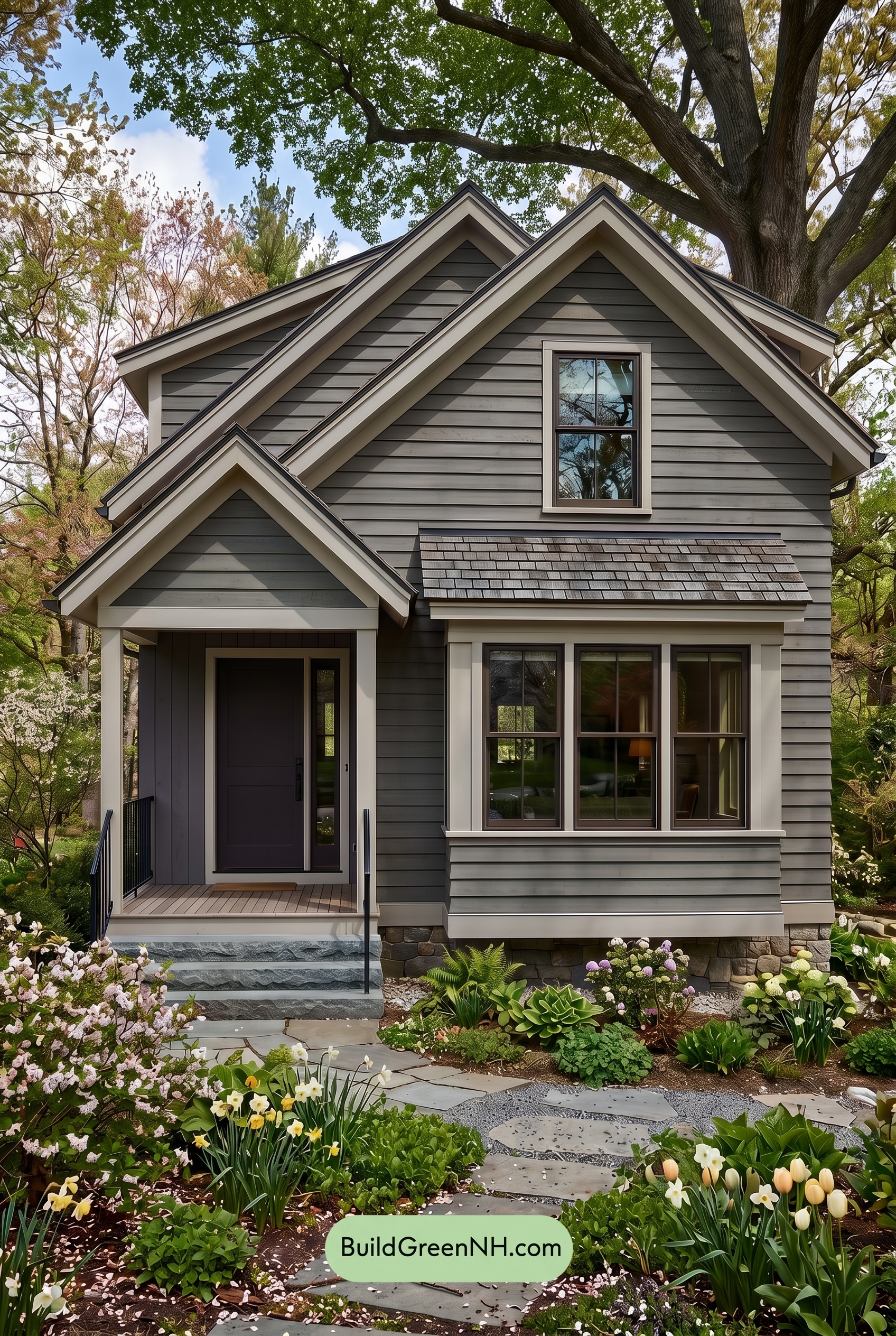
In shade, the gray siding takes on a deeper, cooler character than it would in neutral daylight, with its saturation feeling more muted and grounded. The beige trim and columns lose a bit of their sunlit warmth, shifting softer and more subdued, which gives the exterior a calm, refined look.
Shadows under the rooflines, porch, and siding grooves become more pronounced, adding layered contrast against the lighter beige details. Compared to neutral daylight, the overall mood feels quieter and more sheltered, with the gray family appearing richer and the warm neutrals offering a gentle, balancing lift.
Nighttime
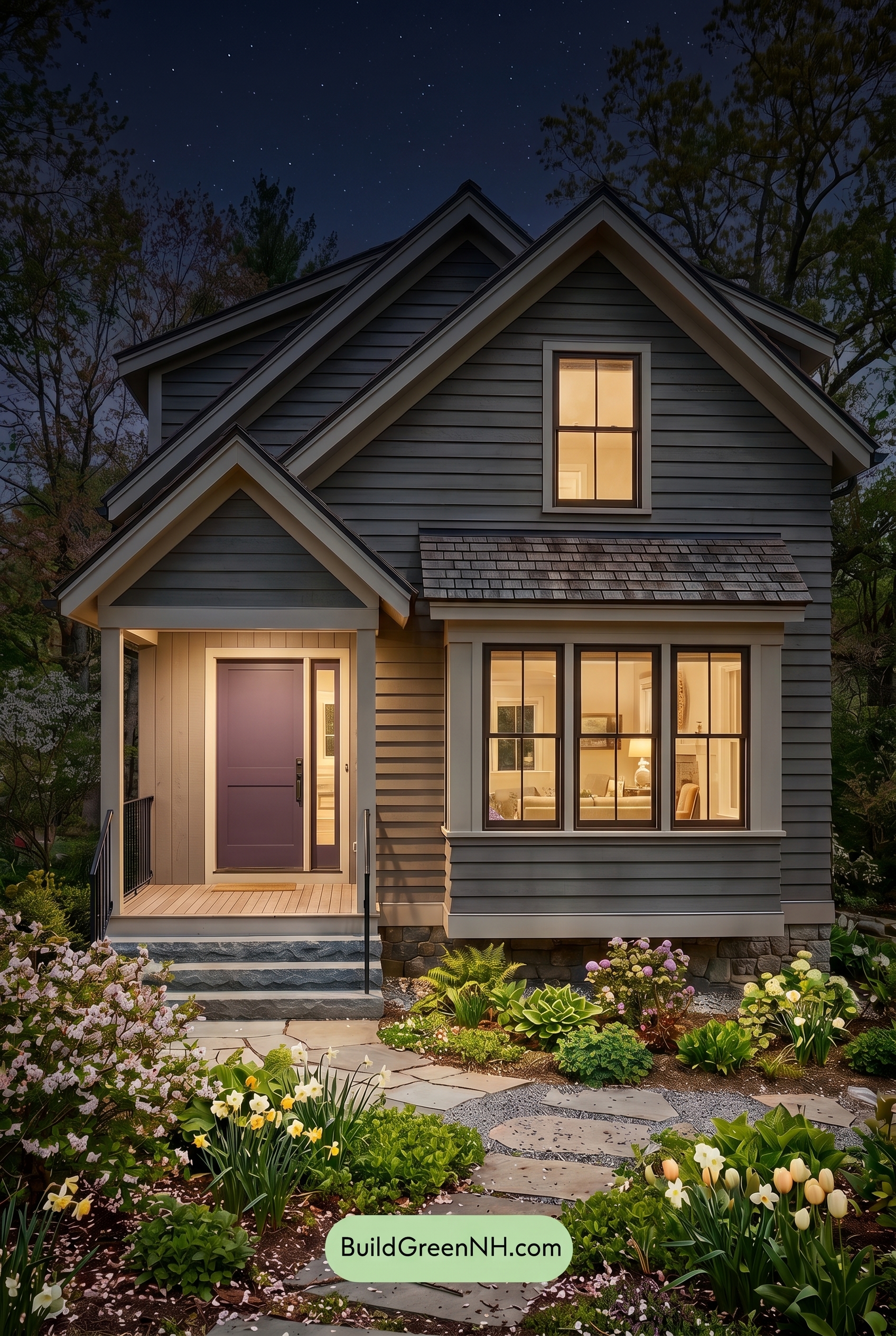
At night, the gray siding shifts from the balanced, clearer look it would have in neutral daylight to a deeper, more saturated shade. Shadows collect beneath the rooflines and between the horizontal boards, making the gray family feel richer and more dramatic while increasing contrast across the façade.
The beige trim and columns pick up a softer warmth from the interior lighting, so they feel creamier and more inviting than they would in daylight. Against the darker gray window frames, door, and railings, the warm neutrals create a cozy, layered mood with a stronger sense of depth and evening charm.
Pin these for later:
Want More?
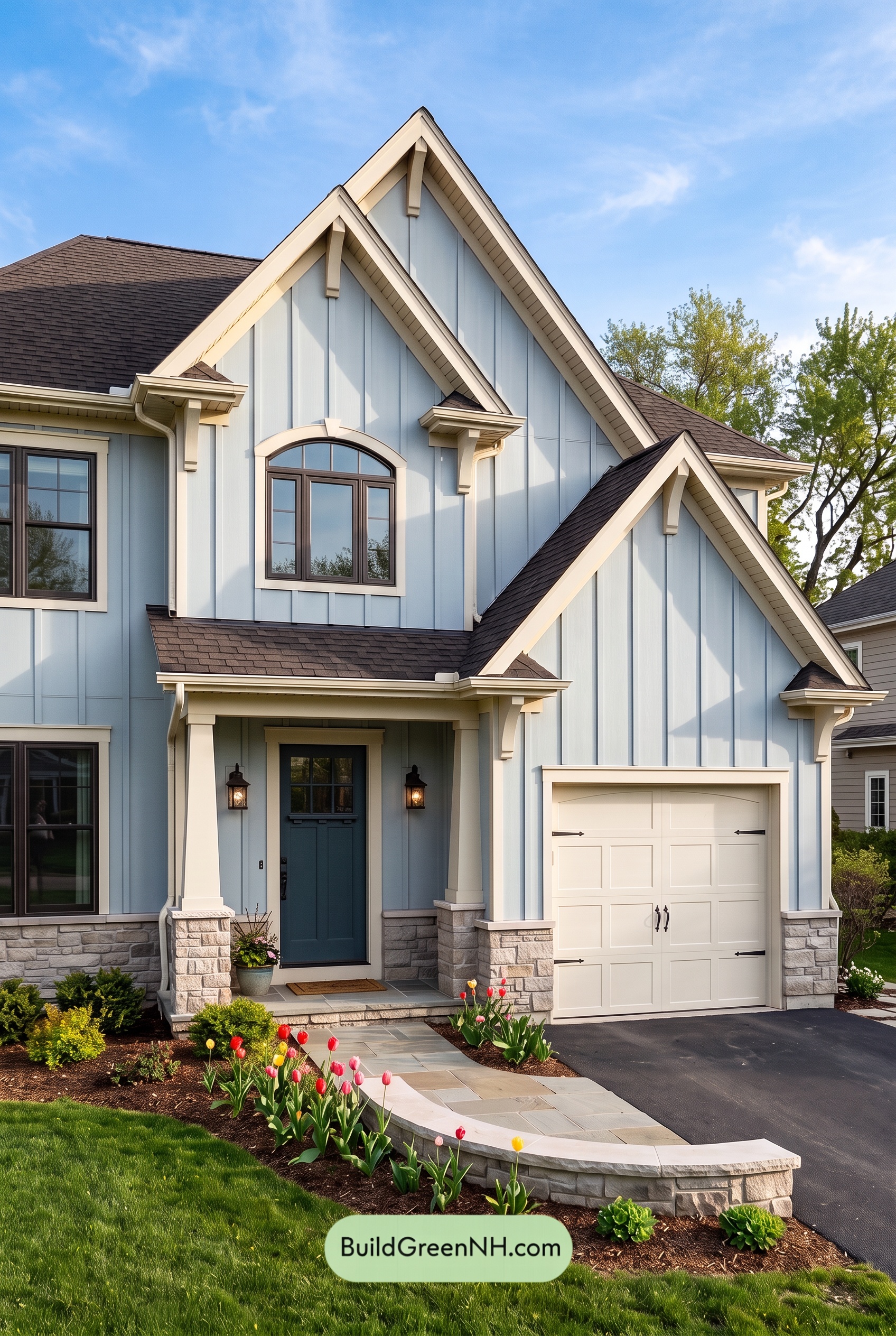 Exterior Color Scheme with Stone Accents: Bluebell Gable Song
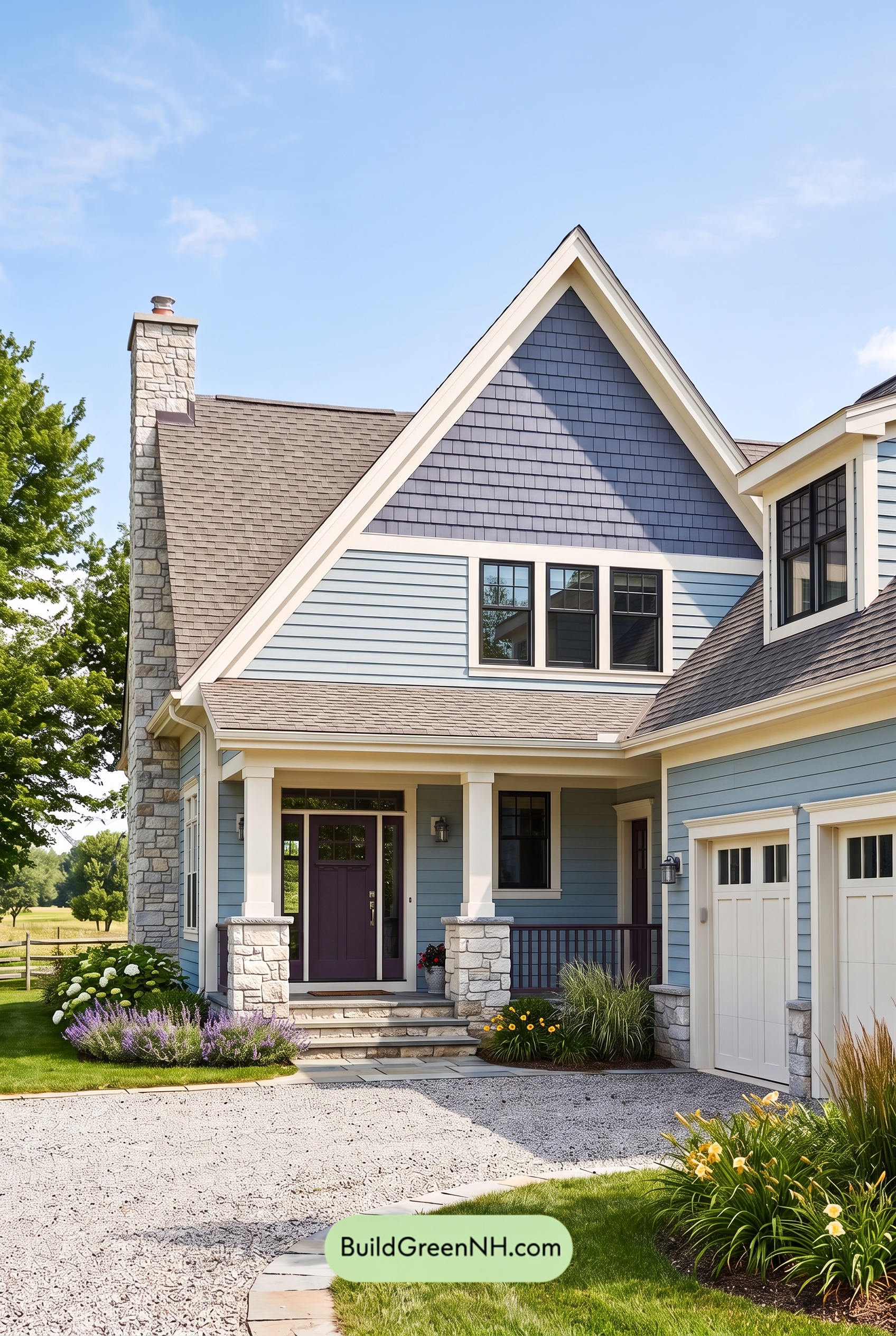 Exterior Color Scheme with Stone Accents: Meadow Bell Welcome
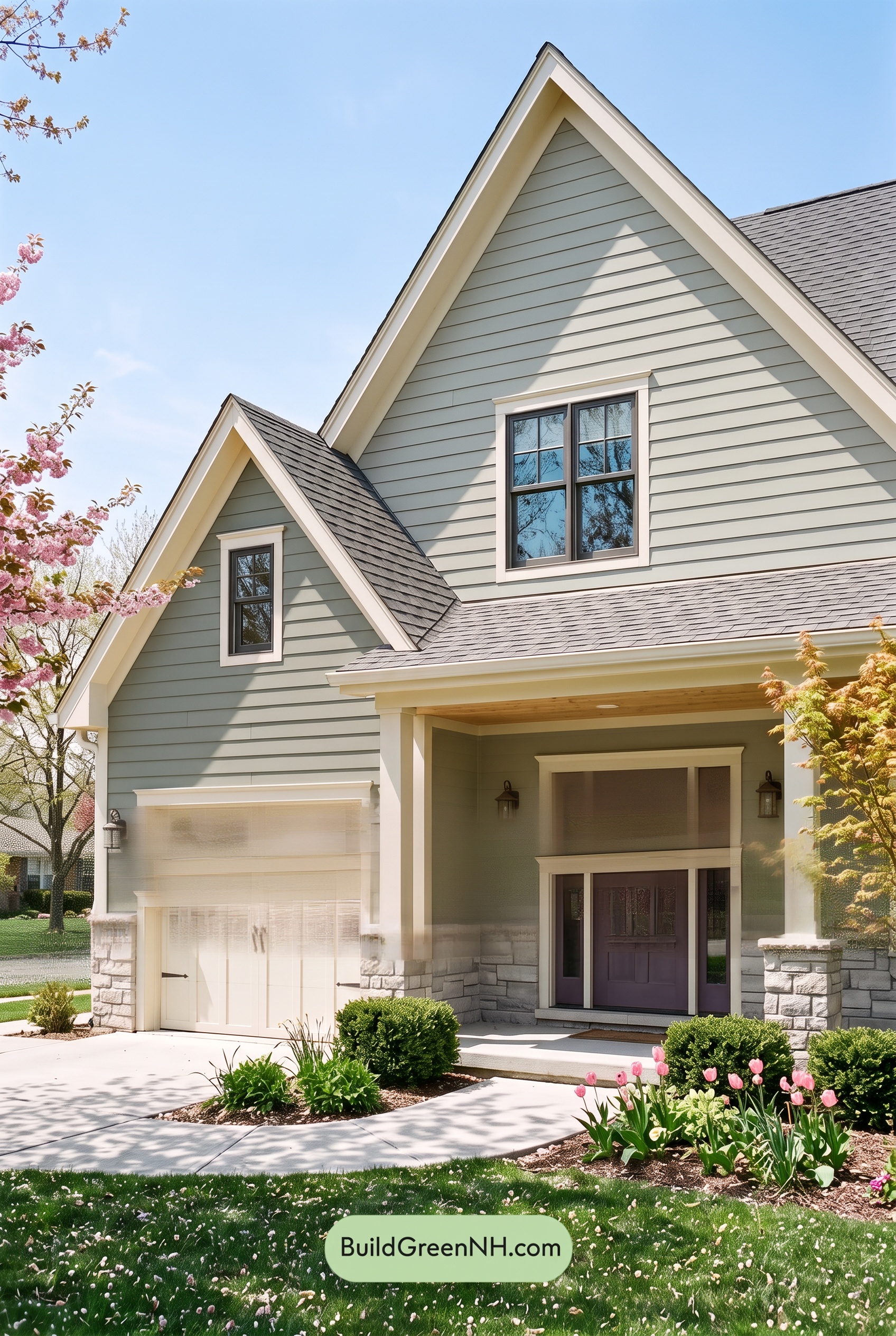 Exterior Color Scheme with Stone Accents: Willow Quartz Porch
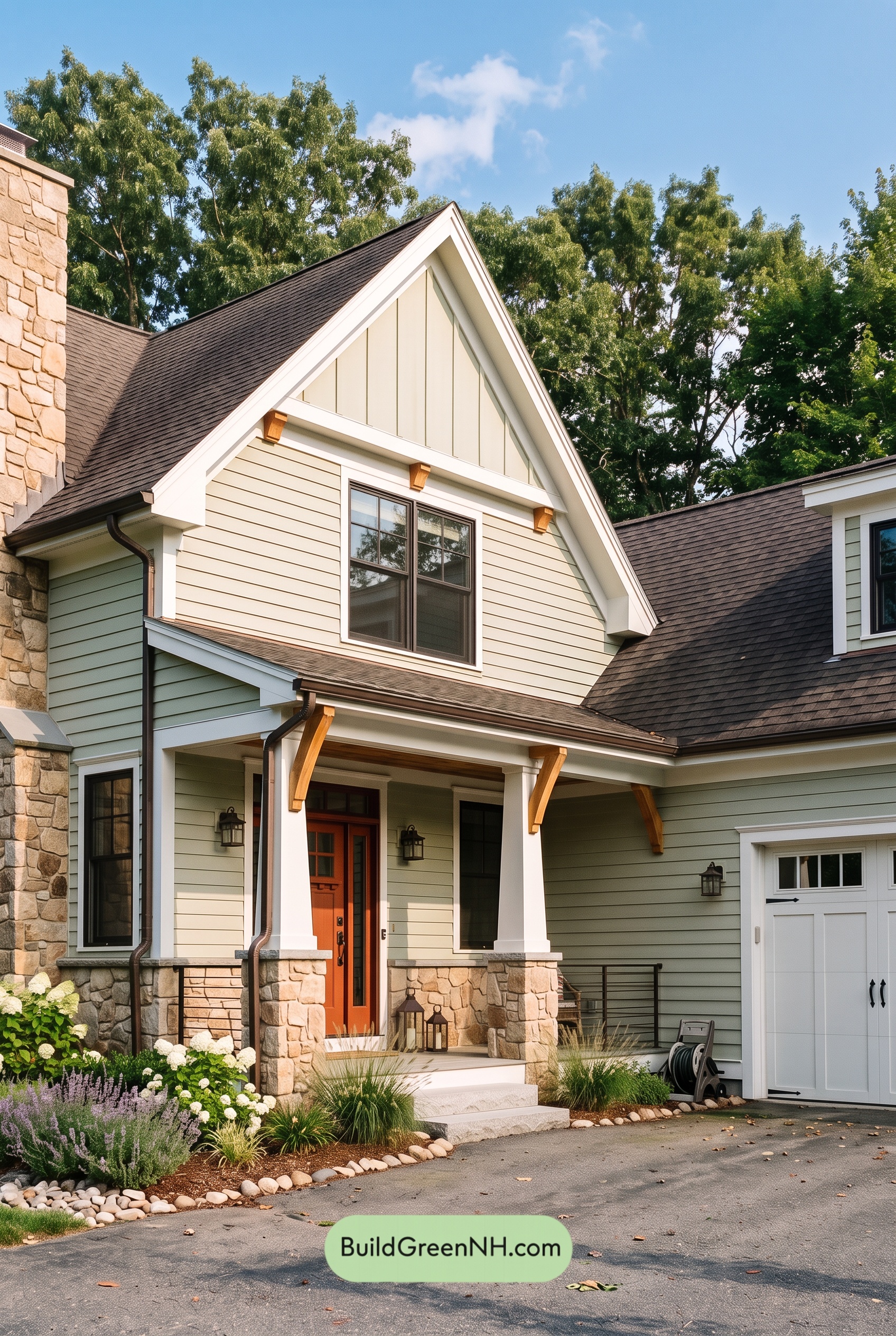 Exterior Color Scheme with Stone Accents: Celadon Ember Gable
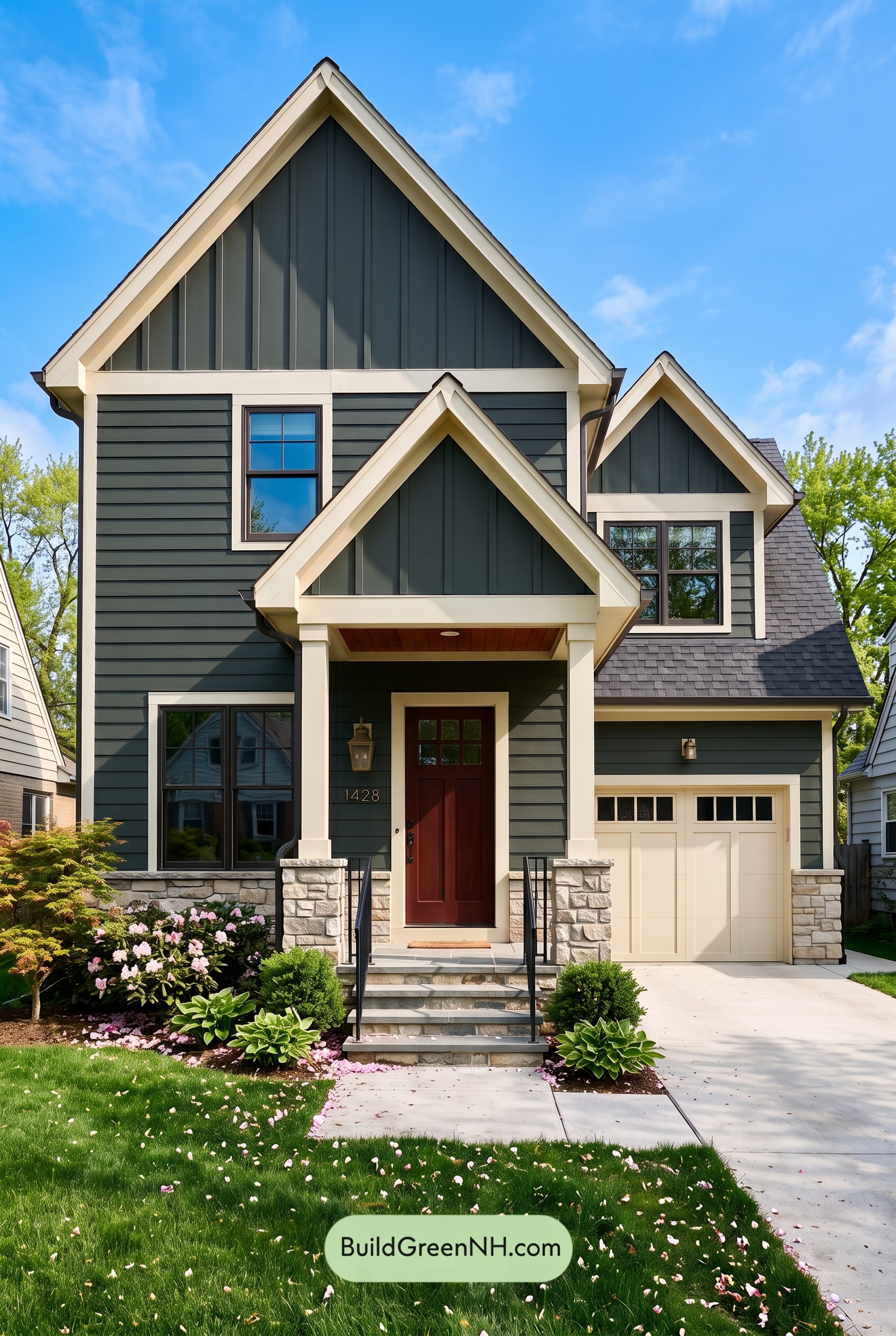 Exterior Color Scheme with Stone Accents: Pine Brass Threshold
Table of Contents