Last updated on
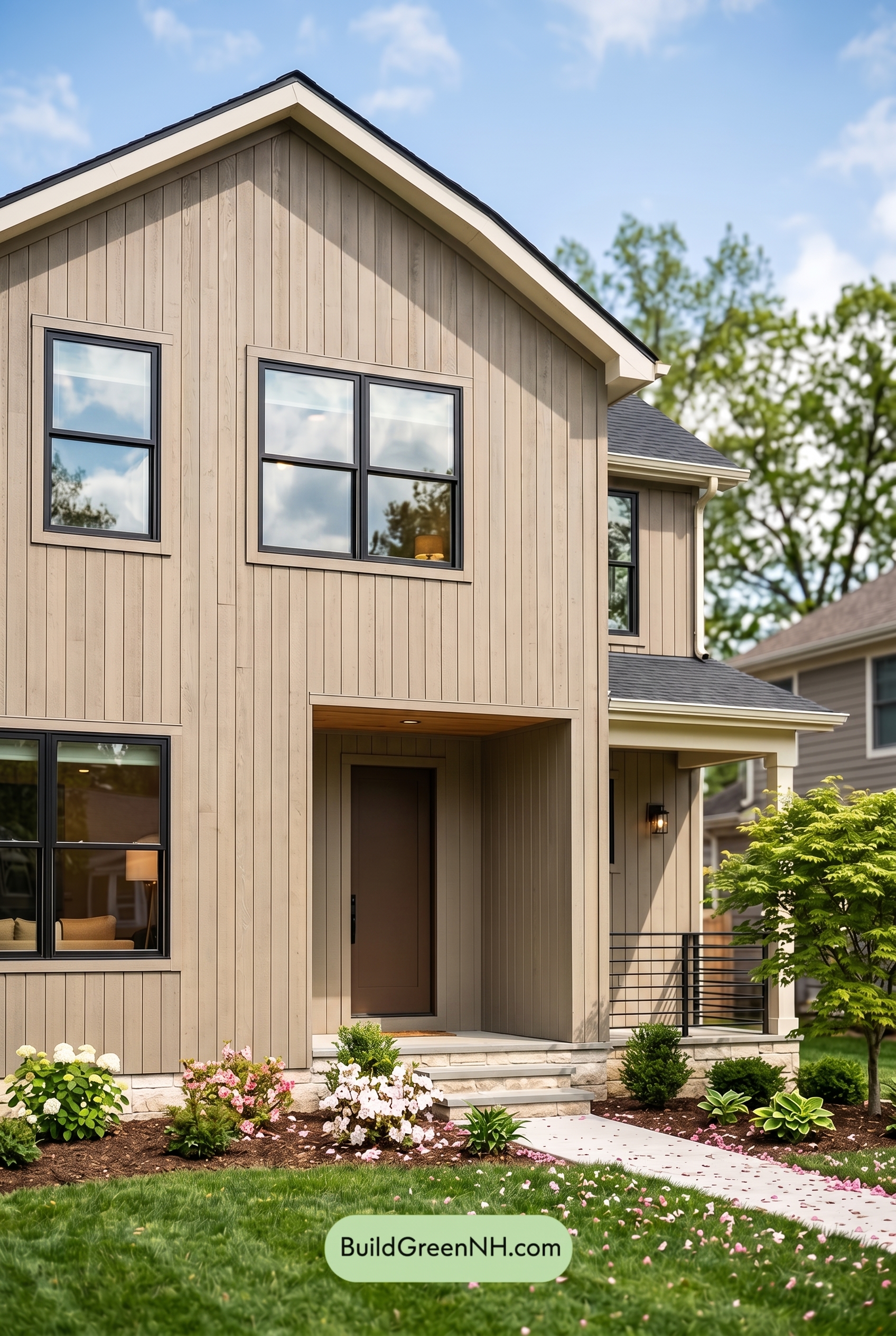

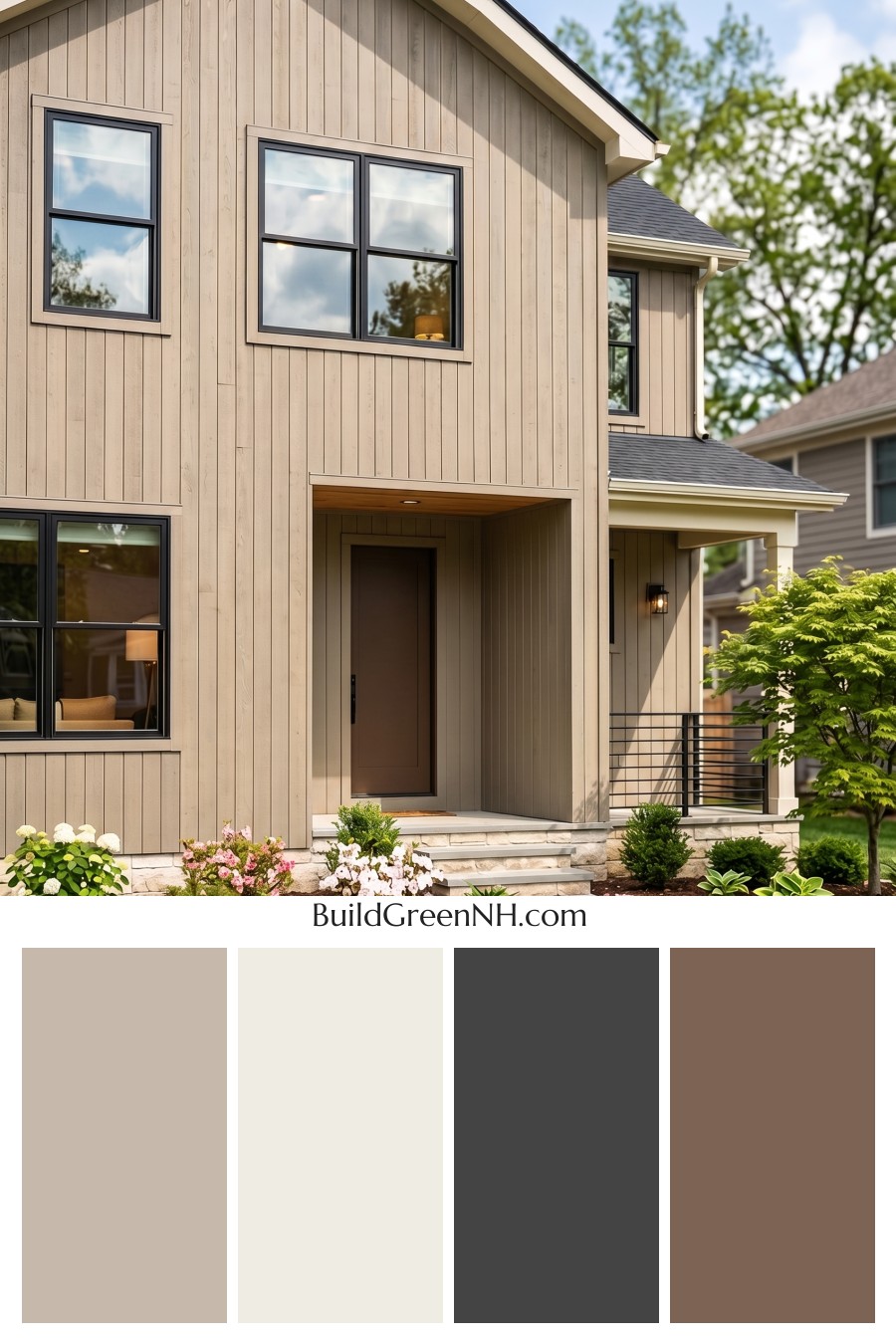
This exterior color scheme feels effortlessly polished because its warm beige siding, crisp white detailing, and cool gray accents create a welcoming home with just the right amount of modern contrast.
A Warm, Natural Base
The main siding is the star of the palette, wrapped in a soft beige shade that feels calm, approachable, and timeless. Because the siding has a vertical profile, the warm neutral tone does more than simply cover the home; it highlights the height of the facade and gives the exterior a clean, tailored rhythm.
This shade of beige sits in that sweet spot between cozy and refined. It has enough warmth to feel inviting, especially alongside the landscaping, but it stays light enough to keep the home looking fresh and open. On a sunny day, it catches the light beautifully without feeling stark.
Crisp Trim That Frames the Architecture
The trim, fascia, soffits, and columns are finished in a clean white shade, giving the home a bright, defined outline. This white family accent works especially well along the roofline, where it sharpens the gables and emphasizes the strong modern farmhouse-inspired shape.
Around the porch and entry, the white columns help lighten the deeper recessed areas. They create a clear visual break from the beige siding while keeping the overall palette soft and cohesive. The result is architectural definition without harshness.
Gray Accents Add Modern Contrast
The window frames introduce a deep gray shade that brings the whole exterior into a more contemporary direction. Against the warm beige siding, these gray accents feel crisp and intentional. They create contrast around the glass and give the windows a strong graphic presence.
The railings repeat the gray family in a slightly industrial way, tying the lower porch area back to the windows above. This repetition is what makes the palette feel designed rather than accidental. The cool gray accents balance the warmth of the siding and keep the home from feeling too traditional.
A Brown Front Door for Warmth and Depth
The front door uses a rich brown shade, adding depth at the entry and making the porch feel grounded. Since the surrounding siding and trim are lighter, the door naturally becomes a focal point without needing a bold or flashy color.
This brown family accent works beautifully with the beige siding because both colors share an earthy warmth. It feels welcoming, sturdy, and quietly elegant. Tucked into the recessed entry, the deeper tone also creates a sense of shelter and arrival.
The Roof Completes the Palette
The roof appears in a dark gray shade, which anchors the lighter exterior and echoes the gray used on the windows and railings. This is a smart move because it keeps the upper portion of the house from feeling too soft or washed out.
That darker roofline gives the home structure. It outlines the gables, adds weight, and creates a clean cap over the warm beige walls and white trim. The balance between light siding and darker roof details is one of the reasons the exterior feels so well proportioned.
The Overall Mood
This color scheme feels warm, fresh, and quietly modern. The beige siding brings softness, the white trim adds brightness, the gray accents introduce sophistication, and the brown door adds a natural, welcoming finish.
Nothing competes for attention, yet every color has a purpose. The palette is neutral, but not plain. It has contrast, but not drama. It feels current while still being easy to live with for years.
Why It Works So Well
The success of this exterior comes from balance. Warm shades cover the largest surfaces, making the home feel approachable, while cooler gray details sharpen the look and add a refined edge. The white trim acts as the bridge between them, keeping everything clean and bright.
It is a great example of how a restrained palette can still feel layered and interesting. With just a few well-chosen color families, this home achieves curb appeal that is polished, friendly, and beautifully suited to its leafy surroundings.
Next, see how this color scheme looks under different lighting simulations throughout the day.
Overcast
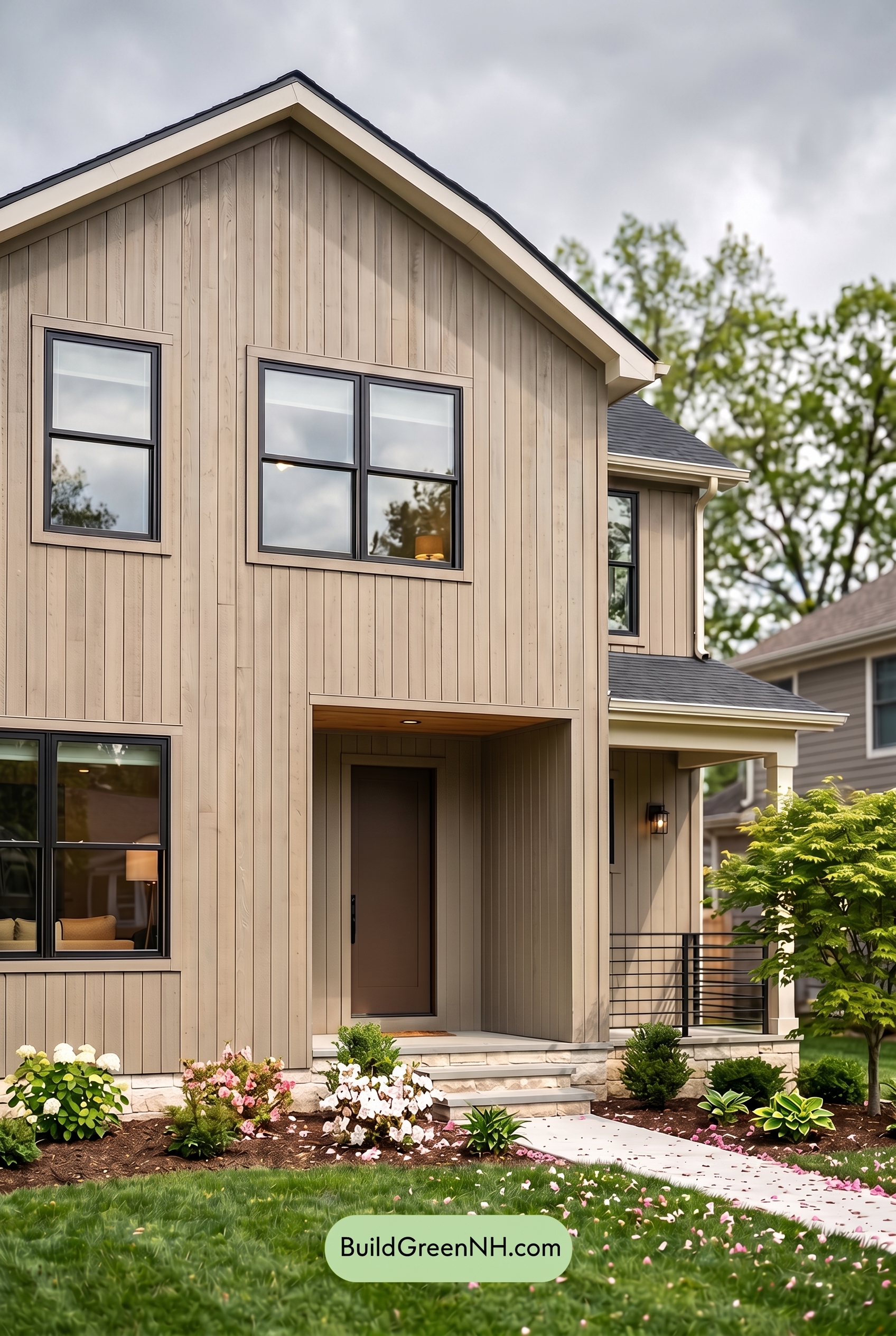
Under overcast light, the beige siding becomes softer and slightly cooler, with its warm undertones dialing back compared to neutral daylight. Saturation feels muted, so the vertical texture reads more gently, while the white trim and columns lose some crisp brightness and settle into a quieter, cloud-filtered glow.
Shadows become broader and less defined, reducing sharp contrast across the porch and roofline. The gray window frames and railings feel a bit deeper and cooler, while the brown front door appears richer but less warm, giving the whole exterior a calm, subdued, and comfortably modern mood.
Golden Hour
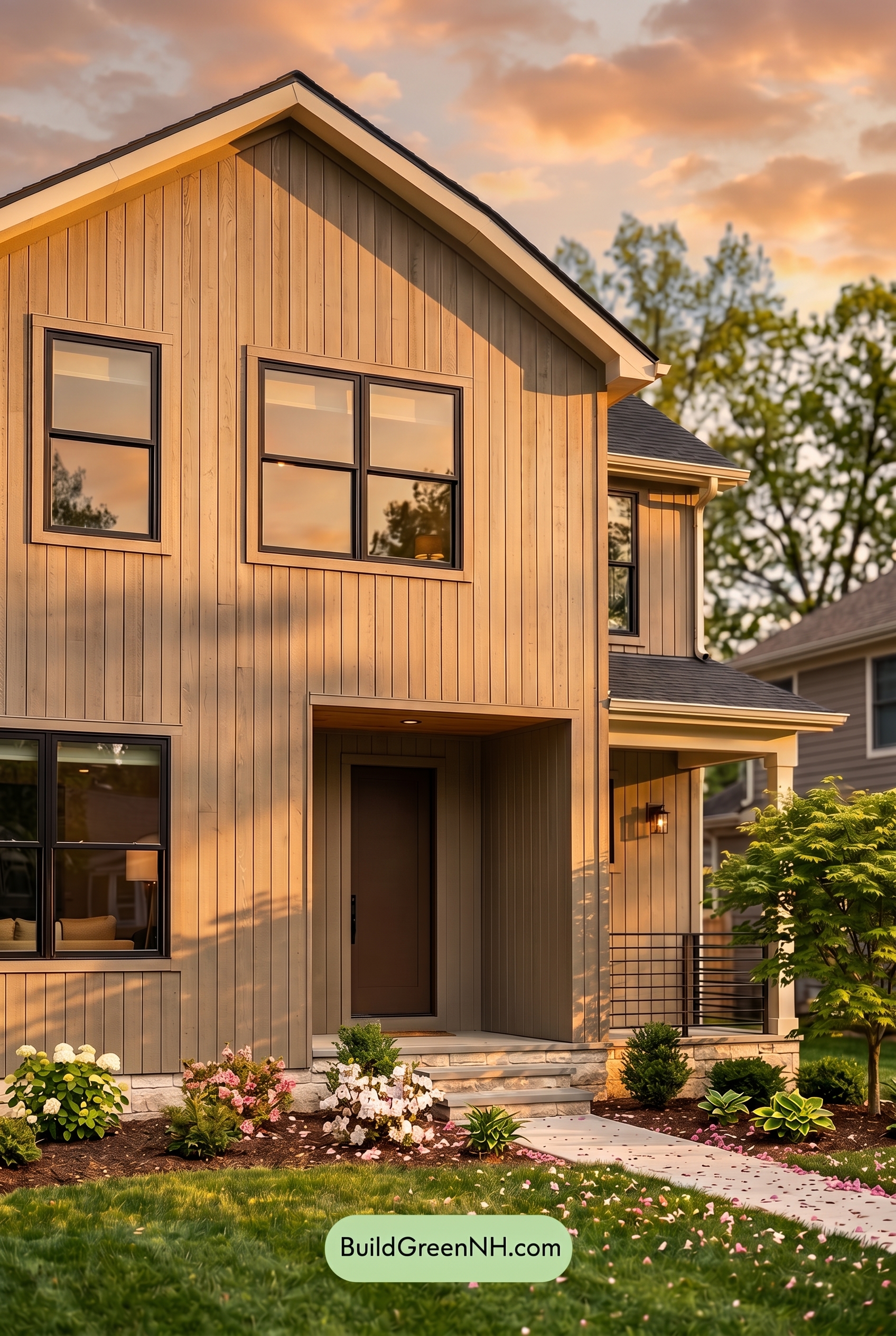
Under Golden Hour light, the beige siding becomes richer and more saturated, picking up a soft amber warmth that makes the vertical texture feel especially inviting. Compared with neutral daylight, the warm neutral shades look less flat and more layered, with sunlit areas glowing gently while shaded sections deepen into cozy tan and taupe tones.
The white trim and columns shift warmer too, feeling creamier rather than crisp, while the gray window frames and railings gain stronger contrast against the sunlit walls. Longer shadows sharpen the architecture and make the brown front door appear deeper and moodier, giving the whole exterior a calm, welcoming, late-day warmth.
Shade
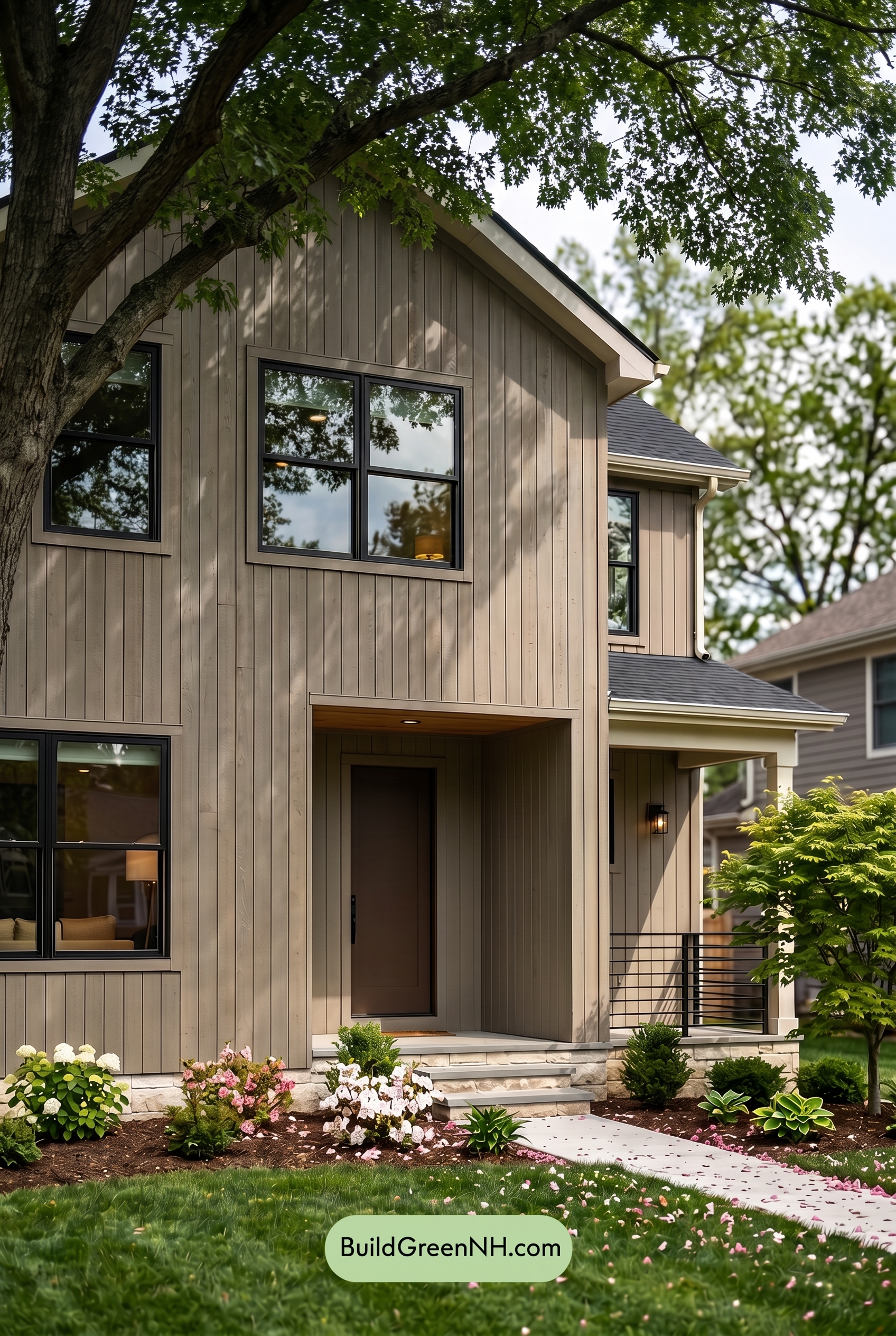
In shade, the beige siding takes on a softer, slightly muted character compared to neutral daylight, with less visible warmth and a calmer, more grounded feel. The dappled shadows deepen the beige family in places, making the vertical texture stand out while reducing overall saturation.
The white trim and columns appear gentler rather than crisp, while the gray window frames and railings gain stronger contrast against the softened walls. The brown front door feels richer and moodier in the recessed shade, adding warmth without overpowering the quiet, relaxed exterior palette.
Nighttime
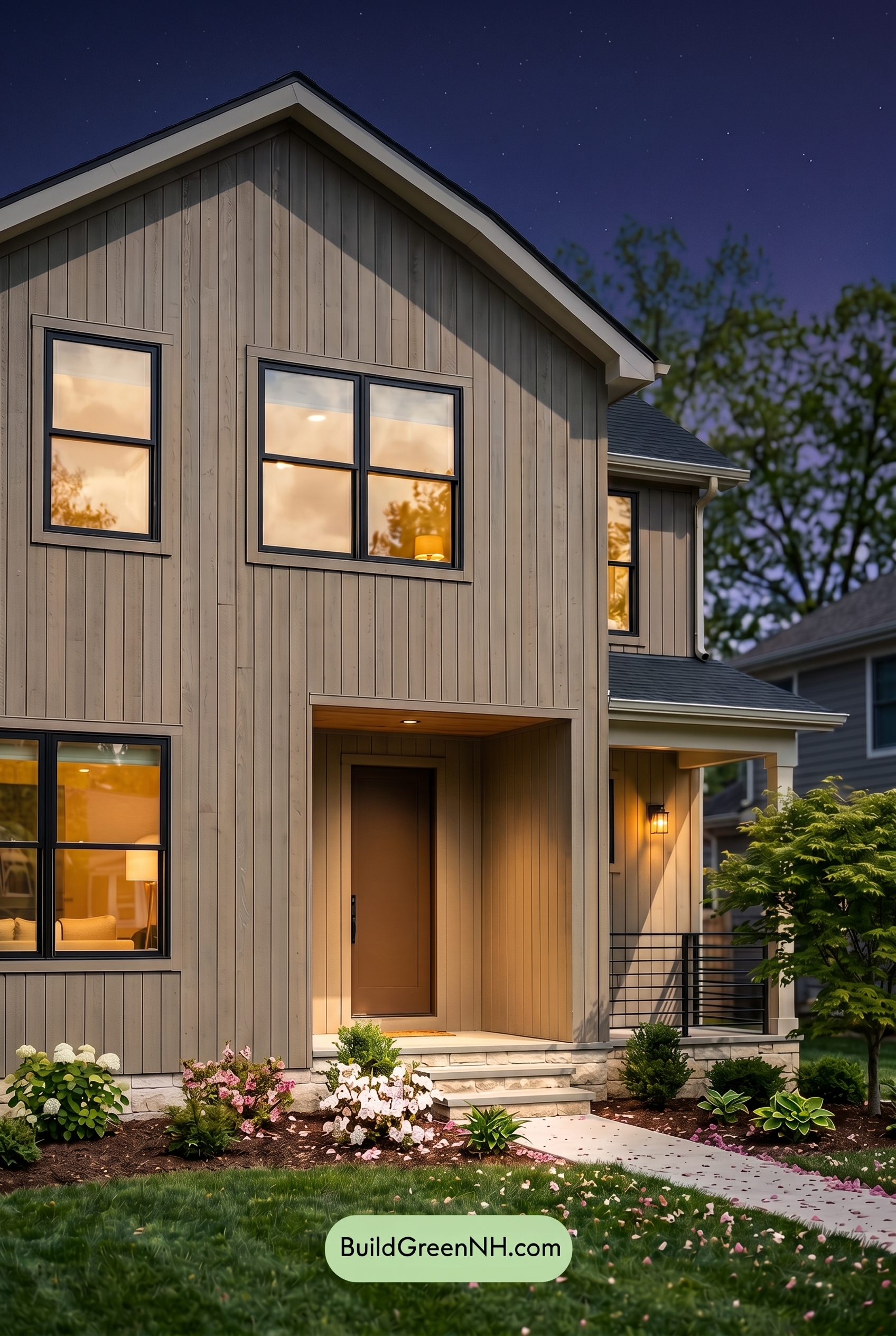
At nighttime, the beige siding appears deeper and more saturated than it would in neutral daylight, especially where the roofline and porch create strong shadows. The warm interior glow softens the white trim and columns, giving them a gentler, warmer cast instead of a crisp daylight brightness.
The gray window frames and railings read darker and more defined after sunset, increasing contrast against the lighter wall shade. The brown front door feels richer and cozier under the porch light, shifting the whole exterior from fresh and balanced in daylight to warm, layered, and welcoming at night.
Pin these for later:
Want More?
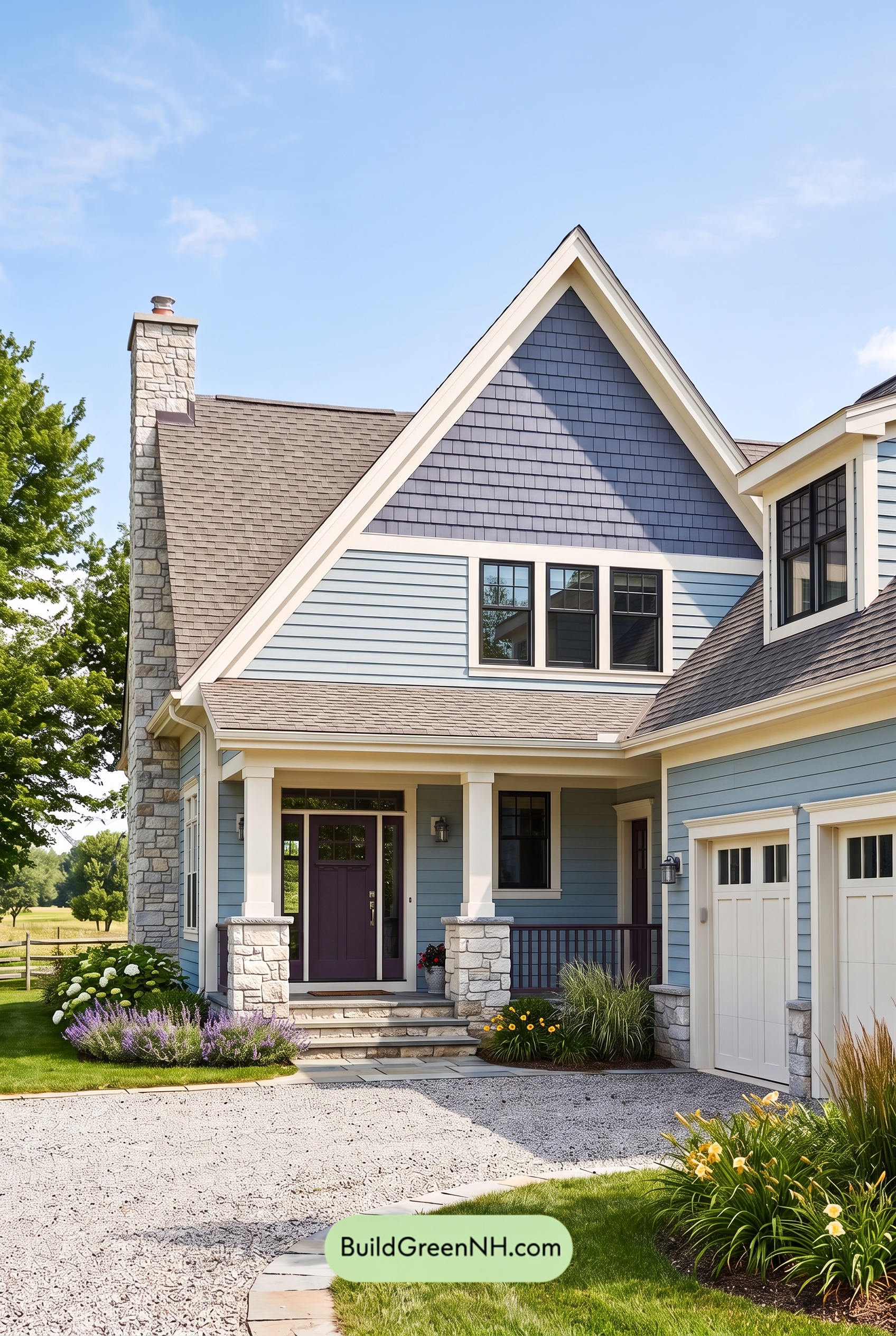
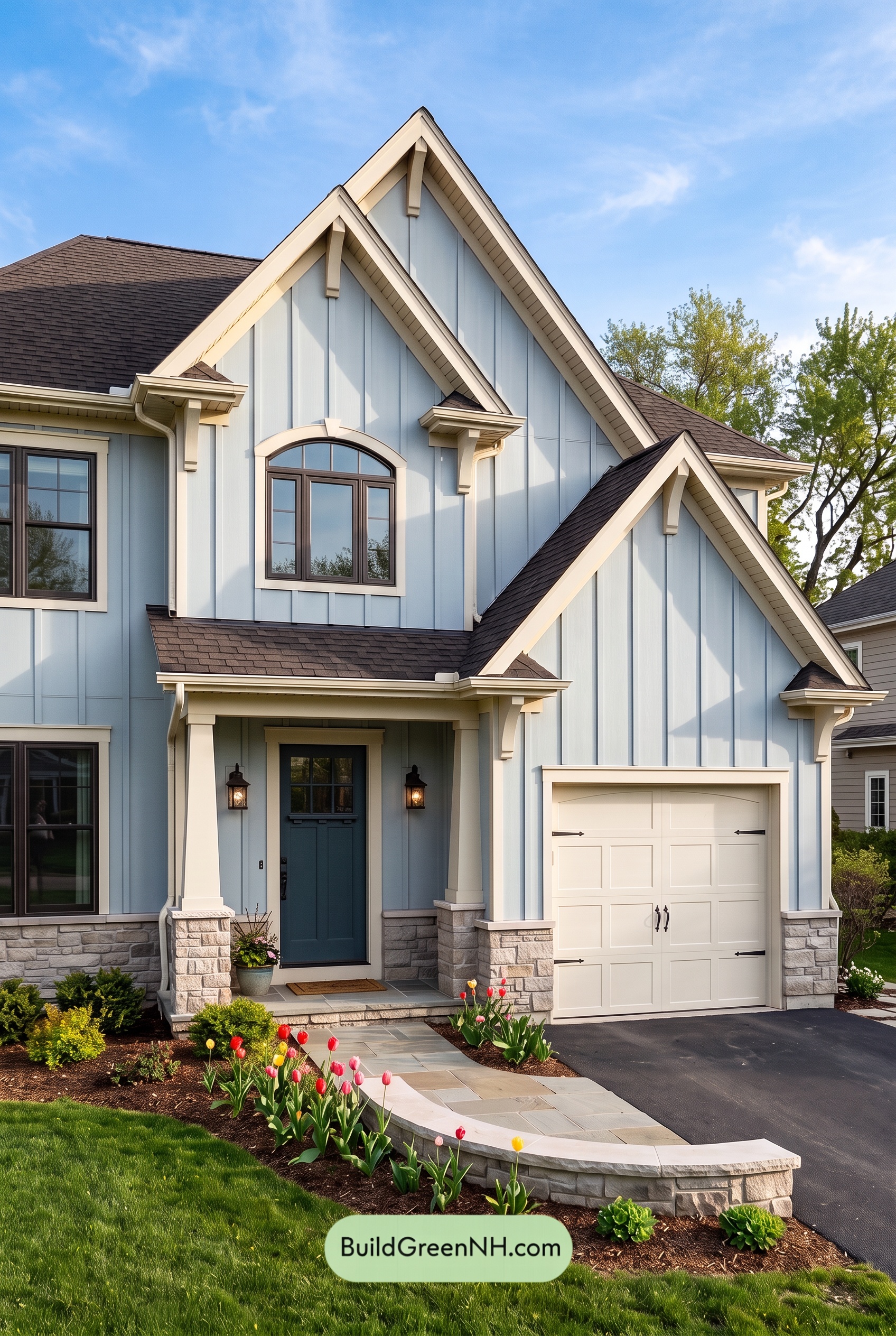 Exterior Color Scheme with Stone Accents: Bluebell Gable Song
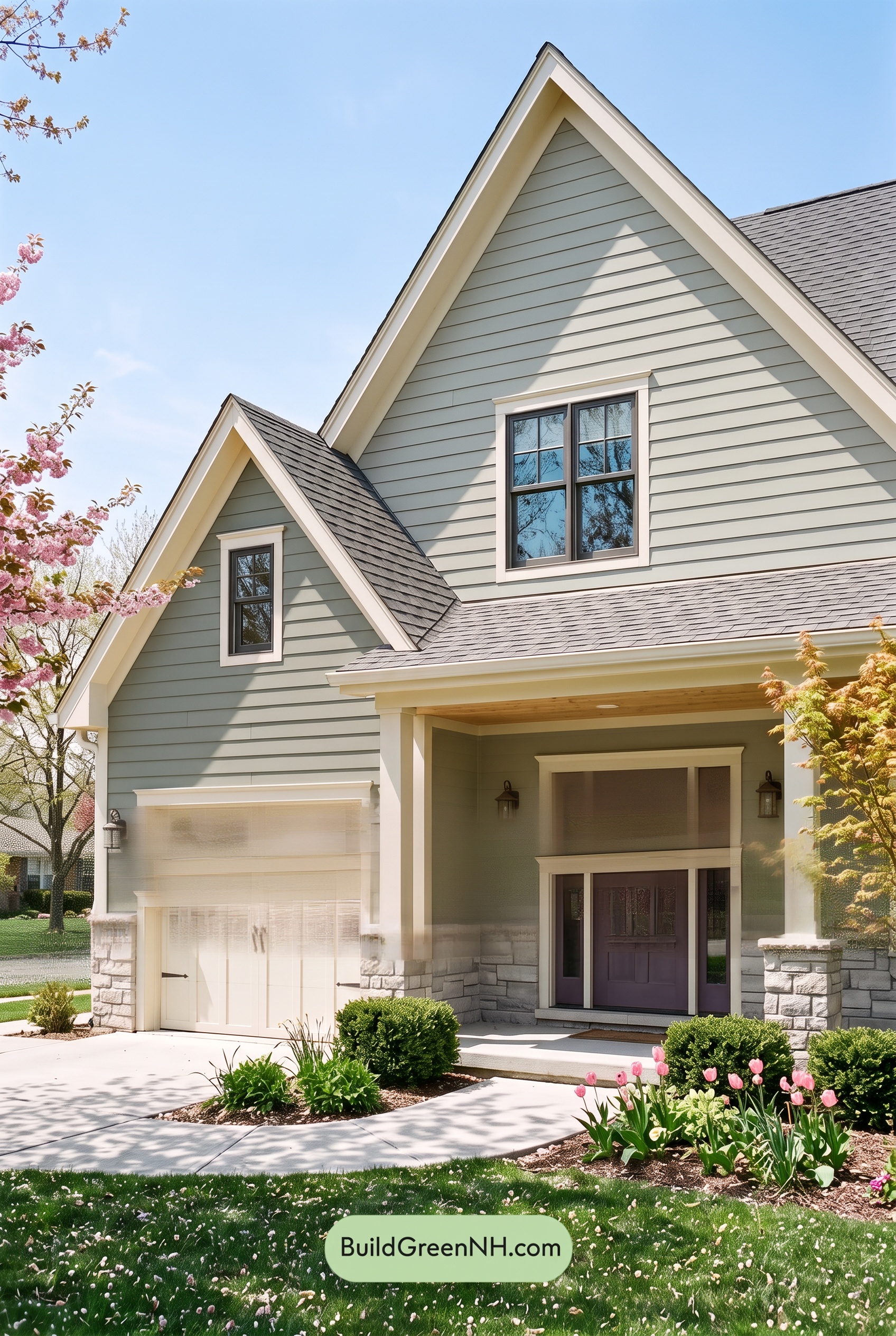
 Exterior Color Scheme with Stone Accents: Meadow Bell Welcome
 Exterior Color Scheme with Stone Accents: Willow Quartz Porch
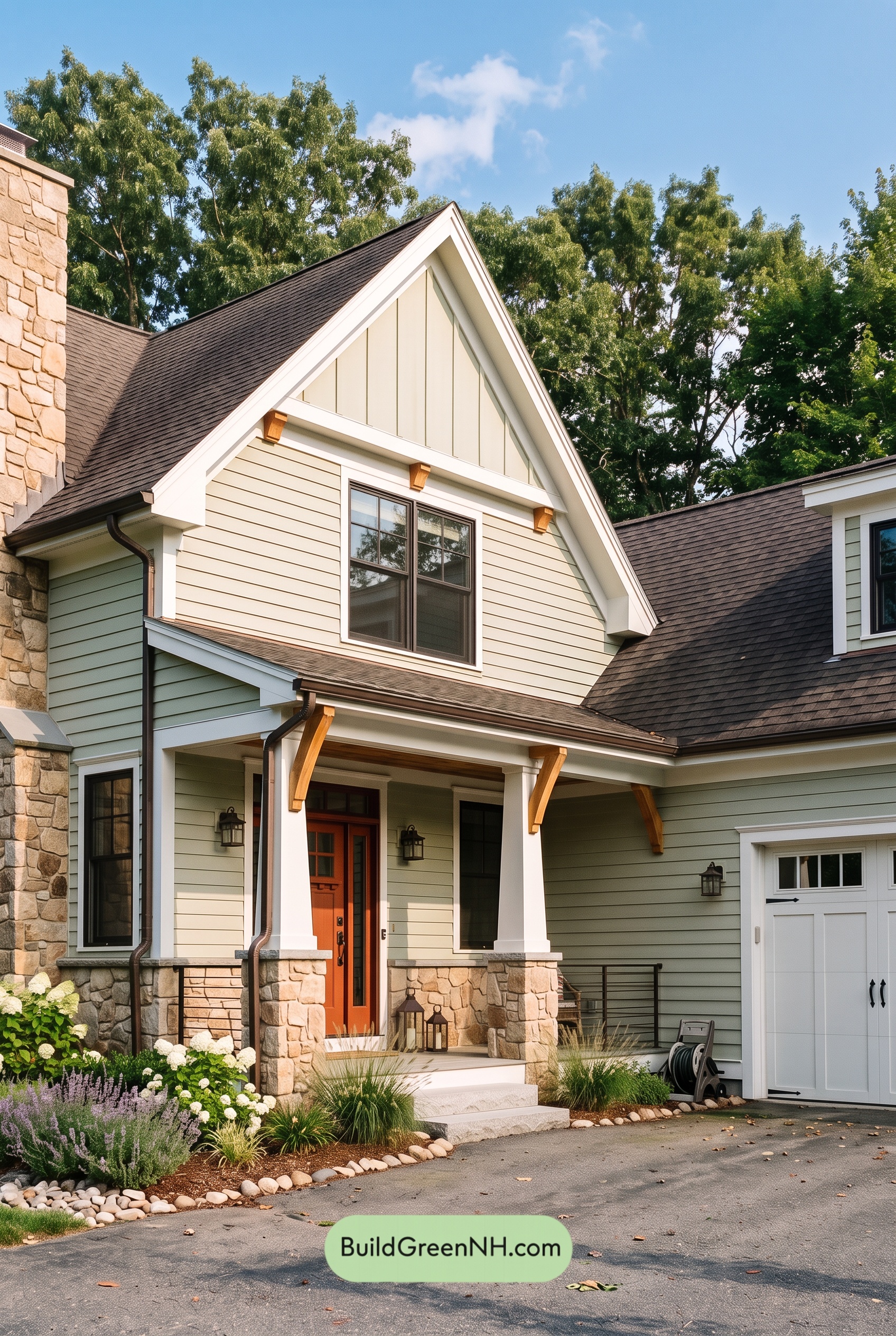 Exterior Color Scheme with Stone Accents: Celadon Ember Gable
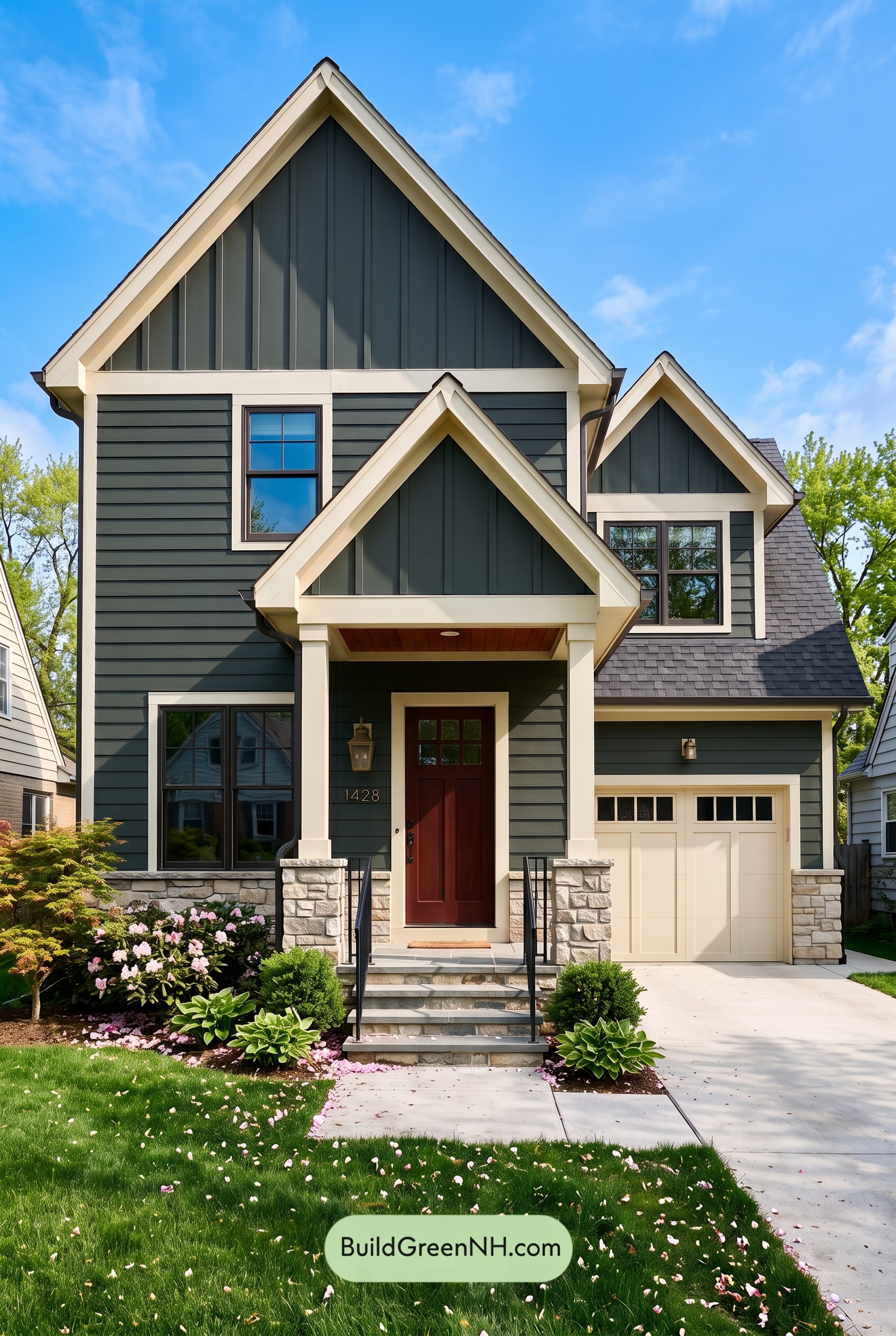 Exterior Color Scheme with Stone Accents: Pine Brass Threshold
Table of Contents