Last updated on
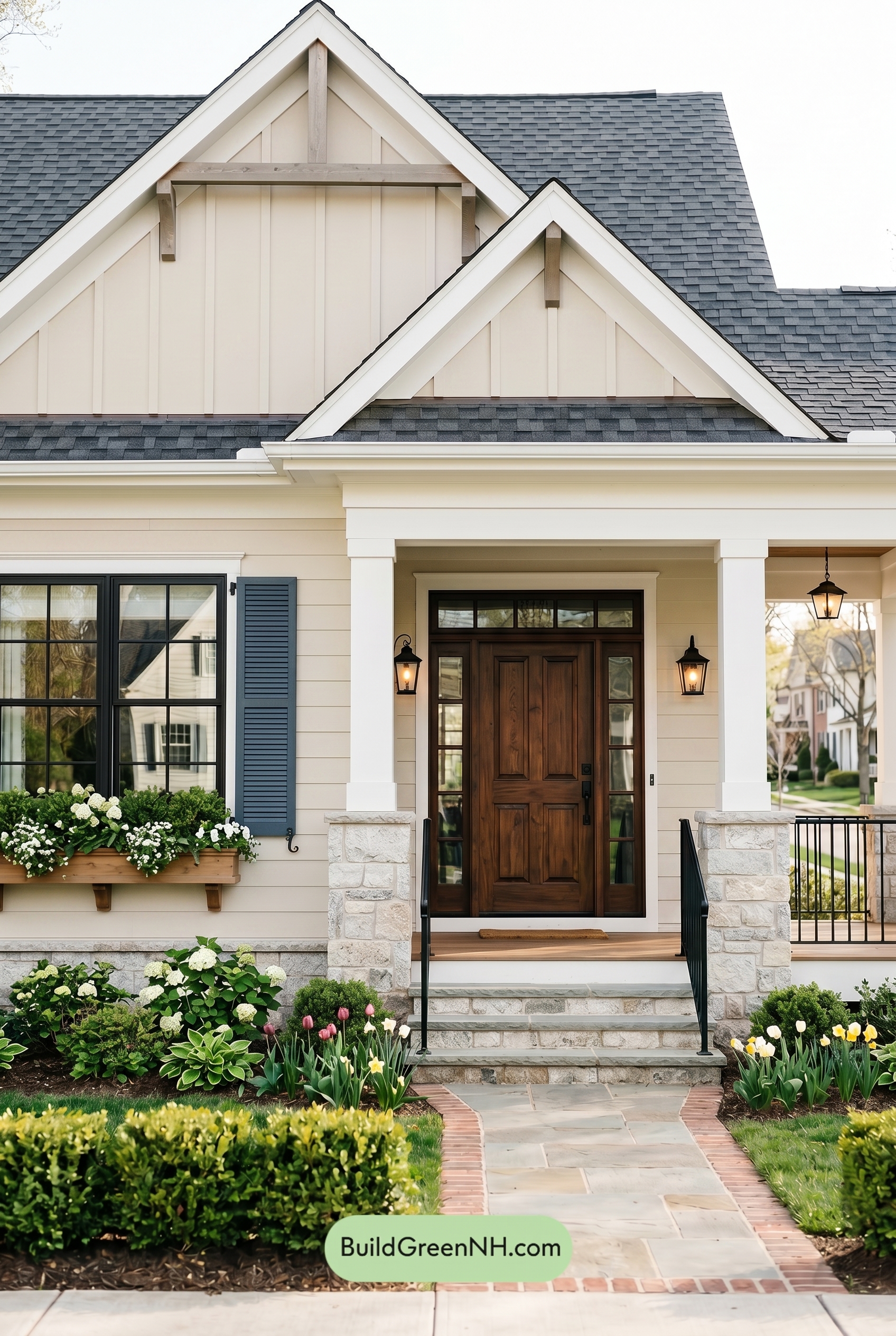

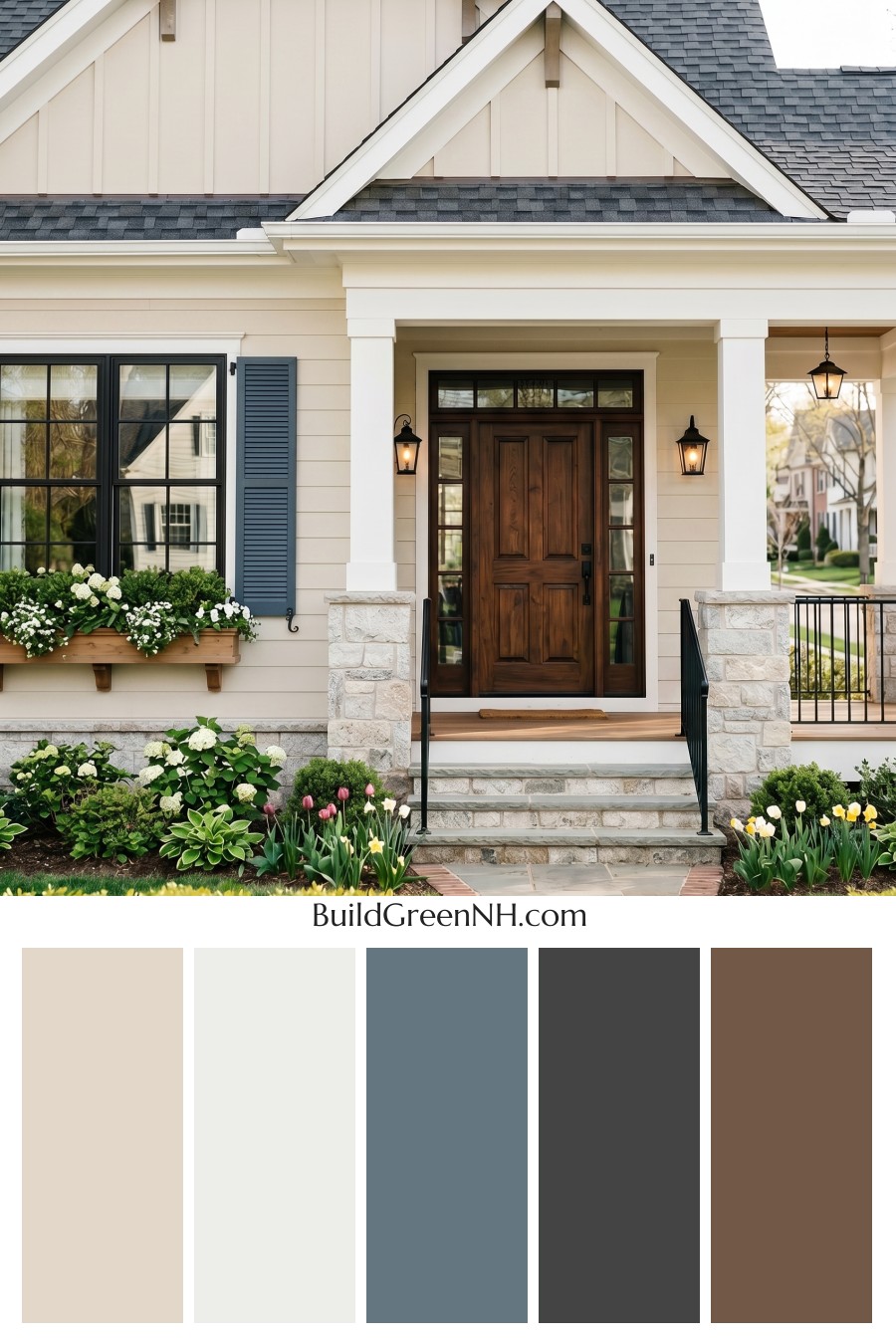
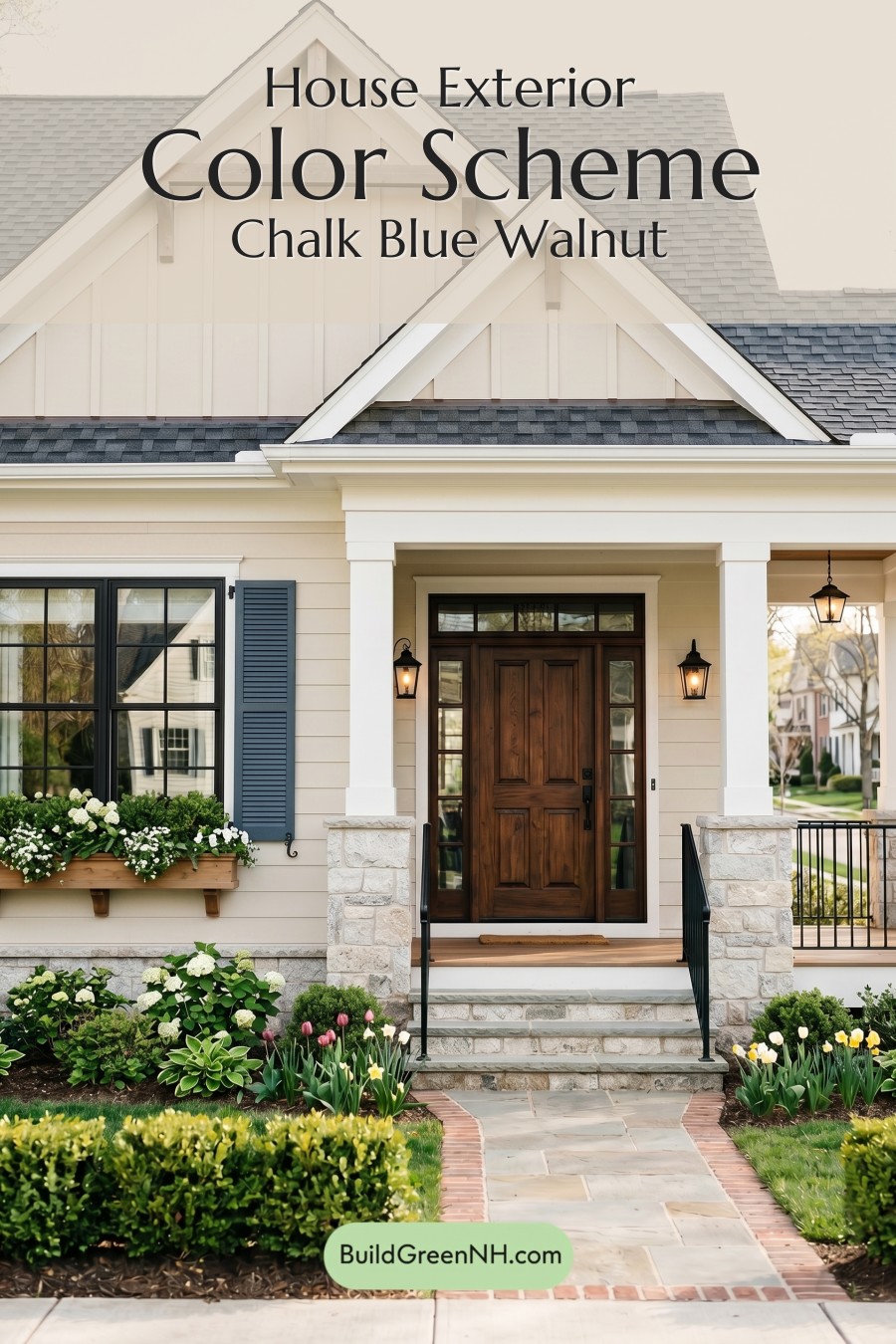
This exterior color scheme is so great because its soft whites, muted blue accents, and warm brown entry feel timeless, fresh, and instantly inviting.
A Soft White Foundation
The main siding is wrapped in a warm shade of white that gives the home a clean, airy presence without feeling stark. It works beautifully across both the horizontal siding and the vertical gable details, letting the architecture stand out in a quiet, elegant way.
The trim and porch columns stay within the white family as well, but they read slightly brighter and crisper. That subtle contrast adds definition around the rooflines, windows, porch opening, and gables, making the whole exterior feel polished and well-framed.
Muted Blue Shutters with Classic Charm
The shutters introduce a soft, muted blue that brings just the right amount of personality. Against the warm white siding, this blue feels calm and traditional, adding depth without overpowering the facade.
Because the blue is restrained rather than bold, it complements the home’s welcoming style and pairs naturally with the garden greenery. It gives the windows a charming focal point while keeping the overall palette relaxed.
Gray Details for Structure and Balance
The window frames and railings lean into the gray family, grounding the lighter exterior with a tailored edge. The darker gray window frames create crisp outlines against the pale siding, while the gray railings add a sturdy, understated finish to the porch steps.
The roof continues this grounding effect with a deep gray shade. Its layered texture brings dimension to the upper portion of the home and balances the brightness of the white trim and siding below.
A Warm Brown Front Door
The front door is the heart of the scheme, finished in a rich brown shade that adds warmth and character. It brings a natural, handcrafted feel to the entry and makes the porch feel especially welcoming.
This brown tone also connects beautifully with the softer wood-toned accents in the gables and the natural textures around the porch. It keeps the palette from feeling too cool and gives the exterior a cozy focal point.
Why the Palette Works
This house succeeds because the color families are balanced with intention. The warm white siding keeps everything bright and classic, the crisp white trim sharpens the architectural lines, the muted blue shutters add charm, and the gray details provide contrast and structure.
Then the brown front door adds the perfect final layer: warmth. Together, these shades create a home exterior that feels refined but not fussy, traditional but still fresh, and welcoming from the sidewalk all the way to the front steps.
Next, see how this color scheme looks under different lighting simulations throughout the day.
Overcast
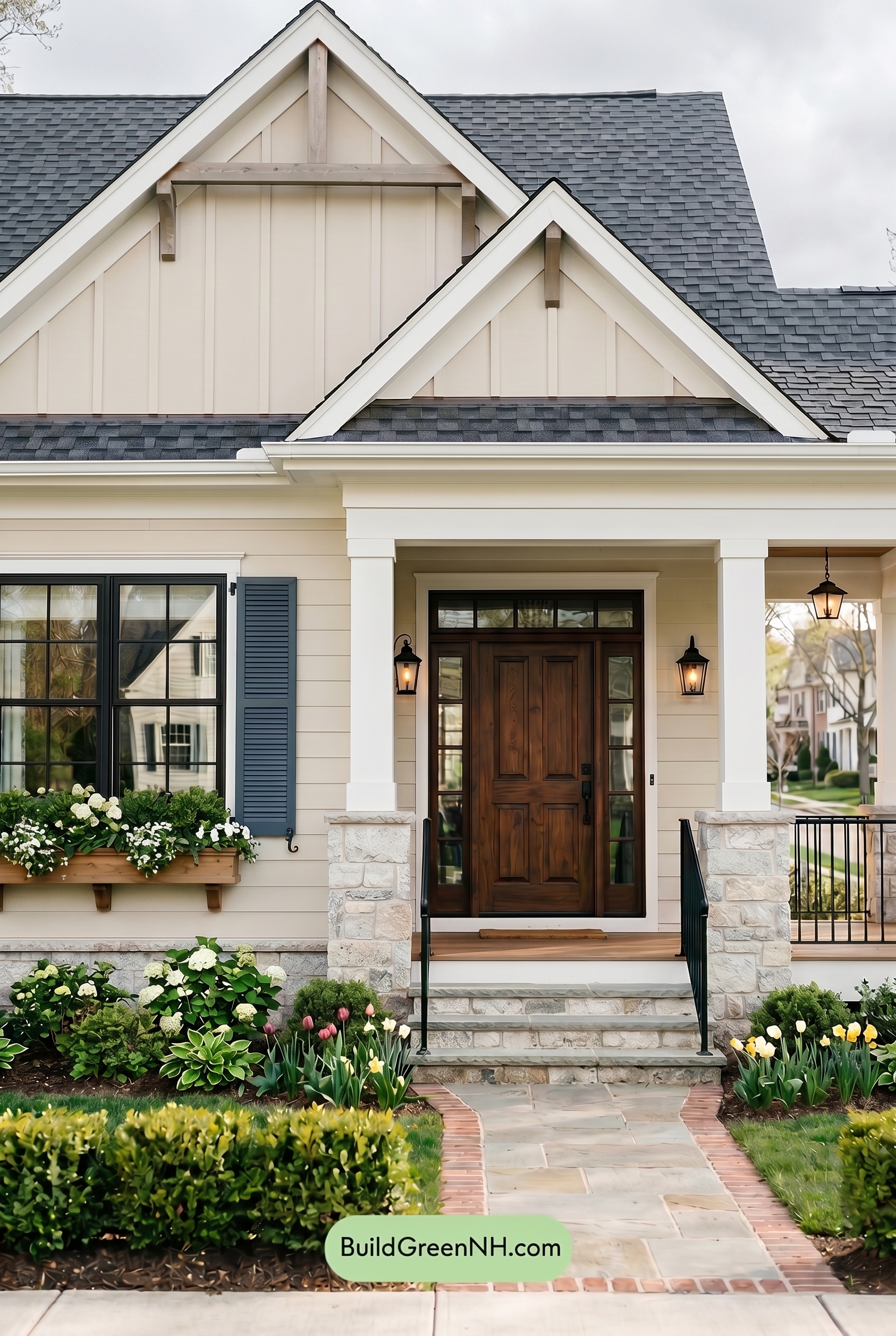
Under overcast light, the white family on the siding, trim, and columns looks softer and slightly cooler than it would in neutral daylight. Bright highlights are muted, so the edges feel less crisp, shadows become gentler, and the overall contrast across the porch and gables relaxes.
The blue shutters appear deeper and more subdued, with less visible saturation, while the gray window frames, railings, and roof tones feel steadier and moodier. The brown front door loses a touch of warmth but gains richness, giving the exterior a calm, cozy, and quietly refined feel.
Golden Hour
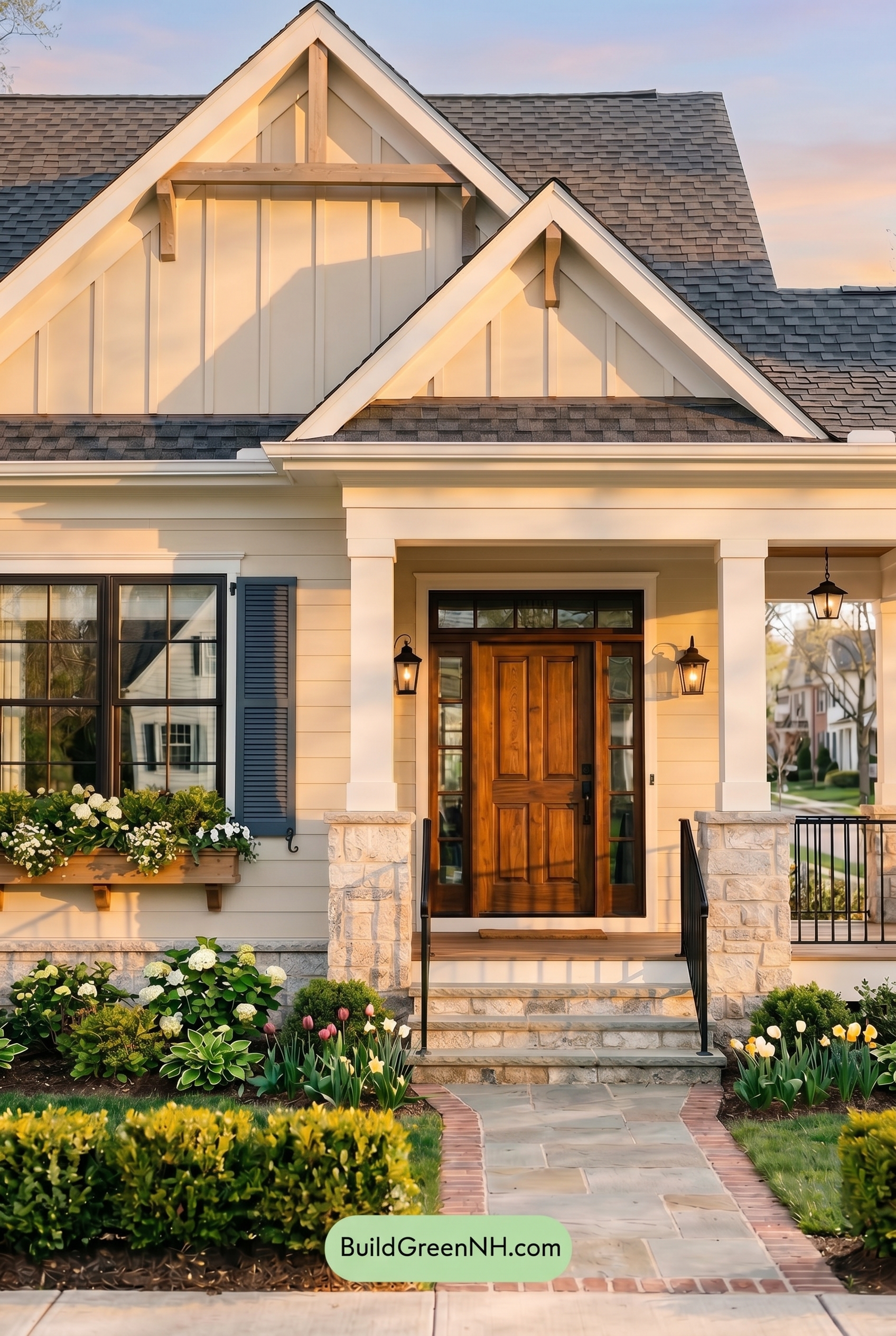
Under Golden Hour light, the white family on the siding, trim, and columns shifts from crisp and clean to creamy and sun-warmed, making the whole façade feel softer and more inviting than it would in neutral daylight. The warm glow slightly increases the perceived saturation of the brown front door, bringing out richer amber undertones and giving the entry a welcoming focal point.
The blue shutters deepen in the angled light, gaining a moodier, more saturated presence against the warmed whites, while the gray window frames and railings appear darker and more defined. Longer shadows add contrast along the gables, porch, and roofline, creating depth and a relaxed, cozy mood that neutral daylight would render flatter and cooler.
Shade
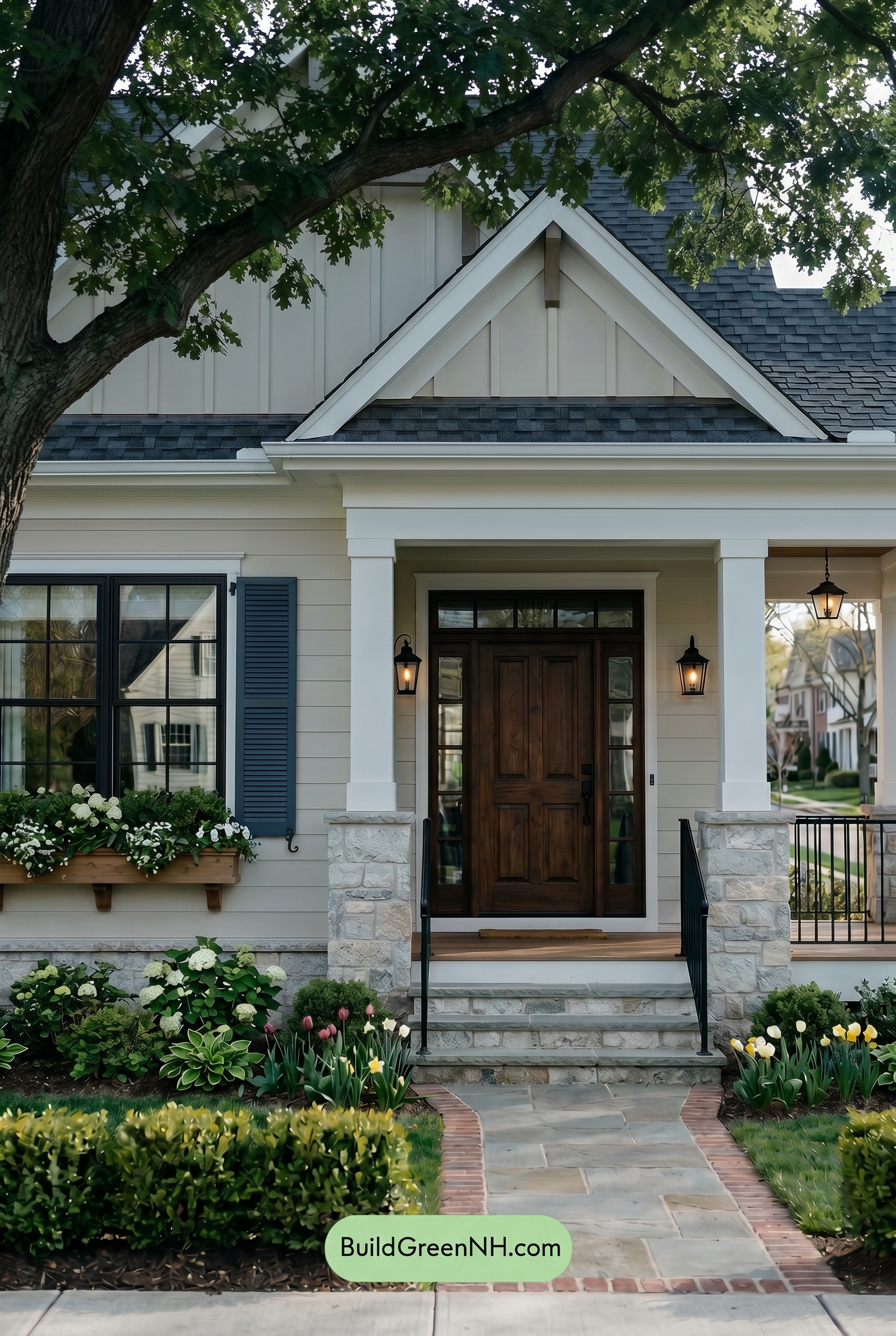
In shade, the white family on the siding, trim, and columns loses some of the crisp brightness it would have in neutral daylight, taking on a cooler, softer cast. Shadows settle into the panel lines and porch recesses, gently muting saturation and giving the whole exterior a calmer, more layered look.
The blue shutters deepen in shade, feeling richer and slightly moodier, while the gray window frames and railings gain weight as they blend more closely with the shaded areas. The brown front door keeps a welcoming warmth, but it reads less golden and more grounded, creating a quieter contrast against the softened whites.
Nighttime
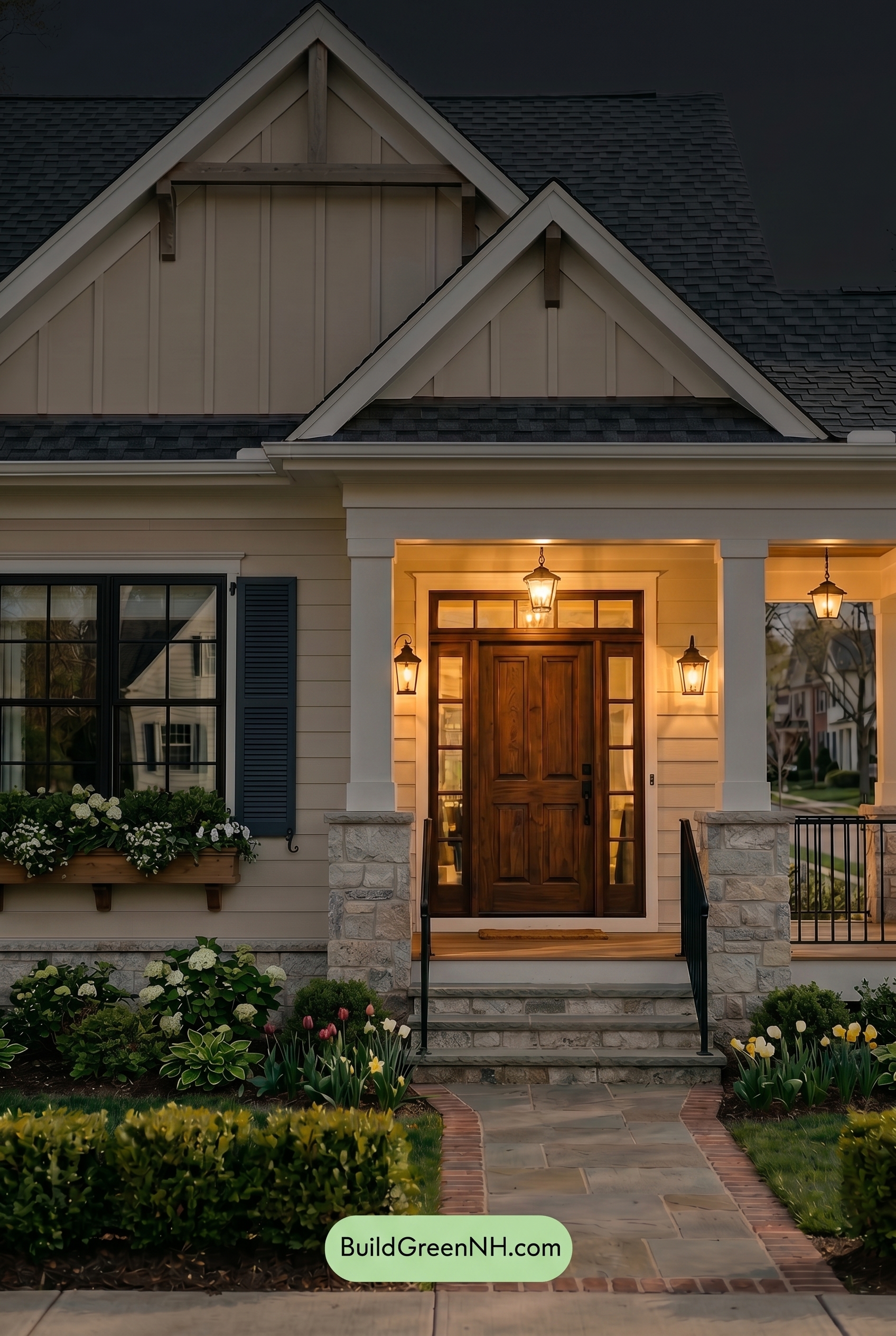
At night, the white-family siding and trim shift away from their clean neutral daylight look and take on a warmer, softer glow near the porch lights. Shadows under the gables and rooflines deepen, making the light shades feel more dimensional while increasing contrast around the trim, columns, and stone base.
The blue-family shutters appear darker and more saturated in the low light, while the gray-family window frames and railings become moodier and more graphic. The brown-family front door gains extra warmth from the lanterns, creating a cozy, welcoming focal point that feels richer and more intimate than it does in daylight.
Pin these for later:
Want More?
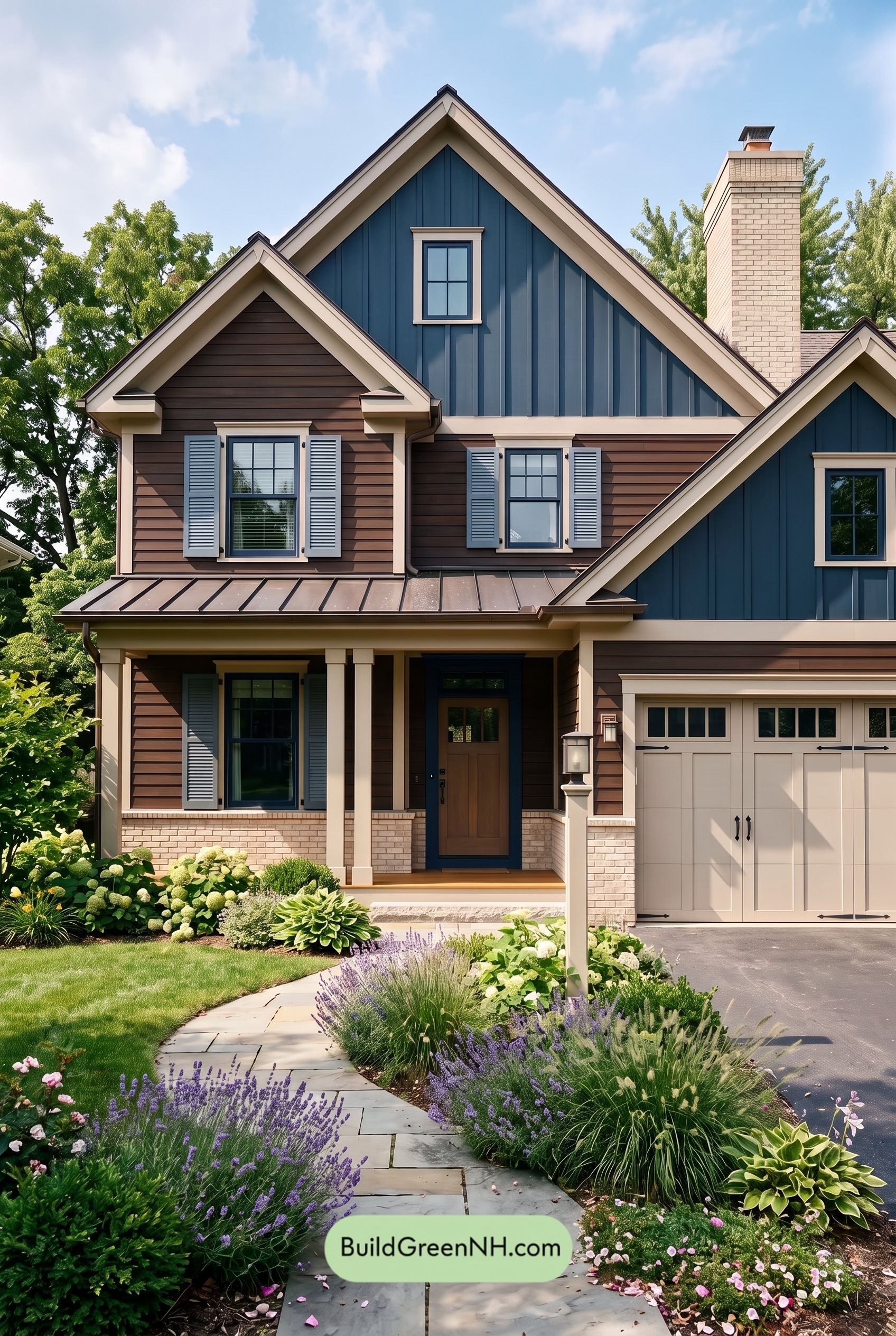 Dark Brown House Exterior Color Scheme: Inkwood Lantern
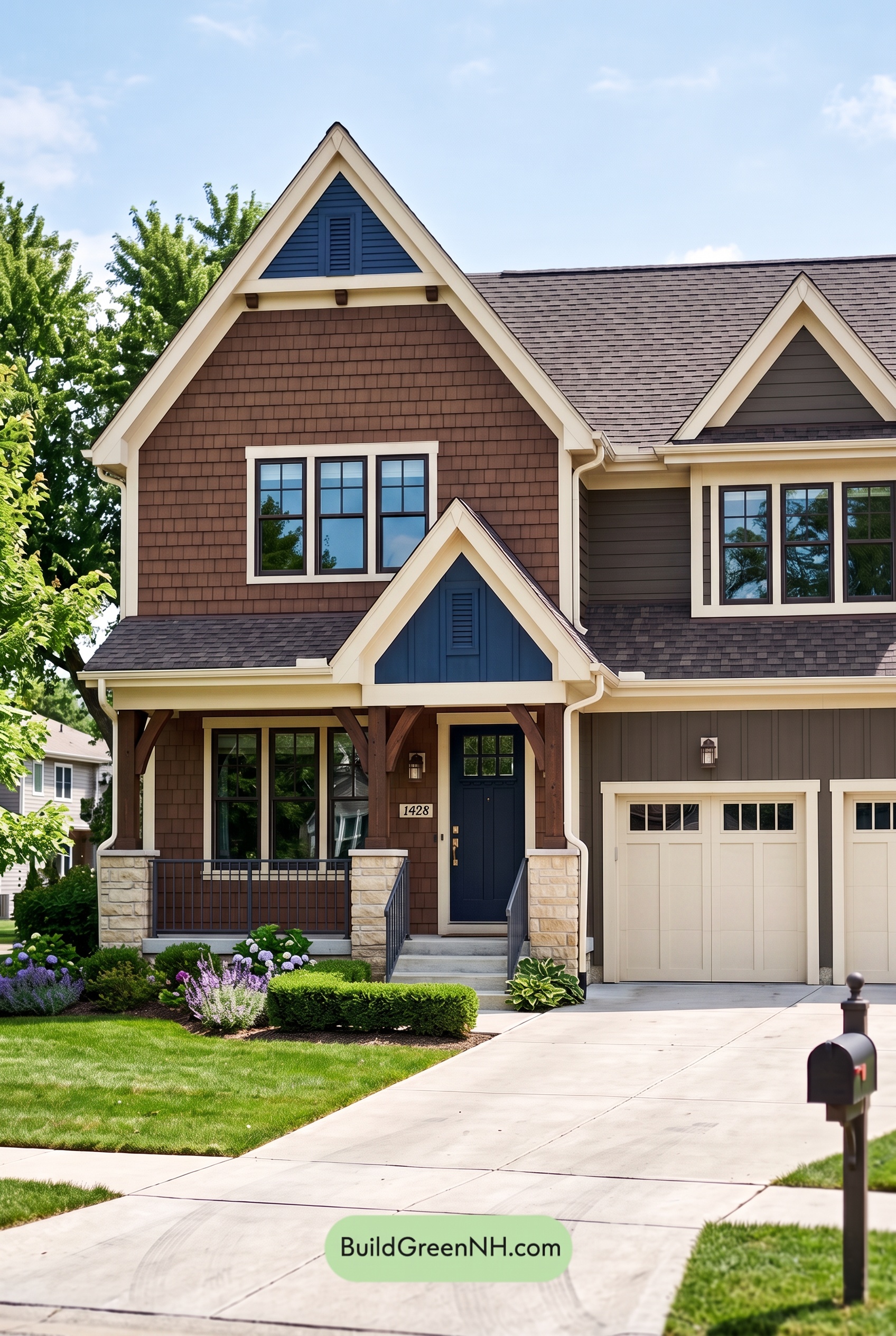 Dark Brown House Exterior Color Scheme: Bluebell Timberline
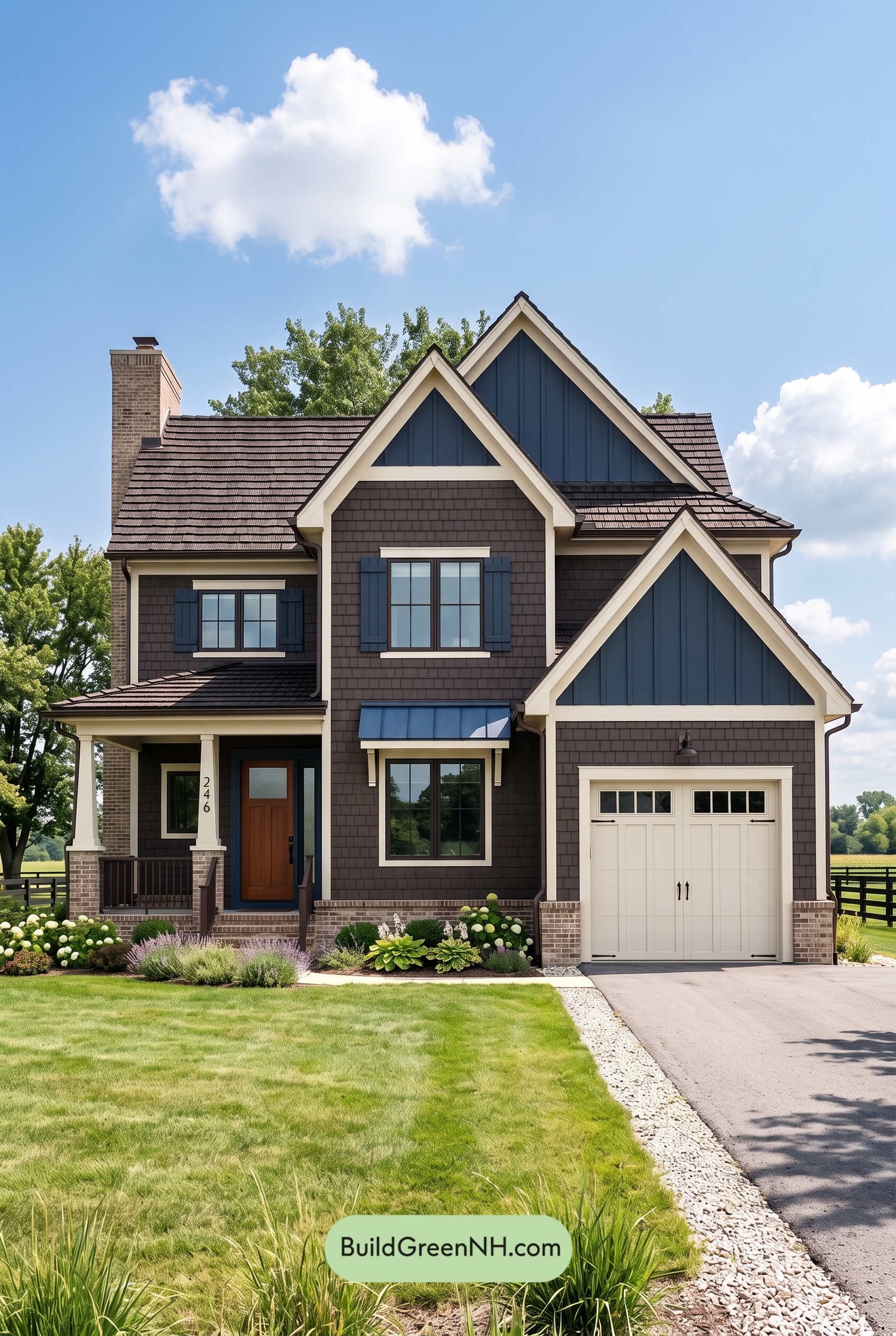 Dark Brown House Exterior Color Scheme: Sapphire Homestead
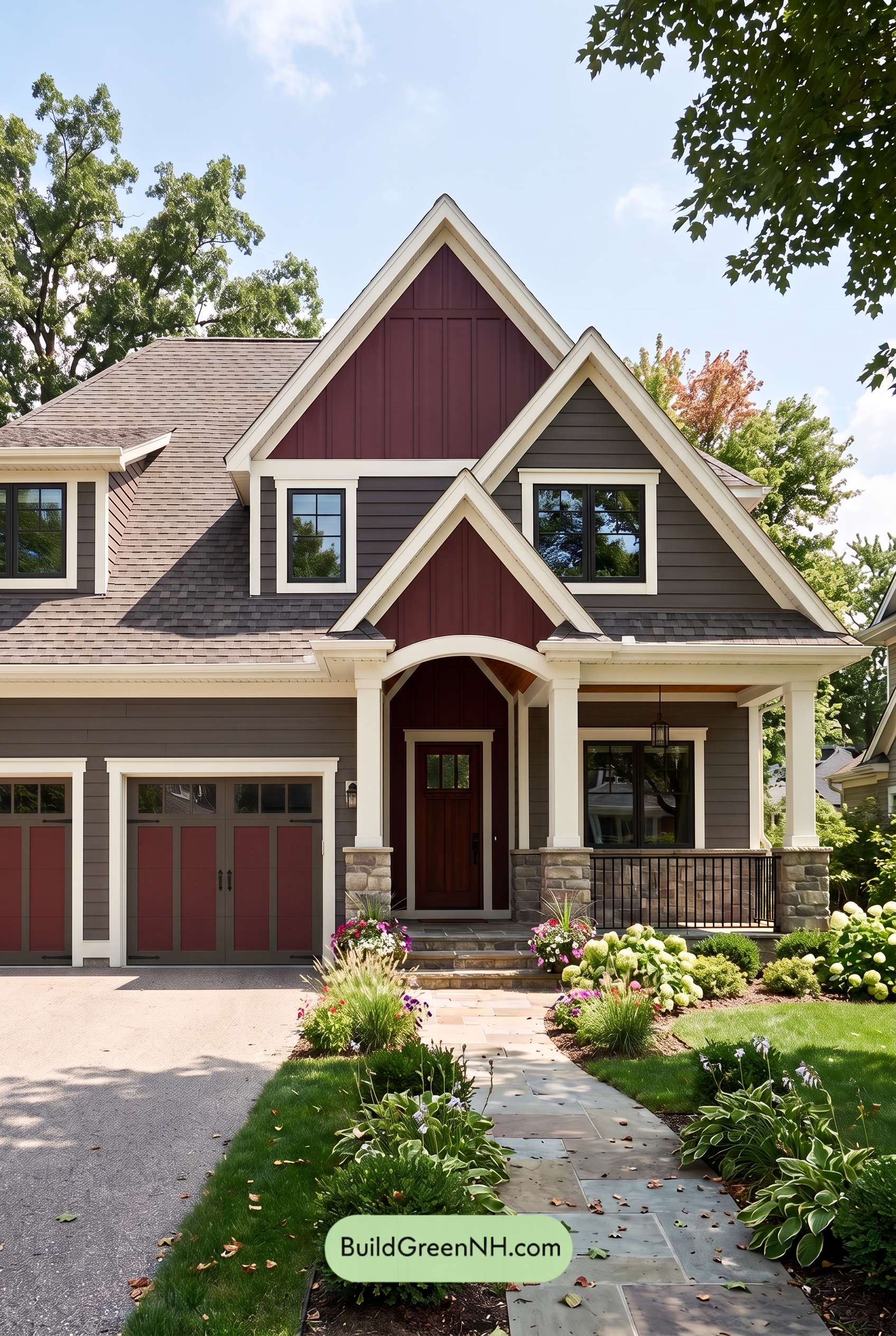 Dark Brown House Exterior Color Scheme: Hearthglow Arrival
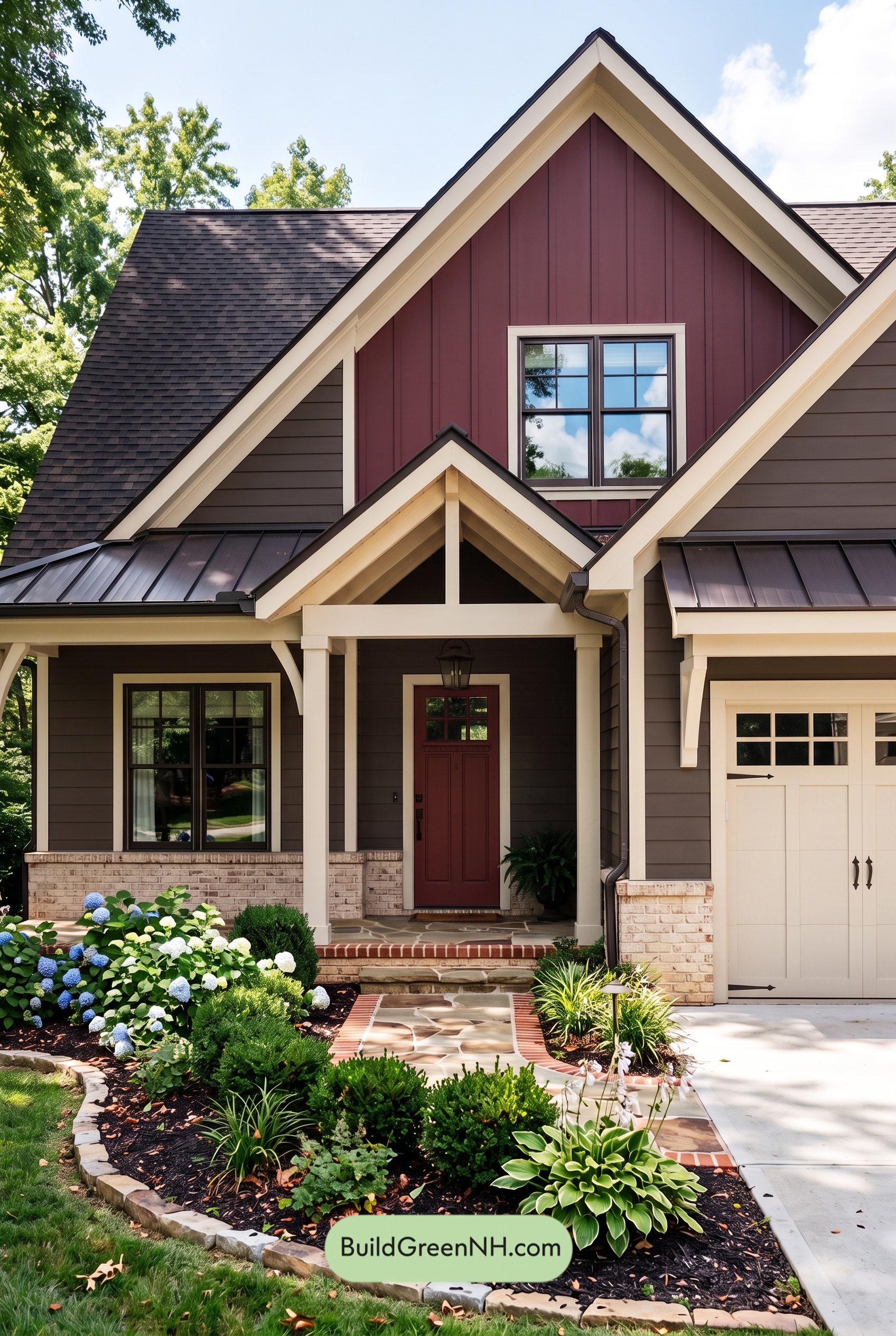 Dark Brown House Exterior Color Scheme: Embercrest Welcome
Table of Contents