Last updated on
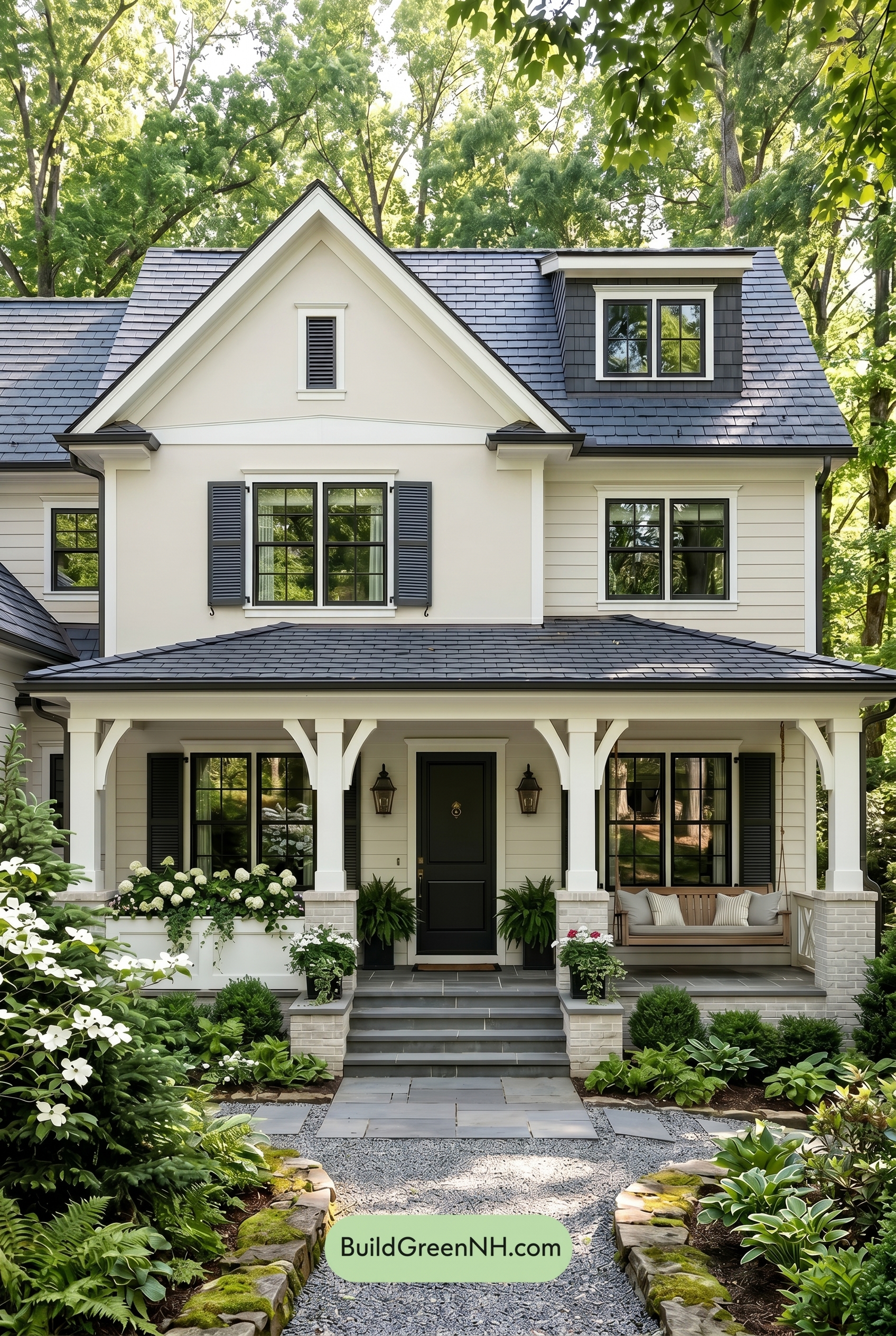

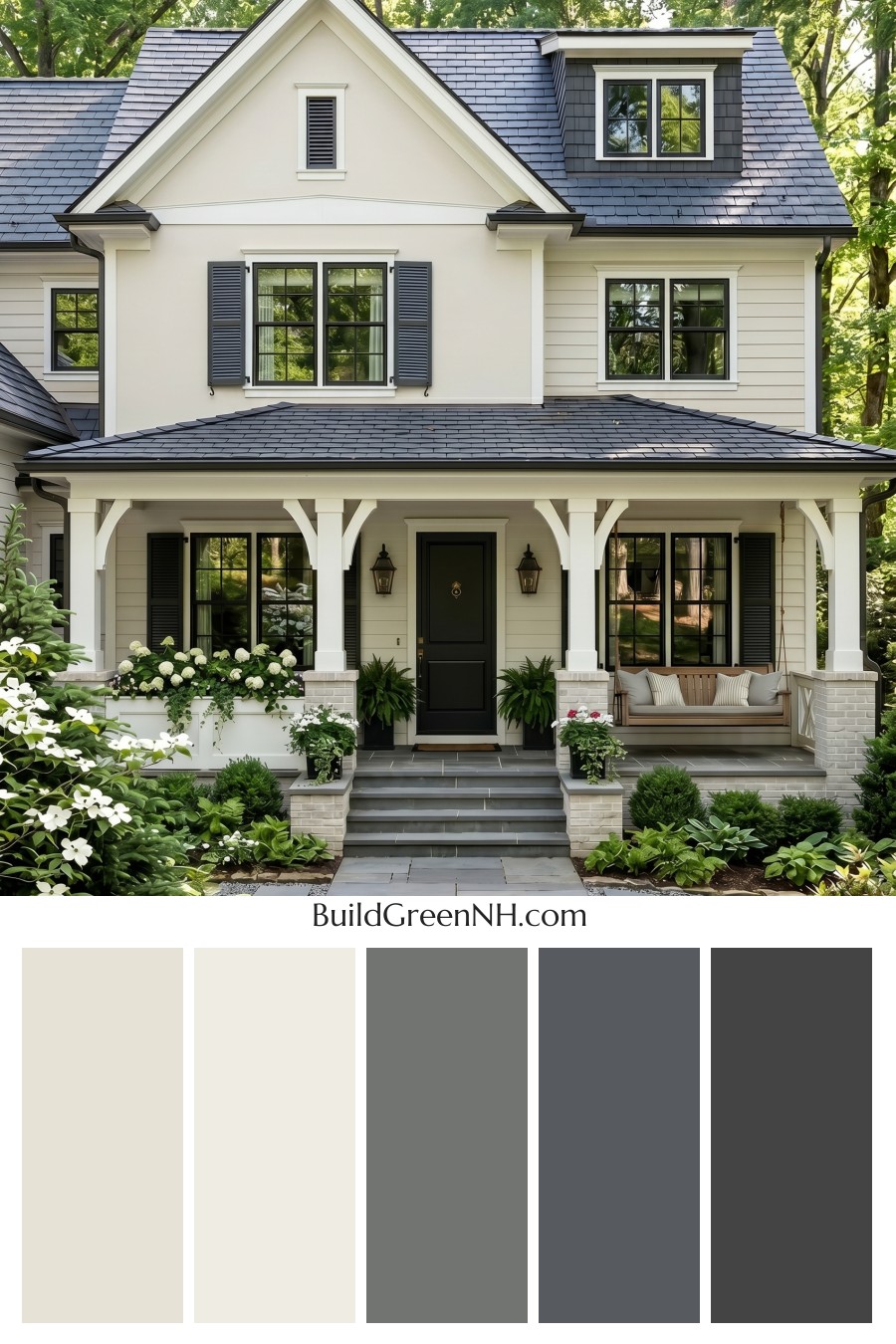
This exterior color scheme feels so inviting because its warm beige siding, crisp white details, and deep gray accents create a polished balance of softness and contrast.
A Warm, Welcoming Base
The main siding is wrapped in a gentle beige shade that gives the home an easy, lived-in elegance. It feels warm without becoming too yellow, making the exterior look bright, calm, and approachable.
This beige family works especially well on the broad wall surfaces because it softens the height and scale of the house. It also pairs beautifully with the surrounding greenery, letting the architecture feel settled into its wooded setting rather than competing with it.
Crisp White Trim for Definition
The white trim brings a clean, classic edge to the exterior. Around the rooflines, windows, porch, columns, and railings, this fresh white shade sharpens the home’s details and gives every architectural feature a graceful outline.
The porch columns and railings feel especially charming in white. They add brightness to the shaded entry area and help the front porch read as open, airy, and welcoming.
Deep Gray Accents Add Sophistication
The shutters, window frames, front door, and dormer siding all lean into the gray family, with deeper shades creating handsome contrast against the lighter body of the home. These accents give the exterior a tailored look, adding depth without feeling heavy.
The front door in a rich gray shade anchors the entry beautifully. It feels refined and grounded, drawing the eye toward the porch while still blending seamlessly with the window frames and shutters.
The Roof Ties It All Together
The roof carries a dark gray tone that complements the shutters and window frames. This creates a cohesive top-to-bottom flow, making the color palette feel intentional rather than pieced together.
Because the roof is deeper than the siding and trim, it gives the home a strong visual cap. The result is balanced: light and welcoming below, structured and sophisticated above.
Overall Mood
This palette feels timeless, calm, and quietly upscale. The beige siding adds warmth, the white trim brings brightness, and the gray accents provide just the right amount of drama.
What makes the scheme so successful is its restraint. Every shade has a clear role, and nothing feels overdone. It is a classic exterior color combination with a fresh, modern edge—perfect for a home that wants to feel both elegant and deeply inviting.
Next, see how this color scheme looks under different lighting simulations throughout the day.
Overcast
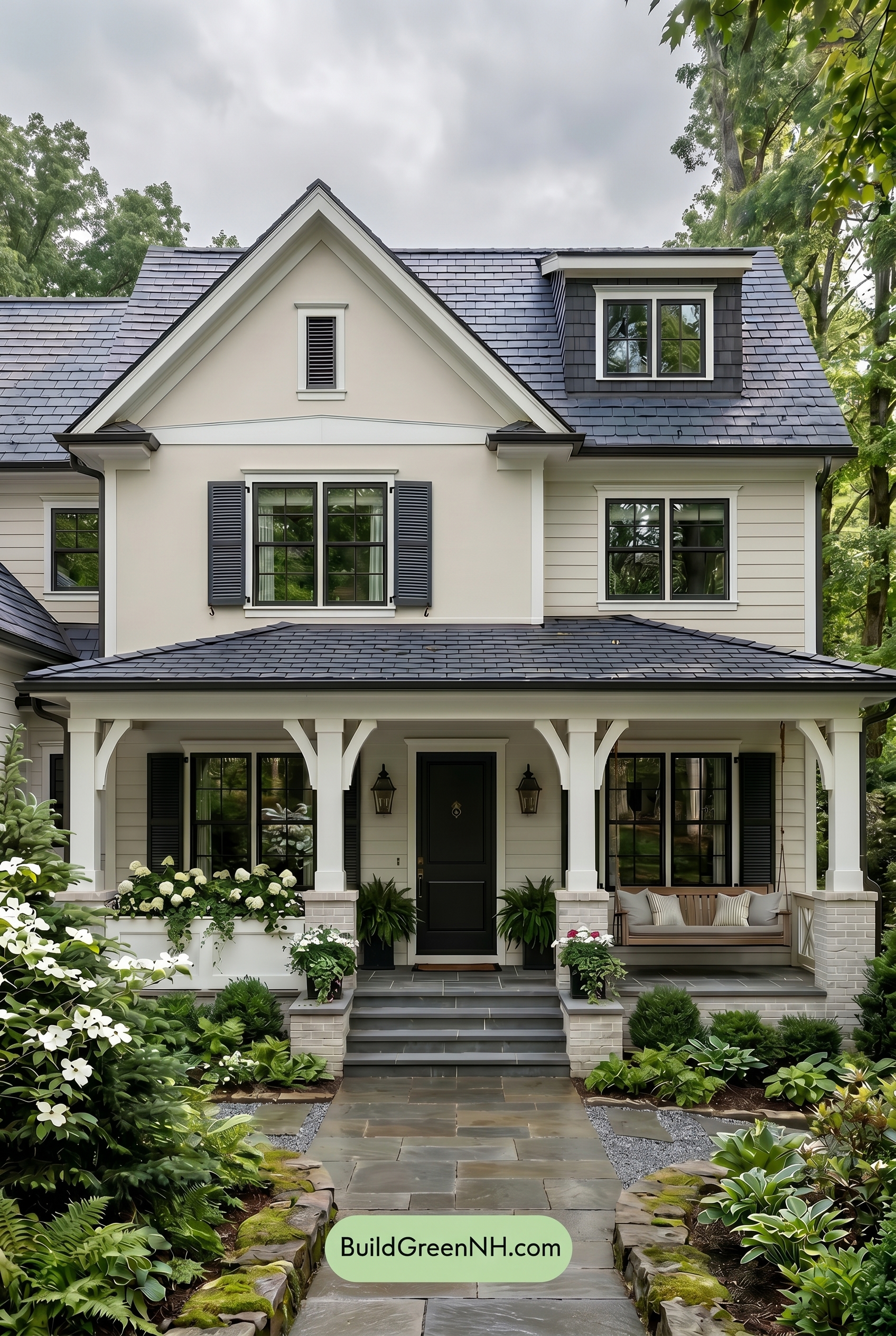
Under overcast light, the beige siding appears less warm and a bit more muted than it would in neutral daylight, shifting toward a softer, creamier neutral. The white trim and columns lose some crisp brightness, feeling gentler and more blended rather than sharply outlined.
The gray shutters, window frames, dormer, and front door look deeper and slightly cooler, with saturation subdued by the cloud cover. Shadows become broader and softer, reducing contrast across the facade and giving the whole house a calm, refined, quietly elegant mood.
Golden Hour
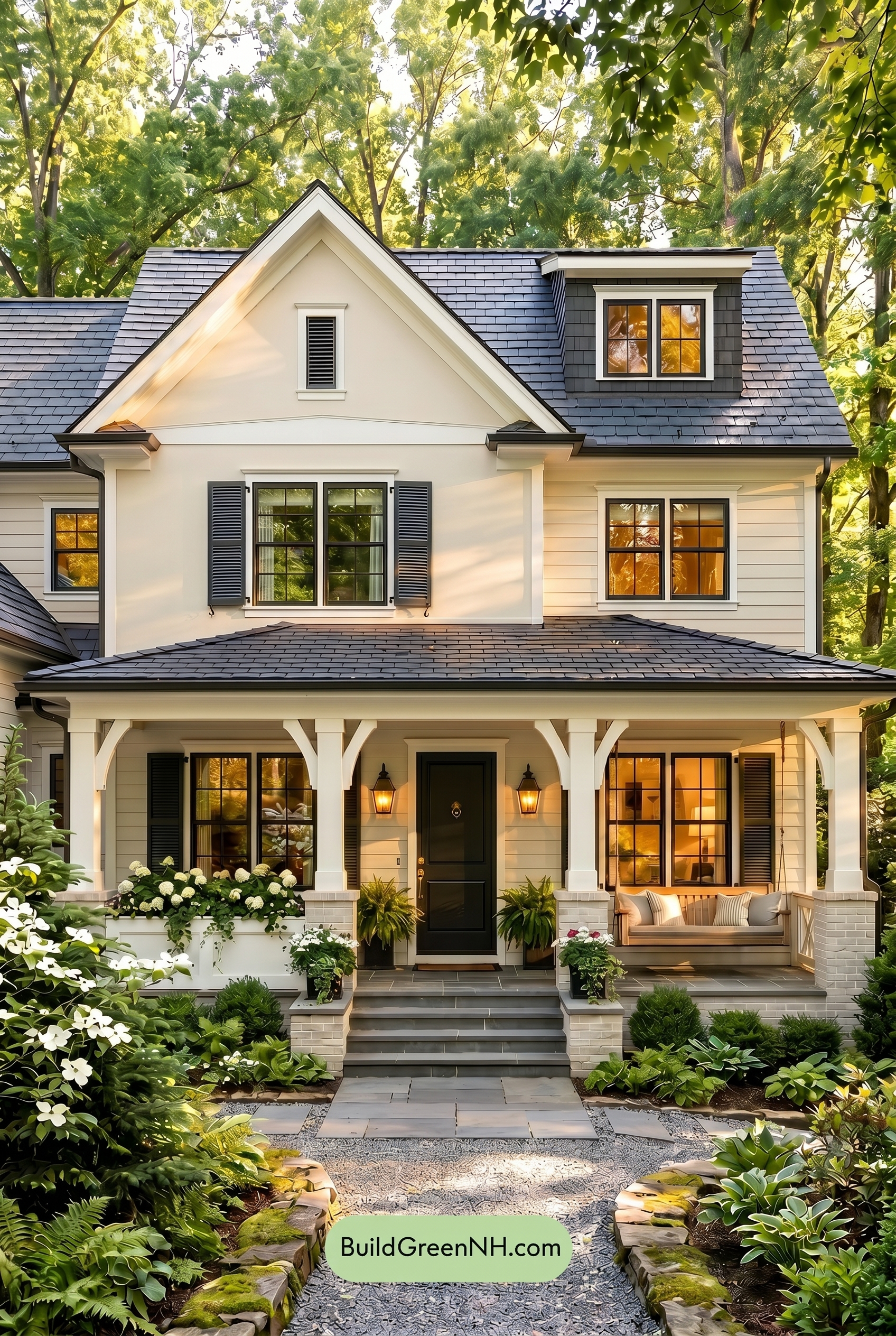
Under Golden Hour light, the beige walls shift warmer and more saturated than they would in neutral daylight, taking on a soft honeyed glow. The white trim, columns, and railings feel creamier and less crisp, which makes the whole façade look more relaxed and inviting.
The gray shutters, window frames, dormer, and front door deepen in the longer shadows, creating stronger contrast against the warmed neutrals. Compared with neutral daylight, the mood becomes richer and cozier, with shadowed grays feeling more dramatic while the sunlit surfaces appear softer and more luminous.
Shade
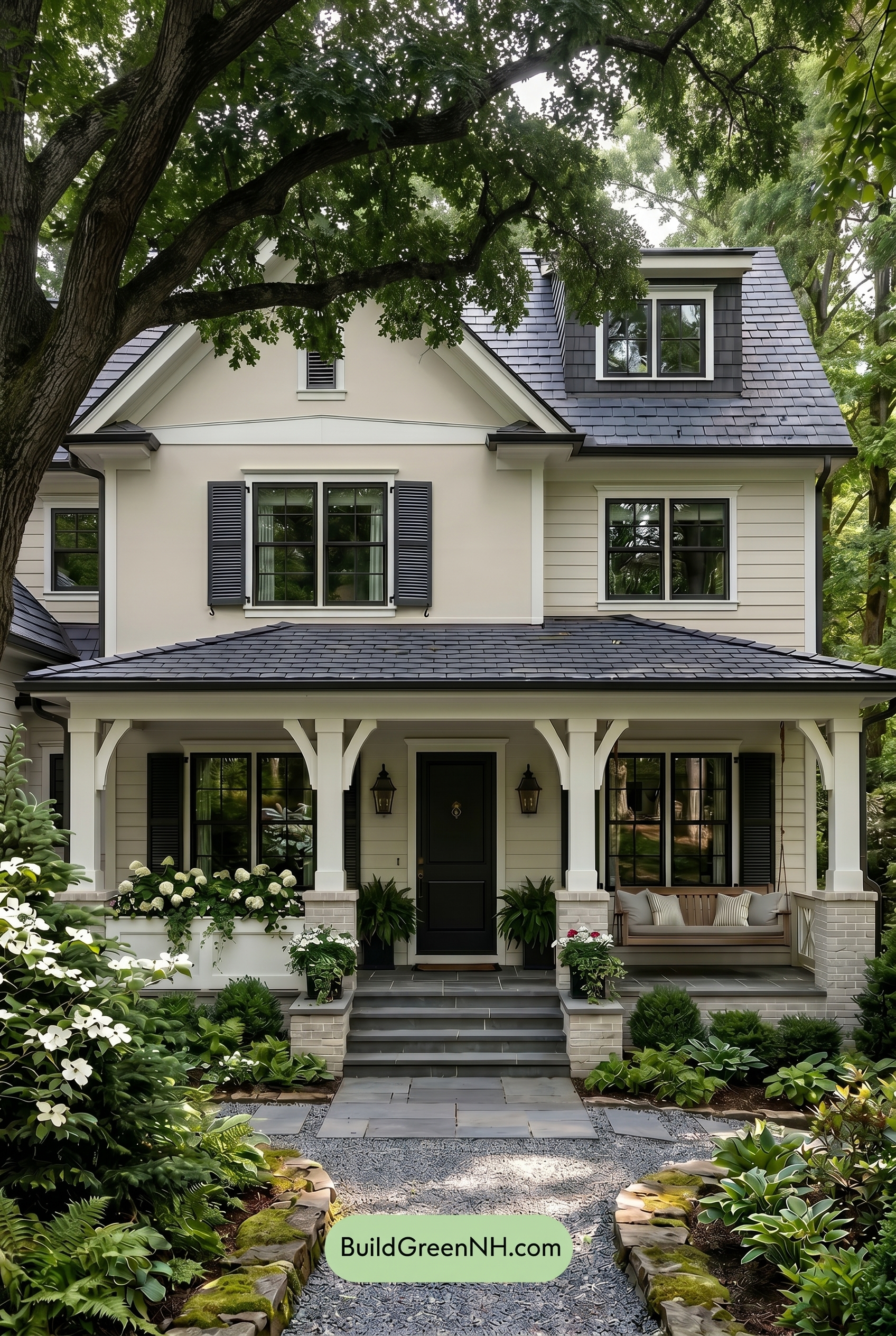
In shade, the beige family on the main walls loses a bit of its sunlit warmth and reads softer, cooler, and more muted than it would in neutral daylight. The white family on the trim, columns, and railings becomes less bright and crisp, taking on a gentler, creamy softness as overhead tree cover filters the light.
The gray family on the dormer, shutters, window frames, and front door deepens noticeably, gaining saturation and shadowed richness. This stronger dark-to-light contrast gives the exterior a more layered, sheltered mood, with the shaded porch and rooflines feeling calm, elegant, and slightly more dramatic than they would in even daylight.
Nighttime
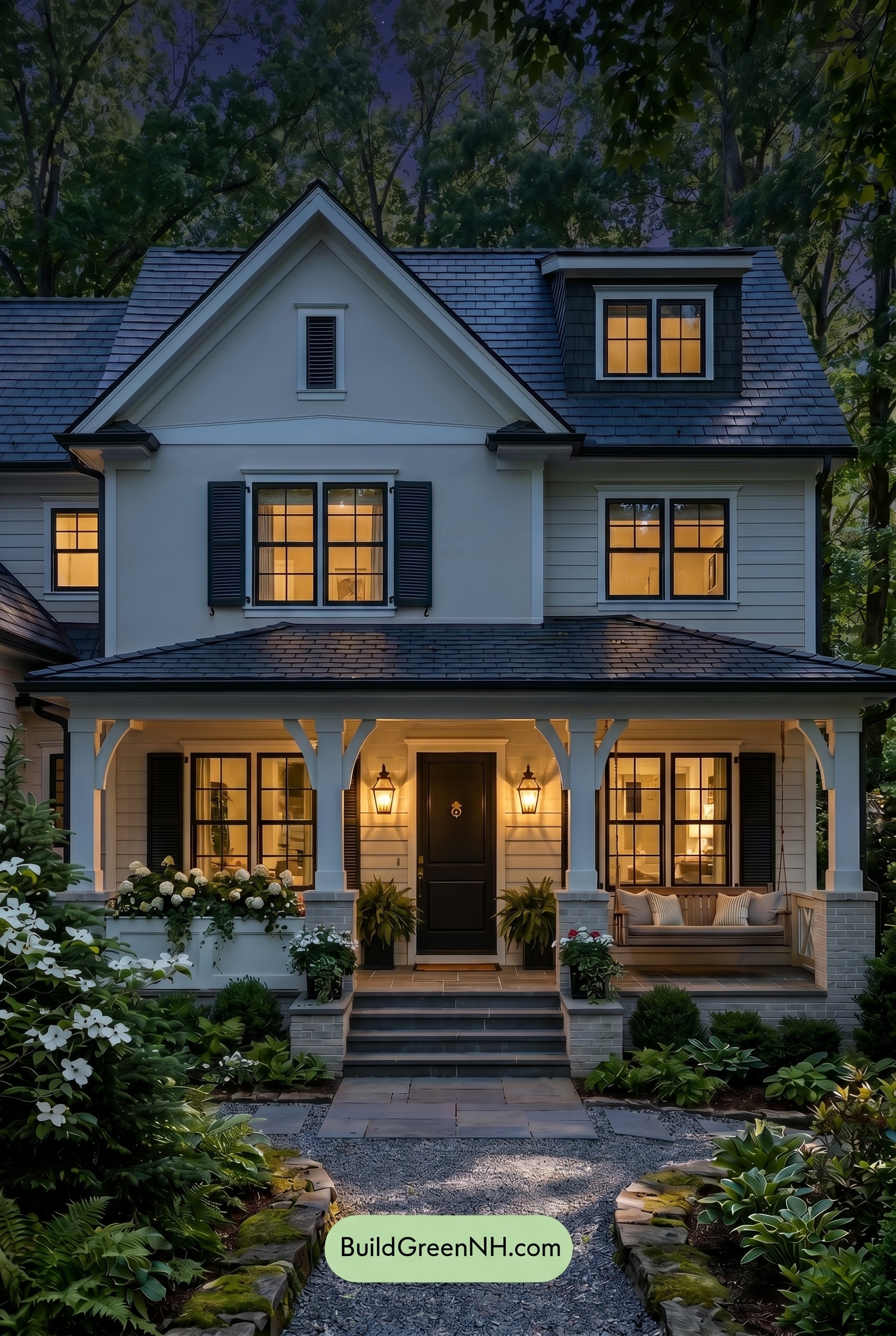
Under nighttime lighting, the beige walls lose some of their daylight softness and take on a cooler, more muted cast, while the gray shutters, window frames, dormer, and front door deepen in saturation. Shadows collect beneath the rooflines and porch, making the darker gray shades feel richer and more dramatic than they would in neutral daylight.
The white trim, columns, and railings pick up a gentle warmth from the porch and window glow, creating stronger contrast against the cooler exterior surfaces. Overall, the palette shifts from crisp and balanced by day to layered and inviting at night, with warm highlights, deeper shadows, and a cozier mood.
Pin these for later:
Want More?
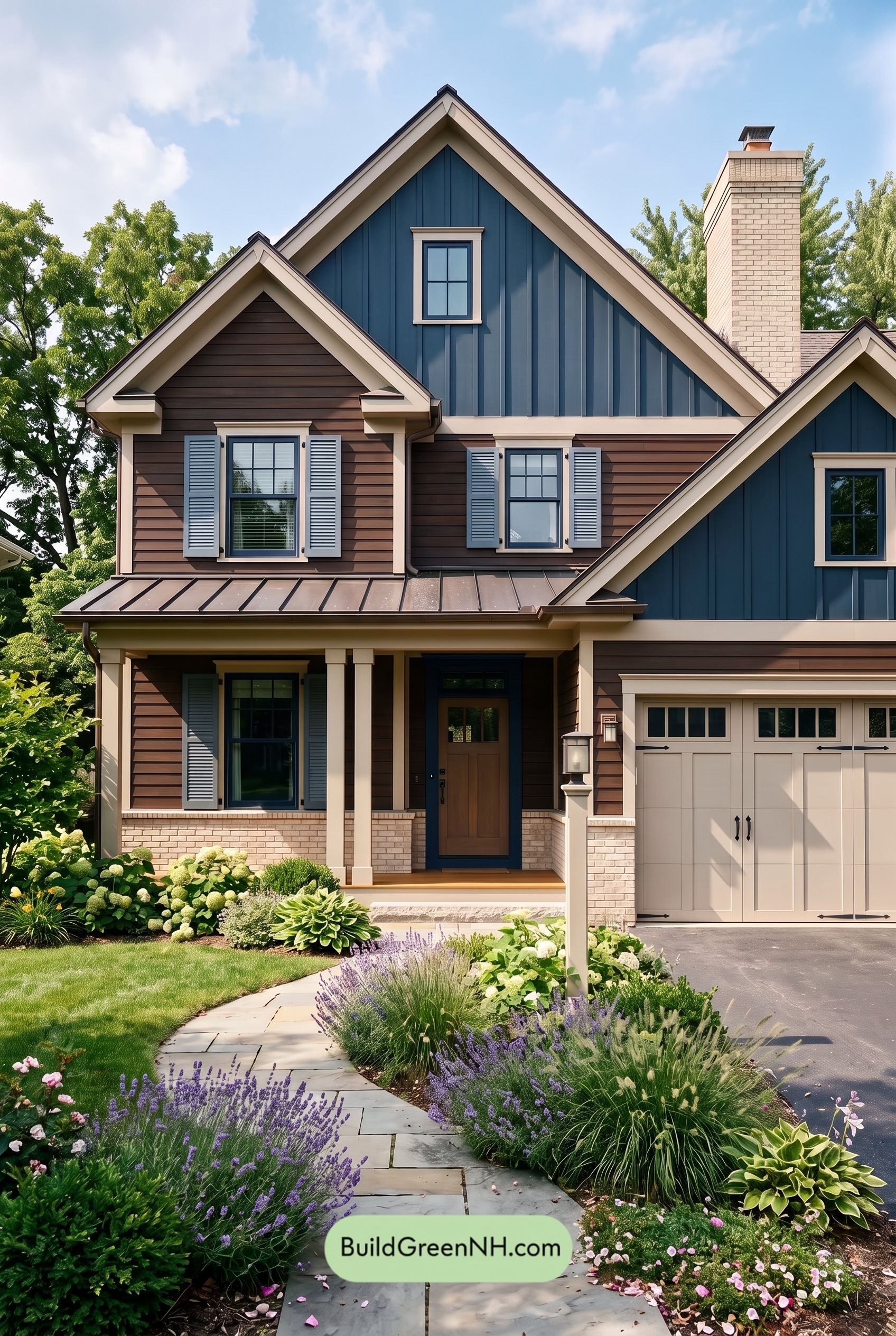 Dark Brown House Exterior Color Scheme: Inkwood Lantern
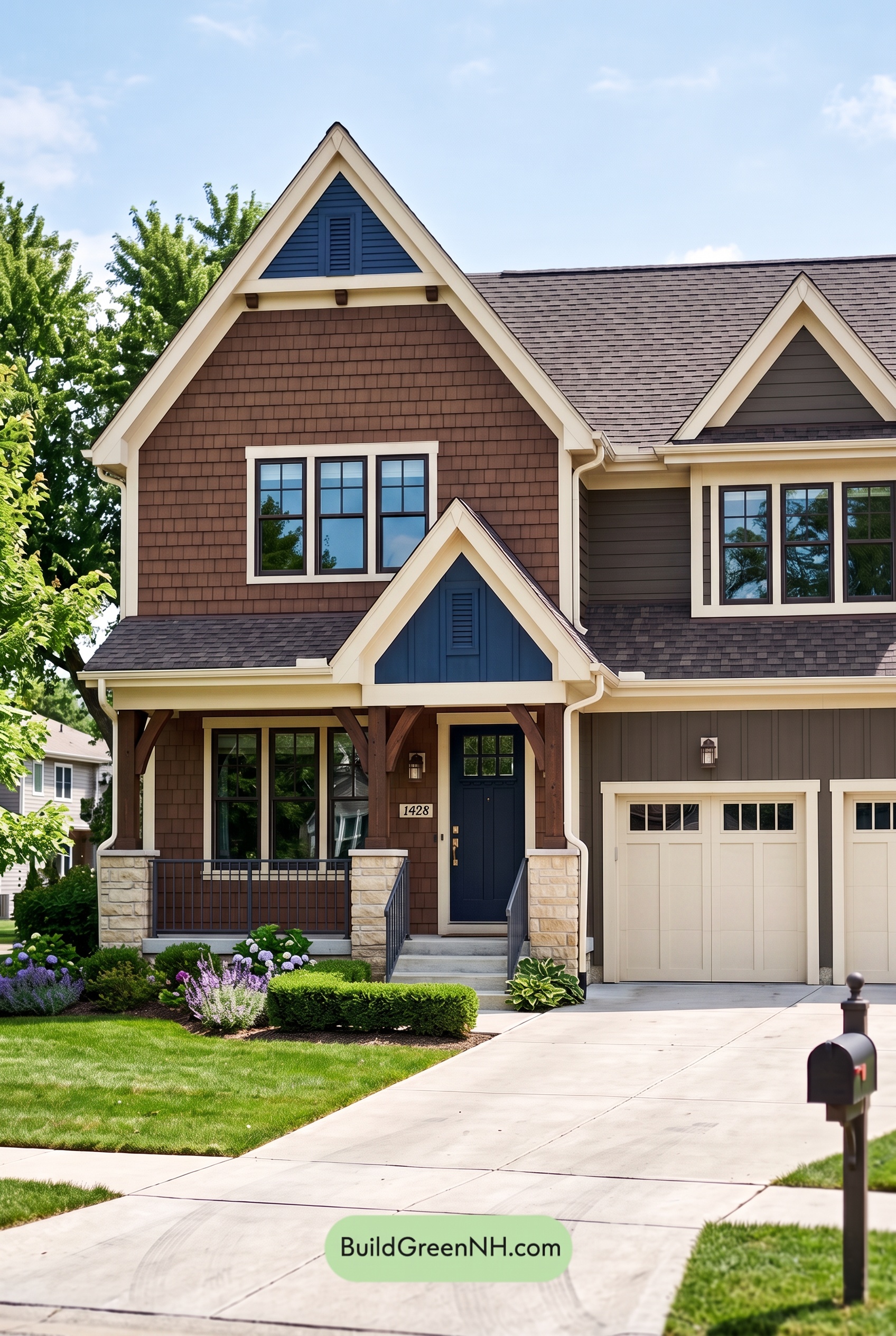 Dark Brown House Exterior Color Scheme: Bluebell Timberline
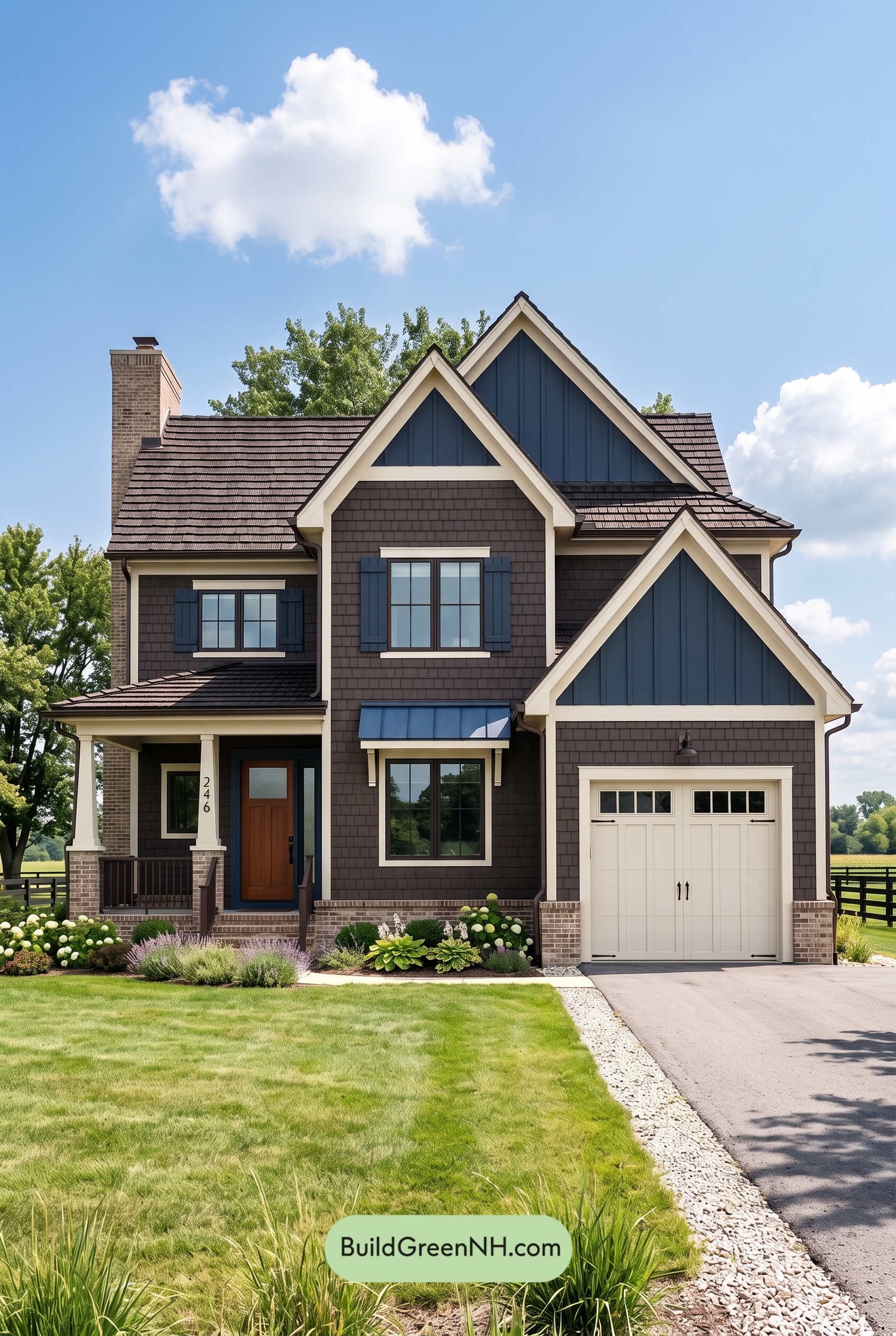 Dark Brown House Exterior Color Scheme: Sapphire Homestead
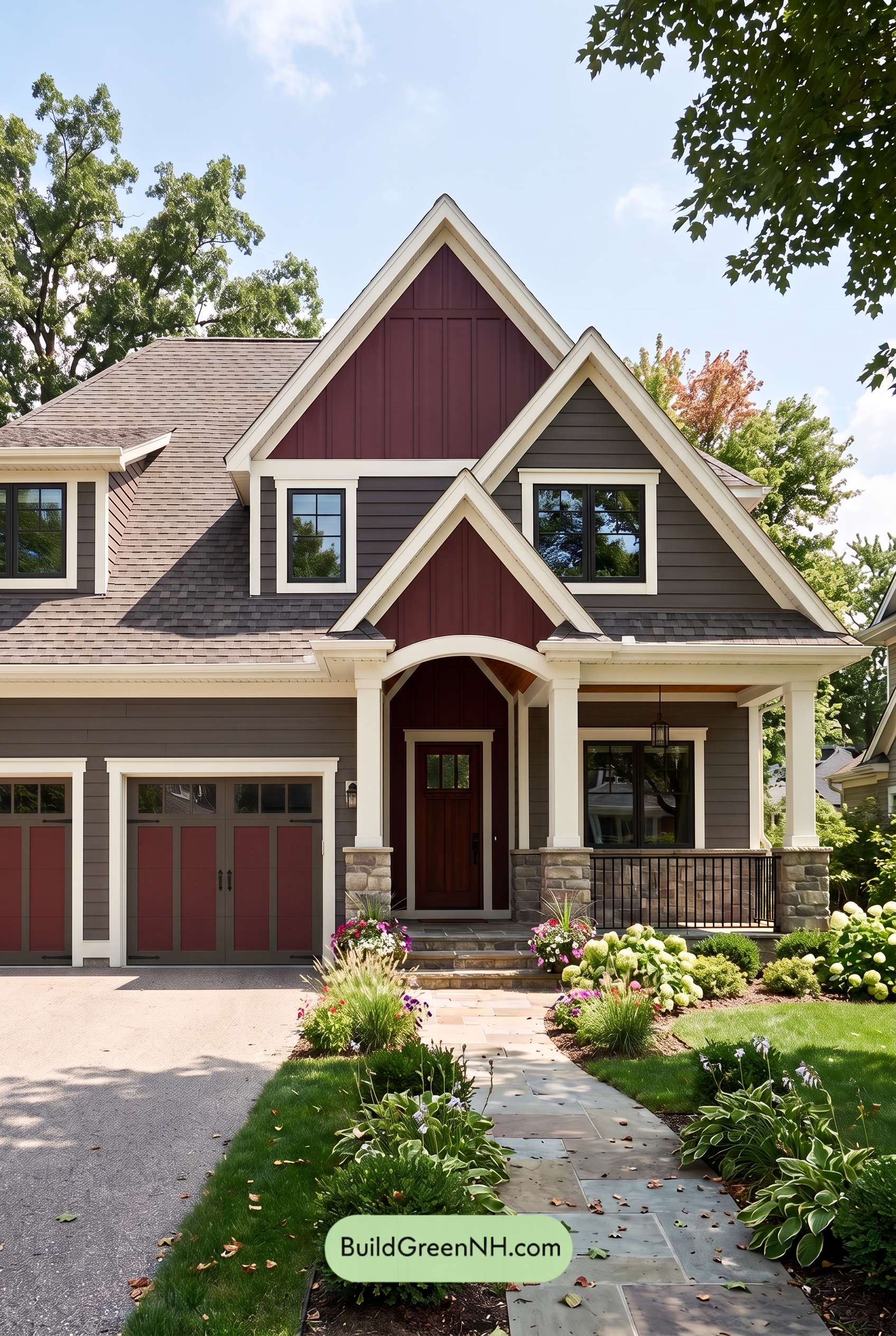 Dark Brown House Exterior Color Scheme: Hearthglow Arrival
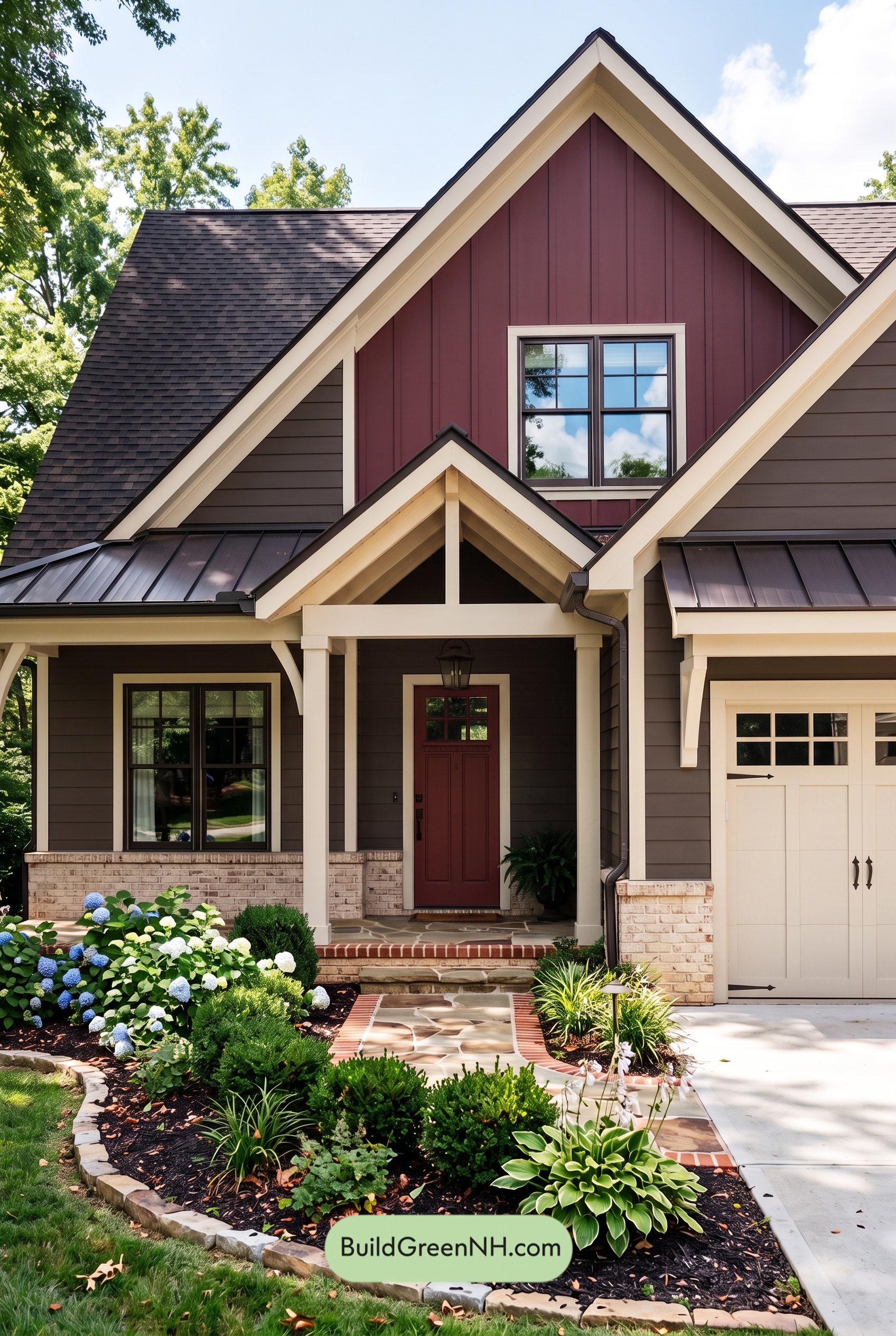 Dark Brown House Exterior Color Scheme: Embercrest Welcome
Table of Contents