Last updated on
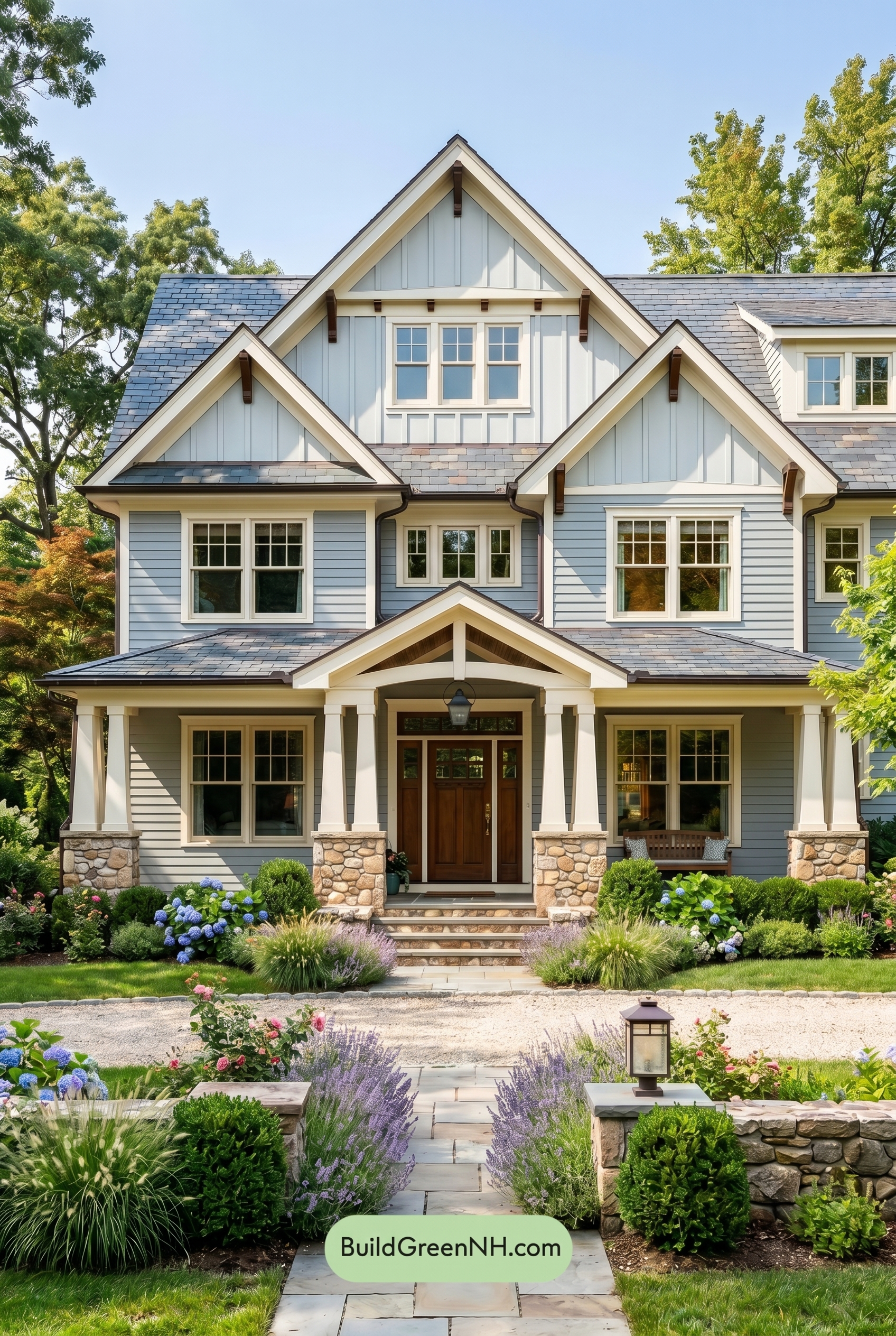

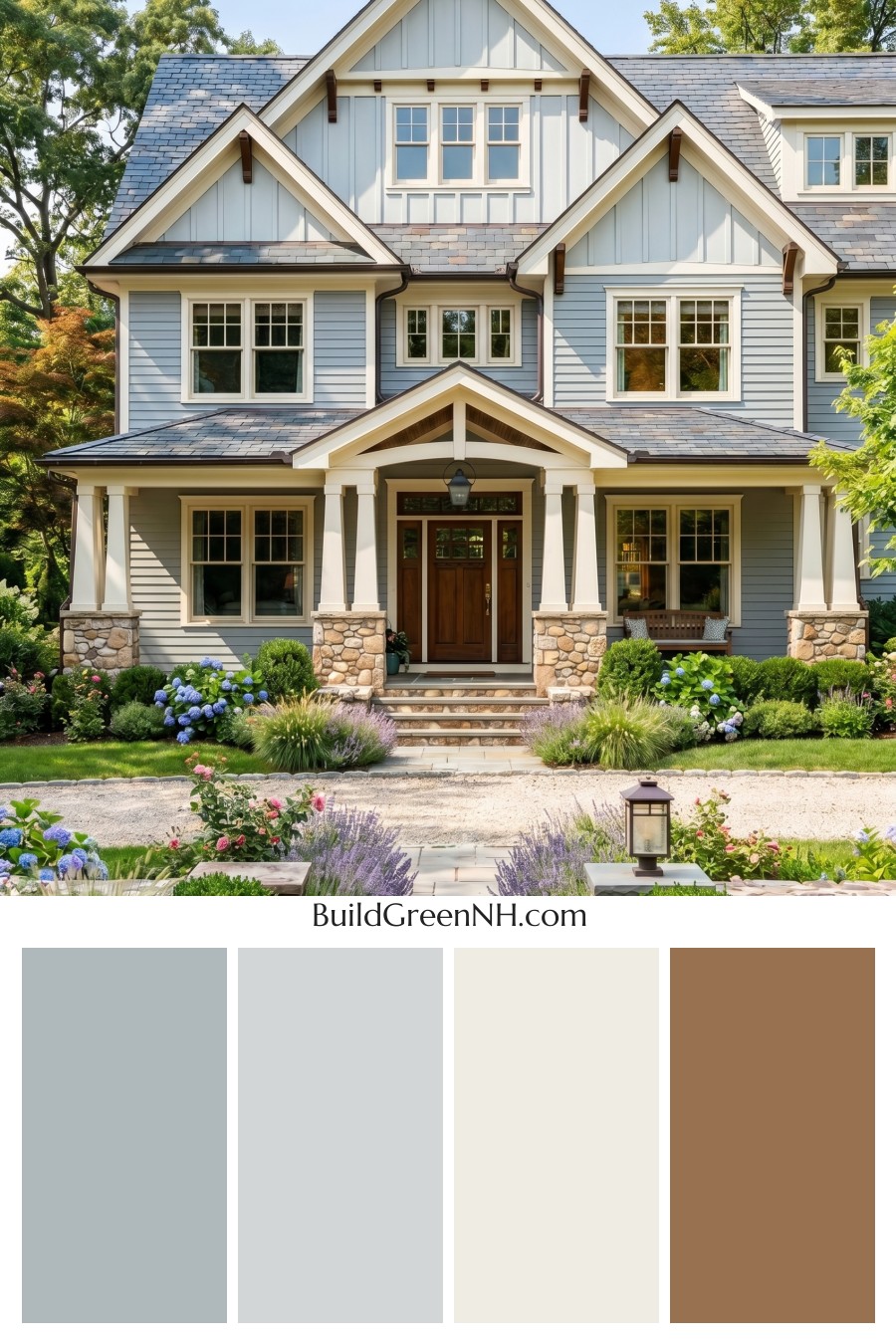
This layered mix of soft blue, pale gray, warm white, and rich brown gives the home a fresh, welcoming character while making every gable and porch detail feel beautifully defined.
A Cool, Classic Base
The main siding is wrapped in a gentle blue shade that feels calm, polished, and approachable. Used across the horizontal siding, this blue family color gives the house a steady, grounded presence without feeling heavy.
Above, the upper gables shift into a pale gray shade, adding subtle contrast while keeping the overall palette soft and cohesive. Because the gray is light and airy, it blends beautifully with the blue siding and helps the tall rooflines feel elegant rather than imposing.
Warm White Trim That Brightens Everything
The trim, window frames, porch columns, and gable edges are all highlighted in a warm white shade. This is what makes the architecture shine. The white family accents outline the windows, emphasize the layered roof peaks, and give the porch a crisp, inviting finish.
On a home with so many beautiful angles, white trim is especially effective. It creates clean definition between the blue siding, gray upper walls, and roofline, allowing each surface to stand out while still feeling connected.
Rich Brown Accents Add Depth
The front door brings in a rich brown shade that instantly warms up the cooler blue and gray exterior. It feels natural, welcoming, and substantial, giving the entry a strong focal point without overpowering the rest of the palette.
Small brown family accents near the gables and porch details echo the door and add a handcrafted feel. These darker touches keep the soft exterior from looking too delicate, adding just the right amount of contrast.
A Gray Roof That Ties It Together
The roof sits in the gray family, with medium and deeper gray tones that complement the upper walls and balance the softness of the siding. Its varied gray appearance adds texture, which works beautifully with the clean painted surfaces below.
Because the roof color is neutral and slightly deeper than the wall colors, it gives the home a composed, finished look. It also helps the white trim pop against the peaks and edges.
The Overall Mood
This color scheme feels fresh, refined, and comfortably timeless. The blue siding brings charm, the pale gray upper sections add sophistication, the warm white trim keeps everything bright, and the brown door makes the entry feel personal and inviting.
It is a great example of a balanced exterior palette: cool shades for calmness, white shades for clarity, and warm brown accents for character. The result is a house that feels elegant from the curb but still friendly enough to draw you right to the front porch.
Next, see how this color scheme looks under different lighting simulations throughout the day.
Overcast
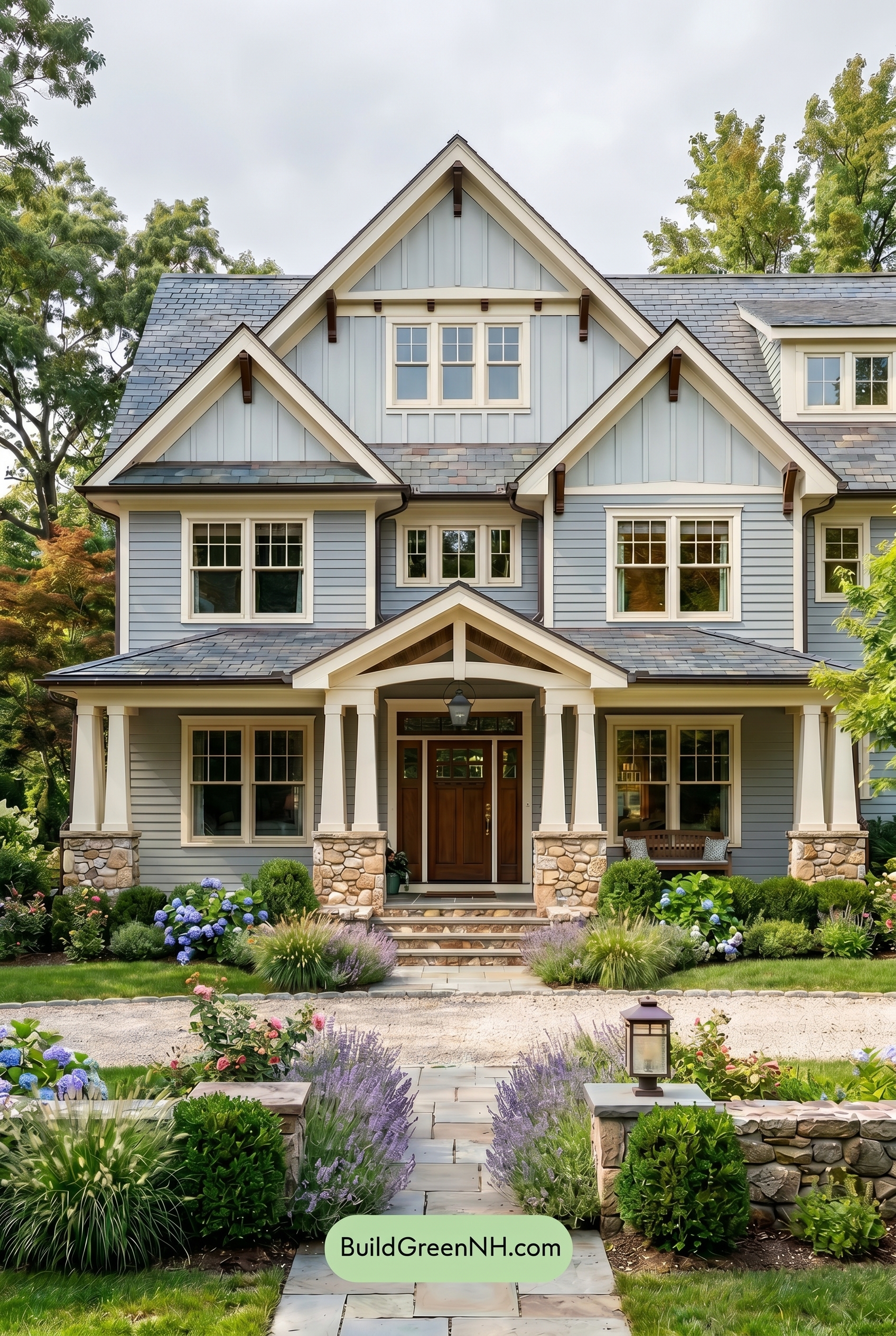
In overcast light, the blue family siding appears slightly deeper and more muted than it would in neutral daylight, shifting toward a cooler, softer shade with less visible saturation. The gray family upper walls also feel calmer and more blended, while the white family trim and columns lose a bit of crisp brightness, reading gentler rather than sharply defined.
Because cloud cover diffuses the light, shadows soften across the gables, porch, and window frames, reducing contrast and making the whole exterior feel quieter and more cohesive. The brown family front door gives up some of its sunny warmth, becoming richer and earthier, which adds a cozy, grounded mood against the cooler blue and gray shades.
Golden Hour
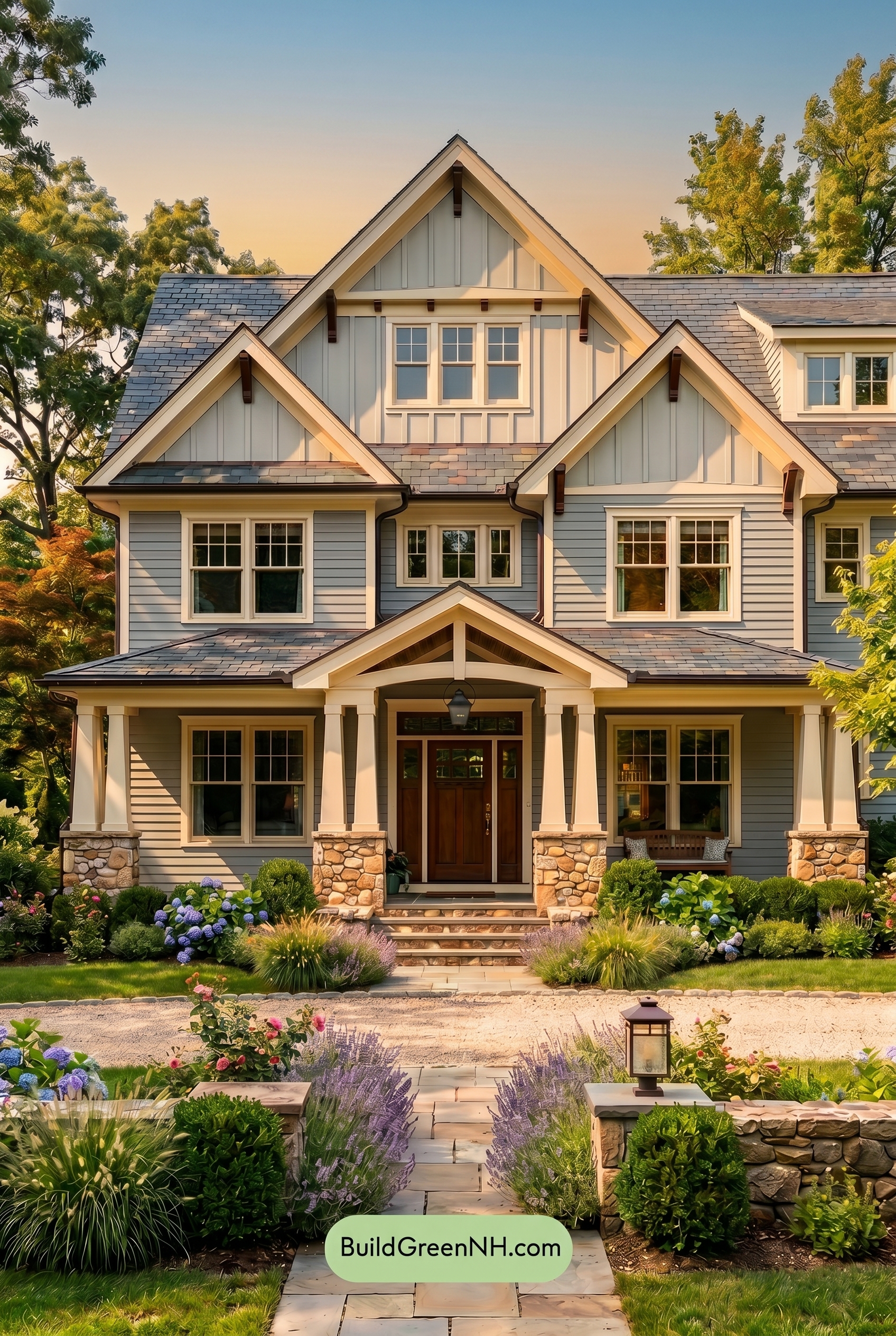
Under Golden Hour light, the blue family on the main walls takes on a richer, slightly warmer cast, so it feels softer and more inviting than it would in neutral daylight. The upper gray shades lose some of their cool edge, while the white trim, window frames, and columns glow with a creamy warmth instead of reading bright and crisp.
The low sun increases contrast across the gables, porch, and siding, creating longer shadows that make the lighter shades feel more dimensional. The brown front door appears deeper and more saturated, adding a cozy focal point and shifting the whole exterior mood from clean and balanced to warm, relaxed, and welcoming.
Shade
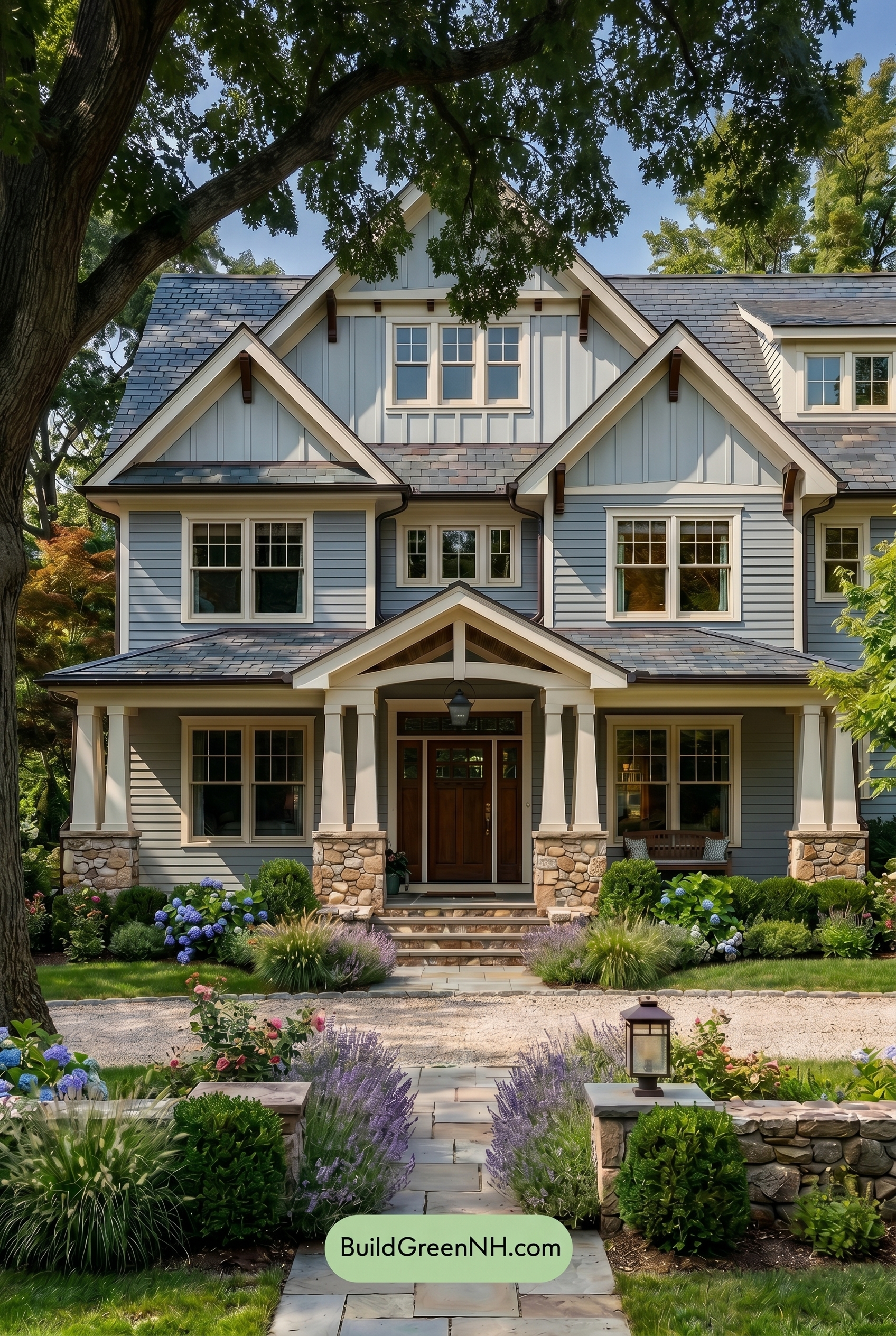
In shade, this shade of blue settles into a deeper, more saturated look than it would in neutral daylight, giving the siding a calmer, cooler presence. The gray family on the upper walls also reads slightly moodier, while the white trim, window frames, and columns lose some brightness and feel softer rather than crisp.
The stronger shadows under the trees increase contrast along the rooflines, porch, and window details, making the white family stand out in a gentler, creamier way. The brown front door appears richer and warmer against the cooler blue and gray shades, creating a cozy, sheltered mood that feels more relaxed than the clearer, brighter balance of neutral daylight.
Nighttime
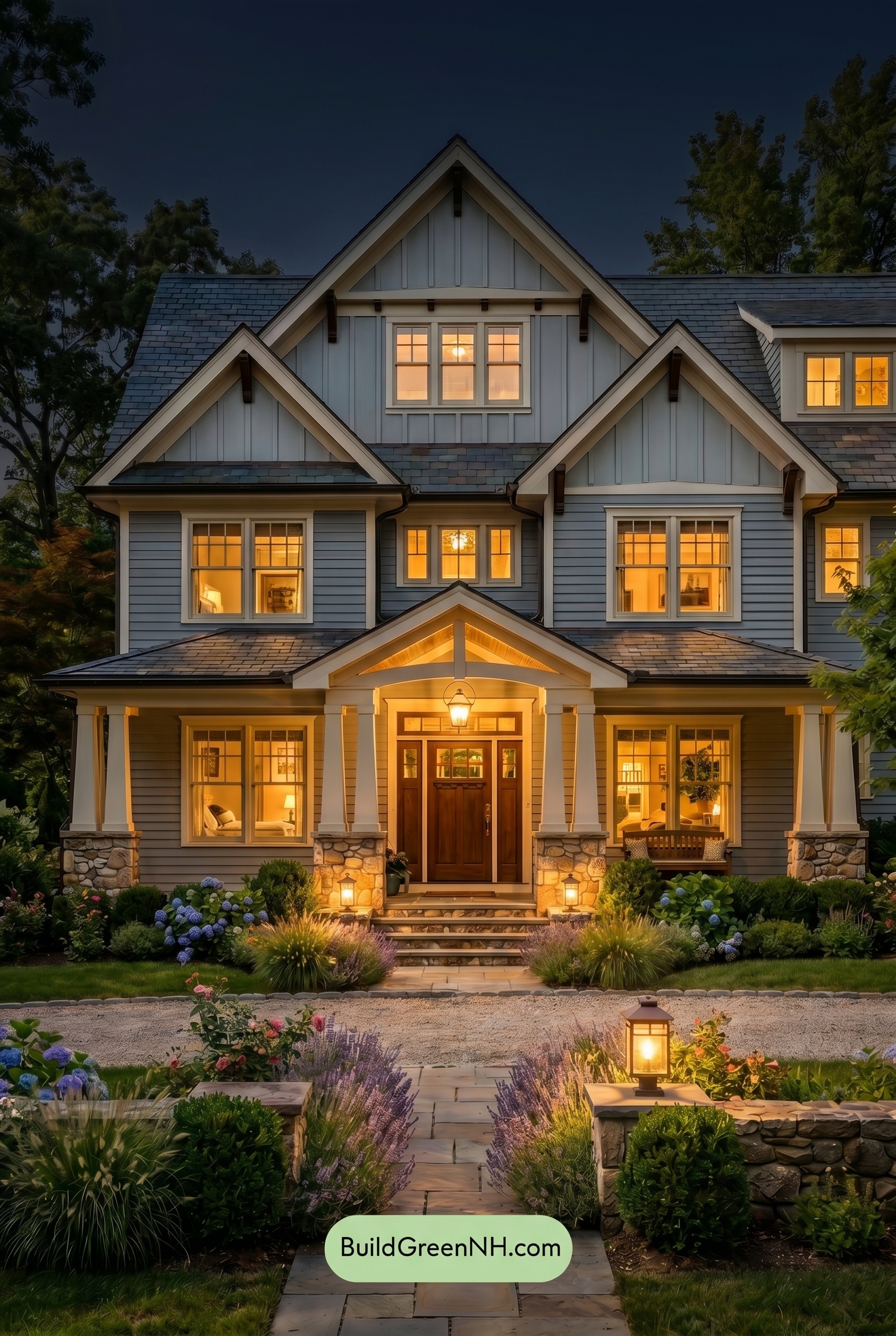
At night, the blue siding deepens and feels more saturated than it would in neutral daylight, shifting toward a richer, moodier shade as shadows settle into the horizontal lines. The gray upper sections become cooler and quieter, while the white trim and columns pick up a soft warmth from the glowing windows and entry lights.
The contrast becomes more dramatic after dark: dark rooflines and recessed areas sharpen the edges, while the warm brown front door appears richer and more inviting. Compared with daylight, the whole palette feels less crisp and more atmospheric, balancing cool exterior shades with a cozy golden warmth.
Pin these for later:
Want More?
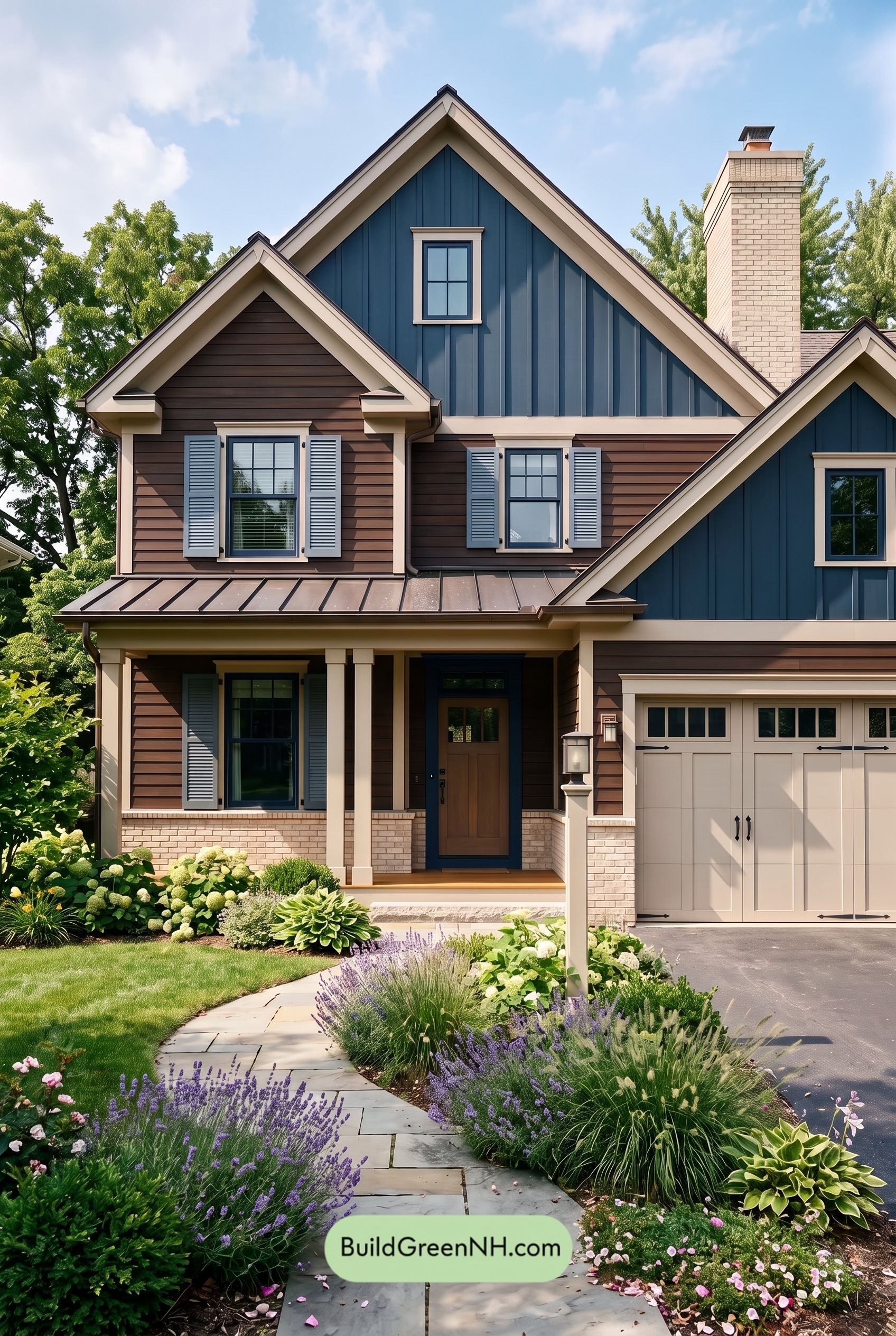 Dark Brown House Exterior Color Scheme: Inkwood Lantern
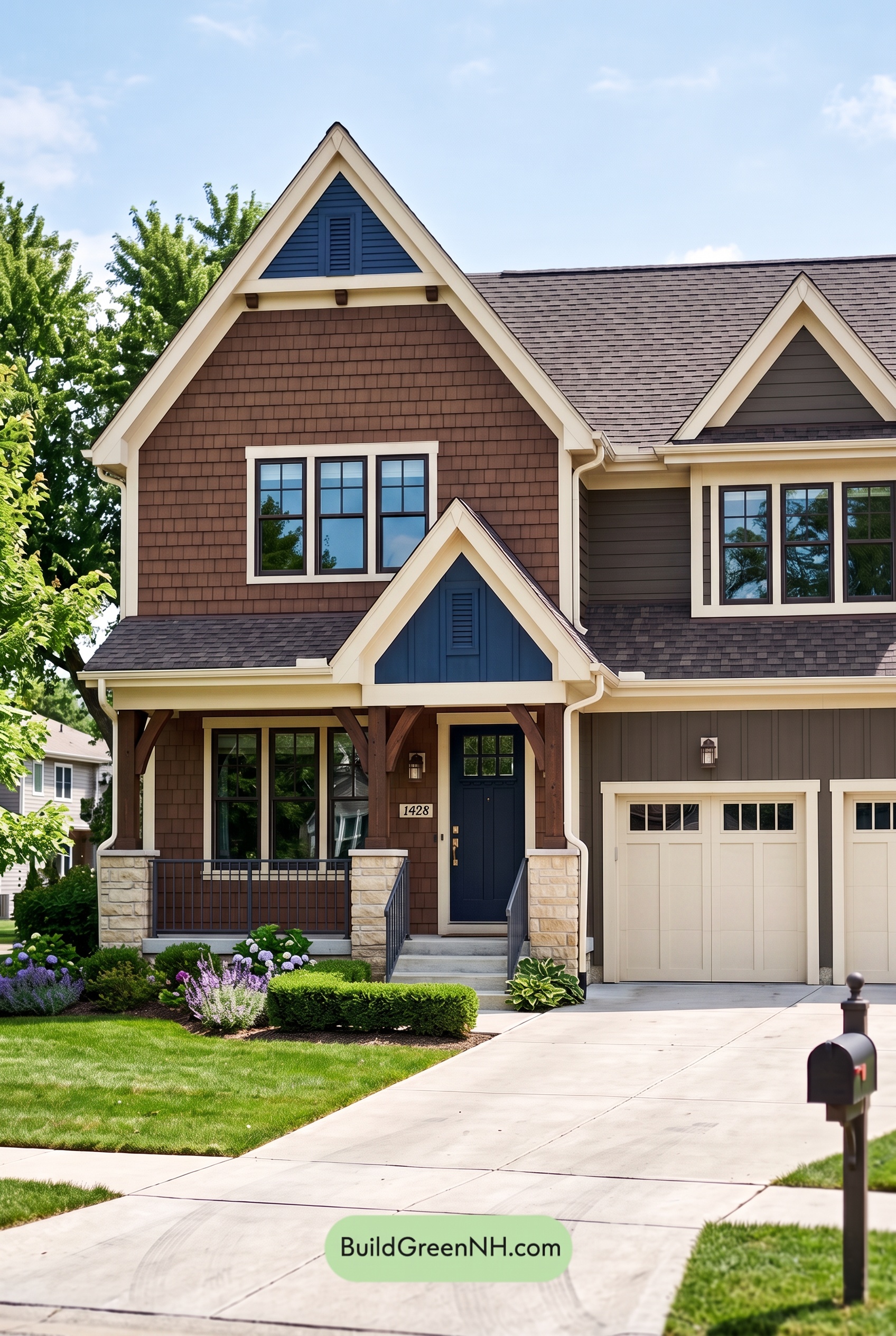 Dark Brown House Exterior Color Scheme: Bluebell Timberline
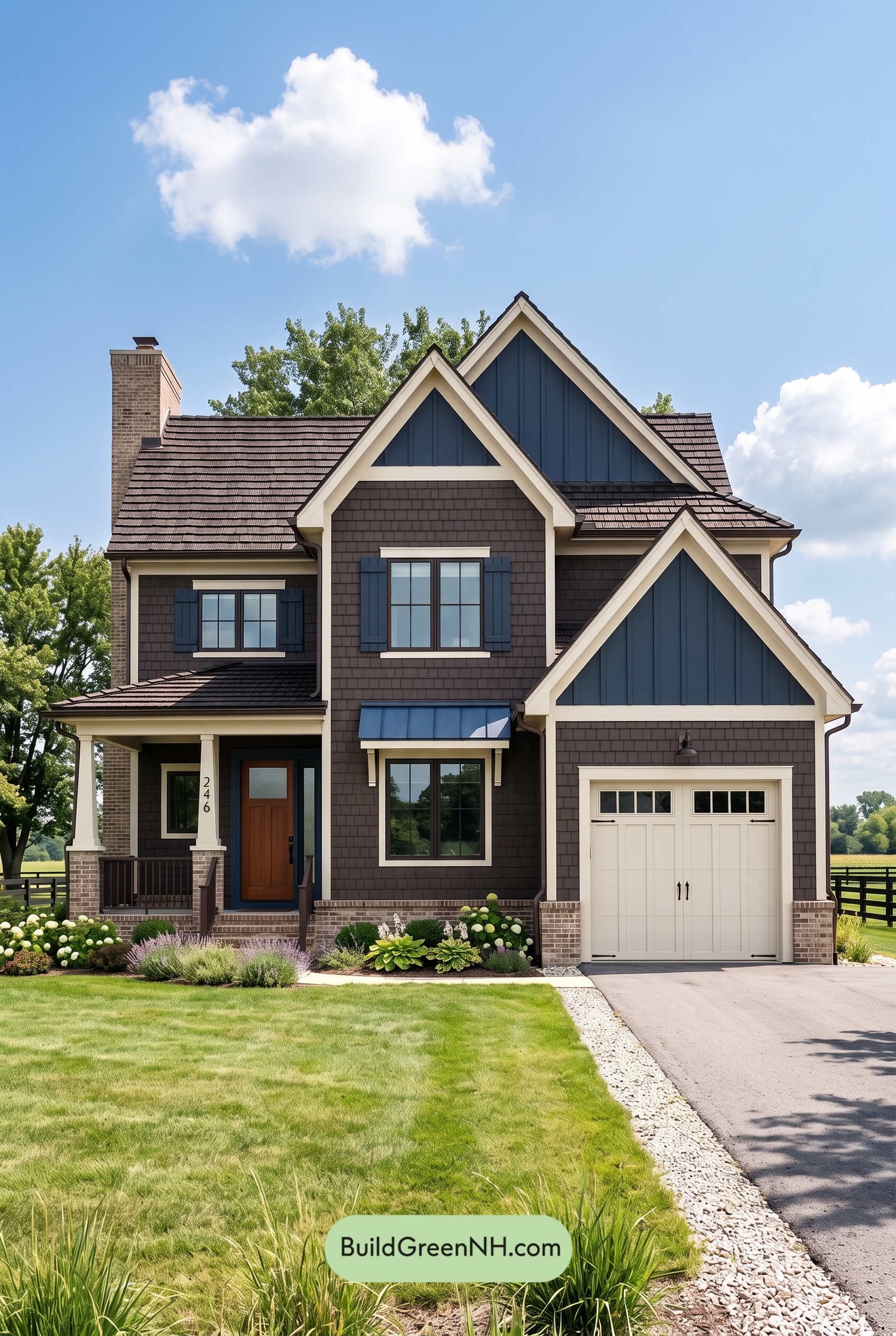 Dark Brown House Exterior Color Scheme: Sapphire Homestead
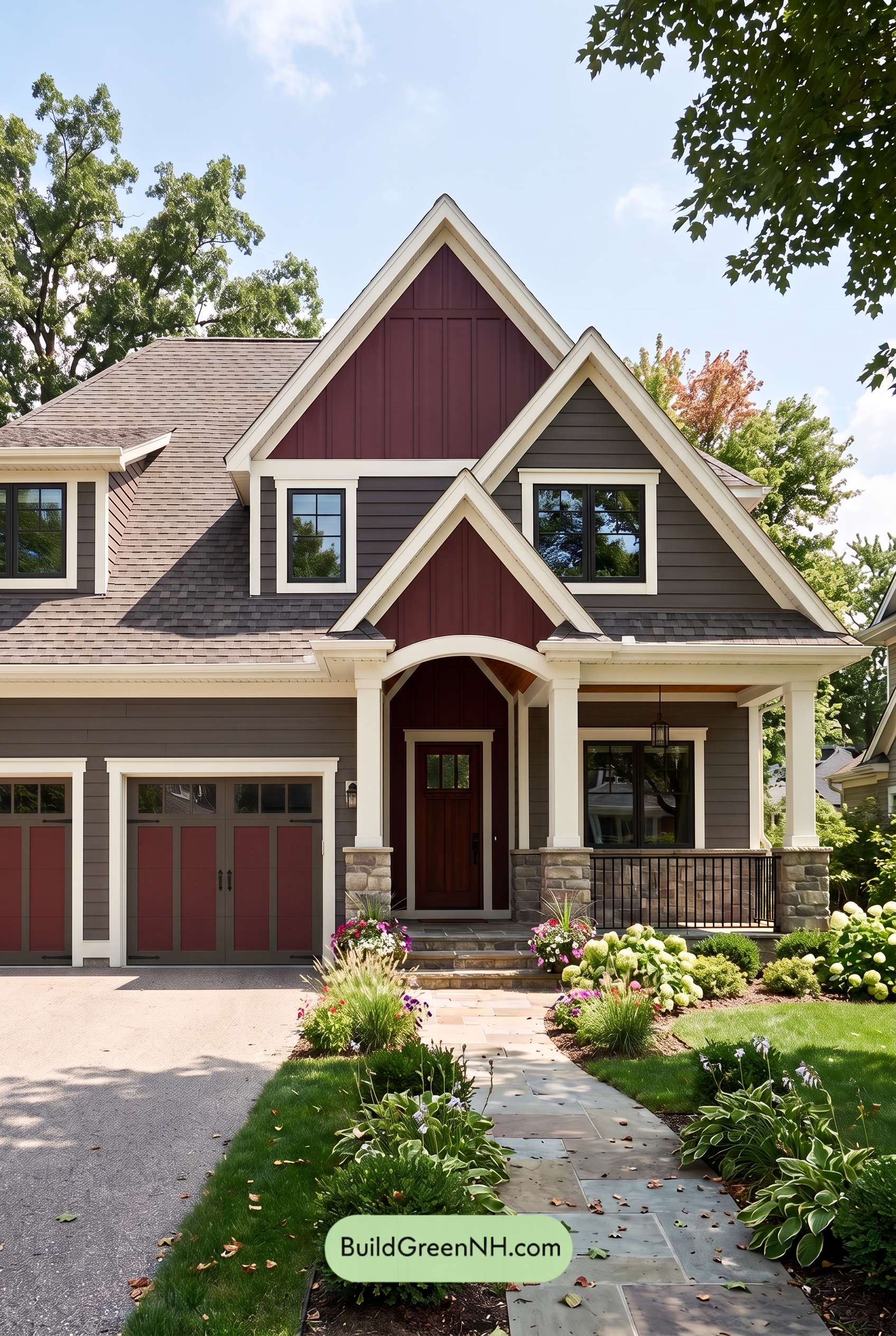 Dark Brown House Exterior Color Scheme: Hearthglow Arrival
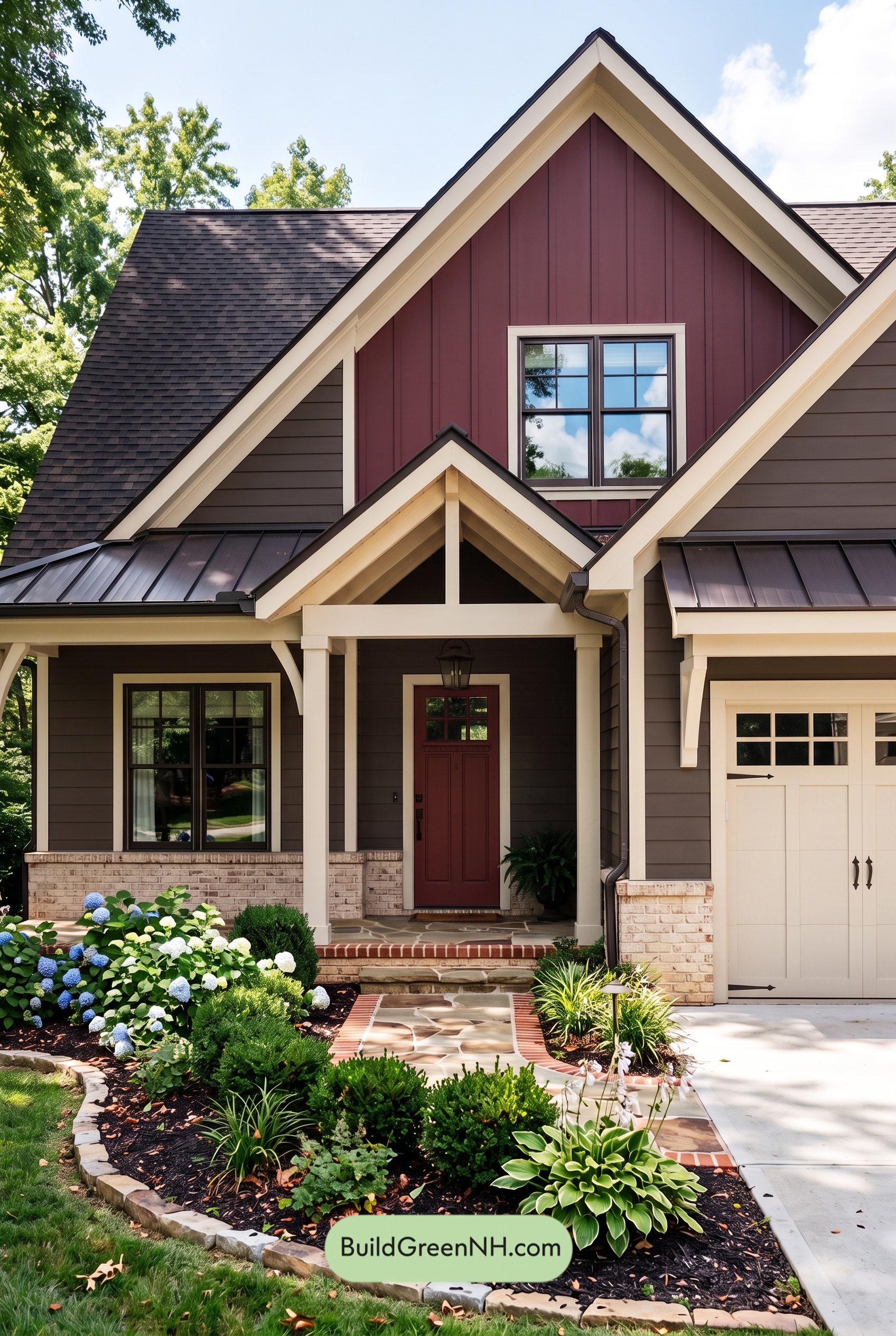 Dark Brown House Exterior Color Scheme: Embercrest Welcome
Table of Contents