Last updated on
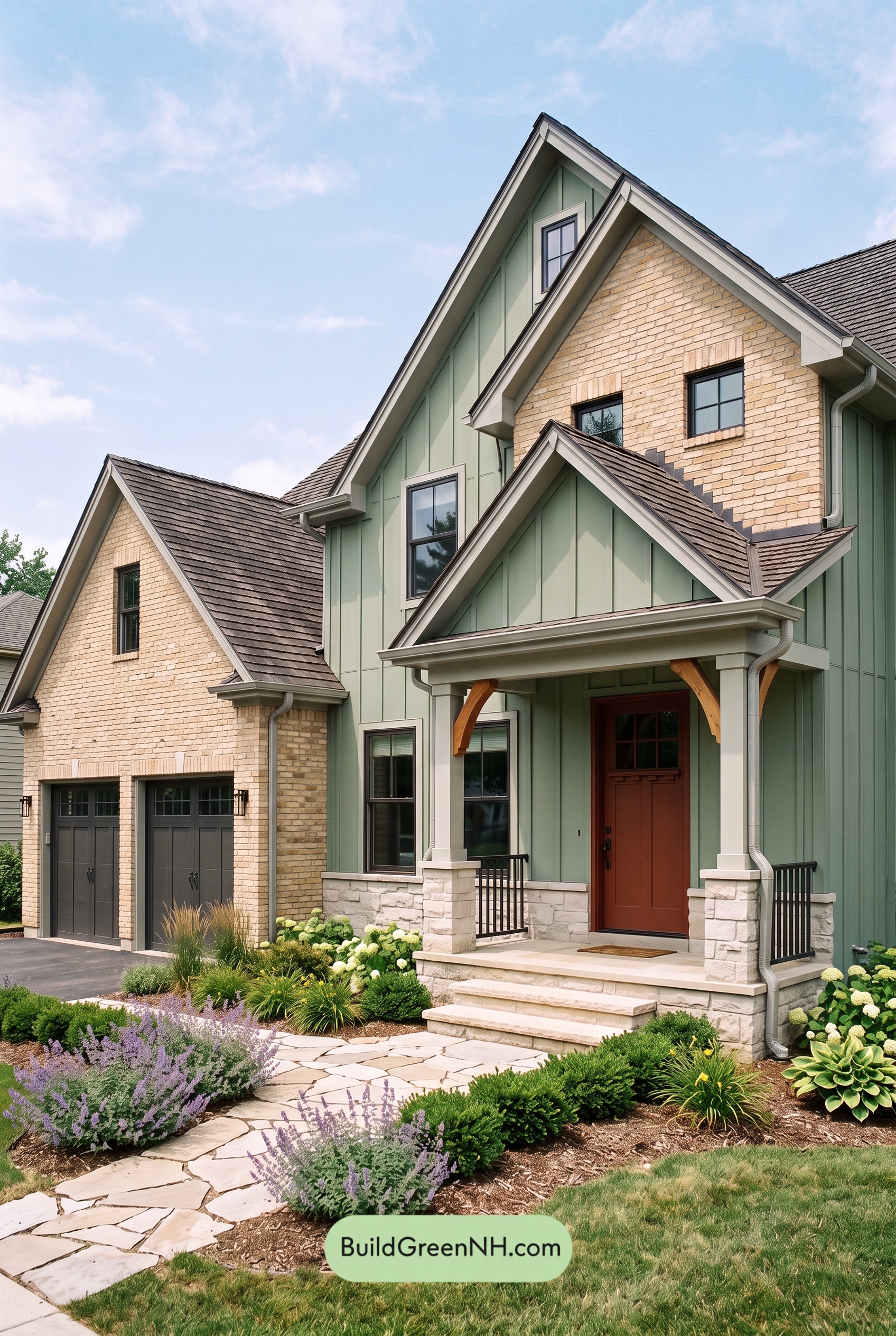

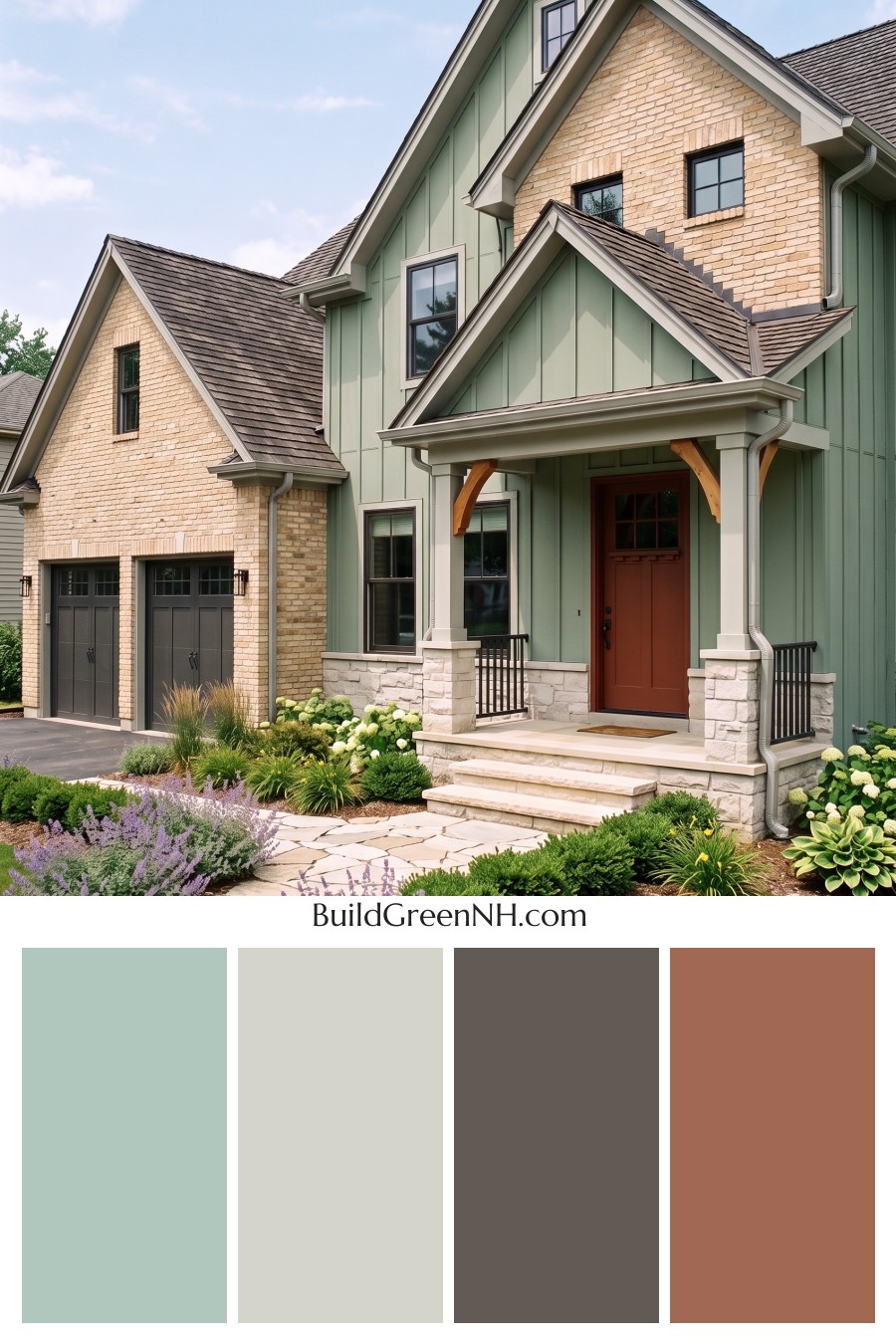
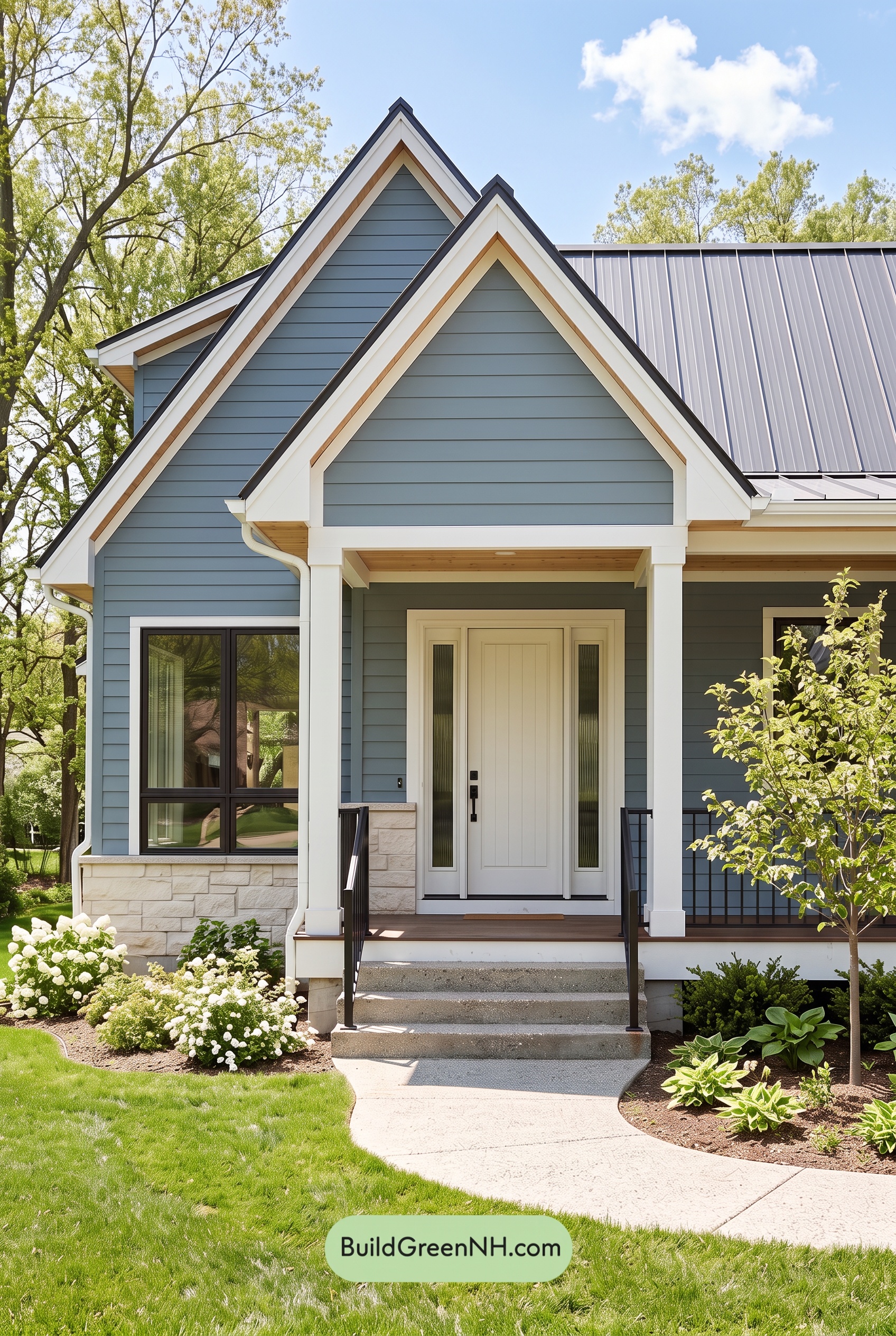
This layered palette feels so inviting because soft green, warm neutrals, and rich brown accents give the home both fresh curb appeal and timeless depth.
A Soft Green Foundation
The main siding is finished in a muted, gray-green shade that brings a calm, nature-inspired character to the exterior. Its softened undertone keeps the tall gables and vertical panels from feeling too sharp, while still giving the architecture a clear, polished presence. This green family feels especially at home alongside the surrounding landscape, echoing the color of leaves and lawn without disappearing into them.
Warm Neutrals Define the Details
A light beige trim wraps the rooflines, gables, porch structure, and window surrounds. This pale neutral provides a crisp but gentle outline against the green siding, helping each roof peak and architectural layer stand out. Rather than creating stark contrast, the trim adds warmth and brightness, which makes the home feel welcoming from every angle.
The light beige brick and pale greige stonework continue that warm neutral story across the garage and porch base. These masonry surfaces bring texture to the facade and give the color scheme a grounded, established look. Their sandy undertones connect beautifully with the trim while adding variation to the large exterior planes.
Deep Brown Accents Add Definition
Deep brown window frames, garage doors, railings, and roof surfaces introduce the strongest contrast in the design. These darker elements frame the lighter colors with confidence, bringing visual weight to the windows and giving the garage doors a tailored appearance. The dark brown roof also anchors the high gables, preventing the exterior from feeling overly light or delicate.
At the entry, a warm reddish-brown front door becomes a memorable focal point. It has enough richness to stand forward against the subdued green siding, yet it still belongs with the other brown accents around the house. Natural medium-brown porch brackets reinforce this welcoming effect and add a touch of handcrafted warmth beneath the pale beige porch trim.
A Balanced, Welcoming Mood
Together, these shades create a home that feels refined, earthy, and comfortably traditional. The soft green siding provides serenity, the light beige details supply lift, and the brown accents bring depth and structure. It is a balanced exterior scheme that looks fresh in bright daylight, cozy in softer evening light, and beautifully connected to its garden setting throughout the year.
Next, see how this color scheme looks under different lighting simulations throughout the day.
Overcast
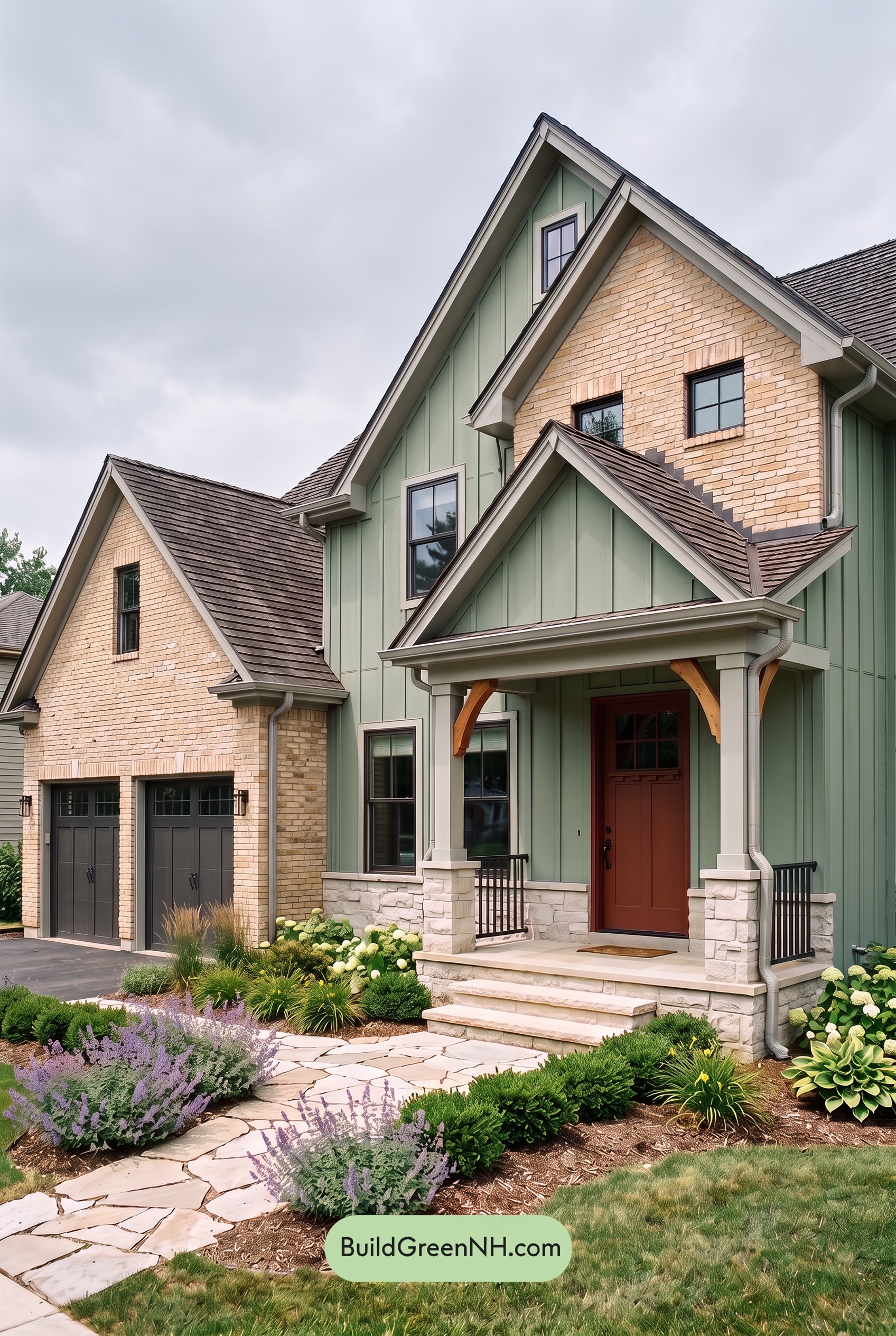
Under overcast skies, the soft green siding appears more muted and slightly cooler than it does in neutral daylight, giving the façade a calm, refined presence. The light beige trim loses some of its sunlit brightness and reads gentler, while the brown accents take on a deeper, more grounded character.
Cloud-filtered light softens sharp shadows across the gables and porch, reducing contrast while still preserving the dark definition around windows and railings. The overall effect is a quieter, more cohesive mood: warm neutrals feel less golden, the green feels more serene, and the layered exterior details become pleasantly understated.
Golden Hour
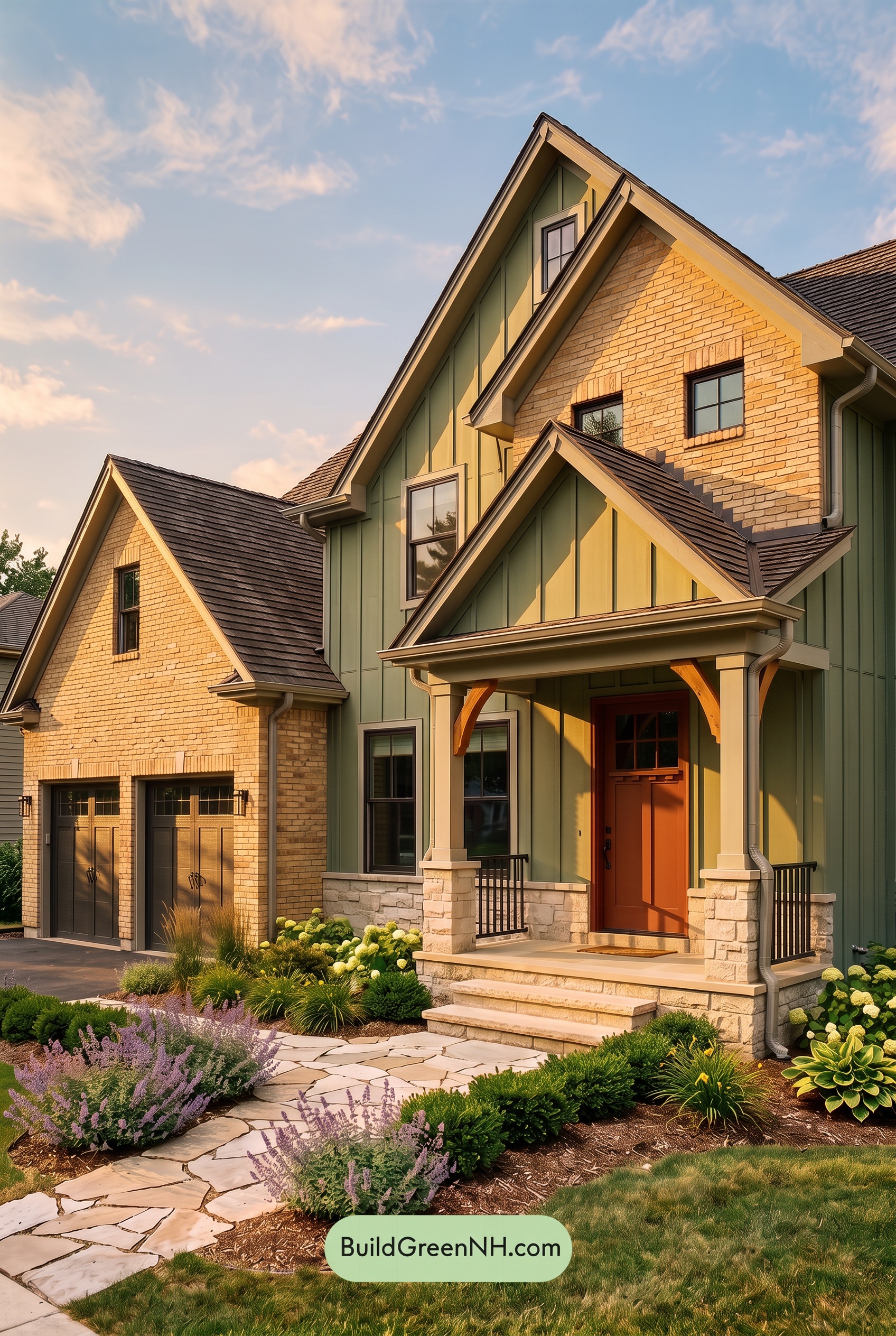
Under Golden Hour, the muted green siding takes on a warmer, slightly richer cast than it shows in neutral daylight, while the light beige trim glows softly around the rooflines and porch. The brown accents gain a deeper, more burnished presence, creating a welcoming contrast without feeling harsh.
Low-angle sunlight stretches shadows across the siding, stone, and entry, sharpening architectural depth while allowing sunlit surfaces to feel more saturated. Compared with the balanced clarity of neutral daylight, this warmer light gives the exterior a relaxed, inviting mood with gentler highlights and more dramatic dimension.
Shade
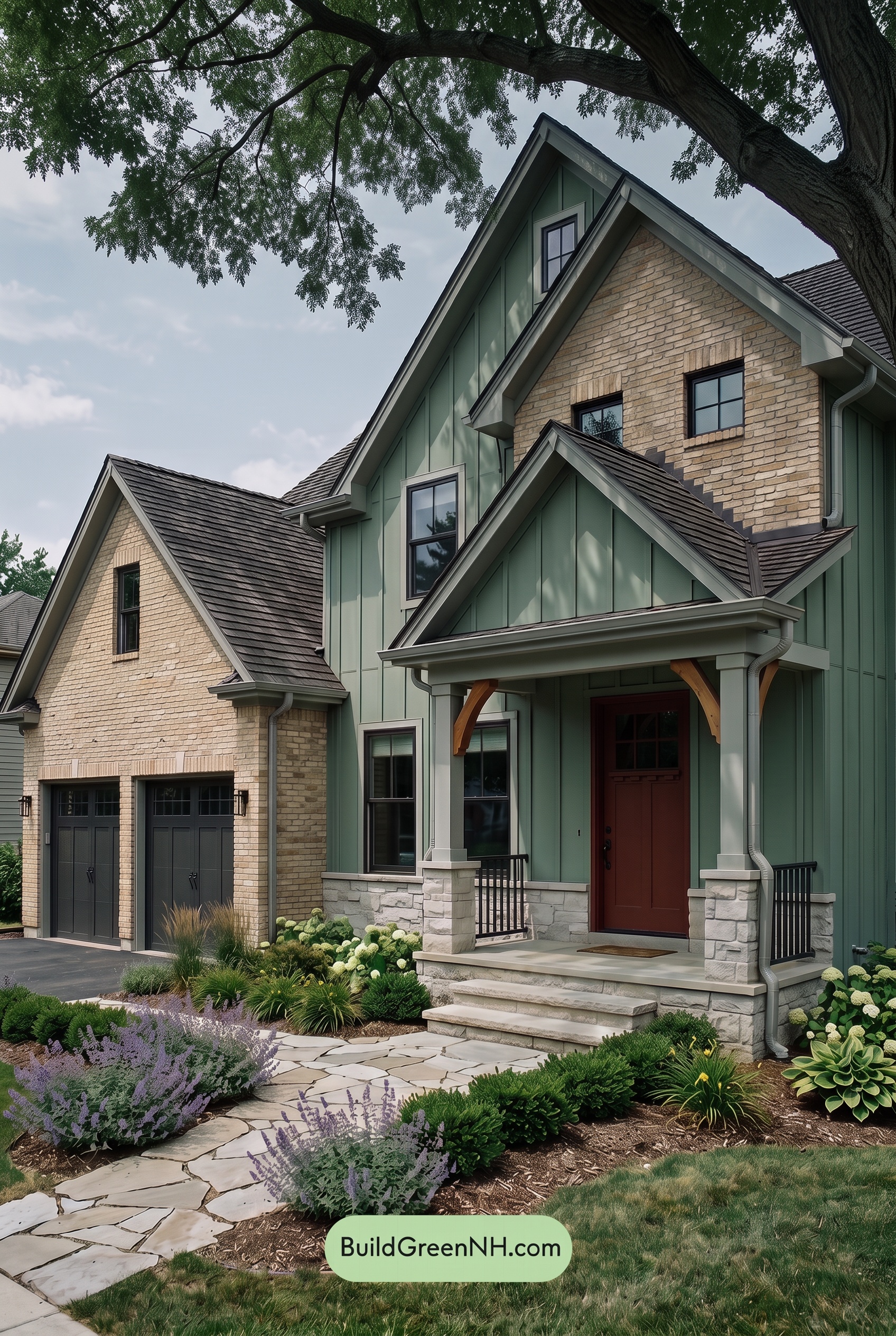
Under shade, the green exterior takes on a deeper, quieter character, with its saturation appearing more restrained than it would in neutral daylight. The beige trim softens toward a cooler, gentler neutral, while the brown window frames, garage door, and front entry gain visual weight against the dimmer façade.
Tree-filtered shadows create changing bands of depth across the siding and rooflines, sharpening contrast in recessed areas while muting it on broad, shaded surfaces. The overall palette feels more grounded and intimate in shade—less bright and crisp than neutral daylight, but richer in mood and architectural detail.
Nighttime
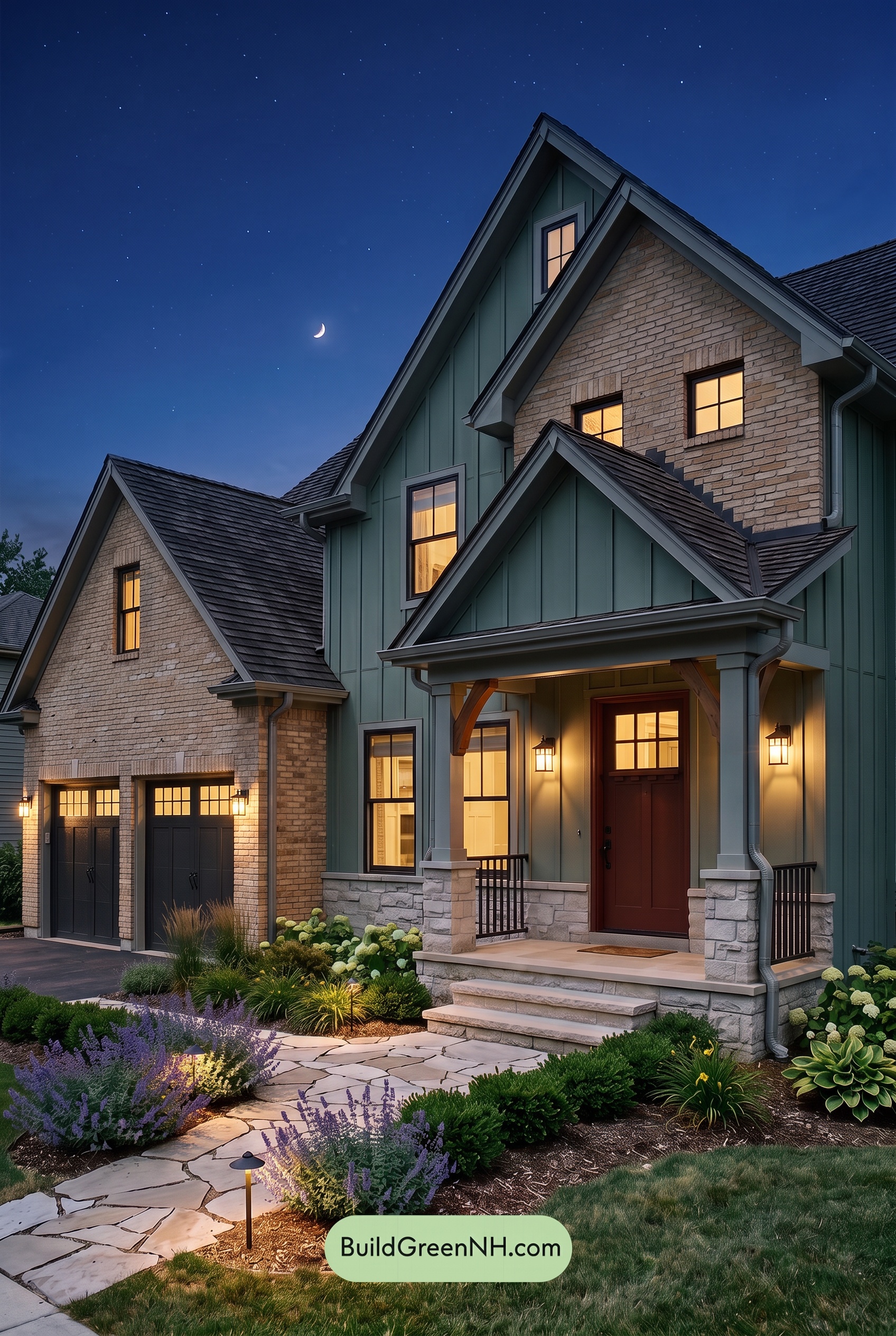
At night, the green siding shifts into a deeper, more muted shade, with its saturation softened by the cool ambient darkness. Beige trim takes on a gentler, slightly warmer appearance near the entry lights, while receding into soft shadow along the upper rooflines. The result is stronger light-to-dark contrast that gives the layered facade added depth.
The brown window frames, garage door, front door, and railings become richer and more grounding after dark, especially beside the warm glow from windows and porch fixtures. Deep shadows sharpen the architectural outlines, while the interplay of warm illumination and cool nighttime tones creates an inviting, quietly dramatic mood that feels more intimate than neutral daylight.
Pin these for later:
Want More?
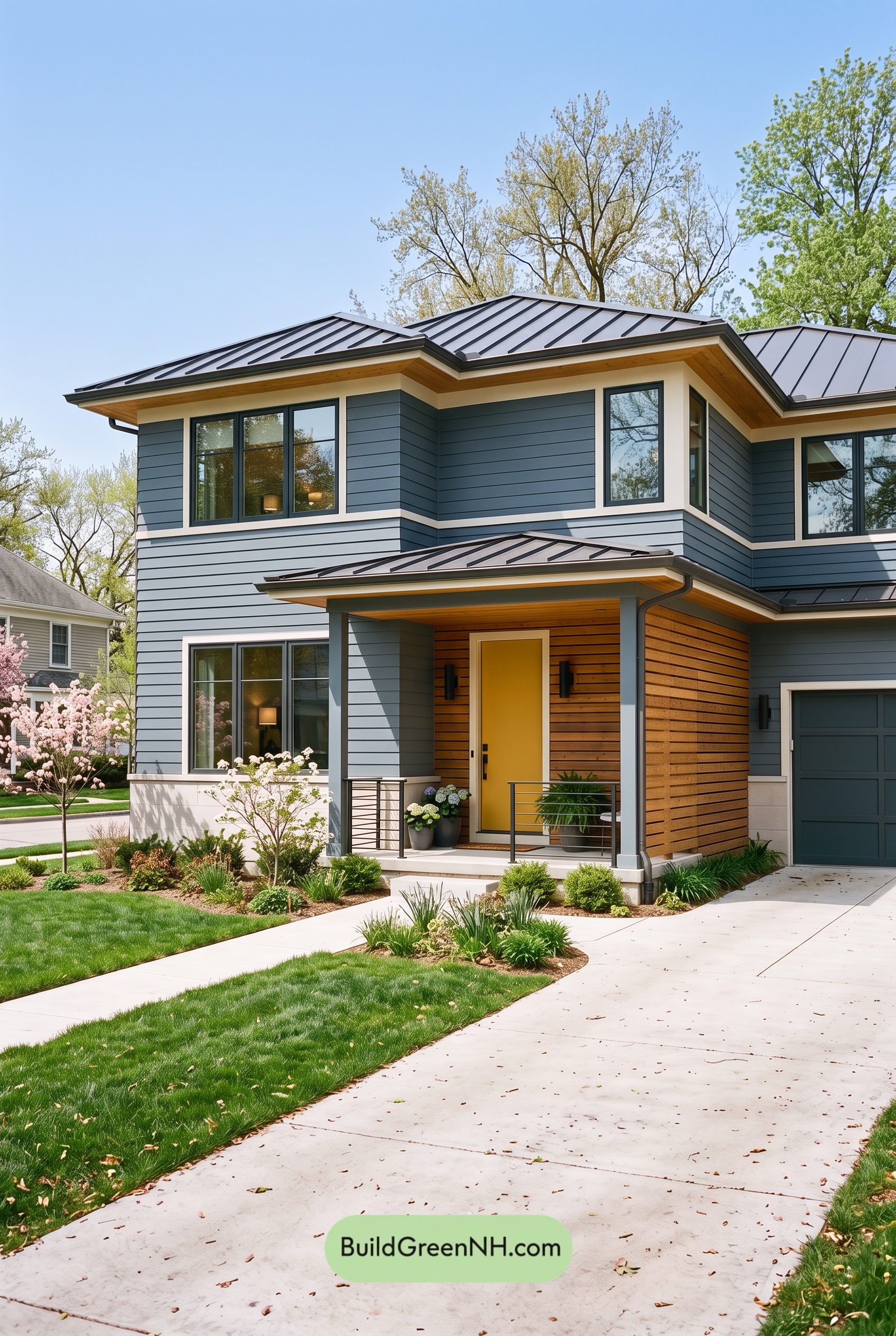 Blue House Front Door Color Scheme: Harbor Saffron
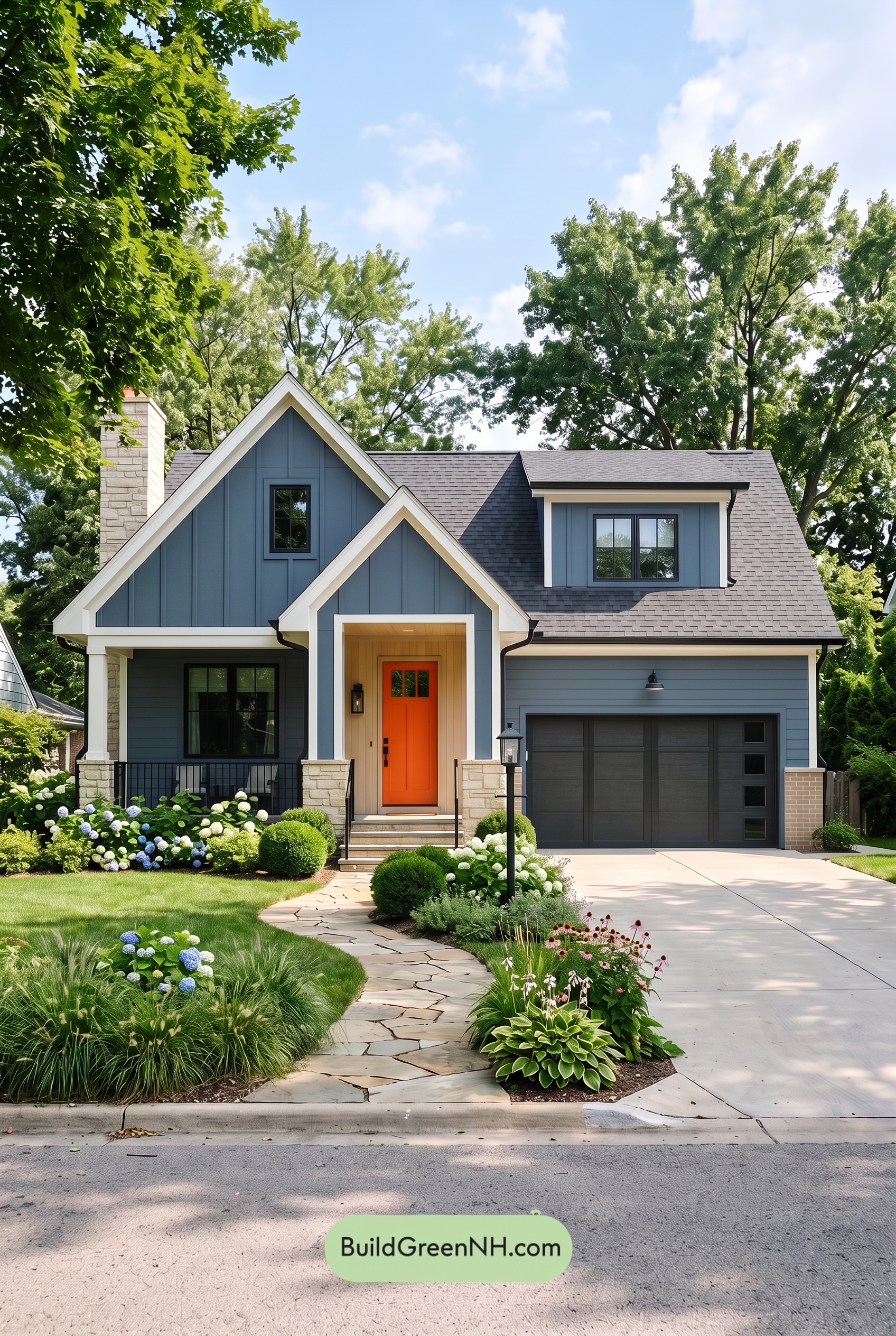 Blue House Front Door Color Scheme: Cobalt Persimmon
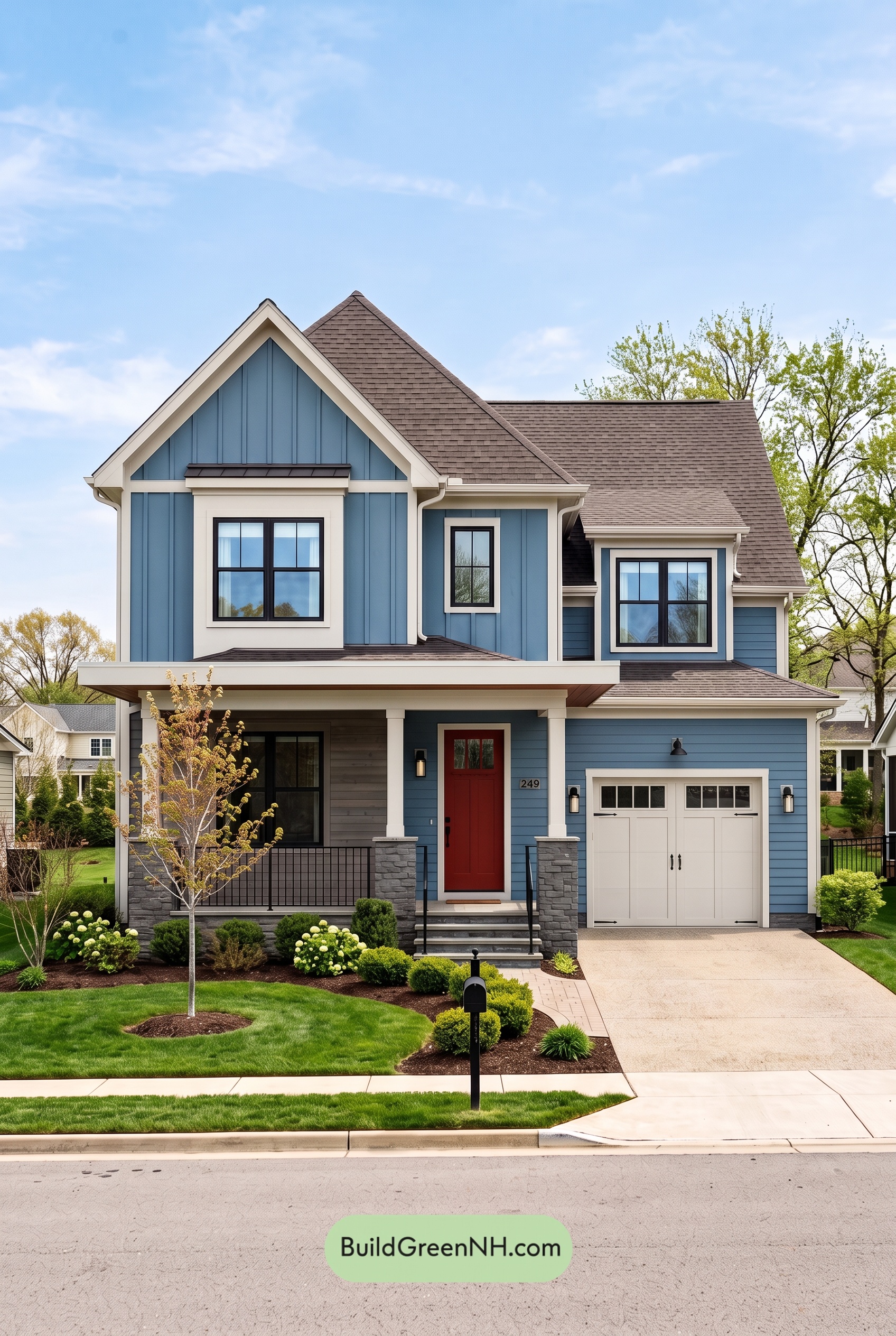 Blue House Front Door Color Scheme: Denim Poppy
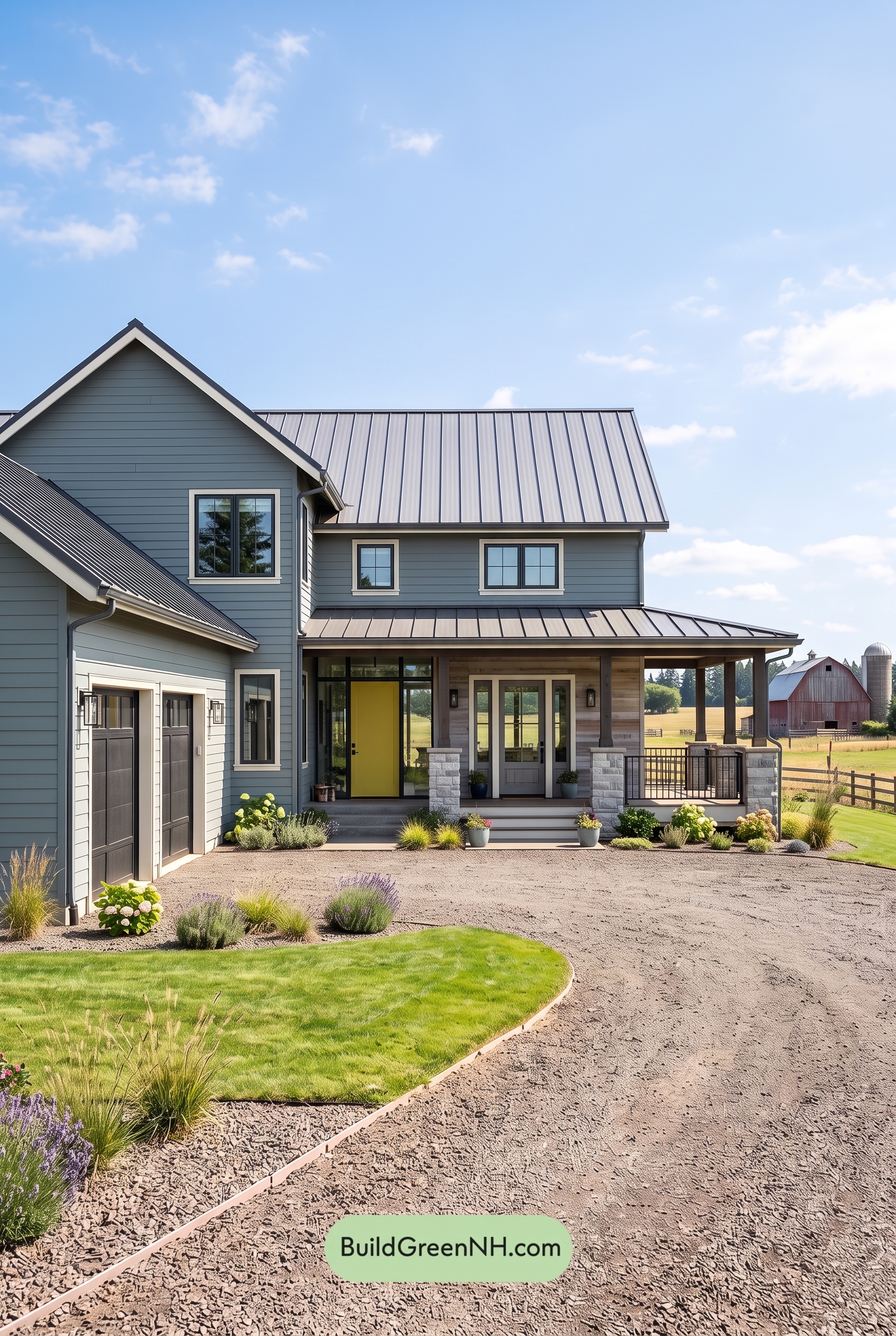 Blue House Front Door Color Scheme: Slate Citron
 Blue House Front Door Color Scheme: Mist Blue Haven
Table of Contents