Last updated on
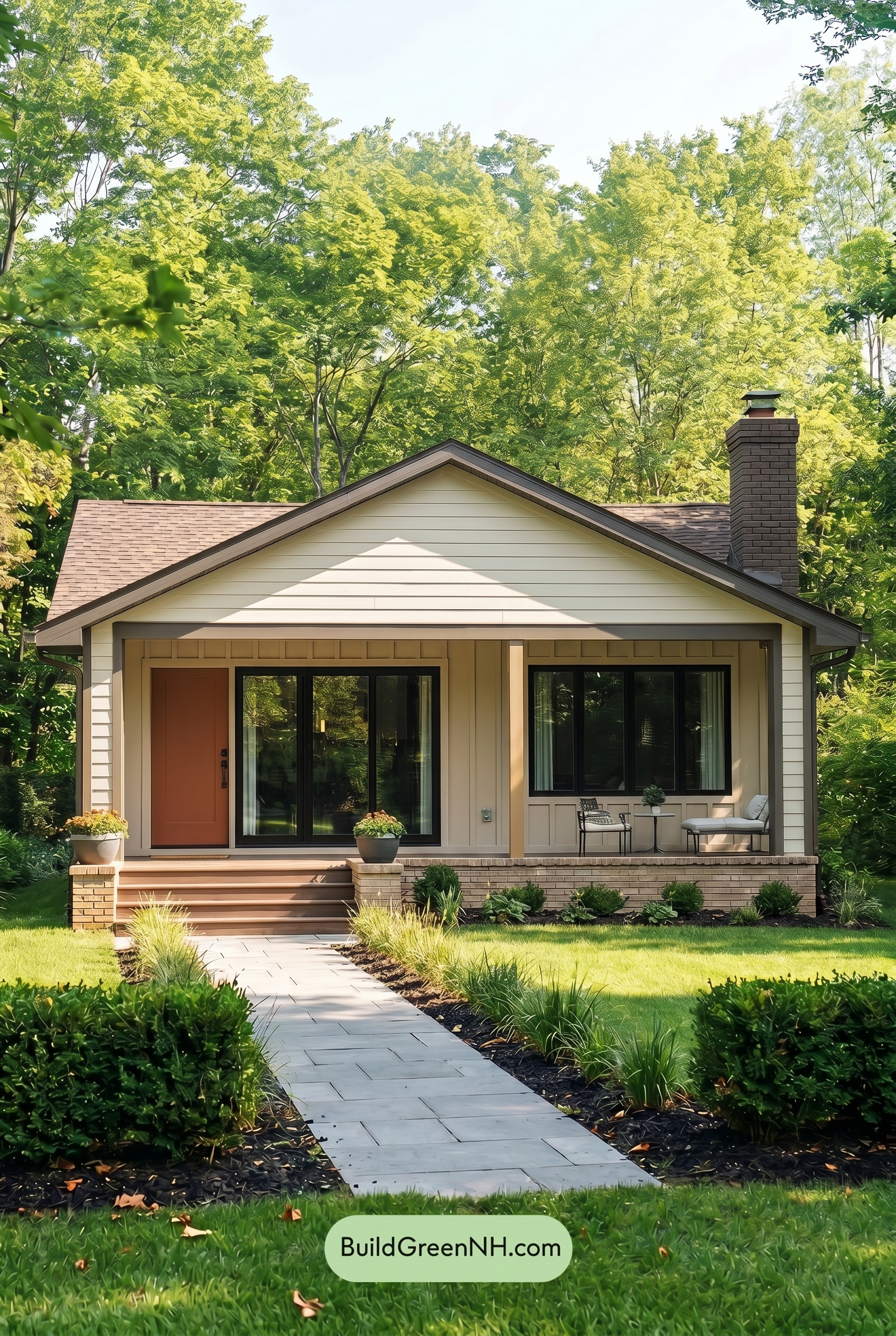

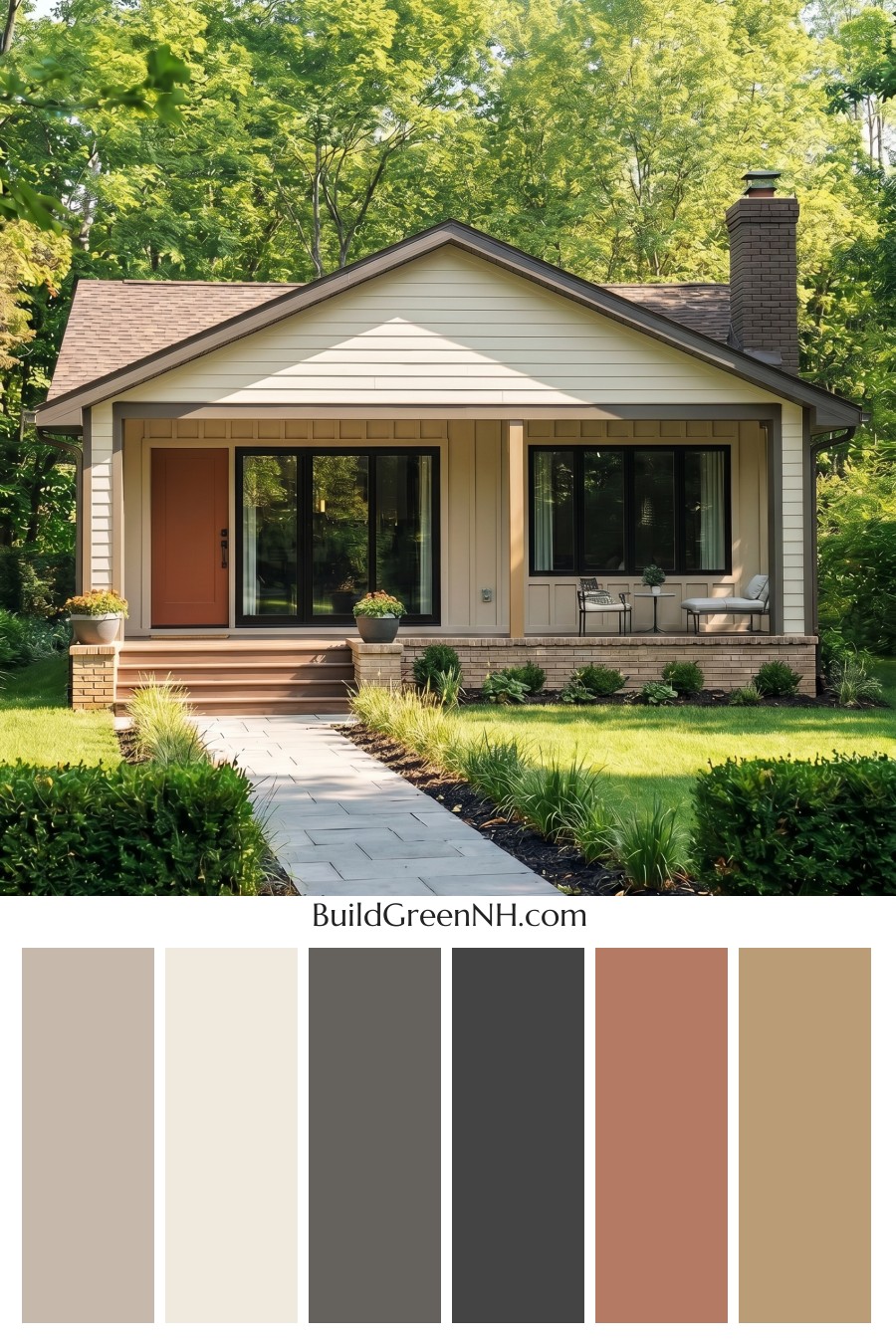
This exterior shines because its creamy beige siding, grounded gray accents, and earthy roof tones create a calm, polished look that feels beautifully connected to the wooded setting.
A Soft Beige Foundation
The main body of the house is wrapped in a light, warm shade of beige that gives the exterior an inviting and easygoing personality. It feels bright without being stark, which is especially effective in a leafy landscape where sunlight shifts throughout the day.
The upper wall continues in the same beige family, helping the gable feel clean and cohesive. Because the siding is simple and horizontal, this soft neutral shade highlights the home’s architecture without making the facade feel busy.
Gray Trim That Adds Definition
The trim brings in a medium-to-deep shade of gray, creating a crisp outline around the roofline, porch, and window areas. This gray is the quiet anchor of the palette. It gives the beige siding more shape and depth while keeping the overall look relaxed.
The window frames appear in a deep charcoal gray, which adds a modern edge to the otherwise warm and natural scheme. Against the beige walls, the darker frames feel intentional and polished, drawing attention to the large glass panels and giving the front elevation a strong rhythm.
A Warm, Welcoming Entry
The front door uses a deeper warm beige shade with an earthy undertone, making it feel welcoming without interrupting the neutral palette. It offers just enough contrast to mark the entry clearly, but it still blends comfortably with the siding and columns.
The porch columns stay within the beige family as well, which helps the front porch feel integrated rather than visually separate. This is a smart choice for a compact facade because it keeps the eye moving smoothly across the home.
Roof and Masonry Tones
The roof introduces a muted brown-gray shade that works beautifully with both the beige siding and gray trim. It feels natural and understated, almost like an extension of the surrounding tree trunks and shaded landscape.
The brick foundation and chimney bring in deeper earthy neutral tones, adding texture and weight near the base of the home. These grounded shades help the house feel settled into its site rather than floating above the garden.
The Overall Mood
This color scheme feels calm, organic, and quietly sophisticated. The beige family creates warmth, the gray accents add structure, and the deeper roof and masonry tones provide balance. Nothing feels too sharp or too trendy.
What makes the palette especially successful is how naturally it works with the greenery around it. The soft beige reflects light, the gray trim adds shadow and contrast, and the earthy accents echo the wooded setting. The result is a home that feels fresh, friendly, and timeless.
Next, see how this color scheme looks under different lighting simulations throughout the day.
Overcast
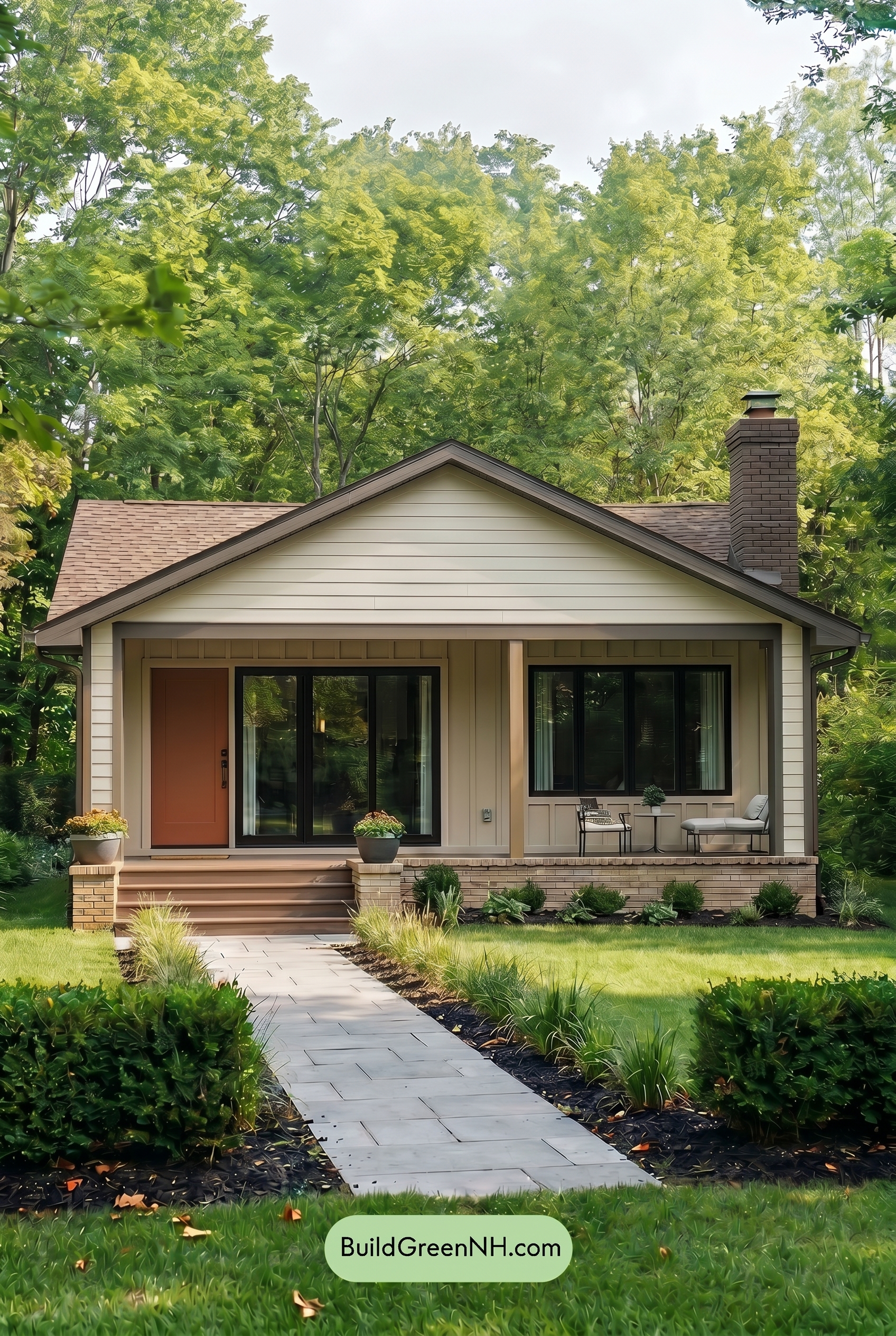
Under overcast light, the beige shades on the walls, columns, and front door lose some of the gentle warmth they show in neutral daylight. Their saturation softens, shifting the exterior toward a quieter, more muted neutral look rather than a sun-warmed glow.
The gray trim and window frames feel cooler and smoother, while shadows become broader and less defined. With contrast dialed down, the whole facade appears calmer and more blended, giving the house a relaxed, softly sheltered mood.
Golden Hour
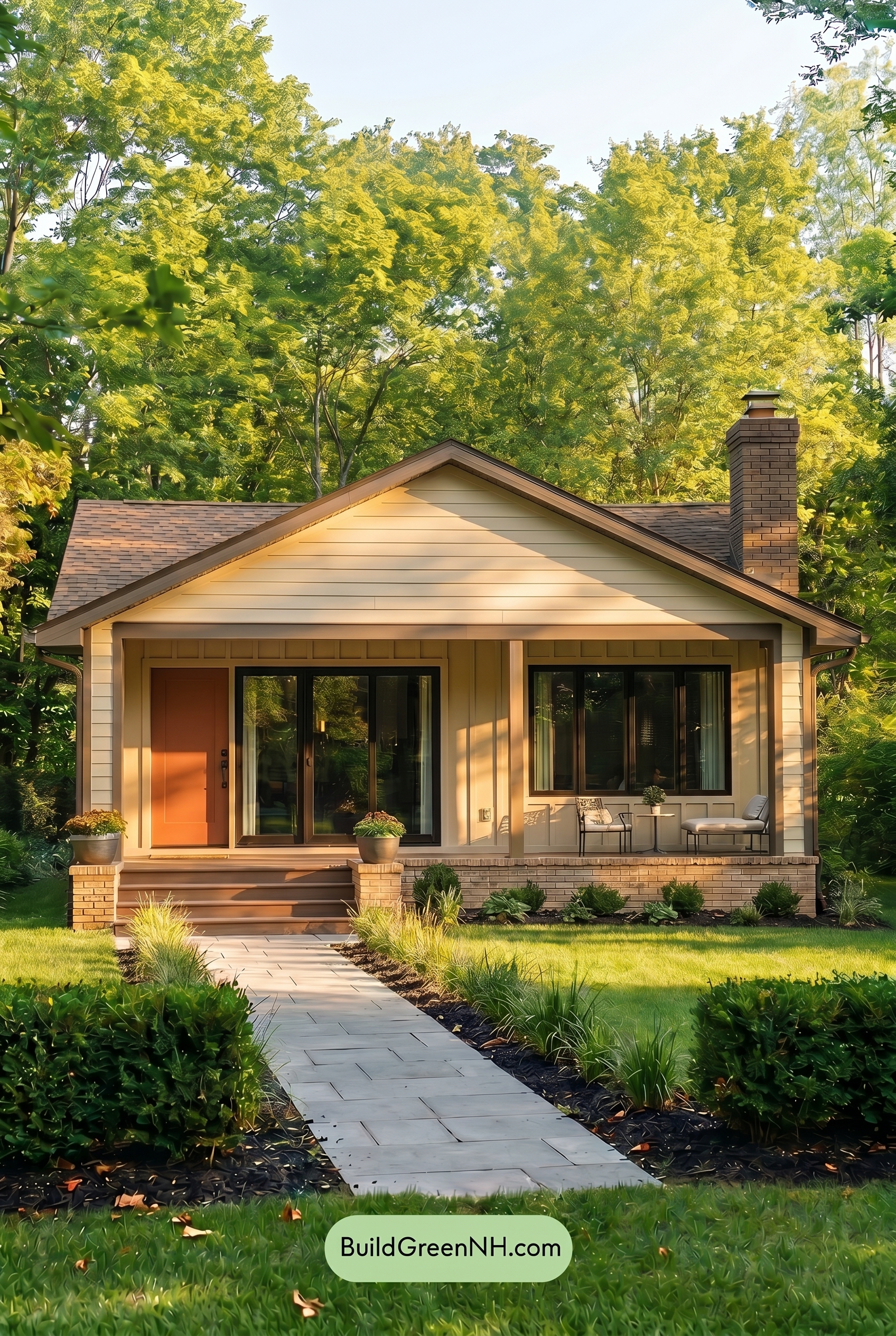
In Golden Hour light, the beige family on the main and upper walls looks warmer, richer, and slightly more saturated than it would in neutral daylight. The soft yellow cast smooths the warm neutrals, making the siding feel inviting rather than flat, while the beige shades around the porch and columns take on a cozy, sunlit glow.
The gray family on the trim and window frames gains stronger contrast as long shadows deepen across the facade. Compared to neutral daylight, the darker gray shades feel more defined and dramatic, giving the house a calmer, more intimate mood with a gentle balance of warmth and shadow.
Shade
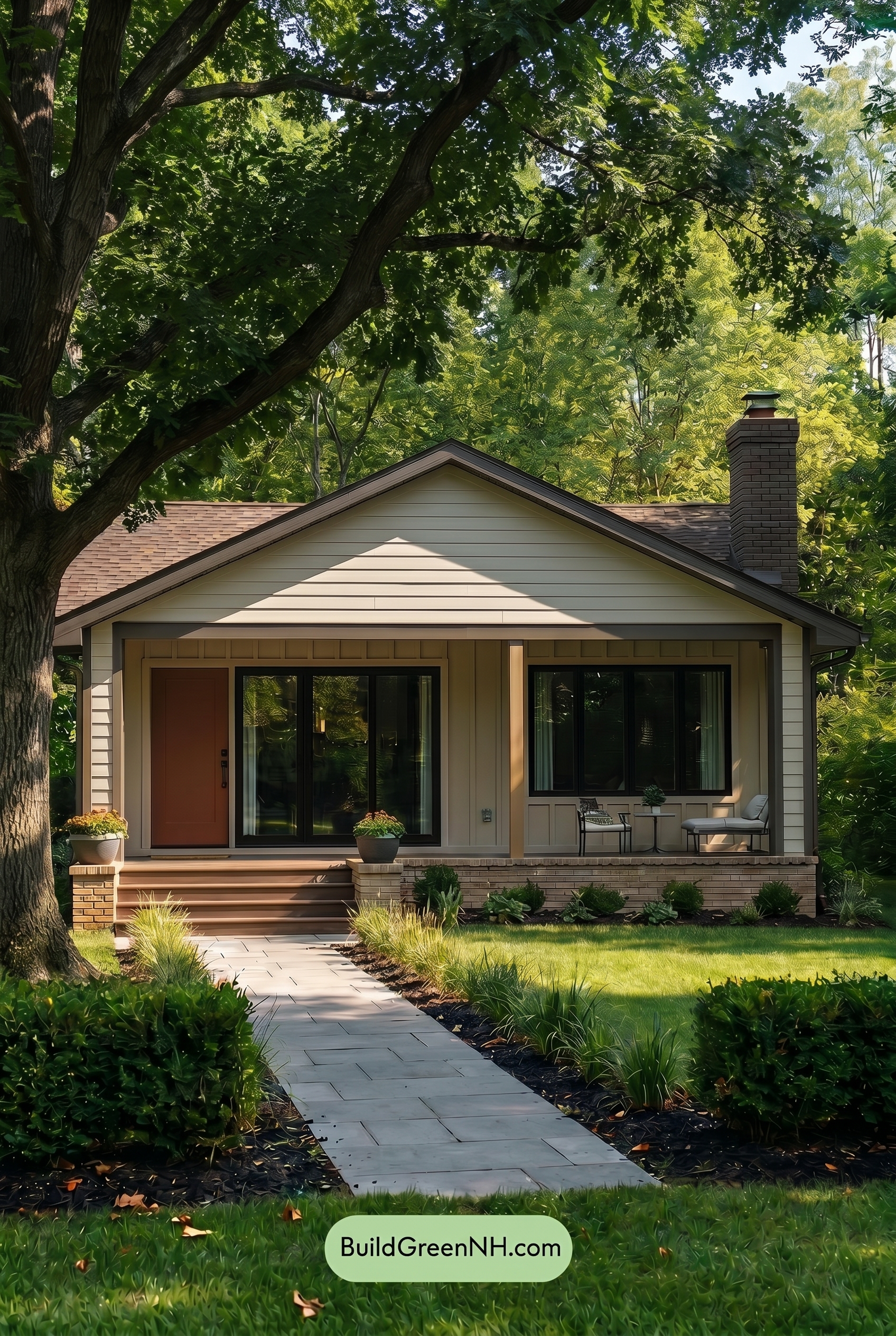
In shade, the beige family on the siding and columns appears less sunny and more muted than it would in neutral daylight. Its warmth softens, saturation drops slightly, and the shaded areas take on a calmer, creamier beige-gray cast, while small patches of filtered light make the warmer undertones briefly glow.
The gray family on the trim and window frames deepens in the shadows, creating stronger contrast against the lighter beige walls. Compared to neutral daylight, the overall mood feels quieter, cooler, and more tucked into the landscape, with dappled shadows adding depth and a relaxed woodland softness.
Nighttime
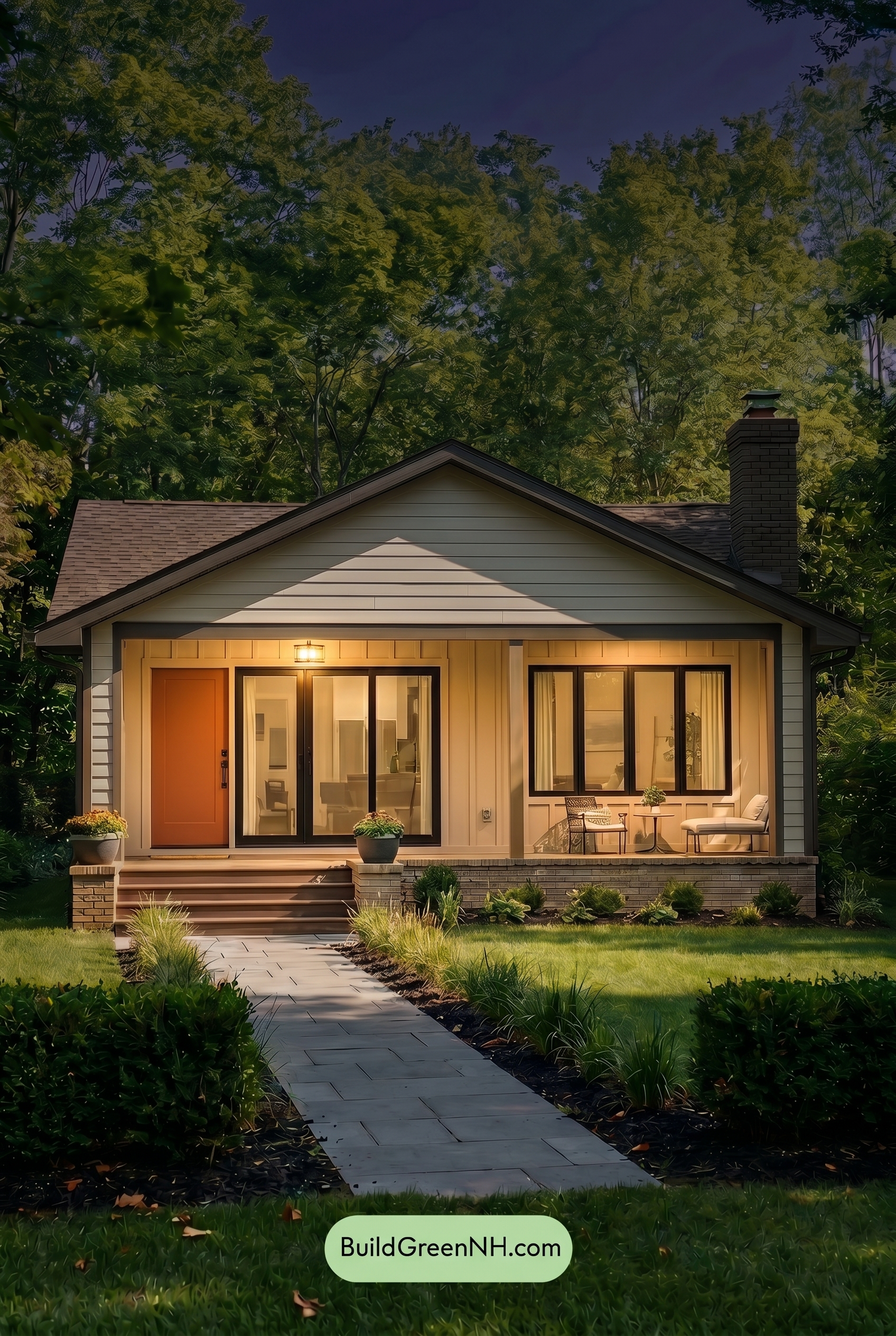
At night, the beige family on the walls and columns reads richer and warmer than it would in neutral daylight, especially where porch lighting pools across the siding. Its saturation feels gently heightened near the fixtures, while shaded areas pull the same beige into softer, darker depths for added dimension.
The gray family on the trim and window frames sharpens under nighttime contrast, appearing deeper and crisper against the illuminated warm neutrals. Stronger roofline shadows add drama, shifting the mood from clean and balanced in daylight to cozy, intimate, and softly glowing after dark.
Pin these for later
Want More?
 Blue House Front Door Color Scheme: Harbor Saffron
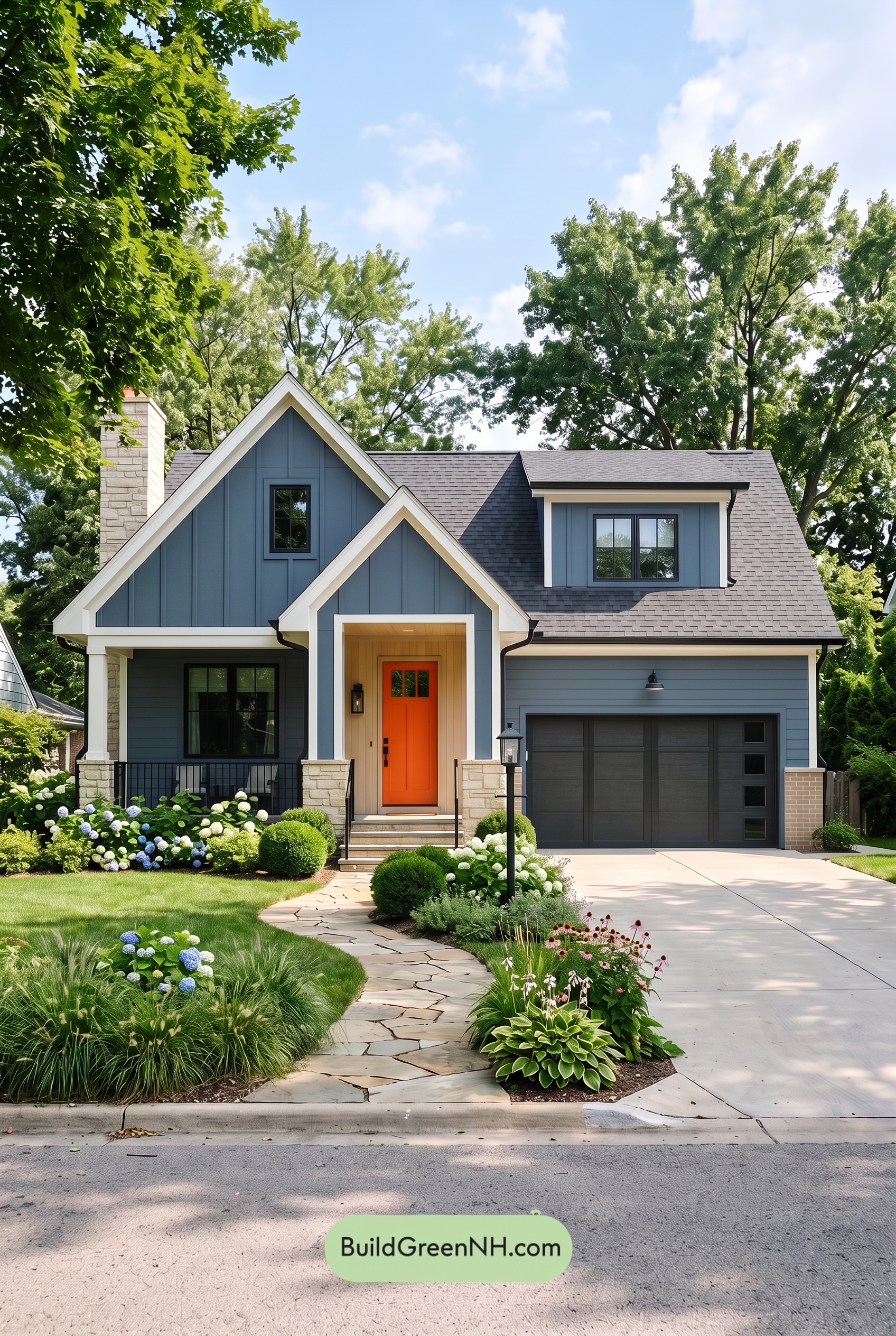 Blue House Front Door Color Scheme: Cobalt Persimmon
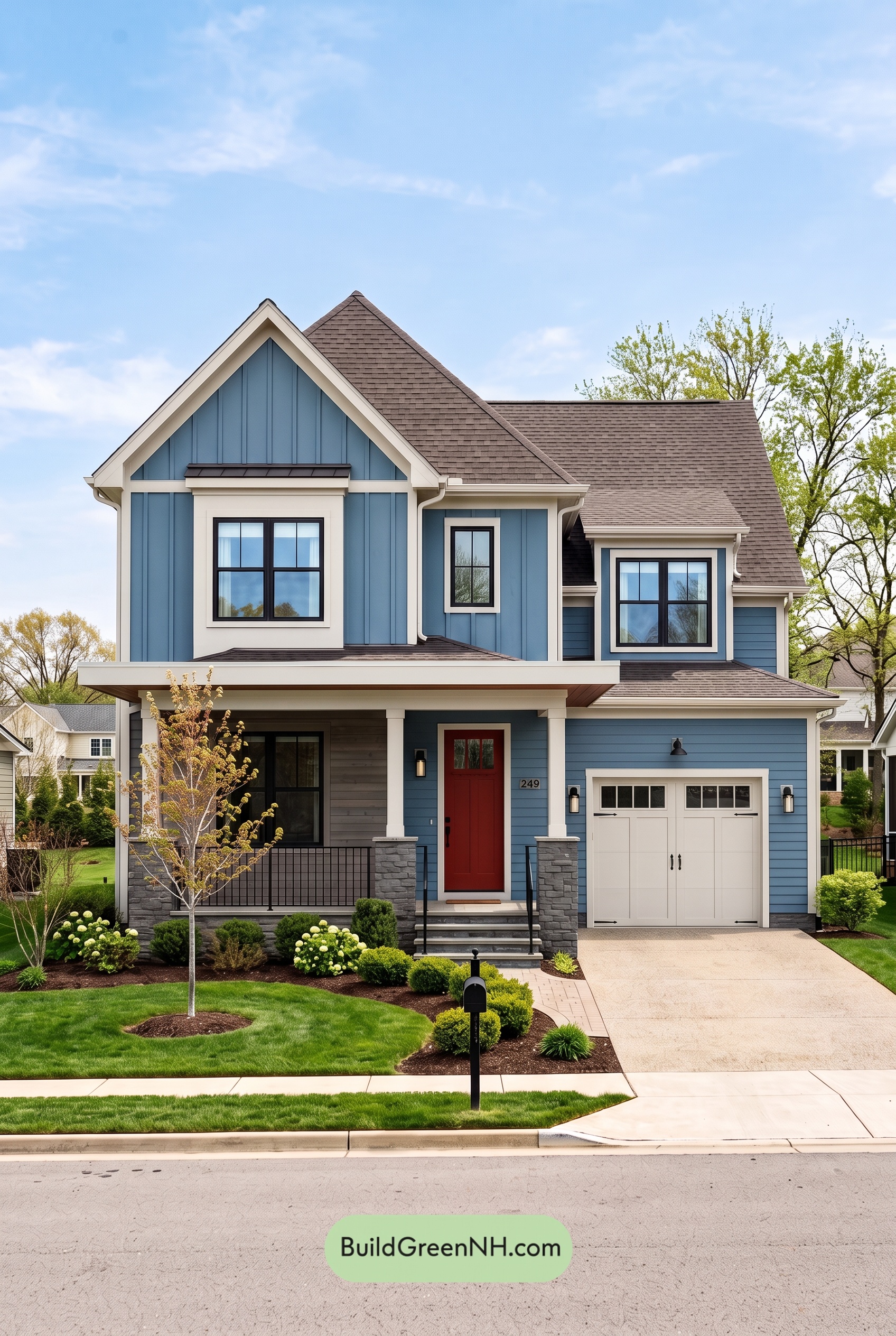 Blue House Front Door Color Scheme: Denim Poppy
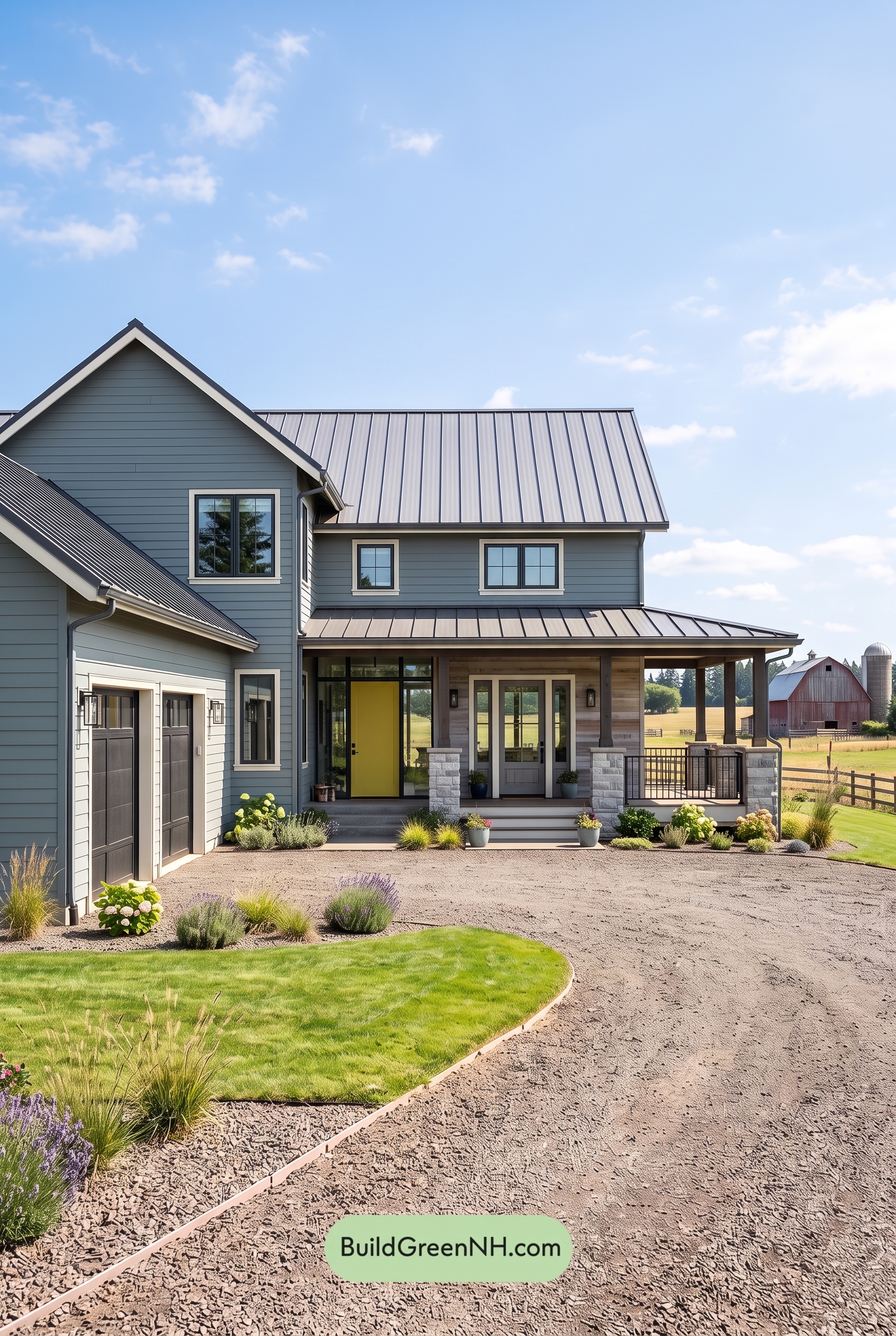 Blue House Front Door Color Scheme: Slate Citron
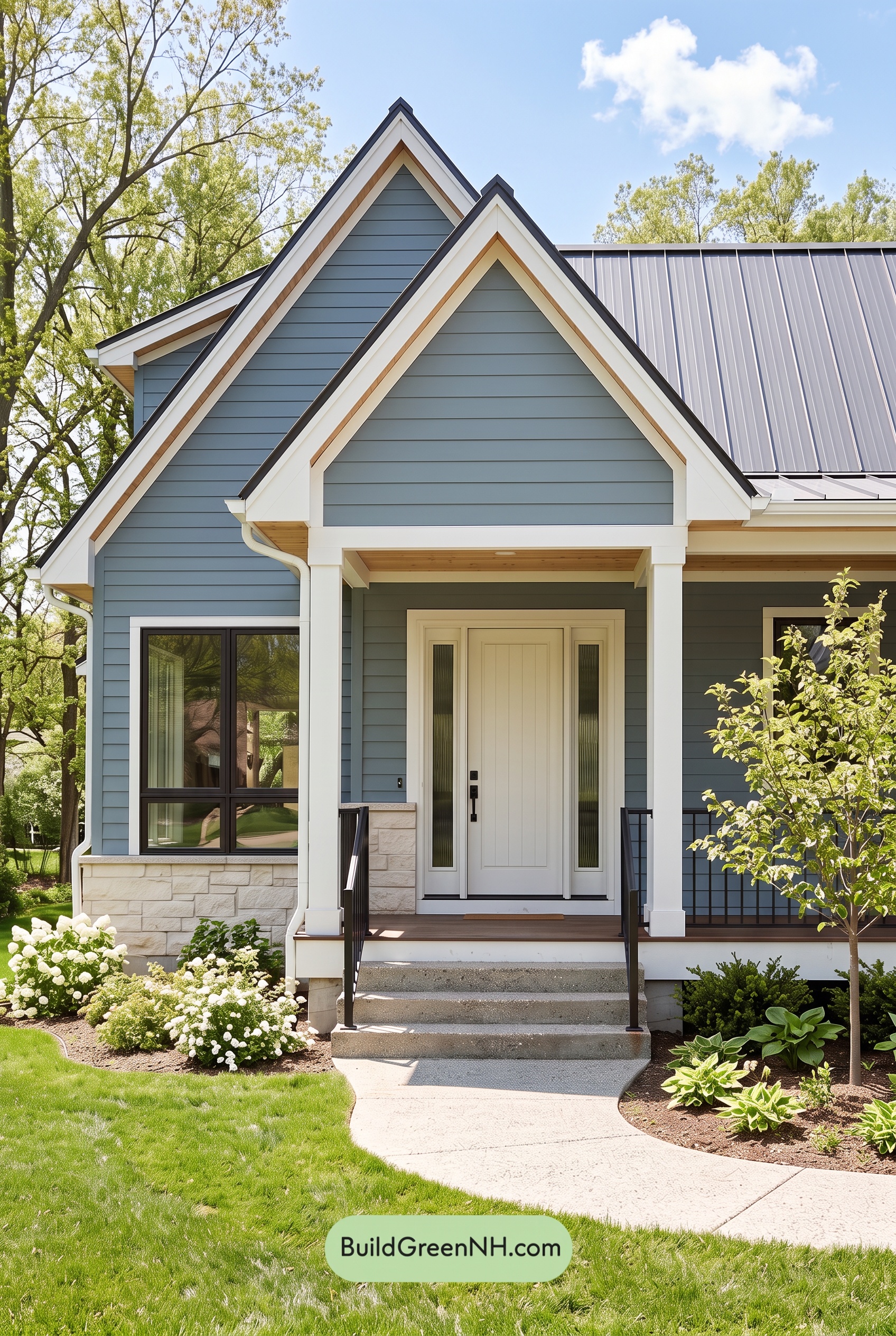 Blue House Front Door Color Scheme: Mist Blue Haven
Table of Contents