Last updated on
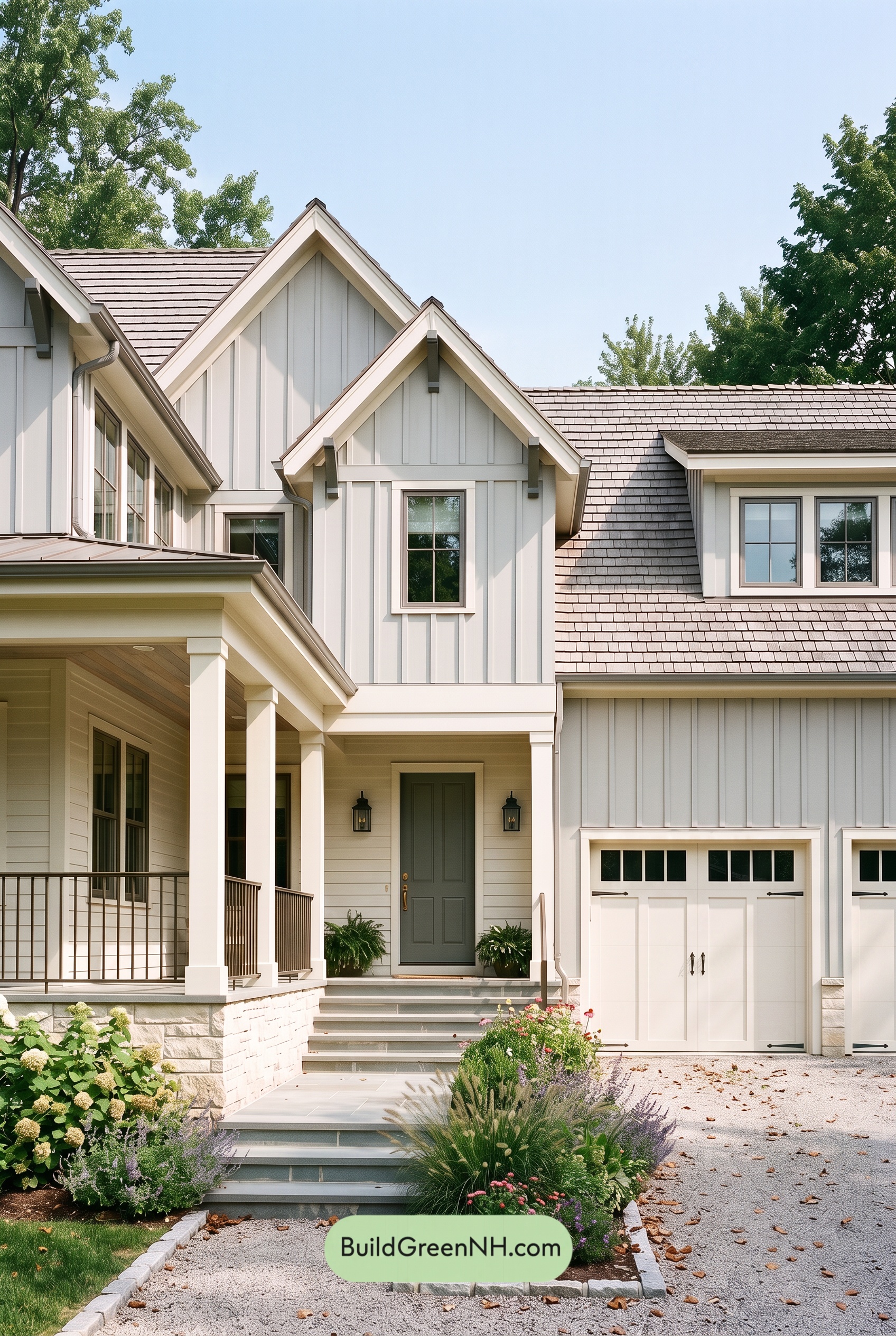

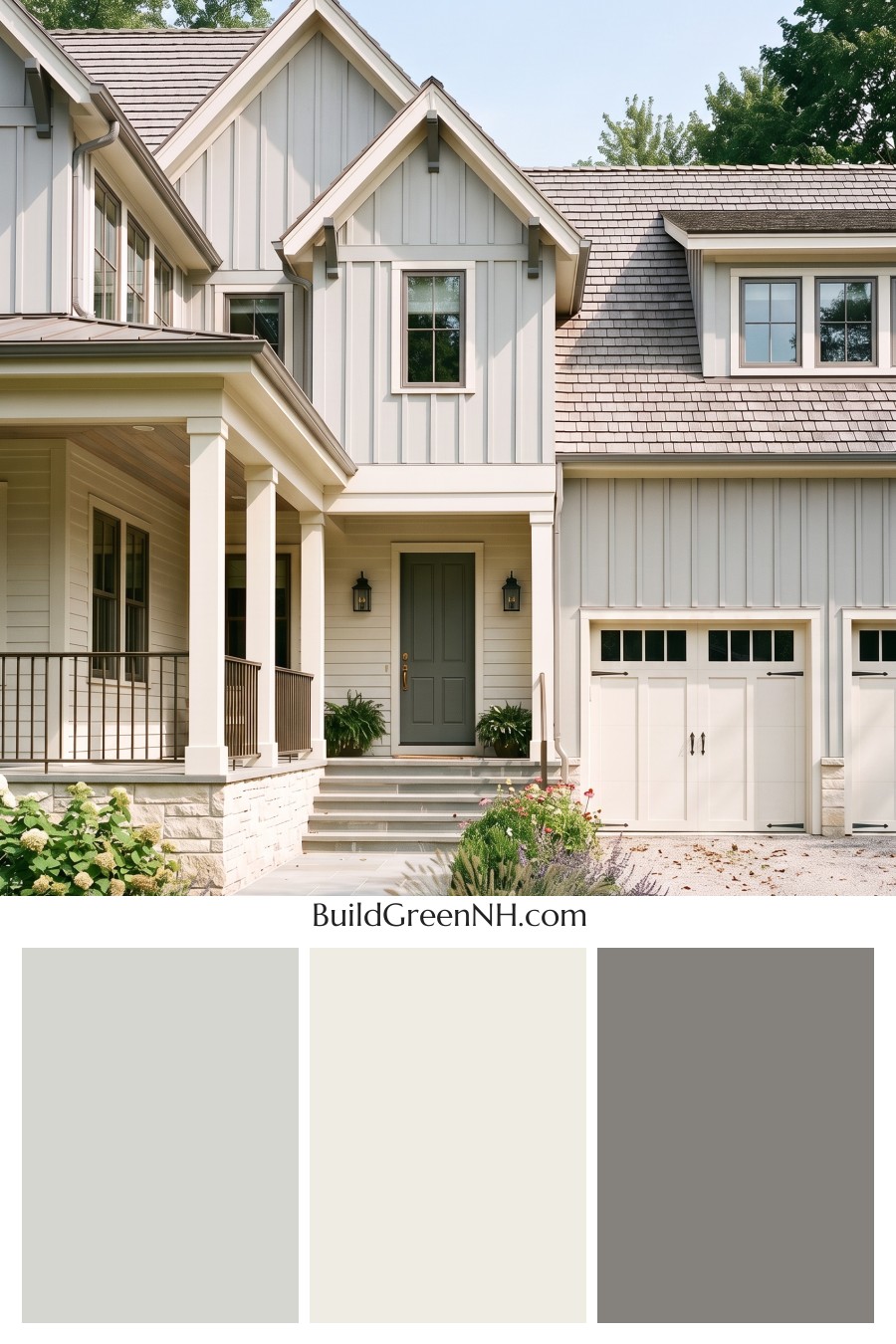
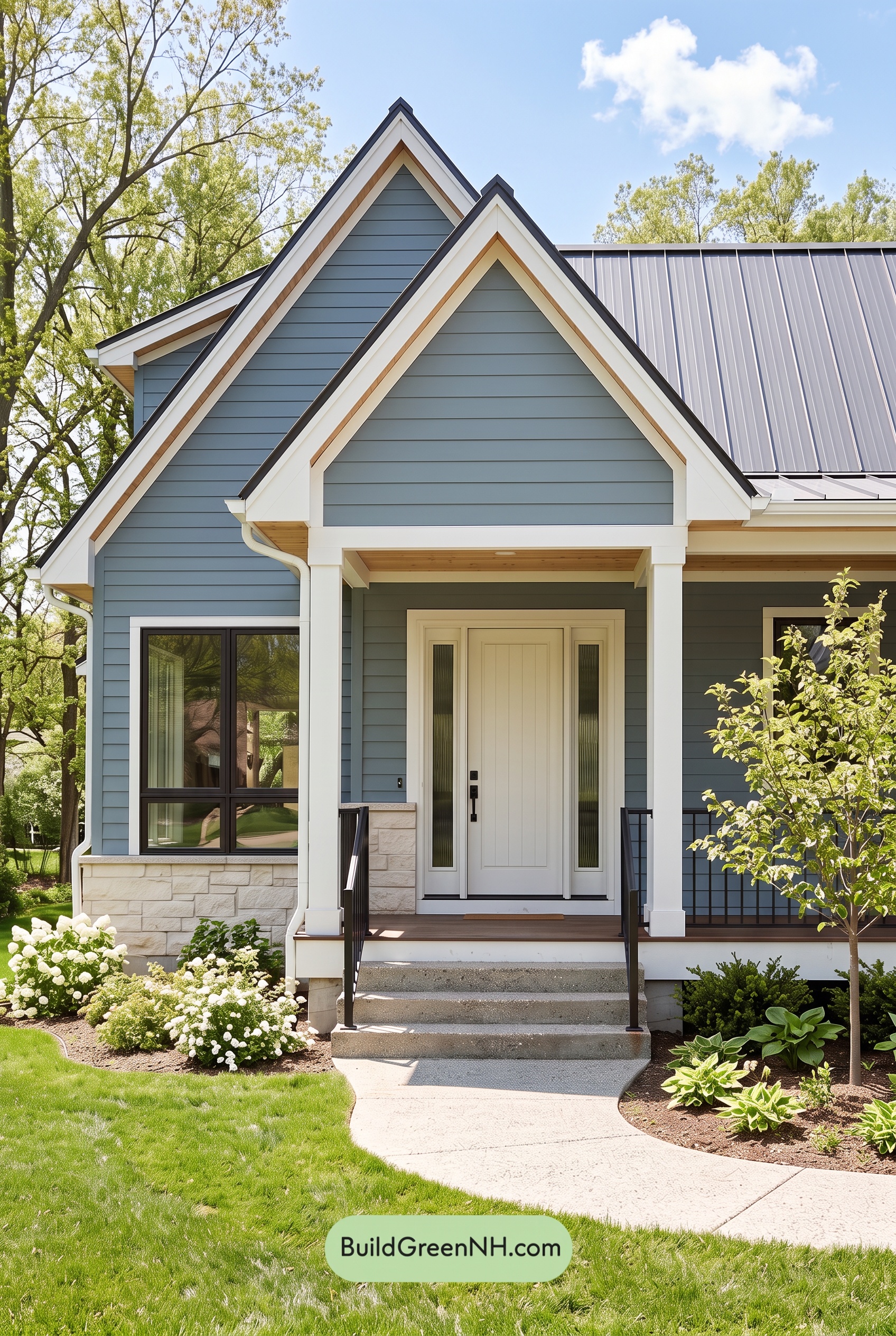
This layered gray-and-white exterior scheme feels polished, welcoming, and perfectly tailored to the home’s classic architectural details.
A Soft Gray Foundation
The main siding is finished in a light, gentle gray that gives the exterior a calm, refined presence. This soft gray works especially well across the vertical gables and horizontal porch siding, where changing directions create subtle texture without making the façade feel busy.
Because the primary shade is light and airy, the home feels substantial yet approachable. It also provides a quiet backdrop for the strong rooflines, detailed window groupings, and inviting covered entry.
Bright White Architectural Definition
Crisp white trim brings welcome contrast to the gray siding. It outlines the steep gables, frames the windows, emphasizes the fascia, and gives every roof edge a clean, intentional finish. The result is a sharp silhouette that stands out beautifully against the surrounding greenery.
The same bright white carries through the porch columns, decorative base trim, and garage doors. Repeating this shade across these substantial features creates continuity from one side of the exterior to the other, while the garage doors feel integrated rather than visually separate.
Deep Gray Details Add Depth
A darker gray front door anchors the entry with a grounded, elegant note. It offers more contrast than the siding while staying within the same color family, so the look remains cohesive rather than overly dramatic.
The dark gray railings echo that door color and add a fine-lined accent along the porch. Together, these deeper details give the white columns and pale siding definition, drawing the eye naturally toward the front steps and entryway.
A Roof That Ties It Together
The roof introduces another softly weathered gray, creating a gentle tonal bridge between the pale siding and darker accents. Its textured surface adds visual warmth and prevents the cool gray-and-white palette from feeling flat.
Overall, this exterior uses light gray, bright white, and deep gray with impressive balance. The palette feels fresh and timeless, with enough tonal contrast to highlight the home’s craftsmanship while preserving a serene, welcoming mood.
Next, see how this color scheme looks under different lighting simulations throughout the day.
Overcast
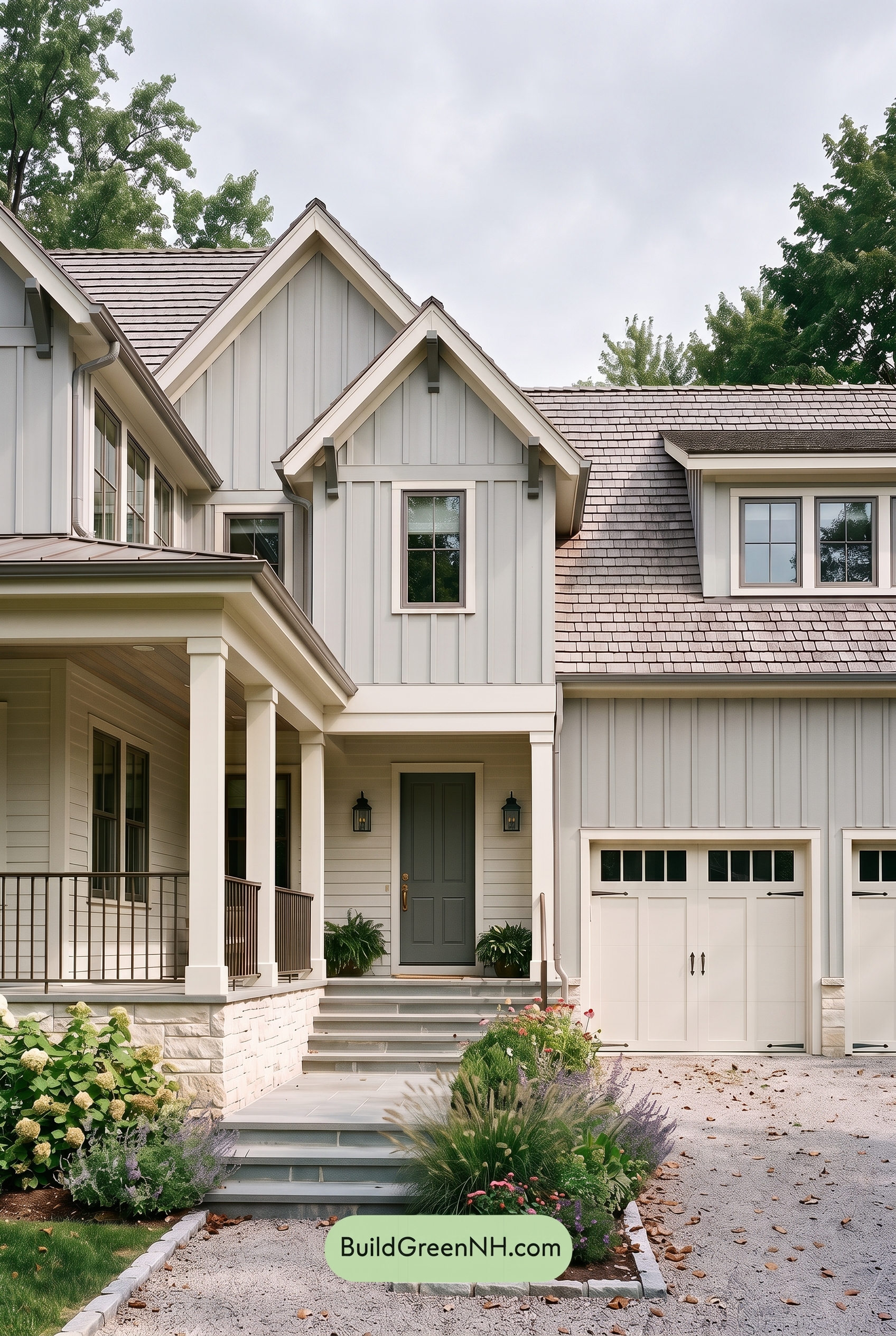
Under overcast skies, the light gray siding takes on a softer, slightly cooler cast than it shows in neutral daylight, while its saturation appears more restrained and even across the façade. The white trim, columns, and garage doors lose some of their sunny brightness, reading as gentler off-white layers that create a calm, cohesive contrast against the gray walls.
Because clouds diffuse the light, sharp shadows beneath the rooflines and porch soften into subtle gradients. The deeper gray door and railings still provide definition, but their contrast feels quieter and more refined, giving the exterior a composed, welcoming mood rather than the crisp, high-definition look seen in neutral daylight.
Golden Hour
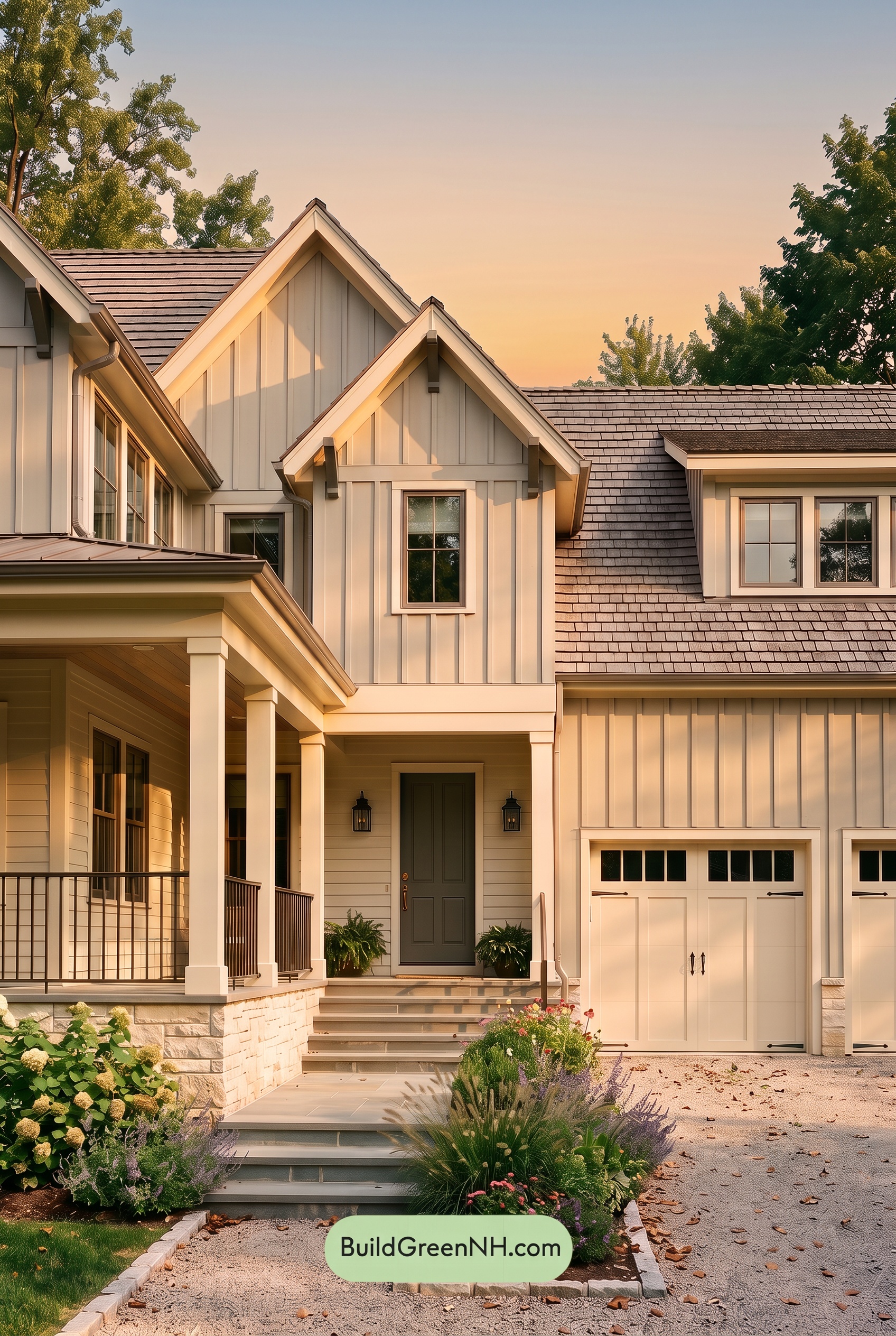
Golden Hour gives the gray siding a softer, warmer cast than it has in neutral daylight, making the overall exterior feel more inviting and gently saturated. The white trim, columns, and garage door take on a creamy glow, while sunlit surfaces appear brighter and more dimensional.
As the low light stretches across the facade, shadows deepen around the gray door, railings, gables, and recessed porch areas, increasing contrast without making the scheme feel harsh. The result is a calm, welcoming mood: warm highlights emphasize the architectural lines while the deeper gray accents add cozy evening definition.
Shade
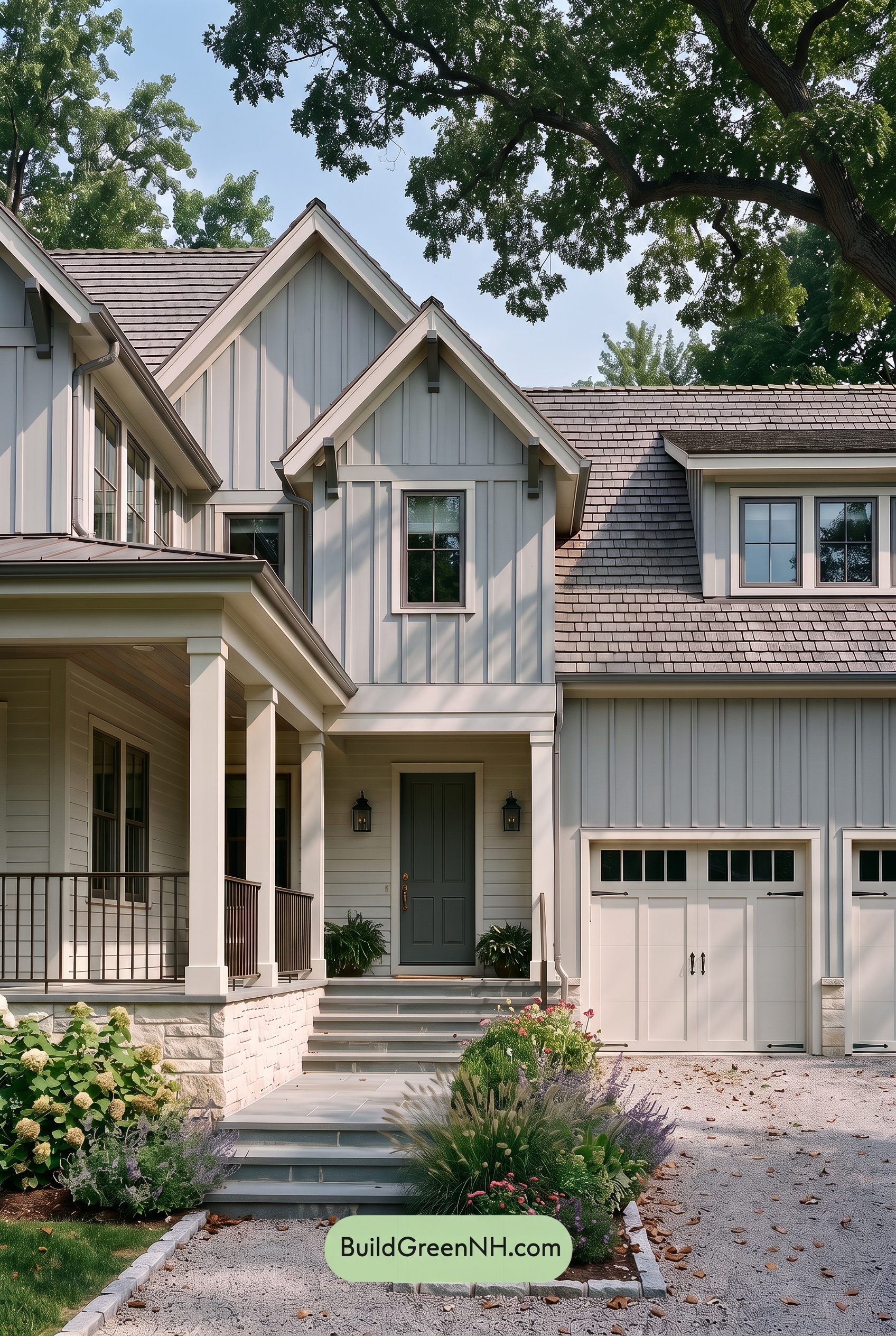
In shade, the soft gray siding reads cooler and slightly deeper than it would in neutral daylight, with its saturation appearing more restrained and refined. The white trim, columns, and garage doors lose some of their bright crispness, shifting toward a gentler, warmer-looking neutral that keeps the façade calm rather than stark.
Tree-filtered shadows strengthen the contrast around the rooflines, window trim, railings, and front entry, allowing the darker gray details to feel more pronounced. This layered play of pale neutrals and deepened gray creates a quiet, sheltered mood—elegant and inviting, with less glare and more architectural depth than the same scheme would show in open daylight.
Nighttime
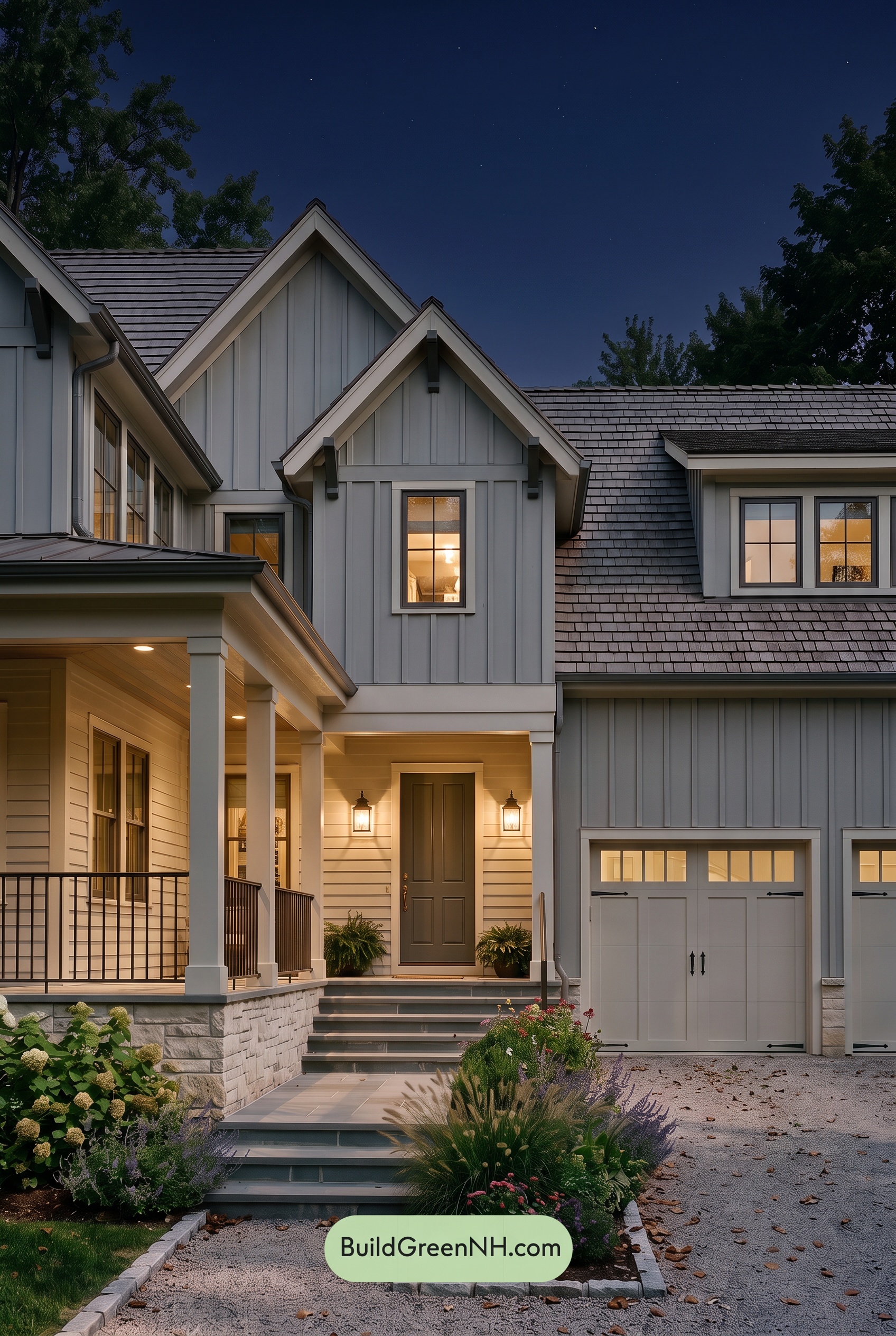
At night, the gray exterior settles into a deeper, more muted shade than it shows in neutral daylight, with its cool character softened by the warm glow near the entry. White trim, columns, and garage details appear creamier where illuminated, while receding into gentle gray shadows beneath the eaves.
The darker gray door and railings gain visual weight after dark, creating stronger contrast against the softly lit pale elements. Layered shadows emphasize the vertical siding and rooflines, giving the façade a calm, polished mood that feels more intimate and welcoming than its brighter daytime appearance.
Pin these for later:
Want More?
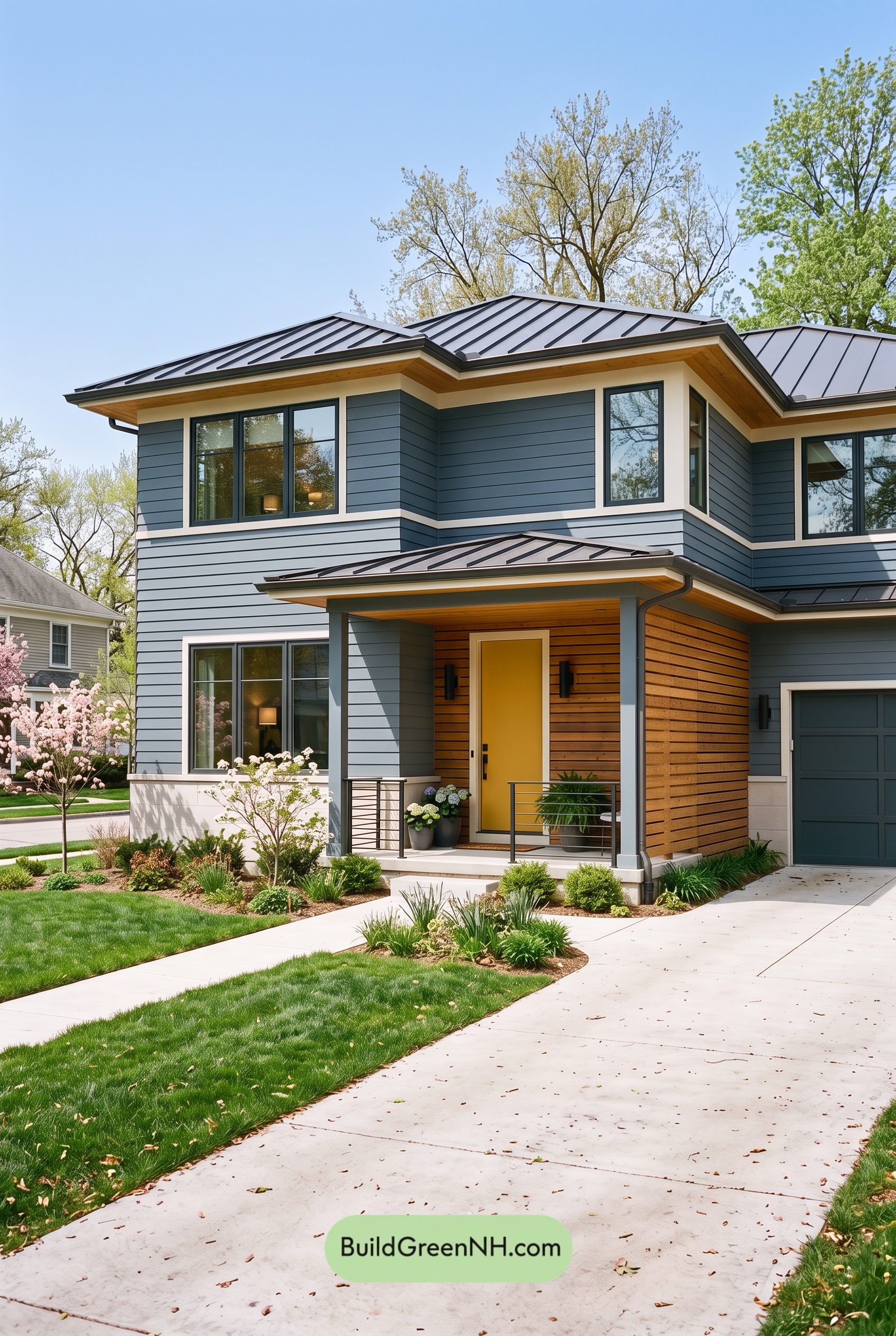 Blue House Front Door Color Scheme: Harbor Saffron
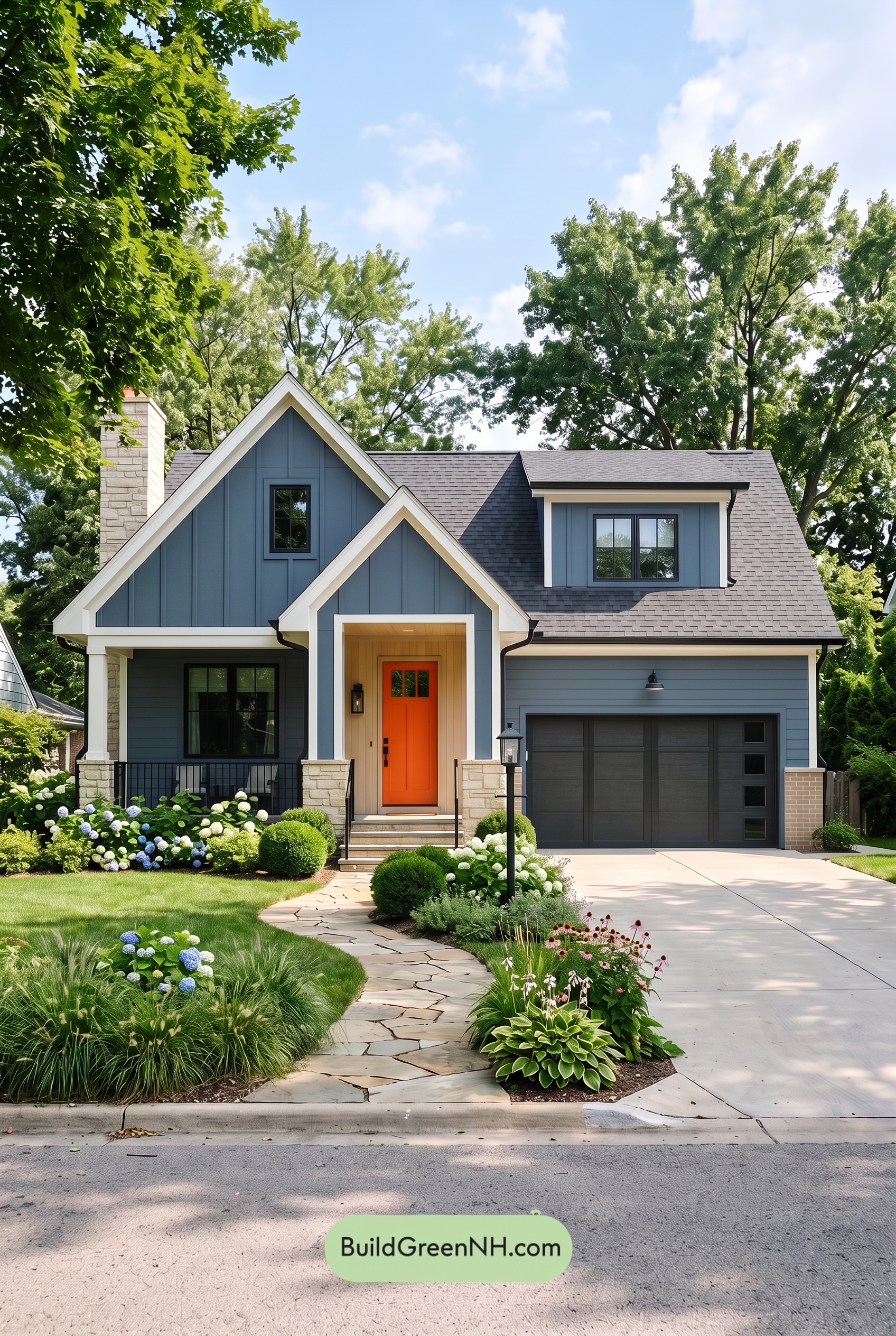 Blue House Front Door Color Scheme: Cobalt Persimmon
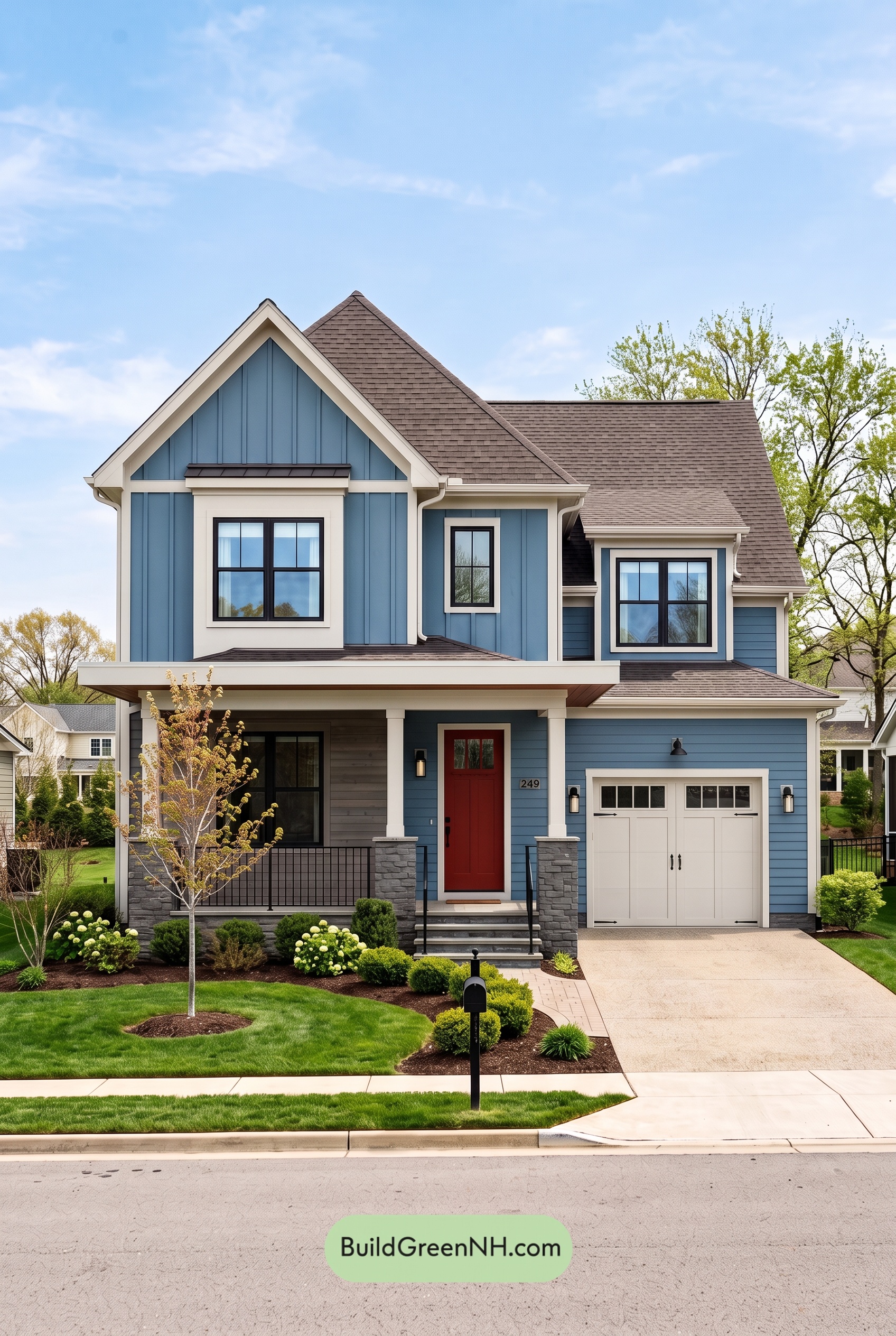 Blue House Front Door Color Scheme: Denim Poppy
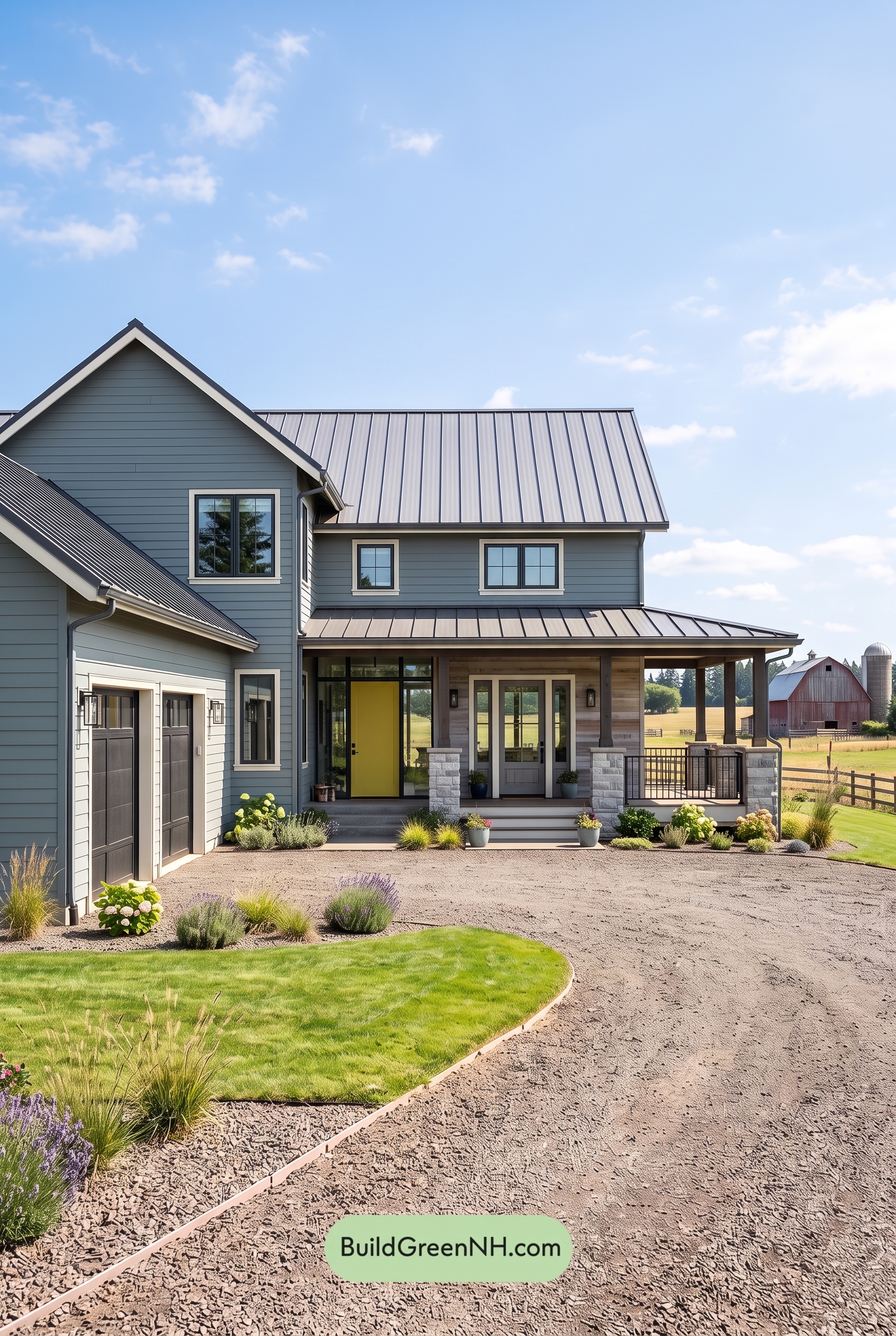 Blue House Front Door Color Scheme: Slate Citron
 Blue House Front Door Color Scheme: Mist Blue Haven
Table of Contents