Last updated on · ⓘ How we make our designs
You’ll see tropical modern house designs that work with bossy weather through deep eaves, raised floors, shaded glass, and even a quiet tolerance for wet shoes and stray leaves.
We like tropical modern houses most when they feel calm without acting precious. These ones come from cliffs, rainforests, savannas, wet hillsides, and city plots where the weather can get a bit bossy.
We took cues from dock pavilions, shoreline huts, safari shelters, island roofs, jungle paths, and rocky ground, then shaped them into homes that stay open, protected, and easy to live in. Nothing too fussy, because a house in the tropics really should know what rain is up to.
As you move through the designs, pay attention to the deep eaves, raised floors, shaded glass, screened edges, bridges, courtyards, and the way each house sits with its site instead of arguing with it. Also notice how many of them seem ready for wet shoes, salty air, and the occasional leaf invasion, which feels about right.
Cliffside Tropical Modern House
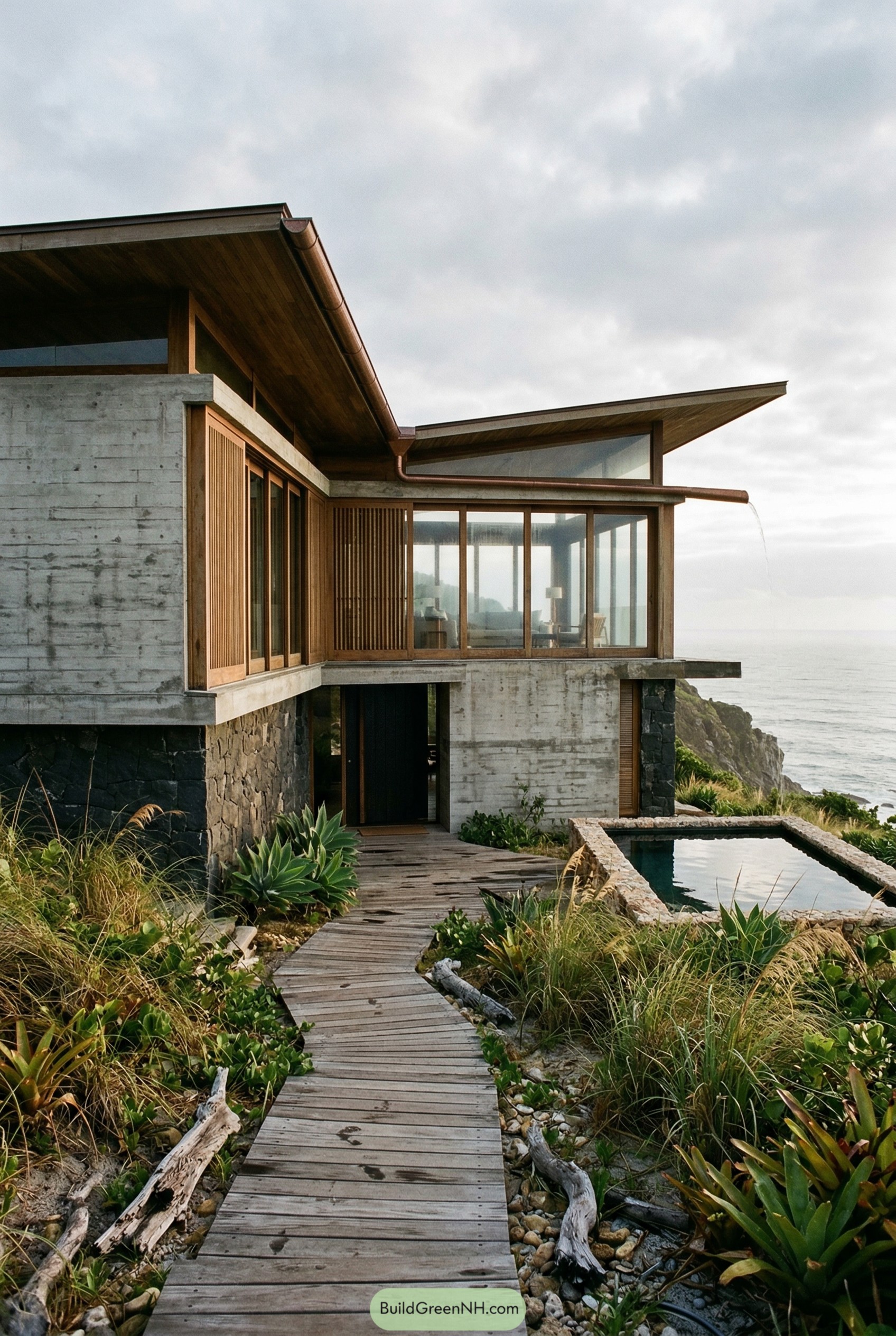



Set on a rocky coast, this house blends tropical ease with a crisp modern frame, taking cues from sea cliffs, windswept planting, and those big open water views. The broad roof planes stretch out like wings, and they really know how to throw shade in the nicest possible way.
Concrete anchors the lower level to the rugged site, while warm timber screens, slim glass walls, and a tucked plunge pool keep the whole thing from feeling too stern. That mix matters because the house stays protected, open, and calm at once, which is a pretty neat trick for a home perched above the ocean.
Rainforest Bridge Courtyard Retreat
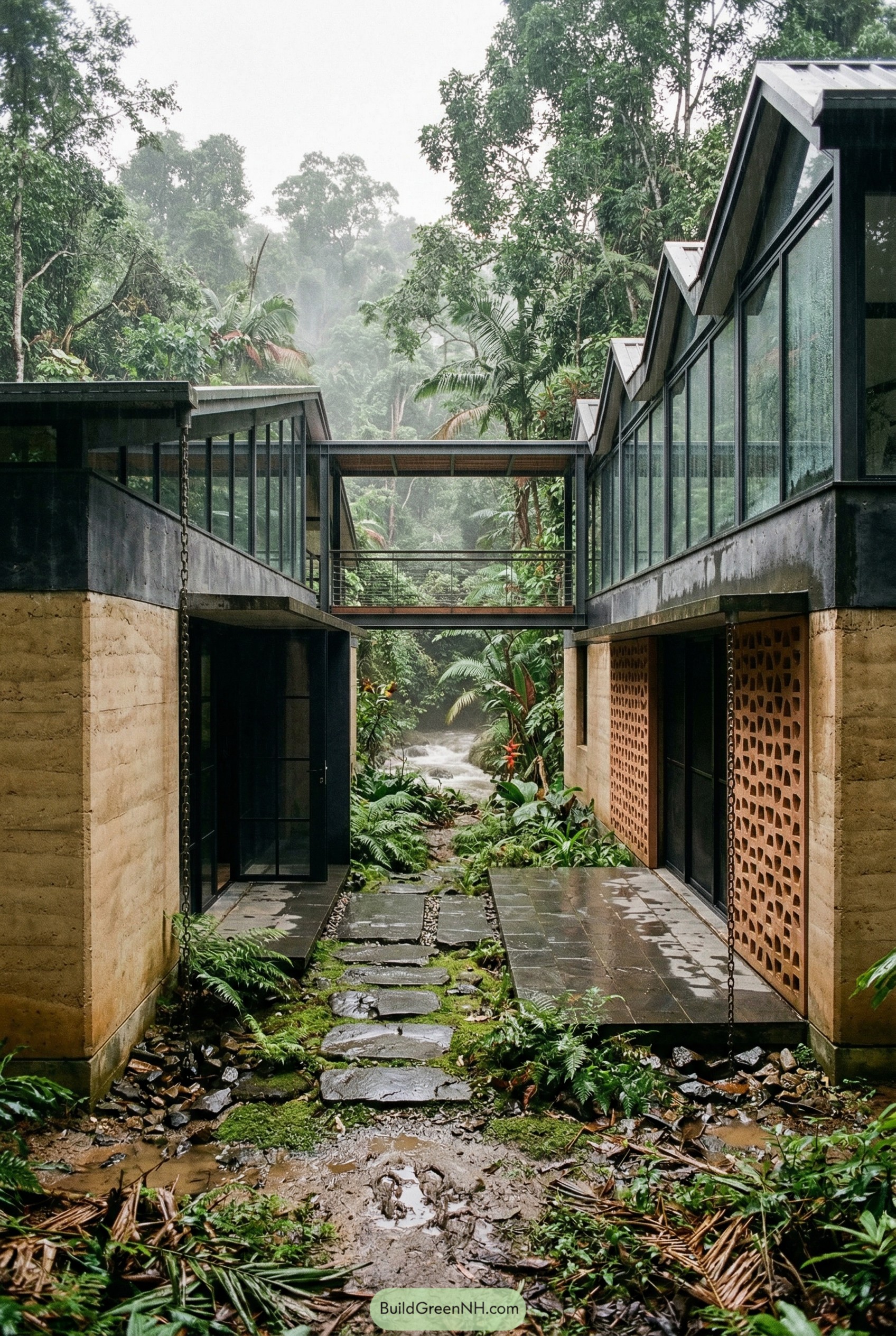

We split the home into two slim wings and slipped a glazed bridge between them, so the jungle stays right in the middle where it belongs. The stone path, raised floors, and deep overhangs make it feel like the house is tiptoeing over the wet ground, which is honestly the smart move here.
The palette pulls from the forest after rain with dark framing, earthy walls, and broad panes of glass that keep everything open to the view. Perforated screens add privacy and airflow at the lower level, while the jagged roofline gives the whole composition a crisp edge that stays cool even when the weather is being a bit much.
Savanna Stone Canopy House
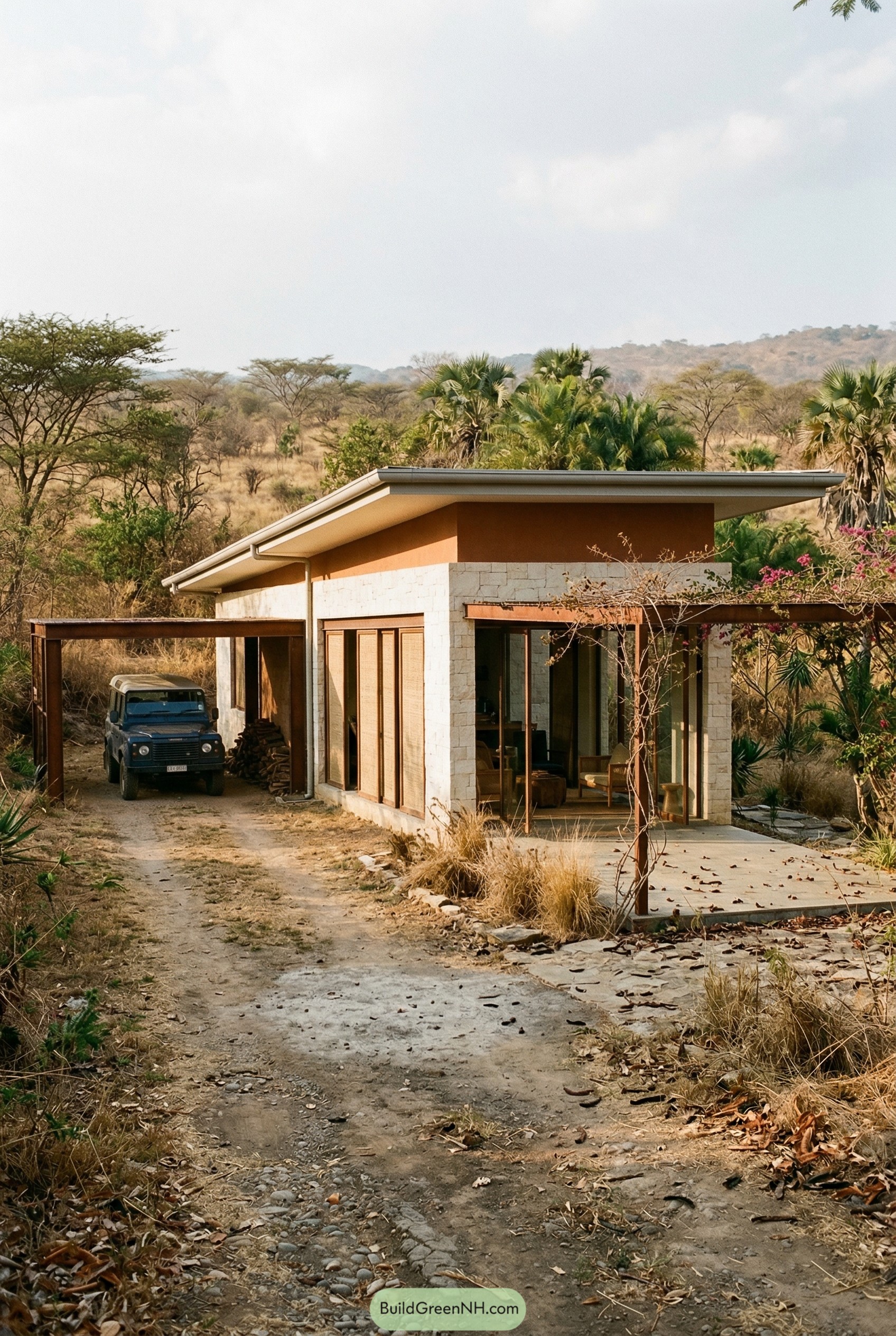

Inspired by safari outposts and dry climate homes, this one uses a low floating roof to cast broad shade and keep the rooms calmer when the afternoon gets bossy. Pale stone, warm plaster, and timber screens give it a grounded look that feels tucked into the grasses instead of dropped on top of them.
We love how the glass corners open the living area to the terrace, while the pergola and carport stretch the footprint into useful outdoor zones. Those overhangs matter a lot here, softening heat and rain, and the compact plan keeps the house simple, breezy, and ready for a muddy pair of boots.
Cloudforest Lava Nest
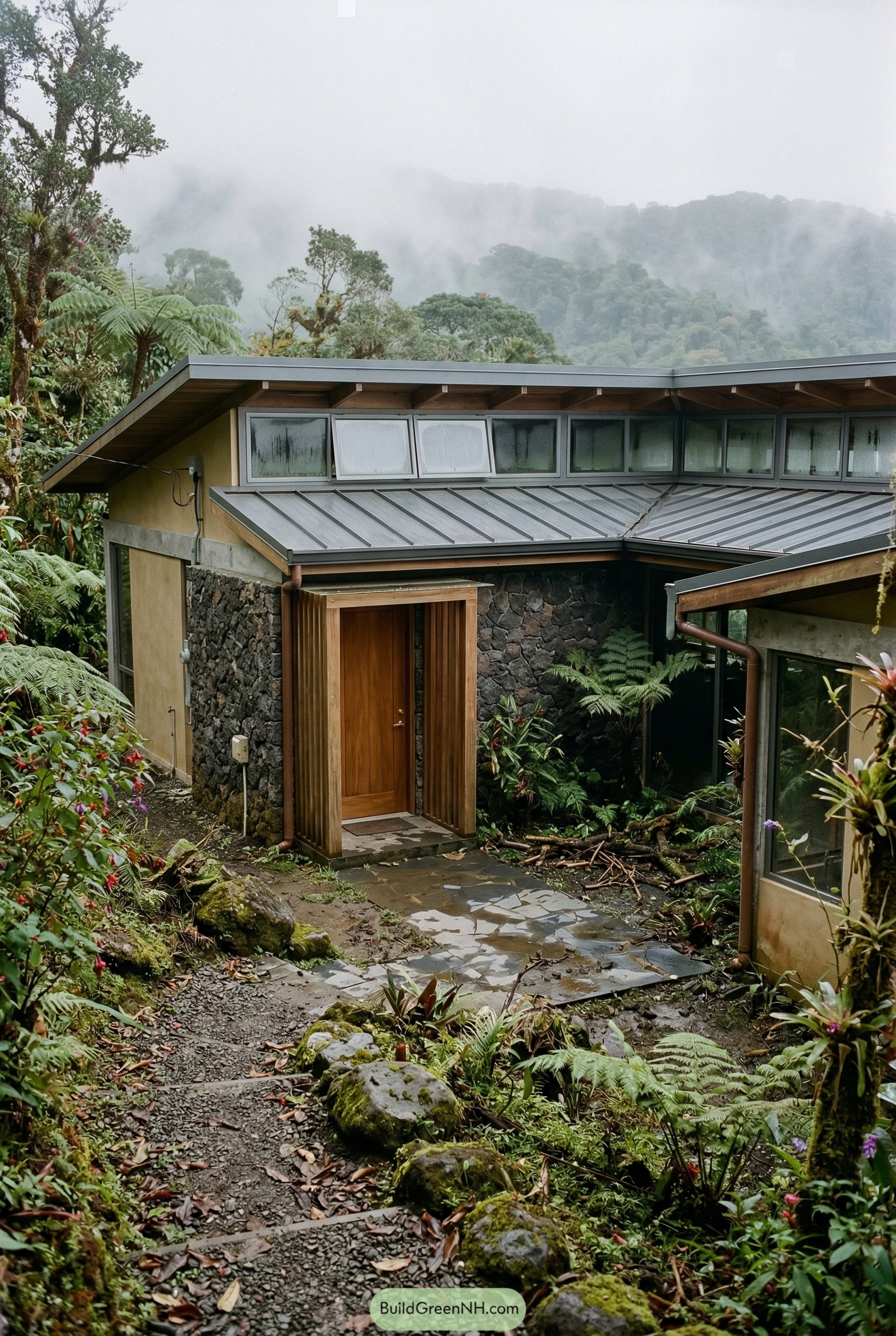

Set low under wide metal eaves, the composition pulls from volcanic terrain and wet forest edges, with dark rock walls, sandy plaster, and a cedar entry that feels warm against all that green. The clerestory band keeps the roofline airy and helps the rooms breathe in the damp mountain climate, which is pretty handy when the weather is basically one long exhale.
The plan gathers around a small sheltered arrival court, so the walk in feels intimate instead of showy, and the timber screen gives the front door just enough privacy. Deep overhangs, slim frames, and a stone path tucked through ferns make the whole place sit easy in the landscape, like it politely borrowed a corner of the forest.
Monsoon Lattice Townhouse
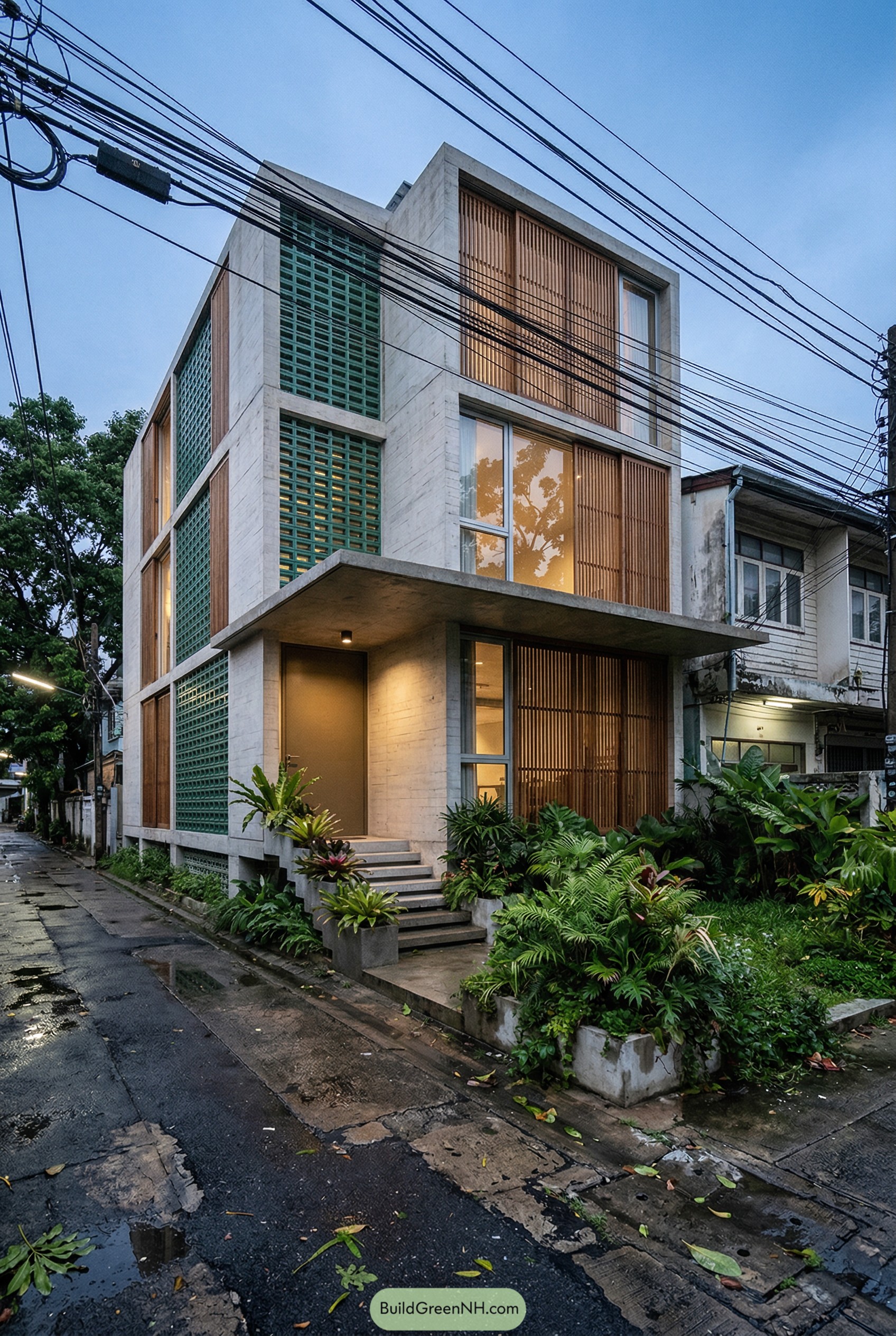

This townhouse stacks crisp concrete frames with green breeze block walls and tall timber screens, giving a narrow urban lot a calm leafy face. We shaped it for hot wet city living, so the shell feels solid and the skin stays breathable, which is a neat trick for a home this compact.
The deep entry canopy, recessed windows, and planted edge soften the boxy form and help with shade, privacy, and a little buffer from the street chaos. Those sliding slatted panels let the rooms open up or tuck in as needed, and honestly, they make the whole place look like it knows a secret.
Lagoon Stilt Pavilion
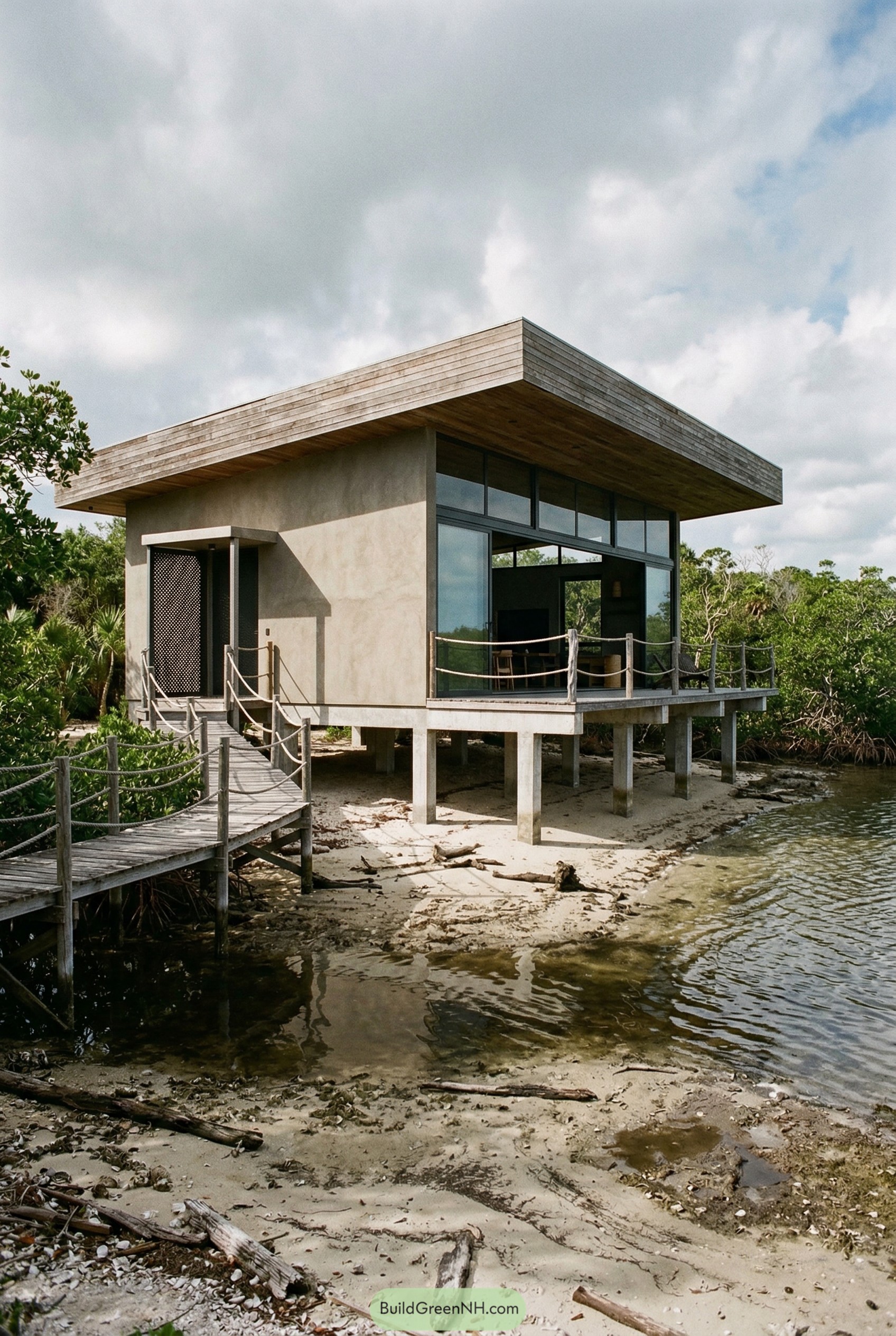

Set on slim concrete piers at the water’s edge, this pavilion borrows its stance from old coastal docks and keeps things beautifully simple. The broad timber roof reaches far beyond the walls, giving the glassy living space shade and making the whole form feel calm, crisp, and a bit like it packed its own sun hat.
The concrete volume keeps the design grounded against the mangrove setting, while the raised deck and rope lined boardwalk make the approach feel relaxed and wonderfully unfussy. Big corner glazing pulls the view right in, and those protected outdoor edges mean you can linger outside without being roasted by lunchtime, which is a pretty good trick.
Basalt Coast Gable Refuge
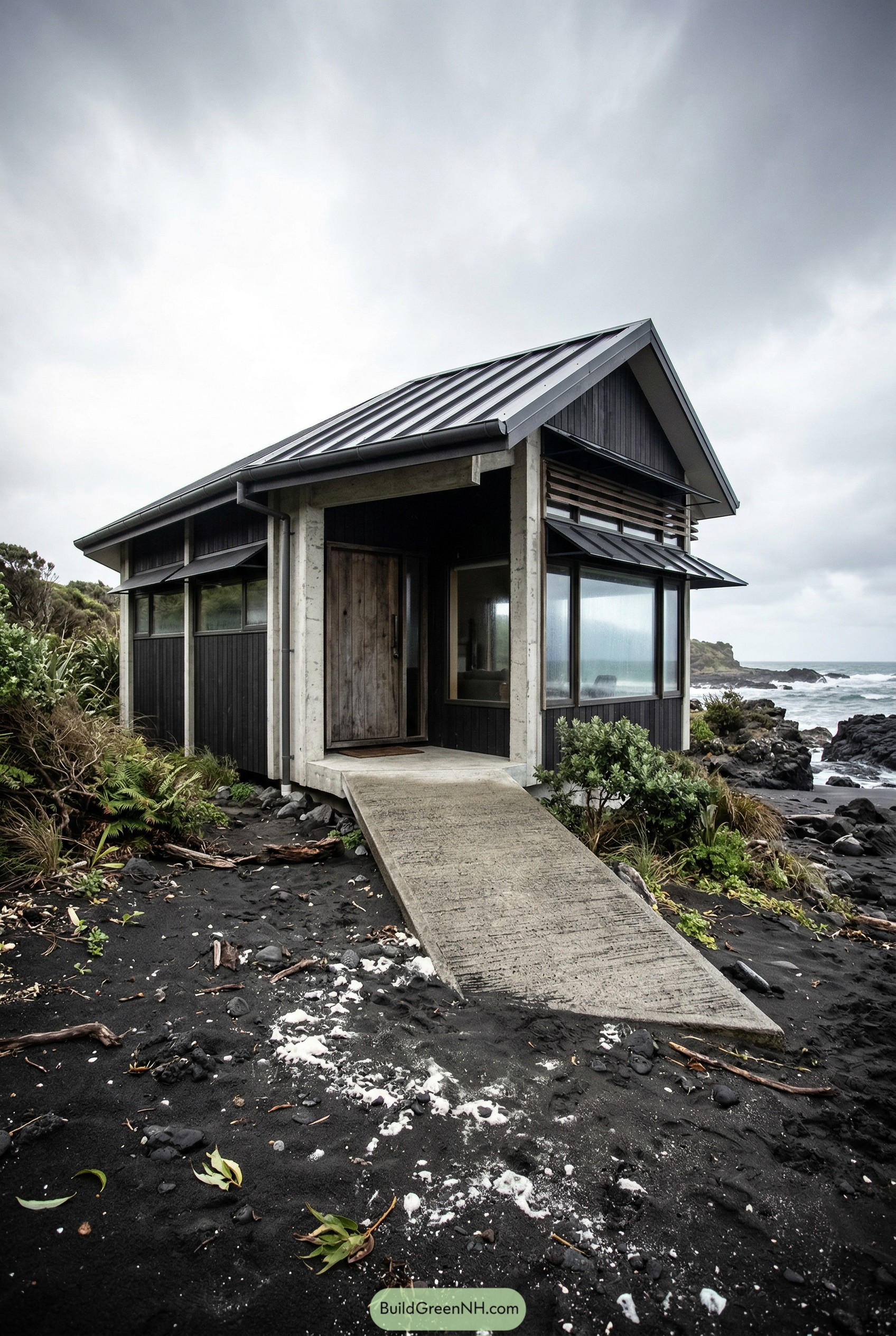

Set into the black sand and rock, this gabled coastal home keeps a low profile with charcoal timber cladding, exposed concrete frames, and a sharp metal roof that looks ready for sea spray before breakfast. The form feels inspired by old shoreline huts, just cleaned up and given much better manners.
The deep eaves, awning windows, and high slatted vent band help the interior stay breezy while still feeling tucked in when the weather gets moody. A simple concrete ramp leads straight to the recessed entry, and that little move matters because the whole design shifts from rough coast to calm shelter in about three steps.
Rice Terrace Eave Villa
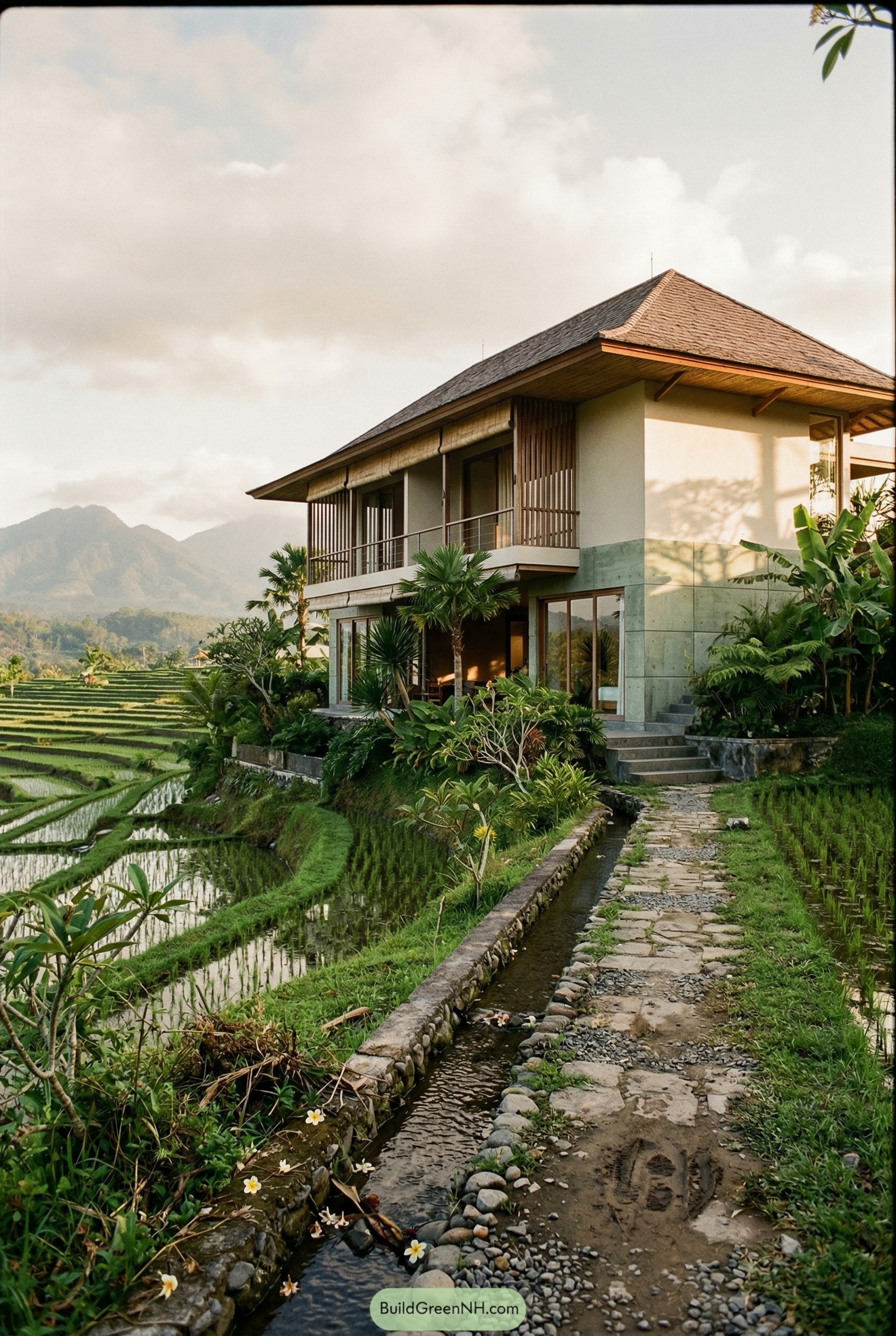

Set on the edge of the paddies this villa borrows the calm profile of a traditional island roof and stretches it into a clean two story form. The wide eaves matter a lot here because they shade the rooms and shrug off tropical rain like it is no big deal.
Vertical timber screens and a long upper balcony give the facade a soft filtered edge so the house feels open without putting every corner on display. We also love the stone base and canal side path since they anchor the home to the terraces and make the arrival feel a bit ceremonial in the best not too fancy way.
Cenote Edge Greenroof House
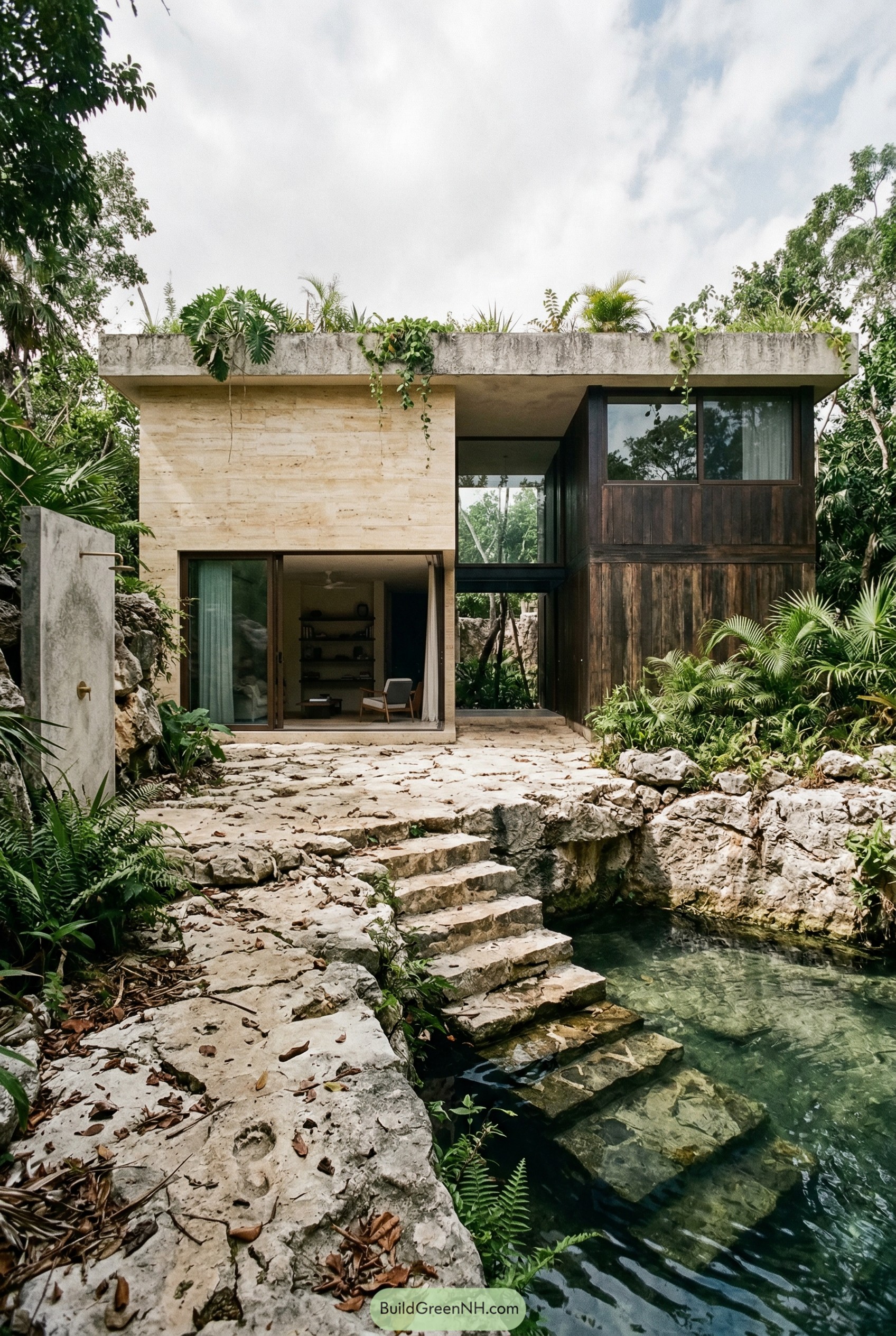

It sits low against the limestone, with a planted roof, pale stone walls, and a dark timber volume tucked beside a slim glazed link. The stepped terrace drops right into the clear pool, so the whole place feels part carved from the ground and part quietly placed there.
We shaped it around the idea of living with the cenote instead of hovering above it, which is why the approach follows the rough rock and the openings stay broad and calm. Deep overhangs, shaded glass, and that rooftop garden help the rooms stay cooler, and the house has a relaxed confidence that feels a bit like barefoot luxury without the cheesy wink.
Mistbelt Shutter Cube
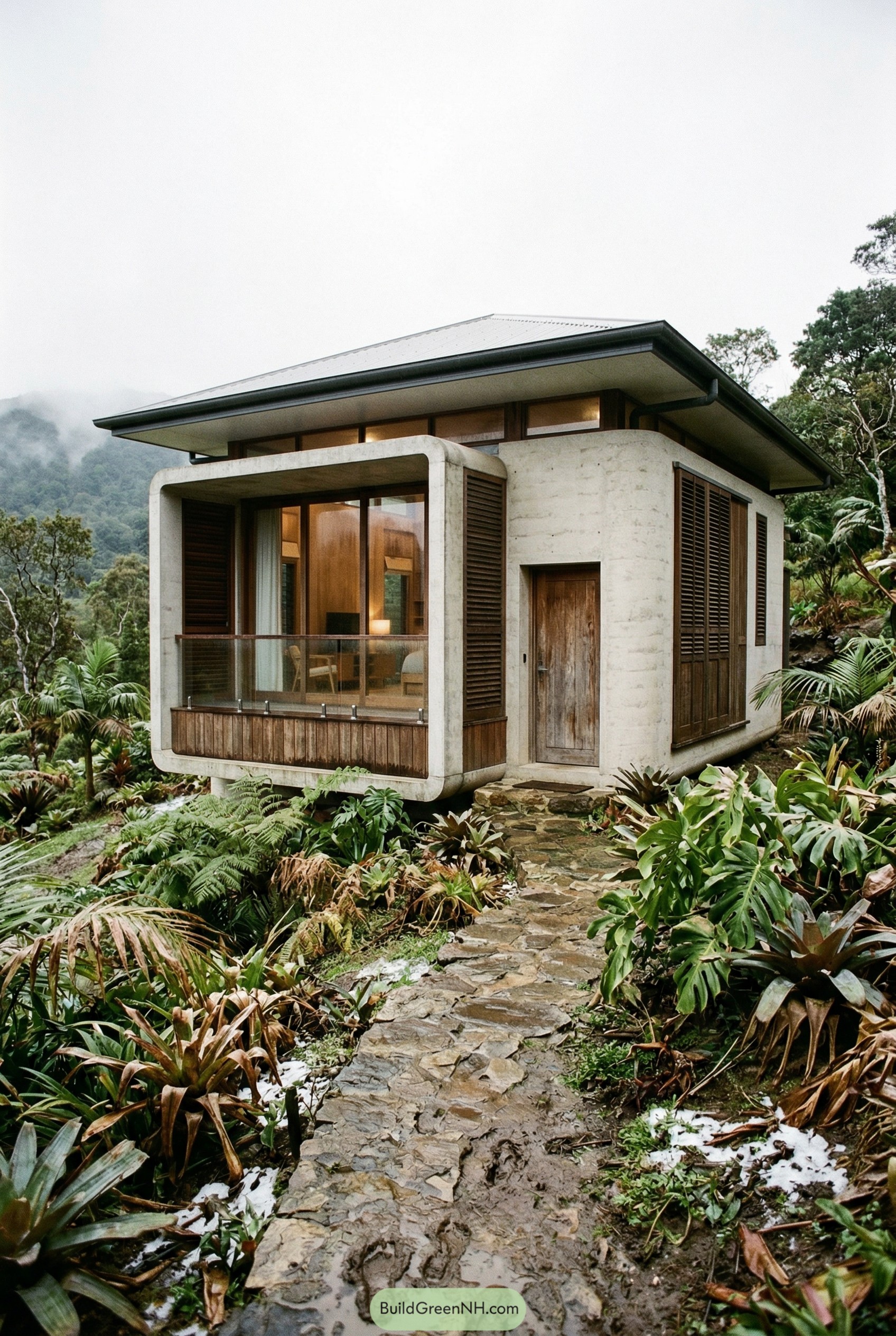

Set on a wet hillside, this compact home uses a rounded concrete frame to carve out a sheltered porch and give the front a soft, sculpted edge. It feels inspired by mountain mist and broad tropical leaves, so the architecture stays calm while the garden gets to be gloriously unruly.
Timber shutters, high clerestory glazing, and the deep roof overhang help with airflow, privacy, and all that rain, the roof acting like a very stylish hat. The raised base and stone approach are small moves, but they matter, keeping the rooms a touch above the ground and making the arrival feel tucked in yet open to the view.
Midnight Grove Glass House
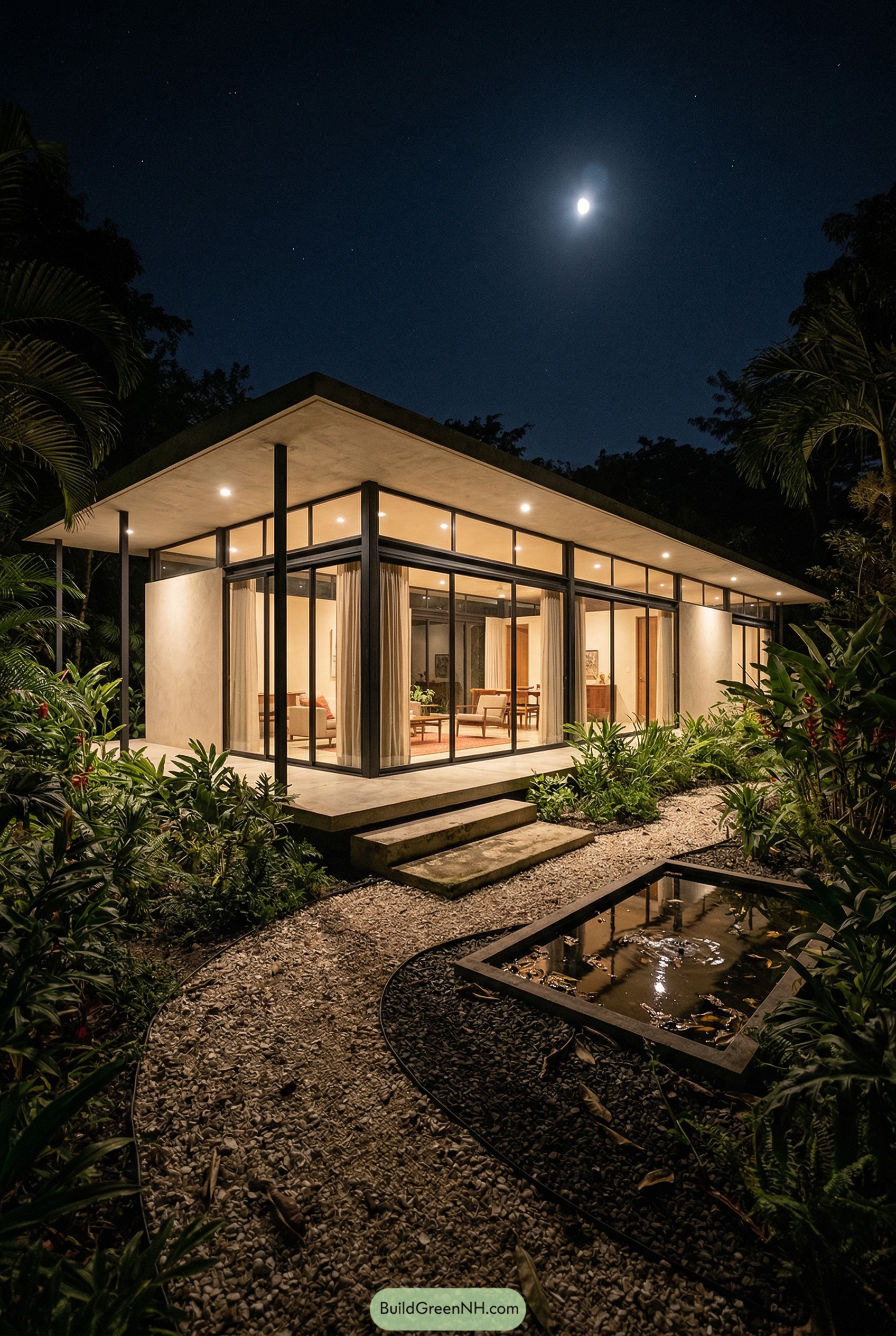

That wide floating roof and the floor to ceiling glass make the house feel like it landed softly in the garden and decided to stay. Slim black columns keep the edges clean and open, which helps the rooms breathe in humid weather and keeps the jungle close.
We took cues from warm tropical nights, so the design stays low, breezy, and calm instead of trying too hard. The gravel path, shallow reflecting pool, and crisp concrete platform turn the approach into a little event, not in a showy way, just enough to make coming home feel pretty great.
Fern Moat Concrete Haven
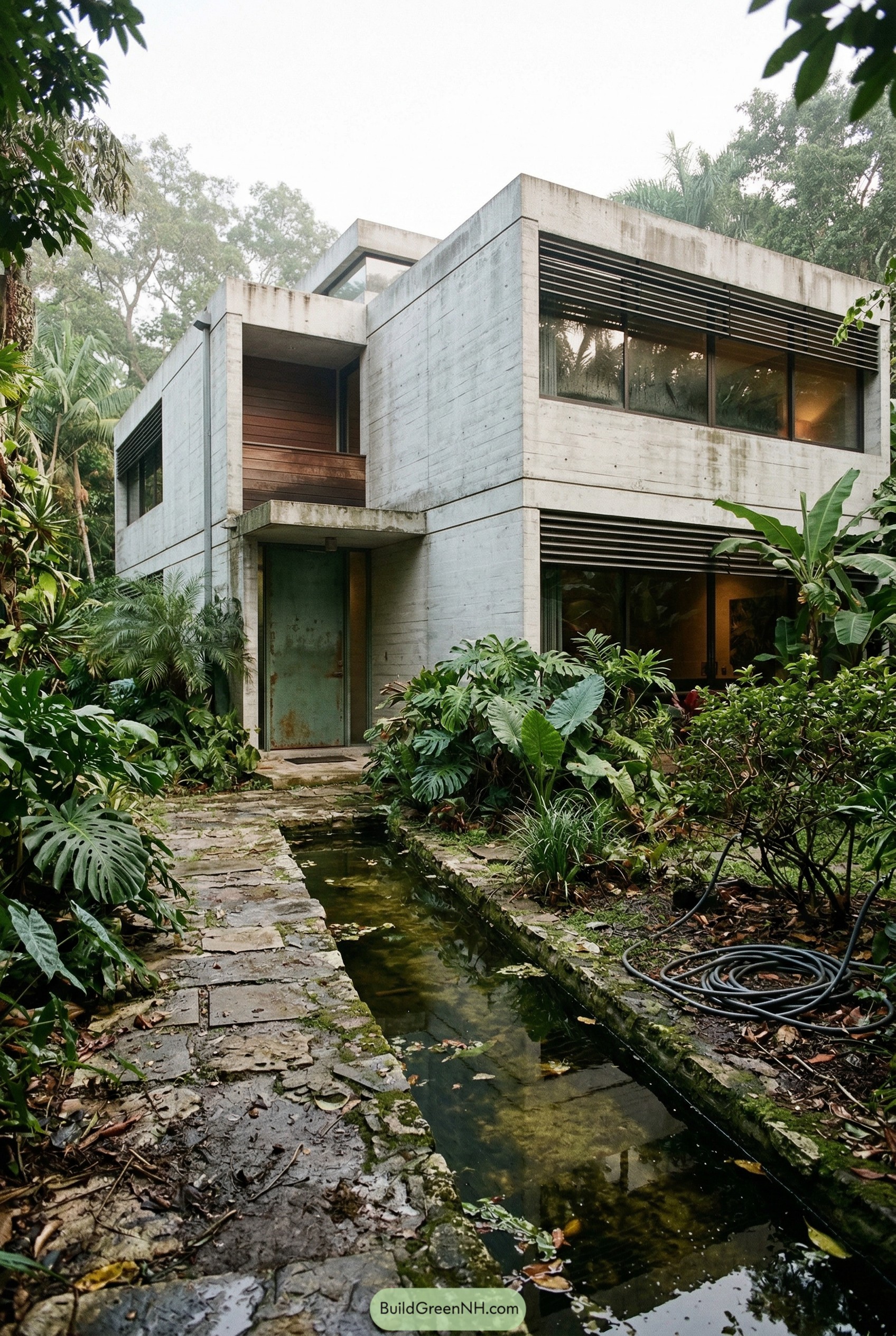

Stacked concrete volumes sit low in the foliage, with long horizontal louvers and a recessed entry that make the whole place feel calm and a little mysterious. We shaped it to borrow from jungle ruins and water gardens, so it settles into the site instead of posing for attention.
That slim canal along the stone walk cools the approach and gives the house a quiet edge, which is nice when the air gets thick and sticky. Warm timber tucked into the upper level softens all the concrete, and the deep overhangs keep the jungle close without inviting every nosy raindrop in.
Cyclone Sawtooth Breezeblock Bungalow
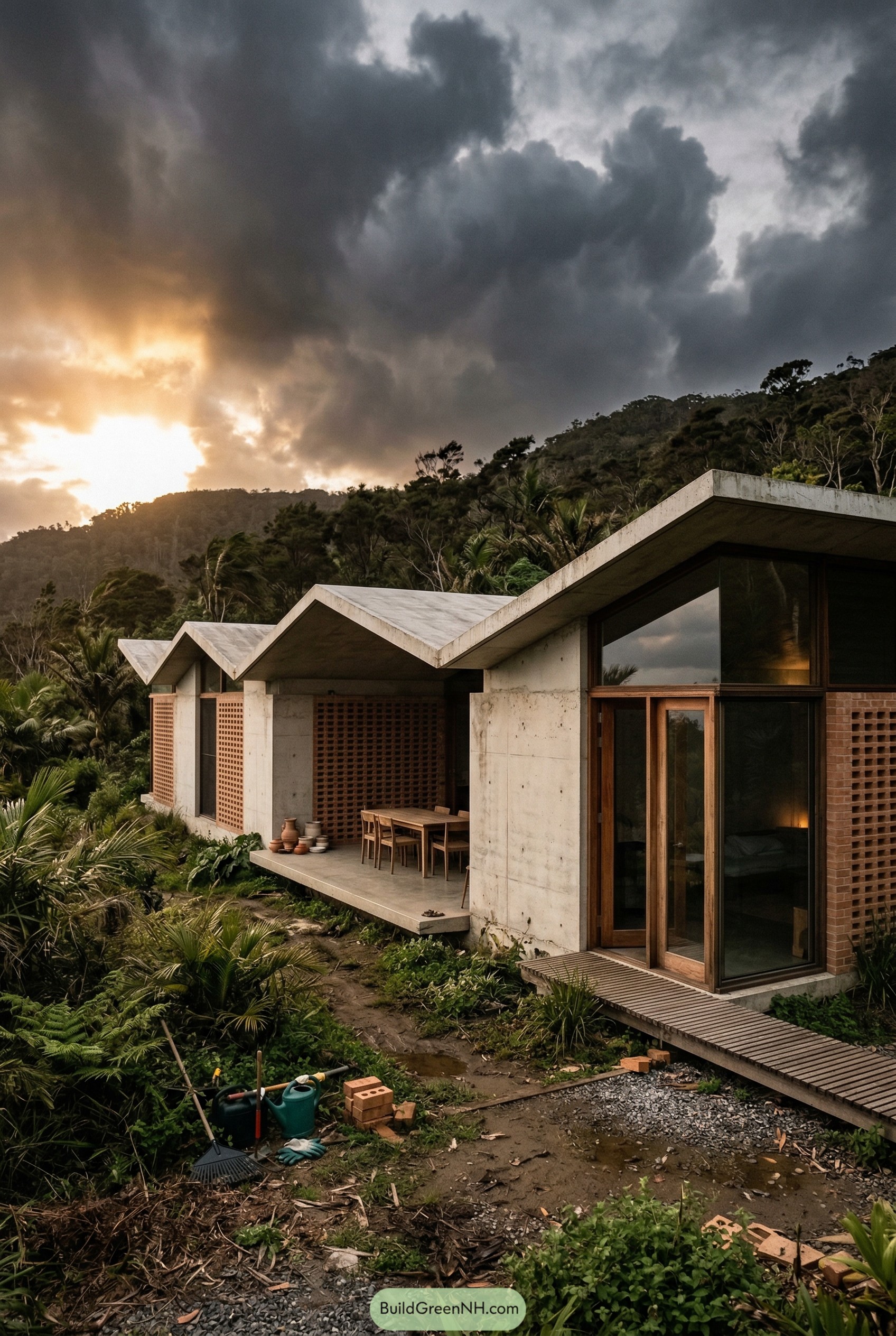

The jagged roofline picks up the shape of the ridge behind it, so the whole house feels tucked into the slope instead of parked on top of it. Concrete planes, timber framed glass, and breezeblock panels are layered to handle rain, pull in air, and keep the verandas private without making them feel shut in.
Its long broken up form lets each room open toward the garden, while deep overhangs and covered outdoor pockets make the wet climate a lot more livable, which is nice because tropical mud has no manners. The slim boardwalk entry lifts you just enough off the ground, and that small move matters since it keeps the house connected to the landscape without turning daily life into a hike.
Backwater Palm Louver Loft
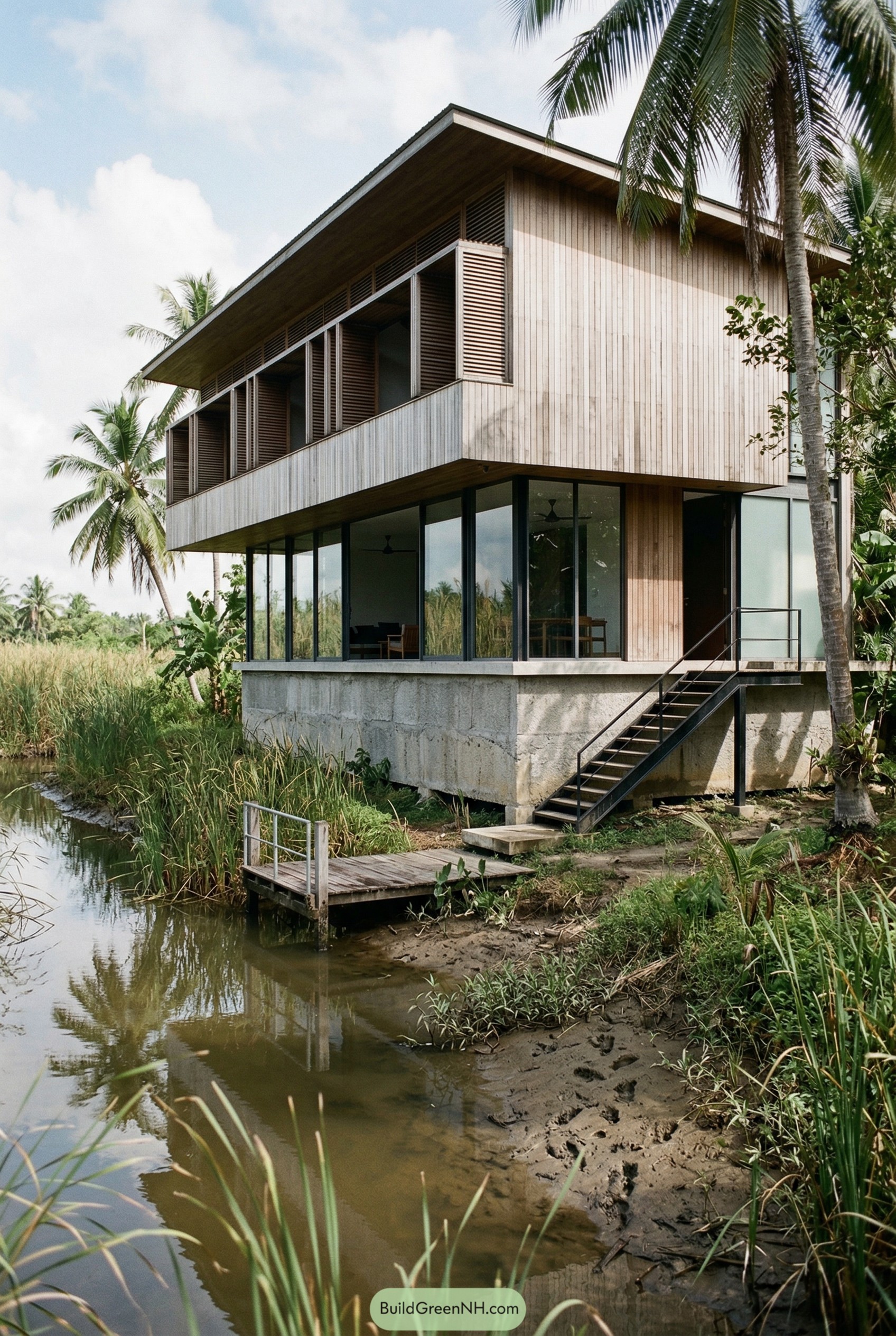

Set above the muddy bank on a sturdy concrete base, this riverside retreat is shaped for wet ground, tall grass, and the kind of heat that makes you rethink shoes. The upper level is wrapped in slim timber boards and deep louvered openings, which pull in breeze while keeping the rooms tucked back and calm.
That broad roof reaches out generously, giving the whole house a cool shady edge and a silhouette that feels crisp without trying too hard. Down below, the glassy living level opens toward the water and little dock, so the design stays connected to the landscape, bugs and all, just with a bit more grace.
Teafield Runnel Shelter
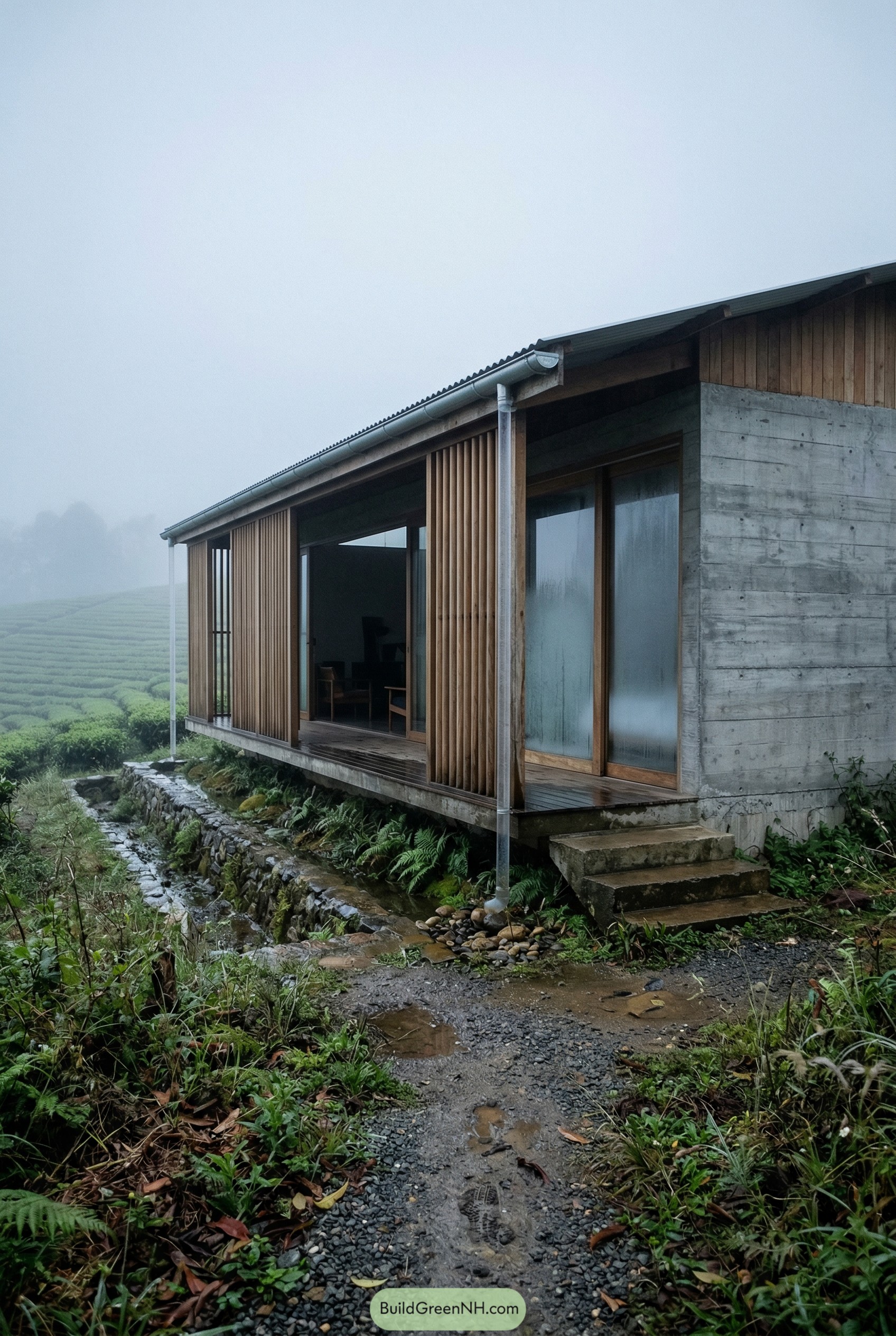

Set along a tea covered slope, this compact shelter takes its cues from the wet ground and the soft haze that never seems in a rush to leave. The simple pitched roof, raised deck, and stone runnel pull water away fast, which is not glamorous but wow is it important here.
We paired a board formed concrete shell with warm vertical timber screens so the house feels anchored yet still open to air and views. Large sliding panels tuck behind the slats for a breezy porch effect, and the whole thing ends up feeling calm, sturdy, and a little smug about the rain.
Pin this for later:
Want More?
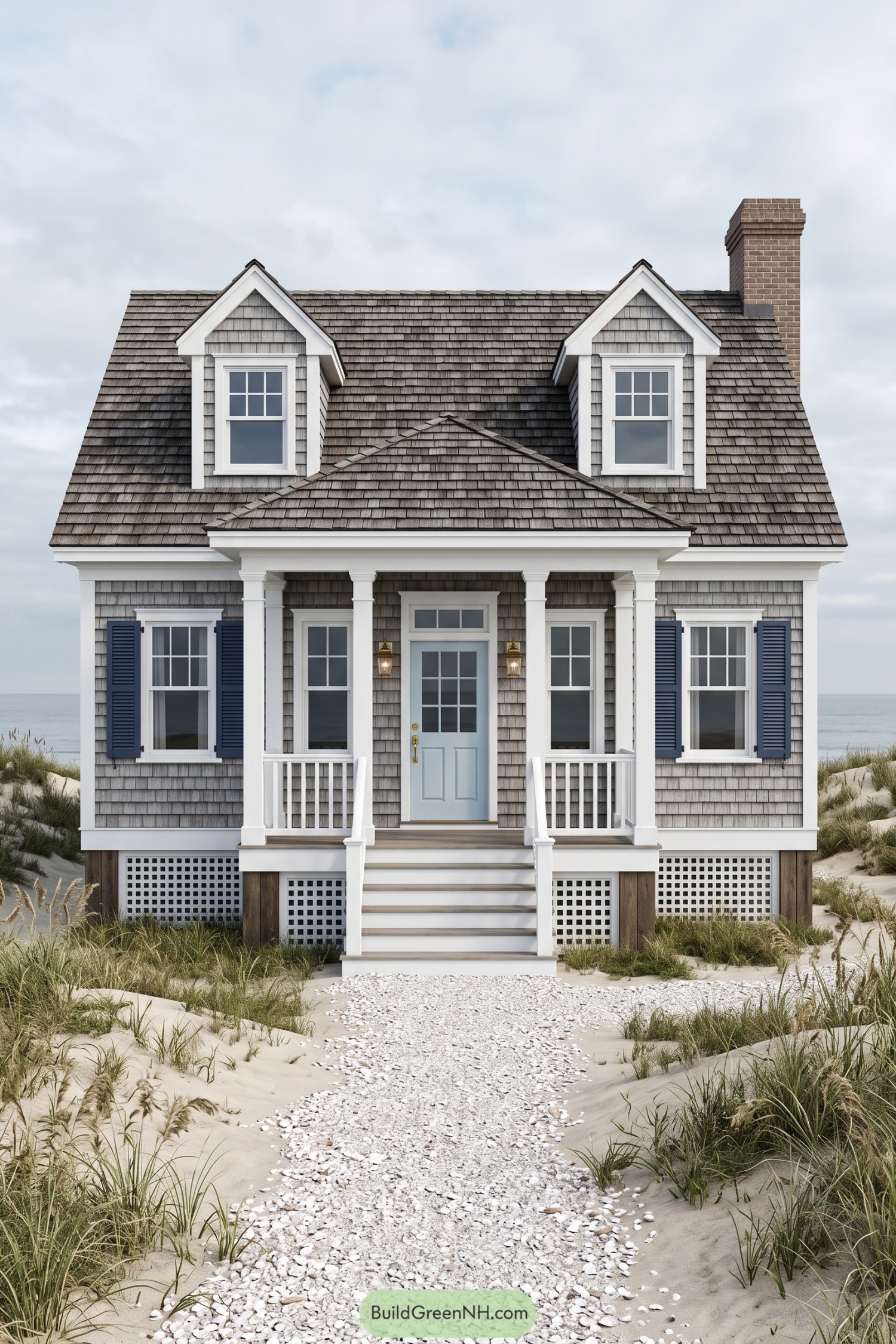 20 Beach House Front Elevations That Turn Sea Breezes Into Curb Appeal
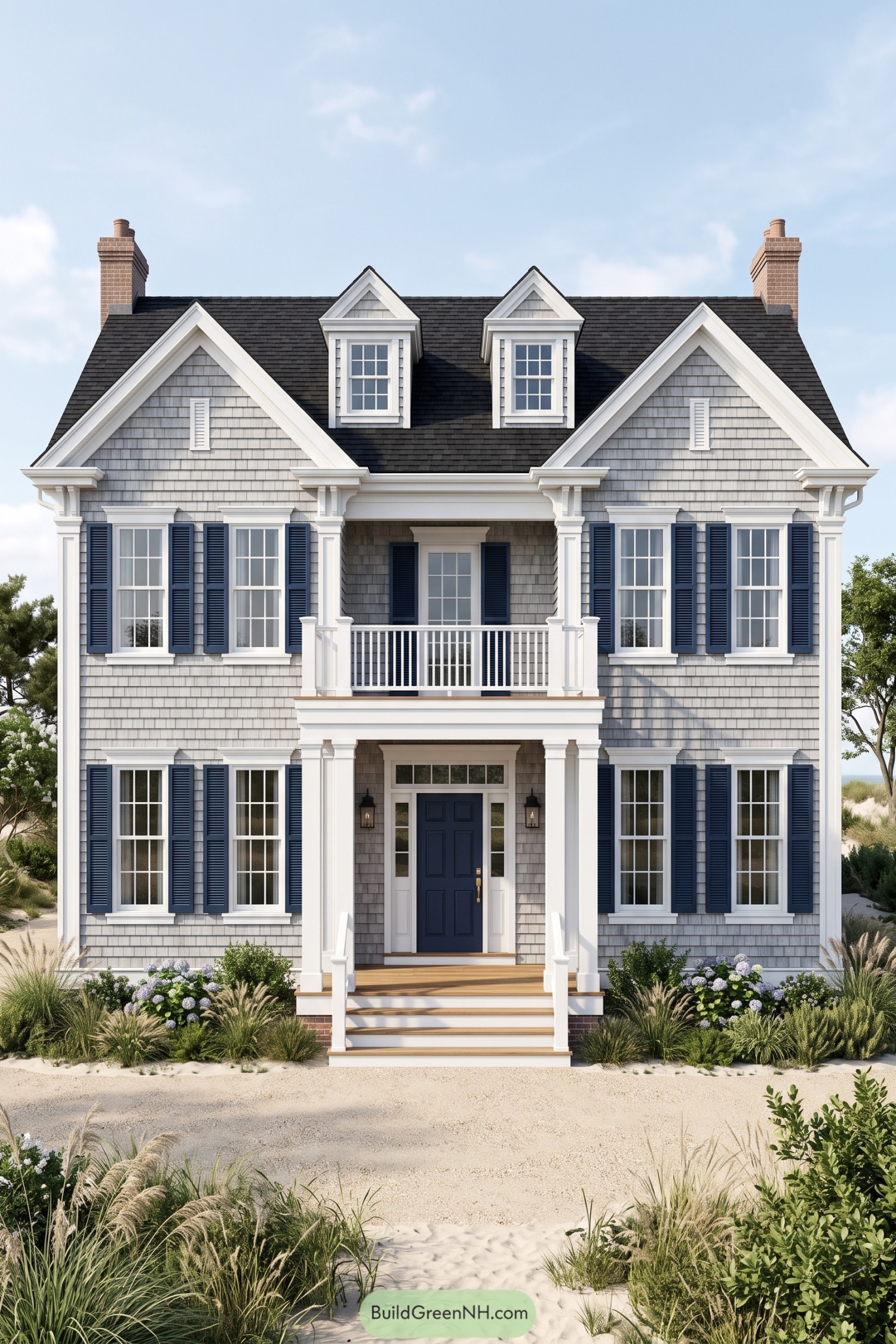 20 Coastal House Front Elevations To Make Your Home The Star Of The Shore
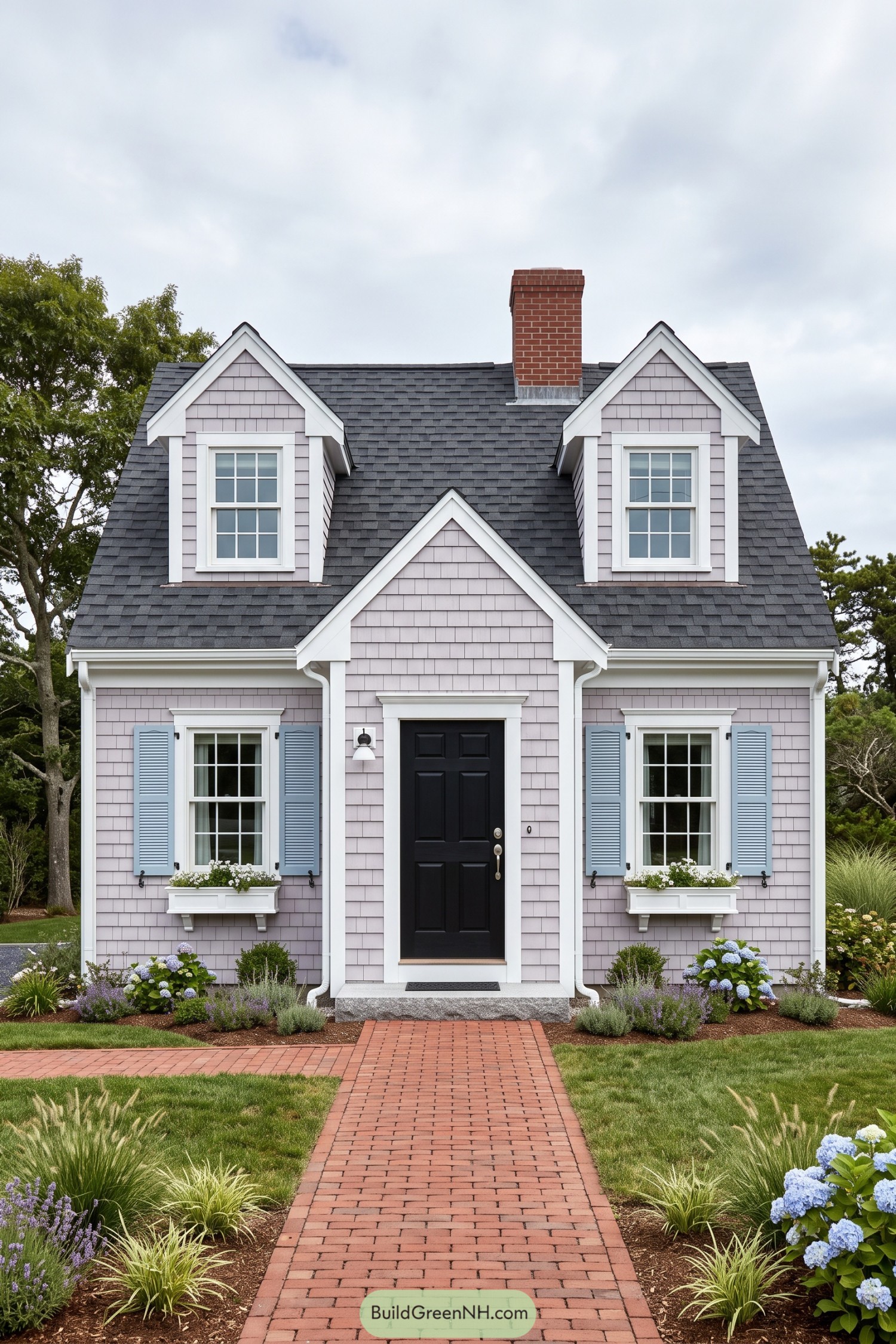 20 Cape Cod House Front Elevations to Bring Storybook Magic to Your Street
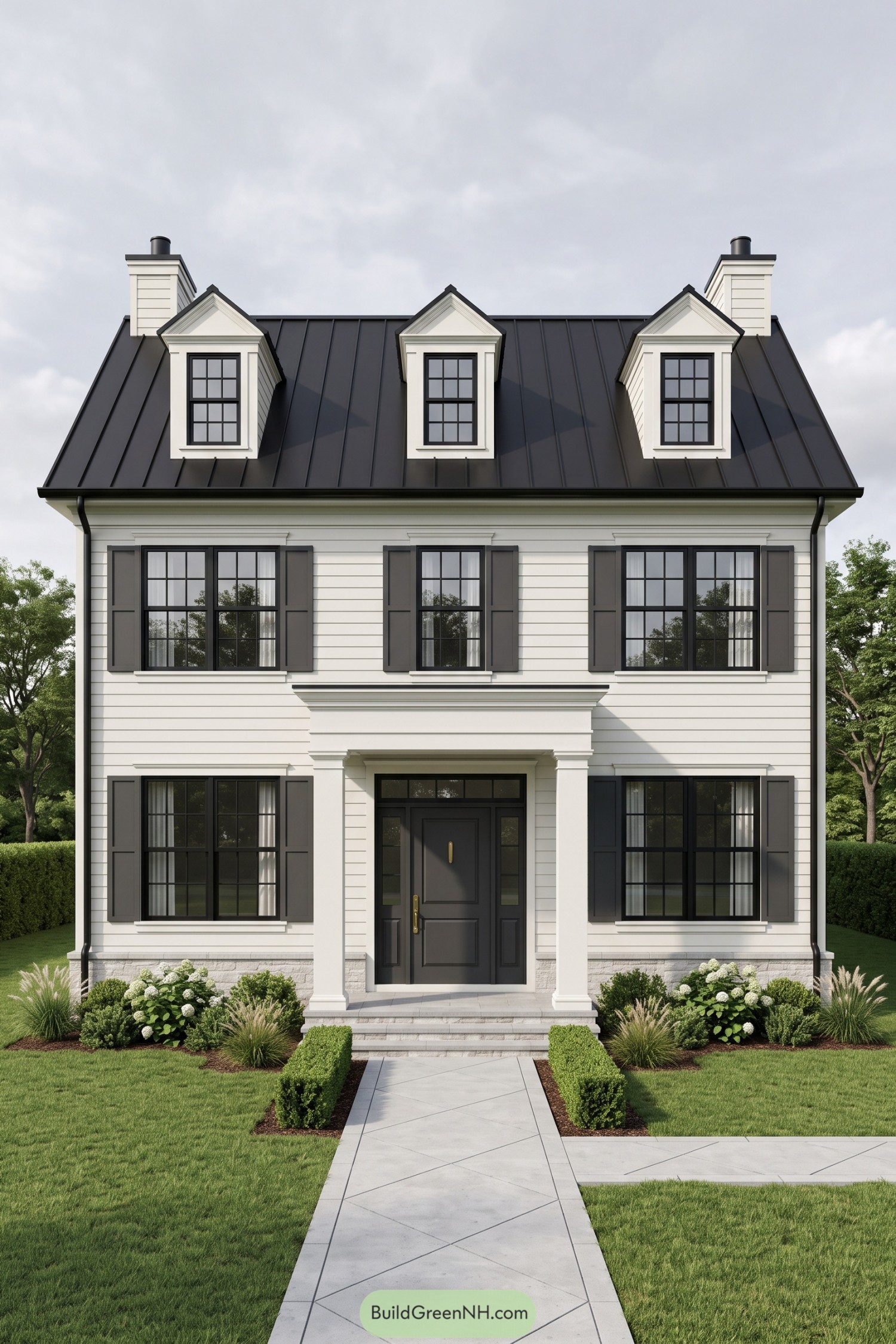 20 Stunning Colonial House Front Elevations to Turn Your Home Into a Neighborhood Legend
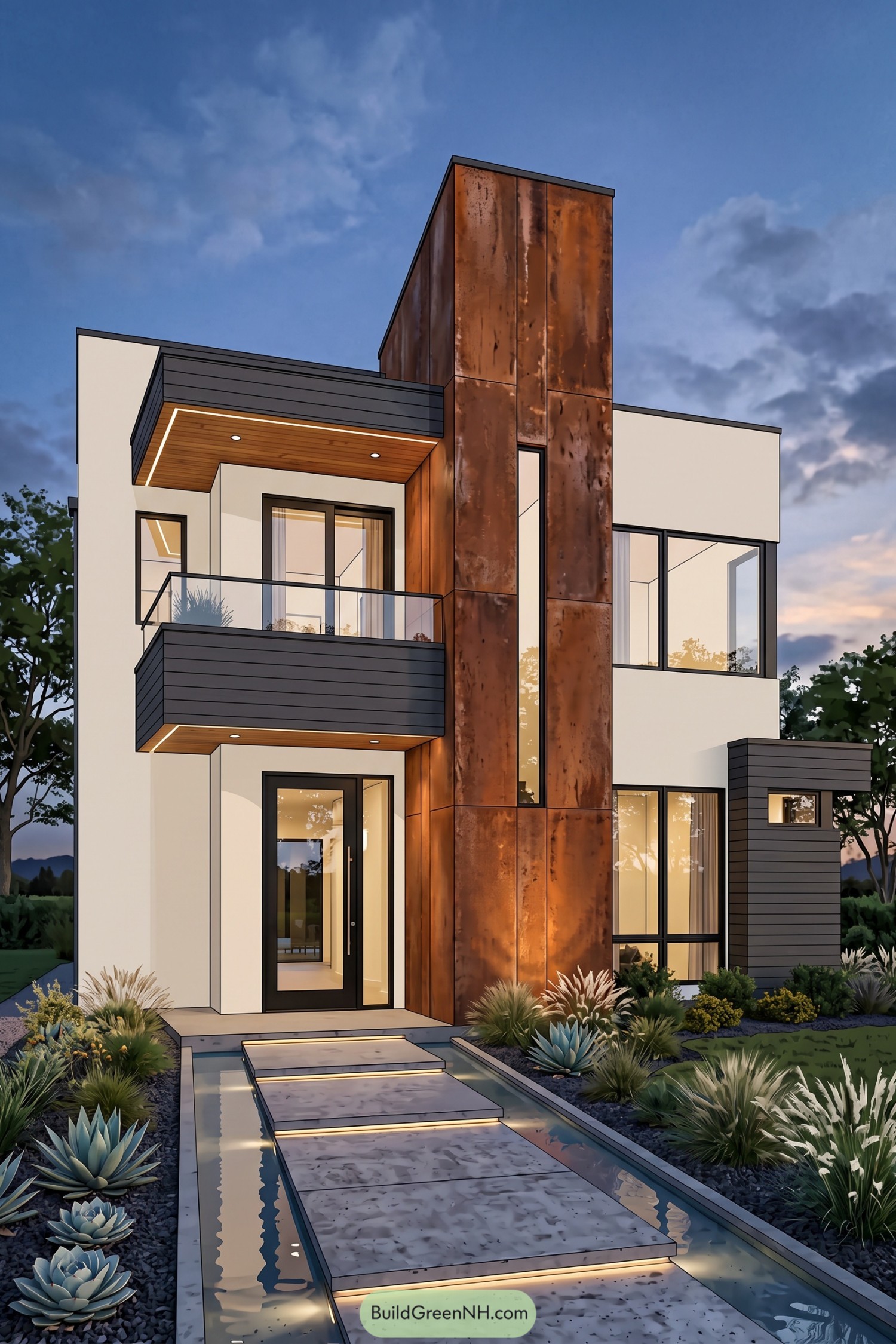 20 Stunning Modern Facade Elevation Designs That Turn Everyday Homes Into Living Art
Table of Contents