Last updated on
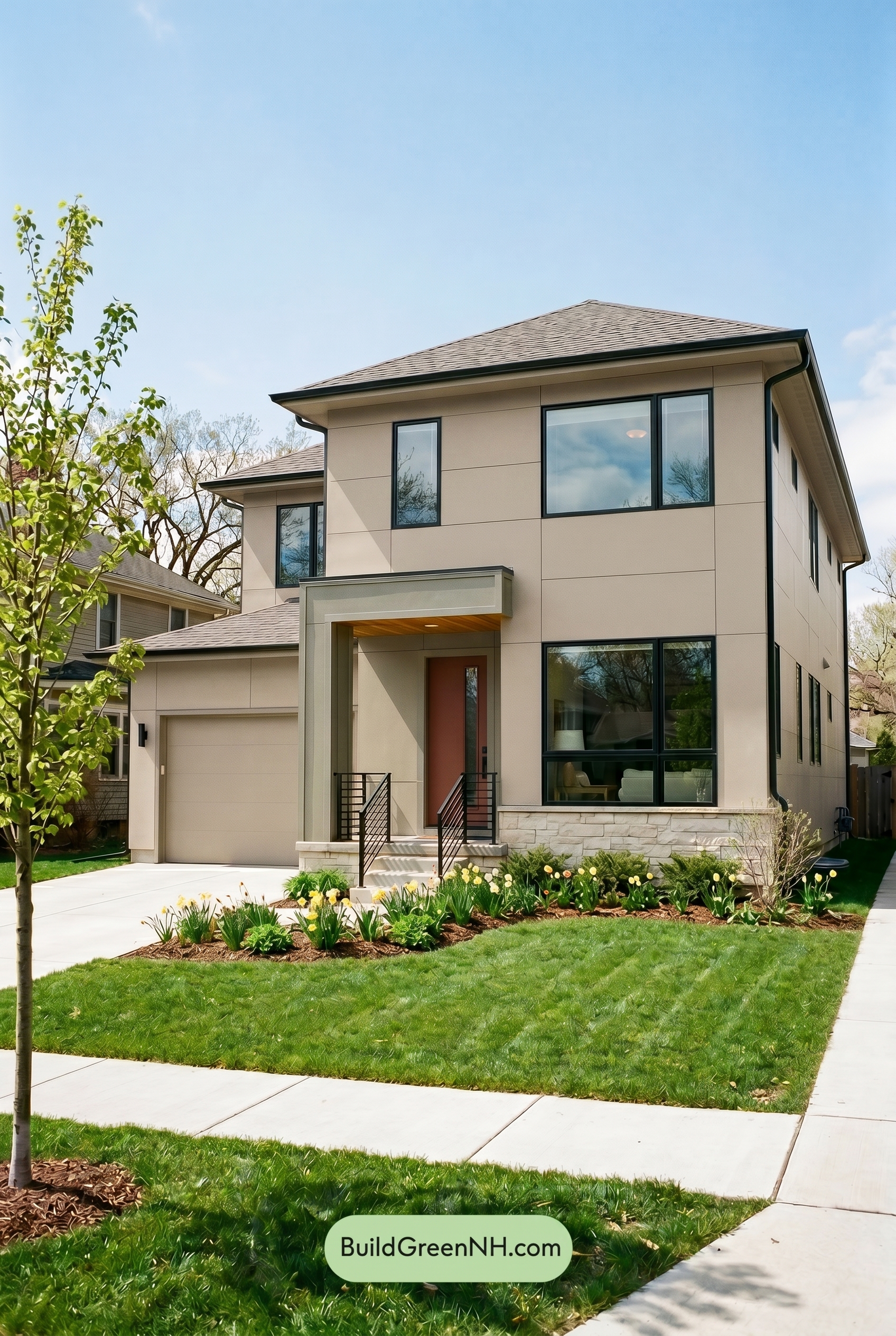

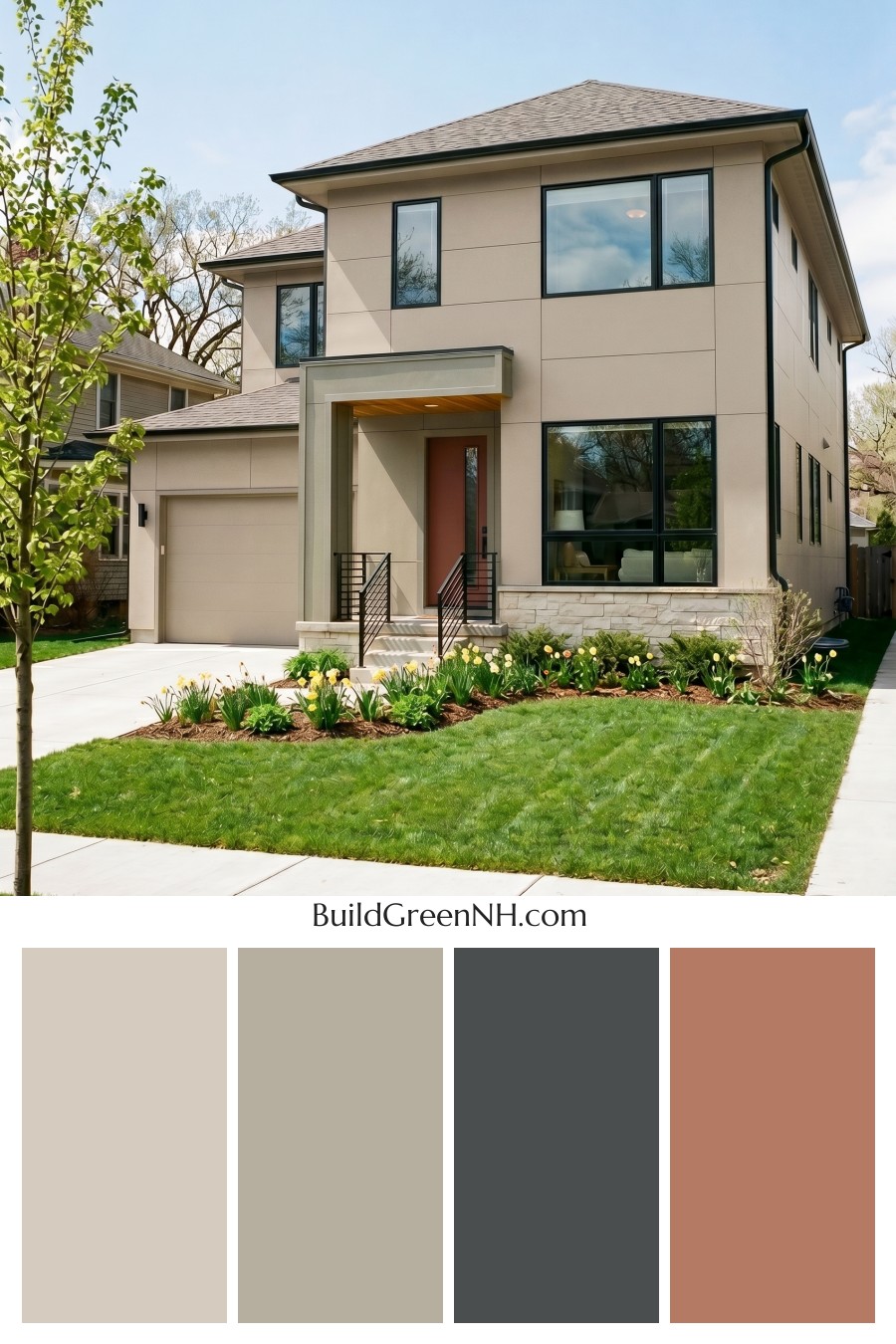
This exterior works beautifully because its layered warm beiges create a calm, modern backdrop while deep gray details add crisp architectural definition.
A Warm, Modern Main Color
The home’s main siding is finished in a soft beige shade that feels clean, approachable, and quietly upscale. Because the tone is warm without feeling heavy, it gives the tall, modern facade a welcoming presence while still keeping the overall look polished.
The broad wall panels make excellent use of this neutral shade. Instead of competing with the home’s sharp lines and large windows, the beige siding lets the architecture stand out in a subtle, confident way.
Layered Beige Trim and Architectural Details
The trim, columns, garage door, and front entry areas stay within the same beige family, which creates a smooth, cohesive exterior. These slightly varied warm neutrals add depth without introducing visual clutter.
The porch columns are especially effective. Their soft beige tone frames the entry beautifully and connects the lower garage area with the taller front facade. The garage door also blends neatly into the composition, keeping attention on the home’s clean lines rather than making the garage the focal point.
Gray Accents for Contrast
The gray window frames and railings bring the perfect amount of contrast. Their deeper shade outlines the large glass areas, giving the home a crisp, contemporary edge against the warmer siding.
The railings echo the window frames, which helps the front steps feel intentional and tied into the rest of the design. This repeated gray accent adds rhythm and structure, especially against the softer beige surfaces.
Roof and Foundation Balance
The roof sits in a muted gray-brown range, bridging the warm beige siding and the cooler gray accents. It feels natural and grounded, rather than stark, which is a smart choice for a home with both modern lines and a leafy neighborhood setting.
At the base, the light stonework adds texture and a gentle cream-toned contrast. It keeps the lower portion of the house from feeling flat and pairs nicely with the warm neutral palette above.
The Overall Mood
This color scheme feels fresh, balanced, and quietly sophisticated. The beige shades bring warmth and comfort, while the gray accents provide definition and a modern finish.
What makes the palette so successful is its restraint. Nothing shouts, but every element has a purpose. The result is a welcoming contemporary exterior that feels timeless, calm, and beautifully put together.
Next, see how this color scheme looks under different lighting simulations throughout the day.
Overcast
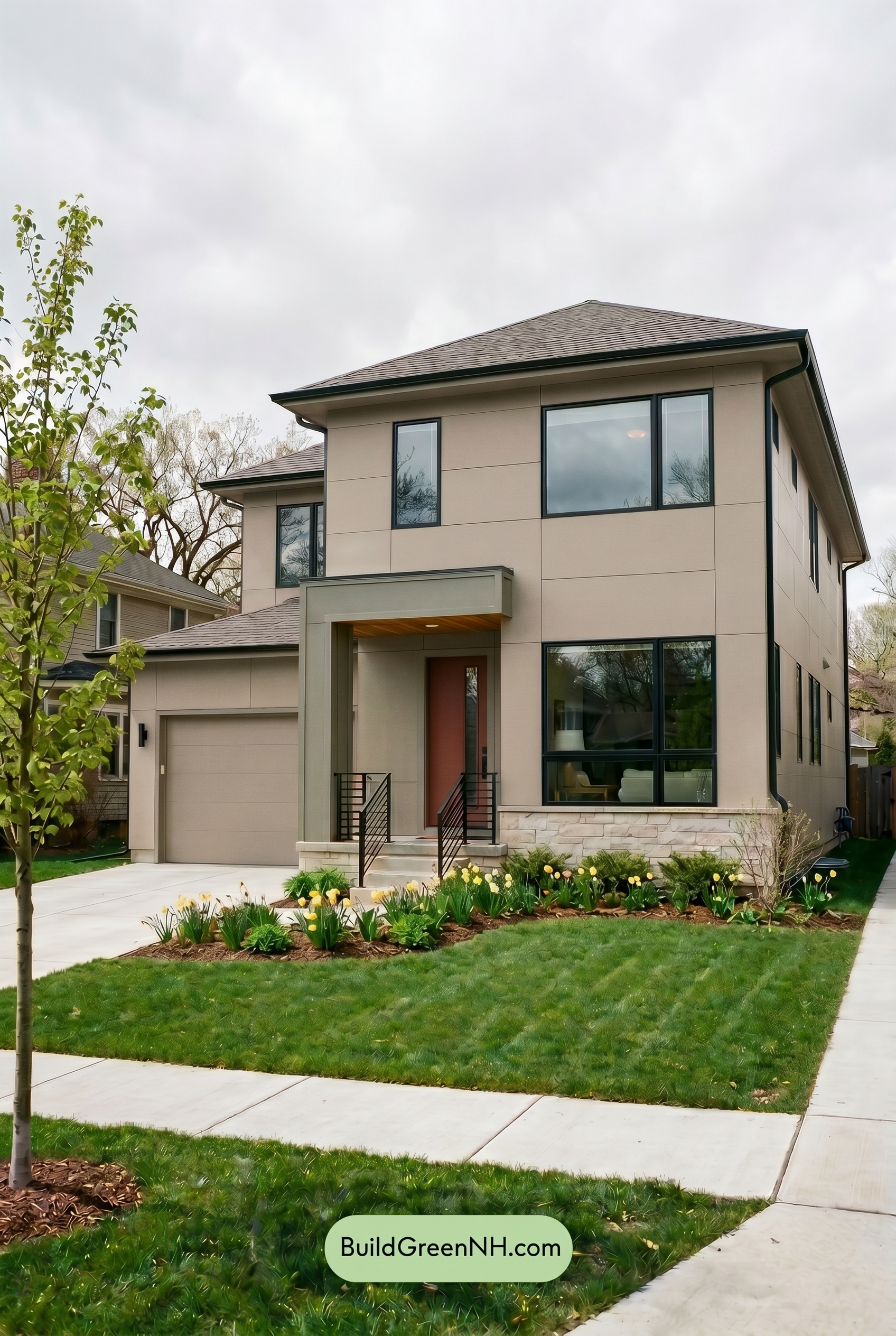
Under overcast light, the beige family on the main walls, trim, columns, door, and garage reads softer and slightly cooler than it would in neutral daylight. The warmth becomes more muted, saturation drops a touch, and the broad surfaces feel calm and velvety rather than sunlit and crisp.
The gray shades on the window frames and railings appear a bit deeper, while shadows spread more evenly across the facade, reducing sharp contrast. This gives the home a quieter, more refined mood, with the beige and gray families blending gently instead of standing apart dramatically.
Golden Hour
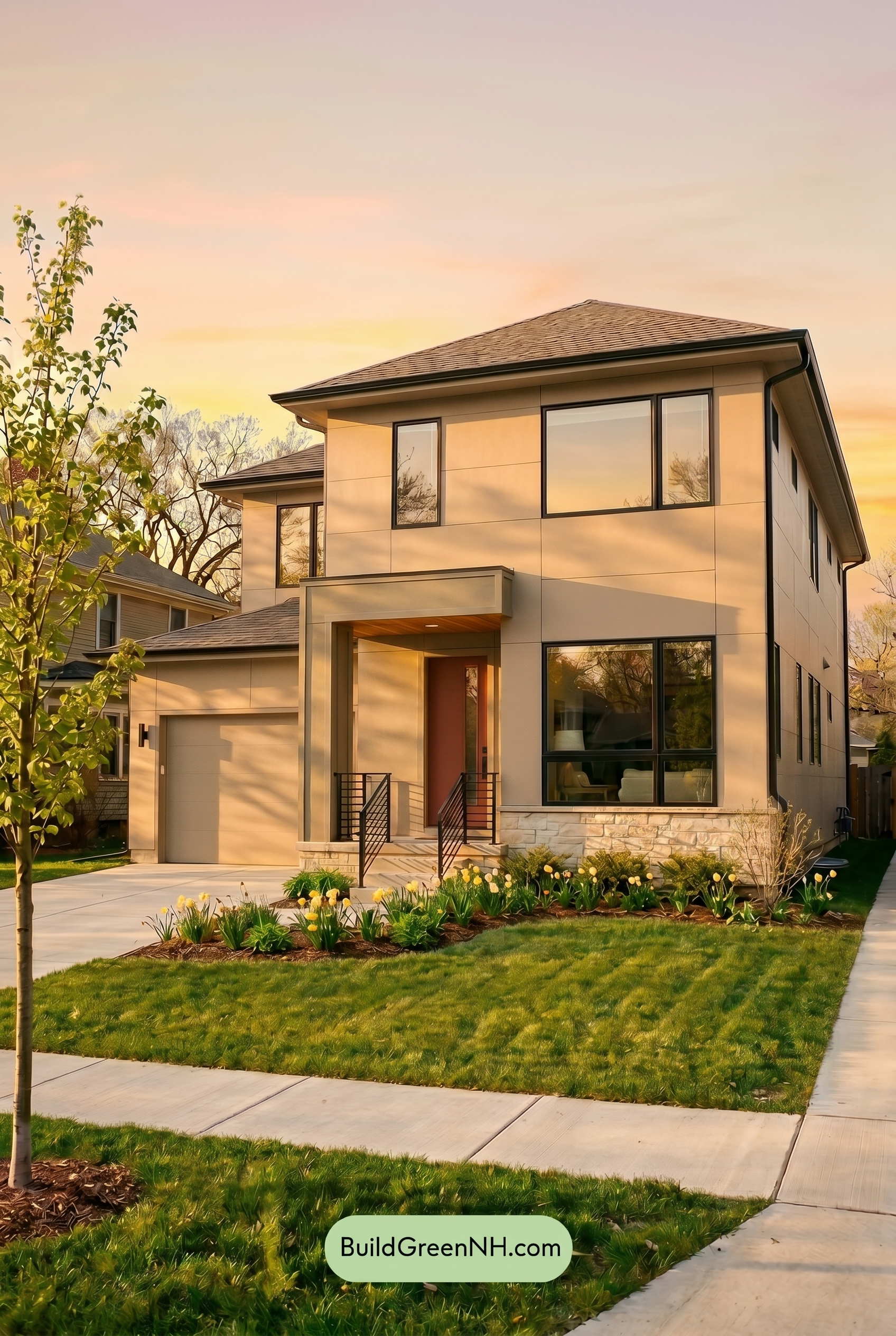
Golden Hour gives the home’s beige family a richer, more saturated glow than it would have in neutral daylight. The main walls, trim, columns, front door, and garage door all feel warmer and softer, shifting from a clean neutral look toward a sun-washed, inviting shade with gentle depth.
The gray family on the window frames and railings appears darker and more defined as long shadows stretch across the façade. This increases contrast against the warmed beige surfaces, creating a mood that feels cozy, dimensional, and elegant compared to the flatter, more balanced effect of midday light.
Shade
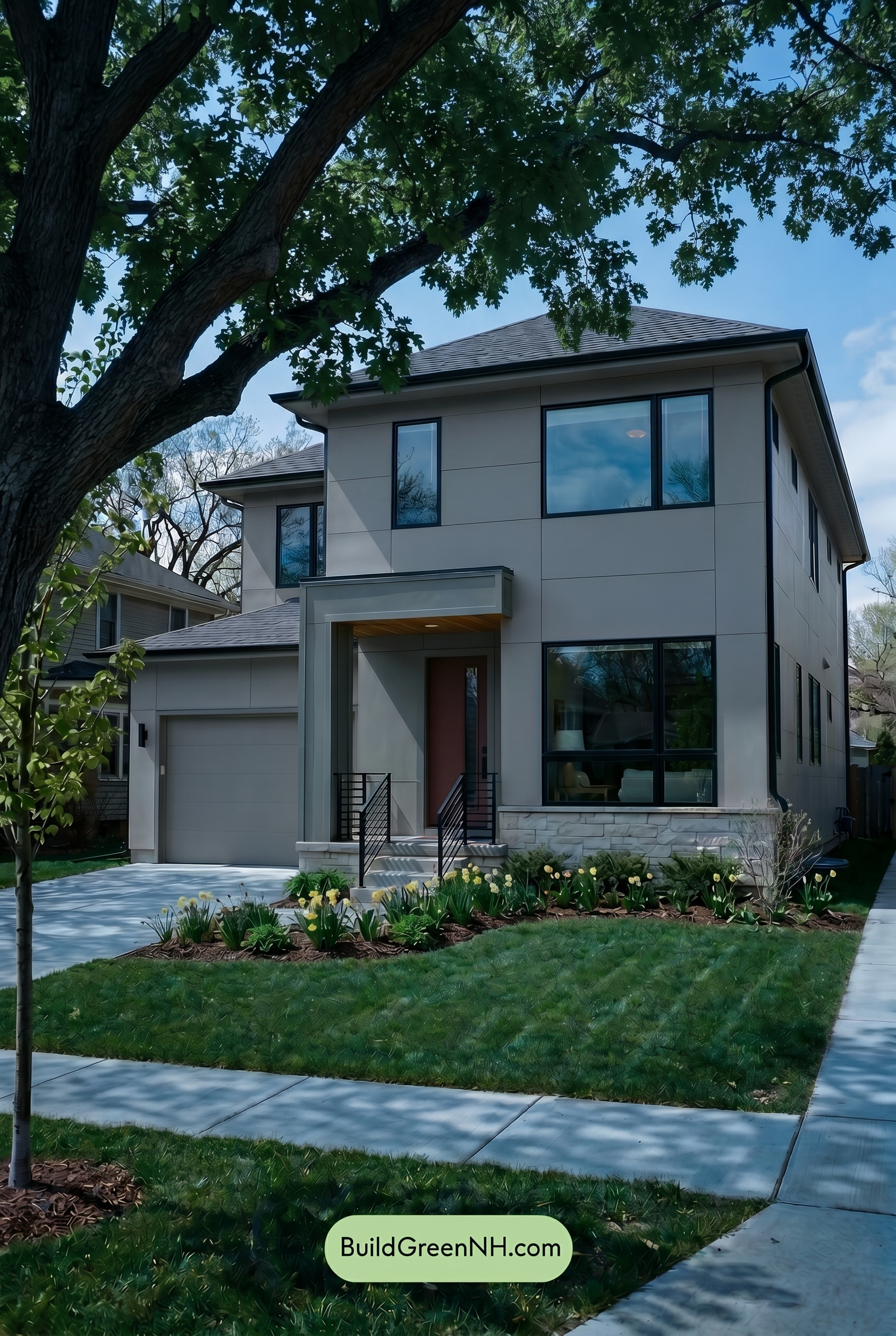
In shade, the beige family on this exterior loses some sunny warmth and reads softer, cooler, and slightly more subdued than it would in neutral daylight. Saturation drops a touch, so the lighter beige shades feel calm and misty rather than bright, while leaf-cast shadows create gentle depth across the surfaces.
The gray family accents gain definition in the shade, appearing crisper and darker against the softened warm neutrals. Contrast becomes moodier but still refined, with pockets of shadow making the overall palette feel quieter, more modern, and sheltered compared with the cleaner balance of neutral daylight.
Nighttime
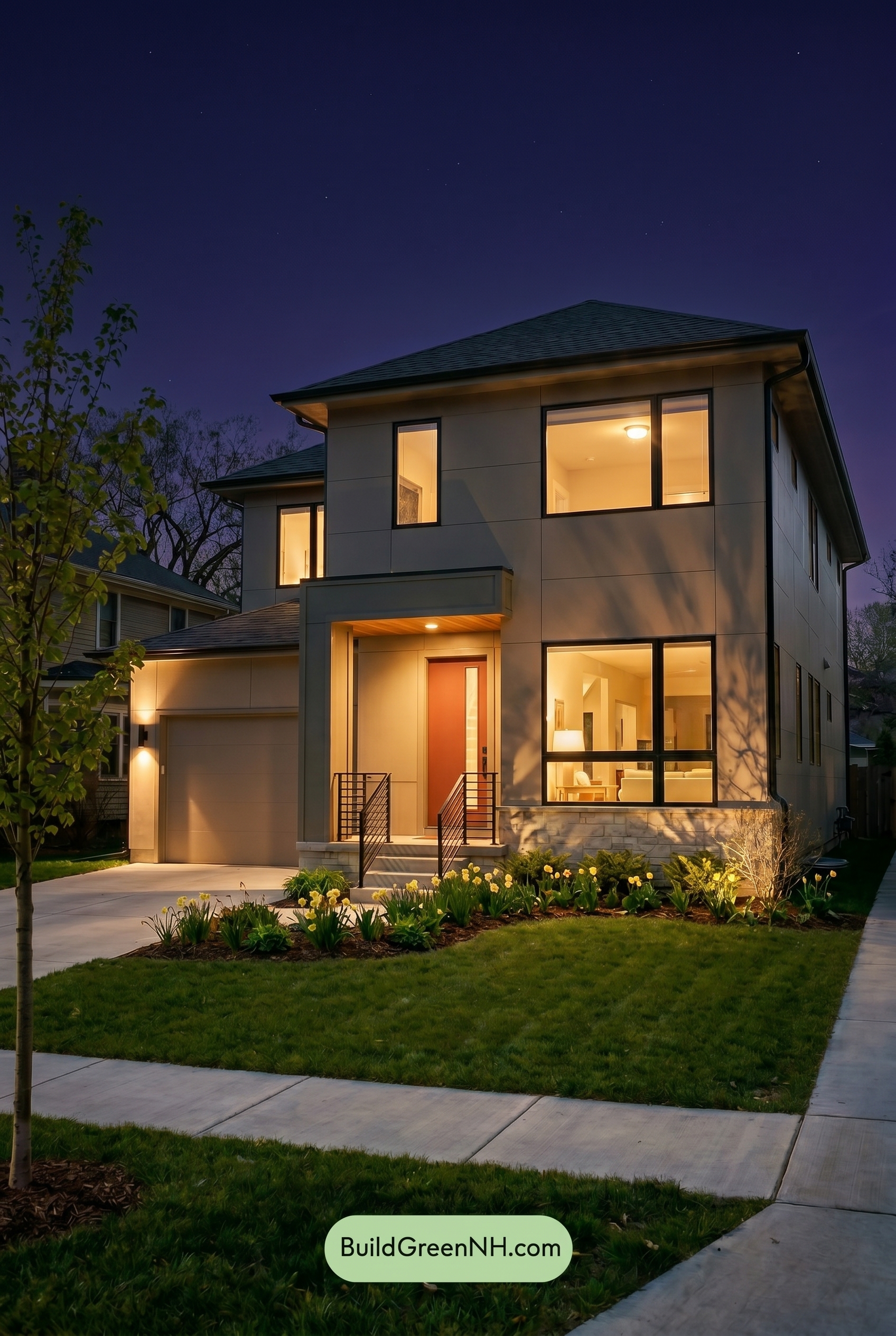
At night, the beige family on the walls, trim, columns, and garage door shifts warmer and more saturated wherever the exterior and interior lights spill across it. Compared to neutral daylight, these warm neutrals feel softer and richer, with golden highlights that make the façade look more inviting.
The gray shades on the window frames and railings deepen into stronger, darker accents, creating sharper contrast against the illuminated beige surfaces. Shadows stretch across the exterior, cooling the unlit areas and adding a calmer, more dramatic mood than the cleaner, more balanced look of daylight.
Pin these for later
Want More?
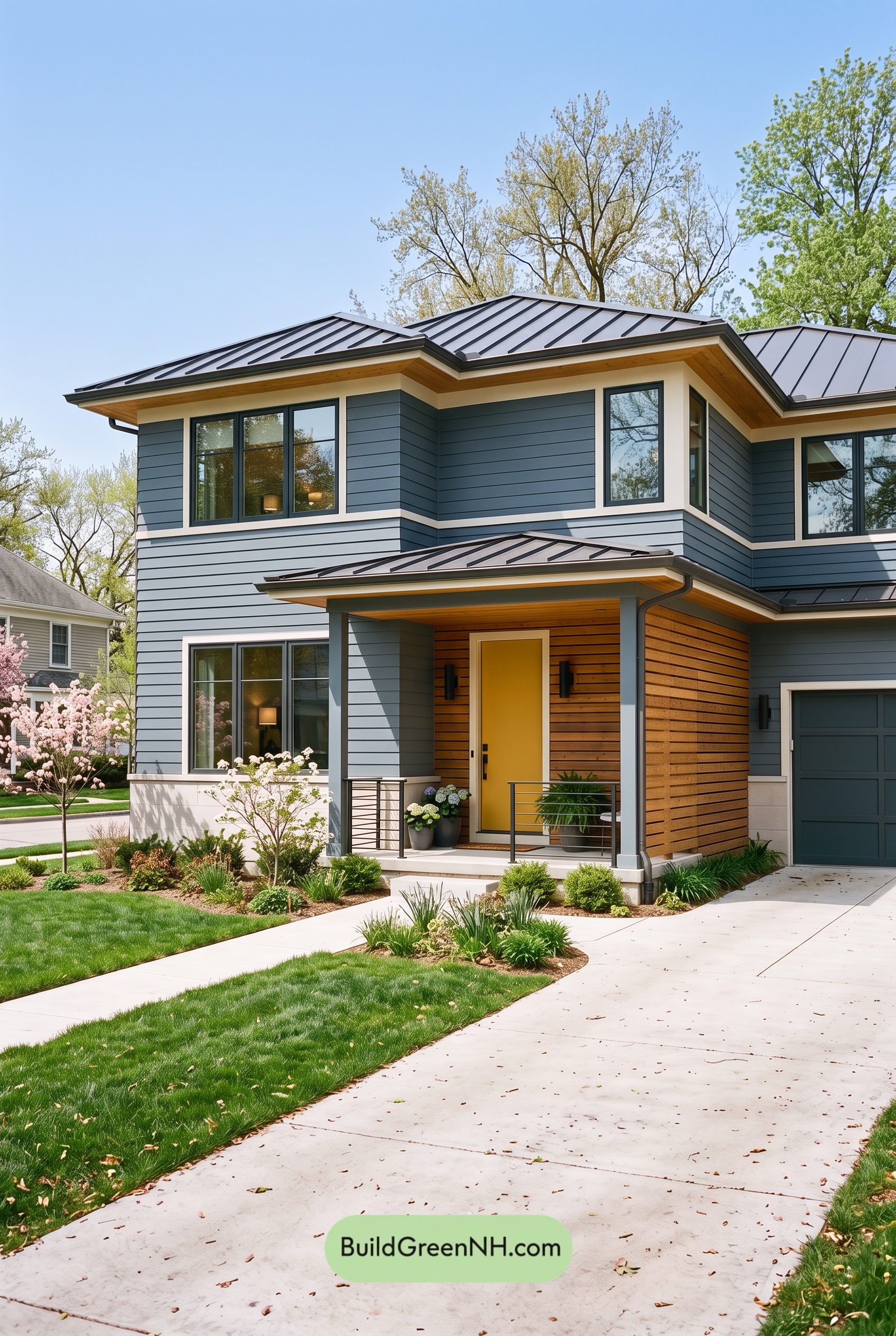 Blue House Front Door Color Scheme: Harbor Saffron
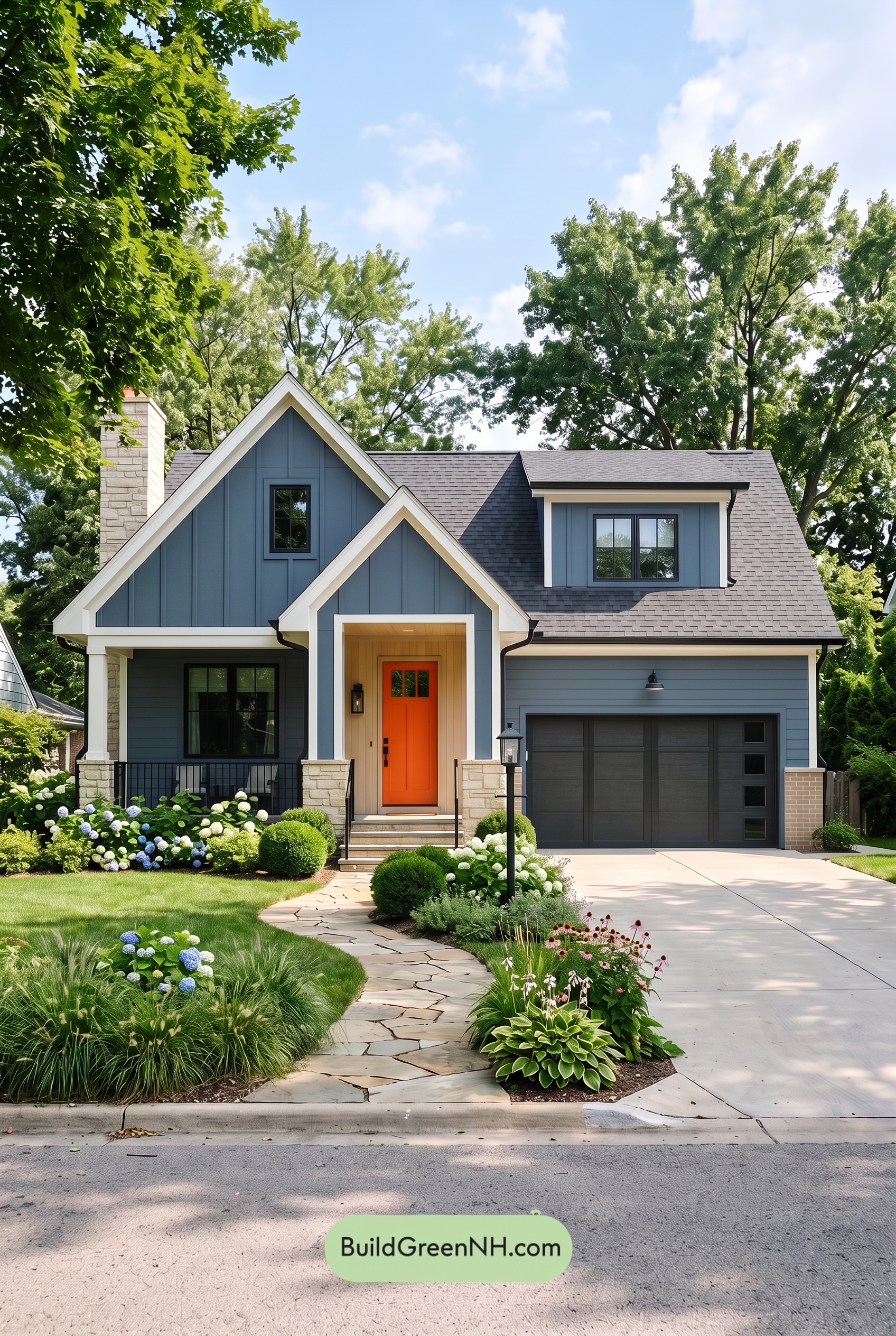 Blue House Front Door Color Scheme: Cobalt Persimmon
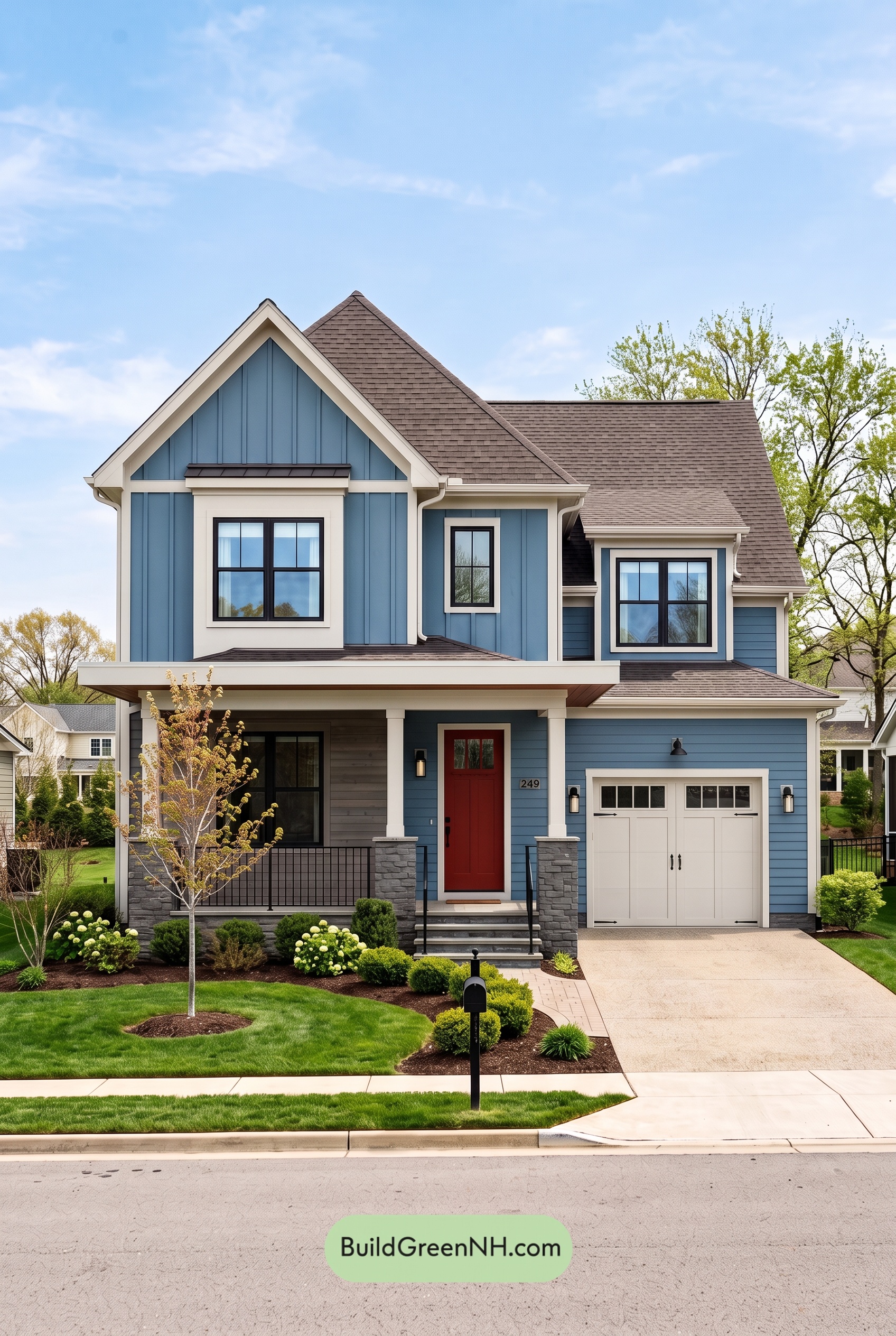 Blue House Front Door Color Scheme: Denim Poppy
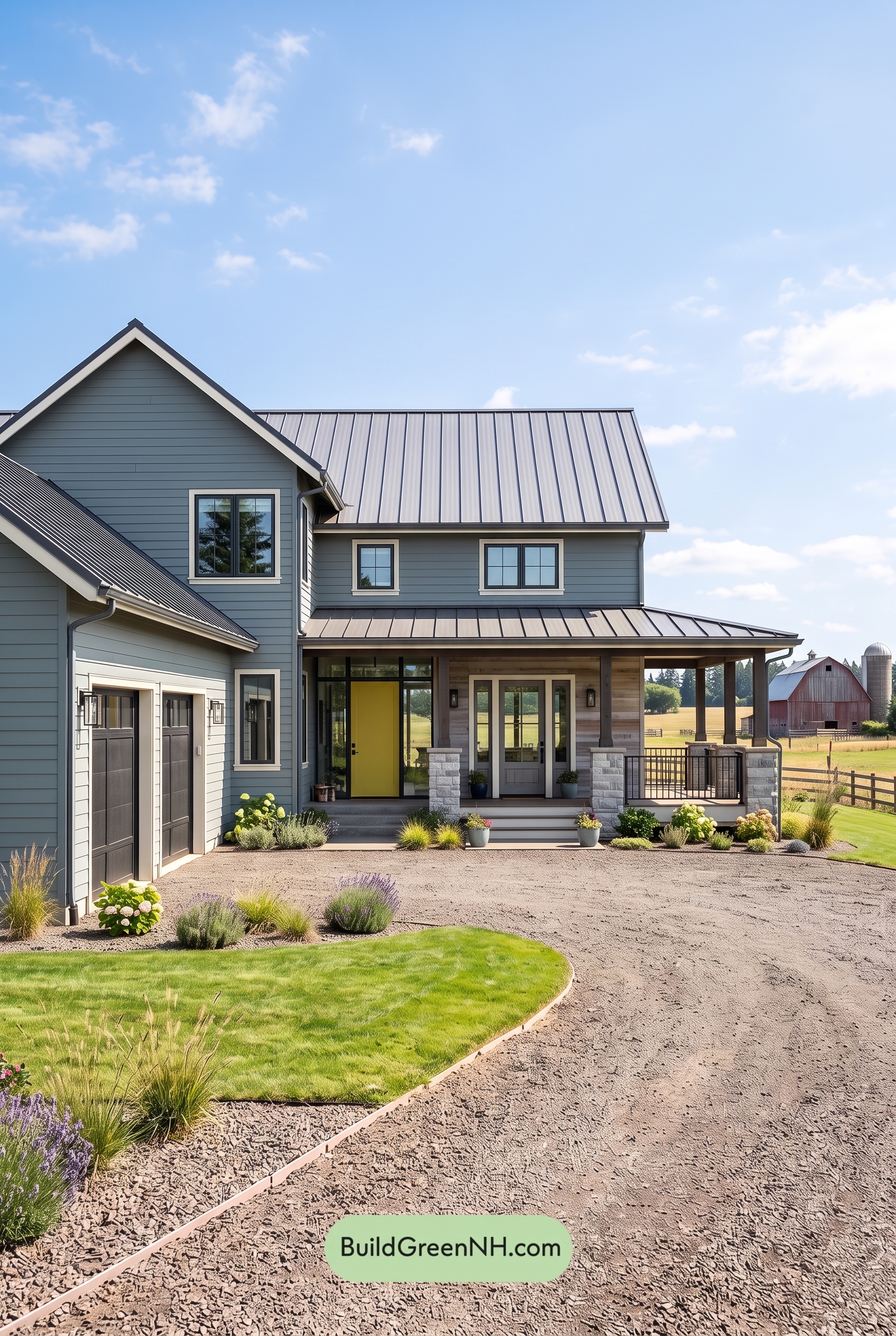 Blue House Front Door Color Scheme: Slate Citron
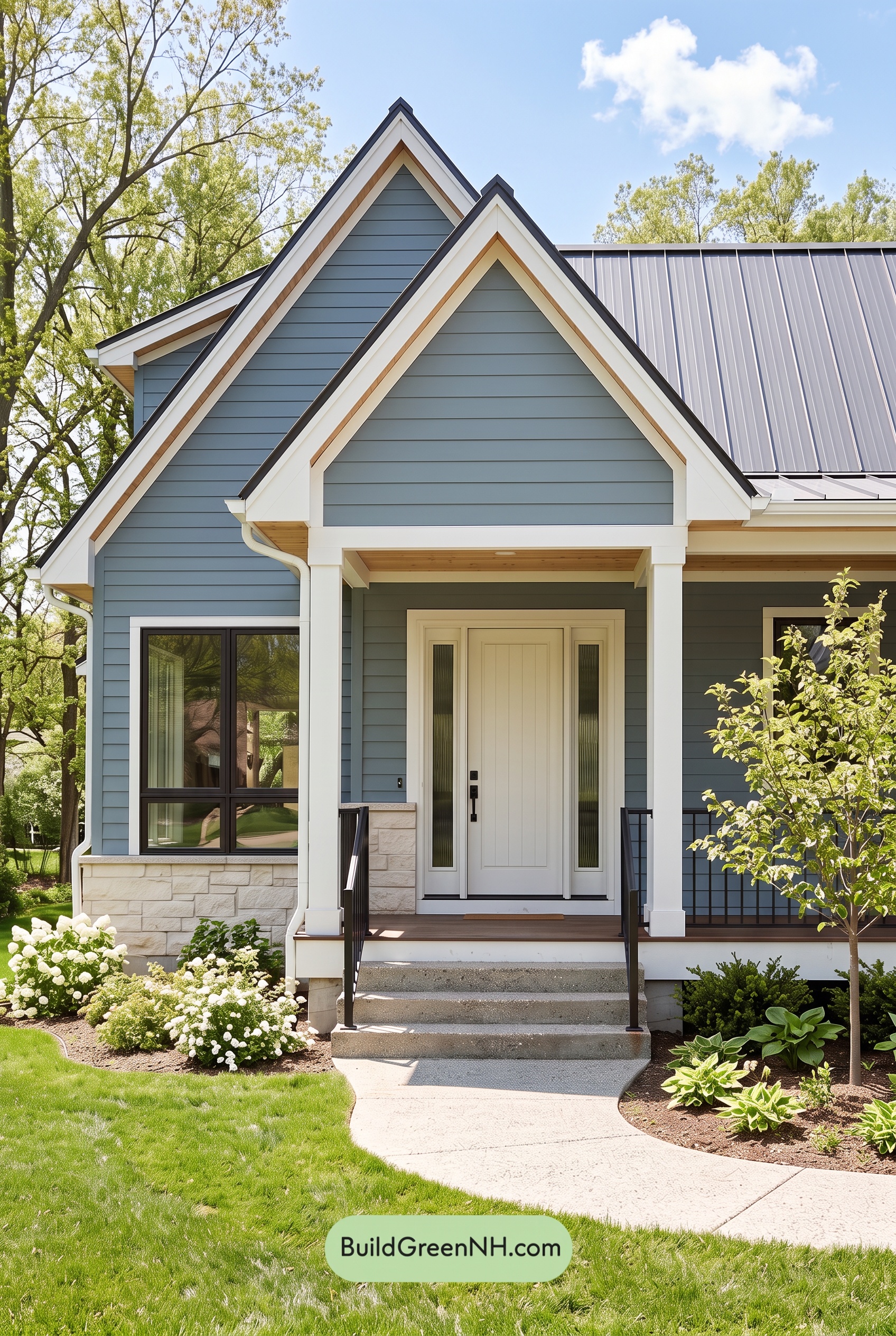 Blue House Front Door Color Scheme: Mist Blue Haven
Table of Contents