Last updated on
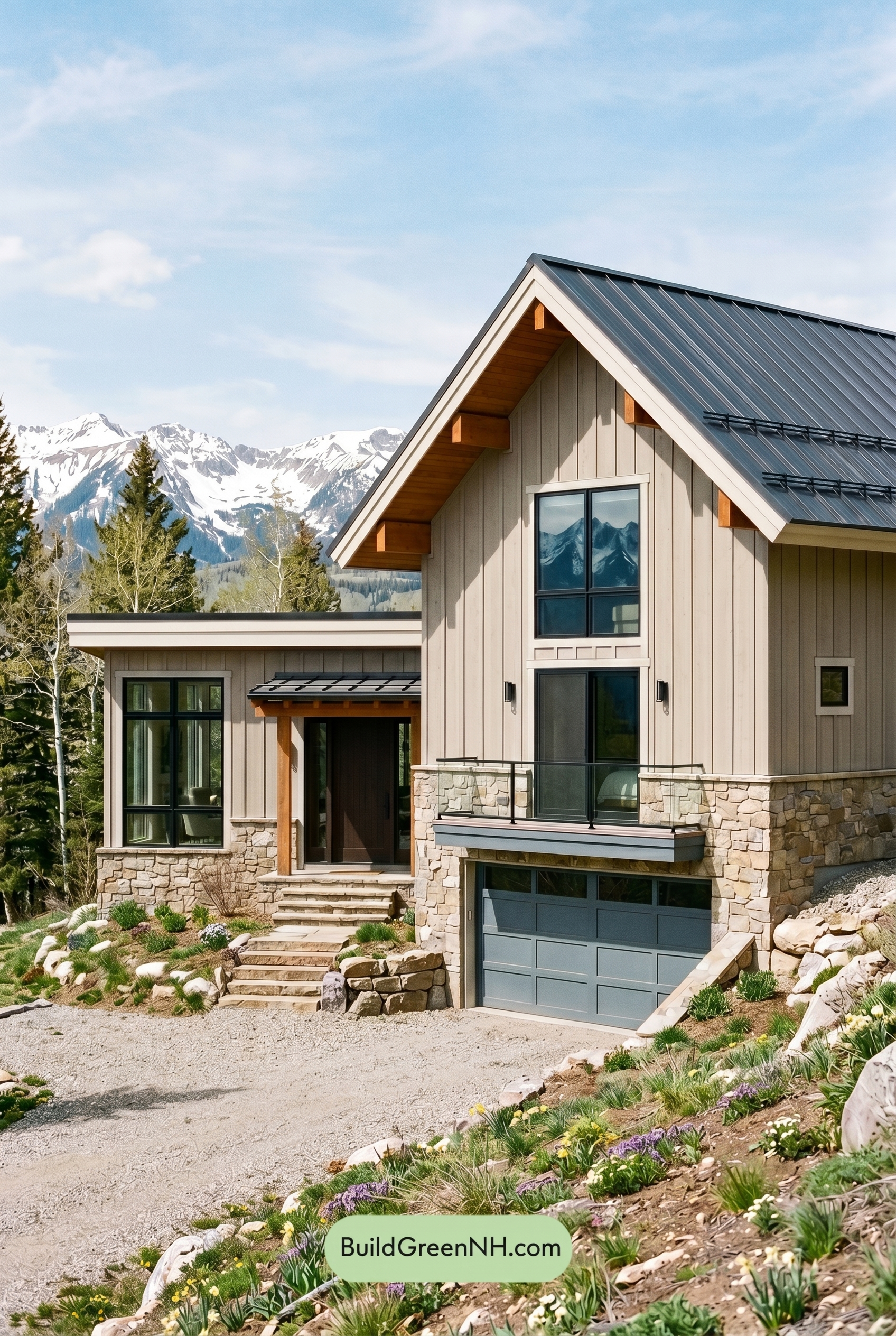

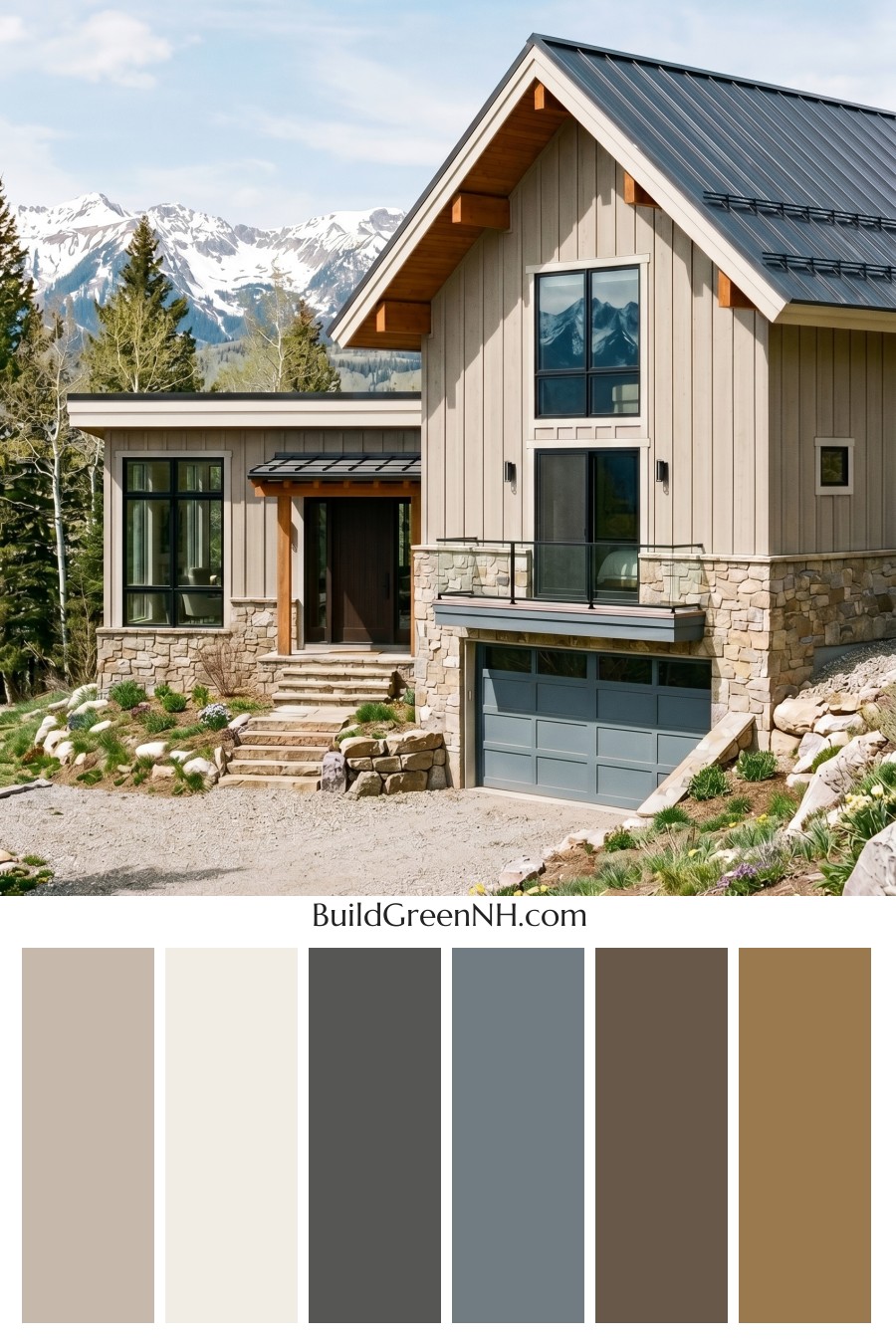
This exterior works beautifully because its warm beige body, cool gray details, and rich brown accents feel both mountain-rugged and polished.
A Warm Beige Base That Fits the Landscape
The main siding is finished in a soft beige shade that gives the home an easy, natural warmth. Because the siding is vertical, the color feels especially clean and architectural, stretching the eye upward toward the steep roofline and making the house feel tall, crisp, and settled into its mountain setting.
The trim stays within the beige family as well, creating a tone-on-tone look rather than a high-contrast outline. This is a smart choice for a home with strong rooflines and large windows. The lighter beige trim frames the gables, windows, and edges with definition, but it does not interrupt the calm, earthy mood.
Cool Gray Details Add Modern Structure
The gray window frames bring in a sleek, contemporary edge. Against the warm beige siding, this deeper gray shade feels grounded and refined. It also connects beautifully with the dramatic metal roof, which appears in a dark charcoal-gray shade that gives the entire exterior a strong, protective cap.
The railings continue the gray family in a slim, understated way. Their darker tone keeps the balconies and porch areas feeling crisp without adding visual clutter. The garage door also sits in the gray family, using a softer medium gray shade that balances the darker roof and window frames while keeping the lower level cohesive.
Brown Accents Bring Warmth and Character
The front door and structural columns introduce a rich brown family that makes the entry feel inviting. These warm wood-like shades are especially effective because they sit between the beige siding and gray accents, acting as a natural bridge between soft warmth and cool modern contrast.
Under the gables, the brown accents add depth and a handcrafted feel. They make the home feel less stark and more welcoming, which is exactly what this type of mountain-inspired exterior needs. The front door, in a deeper brown shade, gives the entry a sense of weight and presence.
Why the Palette Works So Well
This color scheme succeeds because it keeps the largest surfaces calm and neutral, then uses darker shades where the architecture needs emphasis. The beige siding and trim provide warmth and softness. The gray roof, windows, railings, and garage door sharpen the design. The brown door and columns add personality.
The result is a balanced exterior that feels modern without being cold, rustic without being heavy, and elegant without trying too hard. It pairs naturally with stonework, mountain views, evergreen trees, and rocky landscaping, making the whole home feel rooted in its surroundings.
It is a quietly confident palette: warm beige for comfort, layered grays for structure, and rich brown accents for charm. Together, they create a home exterior that feels timeless, relaxed, and beautifully suited to its setting.
Next, see how this color scheme looks under different lighting simulations throughout the day.
Overcast
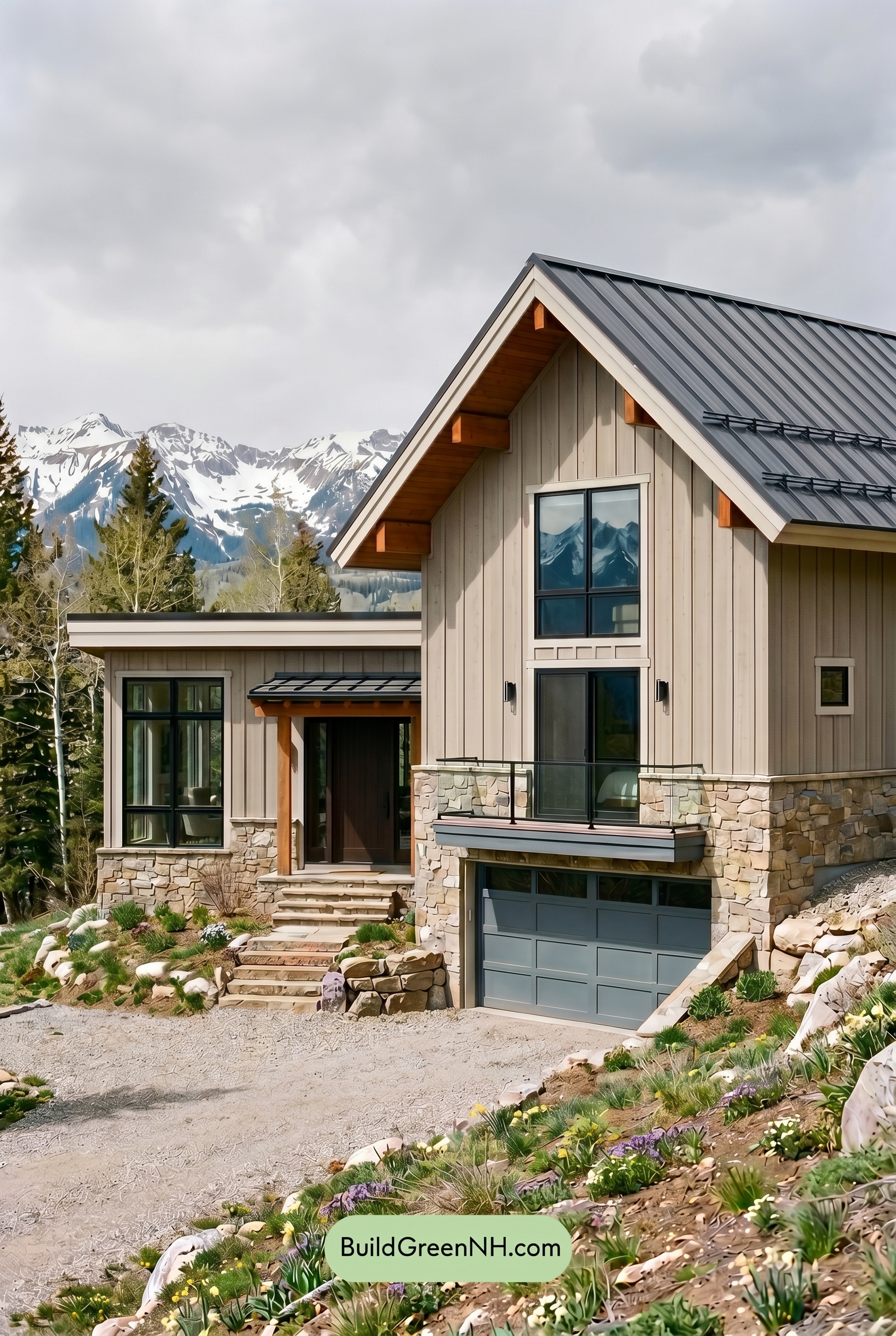
Under overcast lighting, the beige family on the main walls and trim appears less golden than it would in neutral daylight, with its warmth gently muted and its saturation softened. Shadows become broader and lighter, so the vertical siding reads smoother and calmer, while the brown shades in the door, columns, and covered areas feel richer but less sun-warmed.
The gray family on the roof, window frames, railings, and garage door tends to deepen slightly in cloudy conditions, creating a cooler, steadier contrast against the softened beige shades. Overall, the house shifts from crisp and sunlit to more relaxed and grounded, with lower contrast, quieter highlights, and a cozy mountain mood.
Golden Hour
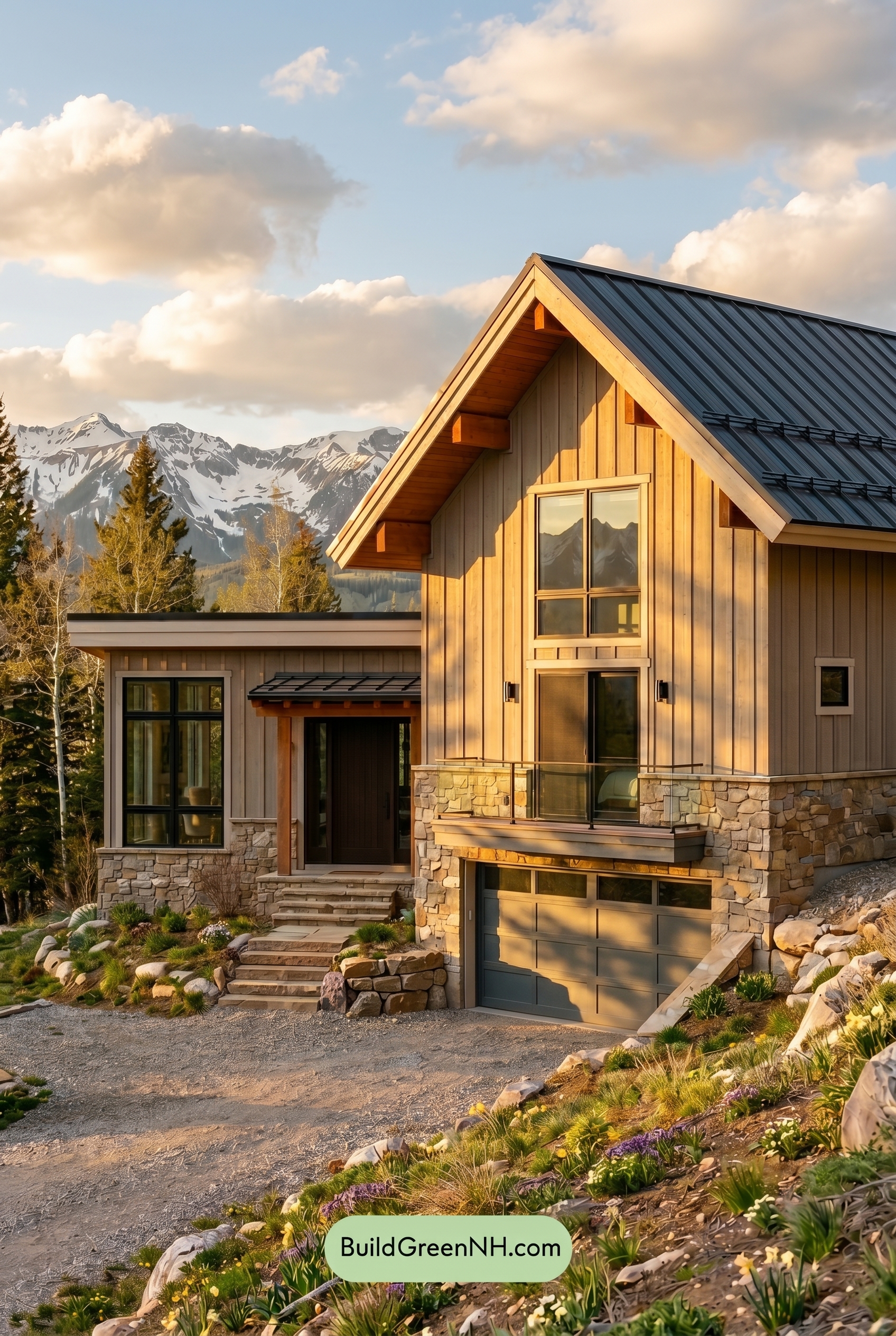
Under Golden Hour light, the beige siding and trim take on a richer, warmer glow than they would in neutral daylight, feeling softer and more saturated. The brown door and columns deepen beautifully, picking up a honeyed warmth that makes the entry feel more inviting.
The gray window frames, railings, and garage door appear less cool and more grounded as the low sun adds warmth across their surfaces. Longer shadows create stronger contrast on the façade, giving the exterior more depth, texture, and a cozy mountain-lodge mood compared with the flatter, clearer look of neutral daylight.
Shade
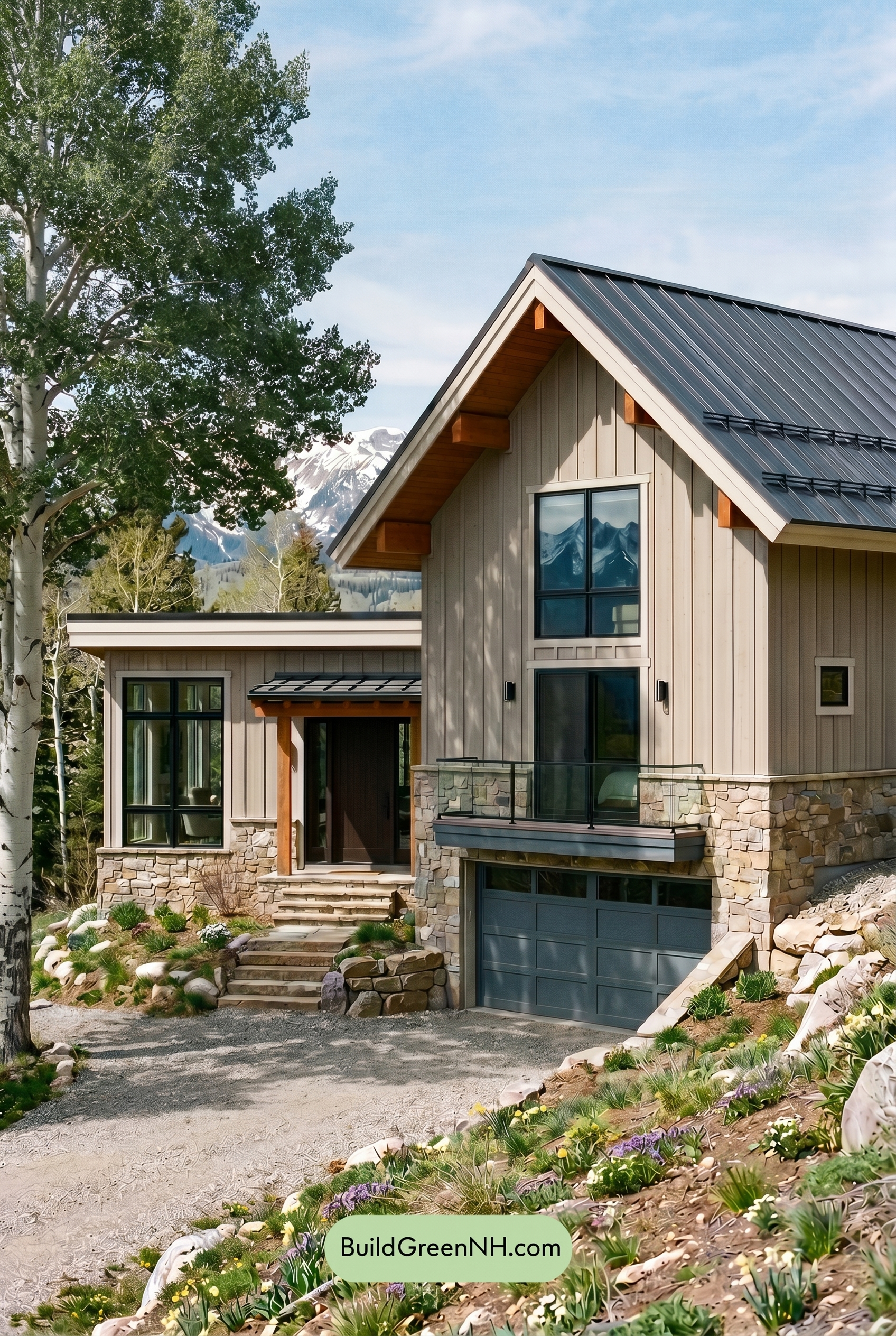
In shade, the beige family on the main walls and trim appears softer and a touch cooler than it would in neutral daylight, with less golden warmth and slightly muted saturation. Shadows settle into the vertical siding, making the surface feel deeper and quieter while reducing the crisp brightness of the lighter edges.
The gray family on the window frames, railings, and garage door gains a moodier, more grounded presence in shade, creating stronger contrast against the softened beige. The brown family on the front door and columns feels richer but less sun-warmed, giving the exterior a calm, woodland-inspired mood rather than the brighter, more open feel of neutral daylight.
Nighttime
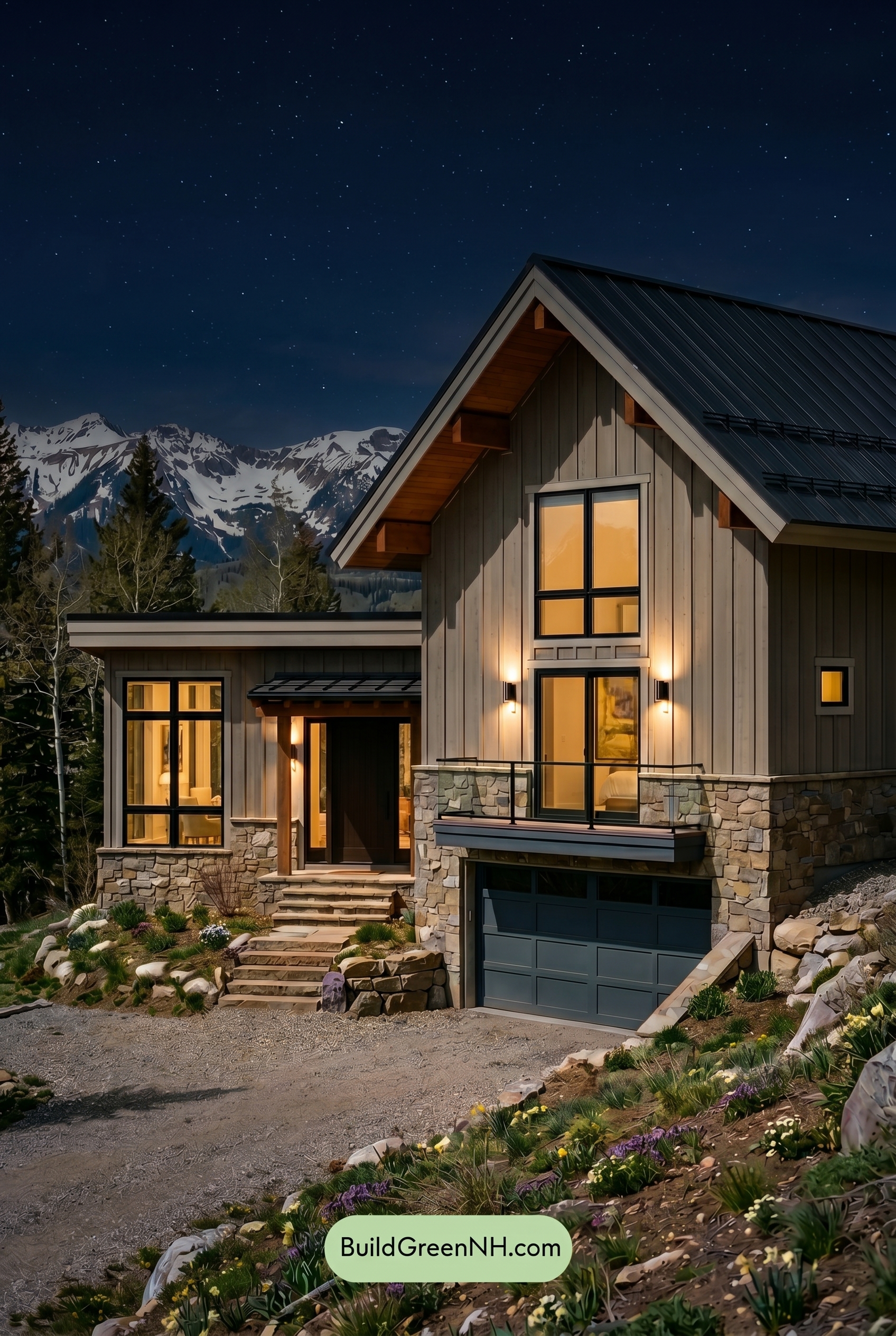
Under nighttime lighting, the beige siding and trim shift away from their balanced daylight look, becoming softer and warmer where the wall lights glow, while shaded areas feel deeper and less saturated. This creates a gentle push and pull across the façade, with the lighter neutral shades appearing cozy near the windows and more muted along the rooflines.
The gray window frames, railings, and garage door gain stronger contrast after dark, reading as deeper gray shades against the warm illuminated walls. Brown accents on the door and columns feel richer and more amber-toned, giving the home a welcoming, lodge-like mood that feels more dramatic and intimate than it would in neutral daylight.
Pin these for later
Want More?
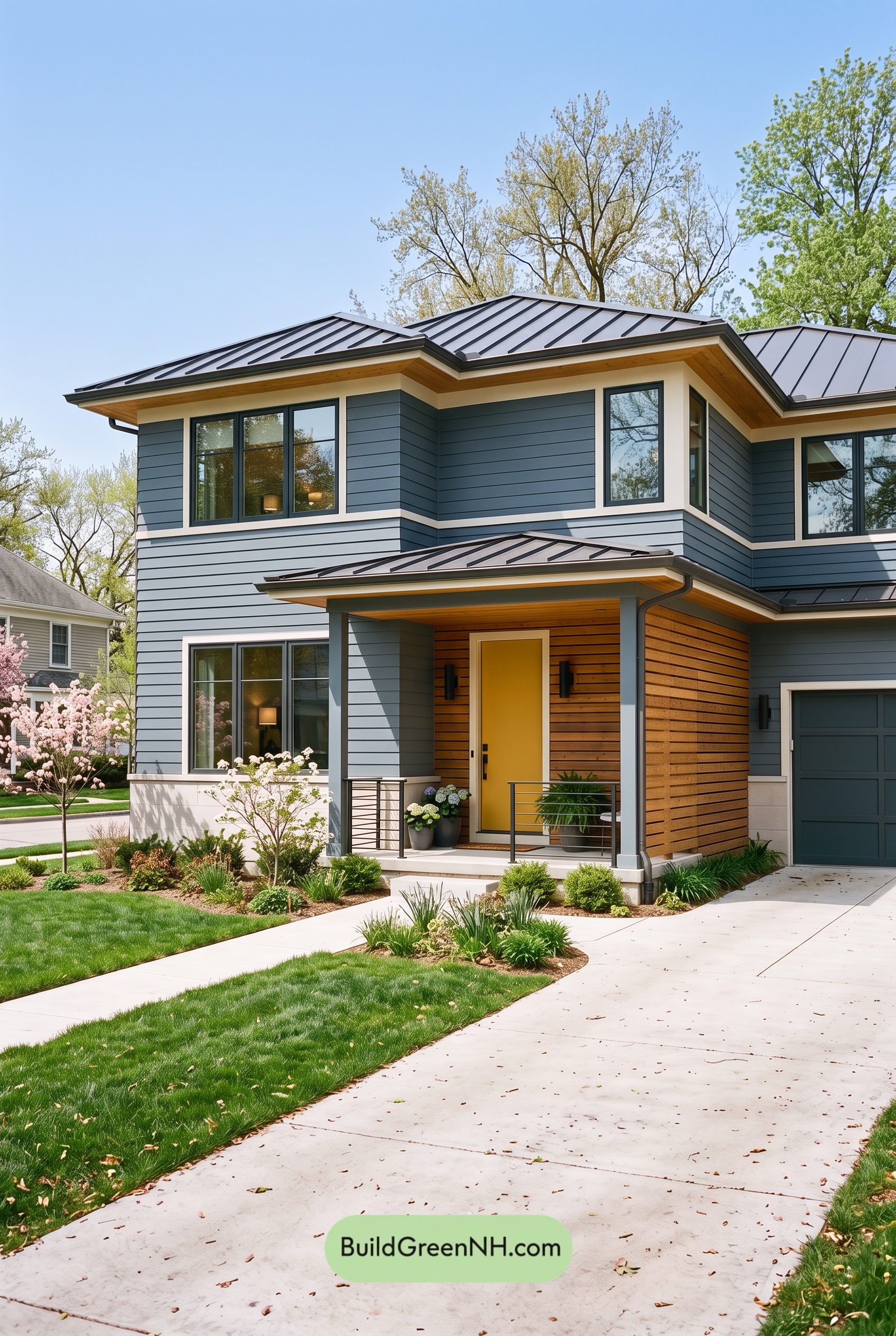 Blue House Front Door Color Scheme: Harbor Saffron
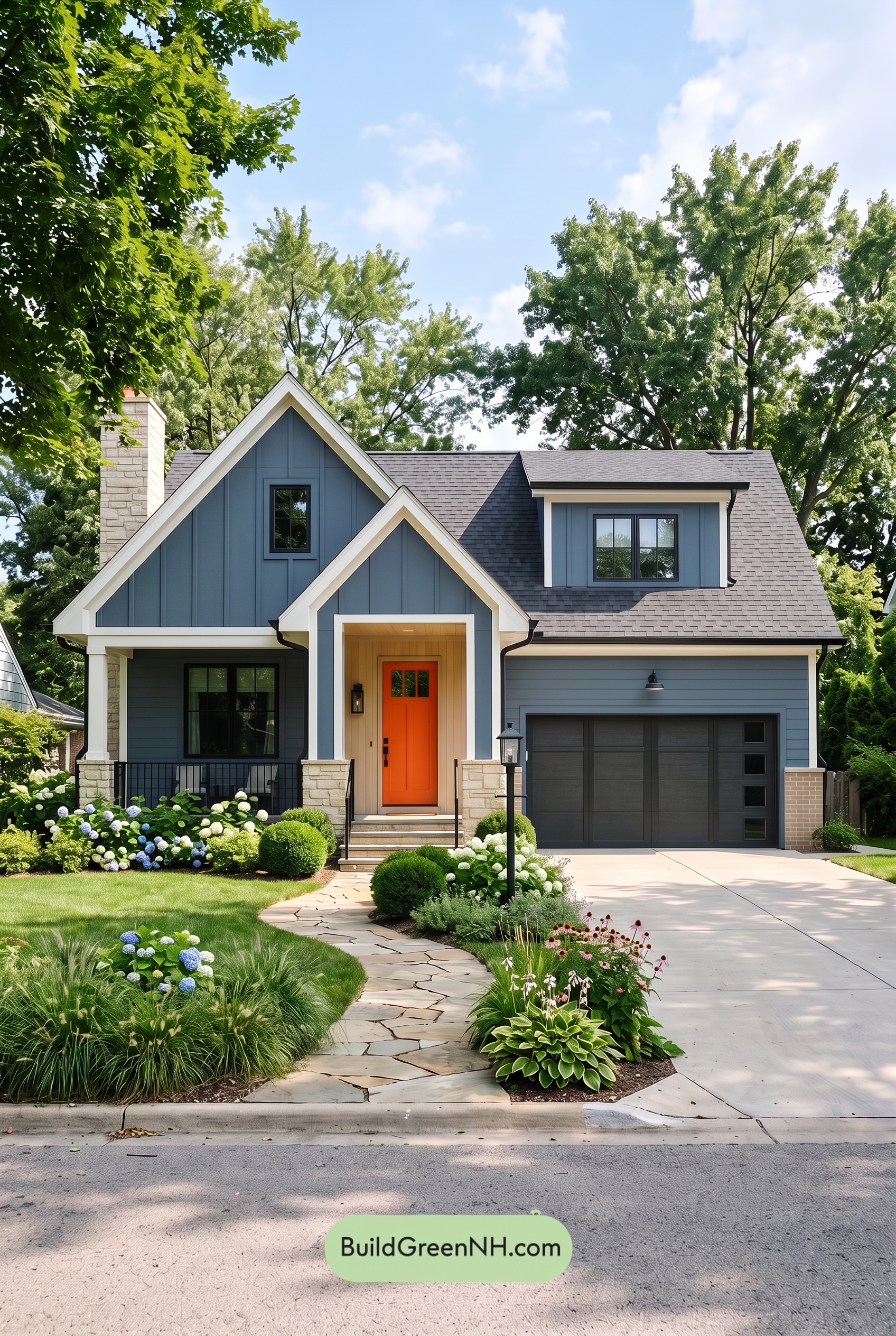 Blue House Front Door Color Scheme: Cobalt Persimmon
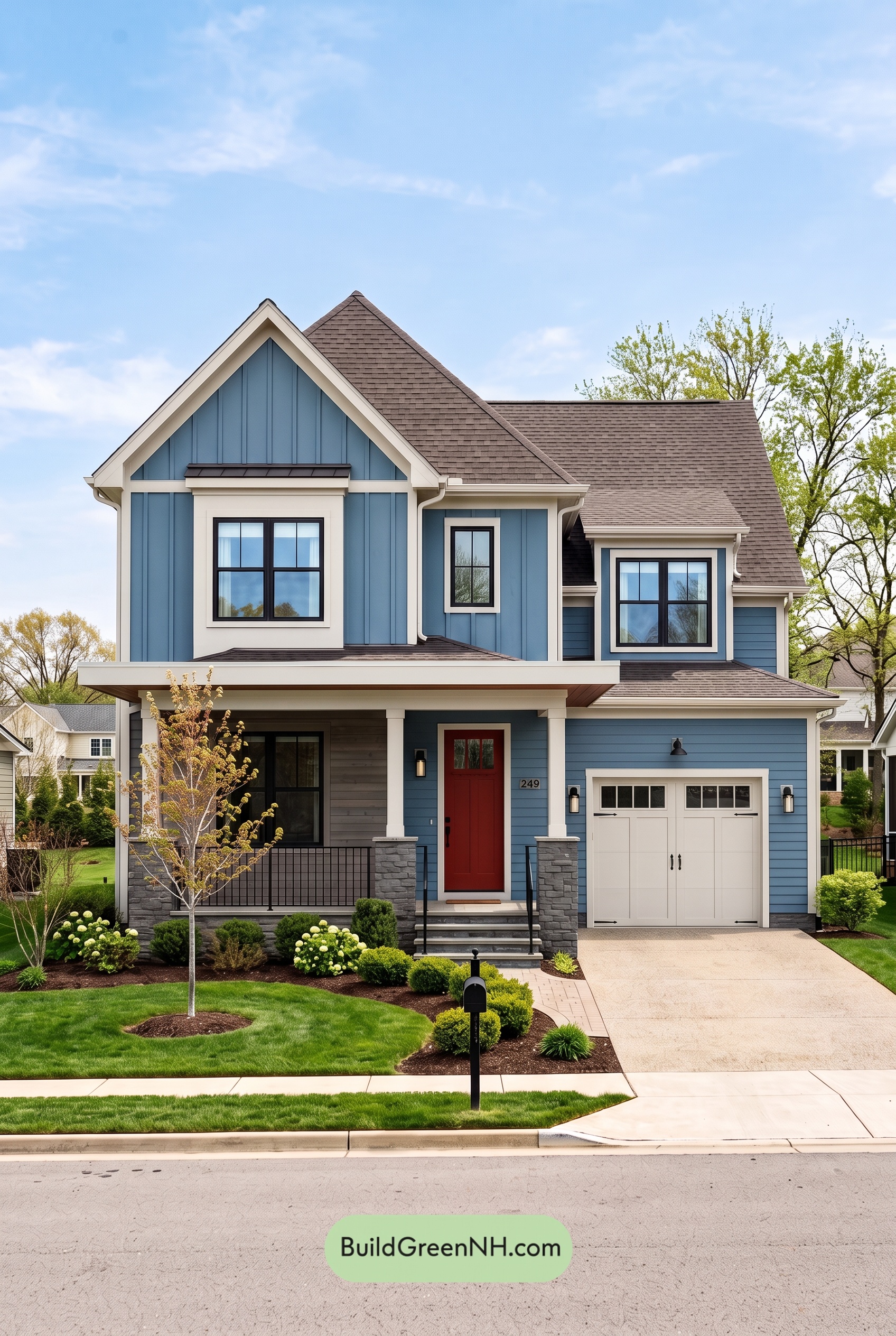 Blue House Front Door Color Scheme: Denim Poppy
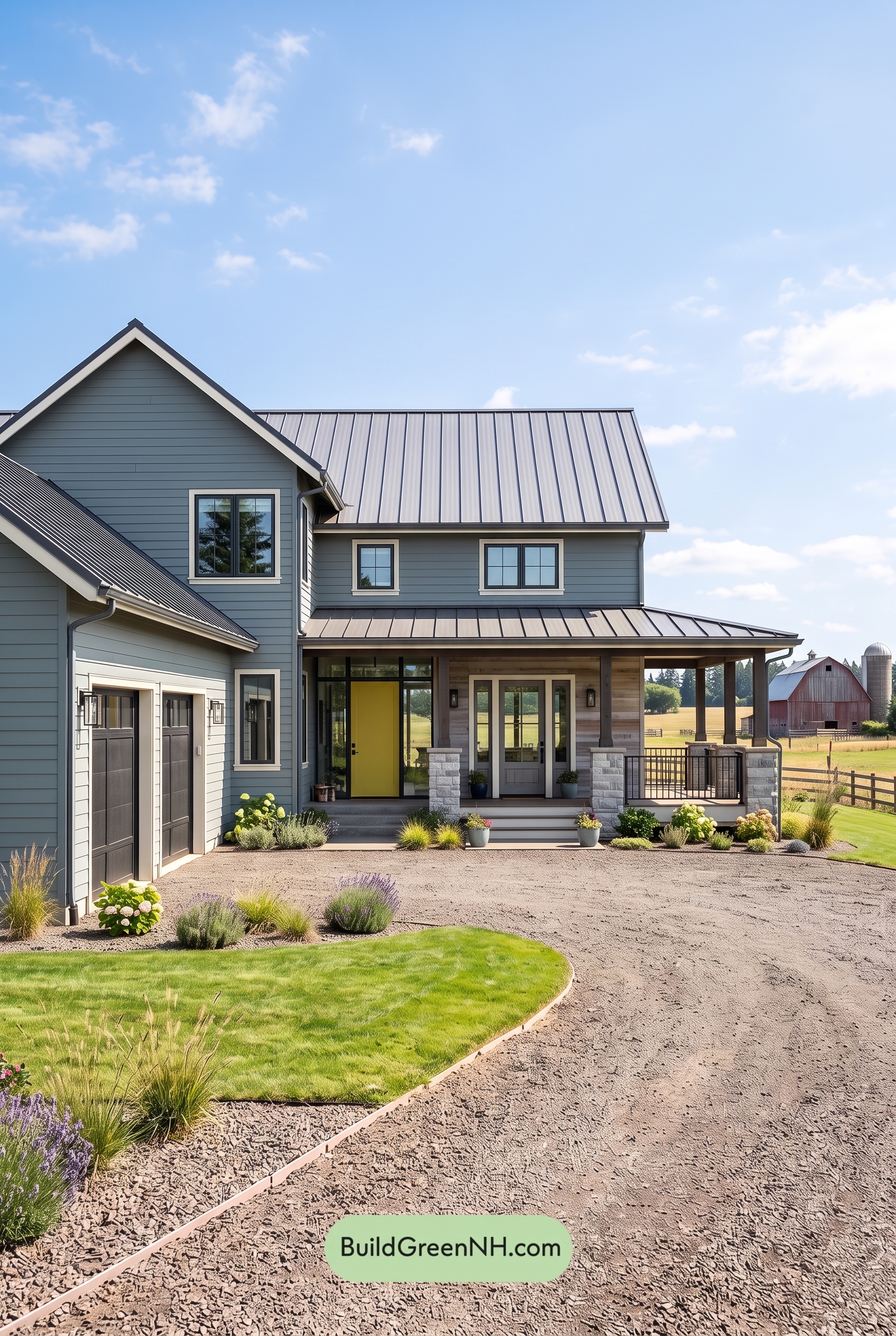 Blue House Front Door Color Scheme: Slate Citron
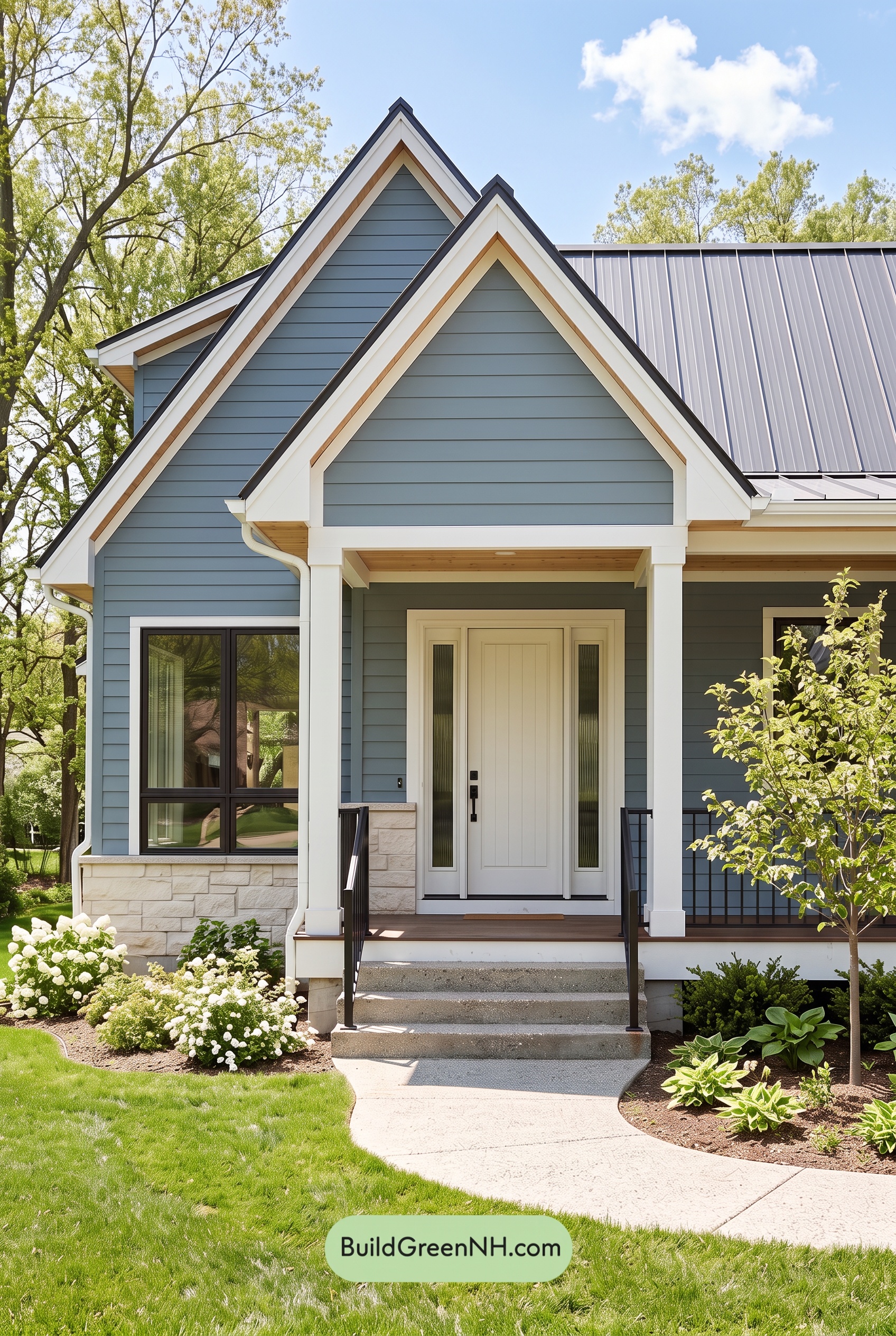 Blue House Front Door Color Scheme: Mist Blue Haven
Table of Contents