Last updated on
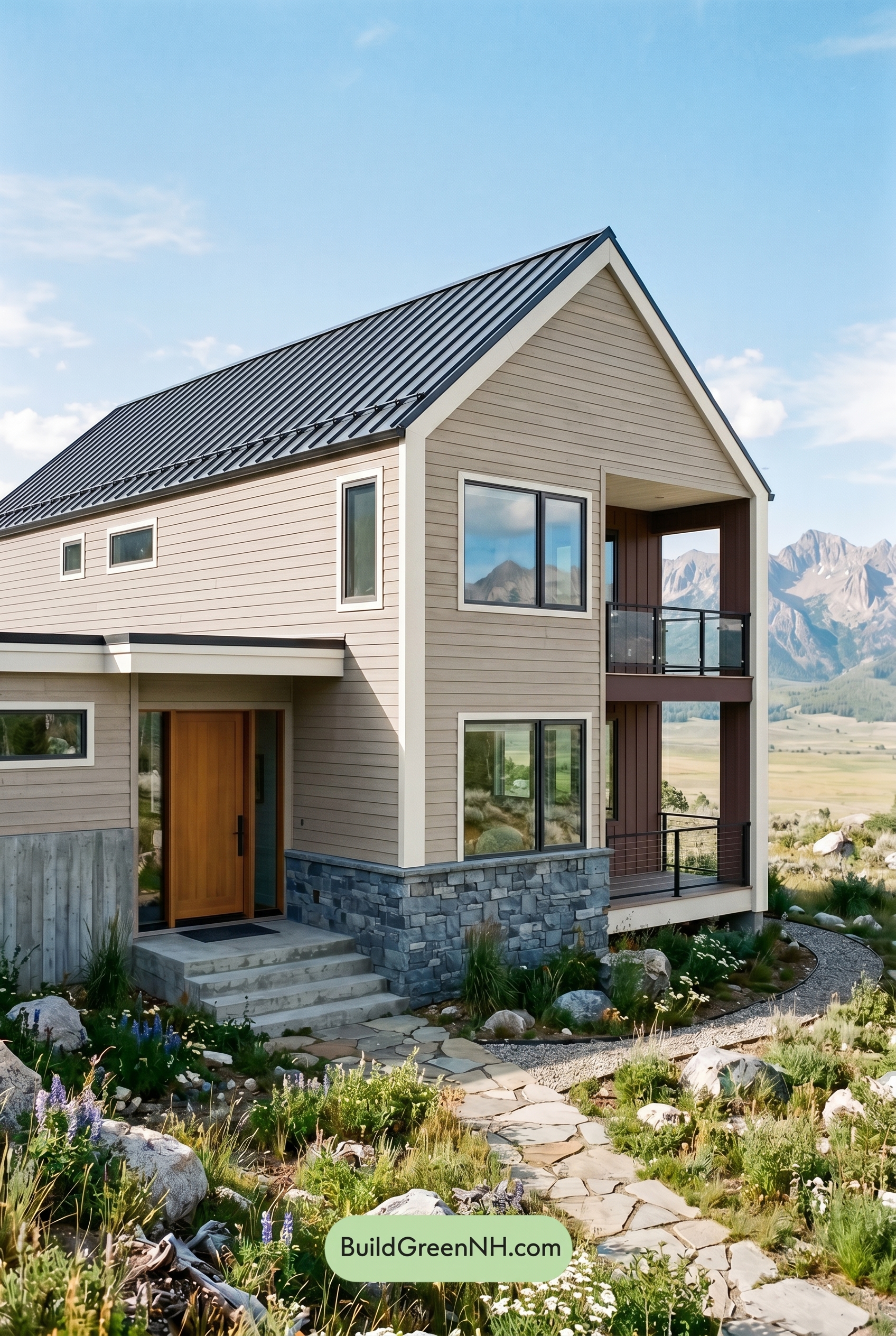

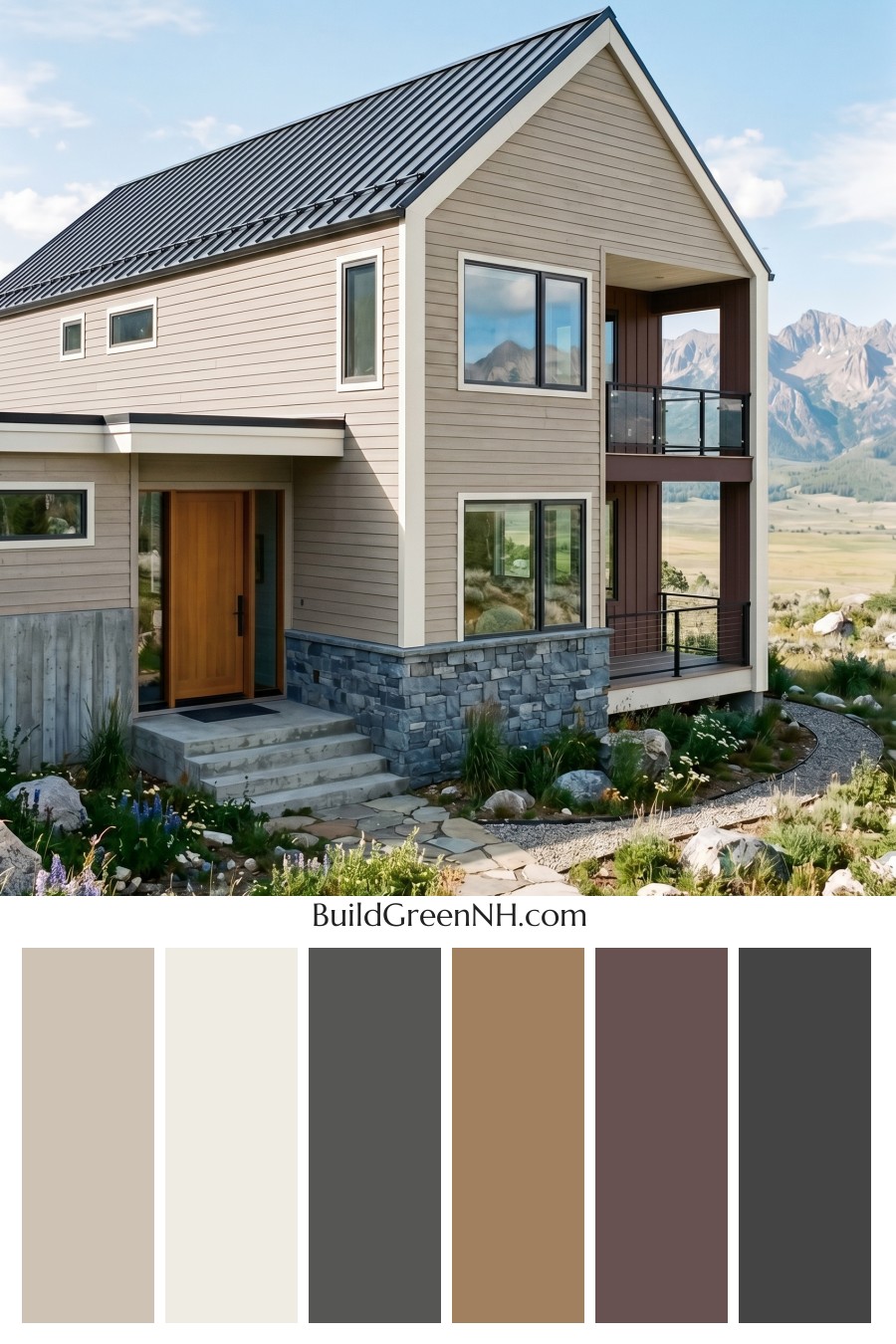
This exterior color scheme shines because its warm beige siding, crisp white trim, and grounding brown and gray accents feel both mountain-ready and beautifully modern.
A Warm Beige Base That Feels Natural
The main siding is a soft beige shade with gentle warmth, giving the house an inviting, sun-washed look. Because the siding runs horizontally across the exterior, the color feels calm and expansive rather than busy. It also sits beautifully against the surrounding landscape, echoing the tones of stone paths, dry grasses, and distant hills.
This beige family is a smart choice for a home with strong architectural lines. It softens the tall gables and modern shape, keeping the exterior approachable while still feeling polished.
Crisp White Trim for Fresh Definition
The white trim is doing a lot of quiet work here. Around the windows, along the roofline, and on the bold corner boards, this clean white shade creates sharp contrast against the beige siding. It frames the architecture clearly and makes the gable peaks feel especially crisp.
The result is fresh but not stark. Because the main siding is warm, the white trim feels bright and clean without becoming too cold.
Gray Details Add a Modern Edge
The gray window frames bring in a sleek, contemporary note. Their deeper shade gives the glass openings more presence and pairs naturally with the darker gray metal roof. Together, these gray elements keep the palette from feeling too traditional.
The railings continue the same modern feeling with a dark gray finish. They are slim and understated, adding structure to the balconies without competing with the warmer siding and wood-toned accents.
Brown Accents Bring Warmth and Depth
The front door introduces a rich warm brown shade that immediately makes the entry feel welcoming. It stands out just enough from the beige siding, creating a natural focal point without overwhelming the façade.
On the recessed balcony wall, a deeper brown accent adds depth and shadow. This darker brown shade gives the side elevation a cozy, cabin-inspired quality, especially when paired with the lighter siding and white trim. It feels grounded, architectural, and perfectly suited to the scenic setting.
A Dark Gray Roof That Anchors the Look
The roof’s dark gray shade provides a strong cap for the entire color scheme. Its cool tone balances the warmth of the beige siding and brown accents, while the metal finish adds a clean, modern character.
Because the roof is visually weighty, the home feels anchored and substantial. It also ties nicely to the gray window frames, railings, stone base, and hardscape details around the entry.
Why the Palette Works So Well
This scheme succeeds because it mixes warmth and contrast in just the right amounts. The beige siding and brown accents feel earthy and welcoming, while the white trim and gray details add clarity, freshness, and modern structure.
Nothing feels out of place. The colors relate to the natural setting, the stonework, and the mountain backdrop, creating a home exterior that feels refined but relaxed. It is warm, balanced, and quietly striking—the kind of palette that looks beautiful in bright sun, soft shade, and every season in between.
Next, see how this color scheme looks under different lighting simulations throughout the day.
Overcast
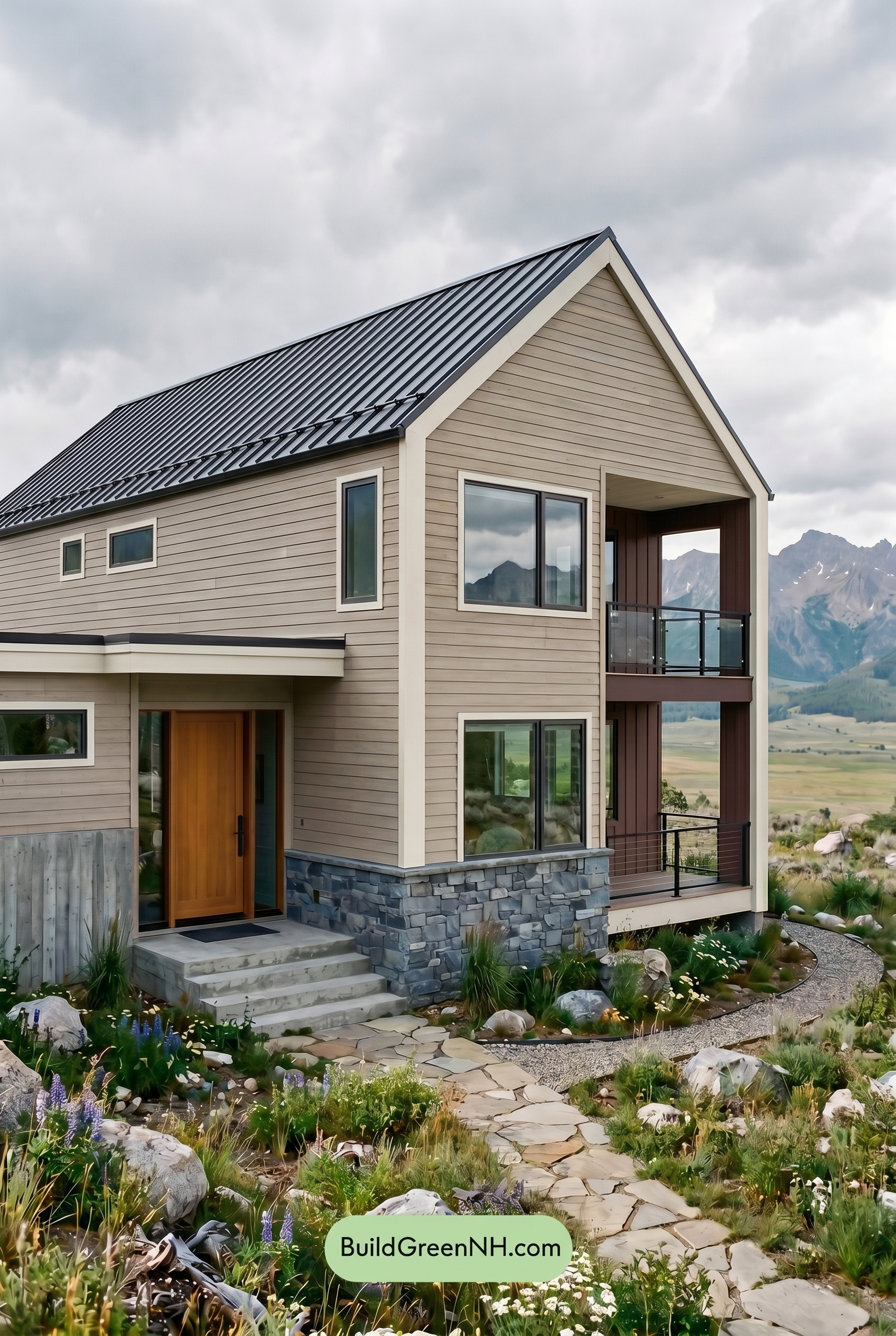
Under overcast light, the beige siding appears less saturated and slightly cooler than it would in neutral daylight, with its warmth softened into a calm, muted shade. The white trim loses some crisp brightness, reading gentler and creamier, while the gray window frames and railings feel deeper and more grounded against the softened wall color.
Shadows become broader and less sharp, reducing contrast across the siding and trim, but the brown door and brown accent areas gain a cozy, richer depth without feeling overly warm. Overall, the palette shifts from bright and defined to quiet, balanced, and more atmospheric.
Golden Hour
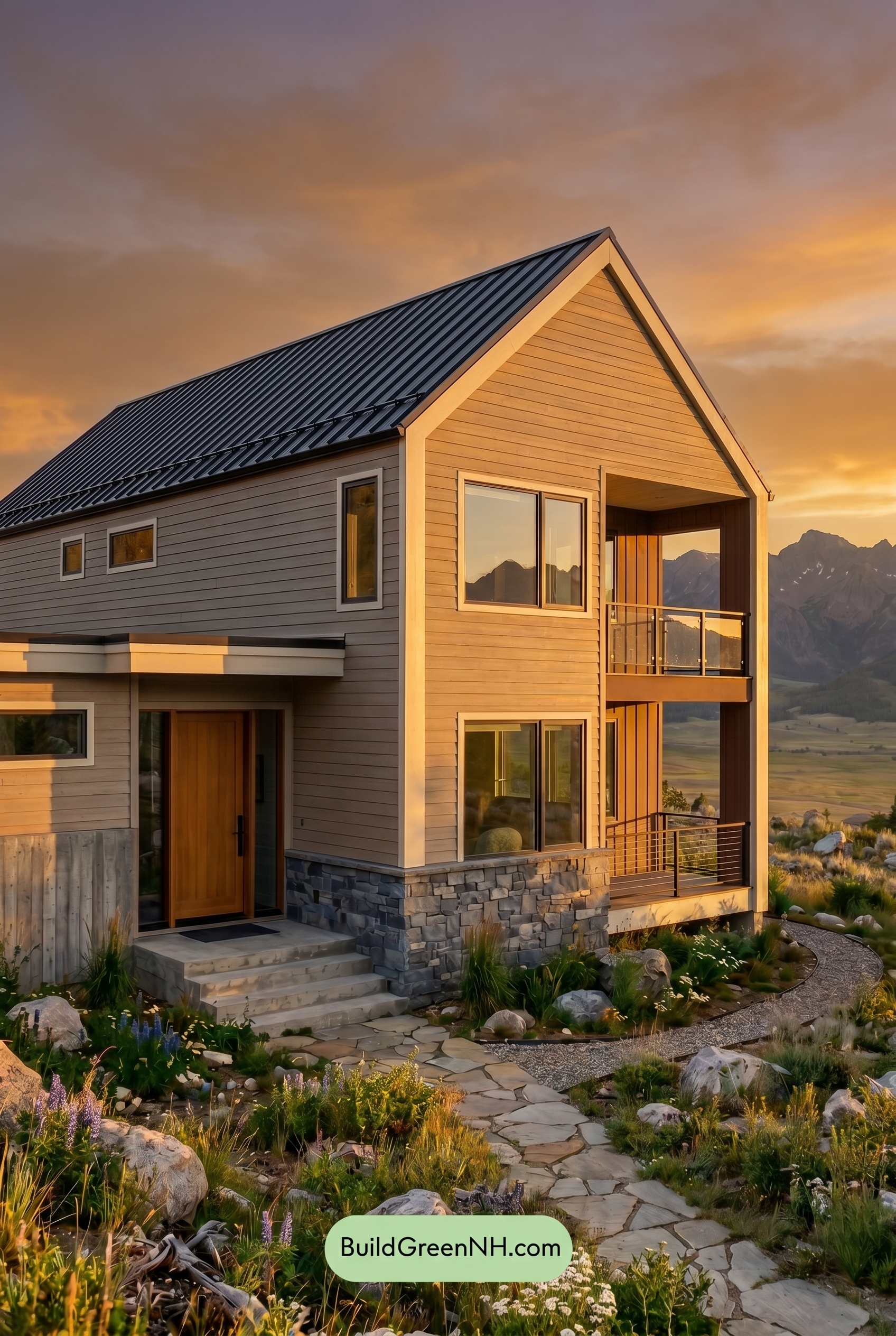
In neutral daylight, the beige siding would read calmer and more even, but Golden Hour pulls it toward a richer, honeyed warmth, making the surface feel more saturated and dimensional. The white trim softens from crisp to creamy, while the gray window frames and railings appear deeper and slightly cooler by contrast.
Long, low shadows sharpen the siding lines and roof edges, increasing contrast without making the palette feel harsh. The brown front door and accent areas gain a warmer, more grounded glow, shifting the overall mood from clean and contemporary in daylight to inviting, dramatic, and quietly cozy at sunset.
Shade
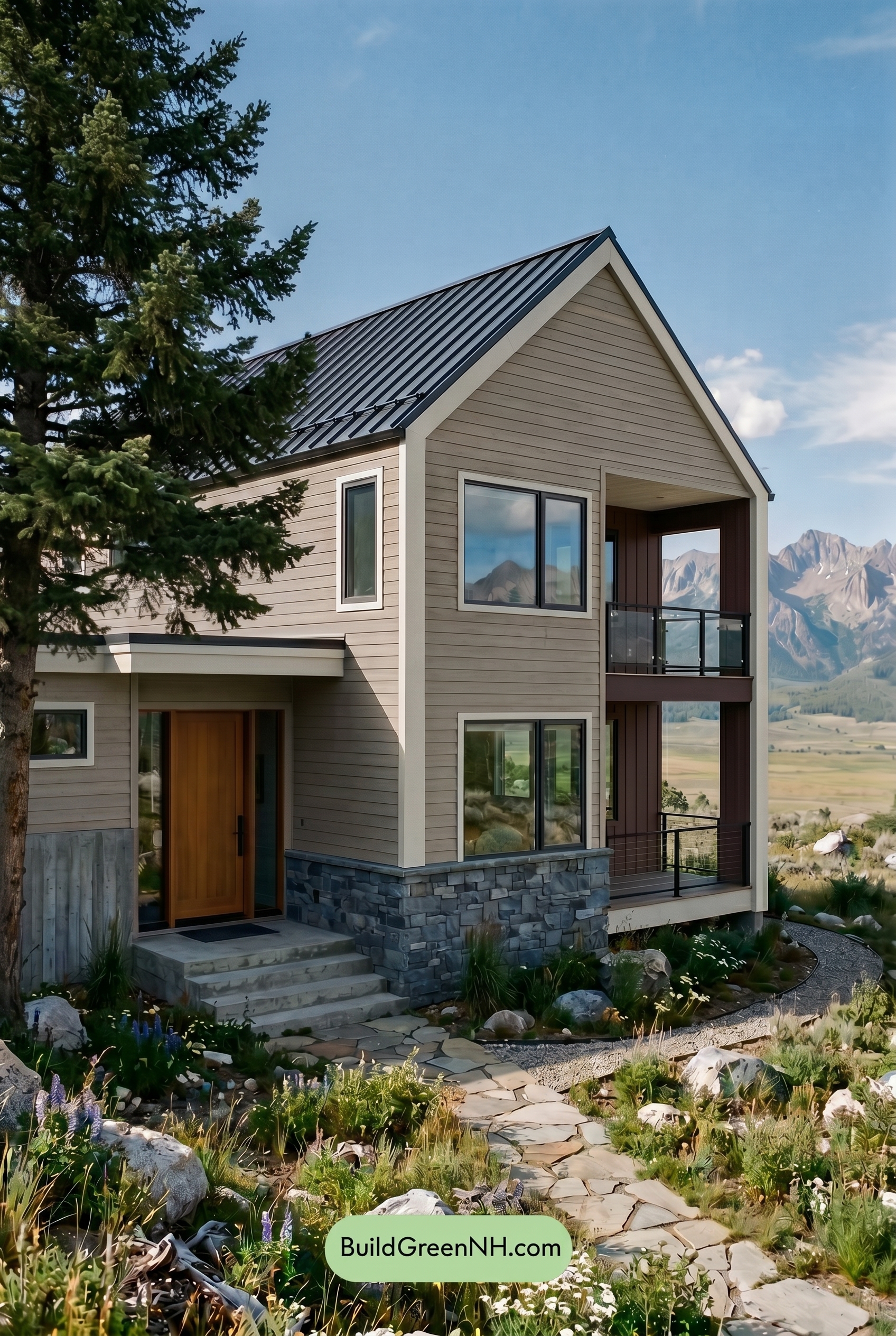
In shade, the beige siding loses a bit of its sunlit warmth and reads softer, cooler, and slightly more muted than it would in neutral daylight. Its saturation pulls back, while the white trim shifts from crisp and bright to gentler, with shadows making the edges feel less sharp but more layered.
The gray window frames and railings deepen in shade, gaining stronger contrast against the lighter trim, while the brown front door and accent wall feel richer and more grounded. Overall, shade gives the palette a quieter, cozier mood, with deeper shadows and reduced warmth creating a calm, refined exterior.
Nighttime
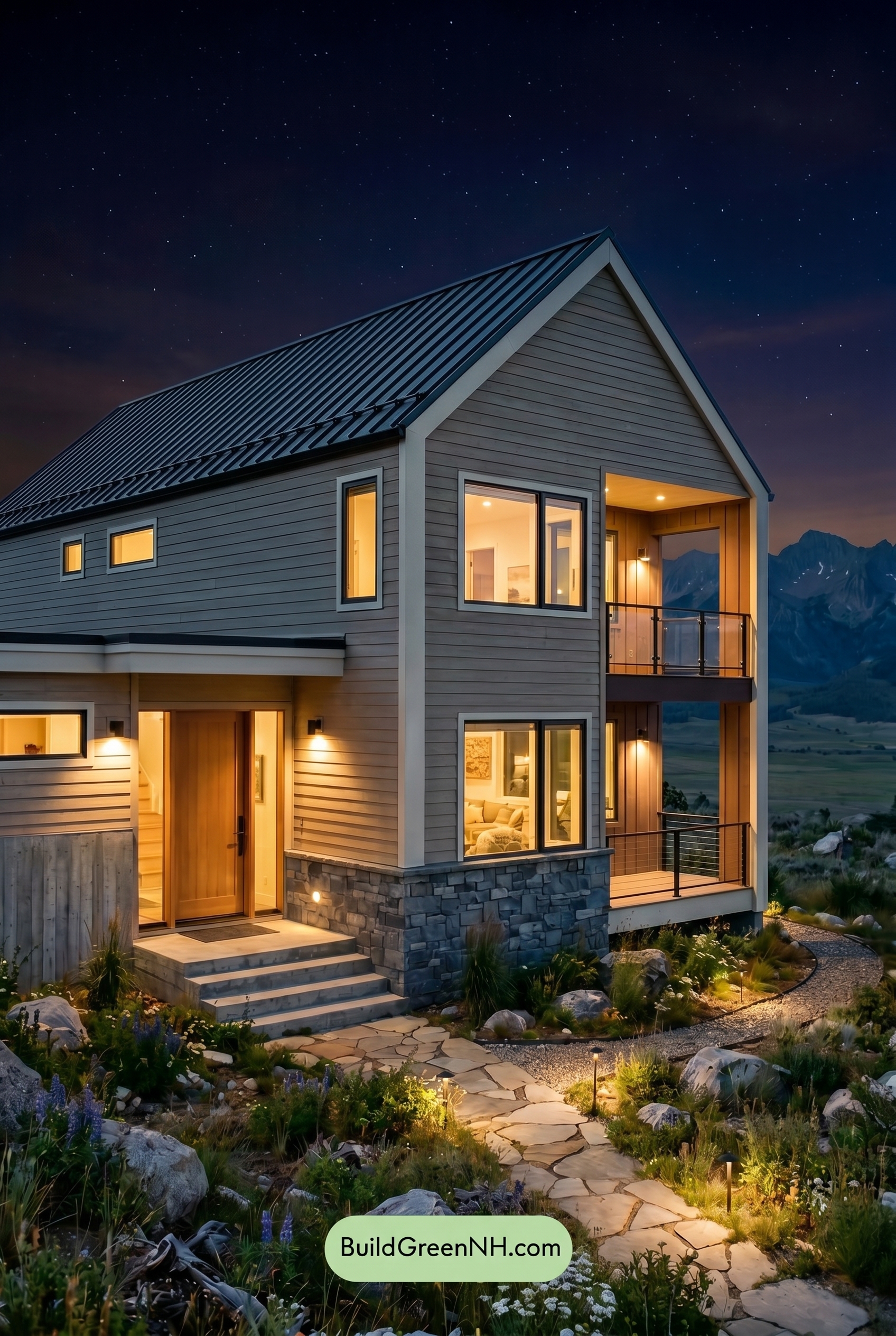
Under nighttime lighting, the beige siding loses some of its daylight clarity and settles into a softer, slightly cooler neutral, while the warm glow from the windows gently enriches nearby areas. The brown shades on the door and accent sections feel deeper and more saturated where the light touches them, creating a welcoming warmth that is less pronounced in neutral daylight.
Shadows sharpen the contrast across the exterior, making the white trim appear brighter along lit edges and the gray window frames and railings read darker and more defined. Overall, the palette shifts from clean and balanced by day to cozy, dramatic, and layered at night.
Pin these for later
Want More?
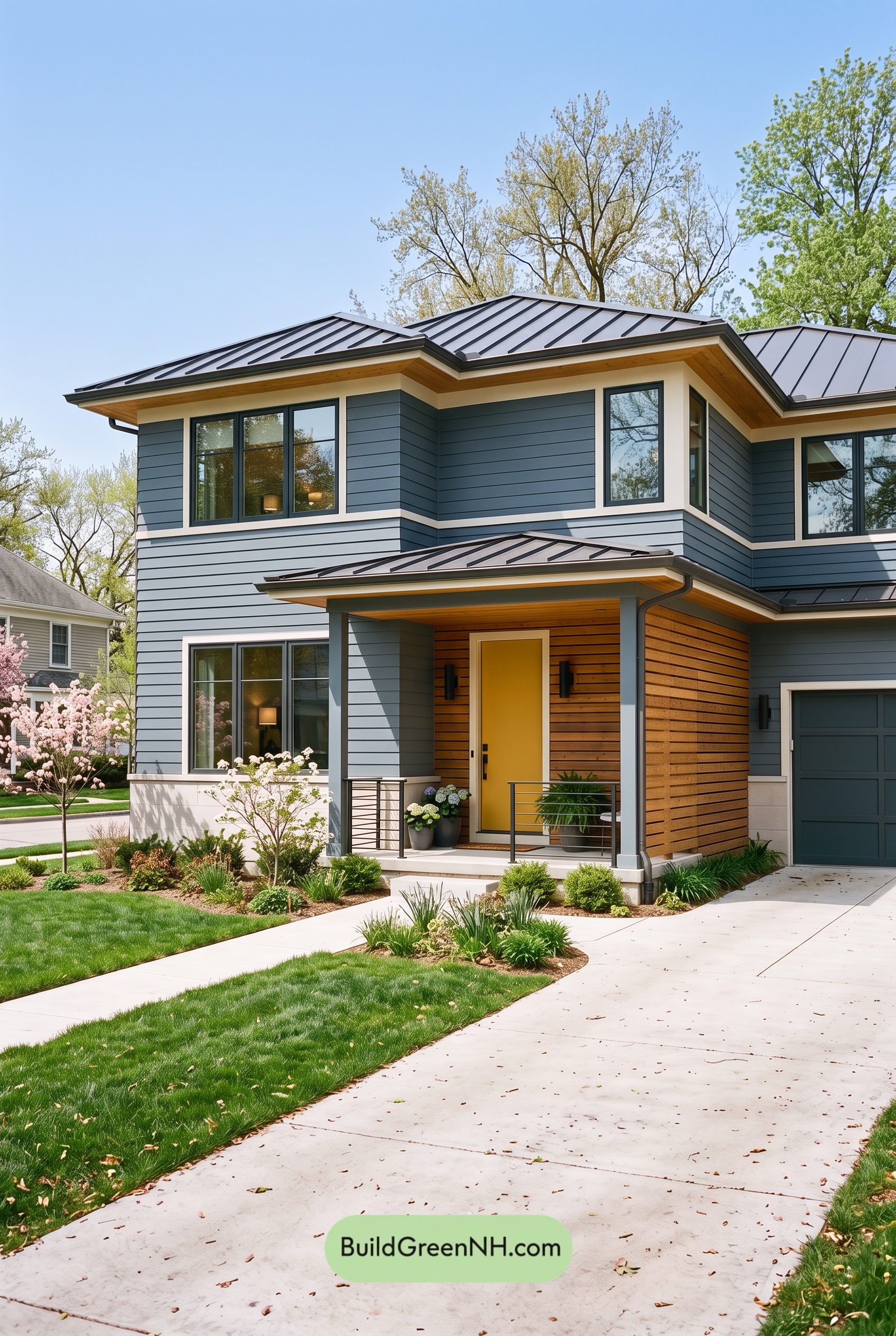 Blue House Front Door Color Scheme: Harbor Saffron
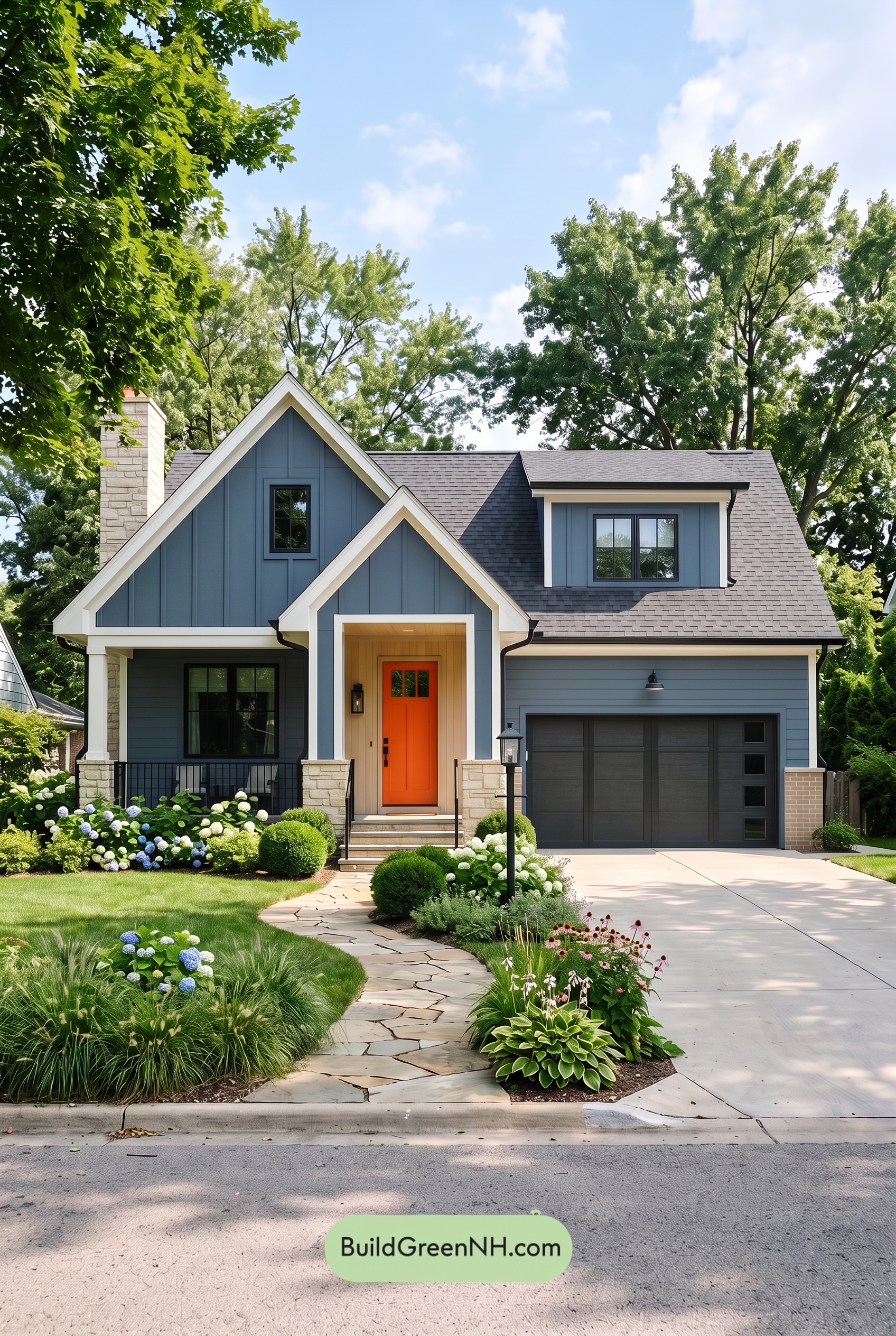 Blue House Front Door Color Scheme: Cobalt Persimmon
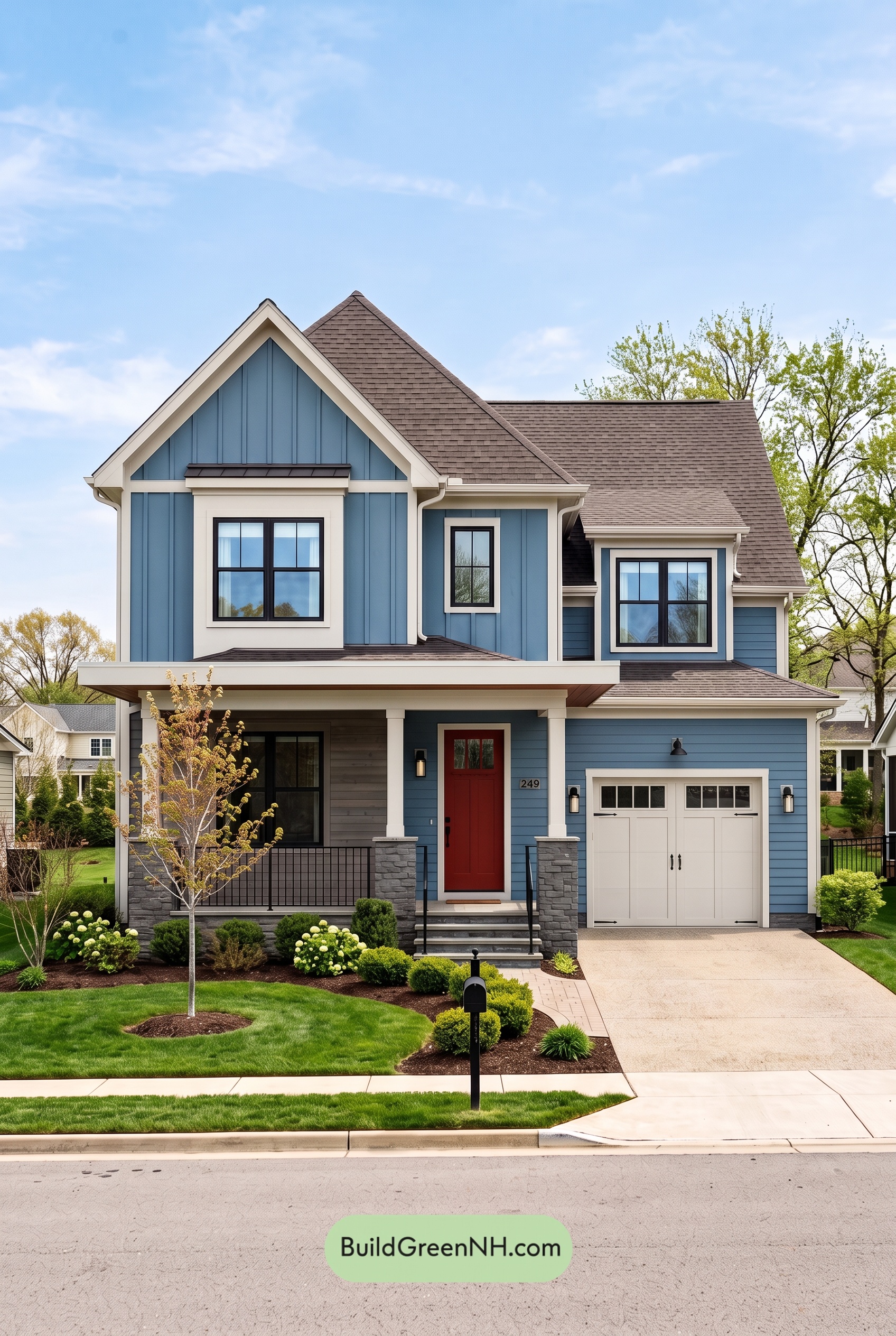 Blue House Front Door Color Scheme: Denim Poppy
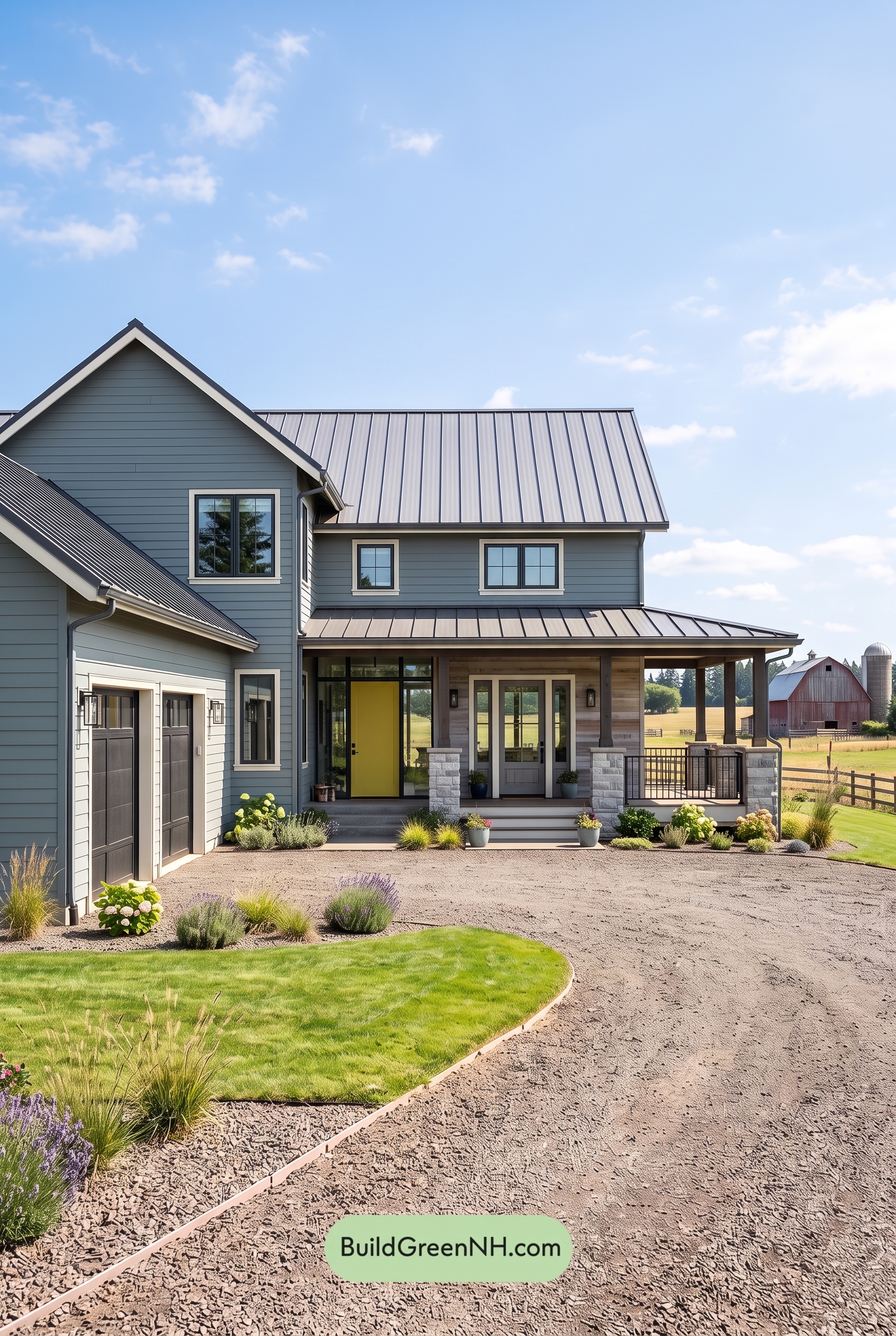 Blue House Front Door Color Scheme: Slate Citron
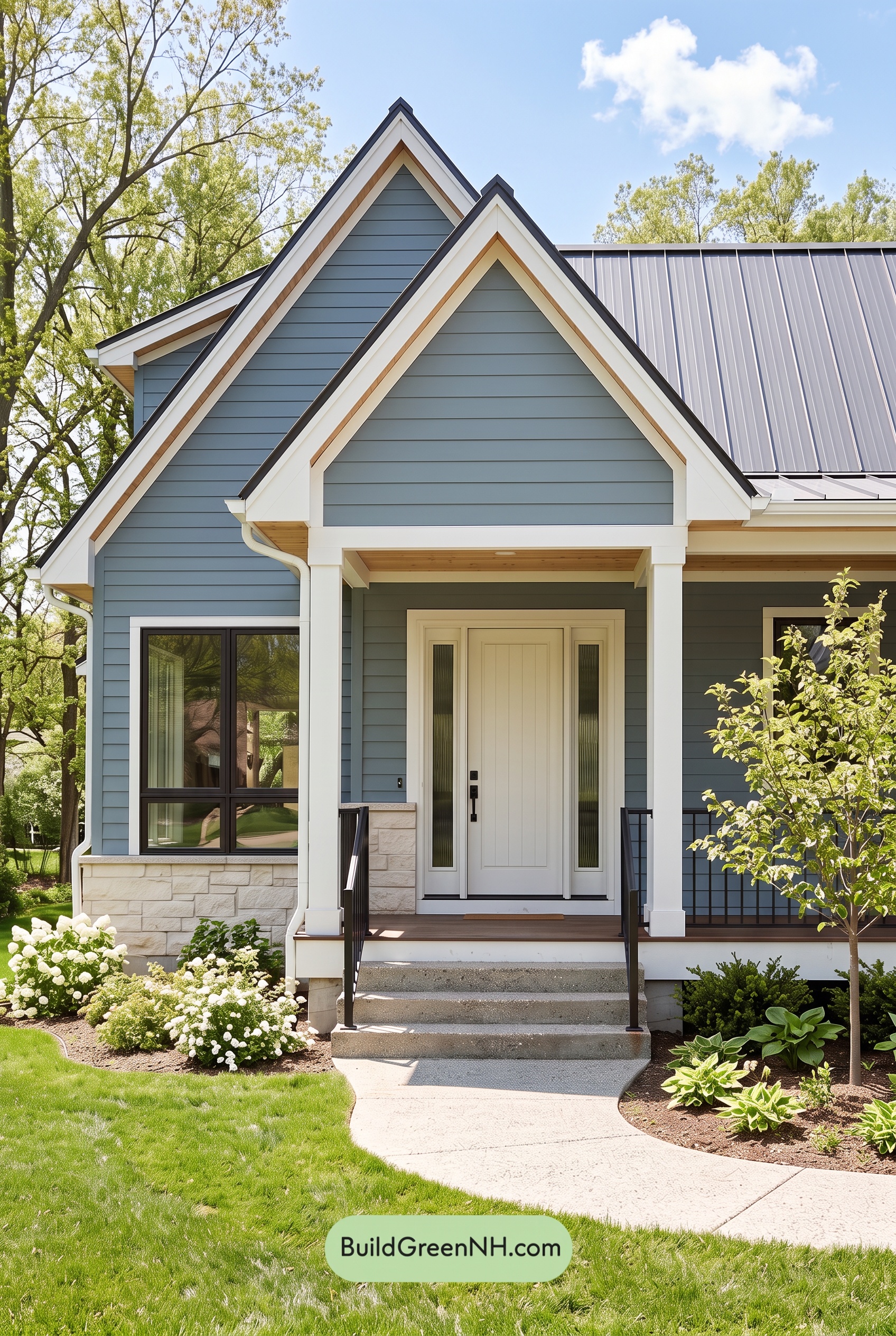 Blue House Front Door Color Scheme: Mist Blue Haven
Table of Contents