Last updated on
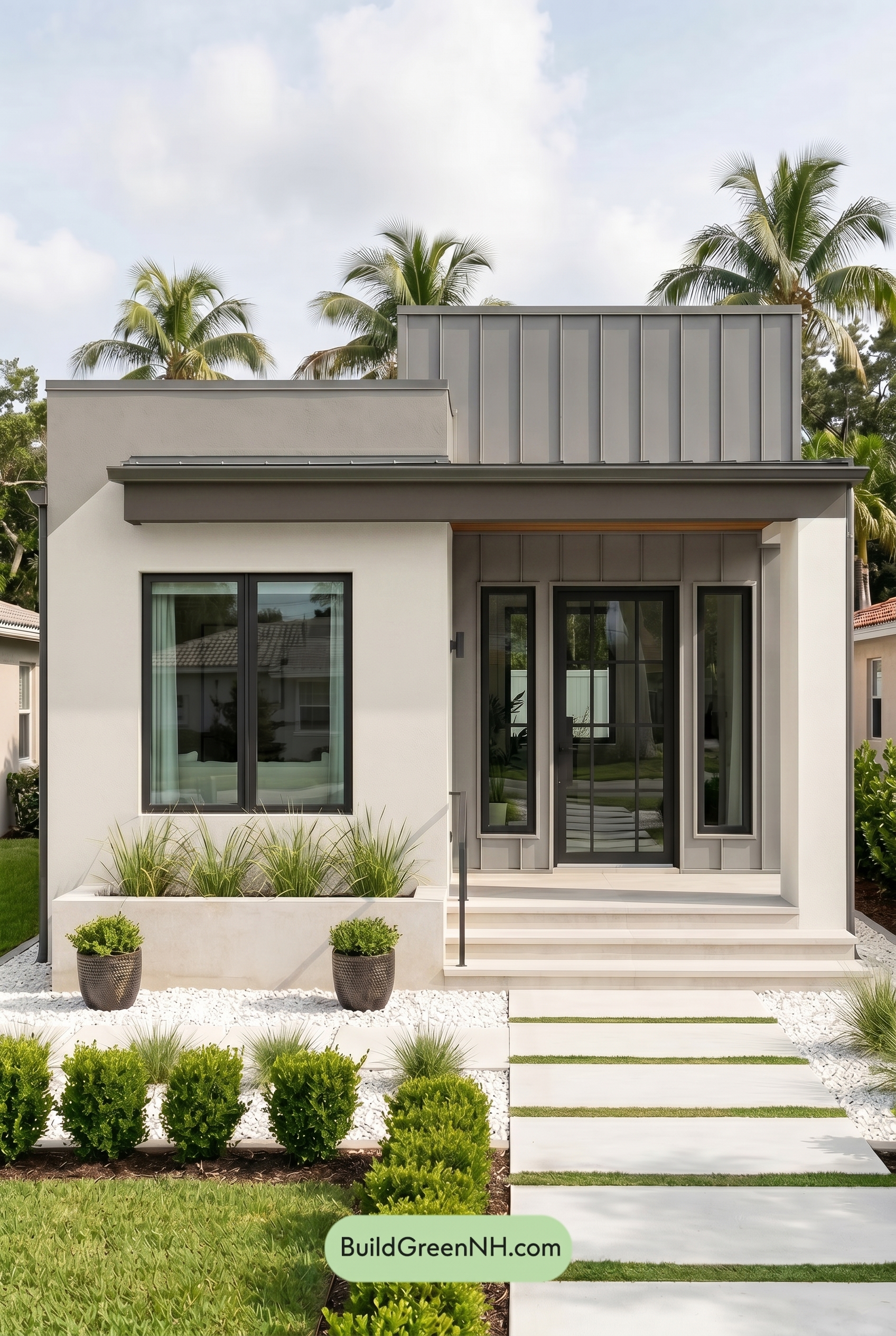

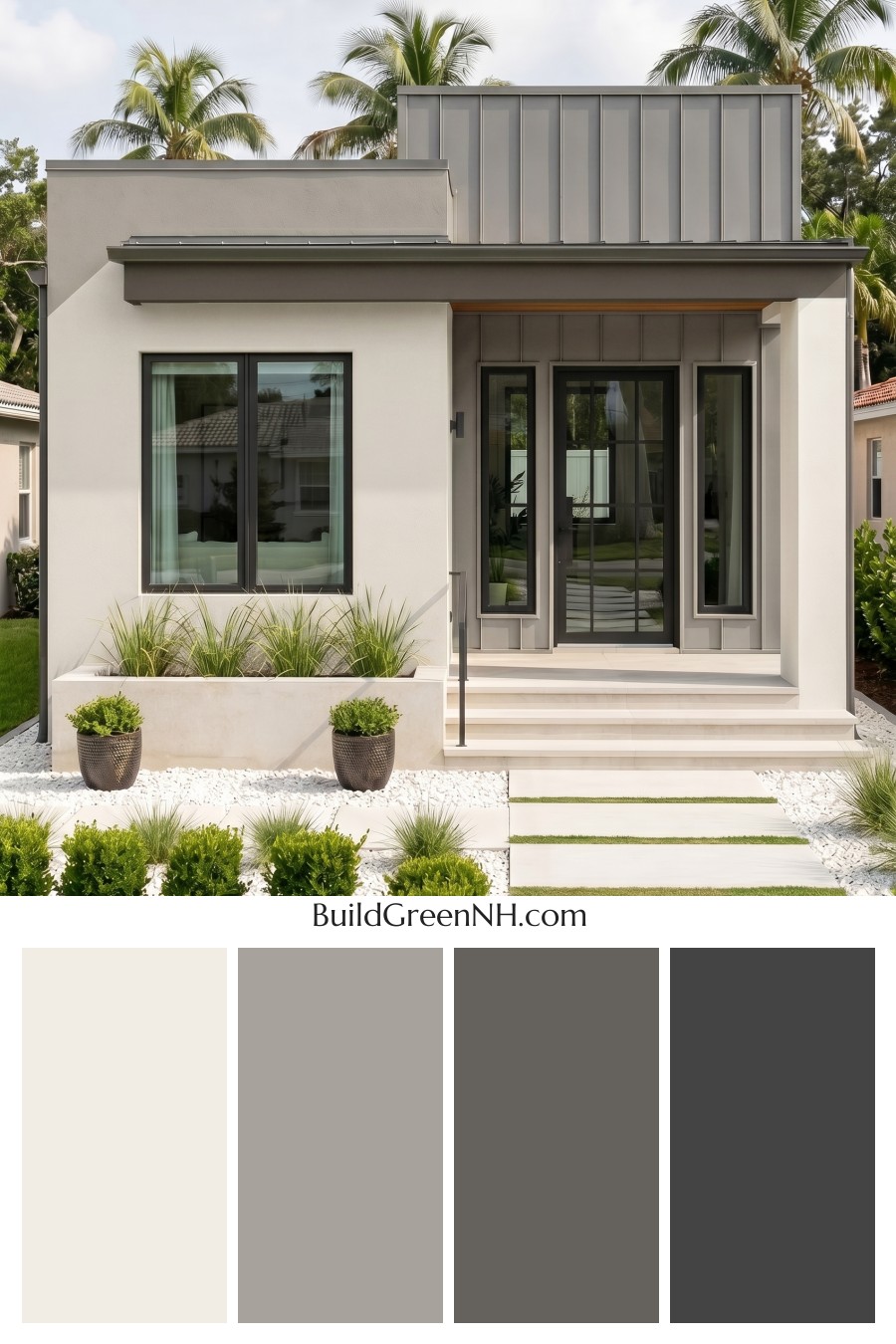
This exterior works beautifully because its warm beige base and layered gray accents create a clean, modern look that still feels inviting.
A Fresh Modern Base
The main exterior walls are wrapped in a soft beige shade that gives the home a light, sun-washed presence. It keeps the modern architecture from feeling too stark, adding warmth to the crisp lines and flat planes of the facade.
The beige also carries through the front columns, which helps frame the entry in a calm, cohesive way. Instead of competing with the sharper gray details, the columns act as a quiet anchor that makes the whole exterior feel grounded and balanced.
Layered Gray for Structure and Style
Gray is used generously across the upper wall section, vertical paneling, trim, window frames, railings, and front door. The result is sleek and architectural. A medium gray shade on the upper portion adds depth, while the deeper gray trim and roofline create a strong horizontal edge that emphasizes the home’s contemporary shape.
The vertical gray paneling around the entry and upper level is especially effective. It adds texture and rhythm without introducing a busy pattern. Because the gray shades are closely related, the look feels polished rather than patchwork.
Windows, Door, and Accents
The dark gray window frames and front door bring definition to the lighter walls. They outline the glass beautifully and give the facade a crisp, tailored appearance. This contrast is subtle but important; it keeps the beige exterior from looking flat and makes the entry feel intentional.
The slim gray railings echo the window frames and door, tying the walkway and porch into the overall palette. Even small details feel considered, which is part of what makes this exterior so appealing.
The Overall Mood
This color scheme feels bright, relaxed, and sophisticated. The warm beige keeps the home approachable, while the layered gray shades add a refined urban edge. Together, they create a palette that suits the clean architecture and the lush landscaping surrounding it.
It is a great example of modern exterior color done with restraint. Nothing shouts, yet every color has a purpose. The beige softens, the gray defines, and the darker accents sharpen the entire composition into a fresh, elegant facade.
Next, see how this color scheme looks under different lighting simulations throughout the day.
Overcast
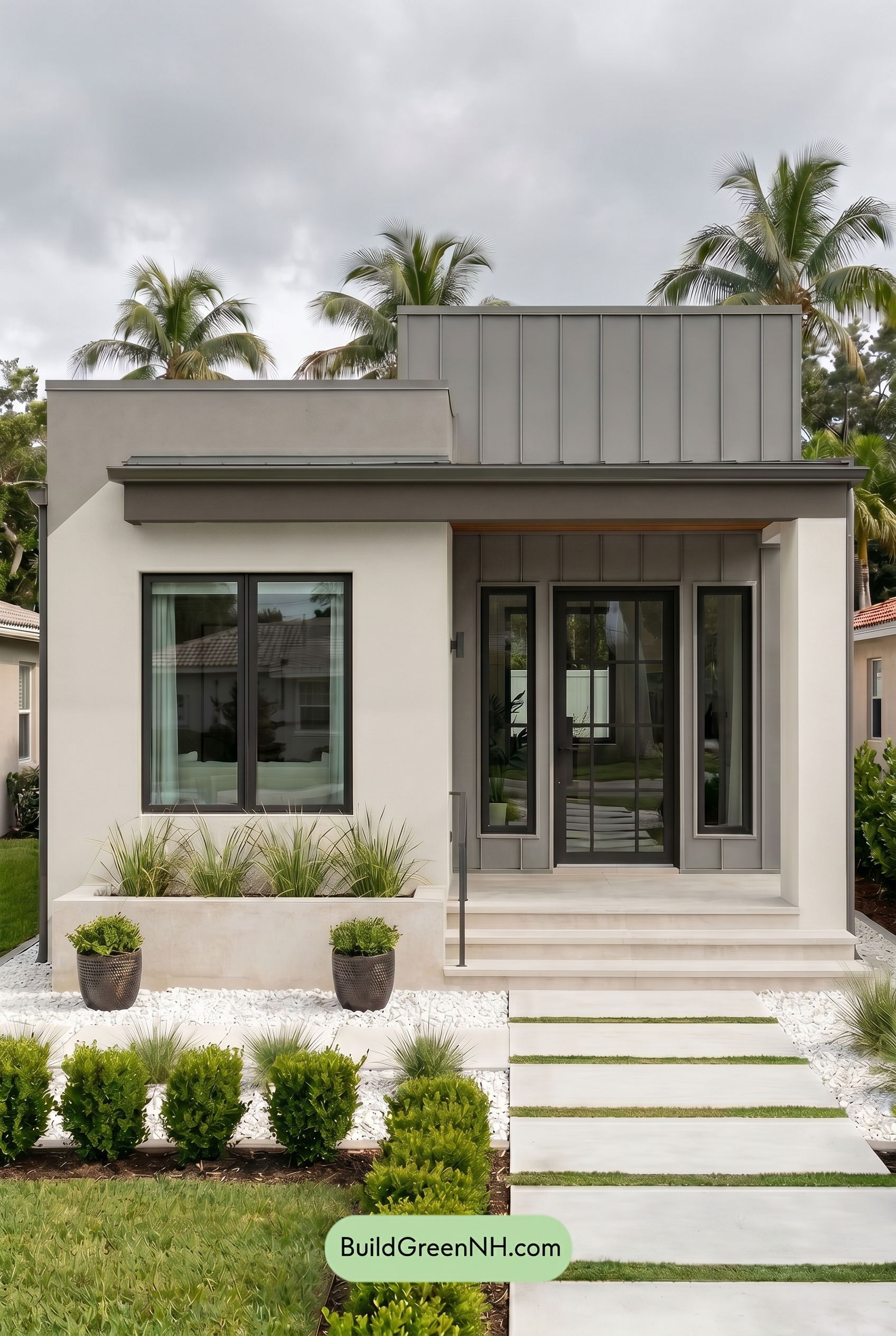
Under overcast light, the light beige walls lose a bit of sunlit warmth and read softer, cooler, and more muted than they would in neutral daylight. Saturation drops across the exterior, giving the beige family a calm, powdery quality rather than a brighter, warmer glow.
The gray shades on the upper wall, trim, window frames, railings, and door appear slightly deeper and more unified, with softer shadows and less crisp contrast. Instead of sharp definition, the palette feels smooth, quiet, and contemporary, creating a mood that is more subdued and elegant than bright and high-contrast.
Golden Hour
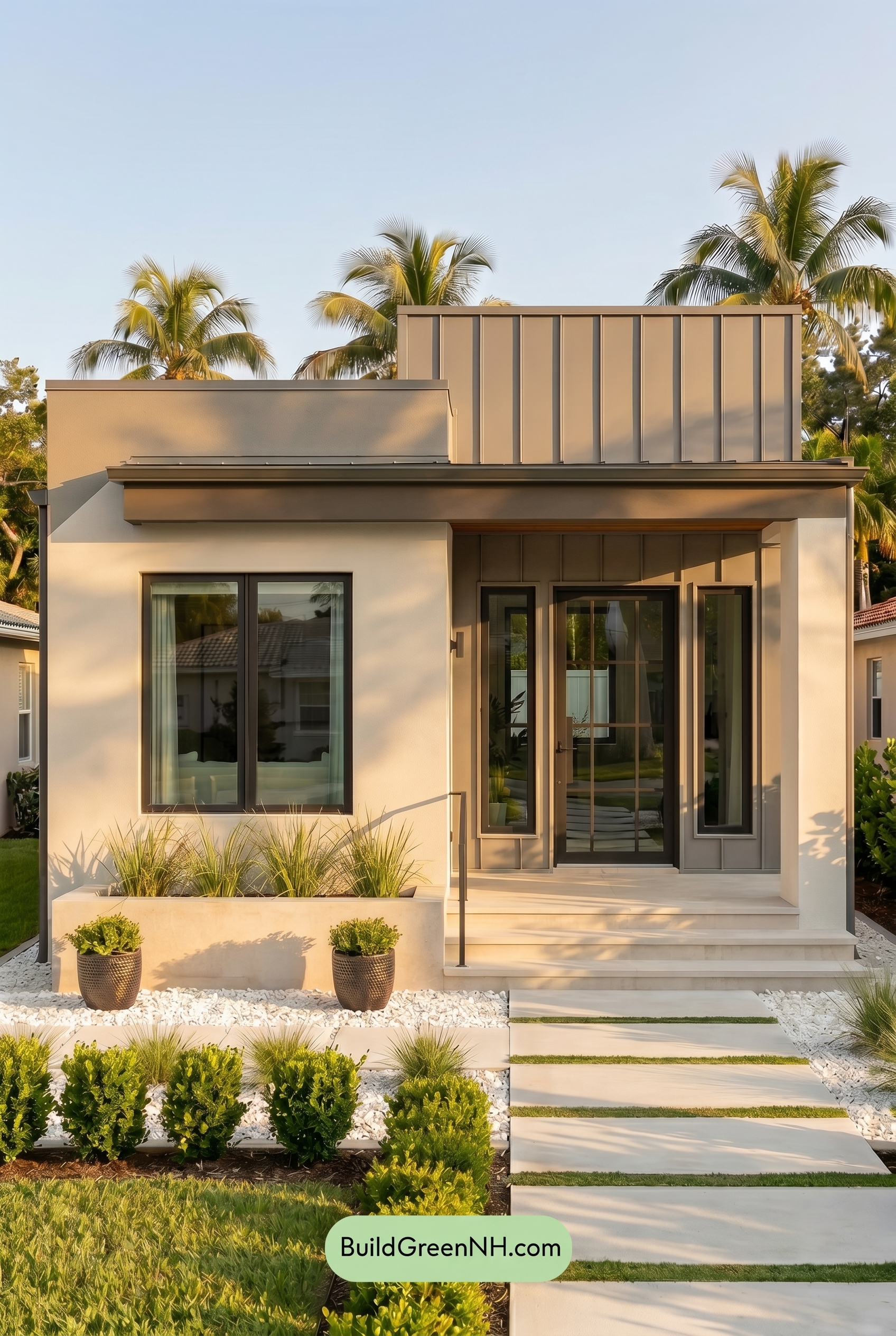
In Golden Hour light, the beige family on the main walls gains extra warmth and saturation, shifting from a clean neutral in daylight to a softer, sun-washed shade. The gray family on the upper panels, trim, window frames, railings, and door also feels warmer, with its cooler edge gently muted compared to how it would read under neutral daylight.
Longer shadows deepen the gray shades around the entry and vertical paneling, creating stronger contrast against the lighter beige surfaces. The overall mood becomes more relaxed and inviting, with warm highlights softening the modern lines while shaded areas add depth and definition.
Shade
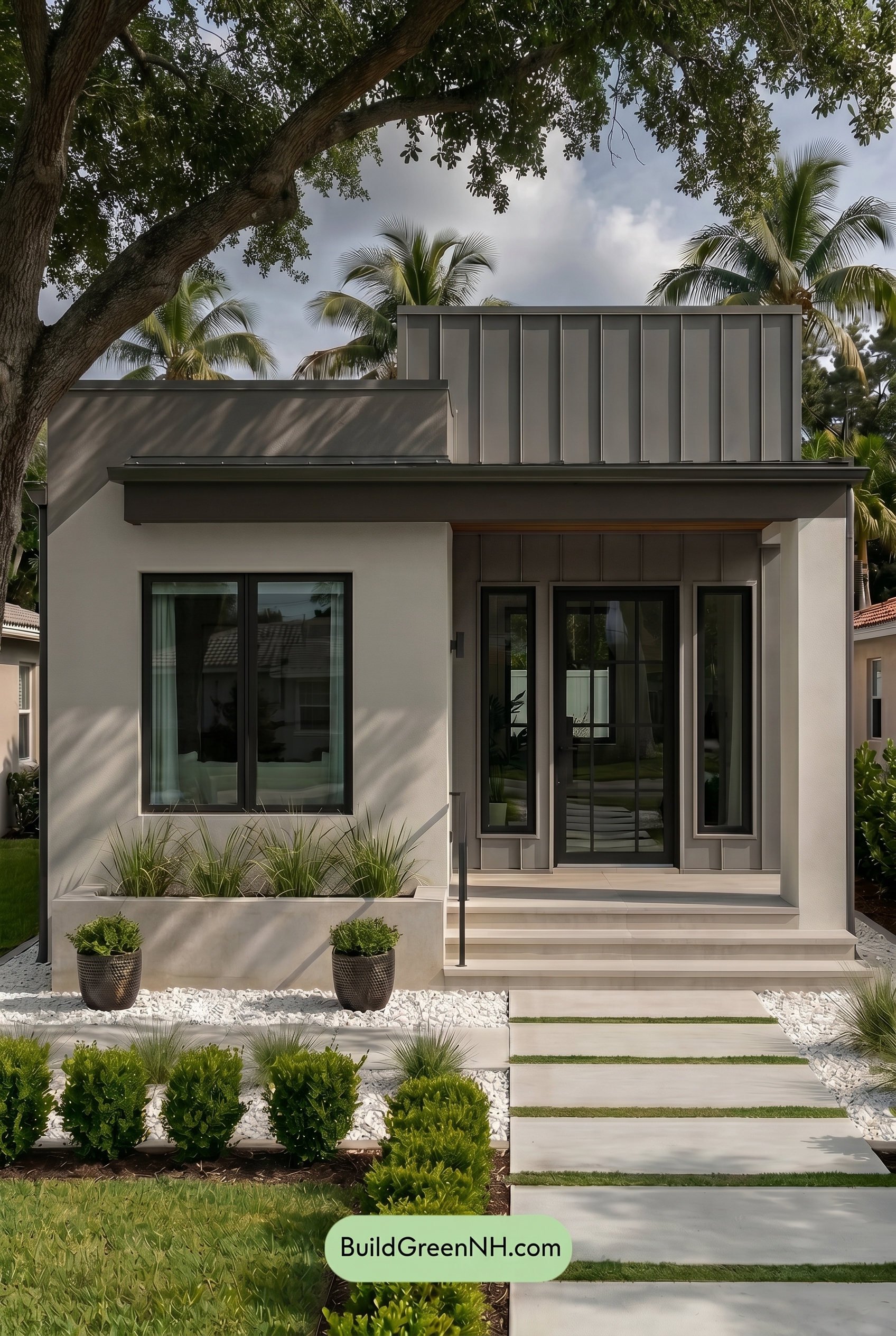
In shade, the beige family on the main walls looks less warm and more muted than it would in neutral daylight, with its saturation softened into a calm, stone-like shade. The gray family across the upper wall, trim, railings, and window frames deepens slightly, taking on a cooler, more grounded appearance.
Shadows from the overhangs and surrounding trees increase contrast along the paneling, columns, and entry, making the darker gray shades feel more defined. Overall, the palette shifts from bright and crisp to quieter and moodier, giving the exterior a refined, sheltered feel.
Nighttime
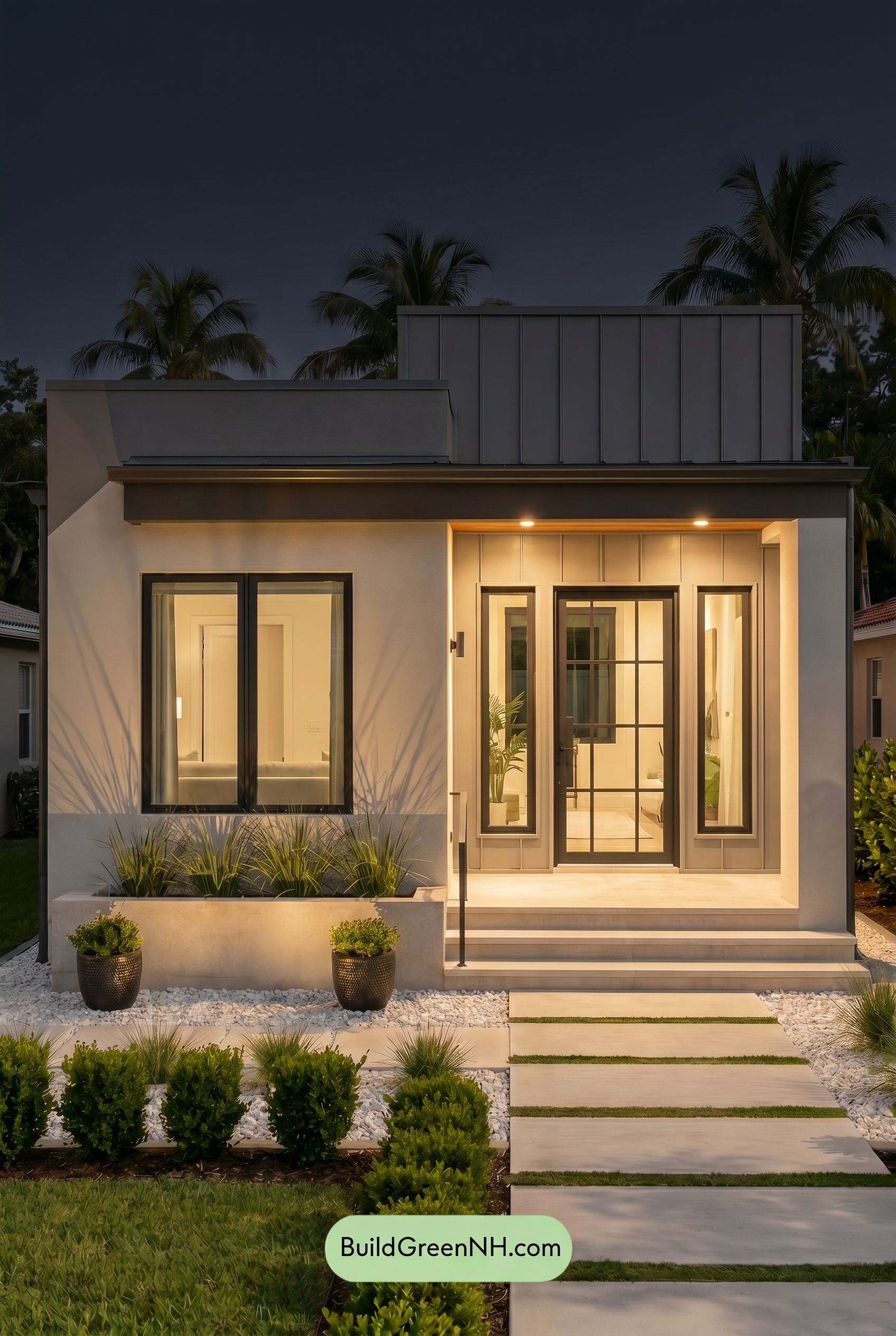
At nighttime, the beige family on the main walls feels warmer and softer than it would in neutral daylight, especially where the entry and window lighting washes across the surface. Its saturation gently increases in the lit areas, taking on a cozy, creamy glow, while the gray family on the trim, frames, railings, and upper wall deepens into cooler, more shadowed shades.
Compared to daylight, contrast becomes much stronger: bright pools of warm light sharpen the edges around the door and windows, while rooflines, recesses, and landscaping cast longer, darker shadows. The overall mood shifts from clean and balanced to intimate and dramatic, with the gray shades feeling more defined and the beige shades appearing inviting and softly illuminated.
Pin these for later
Want More?
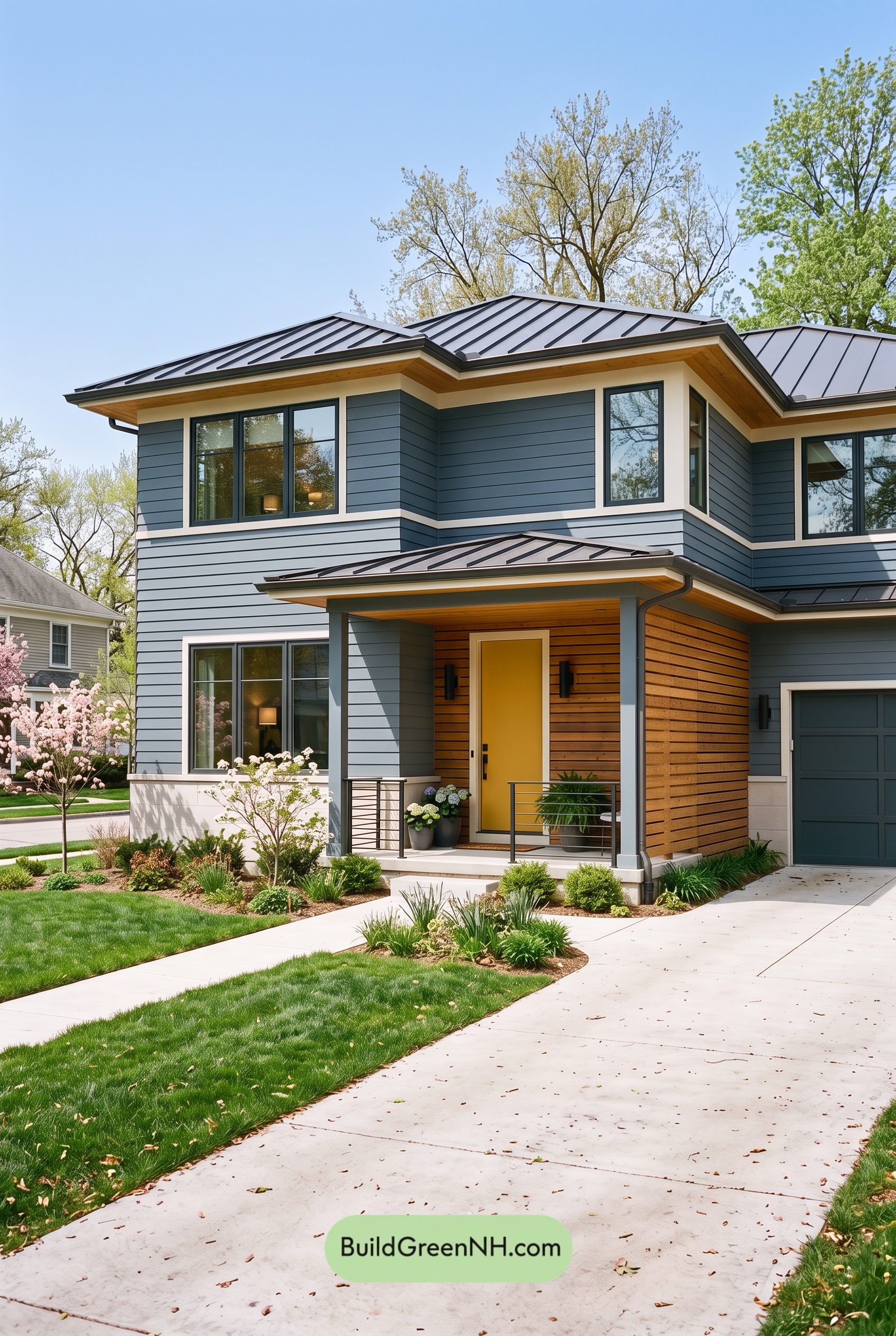 Blue House Front Door Color Scheme: Harbor Saffron
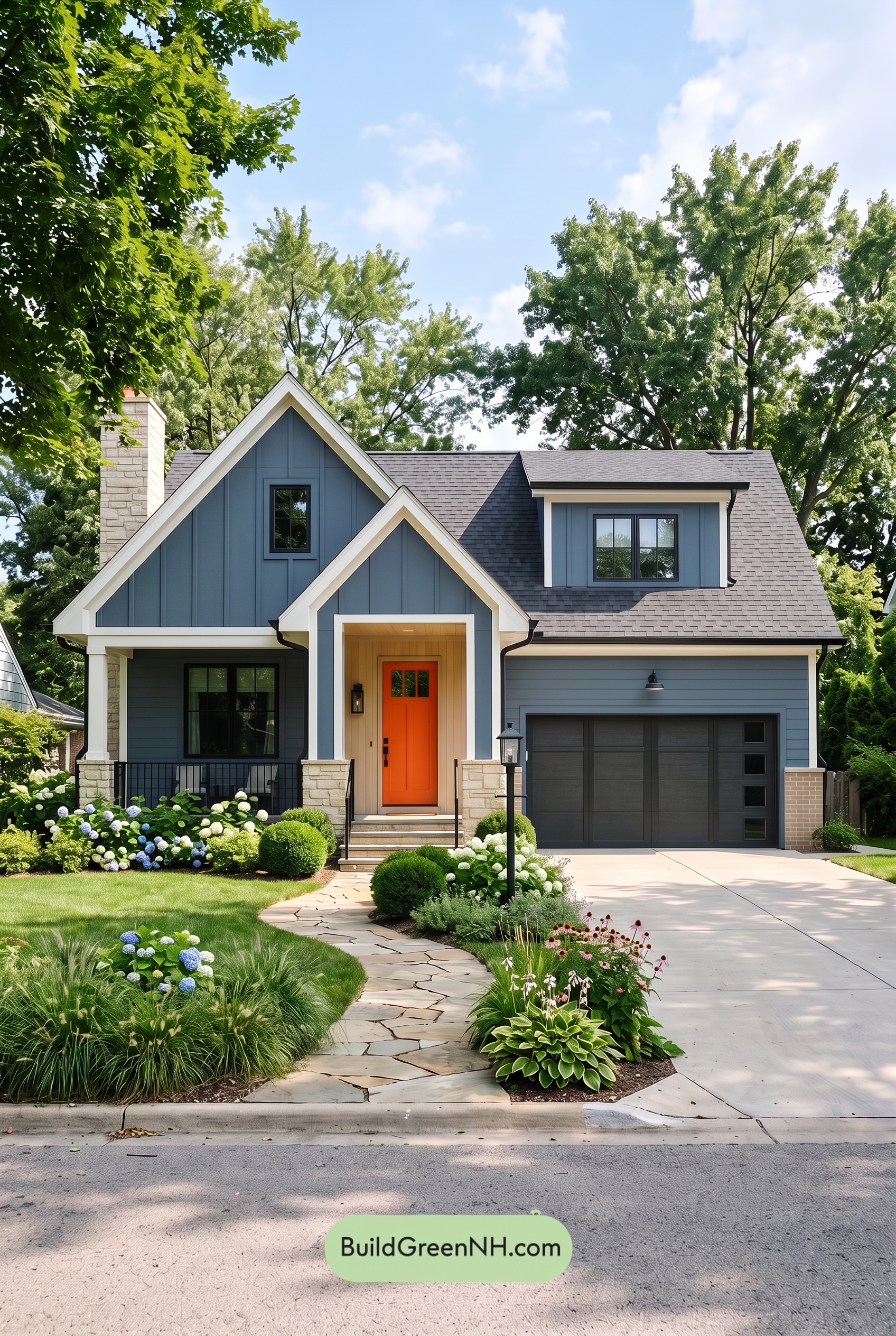 Blue House Front Door Color Scheme: Cobalt Persimmon
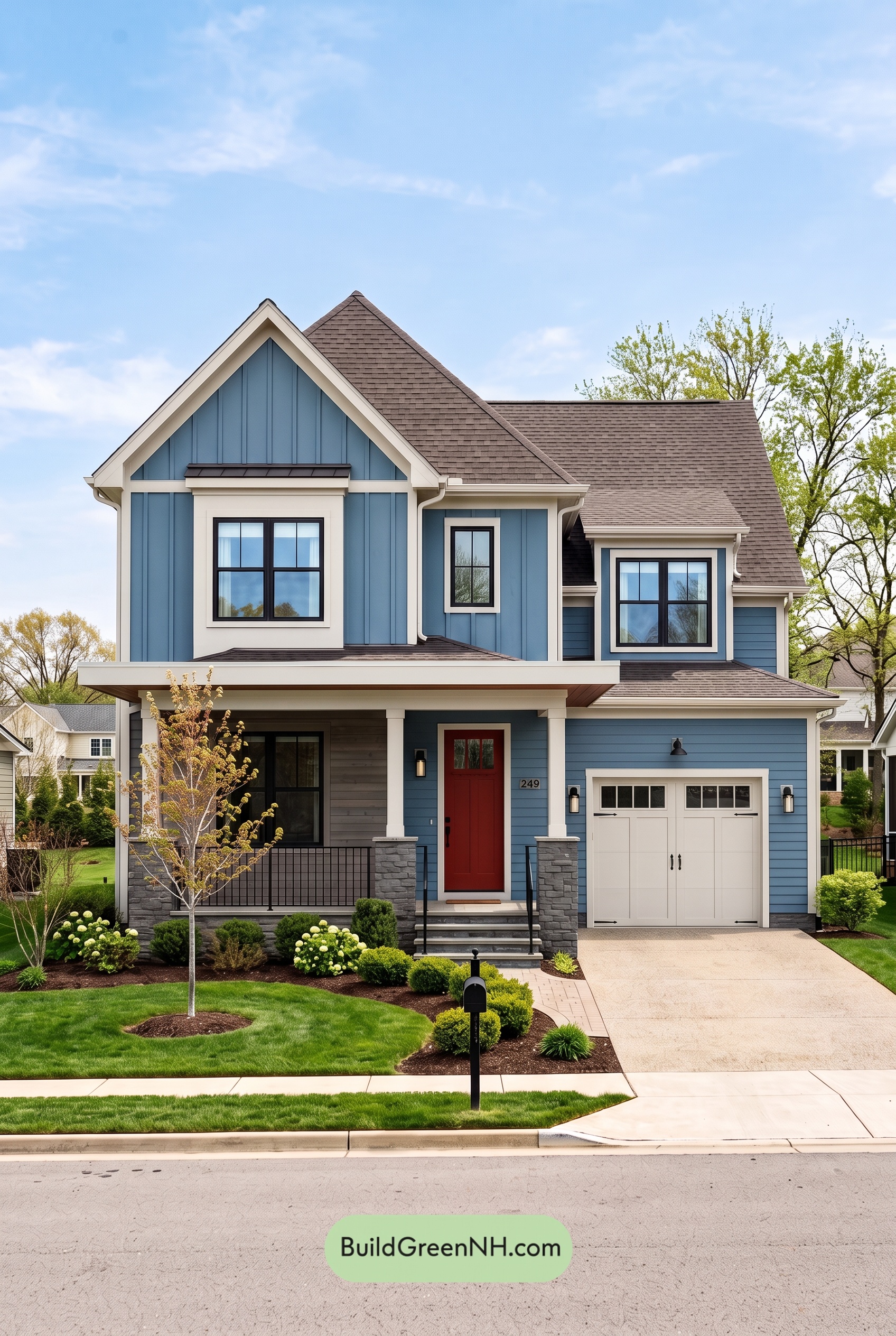 Blue House Front Door Color Scheme: Denim Poppy
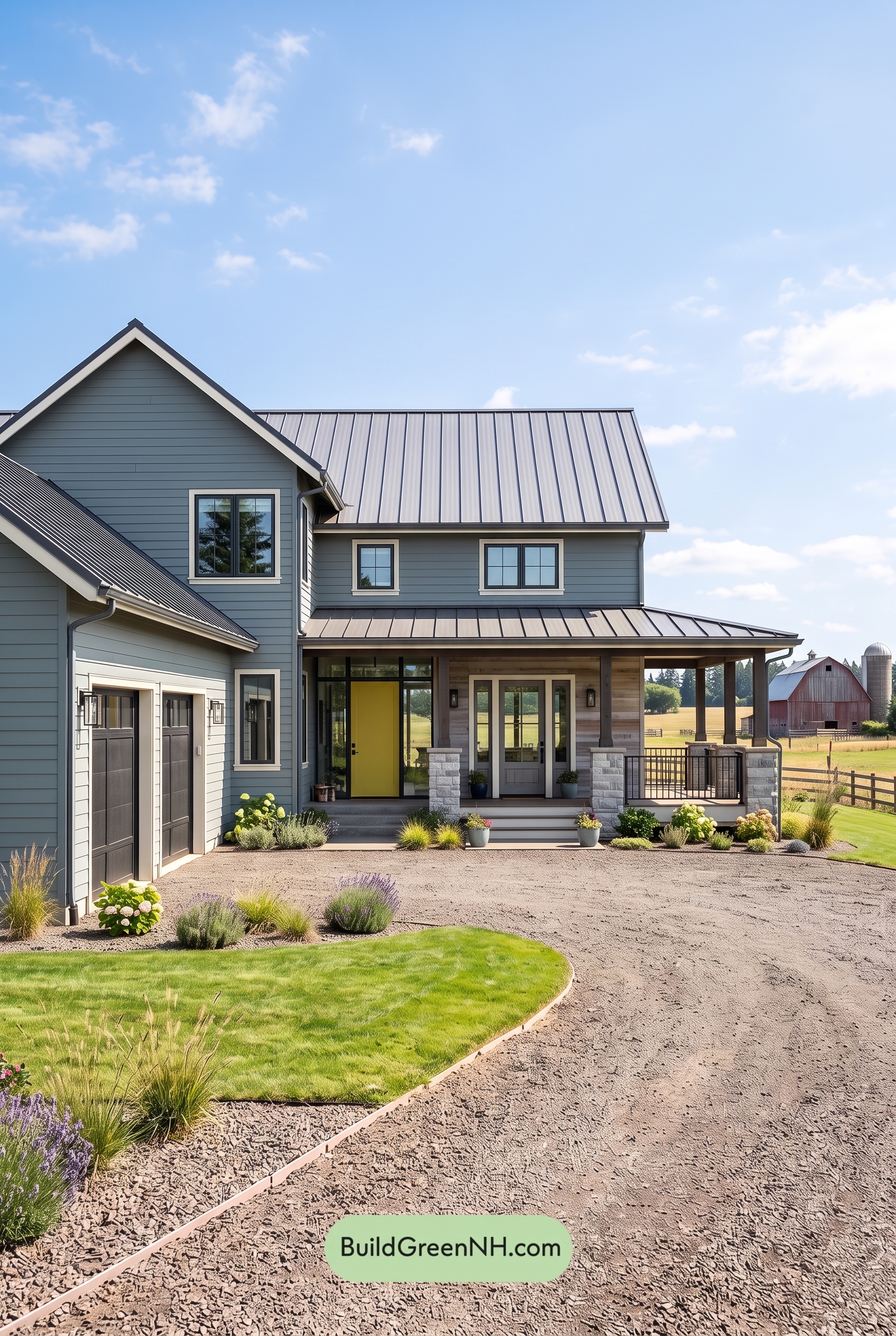 Blue House Front Door Color Scheme: Slate Citron
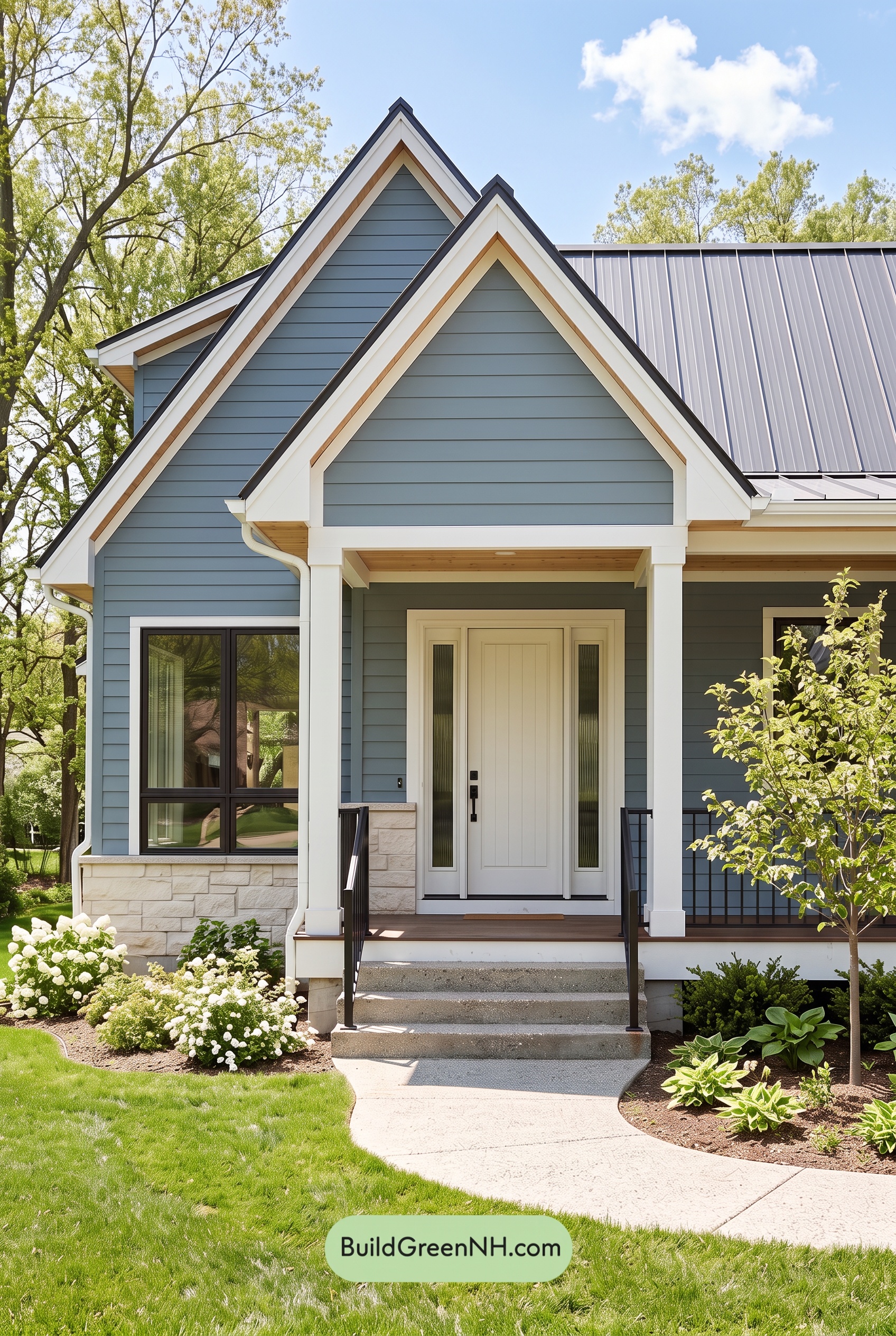 Blue House Front Door Color Scheme: Mist Blue Haven
Table of Contents