Last updated on
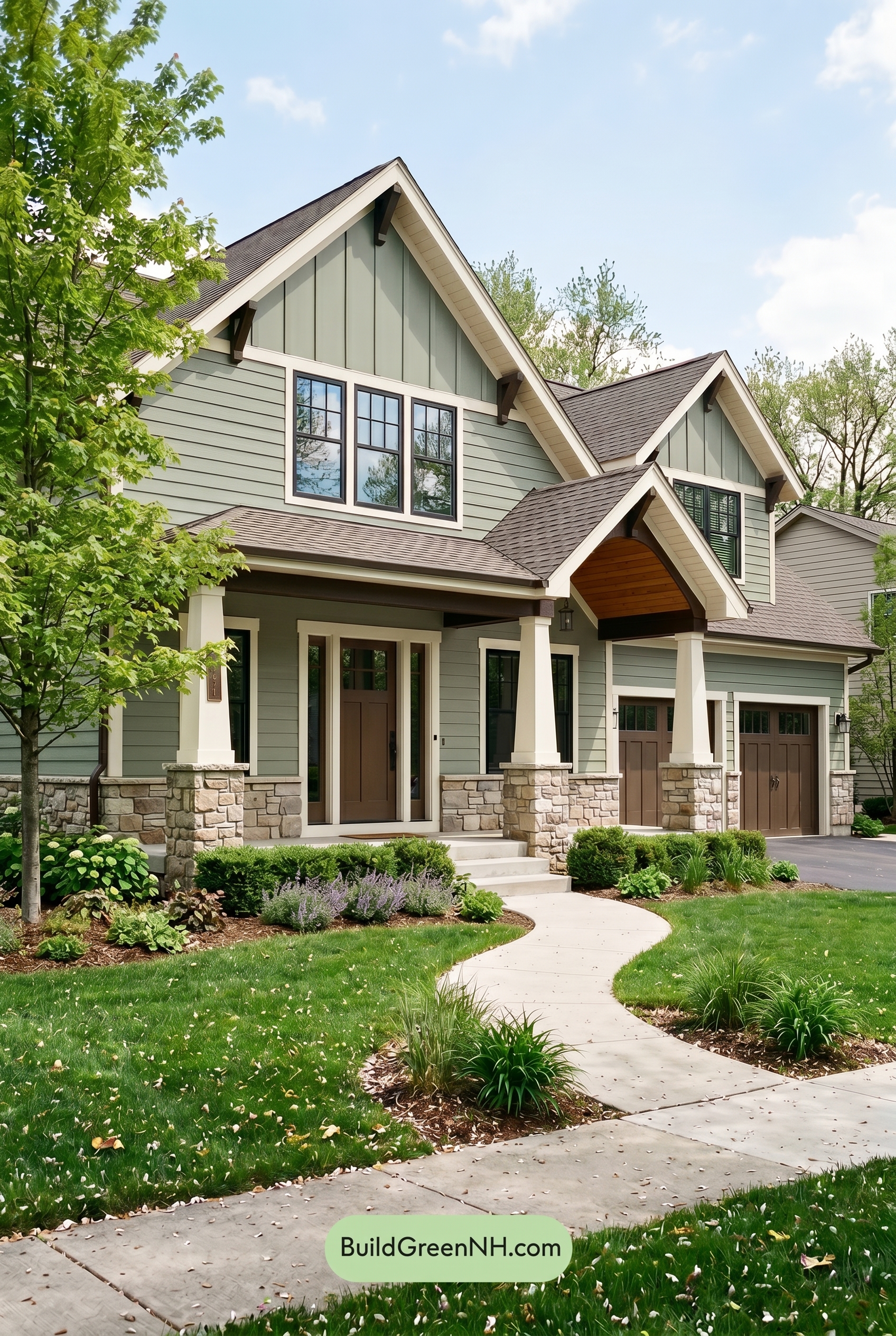

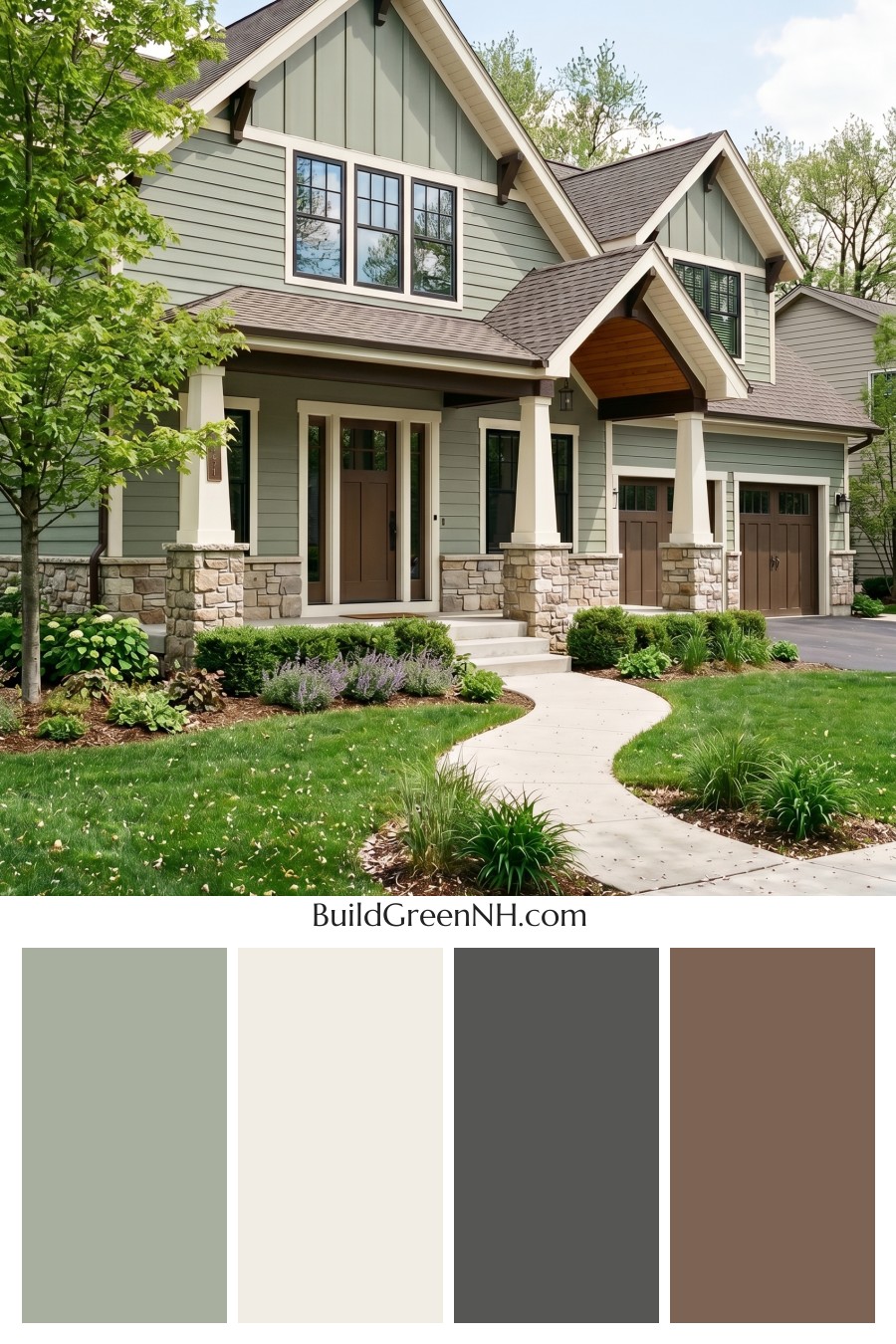
This exterior works beautifully because its soft green siding, warm beige trim, and earthy brown accents create a calm, nature-connected look with just the right amount of contrast.
A Soft Green Foundation
The main siding uses a muted green shade that feels fresh without being too bold. Across the horizontal siding, this gentle green gives the home a relaxed, welcoming personality and helps it settle naturally into the surrounding trees and lawn.
The upper gable areas continue in the green family, with a slightly varied appearance thanks to the vertical board-style detail. This keeps the palette cohesive while adding texture and dimension. The result is layered but not busy, which is exactly what makes the exterior feel so polished.
Warm Beige Trim That Frames Everything
The warm beige trim is one of the strongest parts of this color scheme. It outlines the rooflines, windows, porch edges, and gable details with a clean, classic finish. Because the beige has warmth, it softens the contrast against the green siding instead of feeling stark.
The columns also use this beige family, which gives the porch a bright, grounded look. Paired with the stone base, the columns feel substantial and elegant, adding a sense of craftsmanship to the front elevation.
Deep Gray Window Frames for Definition
The window frames bring in a deep gray shade that adds crisp definition. This darker tone is especially effective against the beige trim, creating a layered frame effect around the glass. It gives the home a more tailored look and keeps the softer green and beige palette from feeling too muted.
These gray accents also connect nicely with the darker roof tones, helping the upper and lower parts of the home feel balanced.
Earthy Brown Doors and Accents
The front door and garage doors introduce a warm brown family that feels natural and inviting. This shade adds richness to the exterior, especially against the cooler green siding. It brings in a wood-inspired warmth that makes the entry feel approachable.
Brown accents under the gables and along key architectural details add depth. They work almost like punctuation marks, drawing attention to the roof brackets, porch structure, and entryway without overwhelming the design.
A Roof That Grounds the Palette
The roof leans into a deep brown-gray shade, which grounds the entire color scheme. It is dark enough to provide contrast, but still earthy enough to blend with the green siding, beige trim, and brown accents. This is a smart choice for a home with multiple gables, because the roof becomes a unifying element rather than a distraction.
The Overall Mood
This color scheme feels peaceful, refined, and connected to nature. The soft green gives the home its fresh character, the warm beige trim adds brightness and structure, and the brown accents bring comfort and depth. The gray window frames sharpen the look just enough.
Altogether, the palette strikes a lovely balance between rustic charm and polished curb appeal. It feels timeless, welcoming, and perfectly suited to a leafy setting.
Next, see how this color scheme looks under different lighting simulations throughout the day.
Overcast
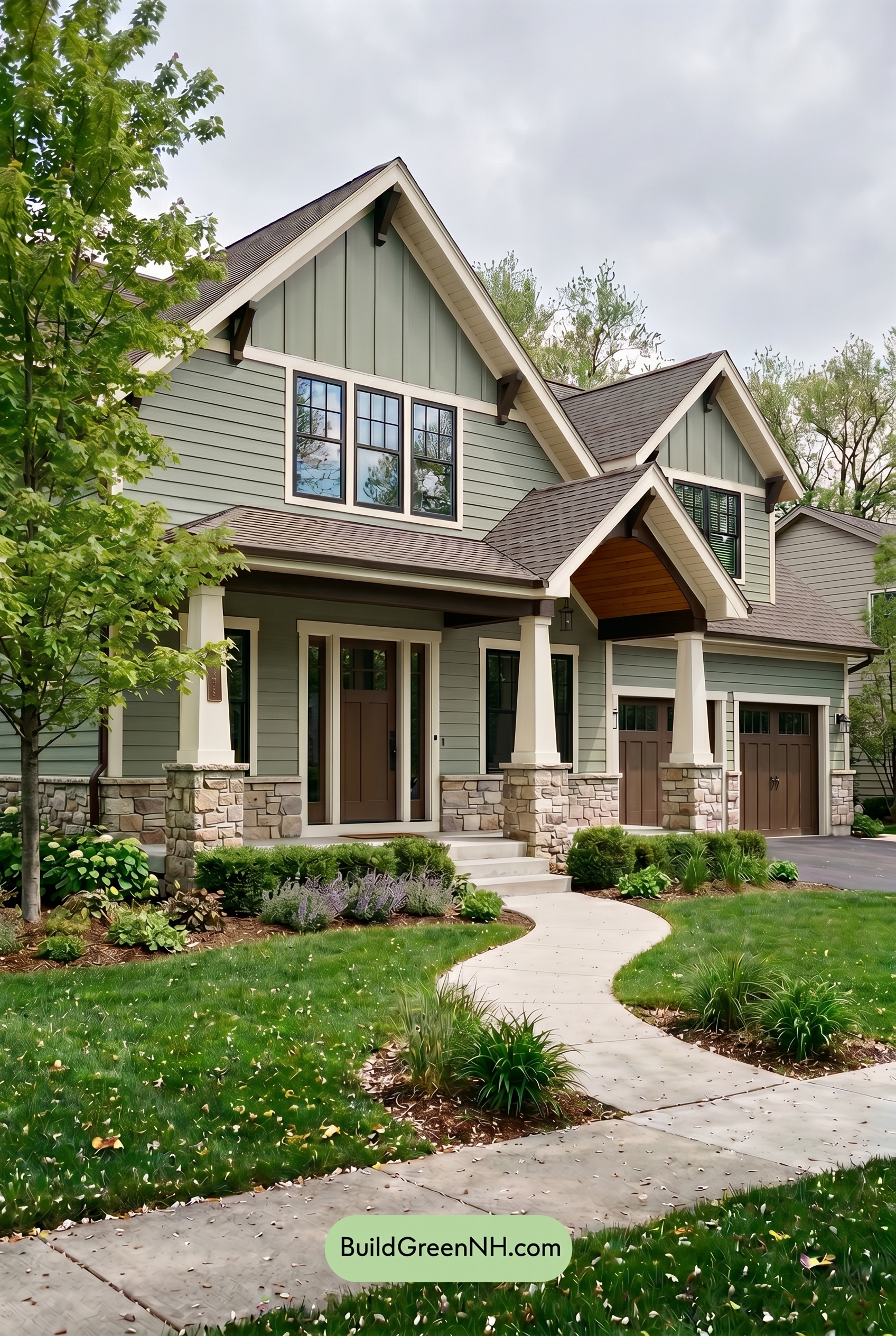
Under overcast light, the green siding reads softer and more muted than it would in neutral daylight, with its saturation gently dialed down and its cooler undertones more noticeable. The beige trim and columns lose some of their sunlit warmth, feeling calmer and less creamy, while the gray window frames appear a bit steadier and less reflective.
Because cloud cover diffuses the light, shadows become broader and softer, reducing the crisp contrast between the trim, siding, and rooflines. The brown front door and garage door feel deeper and quieter, giving the whole exterior a relaxed, grounded mood rather than the brighter, sharper look it would have in clearer daylight.
Golden Hour
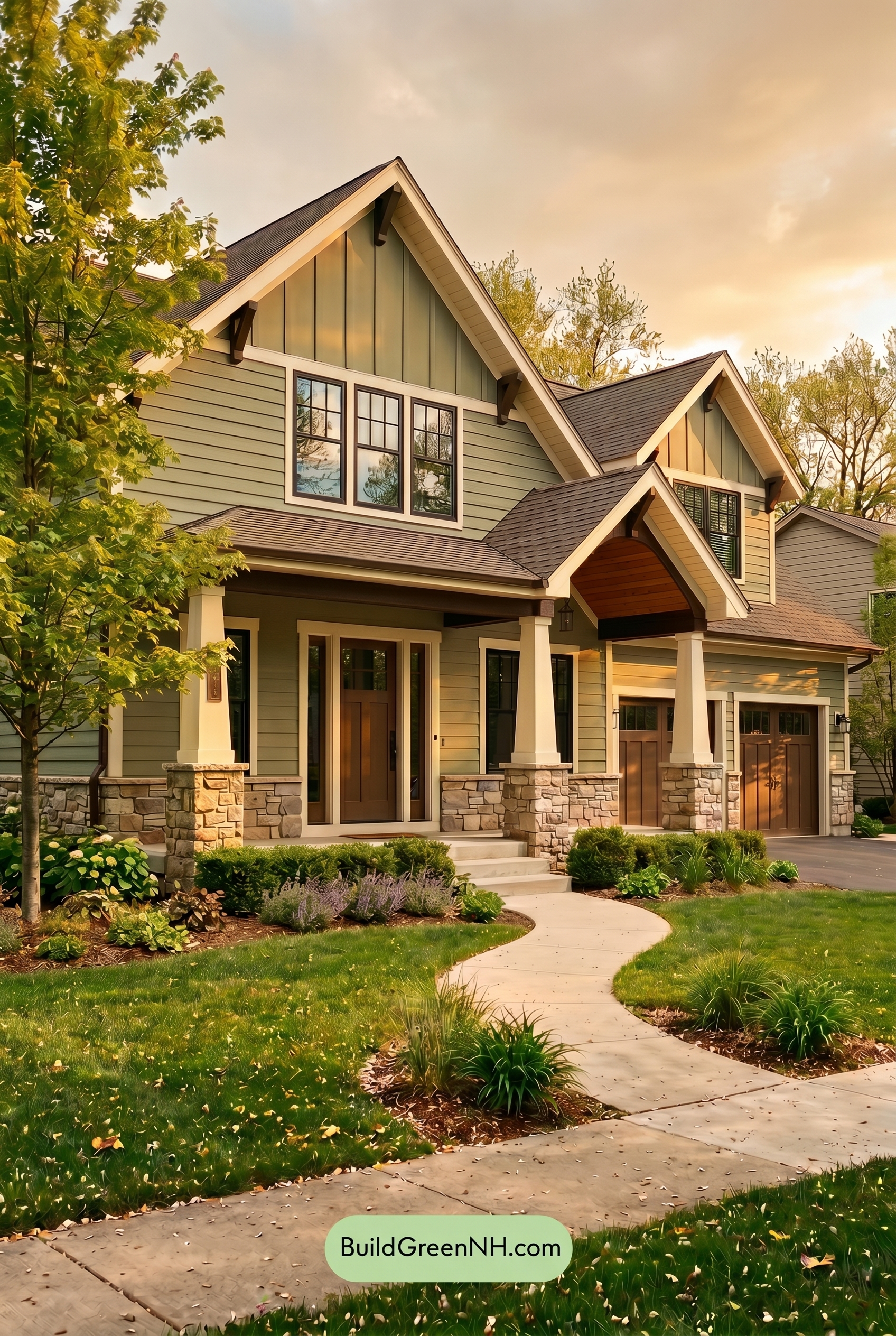
Under Golden Hour light, the green siding takes on extra warmth and saturation, shifting from a cooler, more balanced look in neutral daylight to a softer, earthier shade with a gentle glow. The beige trim and columns feel creamier and more luminous, reducing any starkness and making the edges of the rooflines and windows feel welcoming.
Shadows grow longer and deeper, so the gray window frames and brown doors gain stronger contrast against the lighter trim. Compared to neutral daylight, the overall palette feels richer, warmer, and more relaxed, with the darker shaded areas adding depth while the sunlit surfaces create a cozy, inviting mood.
Shade
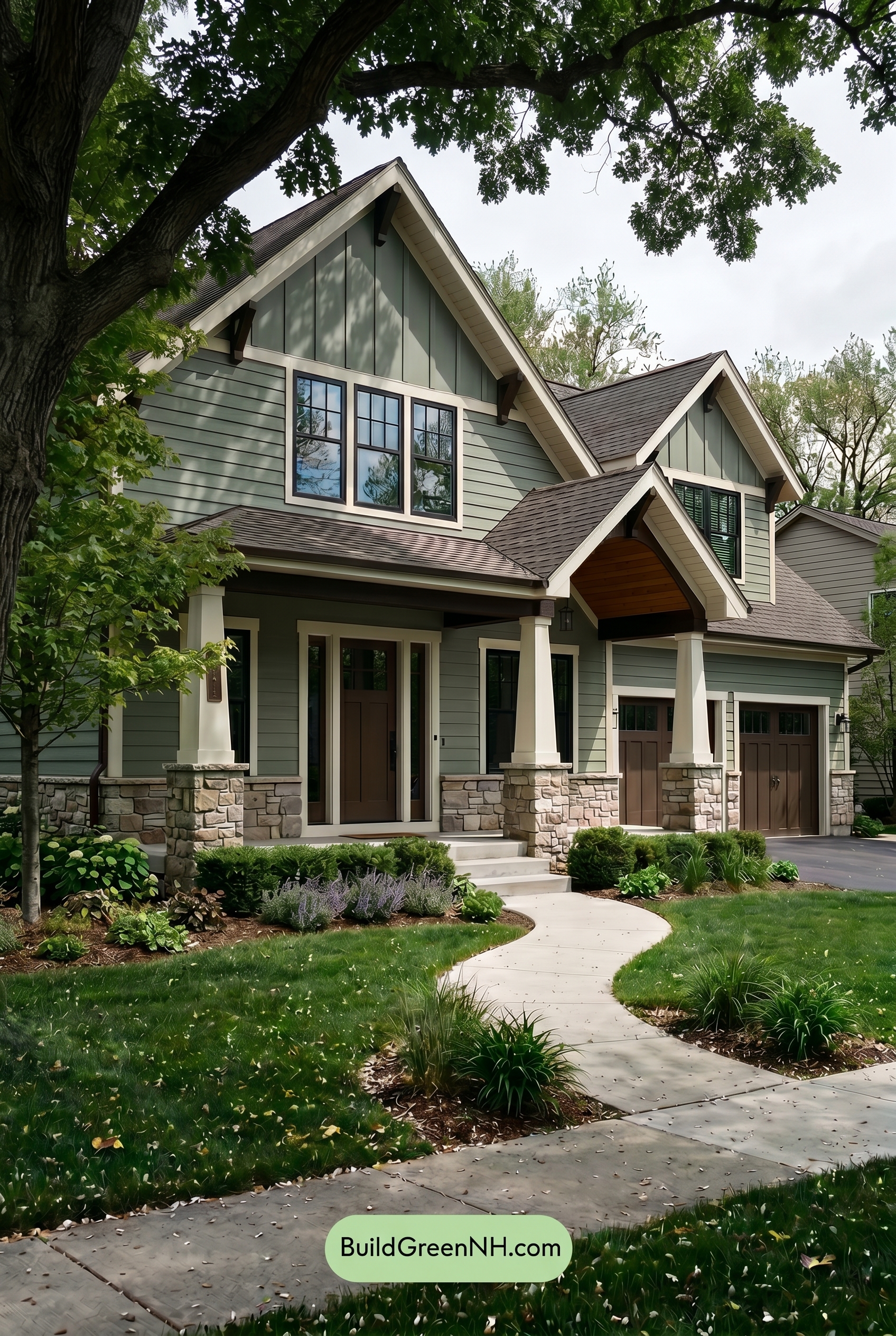
In Shade, the green siding reads deeper and more saturated than it would in neutral daylight, taking on a cooler, woodland quality. The layered shadows from the trees soften the warmth in the beige trim and columns, making those lighter neutrals feel calmer and less bright while still outlining the rooflines and windows.
The gray window frames gain a crisper edge against the muted green walls, while the brown front door and garage door appear richer and more grounded. Overall, Shade lowers the contrast slightly, adds depth to the shadows, and gives the exterior a quieter, more sheltered mood compared to the cleaner, more evenly balanced look of neutral daylight.
Nighttime
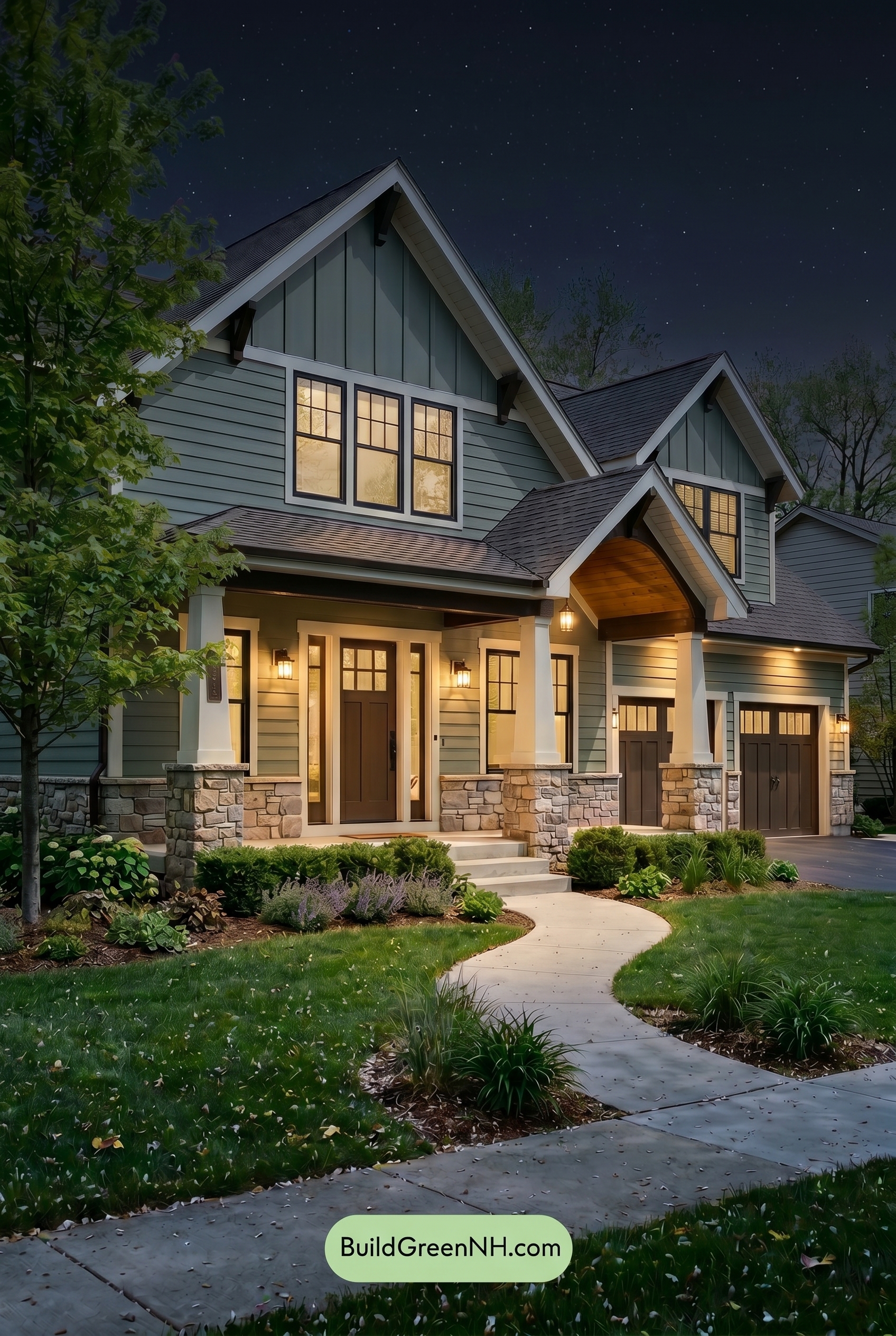
At night, the green siding loses some of its daylight crispness and shifts into a deeper, more saturated shade, especially where the rooflines and trees cast soft shadows. The beige trim and columns catch the warm exterior lighting, making those neutral shades feel creamier and more inviting than they would in neutral daylight.
The gray window frames read darker and sharper after sunset, increasing contrast against the lighter trim, while the brown front door and garage door look richer and warmer under the glow. Overall, nighttime gives the palette a cozier, more dramatic mood, with stronger shadows, softened edges, and a welcoming warmth around the entry.
Pin these for later
Want More?
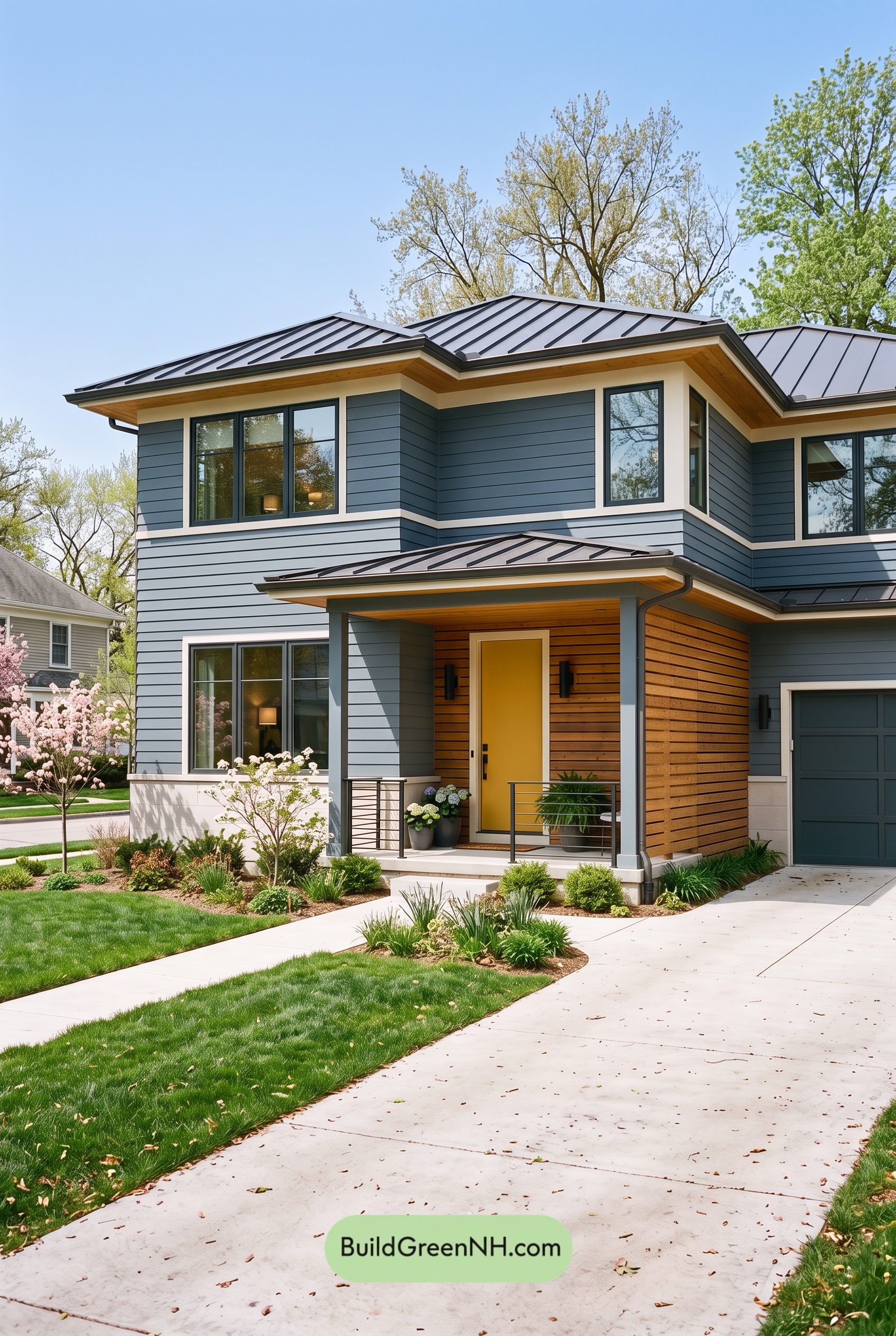 Blue House Front Door Color Scheme: Harbor Saffron
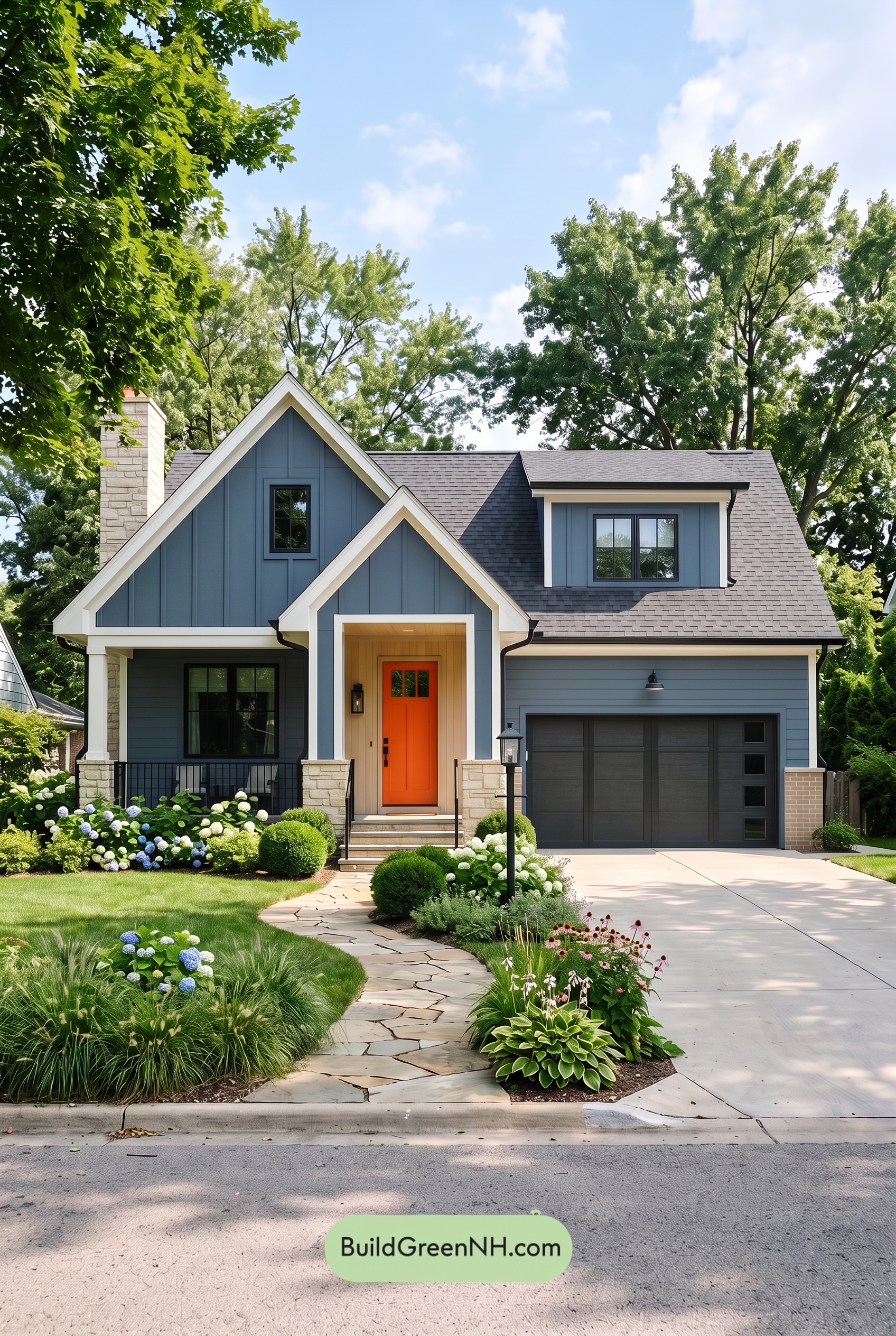 Blue House Front Door Color Scheme: Cobalt Persimmon
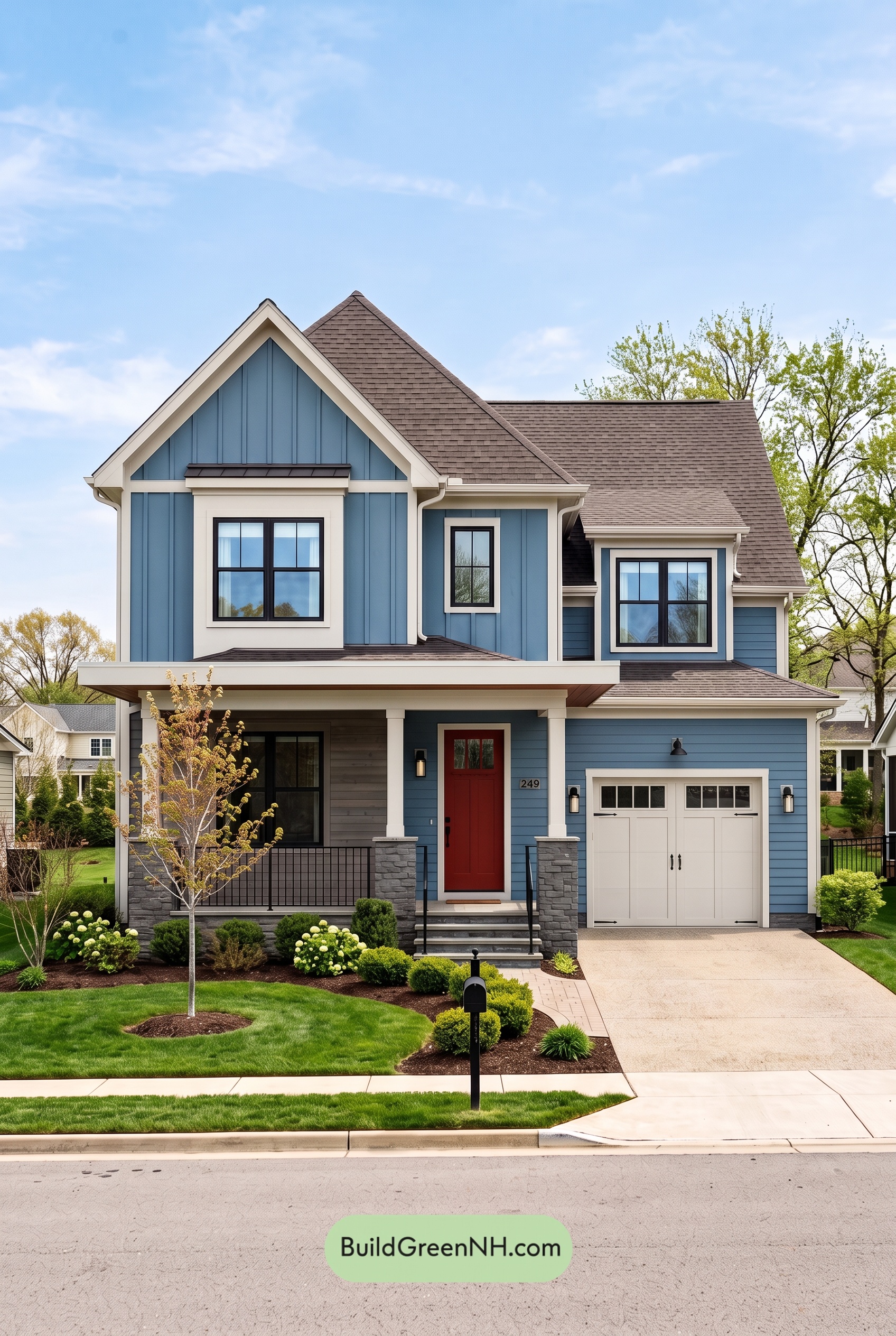 Blue House Front Door Color Scheme: Denim Poppy
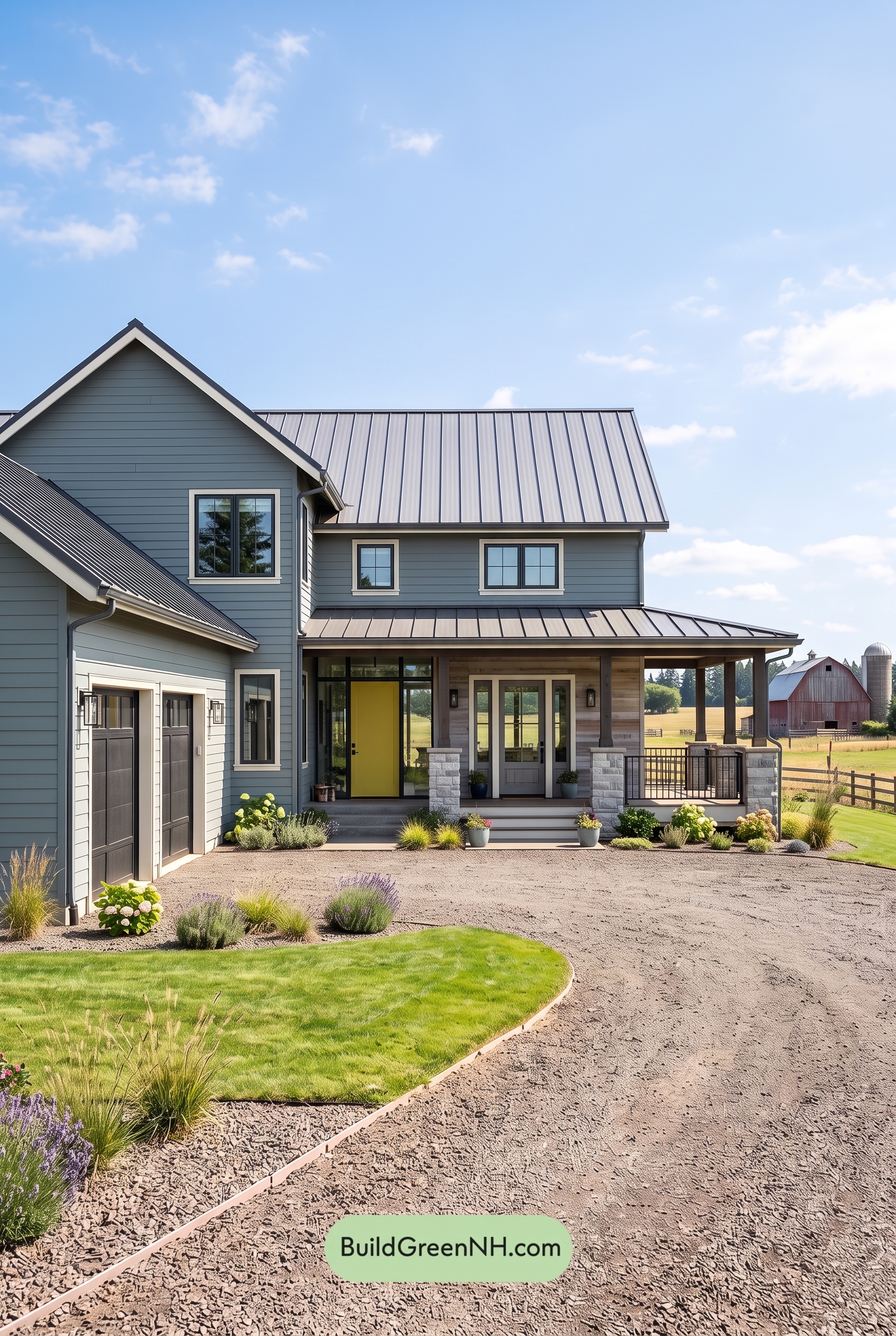 Blue House Front Door Color Scheme: Slate Citron
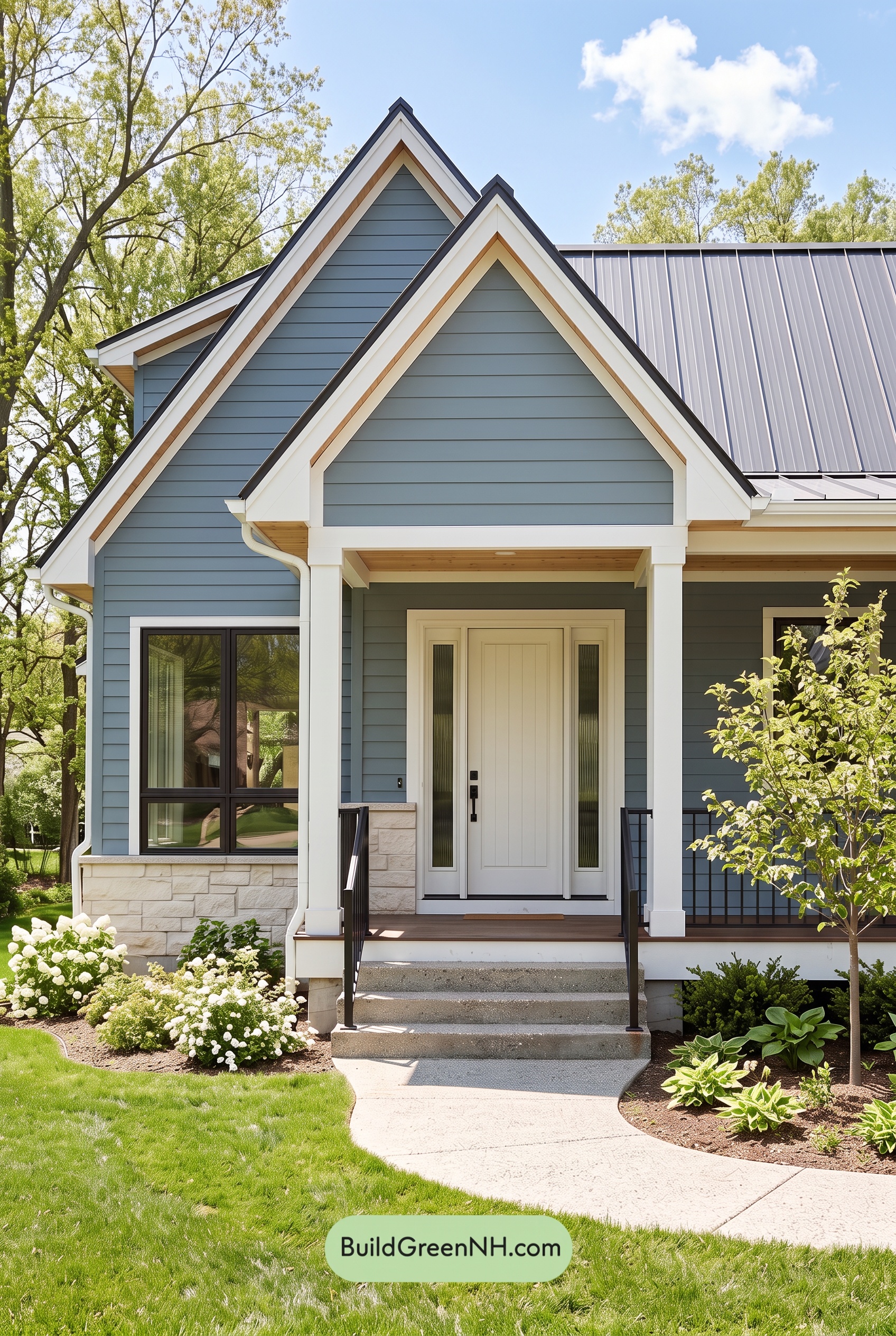 Blue House Front Door Color Scheme: Mist Blue Haven
Table of Contents