Last updated on
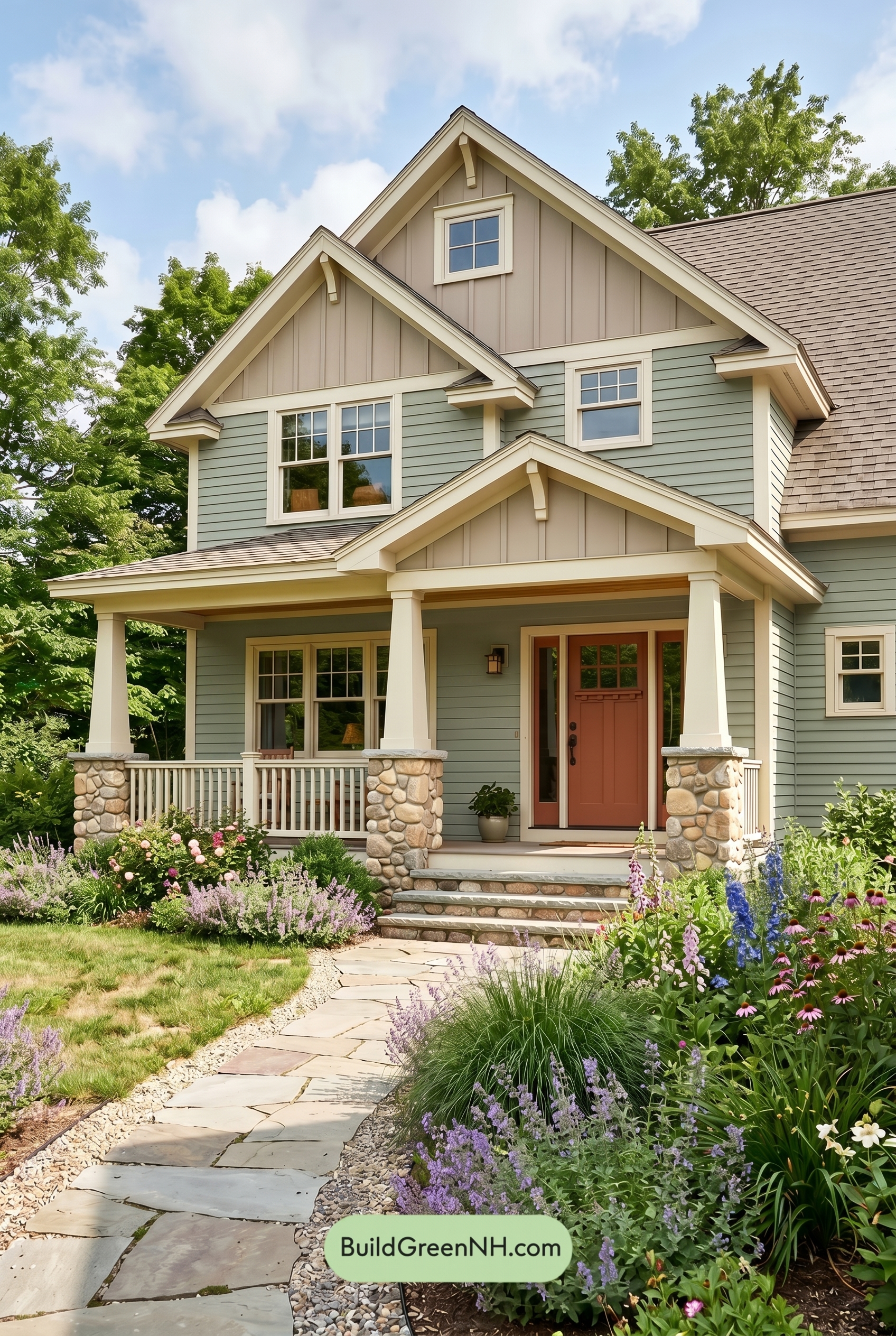

This home’s soft green-and-beige palette feels instantly welcoming because it balances garden-fresh charm with warm, timeless architectural detail.
A Calm Green Base With Natural Curb Appeal
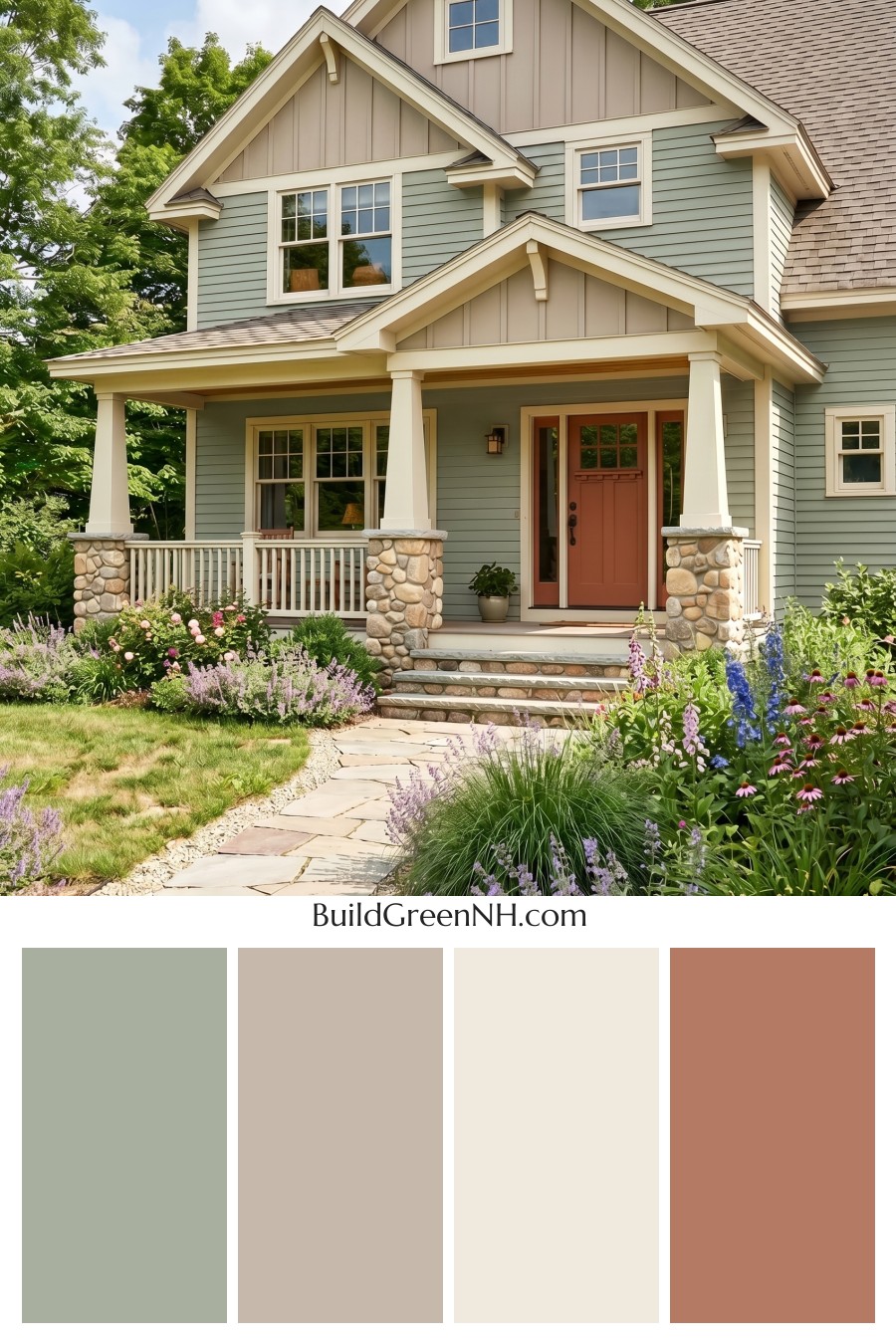
The main siding is wrapped in a muted green shade that feels fresh without being loud. It has a gentle, nature-inspired quality that works beautifully with the surrounding trees, garden beds, and stone pathway. Because the green is softened rather than saturated, it gives the house a relaxed, lived-in elegance.
This shade is especially effective on the horizontal siding, where the lines of the home create subtle shadow and movement. The result is a façade that feels layered, but still calm and cohesive.
Warm Beige for the Upper Gables
The upper gable sections shift into a warm beige family, adding contrast while keeping the overall look soft. This beige shade brings out the craftsman-style details and helps the vertical siding stand apart from the green lower walls.
Using beige above the green also gives the home a grounded, balanced feeling. The green connects the house to the landscape, while the beige adds warmth and architectural polish.
Creamy Beige Trim That Ties Everything Together
The trim, window frames, columns, railings, and roofline details are finished in a light creamy beige shade. This choice is key to the whole palette. It brightens the exterior, outlines the windows beautifully, and gives the porch a crisp, welcoming presence.
Because the trim stays within the beige family, it blends naturally with the upper walls rather than creating a harsh contrast. The home feels detailed, but not busy.
A Welcoming Front Entry
The front door introduces a warmer earthy accent that gives the entry a friendly focal point. Against the soft green siding and creamy beige trim, the door feels inviting and charming, drawing the eye toward the porch without overpowering the rest of the palette.
The porch columns and railings continue the light beige shade, making the entry feel open and airy. Paired with the stone base, the whole front porch has a handcrafted, approachable character.
Roof and Stone Add Depth
The roof carries a medium brown-gray shade that complements both the green siding and beige trim. It adds quiet depth overhead and keeps the palette feeling natural rather than overly polished.
The stonework at the porch base brings in a mix of warm tan, soft gray, and earthy brown tones. These natural shades bridge the house colors with the landscape, making the exterior feel settled into its setting.
The Overall Mood
This color scheme feels peaceful, warm, and classically cottage-inspired. The soft green gives it freshness, the beige shades add comfort, and the earthy accents keep everything grounded.
What makes it work so well is the restraint. Every major element belongs to a natural, easygoing color family, so the home feels coordinated from the roofline to the garden path. It is charming without being fussy, colorful without feeling bold, and welcoming in the best possible way.
Next, see how this color scheme looks under different lighting simulations throughout the day.
Overcast
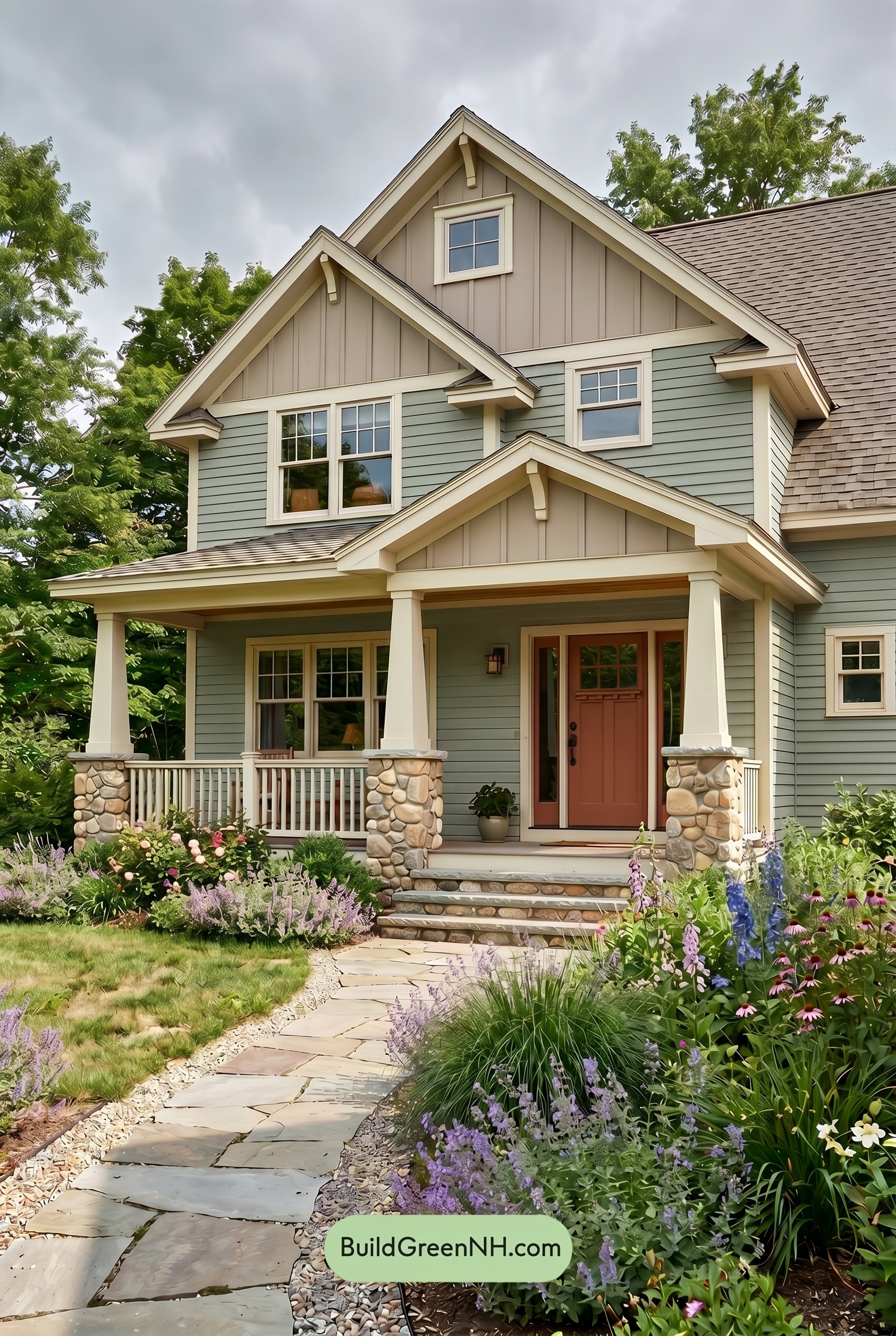
Under overcast lighting, this shade of green loses some of the crisp saturation it would show in neutral daylight, reading softer, dustier, and a touch deeper. The warm beige areas also feel less sunlit and creamy, shifting toward a quieter, more muted neutral that blends gently with the green.
Because the shadows are broader and less defined, contrast between the siding, trim, columns, and railings becomes calmer and more even. The overall mood turns cozy and subdued, with the color palette feeling more relaxed, natural, and softly layered than it would in brighter neutral daylight.
Golden Hour
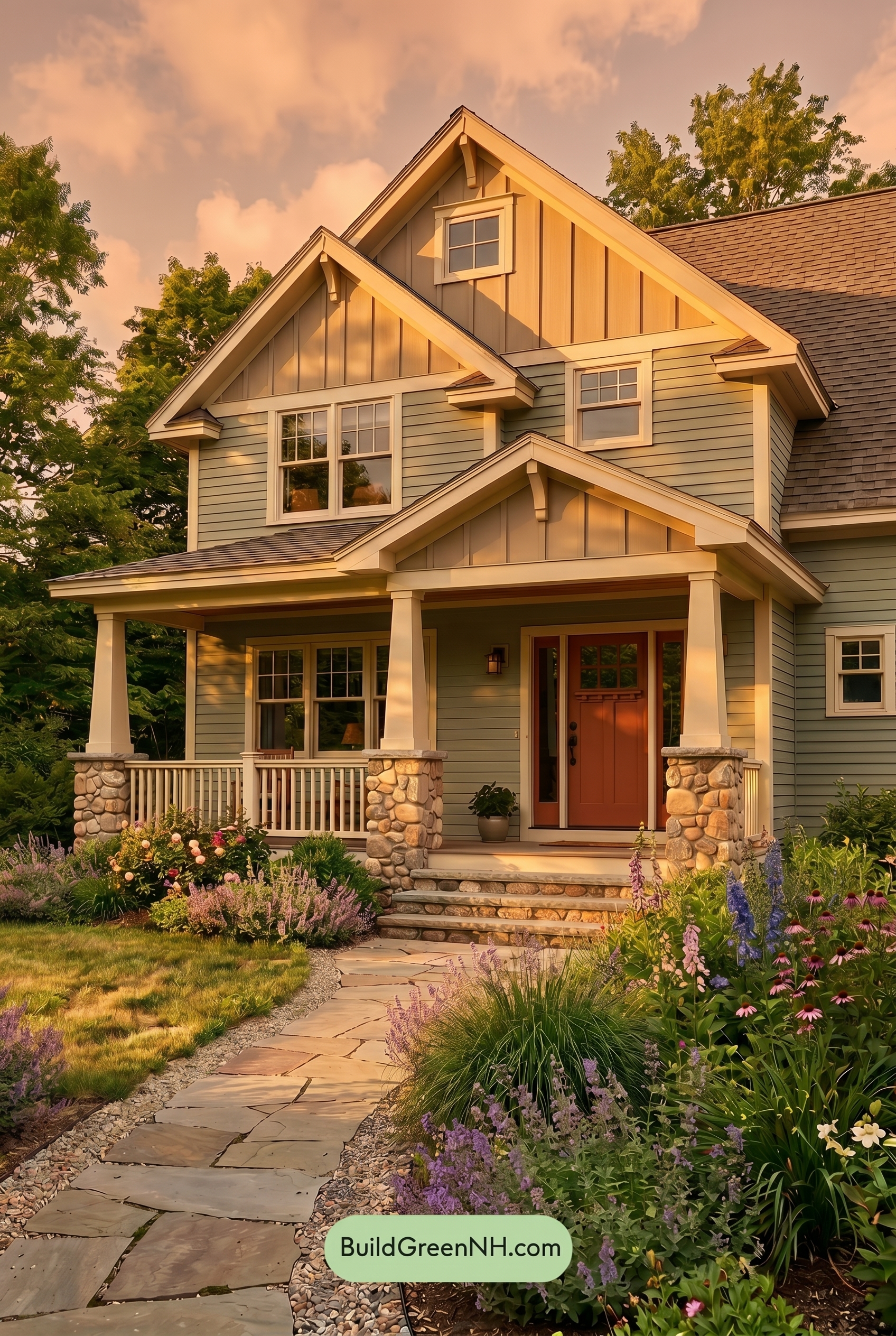
Golden Hour gives the green siding a richer, warmer cast than neutral daylight, nudging it toward deeper sage and olive tones. The beige upper walls, trim, window frames, columns, and railings feel softer and more saturated, with a gentle golden warmth that makes the whole palette look more inviting.
Compared with flatter midday light, the longer shadows add stronger contrast around the gables, porch, and trim details. Those shadowed areas make the lighter beige shades glow more noticeably, while the darker green sections feel grounded and cozy, shifting the mood from crisp and natural to warm, calm, and welcoming.
Shade
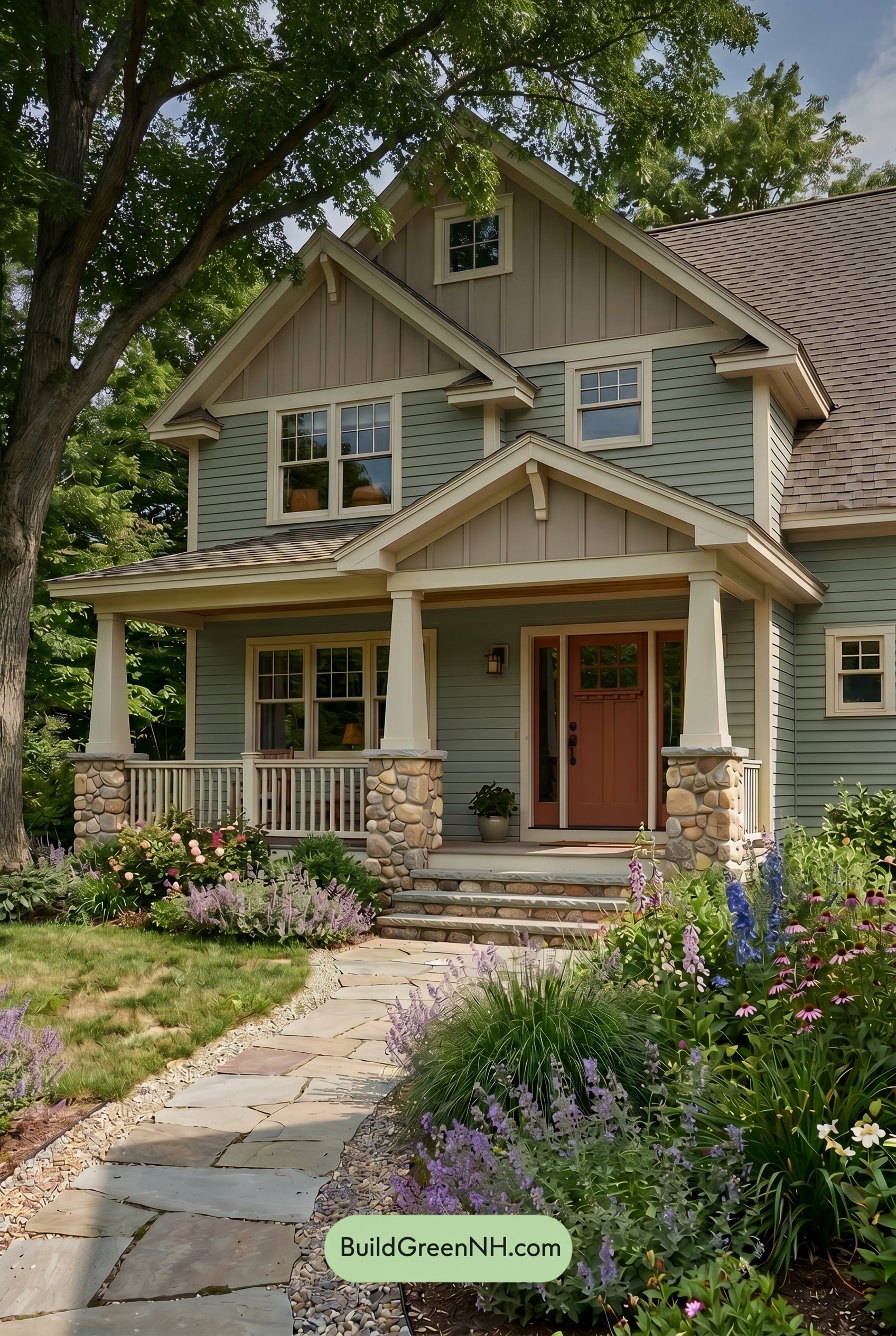
In shade, the green siding appears deeper and slightly cooler than it would in neutral daylight, with its saturation feeling richer where the tree canopy dims the surface. The beige upper walls, trim, window frames, columns, railings, and front entry lose a bit of sunlit warmth, becoming softer and more subdued.
The layered shadows create stronger contrast along the gables, porch, and siding lines, making the light beige details stand out in a quieter, more refined way. Overall, the palette shifts from bright and fresh in neutral daylight to calm, sheltered, and cozy under shade.
Nighttime
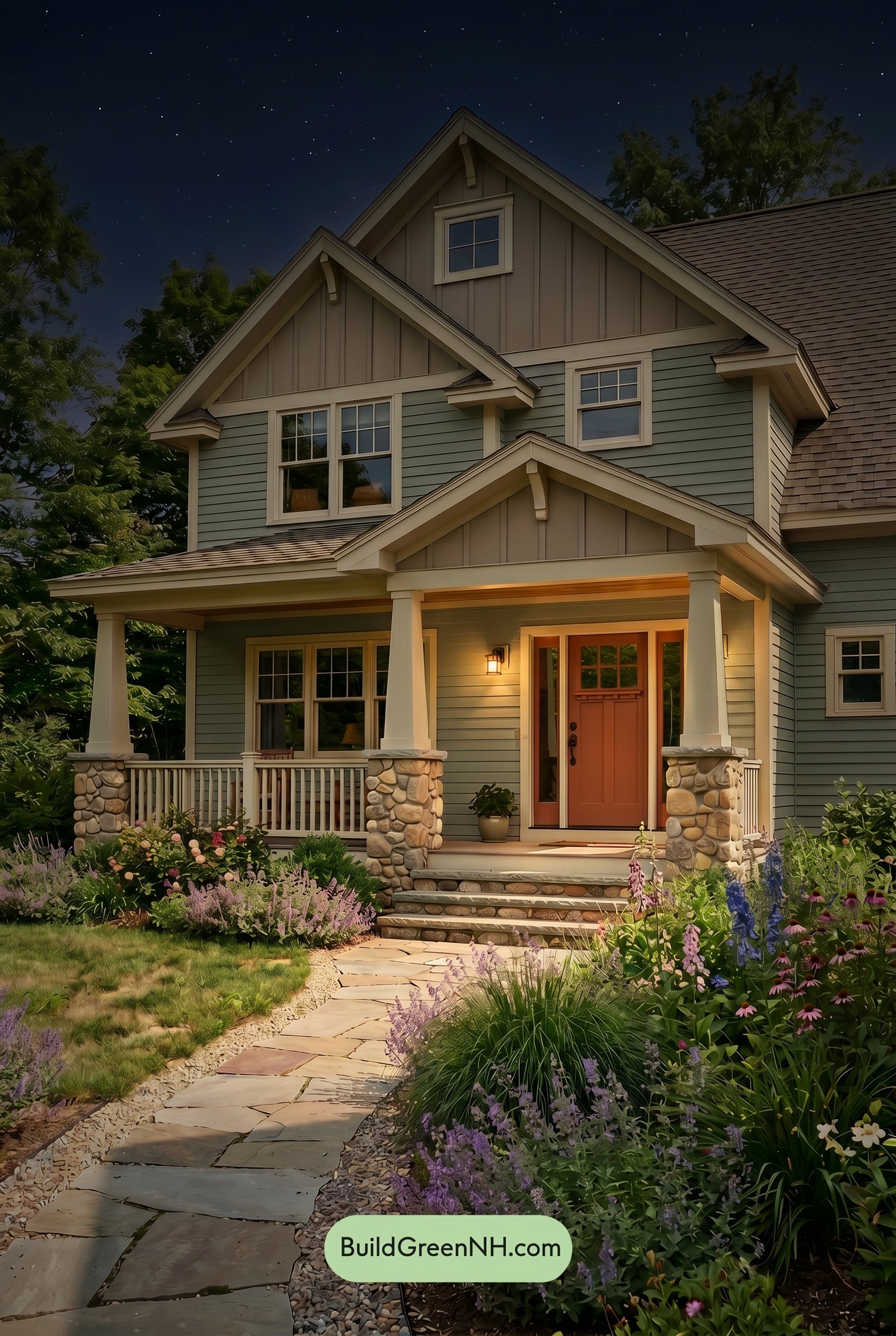
At nighttime, the green siding appears deeper and more muted than it would in neutral daylight, with shadows softening its saturation and giving it a quieter, more grounded presence. The beige upper walls and trim shift warmer under the porch lighting, taking on a creamy glow where illuminated while receding into taupe-like depth beneath the rooflines.
The contrast becomes more dramatic after dark: bright beige details stand out crisply against the shaded green walls, while deeper shadows add dimension around the windows, columns, and gables. Compared to daylight, the overall mood feels cozier and more intimate, with the warm neutrals softening the façade and the darker green creating a calm, sheltered backdrop.
Pin these for later
Want More?
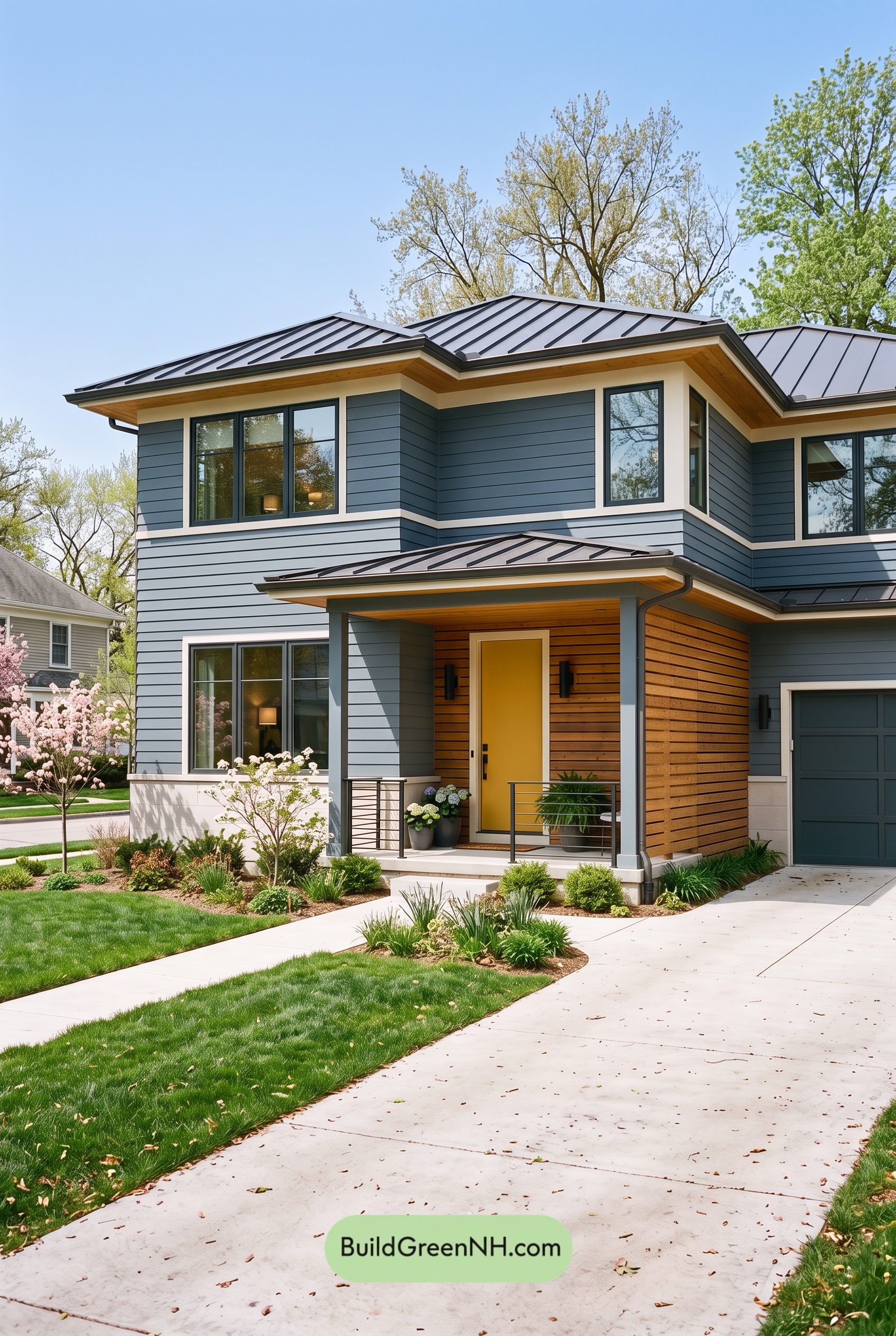 Blue House Front Door Color Scheme: Harbor Saffron
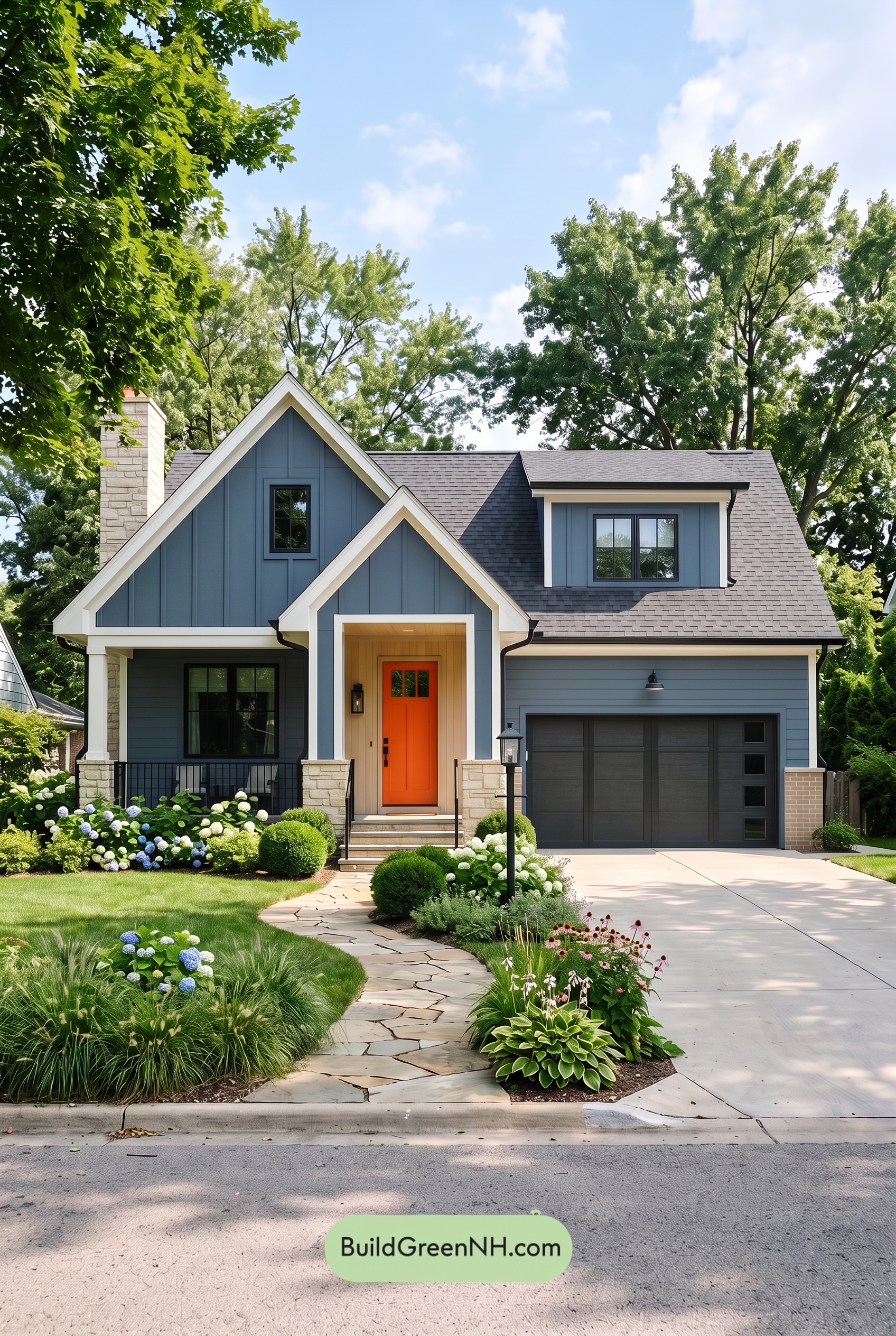 Blue House Front Door Color Scheme: Cobalt Persimmon
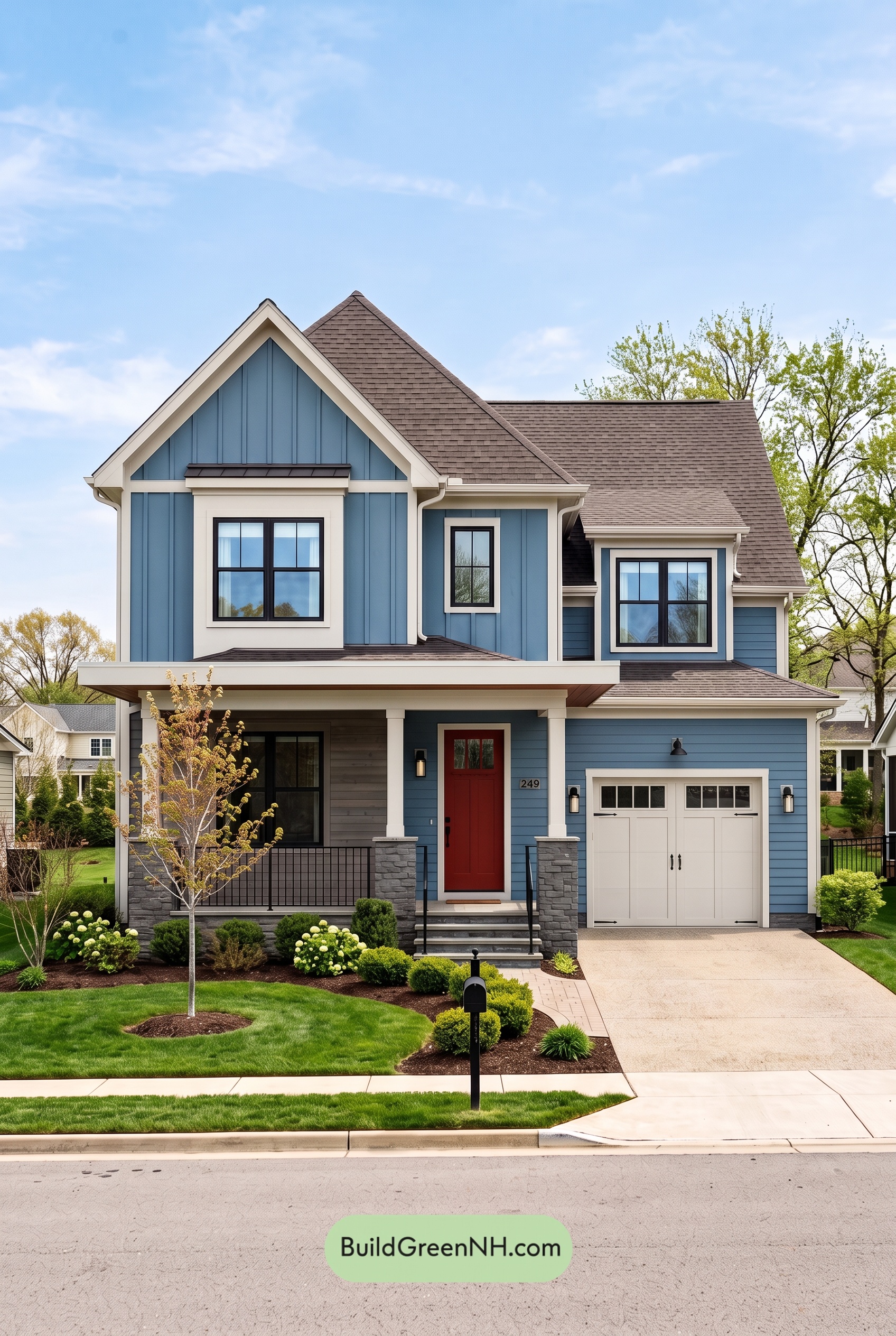 Blue House Front Door Color Scheme: Denim Poppy
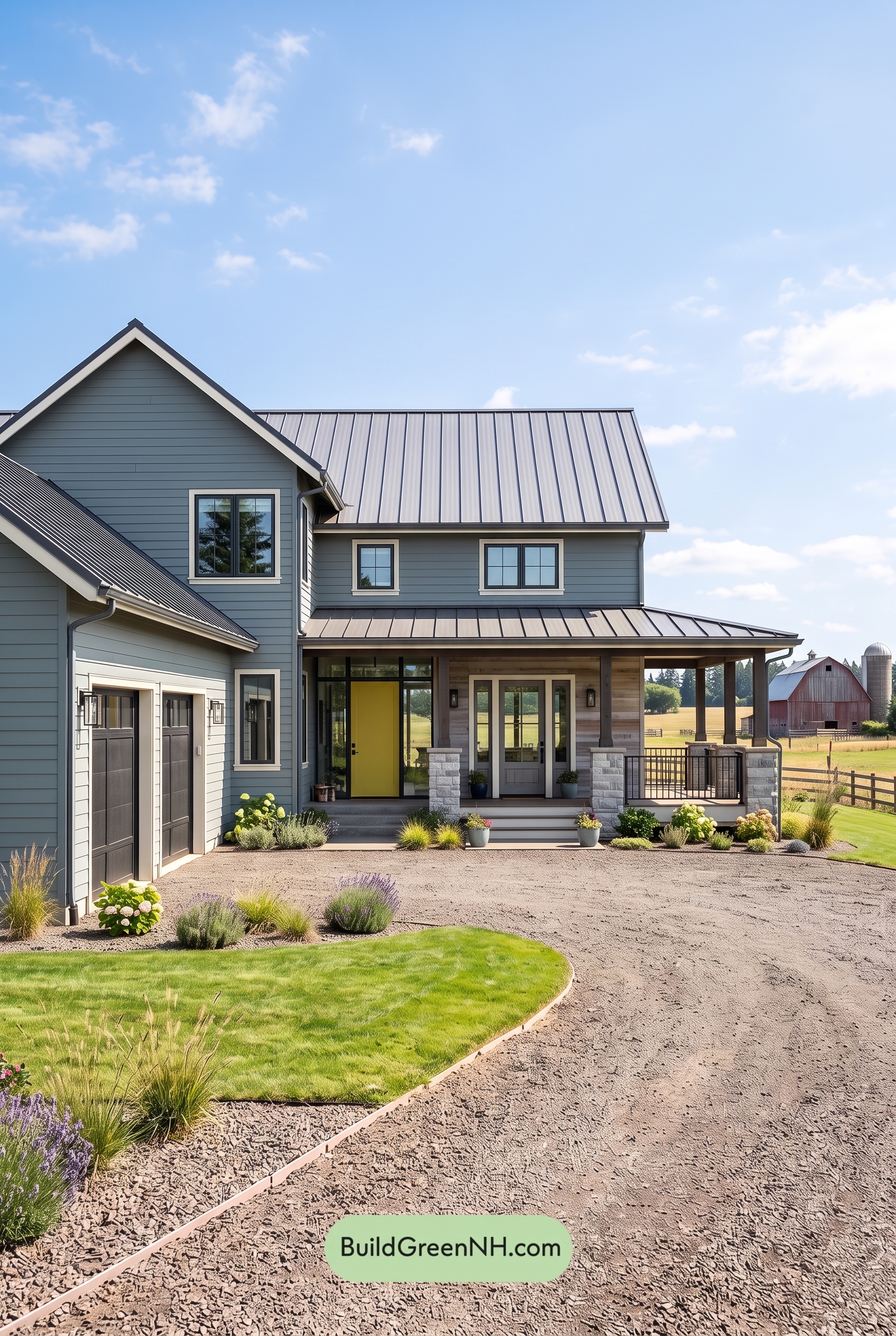 Blue House Front Door Color Scheme: Slate Citron
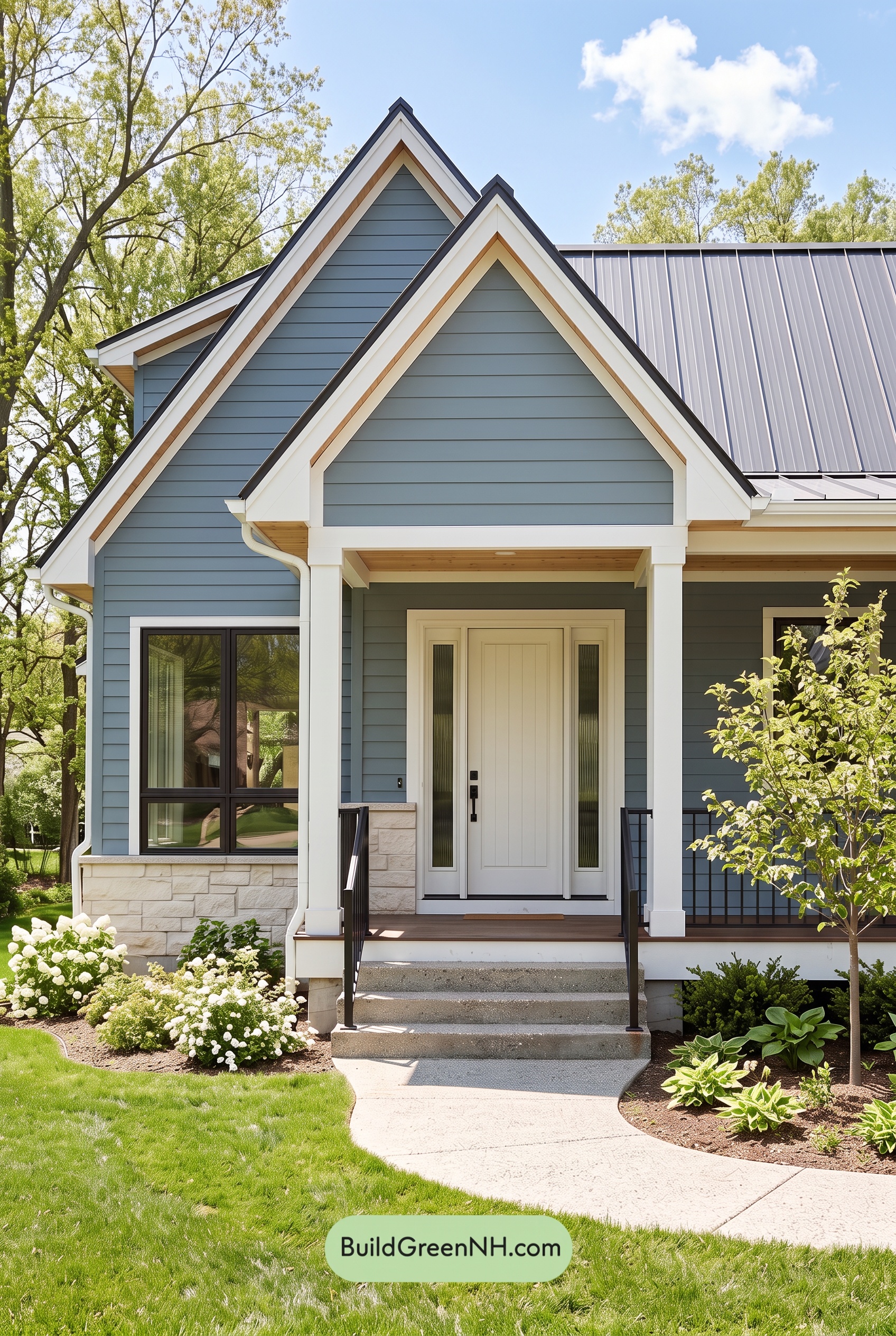 Blue House Front Door Color Scheme: Mist Blue Haven
Table of Contents