Last updated on
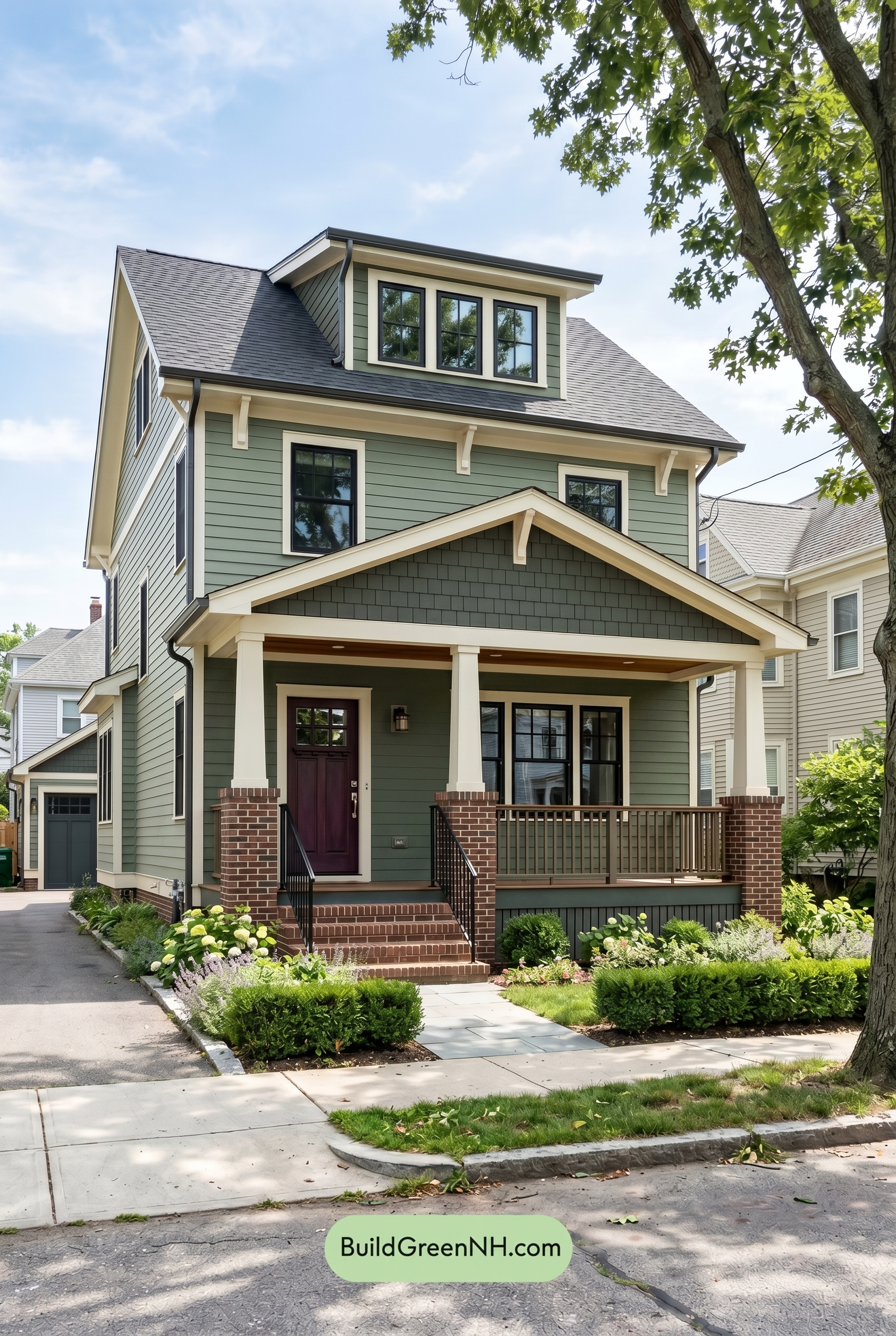

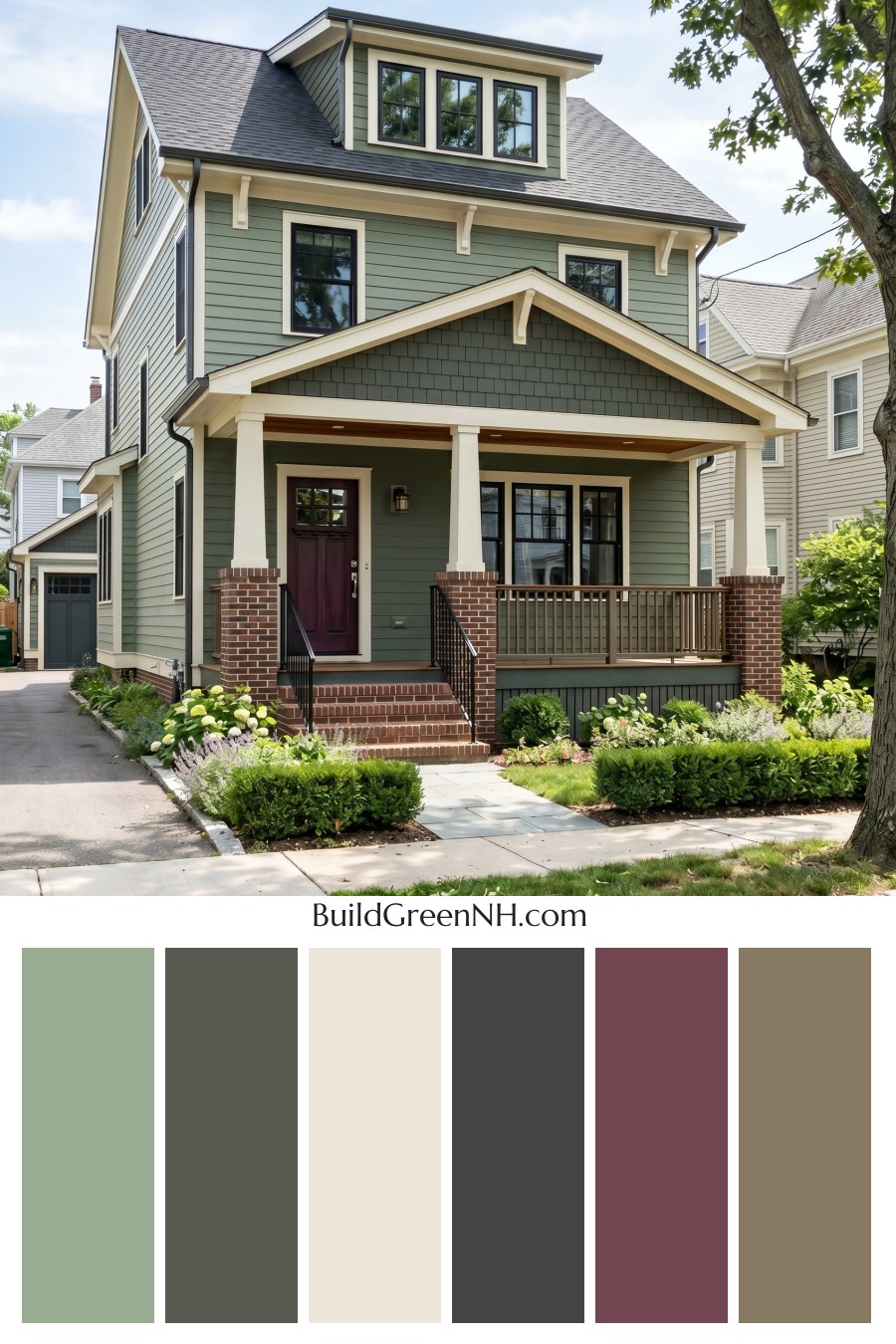
This exterior color scheme shines because its softened green siding, crisp white trim, and grounded brown accents feel timeless, natural, and warmly welcoming all at once.
A Fresh Take on Classic Curb Appeal
The main siding is wrapped in a muted green shade that feels calm, leafy, and perfectly at home among the surrounding trees and garden beds. It has enough depth to give the house presence, but it stays soft enough to feel approachable rather than heavy.
That green is the heart of the palette. It gives the tall exterior a relaxed, organic character while still looking polished and intentional. On a home with strong vertical lines and layered rooflines, this kind of green helps the architecture feel rooted and balanced.
Crisp White Trim That Frames Everything Beautifully
The white trim is doing a lot of quiet work here. Around the windows, roof edges, porch beams, and columns, the bright white shade creates clean definition and makes the green siding look fresher by contrast.
The porch columns especially benefit from this treatment. Their white finish adds a classic, sturdy look and keeps the generous front porch feeling open and light. It also draws the eye to the welcoming entry instead of letting the deeper exterior shades feel too dense.
Gray Accents Add Depth and Structure
Gray plays a strong supporting role across the exterior. The accent wall in the front gable uses a deeper gray-green shade, giving the porch roofline extra dimension and a handcrafted feel. Because it sits close to the main green family, the contrast is subtle rather than sharp.
The window frames and garage door lean into the gray family as well, adding a refined, modern edge. These darker gray details outline the glass beautifully and connect visually with the roof, creating a cohesive top-to-bottom flow.
Warm Brown Details Keep the Palette Inviting
The front door introduces a rich brown shade with warm undertones, giving the entry a handsome focal point. Against the green siding and white trim, it feels grounded and welcoming, like a natural wood-inspired note in the middle of a garden-friendly palette.
The porch railings continue the brown family in a slightly quieter way. Their earthy tone ties in nicely with the front steps, masonry bases, and landscaped setting. This warmth prevents the cooler greens and grays from feeling too formal.
The Roof Pulls the Whole Look Together
The roof sits in a medium-to-deep gray shade, which is an ideal partner for this exterior. It gives the home a crisp cap without competing with the siding, and it echoes the gray accents used on the windows, garage, and gable details.
Because the roof color is neutral and substantial, the green siding can take center stage. The result feels balanced: fresh below, grounded above, and neatly framed throughout.
The Overall Mood
This home feels calm, established, and friendly. The softened green siding brings a nature-inspired charm, the white trim adds brightness, the gray accents create sophistication, and the brown details bring warmth right where it matters most.
It is a color scheme that works especially well for homes with porches, layered trim, and traditional architectural details. Nothing feels loud, yet every element has a purpose. The finished look is welcoming, polished, and quietly distinctive.
Next, see how this color scheme looks under different lighting simulations throughout the day.
Overcast
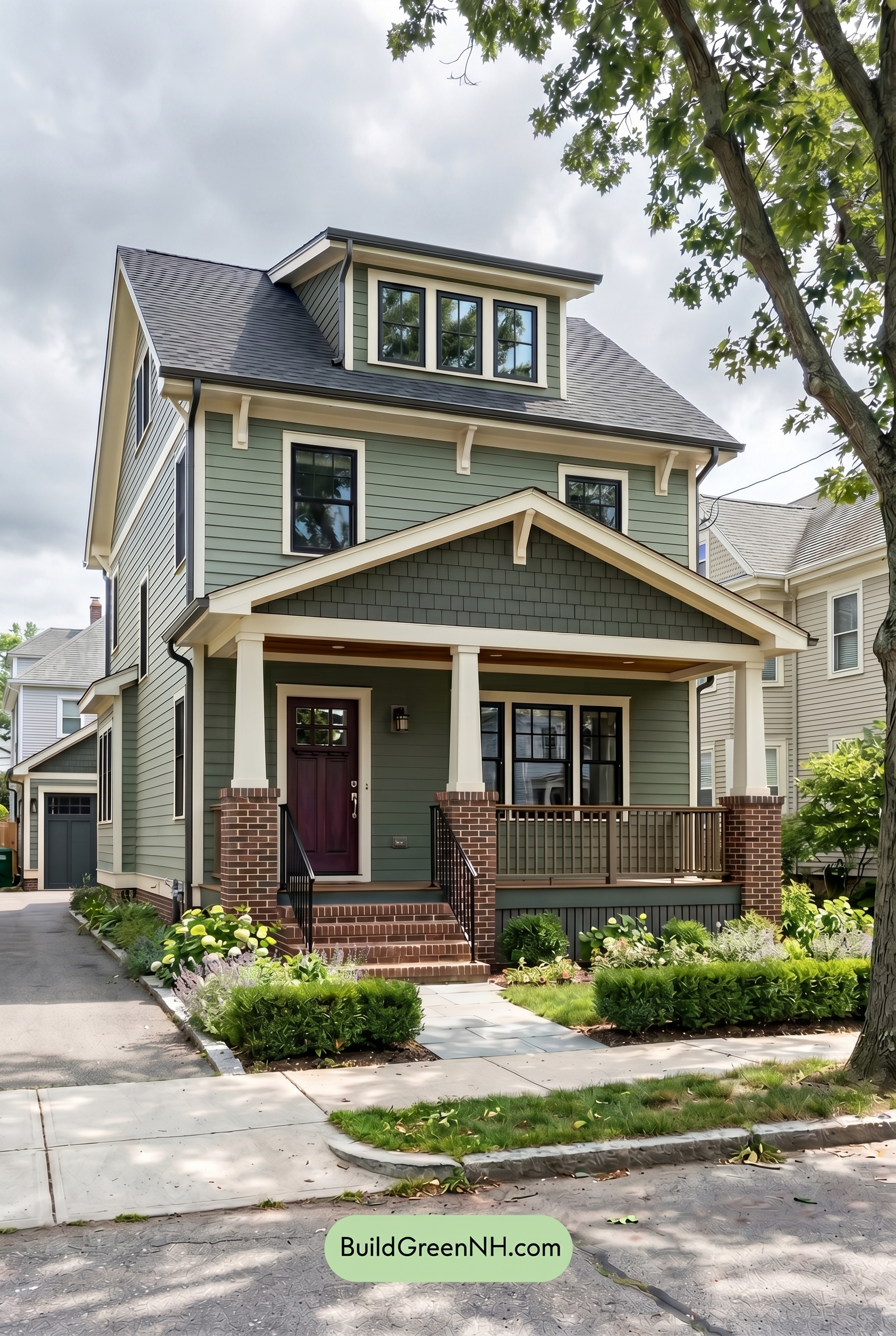
Under Overcast light, the green siding looks calmer and a touch more muted than it would in neutral daylight, with less golden warmth and a softer, cooler cast. The gray accents and window frames feel slightly deeper and more even, while the white trim and columns lose some crisp brightness, shifting toward a gentle creamy softness.
Because clouds diffuse the light, shadows flatten and contrast eases across the siding, porch, and roofline. The brown door and railings appear richer but less glossy, giving the whole exterior a quieter, cozier mood with a more blended, refined color balance.
Golden Hour
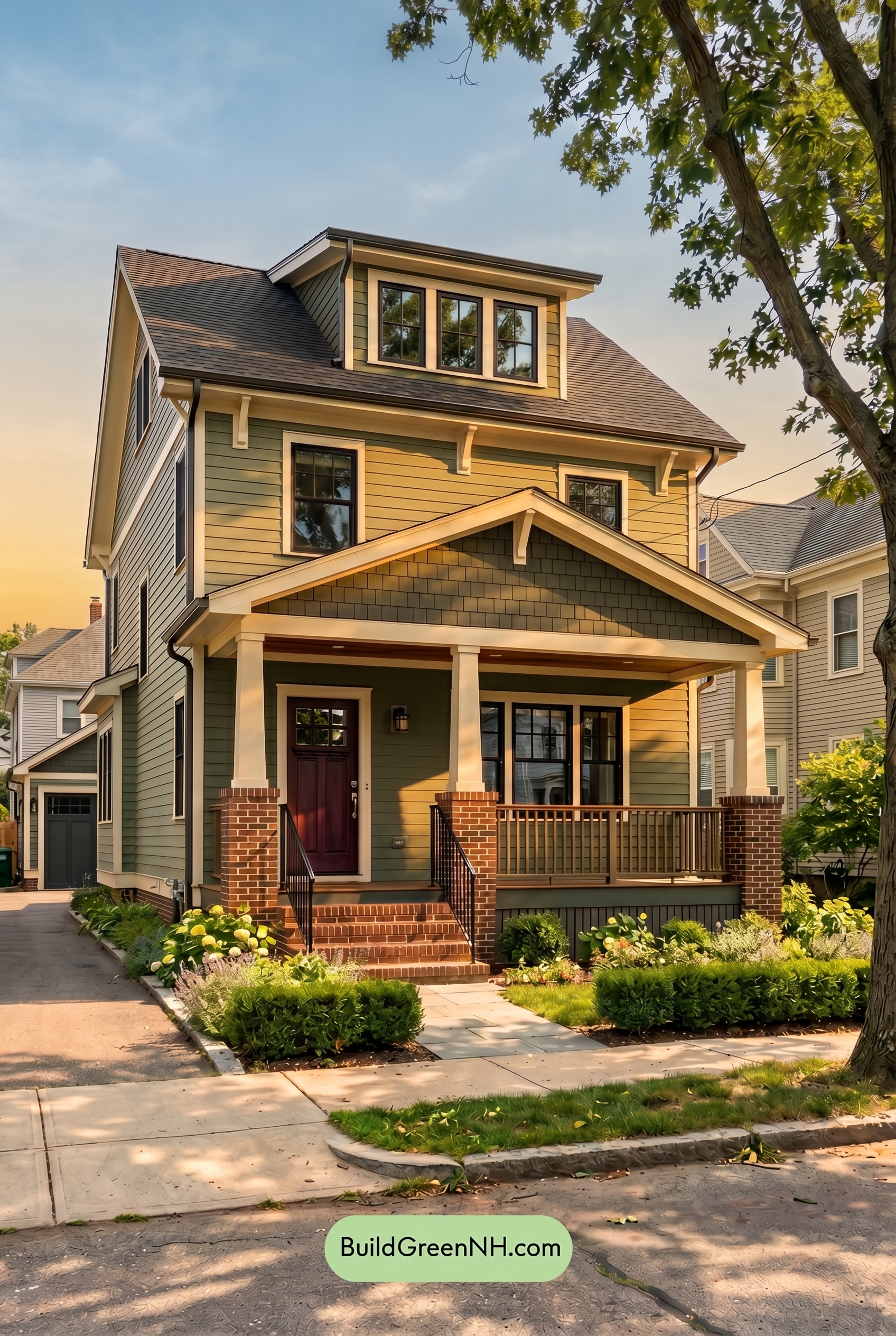
Under Golden Hour light, the green siding feels warmer and more saturated than it would in neutral daylight, with deeper olive-like shadows and softer sunlit areas. The gray accents take on a gentler, warmer cast, while the white trim and columns shift from crisp to creamy, adding a welcoming glow.
The long shadows increase contrast across the porch, rooflines, and window details, making the darker gray frames and brown door feel richer and more grounded. Overall, the palette moves from clean and balanced in daylight to cozy, layered, and inviting in the low evening warmth.
Shade
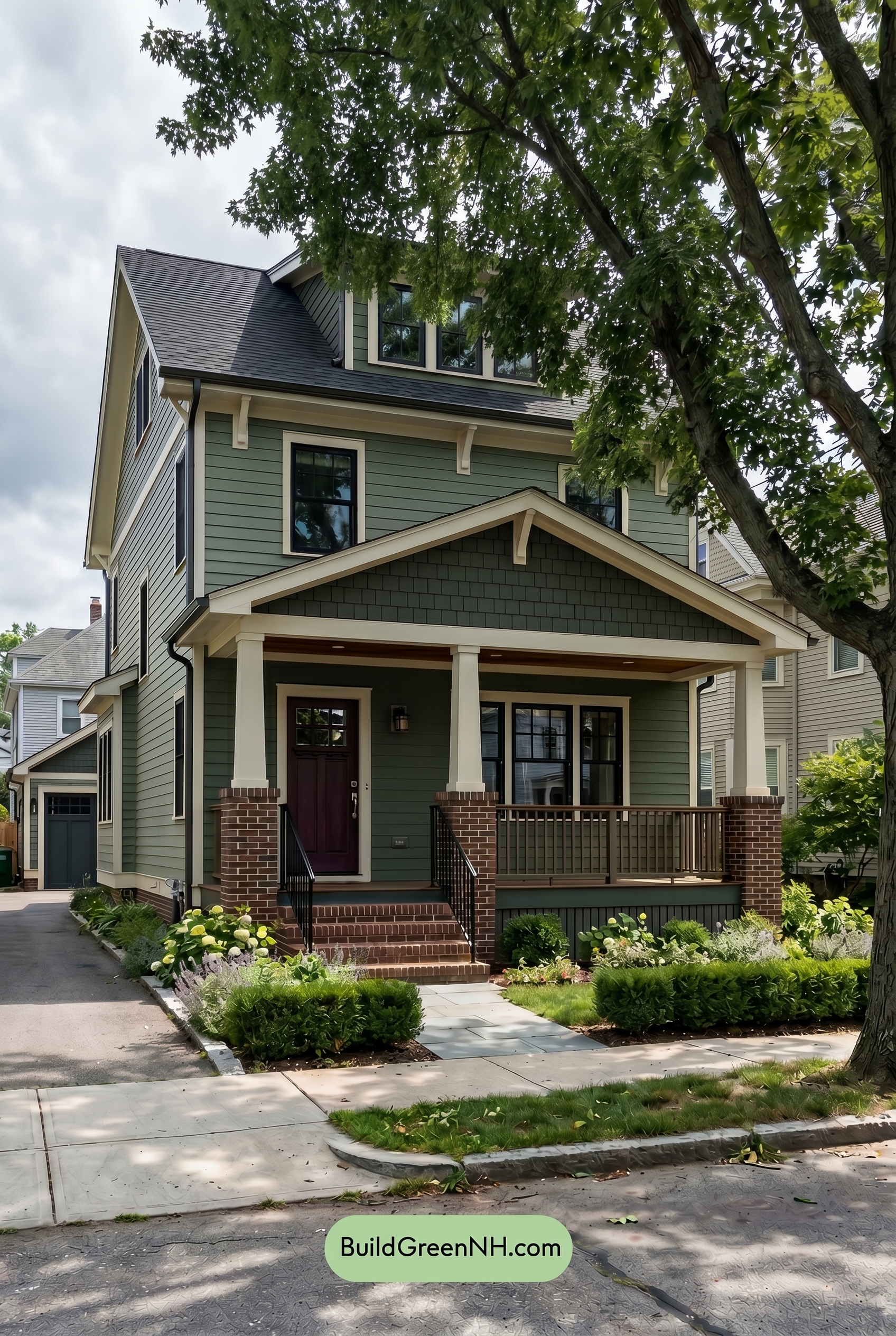
In Shade, the green siding reads deeper and more saturated than it would in neutral daylight, shifting from fresh and open to calm and grounded. The gray accents also feel cooler and weightier, while the white trim and columns lose some crisp brightness, becoming softer and slightly warmer in the filtered light.
Tree shadows add layered contrast across the facade, making the darker window frames, brown door, and brown railings feel richer and more dramatic. Compared to neutral daylight, the overall mood is quieter and more sheltered, with the color palette feeling earthy, cozy, and naturally blended into the landscape.
Nighttime
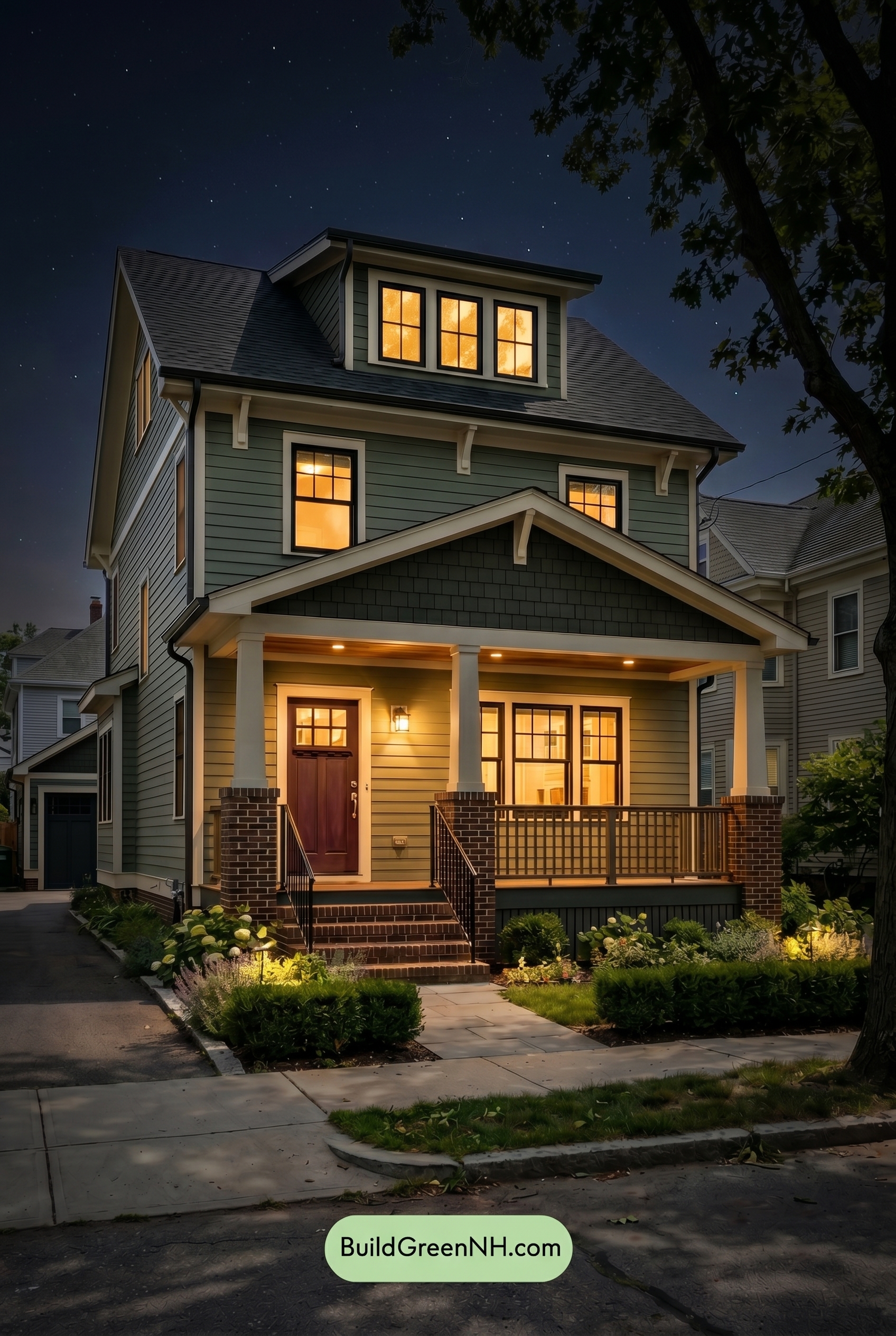
At night, the green siding looks deeper and more saturated than it would in neutral daylight, taking on a richer, quieter character as shadows settle into the clapboard lines. The gray accents and window frames feel cooler and more defined, while the white trim and columns catch the available light, creating crisp contrast against the darker wall shades.
Warm interior and porch lighting softens the overall palette, adding a cozy glow that makes the brown door and railings feel warmer and more inviting. Compared to daylight, the contrast is stronger, the shadows are more dramatic, and the mood shifts from fresh and balanced to intimate, layered, and welcoming.
Pin these for later
Want More?
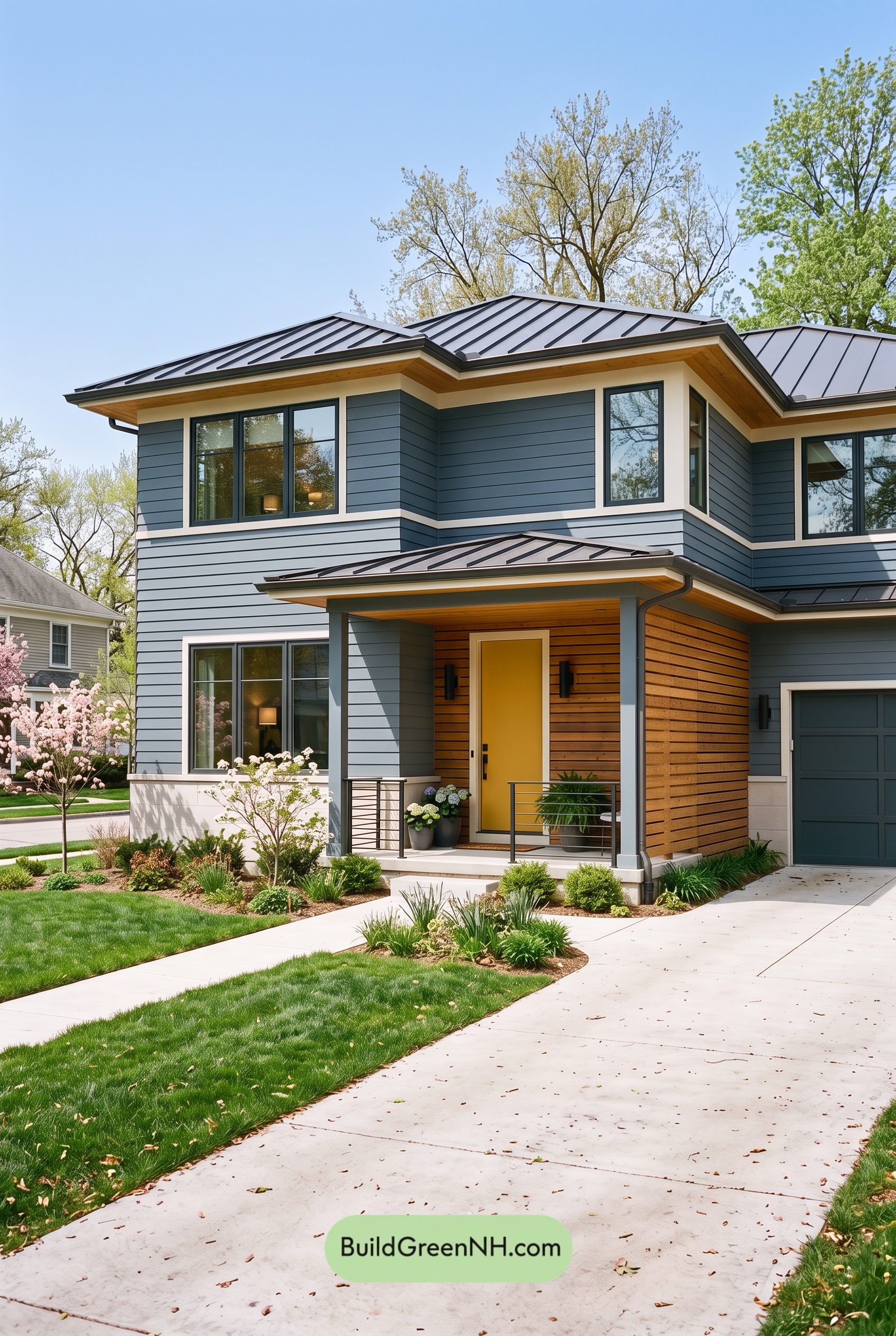 Blue House Front Door Color Scheme: Harbor Saffron
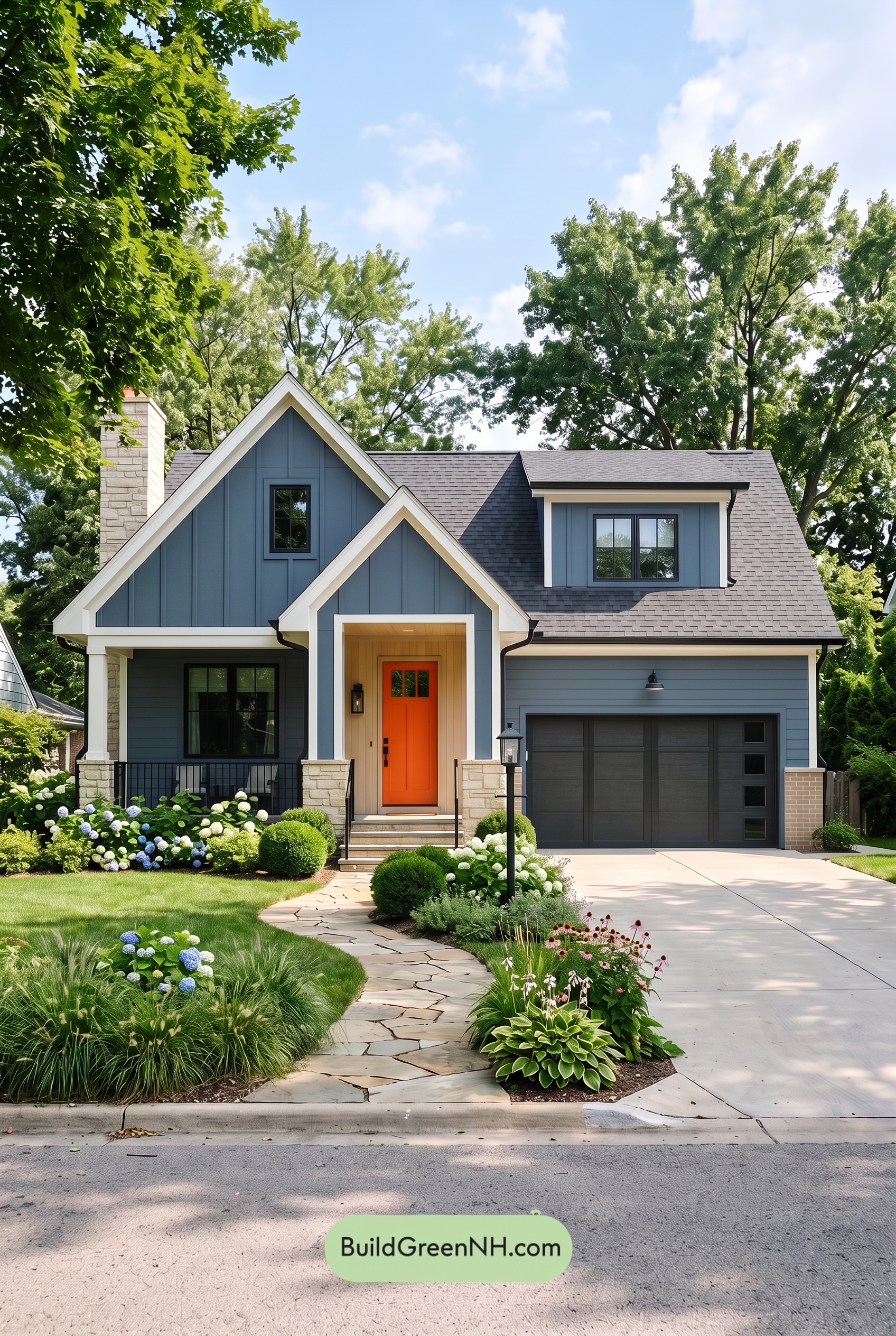 Blue House Front Door Color Scheme: Cobalt Persimmon
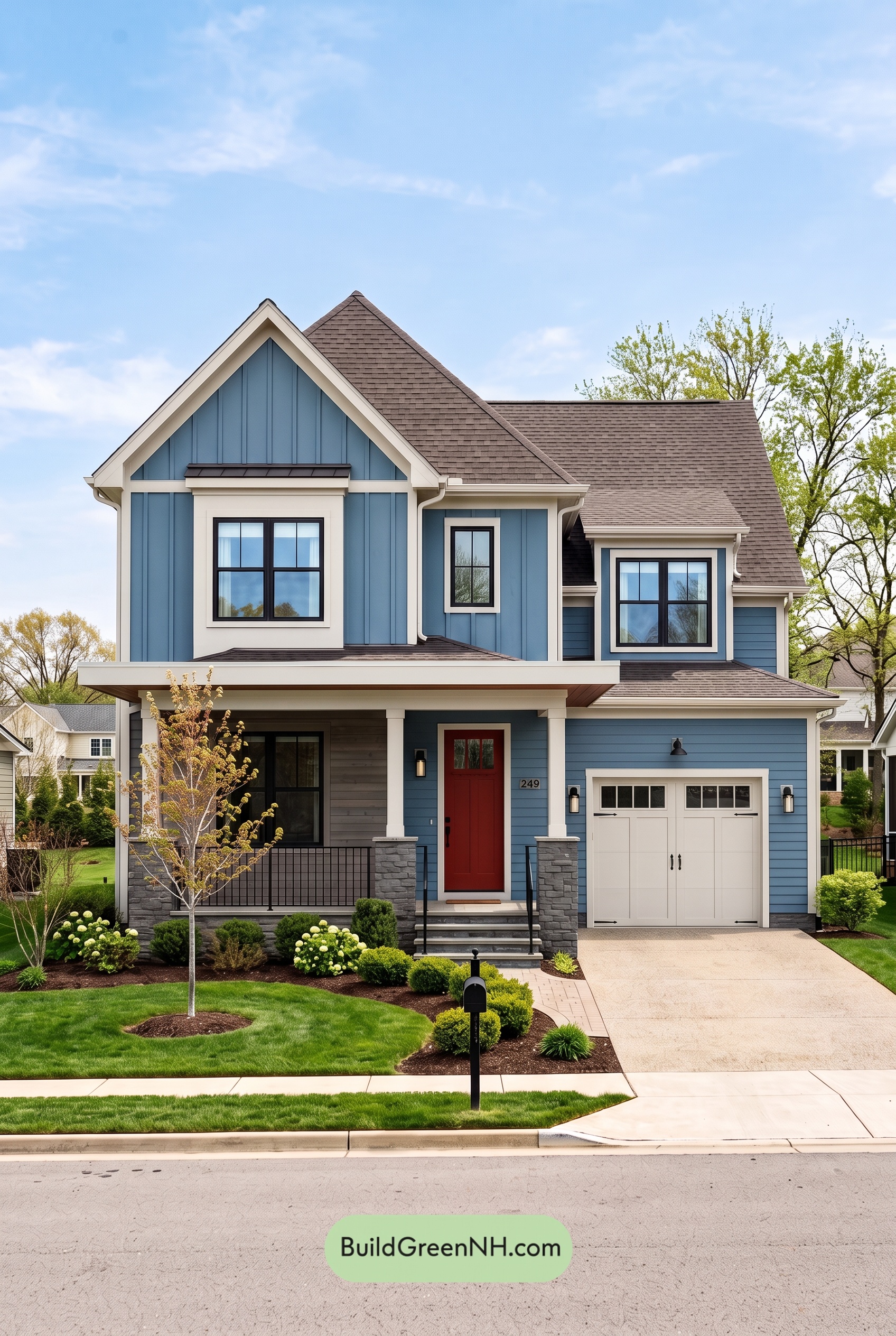 Blue House Front Door Color Scheme: Denim Poppy
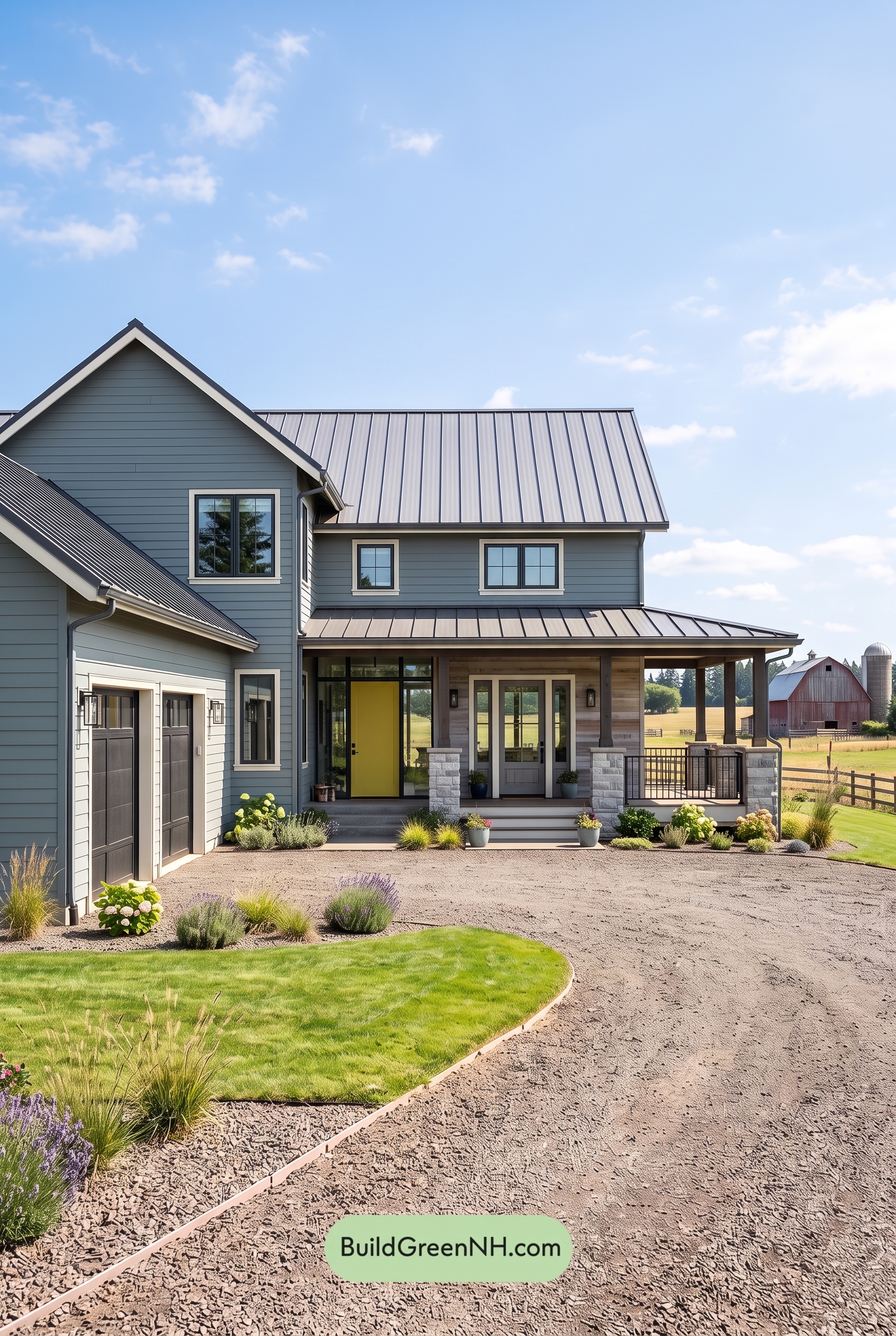 Blue House Front Door Color Scheme: Slate Citron
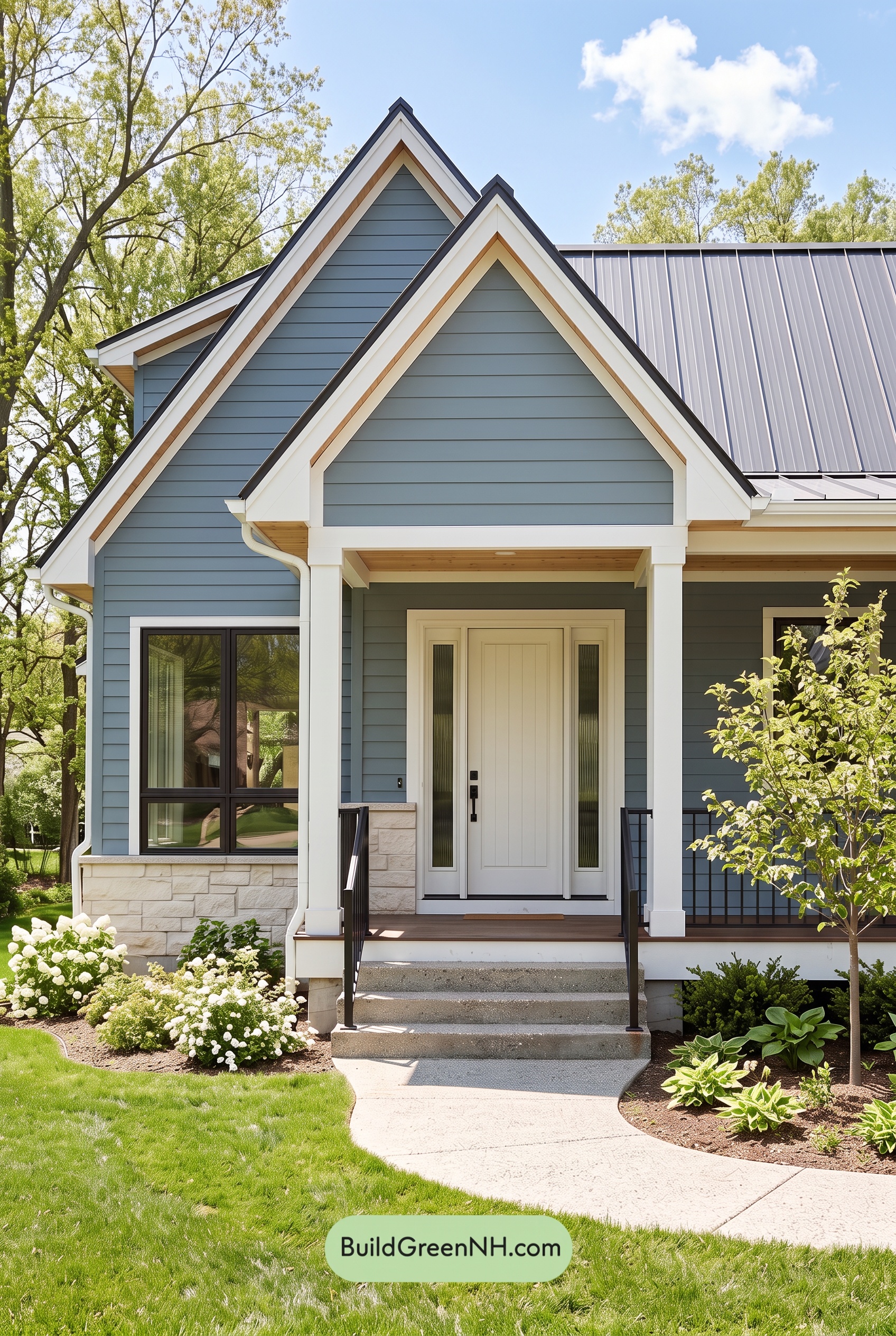 Blue House Front Door Color Scheme: Mist Blue Haven
Table of Contents