Last updated on
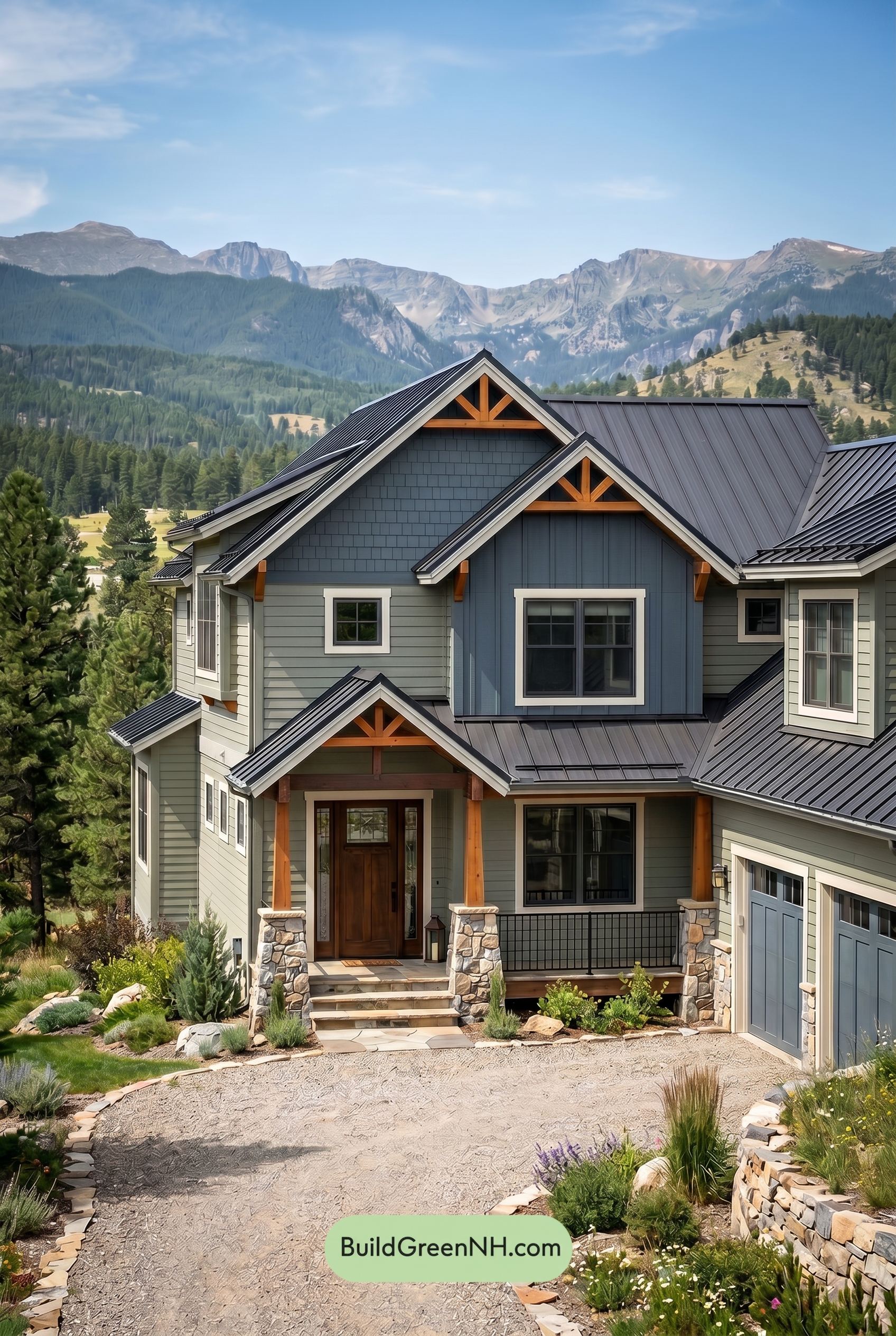

This gray-and-brown exterior palette feels polished, grounded, and perfectly at home against the rugged mountain setting.
A Layered Gray Exterior with Natural Depth
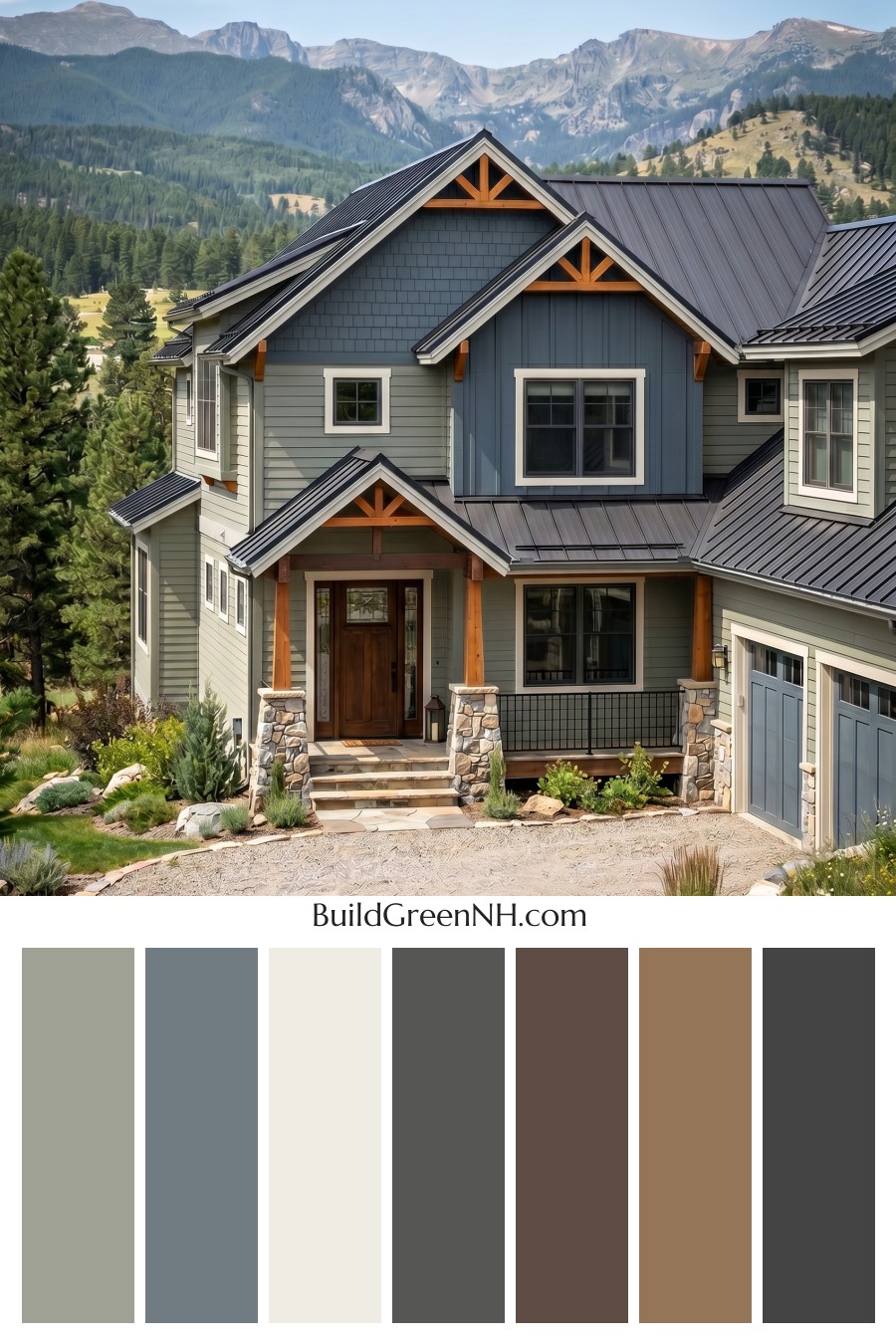
The main siding uses a soft, earthy shade of gray that gives the home a calm and welcoming foundation. It feels refined without looking overly formal, and its slightly muted character helps the house settle beautifully into the surrounding trees, stone, and mountain views.
On the upper gables, a deeper gray shade adds dimension and architectural interest. This shift in tone keeps the exterior from feeling flat, especially across the tall rooflines and varied siding textures. The mix of horizontal siding and vertical panels becomes more noticeable because the gray shades are close enough to coordinate, yet different enough to create definition.
Crisp Trim That Frames the Architecture
The white trim is one of the most important parts of this color scheme. It outlines the windows, roof edges, and gable details with a clean, bright finish that sharpens the entire exterior. Against the gray siding, the trim feels fresh and classic.
Because the trim is bright but not stark, it works well with the natural setting. It gives the home a polished lodge-inspired look while still feeling relaxed and livable.
Warm Brown Accents Add Character
The warm brown front door, porch columns, and gable brackets bring a rich natural contrast to the cooler gray palette. These brown accents feel sturdy and handcrafted, adding warmth exactly where the home needs it most.
The wood-toned details also draw attention to the entry and roof peaks, making the facade feel inviting. They keep the gray exterior from becoming too cool and add a cozy, welcoming personality.
Dark Gray Details Keep It Sophisticated
The roof uses a deep charcoal gray shade that gives the home a strong, modern edge. Its darker tone anchors the lighter siding and pairs beautifully with the gray window frames, railings, and garage door.
The garage door stays within the gray family, which helps it blend into the overall design rather than compete with the front entry. The darker gray railings add structure along the porch while echoing the roof and window frames.
Why the Palette Works So Well
This exterior succeeds because it balances cool and warm elements with confidence. The gray siding and roof create a composed, mountain-modern backdrop, while the white trim adds clarity and the brown accents bring warmth and texture.
The result is timeless, approachable, and scenic. It feels upscale without being flashy, rustic without being heavy, and perfectly suited to a home surrounded by natural stone, evergreens, and wide-open views.
Next, see how this color scheme looks under different lighting simulations throughout the day.
Overcast
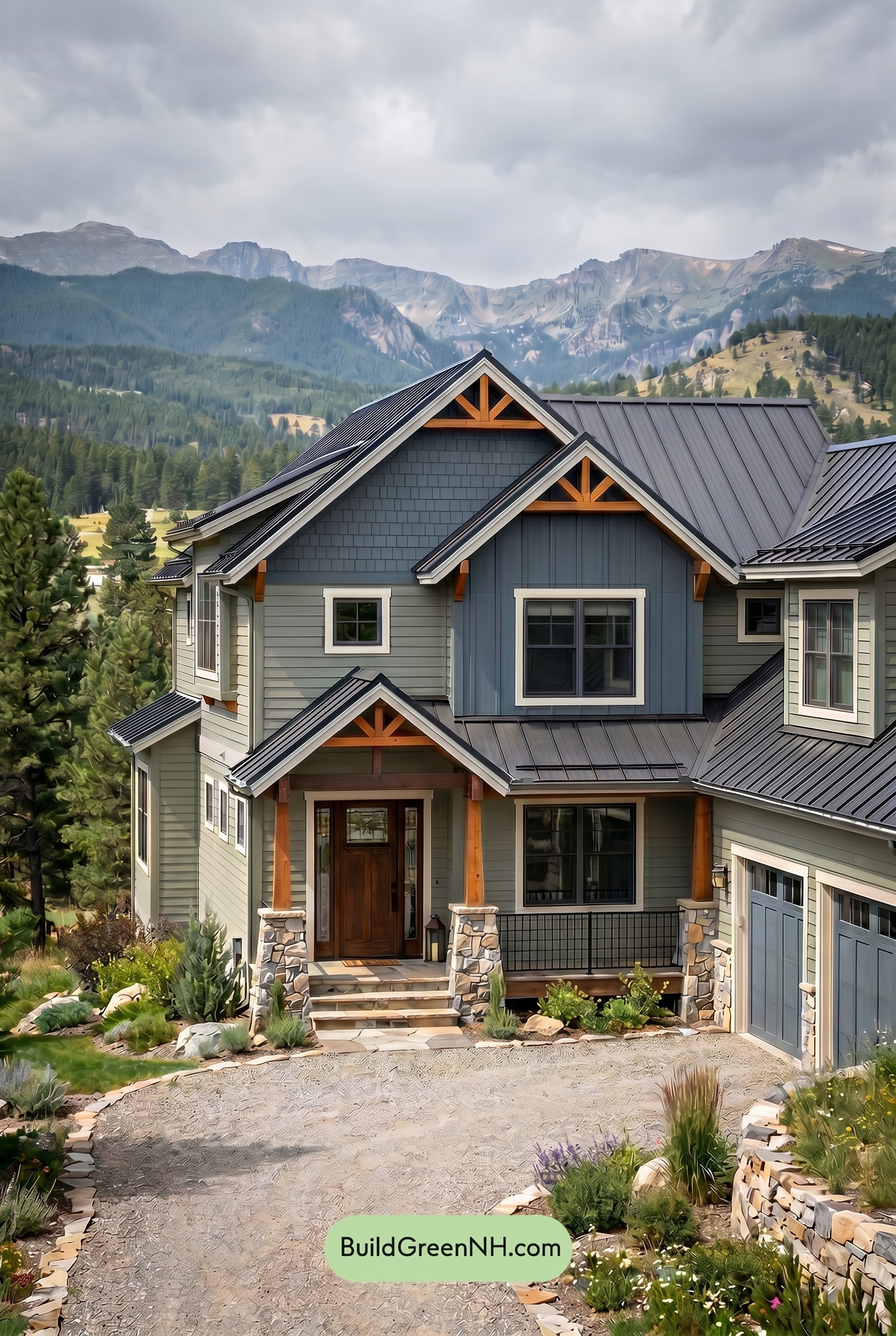
Under overcast skies, the gray siding and upper gables lose a touch of saturation compared to neutral daylight, shifting cooler and calmer, with the medium gray shades reading slightly deeper and more blue-leaning. The white trim looks less crisp and more softly warm, while shadows flatten across the siding, reducing the sharp light-and-dark breaks that normally define each board and shingle.
The warm brown door, columns, and gable accents feel gentler under cloud cover, with their natural warmth muted rather than glowing. Because contrast is softened, the darker gray roof, window frames, railings, and garage areas blend more smoothly into the palette, giving the whole exterior a quieter, moodier mountain feel.
Golden Hour
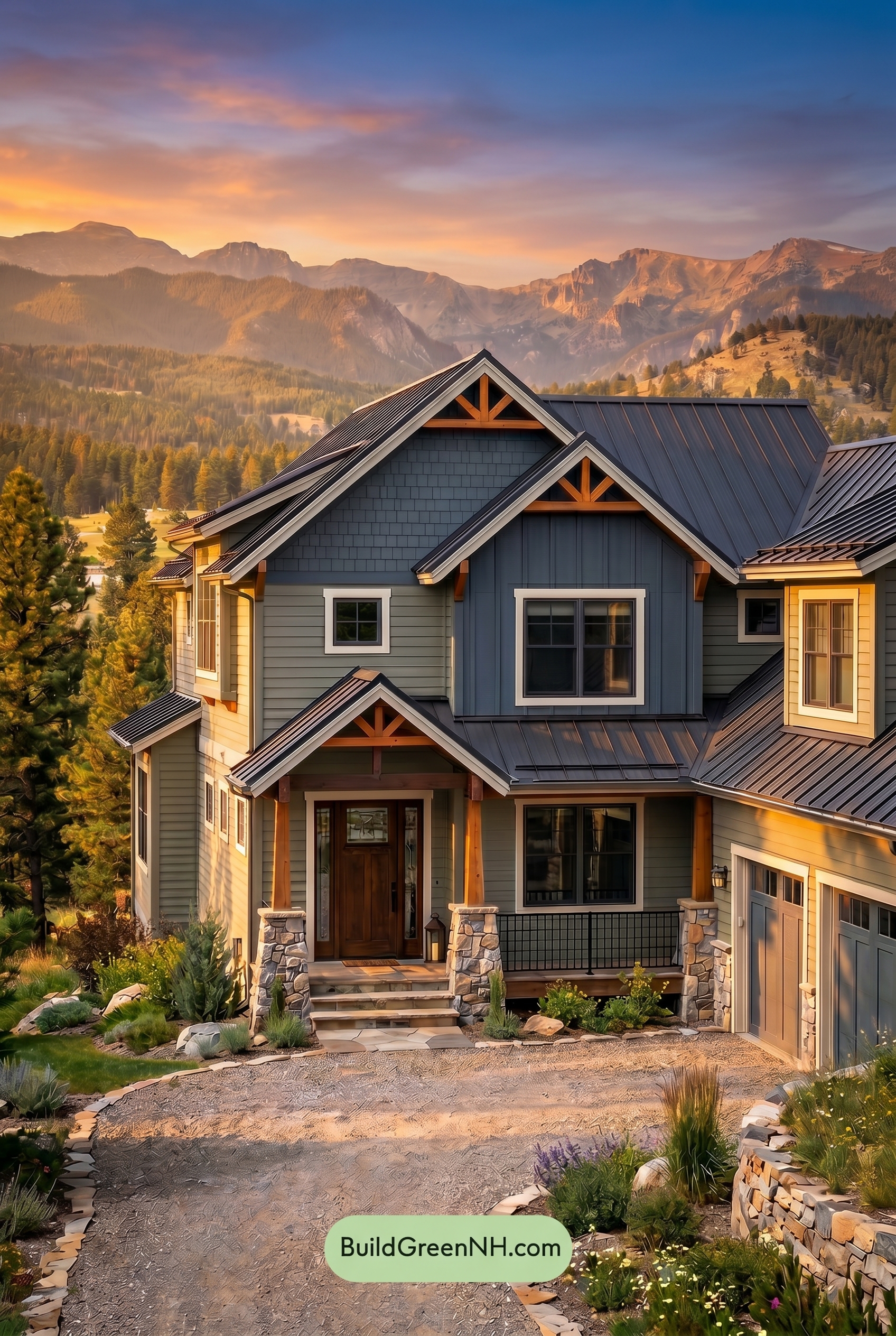
Under Golden Hour light, the gray siding shifts warmer and more saturated than it would in neutral daylight, taking on a softer, richer feel instead of reading cool and flat. The white trim glows gently, increasing contrast along the rooflines and windows while still feeling less stark than it might at midday.
The brown door, columns, and wood details become deeper and more inviting, while the gray roof, railings, and garage door pick up stronger shadow definition. Those longer shadows add depth and drama, giving the whole exterior a cozy, layered mood compared to the cleaner, more even look of neutral daylight.
Shade
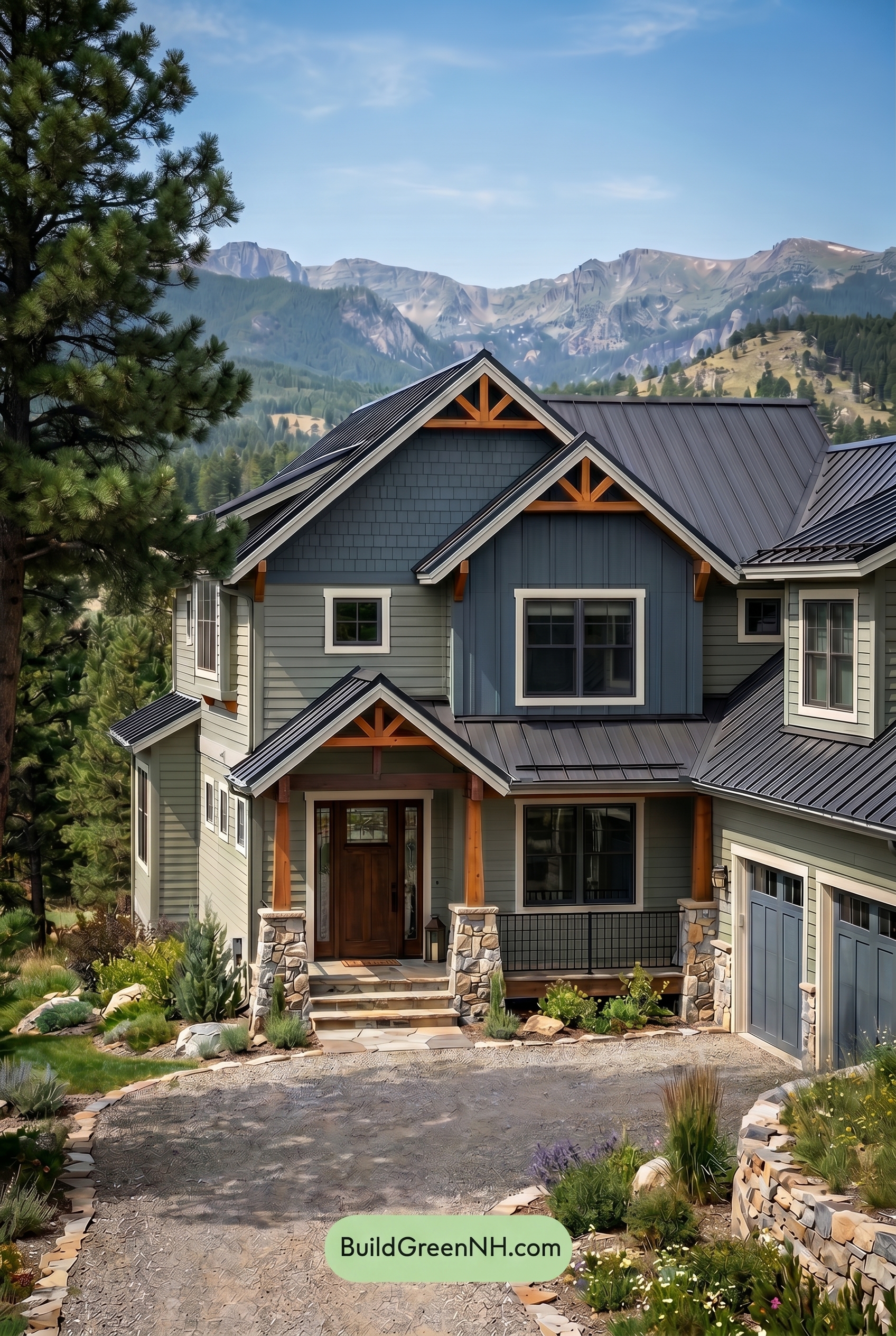
In Shade, the gray siding and upper gray panels look deeper and more saturated than they would in neutral daylight, taking on a cooler, quieter cast. The white trim appears less bright and crisp, softening into a gentler shade that still outlines the rooflines and windows without feeling stark.
The brown door and columns lose a bit of golden warmth in Shade, becoming richer and more grounded, while shadows under the gables add stronger contrast and definition. Overall, the palette shifts from fresh and balanced to calm, layered, and slightly moodier.
Nighttime
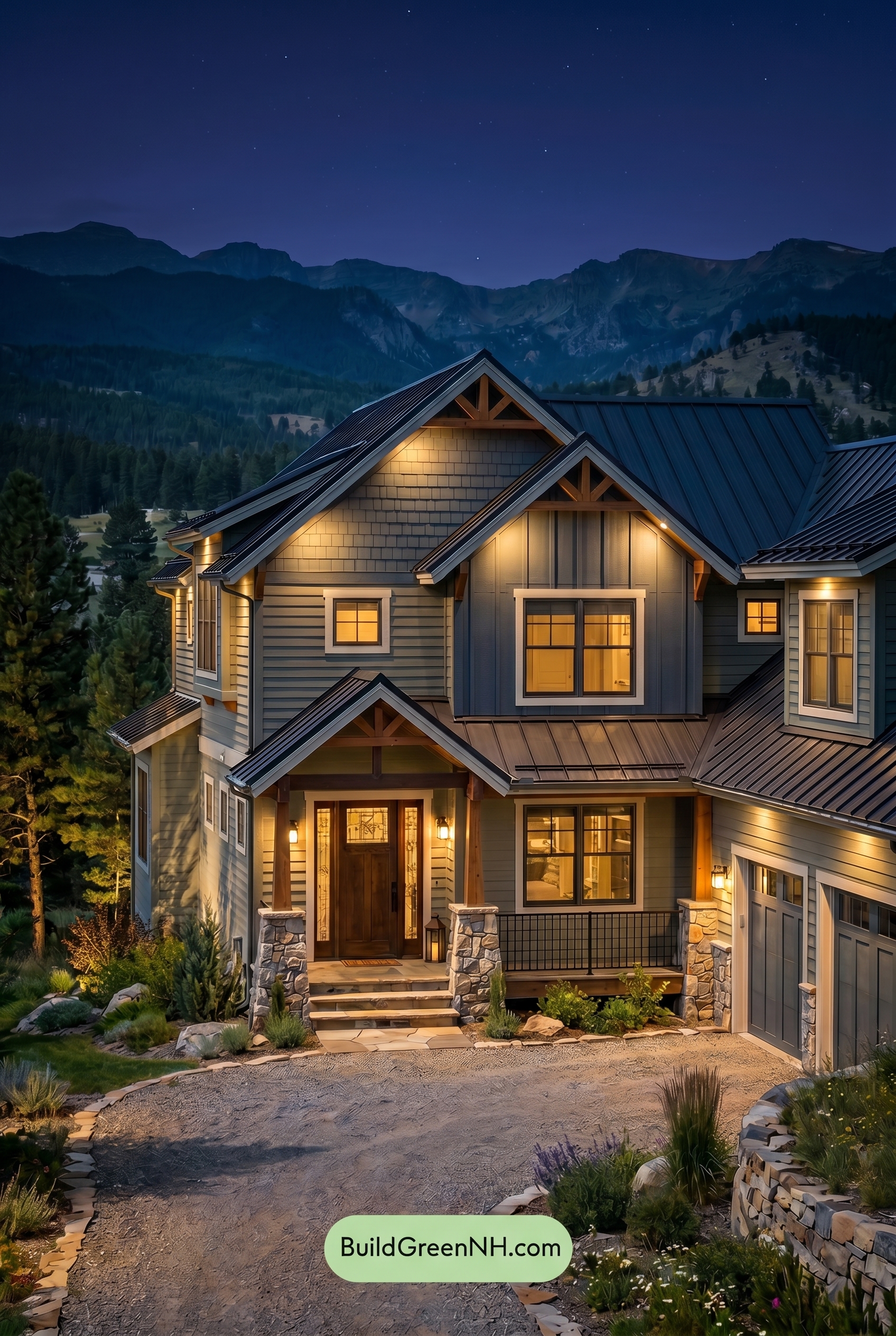
At night, the gray siding shifts deeper and more saturated than it would in neutral daylight, especially where the rooflines and porch overhangs cast strong shadows. Warm exterior lighting softens the nearby gray shades, giving them a cozier, slightly warmer feel while the unlit areas read cooler and more dramatic.
The white trim becomes crisper against the darker gray walls, creating stronger contrast than in daylight. Brown doors, columns, and exposed beams glow with extra warmth, adding a welcoming mood that makes the whole exterior feel richer, more intimate, and layered after sunset.
Pin these for later
Want More?
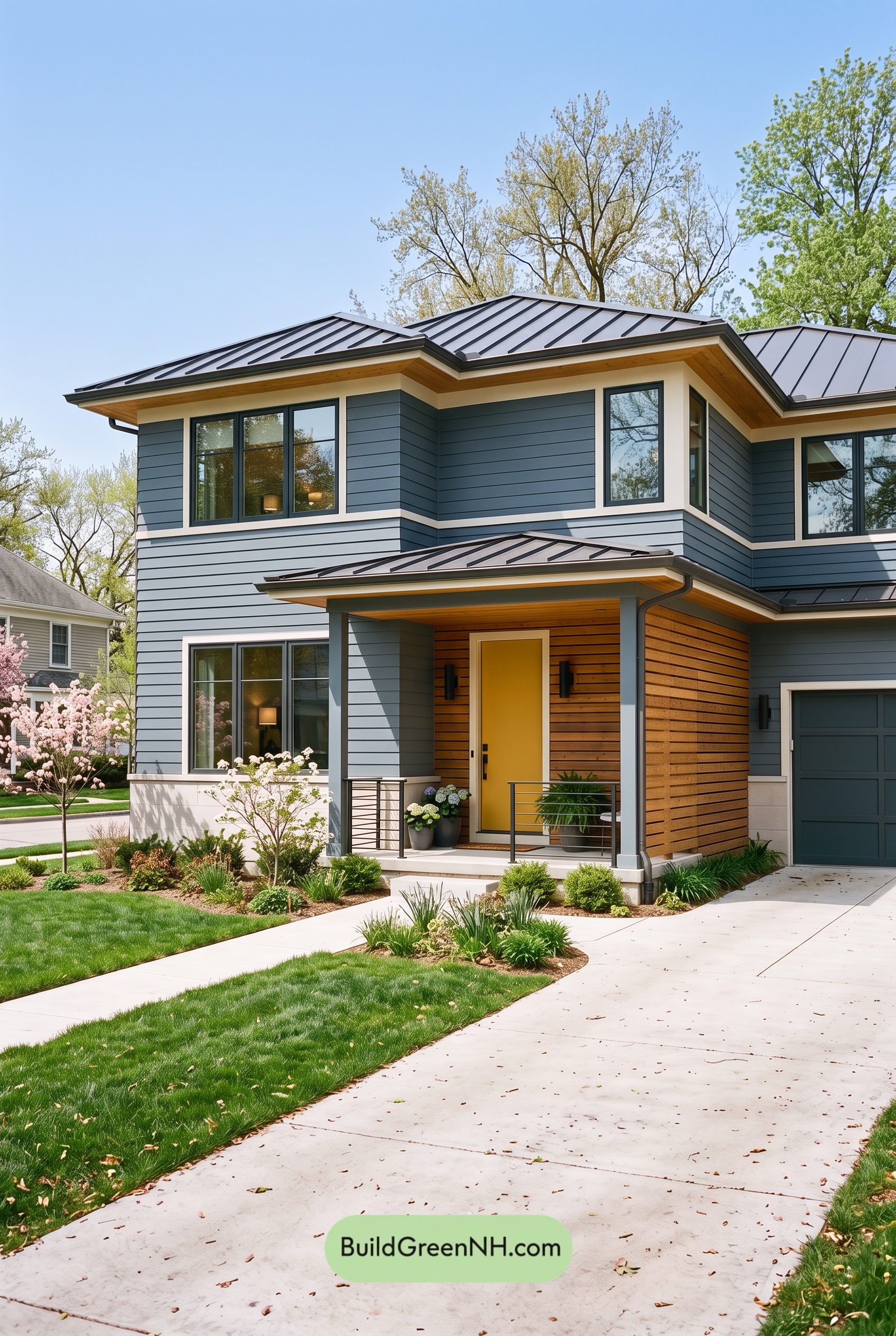 Blue House Front Door Color Scheme: Harbor Saffron
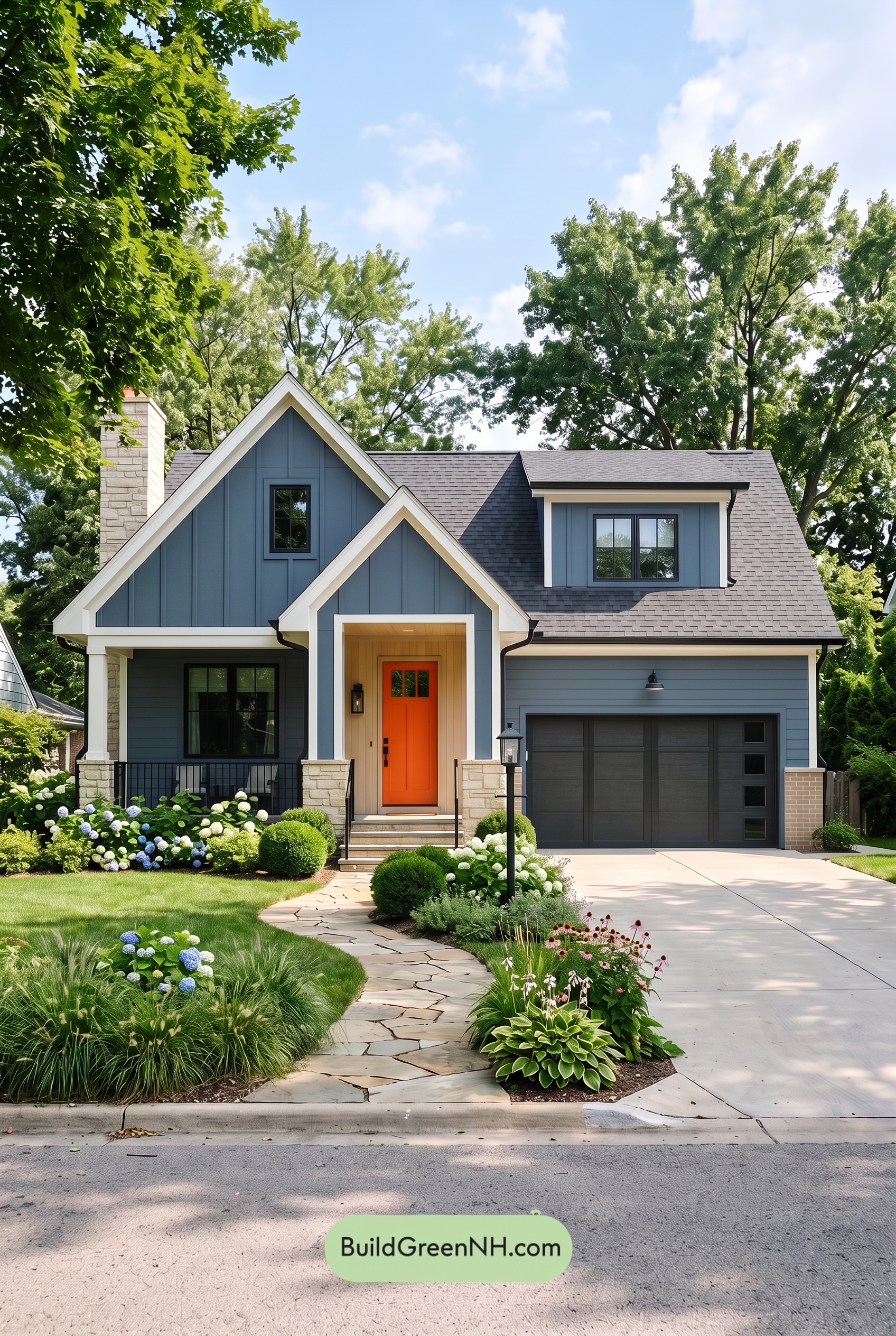 Blue House Front Door Color Scheme: Cobalt Persimmon
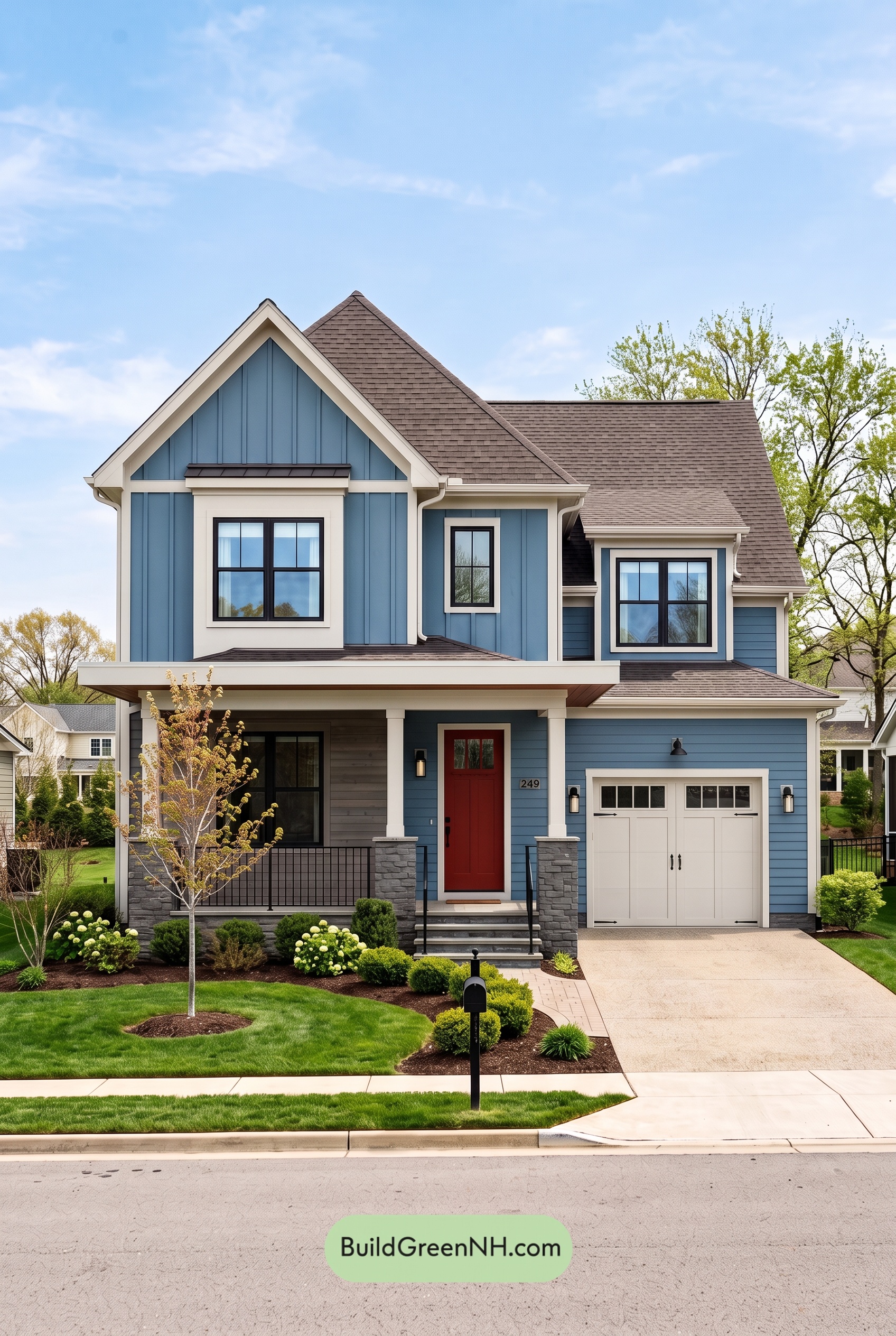 Blue House Front Door Color Scheme: Denim Poppy
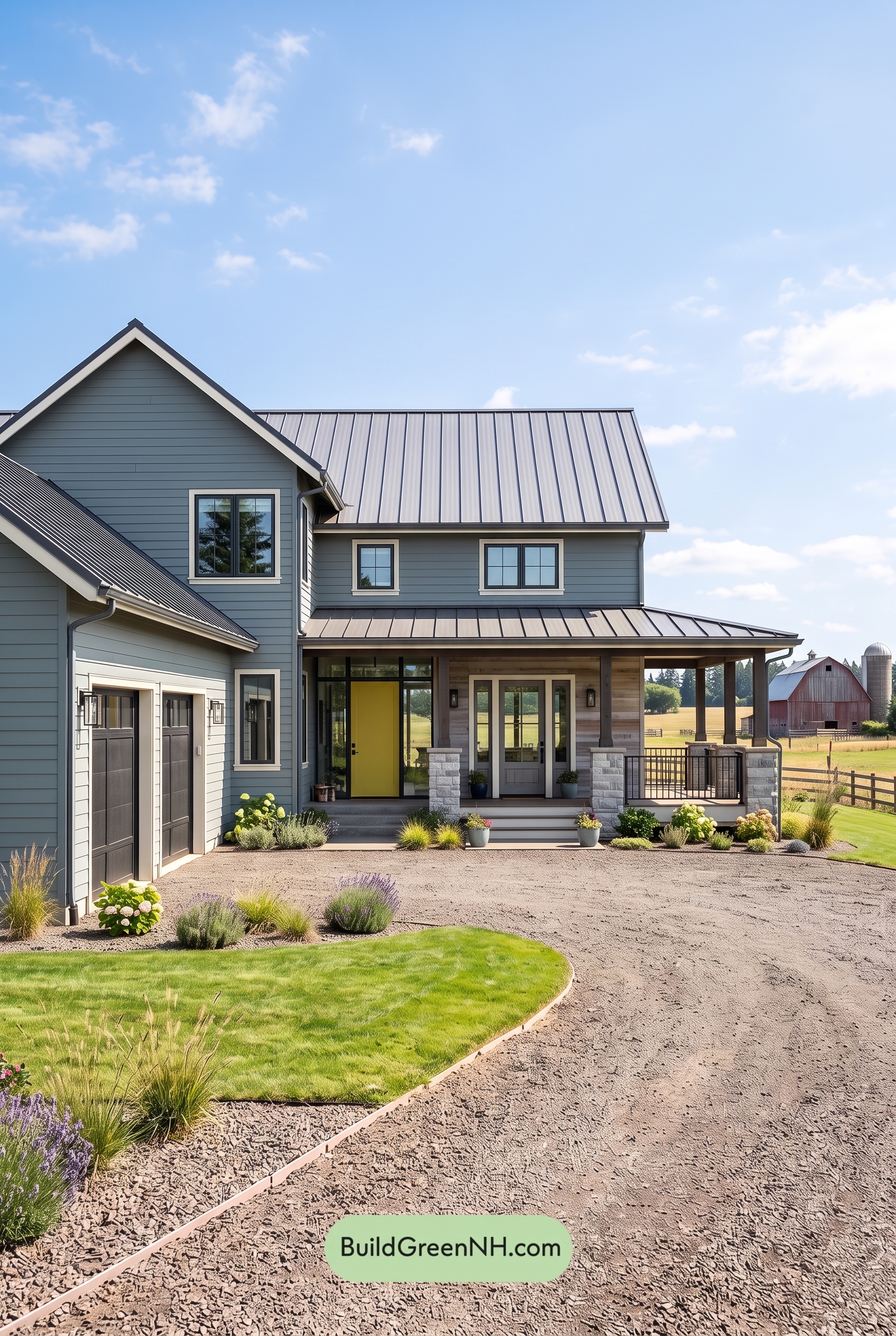 Blue House Front Door Color Scheme: Slate Citron
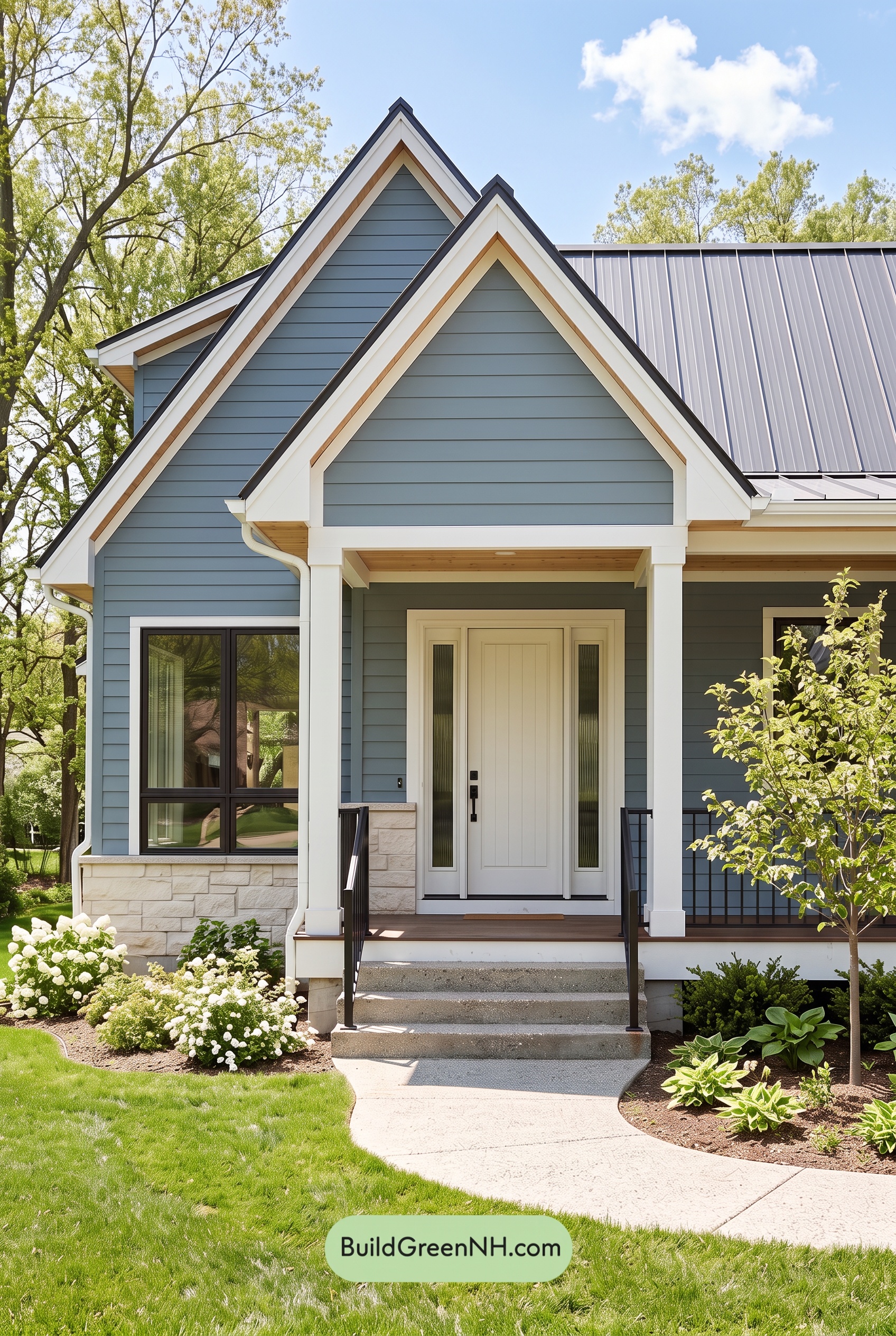 Blue House Front Door Color Scheme: Mist Blue Haven
Table of Contents