Last updated on
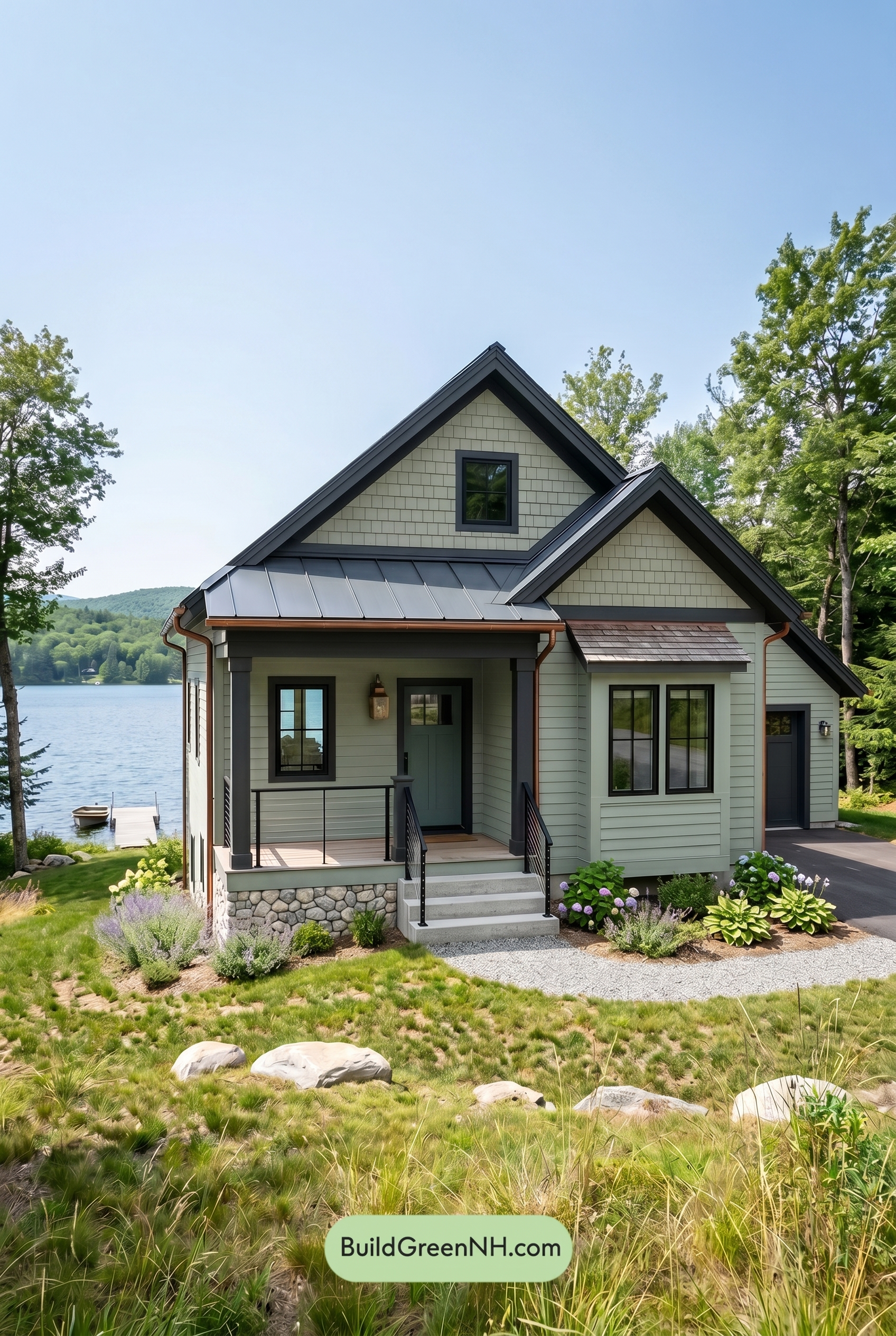

This lakeside home shines because its layered green exterior feels rooted in the landscape while crisp gray details give every architectural line a polished, modern edge.
A Nature-Led Green Exterior
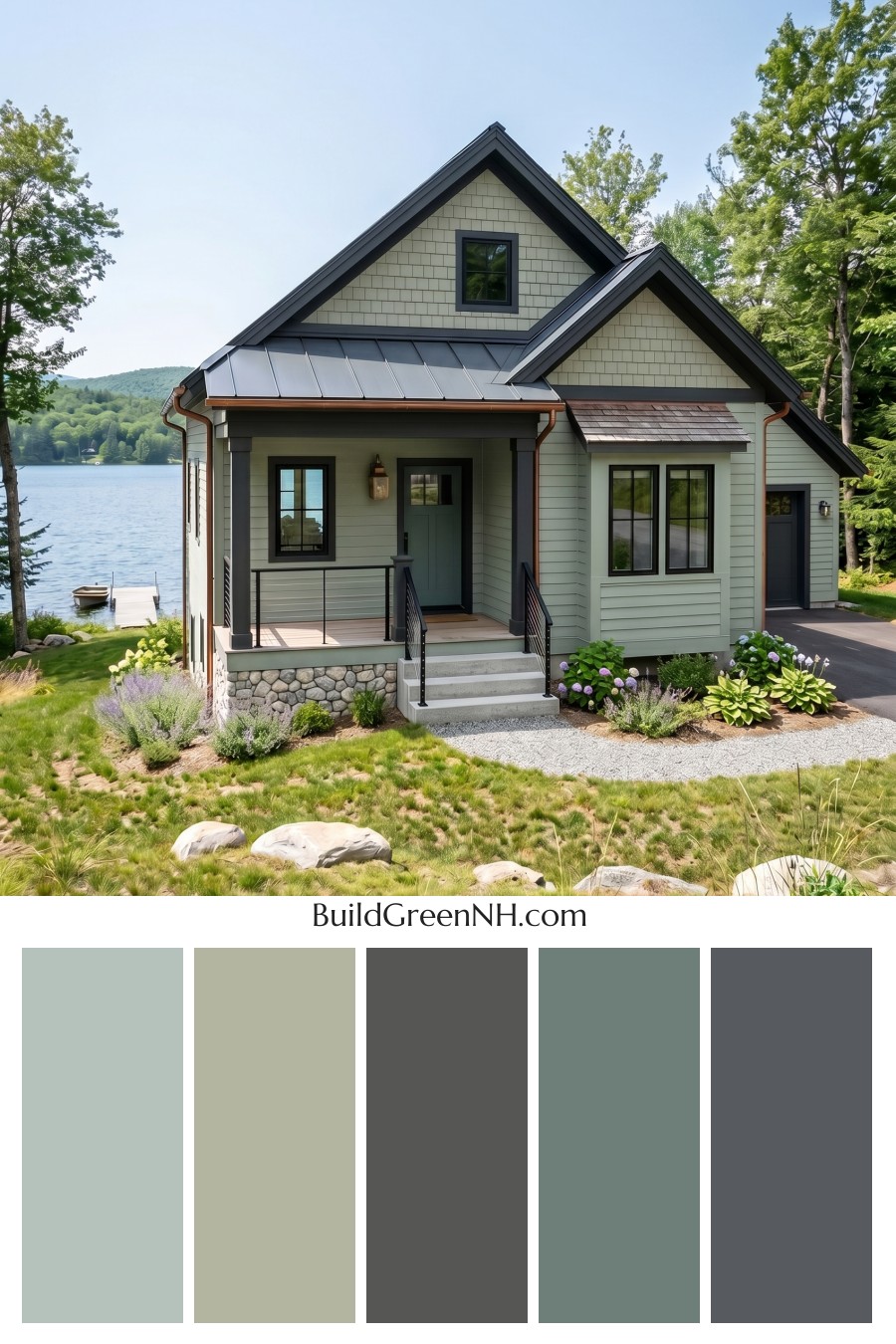
The main siding uses a soft, muted green that feels calm, organic, and beautifully connected to the surrounding trees, lawn, and water. It is not too bright and not too dark, which makes it especially well suited for a home in a wooded or lakeside setting. The shade has a gentle, earthy quality that helps the house feel settled into its site rather than sitting on top of it.
On the upper gables, a closely related green shade continues the nature-inspired palette. Because the upper wall areas feature a slightly more textured look, the green gains extra depth and charm. This subtle variation keeps the exterior from feeling flat while still maintaining a cohesive, restful appearance.
Gray Trim with Strong Definition
The trim is where this color scheme gets its crisp, modern structure. A deep gray shade outlines the rooflines, gables, windows, porch, and architectural edges with confidence. Against the softer green siding, this darker gray creates a clean frame that highlights the home’s shape and gives the exterior a refined craftsman feel.
The window frames repeat the same deep gray family, which adds rhythm across the façade. This choice makes the glass feel more intentional and graphic, especially on the taller windows near the front entry and the paired windows on the projecting section. The contrast is strong, but because the gray is sophisticated and muted, it never feels harsh.
Porch Details That Ground the Look
The porch columns are finished in a rich gray shade that visually anchors the front of the home. This works especially well because the columns sit beneath a broad roof overhang, where a lighter color might have disappeared into shadow. The darker gray gives the porch presence and makes the entry feel protected and welcoming.
The railings also stay in the gray family, keeping the porch details streamlined. Rather than introducing another competing accent color, the railing color connects back to the trim, window frames, and roofline. The result is tidy, balanced, and quietly contemporary.
A Front Door That Feels Calm and Welcoming
The front door continues the green story, but in a deeper, more grounded shade. This is a smart move: the door feels connected to the siding, yet it has enough depth to stand out as the focal point of the entry. It creates a welcoming moment without shouting for attention.
Because the door is surrounded by deep gray trim, the green shade feels even richer. The combination gives the entry a layered look that is both warm and composed, perfect for a home that blends cottage charm with modern detailing.
Roof and Garage Door Harmony
The roof works beautifully with the rest of the palette through its dark gray tones. Its stronger shade caps the house visually and reinforces the crisp trim color below. On the lower roof section, softer gray variations add texture and help bridge the darker roofline with the lighter green siding.
The garage door follows the gray family as well, which keeps it from becoming too prominent. Instead of competing with the front entry, it recedes into the overall design. This is especially effective on a home with multiple rooflines and strong gable shapes, where color restraint helps the architecture stay organized.
The Overall Mood
This exterior feels peaceful, polished, and deeply connected to nature. The green siding brings softness and a sense of place, while the gray accents add definition and a tailored finish. Together, they create a balanced look that feels fresh without being trendy.
What makes the scheme so successful is its restraint. The house relies on a tight palette of related greens and layered grays, allowing texture, shadow, and architectural form to do the heavy lifting. It is a color combination that feels right at home among trees, stone, water, and garden plantings.
For anyone drawn to an exterior that feels calm but still visually strong, this pairing is a beautiful example. Soft green gives the home its warmth and character, while deep gray brings the drama, structure, and sophistication.
Next, see how this color scheme looks under different lighting simulations throughout the day.
Overcast
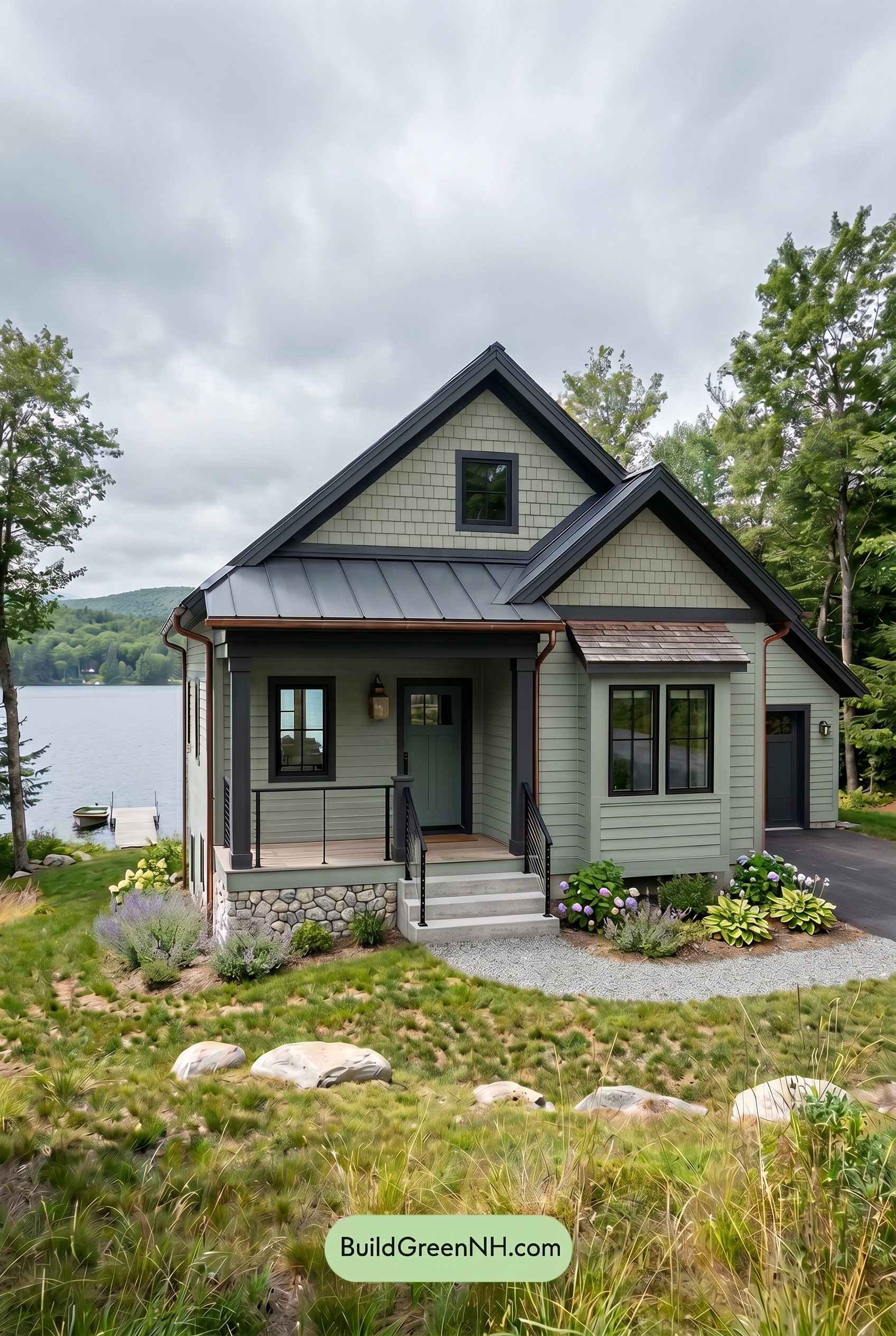
Under overcast light, the green family on the siding and front door appears softer, cooler, and slightly less saturated than it would in neutral daylight. Any natural warmth is muted, giving the walls a calmer, more blended look against the surrounding landscape.
The gray shades on the trim, window frames, columns, railings, and garage door deepen a bit, while shadows spread gently instead of forming sharp edges. This lowers the overall contrast, creating a quieter, more relaxed mood with a refined, misty feel.
Golden Hour
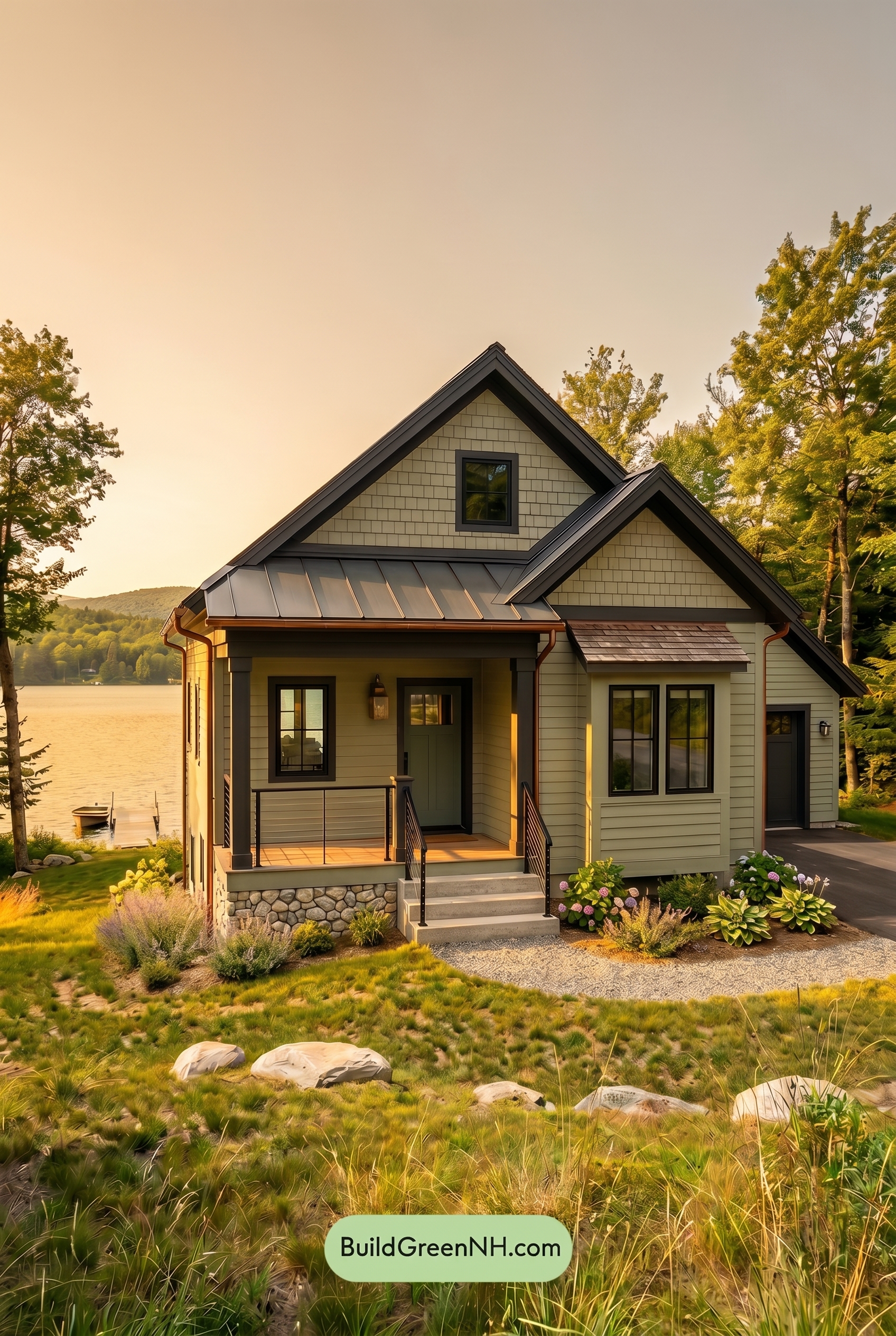
Golden Hour gives the green siding a sun-washed glow, making it feel warmer, softer, and slightly more saturated than it would in neutral daylight. The upper green shades pick up a gentle golden cast, so their natural earthy quality feels richer and more relaxed.
The gray trim, window frames, columns, railings, and garage door gain extra depth as long shadows settle in, shifting from crisp and cool to warmer and more dramatic. Contrast increases along the rooflines and porch edges, creating a cozy, layered mood that feels inviting rather than sharp.
Shade
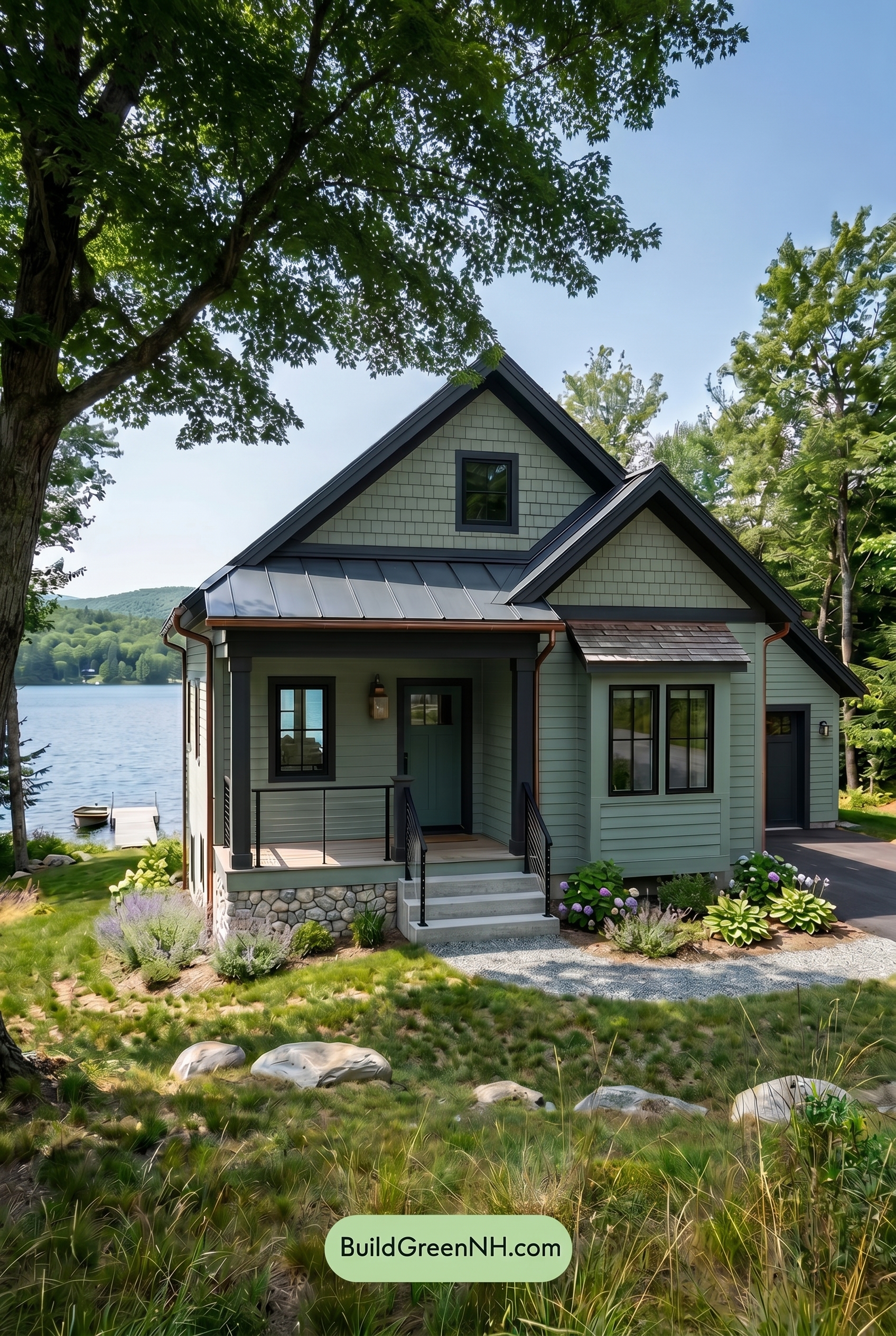
Under Shade, the green family on the main and upper walls appears cooler and more grounded than it would in neutral daylight. Its saturation softens slightly, with less sunny warmth coming forward, while the recessed porch areas let the deeper green shades feel richer and more enveloping.
The gray family on the trim, window frames, columns, railings, and garage door gains more depth in the shadows, shifting from crisp and balanced to moodier and more dramatic. Compared to neutral daylight, the overall contrast feels stronger at the rooflines and openings, giving the exterior a calm, woodland-inspired mood with a refined, shaded softness.
Nighttime
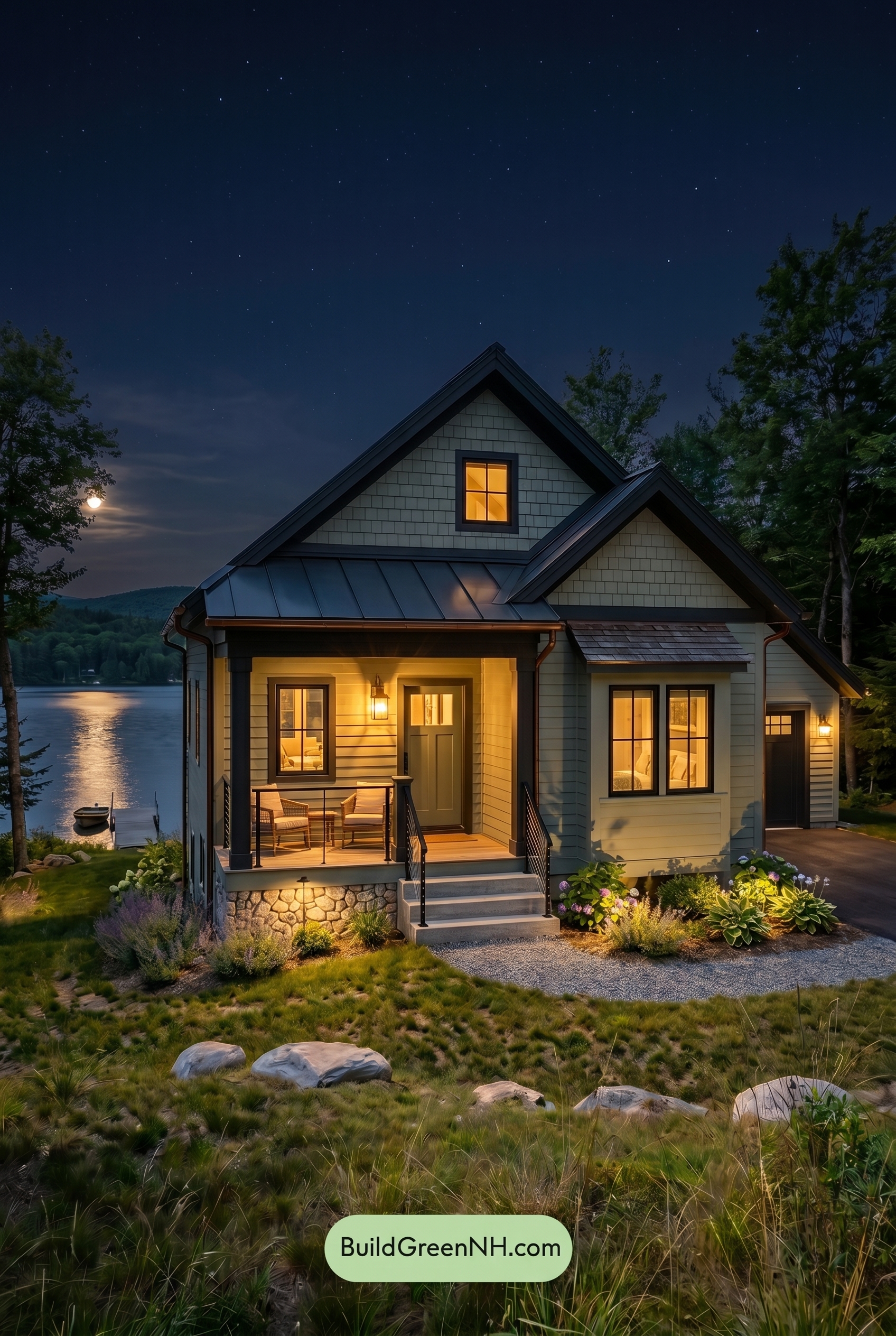
At night, the green family on the siding deepens and becomes more muted than it would in neutral daylight, with shadowed areas reading richer and cooler. Warm light from the windows and porch softens the lower walls, adding a gentle golden cast that makes the green shades feel cozier and more inviting.
The gray trim, railings, columns, and garage door gain stronger contrast after dark, shifting toward deeper charcoal-like shades where shadows collect. This sharper light-and-dark balance gives the exterior a more dramatic, intimate mood while keeping the overall palette calm and grounded.
Pin these for later
Want More?
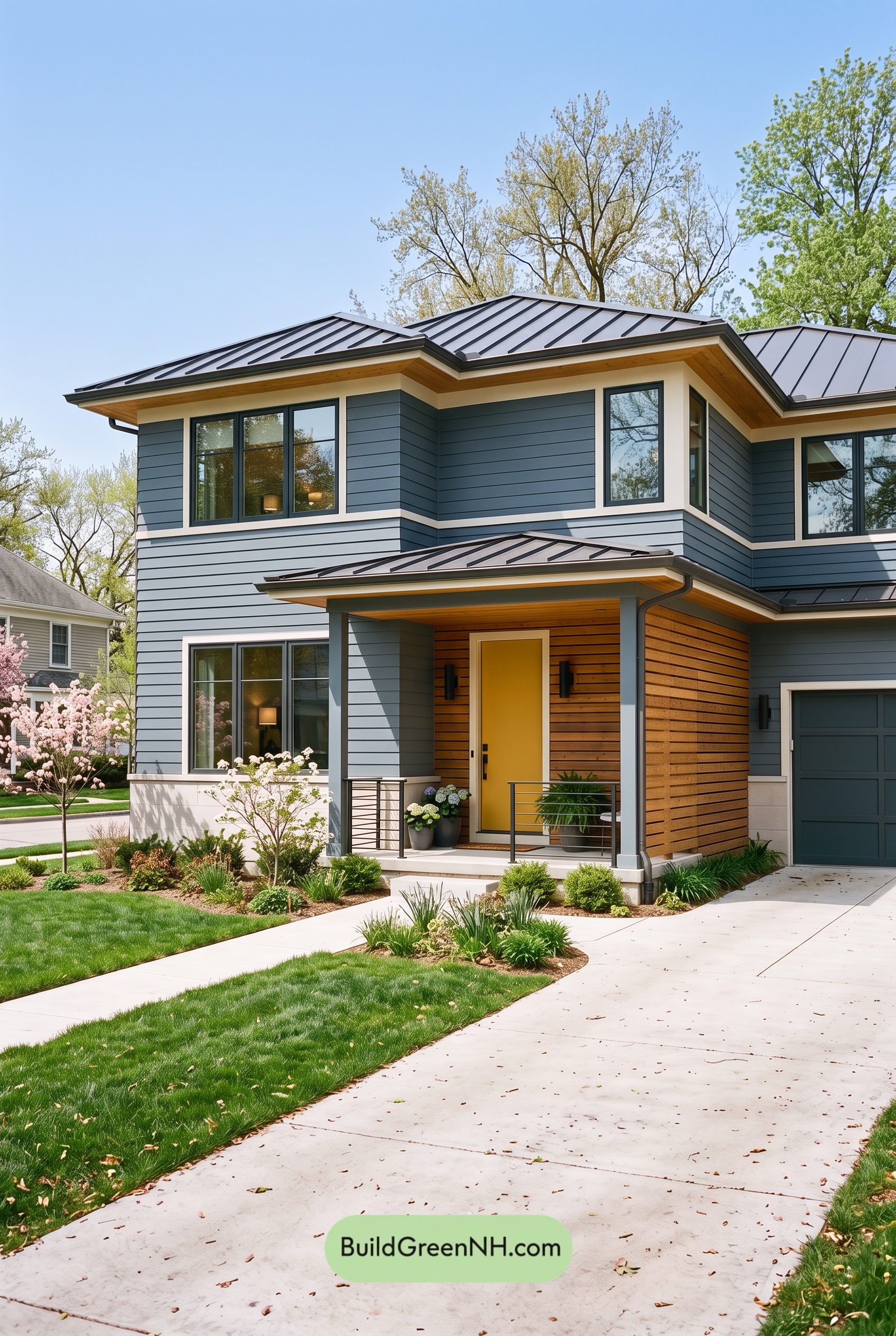 Blue House Front Door Color Scheme: Harbor Saffron
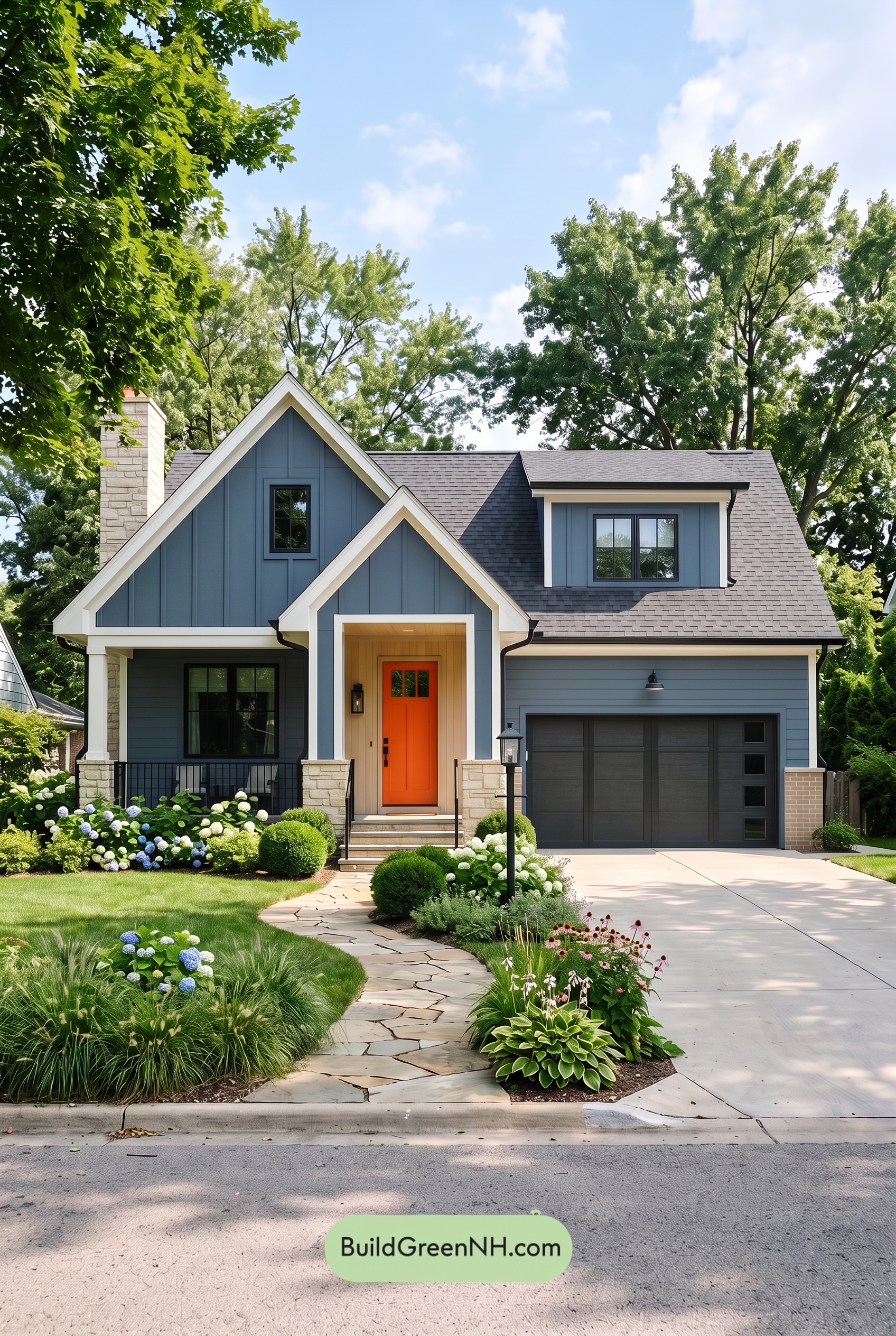 Blue House Front Door Color Scheme: Cobalt Persimmon
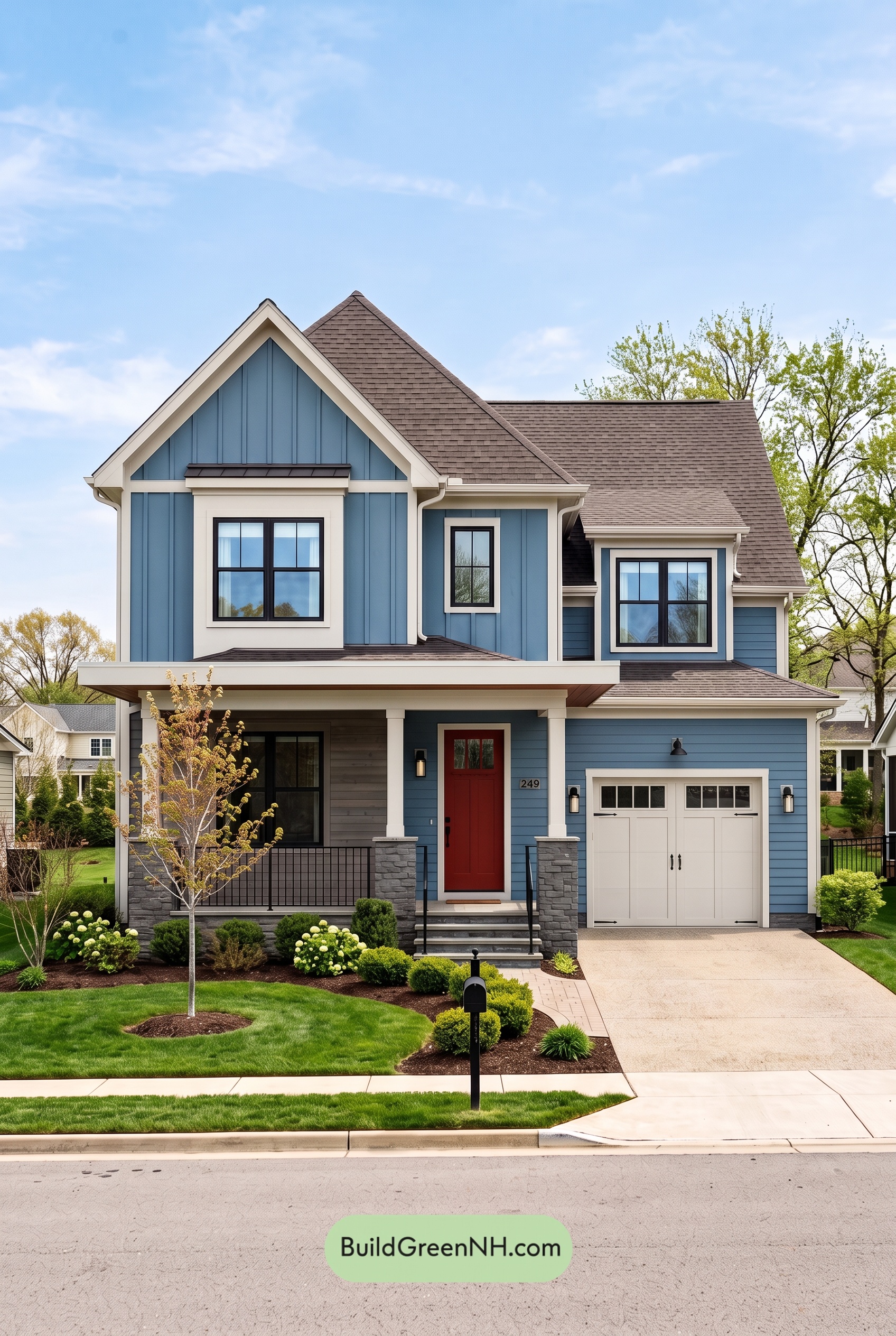 Blue House Front Door Color Scheme: Denim Poppy
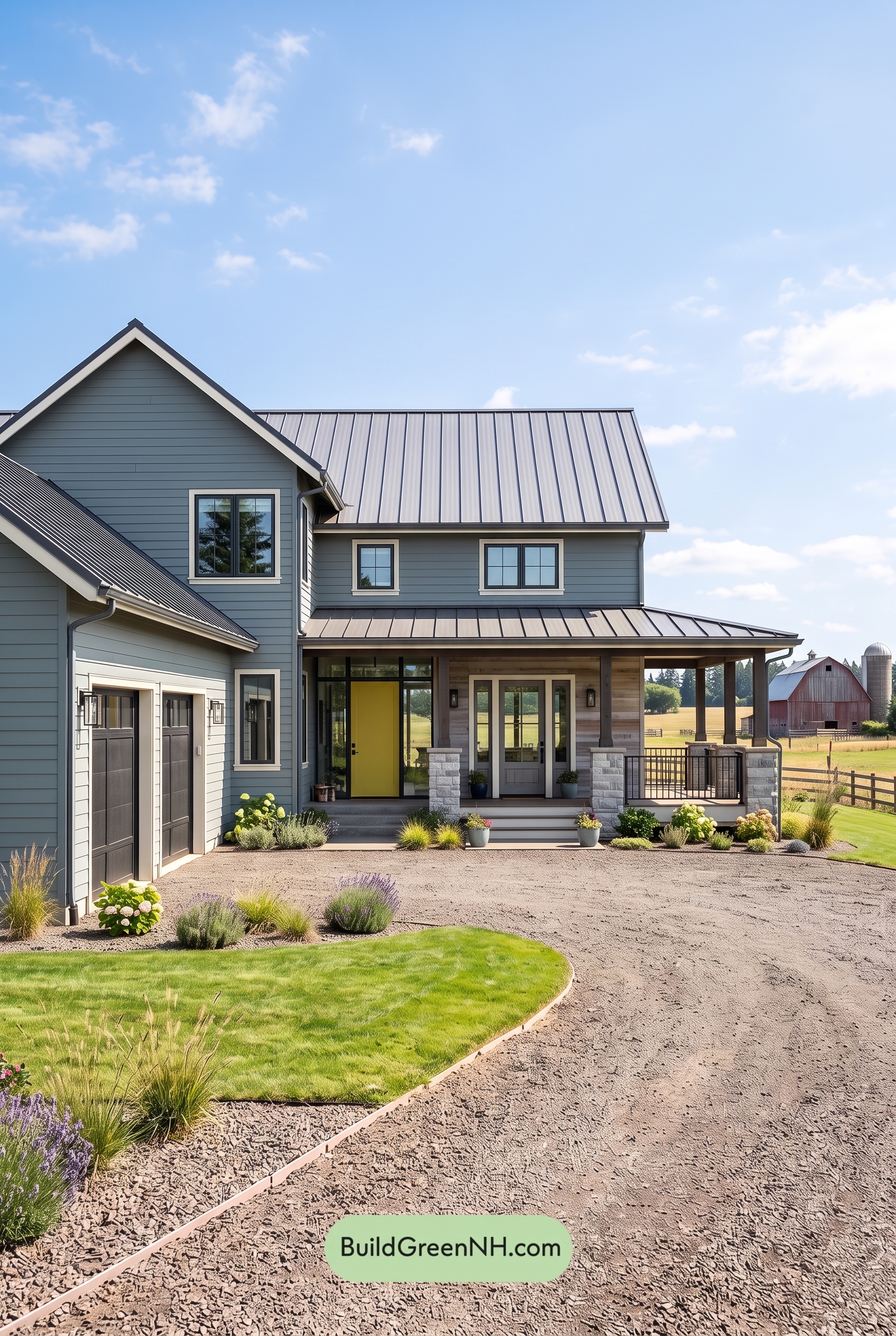 Blue House Front Door Color Scheme: Slate Citron
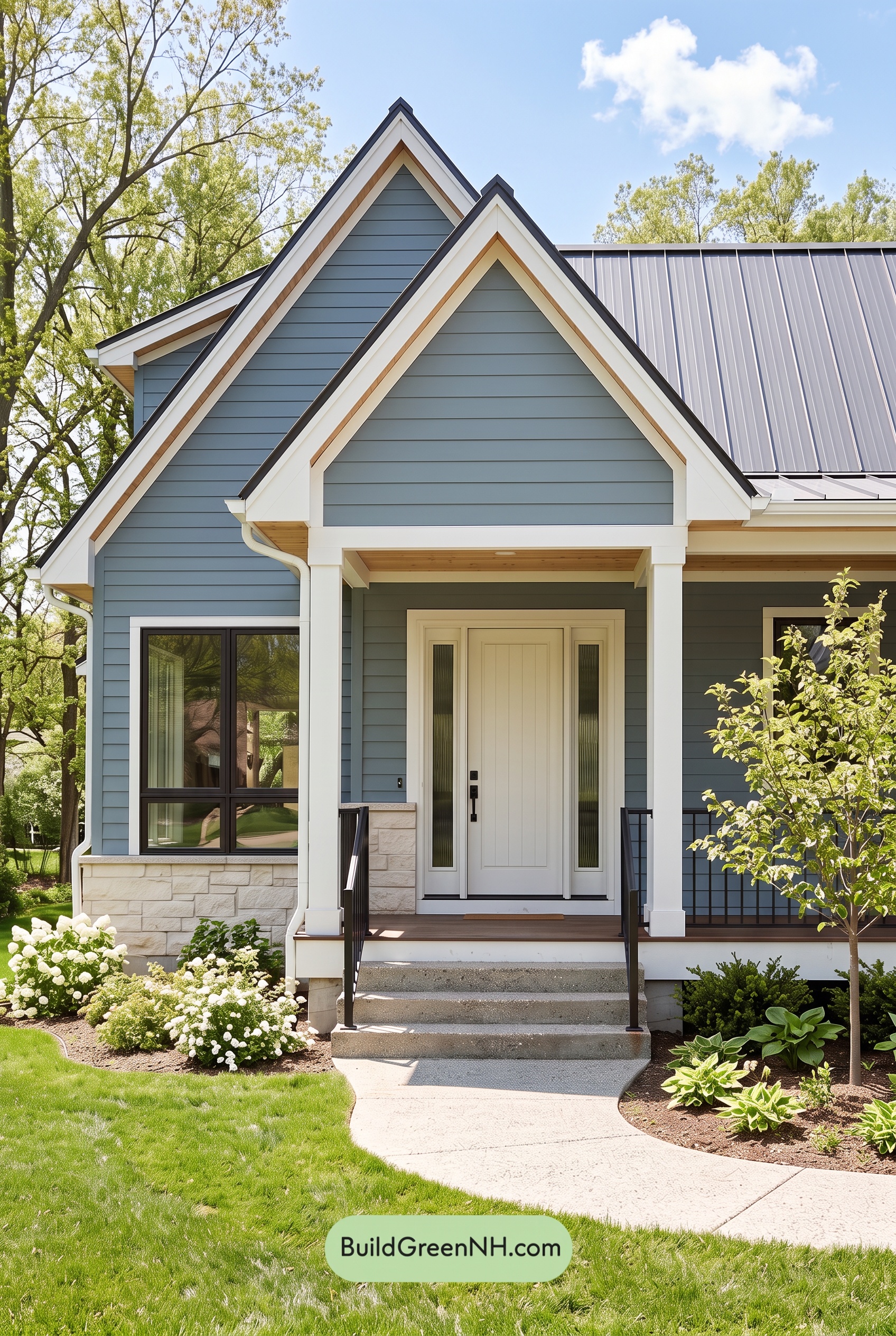 Blue House Front Door Color Scheme: Mist Blue Haven
Table of Contents