Last updated on
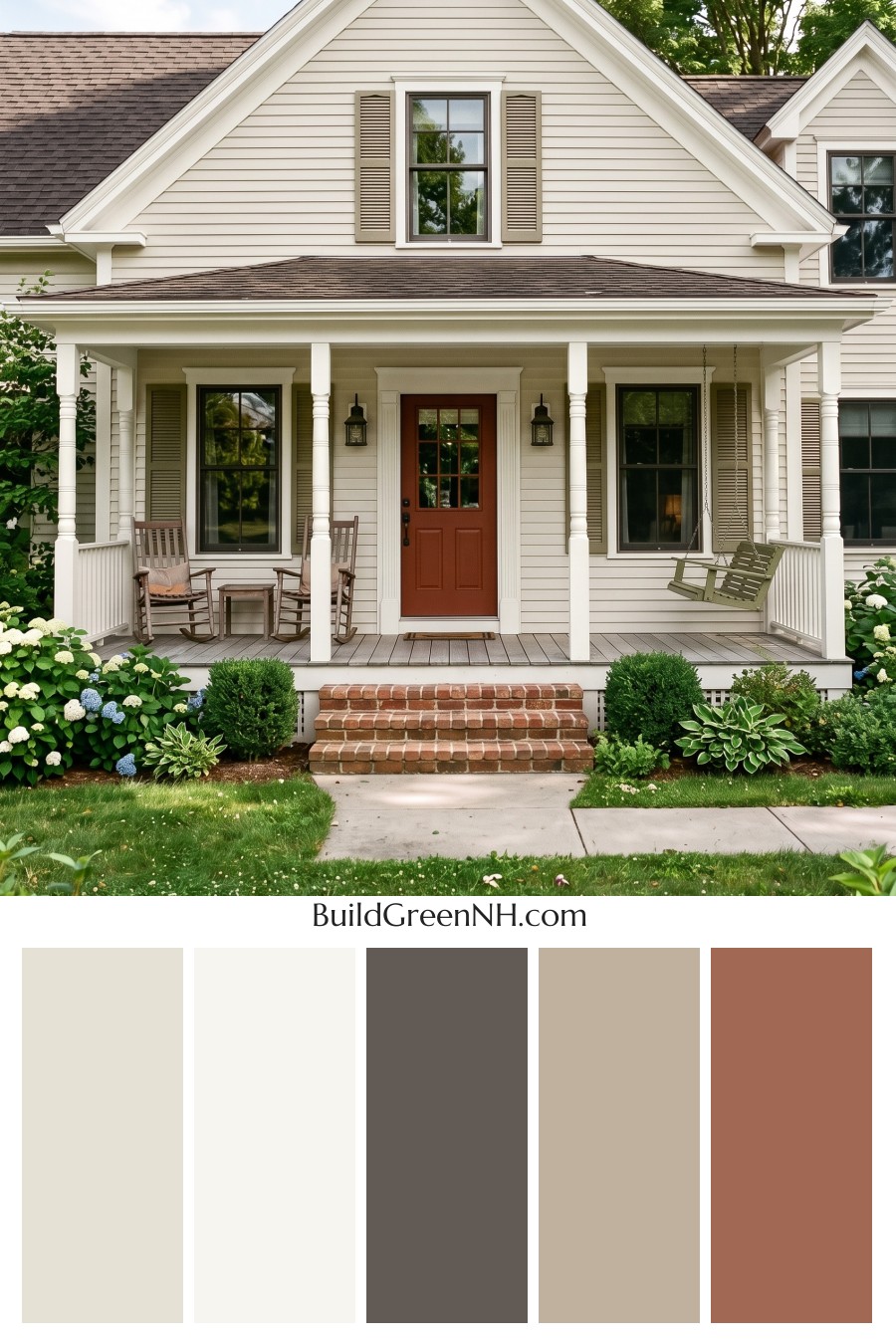
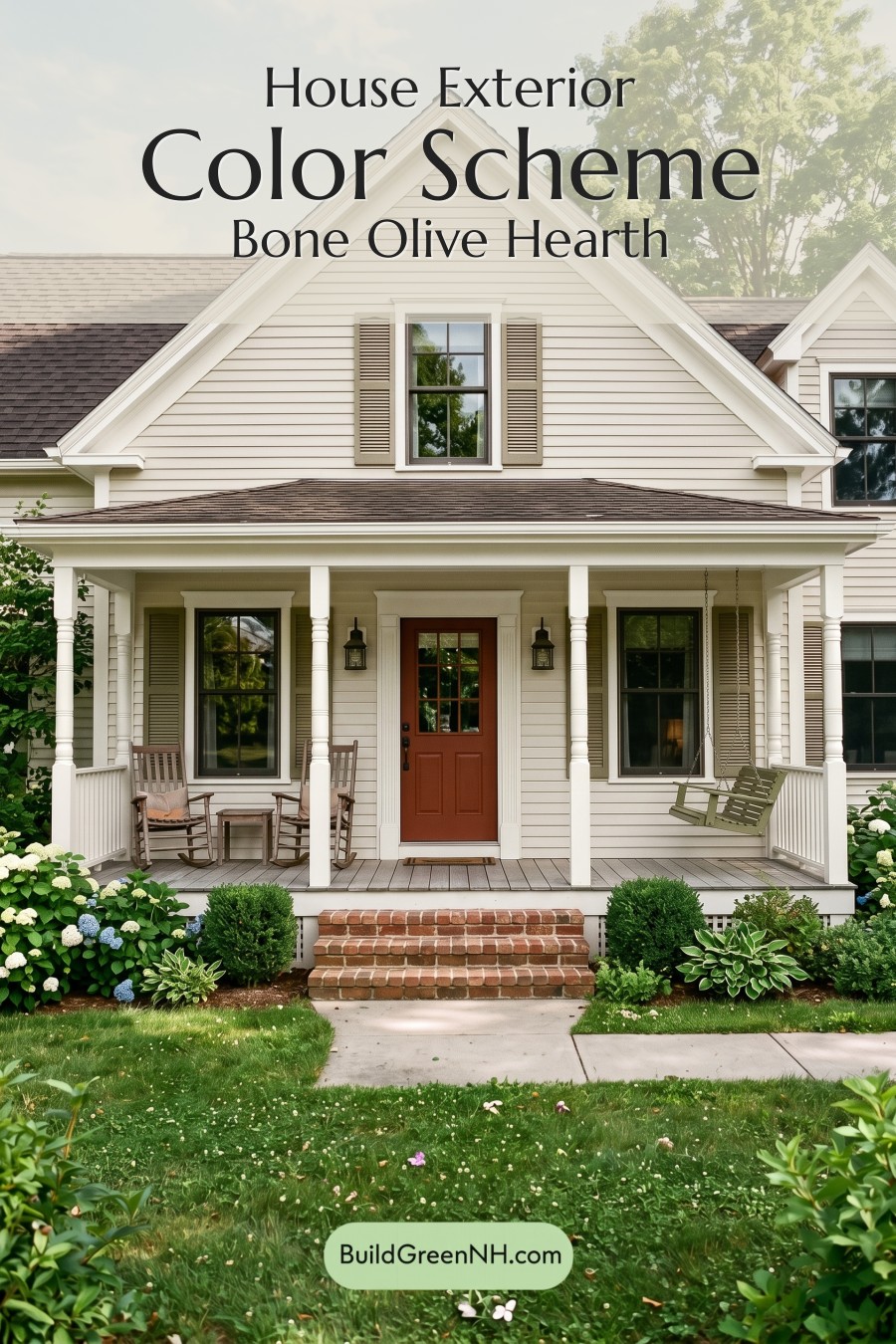
This exterior works beautifully because its layered beige palette feels calm and classic while rich brown accents give the home just enough warmth and definition.
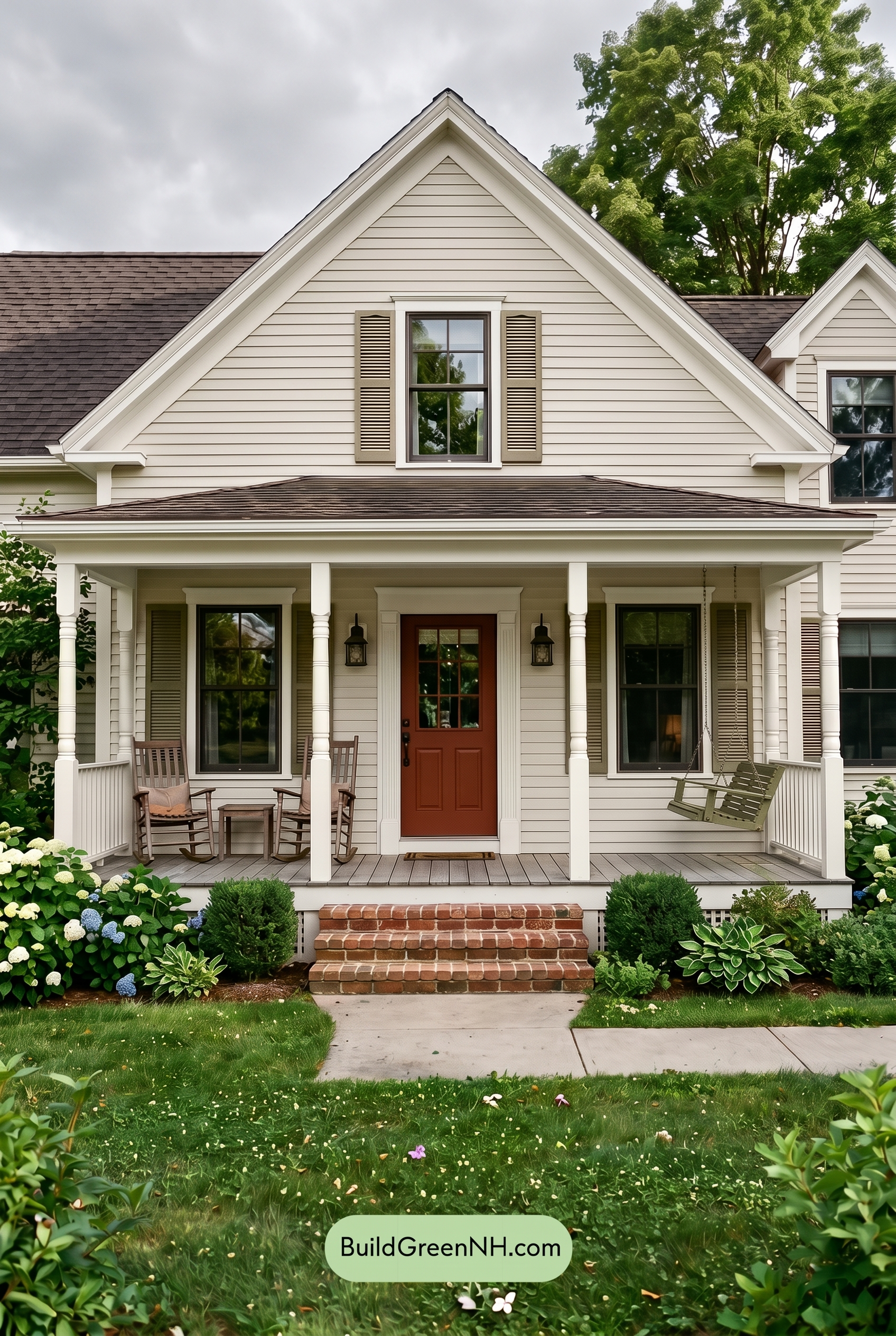

A Warm, Welcoming Beige Foundation
The main siding is dressed in a soft warm beige that gives the house an easy, timeless character. It feels light without being stark, cozy without looking heavy, and it pairs beautifully with the greenery around the porch and garden.
Because the siding sits in a gentle neutral family, the architectural lines of the home stay crisp and readable. The horizontal siding, tall gables, and generous porch all feel connected through one calm, consistent backdrop.
Trim That Brightens the Architecture
The trim, columns, railings, and porch details use a lighter beige shade that brings a subtle lift to the exterior. This brighter neutral outlines the rooflines, windows, porch posts, and door surround, giving the home a polished, well-kept look.
What makes this choice so effective is its softness. Instead of creating harsh contrast, the trim gently separates each feature from the siding. The result is graceful and classic, with just enough definition to highlight the home’s traditional charm.
Shutters with Quiet Depth
The shutters continue the beige family but lean slightly deeper and earthier than the siding and trim. This creates a layered effect around the windows without disrupting the relaxed palette.
That subtle shift in shade is important. It gives the façade dimension, adds rhythm across the front of the house, and keeps the neutral scheme from feeling flat. The shutters feel tailored, calm, and perfectly suited to the cottage-inspired exterior.
Brown Accents Add Warm Contrast
The window frames introduce a dark brown shade that brings structure to the lighter exterior. Against the beige siding and trim, these deeper frames create a strong, handsome outline and help the glass feel grounded.
The front door adds the warmest moment in the scheme, with a rich brown shade that has a welcoming, earthy quality. It draws the eye naturally to the entry and gives the porch a cozy focal point without feeling too bold or out of place.
A Roof That Grounds the Palette
The roof uses a deep brown family that ties beautifully to the door and window frames. Its darker shade anchors the light beige exterior, balancing the height of the gables and giving the home a settled, substantial feel.
This darker roof also helps the softer wall and trim colors appear brighter by comparison. It is a smart pairing: light neutrals for charm and openness, deeper browns for weight and contrast.
The Overall Mood
The mood of this exterior is warm, traditional, and inviting. The beige-on-beige approach feels calm and refined, while the brown accents add personality and depth. Nothing competes. Everything supports the welcoming front porch and classic architecture.
It is the kind of color scheme that ages gracefully because it relies on harmony rather than trend. Soft beige shades keep the home approachable, lighter trim adds freshness, and rich brown details provide just the right amount of contrast. The result is comfortable, elegant, and effortlessly curb-appealing.
Next, see how this color scheme looks under different lighting simulations throughout the day.
Overcast
Under overcast light, the beige family shifts quieter and slightly cooler than it would in neutral daylight, with less golden warmth and softer, more muted saturation. The lighter beige shades still read clean, but their contrast against the deeper brown family becomes gentler because the cloud cover diffuses highlights and removes the crisp edge of direct sun.
Shadows settle into broad, soft gray-beige tones rather than sharp dark pockets, so the façade feels calmer and more even. The brown shades around the openings and entry look richer and more grounded without becoming overly intense, giving the whole exterior a relaxed, cozy mood compared with the brighter, more defined feel of neutral daylight.
Golden Hour
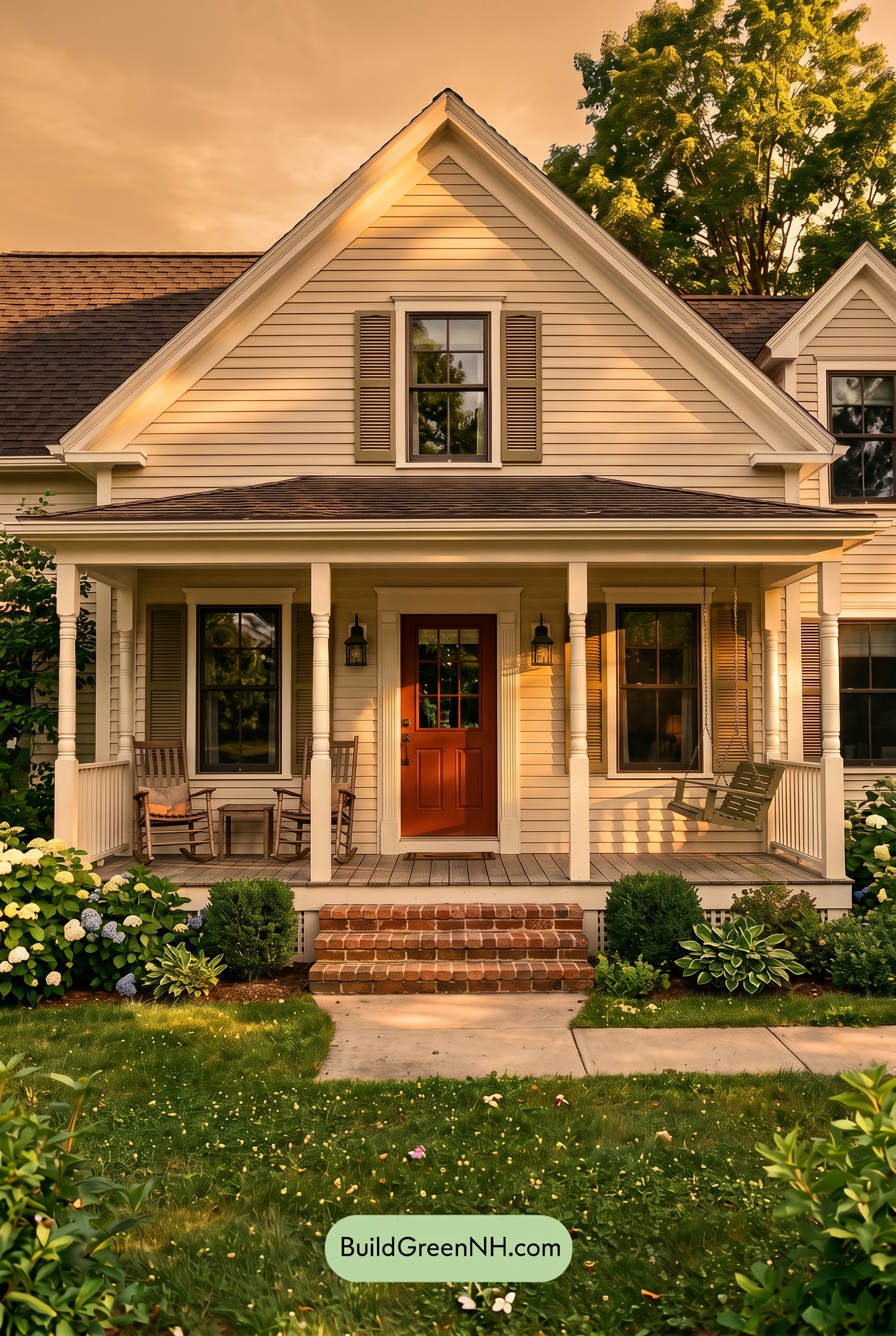
Under Golden Hour, the beige family on the siding, trim, columns, and railings looks warmer, softer, and slightly more saturated than it would in neutral daylight. Instead of reading flat or purely light, these warm neutrals take on a richer, creamier glow that makes the whole facade feel more welcoming.
The brown family in the window frames and front door deepens as shadows stretch across the porch, creating stronger contrast against the lighter beige shades. Compared with neutral daylight, the mood shifts from crisp and balanced to cozy, layered, and a little more dramatic.
Shade
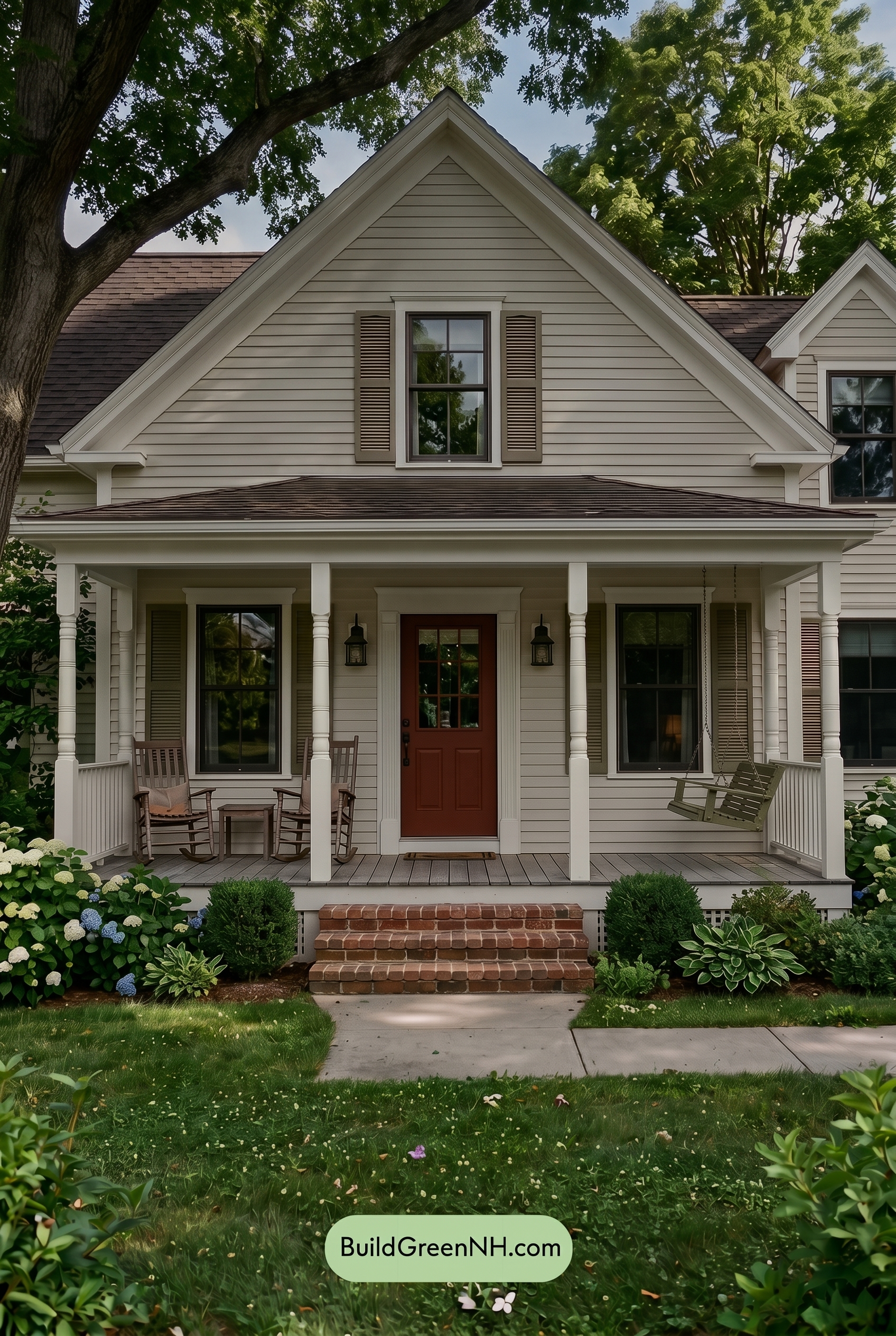
In Shade, the beige family on the siding, trim, columns, and railings loses some of the sunlit warmth it would show in neutral daylight, shifting softer and more muted. The saturation feels gentler, with the light neutrals taking on a quieter, slightly cooler cast while the clapboard shadows make each horizontal line appear more defined.
The brown family on the window frames, shutters, and front door deepens noticeably in the shade, creating richer contrast against the softened beige shades. Overall, the mood becomes calmer and more sheltered, with leafy shadows adding depth and a cozy, traditional feel rather than the brighter, crisper look of neutral daylight.
Nighttime
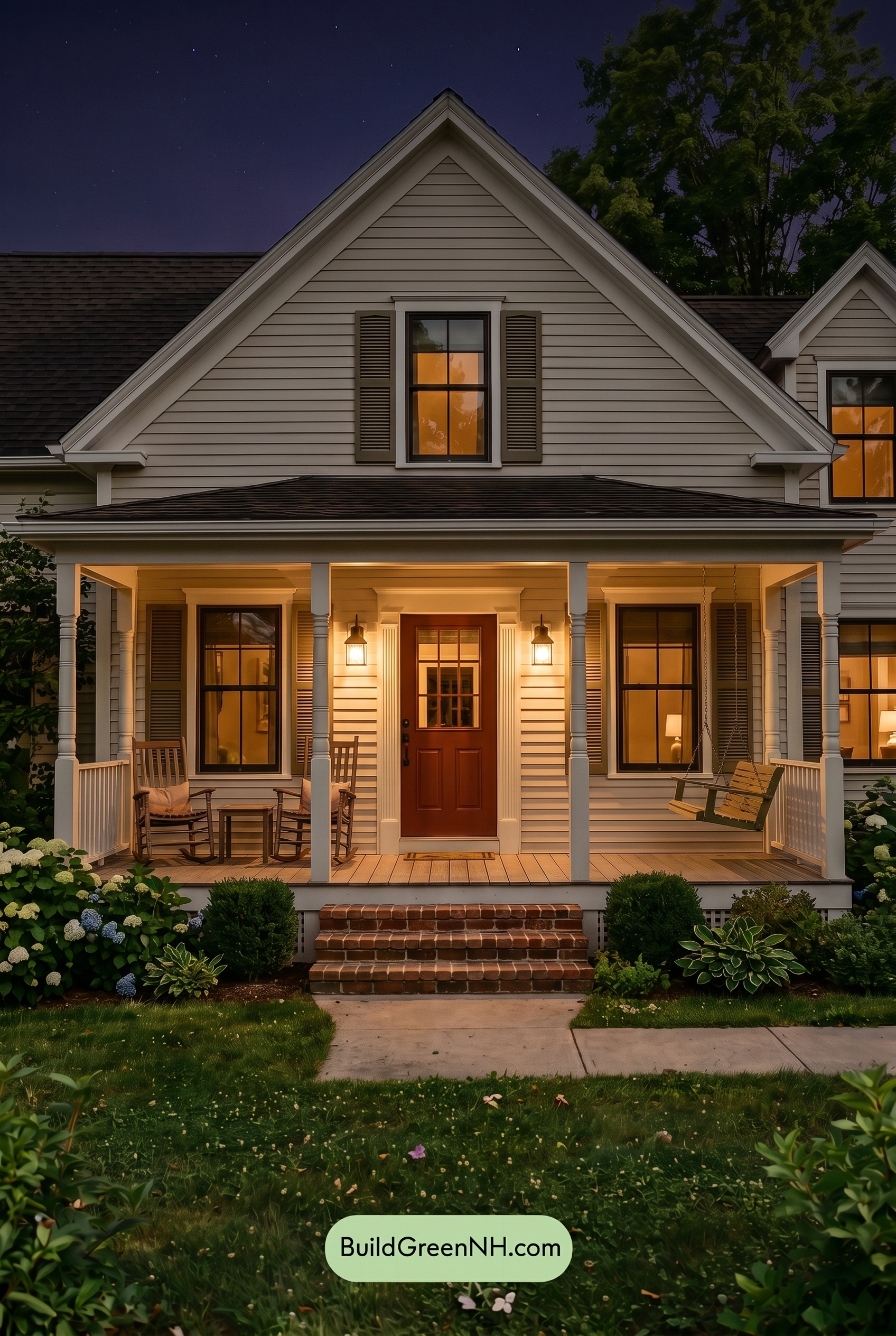
At night, the beige family on the siding and trim shifts from a clear neutral daylight look to a softer, warmer glow. Porch lighting adds golden warmth, making the lower façade feel more saturated and inviting, while the upper gables recede into cooler shadow.
The brown family on the window frames, shutters, and front door deepens noticeably after dark, gaining richer contrast against the lighter beige shades. Shadows sharpen the trim lines and siding texture, creating a cozier, more dramatic mood than the balanced, even appearance of neutral daylight.
Pin these for later:
Want More?
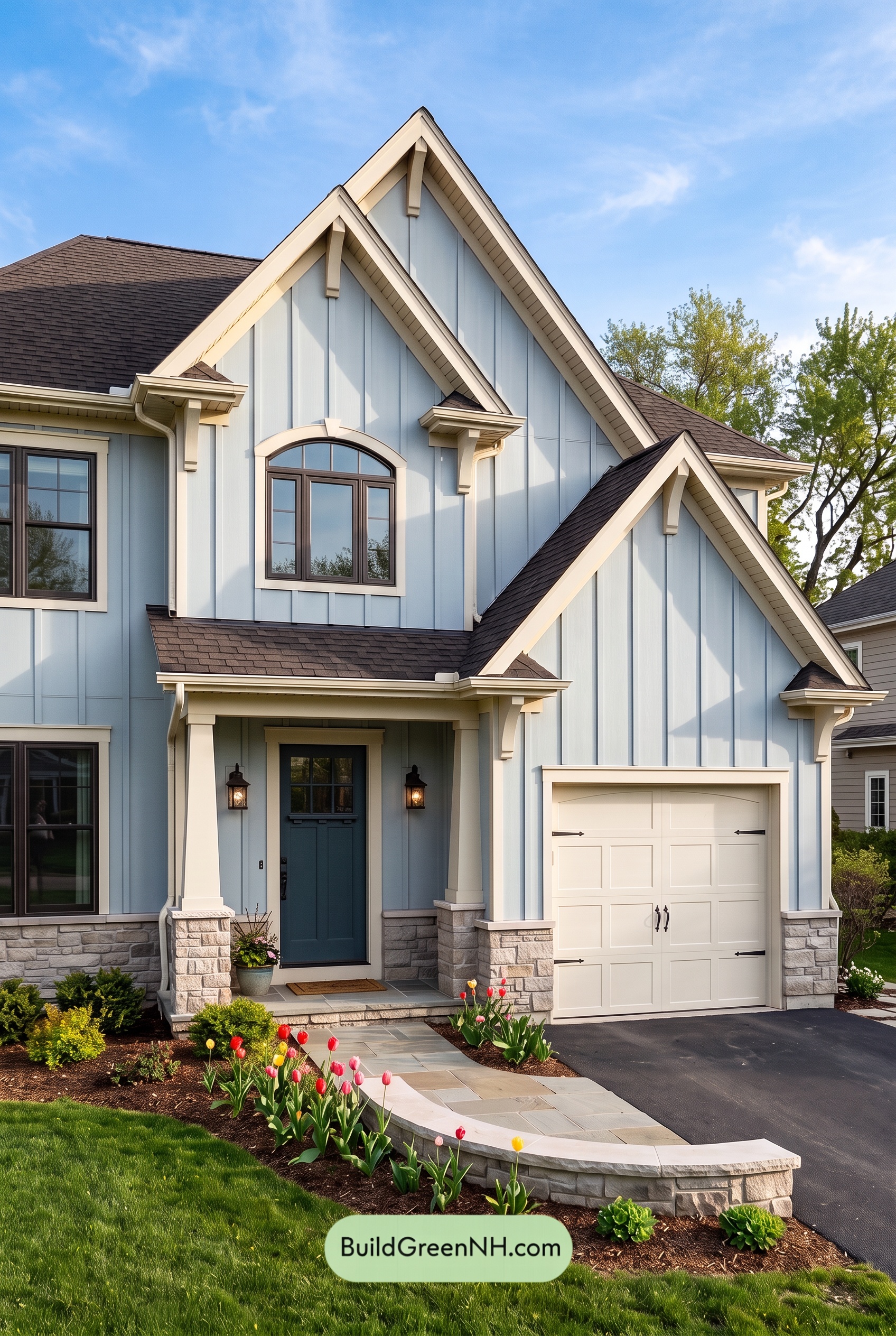 Exterior Color Scheme with Stone Accents: Bluebell Gable Song
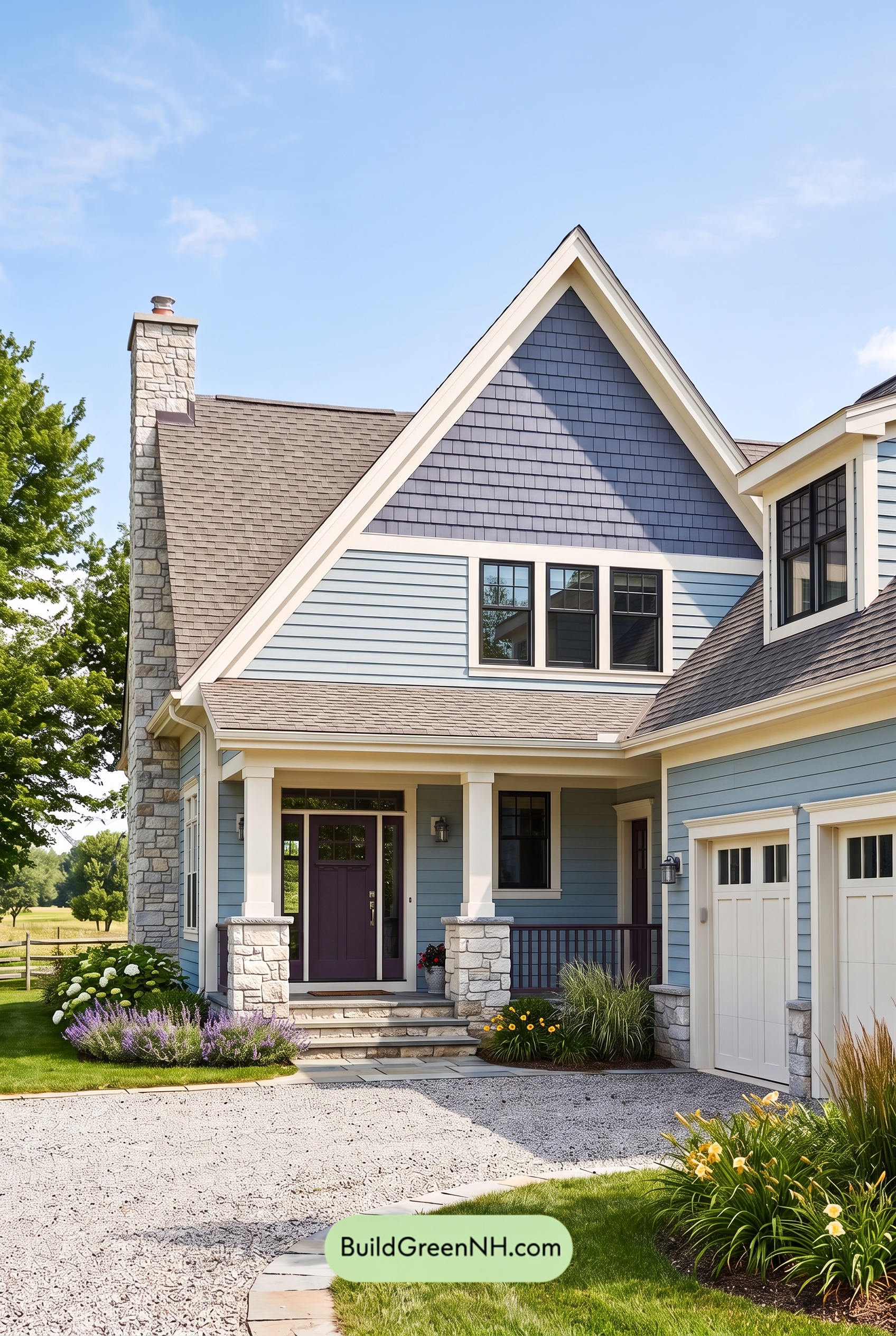 Exterior Color Scheme with Stone Accents: Meadow Bell Welcome
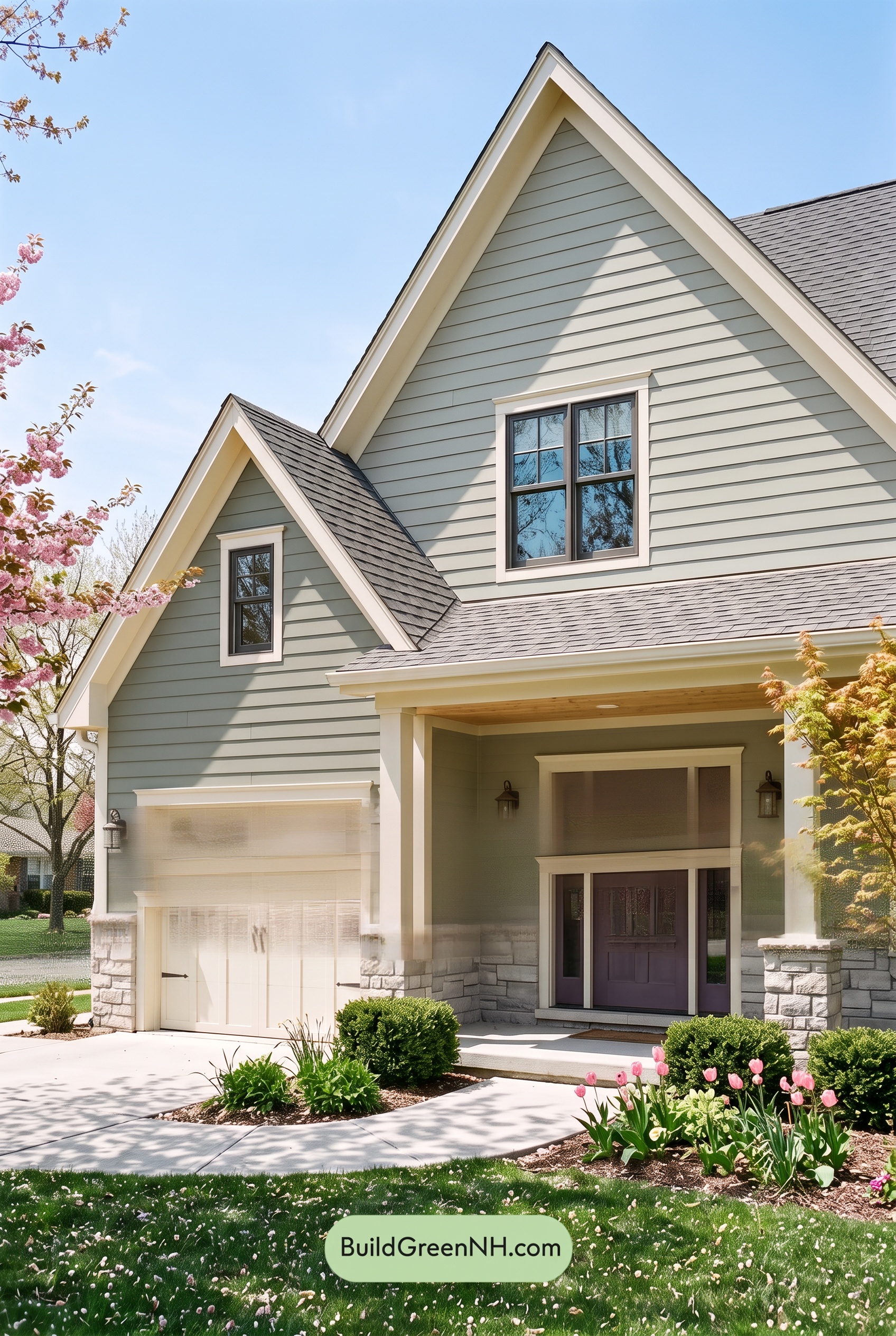 Exterior Color Scheme with Stone Accents: Willow Quartz Porch
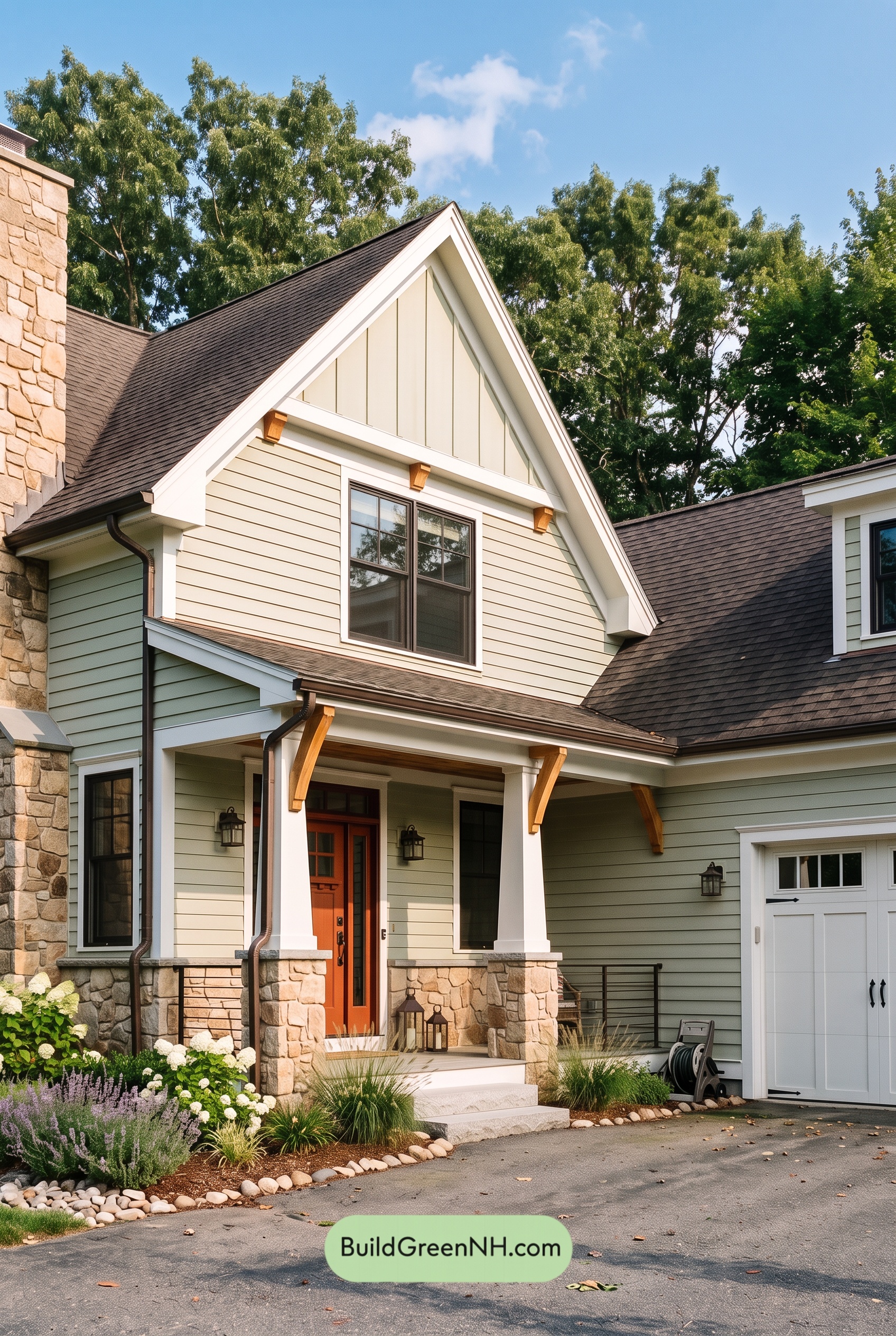 Exterior Color Scheme with Stone Accents: Celadon Ember Gable
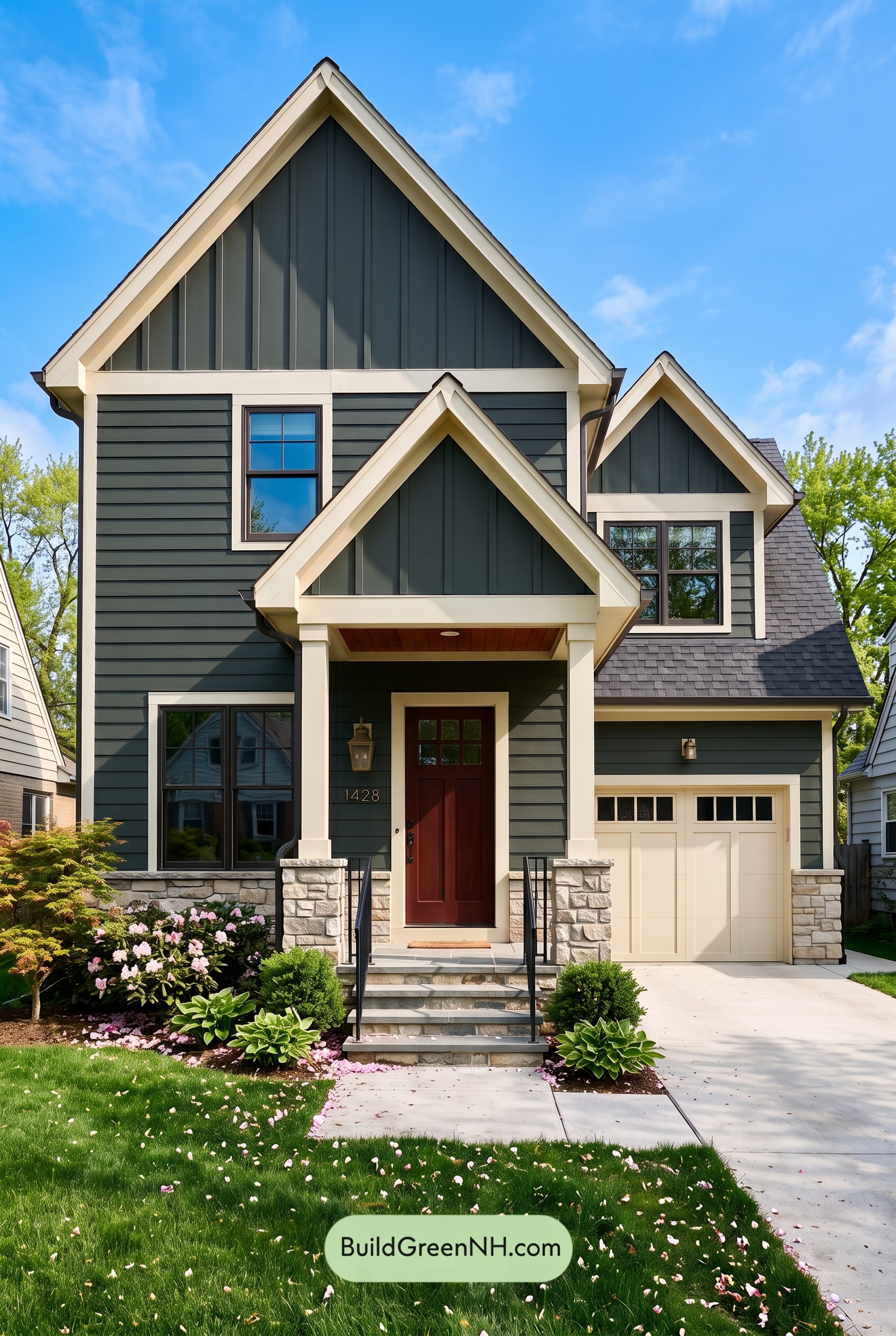 Exterior Color Scheme with Stone Accents: Pine Brass Threshold
Table of Contents