Last updated on
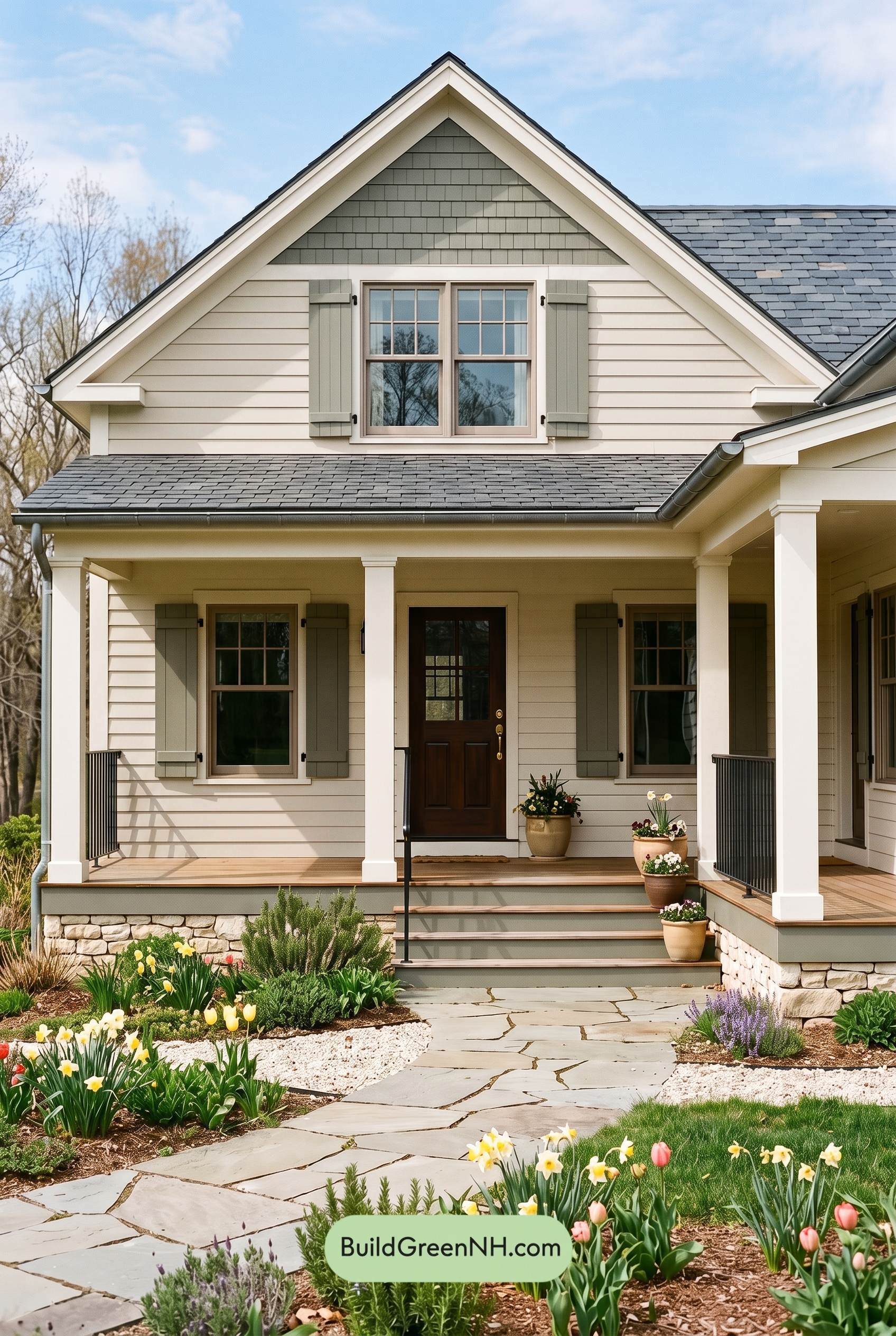

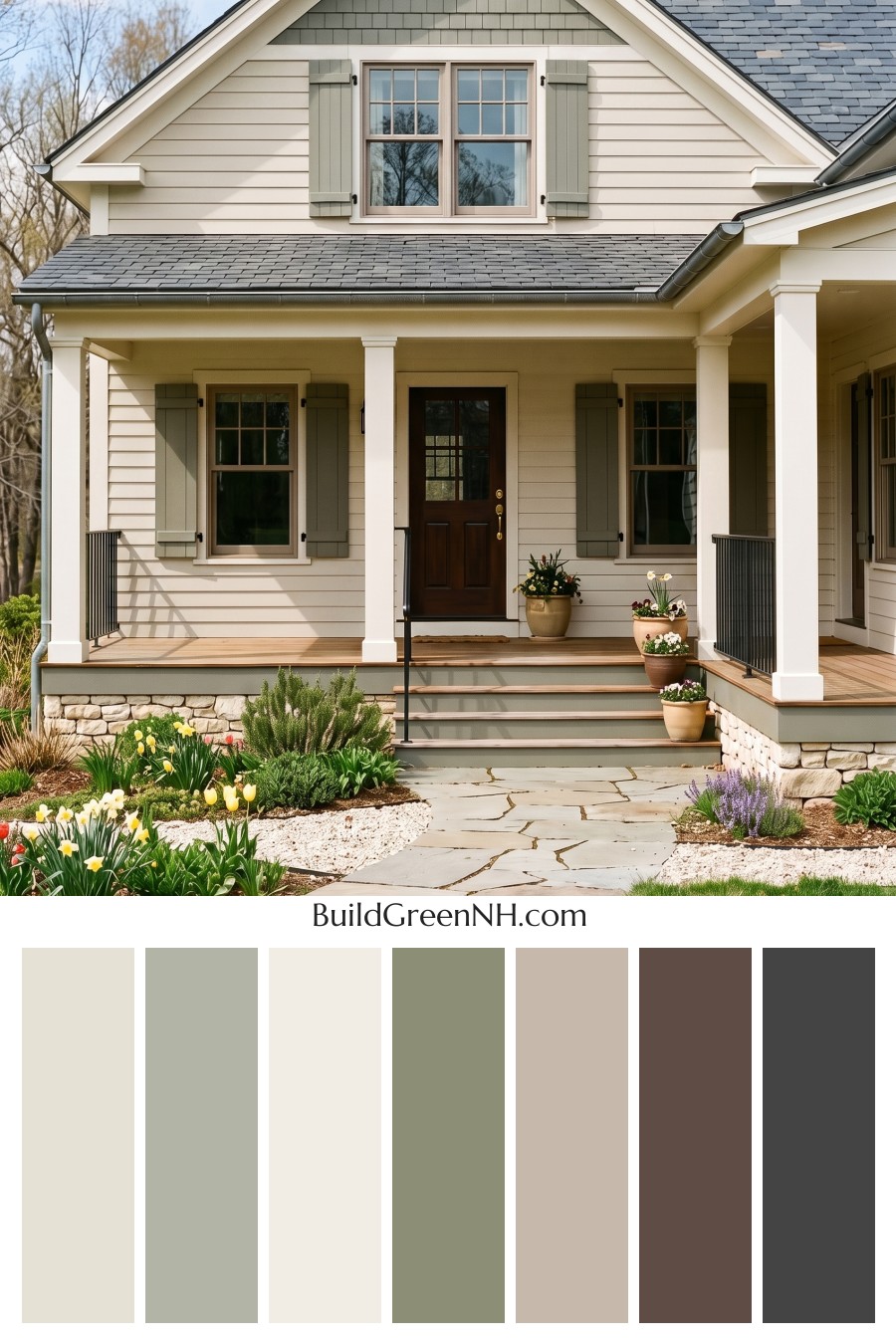
This exterior works beautifully because its creamy beige base, muted green accents, and grounding brown entry create a calm, nature-inspired look that feels both polished and welcoming.
A Warm Beige Foundation
The main siding is wrapped in a soft beige shade that gives the home an easy, inviting warmth. It feels classic without looking too formal, and it lets the architecture shine, especially the horizontal siding, porch details, and layered gables.
The trim, columns, and window frames stay within the beige family, using a lighter, creamier shade to brighten the exterior. This keeps the palette cohesive while adding enough contrast to outline the rooflines, porch supports, windows, and fascia with a clean, finished look.
Muted Green for Character
The upper gable introduces a muted green shade that adds personality without overpowering the home. Because it sits above the beige siding, the green draws the eye upward and gives the front elevation a charming cottage-inspired feel.
The shutters repeat that same green family, creating balance from top to bottom. Their soft, earthy tone feels connected to the surrounding landscaping, making the house look settled into its garden rather than separate from it.
A Rich Brown Front Door
The front door brings in a deep brown shade that adds warmth and depth at the entry. Against the lighter beige siding and trim, it becomes a natural focal point, giving the porch a welcoming sense of arrival.
This brown accent also works beautifully with the porch flooring, planters, and natural stone details. It adds a touch of richness that keeps the softer beige and green palette from feeling too pale.
Gray Details That Ground the Look
The roof uses a deep gray shade that anchors the whole color scheme. Its cool undertone balances the warmth of the beige siding and the earthy quality of the green accents, giving the home a crisp, composed finish.
The gray railings echo that grounding effect on the porch. They add subtle contrast and a slightly modern edge, while still feeling quiet enough to let the siding, shutters, and entry take center stage.
The Overall Mood
This color scheme feels relaxed, fresh, and timeless. The beige family brings warmth, the green family adds softness and connection to nature, the brown door creates depth, and the gray details provide structure.
Together, these shades create a home that feels approachable but thoughtfully designed. It is a great example of how a restrained exterior palette can still feel layered, charming, and full of curb appeal.
Next, see how this color scheme looks under different lighting simulations throughout the day.
Overcast
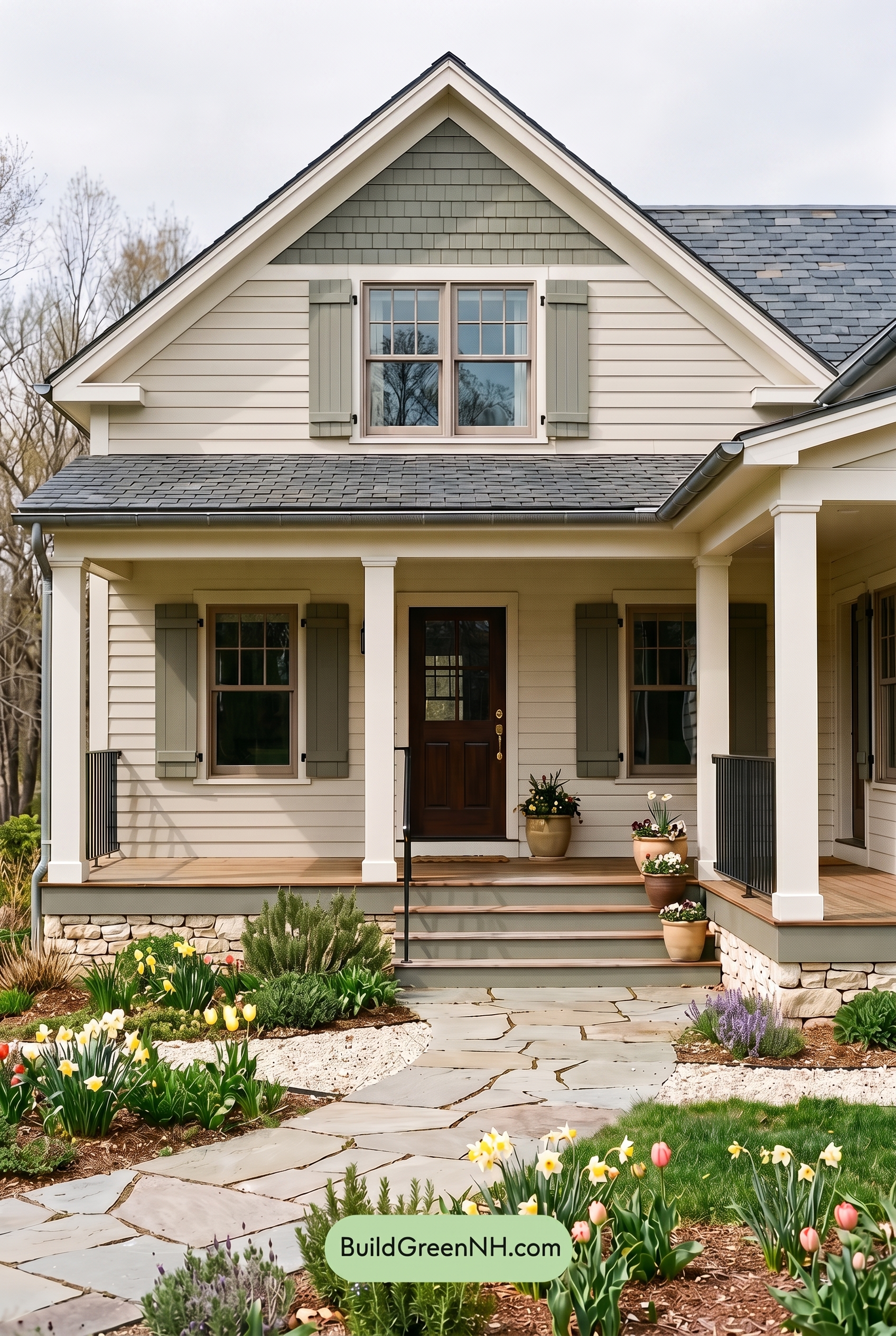
Under overcast light, the beige family on the main walls and trim loses some of its sunny warmth, reading softer, flatter, and a touch cooler than it would in neutral daylight. The green family on the upper wall and shutters appears more muted and earthy, with less crisp saturation and a calmer presence.
Shadows become broader and gentler, so the contrast between siding, trim, shutters, and gray railings feels more blended. The brown front door deepens slightly without looking as warm, giving the exterior a quieter, cozier mood instead of the brighter, more dimensional look it has in balanced daylight.
Golden Hour
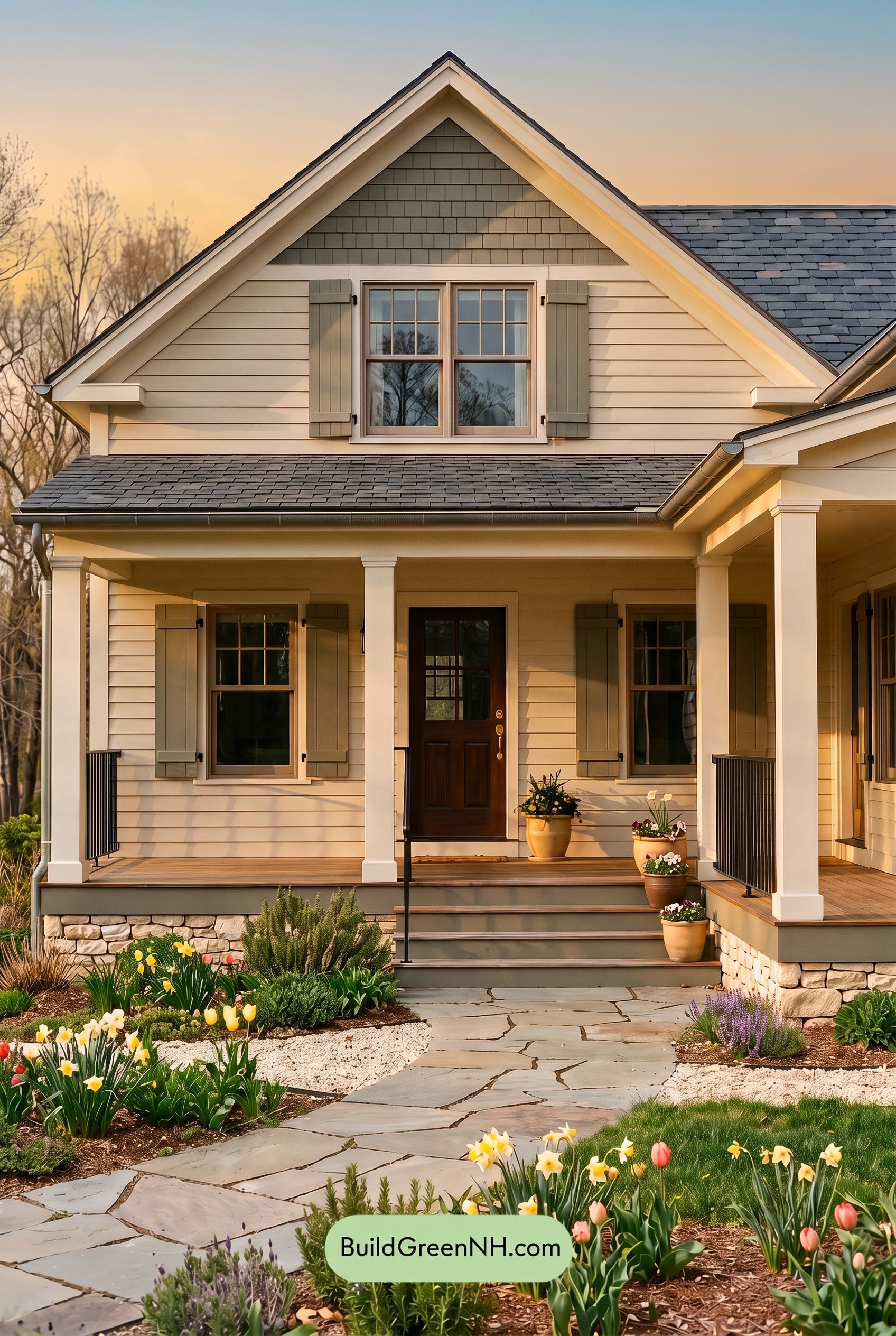
Under Golden Hour light, the beige family on the siding and trim shifts warmer and more saturated, taking on a soft sunlit glow that would feel flatter and more neutral in midday daylight. The green family on the upper wall and shutters deepens slightly, with its muted shade looking richer beside the warmed neutrals.
Longer shadows add definition to the siding, columns, and porch details, increasing contrast without making the palette feel harsh. The brown family on the front door appears deeper and cozier, while the gray family on the railings feels more grounded, giving the whole exterior a welcoming, relaxed mood compared to the crisper feel of neutral daylight.
Shade
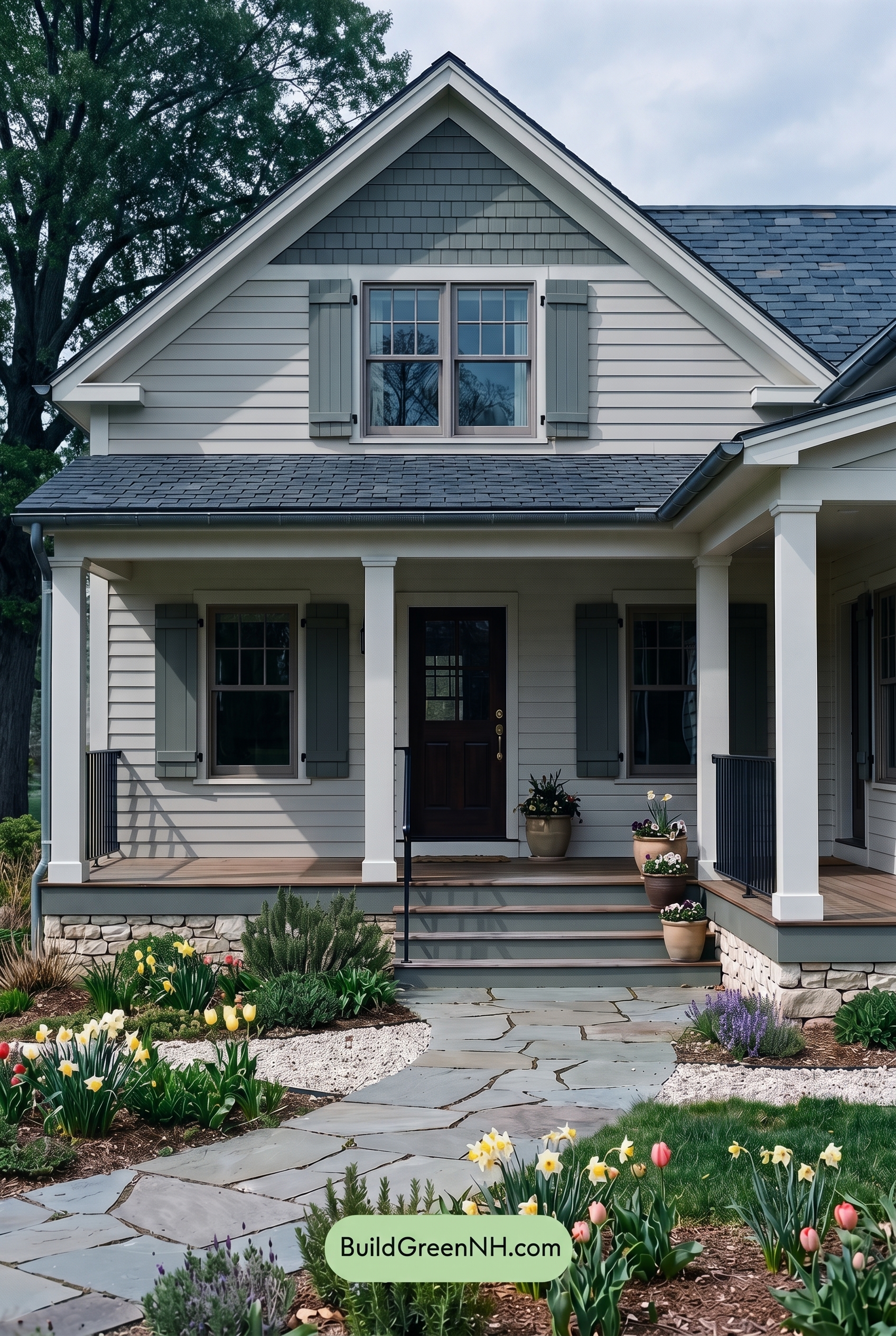
In shade, the beige siding and trim lose some of their sunny warmth, shifting cooler and quieter than they would in neutral daylight. The softer light reduces saturation, so the warm neutrals feel more muted and refined, while the deep overhangs create stronger shadow bands that add depth across the siding.
The green shutters and upper wall deepen in shade, appearing moodier and more grounded, with a gentle contrast against the softened beige surfaces. The brown front door looks richer and heavier, while the gray railings feel crisper, giving the whole exterior a calm, sheltered, slightly dramatic mood.
Nighttime
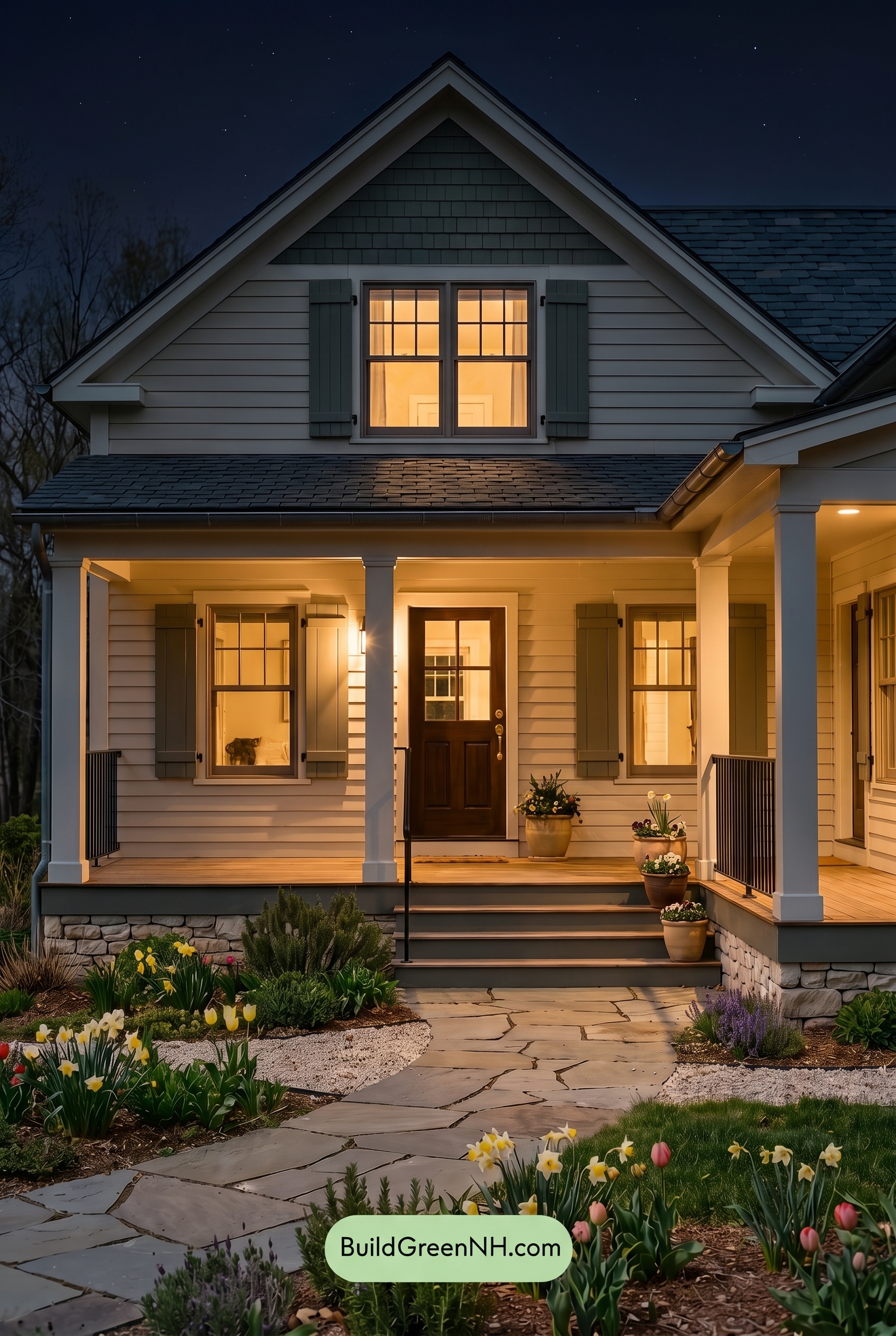
Under nighttime lighting, the beige family siding and trim shifts warmer than it would in neutral daylight, taking on a soft golden cast near the porch and windows. Areas outside the glow lose saturation and slip into cooler shadow, so the same warm neutrals feel deeper and more muted across the upper walls.
The green family shades on the shutters and upper wall become moodier at night, reading darker and less crisp, while the brown family front door gains richness where the warm light catches it. Gray family railings recede into shadow, increasing contrast with the illuminated columns and creating a cozy, welcoming mood with stronger light-and-dark definition than daylight would show.
Pin these for later:
Want More?
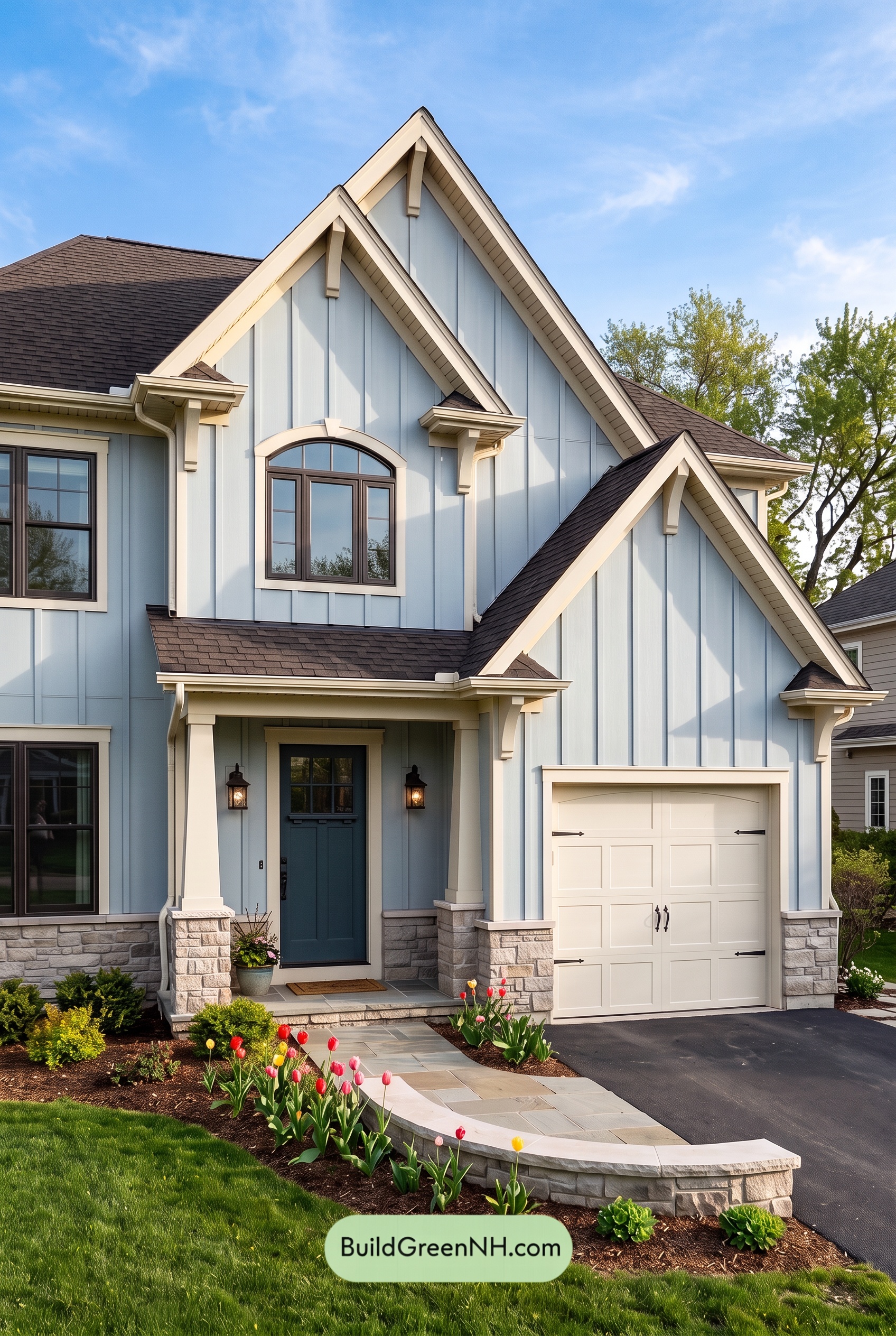 Exterior Color Scheme with Stone Accents: Bluebell Gable Song
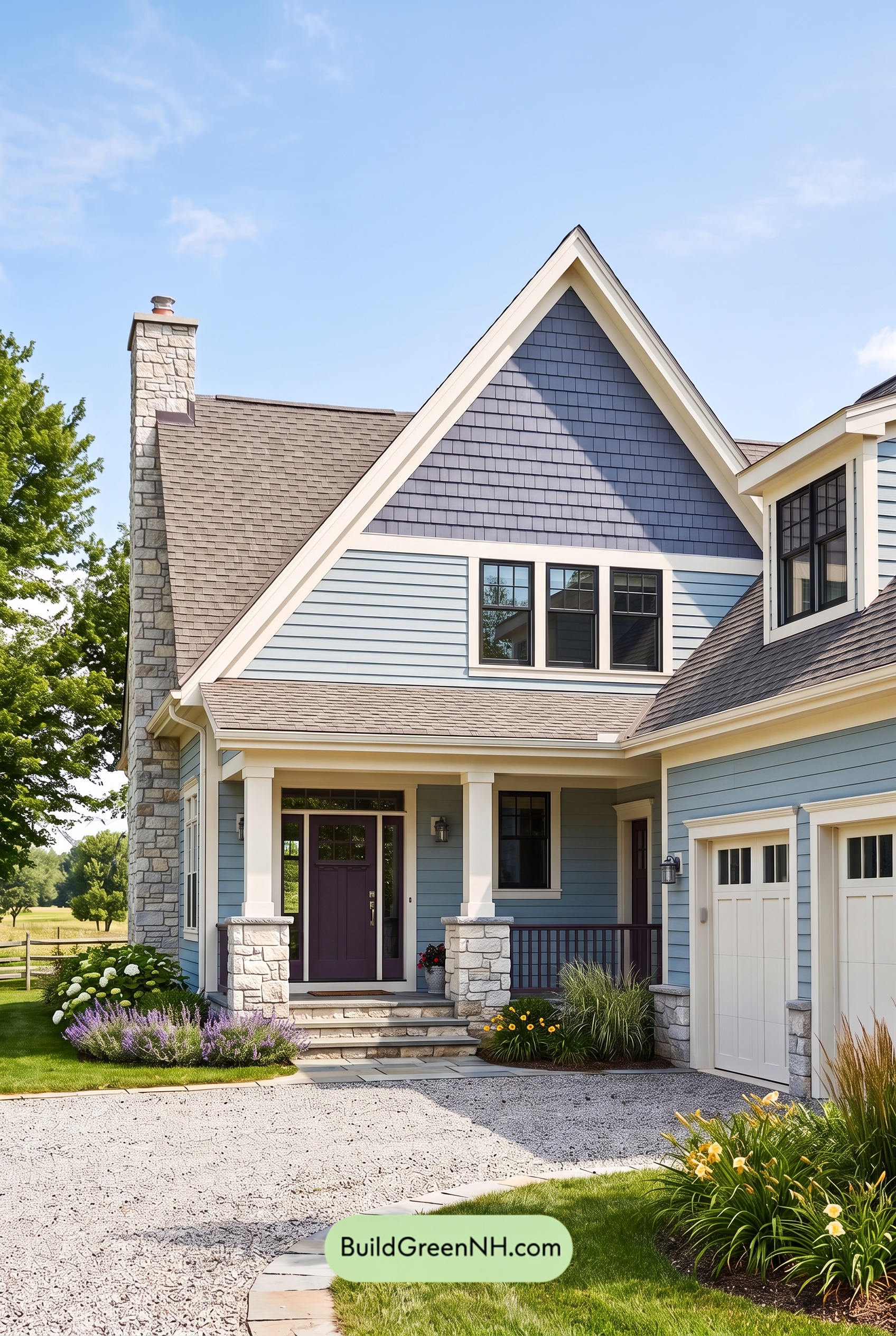 Exterior Color Scheme with Stone Accents: Meadow Bell Welcome
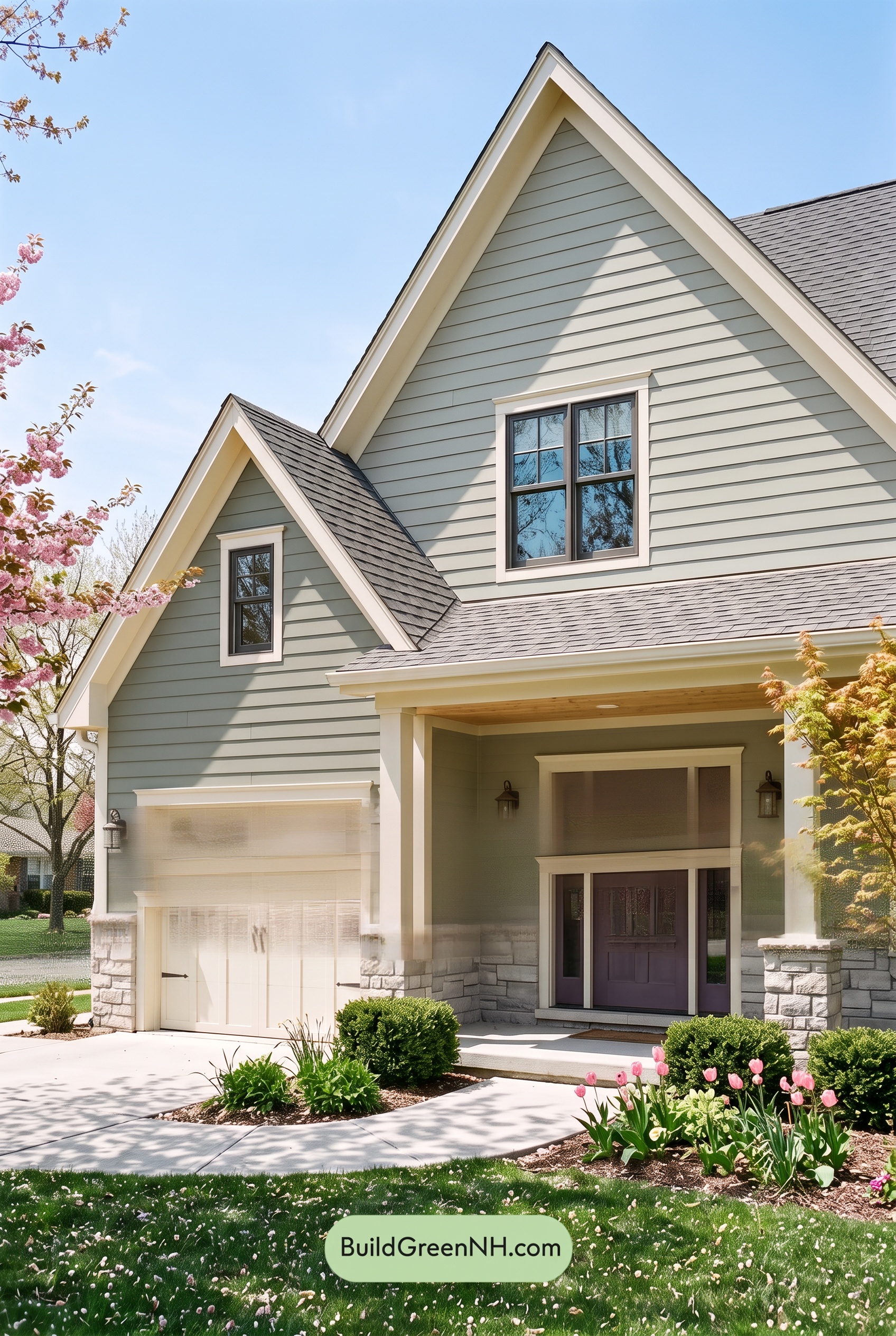 Exterior Color Scheme with Stone Accents: Willow Quartz Porch
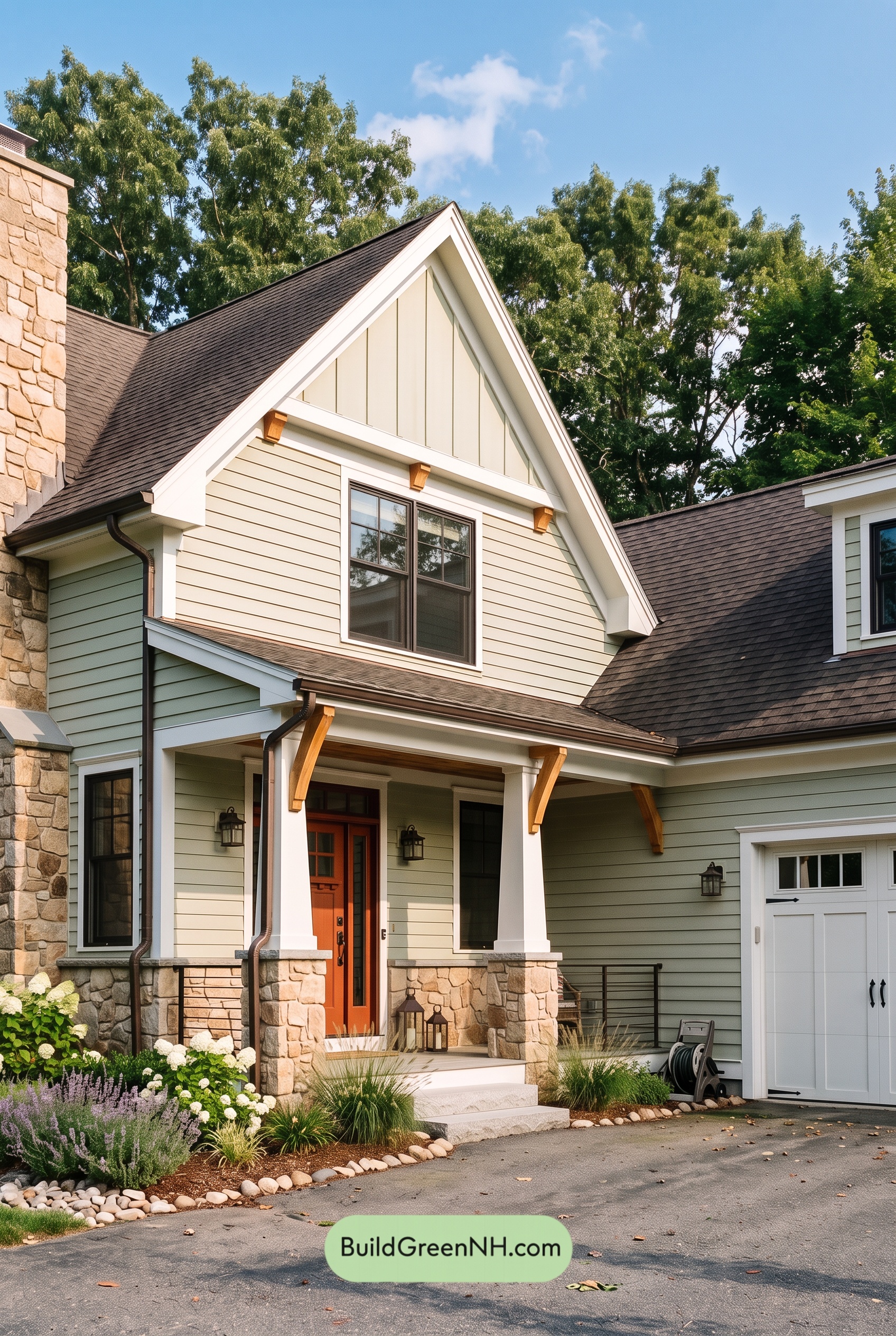 Exterior Color Scheme with Stone Accents: Celadon Ember Gable
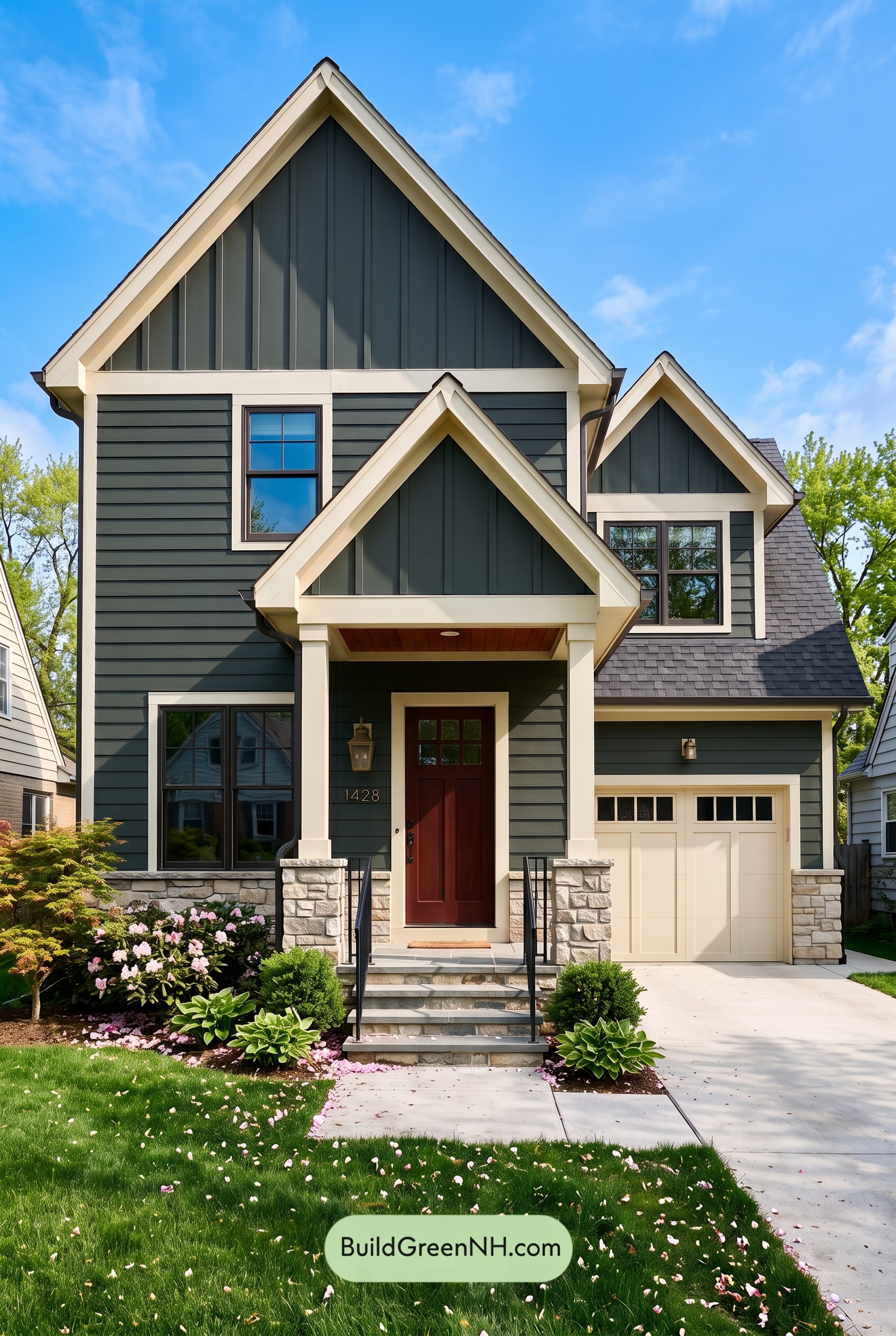 Exterior Color Scheme with Stone Accents: Pine Brass Threshold
Table of Contents