Last updated on
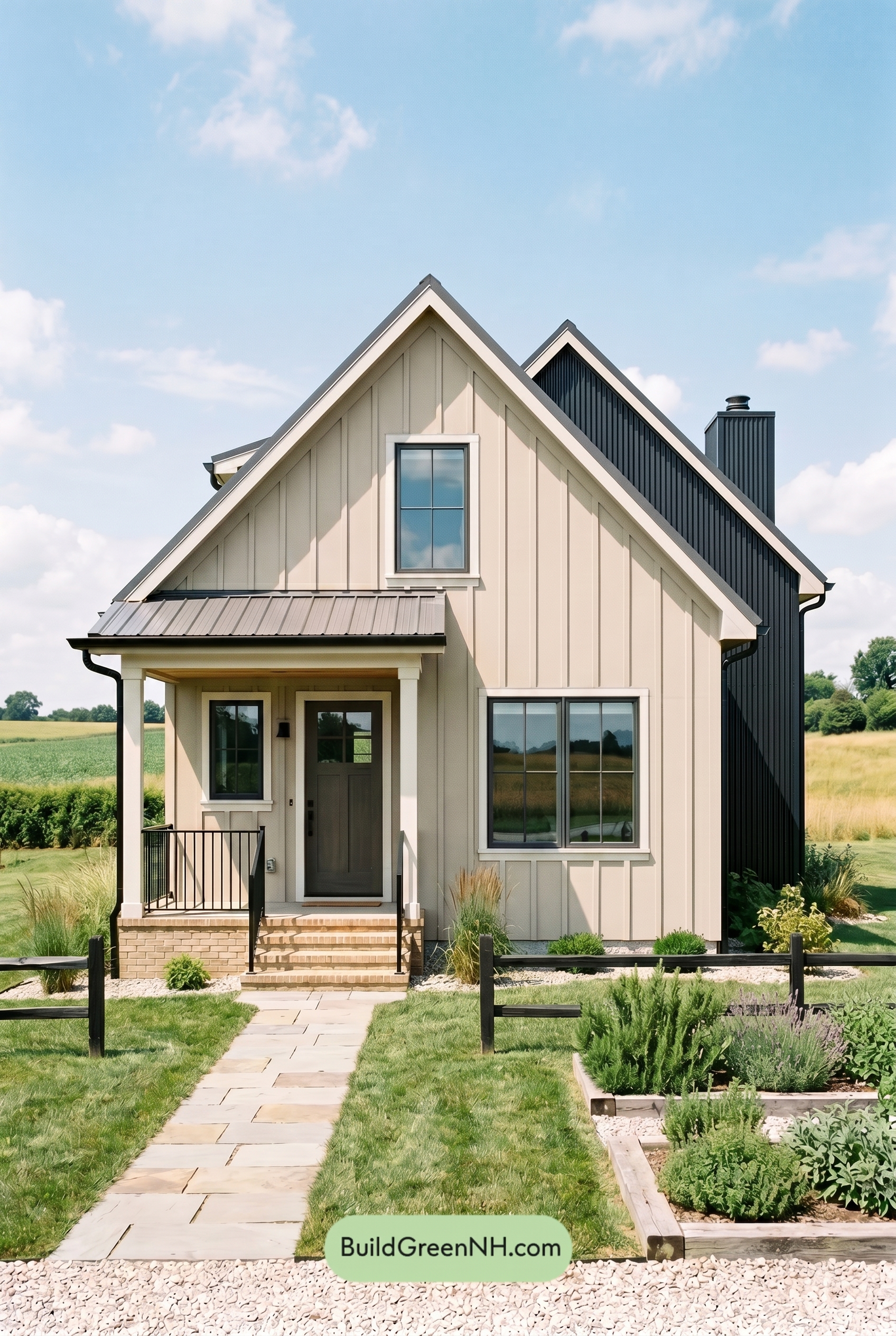

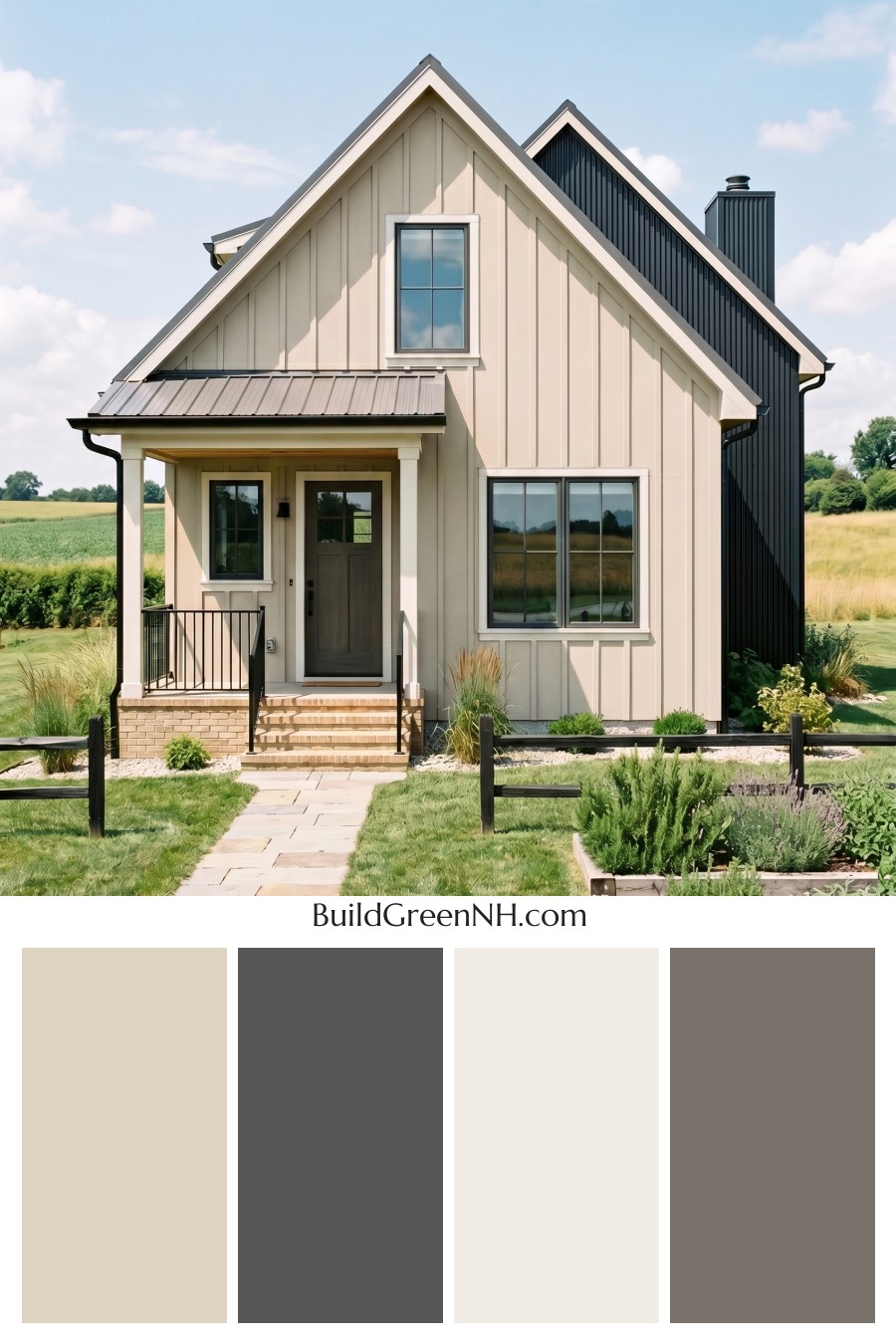
This warm beige and layered gray exterior is so appealing because it blends farmhouse charm with crisp modern contrast in a way that feels fresh, calm, and welcoming.
A Soft Beige Foundation
The main siding is finished in a warm shade of beige, giving the house an easy, sunlit quality. On the vertical siding, this gentle neutral feels especially fitting because it highlights the height of the gables and adds a clean, tailored rhythm to the front elevation.
This beige family shade keeps the exterior approachable rather than stark. It pairs beautifully with the surrounding landscape, echoing the soft tones of stone paths, porch steps, and natural grasses while still looking polished and intentional.
Gray Accents with Modern Definition
The deeper gray accent wall on the side of the home brings in a striking contemporary edge. Its rich charcoal-gray shade creates contrast against the lighter beige siding, making the architecture feel more dimensional and visually grounded.
Gray also appears in the window frames, front door, railings, gutters, and roof details, which helps the whole palette feel cohesive. Instead of using gray in just one place, the scheme repeats it thoughtfully across the exterior, tying the modern accents together from top to bottom.
Trim That Keeps Everything Bright
The trim stays within the beige family, but in a lighter, creamier shade that frames the windows, gables, porch, and columns with subtle brightness. This choice softens the contrast and keeps the home from feeling too heavy, especially against the deeper gray accents.
The beige trim also works well with the main siding because it creates a layered neutral look rather than a sharp, high-contrast outline. The result is refined, warm, and easy on the eye.
A Front Door That Feels Quietly Sophisticated
The front door is finished in a muted gray shade, giving the entry a calm and understated presence. It does not compete with the architecture; instead, it settles into the porch beautifully and connects with the gray window frames and railings nearby.
This restrained door color is a smart choice for a home with strong gable lines and vertical siding. It adds depth without pulling too much attention away from the overall composition.
Roof and Railings as Anchoring Elements
The roof and porch roof introduce more gray tones, including medium and deeper shades that add structure to the design. These gray elements help cap the lighter beige body of the house, giving the exterior a balanced top-to-bottom feel.
The railings use a dark gray shade that feels crisp and graphic without looking harsh. Against the light porch columns and soft beige siding, they add just enough contrast to make the entry feel defined and welcoming.
The Overall Mood
This color scheme feels warm, modern, and relaxed. The beige shades bring softness and comfort, while the gray shades add sophistication and architectural clarity. Together, they create a home that feels rooted in classic country style but updated with a clean, contemporary sensibility.
What makes the palette especially successful is its restraint. There are no competing colors or overly bold accents. Instead, the exterior relies on warm neutrals, layered grays, and thoughtful placement to create a look that feels timeless, fresh, and beautifully balanced.
Next, see how this color scheme looks under different lighting simulations throughout the day.
Overcast
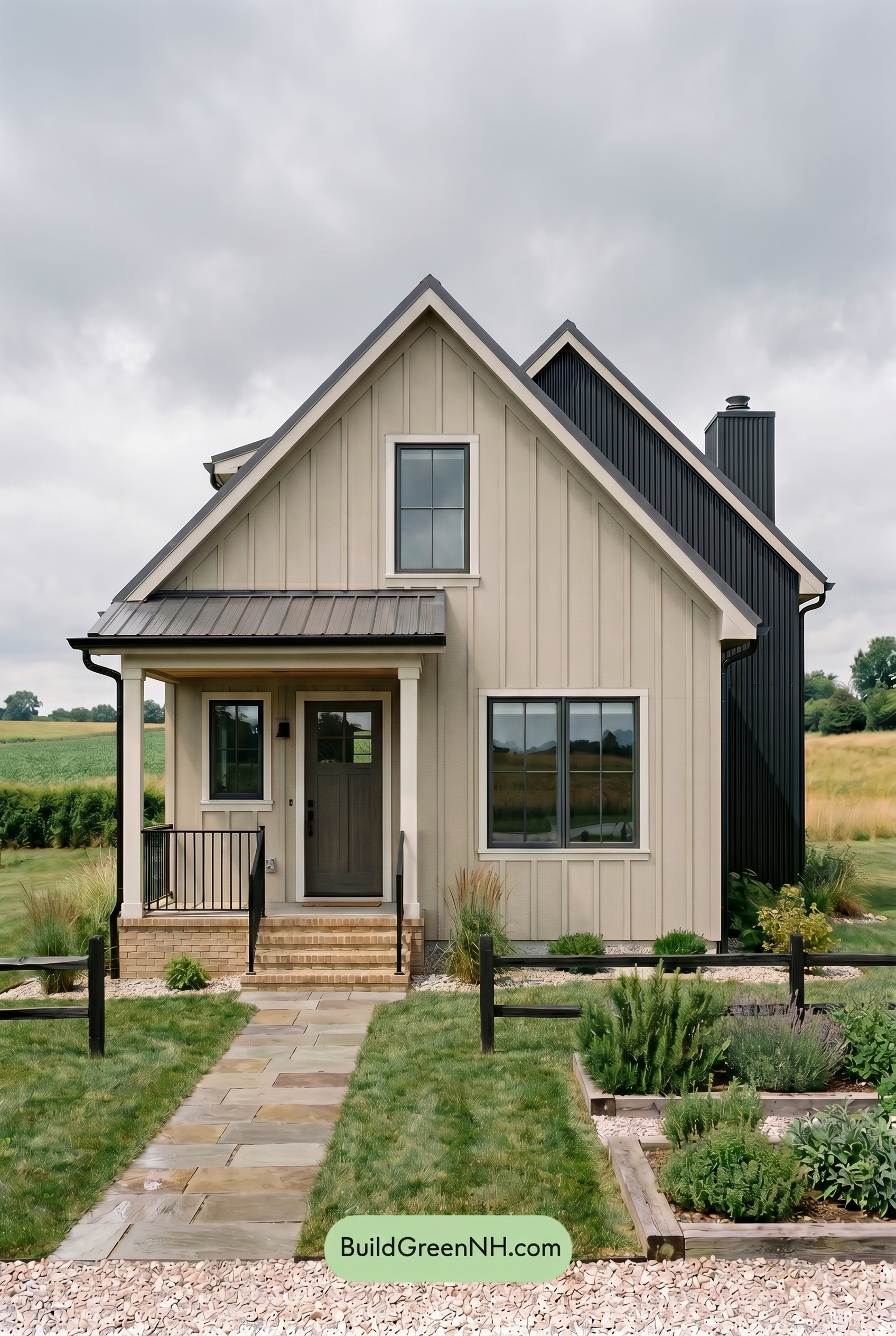
Under overcast light, the beige family on the main walls and trim loses a bit of saturation and warmth compared to neutral daylight, reading softer, quieter, and slightly cooler. The gentle cloud-filtered light smooths out sharp shadows, so the vertical siding feels more even and the warm neutral shades appear calm rather than sunlit.
The gray family on the accent wall, window frames, front door, and railings deepens subtly, gaining a moodier, more grounded presence. Contrast is less crisp than it would be in neutral daylight, but the darker gray shades still define the rooflines and openings beautifully, giving the home a composed, modern feel.
Golden Hour
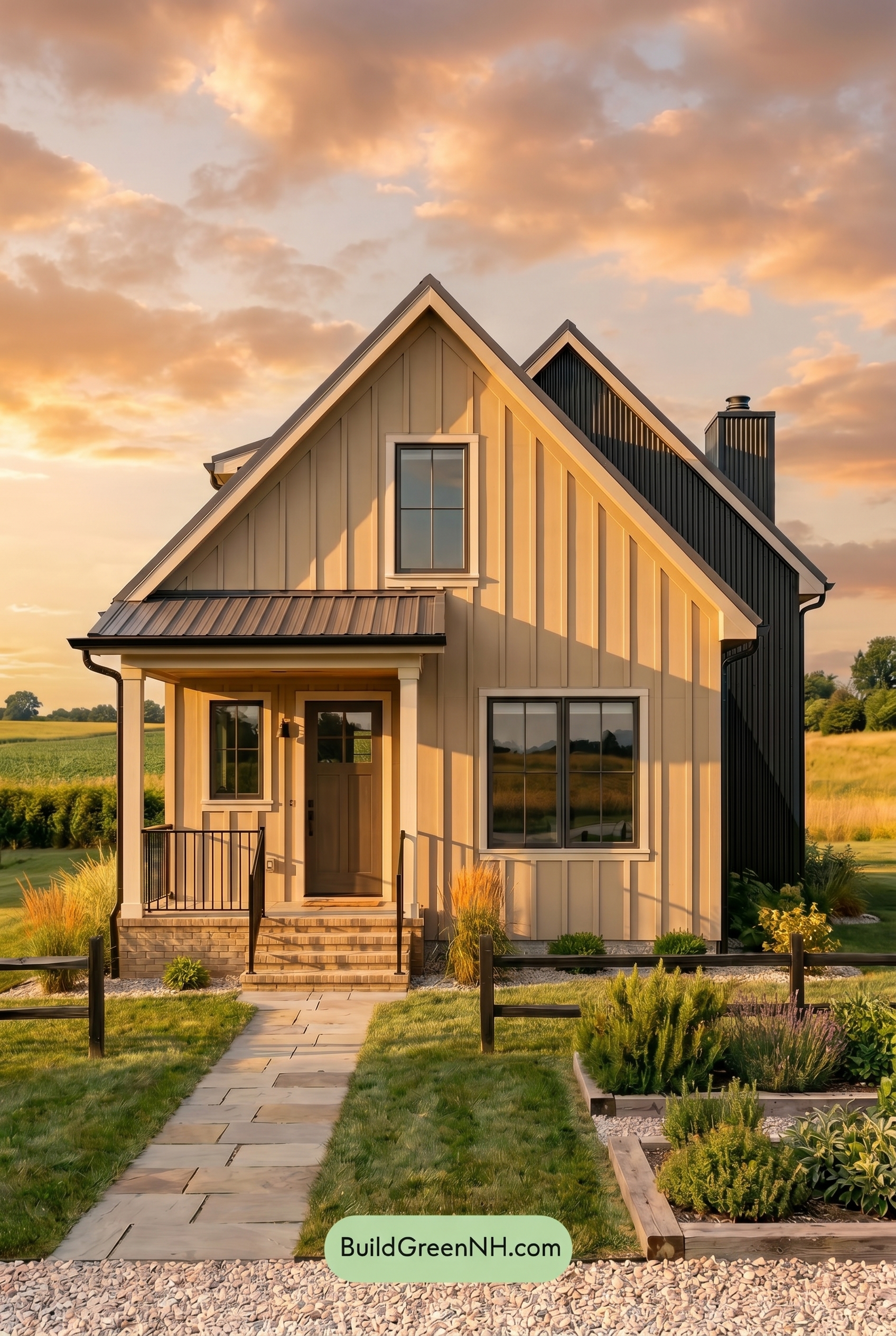
Under Golden Hour light, the beige family on the main walls and trim takes on a richer, honeyed warmth compared to its calmer look in neutral daylight. The added warmth gently boosts saturation, making the vertical siding feel softer, fuller, and more welcoming without losing its natural, neutral character.
The gray family accents, window frames, railings, and door deepen as the low sun creates longer shadows and stronger contrast. In neutral daylight, these shades may read more even and understated; here, they feel moodier and more dramatic, giving the home a cozy, polished presence against the glowing sky.
Shade
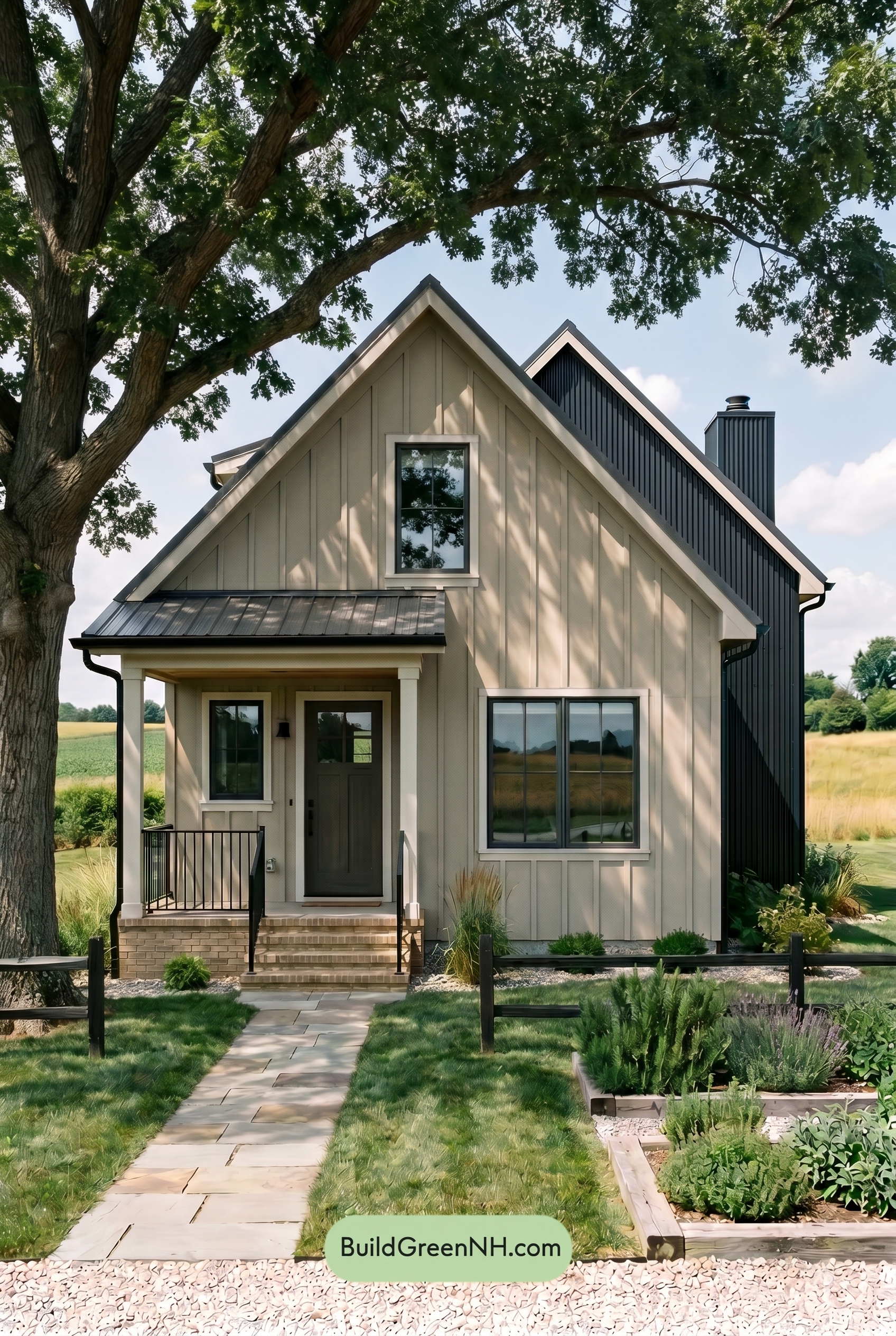
In shade, the beige family on the main walls and trim loses some of its sunlit warmth, becoming softer, quieter, and slightly more muted than it would in neutral daylight. The dappled shadows deepen the surface texture, so the siding reads with gentle variation rather than one flat tone.
The gray family on the accent wall, window frames, door, and railings appears richer and more saturated under shade, creating stronger contrast against the lighter beige shades. Overall, the palette shifts from bright and airy to calm, grounded, and a bit more dramatic, with the shadows adding depth and a cozy woodland mood.
Nighttime
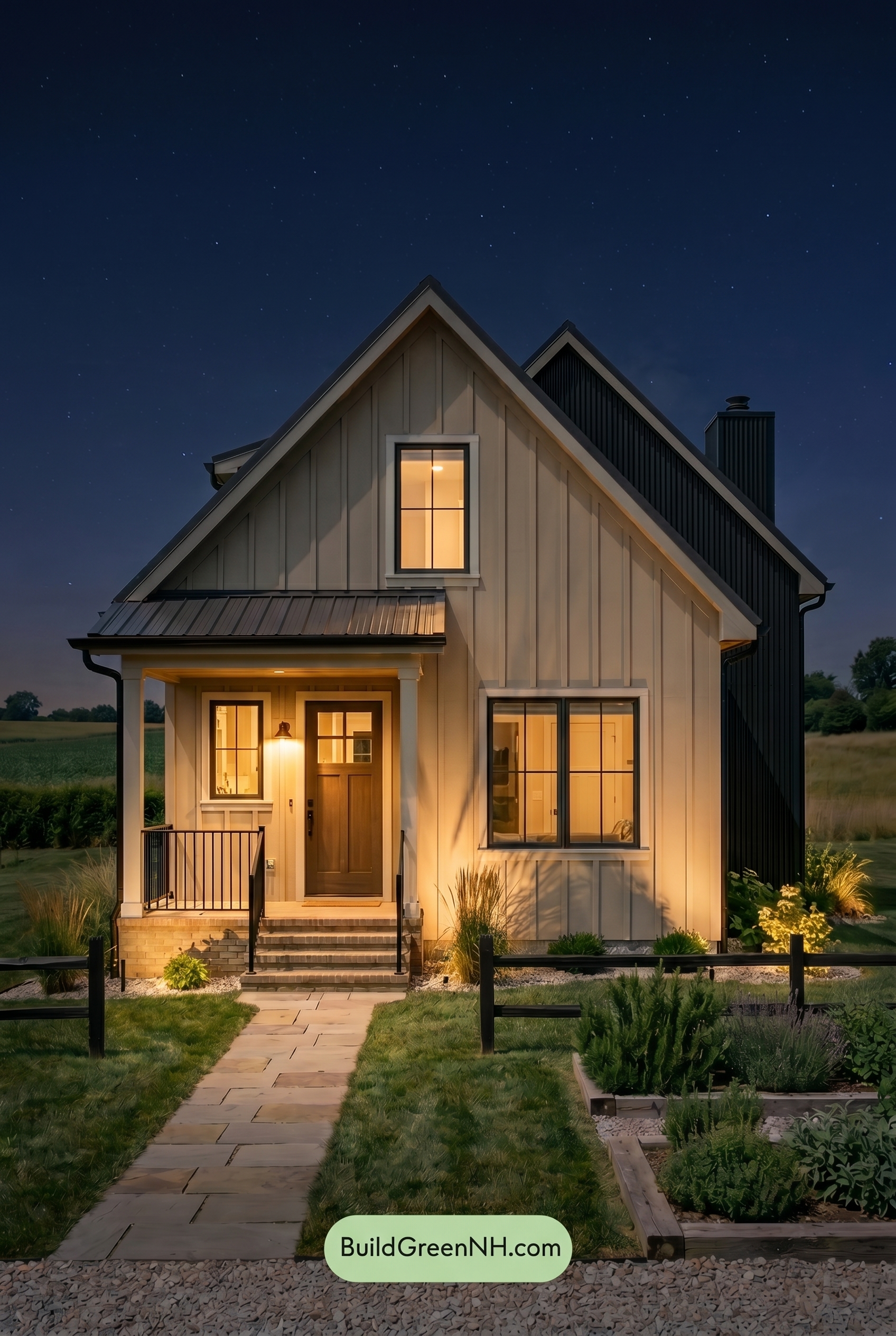
At night, the beige family on the main walls and trim feels warmer and more saturated, especially where the porch and window light wash over it. Compared with neutral daylight, these warm neutral shades look softer and richer, shifting the exterior from crisp and even to cozy and inviting.
The gray family on the accents, frames, door, and railings deepens noticeably in the shadows, creating stronger contrast against the illuminated beige shades. This added darkness gives the home more drama and dimension, with a calm, tucked-in mood that feels much more intimate than it would in daylight.
Pin these for later
Want More?
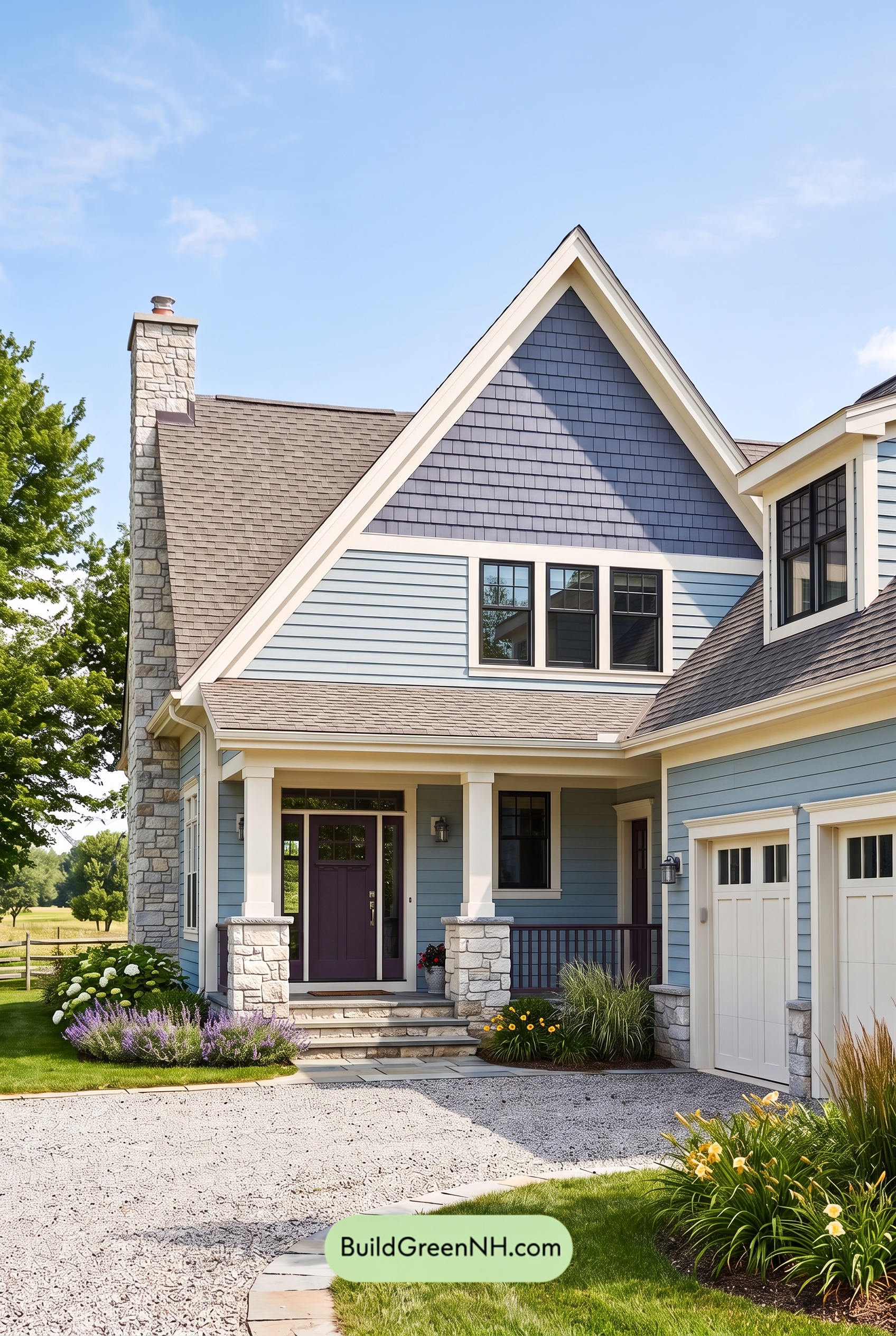
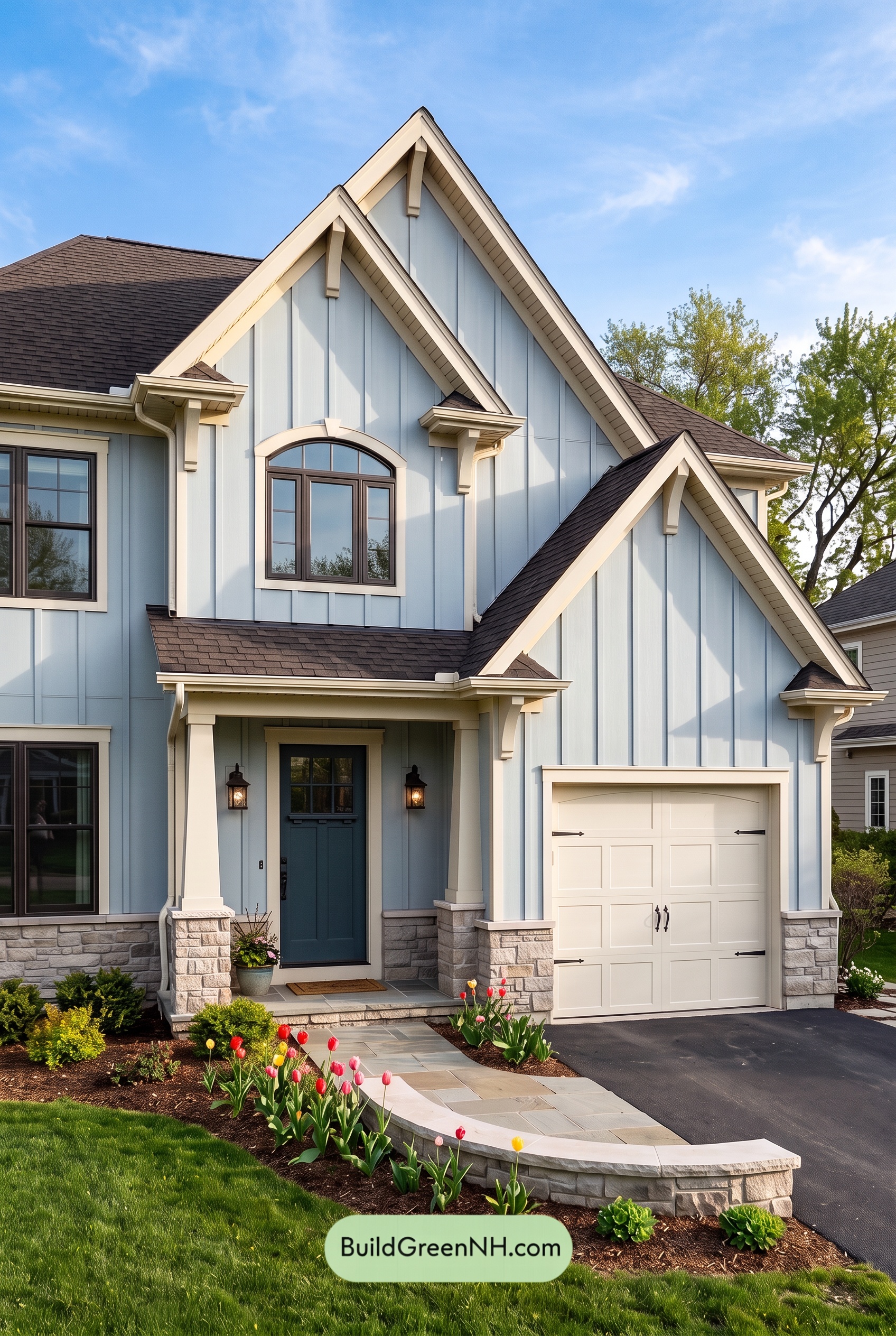 Exterior Color Scheme with Stone Accents: Bluebell Gable Song
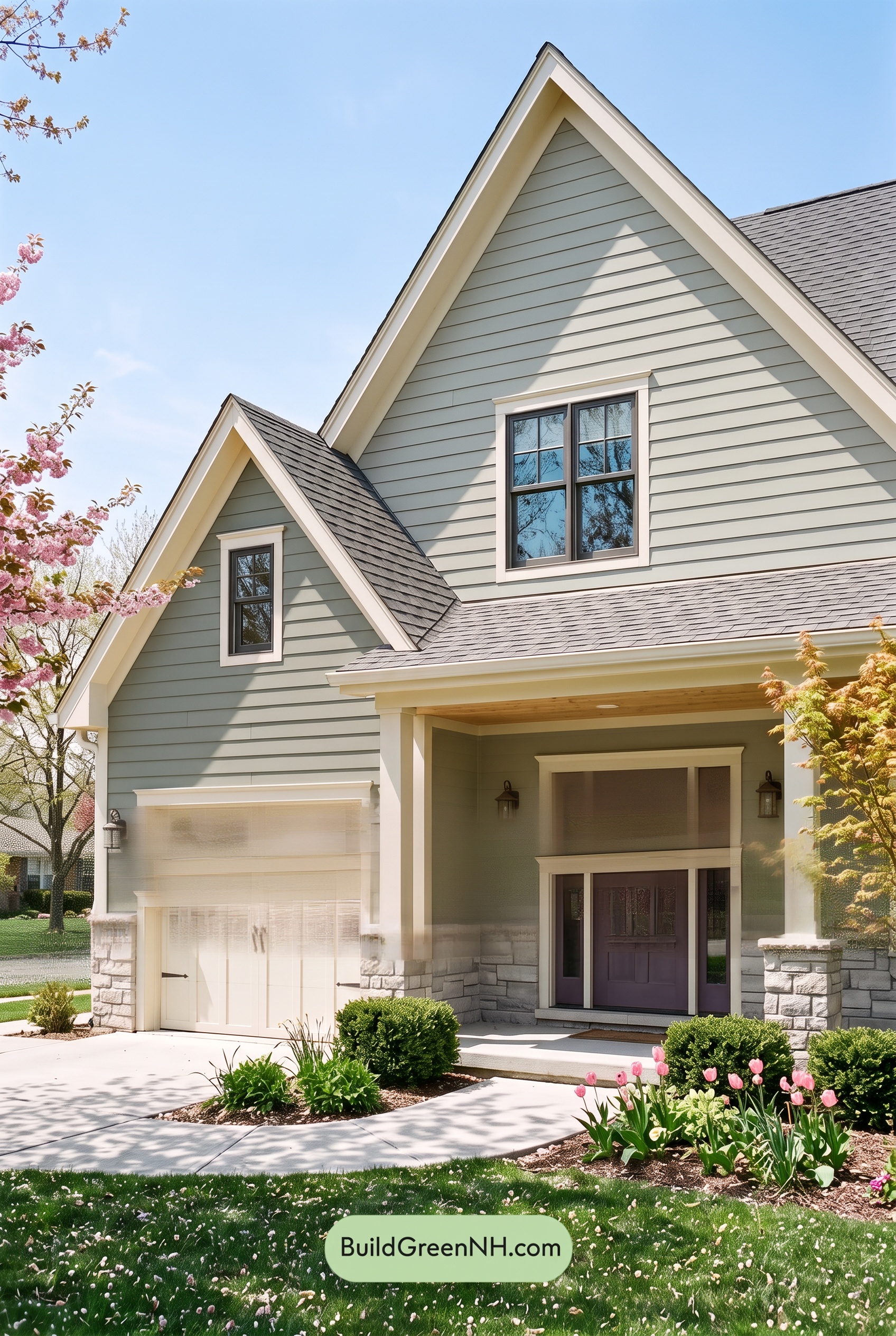
 Exterior Color Scheme with Stone Accents: Meadow Bell Welcome
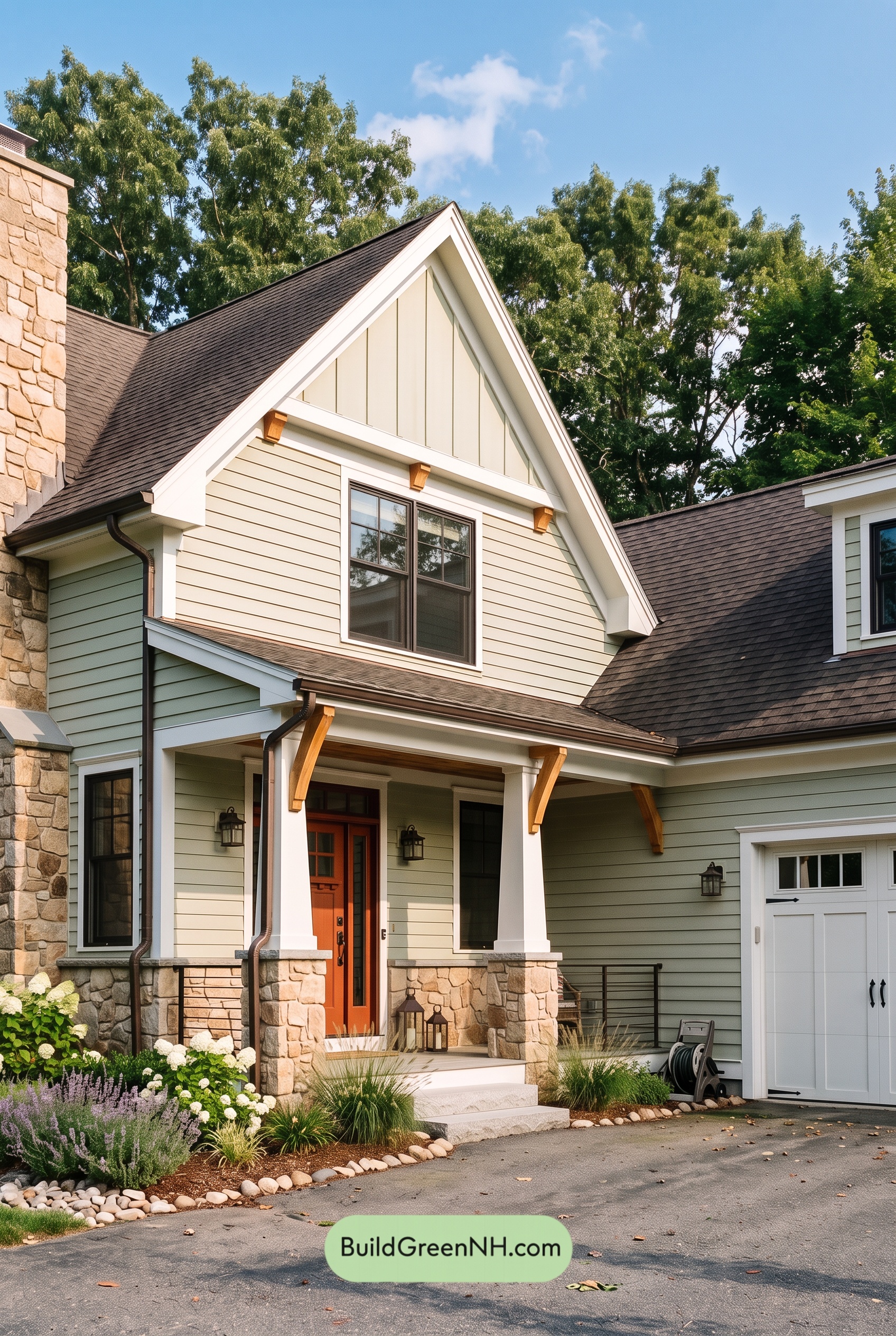
 Exterior Color Scheme with Stone Accents: Willow Quartz Porch
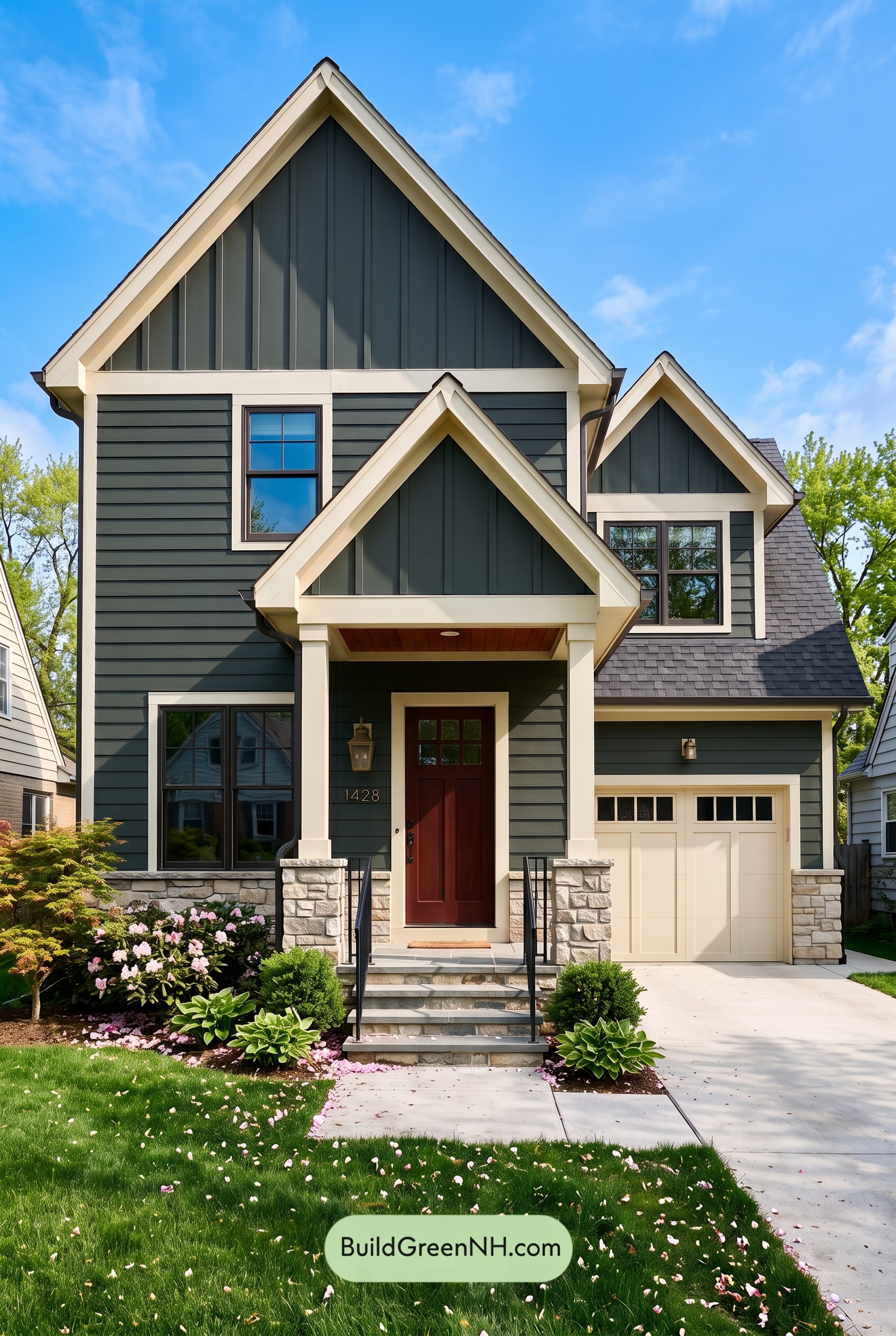
 Exterior Color Scheme with Stone Accents: Celadon Ember Gable
 Exterior Color Scheme with Stone Accents: Pine Brass Threshold
Table of Contents