Last updated on
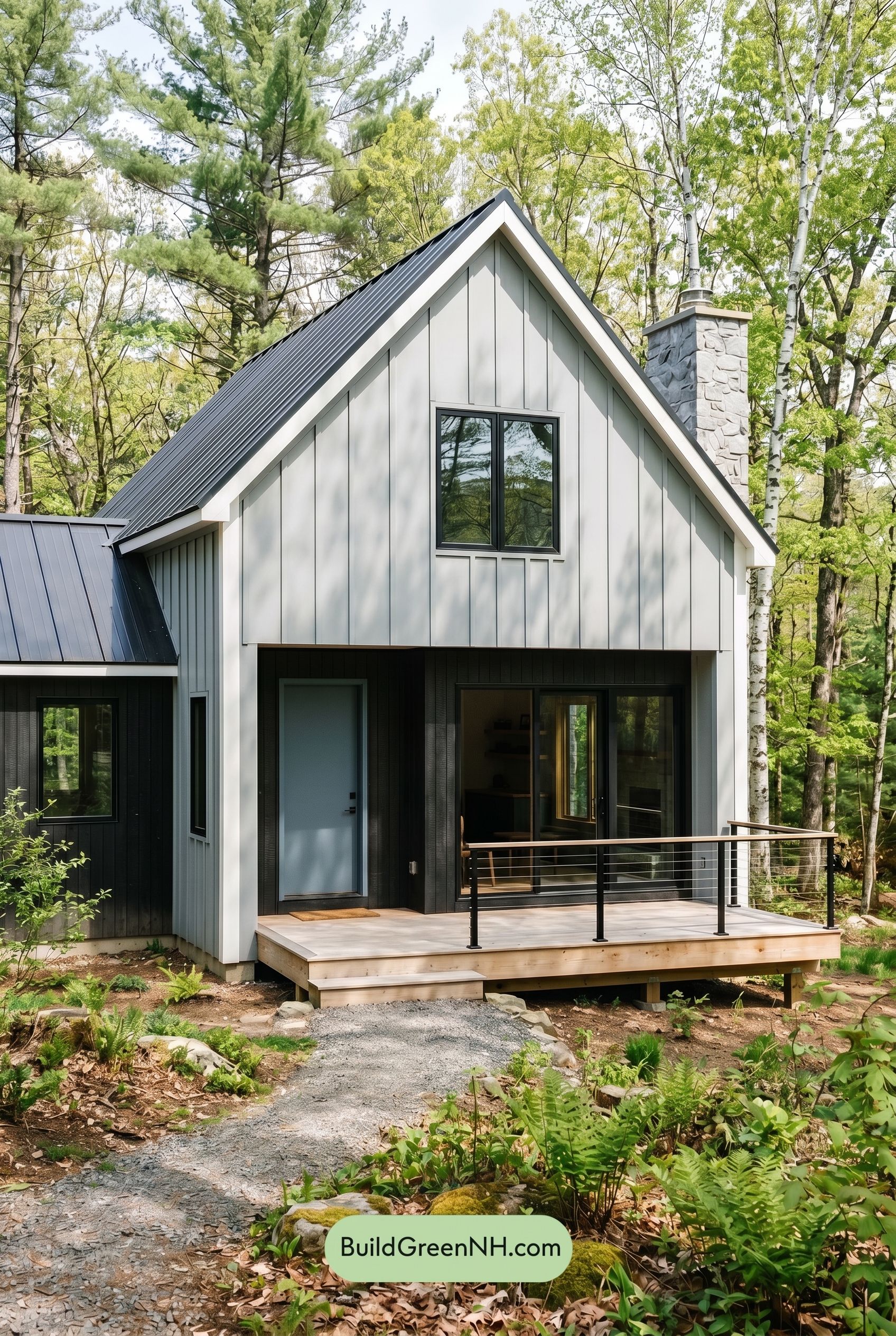

This gray-and-white exterior feels fresh, grounded, and perfectly at home among the trees because every shade is used with clean purpose.
A Crisp Modern Woodland Palette
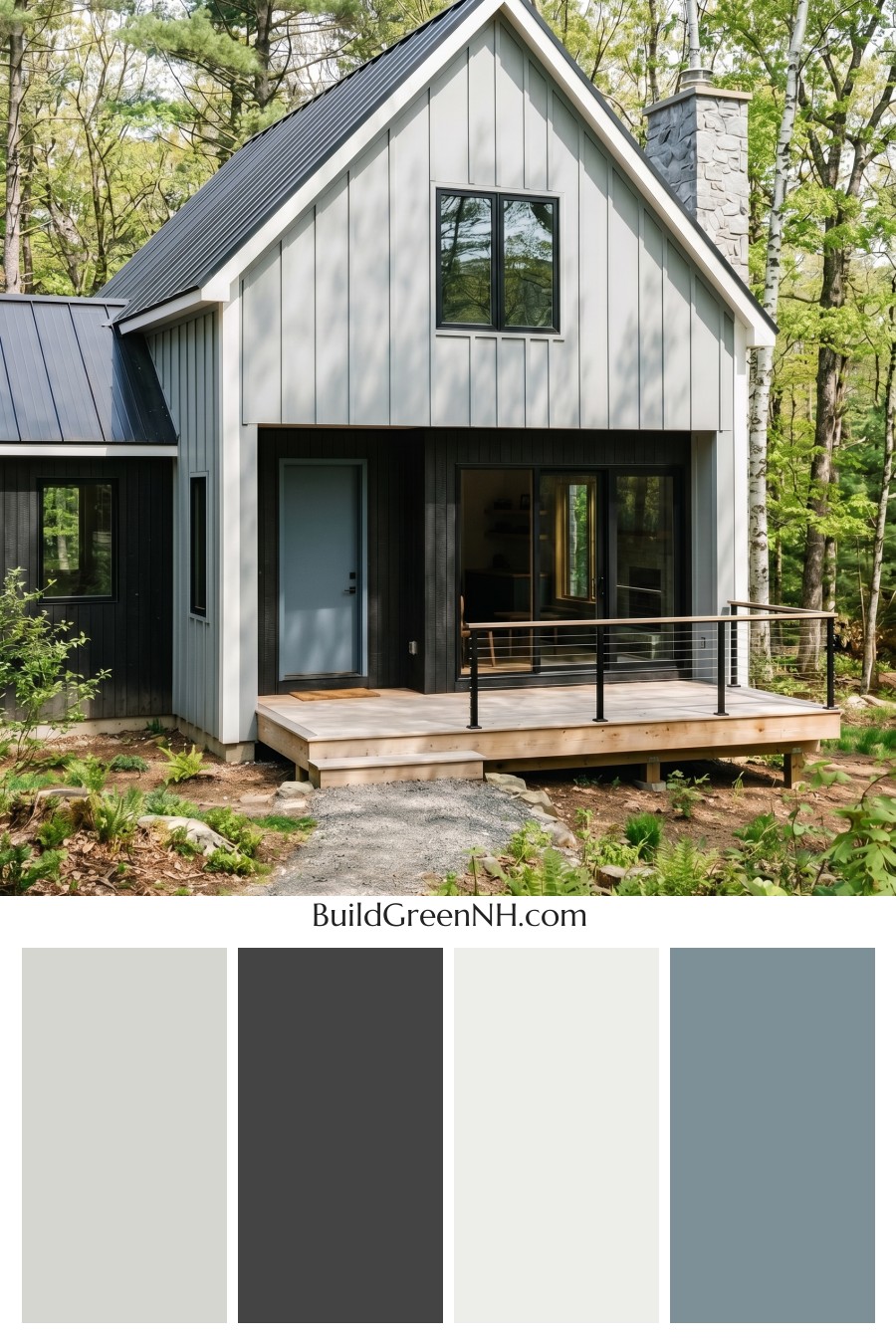
The main siding wears a light gray shade that gives the home a calm, airy presence. It feels modern without looking cold, especially against the surrounding greens and natural textures. The vertical siding also helps the soft gray read taller and cleaner, emphasizing the dramatic gable shape.
Beneath the upper level, a much deeper charcoal gray creates a strong visual base. This darker gray accent adds depth and contrast, making the lighter siding above feel even brighter. It also gives the front entry and covered porch area a cozy, tucked-in feeling.
White Trim That Sharpens the Architecture
The white trim is one of the scheme’s smartest moves. It outlines the roofline, gable edges, and structural details with crisp definition, giving the home a polished, architectural look. Against the pale gray siding, the white feels fresh and clean; against the dark gray lower section, it adds just the right amount of brightness.
This pairing of light gray and white keeps the exterior from feeling heavy, even with the bold roof and darker lower façade. The result is balanced, open, and quietly elegant.
Dark Gray Details Add Modern Contrast
The window frames, roof, and railings lean into the gray family with deeper, more saturated shades. The roof’s dark gray tone gives the steep pitch a sleek, contemporary edge, while the window frames bring a graphic quality to the lighter siding.
The railings echo that same deep gray feeling in a slimmer, more delicate way. They frame the deck without interrupting the view, which is especially effective in a wooded setting where the landscape is part of the overall design.
A Soft Blue Door Brings Personality
The front door introduces a muted blue shade that feels gentle and welcoming. It is subtle enough to sit comfortably within the gray palette, but distinct enough to create a memorable entry moment. This soft blue touch keeps the exterior from feeling too monochromatic.
Because the door is surrounded by darker gray siding, its cooler blue tone stands out beautifully. It feels calm, modern, and approachable all at once.
Why the Scheme Works So Well
This exterior succeeds because it uses contrast thoughtfully. The light gray siding brings softness, the dark charcoal gray accents add grounding, the white trim creates crisp structure, and the muted blue door offers a hint of character.
Together, the colors feel refined but not fussy. They suit the home’s clean lines, metal roof, woodland setting, and natural deck tones. It is a palette that looks current, peaceful, and wonderfully connected to its surroundings.
Next, see how this color scheme looks under different lighting simulations throughout the day.
Overcast
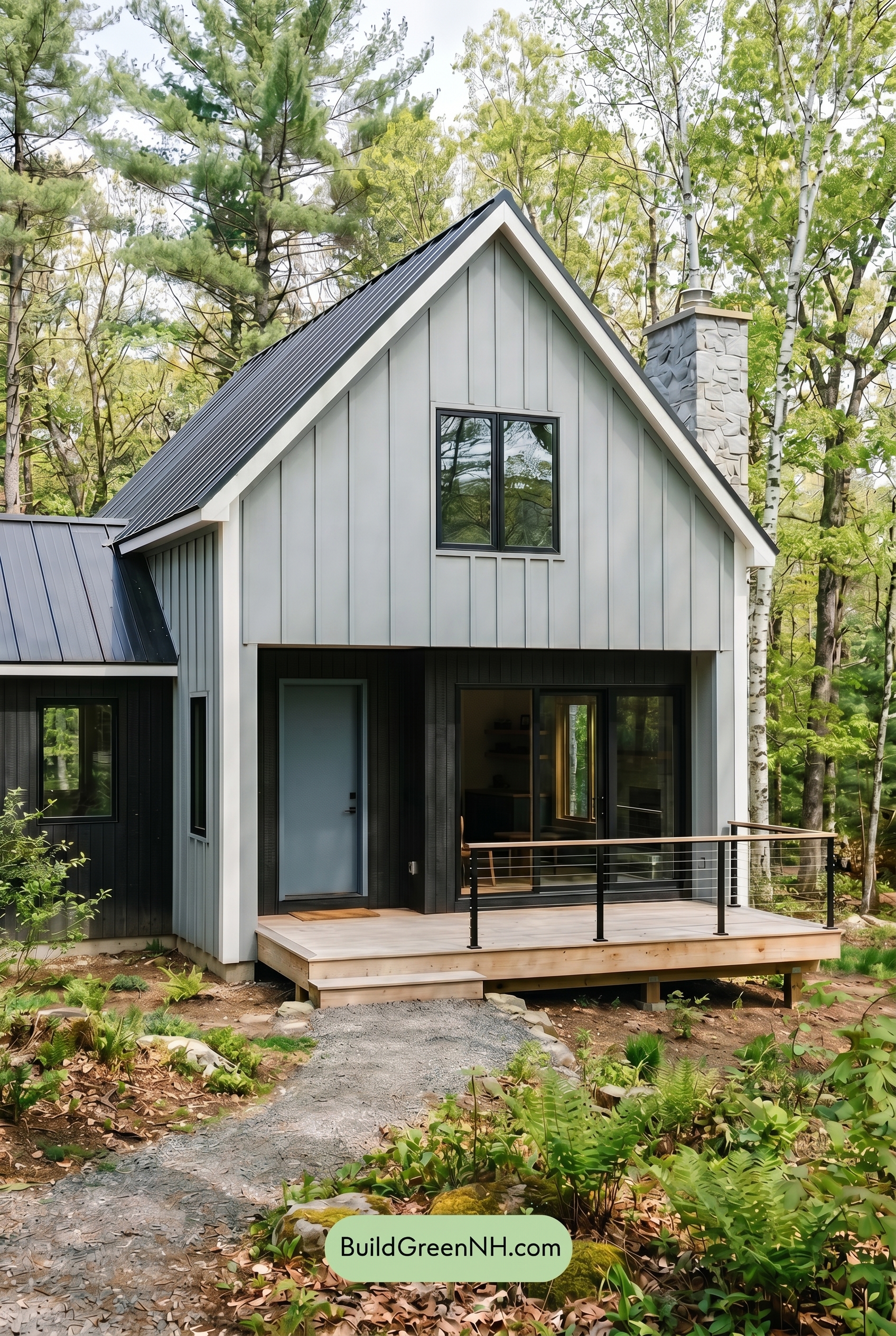
Under overcast light, the gray family on this exterior reads cooler and slightly more saturated than it would in neutral daylight, with the lighter gray siding taking on a calmer, mistier cast. The white trim loses some of its crisp brightness, feeling softer and less stark against the surrounding gray shades.
Shadows become broader and gentler, so the contrast between the pale gray walls, deep gray accents, gray frames, and railings feels smoother and more blended. The blue front door appears quieter and a touch deeper, giving the whole home a more serene, grounded mood compared with the brighter, sharper look of neutral daylight.
Golden Hour
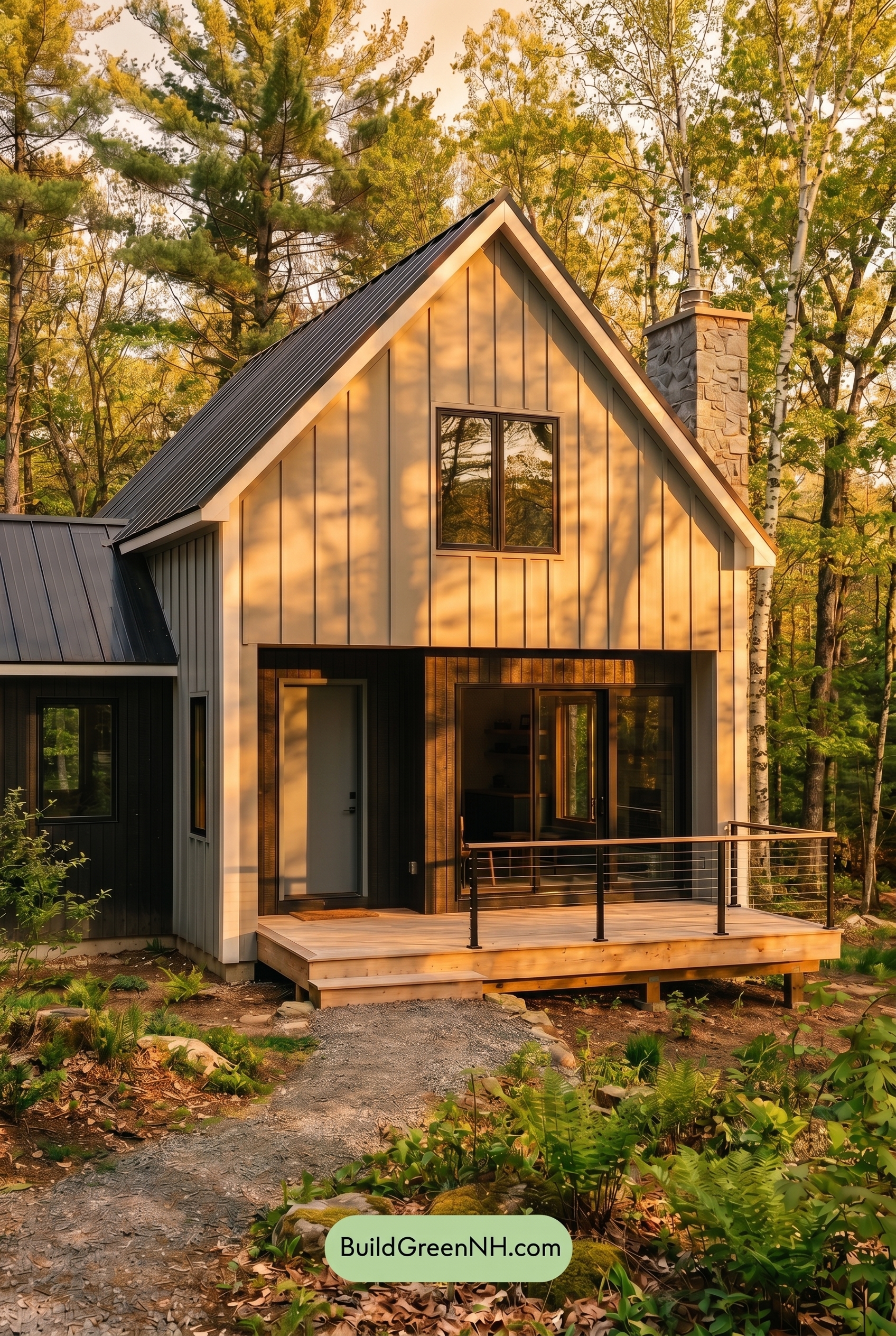
Under Golden Hour light, the gray family on the main walls shifts warmer and more saturated, picking up a soft amber cast that feels gentler than it would in neutral daylight. The white trim also warms, appearing creamier and more luminous, which gives the rooflines and edges a welcoming glow.
Shadows stretch across the siding and deepen the darker gray accents, window frames, and railings, creating stronger contrast than a flatter midday view. The blue family on the front door reads moodier and more subdued in this warm light, adding a calm counterpoint to the golden wash and giving the whole exterior a cozy, wooded retreat feeling.
Shade
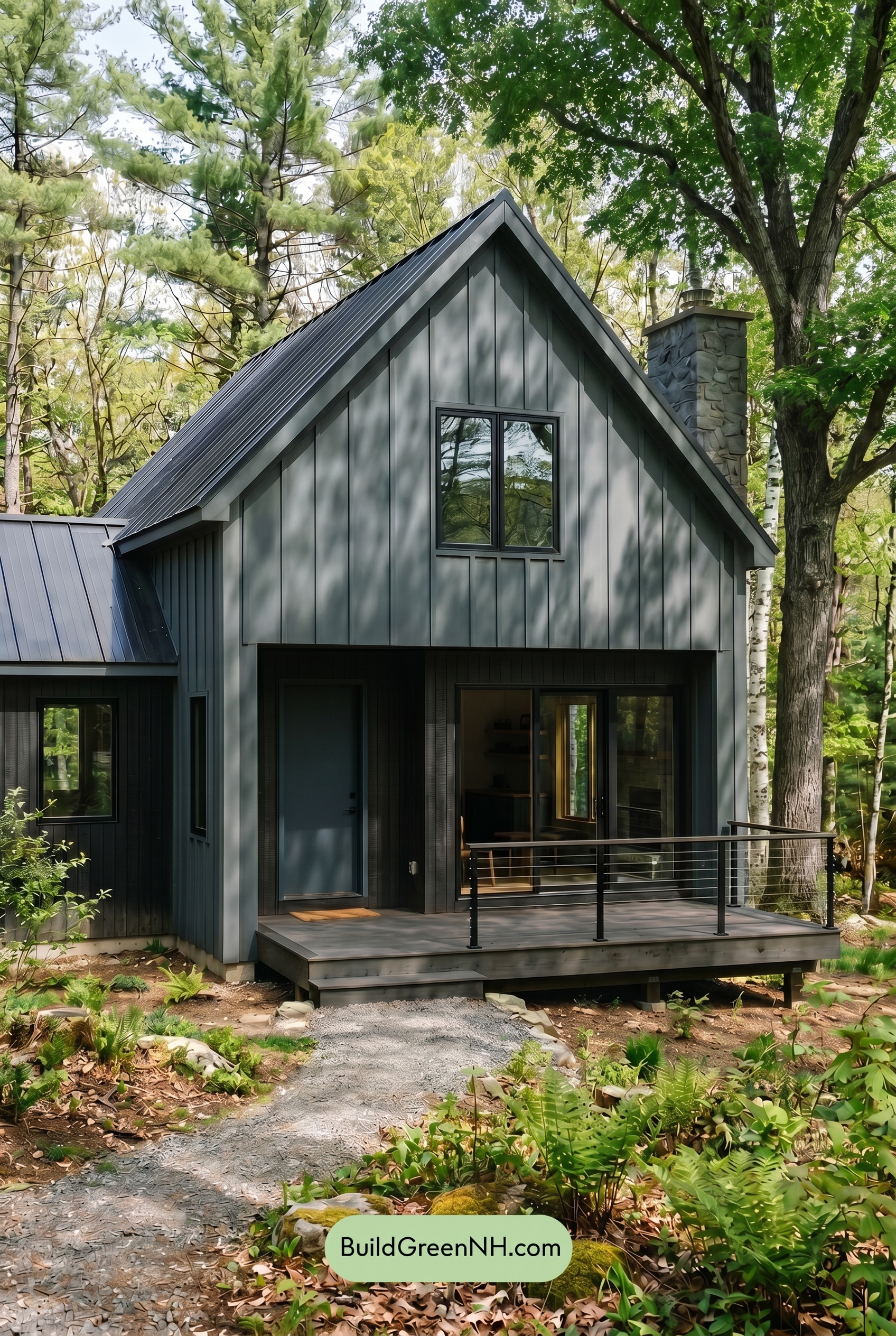
In shade, the gray family siding takes on a cooler, more saturated character than it would in neutral daylight, with the deeper gray accents and railings reading moodier and more defined. The white family trim softens slightly, losing some crisp brightness as shadows pull it toward a gentler, muted shade.
The blue family front door deepens under the filtered light, feeling calmer and more understated. Dappled shadows add contrast across the façade, shifting the overall mood from clean and bright to quiet, wooded, and refined.
Nighttime
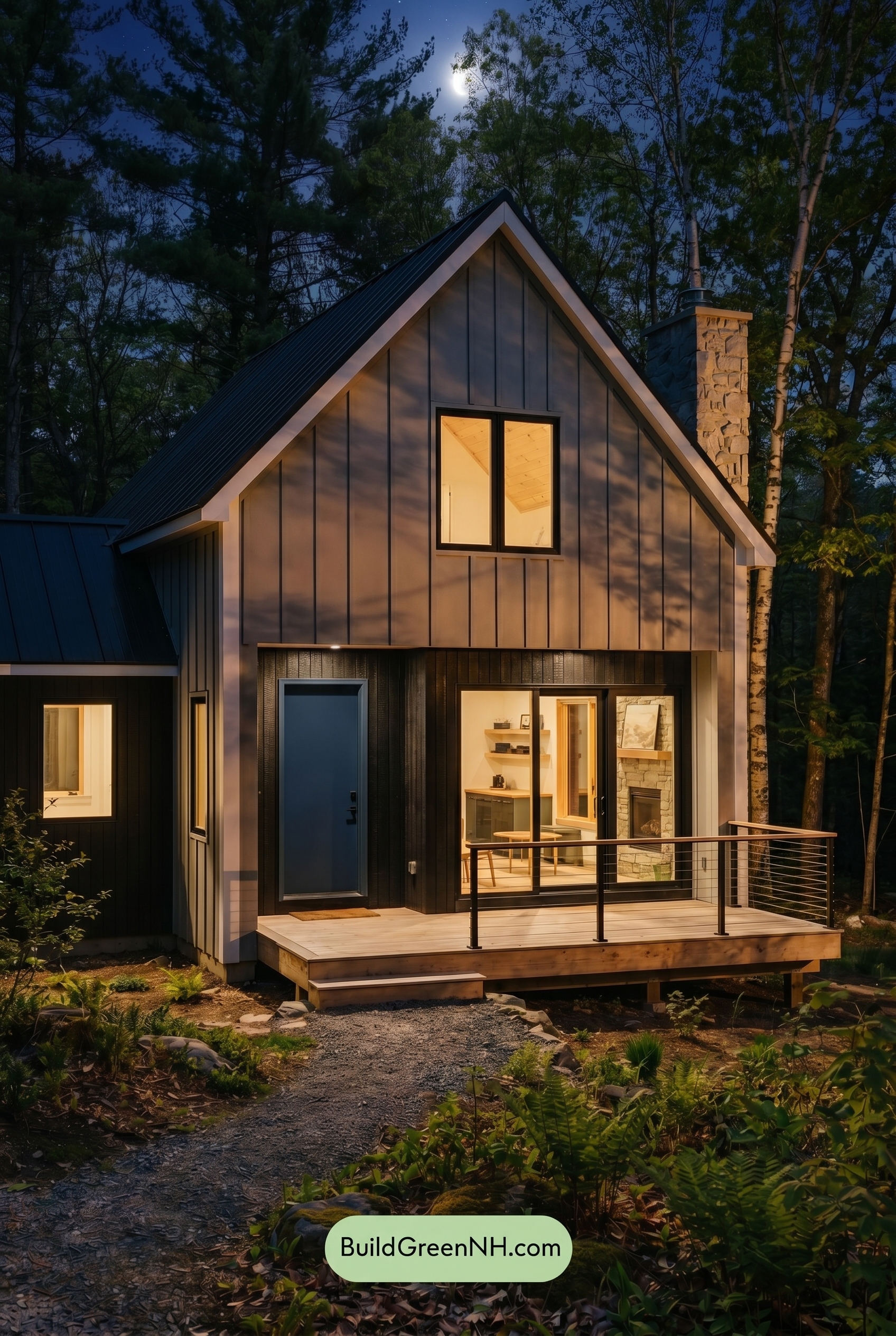
At night, the gray family on the main walls shifts from a balanced daylight neutral into a deeper, more saturated shade, with warm window light adding a gentle golden cast across the upper facade. The darker gray accent areas become richer and more dramatic, while the white trim reads brighter by contrast, creating crisp edges against the shadowed roofline and surrounding trees.
The blue family on the front door feels moodier after dark, leaning into a deeper, quieter shade than it would in neutral daylight. Shadows soften some details but heighten contrast around the window frames, railings, and trim, giving the whole exterior a cozier, more intimate mood with a polished nighttime glow.
Pin these for later
Want More?
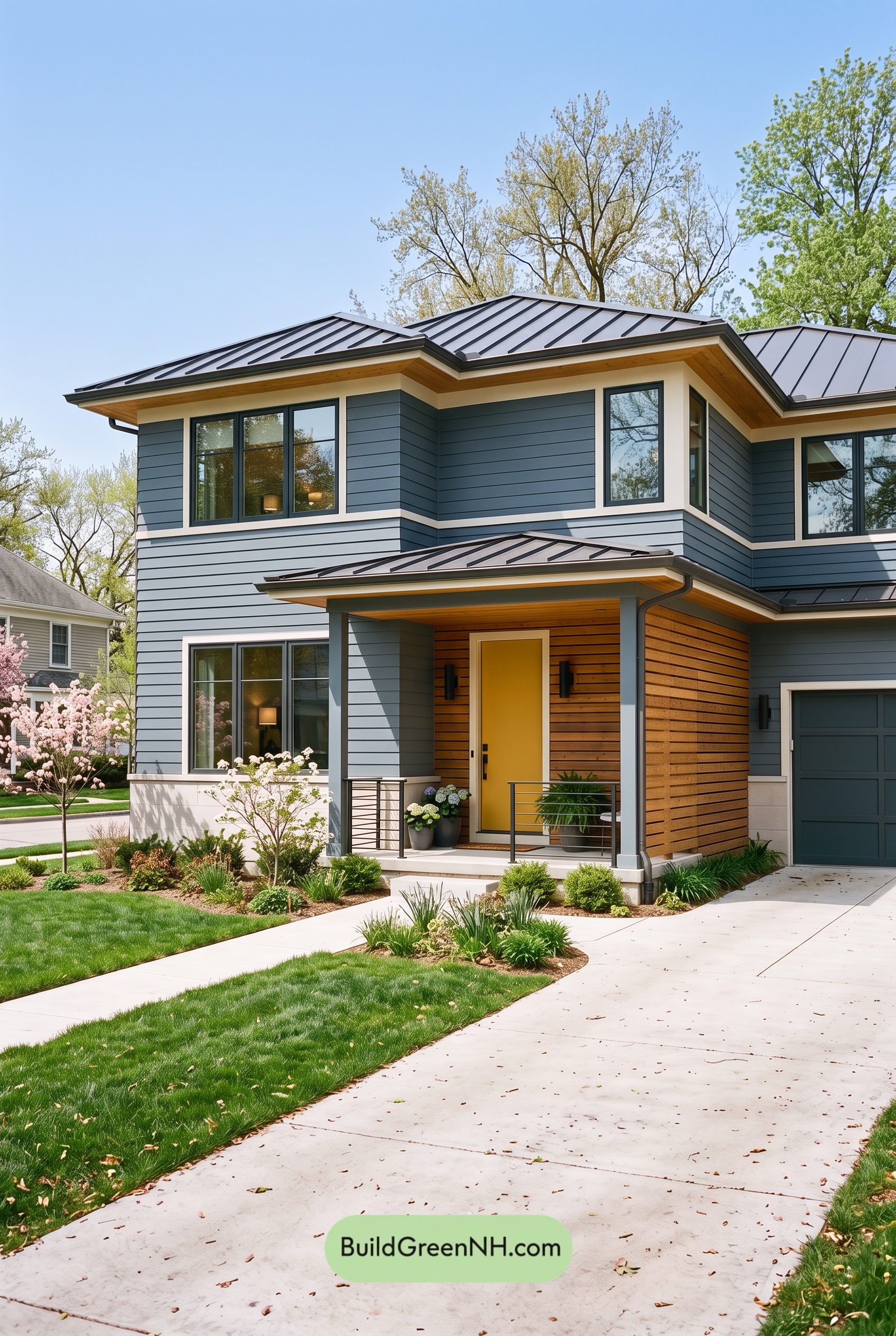 Blue House Front Door Color Scheme: Harbor Saffron
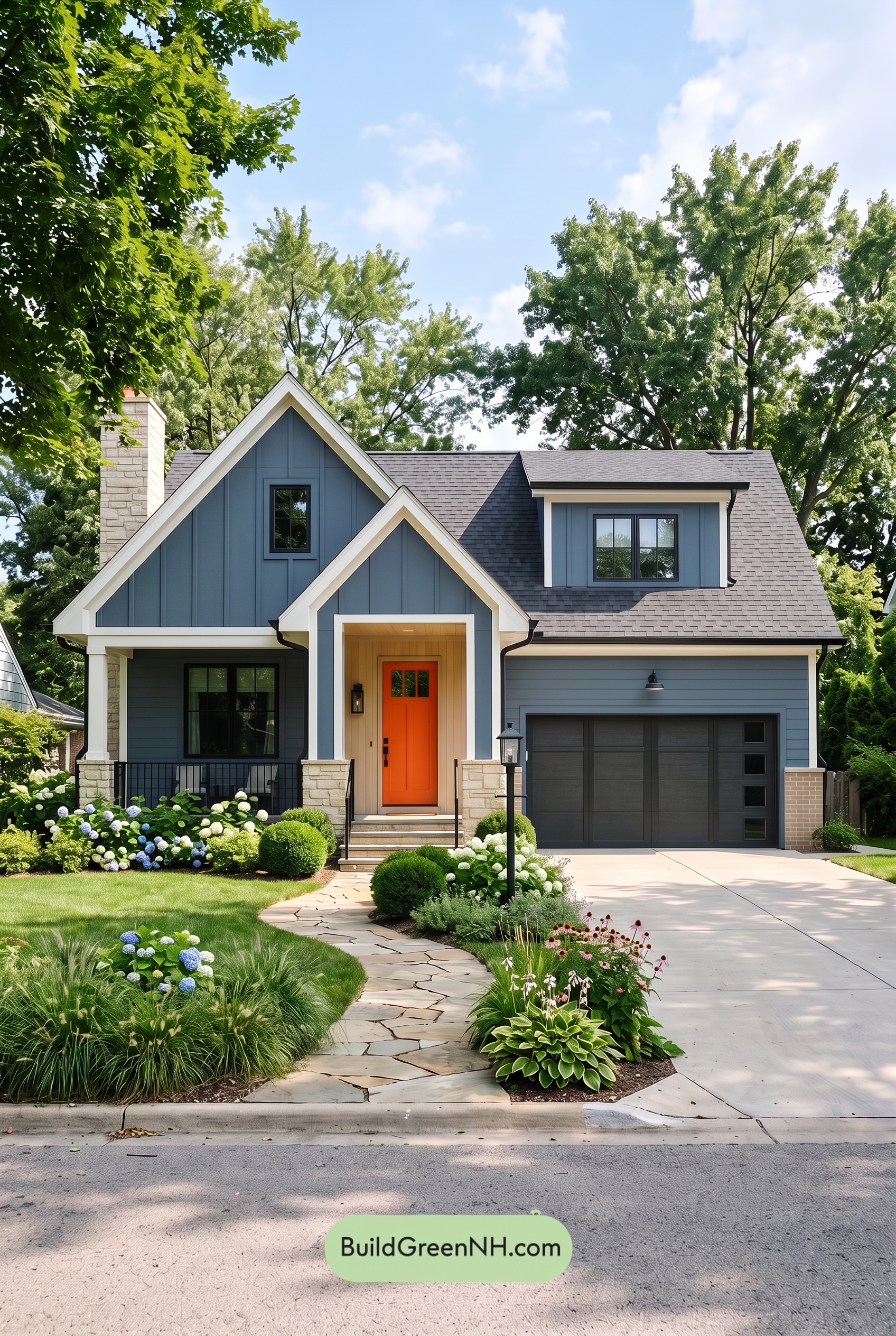 Blue House Front Door Color Scheme: Cobalt Persimmon
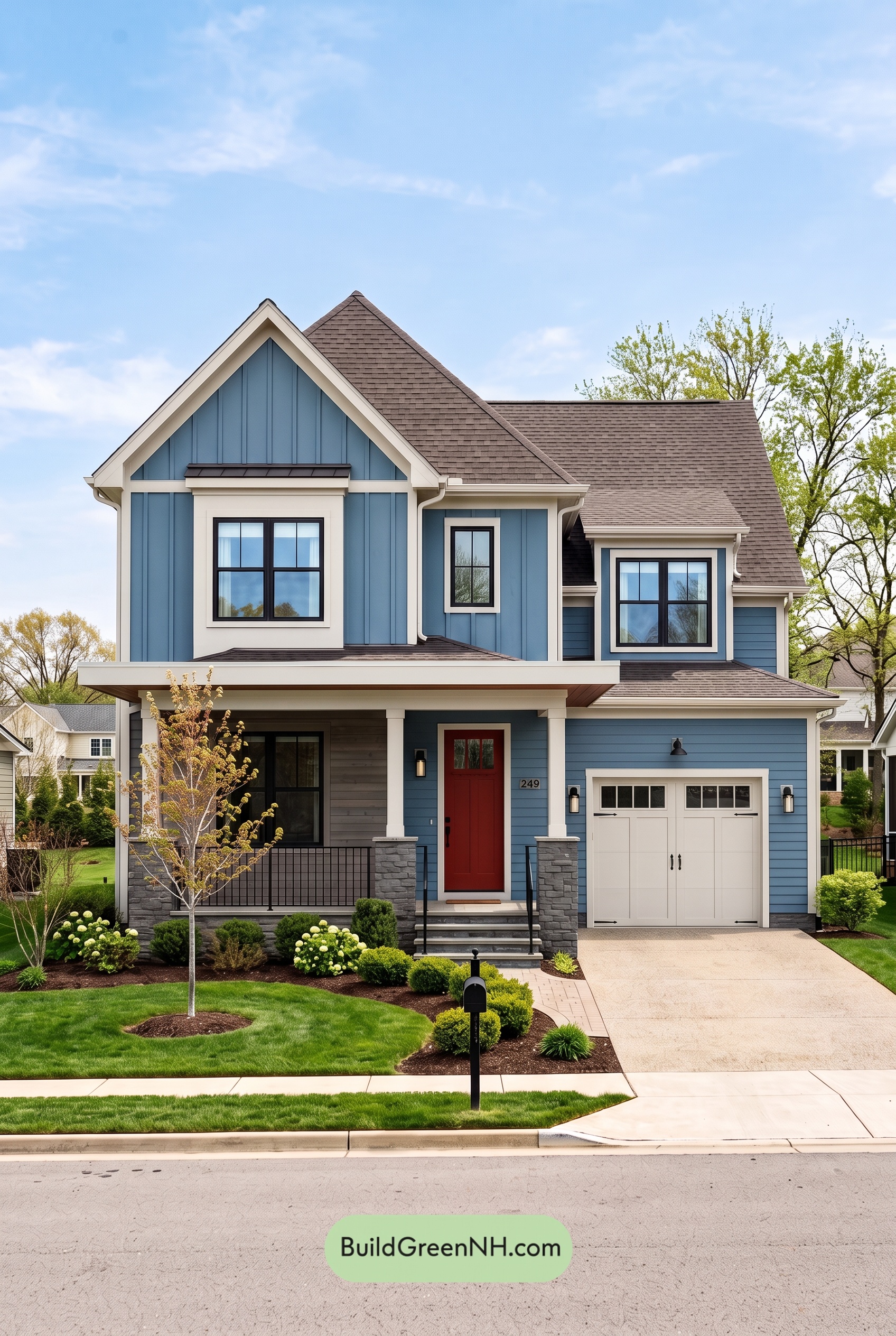 Blue House Front Door Color Scheme: Denim Poppy
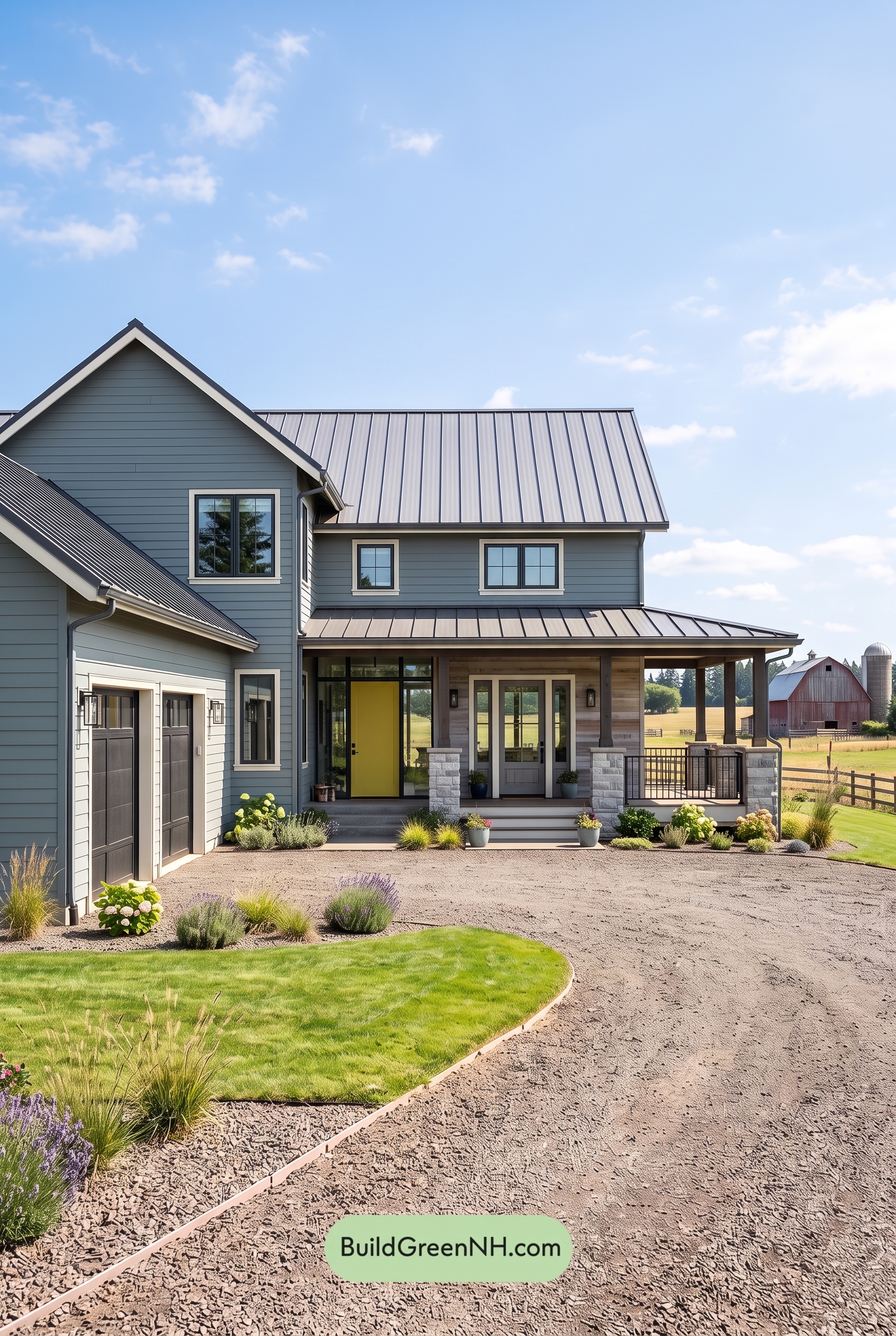 Blue House Front Door Color Scheme: Slate Citron
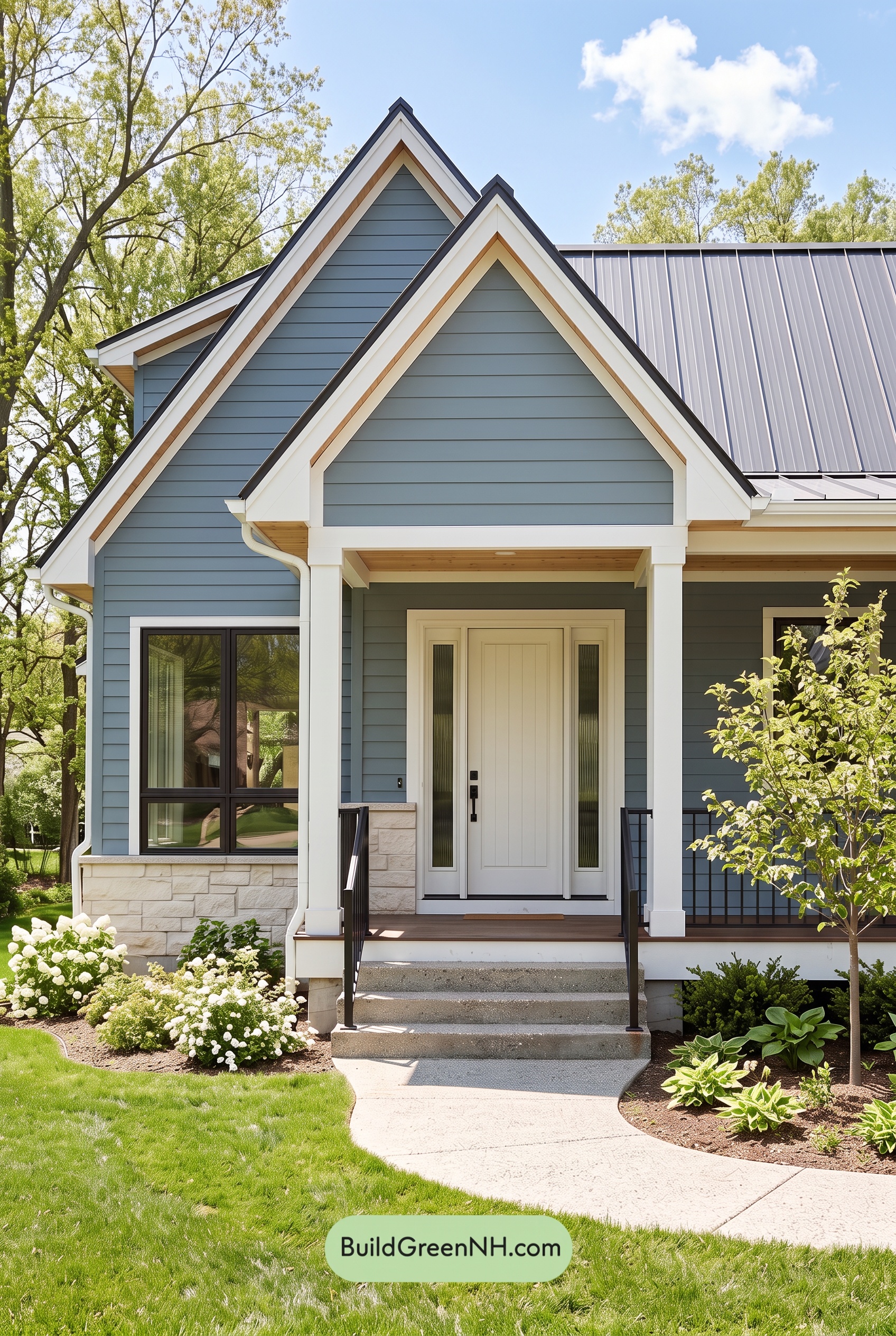 Blue House Front Door Color Scheme: Mist Blue Haven
Table of Contents