Last updated on
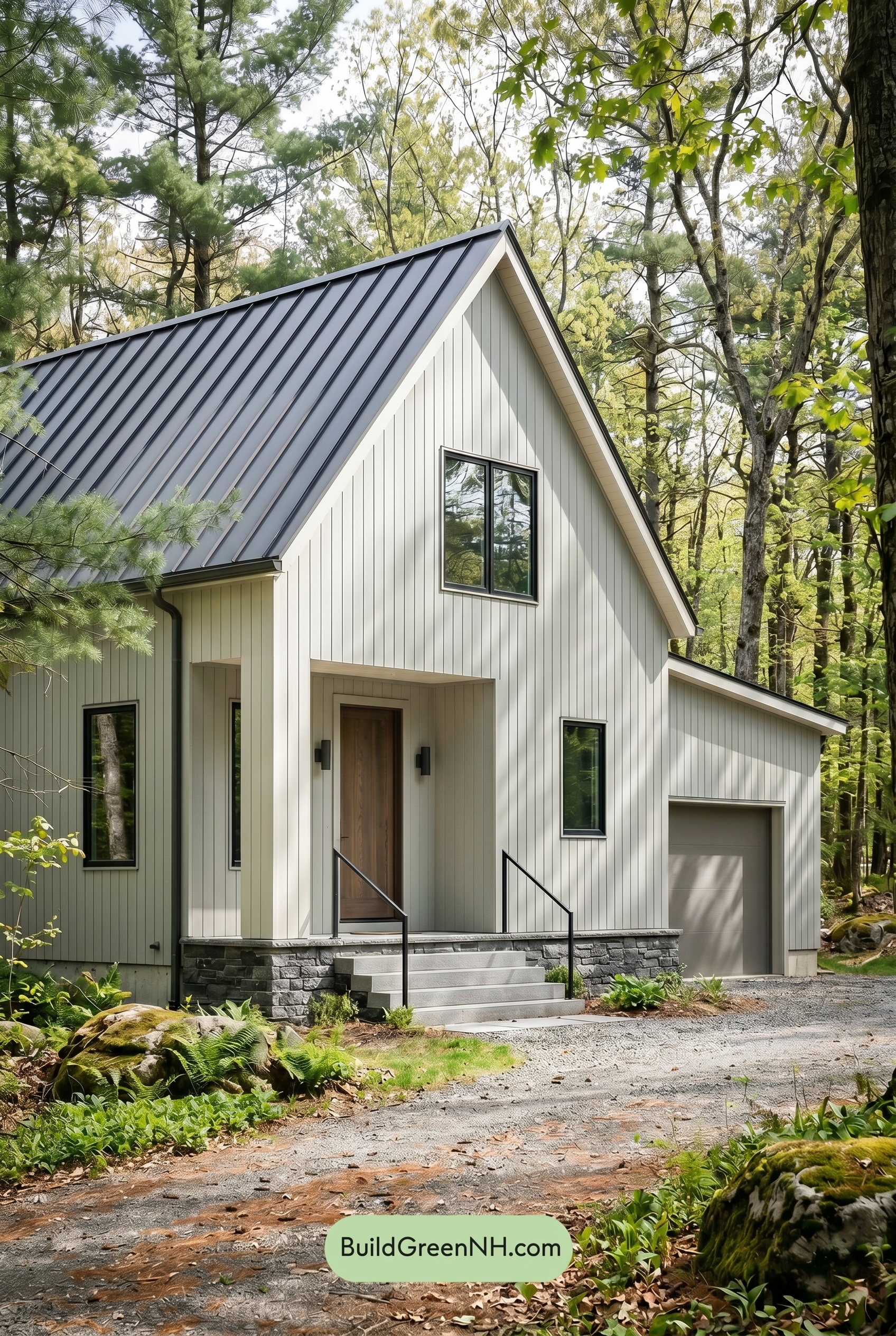

This home’s soft gray-and-white exterior feels fresh, calm, and perfectly grounded by warm brown accents and deeper gray details.
A Clean, Woodland-Friendly Main Color
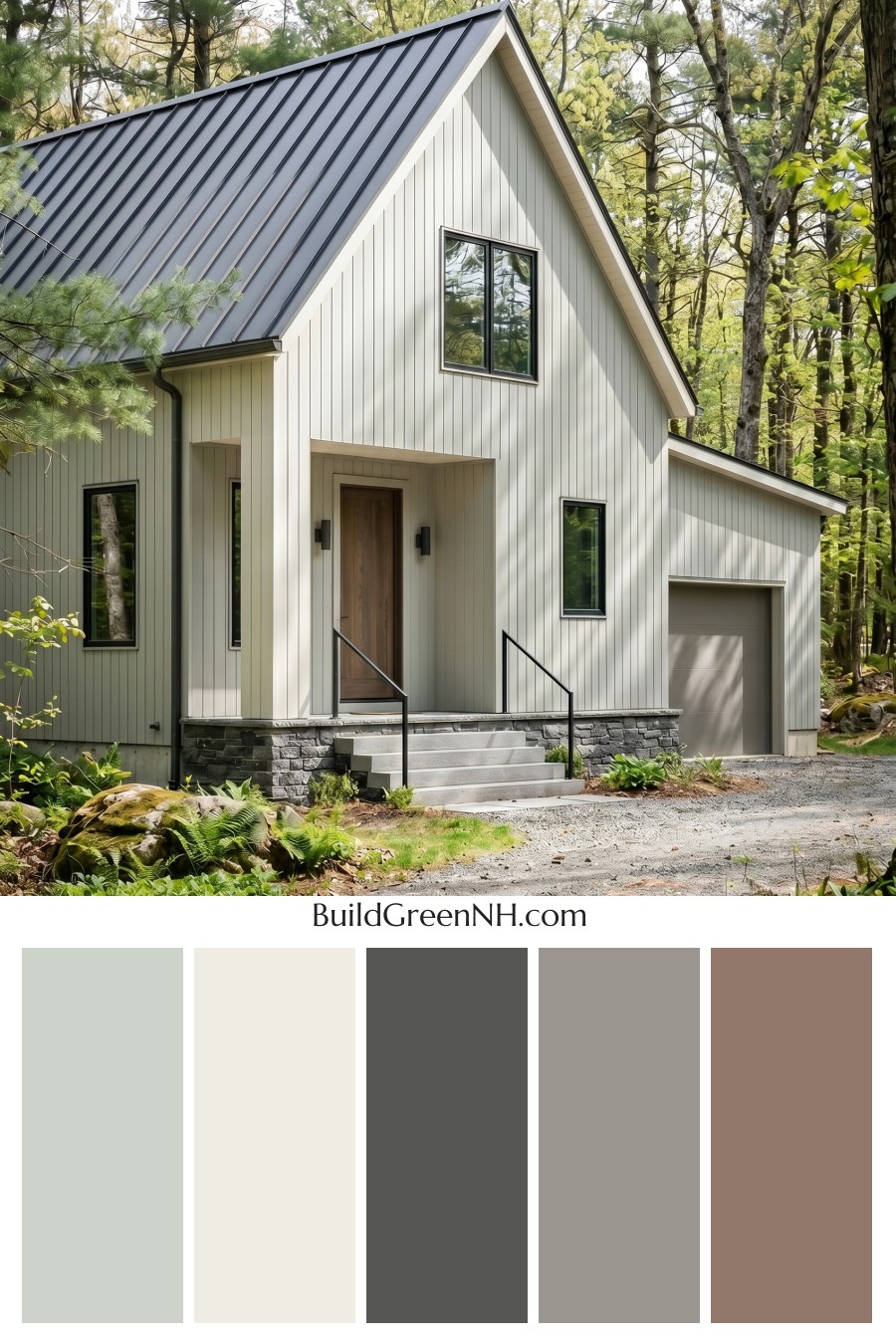
The main siding is finished in a pale shade from the gray family, giving the house a quiet, modern presence without feeling cold. Because the shade is light and gentle, it catches natural light beautifully and helps the tall vertical siding feel even more airy and refined.
This soft gray works especially well in the wooded setting. It does not compete with the surrounding natural tones; instead, it settles into the landscape with an easy, peaceful quality. The vertical lines of the siding add height and structure, while the light gray shade keeps the whole exterior feeling open and approachable.
White Trim That Sharpens the Architecture
The trim and columns use a bright shade from the white family, creating crisp definition around the roofline, porch, and architectural edges. This contrast is one of the reasons the exterior feels so polished. The white trim outlines the gables and frames the home’s shape, giving the design a clean farmhouse-inspired look with a modern edge.
The white columns also make the entry feel more inviting. They brighten the shaded porch area and give the front elevation a strong, welcoming rhythm. Paired with the pale gray siding, the white details feel fresh rather than stark.
Deep Gray Accents Add Modern Contrast
The window frames, railings, and roof bring in deeper shades from the gray family. These darker gray accents add just the right amount of contrast against the lighter siding and trim. They help the windows stand out, emphasize the roof’s strong lines, and give the exterior a sleek, contemporary finish.
The standing roof in a cool, deep gray shade is especially effective. Its clean lines echo the vertical siding below, creating a sense of order and balance. The railings use a similarly dark gray tone, tying the entry steps back to the roof and window frames for a cohesive look.
A Warm Brown Front Door as the Natural Focal Point
The front door introduces a warm shade from the brown family, and it is a beautiful choice. Against the cooler gray and white palette, the brown door adds warmth, depth, and a touch of organic character. It keeps the exterior from feeling too minimal or overly cool.
This is the kind of accent that makes a house feel lived-in and welcoming. The warm brown shade connects visually with the wooded surroundings, giving the entry a grounded, natural feel while still standing out as the home’s focal point.
Garage Door and Stone Base Keep the Palette Grounded
The garage door continues the gray-family palette in a medium shade, allowing it to blend smoothly with the rest of the exterior rather than drawing too much attention. This is a smart move, especially on a home where the garage is visible from the front. The quieter gray shade keeps the focus on the architecture and entryway.
At the base of the home, the gray stonework adds texture and weight. Its mix of gray shades supports the overall palette while giving the house a sturdy, natural foundation. The stone also bridges the gap between the refined siding and the rugged landscape around it.
The Overall Mood
This exterior feels calm, clean, and thoughtfully restrained. The light gray siding and white trim create brightness, while the deeper gray accents add definition and sophistication. The warm brown front door softens the palette and gives the home a friendly, natural touch.
What makes the scheme so successful is its balance. The lighter shades keep the home feeling fresh, the darker gray details provide structure, and the brown accent brings warmth. Together, they create an exterior that feels modern, peaceful, and perfectly at home among the trees.
Next, see how this color scheme looks under different lighting simulations throughout the day.
Overcast
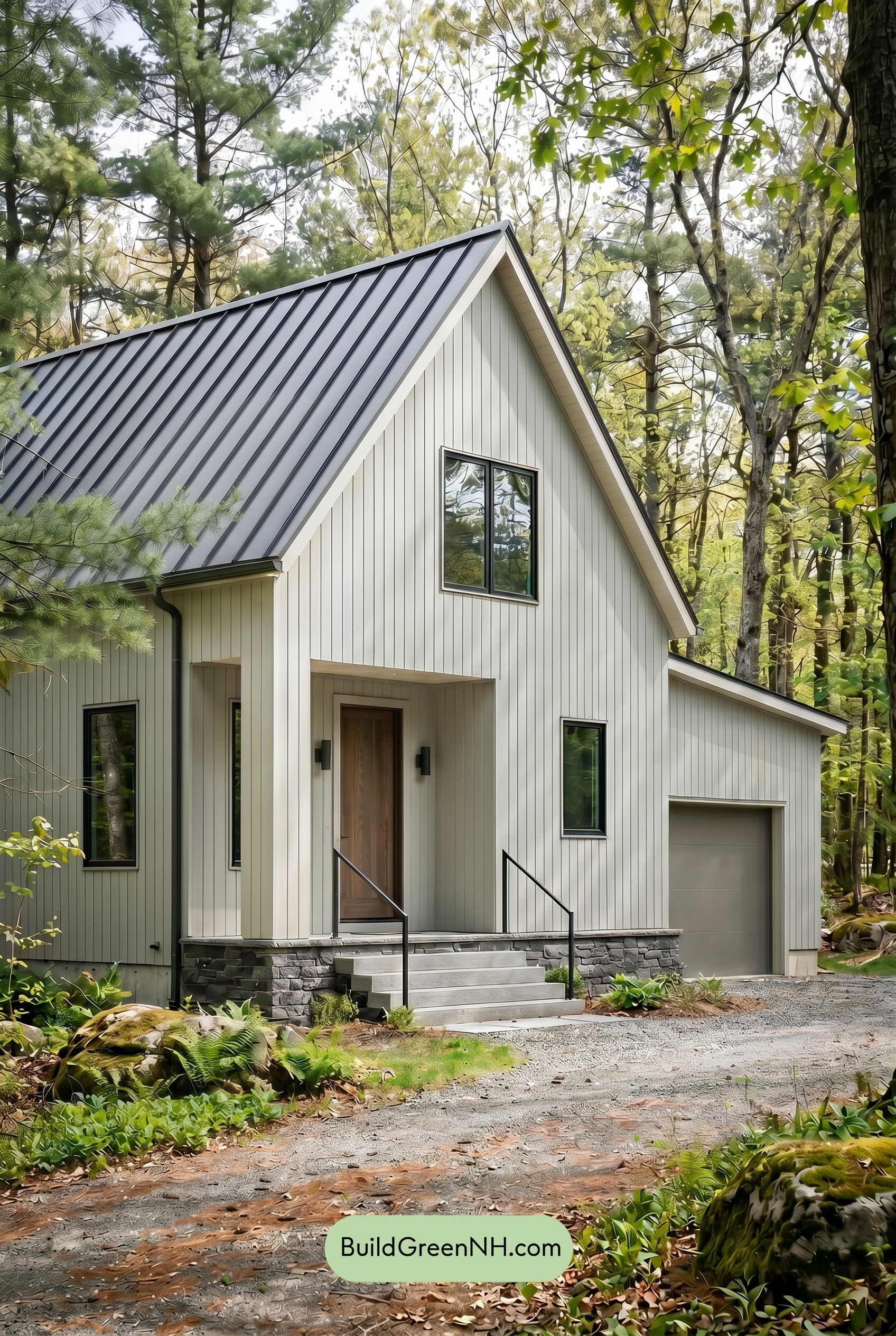
Under overcast light, the gray family on the siding, roof, window frames, railings, and garage door appears slightly cooler and more muted than it would in neutral daylight. Saturation drops gently, so the lighter gray shades feel softer and more blended, while the deeper gray accents gain a calm, steady depth without looking harsh.
The white family on the trim and columns loses a bit of crisp brightness, taking on a quieter, cloud-soft warmth. Shadows become broader and less defined, reducing contrast across the vertical siding and porch details, while the brown front door feels more subdued and earthy, giving the whole home a peaceful, tucked-into-the-woods mood.
Golden Hour
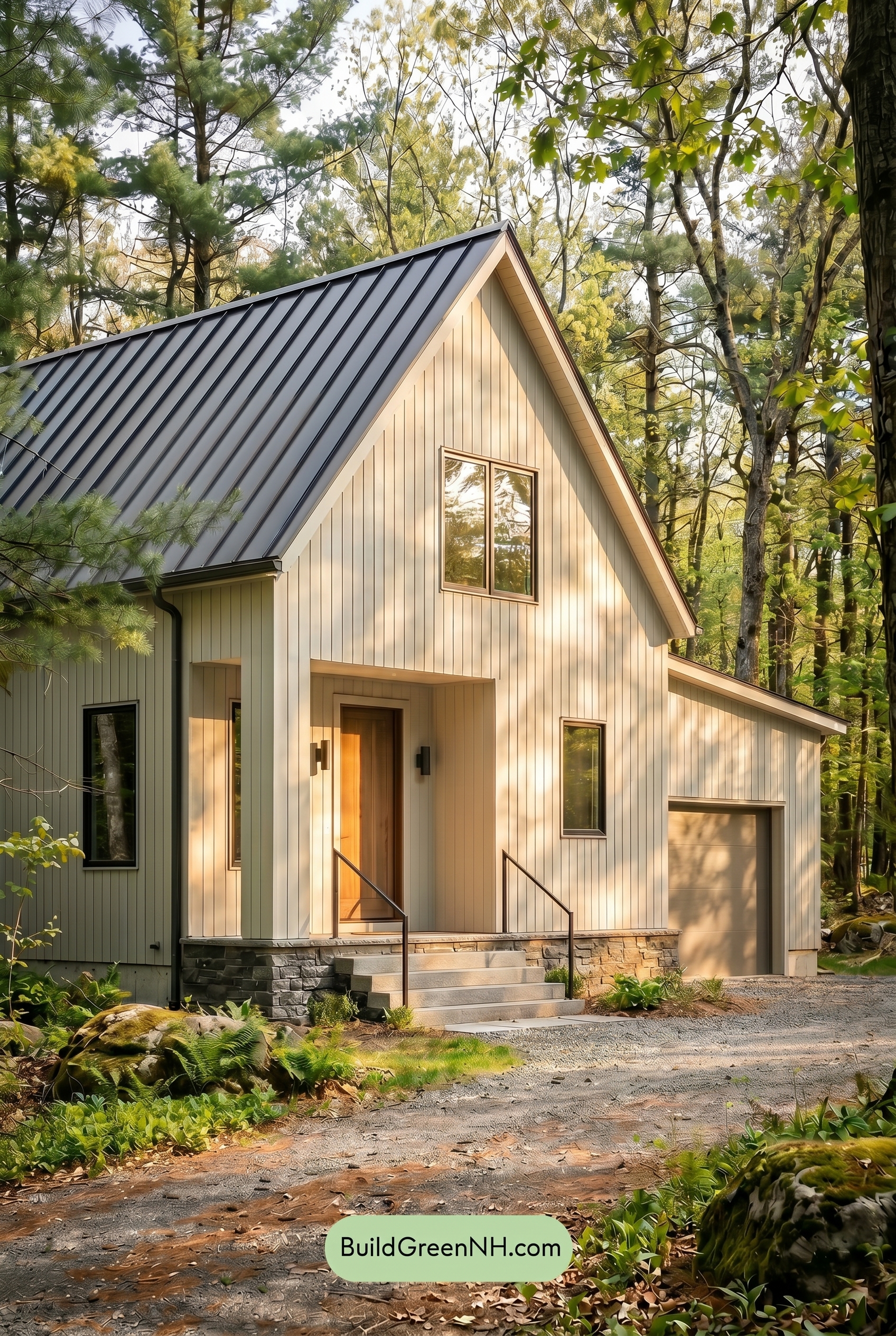
Under Golden Hour, the pale gray siding takes on a warmer, slightly richer cast than it would in neutral daylight, making the vertical lines feel softer and more inviting. The white trim and columns lose some of their crisp coolness and glow with gentle warmth, while the brown front door appears more saturated and welcoming.
The low sun stretches shadows across the façade, so the darker gray roof, window frames, railings, and garage door feel deeper and more defined. Compared with neutral daylight, contrast becomes moodier and more dimensional, balancing luminous highlights with shaded gray tones for a calm, woodland evening feel.
Shade
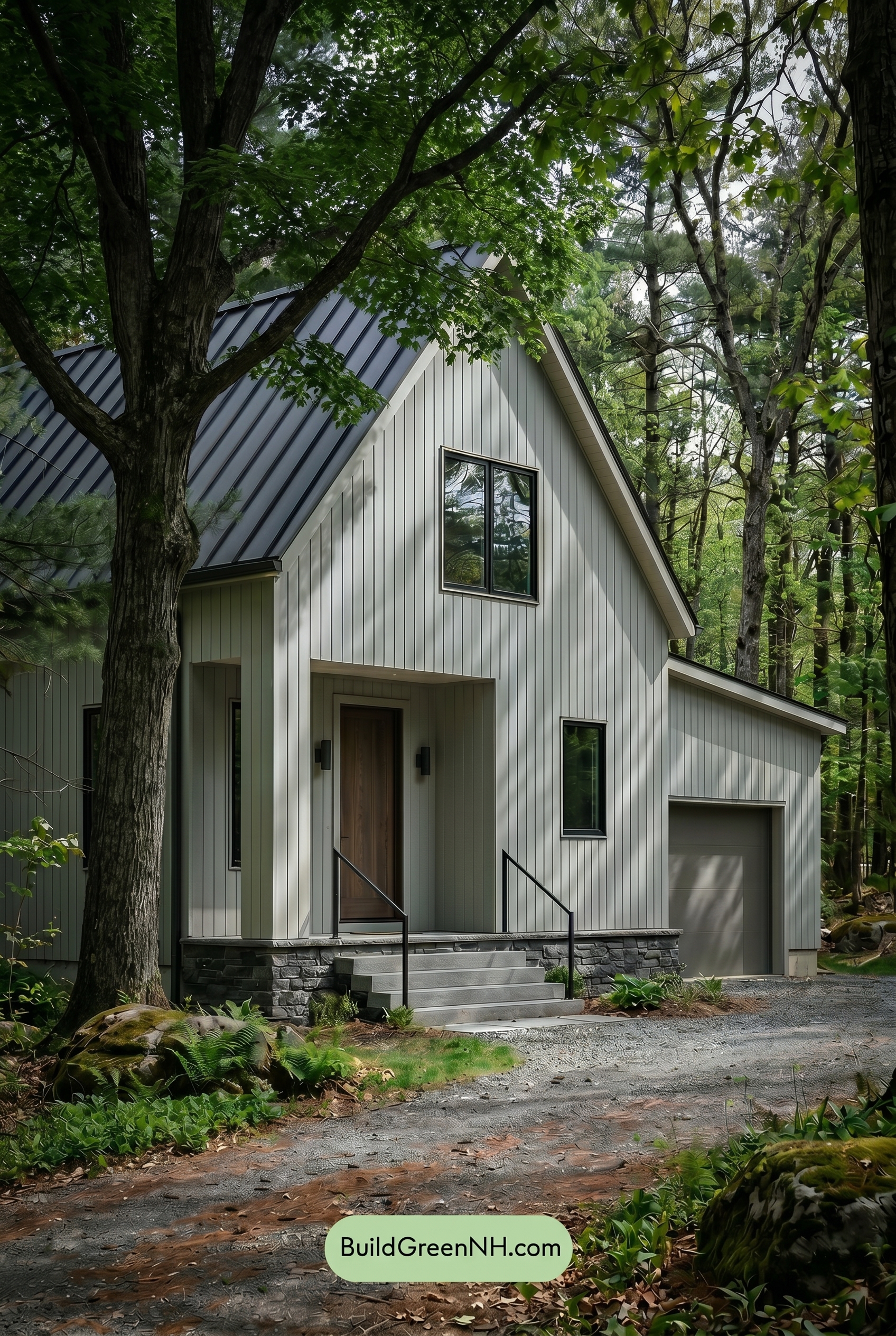
In shade, the gray siding takes on a cooler, softer cast than it would in neutral daylight, with its saturation slightly muted and the vertical texture appearing more shadowed. The white trim and columns feel less crisp and bright, shifting toward a gentler, shaded white that reduces contrast while giving the facade a calm, tucked-into-the-woods mood.
The darker gray accents on the roofline, window frames, railings, and garage door deepen noticeably, creating stronger shadow lines against the pale exterior. The brown front door also appears richer and more subdued, adding a warm note that feels cozy rather than bold under the filtered canopy light.
Nighttime
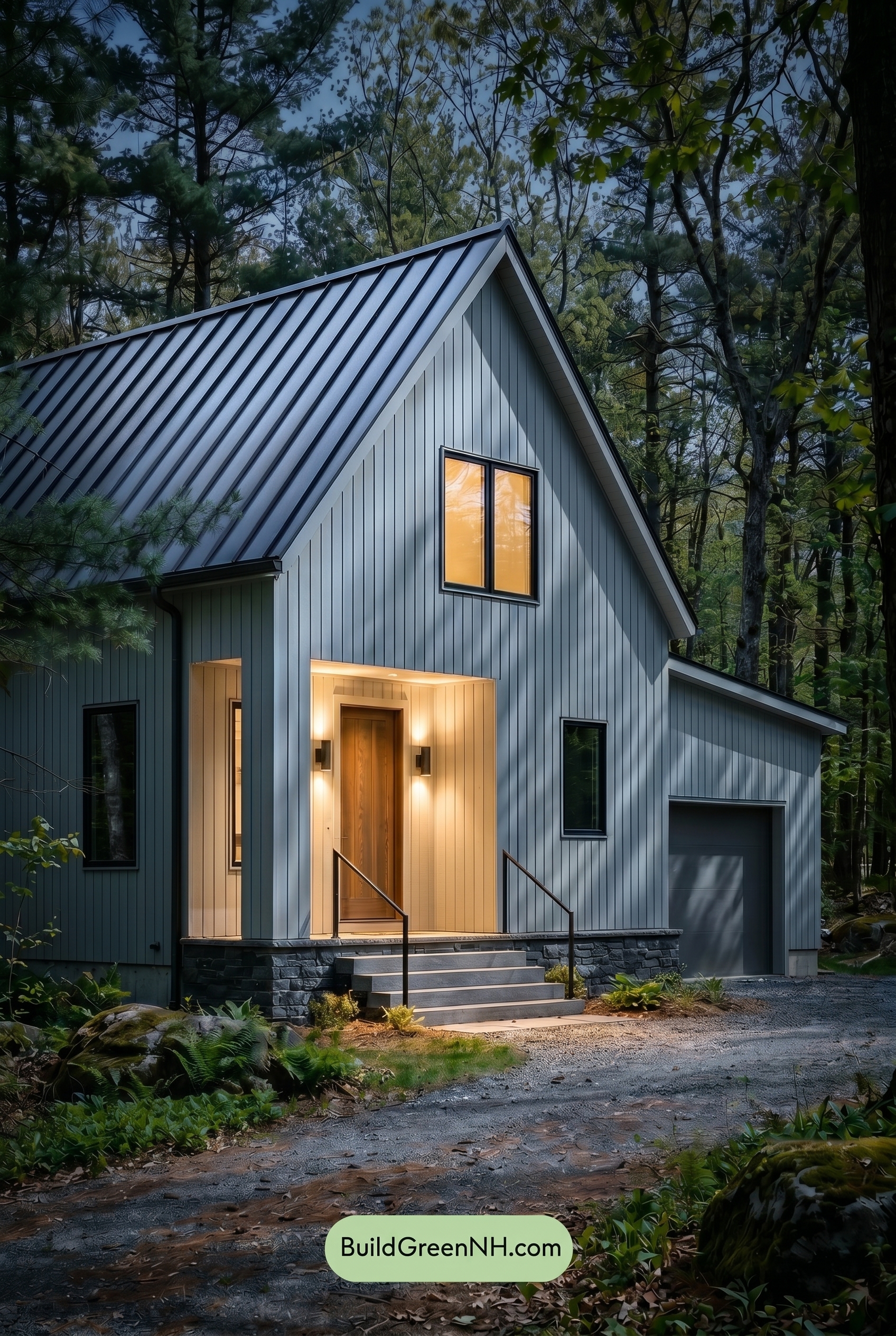
At nighttime, the gray family on the main walls appears deeper and more saturated than it would in neutral daylight, leaning cooler where the forest shadows fall. The white trim and columns pick up stronger contrast, glowing softly near the porch lighting while shifting to muted, silvery shades along the roofline and shaded edges.
The warm light around the entry makes the brown front door feel richer and more inviting, adding a cozy warmth that daylight would soften. Darker shadows intensify the gray window frames, railings, and garage door, giving the whole exterior a moodier, more dramatic presence while still feeling calm and refined.
Pin these for later
Want More?
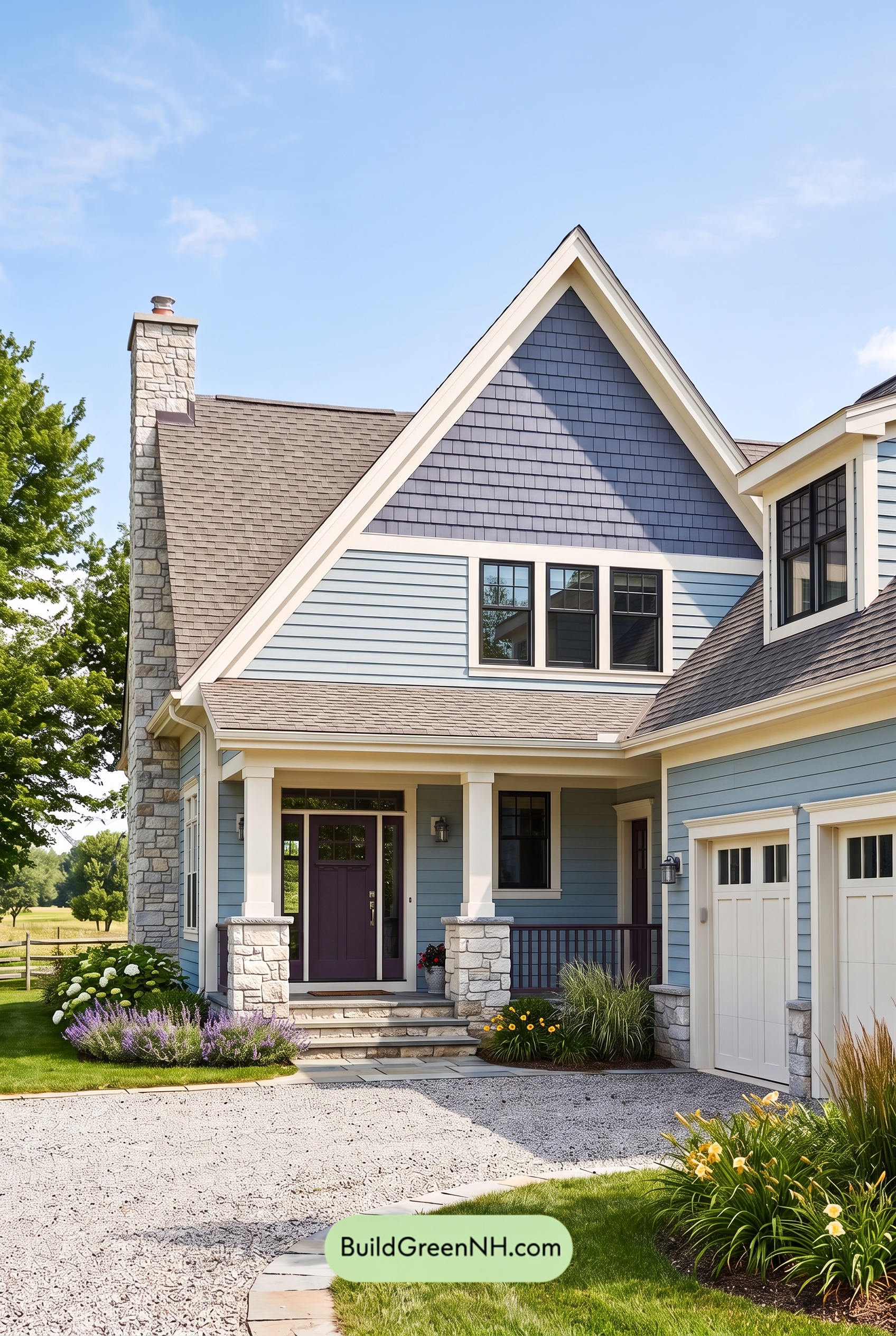
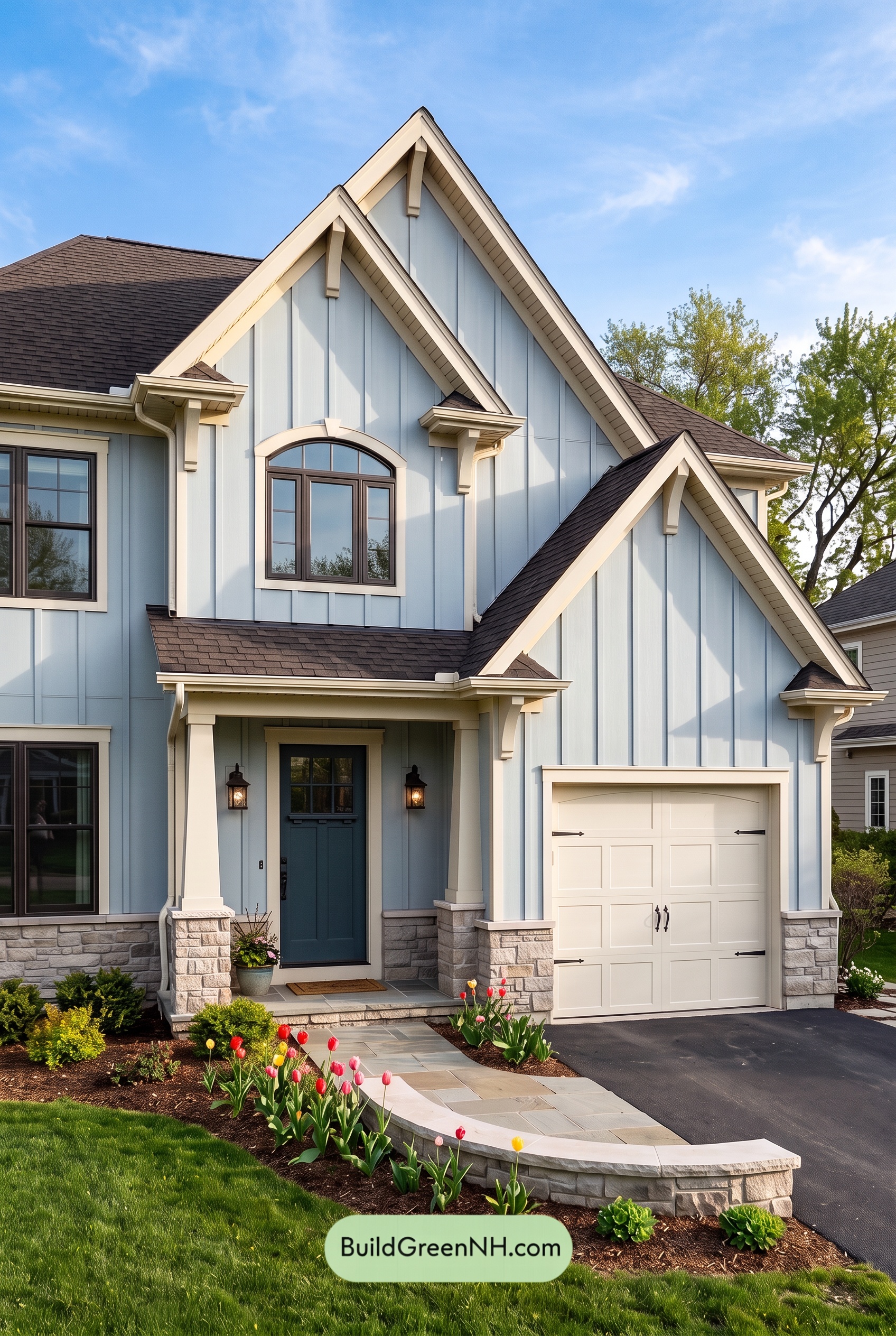 Exterior Color Scheme with Stone Accents: Bluebell Gable Song
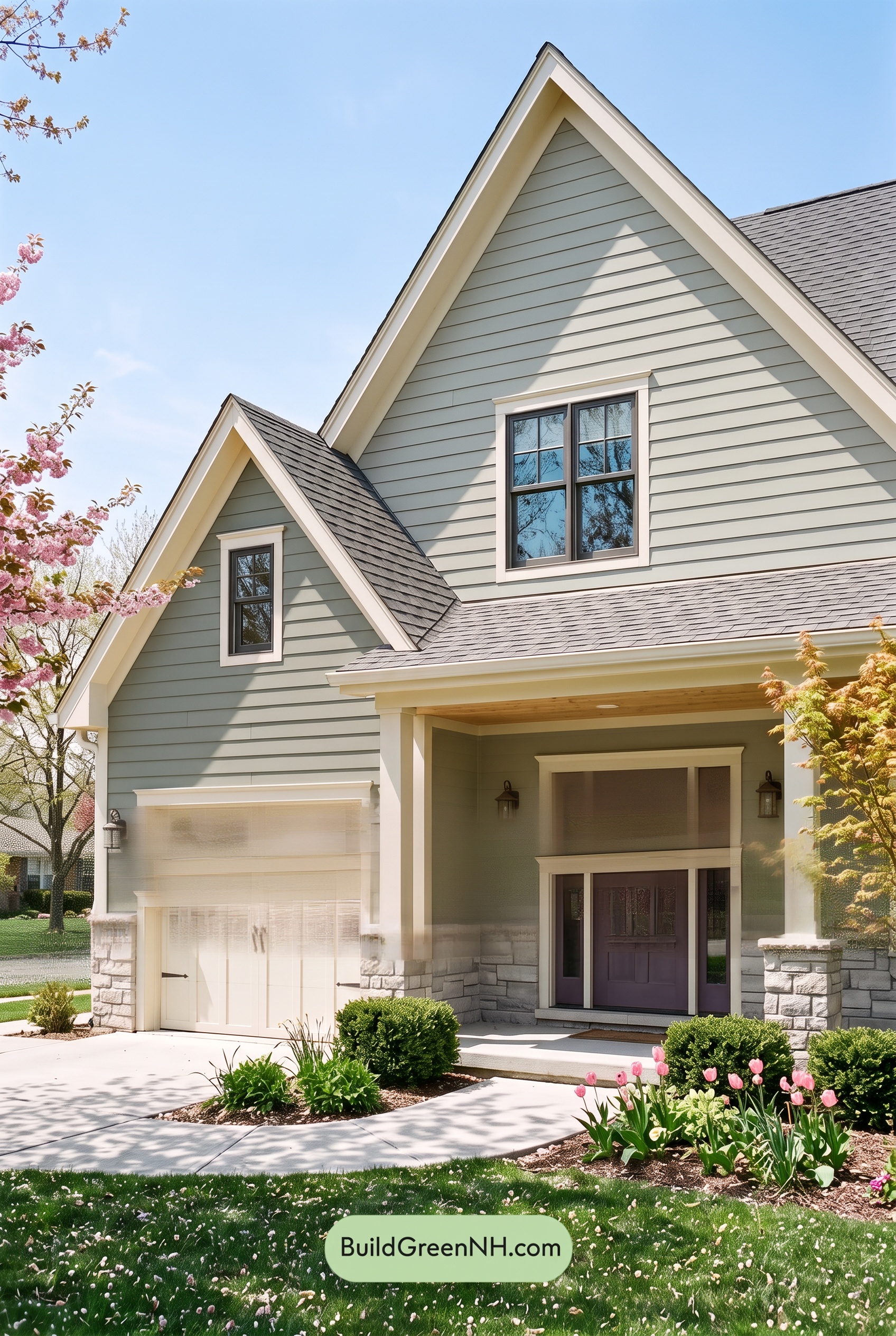
 Exterior Color Scheme with Stone Accents: Meadow Bell Welcome
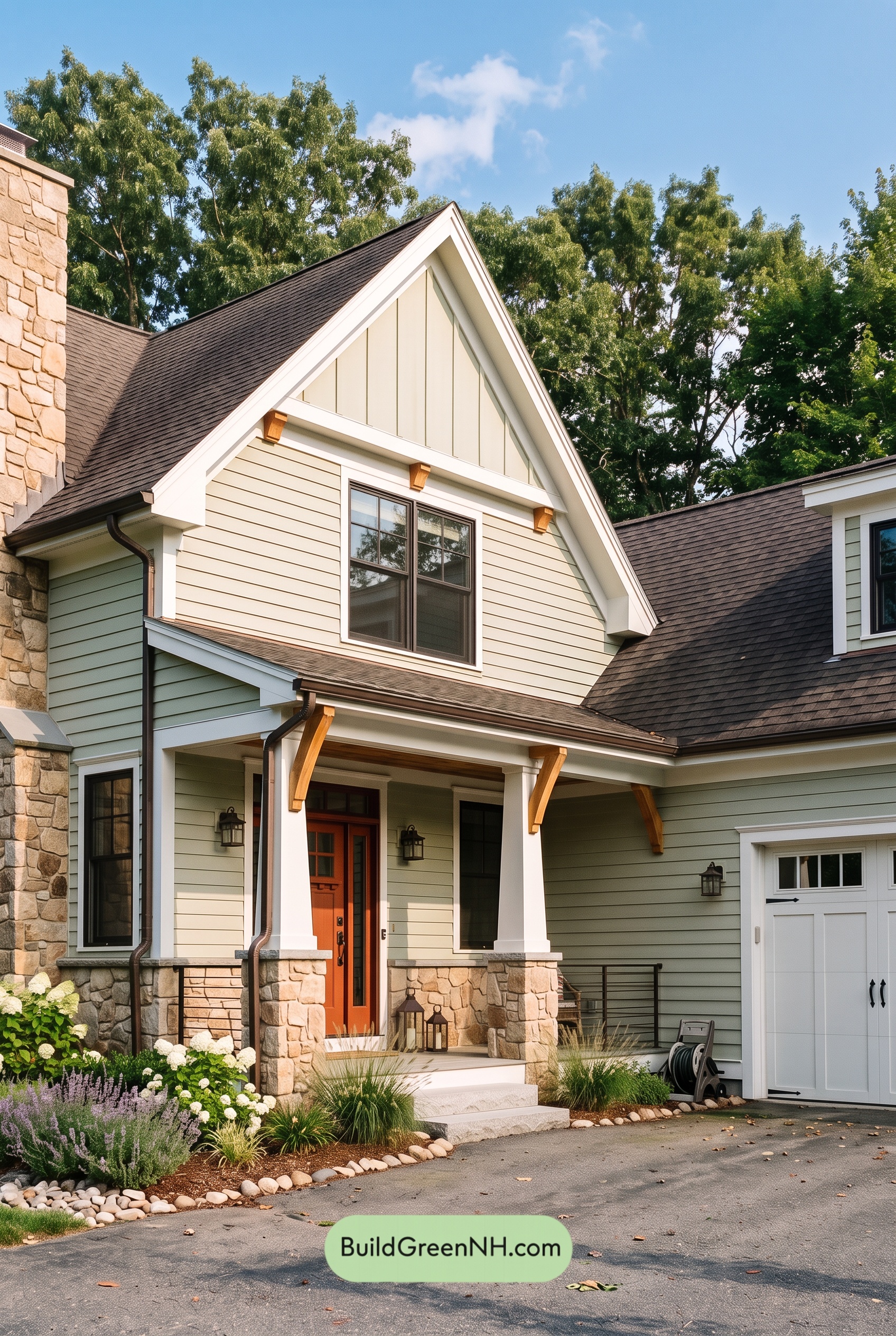
 Exterior Color Scheme with Stone Accents: Willow Quartz Porch
 Exterior Color Scheme with Stone Accents: Celadon Ember Gable
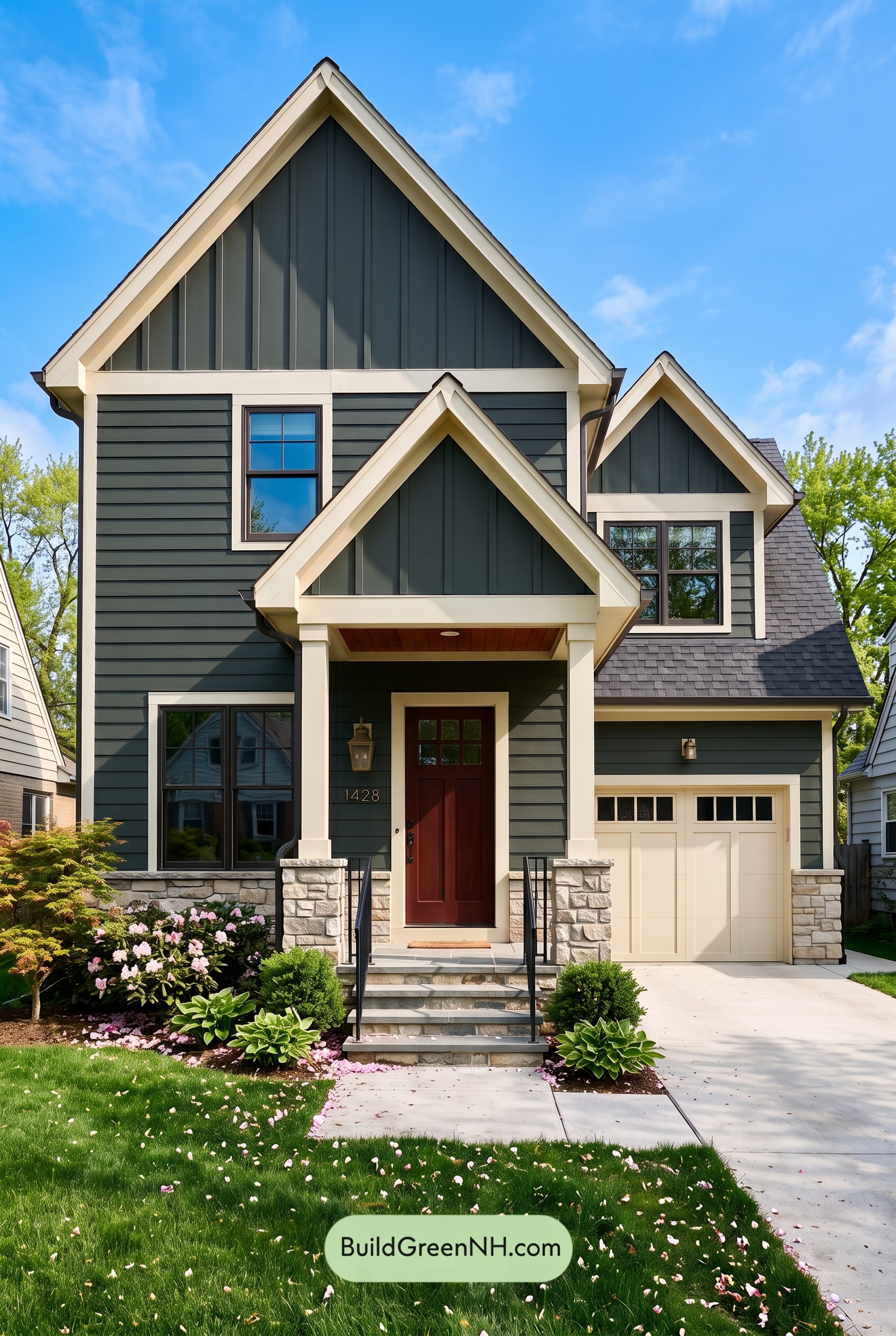 Exterior Color Scheme with Stone Accents: Pine Brass Threshold
Table of Contents