Last updated on · ⓘ How we make our designs
These modern Tuscan big-house designs are worth seeing because they make grand spaces feel calm. With courtyards, vineyard ease, and loggias that end up mattering more than the front door.
Big Tuscan houses can go wrong fast and start acting like they expect a valet at breakfast. These ones stay grounded, because we shaped them around courtyards, low rooflines, and long views so the grandeur feels calm, not puffed up.
We took our cues from hill towns, farm compounds, vineyard estates, and even a few monastery inspired layouts, then cleaned it all up with crisper lines and simpler detailing. That mix is really the point here, old soul, fresh posture, less costume, more ease.
As you move through the designs, pay attention to how symmetry gets softened by olive trees, lavender borders, pergolas, pools, and those deep loggias nobody leaves once they sit down. The best part is the balance, big houses that know how to make an entrance without acting like tiny kingdoms.
Hilltop Courtyard Villa
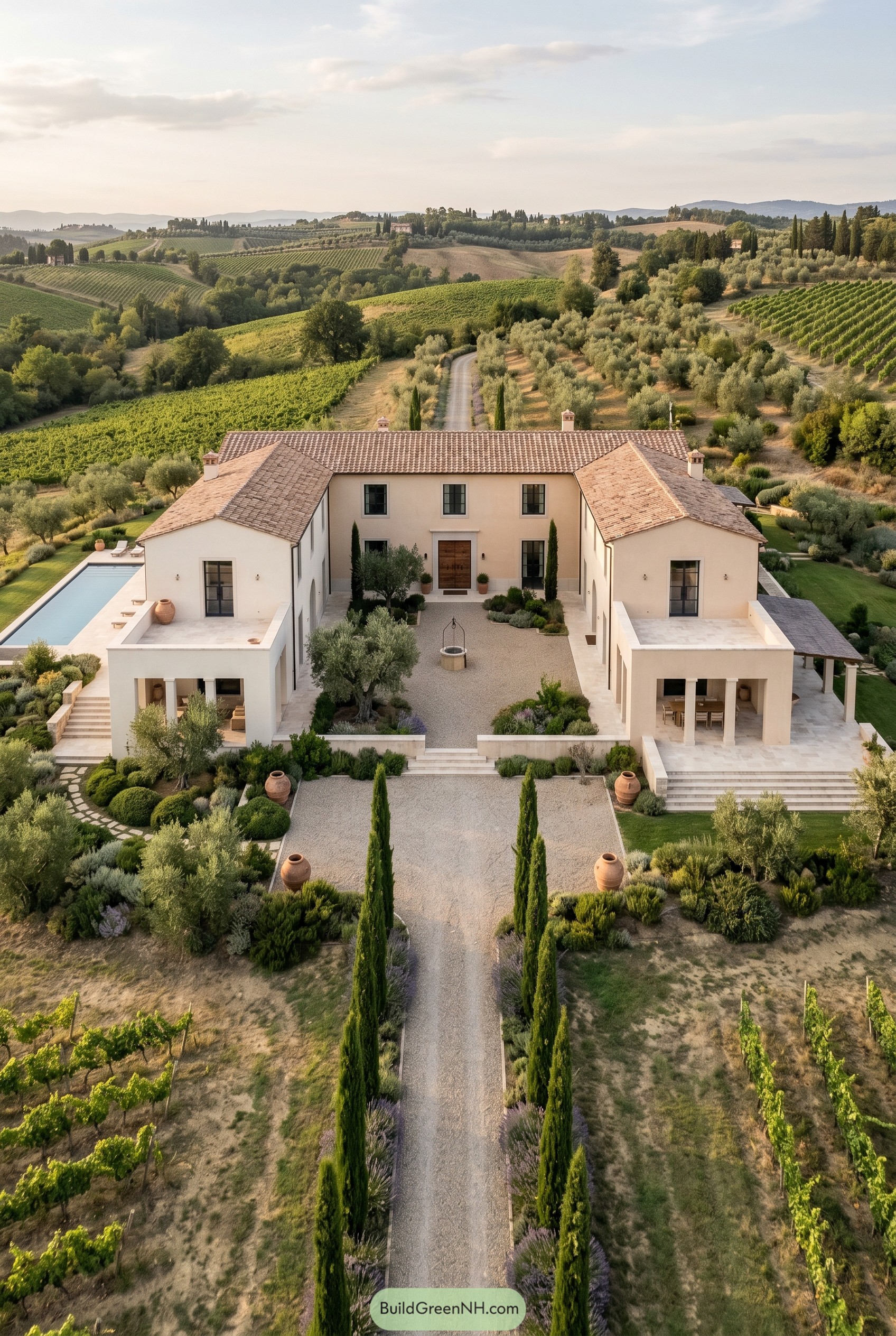



This villa leans into classic Tuscan geometry with a balanced front, pale stucco walls, and warm terracotta rooflines that sit low and calm against the hills. We shaped it around a formal courtyard so the house feels grand without getting fussy, which is a neat trick for a place this big.
The deep loggias, broad stone terraces, and cypress framed approach pull from old country estates, while the cleaner openings and restrained detailing keep it current. Olive trees, gravel, and the long pool soften the symmetry just enough, because even elegant houses need to relax a little.
Lavender Drive Manor
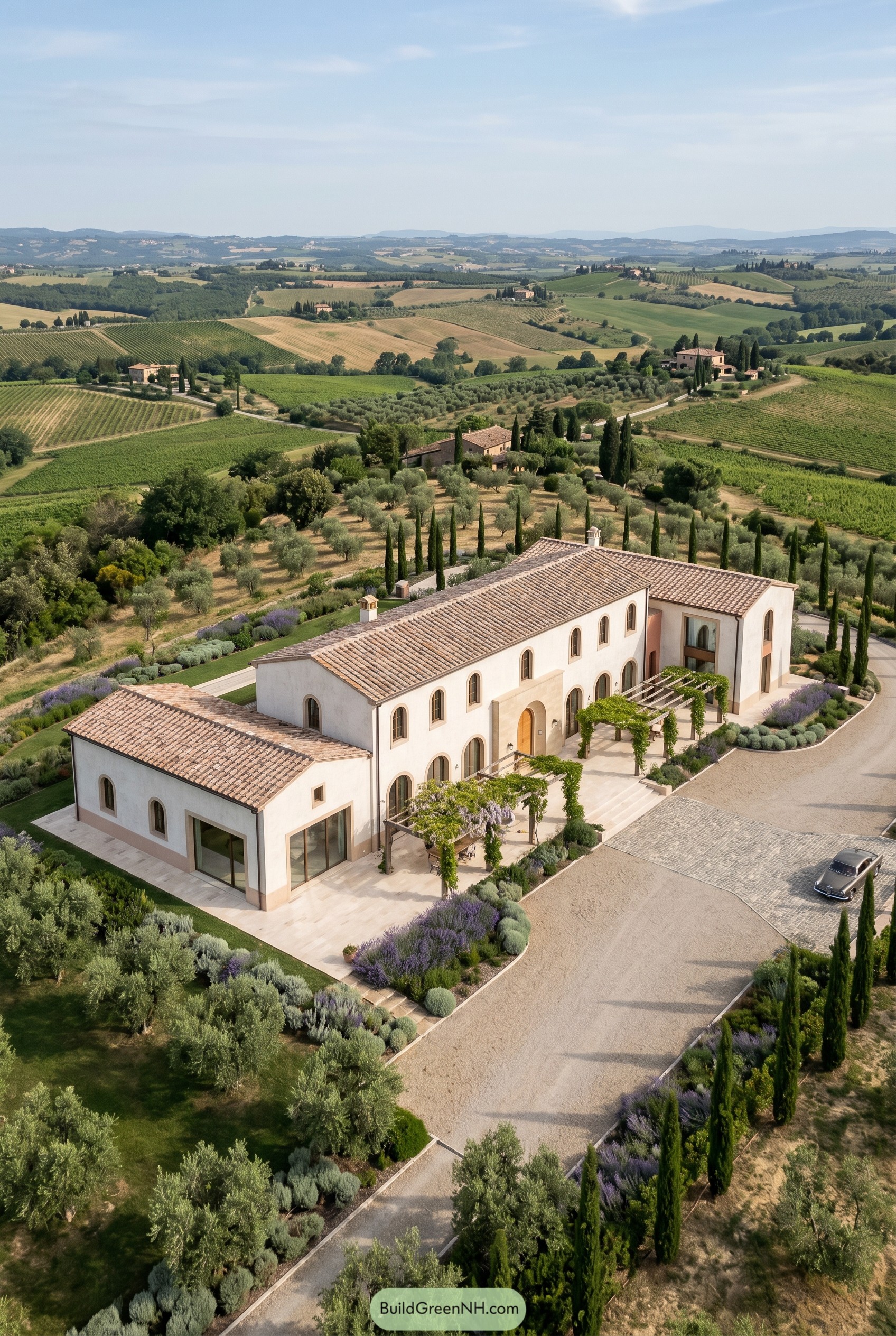

This villa stretches low and wide across the countryside, with creamy stucco walls, clay roof tiles, and a cypress lined approach that feels a little bit movie star. We shaped it like an updated farmhouse, so the long central block and side wing feel rooted in Tuscany without getting stuck in costume.
Arched openings, broad terraces, and vine wrapped pergolas soften the scale and make the big footprint feel relaxed, not bossy. Lavender borders and olive trees tie the house back to the land, which matters here because a place this pretty should never look like it landed from outer space.
Cypress Cloister Estate
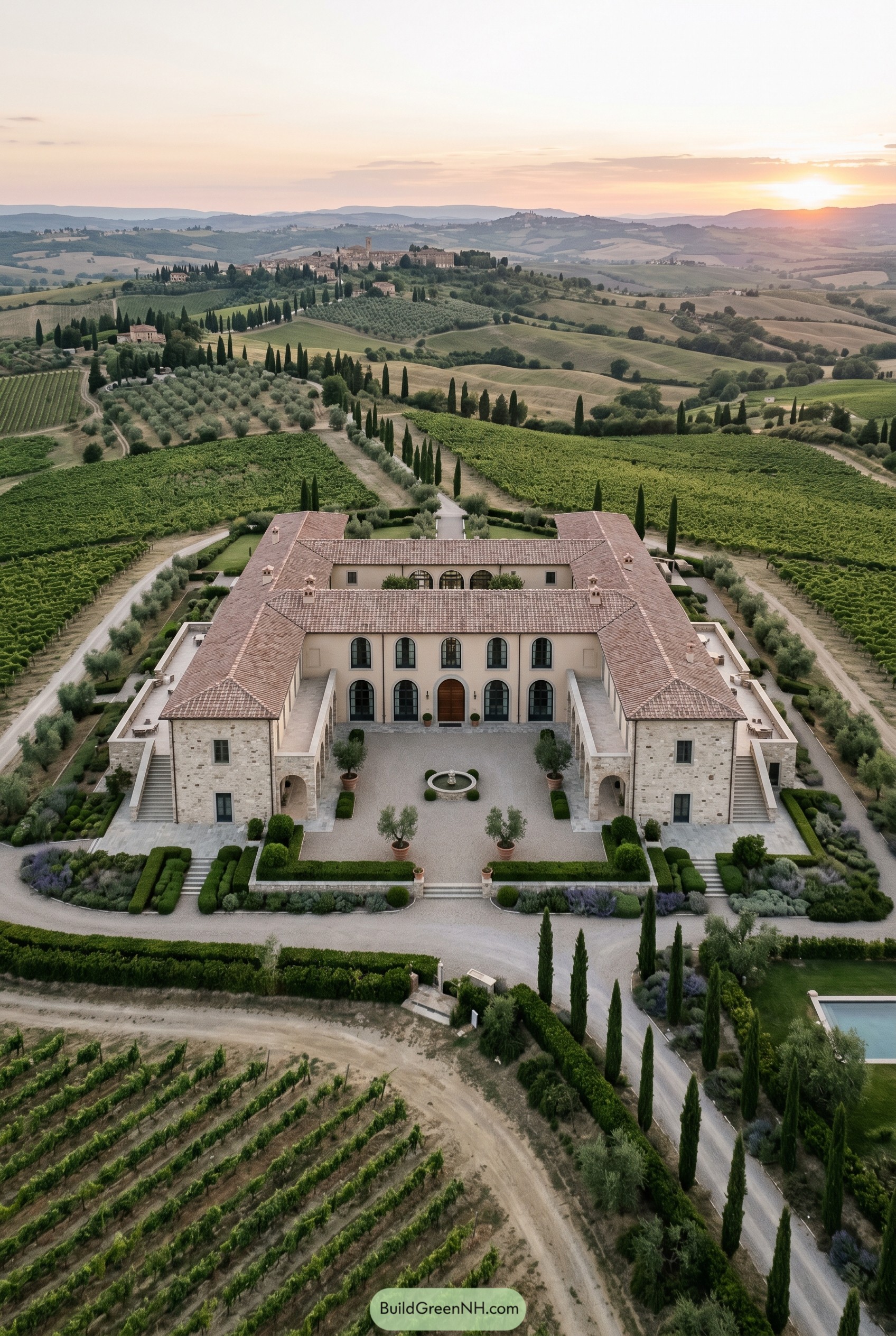

This villa leans into a cloister style plan, wrapping a calm gravel court with long wings, stone end pavilions, and rows of arched windows. We shaped it to feel rooted in the vineyard landscape, so the symmetry is crisp but not stiff, more Sunday lunch than palace lecture.
The entry court with its small fountain and clipped hedges gives the house a clear center, while the upper loggia and broad tiled roofs keep the silhouette low and settled against the hills. Cypress lined drives and tucked terraces stretch the composition outward, which is a fancy way of saying the whole place really knows how to make an arrival.
Vinefold Ridge House
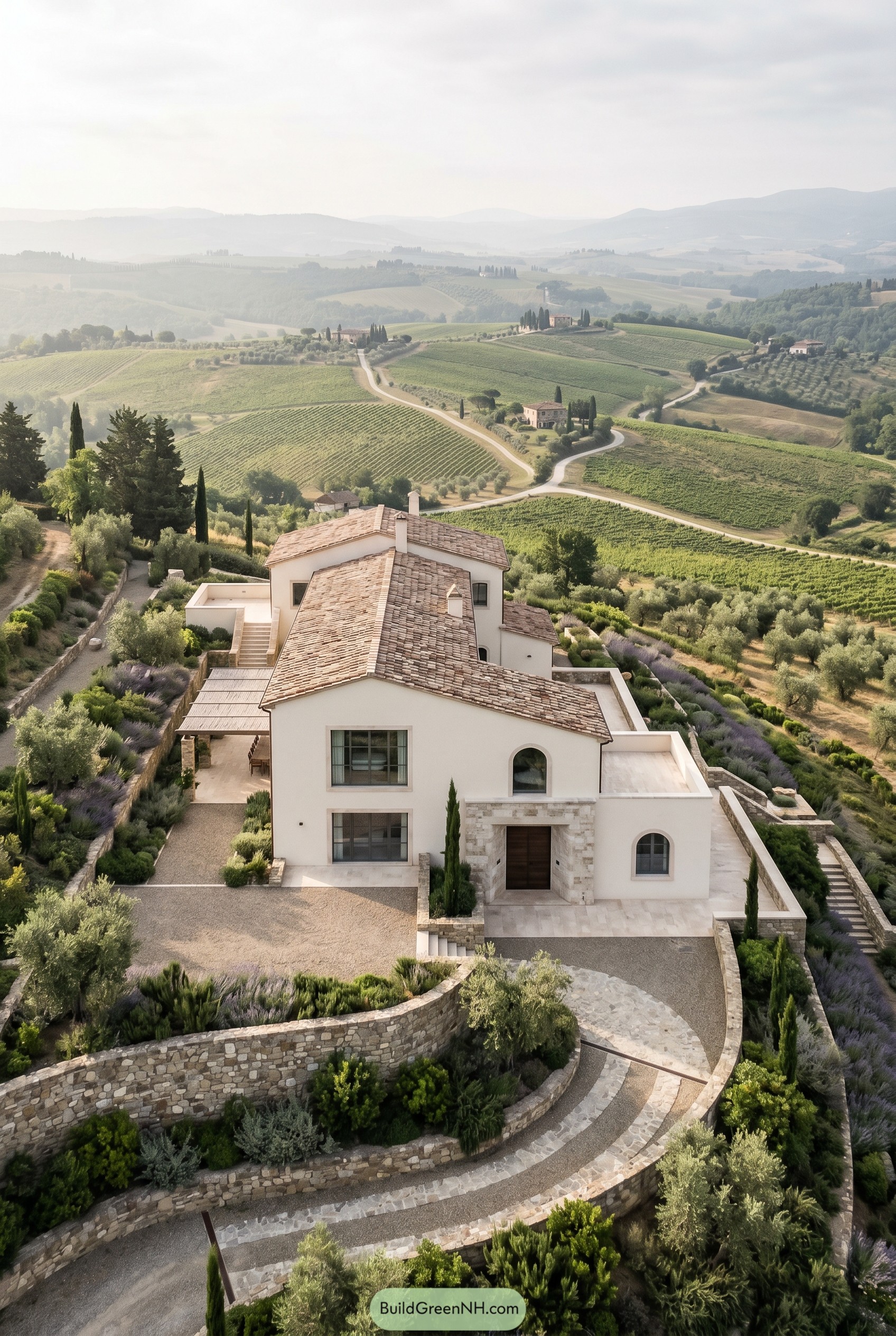

Set into the slope with stepped stone walls and broad terraces, this villa keeps a calm profile even at a generous size. The pale stucco, clay roof tiles, and chunky stone entry nod to old Tuscan farmhouses, just with cleaner lines and fewer frills.
We shaped the plan around the hill so each level gets outdoor space and long views over vines and olive groves. Arched openings soften the geometry, and the winding approach gives the whole place a bit of movie star energy without getting too fussy.
Olive Parterre Palazzo
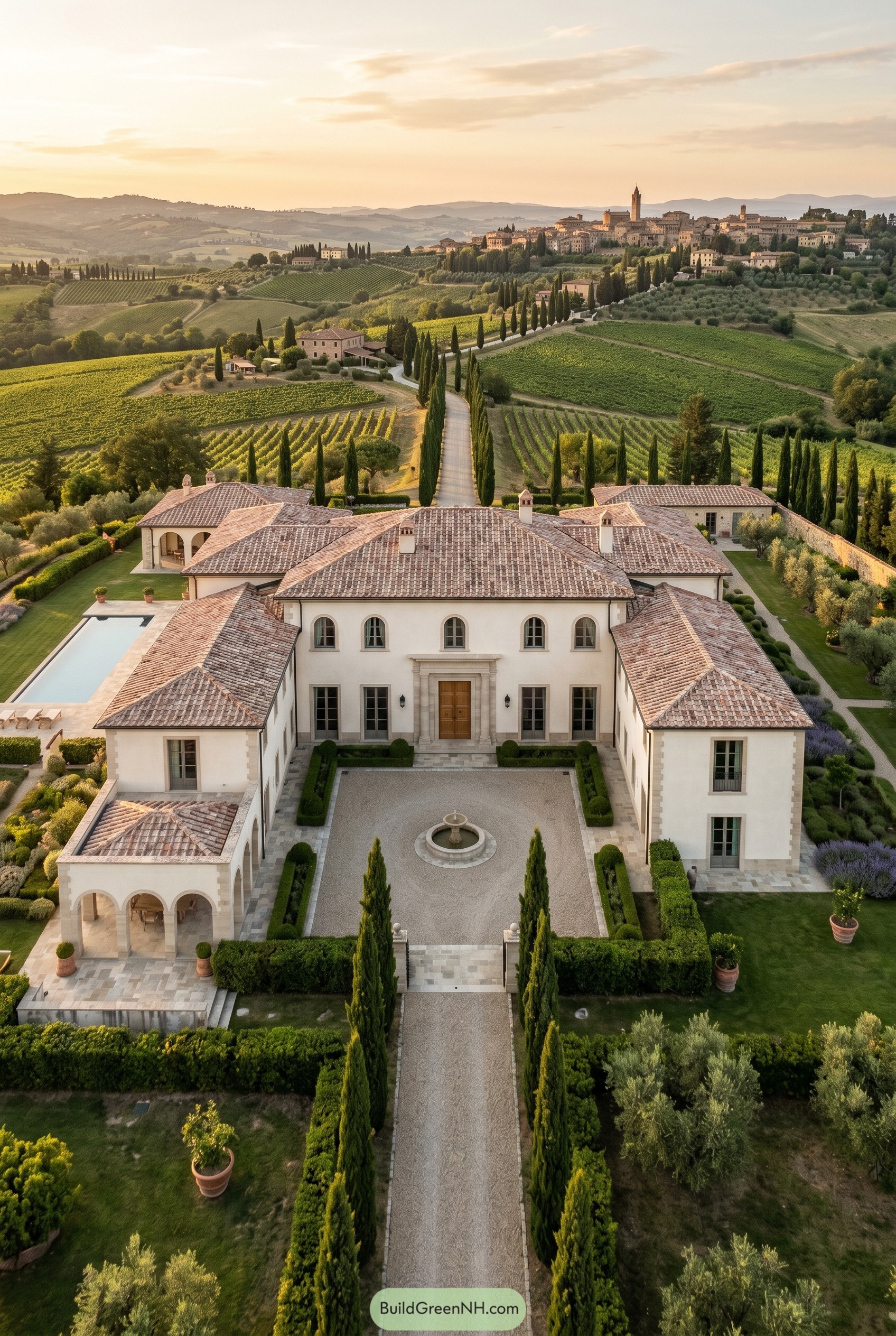

This villa leans into classic Tuscan order with a broad symmetrical plan, pale stucco walls, and a patchwork of terracotta roofs wrapped around a formal gravel court. The centered entry and small stone fountain give the approach a calm, almost ceremonial feel, which is fancy but never too precious.
We pulled inspiration from old countryside palazzi and vineyard estates, so the cypress drive, arched loggia, and clipped hedges sit naturally in the landscape. Those long wings stretch the house out with real presence, while the quiet courtyard keeps it grounded and, honestly, saves it from feeling like it ate too much pasta.
Sunwash Loggia Farmstead
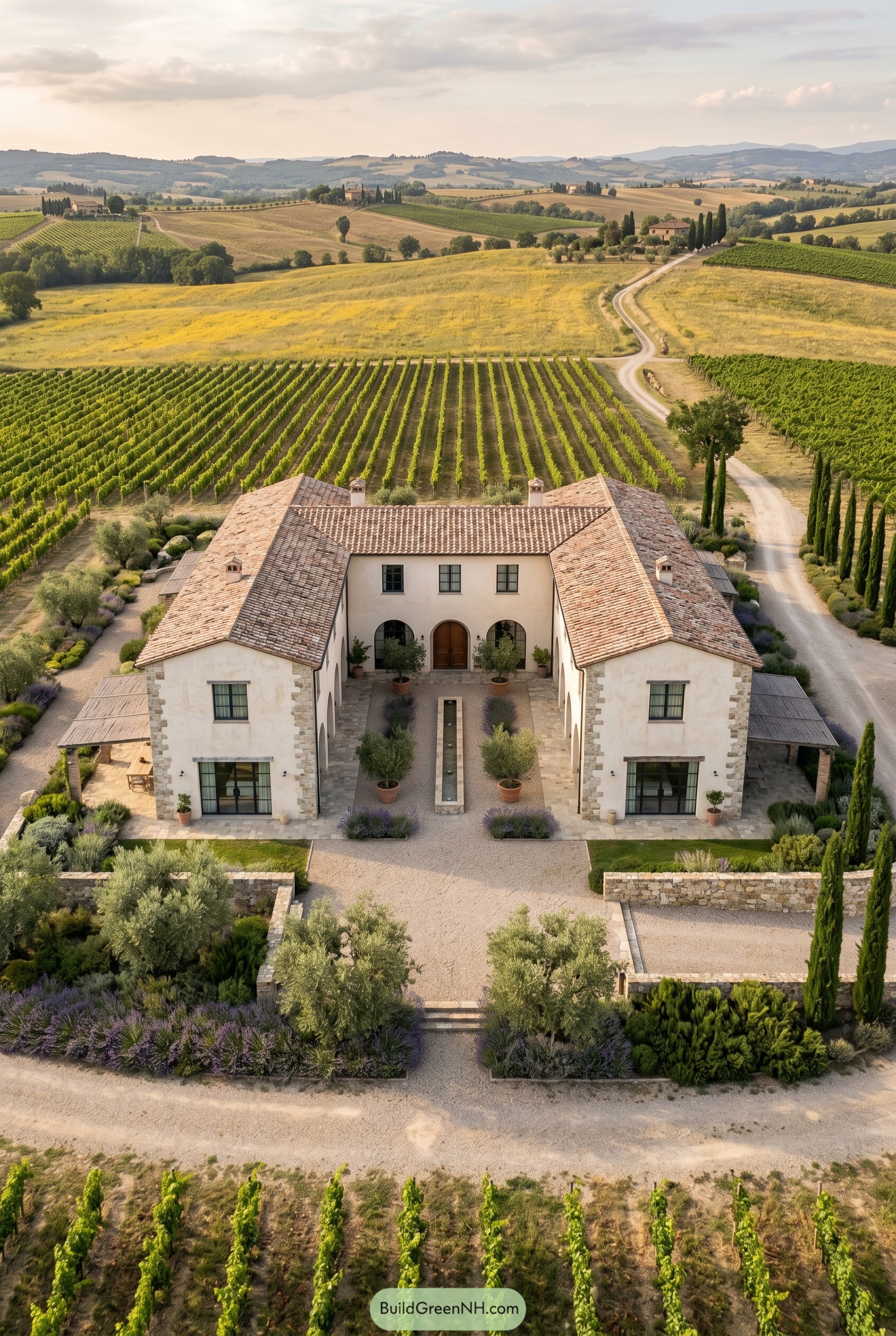

This farmstead is shaped around a calm entry court, with a slim water runnel pulling your eye straight to the arched front door. Cream plaster walls, stone corner detailing, and broad terracotta roofs borrow from old Tuscan agricultural compounds, though this one is clearly better dressed.
The long wings and deep loggias give the house a grounded, sheltering feel, which matters on a site this open and expansive. Olive trees, lavender borders, and the gravel approach soften the symmetry so it never feels stiff, just polished enough to make the vineyards look like close friends.
Terraced Belvedere Retreat
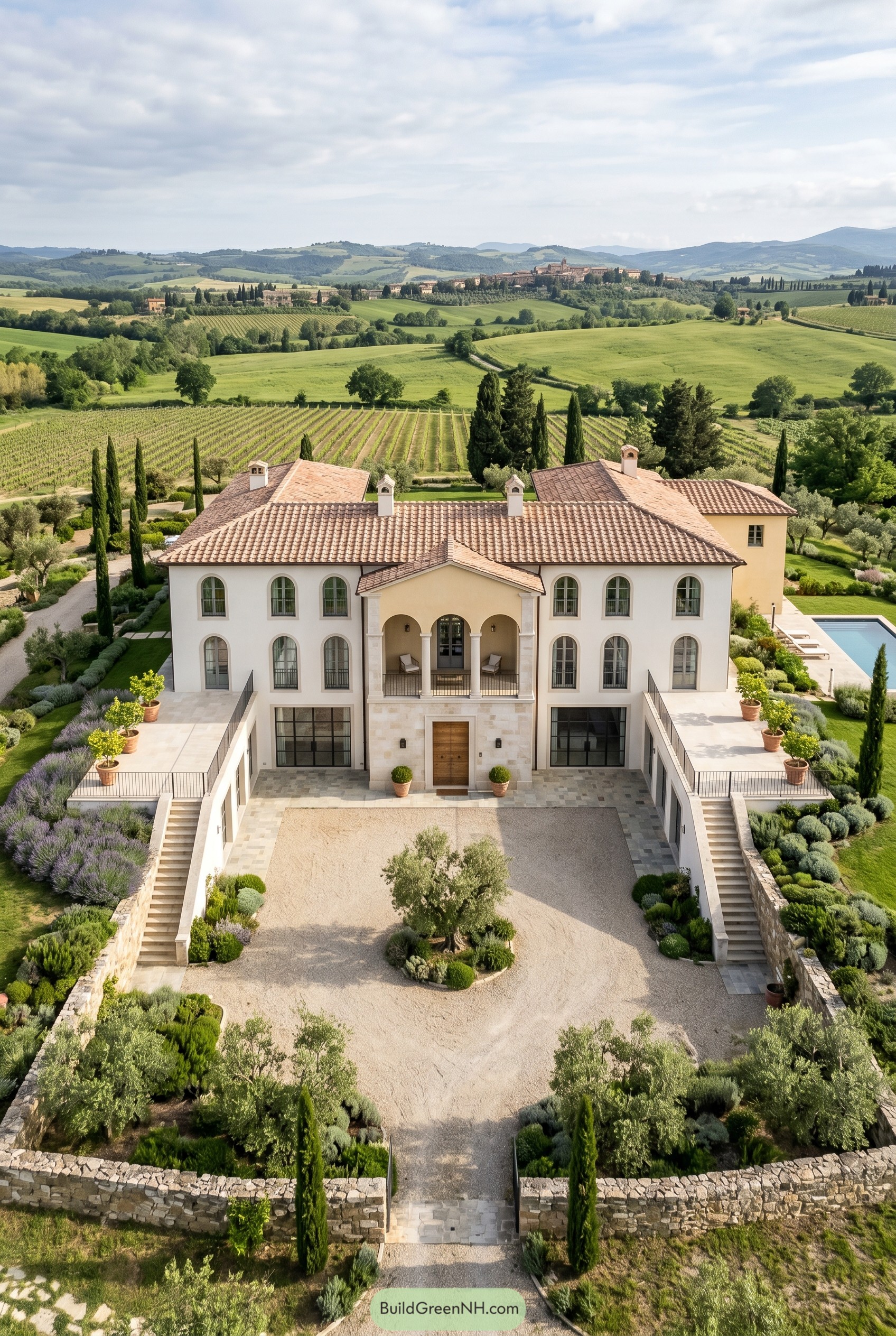

The whole composition leans on symmetry, from the centered entry and balcony loggia to the matching stair terraces that step down into the gravel forecourt. We pulled from classic Tuscan hill towns here, but kept the lines cleaner and the arched openings taller so it feels grand without getting stuffy.
Pale stucco walls, clay roof tiles, and a stone clad base give the residence a grounded, settled character, like it has always known where the good wine is. Wide terraces, side wings, and that long formal approach make outdoor living easy and frame the vineyard views beautifully, which is really why a house like this exists.
Sea Bluff Atrium House
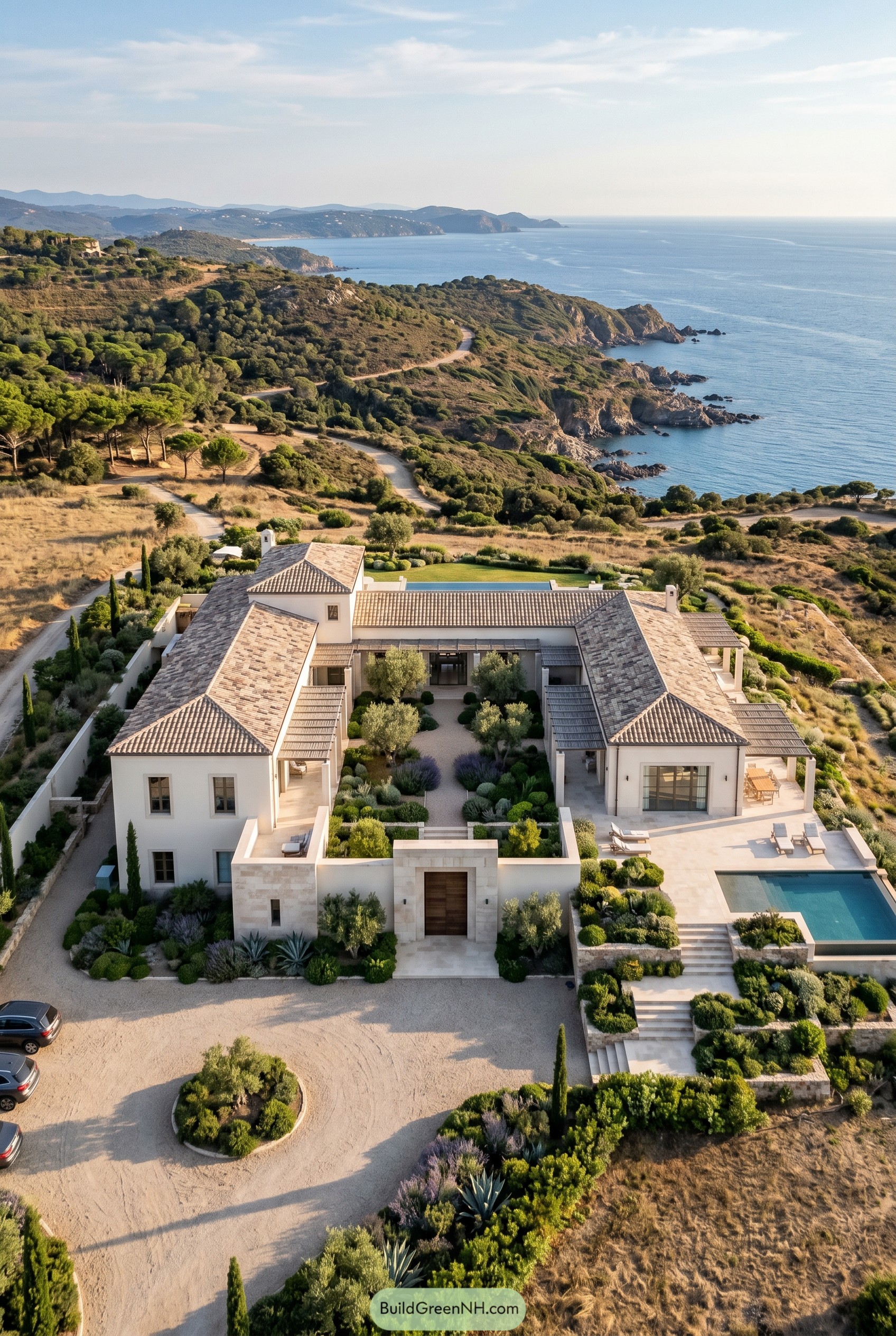

Set above the water, this coastal Tuscan residence wraps around a calm planted court that gives the whole plan a grounded center. We borrowed the feel of old Mediterranean compounds, then cleaned it up with crisp volumes and long rooflines so it feels grand without getting too fussy.
The pale stucco, stone entry block, and layered garden steps tie the house to the dry hillside, while the pool terrace slips out toward the sea like it knew exactly where to go. Deep loggias and paired wings keep the scale comfortable, which matters in a house this size because nobody wants a villa that feels like an airport.
Umbrella Pine Vista Compound
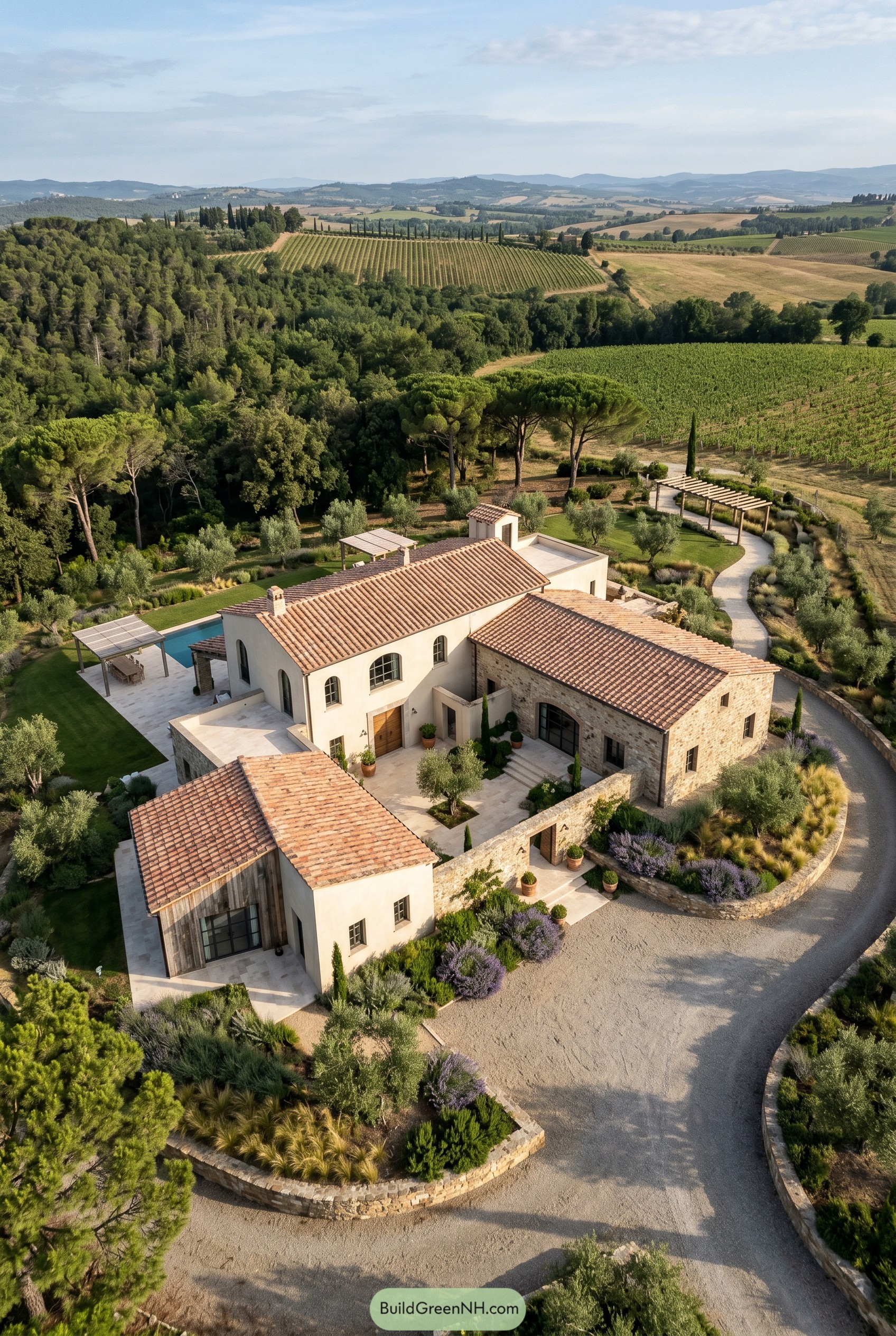

This compound borrows from old Tuscan farm clusters, with a main plaster volume, a rugged stone wing, and a smaller timber clad outbuilding gathered around a sheltered court. That mix keeps the scale comfortable, which matters on a big house like this because nobody wants a villa that feels like an airport.
The tiled roofs, arched openings, and low stone walls give it that rooted hillside feel, while the crisp terraces and long pool quietly pull it into the present. Olive trees, lavender borders, and pergolas soften every edge, so the whole place settles into the landscape like it was always meant to be there, just with better plumbing.
Arched Quadrangle Residence
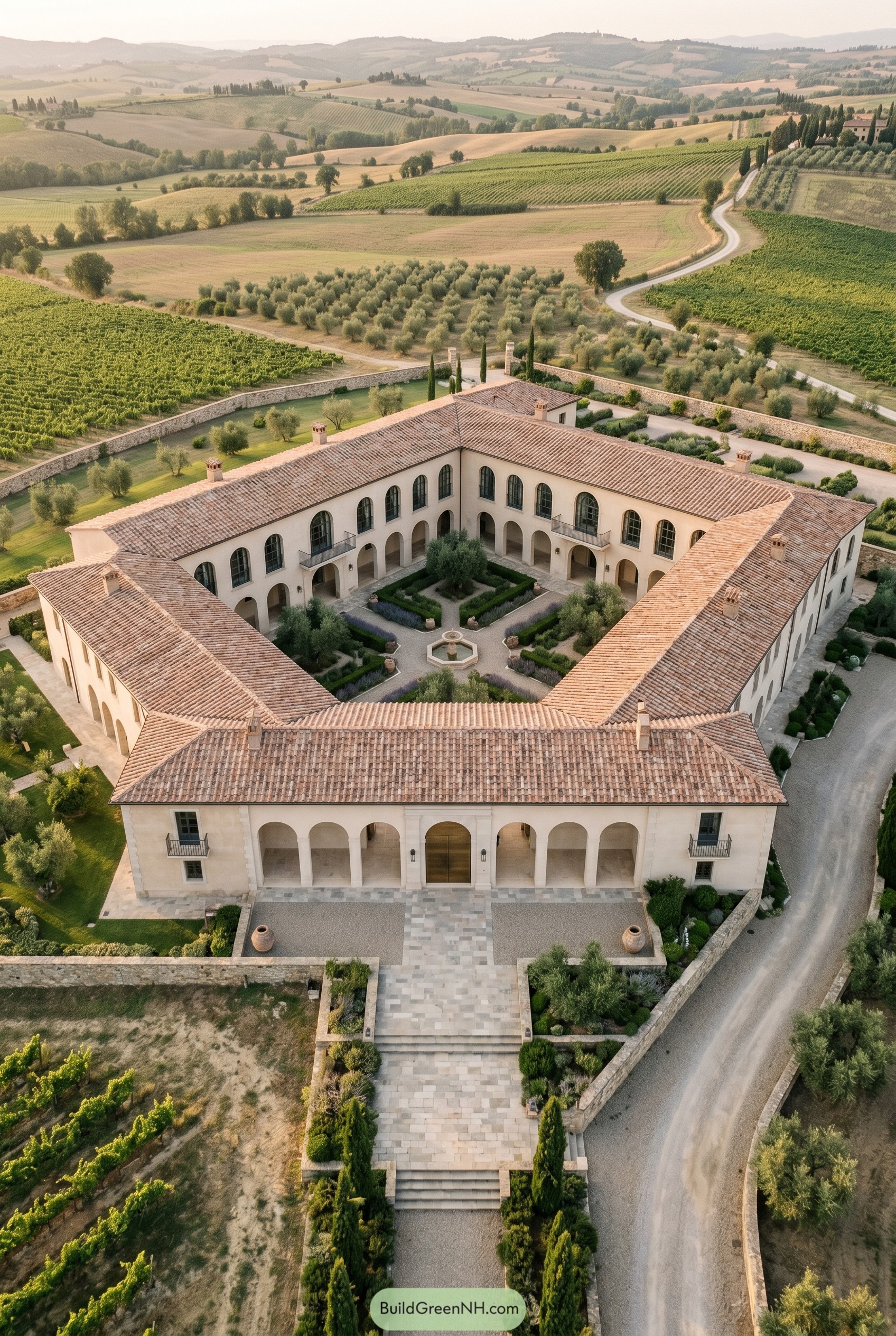

A near perfect square plan wraps a planted inner court, with long arcades and tall arched windows giving the whole place that calm monastery meets country house feel. The symmetry is crisp without going stiff, and the little fountain keeps the courtyard from looking too serious about itself.
The low sprawling mass, clay tile roofs, and pale stucco walls were inspired by old rural compounds scattered across central Tuscany. Broad steps, cypress lined approaches, and garden rooms inside the walls make the arrival feel grand but still easy, which is harder than it looks really.
Borgo Prospect Villa
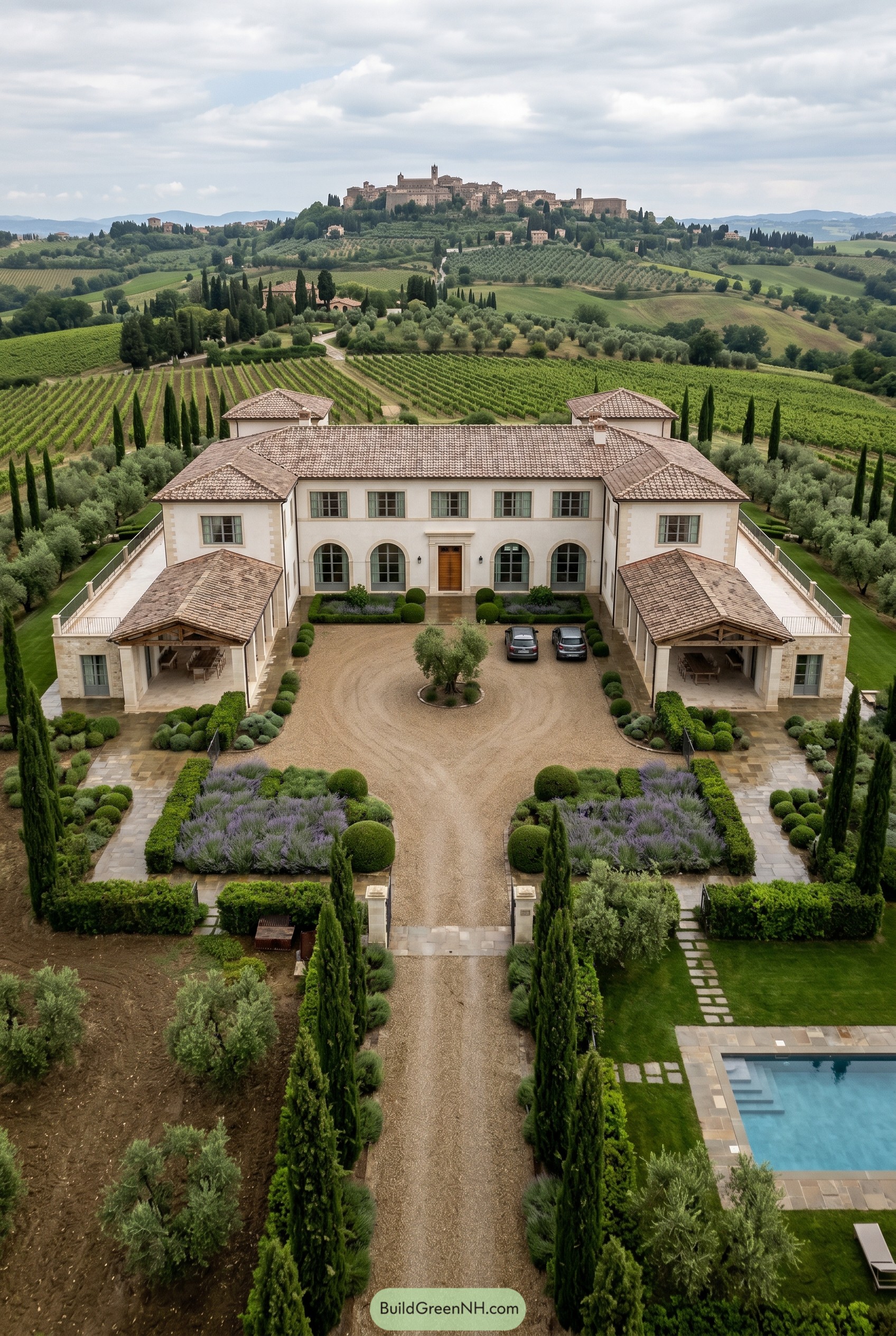

The villa leans into classic Tuscan symmetry with a broad central block, lower side wings, and generous tiled roofs that make the facade feel calm and settled. Arched openings at the ground floor soften the form, while the gravel court and clipped lavender beds add just enough polish without acting too precious about it.
Its inspiration comes straight from the surrounding vineyards and distant hill town, which is why the palette stays pale, earthy, and wonderfully rooted. Cypress-lined approaches, olive trees, and those shaded porticos frame the house beautifully, and yes, they also make arriving here feel a bit cinematic in the best way.
Fountain Forecourt Villa
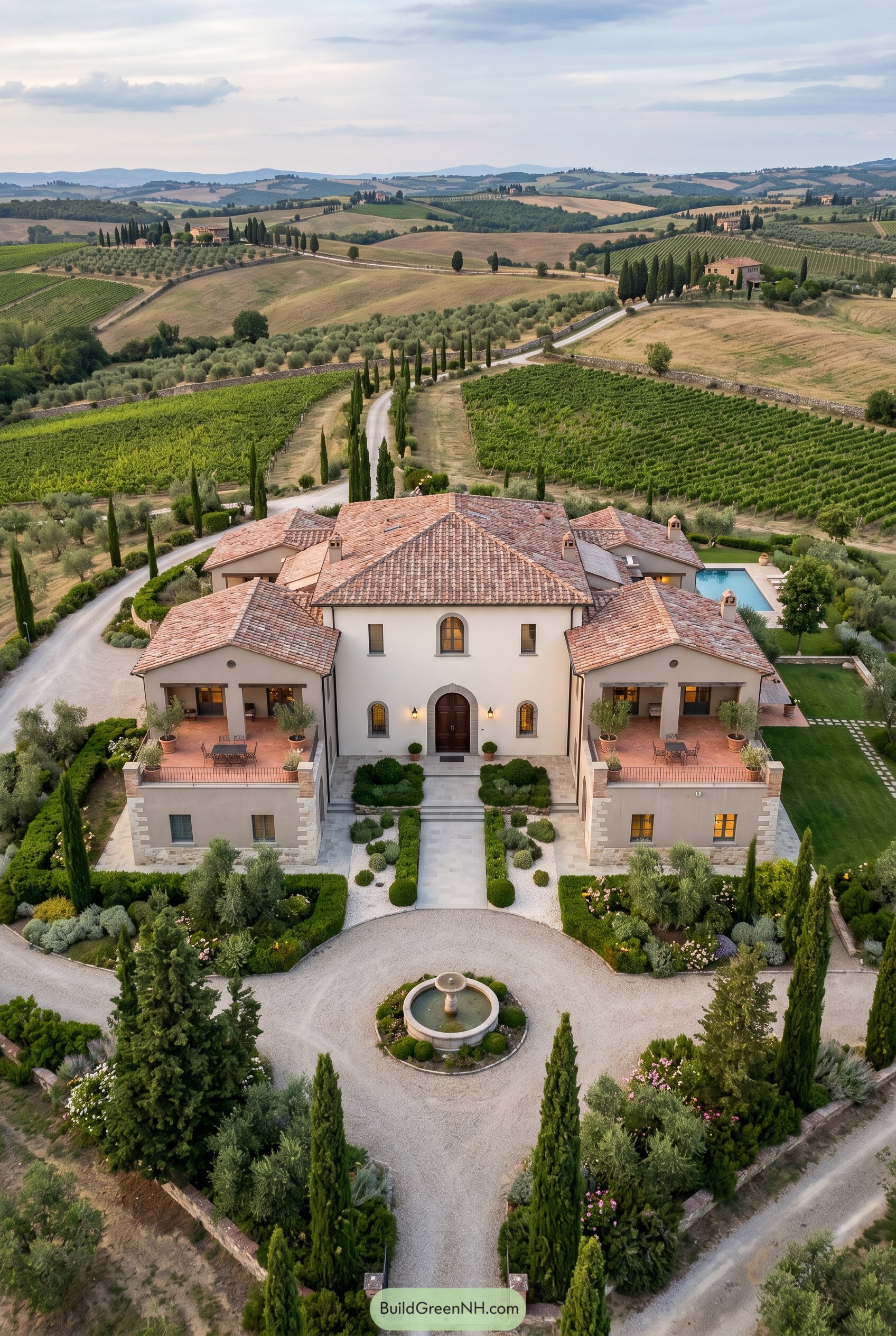

This villa leans into symmetry with a calm central block, broad terracotta roofs, and twin terrace wings that make the whole place feel settled into the hill. It pulls from classic Tuscan country houses, but the cleaner stucco walls and crisp stone trims keep it from slipping into costume, which is always a risk with a house this big.
The circular fountain court and cypress lined approach set up a proper arrival, then the deep covered loggias give the rooms shady outdoor space that people will actually use. Olive trees, clipped hedges, and the tucked side pool soften the scale, so the estate feels polished and welcoming instead of like it might ask you to wear a blazer to breakfast.
Stone Wing Vineyard House
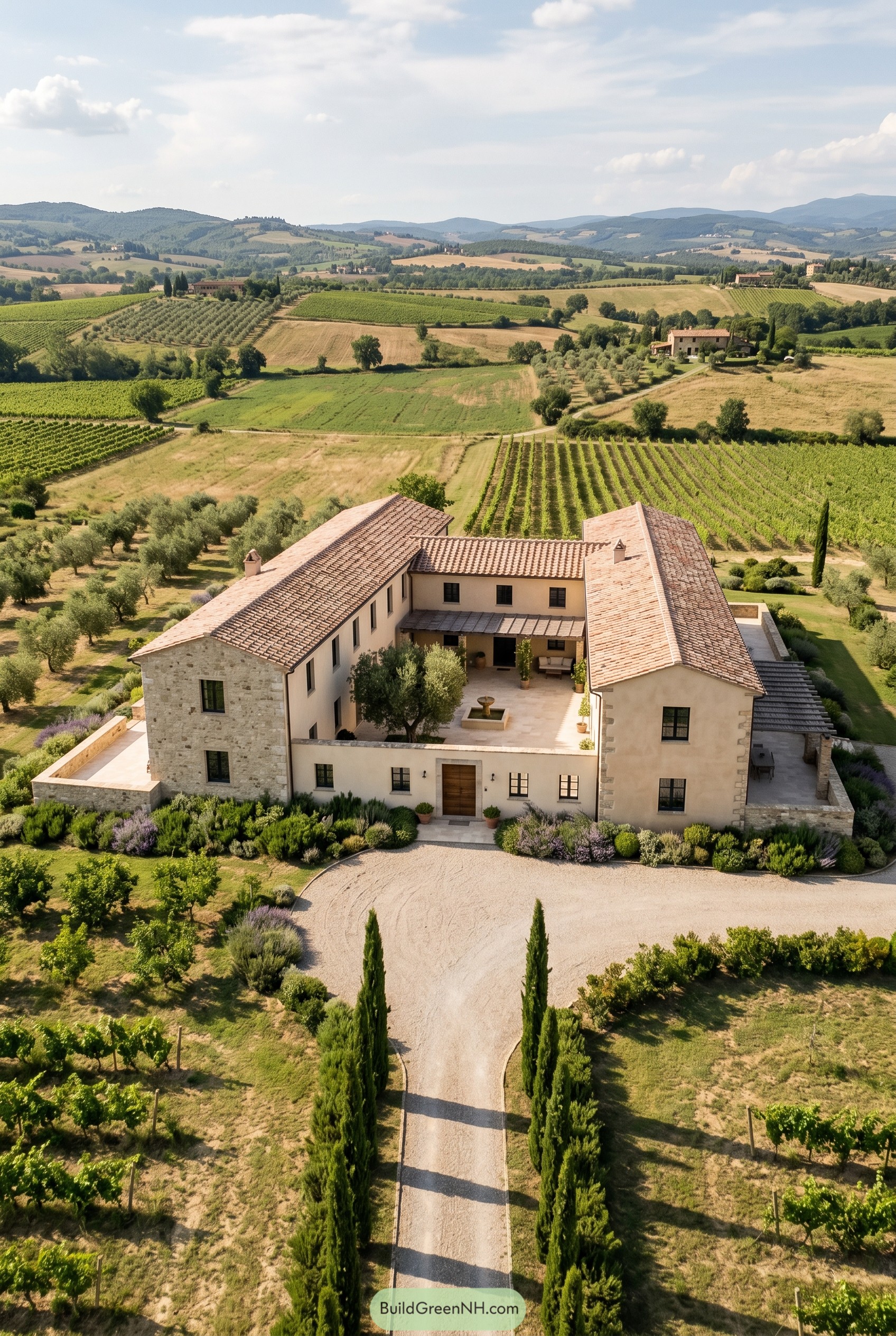

Shaped as a calm U around a stone paved court, this house pairs pale plaster walls with rough stone end caps and long clay tile roofs that sit easy in the vineyard landscape. We borrowed the idea from old Tuscan farm compounds, then tightened the lines and tucked the main entry inward, because a big house does not need to show off before lunch.
The cypress lined drive and low garden walls give the approach a bit of ceremony, while the little fountain and olive tree in the court keep it warm and lived in. Side terraces stretch the rooms toward the views, and the simple window pattern helps the whole composition feel settled, generous, and not one bit fussy.
Bridgeview Parterre Masseria
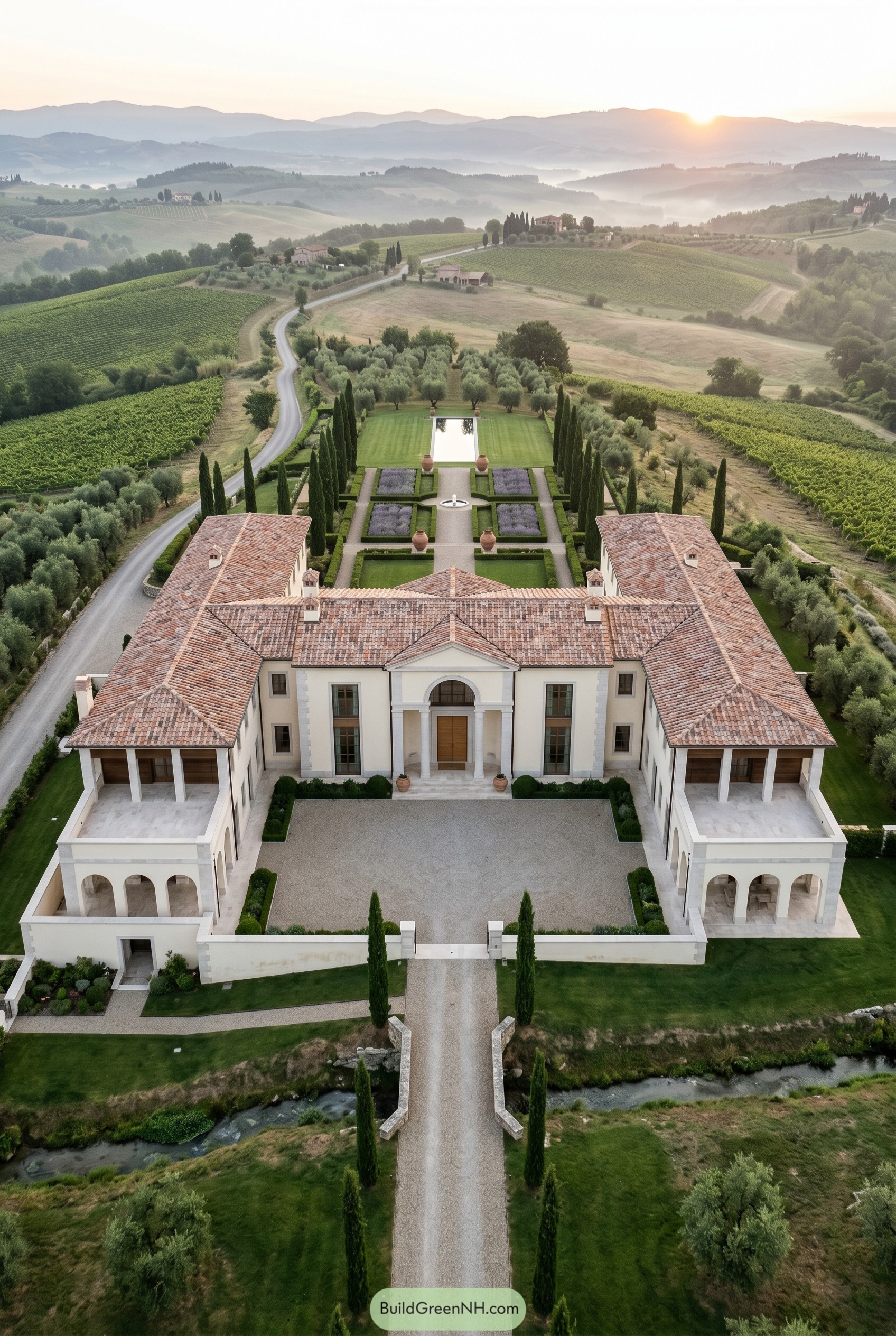

Set behind a little bridge and a perfectly straight approach, this sprawling masseria leans into symmetry with real confidence, like it knows exactly where to stand. The central portico gives the entry a calm sense of ceremony while the long side wings and arcaded corners spread the footprint low across the hill instead of piling it sky high.
Out back, clipped hedges, cypress rows, lavender panels, and a narrow reflecting pool stretch the main axis deep into the vineyard setting, which is very Tuscan and a bit show off in the best way. Terracotta roofs, pale stucco walls, and stone trim keep the whole composition tied to regional tradition, but the scale is generous enough to feel like a modern country palace.
Sinuous Vineyard Eyrie
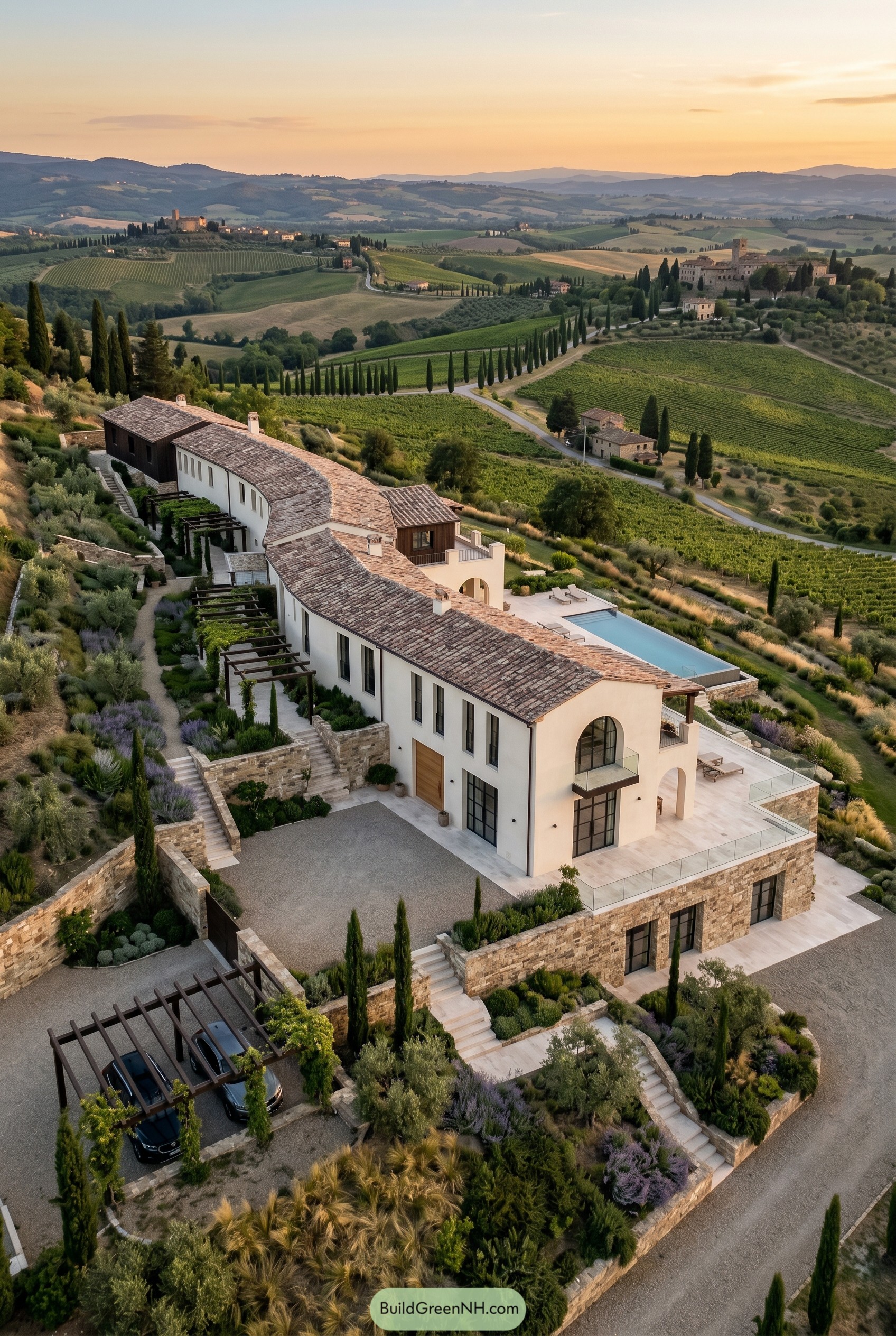

This villa bends with the hillside in one long sweep, pairing creamy plaster walls and weathered roof tiles with stone terraces that feel rooted to the slope. The layout seems inspired by vineyard contour lines and old Tuscan hamlets, only cleaner and a bit less interested in being fussy.
Deep pergolas, arched openings, and broad outdoor platforms pull daily life toward the valley, while the pool sits at the edge like it knows exactly where the best seat is. Layered retaining walls, clipped planting, and a tucked lower level keep the large footprint calm, so the house feels expansive without turning into a small village by accident.
Harvest Vale Enclave
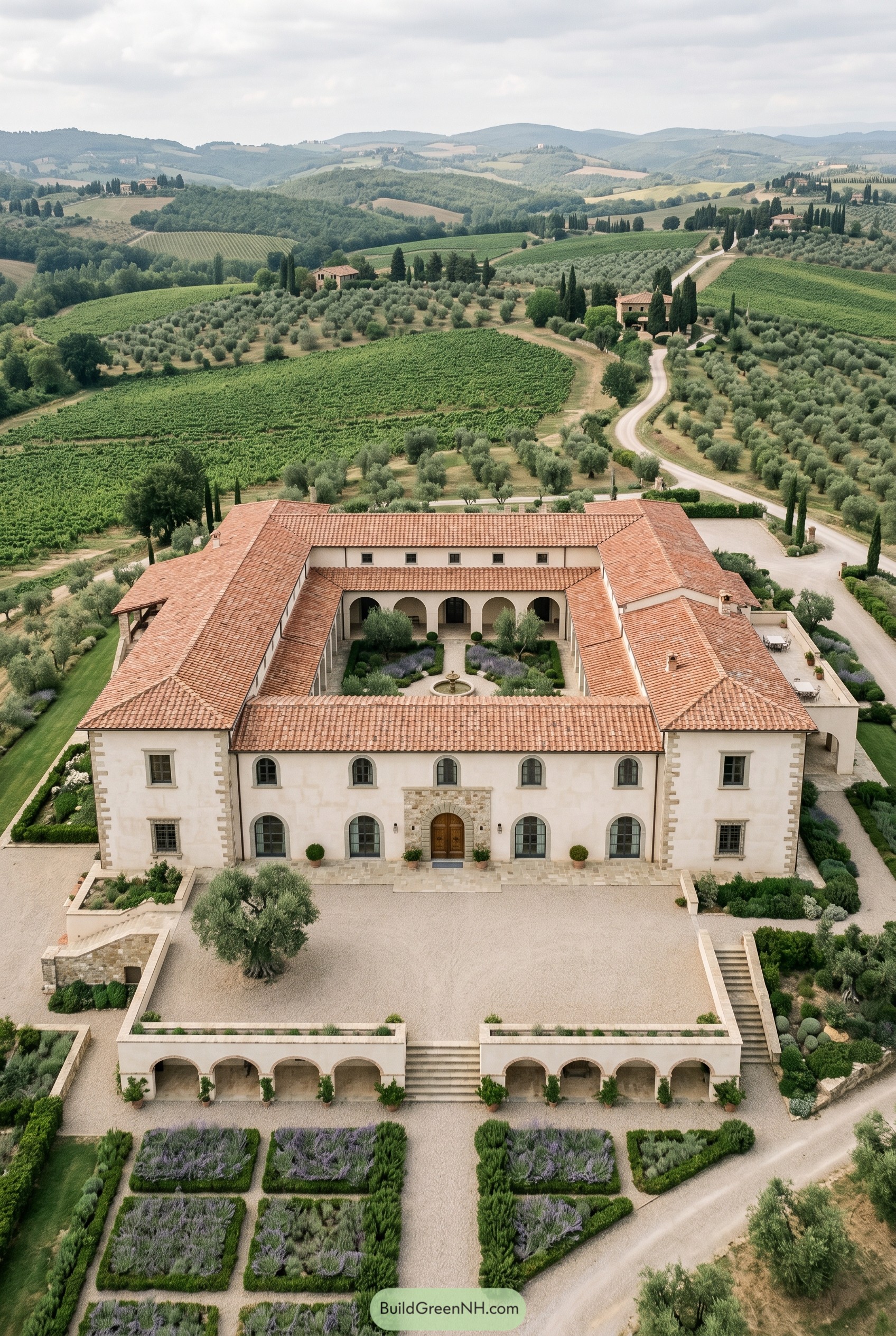

This sprawling villa is shaped around a square inner garden, with deep arcades and a continuous terracotta roof that makes the whole composition feel settled and serene. The inspiration comes from old rural compounds in the Tuscan hills, but the layout is far more polished, like a monastery that discovered landscaping and got a little smug about it.
The stone entry portal gives the main facade a grounded focal point, while the stepped forecourt and clipped planting pull everything into a clear central axis. Inside the court, lavender borders, olive trees, and a small fountain soften the scale, which matters in a house this large because nobody wants elegance to feel bossy.
Pondside Portico Manse
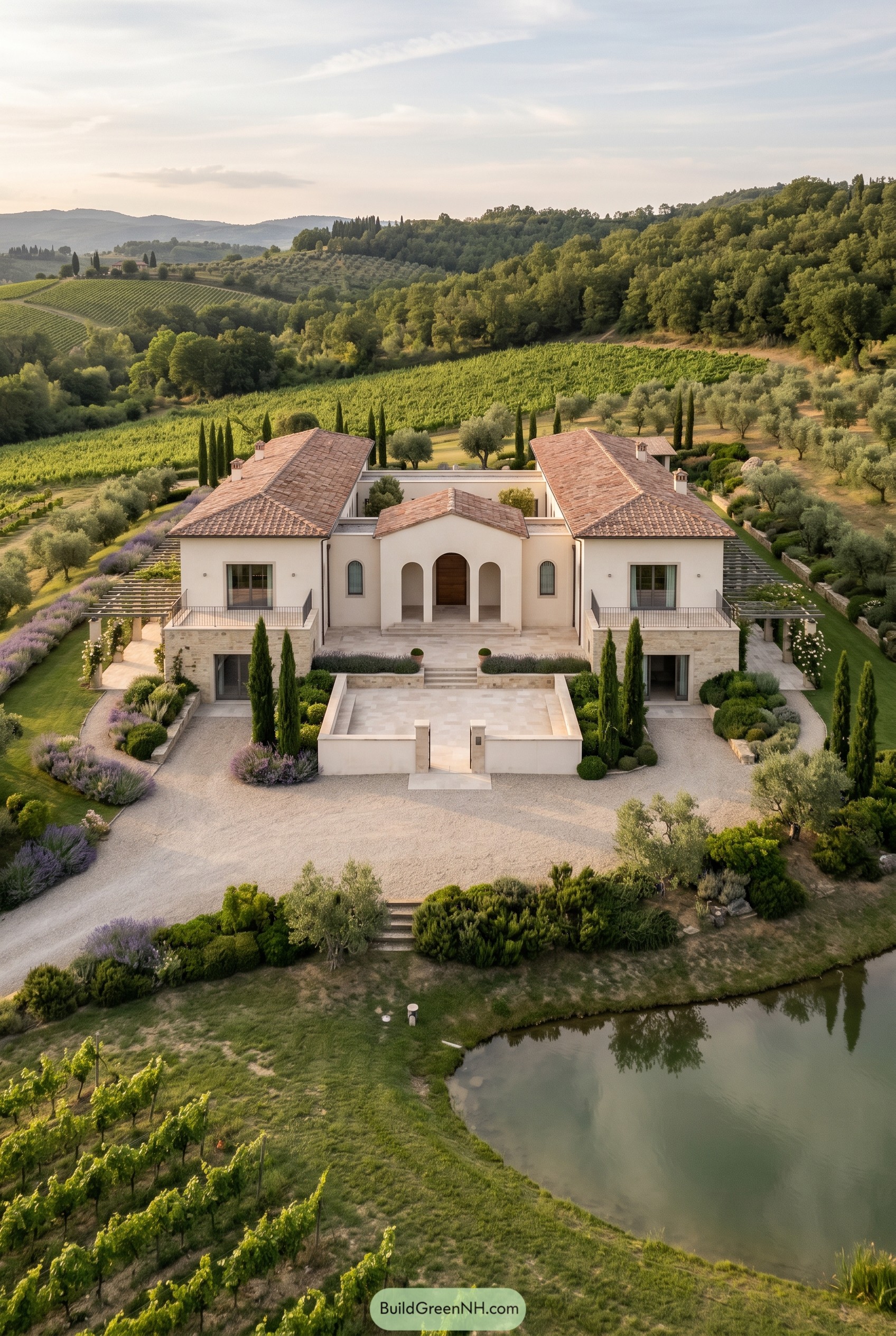

This design pairs a crisp central portico with two broad wings, giving the house that calm balanced stance Tuscany does so well. Pale stucco, warm tile roofs, and a stone base keep it rooted in the countryside, while the cleaner lines stop it from feeling like it borrowed a costume.
Pergolas stretch from the lower terraces and soften the edges, which matters on a house this large because nobody wants a mansion that feels bossy. The cypress framed forecourt, clipped shrubs, and lavender bands pull the whole composition together, and the pond in front gives it that little extra swagger.
Hemicycle Garden Tenuta
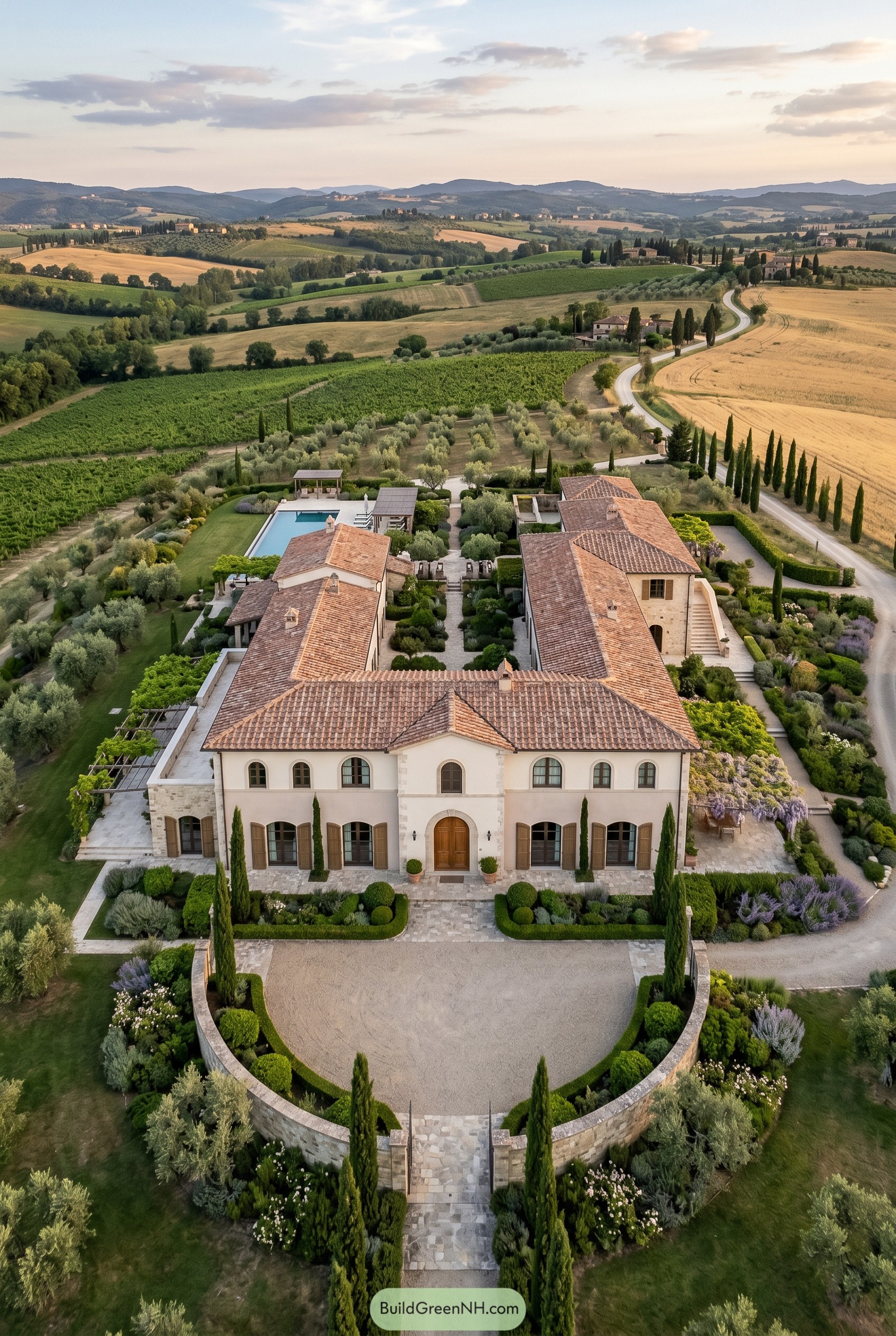

This tenuta is organized on a clear central axis, with a stately front block, long side wings, and a garden court tucked neatly in the middle. It nods to old Tuscan monasteries and rural estates, but it never feels stiff, which is nice because big houses can get a little bossy.
Pale stucco walls, stone surrounds, and terracotta roofs help the whole composition sit naturally in the hills, while the arched openings soften all that symmetry. The curved entry court is the clever move here, giving the approach a ceremonial feel without getting too fancy about it.
Rampart Pergola Villa
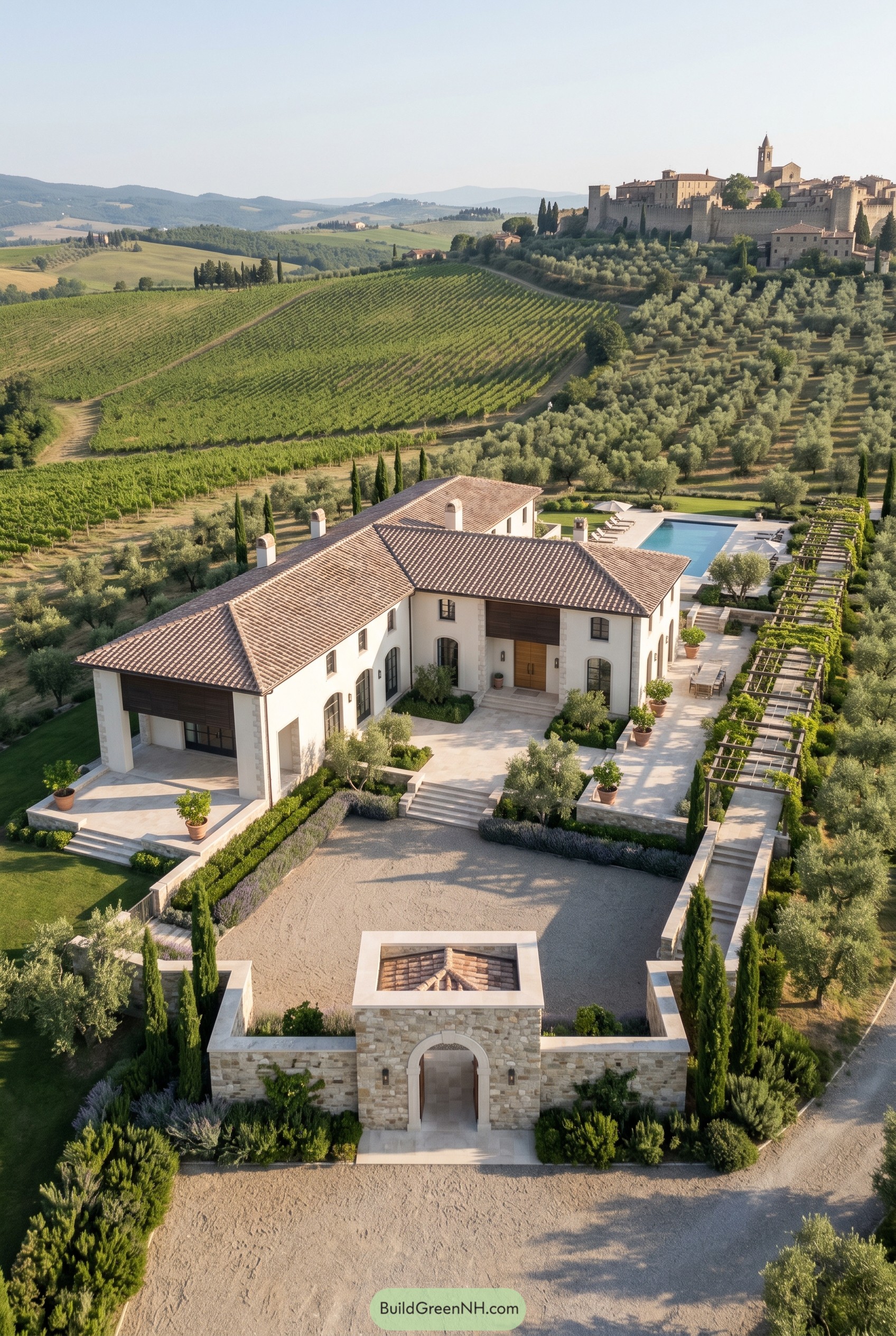

The plan wraps a calm entry court behind a stone gate, then opens to long vineyard views with a pergola terrace and a slim pool just off the main wing. We shaped it with cues from old hill towns, because a big house feels nicer when it does not act too fancy about it.
Pale stucco walls, low tiled roofs, deep loggias, and clipped gardens keep the scale elegant instead of a bit bossy. Olive groves and cypress rows frame every approach, so the whole place lands somewhere between polished retreat and very spoiled farmhouse.
Switchback Summit Villa
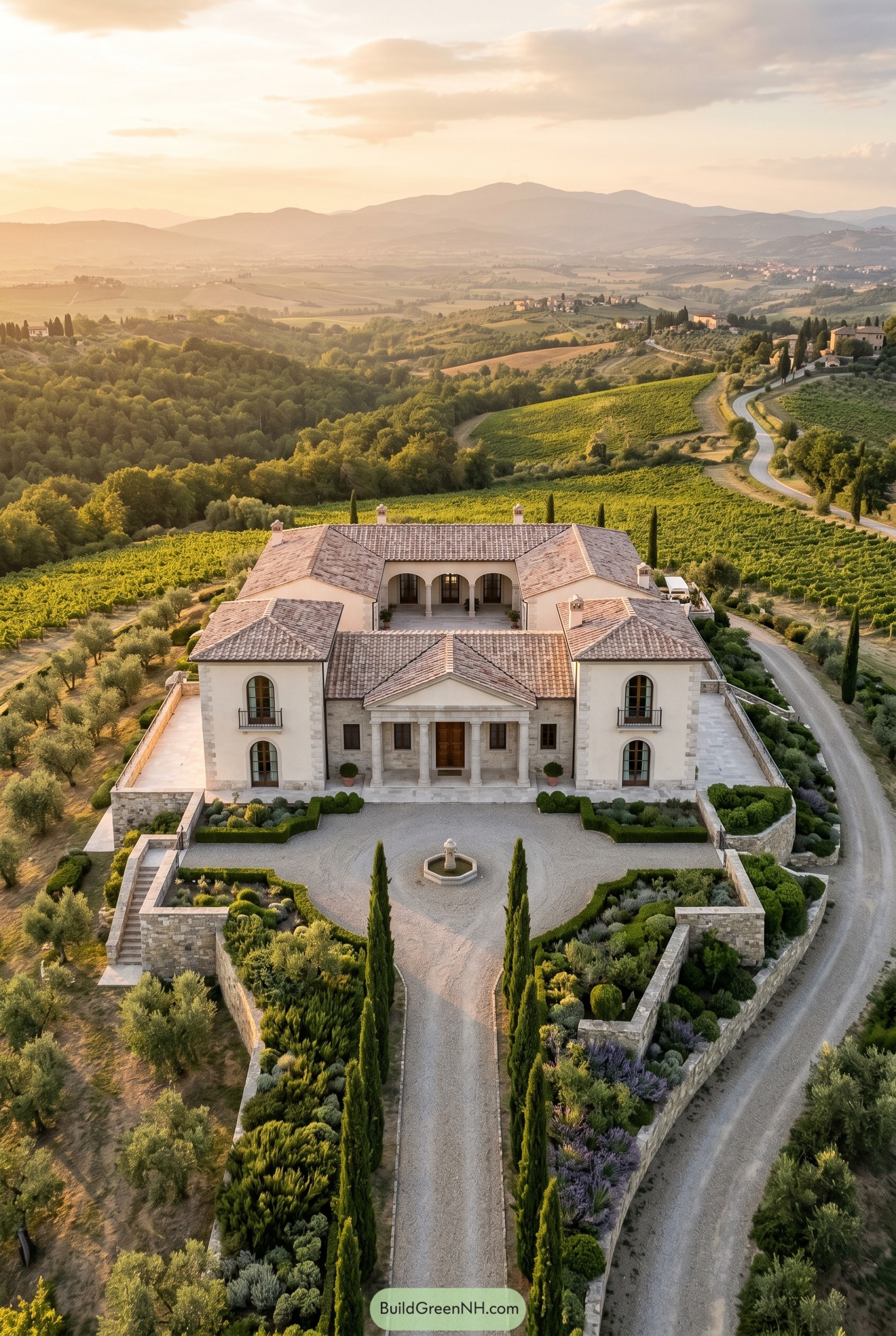

The villa sits like a calm anchor above the vines, with a perfectly balanced facade, pale stucco walls, and layered tile roofs stepping out from a columned entry. That symmetry is a big deal here because it gives the house polish and presence without making it feel too fancy for its own boots.
A raised inner loggia suggests an old Tuscan court house reworked at a grander scale, while the gravel forecourt, small fountain, and clipped garden walls make the approach feel wonderfully ceremonial. Cypress lines, olive trees, and chunky stone terraces help it settle into the hillside so naturally, it almost looks like the road curled up there just to admire it.
Lunette Ridge Lodge
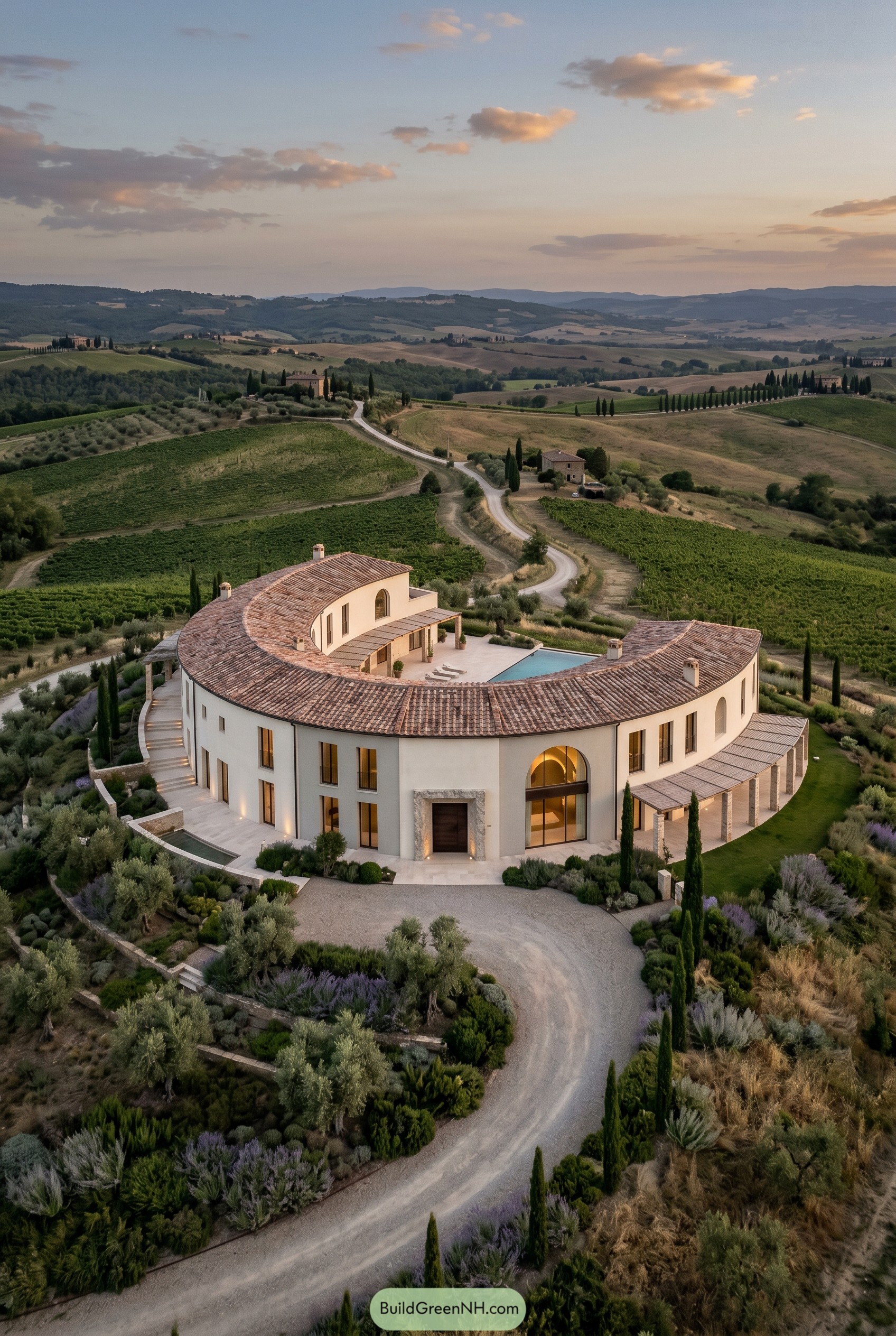

This villa wraps itself around a quiet courtyard in a broad crescent, giving every main room a front row seat to the pool and the rolling hills beyond. We took cues from old Tuscan farm compounds and a bit of amphitheater geometry, so the house feels protective without getting stiff about it.
Pale stucco walls, terracotta rooflines, and long shaded porticos keep the silhouette rooted in the region, while the sweeping plan makes the approach feel almost cinematic, in a good way. The curved form also calms down a very large footprint, which is useful because big houses can get a little bossy, and this one settles into the landscape instead.
Pin this for later:
Want More?
 20 Lovely Family Hamlet Layouts With a Heart at the Center
 20 Chinese Style Houses You’ll Love
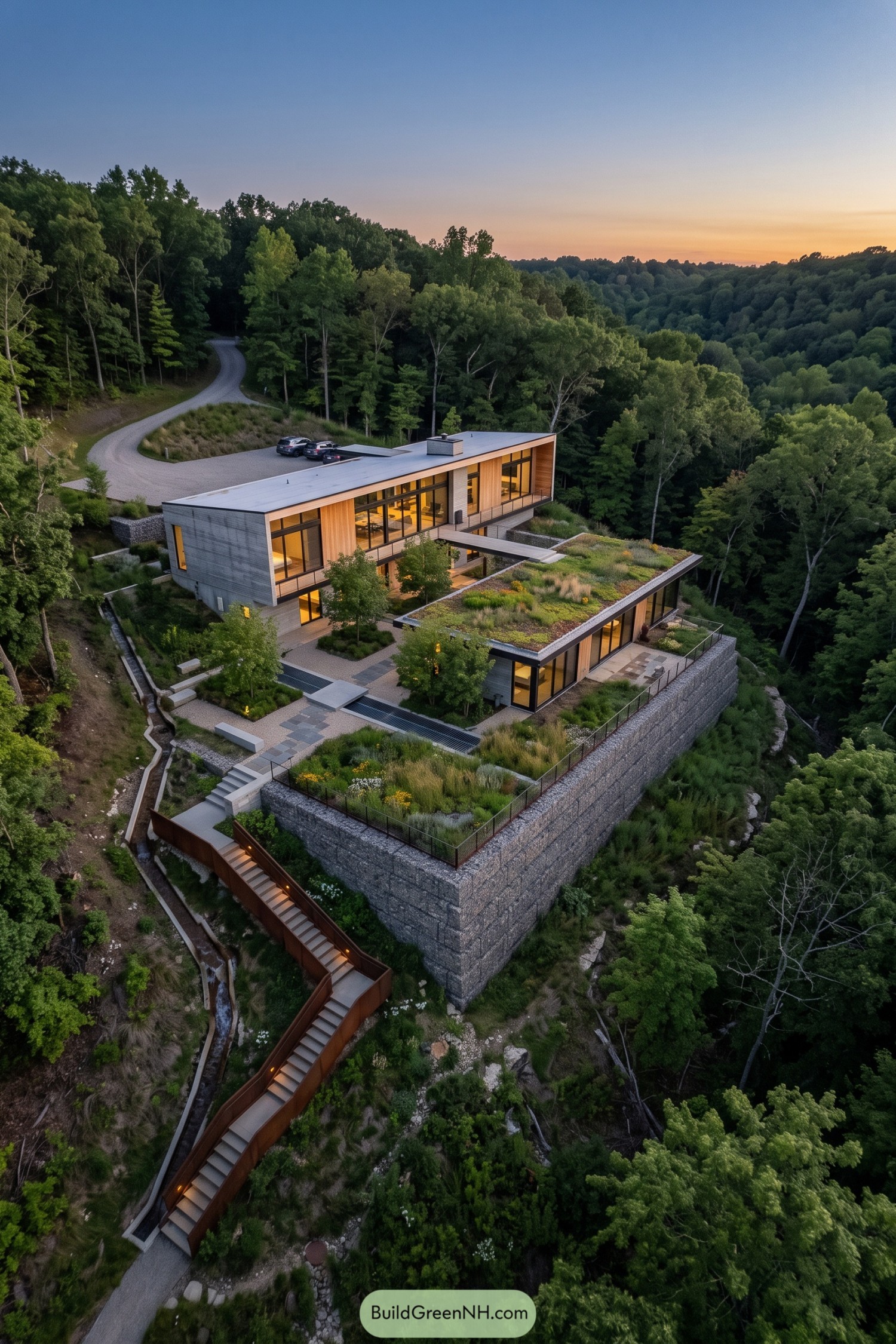 20 Inspiring Hillside Homes for Gardens Above the Clouds
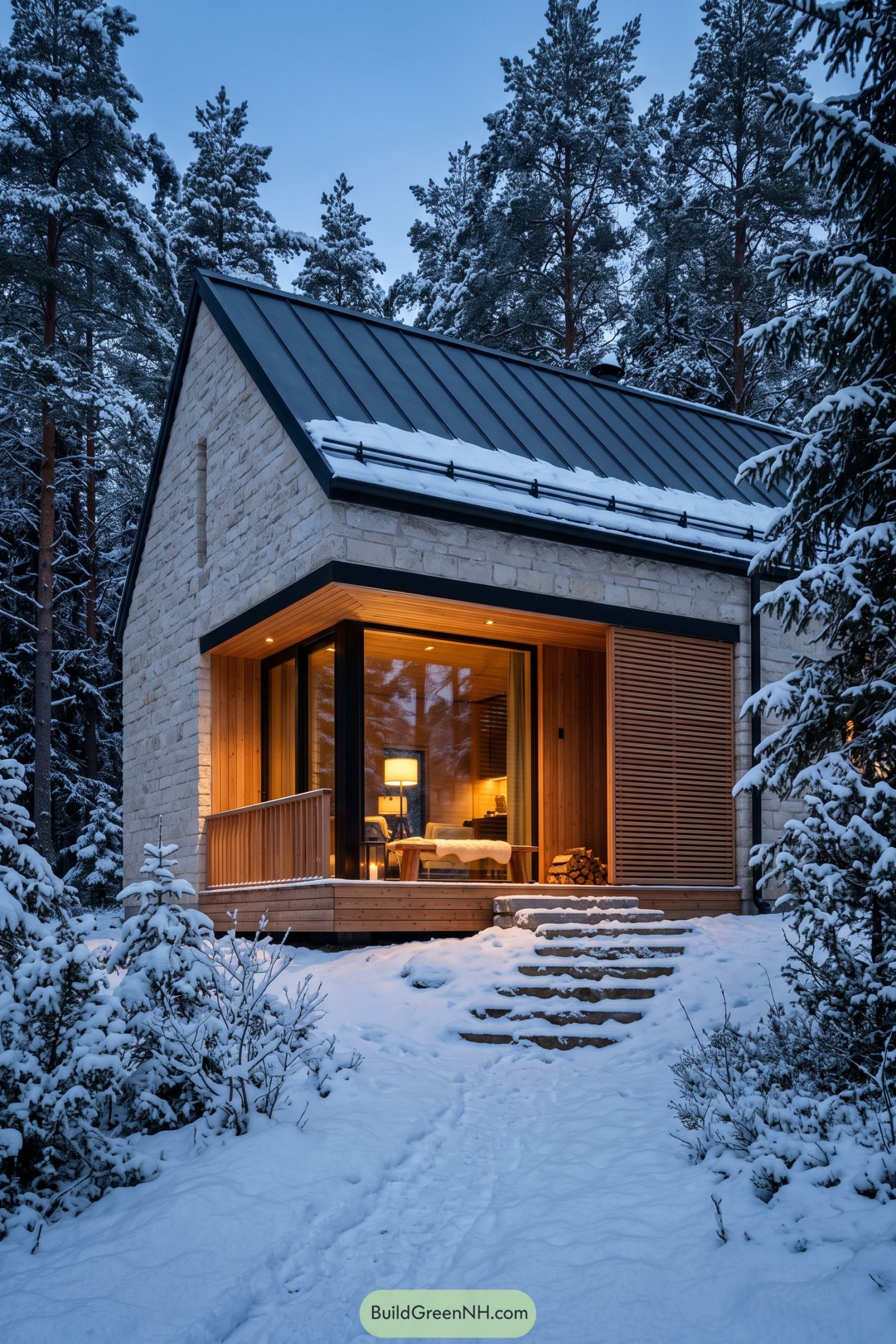 20 Stone and Wood Houses Where Two Materials Do All the Work
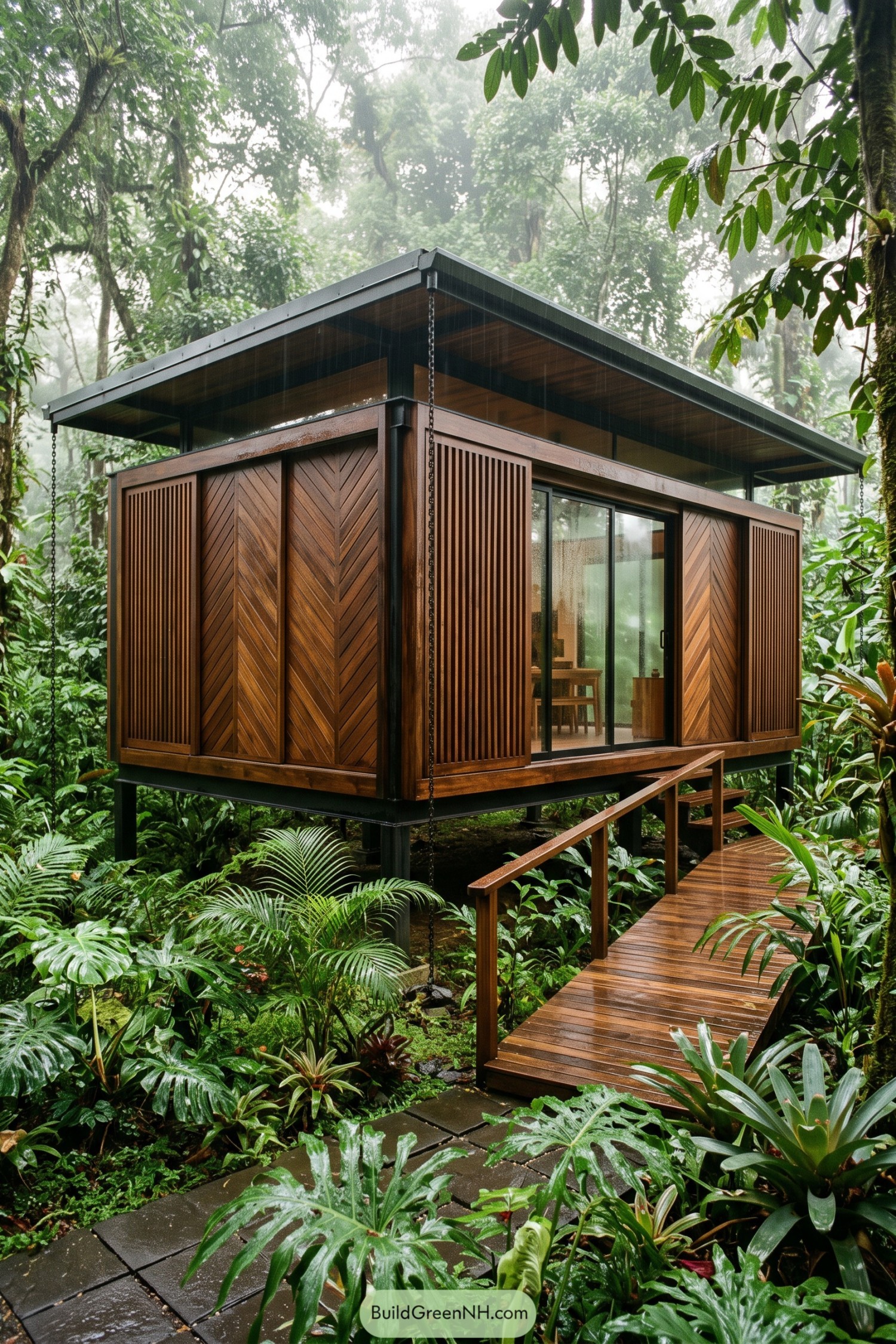 20 Ingenious Timber Houses with Adjustable Facades
Table of Contents