Last updated on · ⓘ How we make our designs
Not to brag (ok, just a little), but our modern Japandi houses show how a combo of Wabi-sabi and Hygge can make a home feel calmer than a very expensive candle.
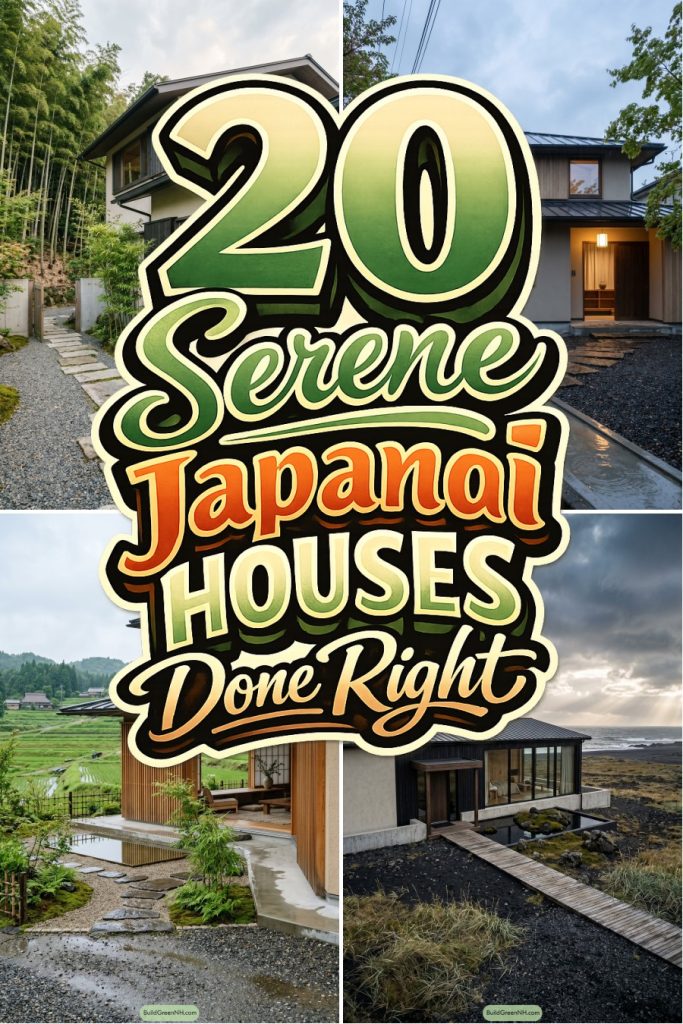
These Japandi houses show what happens when calm design meets places with a bit of personality, from pine forests and black sand coasts to rice terraces and snowy courtyards. We pulled from Japanese farmhouses, tea gardens, street houses, and Nordic cabins, then kept shaving things back until the homes felt settled, not stiff.
As you go through them, pay attention to the rooflines, deep eaves, timber screens, and those quiet entries that make coming home feel nicer than it really has any right to. The paths, boardwalks, reflecting pools, and tucked courtyards matter too, because a good approach can calm you down faster than a very expensive candle.
What we like most is how each house listens to its site, whether that means opening a glass corner to the peaks, hiding behind garden walls, or sitting low against a windy bluff like it knows better. They stay simple, warm, and relaxed, which is handy when the view is already showing off.
Forest Edge Japandi Retreat
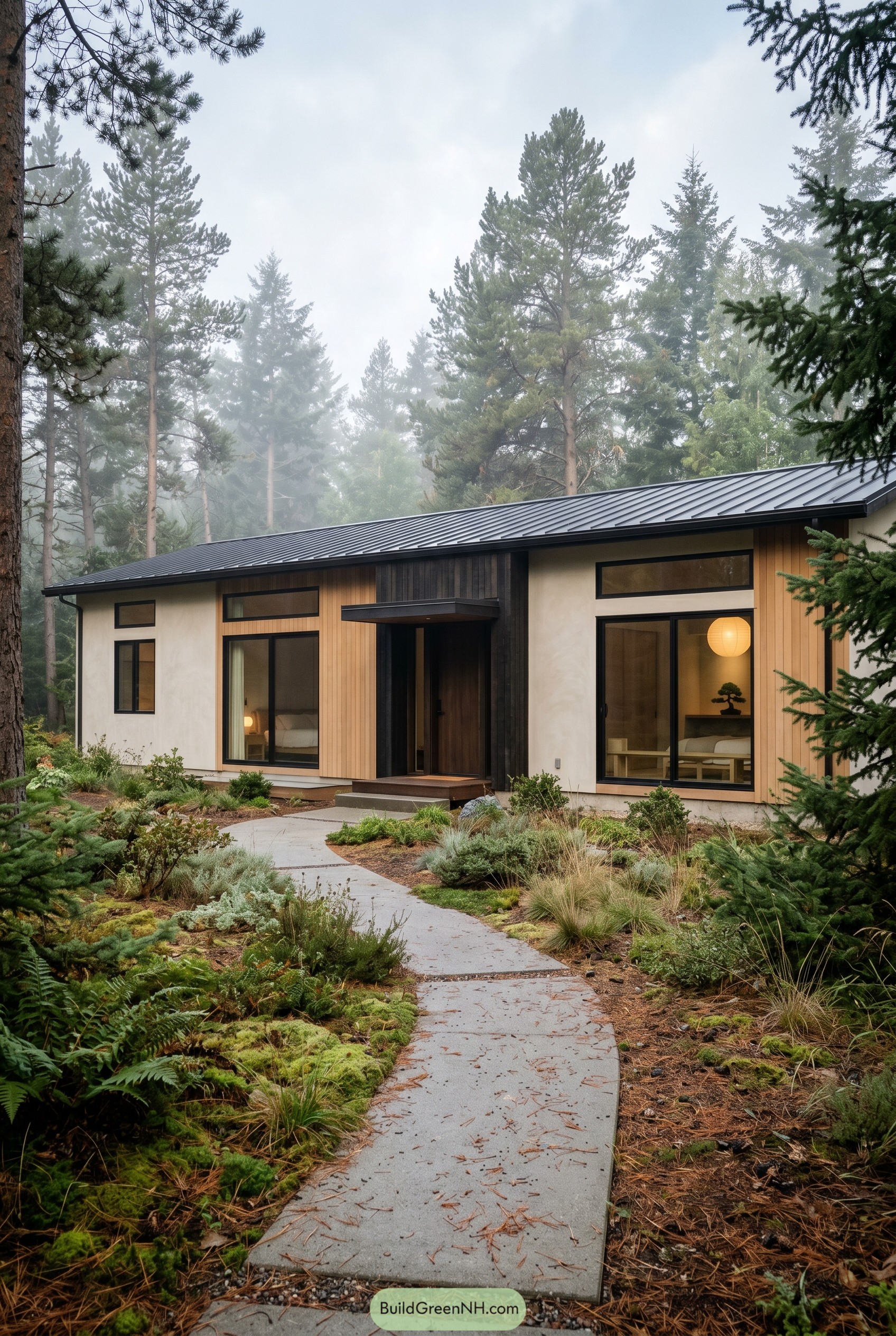

The low roofline sits quietly beneath the pines, and the black metal roof gives the whole composition a crisp outline even in the fog. Creamy stucco, pale vertical wood, and dark trim keep the facade warm and pared back, with just enough contrast to keep it from feeling sleepy.
Large sliders and slim upper windows open the rooms to the garden while keeping the exterior clean and calm, which is very Japandi and very easy on the eyes. The entry is tucked under a neat canopy and reached by a gently curving path, a small move that makes coming home feel relaxed and thoughtful, like the house already knows you need a minute.
Saltgrass Shoreline Sanctuary
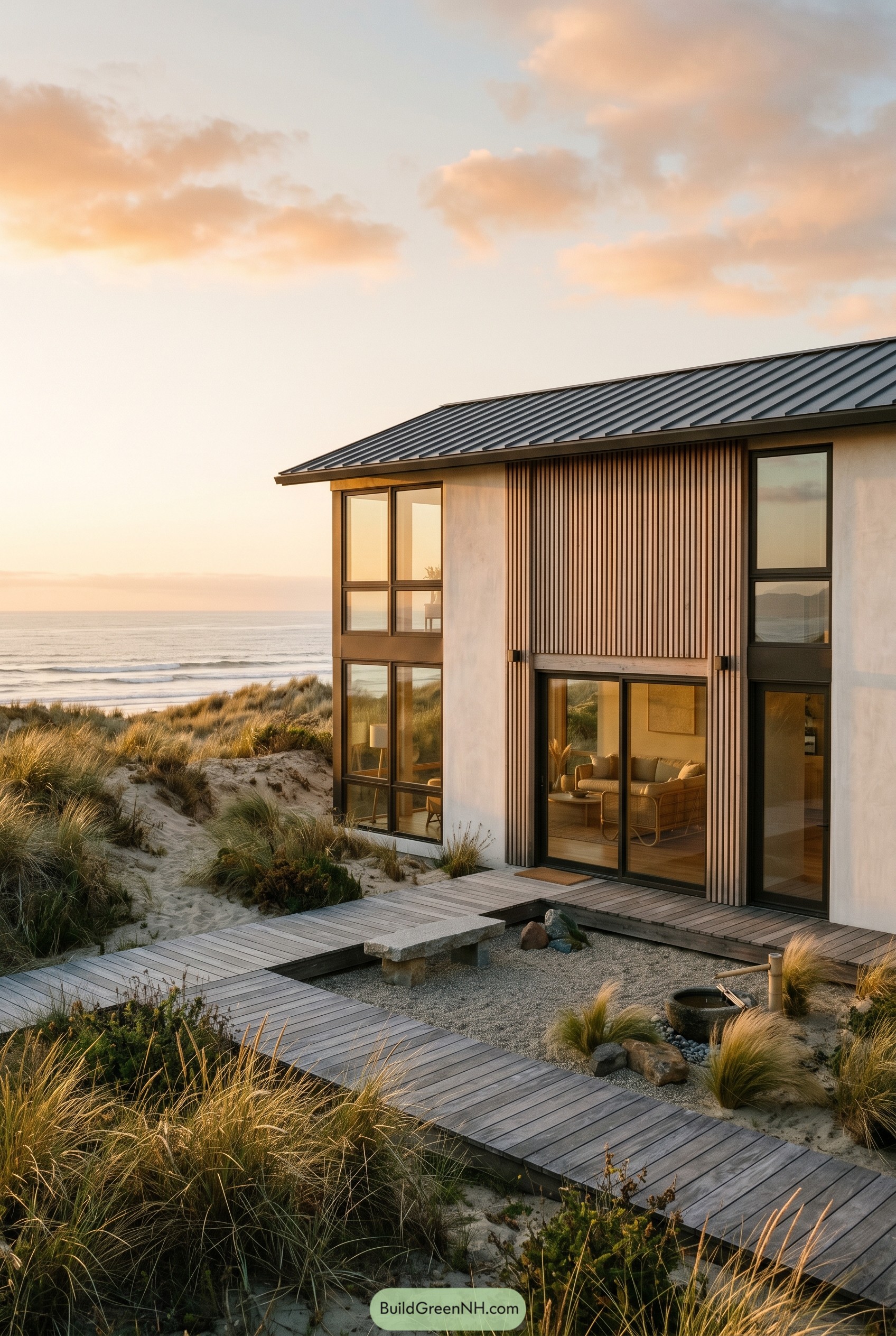

Set into the dunes with a calm two story form, the house pairs crisp plaster walls with vertical timber slats and a dark metal roof that keeps the profile neat and grounded. Big black framed openings pull the sea close, while the boardwalk and gravel court give the entry a quiet ritual instead of a grand fuss.
The design feels inspired by coastal cabins and Japanese restraint, softened with Scandinavian warmth inside where low woven furniture and pale wood keep things easy and unfussy. The stone basin and simple bench are smart little moves, because they turn a windy patch of sand into a pocket garden that feels serene, not precious, and just a tiny bit smug.
Alpine Stillness Pavilion
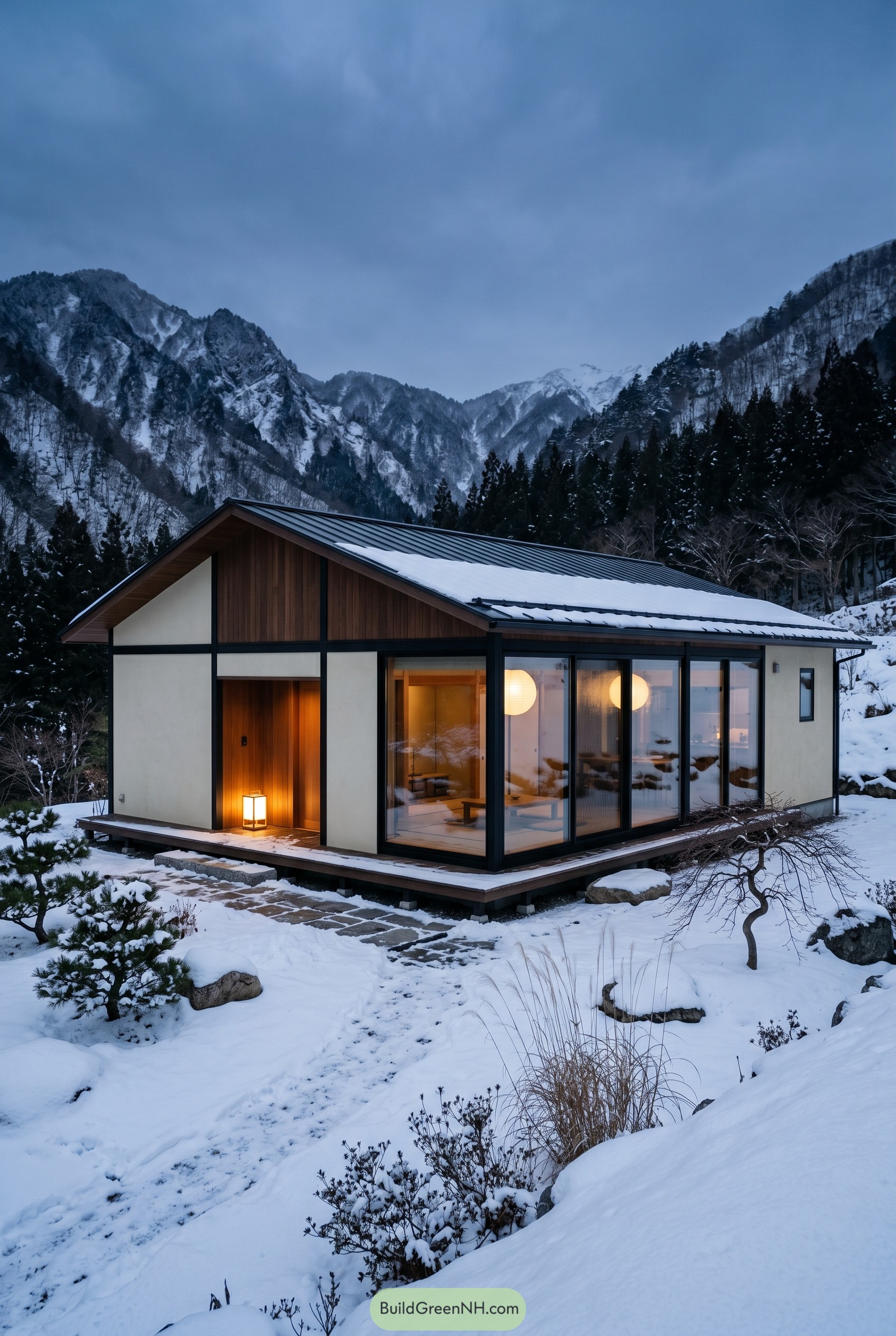

The low gabled form keeps things calm and grounded, blending alpine cabin cues with the neat restraint of a Japanese country home. Cream render, dark framing, and warm cedar under the eaves give it that snug look that says boots off, you know the rules.
The deep roof edge and raised timber deck help the house sit neatly above the snow, while the broad glass corner opens the living area to the peaks without getting fussy. I love the tucked entry and round paper lantern glow inside, because they soften the crisp lines and keep the whole design from feeling too serious.
Rice Terrace Eaves House
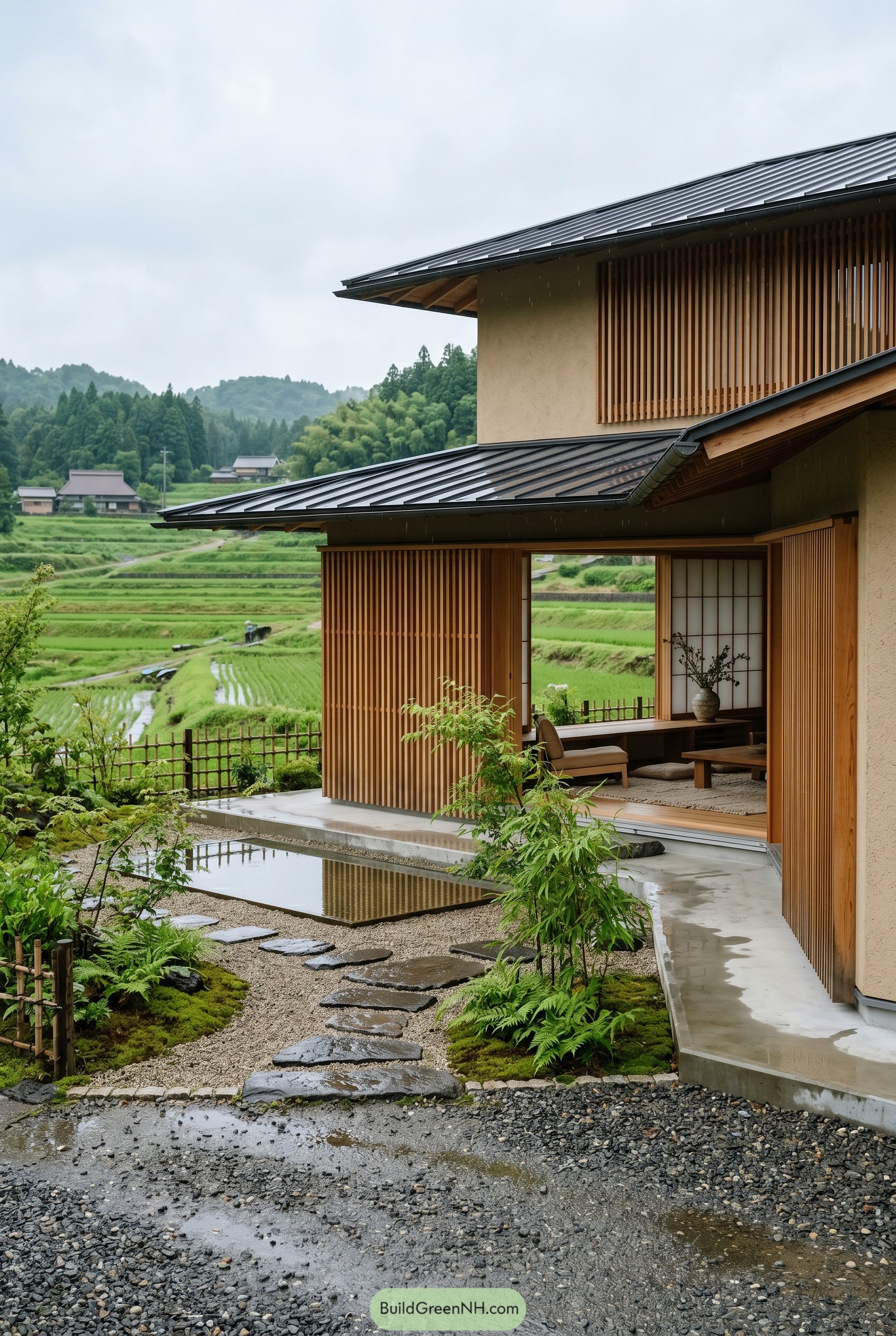

The broad dark roof and warm timber screens tuck this Japandi home into the rice terraces like it has always belonged there. We pulled from rural Japanese farmhouses and pared it back with a Nordic calm, so the whole place feels settled and a little stubborn in the best way.
Sliding openings connect the sitting room to the stone path, reflecting pool, and mossy garden, which makes rainy weather look almost unfairly pretty. Deep eaves protect the threshold and the vertical slats give privacy without closing things off, a neat little move that keeps the house open yet cozy.
Maple Mist Waterside House
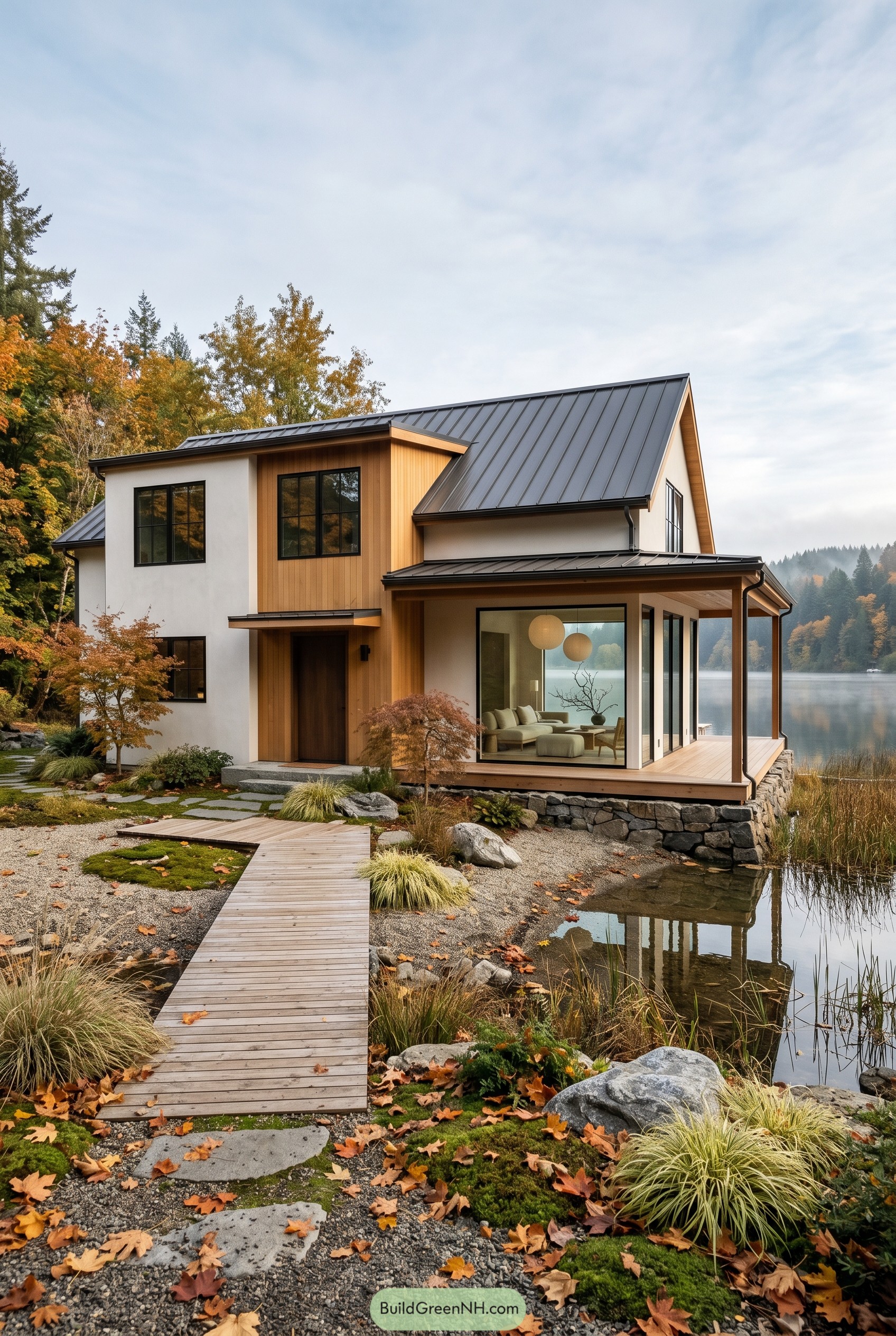



Set right at the water’s edge, this design pairs crisp white plaster with warm vertical timber so the whole house feels calm without getting sleepy. The steep metal roof and clean gables borrow from northern cabin forms, while the deep eaves and pared back lines nod to Japanese restraint, which is a pretty great team up.
What makes it work is how gently it meets the site. A low stone base, wraparound deck, and narrow boardwalk ease the house into the shoreline, and those big corner windows keep the lake close enough to feel like part of the furniture, which is honestly a nice trick.
Lantern Rainwalk House
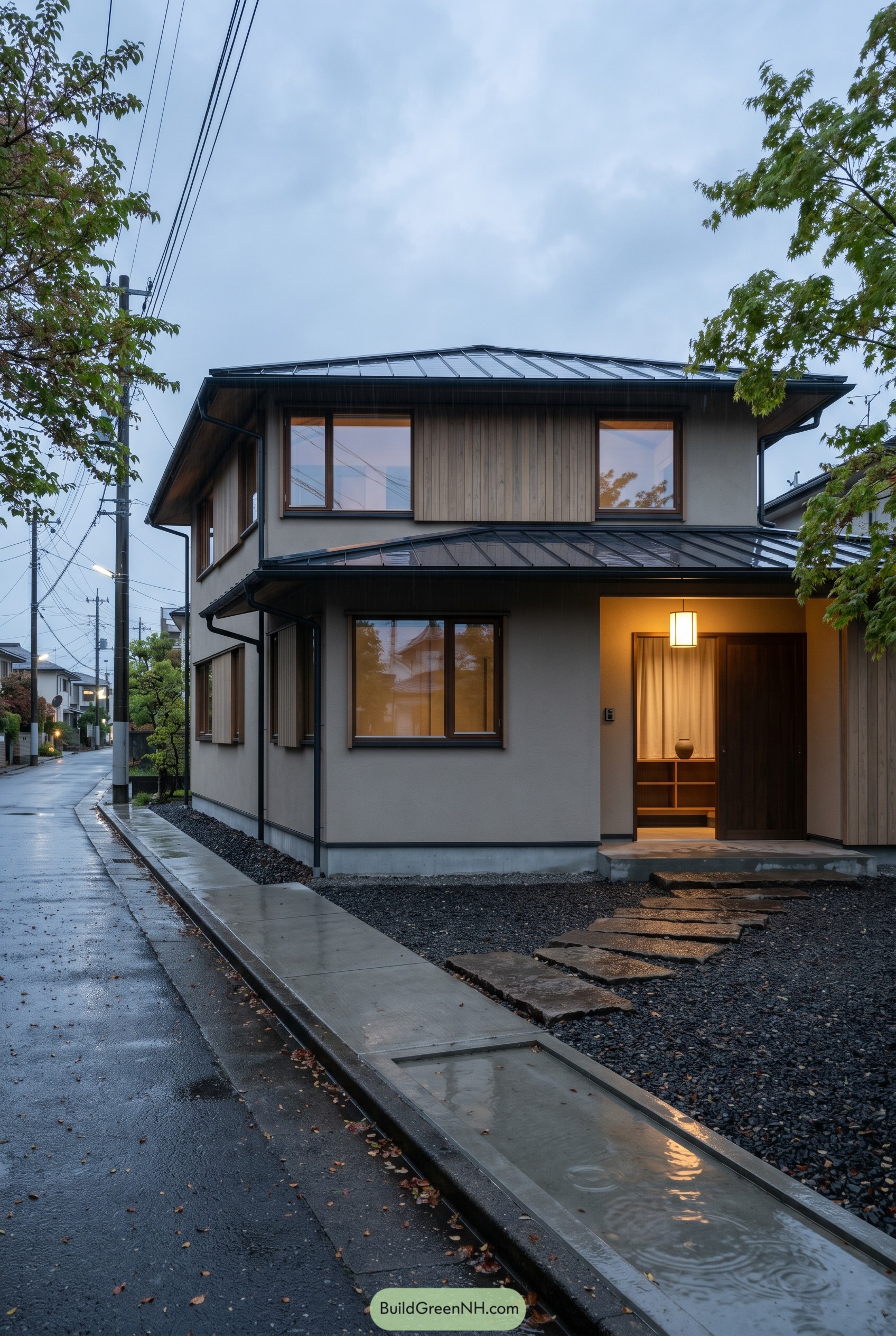

This one leans into neighborhood calm with a low metal roof, soft plaster walls, and bands of cedar that keep the facade crisp but never cold. The sheltered porch glows like a little paper lantern, which is a nice trick on a gray rainy evening.
Its inspiration comes from everyday Japanese street houses and pared back Scandinavian restraint, so the form stays simple and the details stay thoughtful. Deep eaves, dark framed windows, and stepping stones over black gravel make the entry feel grounded and tidy, and honestly, mud has very few chances here.
Wildflower Gable Hideaway
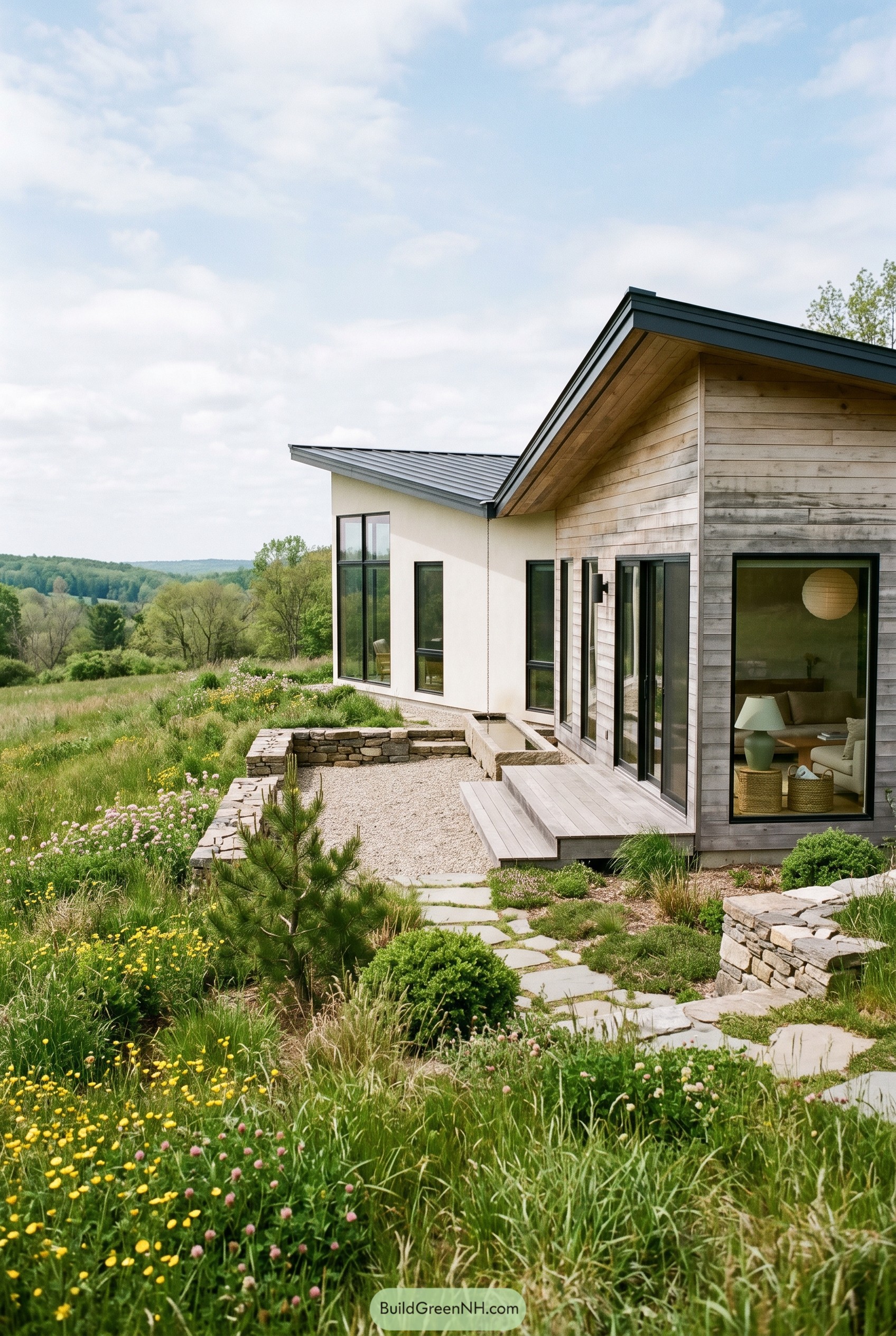

Two offset gable forms borrow from quiet farm buildings and pared back Japanese design, which gives the whole place a calm kind of confidence. Pale timber cladding, white render, and slim black frames keep the exterior clean so the meadow gets to show off a little too.
The gravel court, low stone walls, and stepping path settle the house gently into the slope instead of plopping it there like a box. Big windows and deep eaves open the rooms to the long green views while the small deck and sheltered entry make everyday coming and going feel easy, and a bit lovely.
Bamboo Hollow Tatami Haven
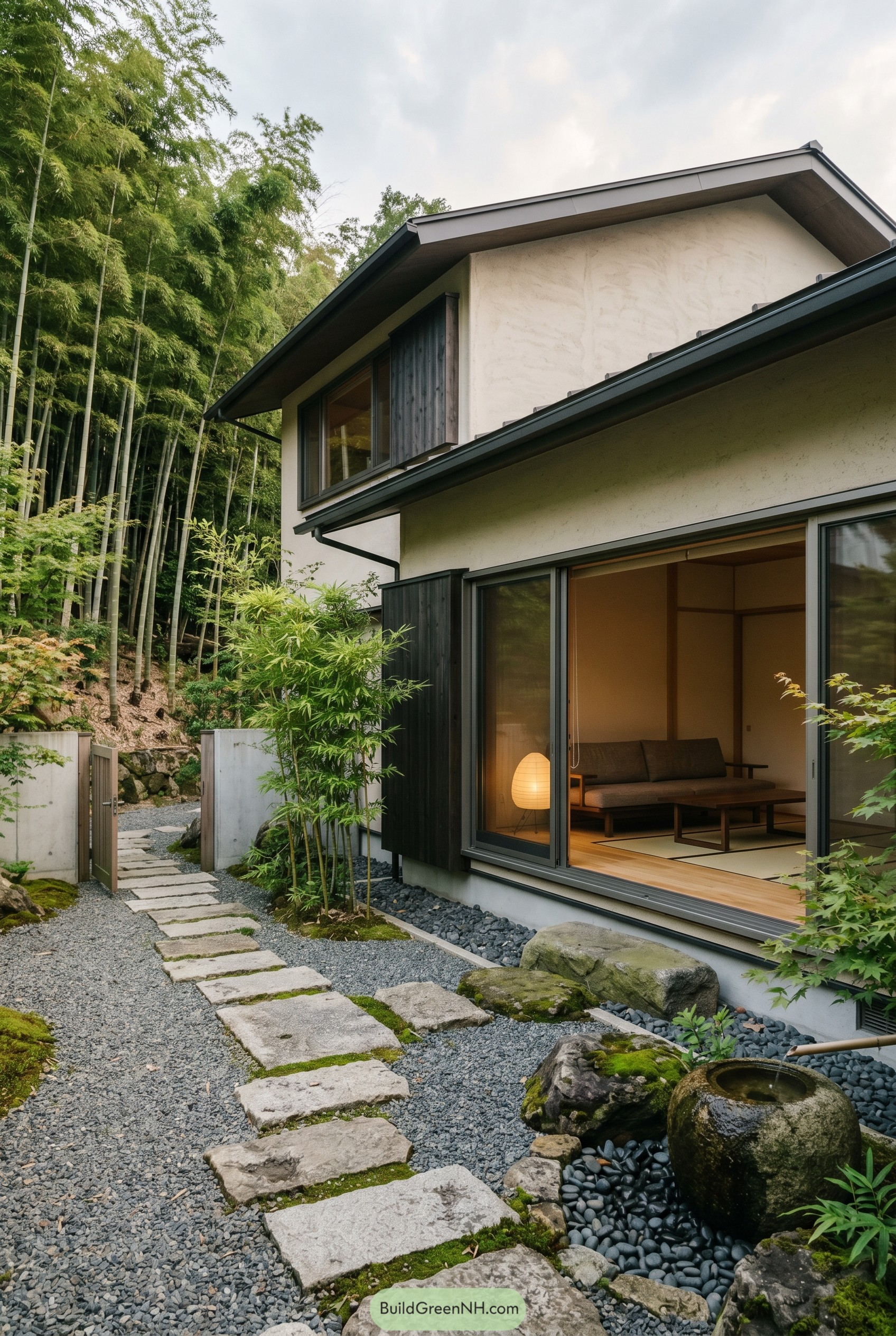

Set against a bamboo grove, this design keeps things calm and beautifully spare with soft plaster walls, dark timber cladding, and broad overhanging roofs that feel grounded without getting bulky. The low lines and deep eaves nod to traditional Japanese homes, while the restrained palette gives it that clean Japandi ease we keep coming back to.
The garden approach is part of the whole mood, with rough stone pavers, black gravel, moss, and a small water basin turning the entry into a quiet little ritual. Inside, the tatami sitting room slides open to the courtyard edge, which makes the house feel bigger, calmer, and frankly a bit better behaved than most of us.
Heather Bluff Storm Cabin
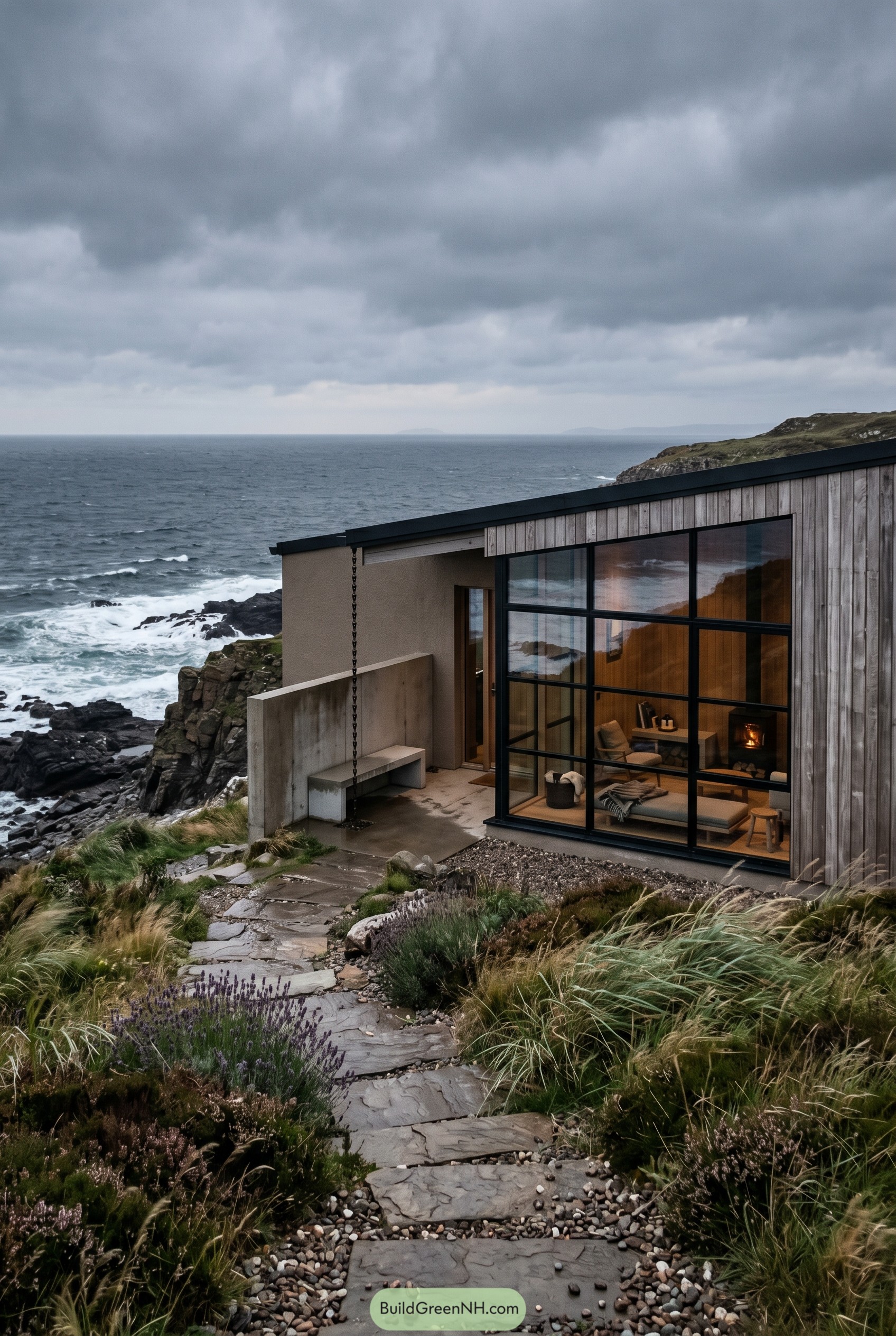

Set low into the bluff, this compact retreat pairs a sharp mono pitch roof with weathered timber cladding and deep black glazing, so it feels tucked in rather than perched on show. The form borrows from wind beaten coast shelters and Scandinavian cabins, which is why it stays calm even when the sea is in one of its moods.
A concrete entry wall and built in bench make a pocket of shelter before the wide window wall opens the living room to the horizon, and that contrast is really the magic here. Inside, warm timber lining, spare furnishings, and a small stove keep everything cozy and clear, because cliffside living is nicer when the house is not trying to be a celebrity.
Quiet Walled Garden Dwelling
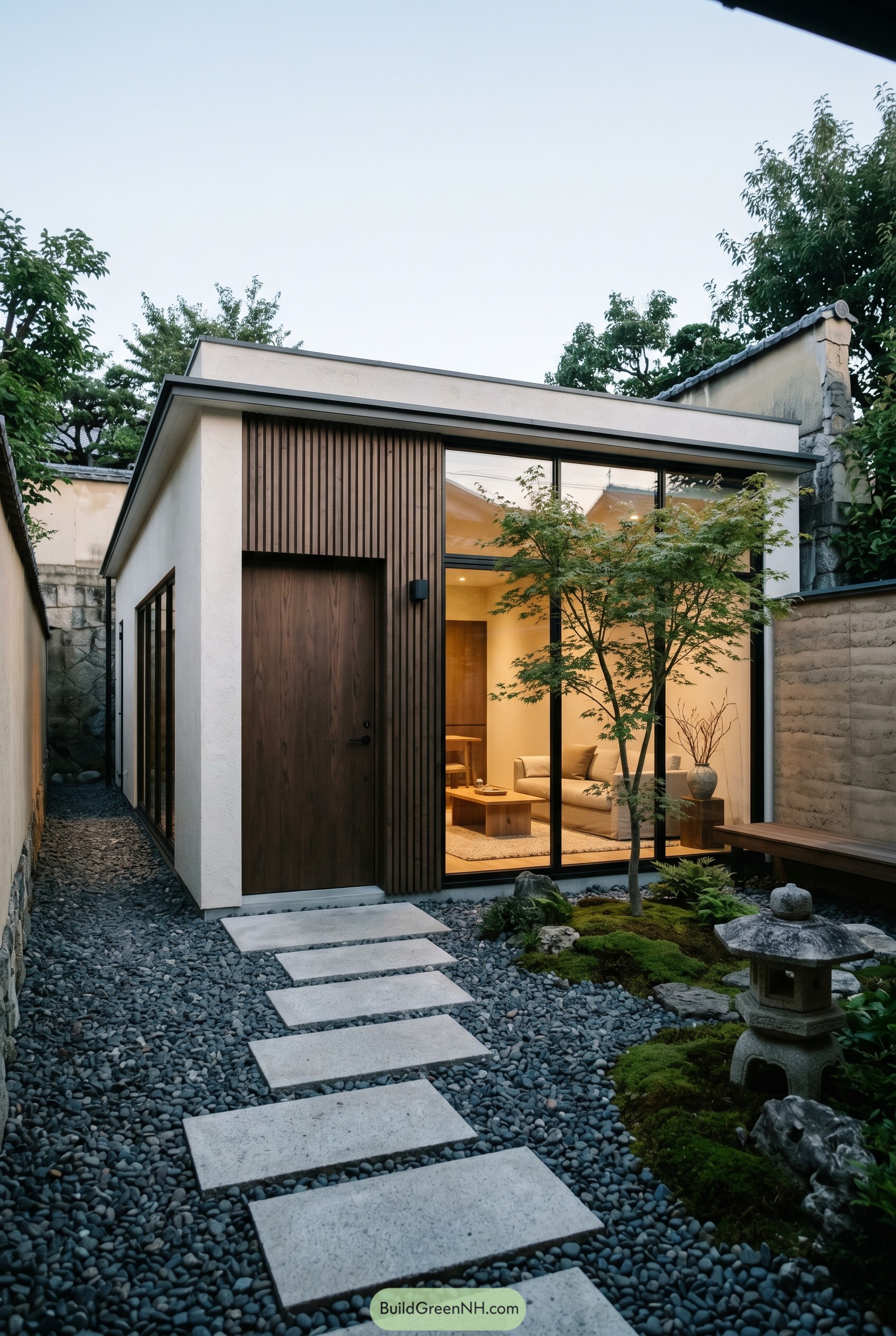

Set behind high garden walls, this compact retreat pairs soft plaster with vertical timber slats and a broad glass facade, so the front feels calm instead of showy. We shaped it to echo a tucked away garden house, with gravel and stepping stones that slow you down in the nicest possible way.
The low roofline keeps the form clean and settled, while the warm wood door and simple interior furnishings make the whole place feel grounded and easy. Corner glazing pulls the living space right into the moss and stone garden, and that little lantern ornament is clearly enjoying its moment.
Olive Rill Gable Residence
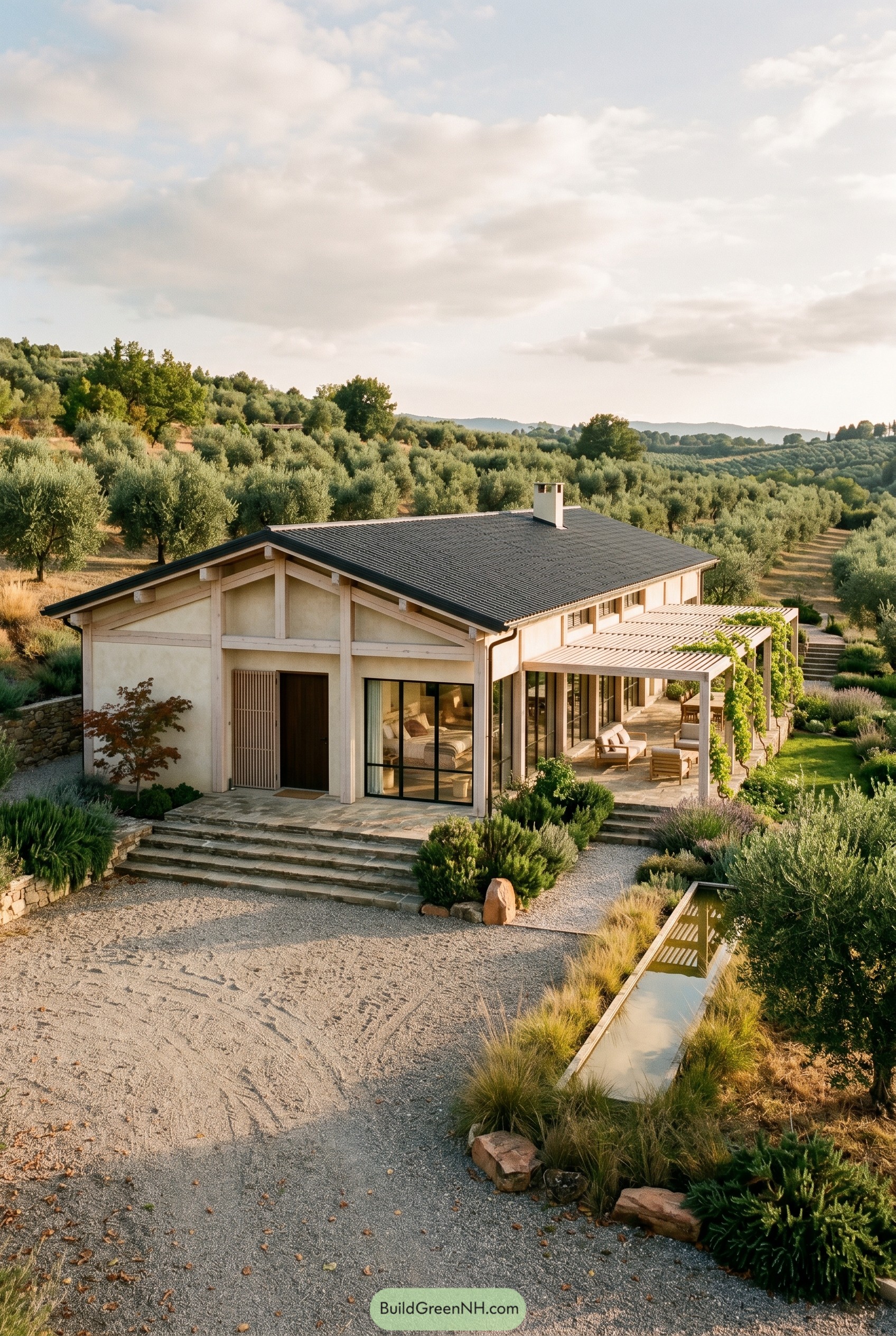

Set into the olive covered slope, this Japandi home borrows the calm outline of a rural farmhouse and trims it down to the essentials. The pale plaster walls, exposed timber frame, and dark low roof keep the profile grounded, which is handy when the view is already showing off.
A long pergola stretches the living spaces outdoors, while the slim water channel, gravel court, and clipped planting give the approach a soft deliberate feel. We shaped the broad steps, screened entry, and deep eaves to make daily movement easy and shaded, so the house feels composed without trying too hard.
Meadow Fog Twinfold Cottage
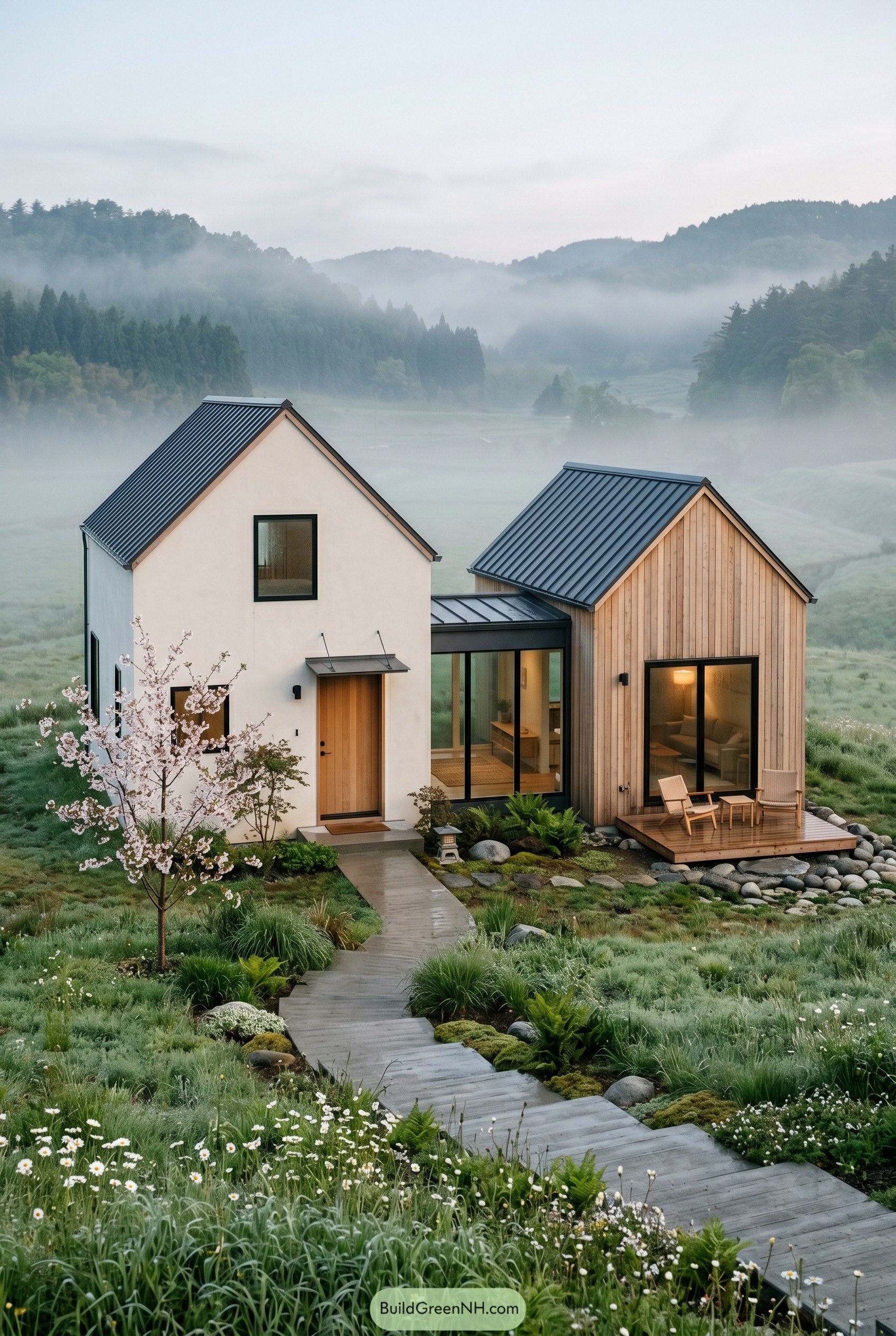

This design pairs two steep roofed volumes, one wrapped in pale plaster and the other in warm vertical timber, with a glazed link joining them so the whole place feels calm and quietly connected. We pulled inspiration from rural field cottages and small Japanese pavilions, which is why the form stays crisp and the palette keeps its cool.
The black metal roofs give the house a neat graphic edge, while the deck, stone border, and soft planting keep it from feeling too polished for its boots. Even the winding walkway helps, easing the approach and making the little cluster feel tucked into the meadow instead of just parked there.
Red Mesa Courtyard House
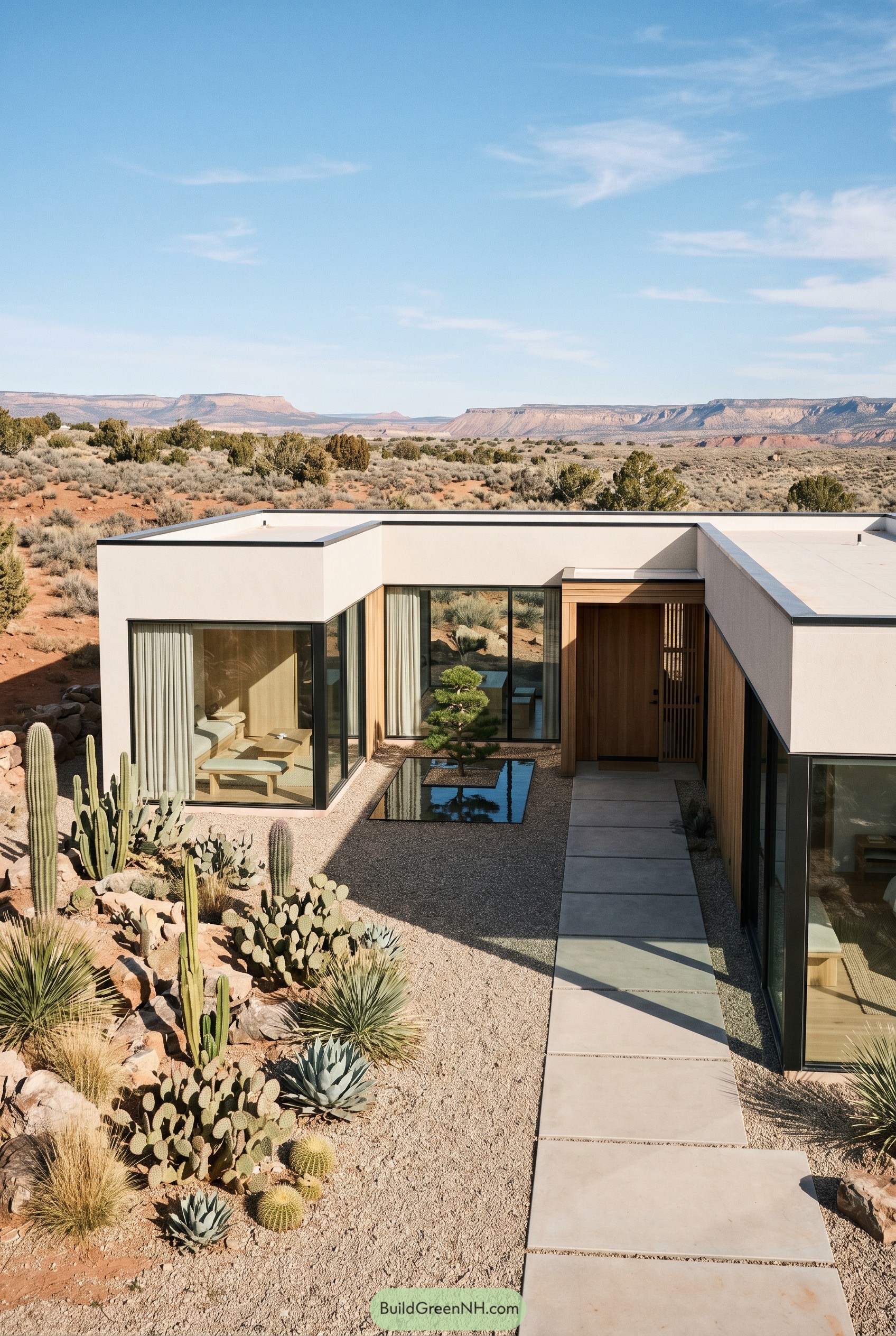

Set low against the red desert, this Japandi home uses a crisp U shaped plan to carve out a sheltered courtyard that feels private without turning its back on the view. The flat rooflines, pale stucco, and warm timber panels keep the composition calm and precise, like the house took a deep breath and decided to relax.
Floor to ceiling glazing wraps the corners so the rooms stay connected to gravel gardens, cacti, and a small reflecting pool with a clipped pine that adds a little wink of Kyoto in cowboy country. That mix matters, because the restrained palette lets the landscape stay wild while the entry walk and shaded recesses make the whole place feel serene, not fussy.
Willow Creek Engawa Home
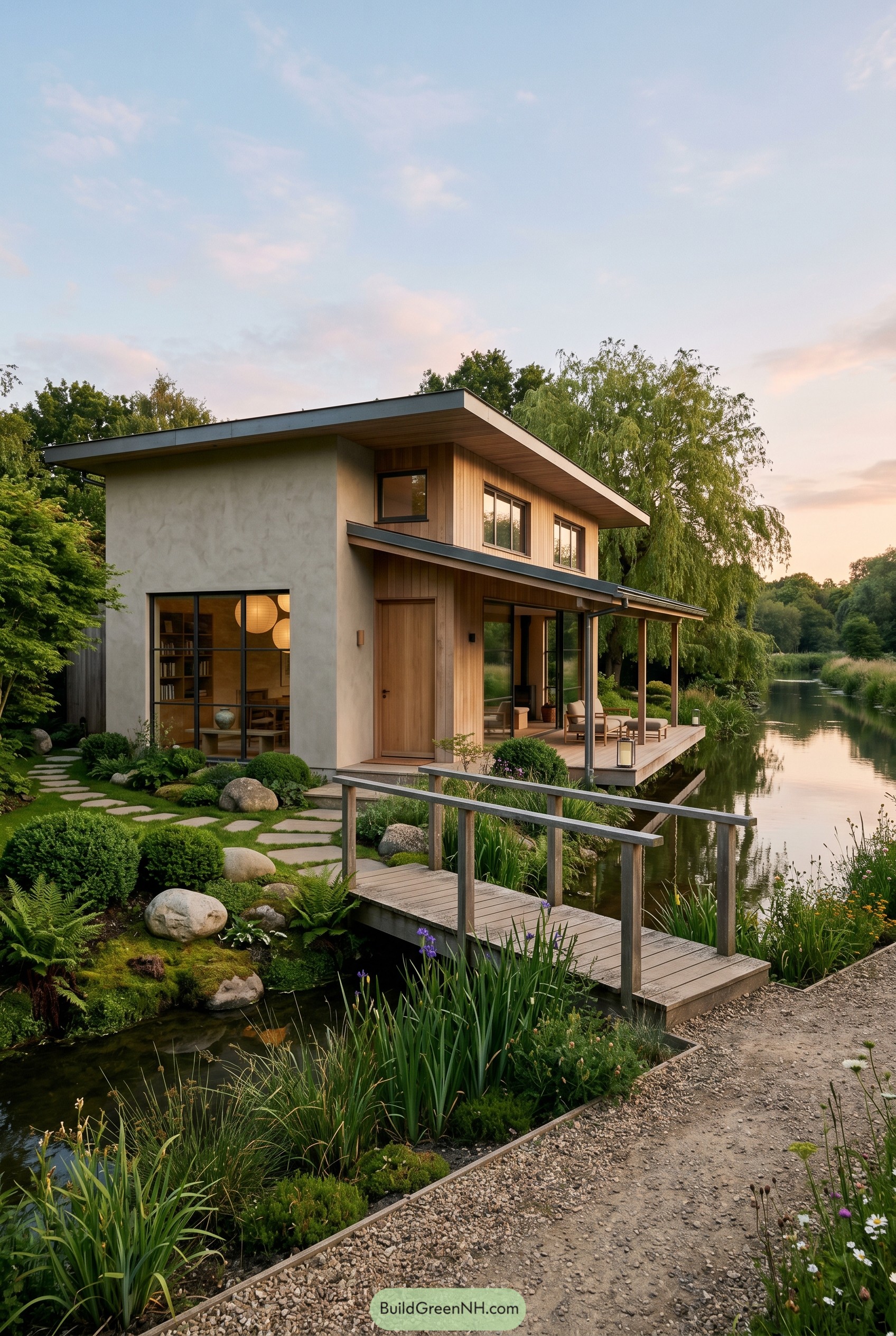

The low roof planes and warm timber cladding give this creekside home a calm, grounded feel, while the plaster volume keeps the composition crisp and pared back. It borrows from Japanese riverside living and Scandinavian restraint, so the house feels tucked into the garden instead of just plopped beside it.
That covered deck acts like an outdoor room, stretching daily life right to the water and making the little bridge feel oddly special, in a nice way. Black framed windows sharpen the soft palette, and the stepping stones, moss, and rounded boulders slow the approach so the whole place settles your nerves a bit.
Obsidian Coastline Haven
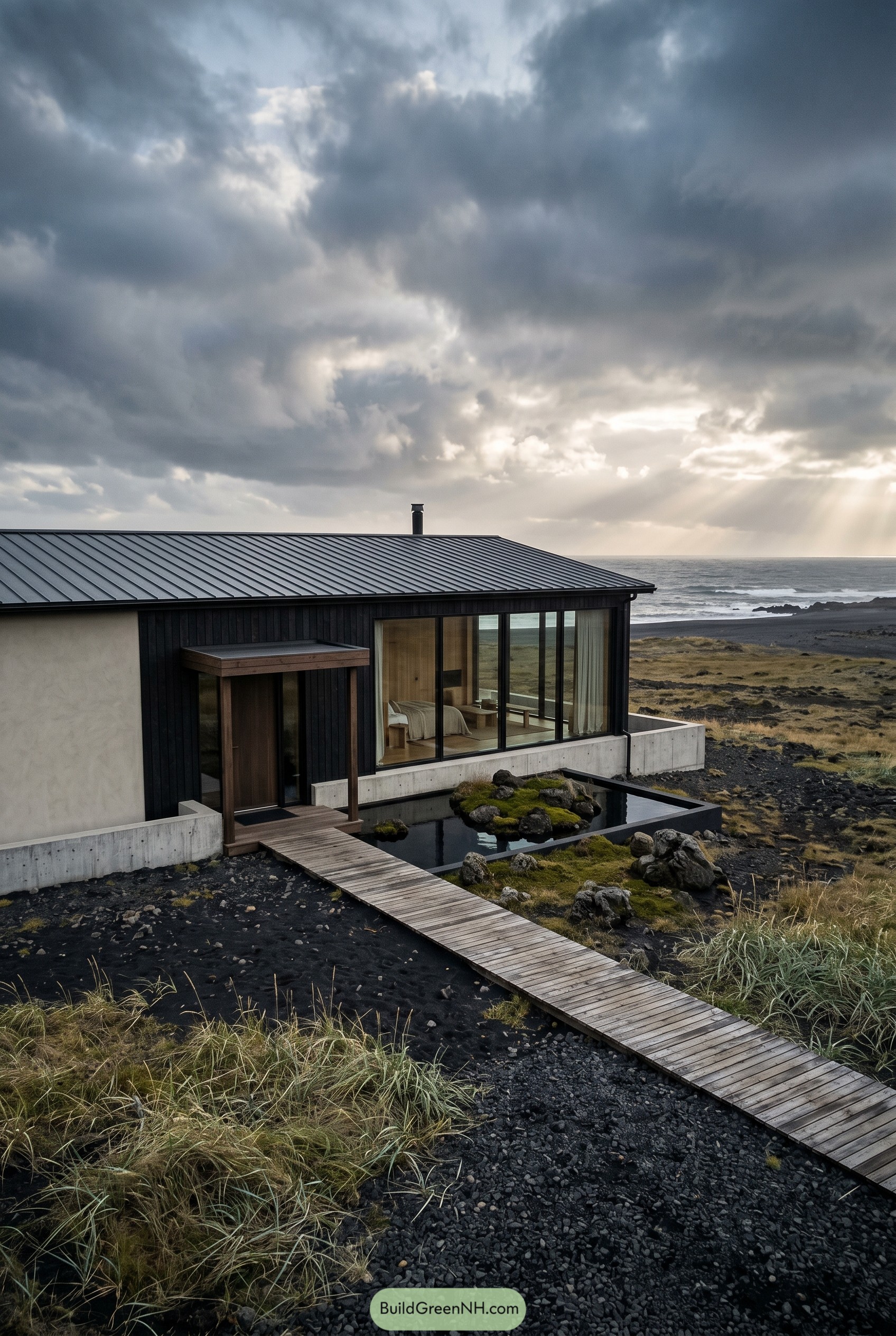

Set on a black sand coast, this Japandi home keeps a low calm profile, with a dark metal roof and deep toned cladding that sit naturally against the volcanic ground. We gave it a simple rectangular form and a modest timber entry porch, because the ocean was already being a bit of a show off.
The long boardwalk, reflecting pool, and mossy rock garden create a quiet pause before you step inside, which makes the arrival feel grounded and a little ceremonial. Large glass panels open the rooms to the water and sky, while the concrete base gives the house a steady anchor in a place where the weather clearly has opinions.
Golden Birch Threshold Home
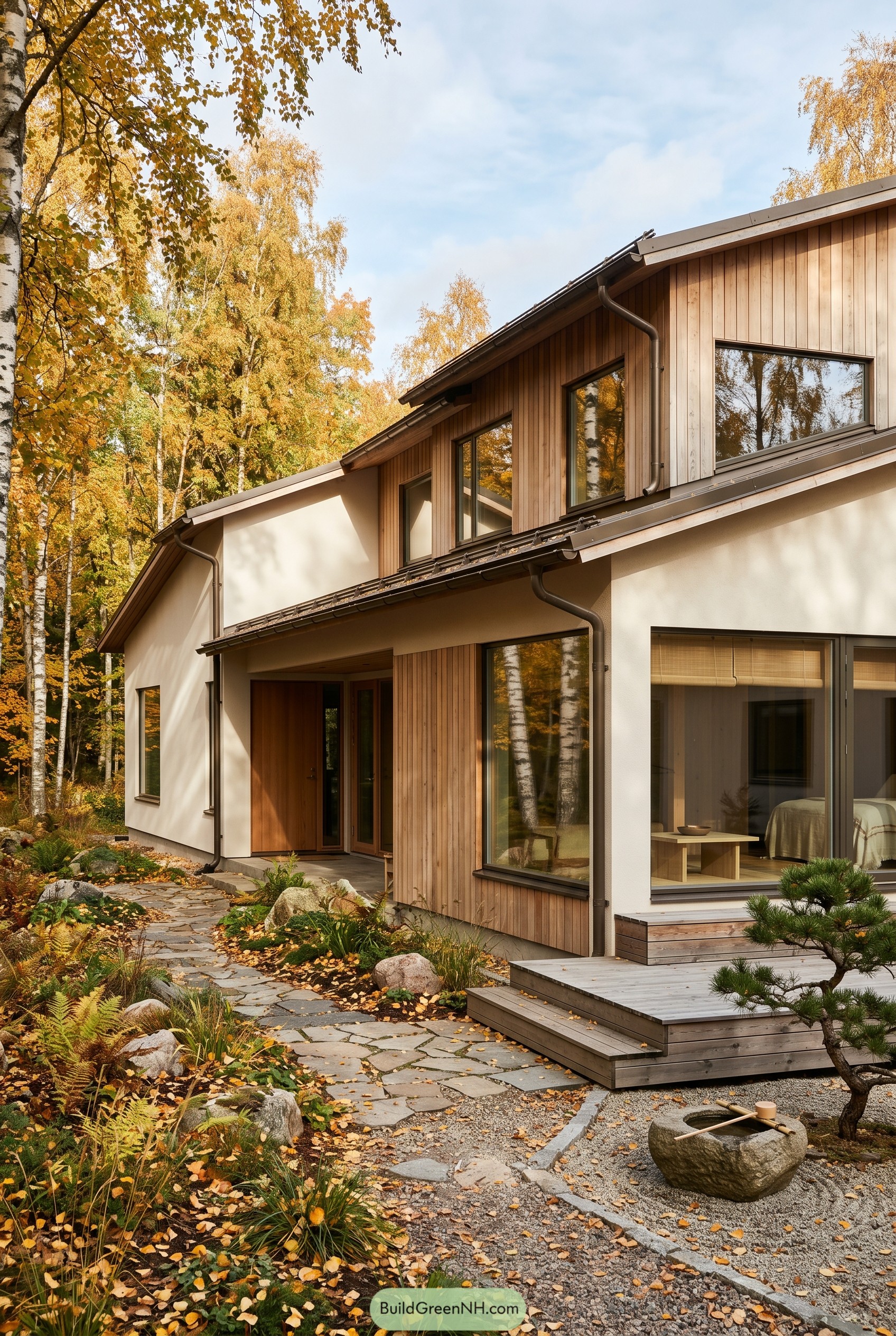

This woodland home pairs creamy plaster with narrow cedar boards, and that contrast gives the gabled form a calm, grounded presence among the birch trees. We shaped it to feel settled into the site, with a sheltered entry and low rooflines that soften the scale so it never feels like it barged into the forest.
The stone path, tiny deck, and gravel garden borrow from Japanese courtyard thinking while the steep roof and crisp windows nod to Nordic cabins, which is a pretty charming handshake. Big panes pull the trees right up to the rooms, and the small pine and water basin near the terrace add a quiet ritual touch that makes the whole place feel wonderfully unbothered.
Snowbound Cedar Enclave
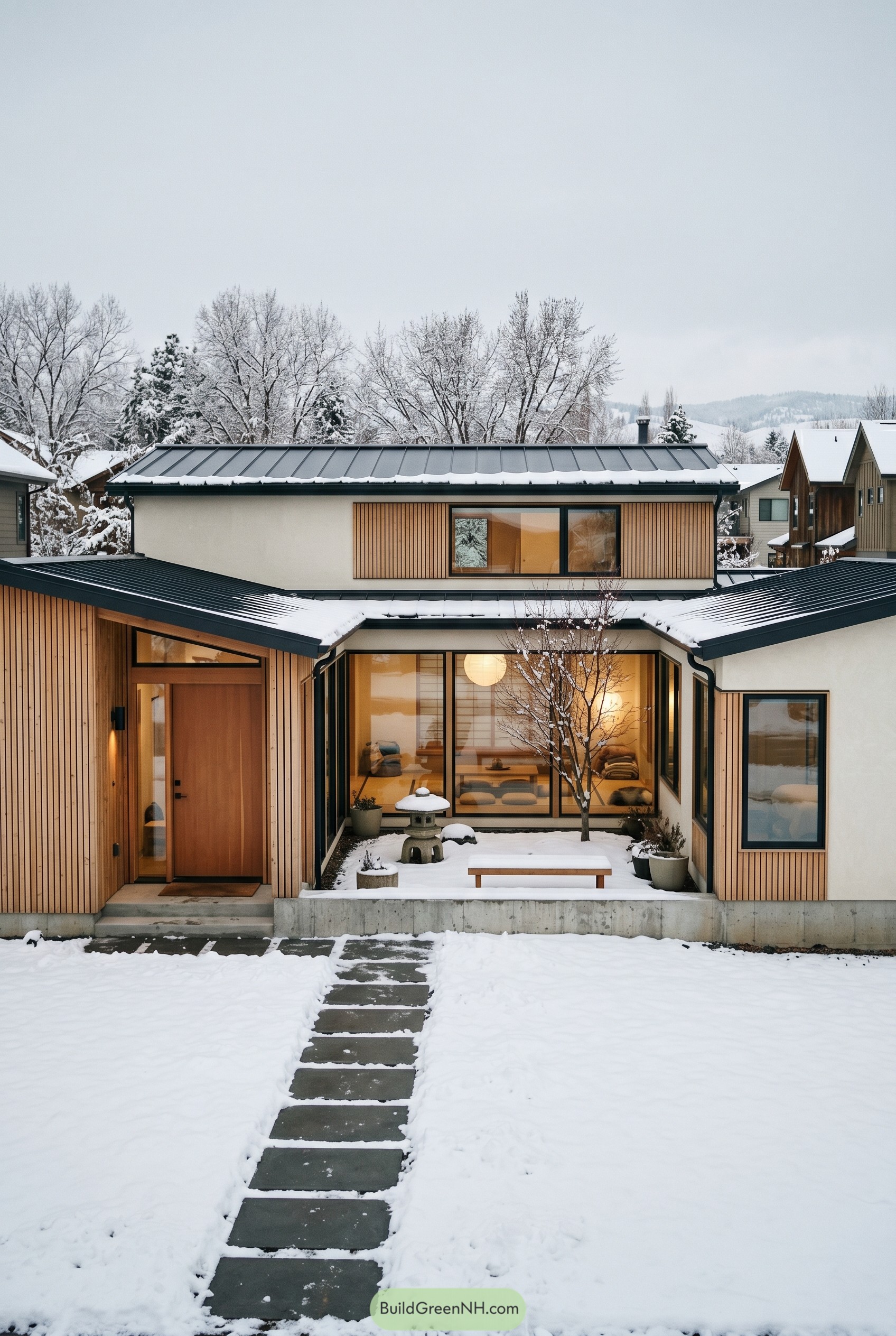

Low rooflines wrap around a tucked courtyard, giving the whole place a calm protective shape that feels made for winter mornings and quiet sock foot living. Vertical cedar cladding warms up the pale stucco and dark metal roof, which is a smart trio when snow tries to turn everything into one big white blur.
Inside, shoji style screens and a low sitting area sit right against broad glass, so the little garden court stays part of daily life even when the bench is wearing a snow hat. The design pulls from Japanese courtyard living and Scandinavian restraint, keeping the details crisp, the palette soft, and the whole mood pleasantly unfussy.
Harvest Slope Glass Shelter
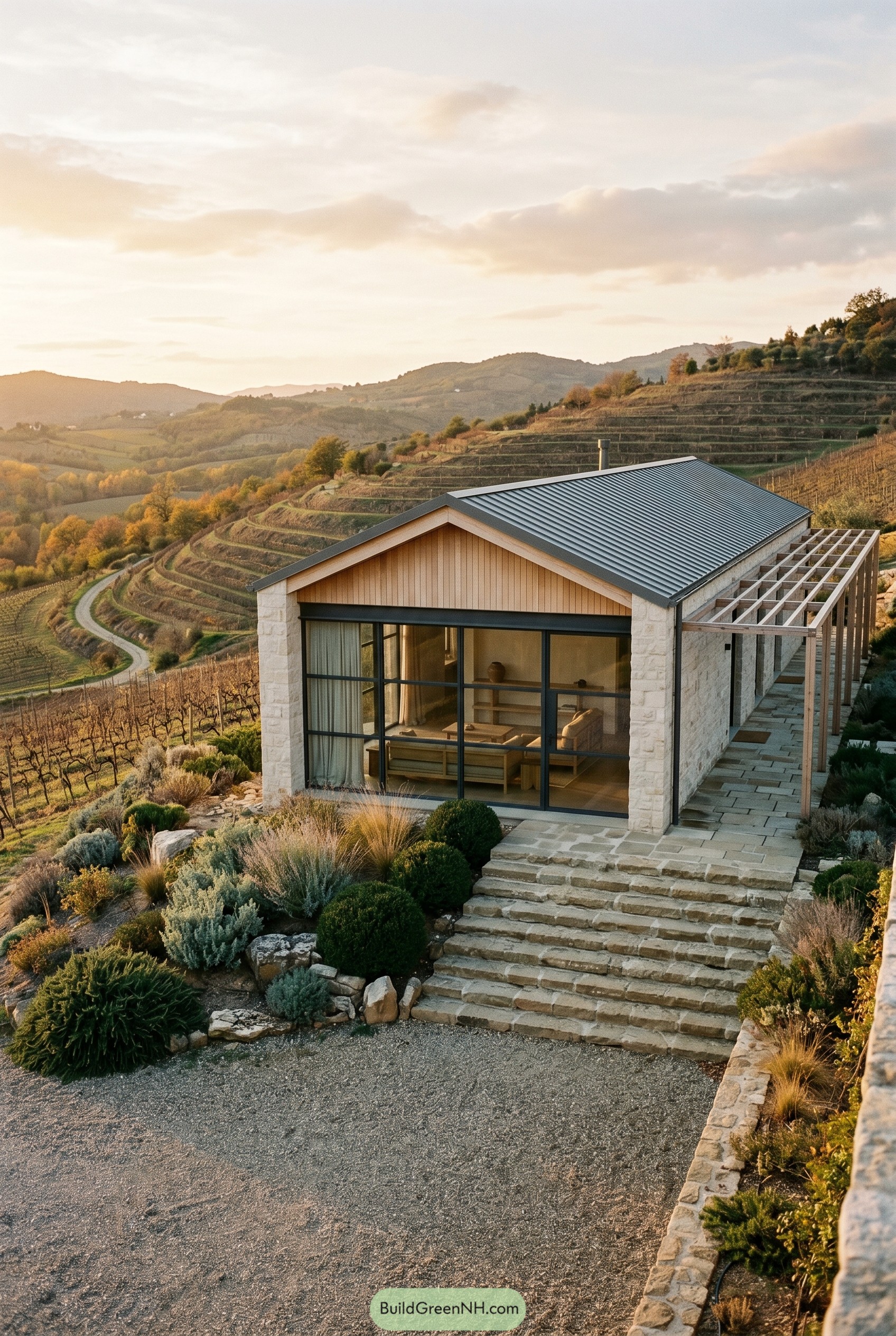

Set into the vineyard slope, this compact retreat keeps a simple barnlike profile and pares it back with crisp black framing, pale stone walls, and warm timber under the gable. That mix gives it a calm, grounded feel, and the big front glazing makes the living space seem a lot less shy than the footprint suggests.
The design clearly borrows from rural hillside farm buildings, then smooths everything into a cleaner Japandi language with a side pergola, broad stone steps, and planting that feels soft instead of fussy. We love how the roofline stays straightforward while the textures do the fun part, because not every house needs to show off like it had three coffees.
Moss Veil Pond House
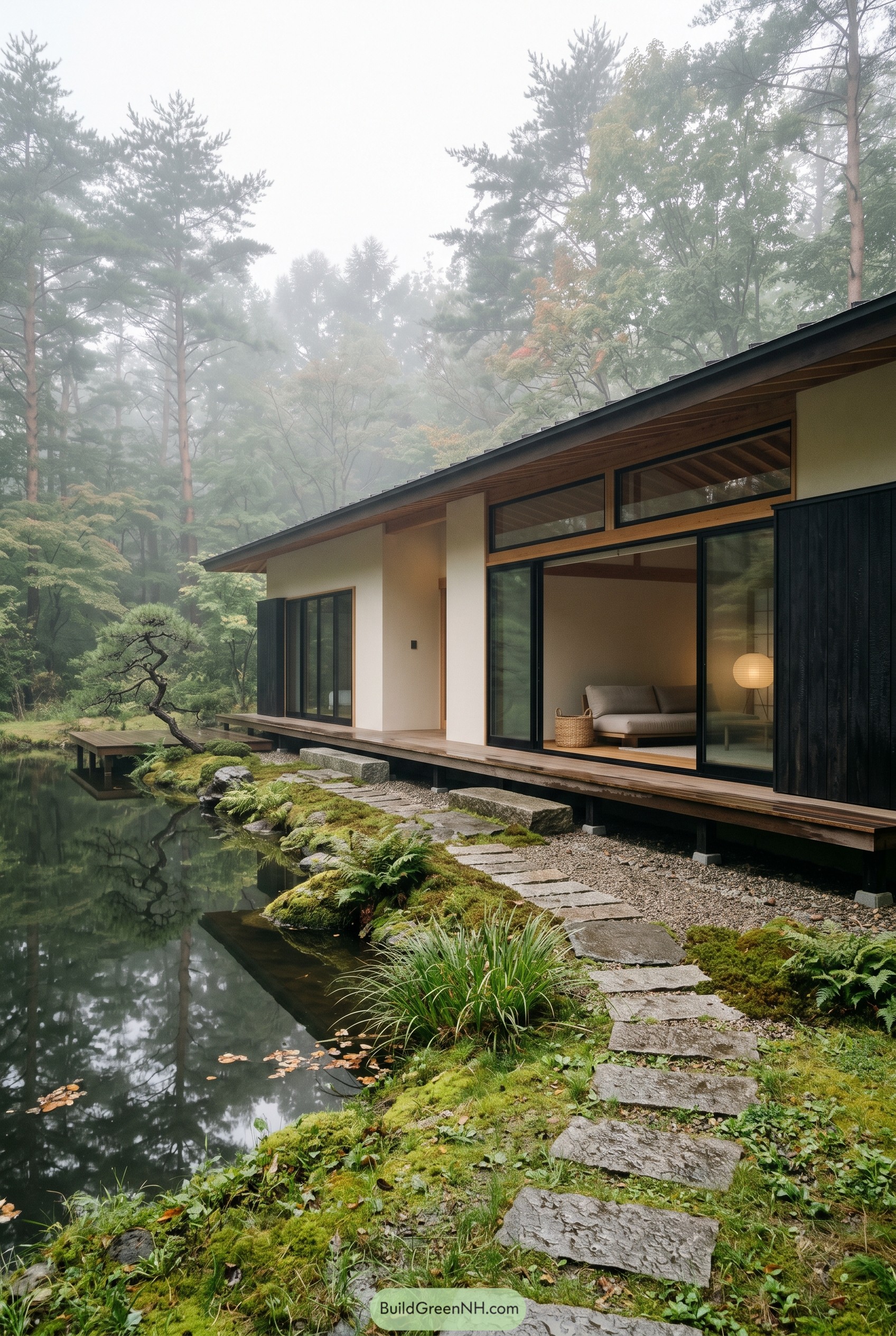

Set right on the pond edge, this low slung retreat borrows from a tea garden and a Nordic cabin, then quiets both down a little. The long roofline, pale plaster walls, and black timber panels keep the form crisp while the cedar deck runs beside the water like it already knows where morning coffee will land.
Sliding glass opens the lounge to mossy stones, a bent pine, and still water, so the whole place feels calm without trying too hard. We love how the stepping path slows you down on the way in, and that round paper lamp inside gives the scene a soft cozy wink.
Stone Rill Veranda
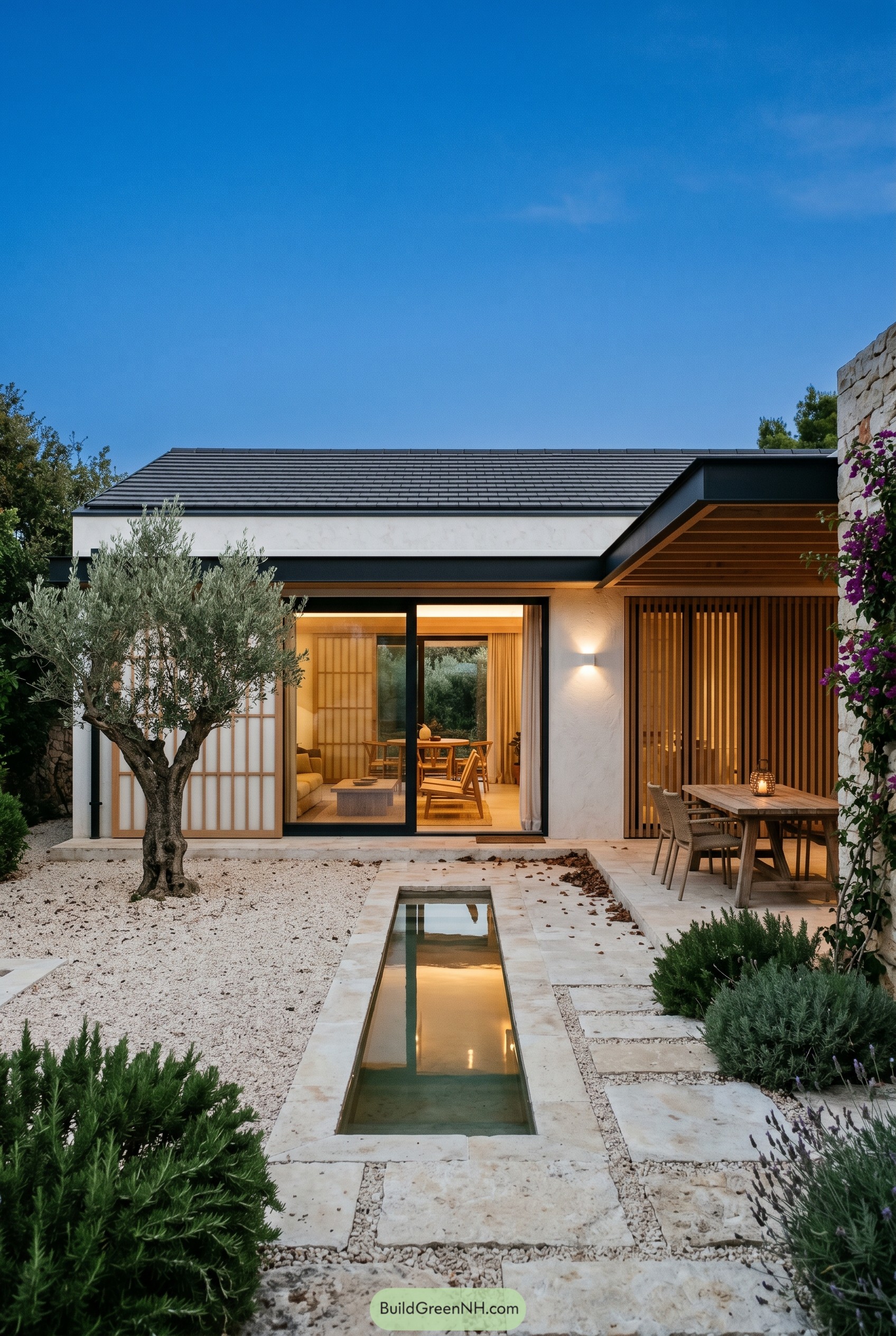

The low roofline and clean white walls keep everything calm, while the dark trim and timber soffit add just enough contrast so it does not feel sleepy. A slim reflecting rill pulls the eye straight to the living room, and the old olive tree gives the courtyard a lovely, slightly crooked anchor.
Inside and out are stitched together with wide sliding glass panels, shoji style screens, and a covered dining nook wrapped in vertical slats for privacy. The design borrows from Japanese courtyard planning and Mediterranean planting, so it feels serene but not precious, which is nice because nobody wants a house that acts too fancy.
Pin this for later:
Want More?
 21 Luxury Family Compounds Where Generations Thrive
 20 Luxury Ski Chalets for Unforgettable Alpine Escapes
 21 Stunning Fall House Exteriors That Make Neighbors Stop And Stare
 19 Brilliant Family Village Designs You’ll Love
 21 Stunning Hill Villas for Cloud Level Escapes
Table of Contents