Last updated on
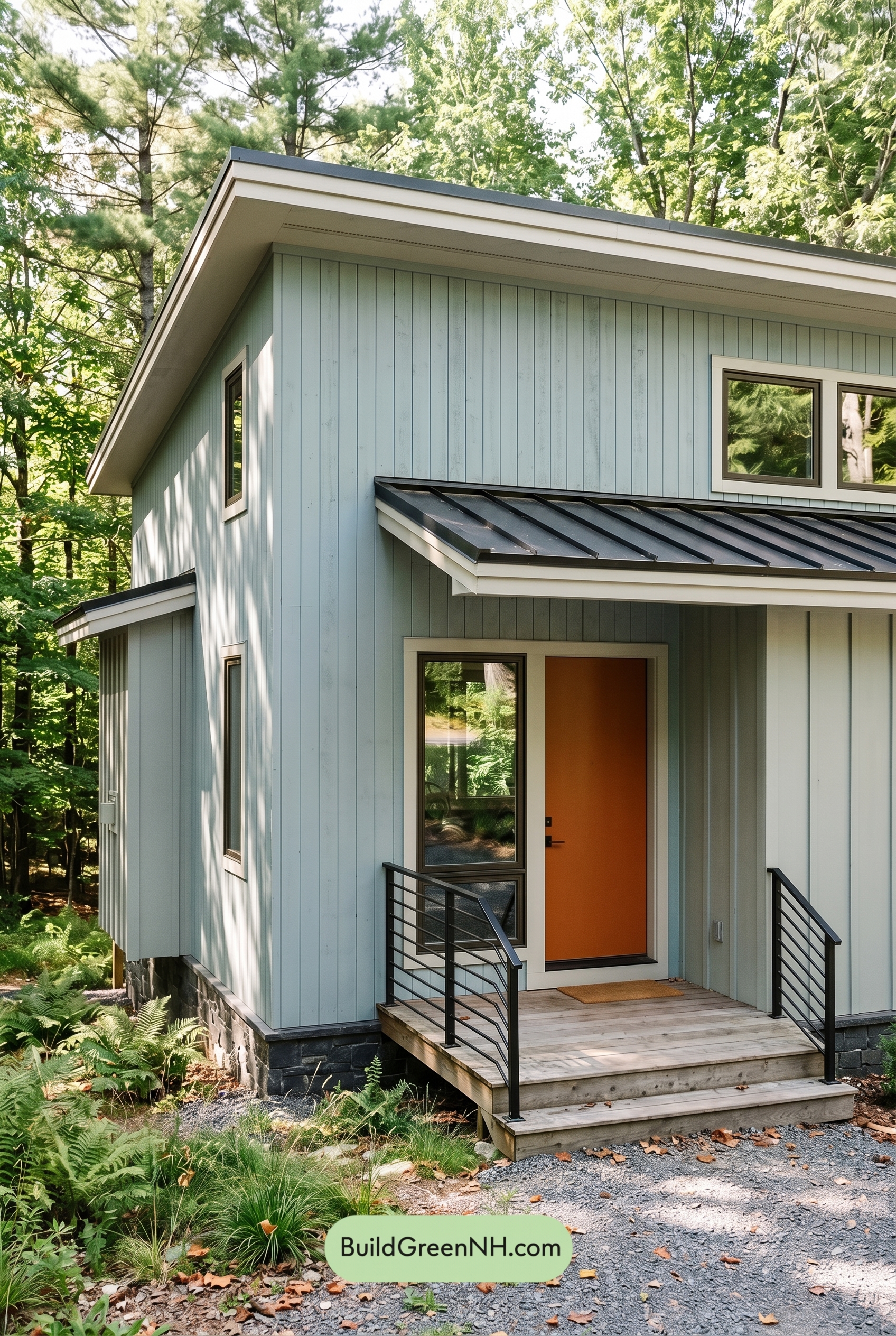

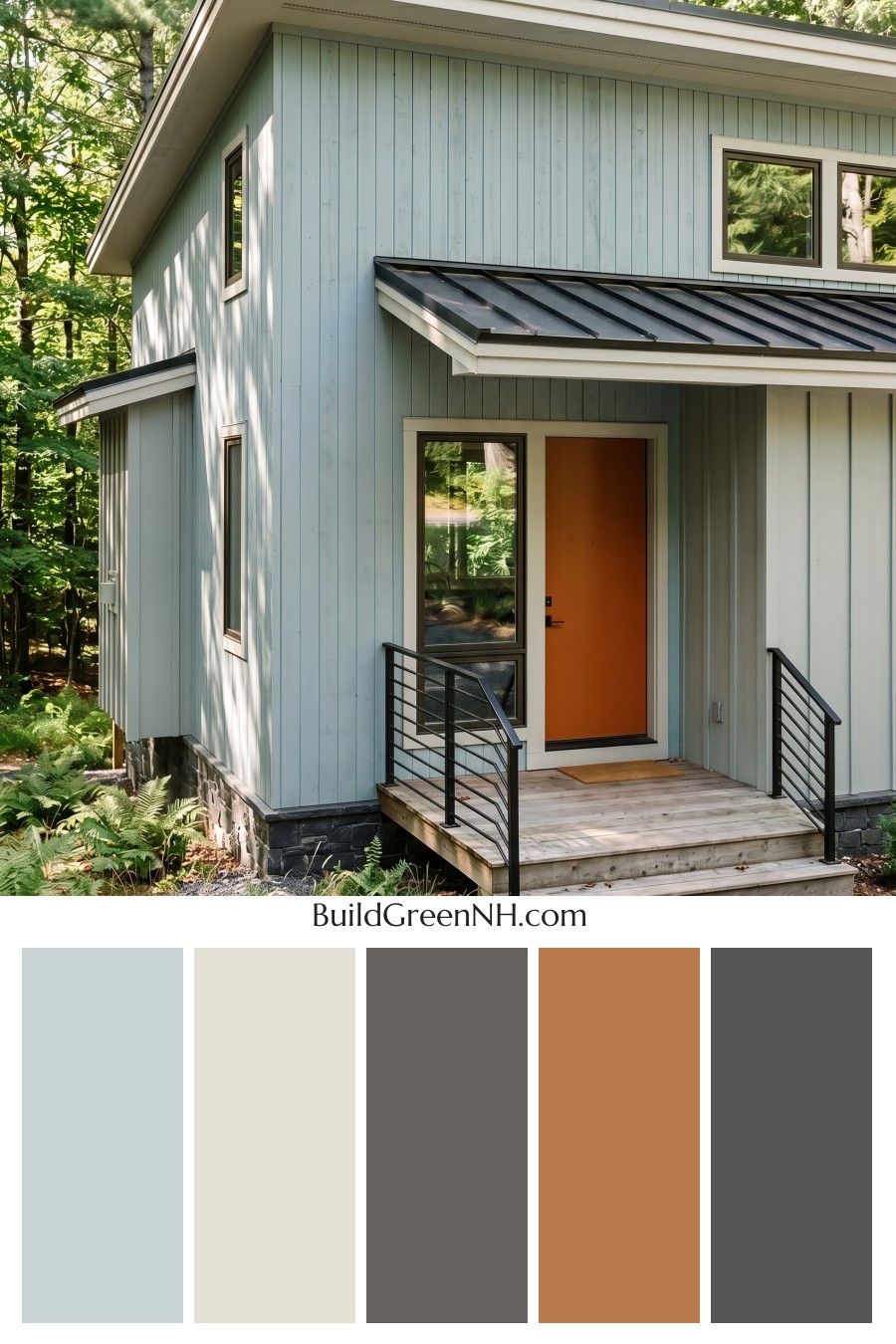
This exterior color scheme shines because its quiet gray siding, soft beige trim, and lively orange door create a modern woodland home that feels calm, warm, and instantly welcoming.
A Soft Gray Siding That Blends Beautifully
The main siding is wrapped in a light gray shade that feels fresh without looking stark. On the vertical boards, this gentle gray gives the exterior a clean, contemporary rhythm while still feeling relaxed and natural. It works especially well in a wooded setting, where the coolness of the gray balances the surrounding green tones.
Because the siding is muted, it lets the architecture do the talking. The tall vertical lines feel crisp and modern, while the soft gray keeps the overall look approachable rather than severe.
Warm Beige Trim Adds Soft Contrast
The trim is finished in a warm beige shade, and it is one of the reasons this palette feels so inviting. Around the windows, roofline, and door opening, the beige trim gently frames the home without creating harsh contrast.
This warm neutral also helps bridge the cool gray siding with the bold front door. It softens the edges, highlights the structure, and gives the exterior a polished, intentional finish.
Gray Window Frames and Railings Keep It Modern
The window frames use a deeper gray shade that adds definition against the lighter siding and beige trim. This darker gray brings a sleek, modern edge to the exterior, especially around the large glass areas where reflections of the trees become part of the overall look.
The railings continue that gray family in a darker shade, giving the entryway a strong graphic outline. They feel sturdy and contemporary, but because they stay within the same color family as the siding and roof, they do not compete with the rest of the palette.
The Orange Front Door Brings the Personality
The front door is the star accent, painted in a rich orange shade that adds warmth, energy, and a cheerful welcome. Against the cool gray siding and calm beige trim, this orange feels bold but not overwhelming.
It is a smart use of color: concentrated in one focal point, easy to notice from the path, and perfectly placed to make the entrance feel lively. The orange also echoes natural autumn tones, which helps it feel right at home among trees, leaves, wood decking, and stone.
A Dark Gray Roof Grounds the Palette
The roof introduces a dark gray shade that gives the house structure and visual weight. It caps the lighter siding beautifully and ties in with the darker gray railings and window frames.
This darker element keeps the palette from feeling too pale. It adds contrast, sharpens the roofline, and gives the whole exterior a grounded, architectural presence.
Overall Mood: Calm, Clean, and Welcoming
This color scheme has a wonderful balance of cool and warm shades. The gray siding feels serene and modern, the beige trim adds comfort, and the orange door brings a spark of friendliness. Nothing feels random.
The result is a home that looks contemporary but still connected to its natural surroundings. It is fresh, simple, and memorable, with just enough bold color to make the entry feel special.
Next, see how this color scheme looks under different lighting simulations throughout the day.
Overcast
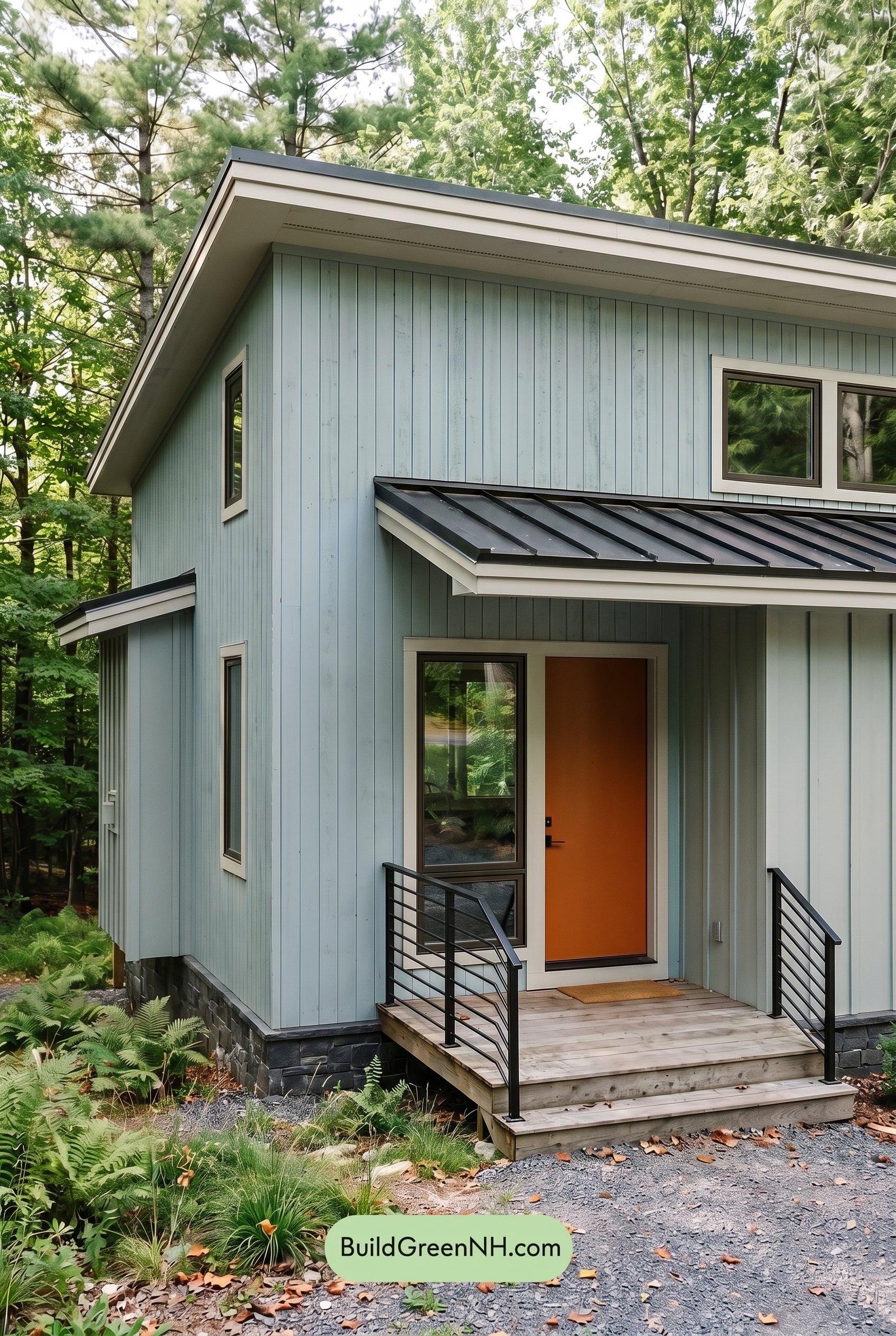
Under overcast light, the gray siding reads cooler and more muted than it would in neutral daylight, with its saturation gently dialed back. The beige trim loses a bit of warmth, feeling softer and quieter, while the orange front door deepens into a richer, earthier shade rather than appearing bright or sunlit.
Because the cloud cover diffuses the light, shadows become broad and gentle, reducing contrast across the vertical siding, window frames, and railings. The overall mood shifts from crisp and lively to calm, cozy, and slightly subdued, giving the exterior a more grounded, woodland feel.
Golden Hour
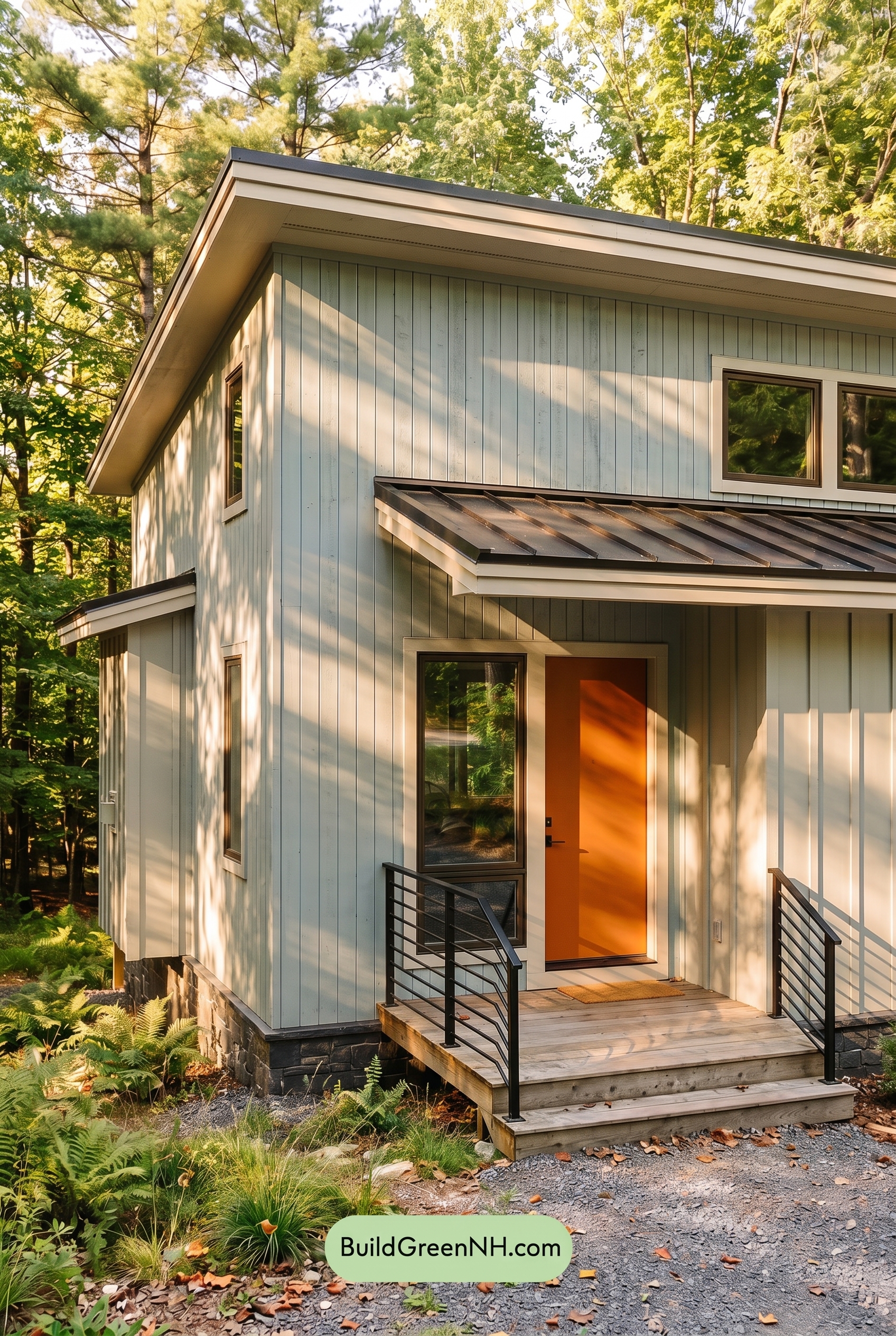
Under Golden Hour light, the pale gray siding takes on a warmer, slightly creamier cast than it would in neutral daylight, making the surface feel softer and more inviting. The beige trim glows gently, with its warmth becoming more noticeable, while the deep gray window frames and railings appear richer against the sunlit walls.
The low-angle light increases contrast, stretching soft shadows across the vertical siding and adding depth to the façade. The orange front door becomes more saturated and lively, shifting the overall mood from clean and contemporary in neutral daylight to cozy, dramatic, and welcoming.
Shade
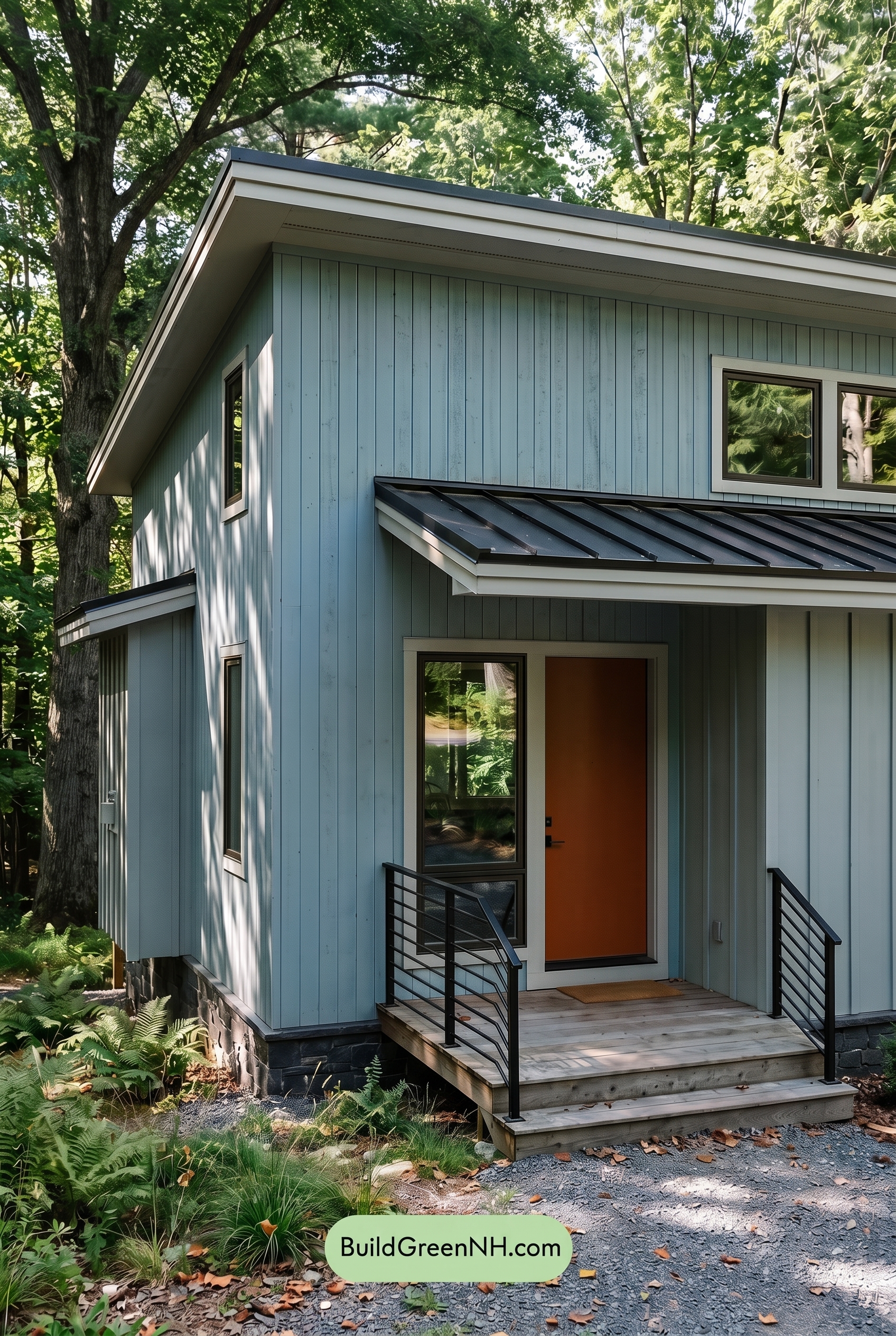
In shade, the main gray siding cools and deepens, picking up a softer blue-gray cast than it would in neutral daylight. Its saturation feels slightly muted, while the vertical shadows between boards become more pronounced, adding texture and a calm, wooded mood.
The beige trim loses a bit of its sunny warmth and reads gentler against the cooler walls, creating softer contrast than in even daylight. The orange door, however, becomes richer and more grounded in the shade, standing out as the warm focal point while the darker gray window frames and railings sharpen the entry.
Nighttime
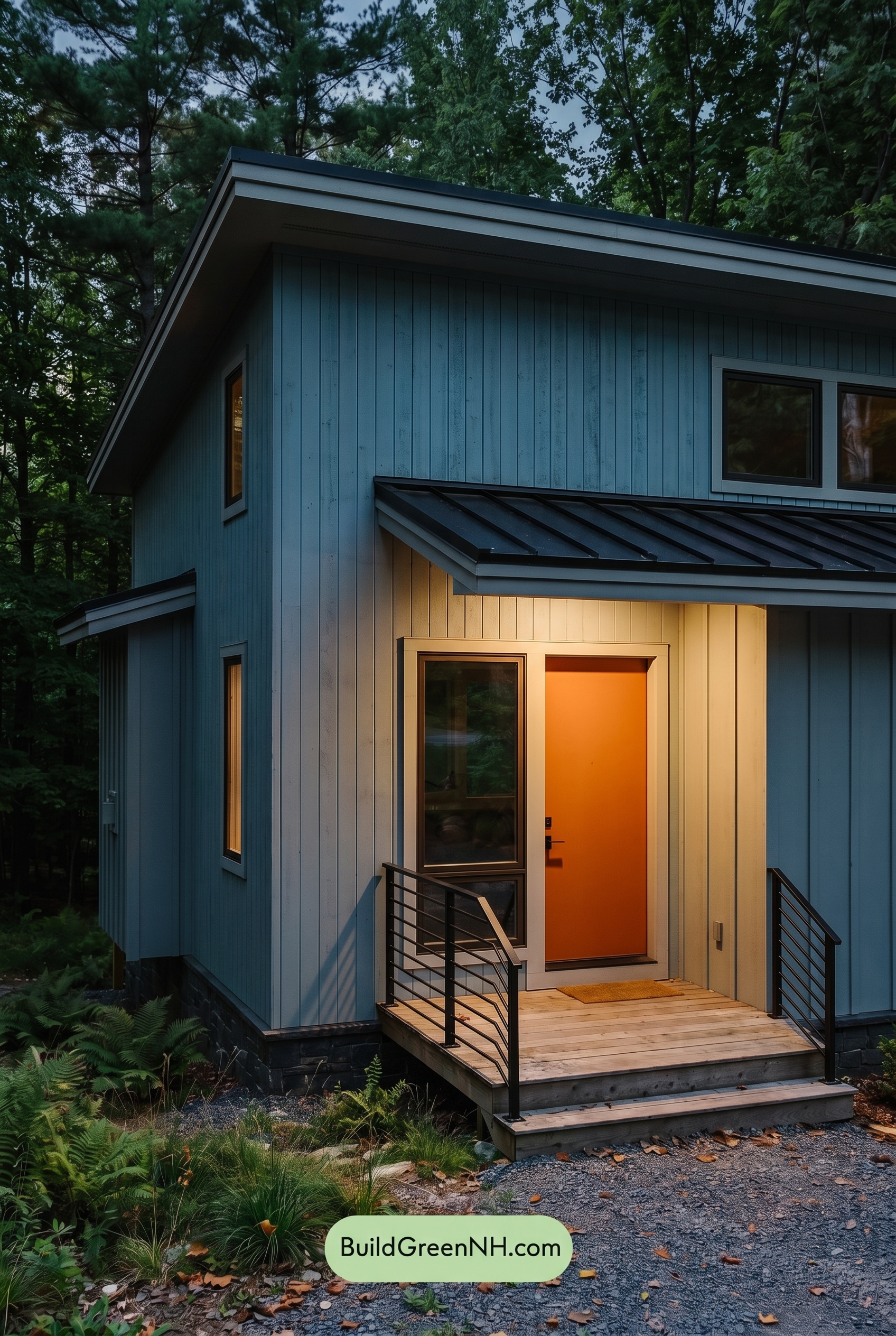
At night, the gray siding deepens and takes on a cooler, more saturated cast than it would in neutral daylight, especially where the surrounding trees and roofline throw broad shadows. The beige trim shifts warmer under the entry lighting, feeling softer and creamier, while the gray window frames and railings read darker and crisper, increasing the contrast around the openings and porch.
The orange front door becomes the warm focal point, appearing richer and more glowing against the subdued gray exterior. Compared to daylight’s even balance, nighttime lighting creates a moodier, more intimate palette, with stronger shadow lines, heightened warmth near the entry, and a dramatic contrast between the cool exterior surfaces and the welcoming warm accent.
Pin these for later:
Want More?
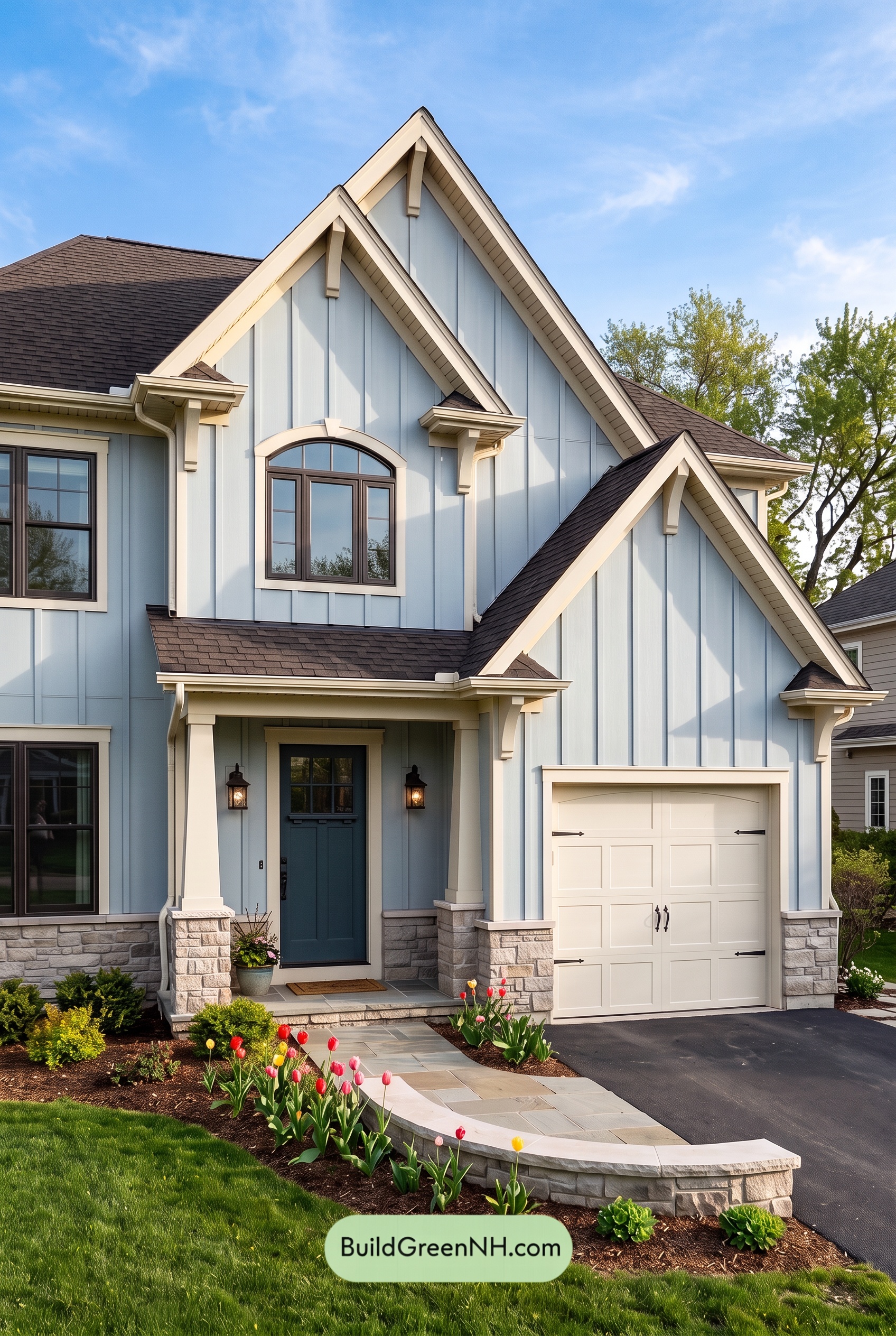 Exterior Color Scheme with Stone Accents: Bluebell Gable Song
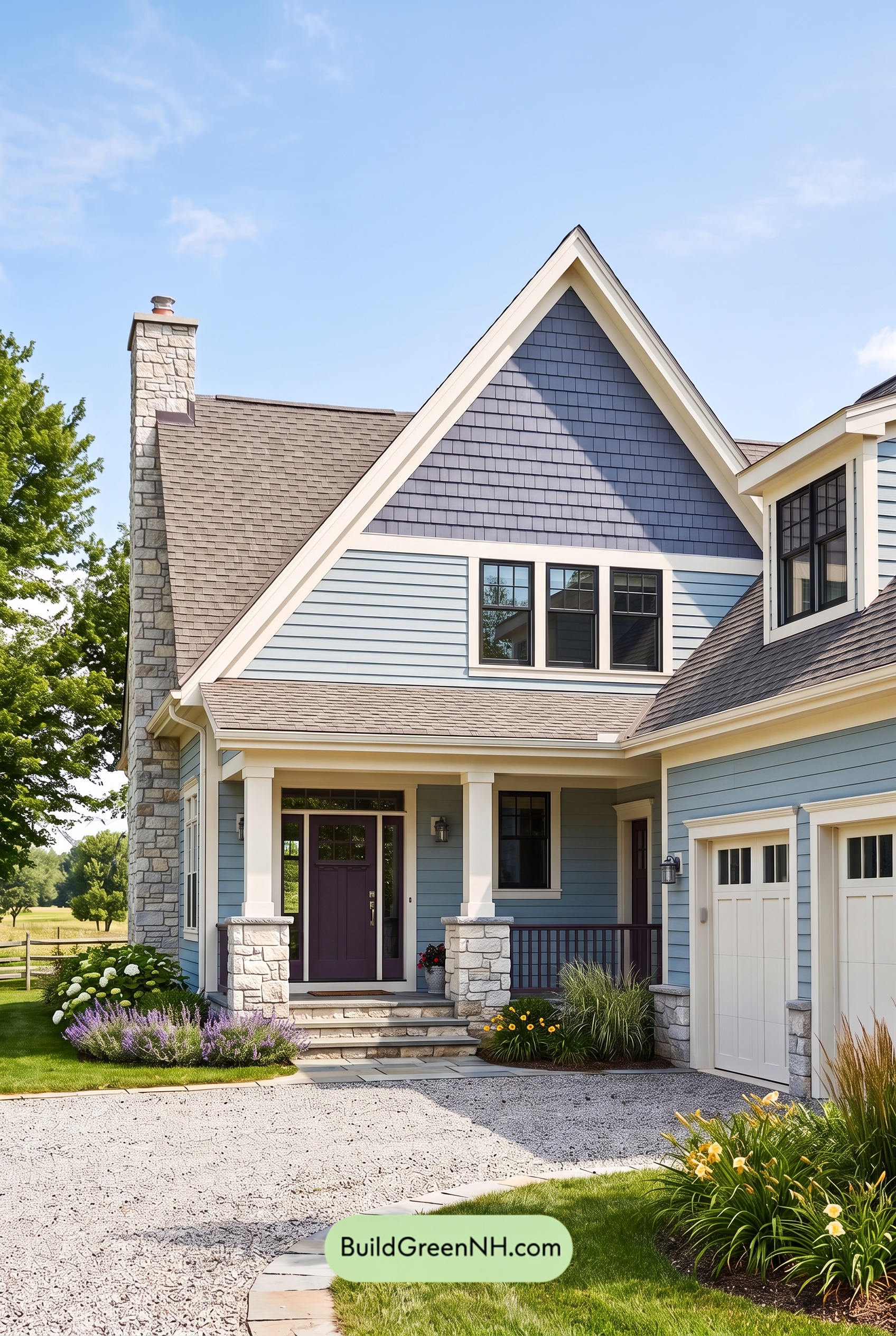 Exterior Color Scheme with Stone Accents: Meadow Bell Welcome
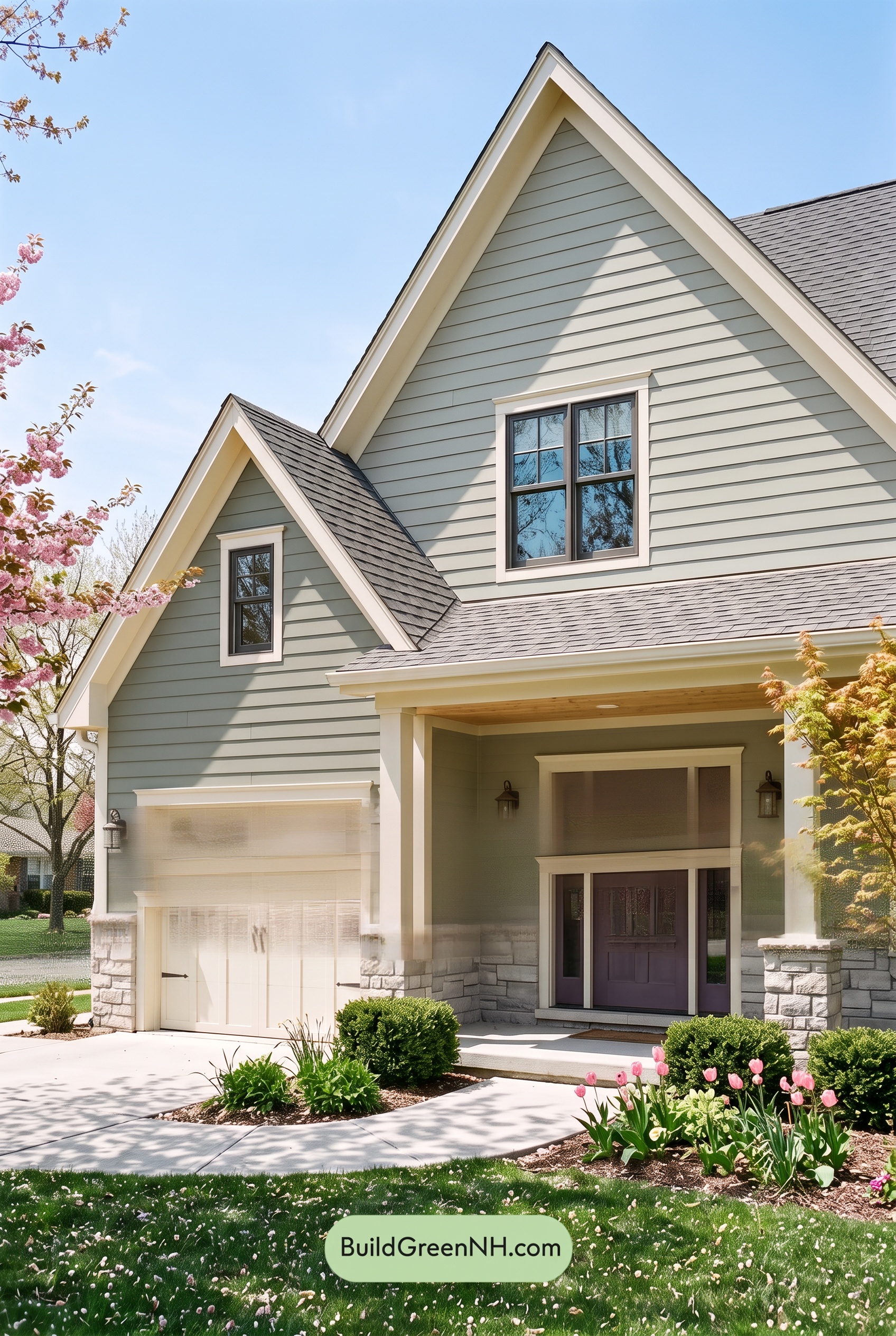 Exterior Color Scheme with Stone Accents: Willow Quartz Porch
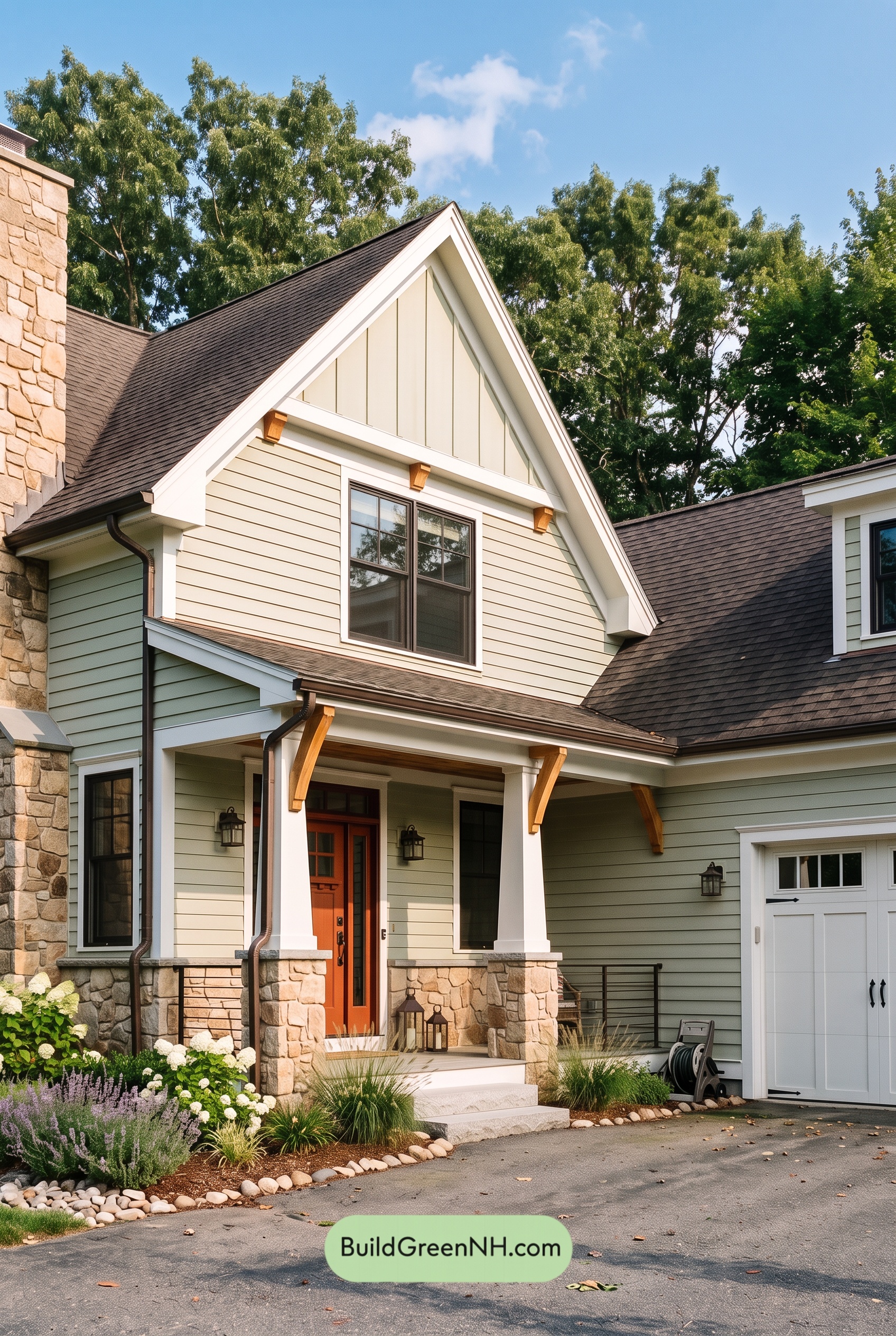 Exterior Color Scheme with Stone Accents: Celadon Ember Gable
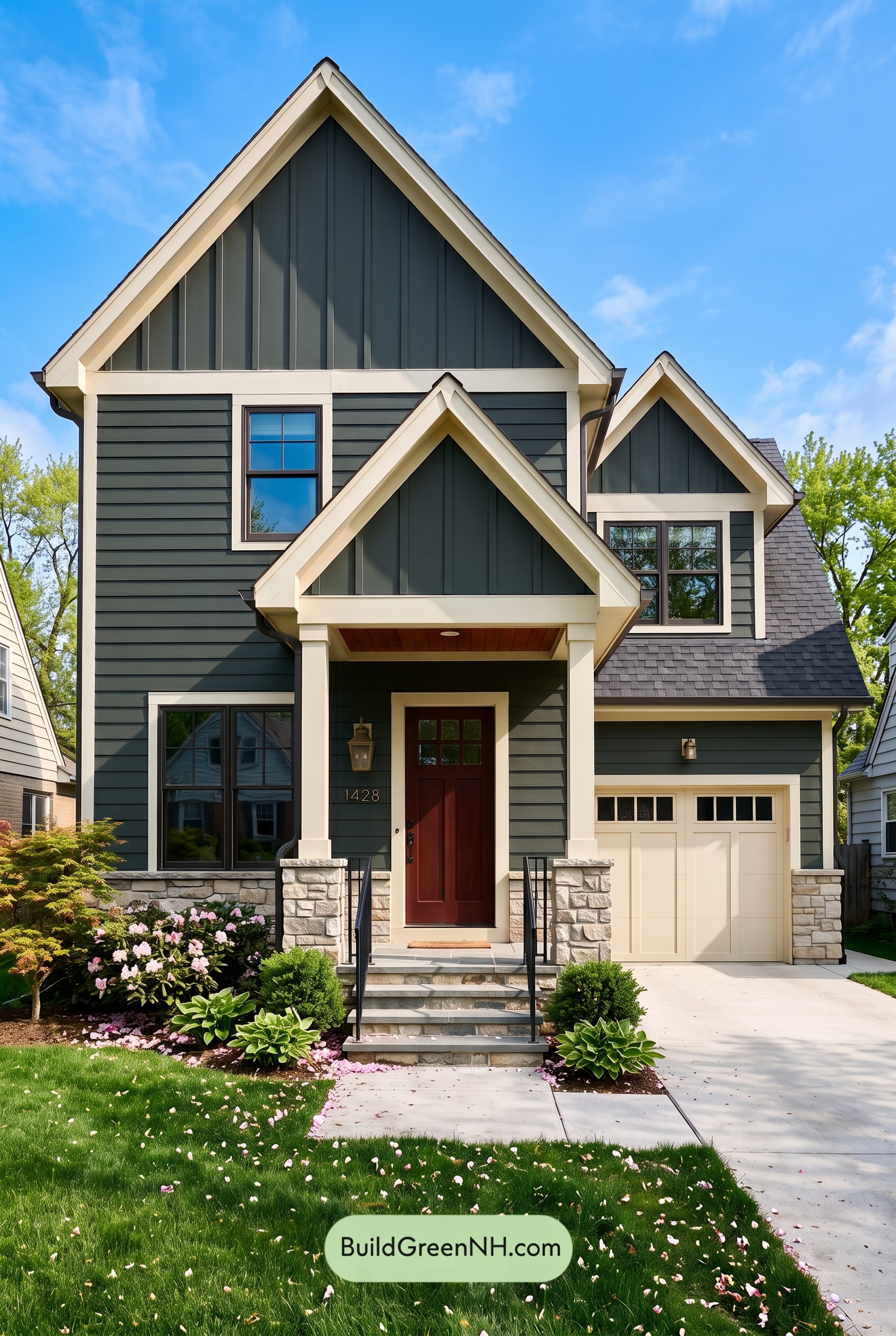 Exterior Color Scheme with Stone Accents: Pine Brass Threshold
Table of Contents