Last updated on
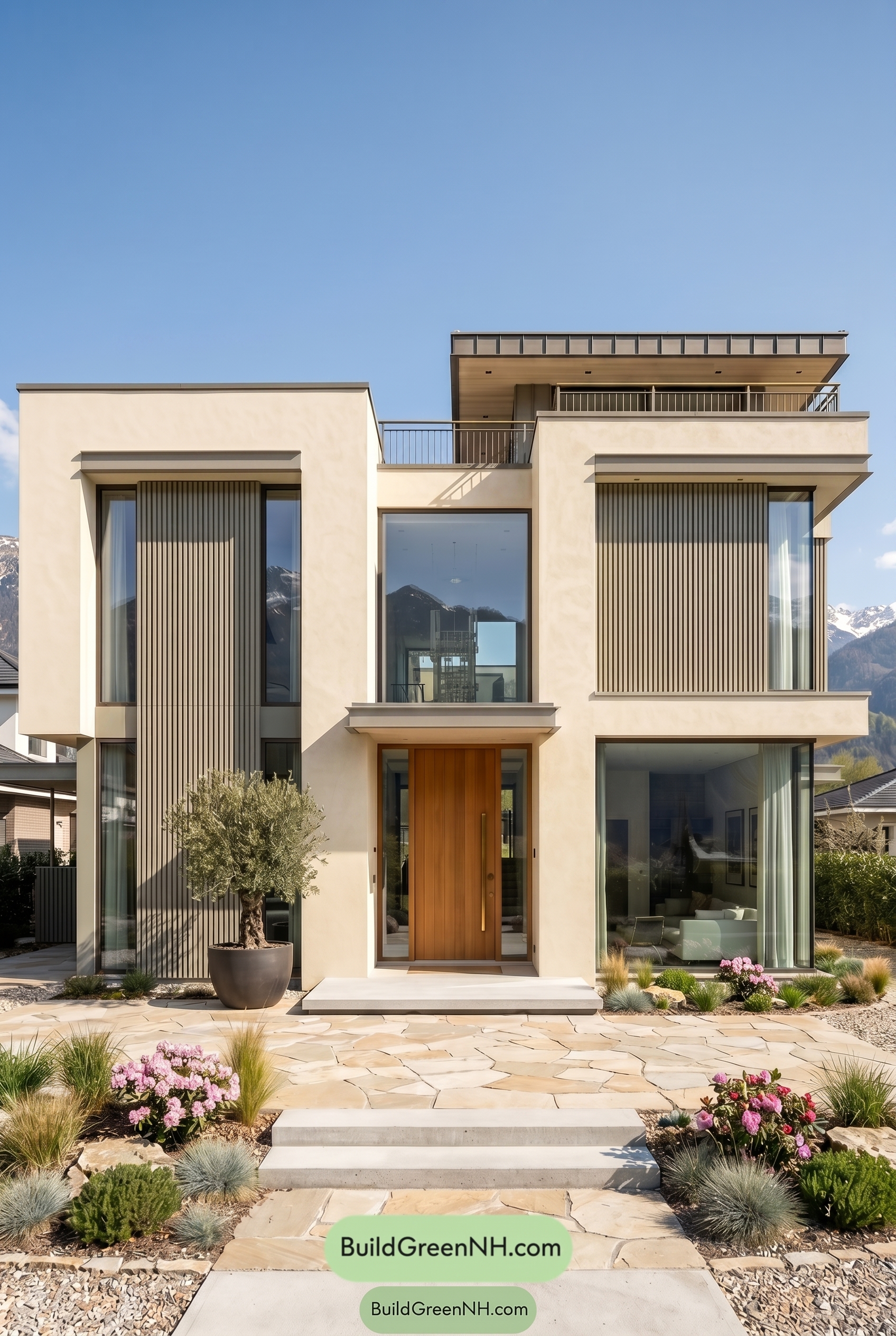

This exterior shines because its layered beige palette feels warm and architectural, while crisp gray details give the modern façade a polished edge.
A Warm, Modern Base
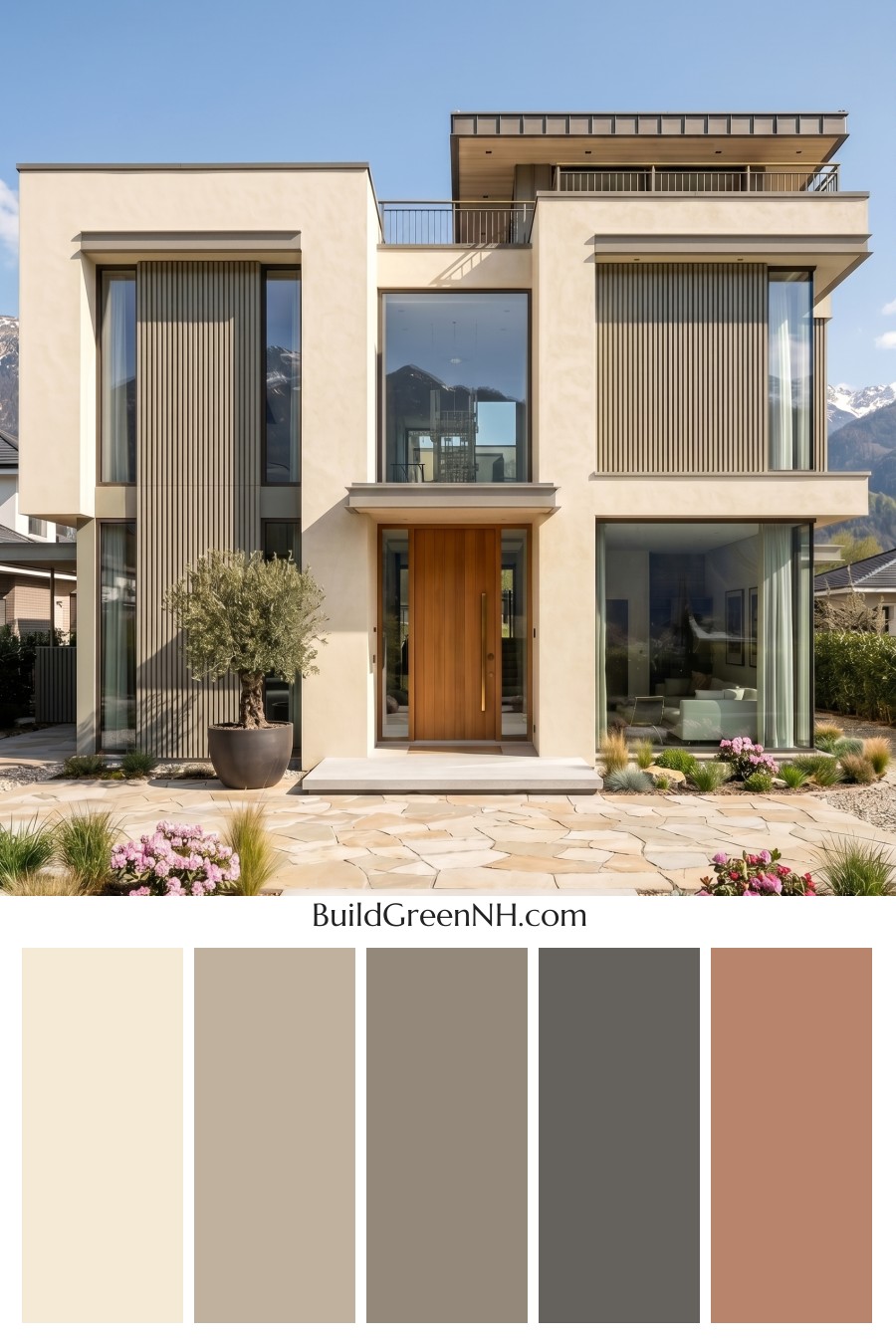
The main walls are wrapped in a soft, light beige shade that gives the home a sunlit, welcoming presence. It keeps the large geometric volumes from feeling too stark, which is especially important on a contemporary façade with clean lines and broad surfaces.
A slightly deeper beige shade appears on the accent wall areas, including the vertical architectural panels. This subtle shift adds texture and depth without interrupting the calm, cohesive look. Instead of relying on bold contrast, the design uses tonal layering to make the exterior feel refined and dimensional.
Gray Details That Sharpen the Architecture
The trim, window frames, railings, and roofline details lean into the gray family, bringing definition to the home’s crisp modern shape. These cooler gray shades balance the warmth of the beige siding beautifully, creating a tailored look that feels clean but not cold.
The gray railings and upper-level roof elements also help visually anchor the home. They outline the terraces, windows, and roof edges with just enough contrast, giving the façade a strong architectural rhythm.
A Welcoming Front Door Moment
The front door introduces a richer golden beige tone, adding warmth right at the entry. It feels inviting against the lighter beige walls and works especially well with the vertical lines around it, making the entrance feel tall, elegant, and thoughtfully framed.
The Overall Mood
This palette feels calm, upscale, and contemporary. The beige family brings softness and approachability, while the gray accents add sophistication and structure. Together, they create a balanced exterior that feels connected to natural stone, soft landscaping, and bright outdoor light.
What makes this scheme so successful is its restraint. Nothing competes for attention, yet every surface has a purpose. The result is a modern home that feels warm, polished, and beautifully composed from the curb.
Next, see how this color scheme looks under different lighting simulations throughout the day.
Overcast
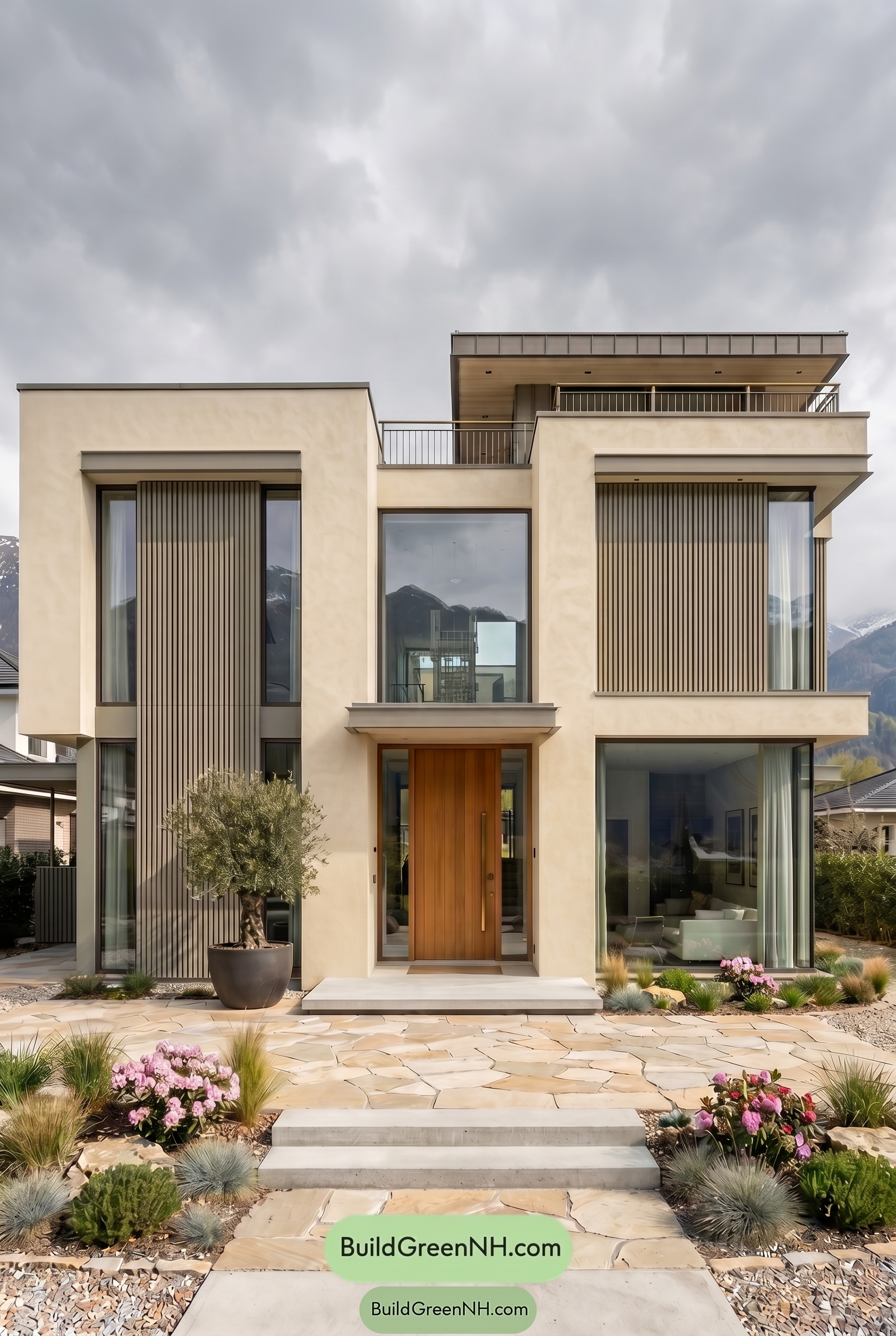
Under overcast light, the beige shades on this modern exterior lose some of the warmth they would show in neutral daylight, becoming softer, quieter, and slightly more muted. Saturation is gently reduced, so the main walls feel creamier and more subdued rather than bright or sun-warmed.
The gray trim, window frames, and railings appear cooler and a touch deeper, while shadows under the overhangs spread softly instead of creating crisp contrast. The overall mood shifts from bright and architectural to calm, refined, and more understated, with the color families blending together in a smoother, low-contrast way.
Golden Hour
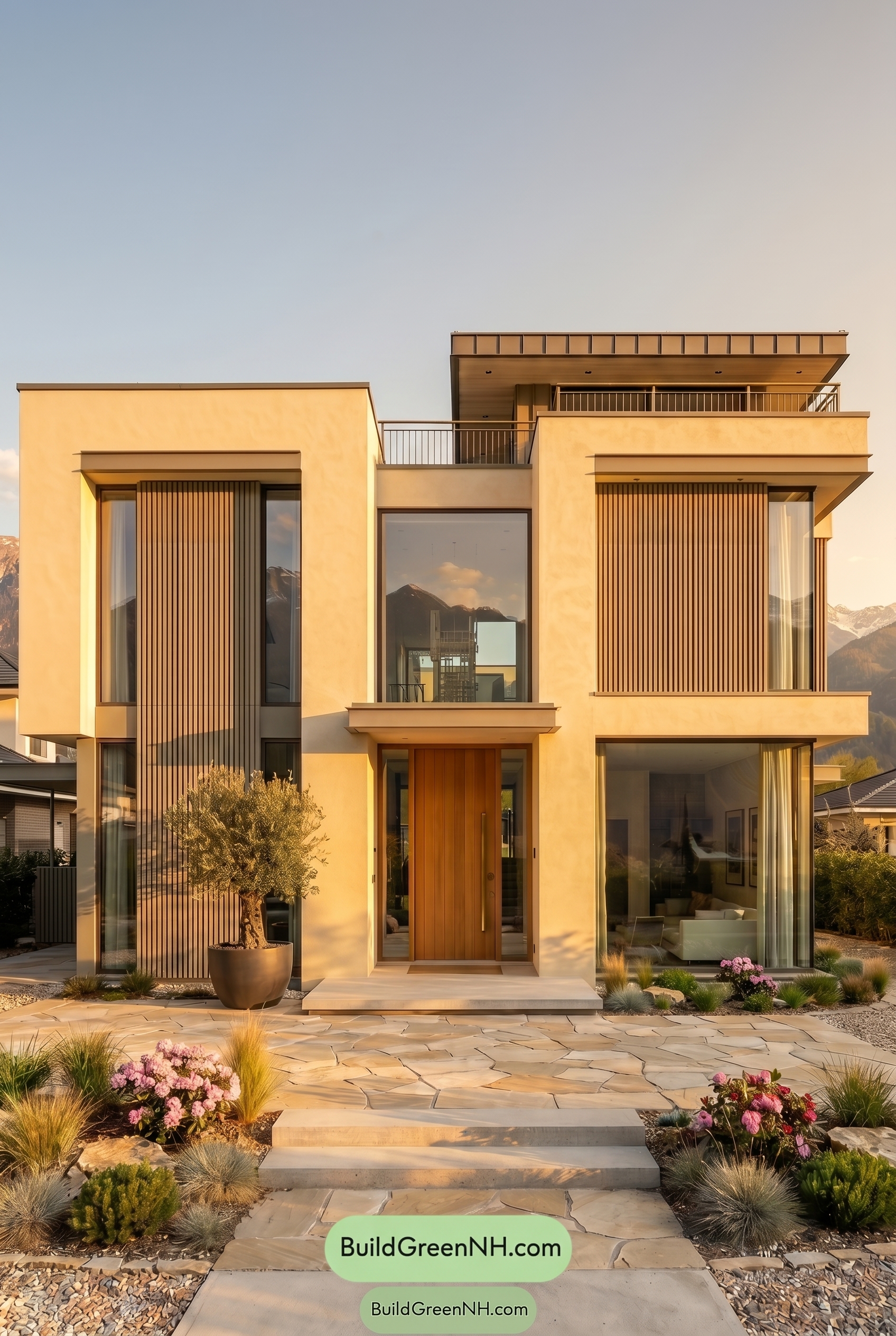
Under golden-hour light, the beige family on the main walls becomes richer and more saturated, shifting from a calm neutral daylight read to a warmer, sun-washed shade with a soft amber glow. The matching beige accents and door feel more inviting, while the gray trim, railings, and window frames pick up subtle warmth without losing their cooler structure.
Compared with neutral daylight, shadows stretch longer and deepen around the overhangs, vertical details, and recessed glass, creating stronger contrast across the façade. That contrast makes the warm neutrals feel softer and more dimensional, giving the home a relaxed, polished evening mood instead of the cleaner, flatter balance it would have at midday.
Shade
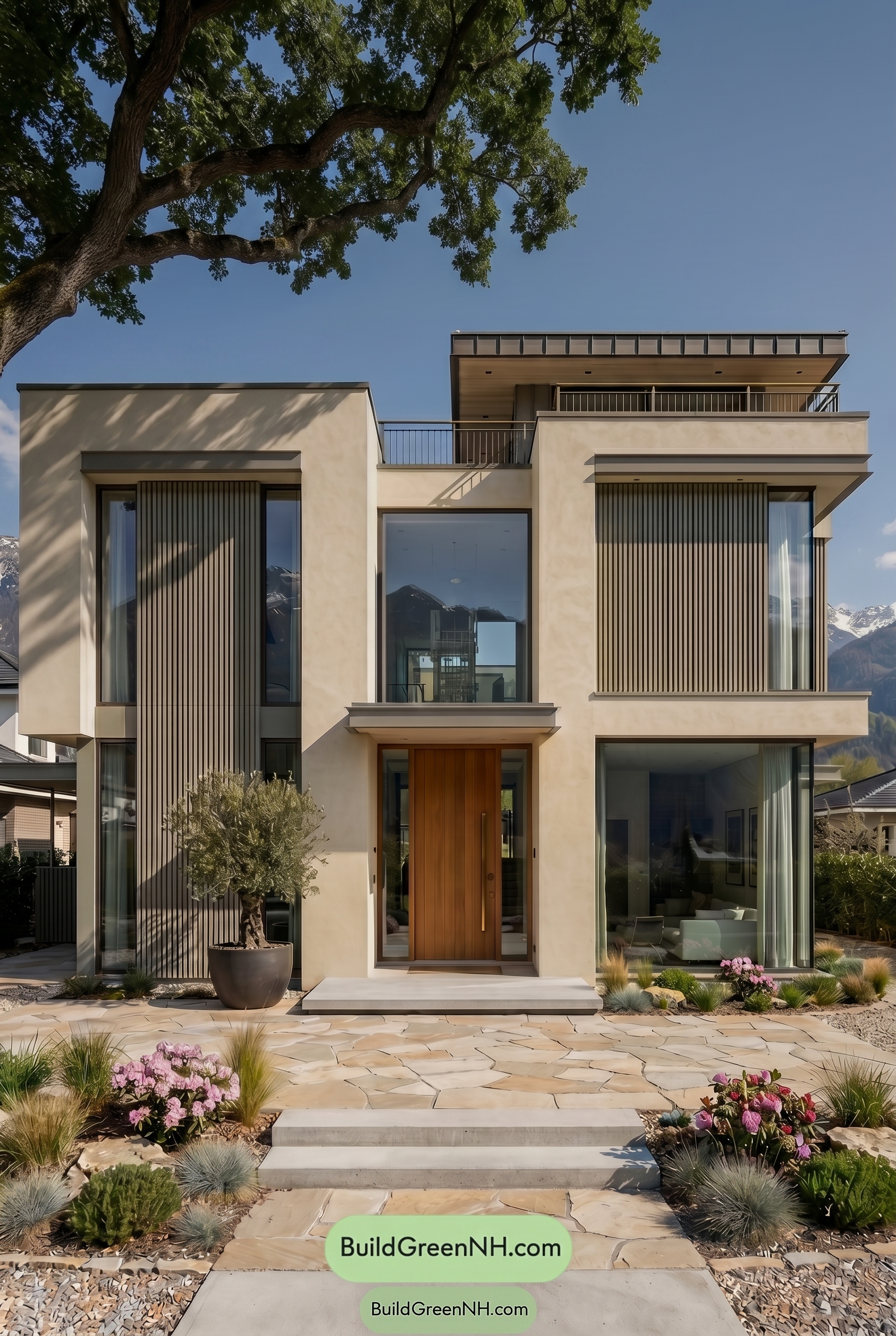
In shade, the beige family reads less sunlit and slightly cooler; its saturation softens, so the broad wall surfaces feel calmer and more stone-like than they would in neutral daylight. The warmer beige areas lose a bit of their golden glow, shifting toward a muted, creamy neutral with a quieter, more refined mood.
The gray trim, window frames, and railings gain depth in shaded light, while shadows make their edges feel crisper against the softened beige. Compared with neutral daylight, the contrast becomes more architectural and subdued, giving the exterior a composed, modern, slightly moodier presence.
Nighttime
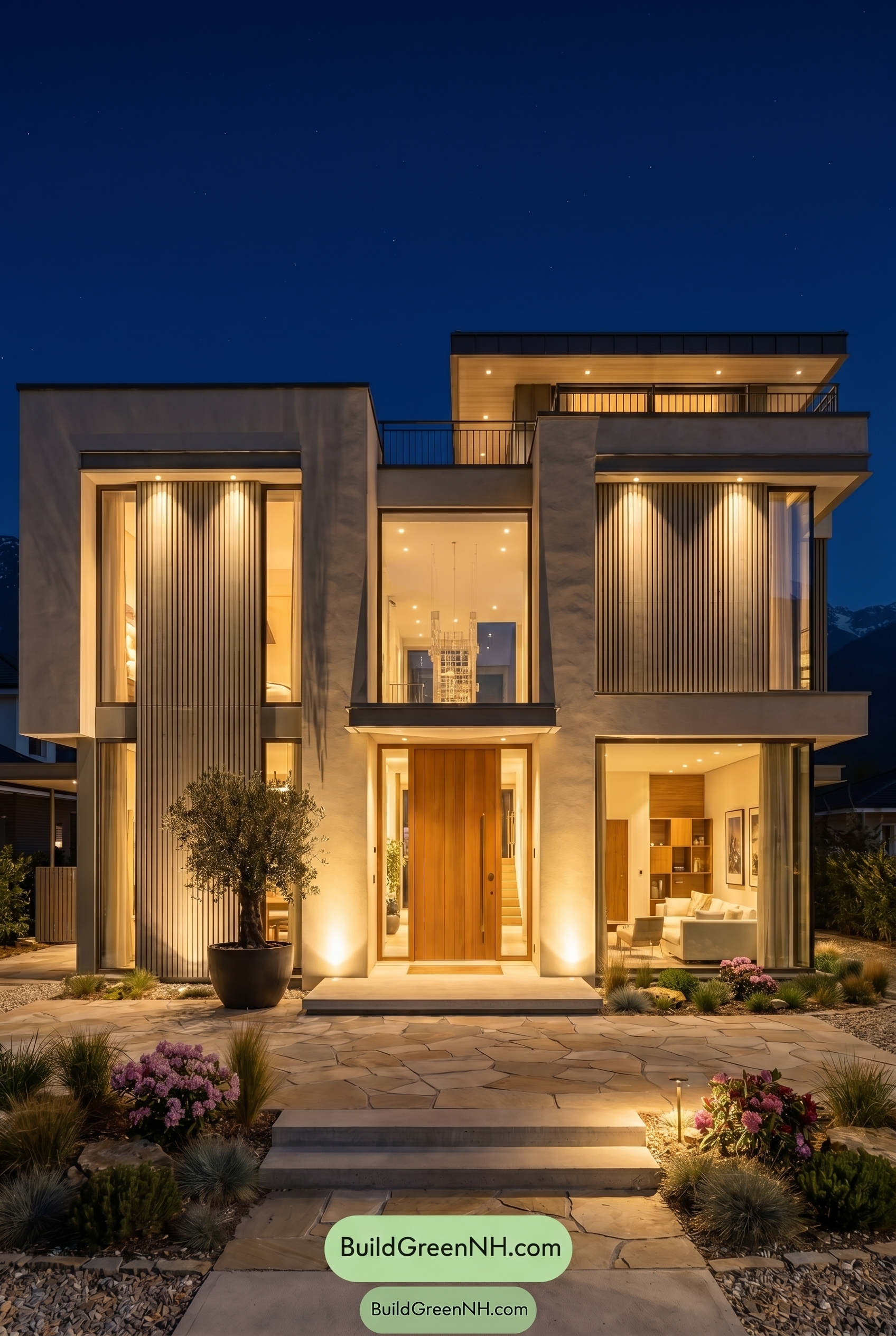
At night, the beige exterior shifts away from the flatter balance of neutral daylight and takes on a richer, honeyed warmth wherever the fixtures wash the walls. Saturation increases around the entry and window bays, while unlit sections recede into deeper taupe-beige shadows, making the façade feel more sculpted and layered.
The gray trim, window frames, and railings appear cooler and darker than they would in daylight, sharpening the contrast against the illuminated warm neutrals. This mix of glowing beige highlights, charcoal-like gray shadows, and crisp edges creates a mood that feels calmer, more dramatic, and more inviting after dark.
Pin these for later
Want More?
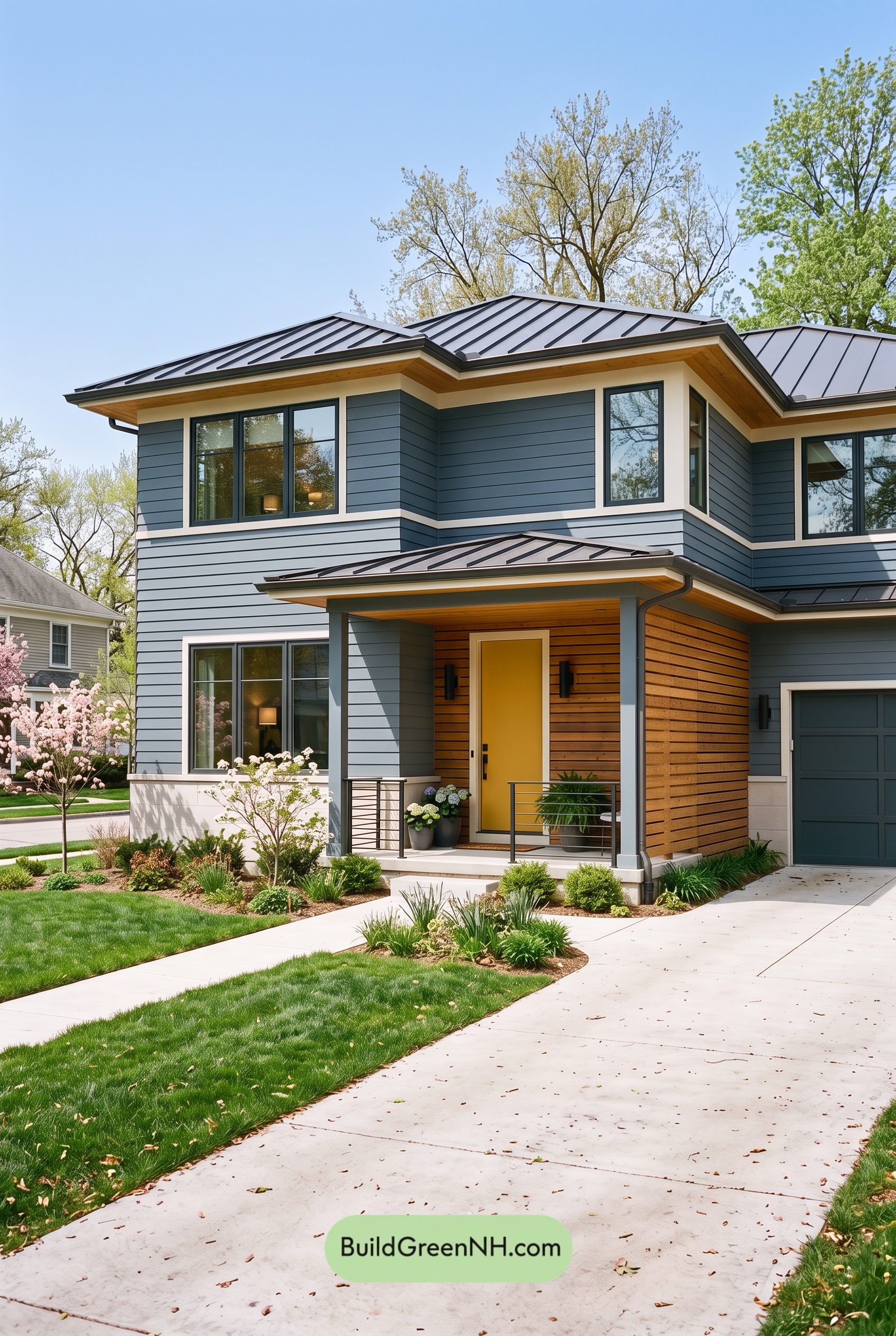 Blue House Front Door Color Scheme: Harbor Saffron
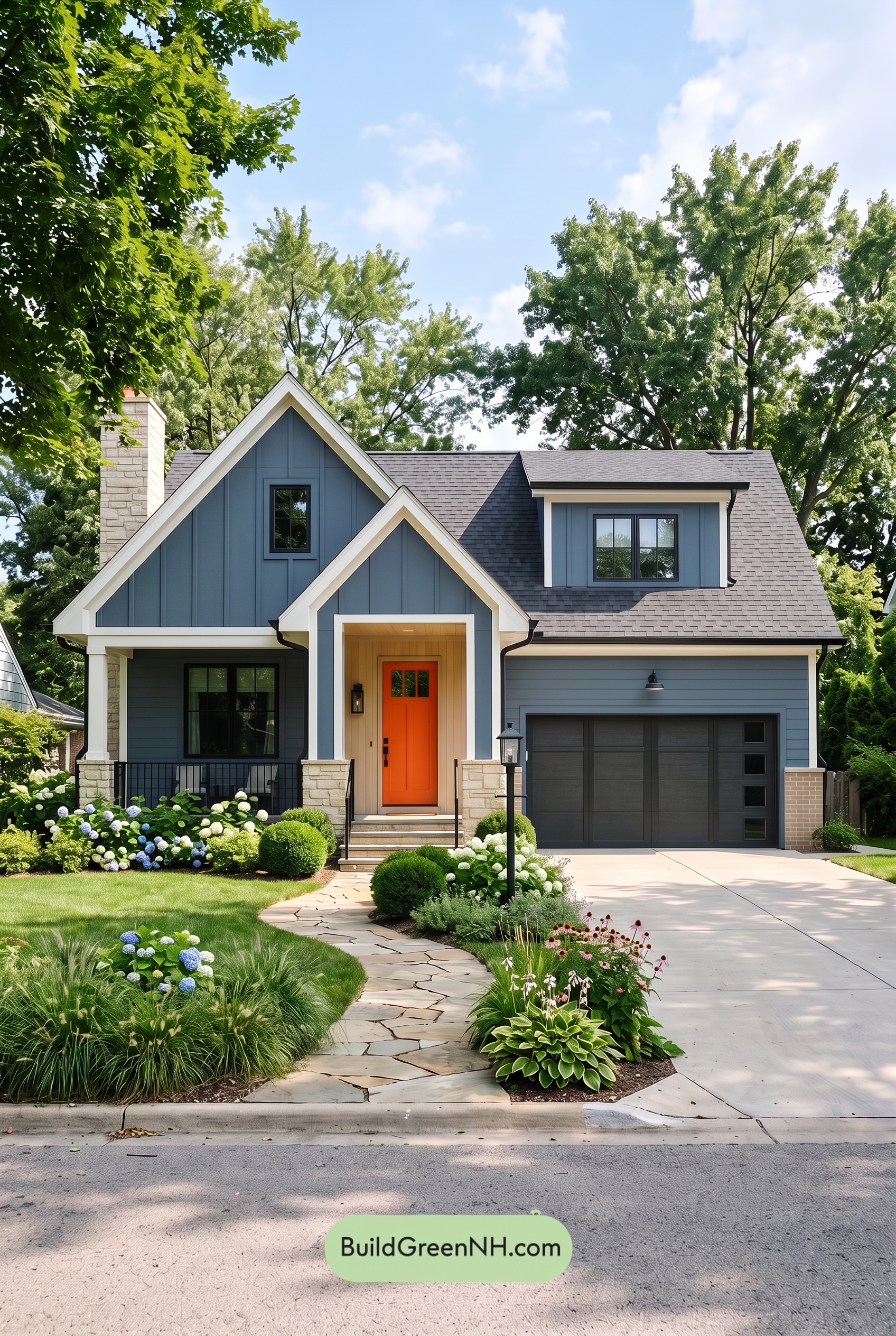 Blue House Front Door Color Scheme: Cobalt Persimmon
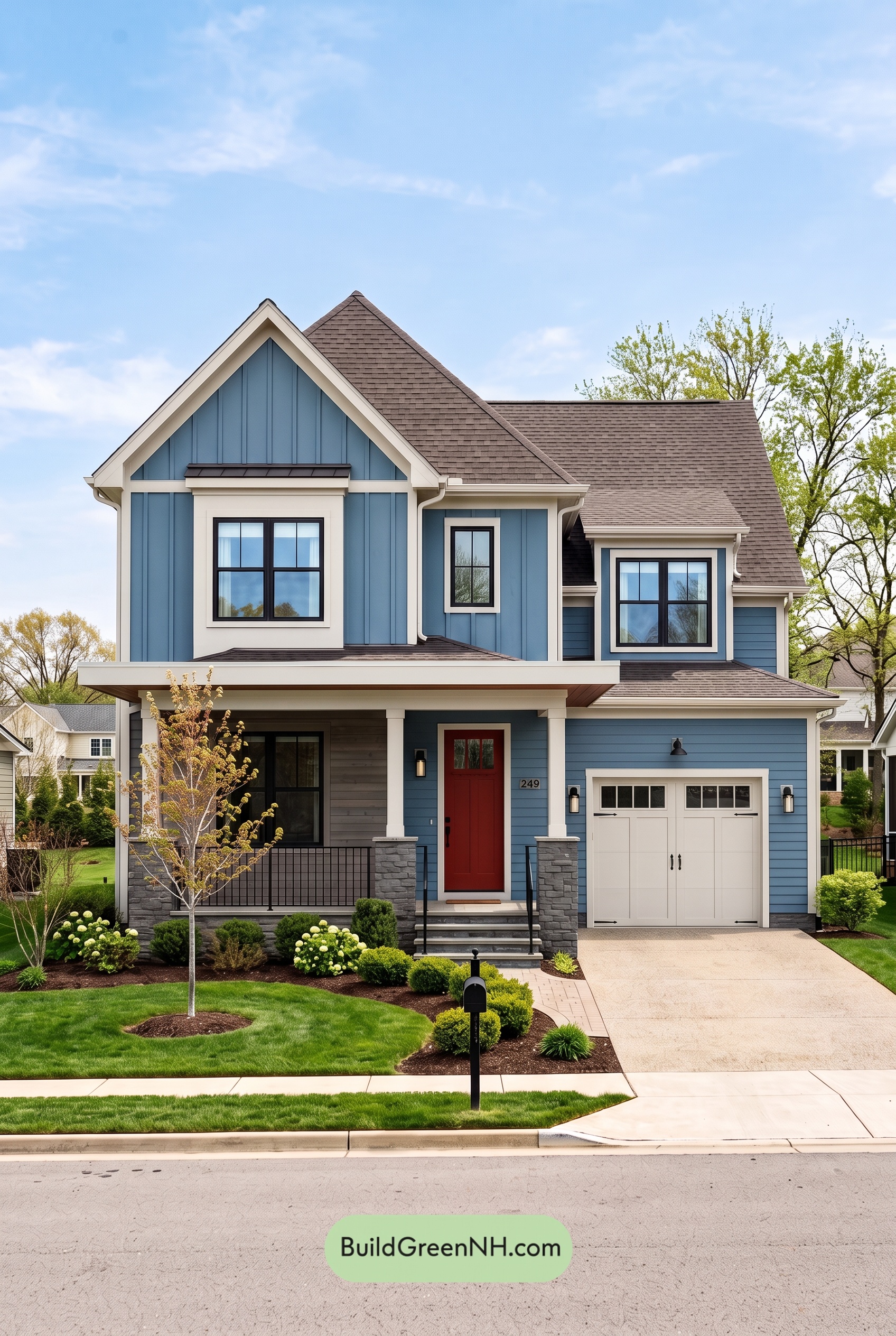 Blue House Front Door Color Scheme: Denim Poppy
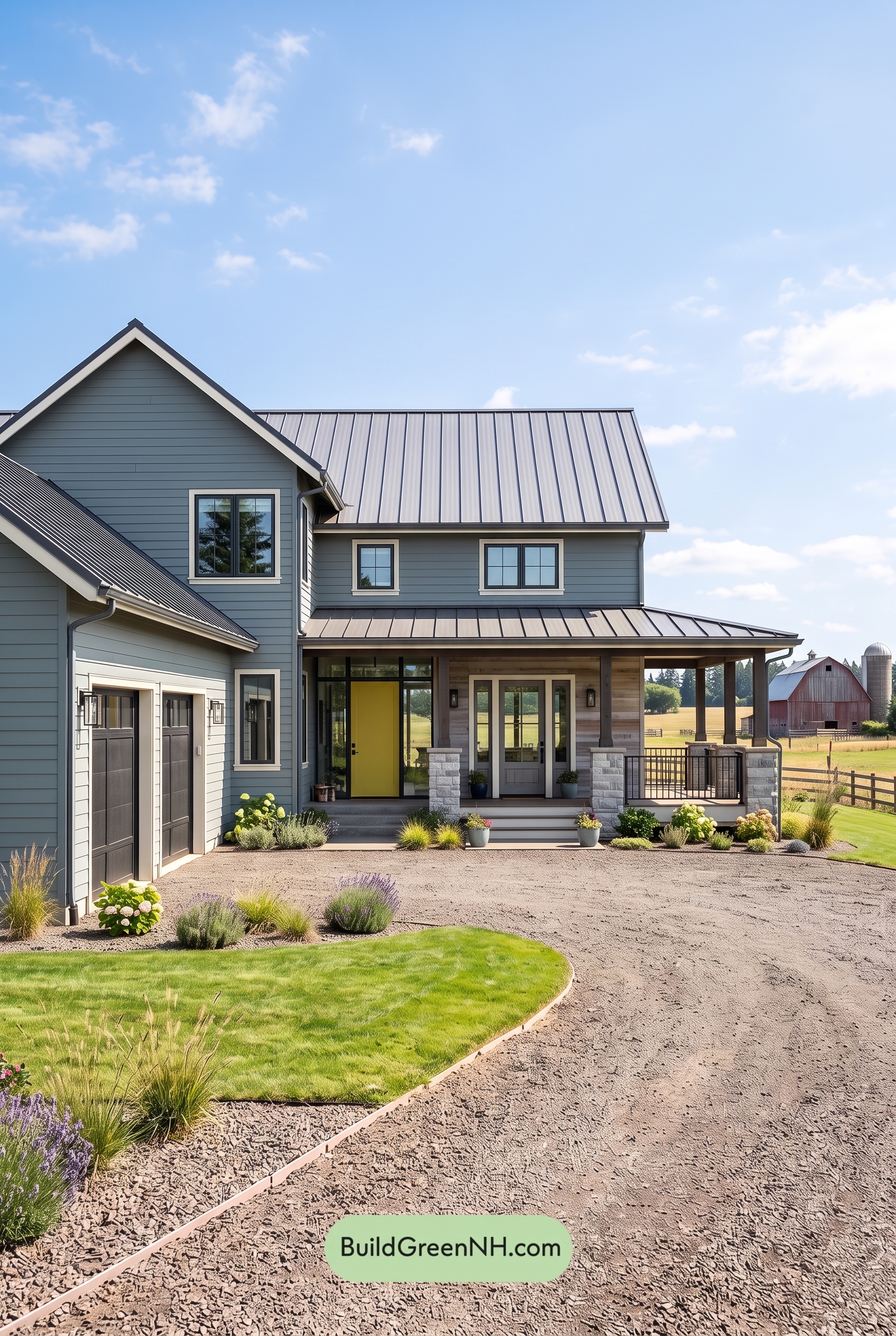 Blue House Front Door Color Scheme: Slate Citron
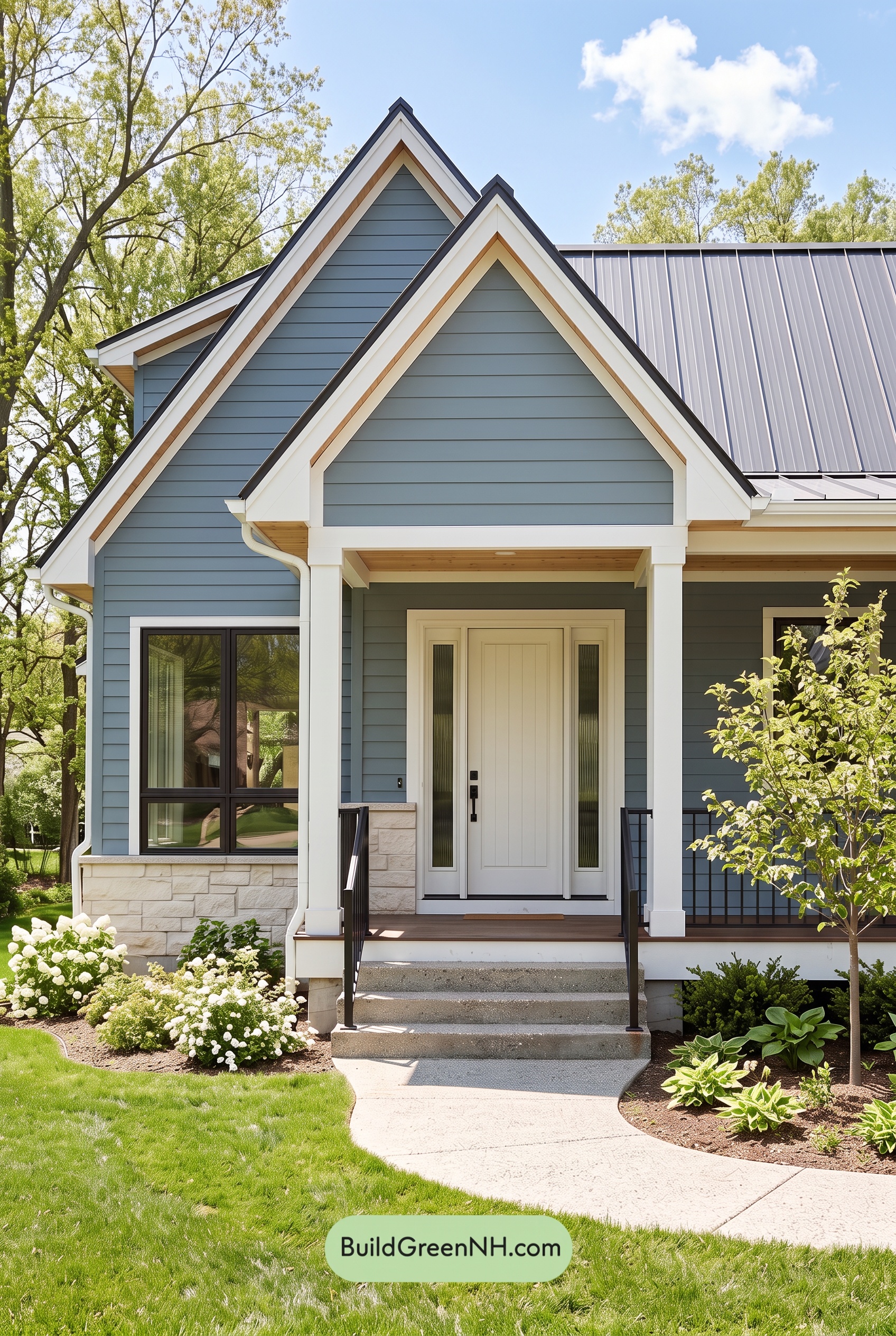 Blue House Front Door Color Scheme: Mist Blue Haven
Table of Contents