Last updated on
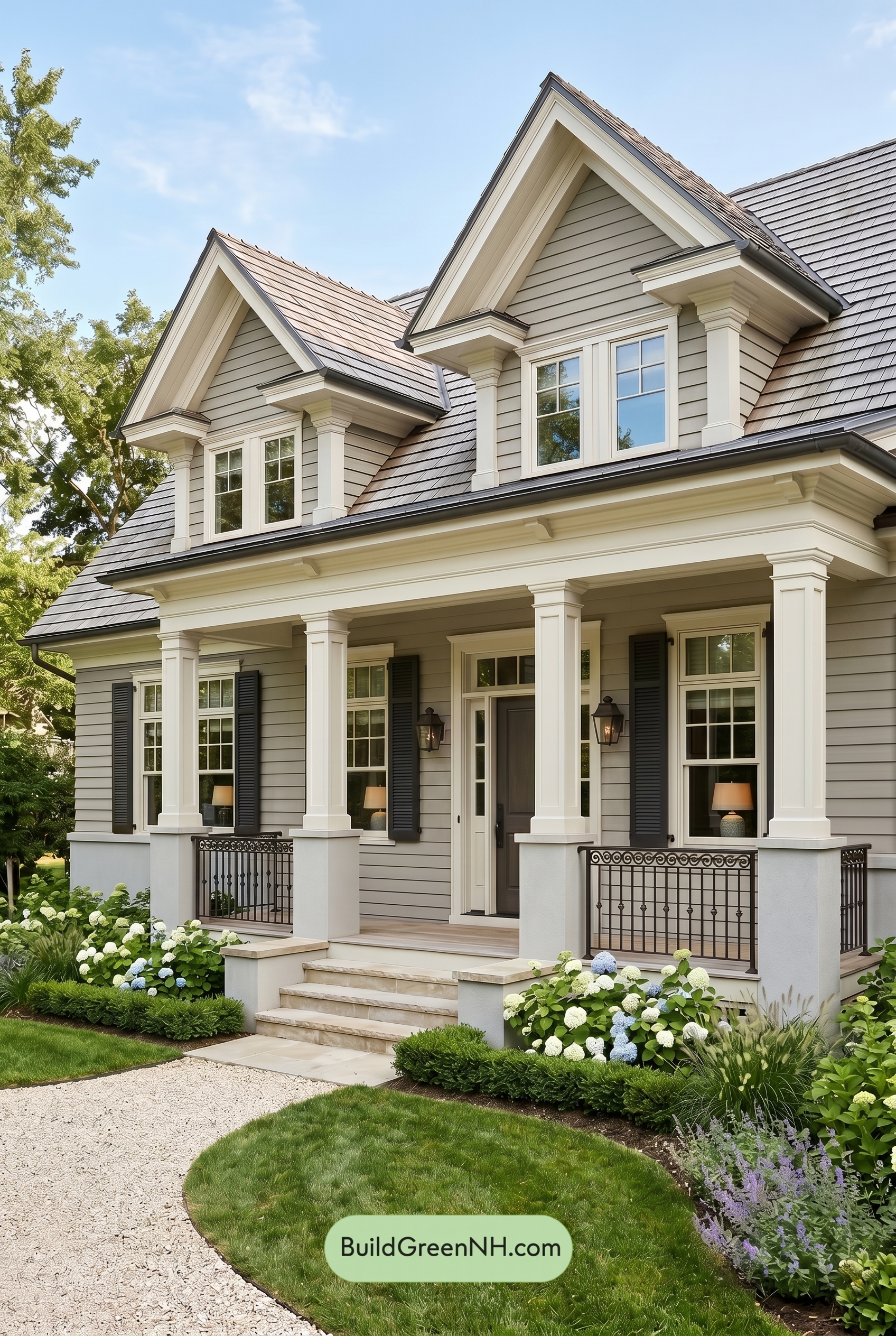

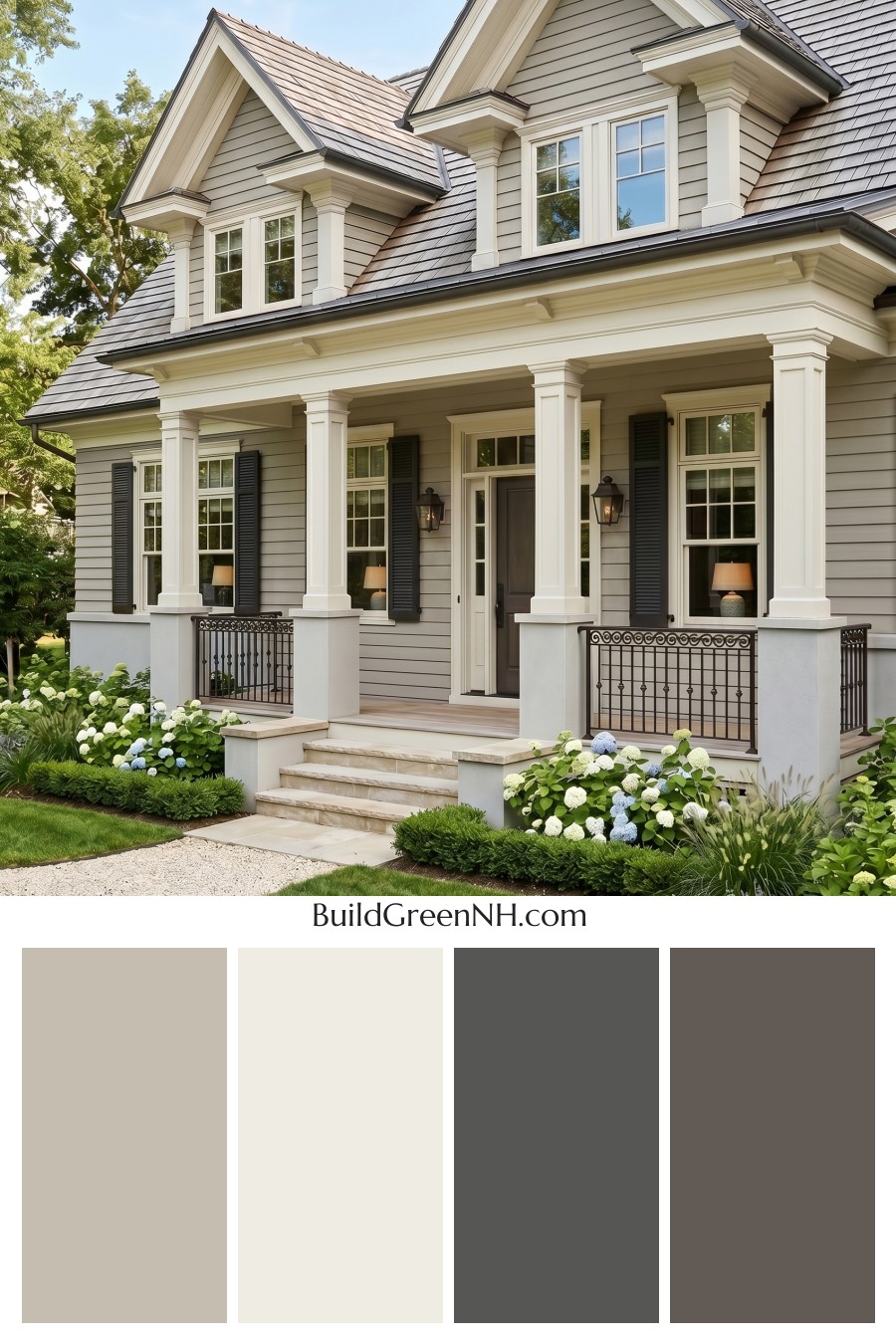
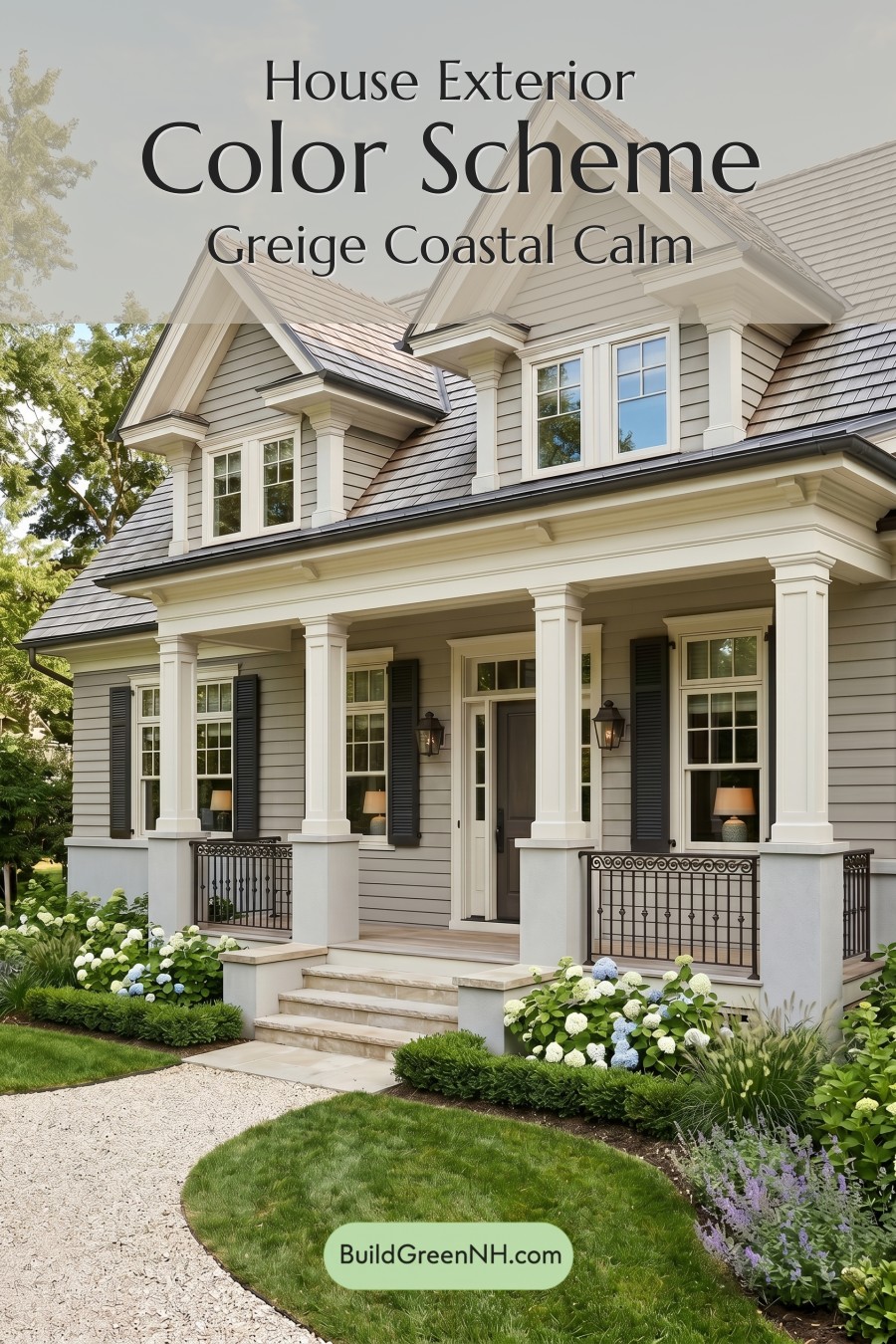
This exterior color scheme shines because its warm beige base, fresh white detailing, and deep gray accents create a timeless look that feels elegant without ever feeling fussy.
A Warm, Welcoming Base
The main siding is wrapped in a warm shade of beige that gives the house a calm, approachable presence. It has enough depth to feel substantial, but it stays soft and neutral, allowing the architecture to take the spotlight.
The dormer walls continue the same beige family, which helps the upper portion of the home feel connected to the main exterior. This repetition keeps the design cohesive, especially with the strong rooflines and layered gables.
Crisp White Architectural Details
The trim, window frames, and columns are finished in a bright white shade that brings beautiful definition to the facade. Around the windows, the white creates a clean frame that makes the glass feel more prominent and refined.
On the porch, the white columns add a classic, graceful quality. They brighten the entry and make the front of the home feel open and inviting. Paired with the beige siding, the white details feel fresh but not stark.
Deep Gray Accents for Contrast
The shutters introduce a deep gray shade that gives the exterior just the right amount of contrast. Against the warm beige siding and white window trim, the gray feels tailored and sophisticated.
The railings also sit in the gray family, leaning darker for a more grounded look. Their slim profile and deeper tone add structure to the porch without overwhelming the softer colors around them.
A Rich Brown Front Door
The front door brings in a rich brown shade that adds warmth and depth at the entry. It works beautifully with the beige siding because both colors feel natural and earthy, while the darker door helps create a clear focal point.
This brown accent also softens the formality of the white columns and gray shutters. It makes the entrance feel lived-in, welcoming, and grounded.
The Roof Ties It All Together
The roof features layered gray-brown tones that bridge the warm and cool parts of the palette. Its deeper shade balances the light siding and trim, while the subtle warmth connects back to the beige walls and brown door.
Because the roof is not overly dark, it complements the home’s refined character without making the exterior feel heavy. It gives the whole design a polished, settled look.
The Overall Mood
This palette feels classic, calm, and upscale. The warm beige siding gives the home comfort, the white trim adds crispness, and the gray accents bring a tailored edge.
What makes the scheme especially successful is its balance. No single color dominates. Instead, each shade has a clear role: beige softens, white highlights, gray defines, and brown welcomes. The result is a house that feels beautifully composed from the roofline to the front steps.
Next, see how this color scheme looks under different lighting simulations throughout the day.
Overcast
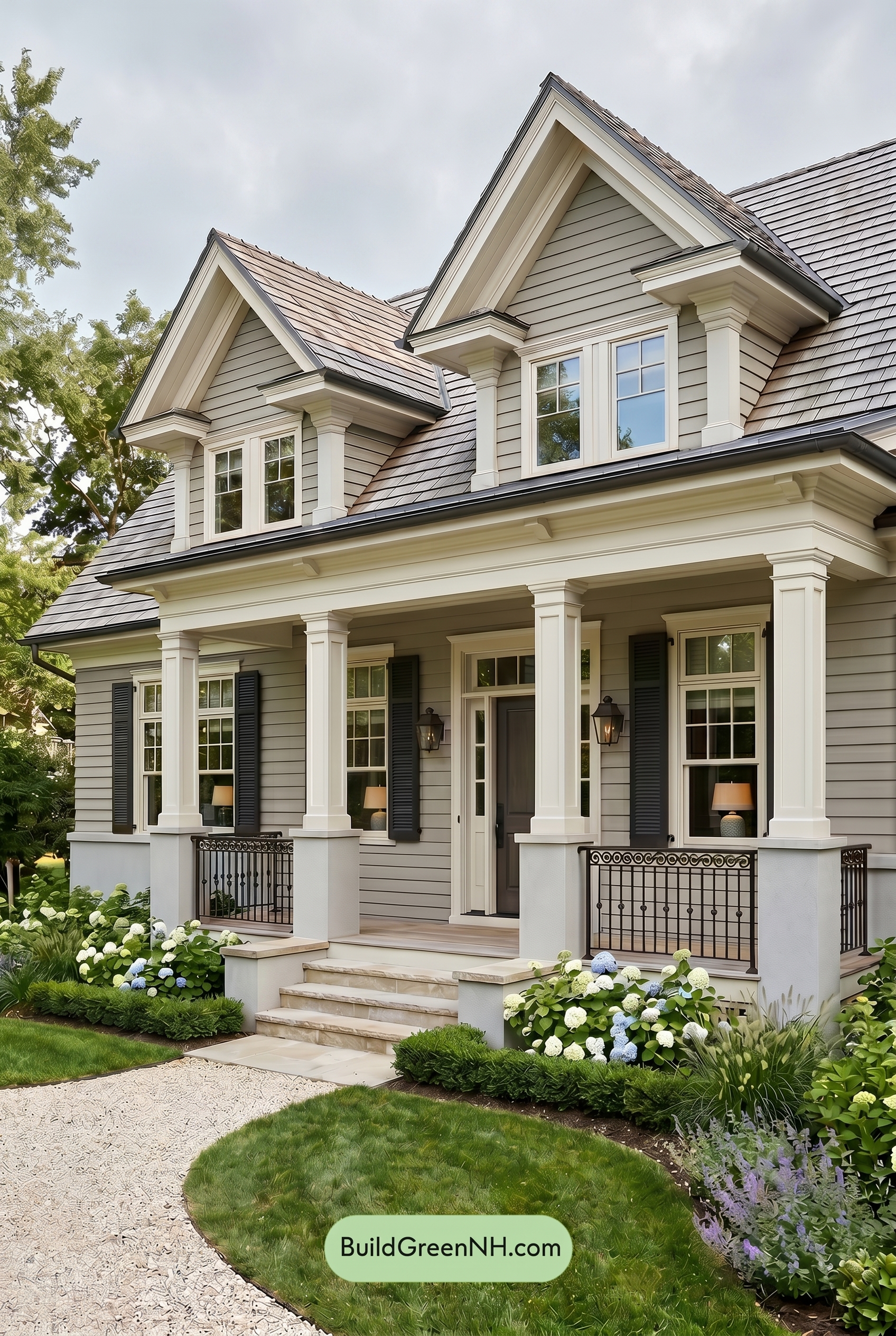
Under overcast light, the beige siding and dormer shades lose a bit of their golden warmth, reading softer, cooler, and more muted than they would in neutral daylight. Saturation drops gently, so the warm neutrals feel calmer and less sunlit, while the white trim and columns appear creamier and less crisp.
Shadows become broader and softer, reducing the sharp contrast around the gables, windows, and porch details. The gray shutters and railings look deeper and steadier, the brown front door feels quieter, and the whole exterior takes on a relaxed, refined mood with a more blended, atmospheric finish.
Golden Hour
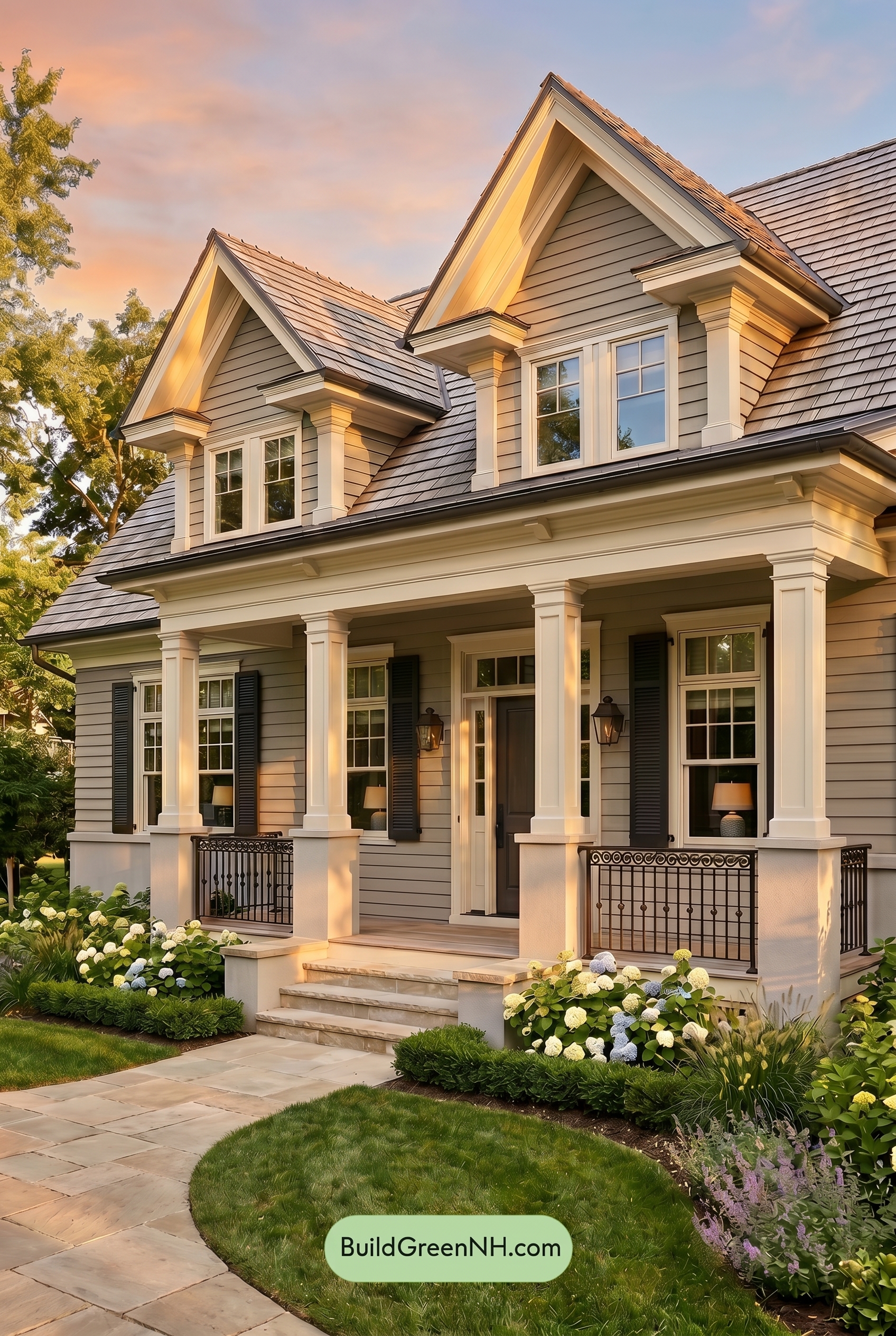
Under Golden Hour light, the beige siding and dormer walls look warmer and more saturated than they would in neutral daylight, shifting from a clean, balanced neutral into a softer sun-washed shade. The white trim, window frames, and columns pick up a creamy glow, so the contrast feels gentler and more inviting rather than crisp and bright.
The gray shutters and railings deepen as the low-angle light creates longer shadows, adding definition around the windows and porch details. The brown front door appears richer and cozier, while the overall mood becomes relaxed, layered, and welcoming compared with the cooler, more straightforward look of midday daylight.
Shade
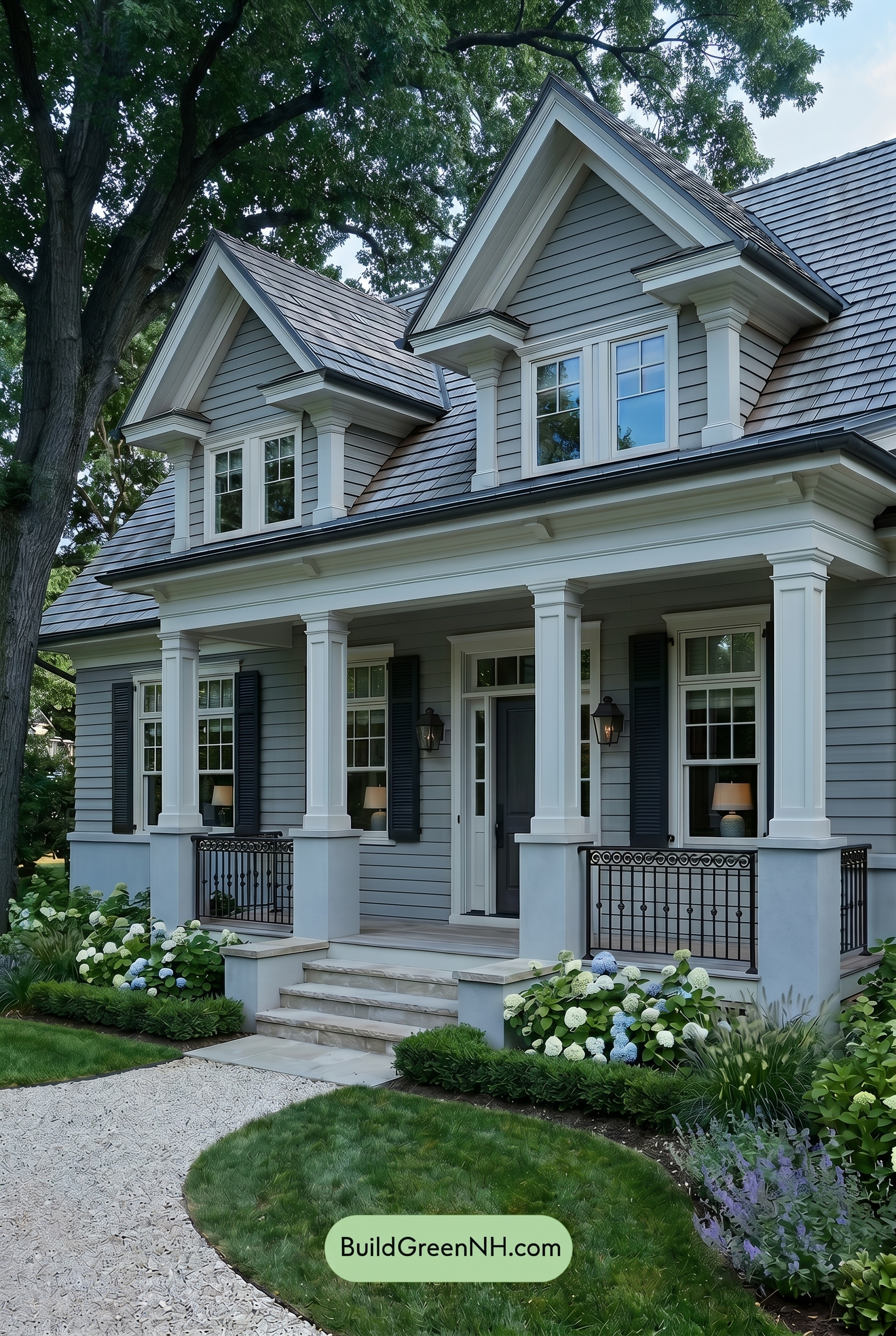
In Shade, the beige siding loses some of its sunny warmth and reads cooler, softer, and more muted than it would in neutral daylight. Its saturation drops slightly, giving the exterior a calm, refined feel, while the gray shutters and railings deepen and appear more pronounced against the lighter surfaces.
The white trim, window frames, and columns shift from crisp and bright to gentler, creamier highlights, especially where tree shadows fall across the façade. Those shadows add contrast around the gables, porch, and roofline, creating a mood that feels quieter, cooler, and more tucked into the landscape.
Nighttime
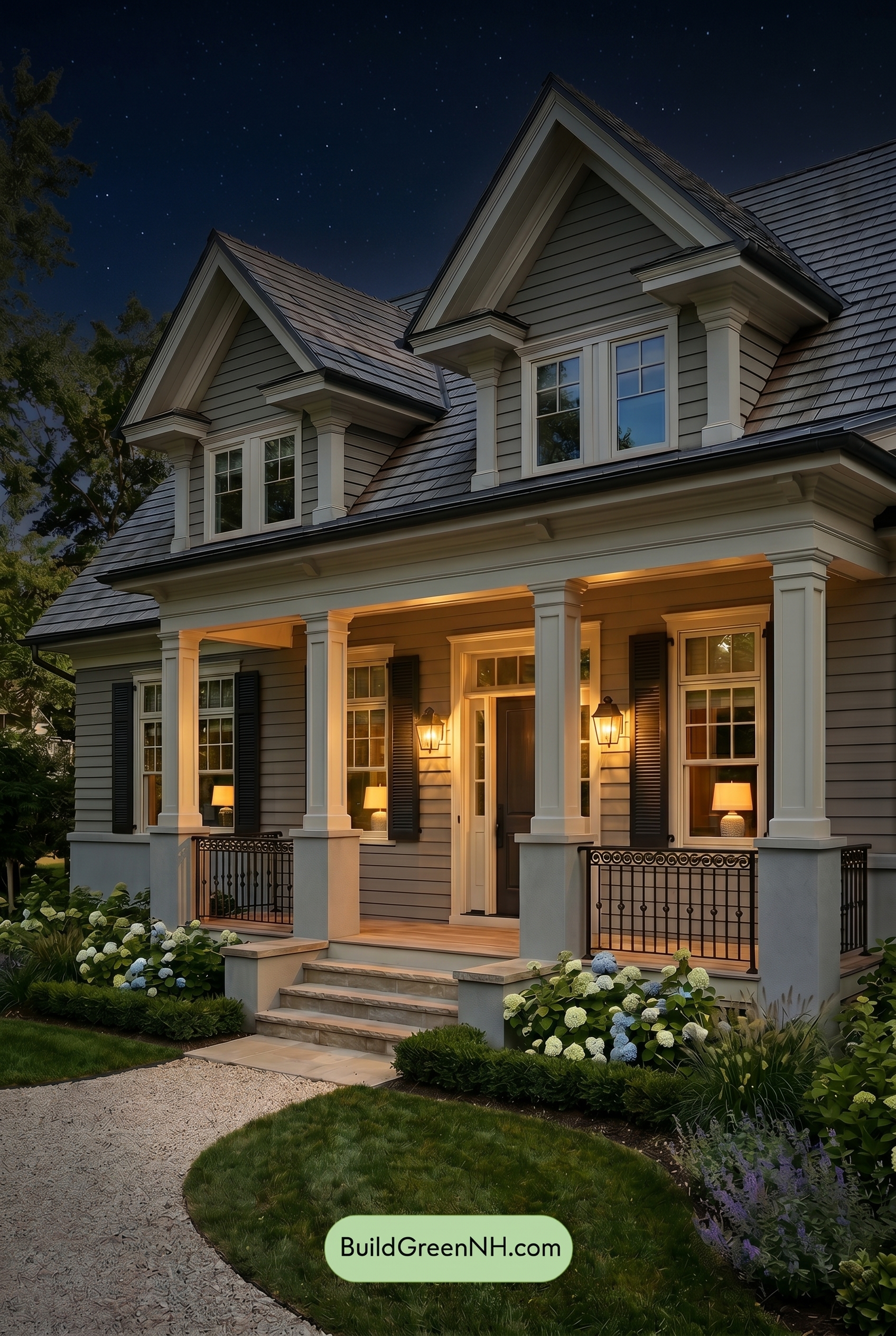
At nighttime, the beige family on the main walls shifts from a balanced daylight neutral to a deeper, warmer shade where the porch lights glow, while unlit areas lose saturation and settle into cooler shadow. The white family trim and columns pick up a soft golden warmth near the fixtures, creating stronger contrast against the darker siding and rooflines than they would in neutral daylight.
The gray family on the shutters and railings appears more dramatic after dark, reading as deeper and more defined as shadows sharpen their edges. The brown family at the front door feels richer and cozier under the warm lighting, giving the whole exterior a more intimate, welcoming mood compared with the clearer, flatter look of daylight.
Pin these for later
Want More?
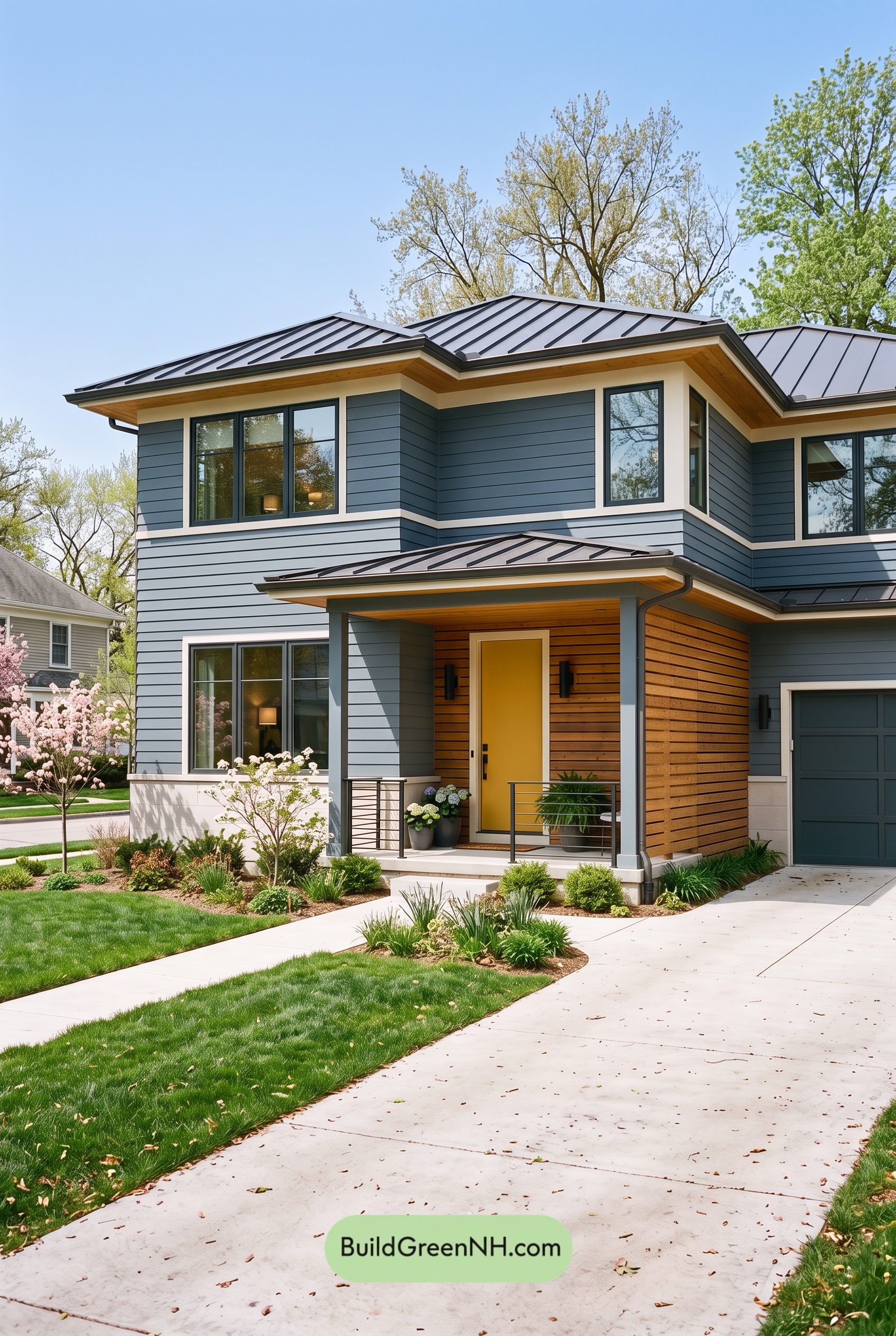 Blue House Front Door Color Scheme: Harbor Saffron
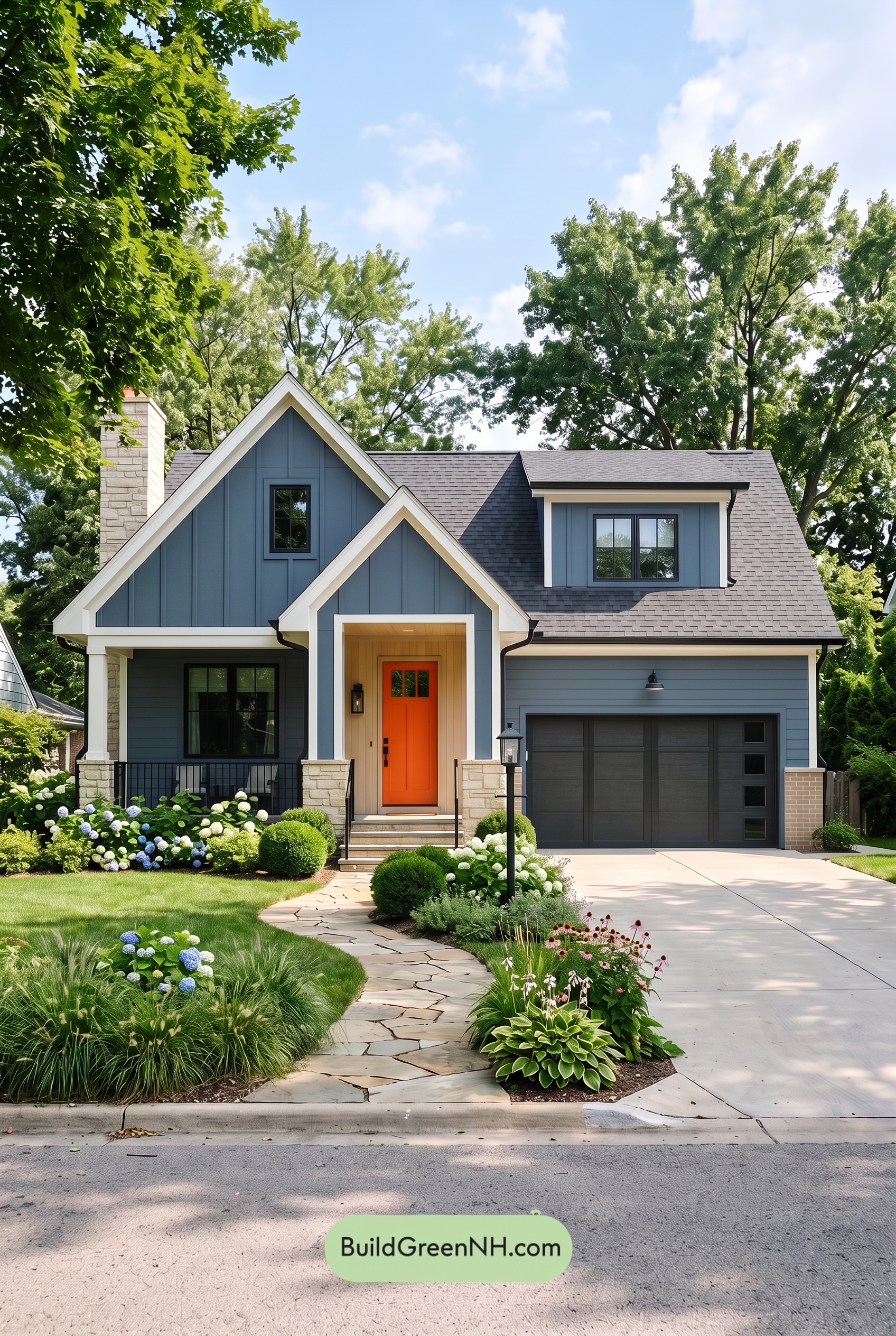 Blue House Front Door Color Scheme: Cobalt Persimmon
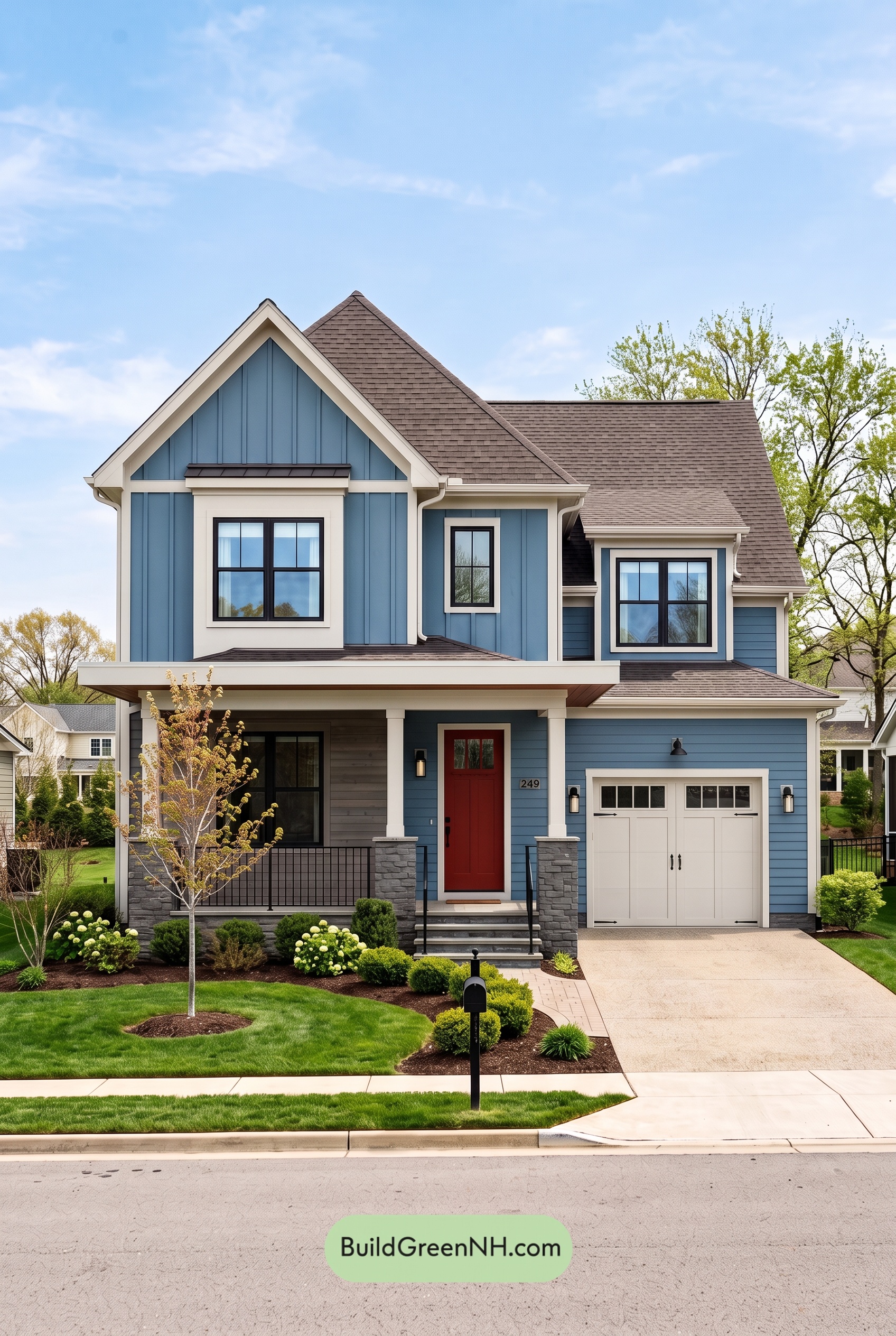 Blue House Front Door Color Scheme: Denim Poppy
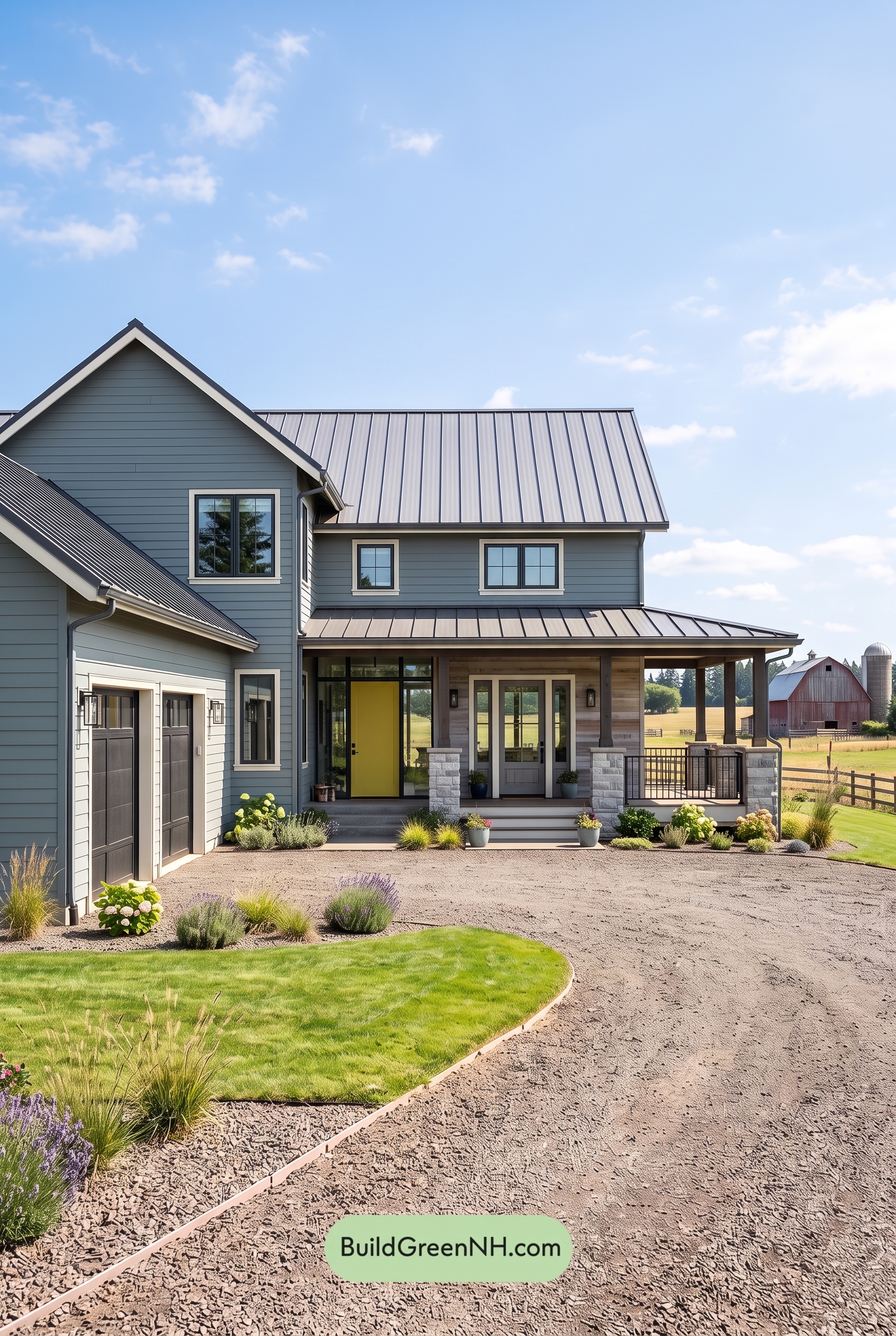 Blue House Front Door Color Scheme: Slate Citron
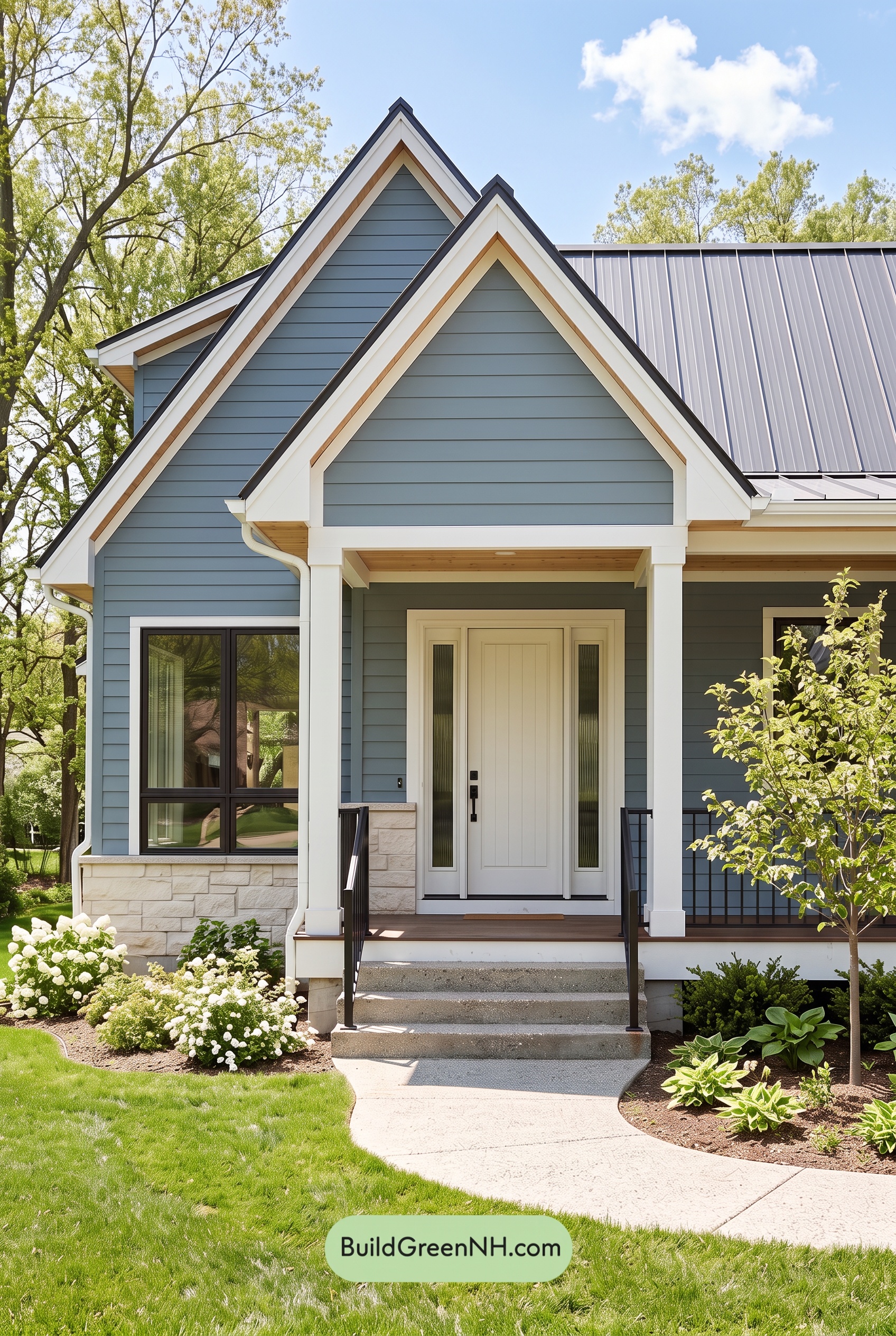 Blue House Front Door Color Scheme: Mist Blue Haven
Table of Contents