Last updated on
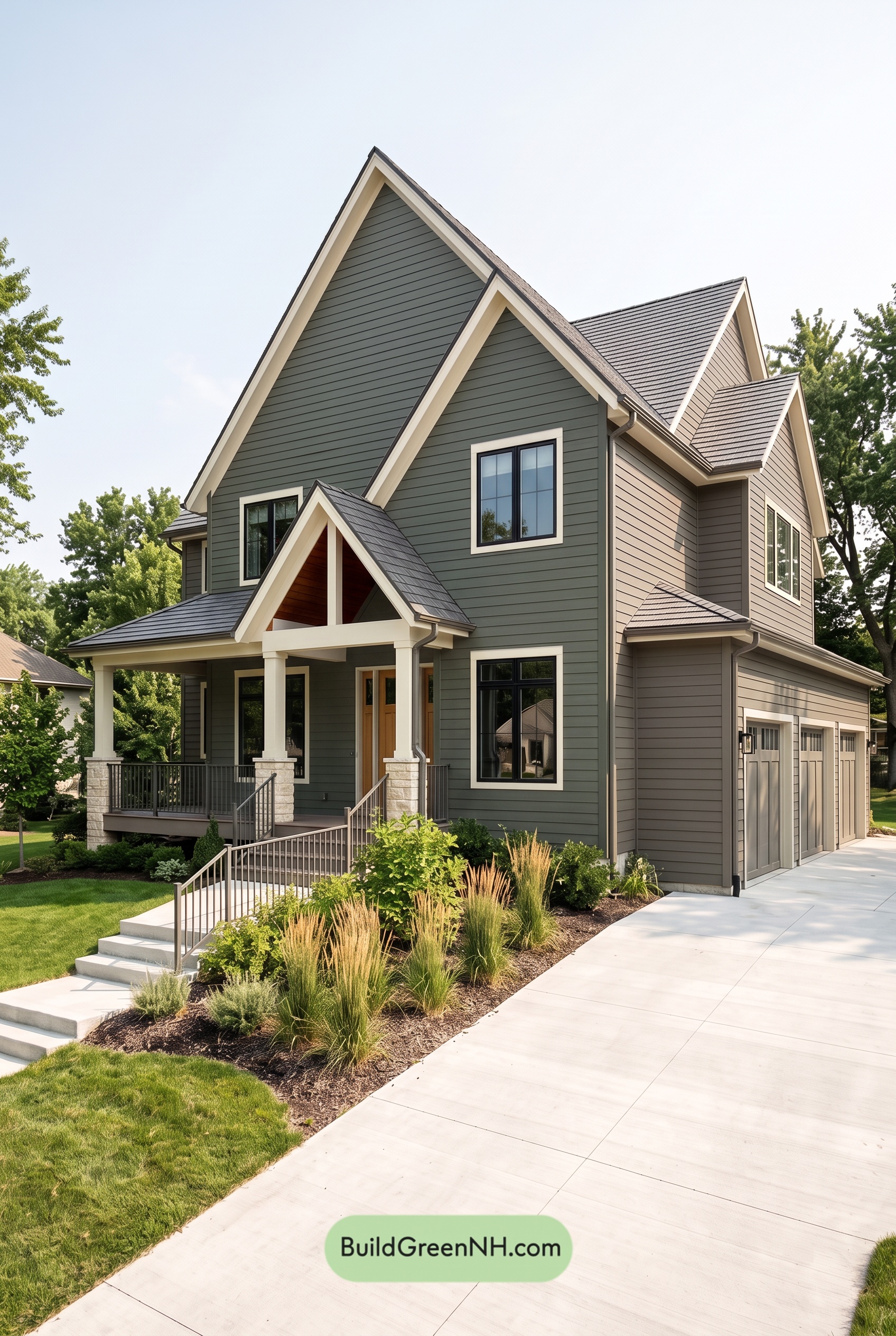

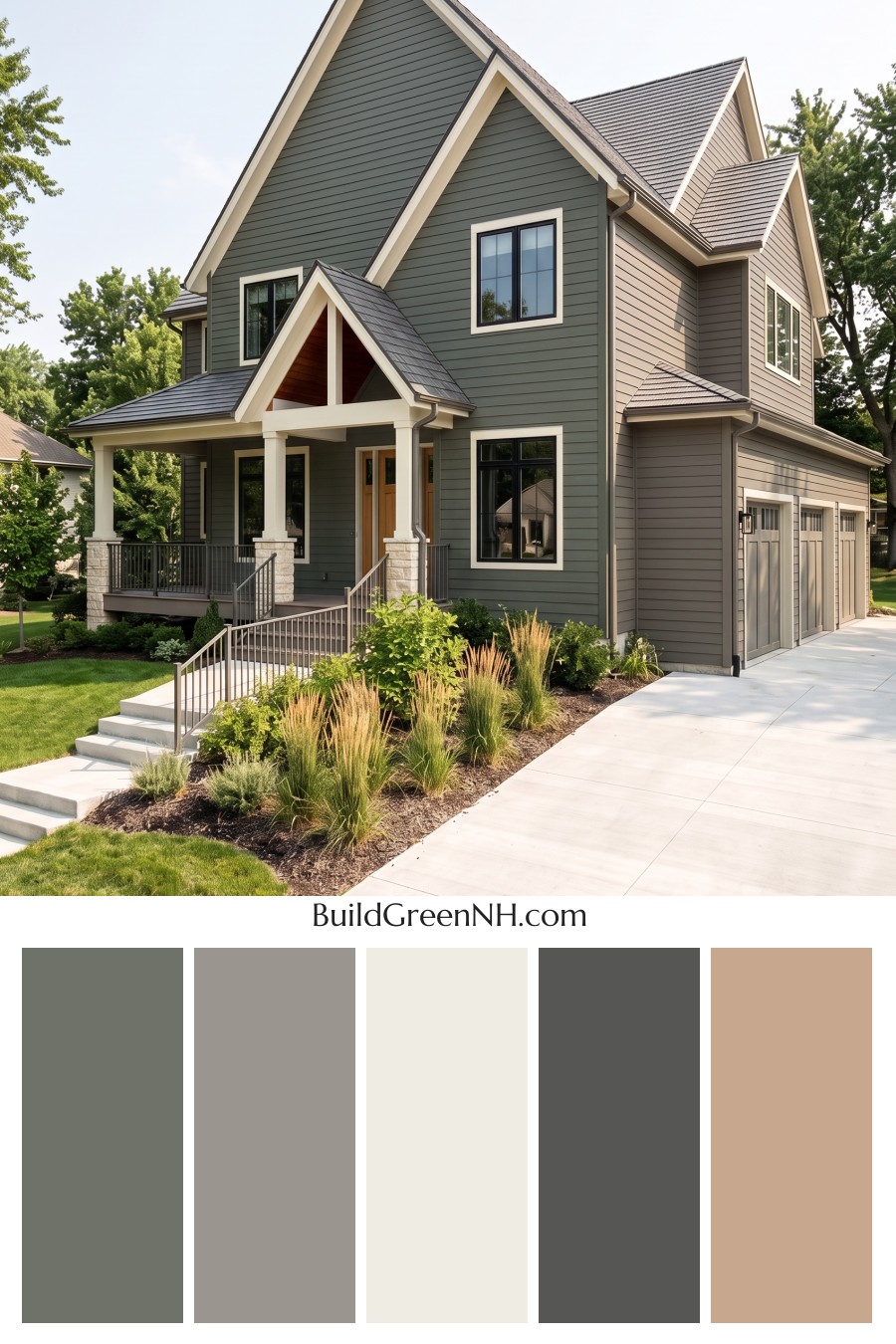
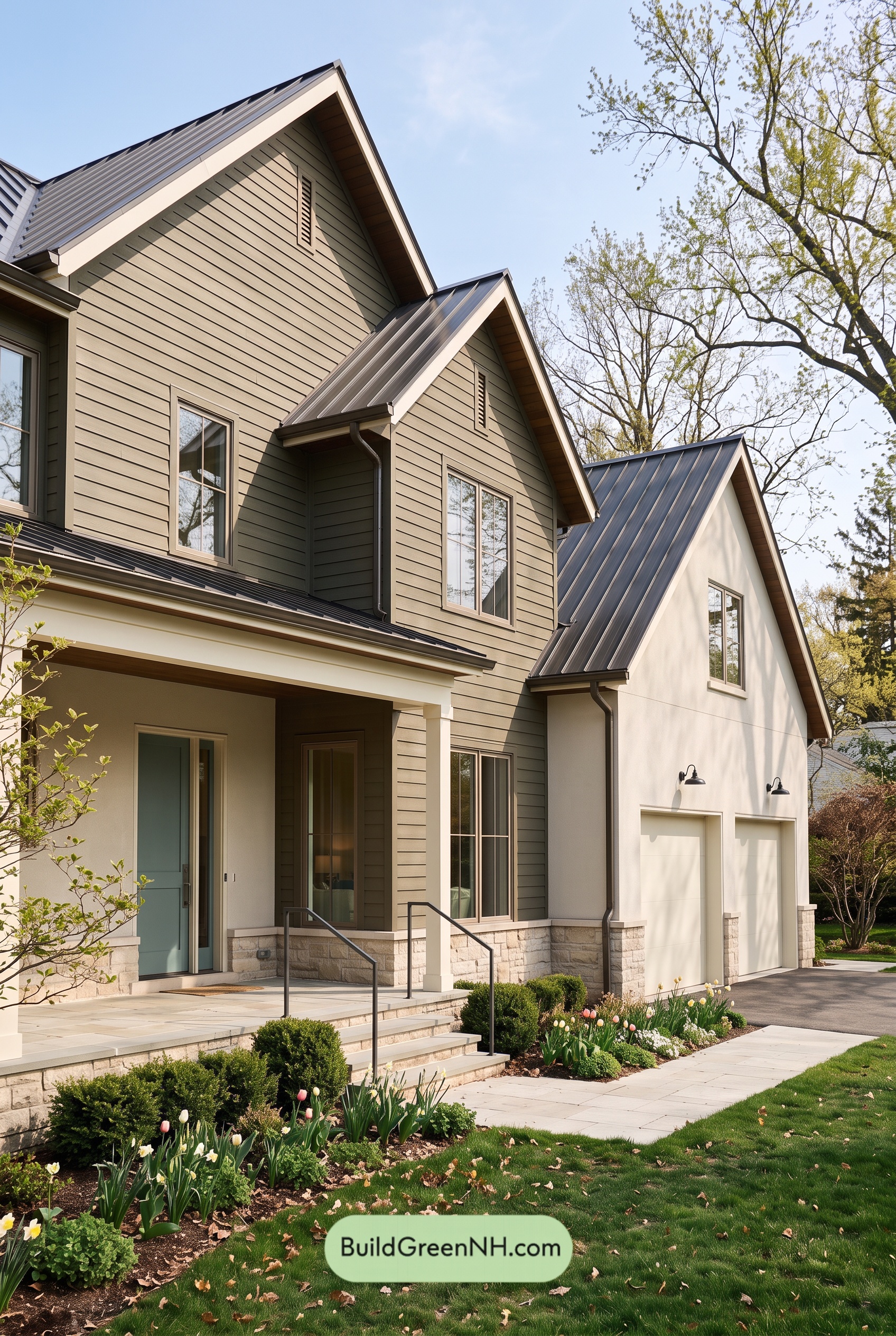
Soft gray siding, creamy white trim, and a warm beige entry give this home a beautifully balanced exterior that feels polished without losing its welcoming charm.
Layered Grays Give the Exterior Depth
A medium gray with subtle green undertones covers the front-facing horizontal siding, giving the tall gables a calm, grounded presence. It is a gentle shade rather than a stark one, allowing the home’s architectural details to stand out without making the exterior feel busy.
Along the side and garage wing, the gray appears warmer and slightly lighter. That subtle shift adds dimension while keeping the different sections connected. The palette feels cohesive, but never flat.
Creamy White Highlights the Architecture
Creamy white trim traces the steep rooflines, frames the windows, and defines the covered porch. Against the deeper siding, these light edges make each gable easy to appreciate. The effect is crisp without the sharpness of a cooler, brighter white.
The porch columns repeat this soft white, bringing brightness down to the entry level. Their pale gray and beige masonry bases provide a gentle transition to the steps and surrounding landscape.
Dark Details Add Just Enough Contrast
Deep charcoal gray window frames create a strong inner outline within the creamy white surrounds. This layered contrast gives the windows definition and adds a subtly contemporary touch to the traditional forms.
The gray porch and stair railings continue that darker accent in a lighter, more open way. Overhead, charcoal gray roofing anchors the many roof planes, while gray gutters blend quietly into the overall scheme. These repeated shades keep the details coordinated rather than competing for attention.
A Warm Entry and an Understated Garage
The front door introduces a golden beige note that draws the eye toward the sheltered entrance. Warm brown tones beneath the porch gable reinforce that inviting feeling, softening the cooler grays nearby.
The garage doors take a quieter approach. Their warm medium gray sits close to the adjacent siding, helping the broad garage area recede. Creamy white framing provides enough definition without turning it into the main focal point.
A Calm, Welcoming Finish
What makes this scheme work is its balance of light, dark, warm, and cool. Gray gives the house substance, creamy white celebrates its shape, and beige brings warmth where it matters most: the front door. Together, these shades create an exterior that feels refined, approachable, and comfortably at home among the surrounding greens.
Next, see how this color scheme looks under different lighting simulations throughout the day.
Overcast
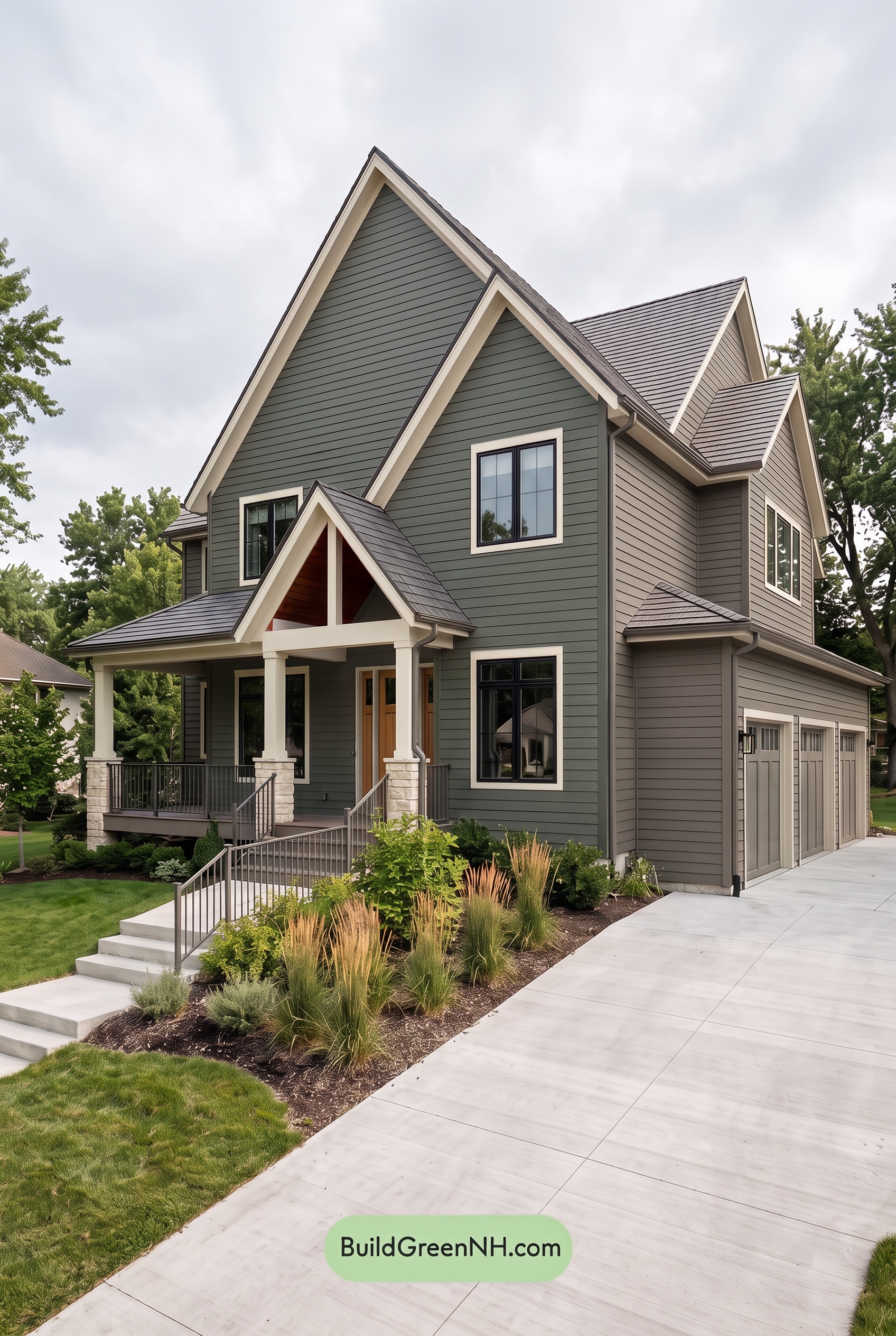
Under overcast skies, the midtone grays feel deeper and more subdued than in neutral daylight, with a faint green cast becoming easier to notice. The warmer gray and beige shades lose some of their golden warmth, while the soft whites appear gentler and less luminous. Together, these shifts give the palette a cooler, quieter character without washing out its subtle differences.
Diffused light softens shadows beneath the gables and across the siding, making transitions between light and dark feel less dramatic. The deepest grays still define the windows and railings, but their contrast with the whites feels less sharp. The overall mood becomes calm and understated, with the warm beige offering a welcoming counterpoint.
Golden Hour
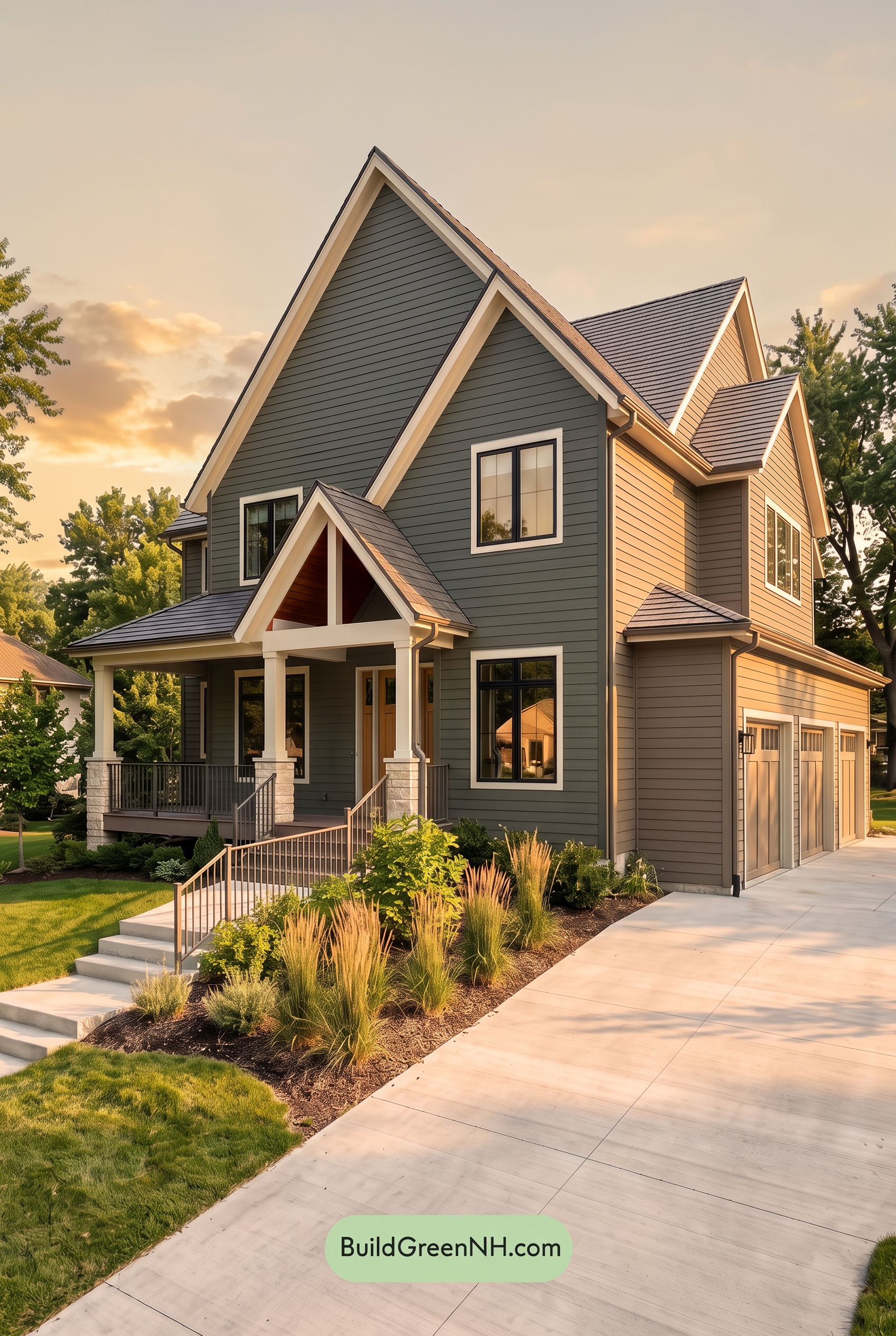
Golden Hour gives the gray siding a warmer, richer character than it would have in neutral daylight. Sunlit sections lean toward soft brown-gray, while shaded areas retain a cooler, deeper gray, making the same shade appear surprisingly varied. The white trim takes on a creamy warmth, and the beige entry feels fuller and more saturated beneath the golden light.
Long shadows beneath the gables and across the porch deepen the darker grays, creating stronger contrast with the glowing pale trim. Yet the warm light softens the overall palette, so the house feels inviting rather than stark. Compared with the more even, restrained appearance of neutral daylight, these warm highlights and cool shadows give the exterior a cozy, quietly dramatic mood.
Shade
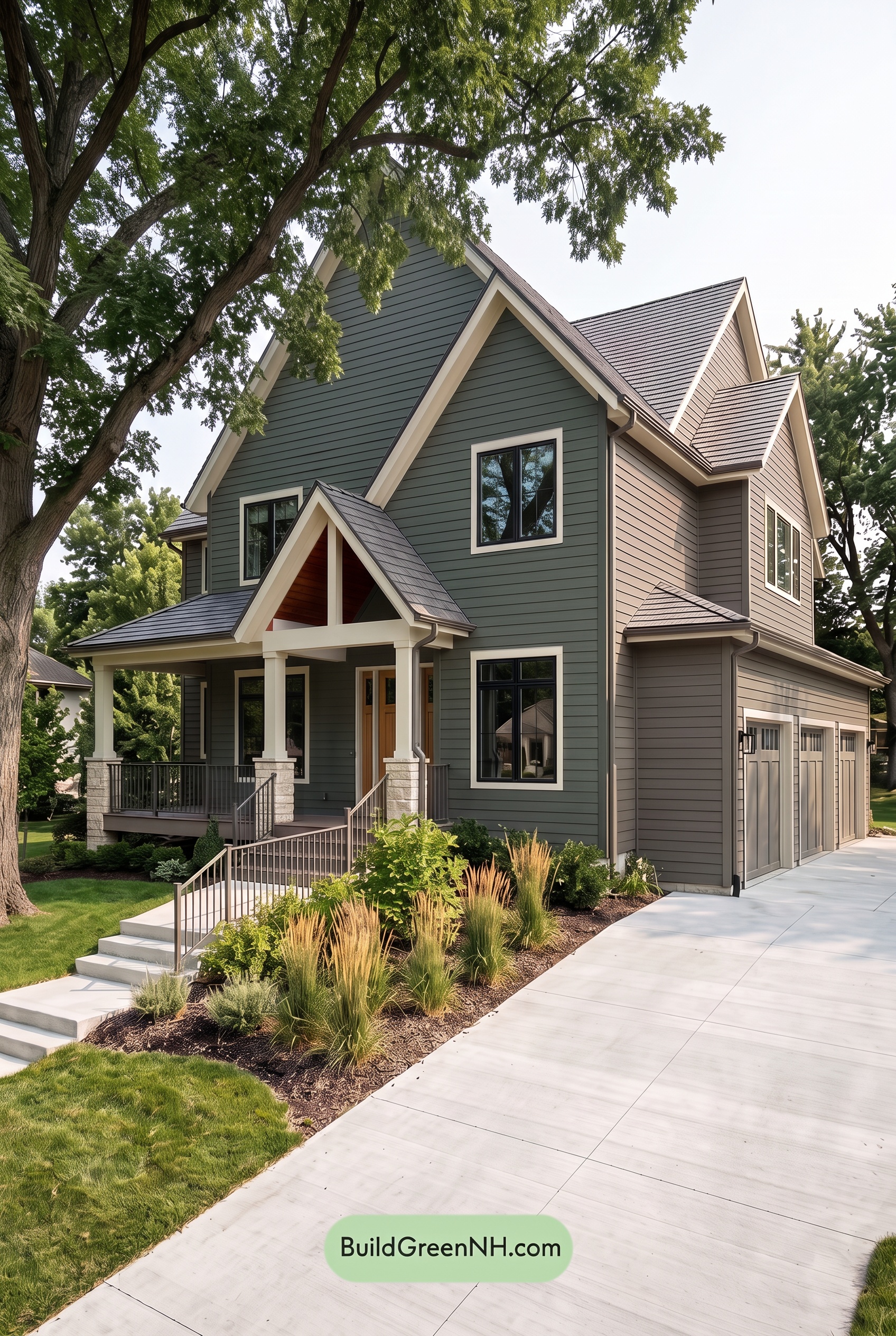
Under the tree’s shade, the grays appear deeper and cooler than they would in neutral daylight, with subtle green-blue undertones becoming more noticeable. Their saturation stays restrained, giving the exterior a soft, muted richness rather than a vivid finish. The warm beige feels less golden, offering a quiet touch of warmth against the cooler shades.
The whites lose some brightness in shade but still create a clear contrast with the deeper grays. Beneath the porch and eaves, shadows draw the darkest gray shades closer together, making smaller details less distinct. Compared with neutral daylight’s more balanced appearance, the shaded palette feels calmer, more sheltered, and gently dramatic.
Nighttime
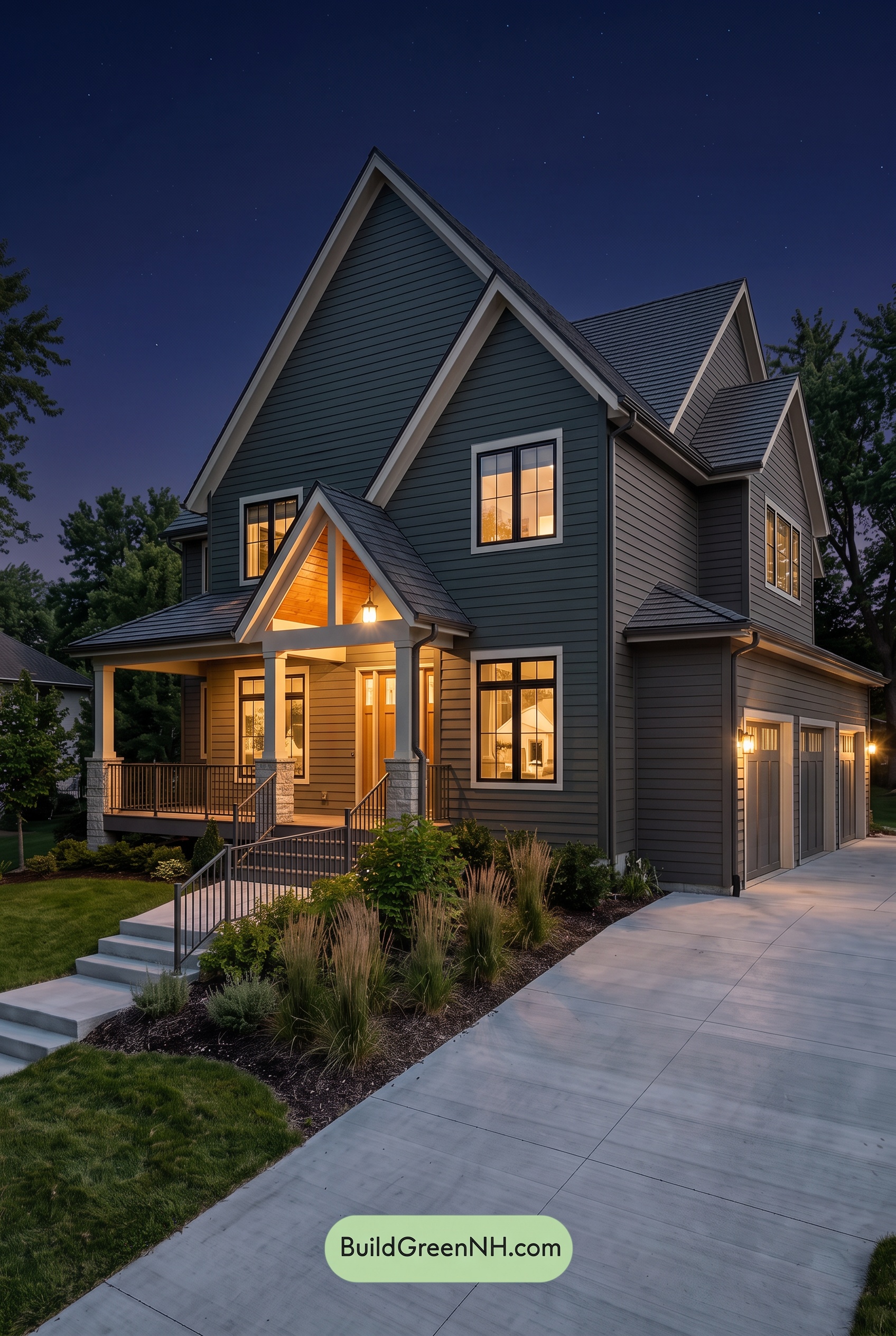
At night, the gray siding deepens and takes on a cooler, blue-gray cast compared with its more balanced appearance in neutral daylight. Subtle color differences become less distinct in shadow, while warm exterior lighting gives nearby grays a softer, brownish warmth. Deep shadows beneath the gables and along the siding add definition, making the facade feel more dramatic.
The white trim and columns shift toward creamy shades beneath the porch lights, standing out against the darkened walls. Around the entrance, beige appears richer and more golden, while shaded gray window frames and railings nearly blend into the darkness. This contrast between warm, illuminated neutrals and cool, muted grays turns the crisp daytime palette into a cozy, inviting nighttime setting.
Pin these for later:
Want More?
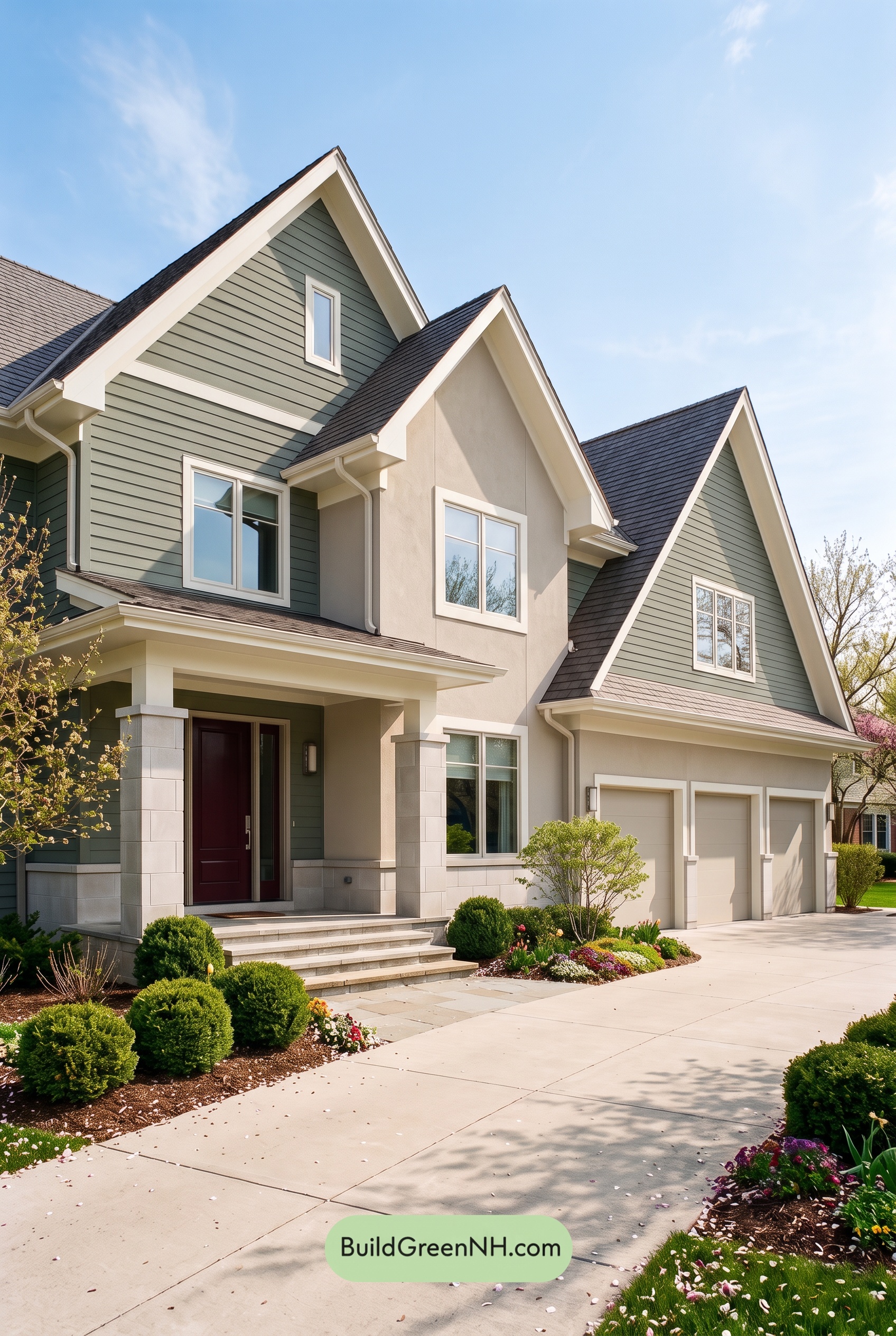 Green House Exterior Color Scheme (New Trend for 2027): Muted Green Burgundy Poise
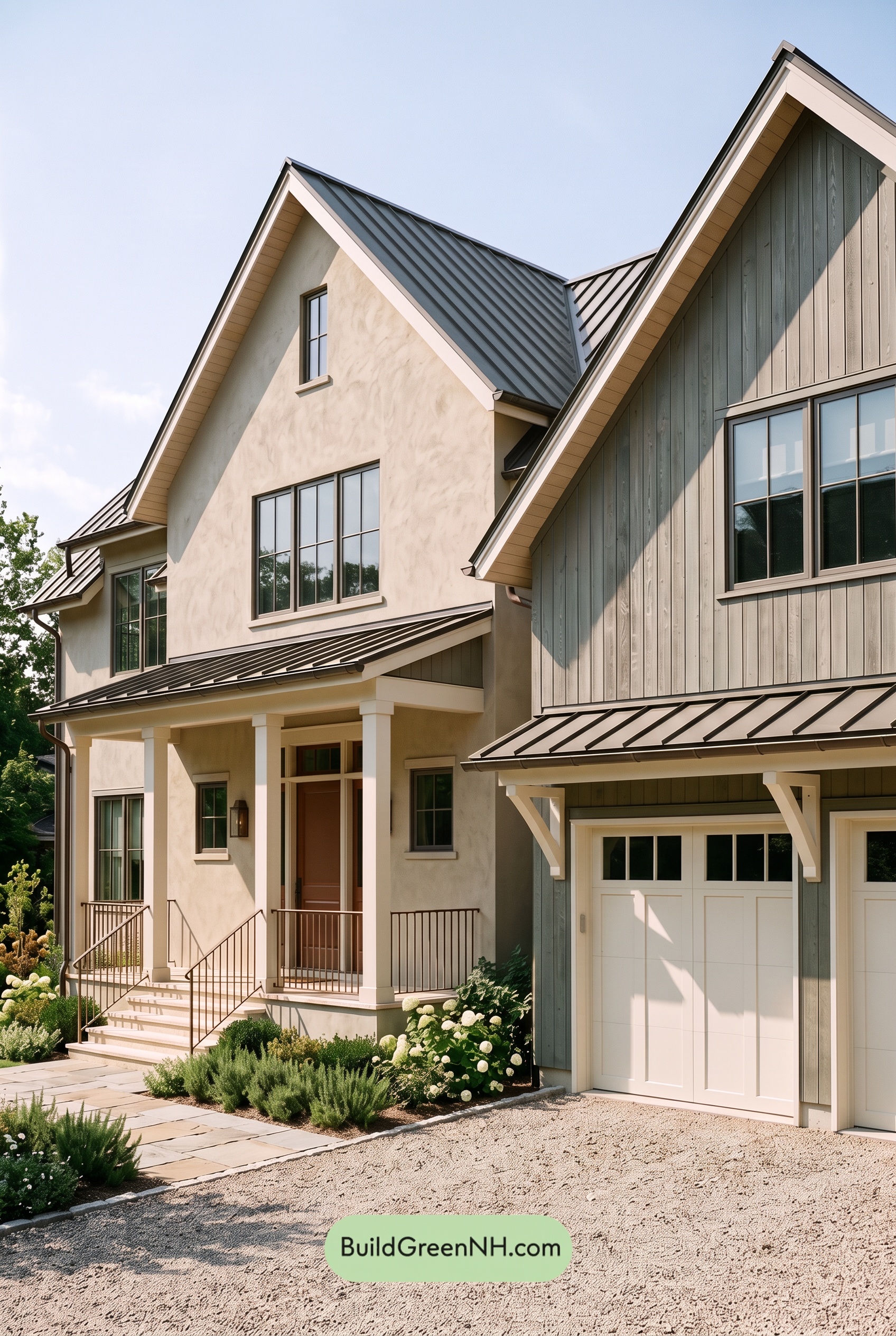 Green House Exterior Color Scheme (New Trend for 2027): Warm Greige Copper Murmur
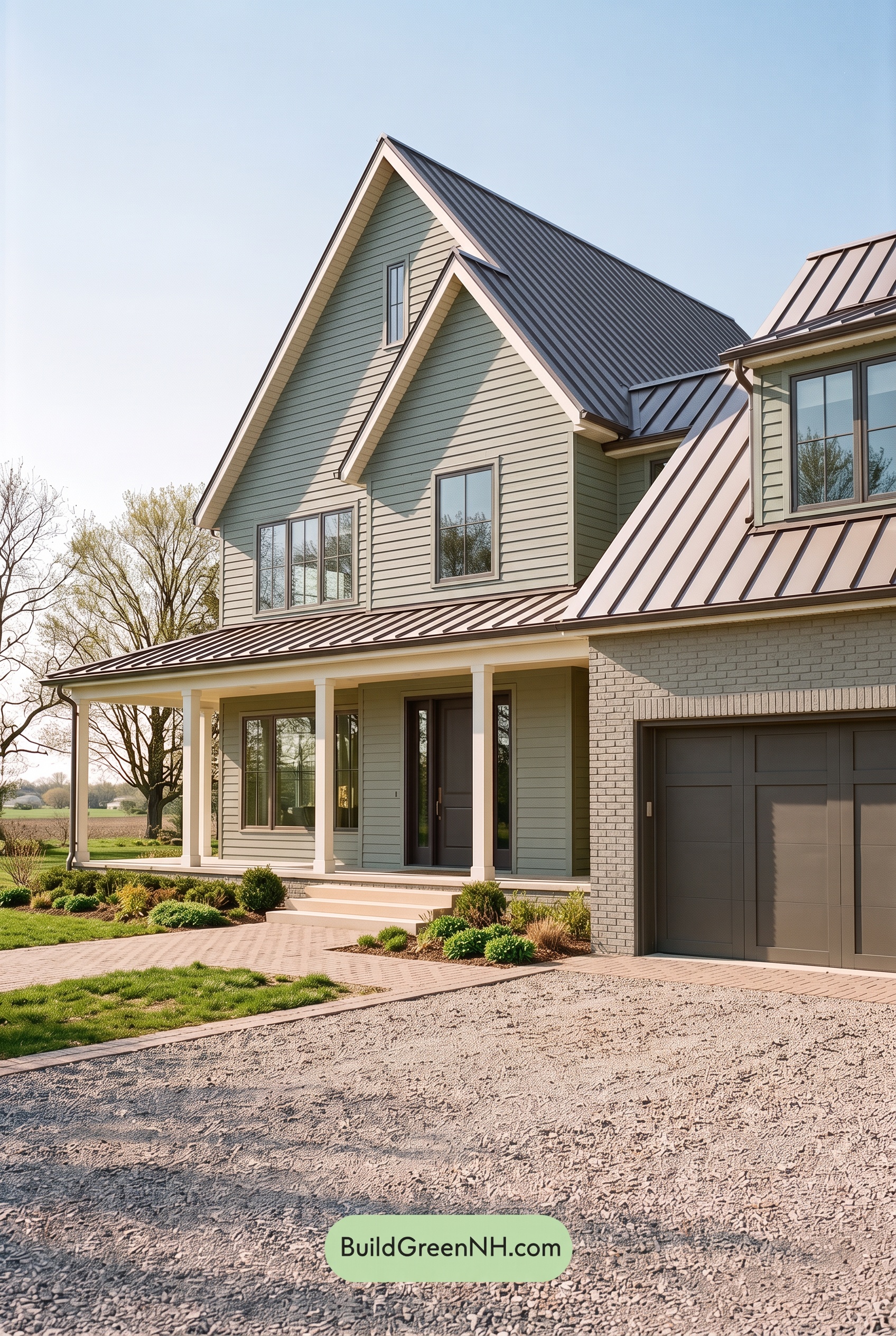 Green House Exterior Color Scheme (New Trend for 2027): Dusty Green Plum Secret
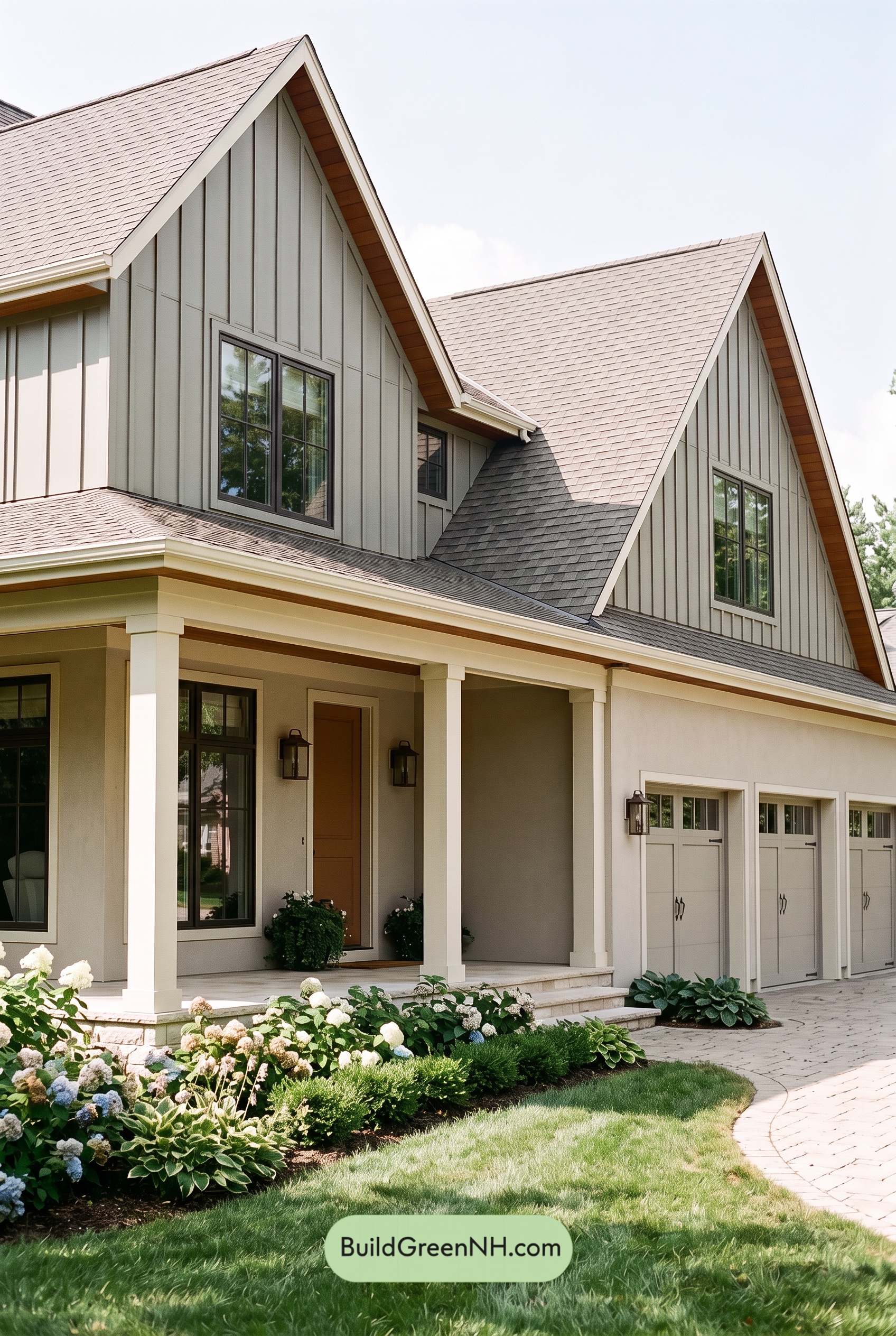 Green House Exterior Color Scheme (New Trend for 2027): Silver Green Amber Warmth
 Green House Exterior Color Scheme (New Trend for 2027): Brown Green Ivory Reverie
Table of Contents