Last updated on
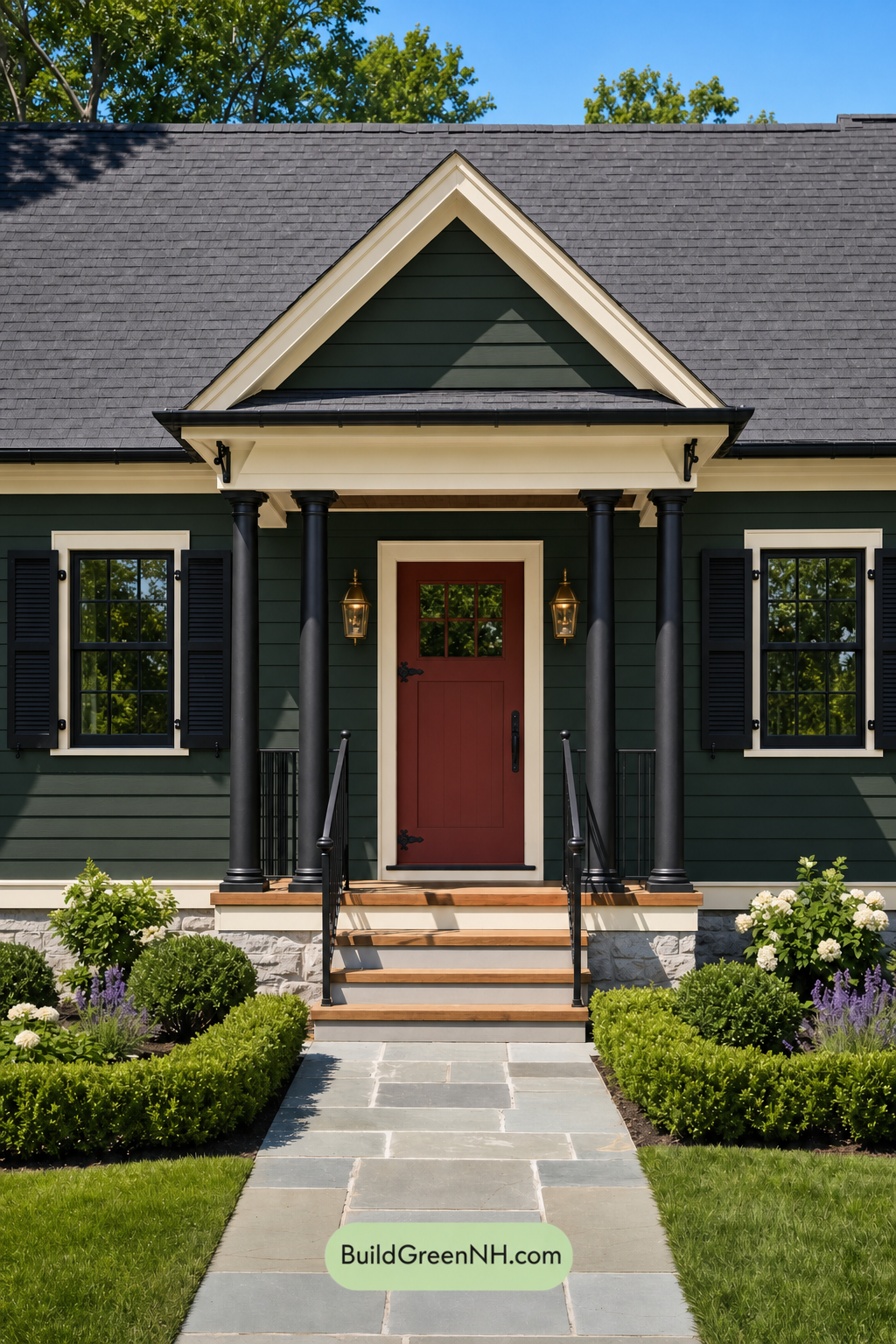

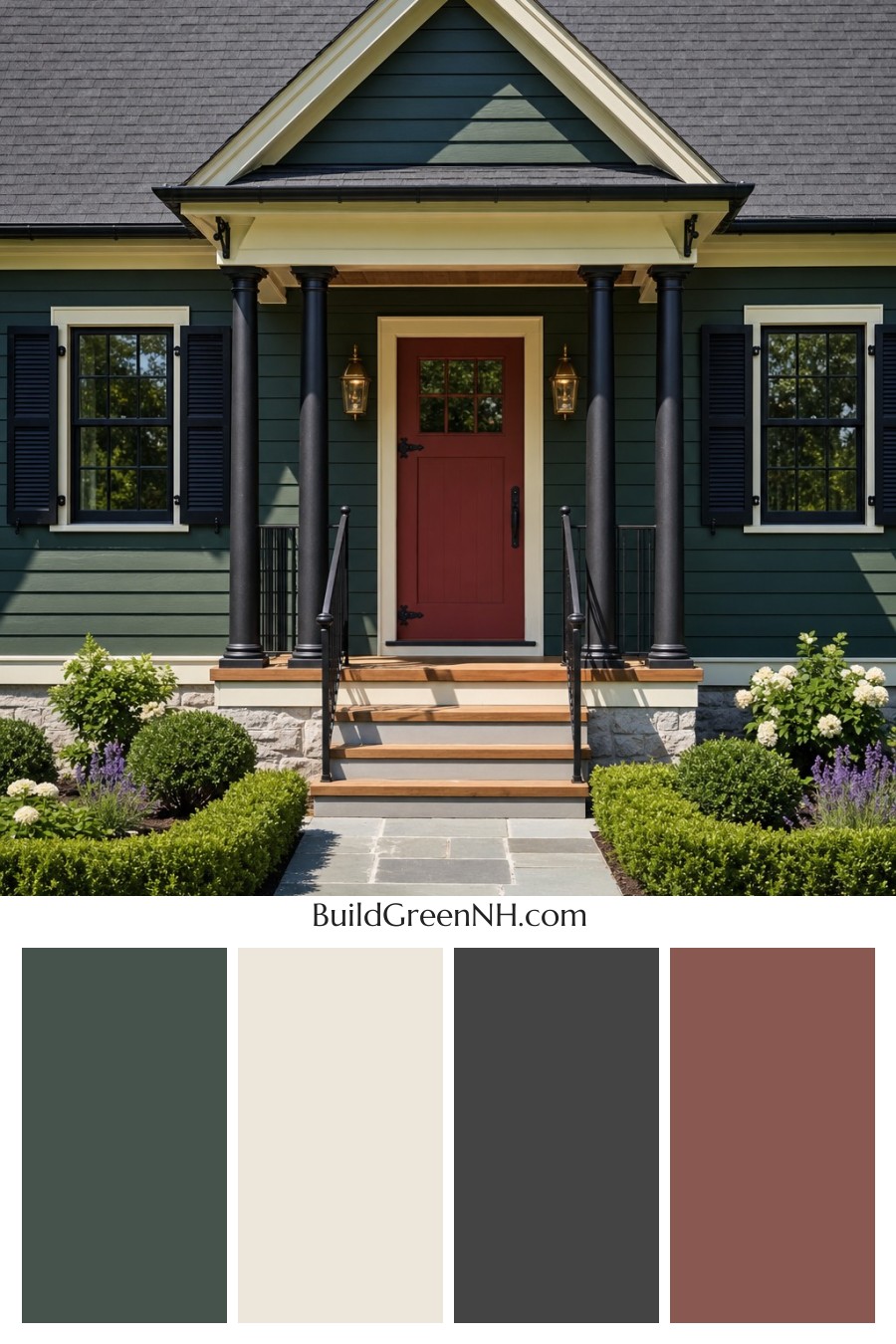
This exterior works so beautifully because deep green siding, crisp light trim, smoky gray accents, and a warm brown door create a look that feels classic, grounded, and instantly welcoming.
A Rich Green Siding That Sets the Tone
The main siding is wrapped in a deep, muted shade of green that gives the home a strong connection to the surrounding landscape. It feels natural without disappearing into the greenery, creating a confident backdrop for the entire facade.
Because this green leans rich and earthy, it brings depth to the horizontal siding and makes the architectural lines feel clean and intentional. It is traditional, but not plain. Quiet, but definitely not boring.
Warm Light Trim for Crisp Definition
The trim uses a soft shade from the white family, adding a bright frame around the roofline, windows, doorway, and gable. This lighter trim is key to the scheme because it separates the deeper siding from the darker accents and keeps the home from feeling too heavy.
A slightly warm light trim also complements the brown tones at the entry and steps, giving the exterior a welcoming glow. It sharpens the details while still feeling gentle and classic.
Smoky Gray Accents Add Structure
The window frames, shutters, columns, and railings all lean into dark gray shades, giving the exterior a handsome, tailored look. These accents provide contrast against both the green siding and the light trim, making the windows and porch feel polished and substantial.
The columns and railings in a deep charcoal gray shade bring a sense of strength to the entry. They visually anchor the porch and echo the dark gray roof, tying the top and bottom of the house together beautifully.
A Warm Brown Front Door as the Focal Point
The front door introduces a warm brown shade that instantly draws the eye. Against the deep green siding and light trim, it feels inviting and full of character.
This is a smart accent choice because it adds warmth without competing with the rest of the palette. The brown family also connects nicely with the natural wood tones on the steps, creating a layered and welcoming entry moment.
Why the Palette Feels So Balanced
This color scheme succeeds because it balances cool and warm tones with confidence. The green siding and gray accents feel grounded and refined, while the light trim and brown door bring brightness and warmth.
The dark gray roof reinforces the sophisticated side of the palette, while the landscaping softens everything around it. The result is a home exterior that feels established, fresh, and beautifully composed from curb to porch.
Next, see how this color scheme looks under different lighting simulations throughout the day.
Overcast
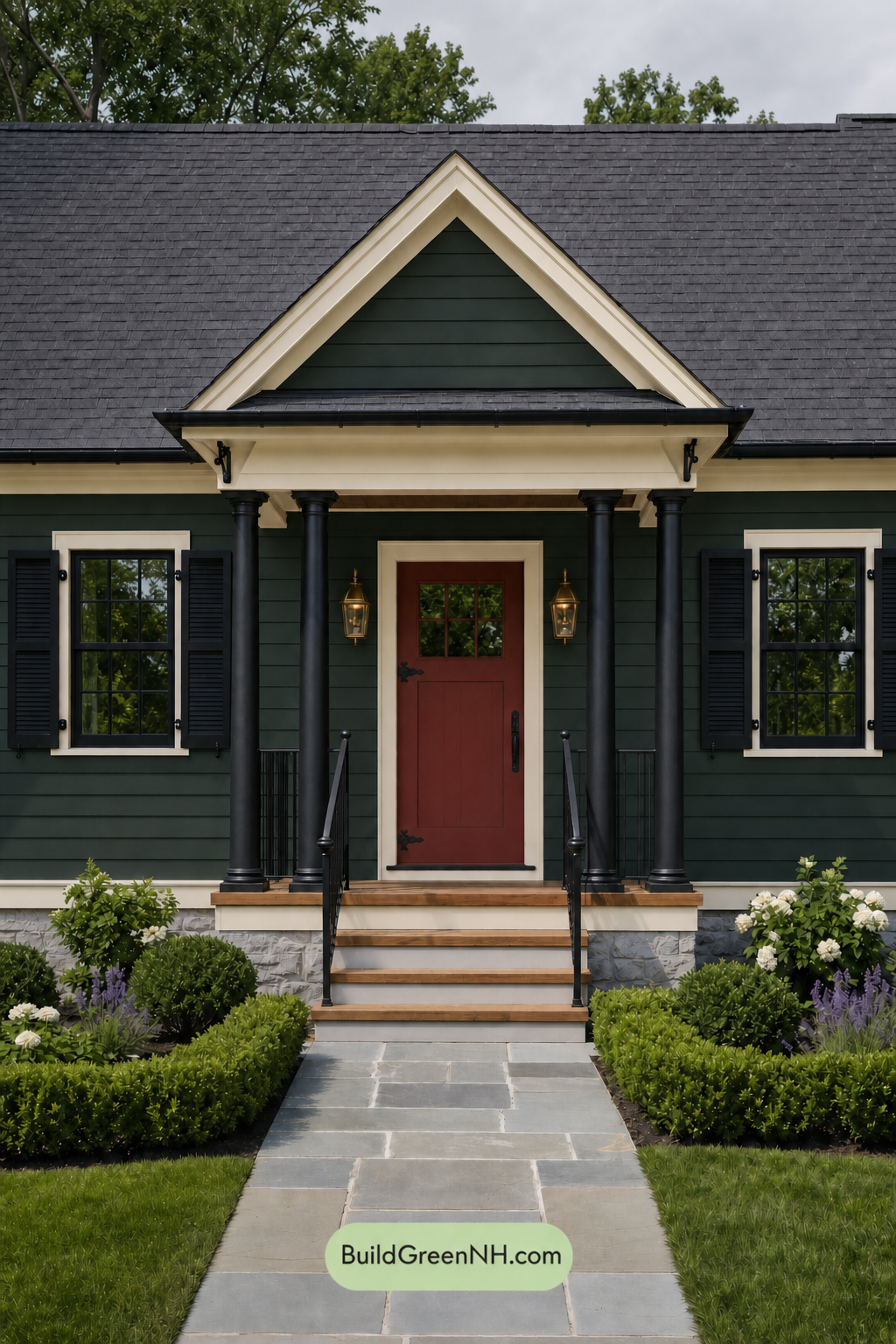
Under overcast lighting, the deep green siding appears cooler and slightly less saturated than it would in neutral daylight, taking on a moodier, more grounded quality. The white trim loses some of its warmth and glow, reading softer and creamier, while the gray window frames, shutters, columns, and railings feel deeper but less sharply defined.
Because the cloud cover diffuses the light, shadows become gentler and contrast relaxes across the facade. The brown front door looks more muted and earthy, with less warmth coming forward, giving the whole exterior a calm, refined, and quietly dramatic mood.
Golden Hour
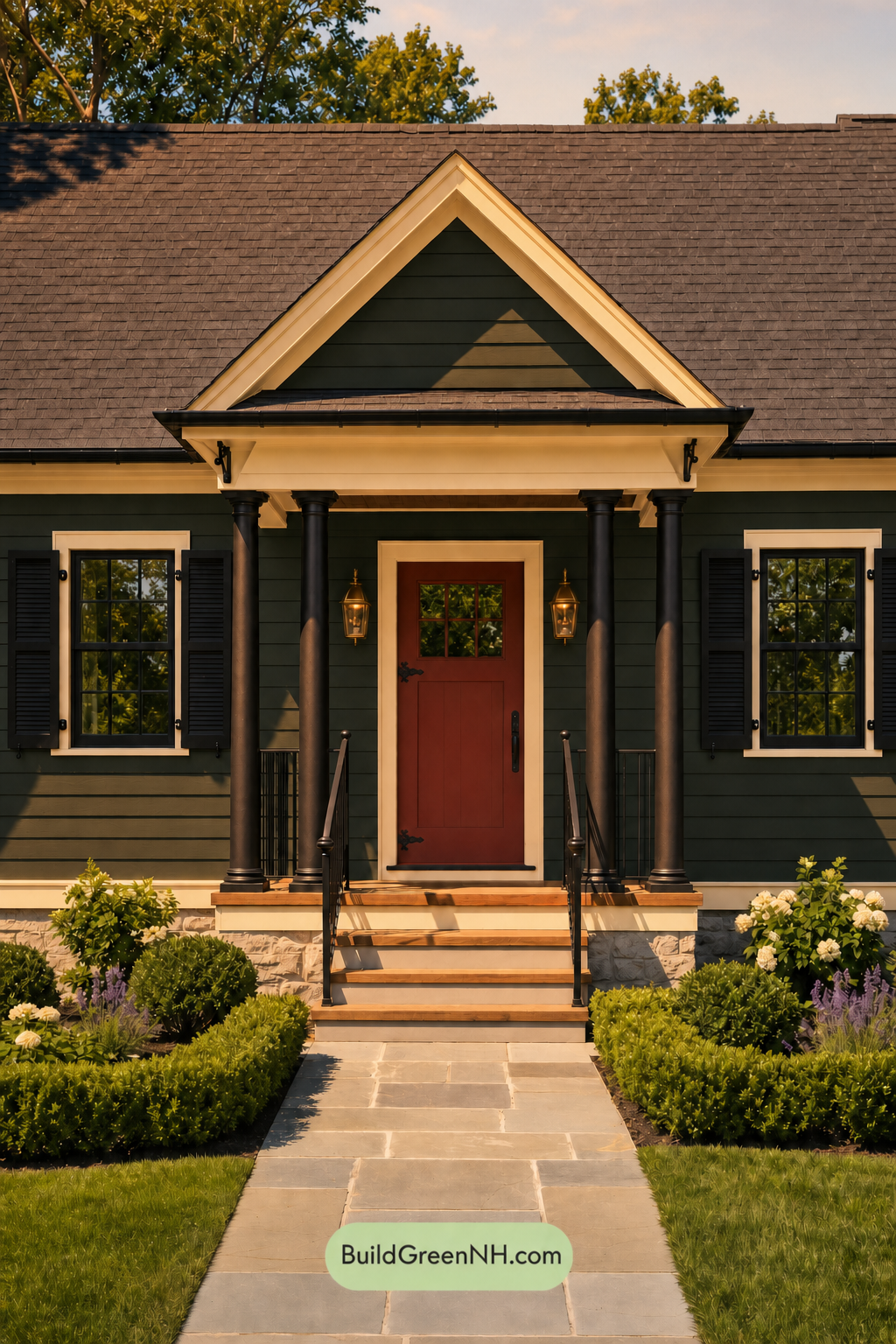
Under Golden Hour light, the deep green siding becomes richer and more saturated than it would in neutral daylight, picking up a subtle warmth that makes the façade feel inviting rather than crisp. The white trim shifts from clean and bright to creamy and softly glowing, increasing the sense of warmth around the windows, porch, and roofline.
The gray shutters, window frames, columns, and railings gain stronger contrast as long shadows stretch across the house, making their darker tones feel more dramatic and defined. The brown front door also appears warmer and deeper, adding a cozy focal point that gives the whole exterior a calm, welcoming mood.
Shade
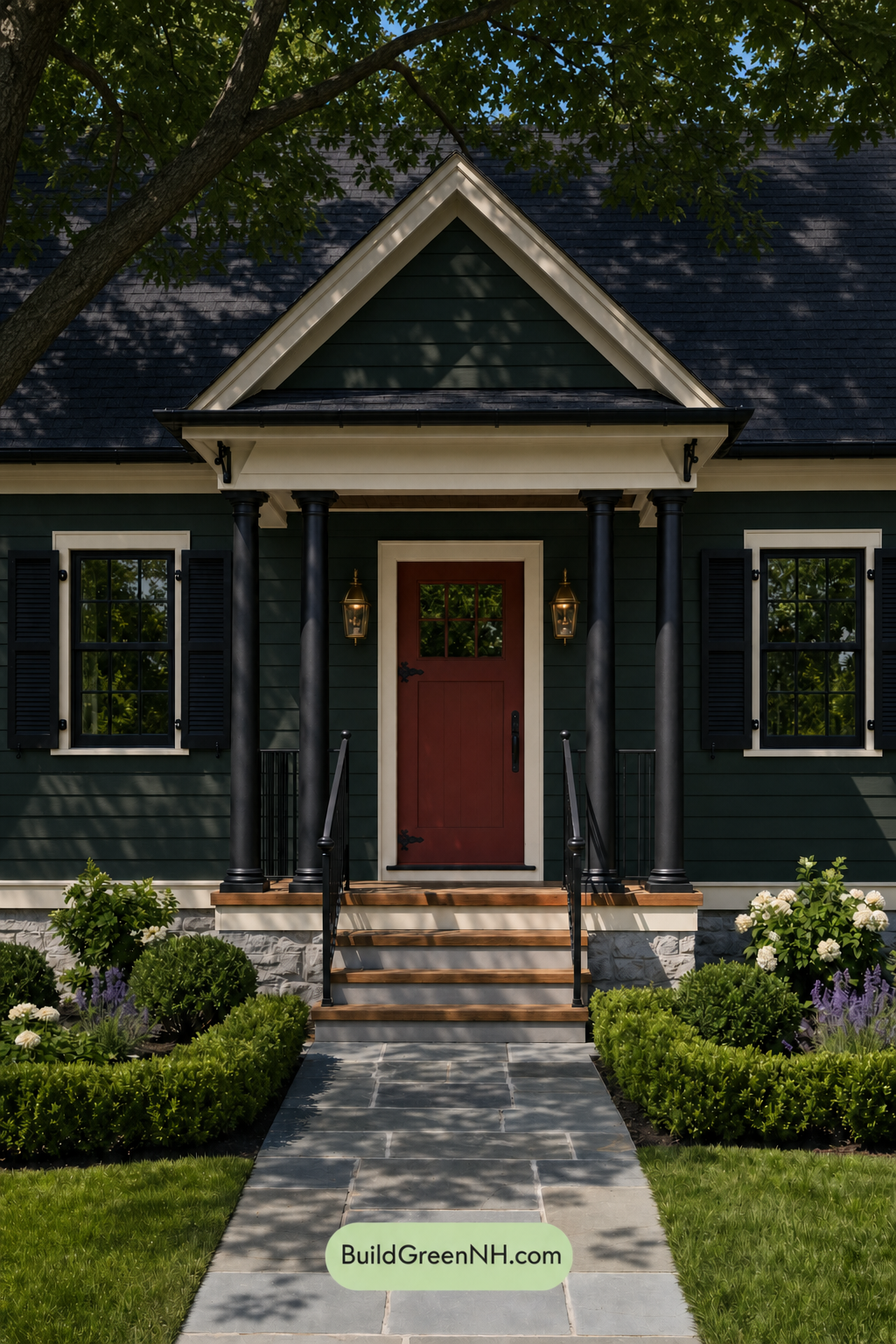
In shade, the green siding deepens and feels more saturated than it would in neutral daylight, shifting from a clearer green to a moodier, forested shade. The cooler shadows soften its warmth, while the white trim takes on a creamier, less crisp appearance, reducing the sharpness of the contrast.
The gray elements grow richer and more dramatic under the dappled shade, especially where shadows collect around the windows, columns, and railings. The brown front door appears warmer by comparison, adding a grounded note that keeps the shaded palette feeling inviting rather than heavy.
Nighttime
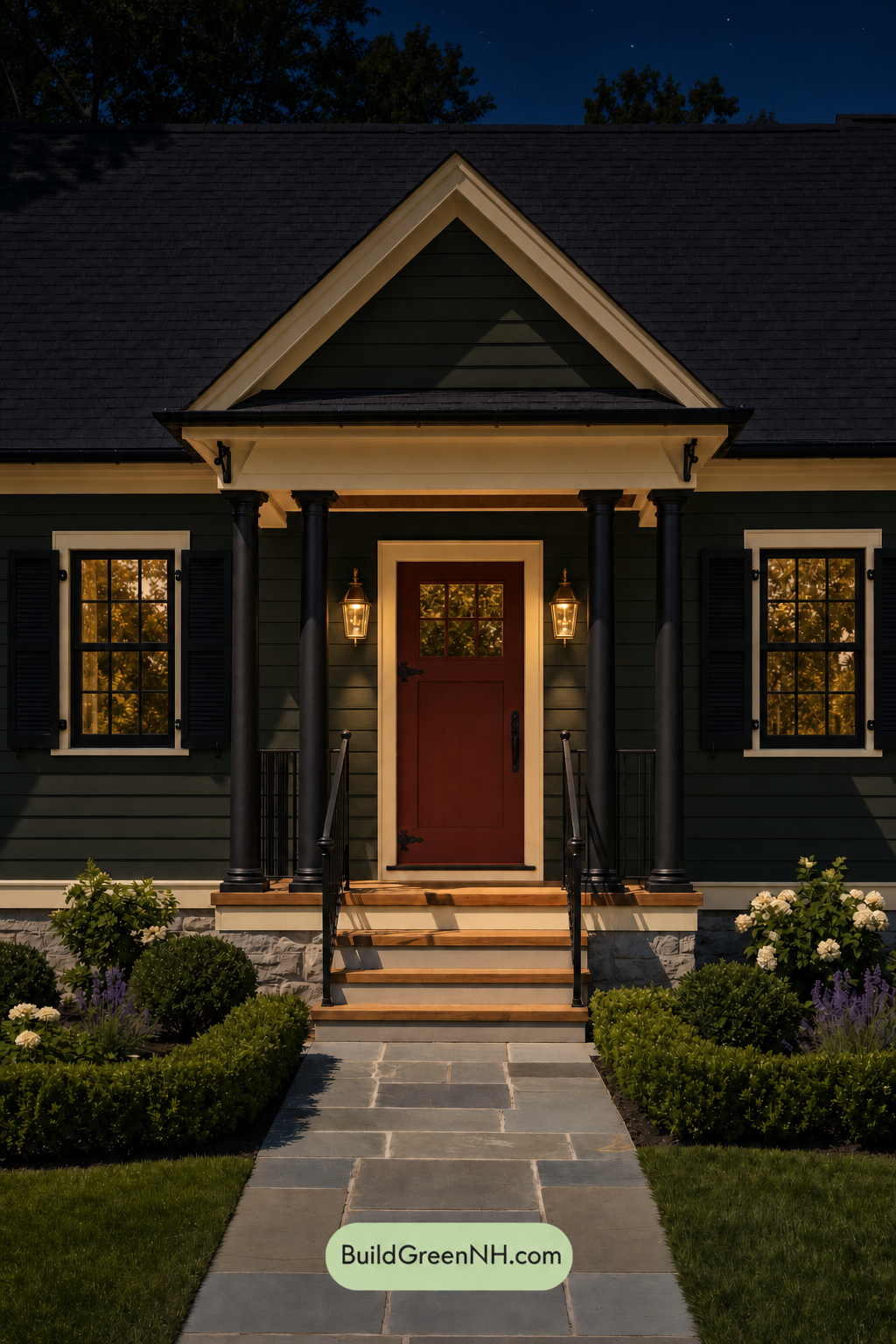
At nighttime, the green siding deepens compared to neutral daylight, reading richer and more saturated where the warm light touches it, while the unlit areas fall into cooler, shadowed shades. The white trim shifts softer and warmer, creating a gentle glow that stands out more clearly against the darkened wall color.
The gray shutters, columns, railings, and window frames take on stronger contrast, with shadows making them feel darker and more sculptural. The brown front door feels warmer and more inviting under the evening light, giving the whole exterior a cozy, dramatic mood that daylight would make feel brighter and more even.
Pin these for later:
Want More?
 Exterior Color Scheme with Stone Accents: Pine Brass Threshold
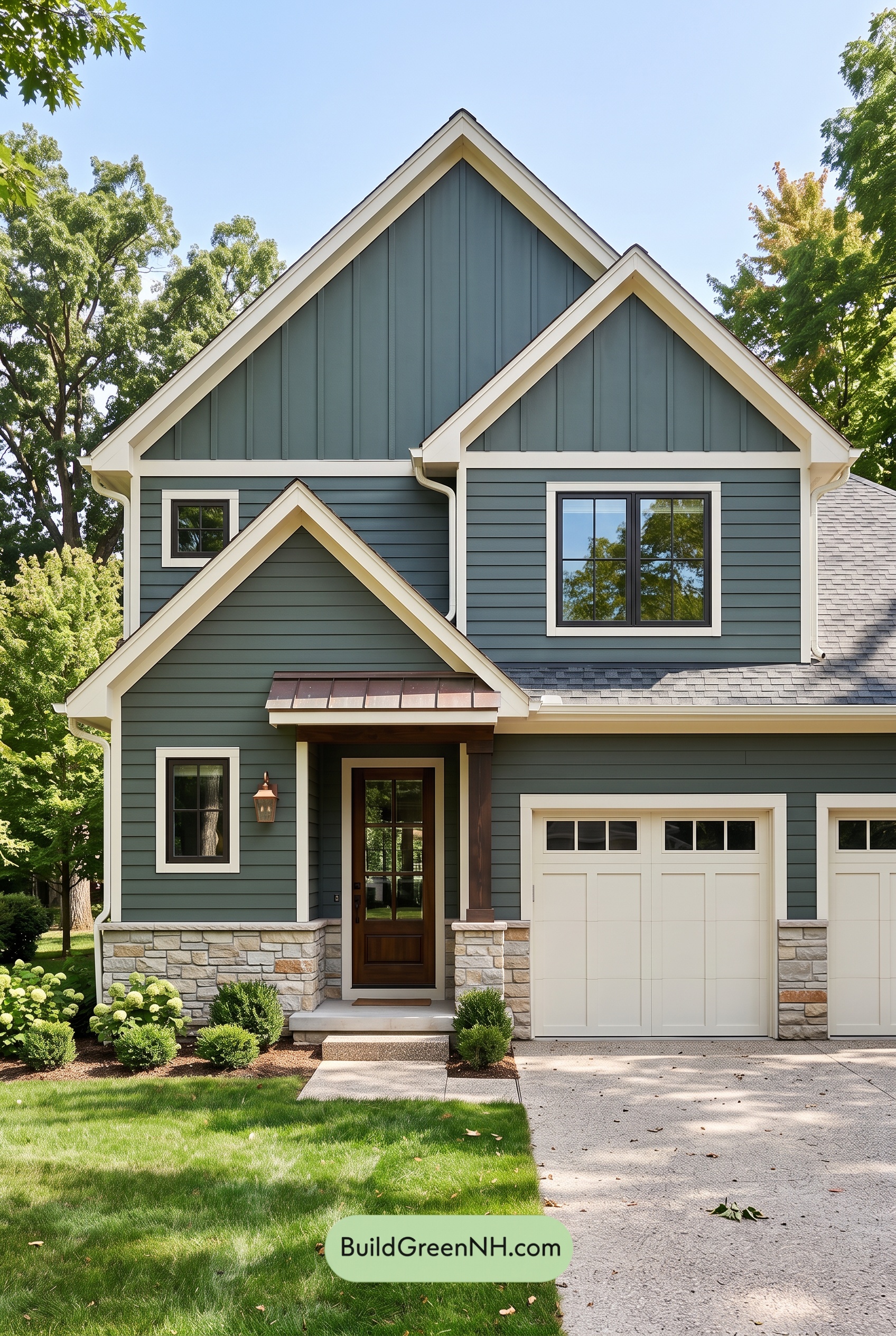 Exterior Color Scheme with Stone Accents: Evergreen Copper Welcome
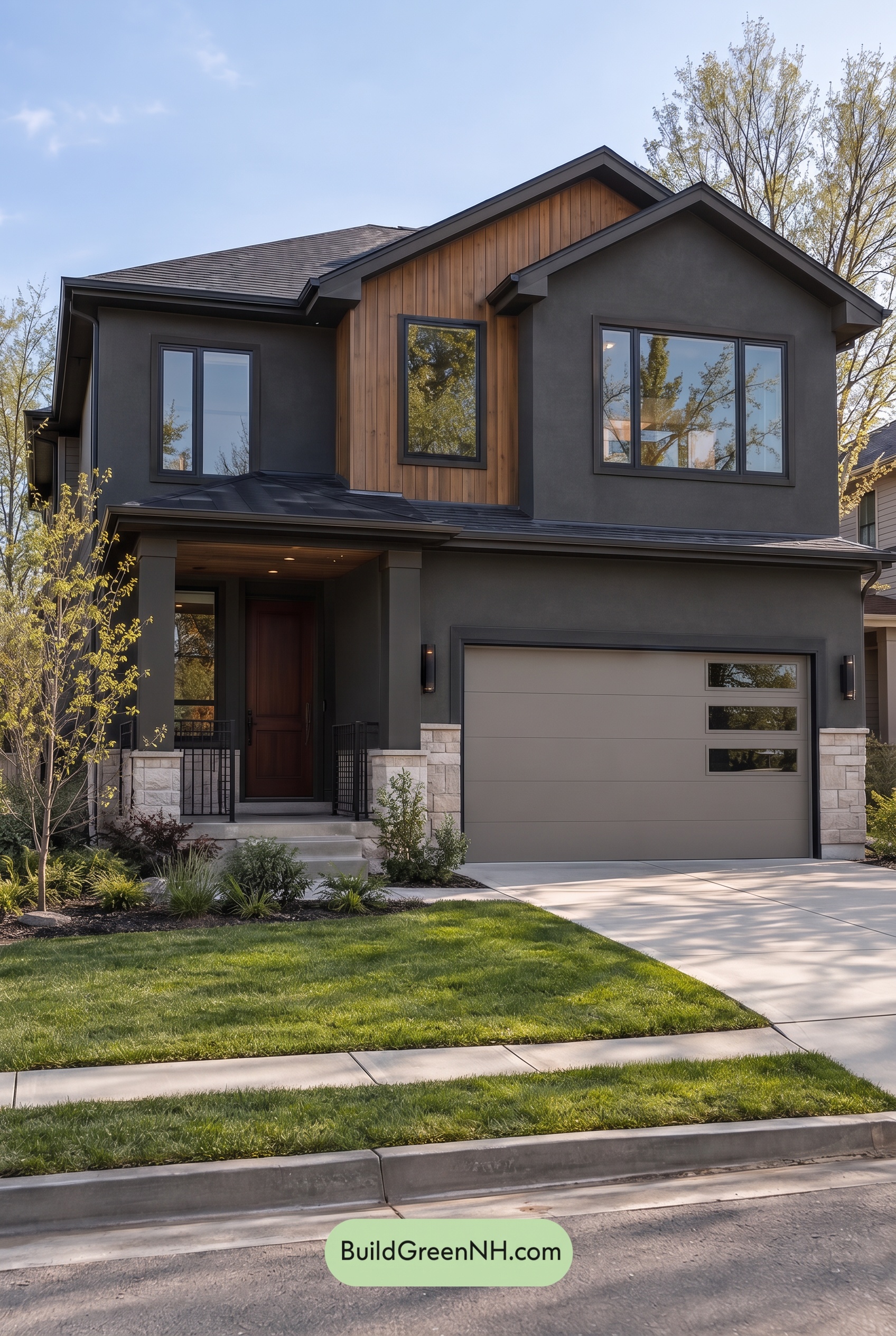 Dark Stucco House Exterior Color Scheme: Cedar Ember Calm
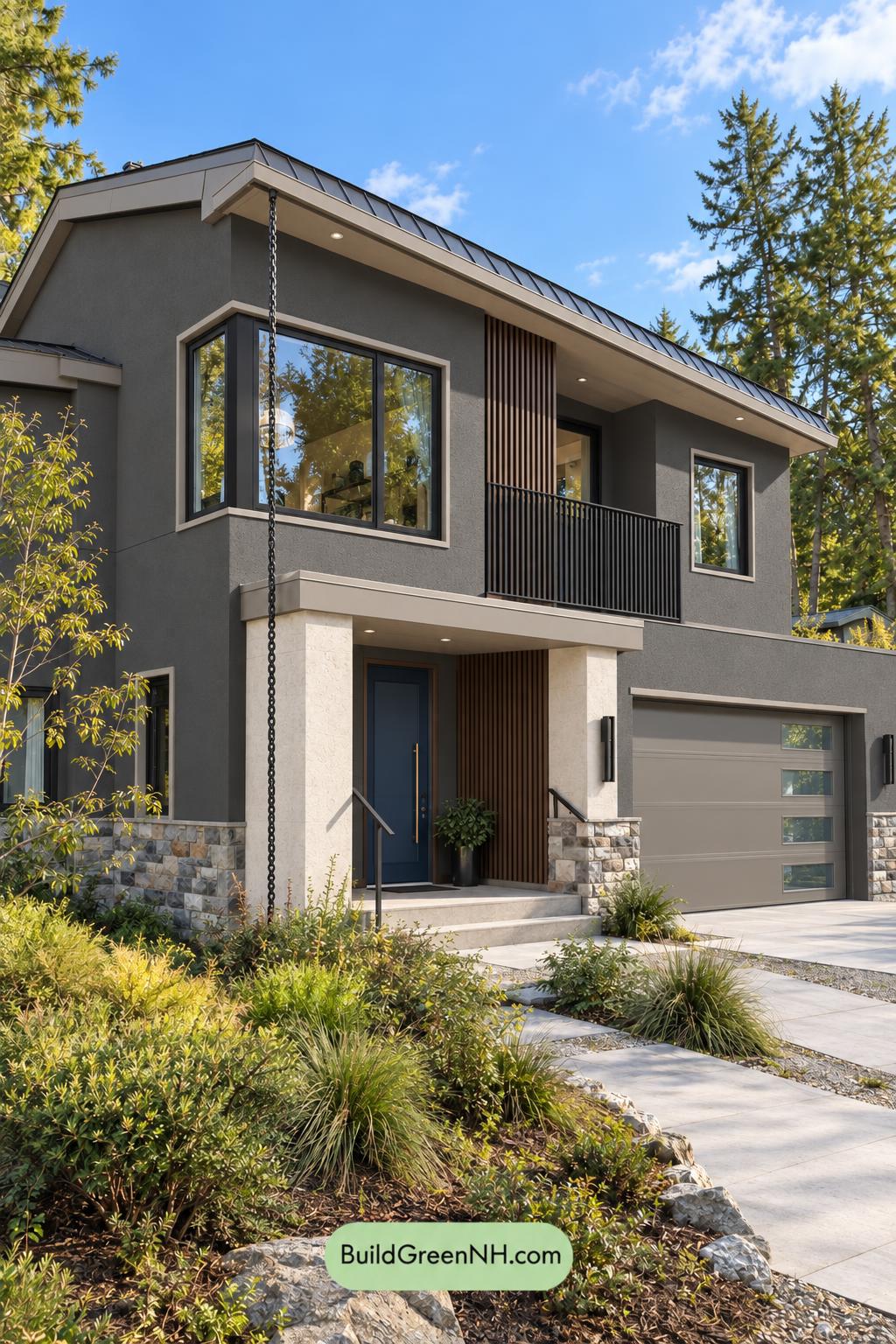 Dark Stucco House Exterior Color Scheme: Silver Pine Shelter
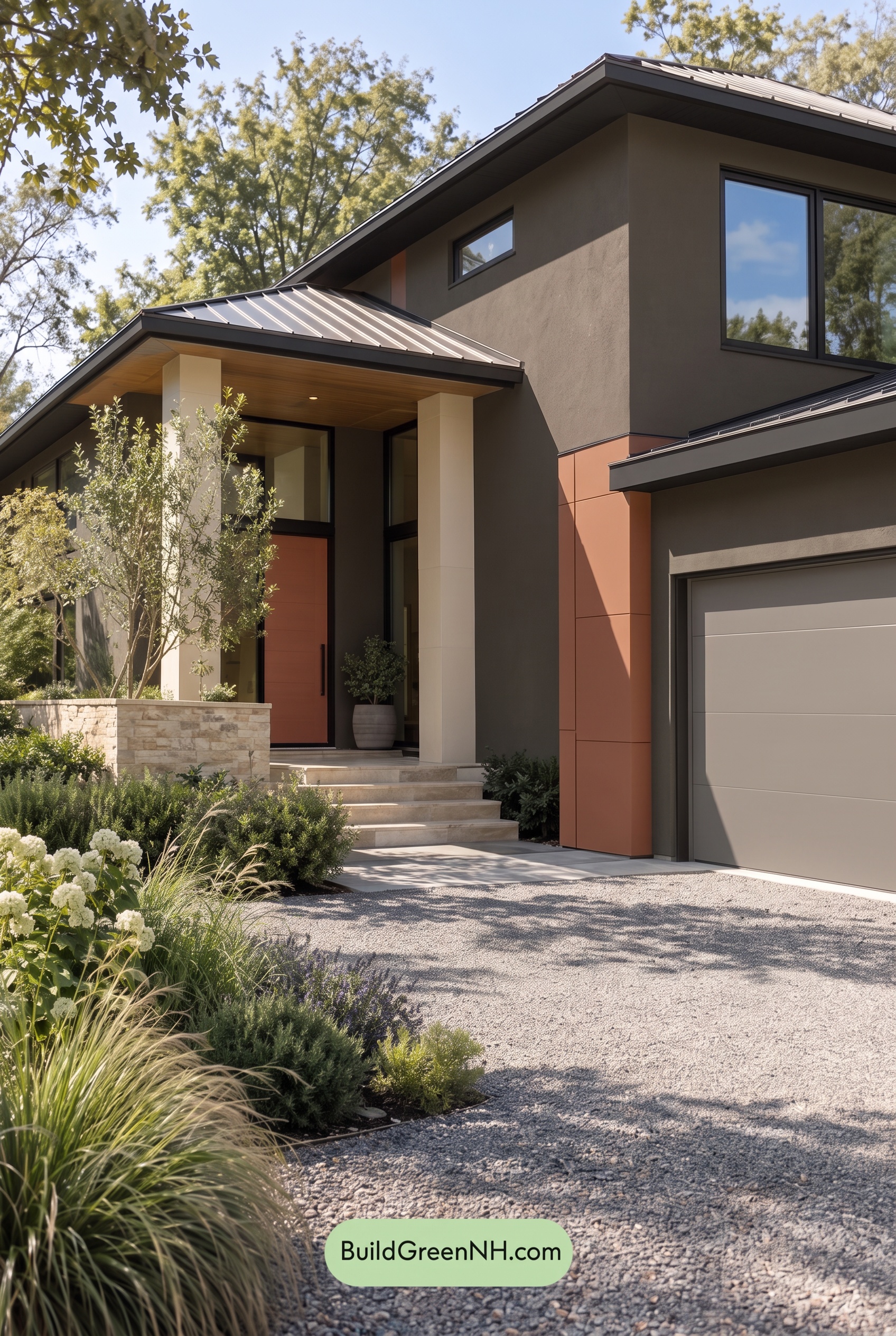 Dark Stucco House Exterior Color Scheme: Copper Orchard House
Table of Contents