Last updated on
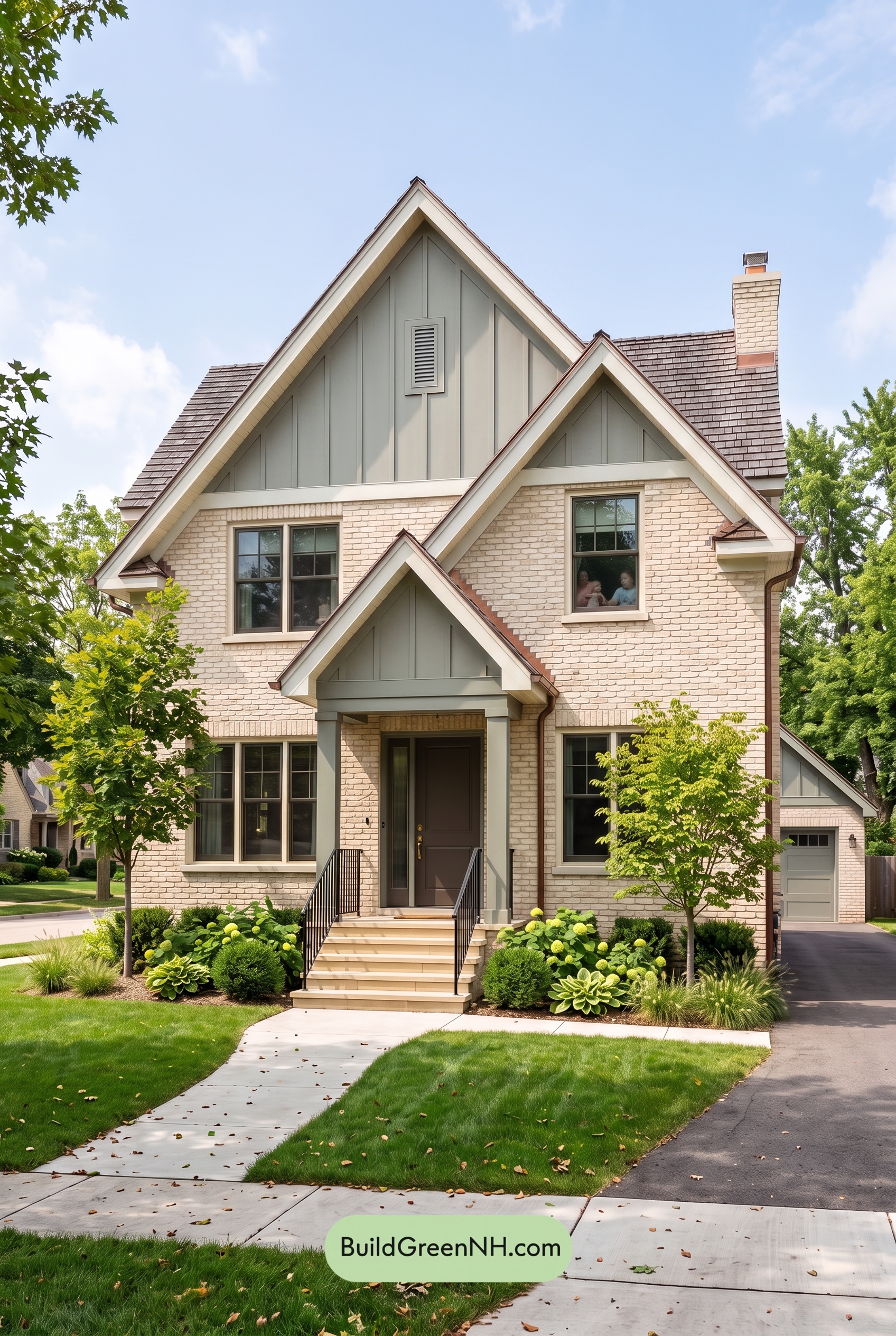

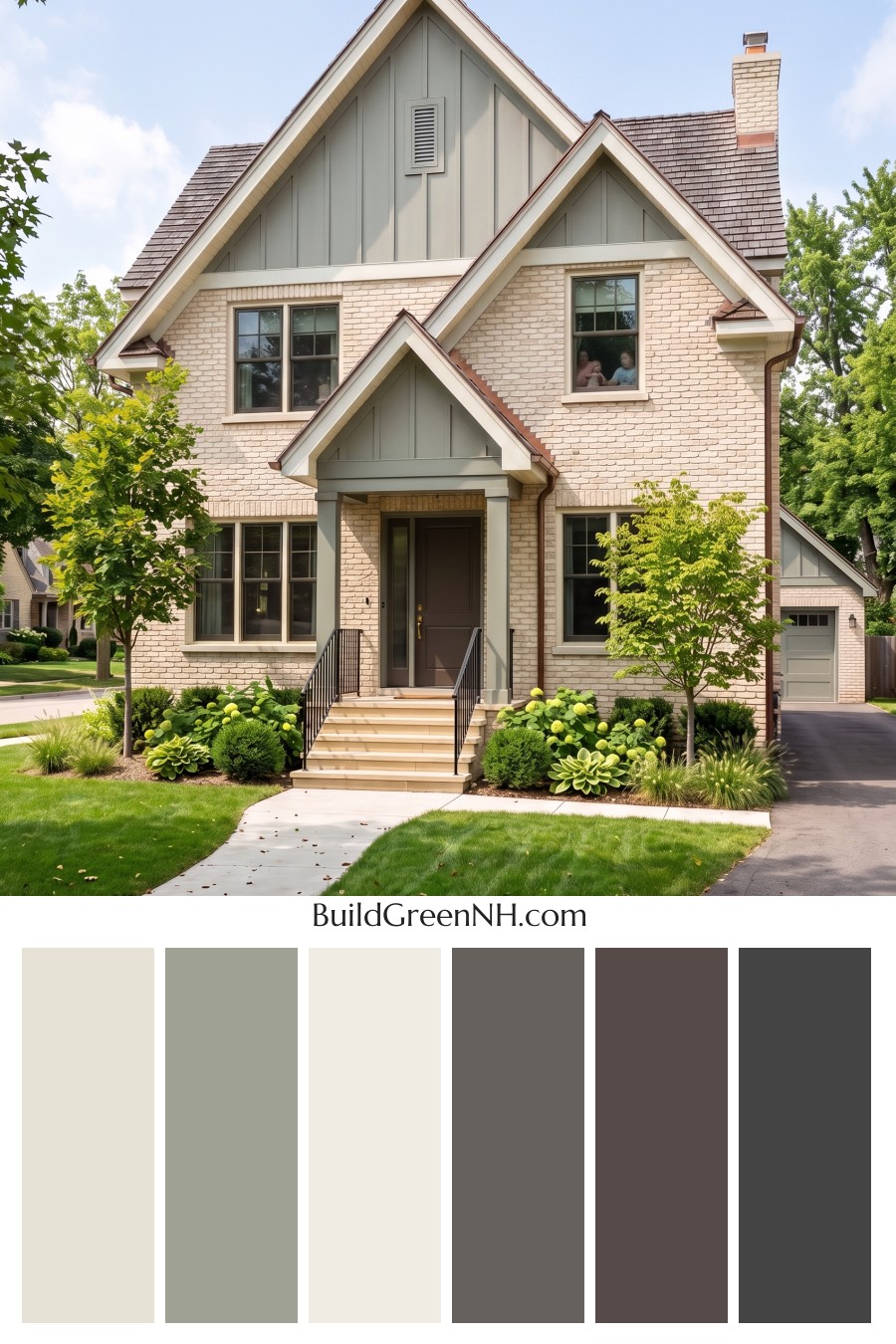
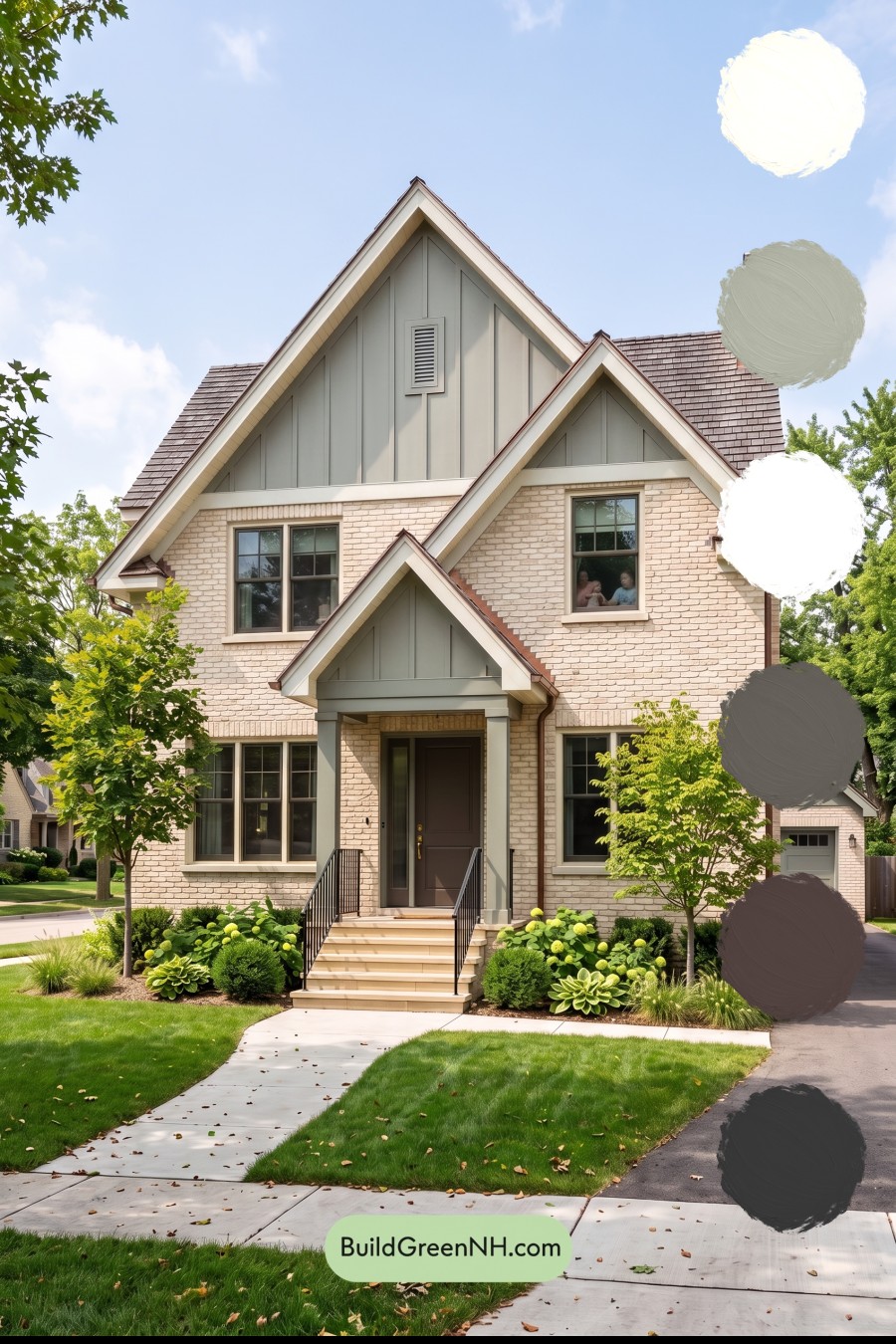
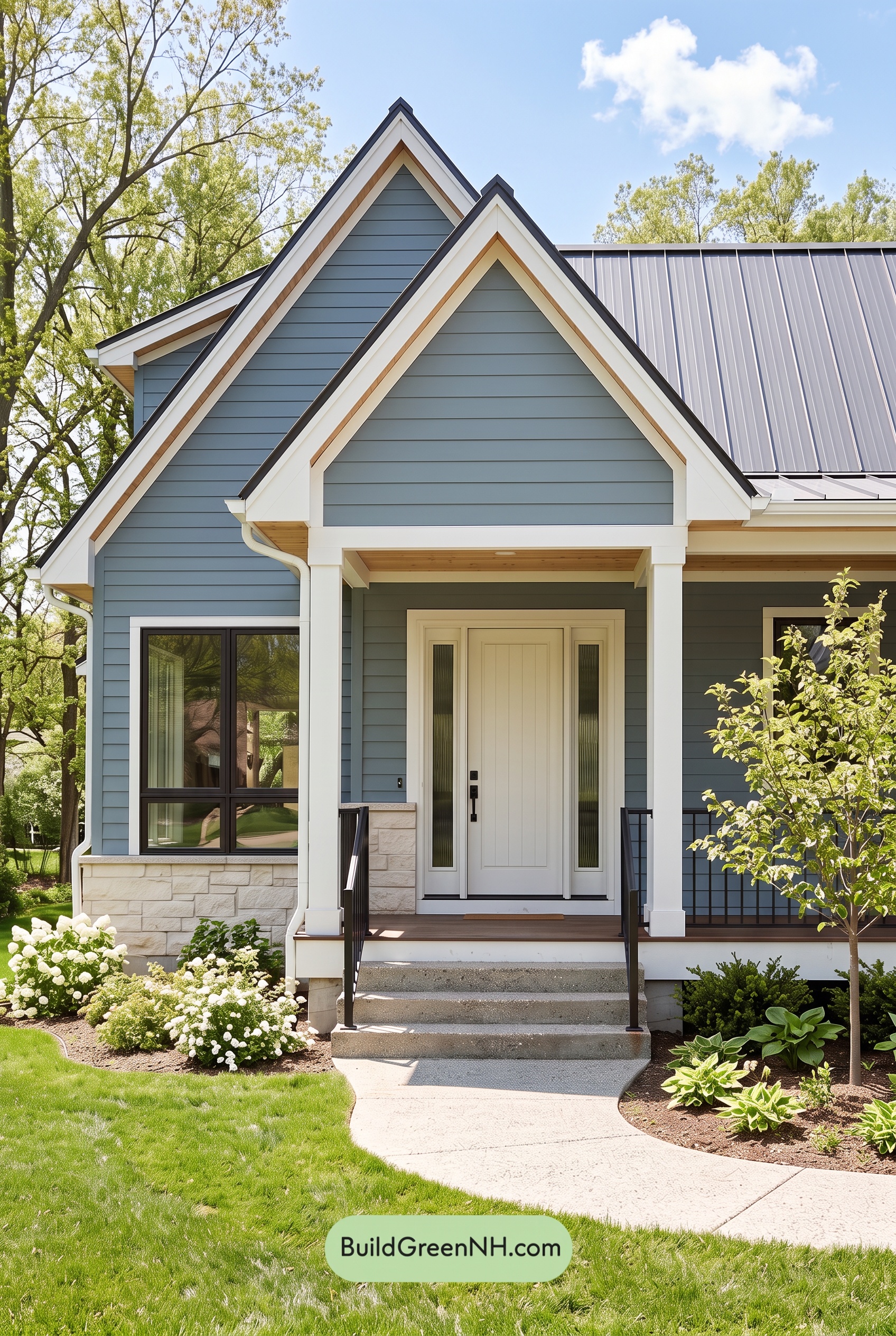
This balanced mix of warm beige, soft gray, crisp white, and rich brown gives the home a polished, welcoming presence with timeless curb appeal.
A Warm, Layered Foundation
The main exterior walls wear a light, warm beige that brings softness to the tall façade and keeps the architecture from feeling too formal. This gentle neutral reflects light beautifully, giving the home an inviting glow while providing a calm backdrop for the more defined elements above.
On the upper gables and porch details, a muted medium gray adds graceful contrast. Its understated character emphasizes the vertical siding and steep rooflines without overpowering the lighter main walls. The result is dimension that feels refined rather than busy.
Bright Trim That Defines Every Detail
Crisp white trim frames the windows, outlines each gable, and sharpens the roof edges. Against the beige and gray surfaces, this bright shade makes the home’s layered silhouette stand out clearly from the landscape.
The white also lends a fresh, tailored finish to the window surrounds and decorative roof accents. It is a classic choice that keeps the palette light and balanced, especially across a home with so many appealing architectural angles.
Grounding Gray and Brown Accents
Deeper gray window frames, porch columns, railings, and garage door introduce a practical, grounded note. These darker details create visual structure at the entry and garage while tying the gray upper areas into the full exterior scheme.
The front door brings in a deep brown shade that makes the entry feel warm and substantial. Set beneath the soft gray porch elements, it becomes a natural focal point—noticeable, but still beautifully connected to the roof’s darker, earthy tones.
A Welcoming, Timeless Mood
This exterior feels classic, composed, and comfortably elevated. Warm beige brings approachability, soft gray contributes sophistication, and white trim supplies clean contrast. The rich brown at the door adds just enough depth to make arriving home feel special.
Surrounded by green landscaping, these quiet neutral shades feel especially harmonious. It is a versatile color scheme that complements changing seasons while giving the home a polished look that will remain appealing for years to come.
Next, see how this color scheme looks under different lighting simulations throughout the day.
Overcast
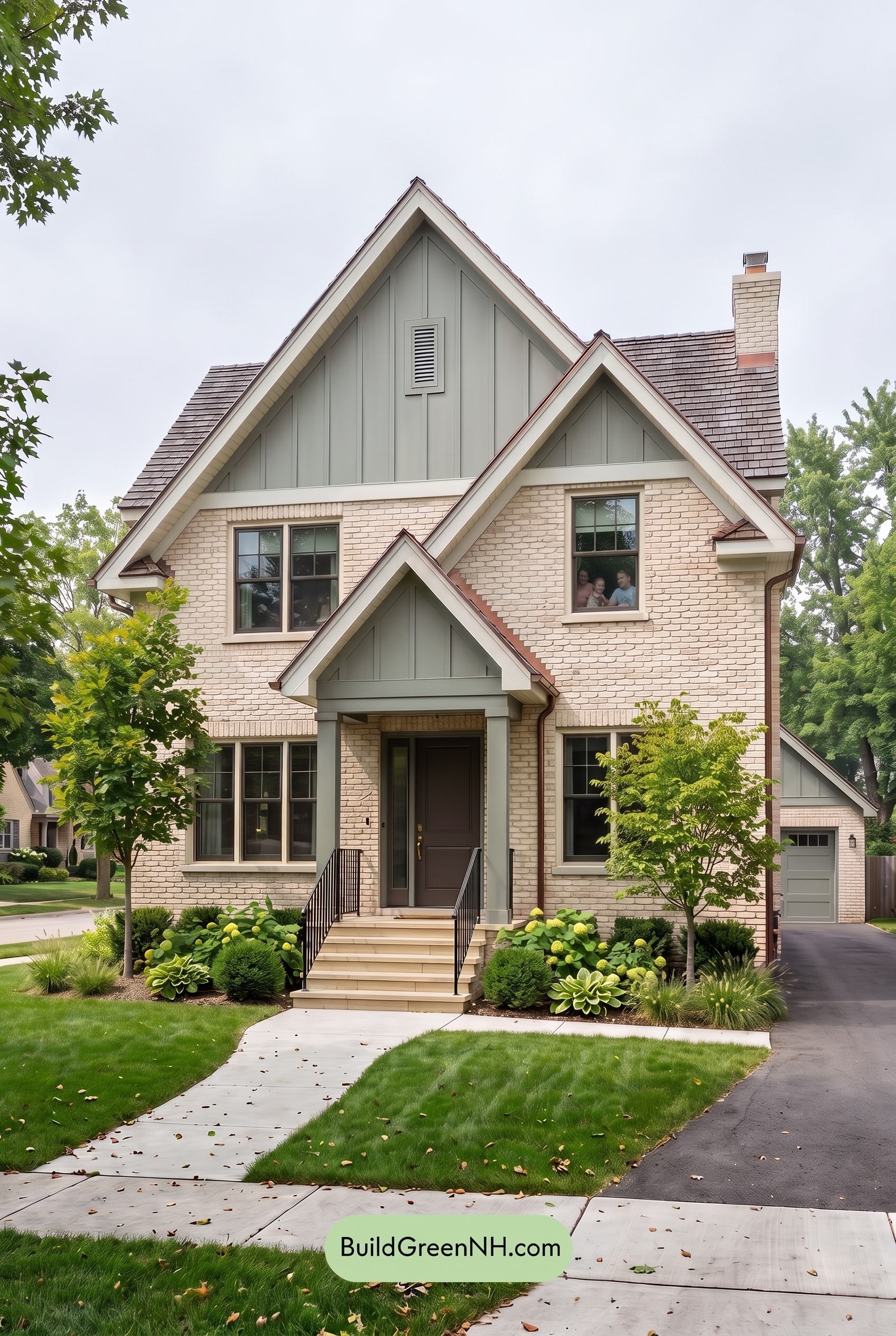
Under overcast skies, the soft beige exterior loses some of the golden lift it shows in neutral daylight, reading calmer and slightly cooler. The muted gray upper sections and deeper gray details appear more even and refined, while the white trim softens from crisp brightness to a gentler, creamy edge.
With direct sun removed, shadows become broad and subtle rather than sharply defined, lowering contrast across the façade. The dark brown entry becomes a quieter focal point against the subdued neutrals, creating a composed, welcoming mood with less saturation and a more tailored overall presence.
Golden Hour
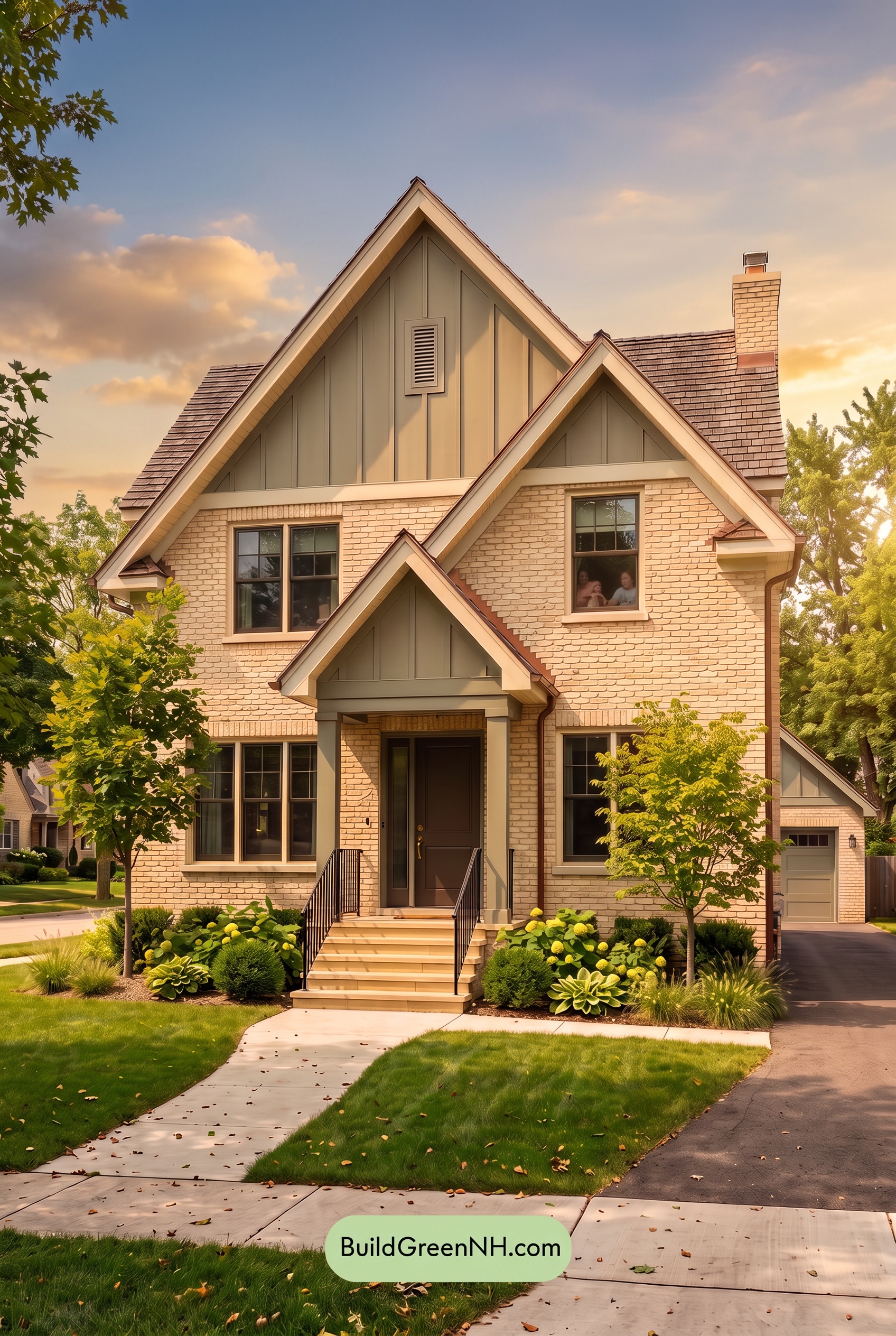
In neutral daylight, the beige masonry and gray upper siding read as balanced and understated. At Golden Hour, the low sun enriches their warmth: the beige takes on a softer, more golden cast, while the gray shades appear warmer and slightly deeper. The white trim shifts from crisp bright white to a creamy highlight, giving the layered gables a gentler, more inviting definition.
Longer shadows bring richer contrast to the gray window frames, railings, and columns, making their darker lines feel more pronounced against the sunlit façade. The brown front door gains depth and saturation, becoming a grounded focal point beneath the glowing entry. Overall, Golden Hour trades the clean clarity of daylight for a warmer, more dimensional mood with a relaxed, welcoming glow.
Shade
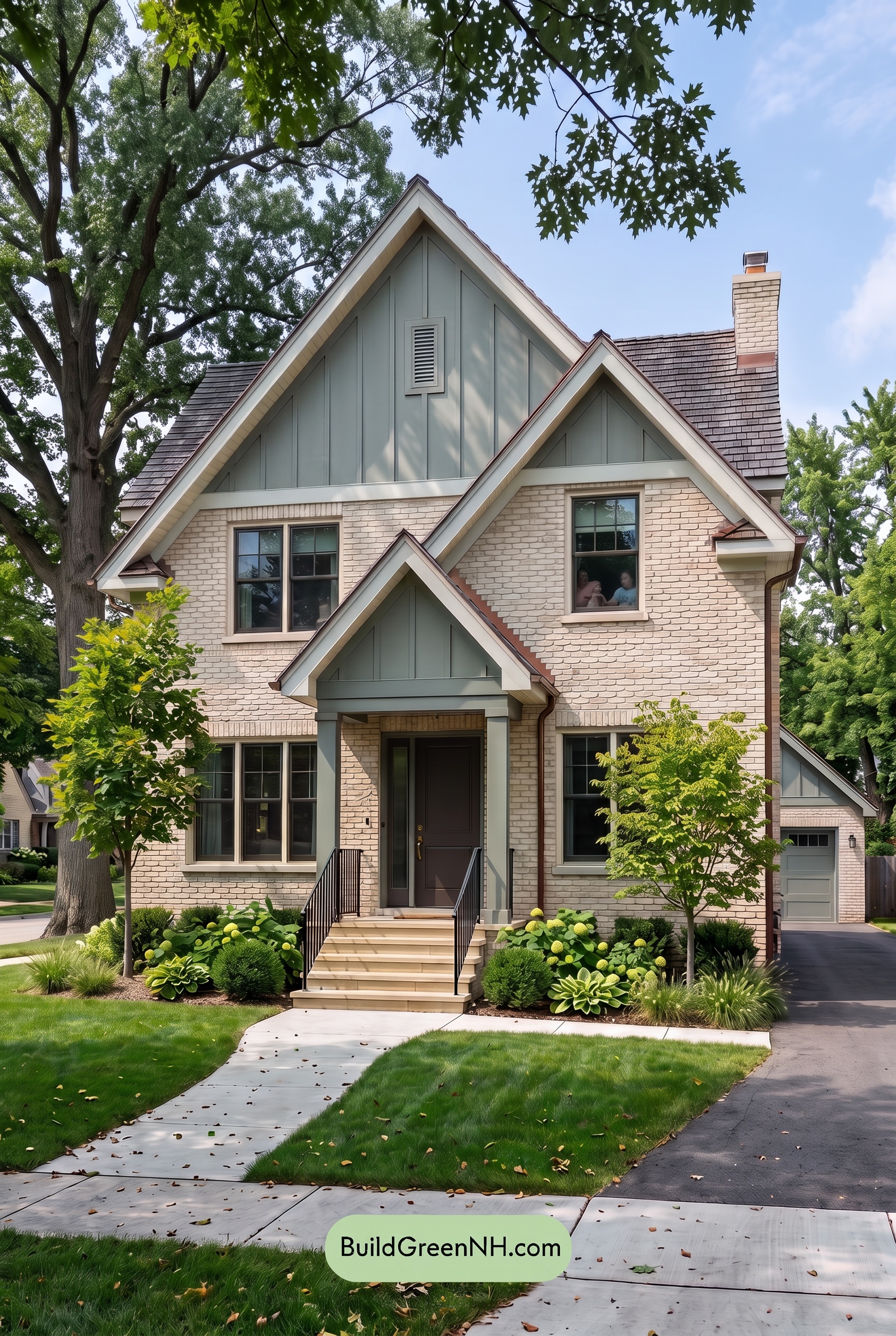
In shade, the beige exterior takes on a softer, more muted character than it shows in neutral daylight, with its warmth appearing gentler and more refined. The gray upper walls, columns, and garage details deepen slightly, while their saturation recedes, creating a calm layered effect beneath the tree canopy.
Shadows sharpen the contrast around the bright white trim and darker brown entry, giving the gables and porch more definition. Rather than feeling stark, the reduced light makes the overall palette feel cooler, quieter, and more inviting, with the warm neutrals providing a subtle balance against the shaded grays.
Nighttime
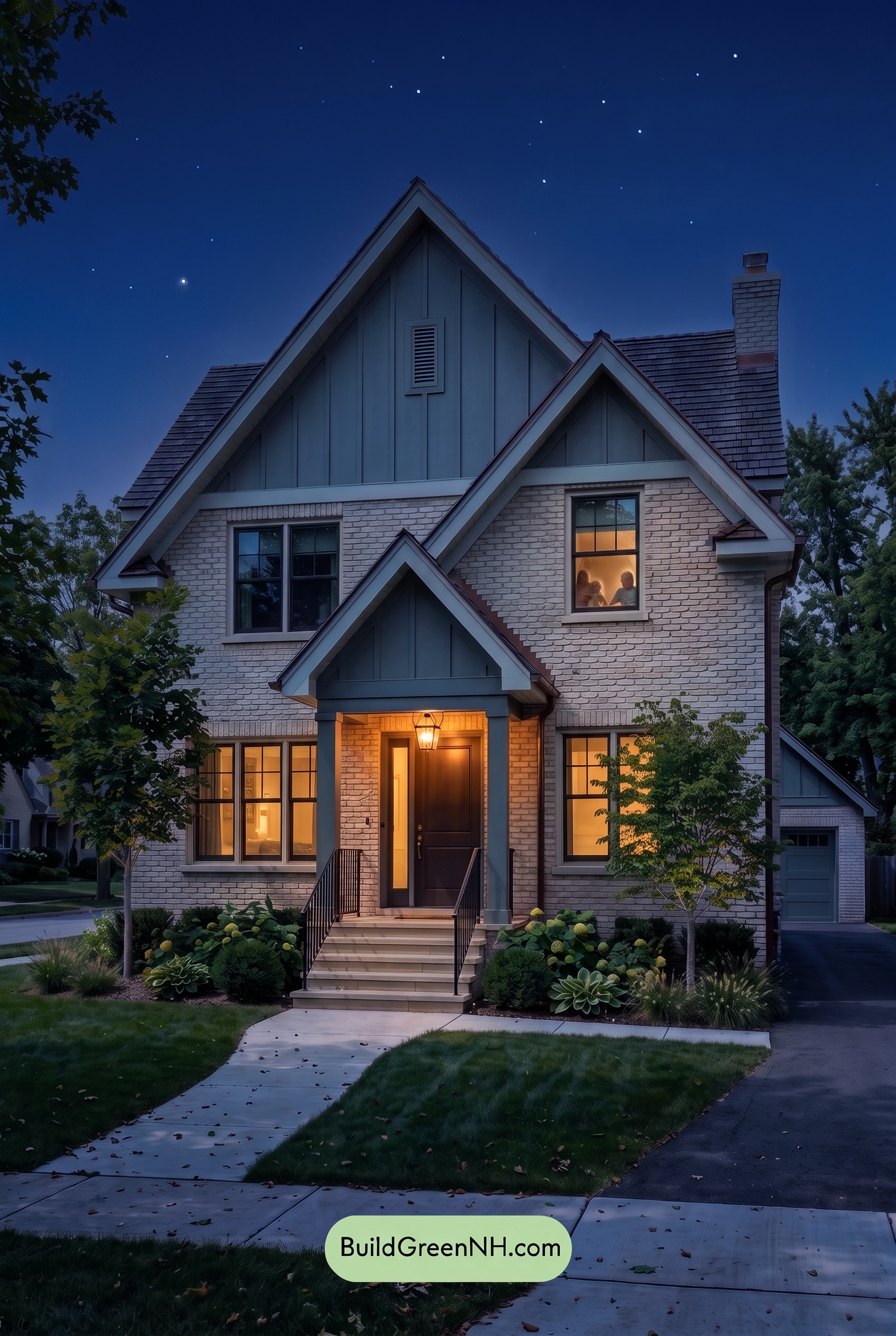
At night, the beige masonry shifts from its balanced daylight warmth to a softer, muted neutral, while the gray upper walls, columns, and garage door take on a deeper, cooler cast. Shadows settle into the rooflines, window recesses, and porch details, reducing overall saturation and giving the gray shades a more dramatic presence.
Warm light at the entry and windows changes the mood completely, pulling the brown door and nearby beige surfaces into a richer, more inviting glow. The pale trim stands out in selective highlights, creating crisp contrast against the darkened gray elements and blue-toned nighttime surroundings for a calm, welcoming curb appeal.
Pin these for later:
Want More?
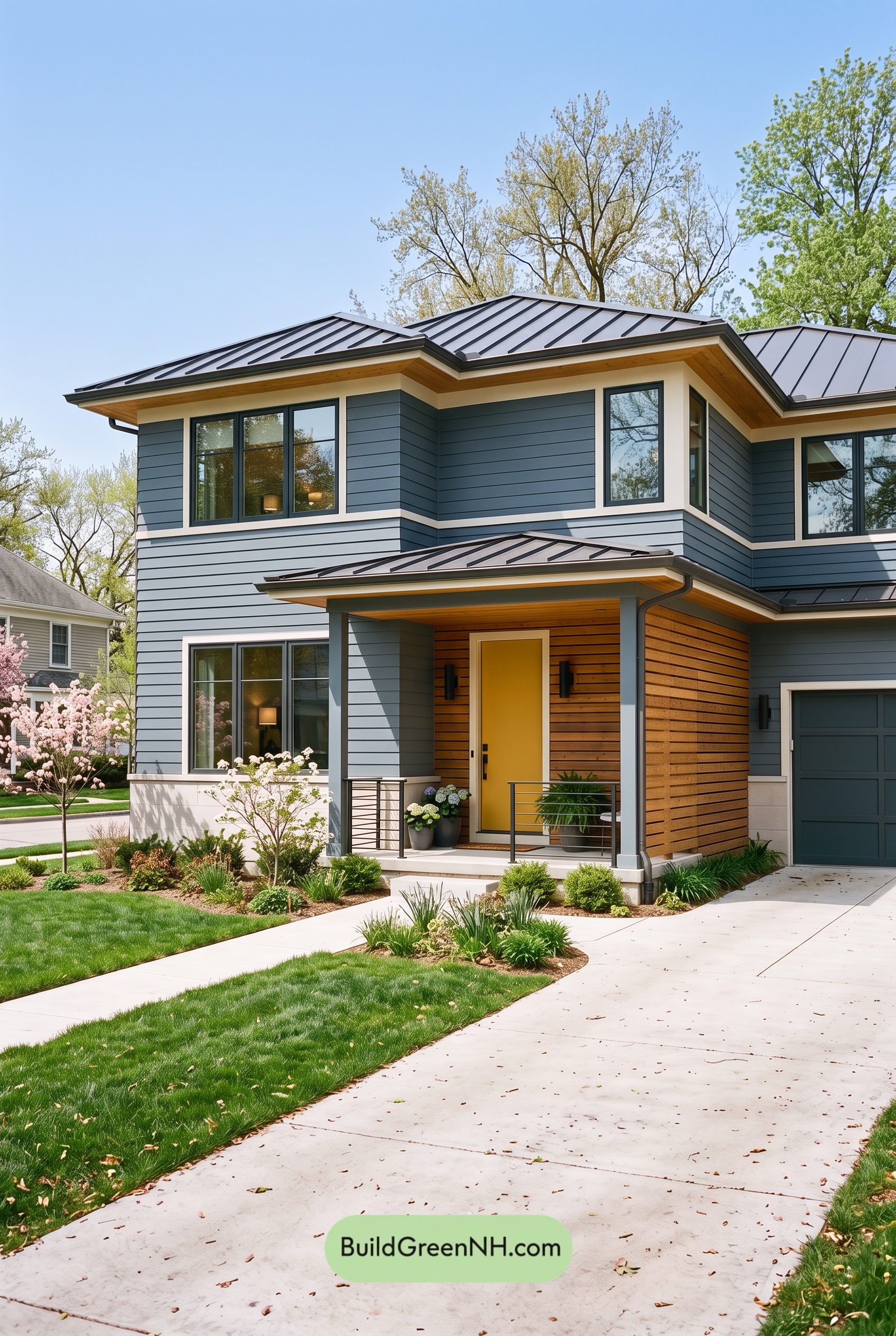 Blue House Front Door Color Scheme: Harbor Saffron
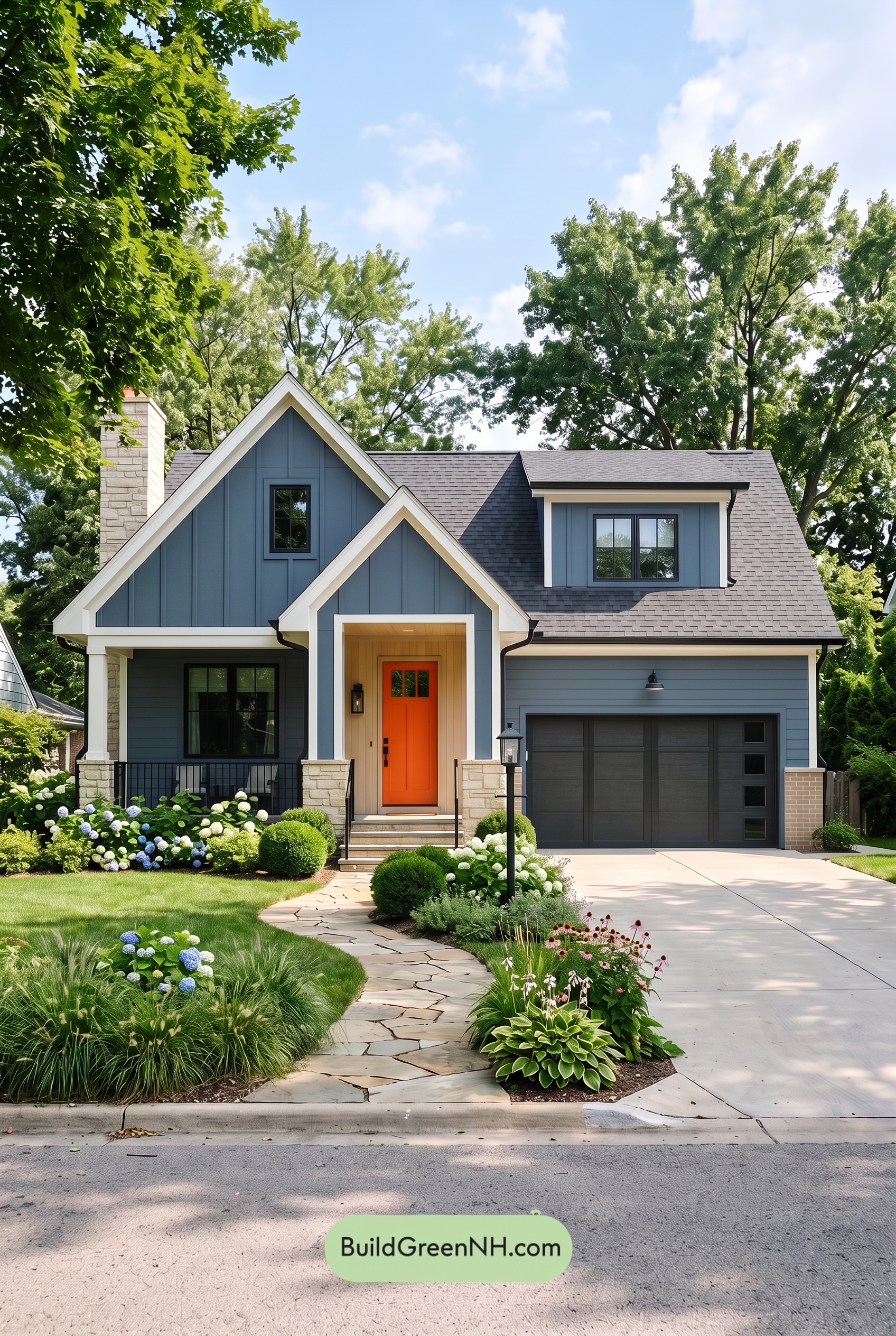 Blue House Front Door Color Scheme: Cobalt Persimmon
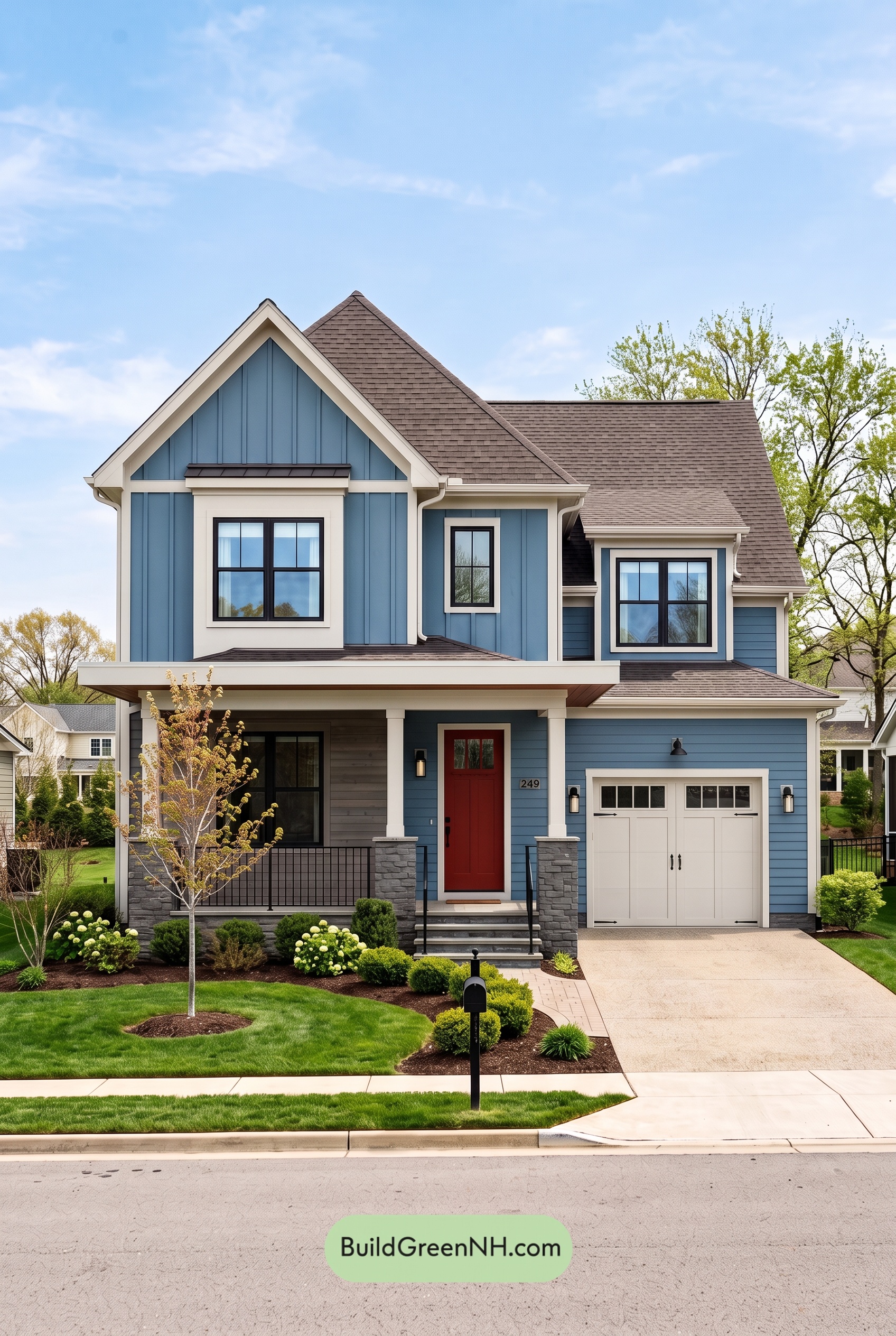 Blue House Front Door Color Scheme: Denim Poppy
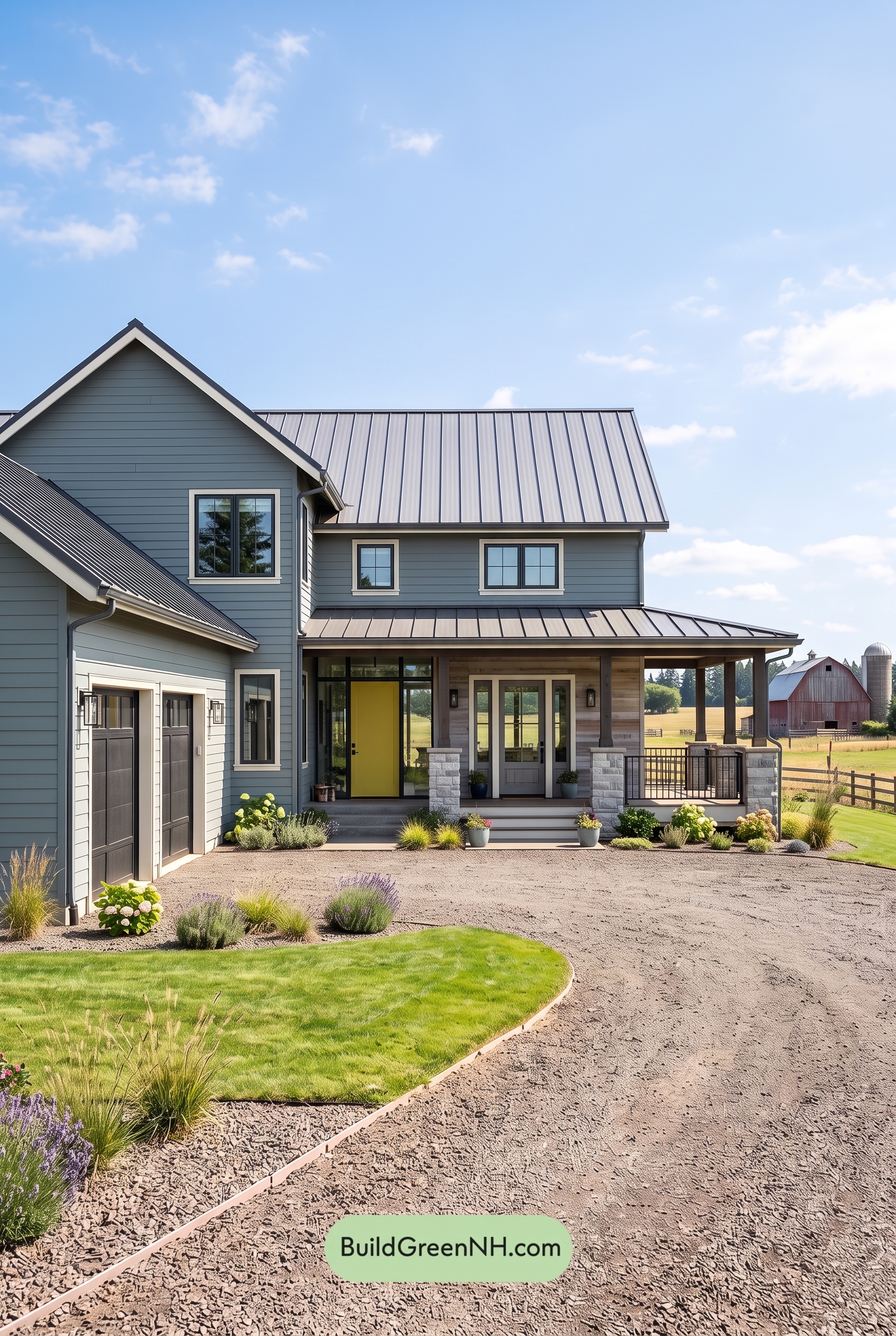 Blue House Front Door Color Scheme: Slate Citron
 Blue House Front Door Color Scheme: Mist Blue Haven
Table of Contents