Last updated on
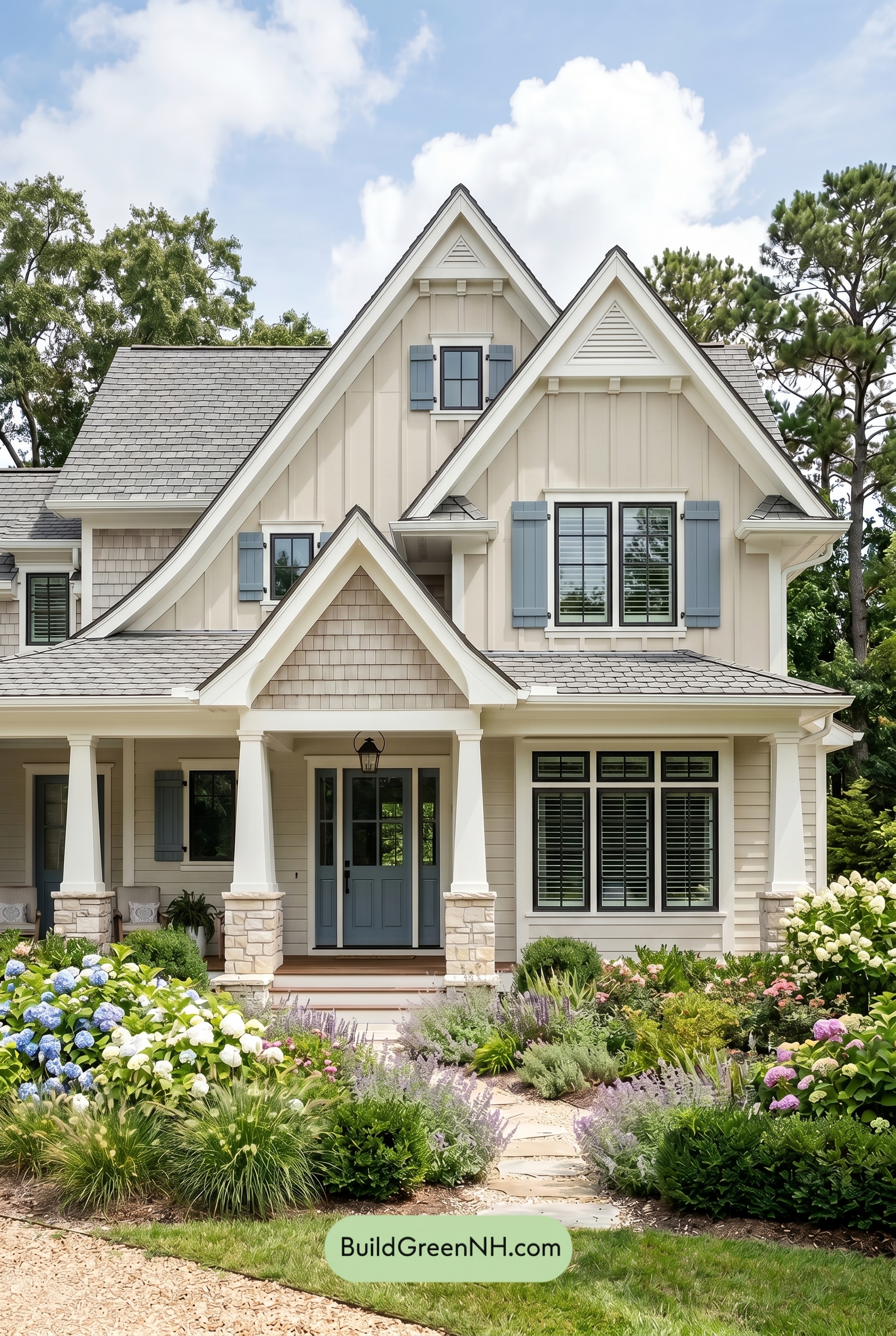

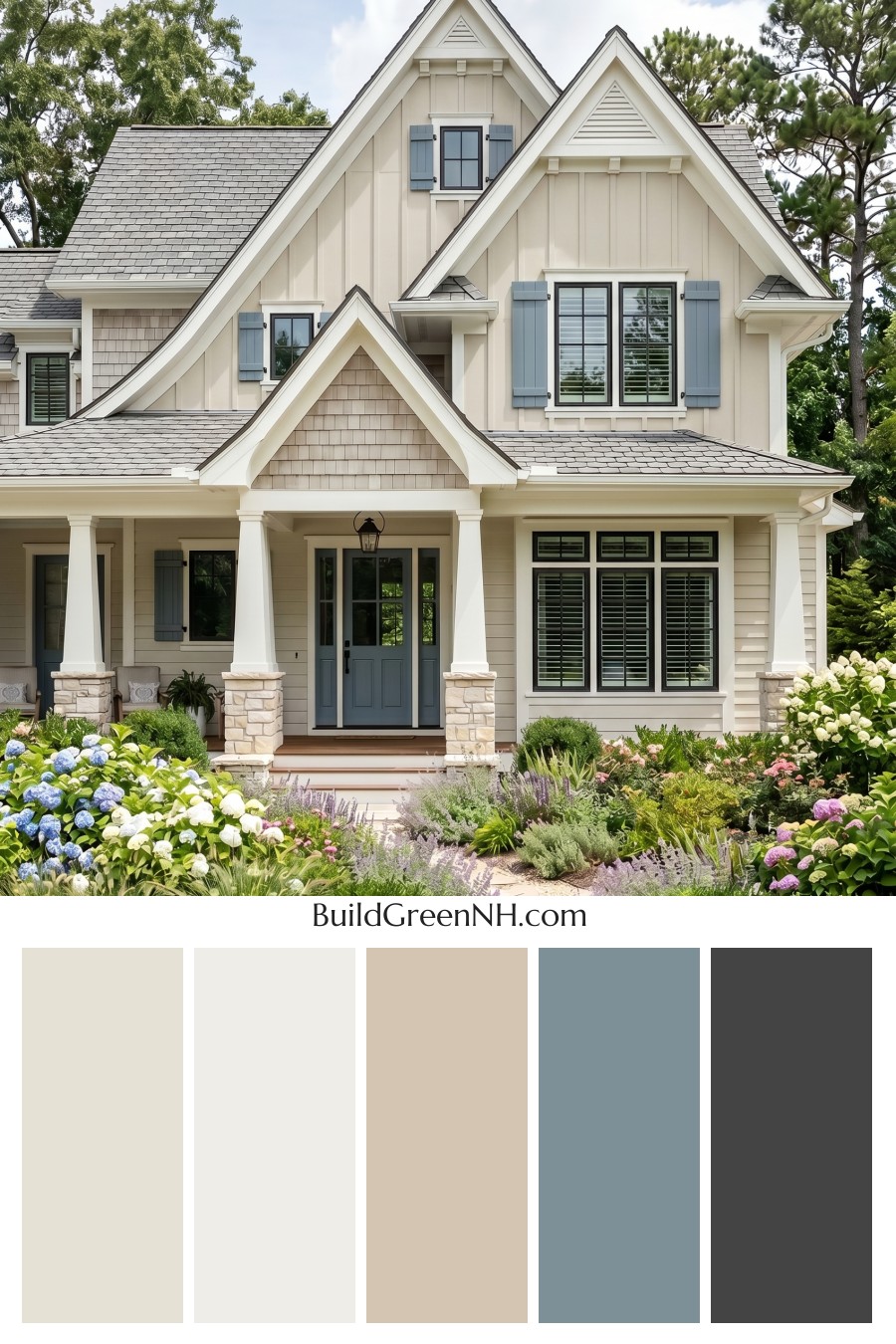
This exterior shines because its layered warm beige shades create timeless softness while muted blue accents add just the right touch of coastal charm.
A Warm Beige Foundation
The main siding is wrapped in a gentle beige family shade that gives the home an inviting, sun-washed look. It feels classic without being stiff, especially across the vertical gable siding where the soft neutral helps highlight the home’s tall, graceful architecture.
A slightly varied beige accent appears in the shingle-style sections, adding texture without disrupting the calm palette. Because the accent stays within the same warm neutral family, the exterior feels layered and thoughtful rather than busy.
Trim That Frames the Architecture
The trim, columns, fascia, and gable details use a lighter beige shade that brightens the facade and crisply outlines the rooflines. This lighter trim is key to the home’s polished look. It draws attention to the steep peaks, deep porch, decorative brackets, and window surrounds while keeping everything soft and cohesive.
The porch columns continue the beige story beautifully, creating a seamless transition from the upper gables down to the entry. Their warm neutral tone feels substantial but not heavy, especially paired with the stone bases in related beige and taupe shades.
Muted Blue Accents With Personality
The shutters bring in a muted blue family shade that feels fresh, relaxed, and a little breezy. It is not overly bright, which is why it works so well with the home’s refined architecture. Instead, the blue adds personality in a quiet, confident way.
The front door repeats this blue accent, giving the entry a welcoming focal point. By using the same color family on both the shutters and door, the design feels intentional from top to bottom. The blue also provides just enough contrast against the beige siding to make the windows and entry feel special.
Cool Gray Details for Balance
The window frames introduce a deep gray shade that gives the exterior a clean, modern edge. This cooler neutral keeps the beige palette from feeling too warm or too soft. It also adds definition around the glass, making the windows feel crisp and tailored.
The roof continues the gray family in a softer, layered way. Its medium gray shingles pair naturally with the window frames while grounding the lighter beige exterior. The result is a balanced mix of warm and cool tones that feels calm, fresh, and enduring.
The Overall Mood
This color scheme feels welcoming, elegant, and easy to love. The warm beige siding and trim create a gentle backdrop, the muted blue accents add charm, and the gray elements bring structure. Together, they give the home a refined cottage-inspired personality with a relaxed, upscale feel.
What makes the palette especially successful is its restraint. Every shade has a purpose. The beige family creates warmth and continuity, the blue family adds character, and the gray family sharpens the details. It is a beautiful example of how soft neutrals and quiet color can work together to make a home feel both timeless and memorable.
Next, see how this color scheme looks under different lighting simulations throughout the day.
Overcast
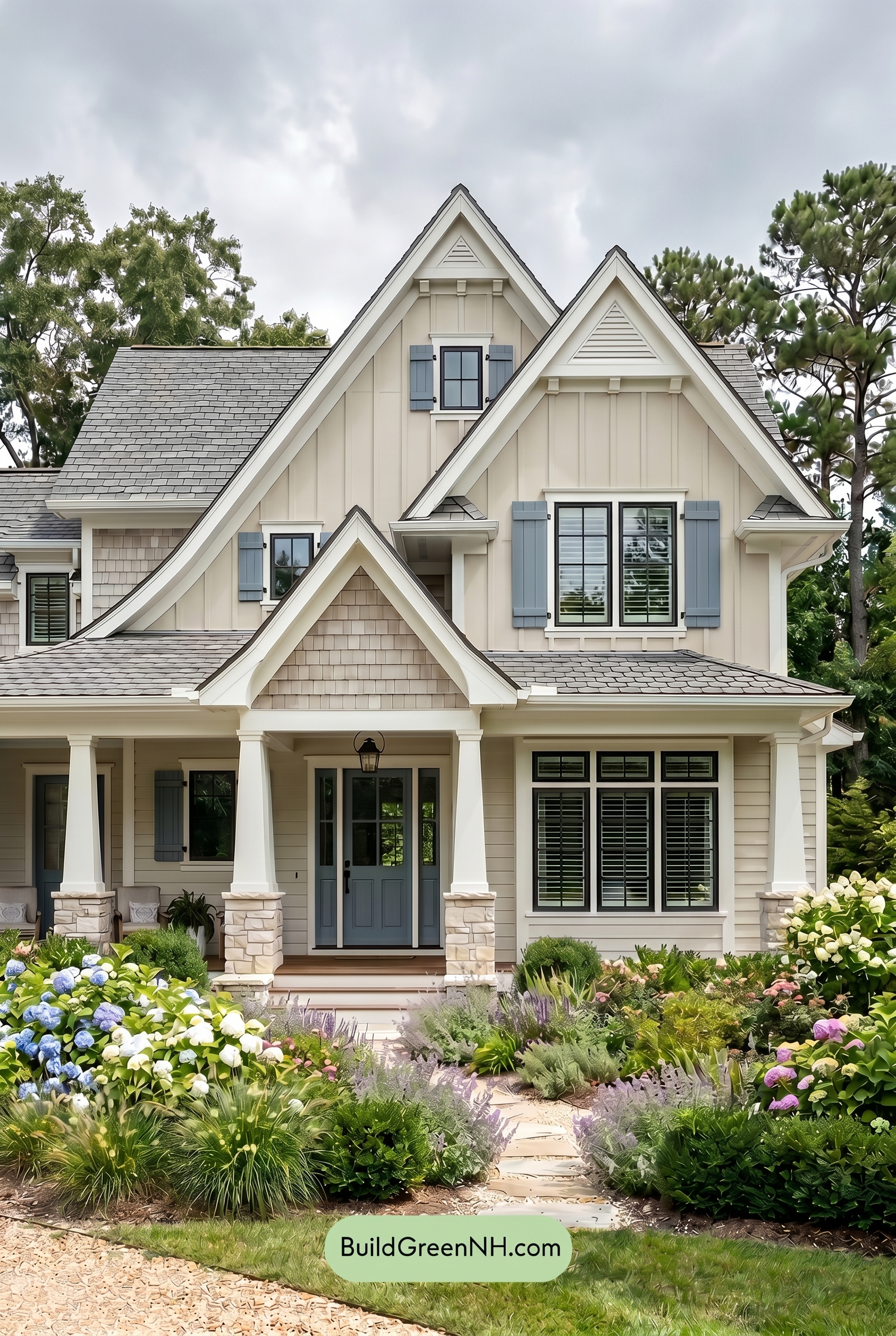
Under overcast light, the beige family across the exterior loses some of the sunlit warmth it would show in neutral daylight, shifting softer and slightly cooler. The reduced saturation makes the warm neutrals feel calmer and more blended, while shadows under the gables and porch become gentler rather than sharply defined.
The blue family on the shutters and door appears a touch deeper and more muted, giving the accents a quieter, refined look. Gray shades in the window framing feel cooler and steadier, and the overall contrast softens, creating a relaxed, misty mood instead of the crisper brightness of neutral daylight.
Golden Hour
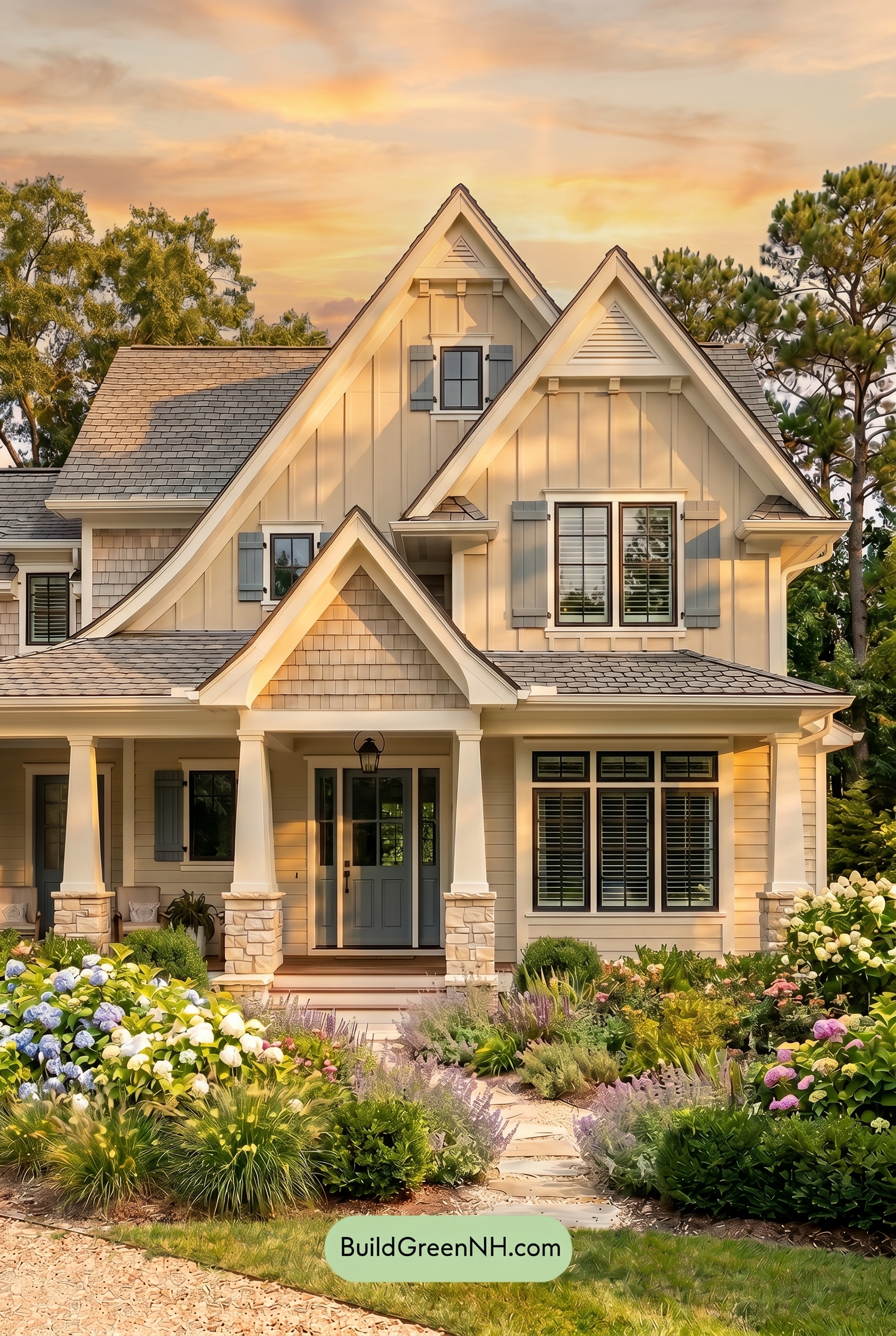
Under Golden Hour, the beige family on the walls, trim, columns, and accent areas shifts warmer and more saturated than it would in neutral daylight. The soft beige shades pick up a gentle glow, making the exterior feel creamier, richer, and more inviting.
The blue shutters and front door appear deeper against the warmed-up neutrals, while the gray window frames feel cooler and more defined. Longer shadows add contrast across the gables and porch, giving the house a cozier, more dimensional mood than the cleaner, flatter look of neutral daylight.
Shade
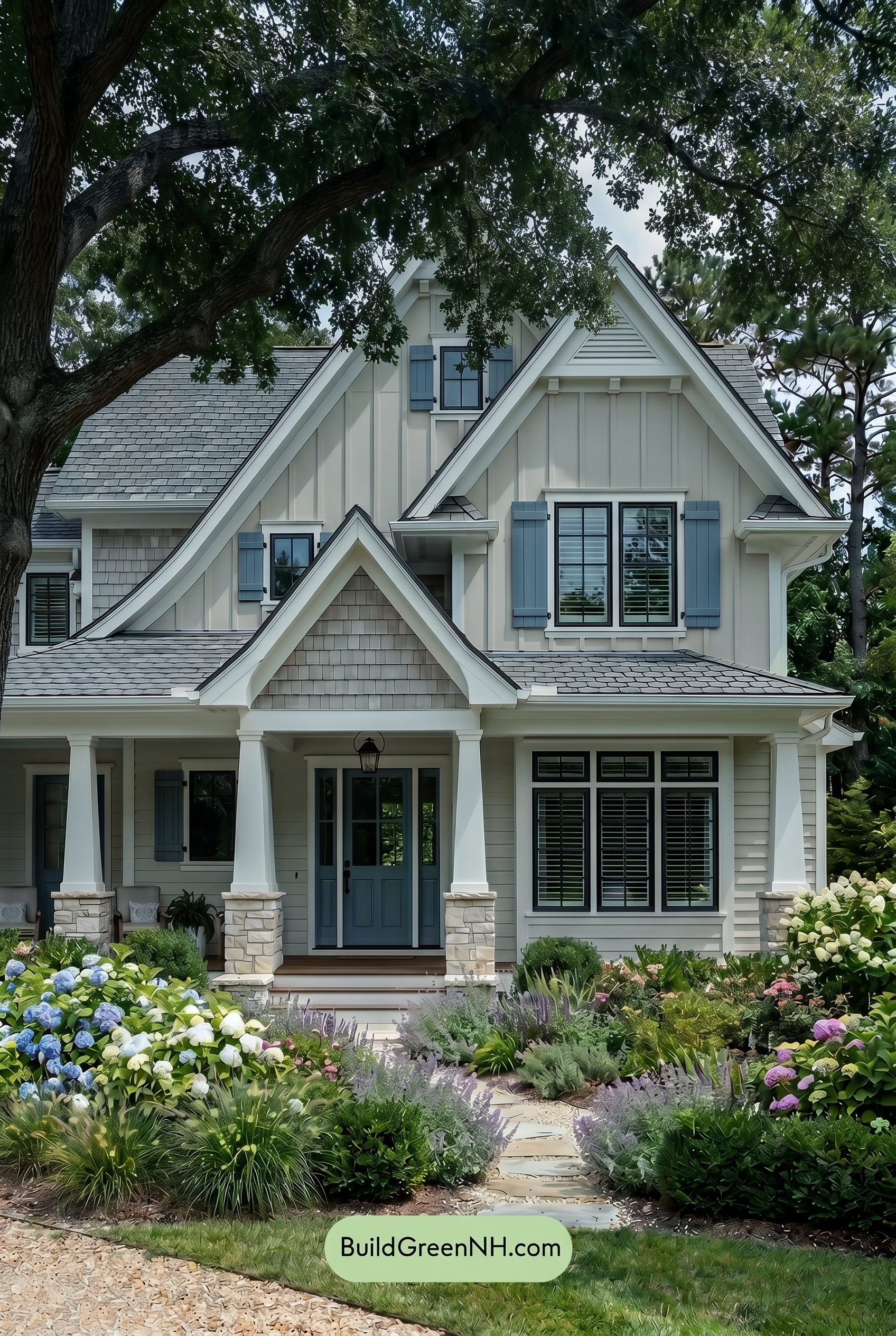
In shade, the beige family on the main walls and trim looks cooler and slightly less saturated than it would in neutral daylight. Its warmth softens, shifting from sunlit creaminess toward a quieter, muted beige, while the recessed areas gather gentle shadows that make the siding and gable details feel more layered.
The blue shutters and front door deepen noticeably in shaded light, gaining a calmer, more saturated presence against the softened beige backdrop. Gray window frames appear crisper and cooler, increasing contrast just enough to define the architecture while giving the whole exterior a serene, tucked-away mood.
Nighttime
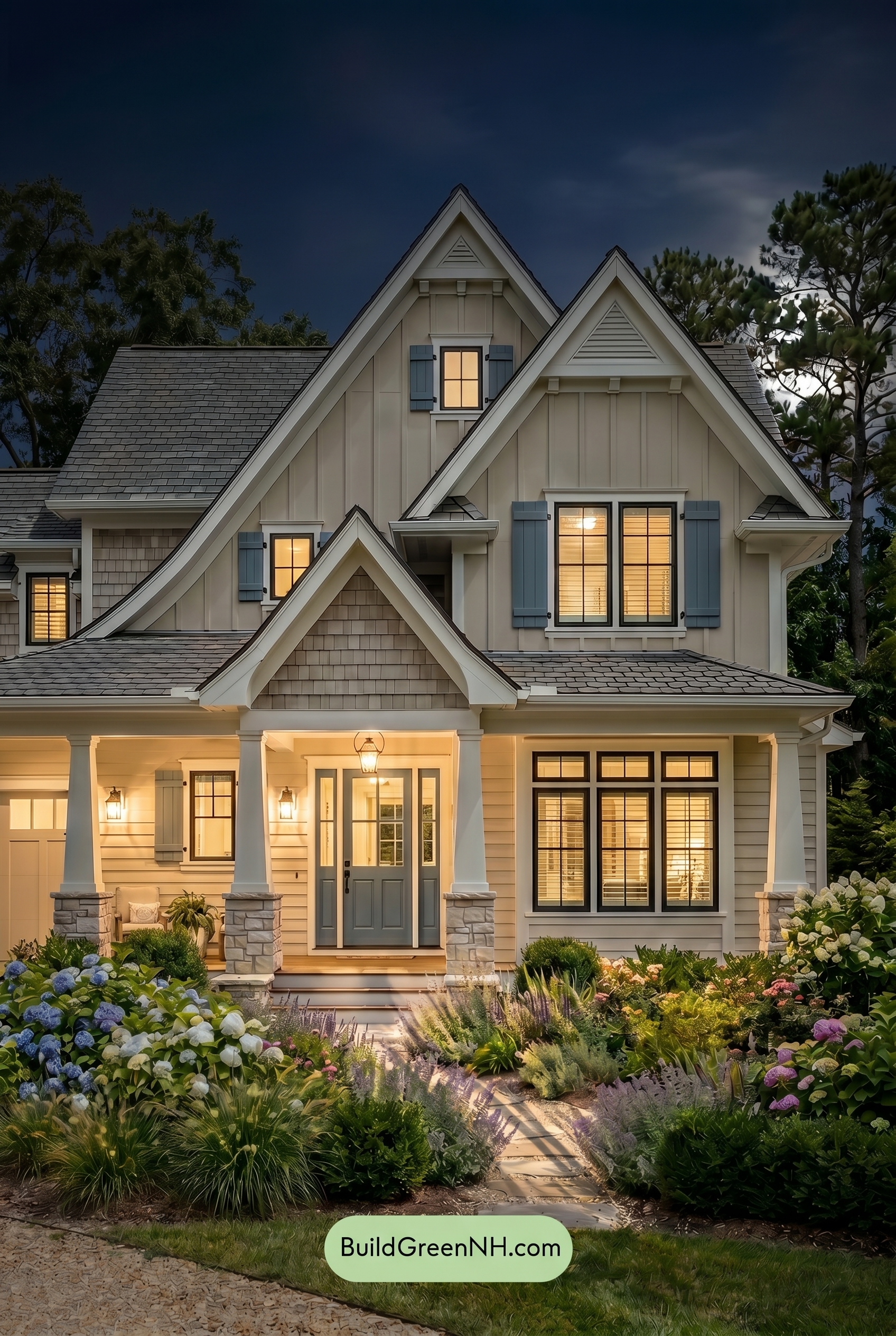
At nighttime, the beige family on the main walls and trim shifts warmer and softer, especially where the porch and window light spill across the surface. Compared to neutral daylight, the saturation feels gentler in the lit areas, while deeper shadows under the gables and rooflines create stronger contrast and more dimension.
The blue family on the shutters and front door appears deeper and slightly muted after dark, giving the accents a calmer, moodier presence. The gray family around the windows reads crisper against the warm interior glow, creating a cozy, welcoming exterior with a richer, more dramatic evening character.
Pin these for later:
Want More?
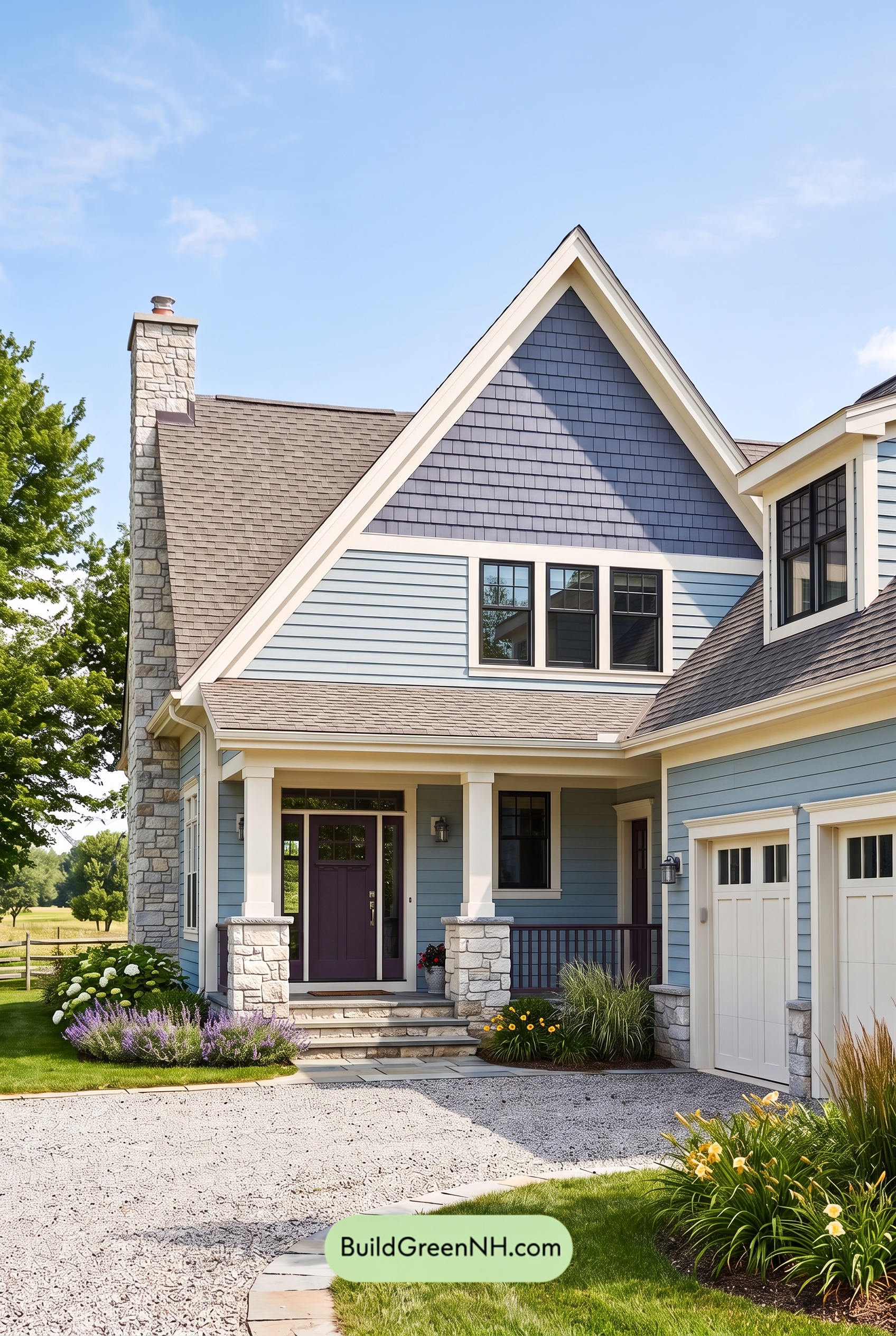
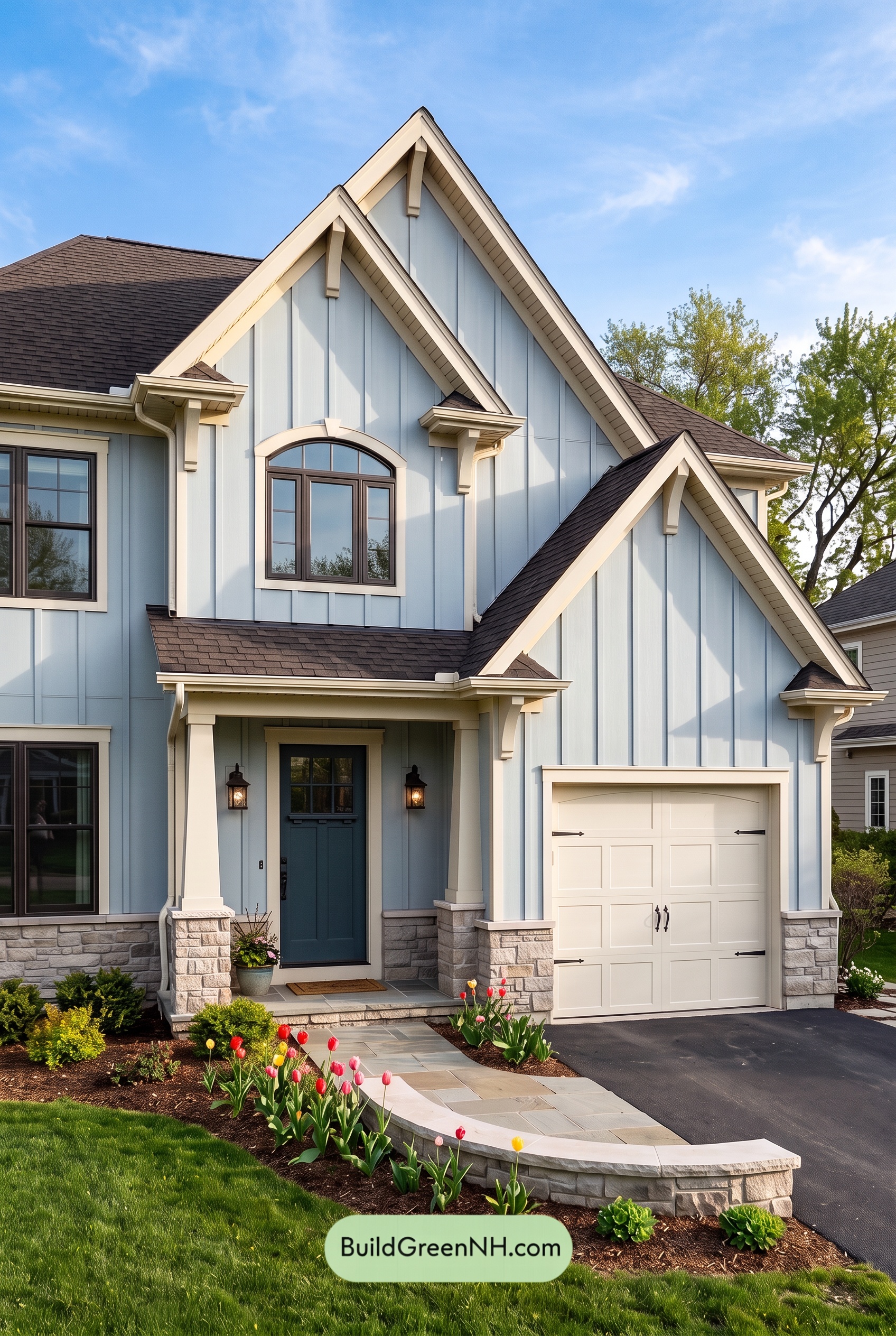 Exterior Color Scheme with Stone Accents: Bluebell Gable Song
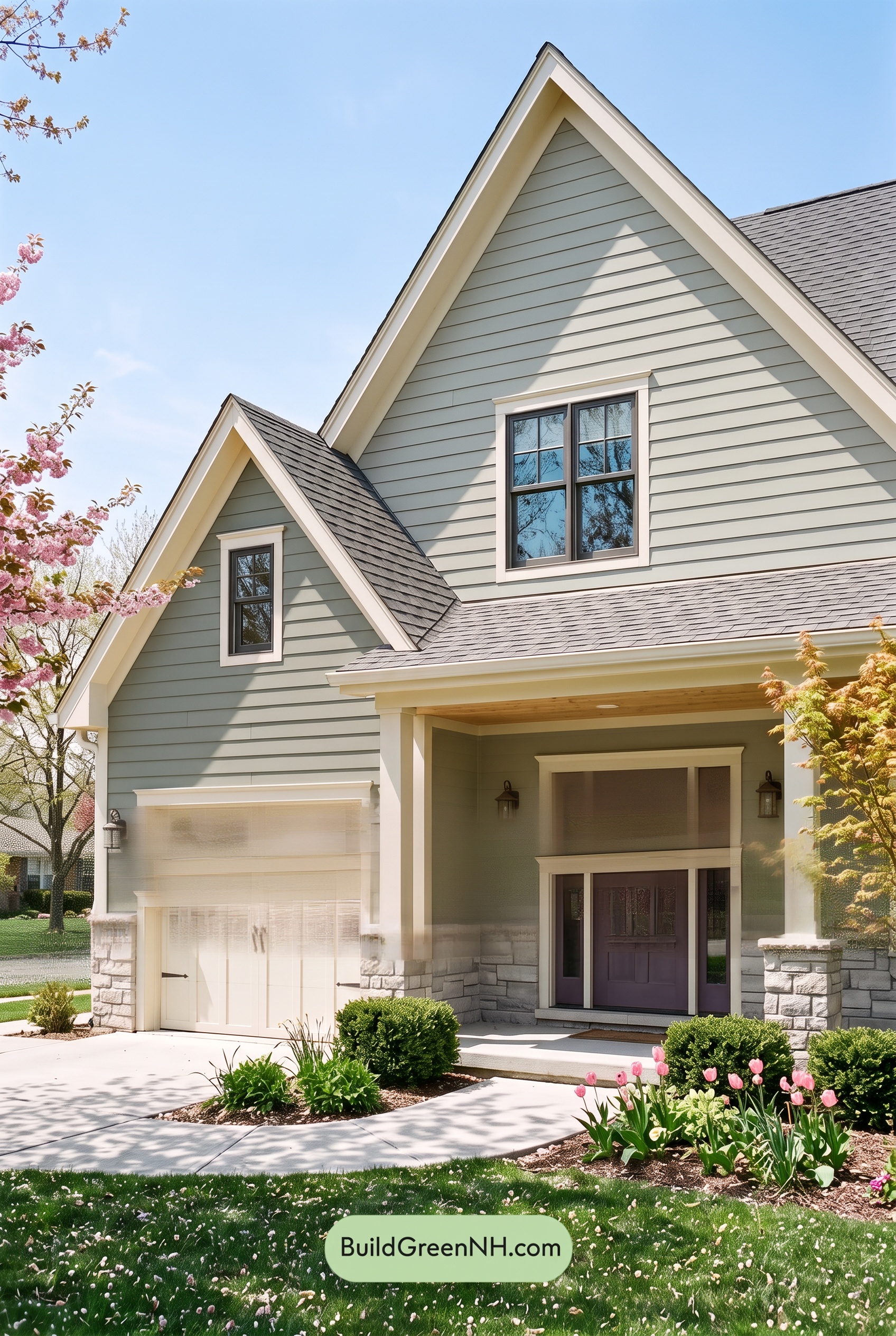
 Exterior Color Scheme with Stone Accents: Meadow Bell Welcome
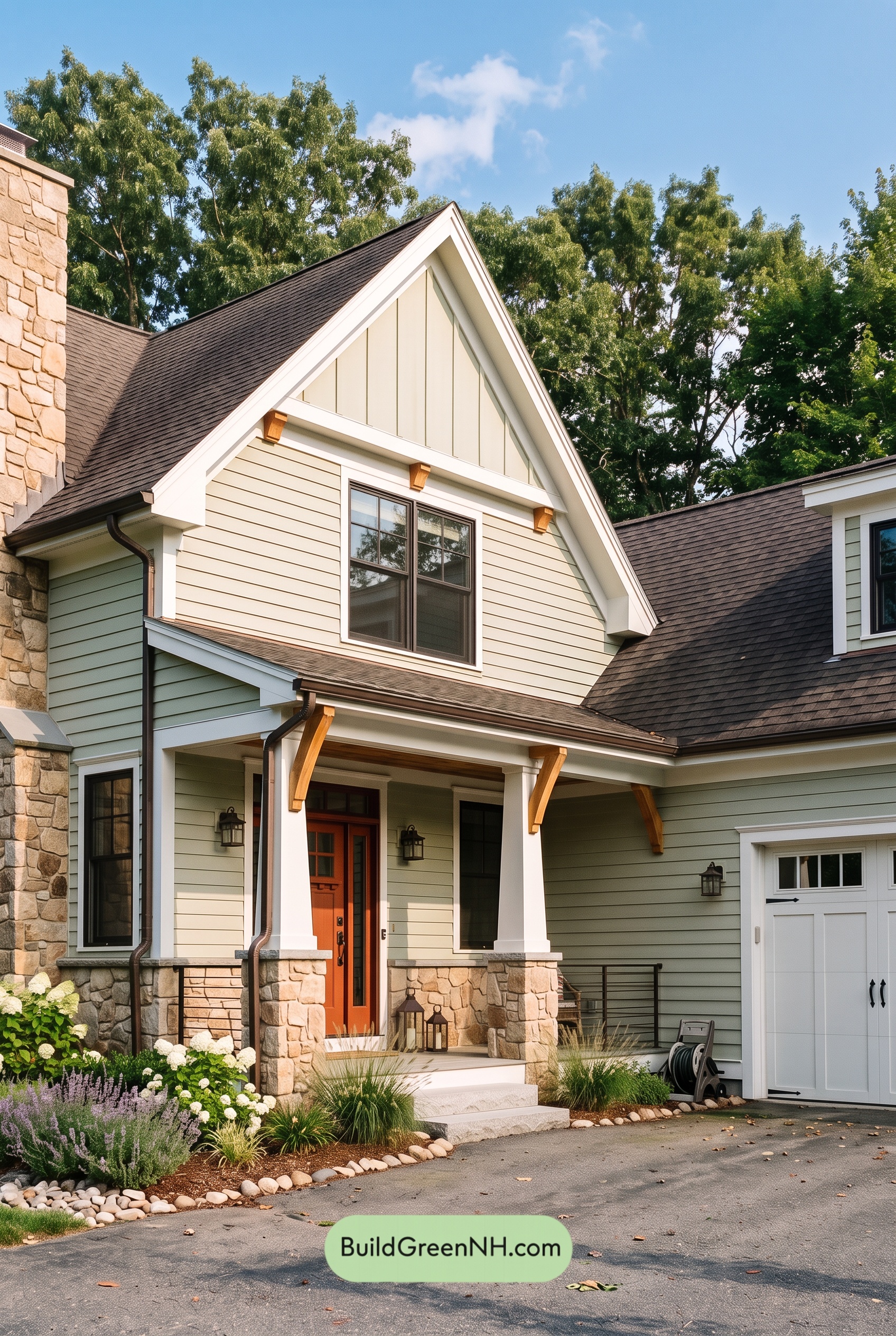
 Exterior Color Scheme with Stone Accents: Willow Quartz Porch
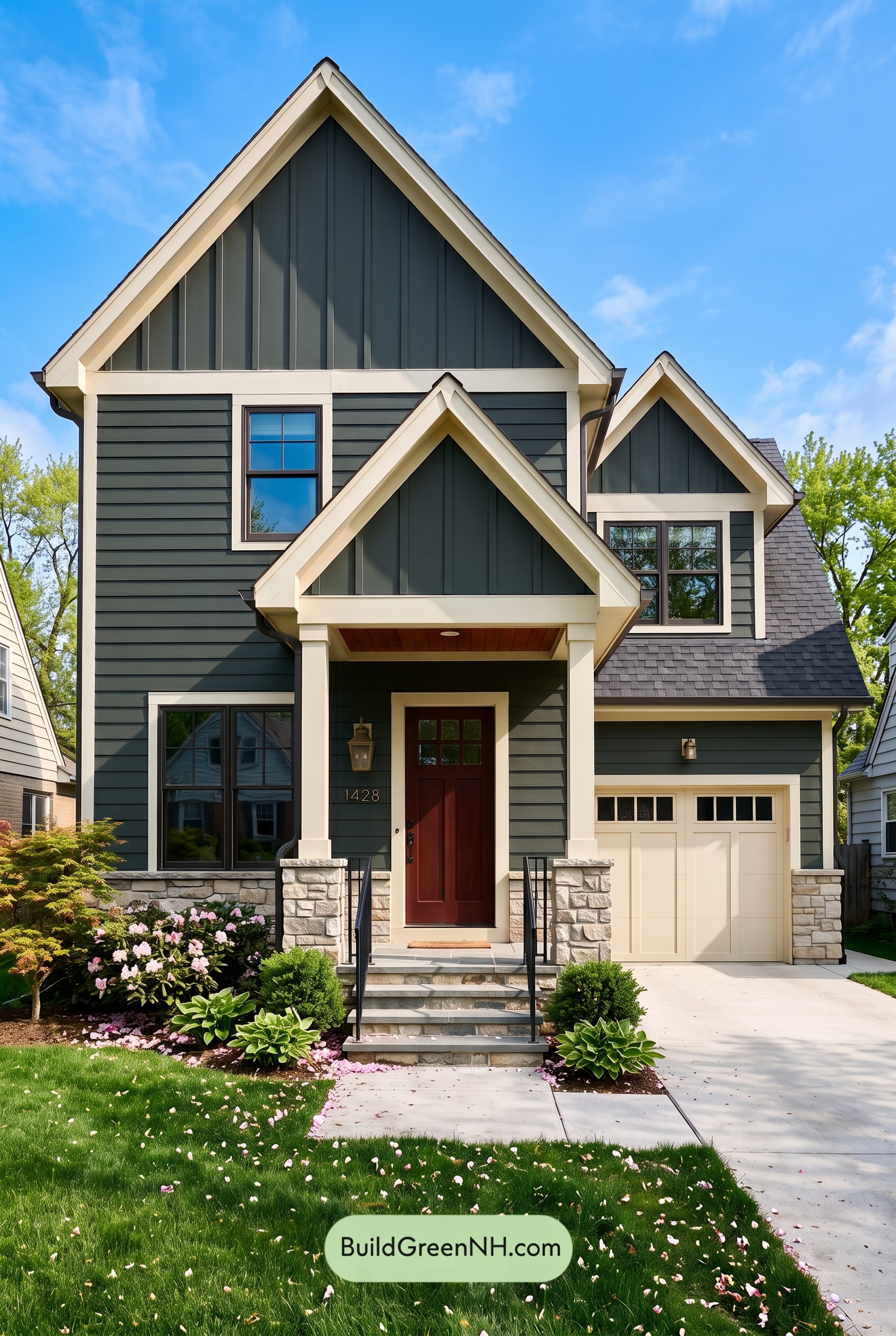
 Exterior Color Scheme with Stone Accents: Celadon Ember Gable
 Exterior Color Scheme with Stone Accents: Pine Brass Threshold
Table of Contents