Last updated on
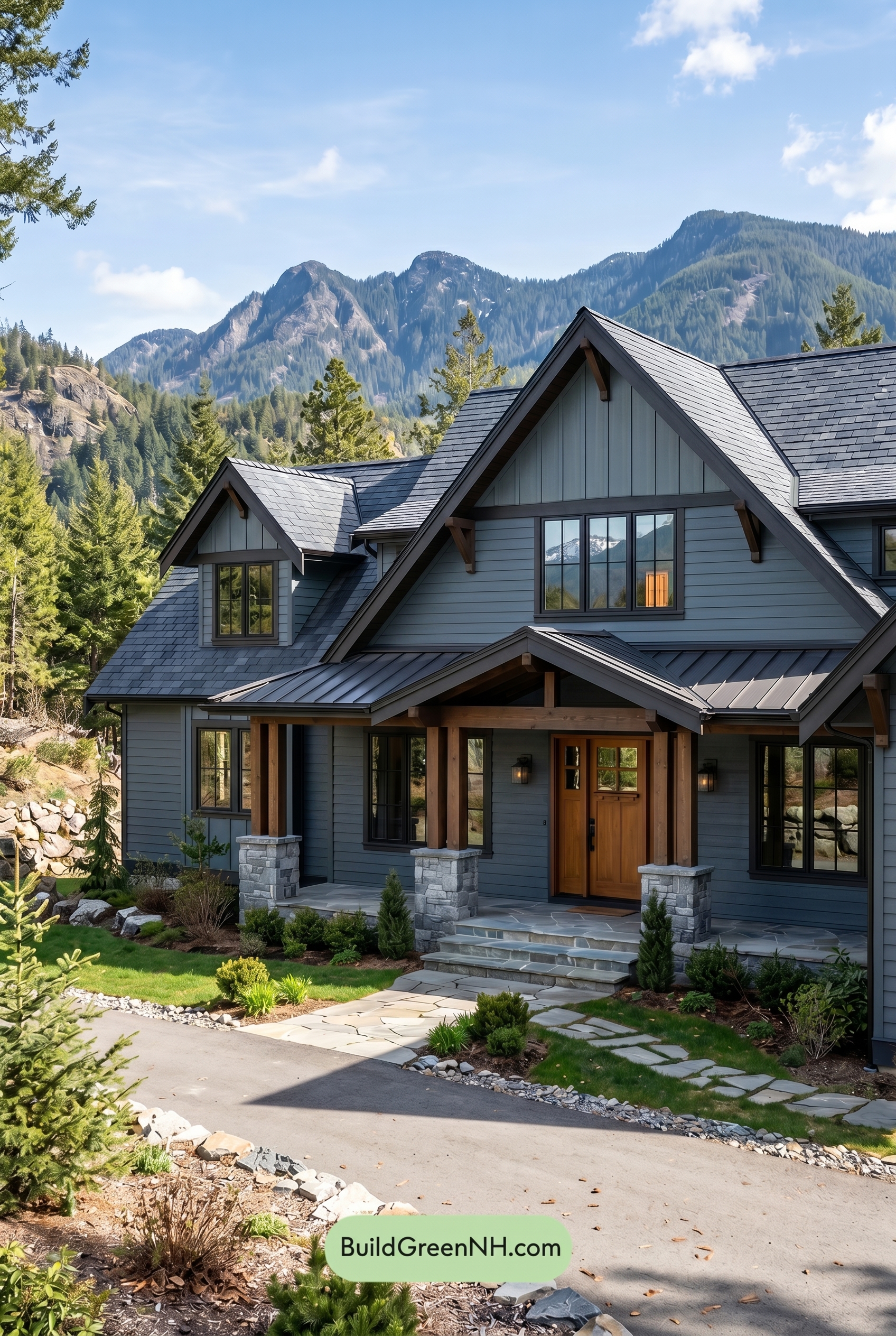

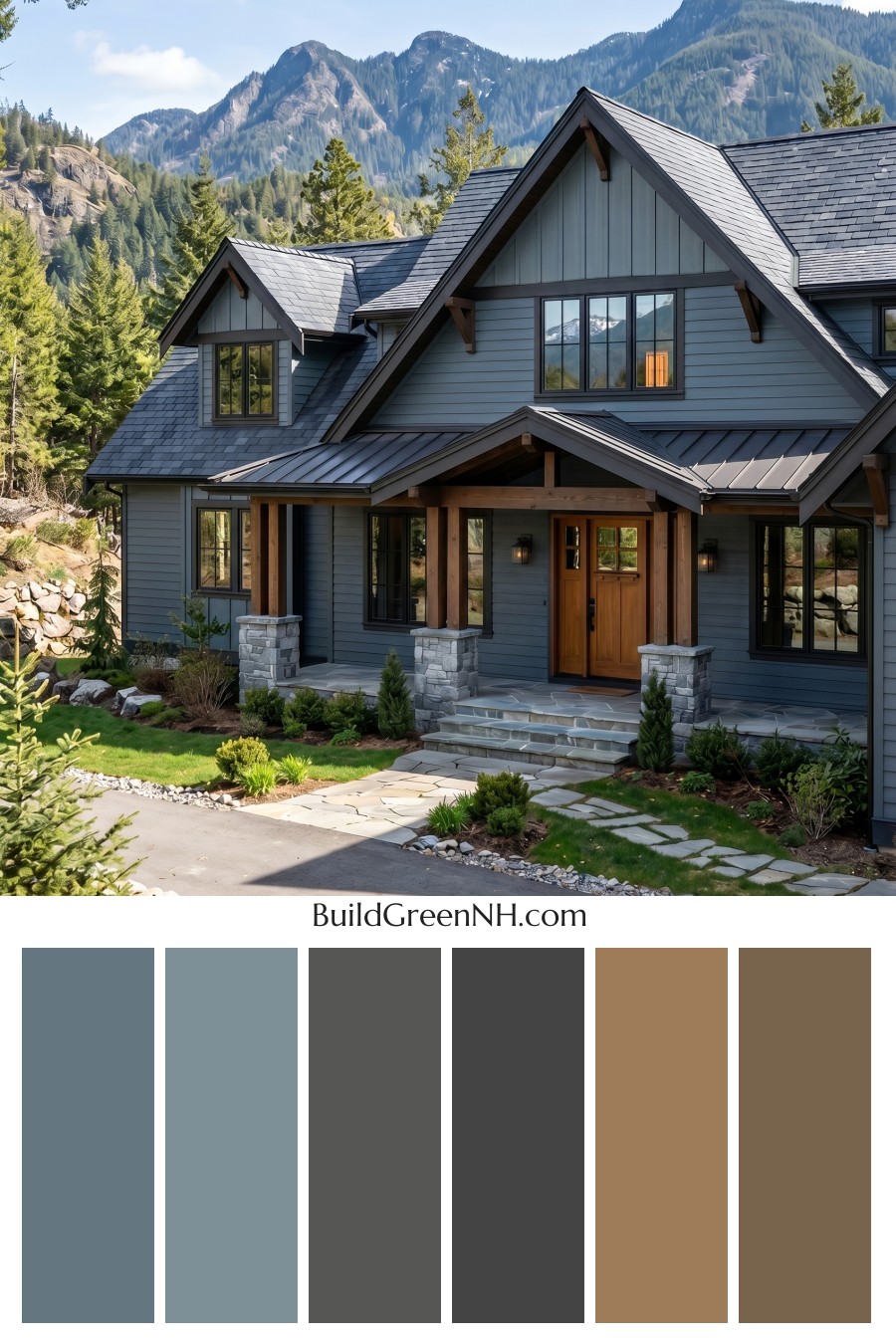
This exterior color scheme works beautifully because its cool blue tones feel calm and mountain-ready, while warm brown accents make the whole home feel inviting.
A Cool Blue Base with Natural Depth
The main siding is wrapped in a muted blue family shade that gives the house a grounded, serene presence. It has enough depth to feel substantial against the surrounding trees and mountains, but it stays soft enough to avoid looking heavy.
On the upper gables, a closely related blue family shade keeps the palette cohesive. The vertical siding in those peaks adds texture, and the cool blue tone helps emphasize the tall rooflines without competing with the architecture.
Gray Trim That Sharpens the Architecture
The trim and window frames lean into the gray family, creating a crisp outline around the windows, roof edges, and gable details. This deeper gray shade gives the home a polished, tailored look and helps the blue siding feel more refined.
The roof continues the gray family with a rich, layered tone that ties neatly into the trim. Because the roof is visually prominent, this choice is especially effective. It anchors the house from above and adds a sophisticated contrast to the softer blue walls.
Warm Brown Accents at the Entry
The front door brings in a warm brown family shade, which instantly draws the eye to the entry. Against the cooler blue and gray exterior, this brown tone feels welcoming and natural, almost like a friendly glow at the center of the home.
The columns and exposed structural accents also use brown family shades, reinforcing that warm, woodsy character. These elements connect the house to its landscape and keep the cool palette from feeling too formal or distant.
Why the Palette Works So Well
This scheme succeeds because it balances cool and warm color families with confidence. The blue siding feels peaceful, the gray trim and roof add structure, and the brown accents bring warmth exactly where it matters most.
Overall, the mood is calm, upscale, and outdoorsy. It feels perfectly suited to a mountain setting, but it would also work beautifully anywhere a home needs a refined exterior with a relaxed, natural spirit.
Next, see how this color scheme looks under different lighting simulations throughout the day.
Overcast
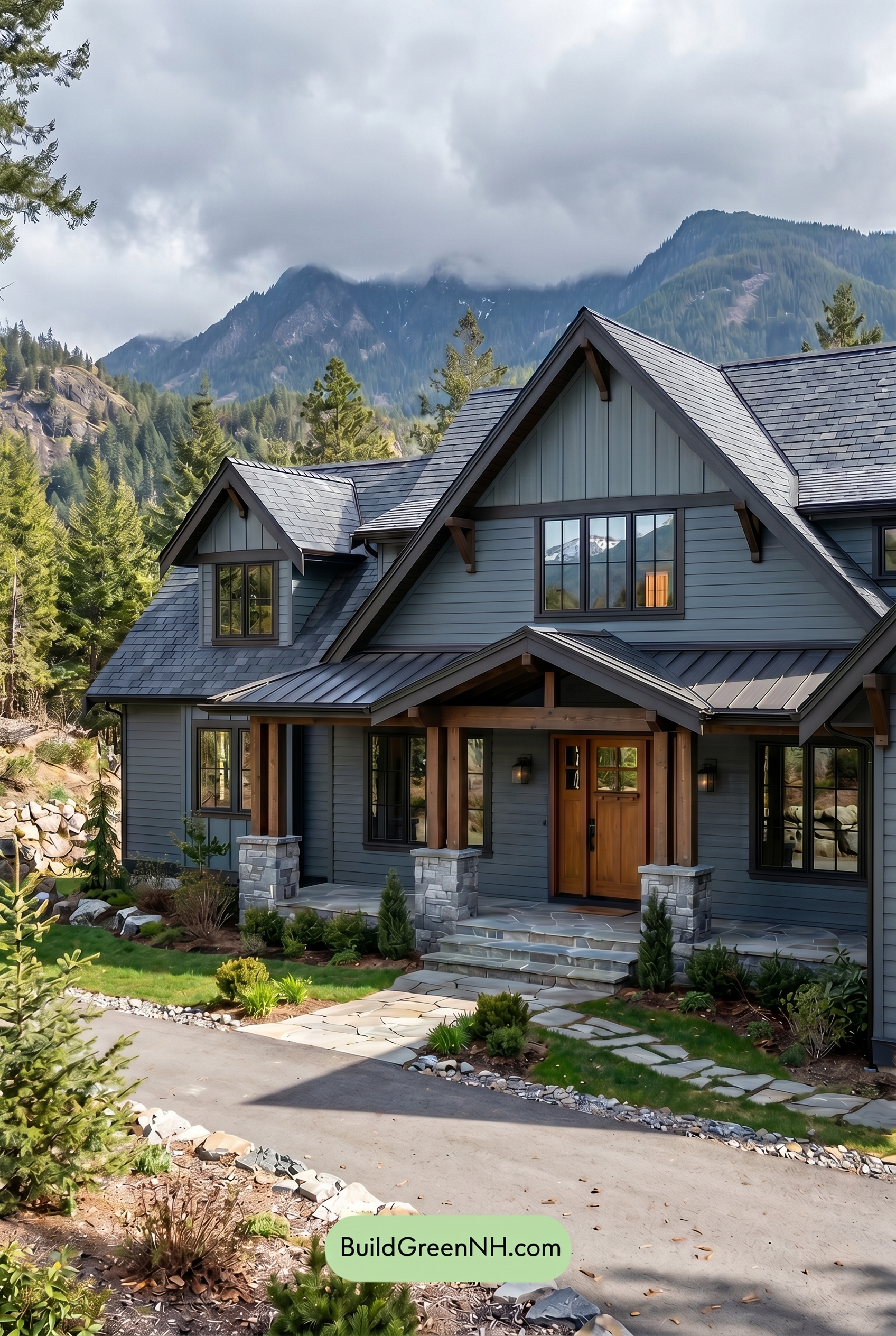
Under overcast light, the blue siding and upper wall shades appear slightly less saturated and cooler than they would in neutral daylight, giving the exterior a calmer, more misty character. The gray trim and window frames blend more softly into the blue family, with fewer sharp highlights and a gentler overall contrast.
Shadows become broader and softer, so the rooflines and gables feel less dramatic but more cohesive. The brown front door and columns lose some of their sunny warmth, shifting toward a muted, earthy richness that keeps the home inviting while the overall mood turns quiet, refined, and mountain-lodge serene.
Golden Hour
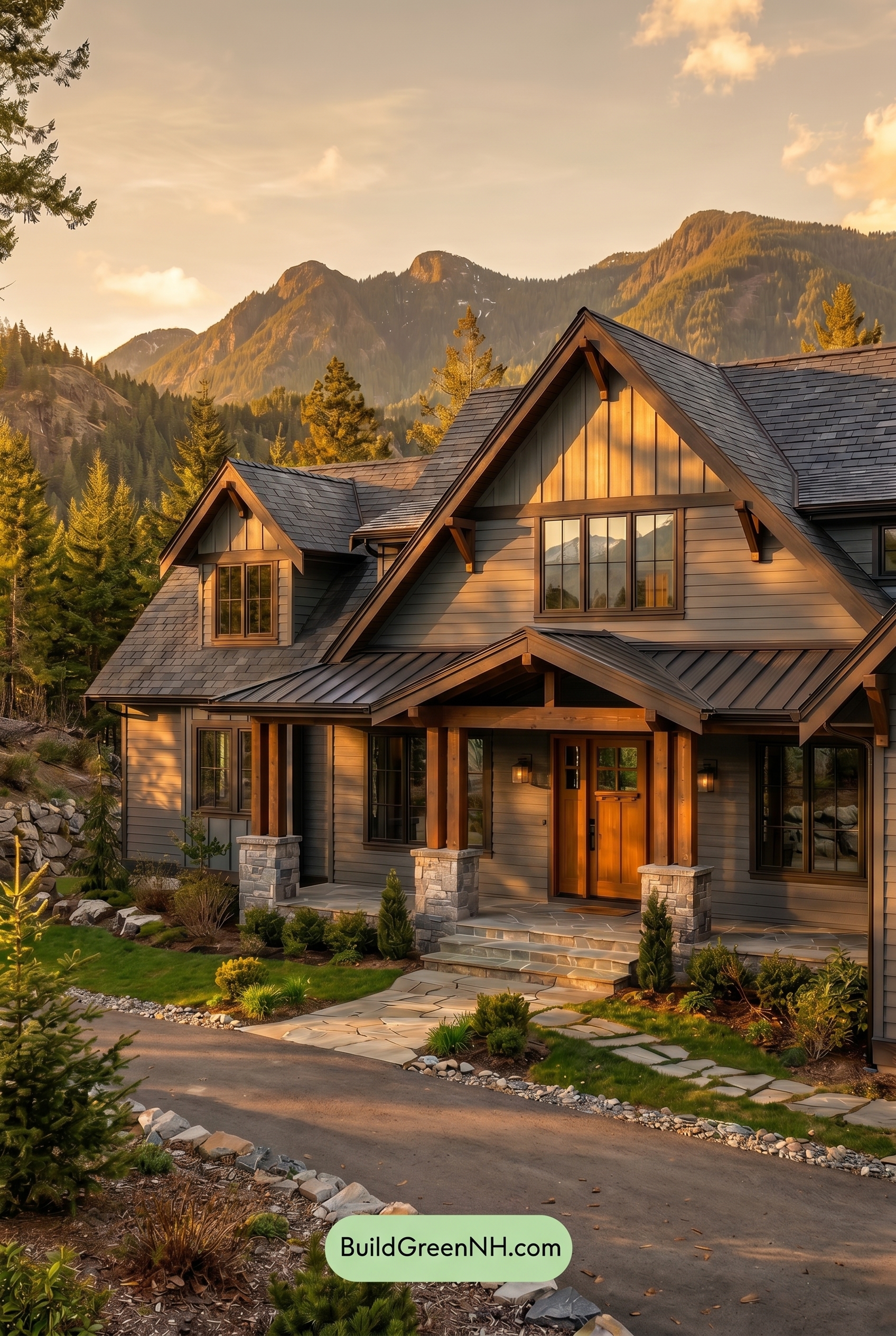
In neutral daylight, the blue-family siding would read cooler and clearer, with the gray trim feeling more straightforward and crisp. Under Golden Hour, that same blue shade is softened by amber light, appearing warmer, more muted, and less sharply saturated, while the gray shades take on a gentler warm-neutral cast.
The low sun creates long shadows beneath the rooflines and porch, deepening the darker blue and gray areas and increasing contrast across the façade. At the same time, the brown door and columns glow richer and more saturated, giving the whole exterior a cozy, inviting mood that feels warmer and more dimensional than it would at midday.
Shade
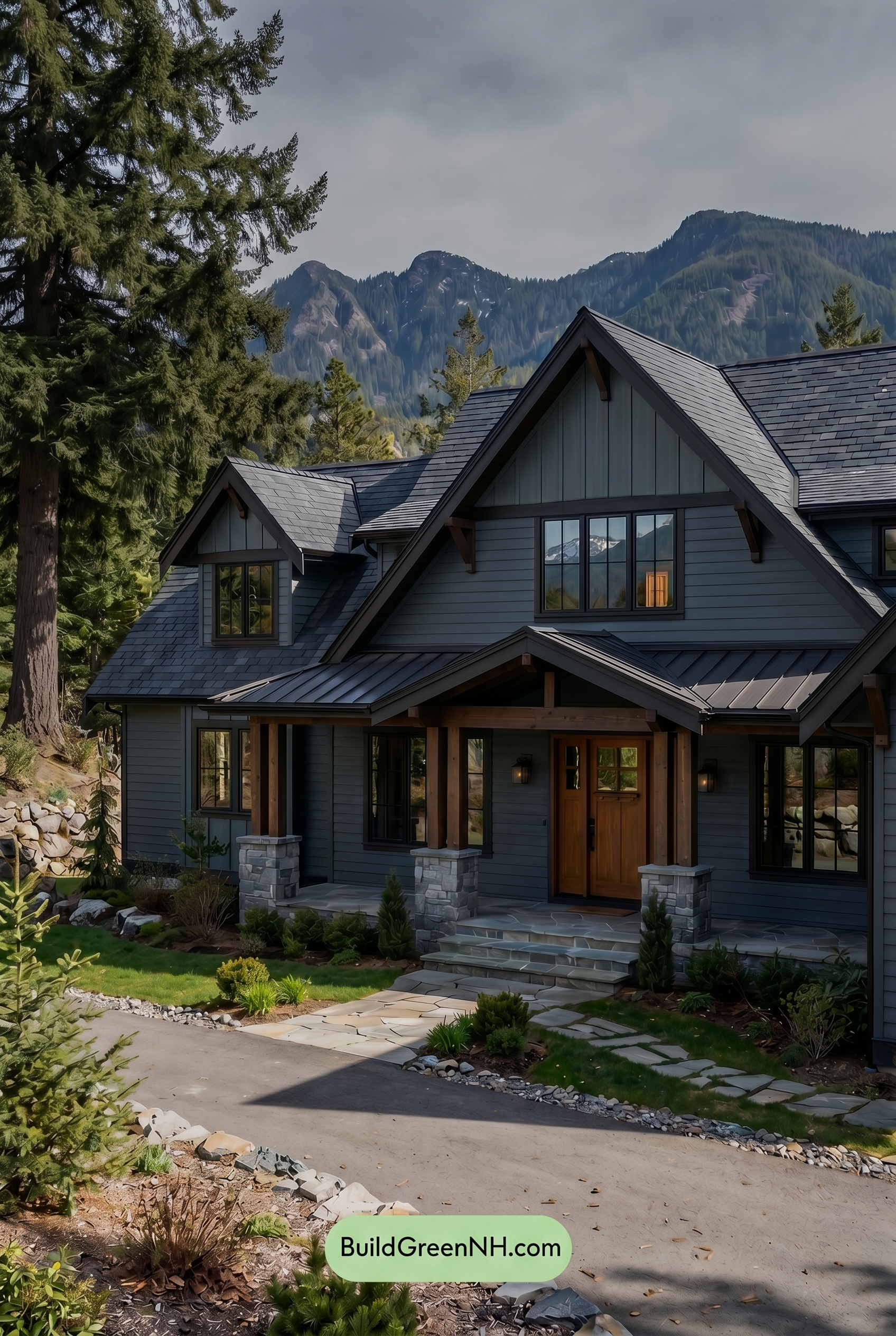
In shade, the blue family on the main and upper walls looks deeper and more saturated than it would in neutral daylight, taking on a cooler, quieter character. Shadows soften the warmth in the surface color, so the facade feels more subdued and grounded rather than crisp and bright.
The gray family used on the trim and window frames gains stronger contrast against the darker blue shades, giving the rooflines and openings a sharper outline. Meanwhile, the brown family on the door and columns feels richer and warmer by comparison, adding a cozy note that balances the cooler, moodier exterior.
Nighttime
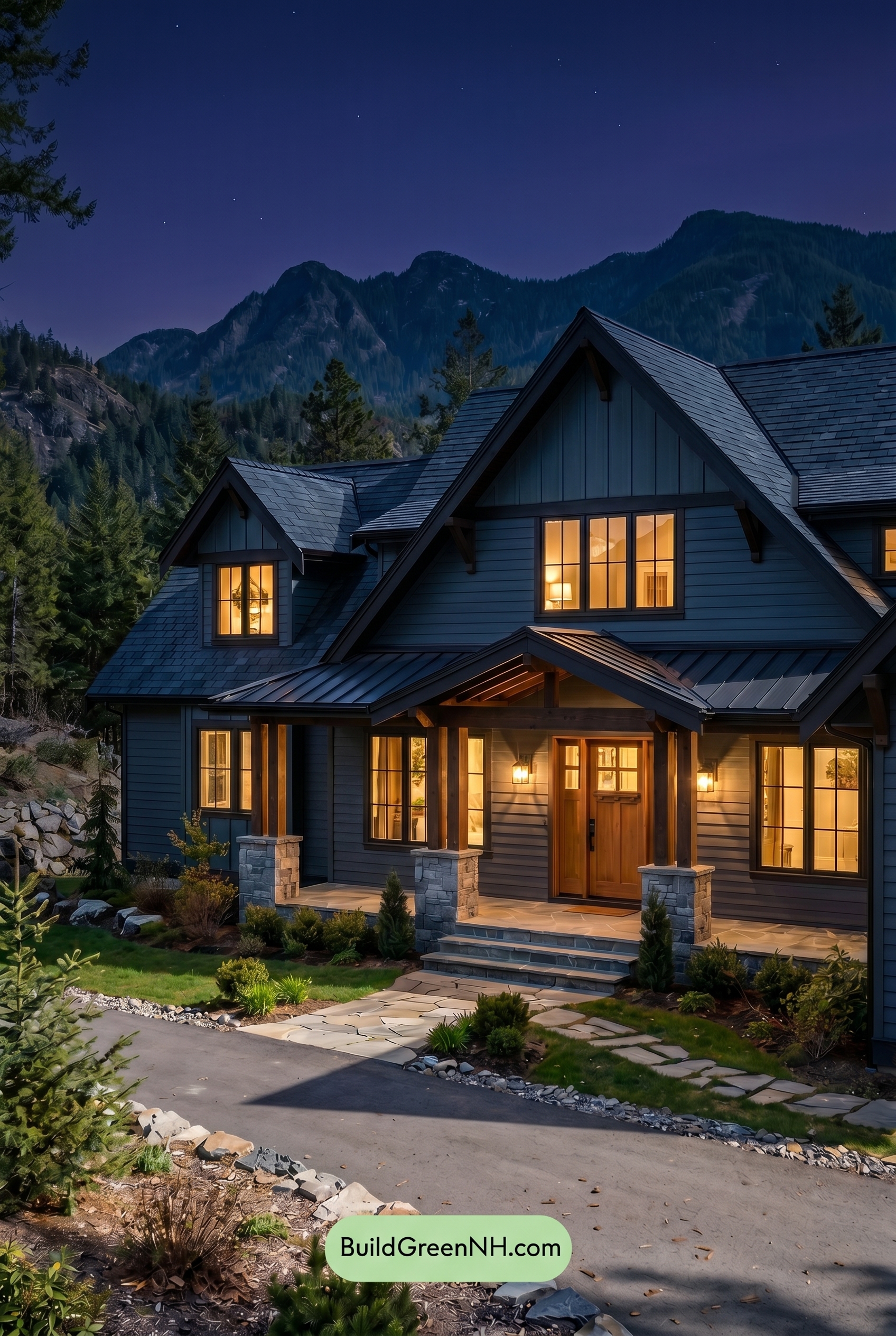
At night, the blue siding shifts from a clearer daylight shade into a deeper, more saturated blue that feels cooler and quieter. Shadows collect under the gables and rooflines, making the gray trim and window frames read darker and crisper, with stronger contrast than they would in neutral daylight.
The warm light from the windows and entry softens the brown door and columns, bringing out a richer, cozier warmth against the cool exterior. This push and pull between cool blue shadows and warm glowing accents gives the home a more dramatic, welcoming mood after dark.
Pin these for later:
Want More?
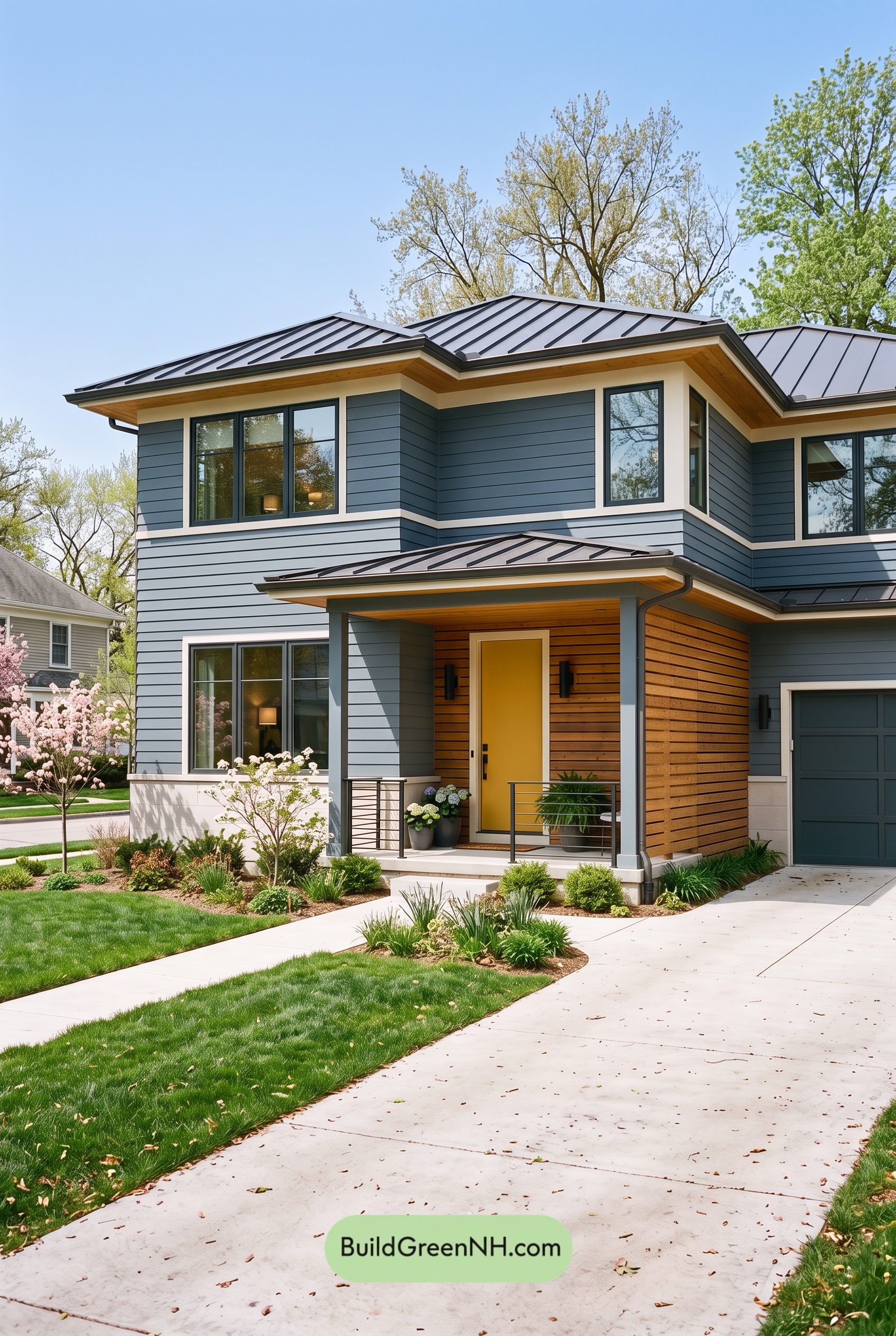 Blue House Front Door Color Scheme: Harbor Saffron
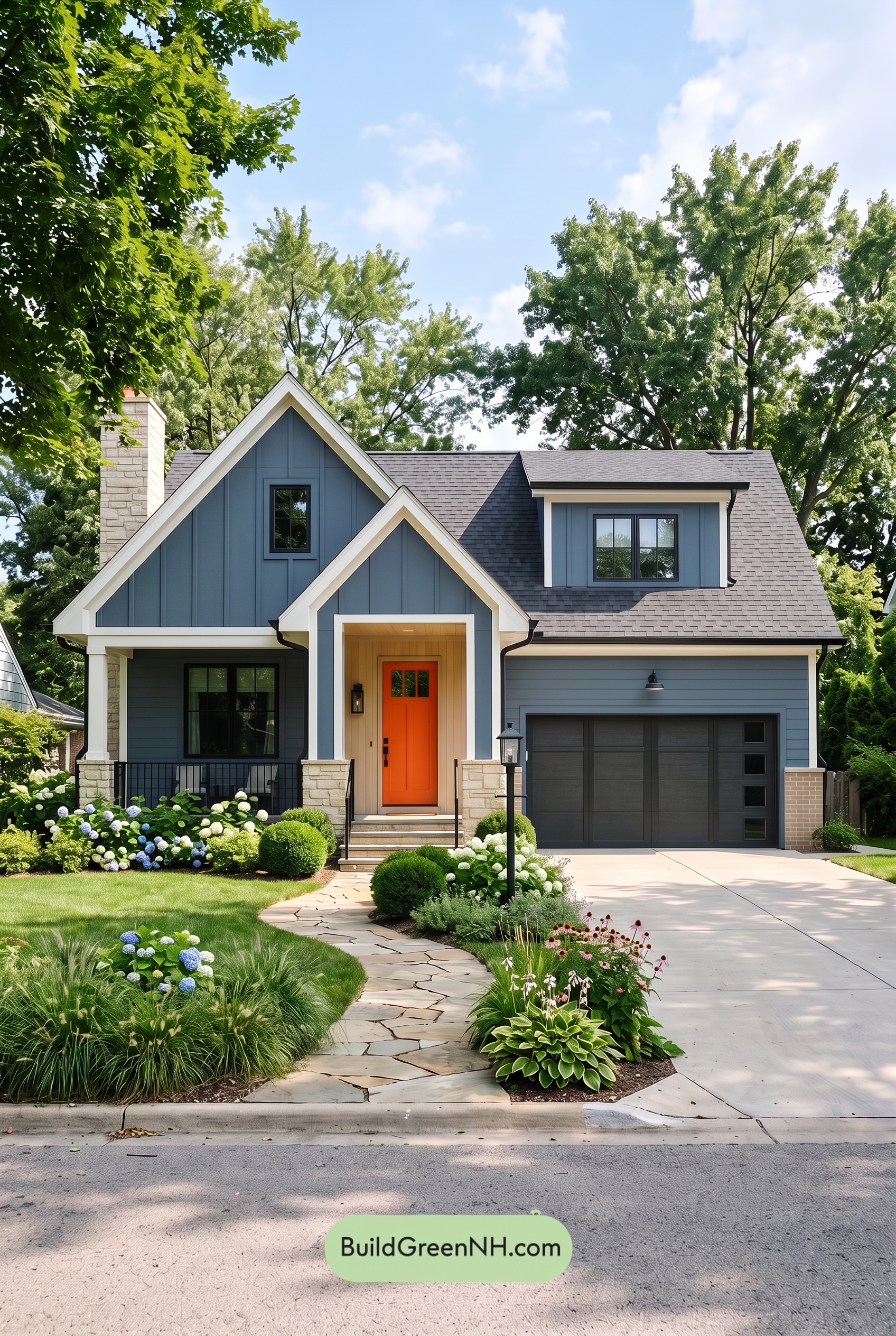 Blue House Front Door Color Scheme: Cobalt Persimmon
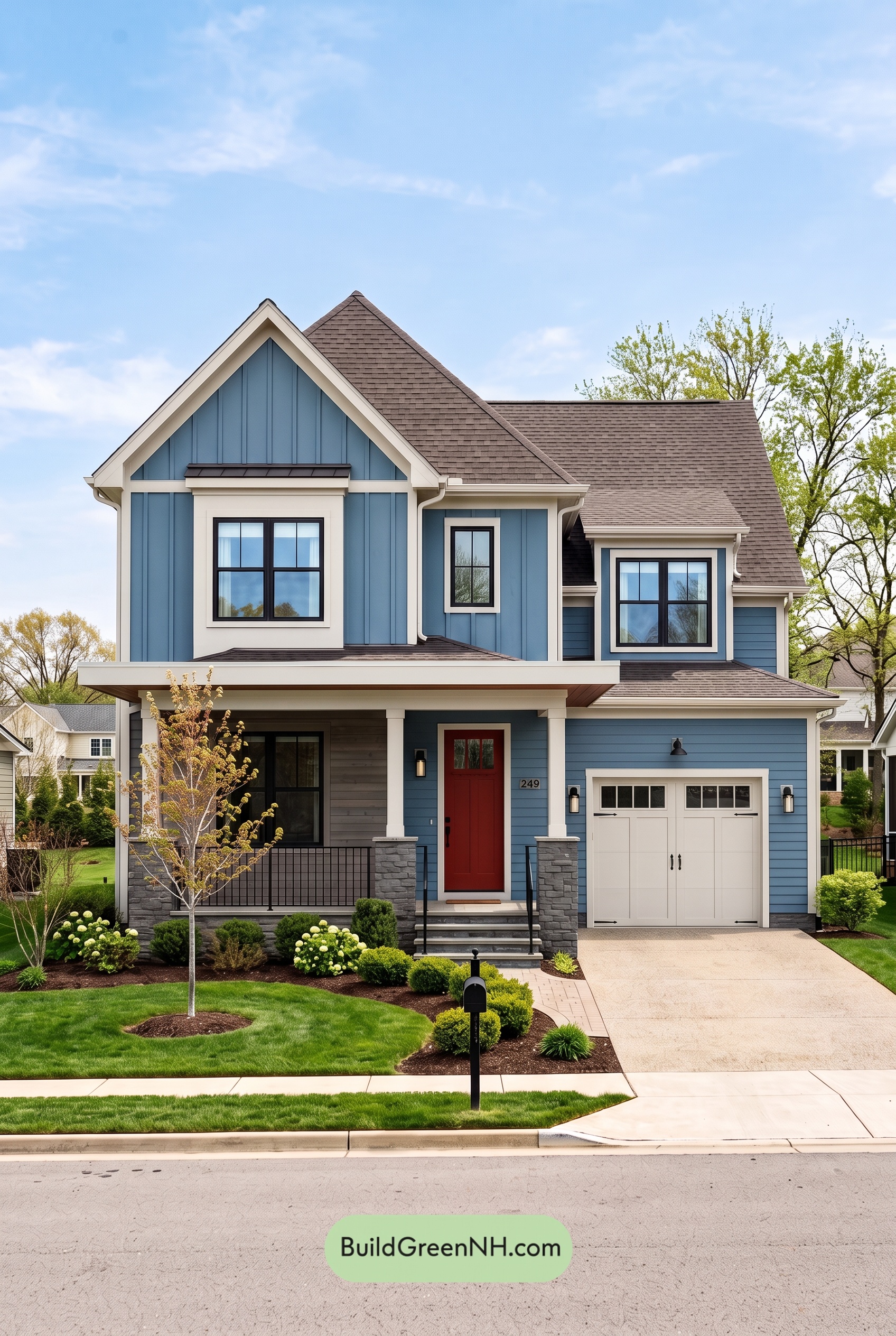 Blue House Front Door Color Scheme: Denim Poppy
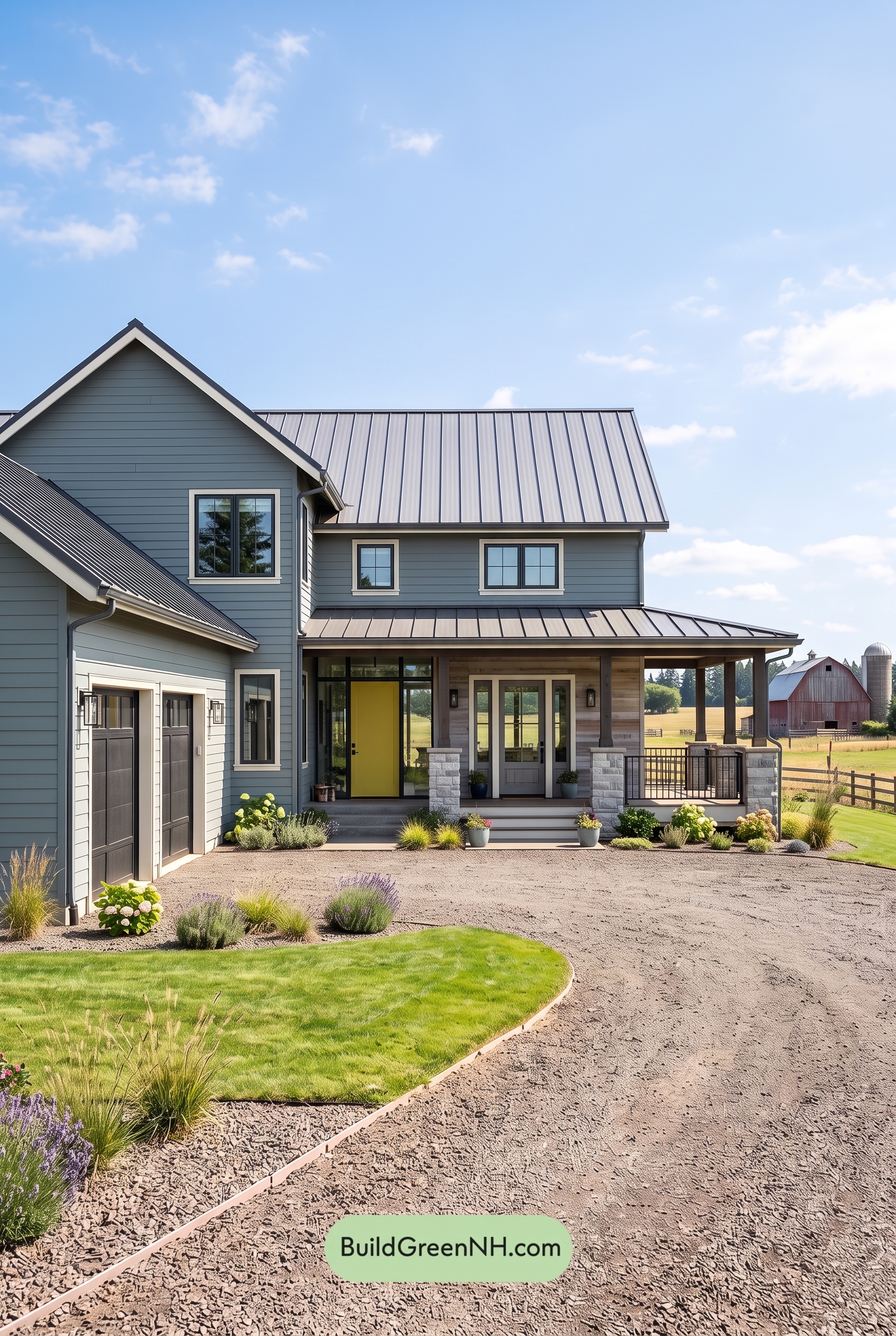 Blue House Front Door Color Scheme: Slate Citron
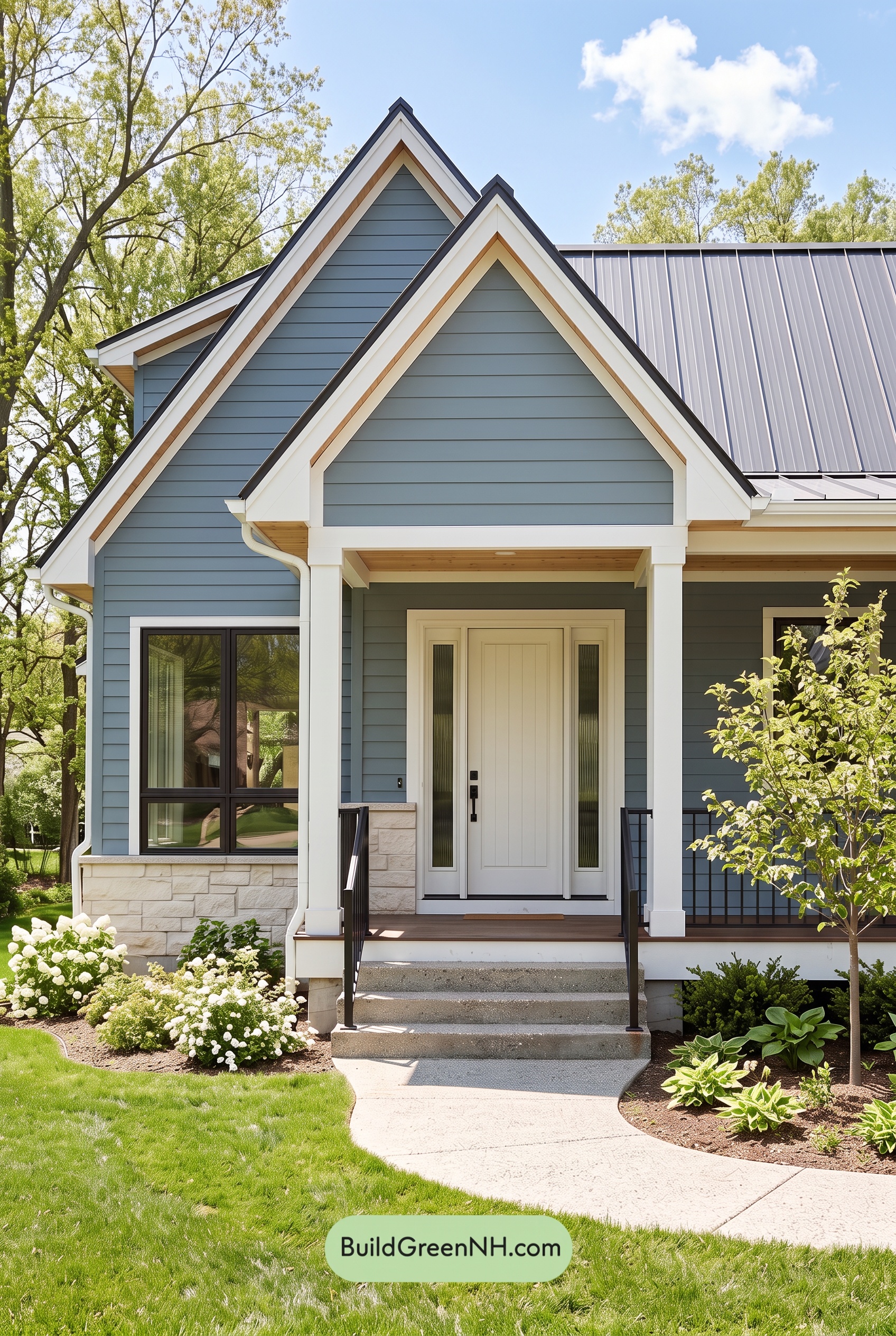 Blue House Front Door Color Scheme: Mist Blue Haven
Table of Contents