Last updated on
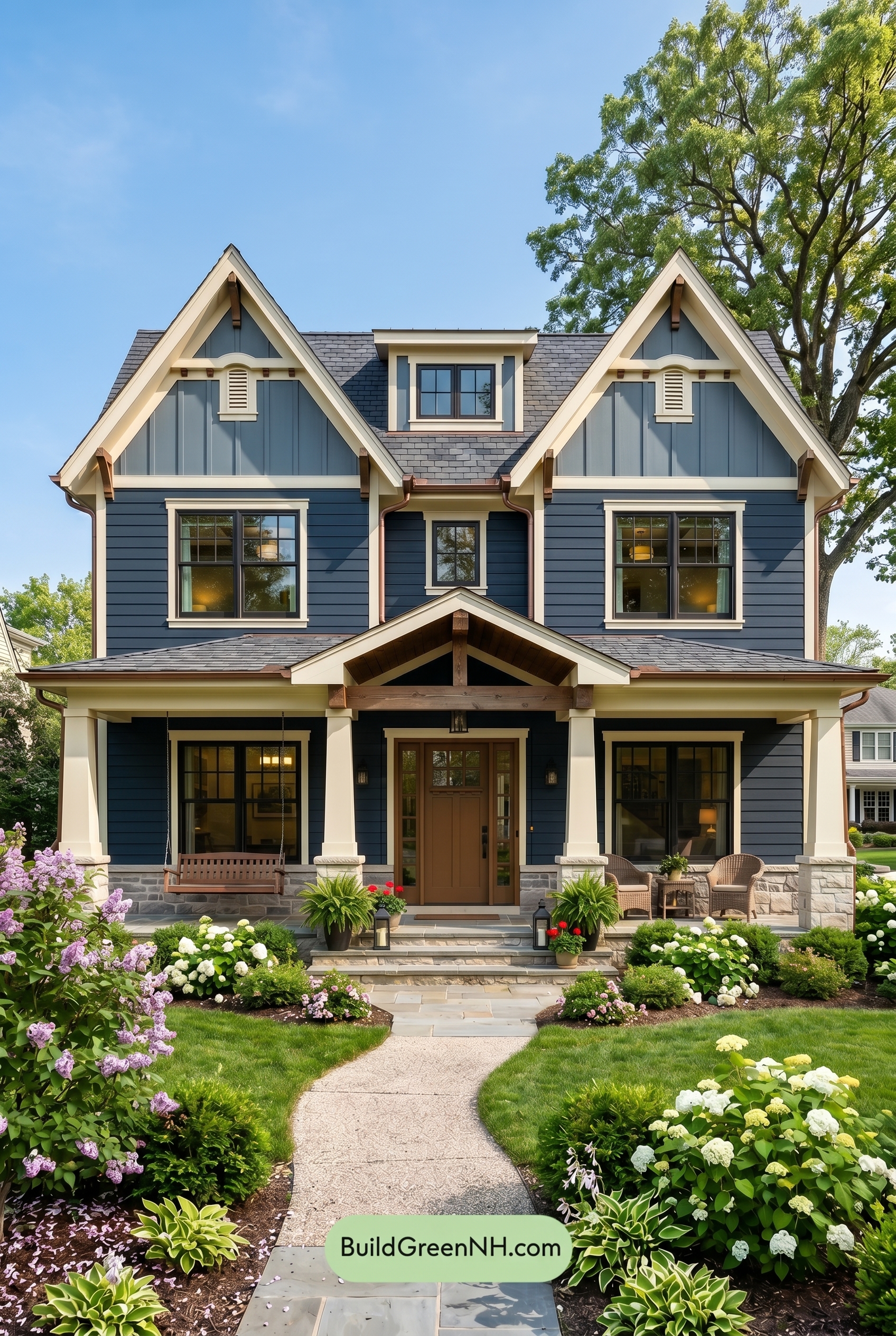

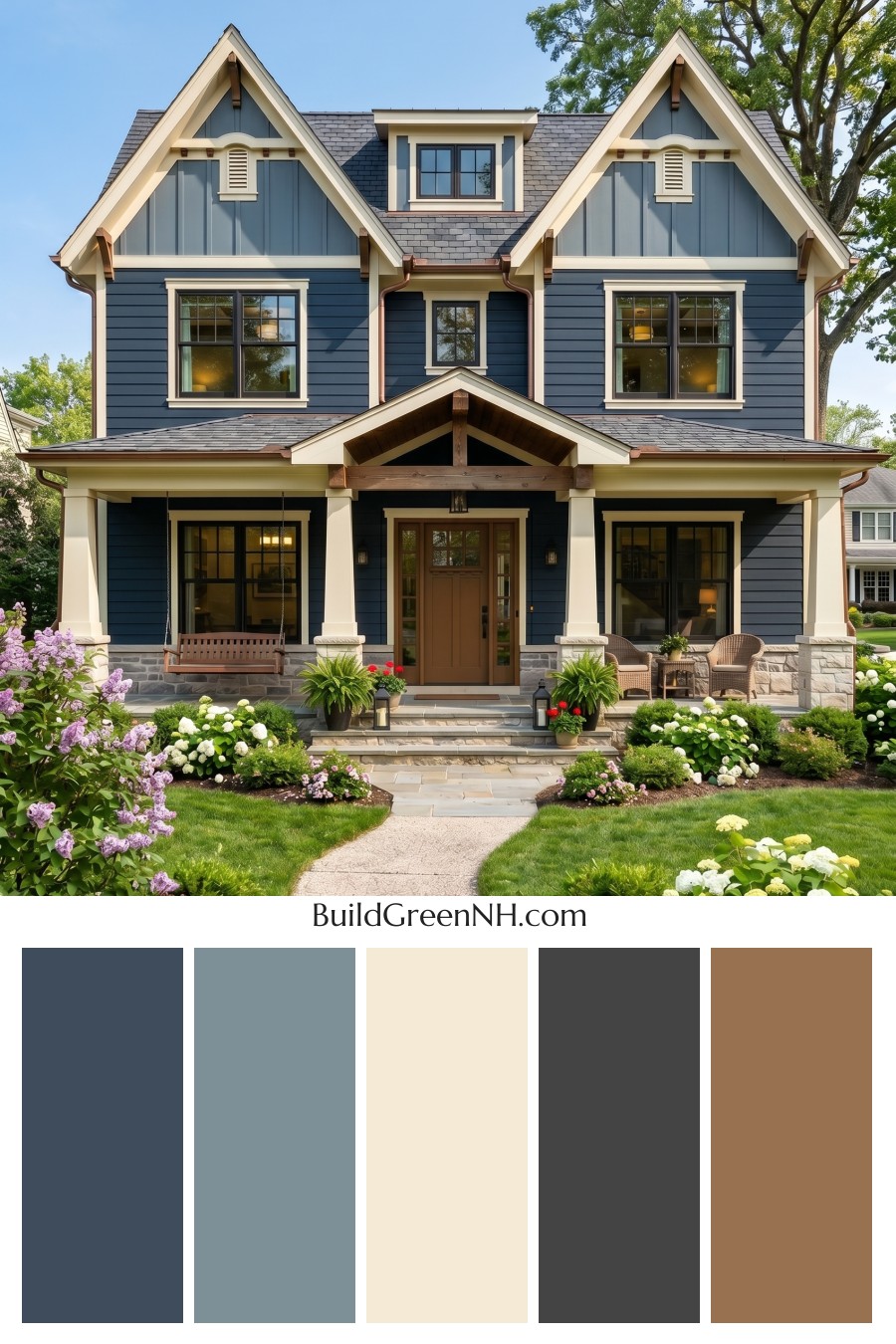
This rich blue exterior shines because creamy beige trim, warm brown accents, and grounded gray details give the home crisp contrast without losing its welcoming charm.
A Confident Blue Foundation
The main siding is wrapped in a deep, muted shade of blue that gives the house a strong and polished presence. It feels classic, but not overly formal. The horizontal siding on the lower portions adds structure, while the blue family keeps the overall look calm, tailored, and timeless.
Up in the gables, a slightly softer blue shade continues the palette while creating subtle variation. This keeps the upper walls from feeling flat and gives the steep rooflines and vertical paneling more dimension. The result is layered, architectural, and beautifully balanced.
Creamy Beige Trim That Brightens Everything
The beige trim is one of the biggest reasons this color scheme works so well. Around the windows, rooflines, gables, porch, and columns, this warm light shade creates a clean frame against the deeper blue siding. It highlights the home’s craftsmanship without feeling stark or cold.
The columns are also finished in the beige family, which makes the front porch feel inviting and substantial. Because the shade is warm rather than icy, it softens the strong blue and gives the exterior a friendly, lived-in elegance.
Gray Details Add Definition
The window frames bring in a deep gray shade that sharpens the entire exterior. Against the beige trim and blue siding, the gray adds a crisp, modern edge. It also helps the glass read as a strong architectural feature rather than disappearing into the facade.
The roof continues the gray family with a textured, medium-to-deep shade that grounds the tall gables. Its cool undertone works naturally with the blue siding, while its darker value keeps the home from feeling too light at the top.
Warm Brown Accents Bring Character
The front door introduces a handsome brown shade that immediately warms up the entry. It contrasts beautifully with the surrounding blue and beige, giving the porch a natural focal point. This is the kind of color choice that makes a home feel welcoming before anyone even steps inside.
Additional brown accents on brackets, exposed trim details, and porch elements add a craftsman-inspired richness. These warmer touches keep the palette from feeling too cool and bring out the cozy, handcrafted personality of the exterior.
The Overall Mood
This color scheme feels refined, fresh, and approachable. The blue siding gives the home depth and confidence, the beige trim adds brightness and charm, the gray details bring structure, and the brown accents create warmth.
It is a great example of contrast done thoughtfully. Nothing feels too loud, yet every color has a clear purpose. Together, these shades create a home exterior that feels elegant from the street, welcoming at the porch, and beautifully connected to the surrounding greenery.
Next, see how this color scheme looks under different lighting simulations throughout the day.
Overcast
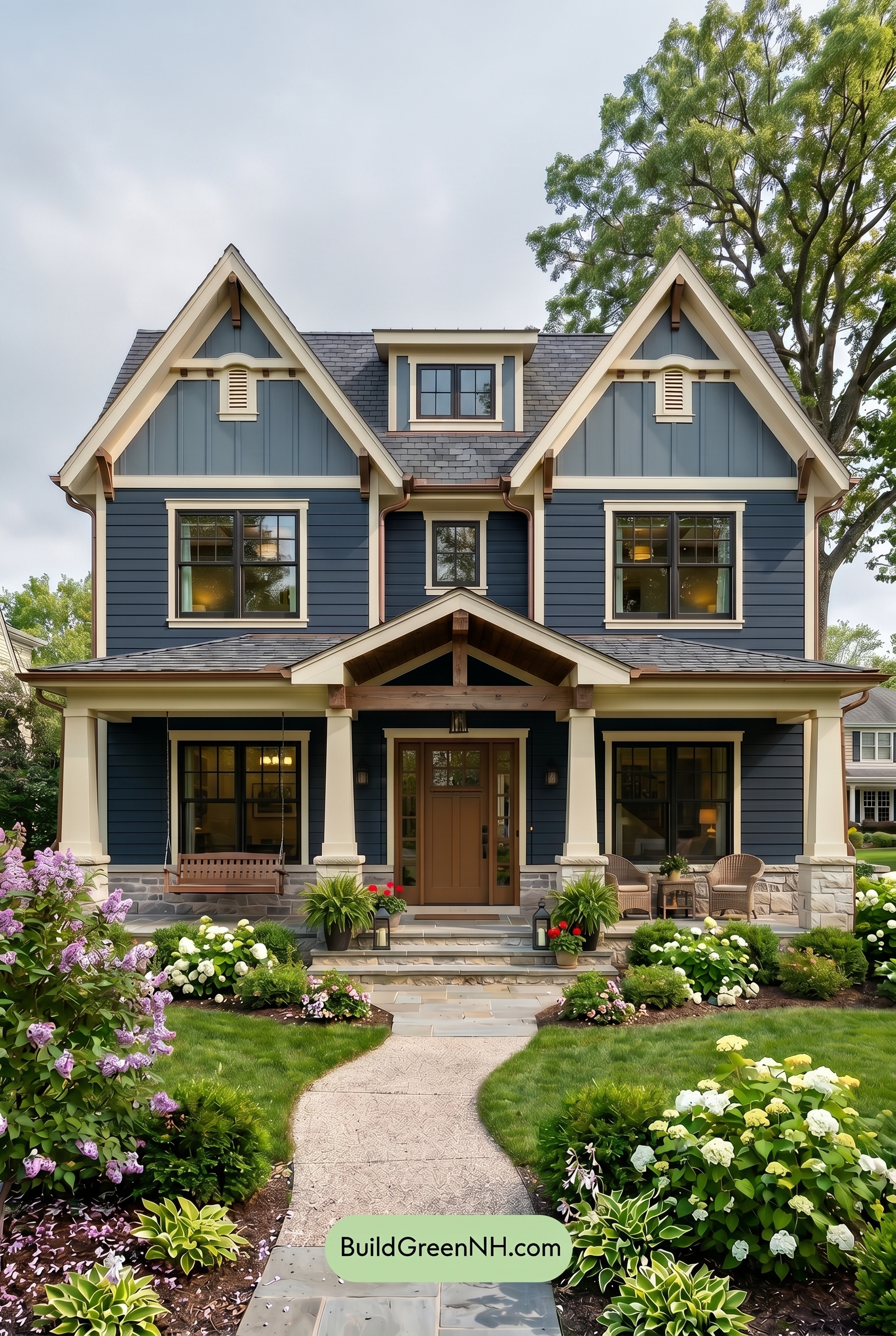
Under overcast light, the blue family on the main and upper walls looks cooler, quieter, and slightly more muted than it would in neutral daylight. Saturation softens, the deeper blue shade can feel a touch heavier, and the lighter blue areas take on a more misty, gray-blue quality.
The beige trim and columns lose some of their sunny warmth, becoming creamier and more understated, while the gray window frames blend in with less sharp contrast. Shadows are softer and flatter, so the brown front door feels calmer and less warm, giving the whole exterior a more relaxed, moody, and refined presence.
Golden Hour
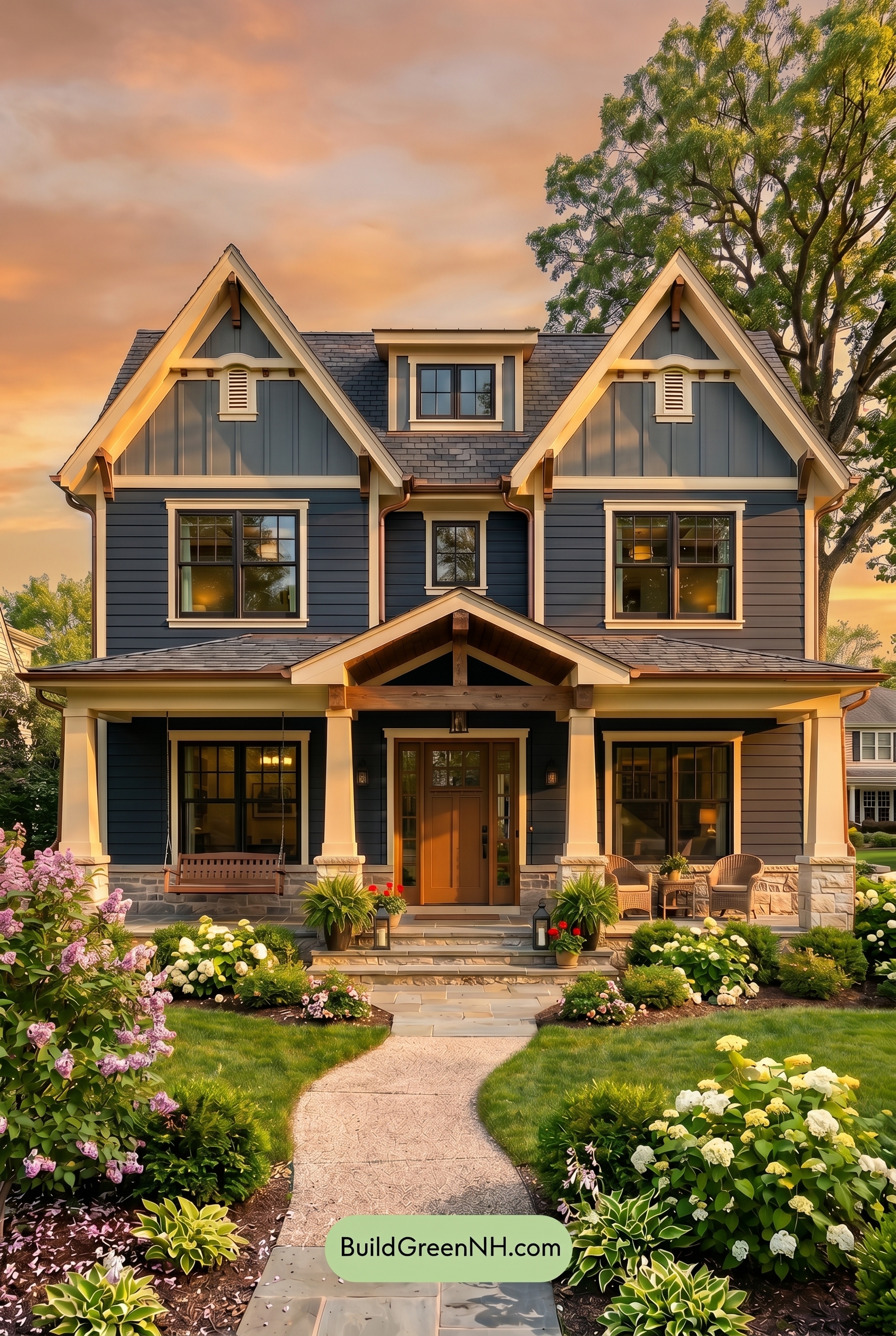
Under neutral daylight, the blue siding would read cleaner and cooler, with the beige trim and columns feeling more restrained. In Golden Hour, that same blue family gains richness and depth, appearing slightly more saturated in the lit areas while slipping into moodier, shadowed shades beneath the porch and rooflines.
The warm low light softens the beige family into a gentle glow, increases contrast against the darker blue walls, and gives the gray window frames a crisper outline. The brown front door feels warmer and more inviting, shifting the whole exterior from polished and balanced to cozy, dramatic, and warmly welcoming.
Shade
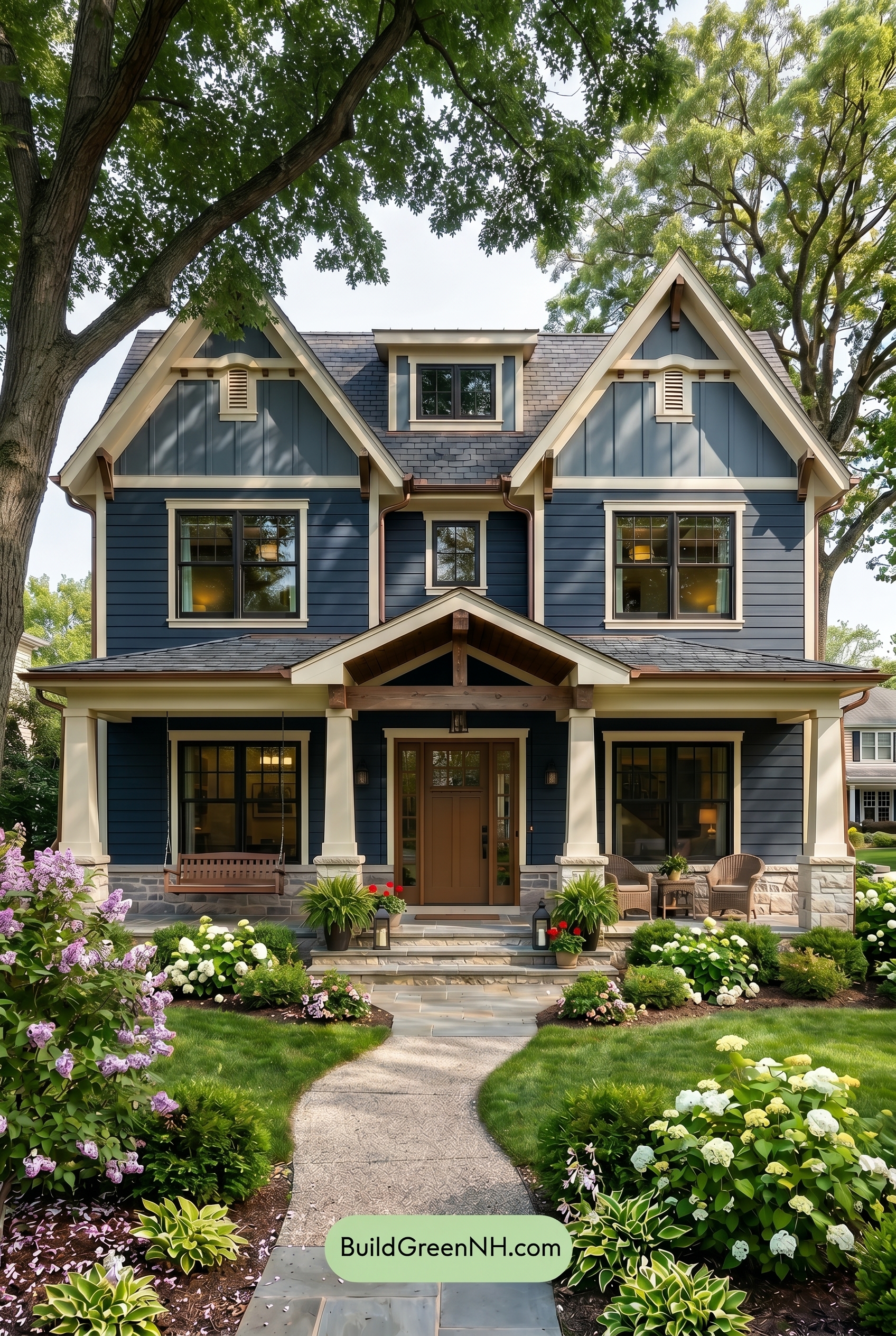
In shade, the blue siding deepens and feels more saturated than it would in neutral daylight, shifting from crisp and airy to calm and grounded. The cooler light pulls out the shadowy side of the blue family, while the beige trim and columns lose a bit of their sunny warmth and read softer, more muted, and gently creamy.
Shadows add stronger contrast around the trim, rooflines, and window details, making the gray frames appear darker and more defined. The brown front door feels richer but quieter, giving the whole exterior a more relaxed, sheltered mood compared to the brighter, more balanced look of neutral daylight.
Nighttime
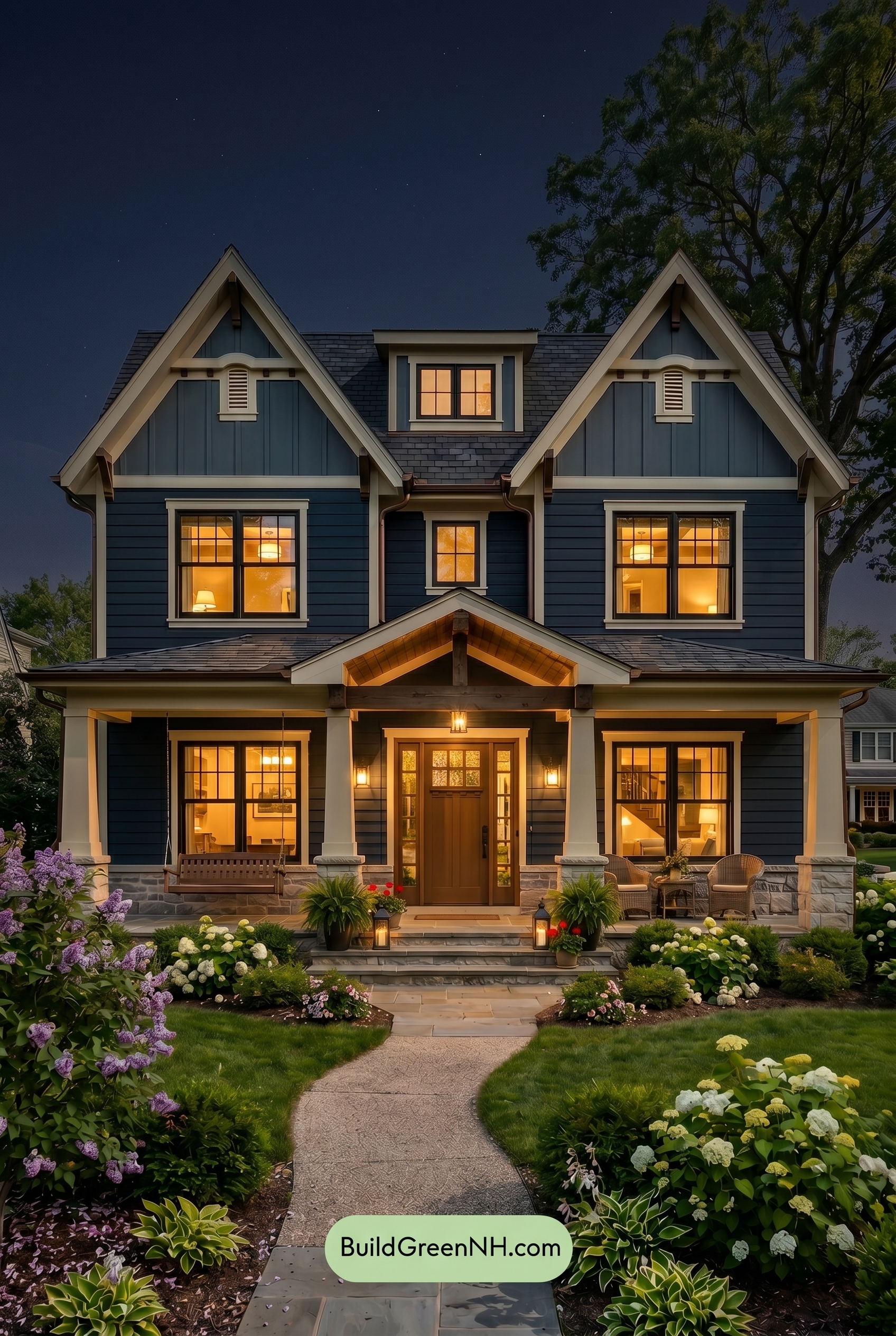
At nighttime, the blue siding deepens and feels more saturated than it would in neutral daylight, shifting from a clear architectural color to a richer, moodier shade. Shadows collect under the gables, porch roof, and siding grooves, increasing contrast and giving the façade more depth and drama.
The beige trim and columns pick up the warm glow from the windows and porch lights, making these neutral shades feel softer and creamier against the darkened blue. Gray window frames appear crisper in the higher contrast, while the brown front door gains a warmer, more welcoming presence, creating an inviting evening mood.
Pin these for later:
Want More?
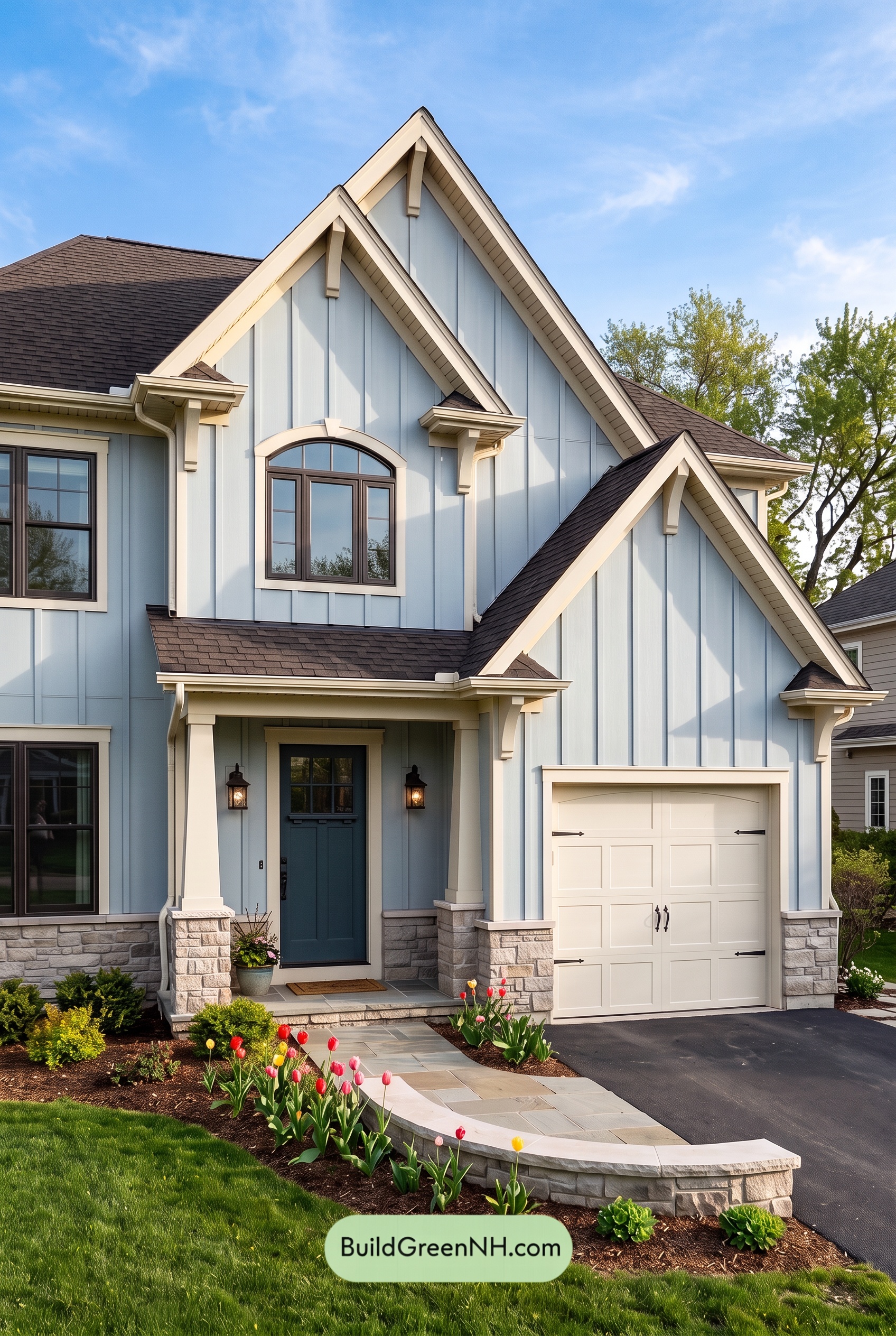 Exterior Color Scheme with Stone Accents: Bluebell Gable Song
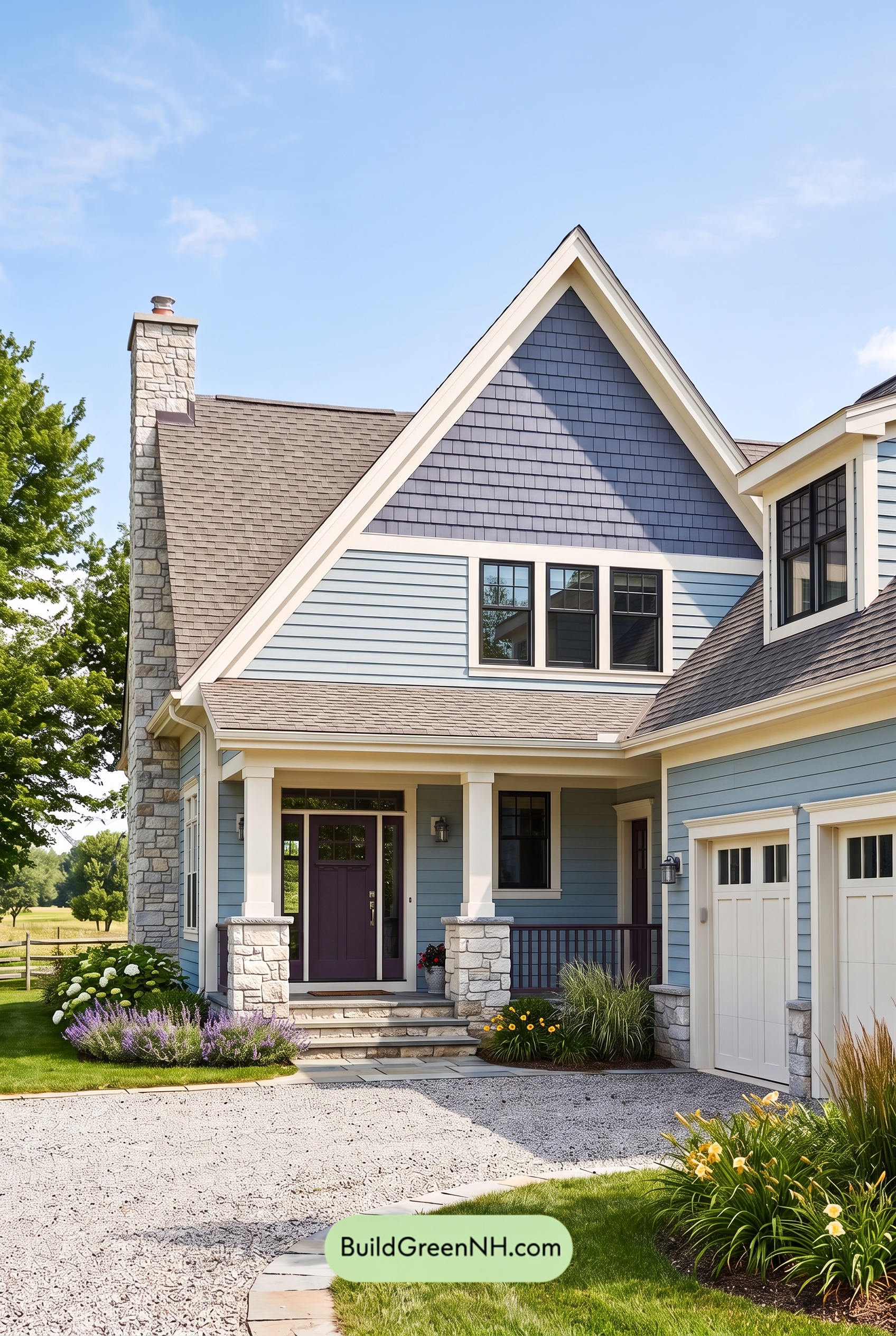 Exterior Color Scheme with Stone Accents: Meadow Bell Welcome
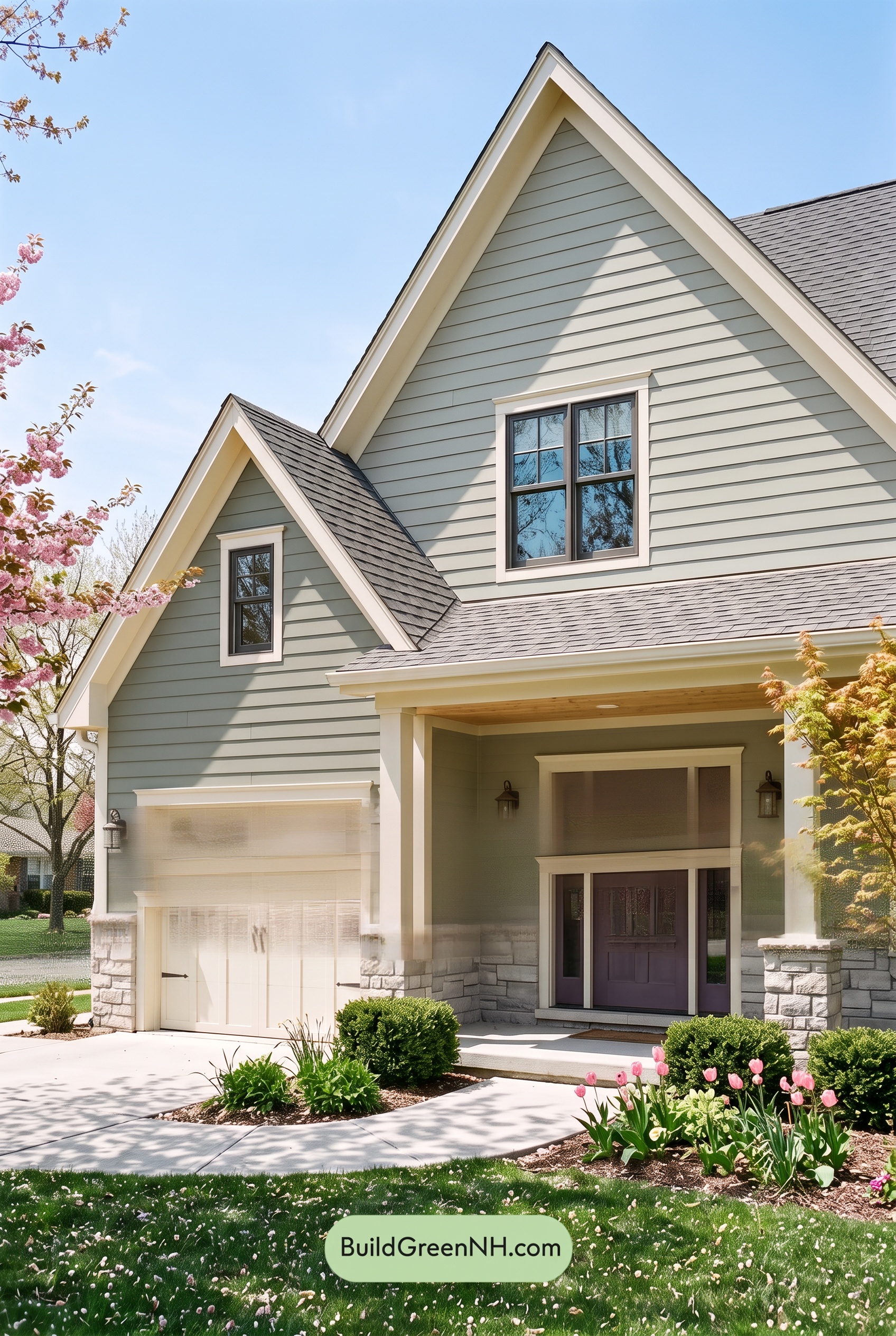 Exterior Color Scheme with Stone Accents: Willow Quartz Porch
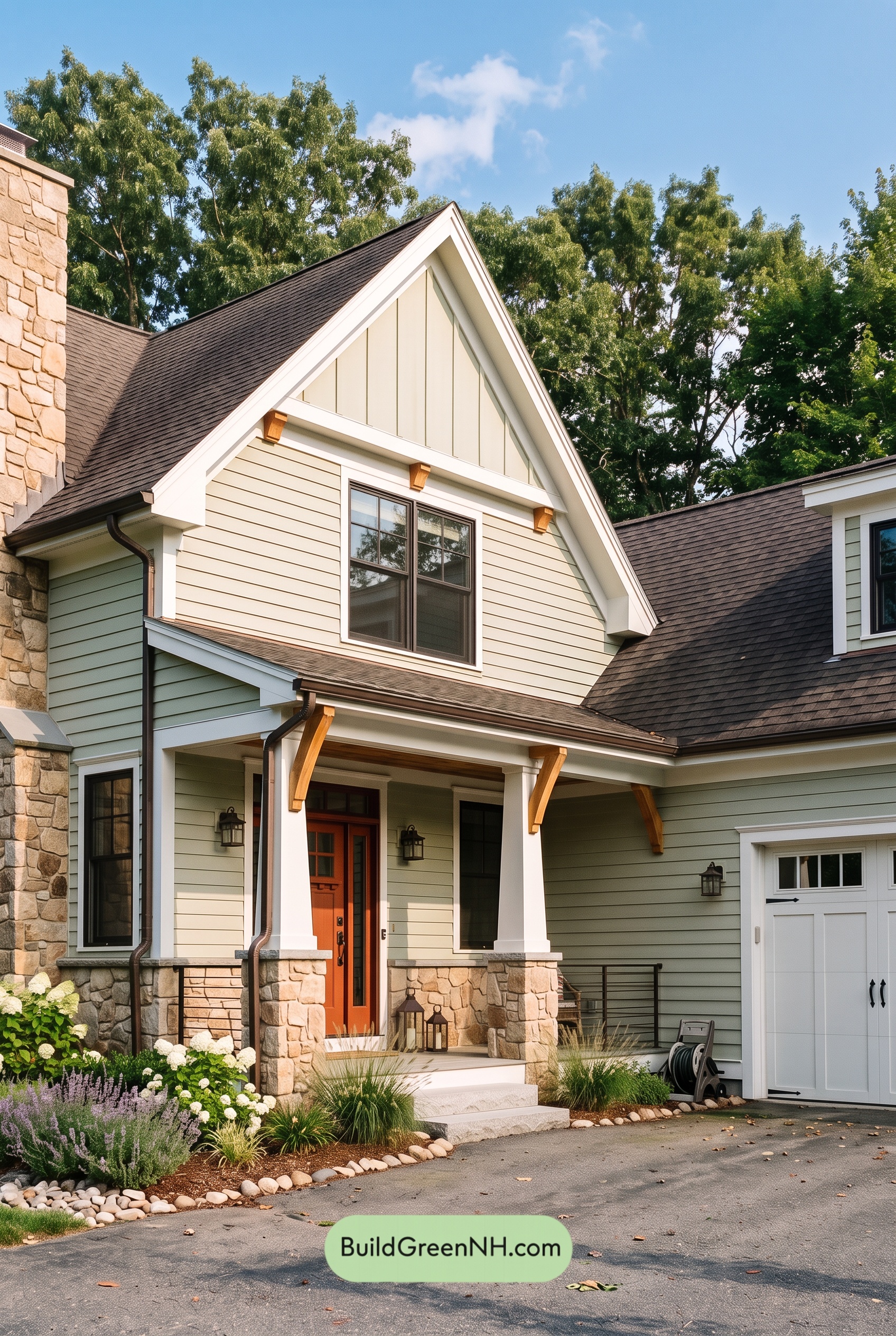 Exterior Color Scheme with Stone Accents: Celadon Ember Gable
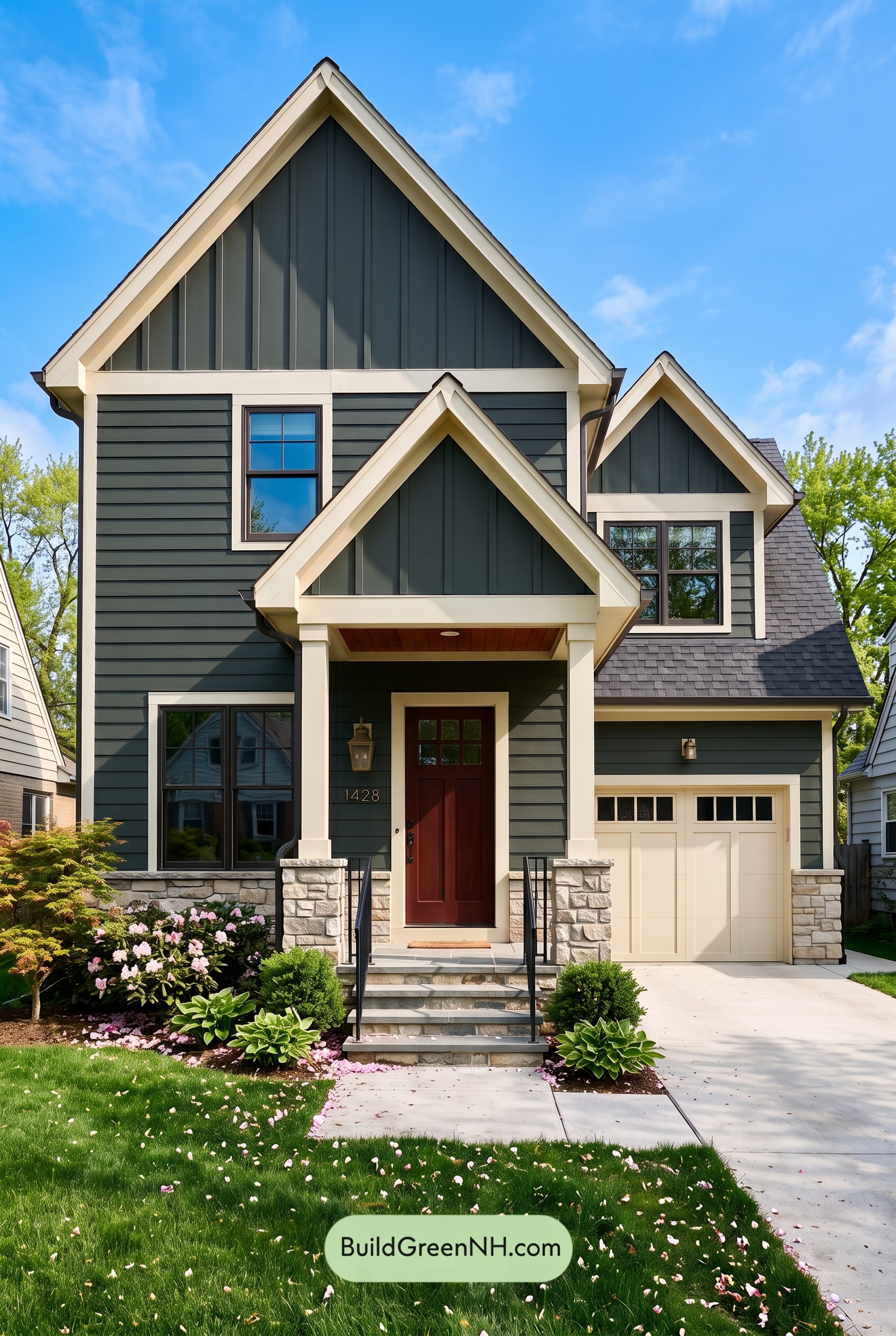 Exterior Color Scheme with Stone Accents: Pine Brass Threshold
Table of Contents