Last updated on
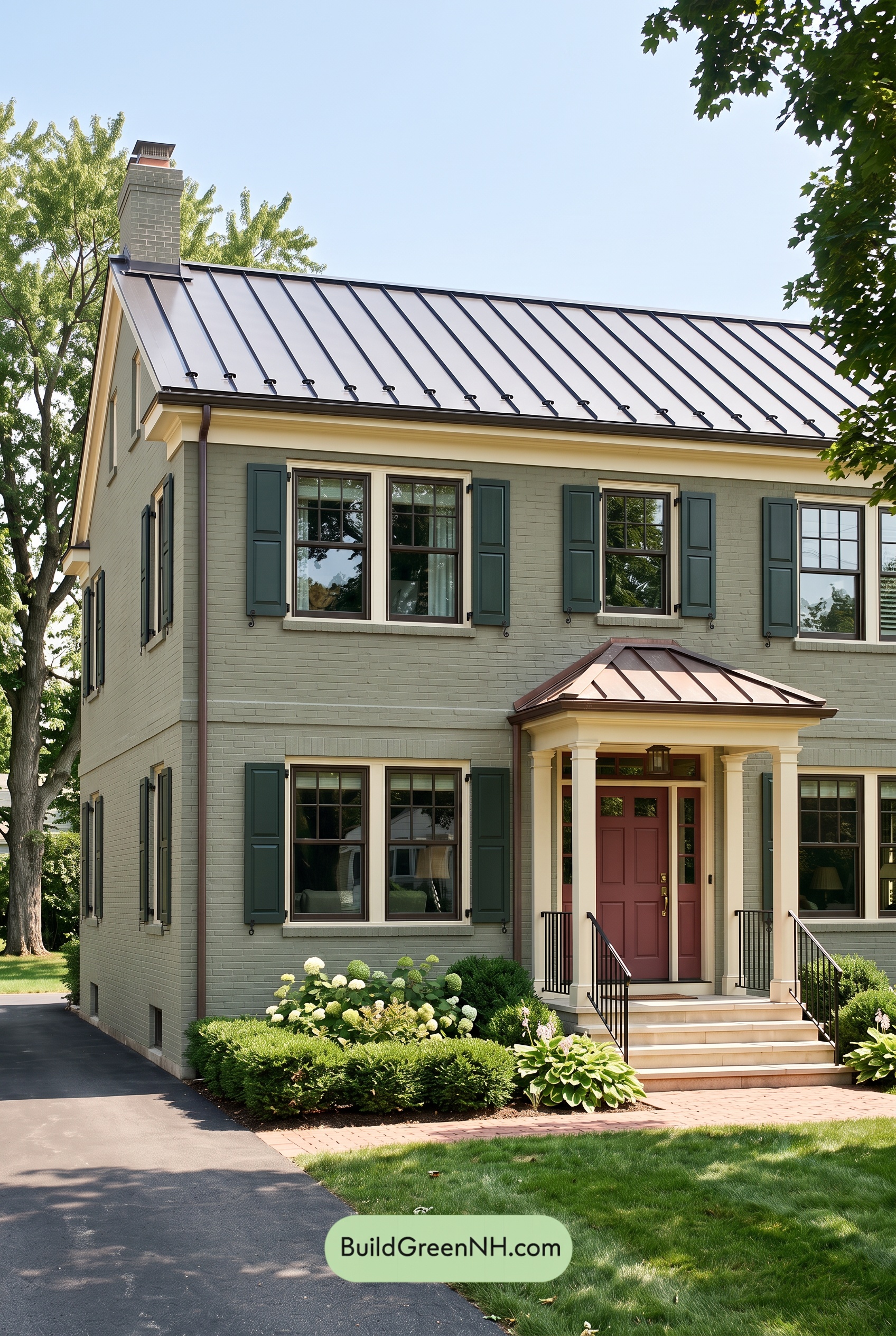

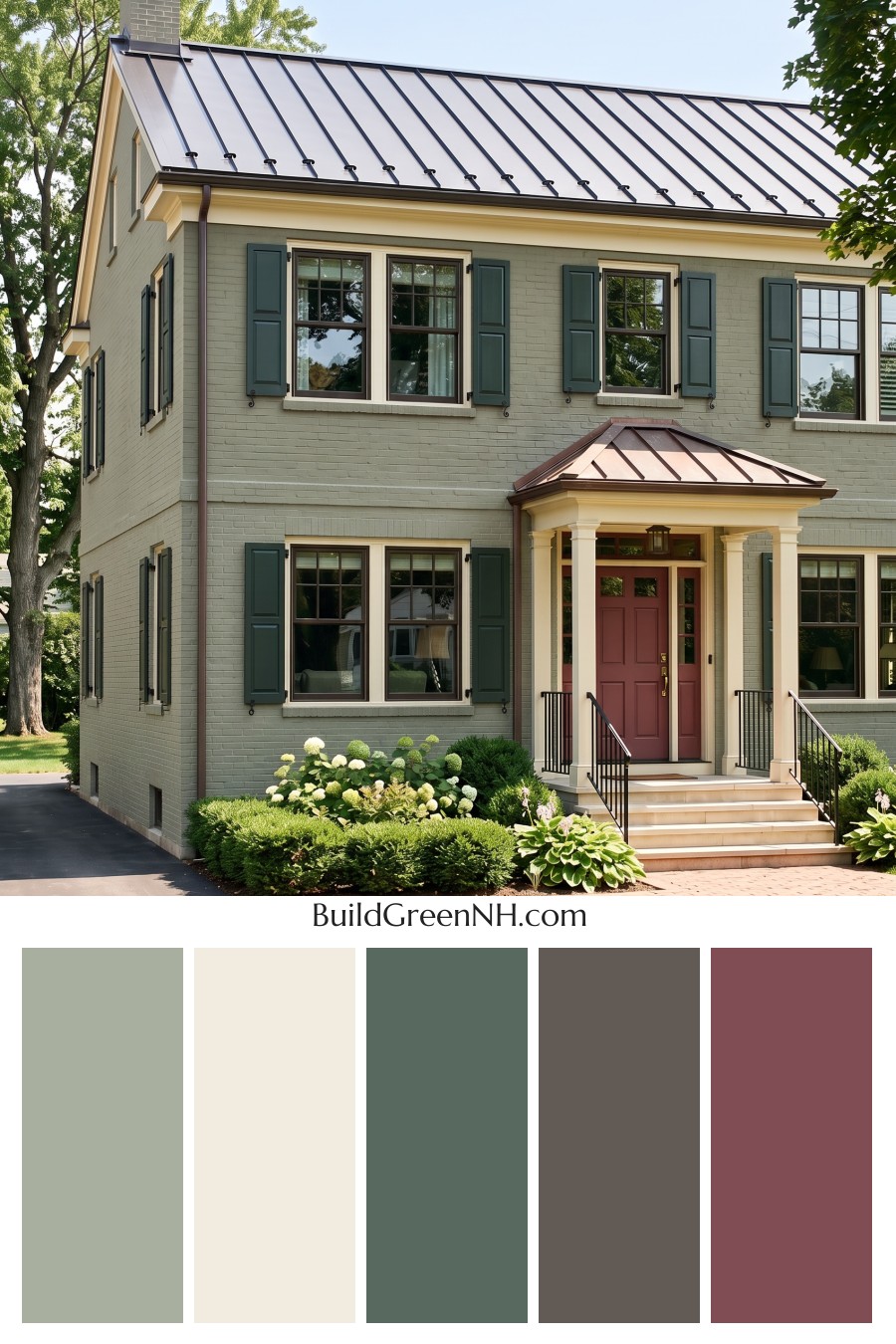
This layered mix of softened greens, creamy neutrals, and rich brown accents gives the home an elegant, welcoming presence with timeless curb appeal.
A Calm Green Foundation
The exterior is anchored by a muted, gray-green shade across the brick facade, creating a serene backdrop that feels especially at home among the surrounding landscape. Its softened character keeps the substantial two-story form from feeling heavy, while the subtle green undertone brings a natural, collected warmth to the architecture.
Deeper blue-green shutters add handsome contrast at every window. This darker shade sharpens the facade without overpowering it, giving the repeated window arrangement definition and a sense of rhythm. The combination of light green walls and deep green shutters is classic, polished, and connected to the garden setting.
Warm Trim Defines the Details
A creamy beige trim frames the windows, wraps the roofline, and gives the front porch its graceful structure. This warm neutral brightens the exterior and creates a clean transition between the soft green masonry and the darker accents. It also highlights the home’s traditional proportions, from the broad eaves to the substantial porch columns.
The porch columns, steps, and surrounding trim use the same light beige family to make the entry feel open and inviting. Against the deeper surrounding tones, these light architectural details act almost like a welcoming frame for the front door.
Rich Brown Accents Add Depth
Dark brown window frames, gutters, and railings introduce an earthy depth that grounds the palette. These details are crisp but not stark, bringing a tailored finish to the windows and a strong visual outline to the entry stairs. Their warmth also keeps the cooler green shades feeling balanced rather than overly formal.
The front door brings in a richer reddish-brown shade, creating a focal point beneath the porch. It feels warm, confident, and slightly unexpected against the green-and-beige surroundings. Paired with the brown framing and railings, the door makes the entrance feel distinct while remaining beautifully tied to the overall scheme.
A Roofline with Quiet Contrast
The light gray roof introduces a soft, airy note above the facade, while its dark brown seams and edges echo the deeper accents below. A smaller roof over the porch shifts toward a warm brown shade, visually linking the roofline to the door, window frames, and railings. Together, these roof tones add dimension without distracting from the calm green exterior.
The Overall Mood
This palette feels refined, grounded, and quietly welcoming. Soft green provides the calm foundation, creamy beige adds light and classic character, and the brown accents lend definition and warmth. The deeper green shutters complete the look with just enough contrast to give the home its memorable, enduring charm.
Next, see how this color scheme looks under different lighting simulations throughout the day.
Overcast
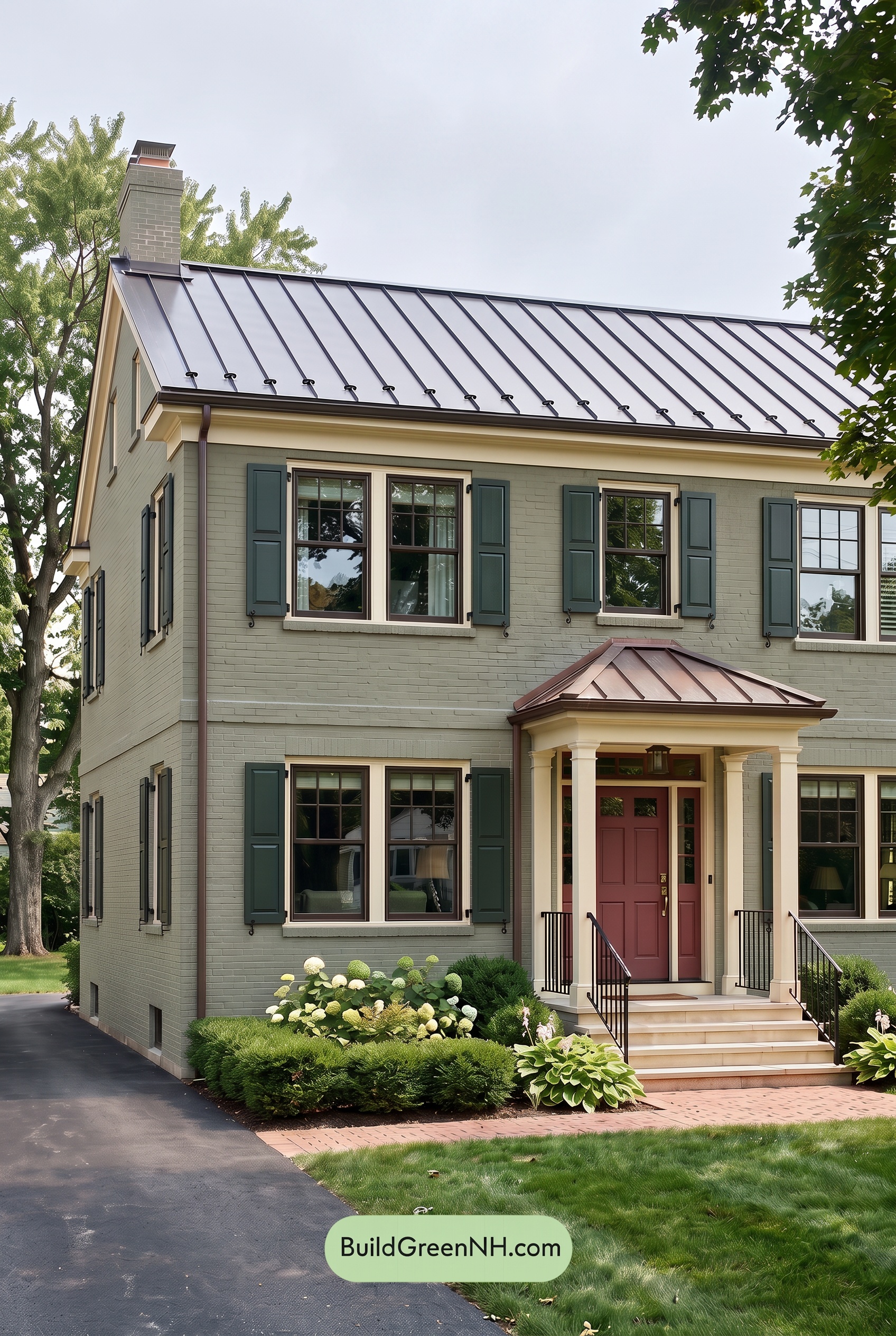
Under overcast skies, the muted green exterior reads cooler and slightly deeper than it does in neutral daylight, while its saturation becomes more restrained and even across the brickwork. The darker green shutters retain their presence but lose some crispness, creating a quieter contrast against the main wall rather than a sharply defined outline.
The light beige trim and columns feel softer and less sun-warmed, giving the entry a calm, welcoming glow without bright highlights. Brown window frames, railings, and the front door appear richer and more grounded, while the cloud-filtered light reduces hard shadows and shifts the overall mood toward refined, serene, and gently understated.
Golden Hour
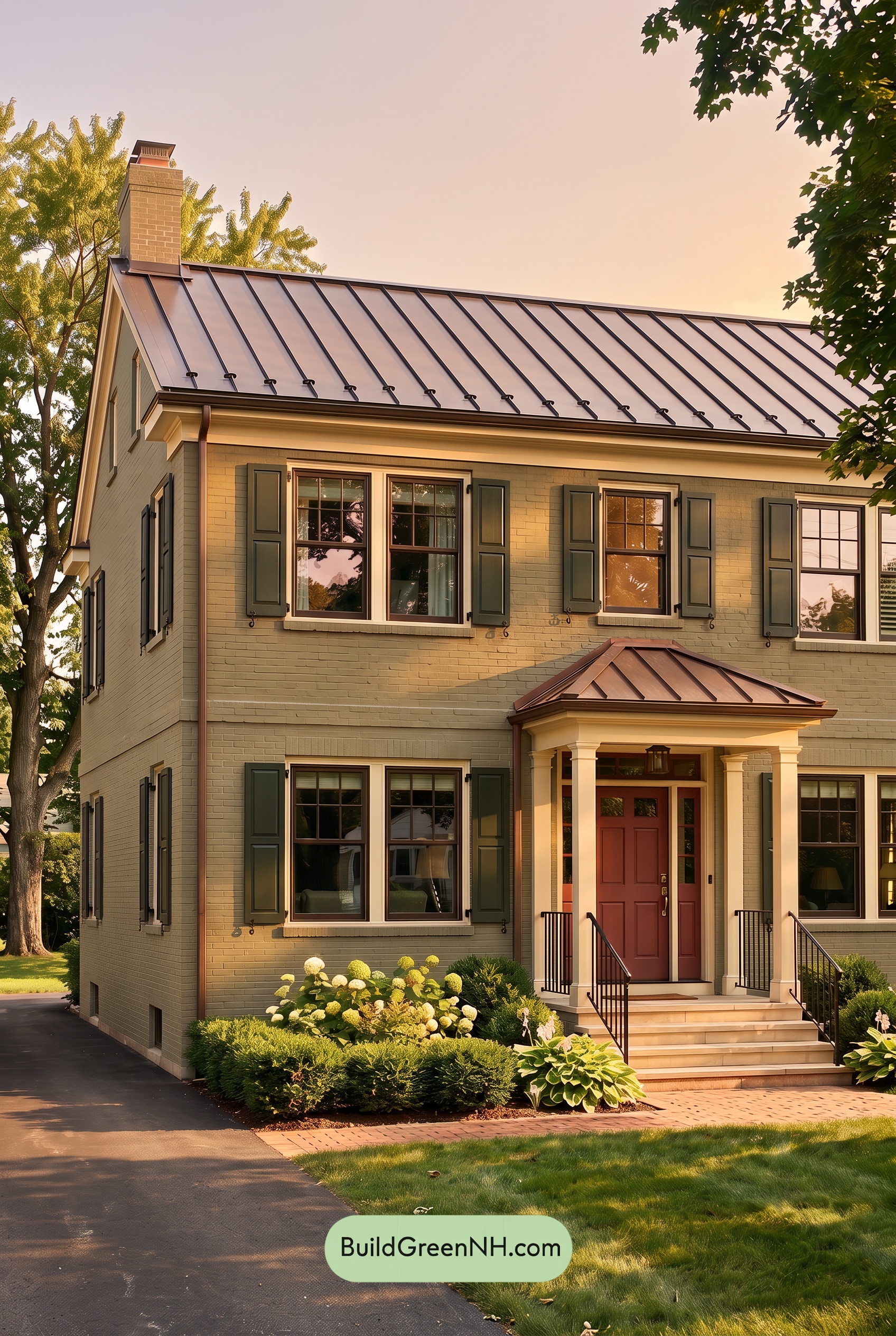
In neutral daylight, the muted green exterior reads balanced and understated, with the beige trim providing a clean, gentle contrast. At Golden Hour, low amber light warms the entire façade: the green shifts toward a softer, earthier shade, while the beige details glow with a richer creaminess. The brown accents gain a deeper, more welcoming presence, especially around the entry.
Longer shadows sharpen the architectural layers, making shutters, window surrounds, railings, and columns feel more dimensional than they do at midday. Saturation appears selectively heightened in the sunlit areas while recessed surfaces deepen, creating a cozy contrast and an inviting, evening-ready mood.
Shade
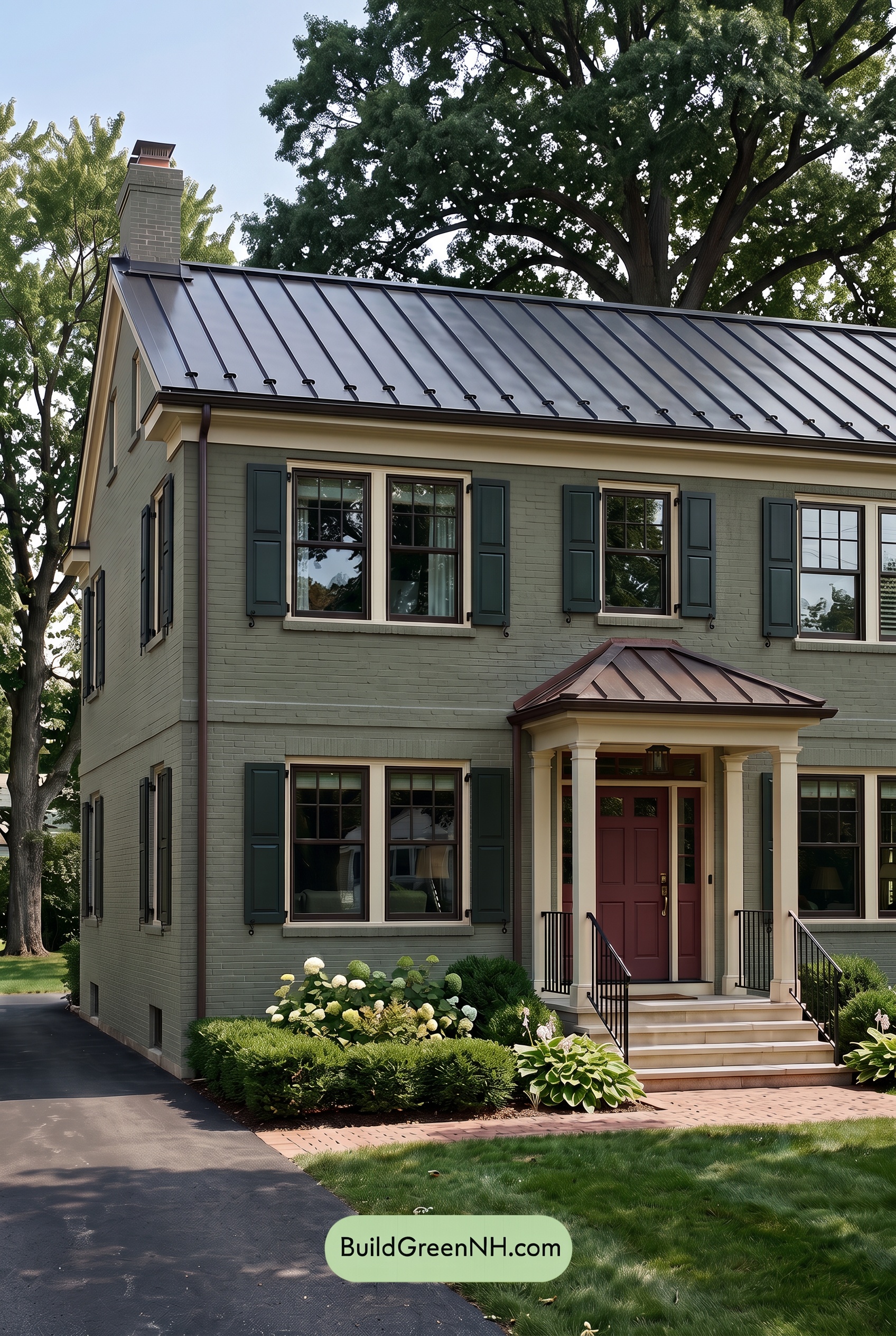
Under shade, the muted green exterior takes on a deeper, grayer cast than it shows in neutral daylight, with its saturation softened by the canopy overhead. The darker green shutters become more pronounced in the shadows, creating a quieter but richer contrast across the façade.
The warm beige trim and columns appear creamier and more subdued in shaded light, while the brown window details, railings, and entry door deepen into handsome accents. This lower-contrast, softly shadowed balance gives the home a calm, grounded mood rather than the brighter, crisper look it would have in open daylight.
Nighttime
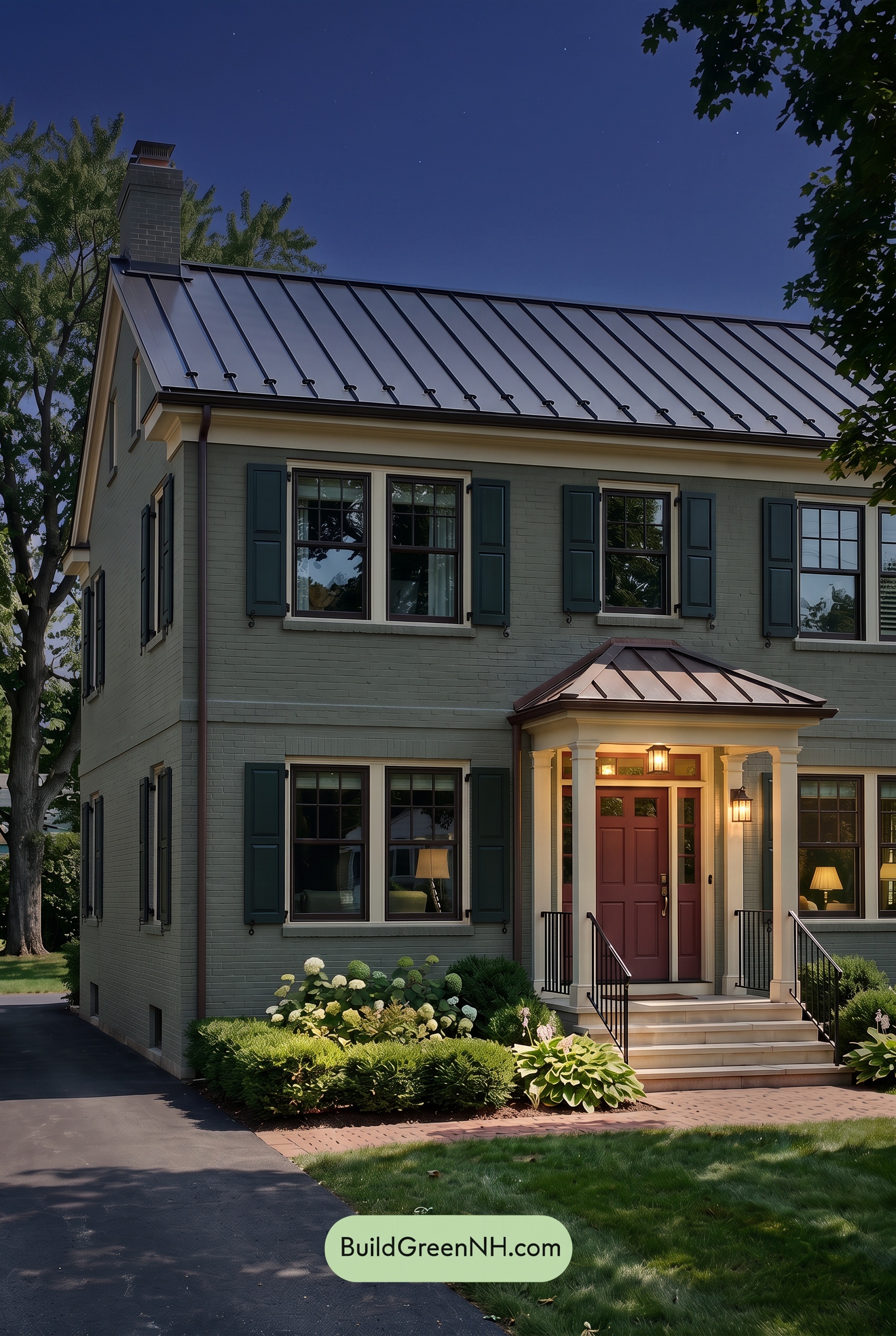
At night, the muted green siding settles into a deeper, cooler shade, while the darker green shutters become more saturated and pronounced against it. In comparison with neutral daylight, the beige trim and columns take on a softer golden warmth under the porch lights, creating a welcoming glow around the entry.
Brown details at the door, frames, and railings gain richness in the concentrated warm light, while areas beyond the fixtures recede into layered shadow. This higher contrast gives the façade a more dramatic, intimate mood, with the illuminated entry becoming the home’s inviting focal point.
Pin these for later:
Want More?
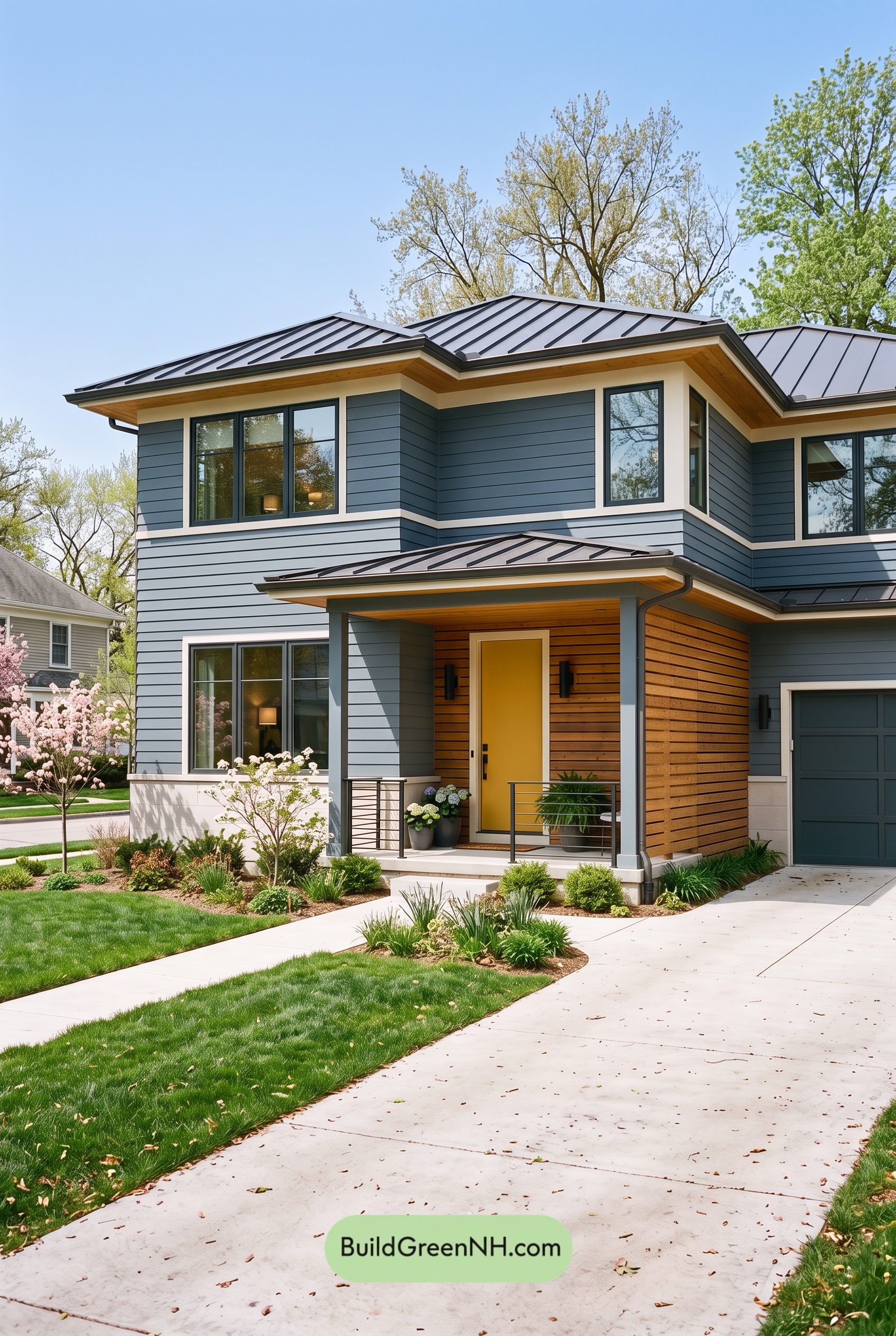 Blue House Front Door Color Scheme: Harbor Saffron
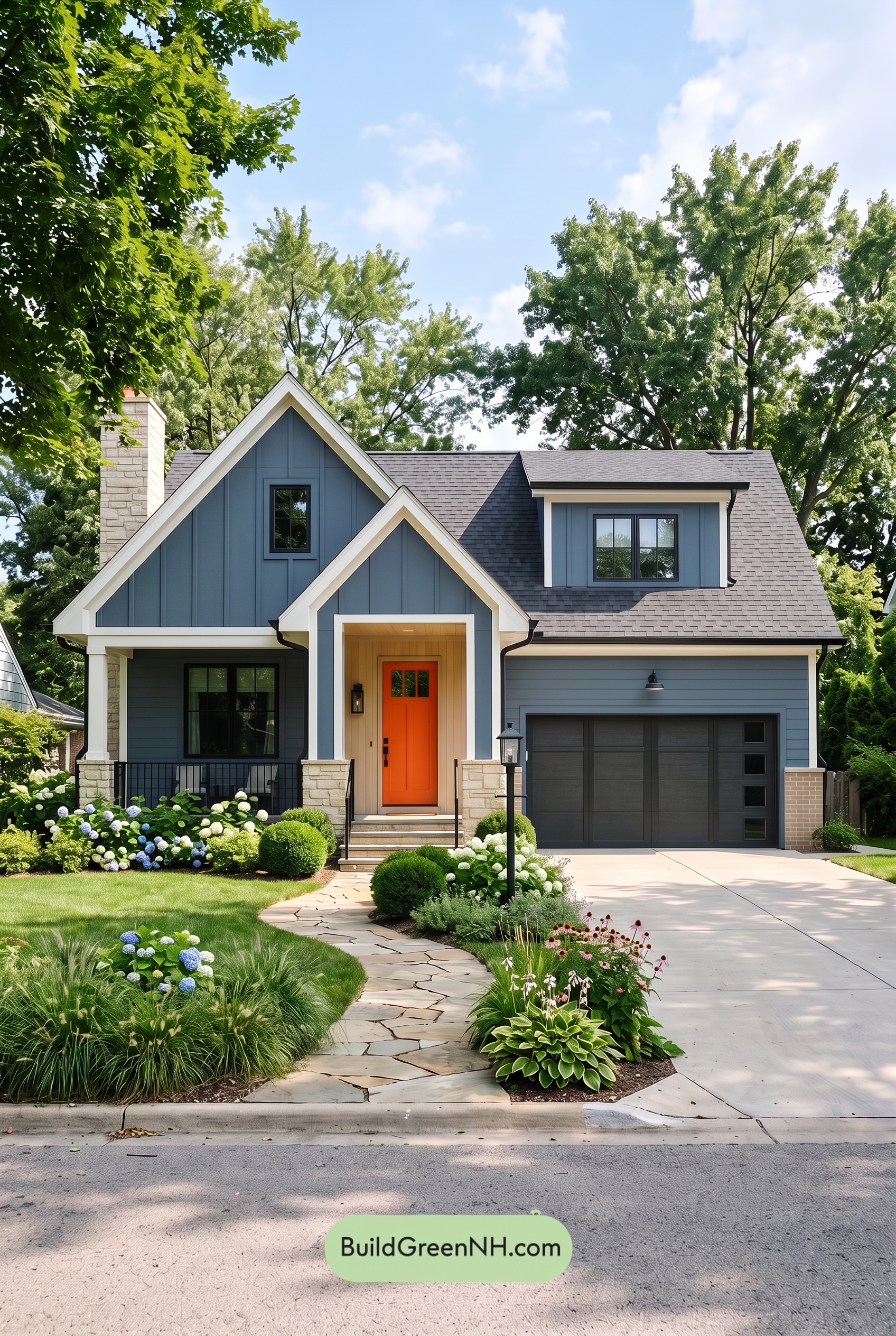 Blue House Front Door Color Scheme: Cobalt Persimmon
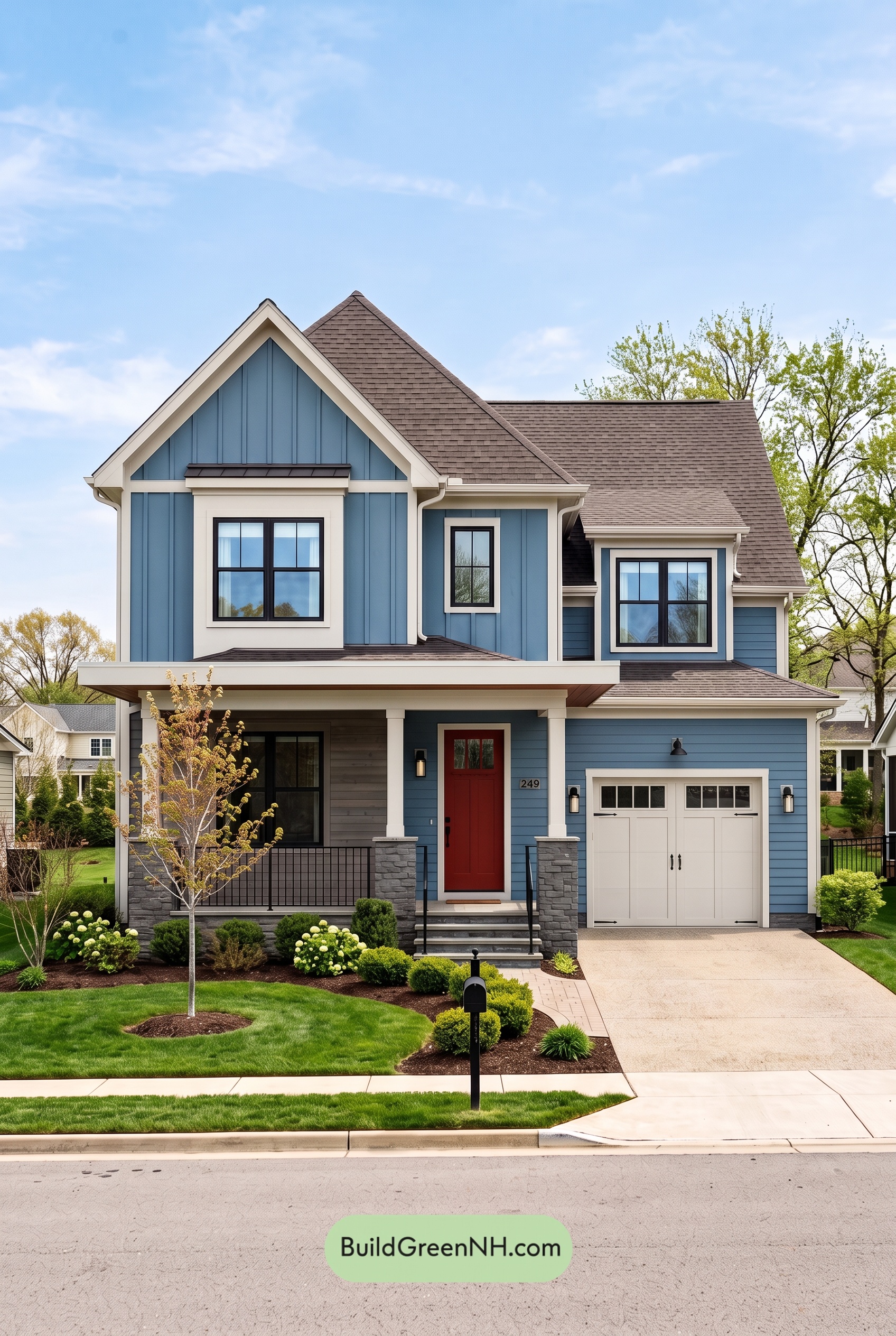 Blue House Front Door Color Scheme: Denim Poppy
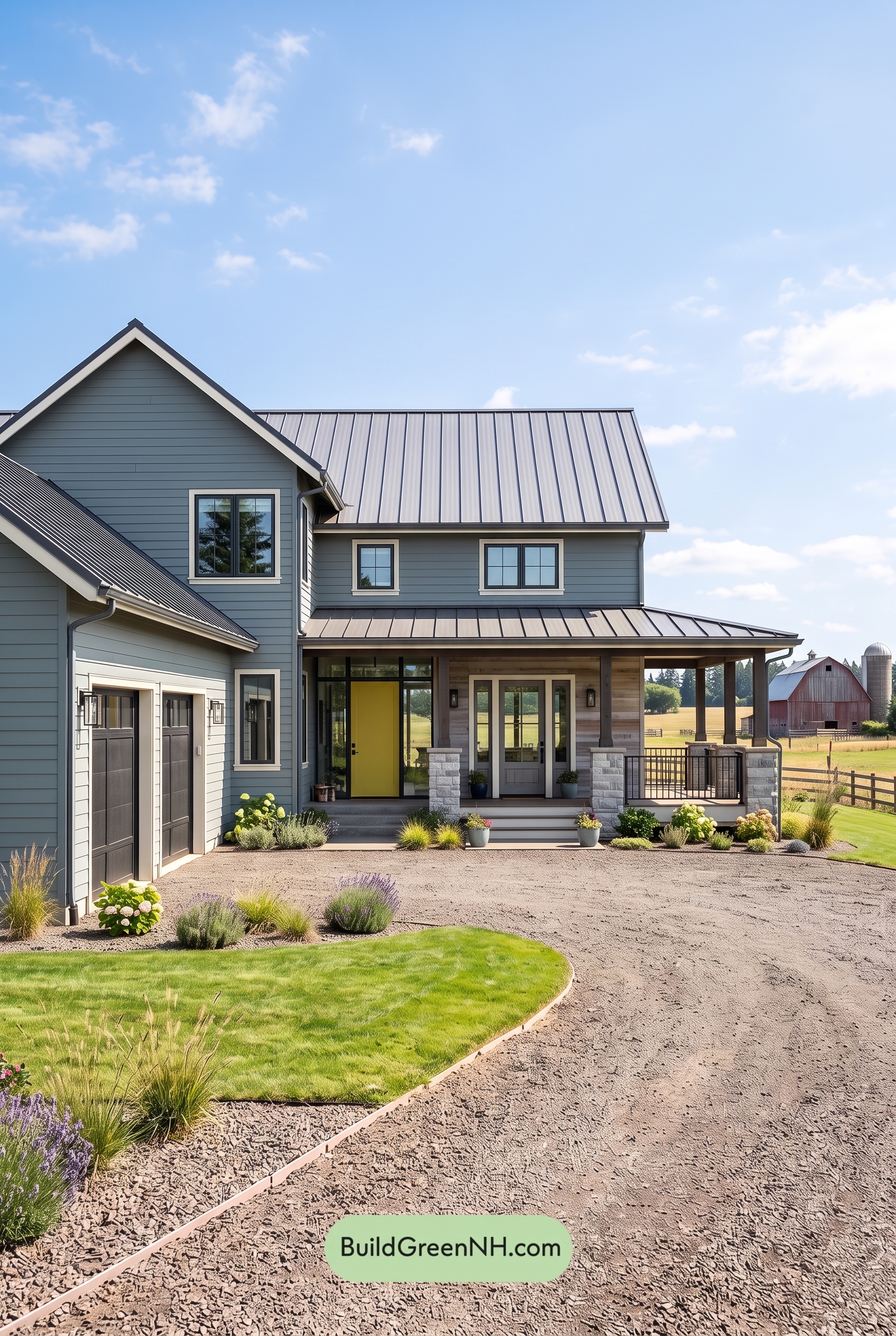 Blue House Front Door Color Scheme: Slate Citron
 Blue House Front Door Color Scheme: Mist Blue Haven
Table of Contents