Last updated on
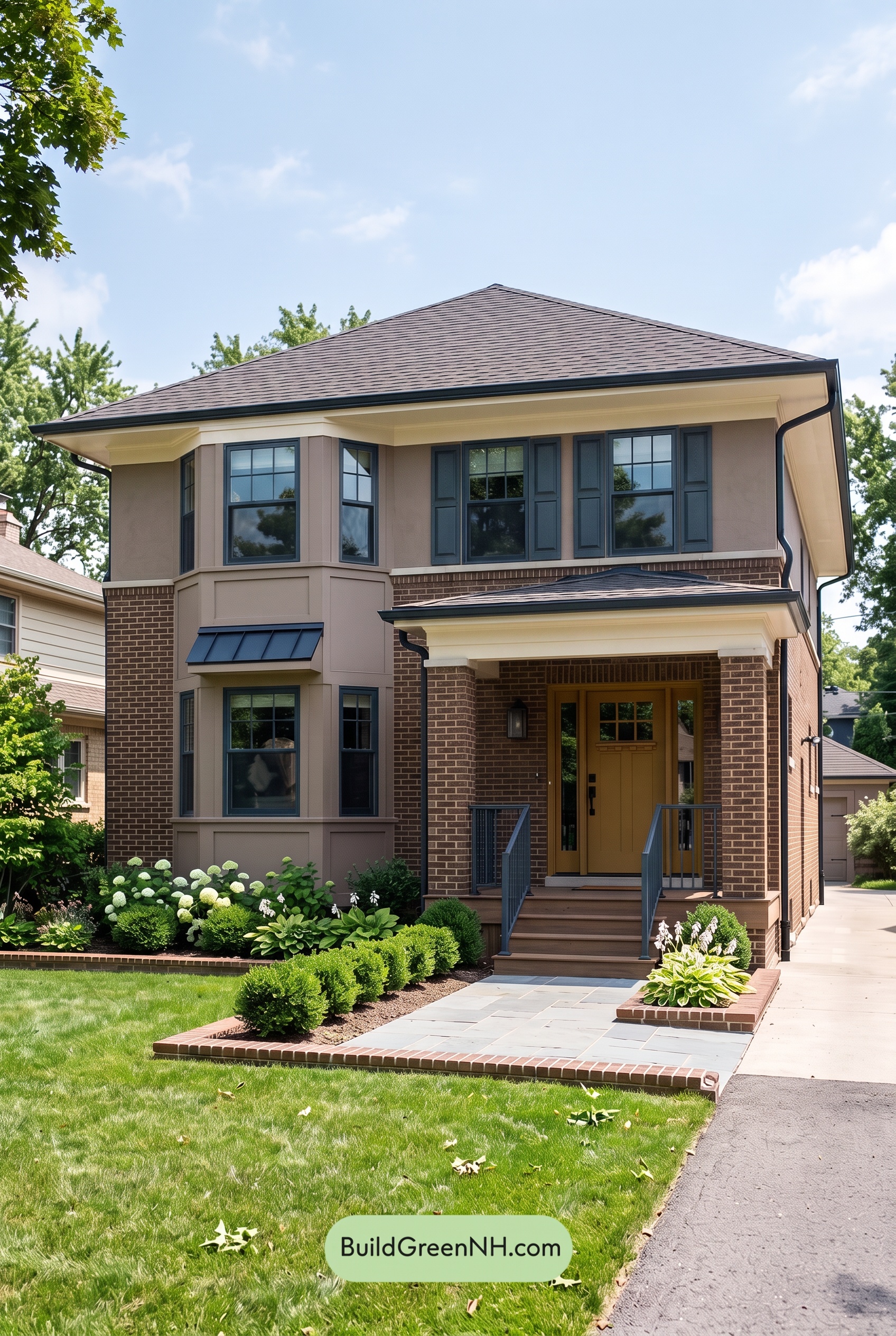

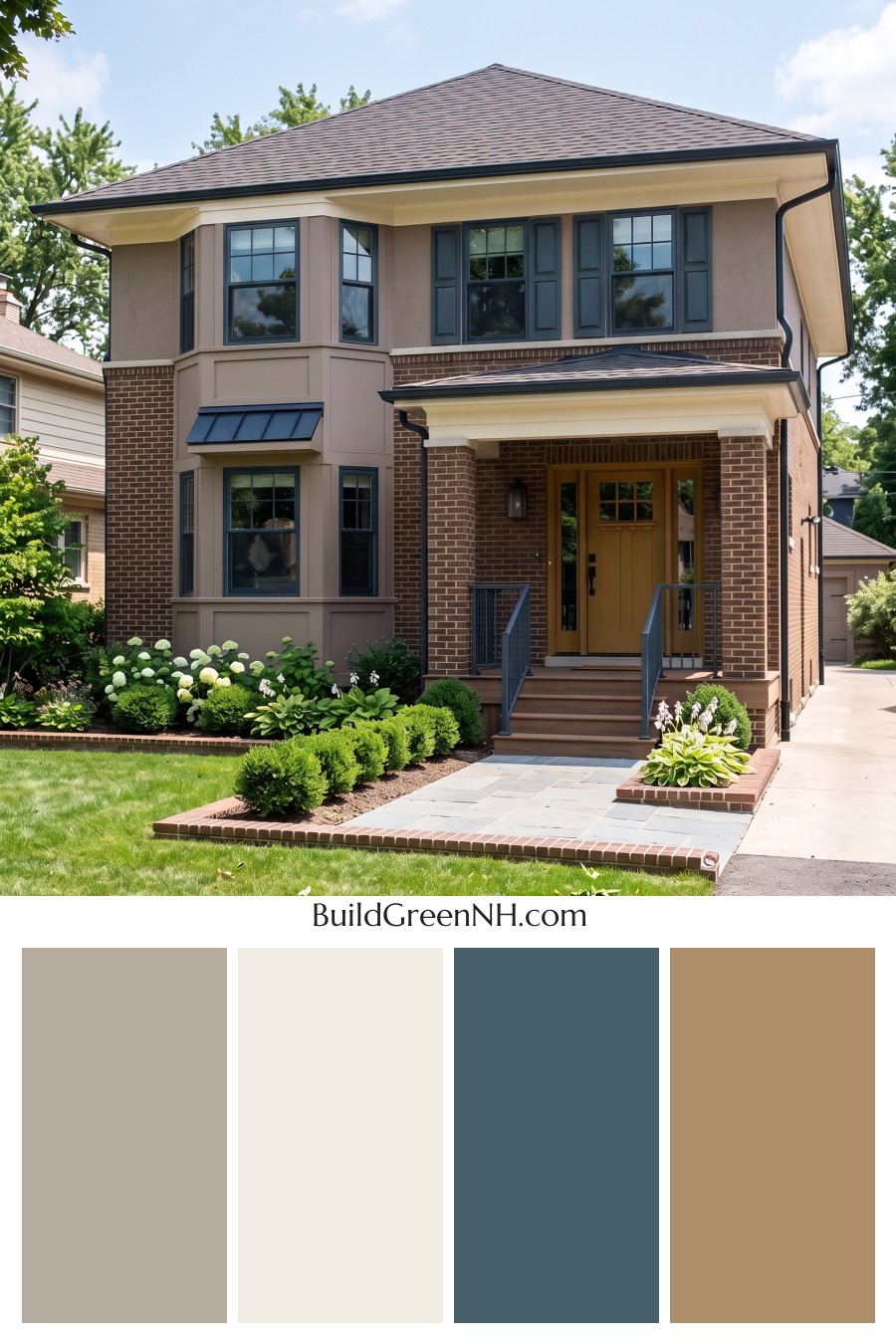
This inviting palette succeeds because its warm neutral foundation, tailored blue accents, and cheerful golden door create a polished exterior with instant curb appeal.
A Warm, Grounded Exterior Base
The home’s main exterior is built around a soft, mid-tone beige that gives the upper wall panels a calm and welcoming presence. Its understated warmth works beautifully with the rich brown brick sections below, creating depth without making the façade feel busy. Together, these earthy shades give the home a substantial, timeless look.
A lighter creamy beige appears on the broad trim, porch ceiling, fascia, and window surrounds. This brighter neutral crisply defines the roofline and entry, while also lifting the deeper wall and brick tones. The layered use of beige shades keeps the architecture looking refined rather than flat.
Blue Accents That Add Structure
Deep muted blue brings a tailored contrast to the windows, shutters, small awning, and porch railings. These cool accents frame the glazing with clean precision and give the traditional exterior a slightly more contemporary edge. Repeating the same blue family across several architectural details creates a cohesive rhythm from the upper story to the front steps.
The blue railings are especially effective at the entry, where their slender lines feel substantial enough to ground the porch without competing with the front door. Against the warm neutral walls and brick, this deep blue reads as elegant, balanced, and quietly confident.
A Golden Welcome at the Front Door
The front door introduces a rich golden yellow that immediately draws the eye toward the covered entry. It is a spirited choice, yet its warm, earthy undertone helps it relate naturally to the beige panels and brown brickwork. Instead of overwhelming the front elevation, the sunny door acts as one carefully placed focal point.
Dark hardware and the nearby blue details give the golden yellow a little extra definition, making the doorway feel both welcoming and well composed. It is a wonderful example of how one warm accent can make a neutral exterior feel personal and memorable.
Roof and Overall Mood
A dark brown-gray roof anchors the entire palette from above, echoing the depth of the brick while allowing the creamier trim to stand out along the eaves. The result is a layered exterior that feels classic, grounded, and tailored.
Warm beige shades create comfort, deep blue accents lend sophistication, and the golden yellow door supplies a burst of optimism. Surrounded by greenery, this color scheme feels especially fresh: polished enough for a formal streetscape, yet cheerful enough to make every arrival feel like a warm welcome.
Next, see how this color scheme looks under different lighting simulations throughout the day.
Overcast
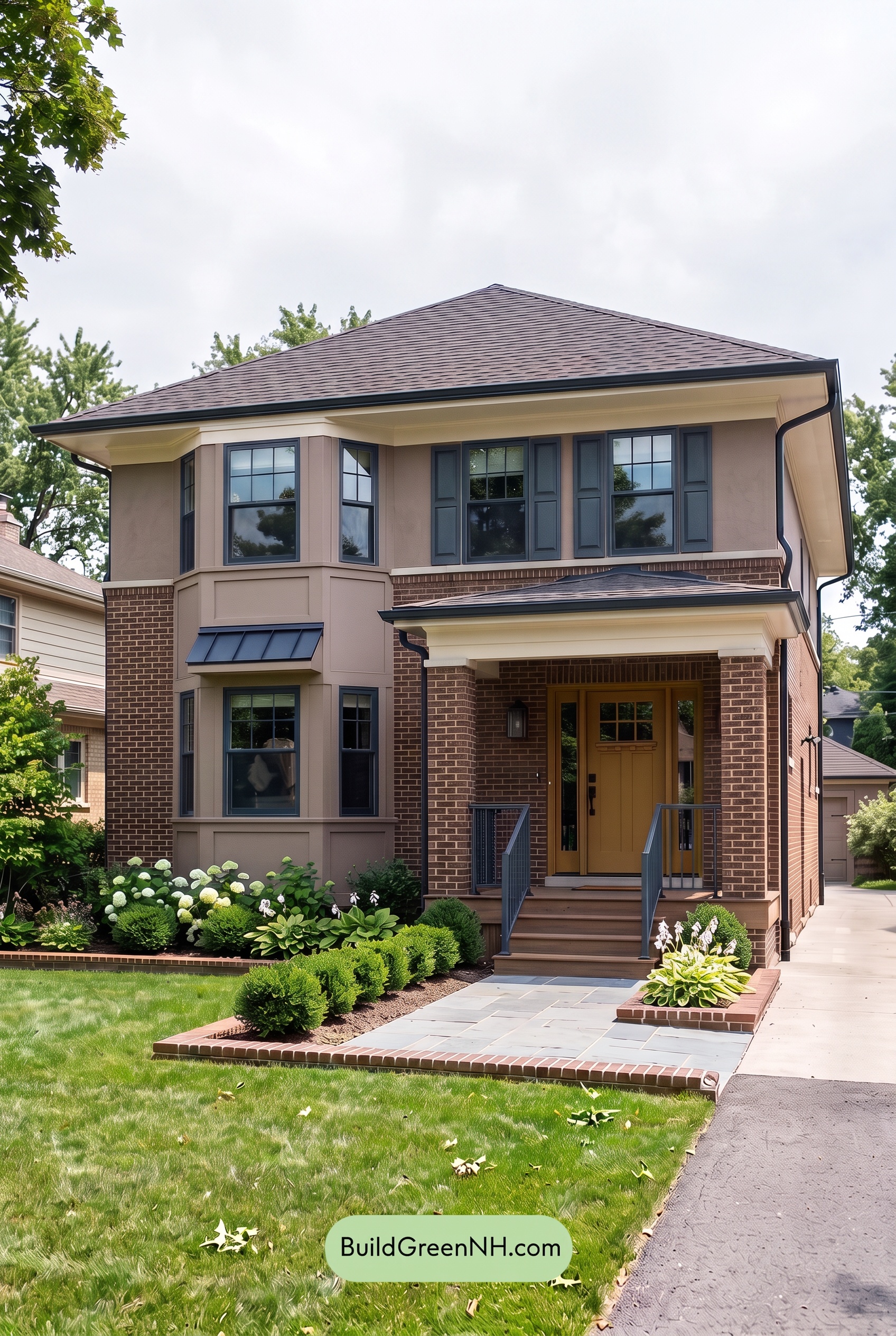
Under overcast skies, the beige siding and trim lose some of their sunlit glow, reading softer, cooler, and slightly more muted than they do in neutral daylight. With direct highlights subdued, the façade takes on a more even appearance, while recessed details and porch areas show gentler, less dramatic shadows.
The blue window frames, shutters, and railings appear deeper and more restrained, creating a smoother contrast against the softened warm neutrals. The yellow front door becomes less radiant but still provides a welcoming point of warmth, shifting the overall mood from bright and energetic to calm, polished, and quietly inviting.
Golden Hour
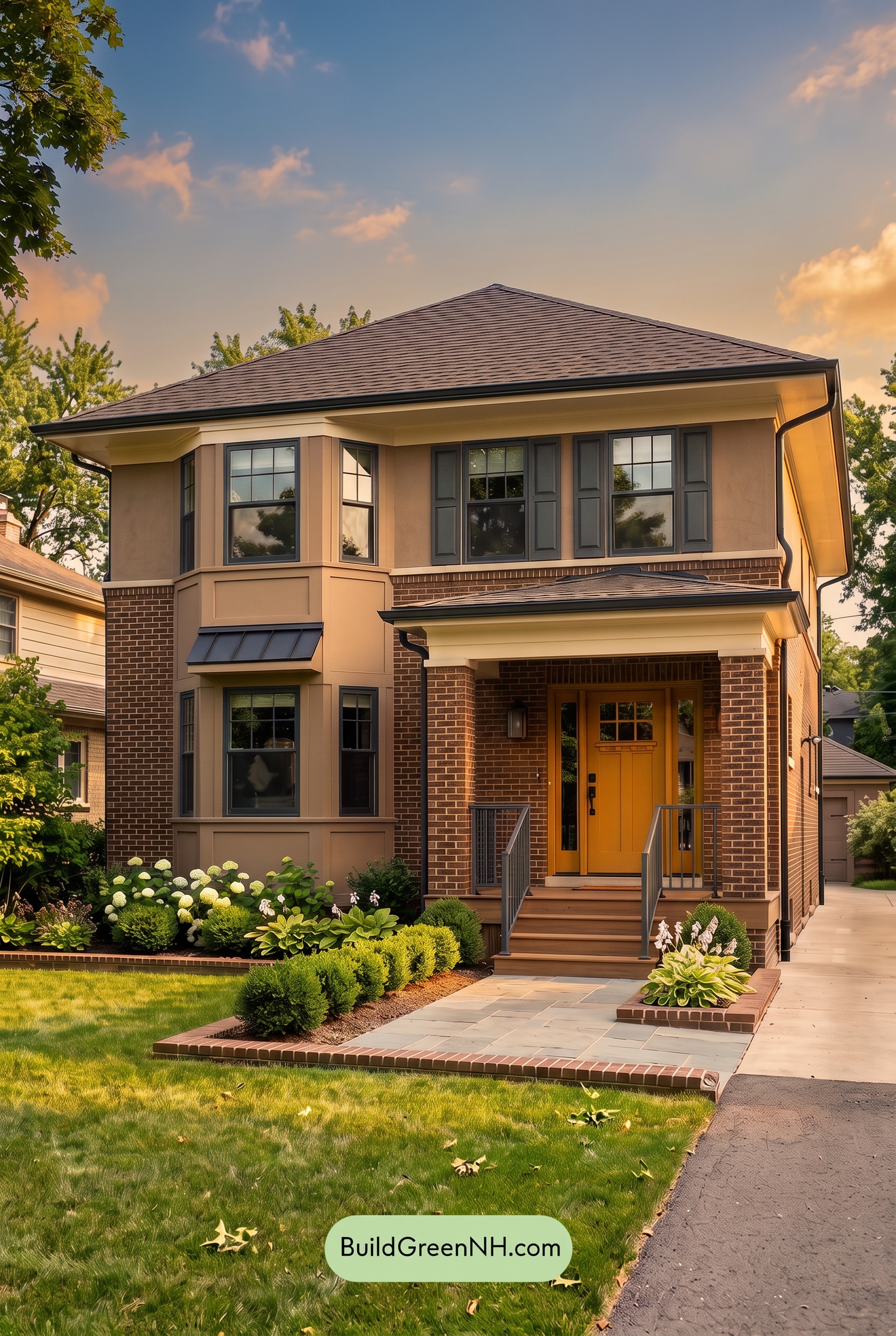
In neutral daylight, the beige exterior reads balanced and understated, while the blue window frames, shutters, and railings offer a crisp, cool contrast. At Golden Hour, the low warm light enriches the beige surfaces, making them appear softer, sunnier, and slightly more saturated. The yellow front door becomes especially inviting, glowing with deeper warmth against the surrounding facade.
As the sun drops, long shadows add depth beneath the eaves and across the porch, causing the blue details to deepen toward a moodier, more dramatic shade. That shift heightens the contrast between sunlit warm neutrals and shaded cool accents, giving the home a cozy, polished presence that feels more intimate than it does in even daylight.
Shade
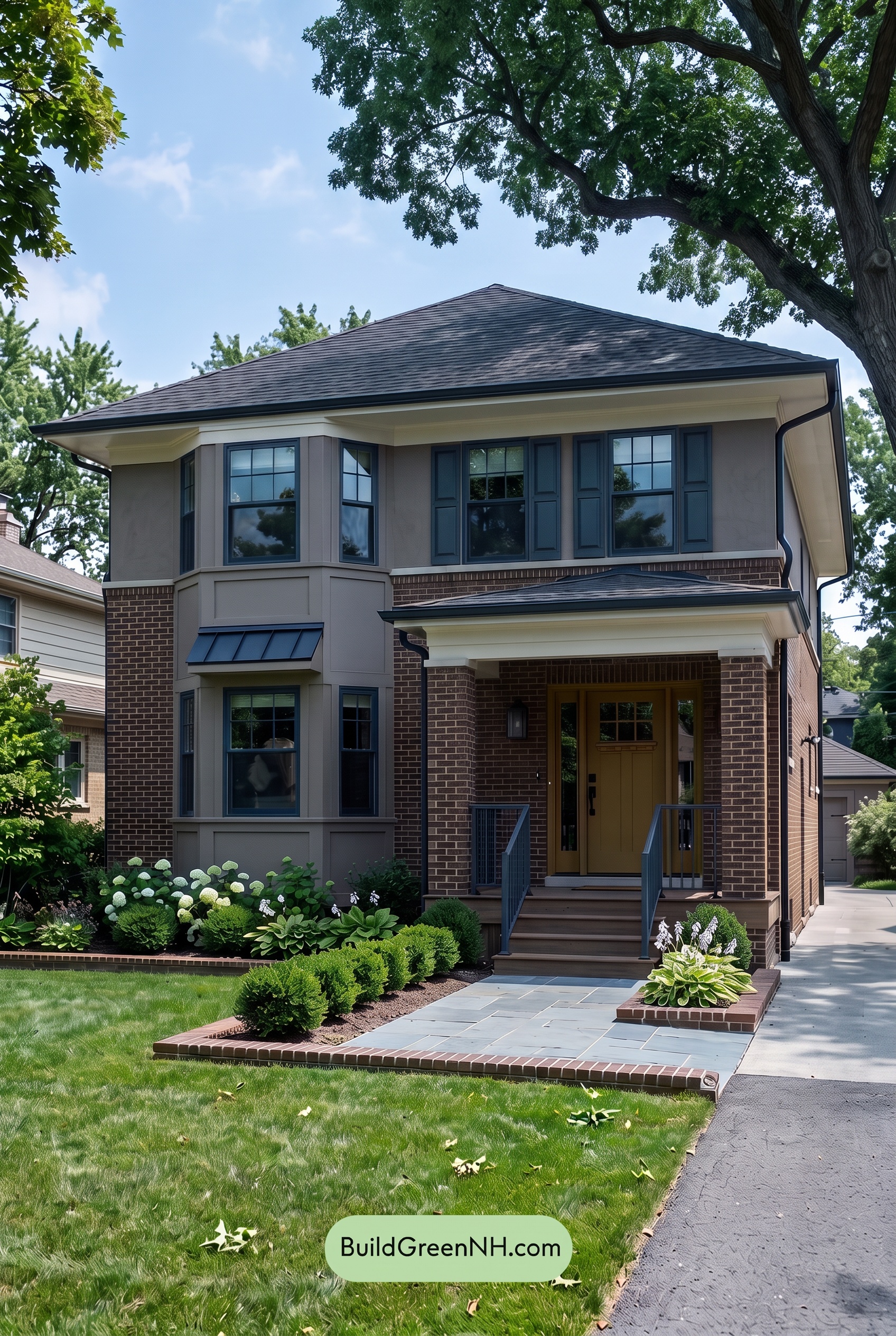
In shade, the beige wall and trim shades lose some of their sunlit warmth, reading softer and slightly cooler than they do in neutral daylight. The reduced brightness mutes overall saturation, while the deeper blue window frames, shutters, and railings appear richer and more prominent against the quiet neutral backdrop.
Layered shadows beneath the roofline and porch strengthen the contrast between the pale trim and the darker blue accents. The yellow front door becomes a more subdued but welcoming focal point, giving the shaded exterior a calm, tailored mood with a touch of warmth at the entry.
Nighttime
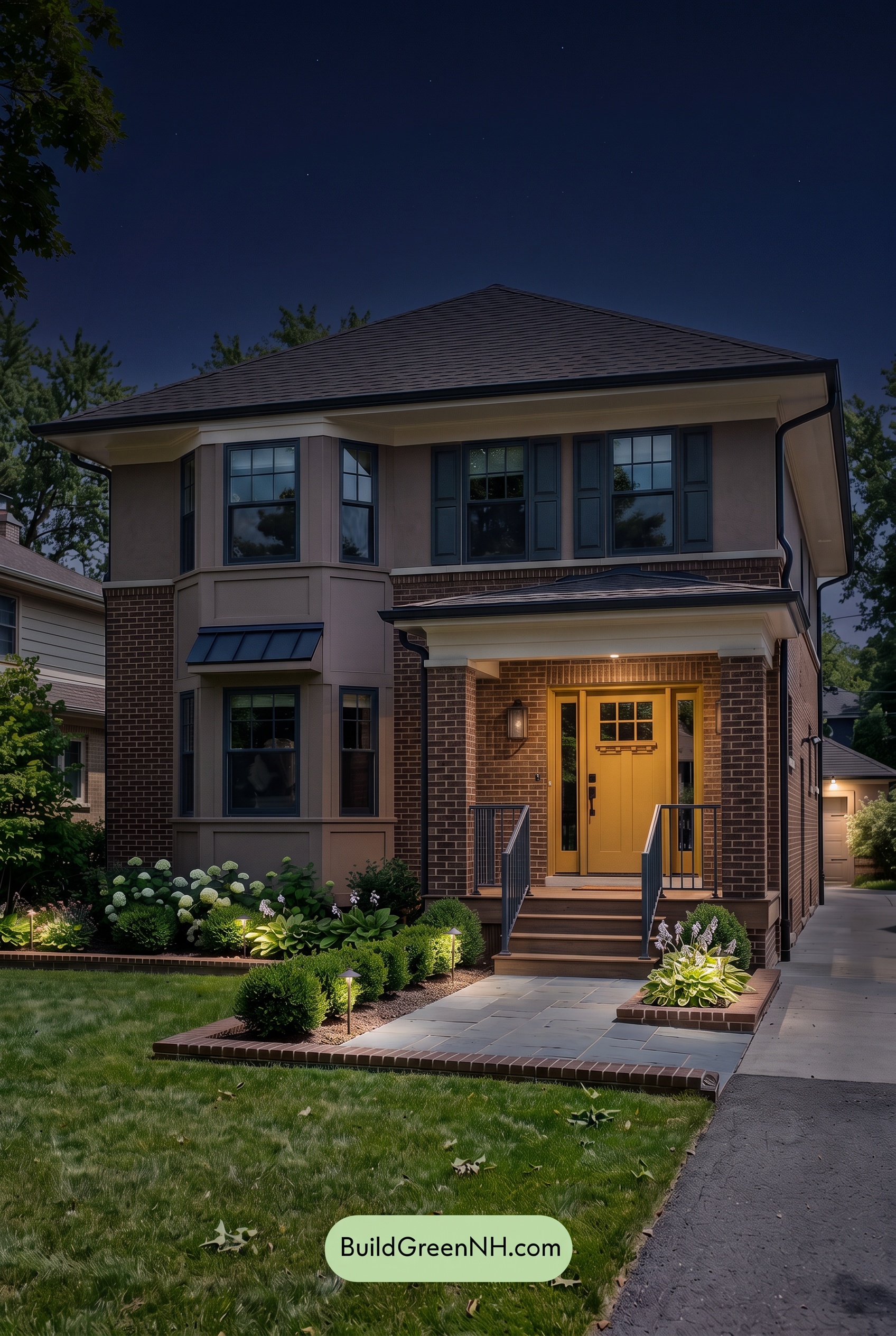
At nighttime, the beige wall and trim shades become quieter and more subdued than they appear in neutral daylight, with broad shadowed areas lending the facade a softer, more layered look. The blue window frames, shutters, and railings deepen toward inky shades, creating stronger outlines and a crisp, tailored contrast against the muted warm neutrals.
Warm entry lighting brings the yellow door forward with richer saturation and a welcoming glow, while surrounding cool shadows make it feel even more luminous. The result is a moodier, more intimate exterior: cool blue accents recede elegantly, warm shades gather around the entry, and the house takes on a polished evening presence.
Pin these for later:
Want More?
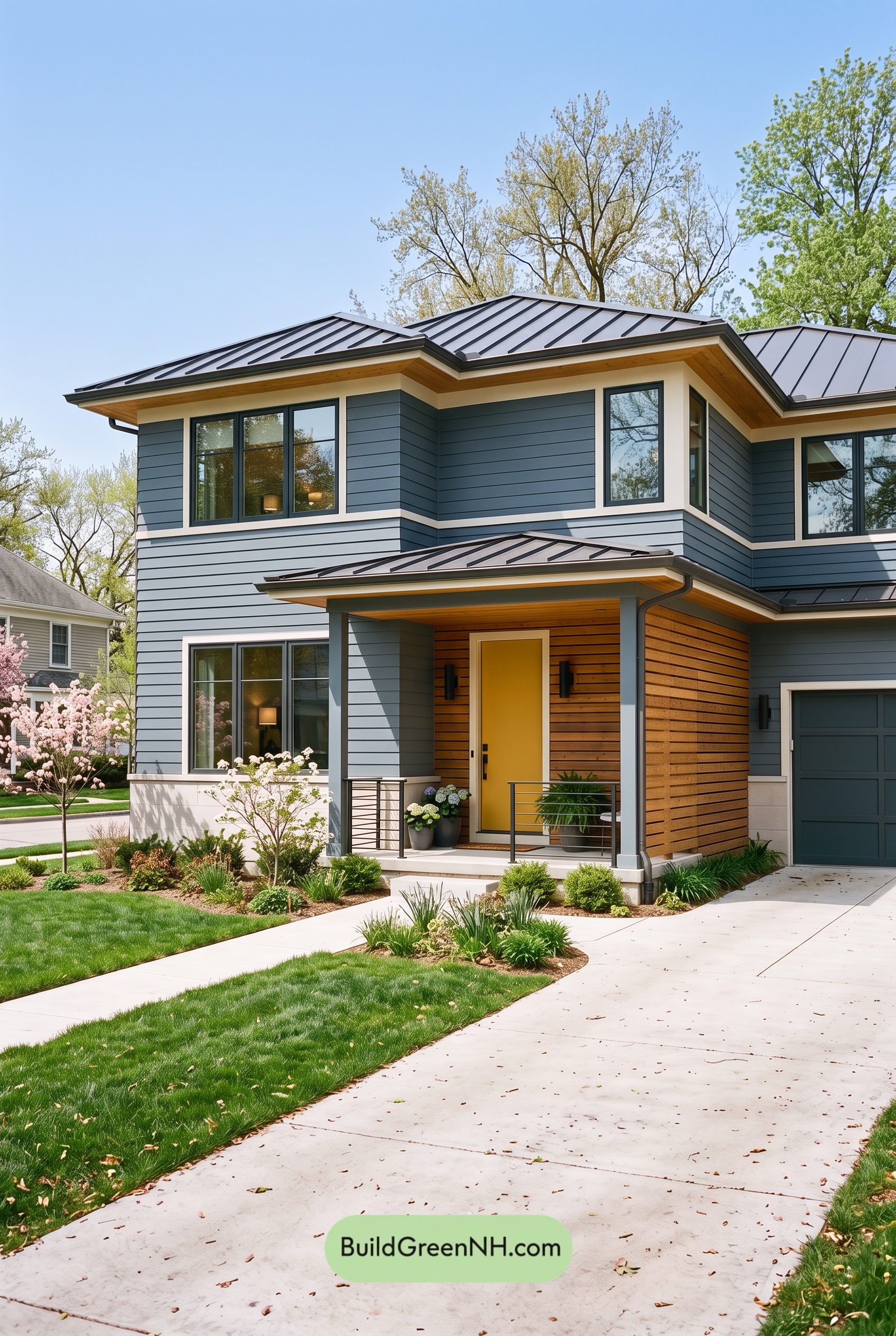 Blue House Front Door Color Scheme: Harbor Saffron
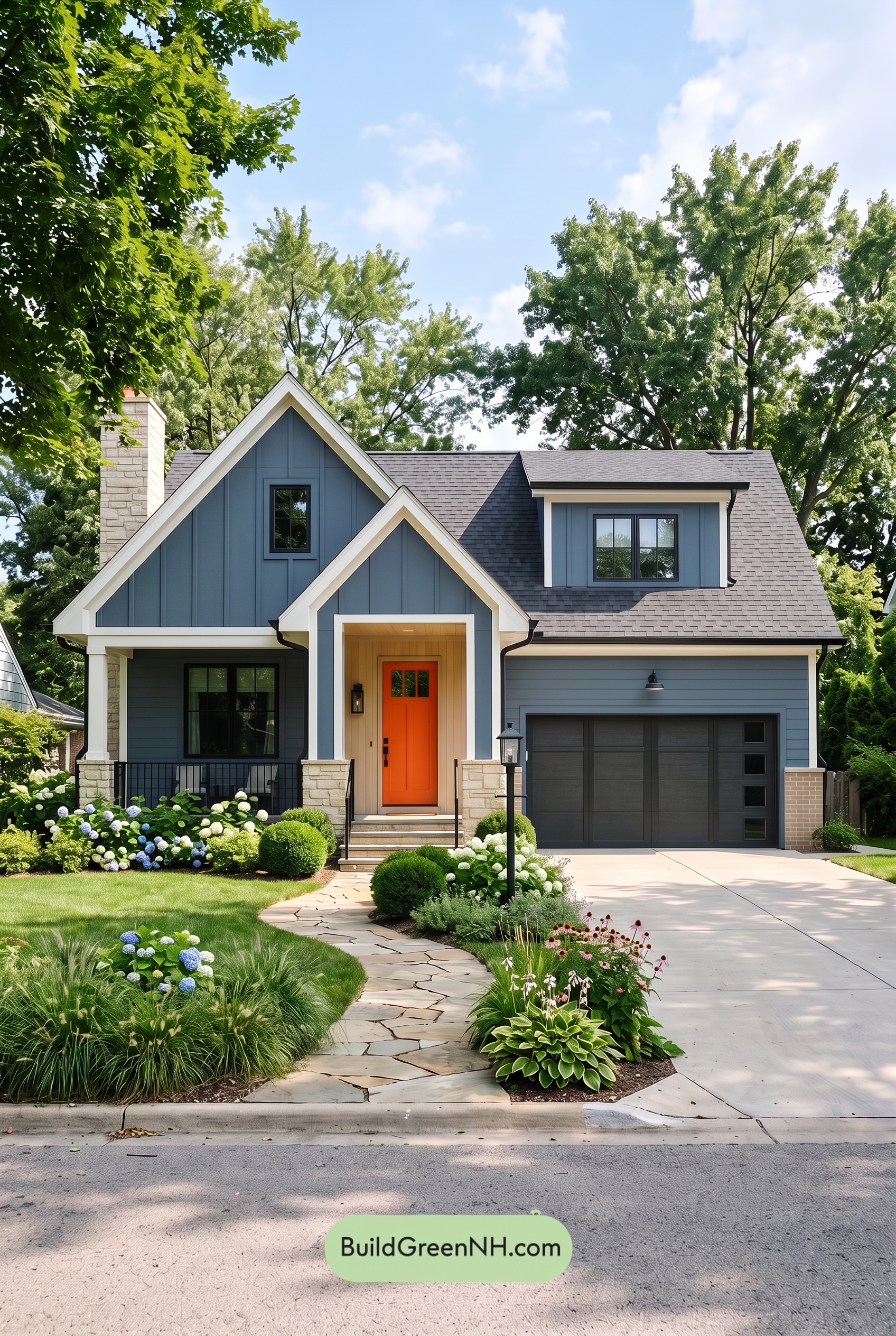 Blue House Front Door Color Scheme: Cobalt Persimmon
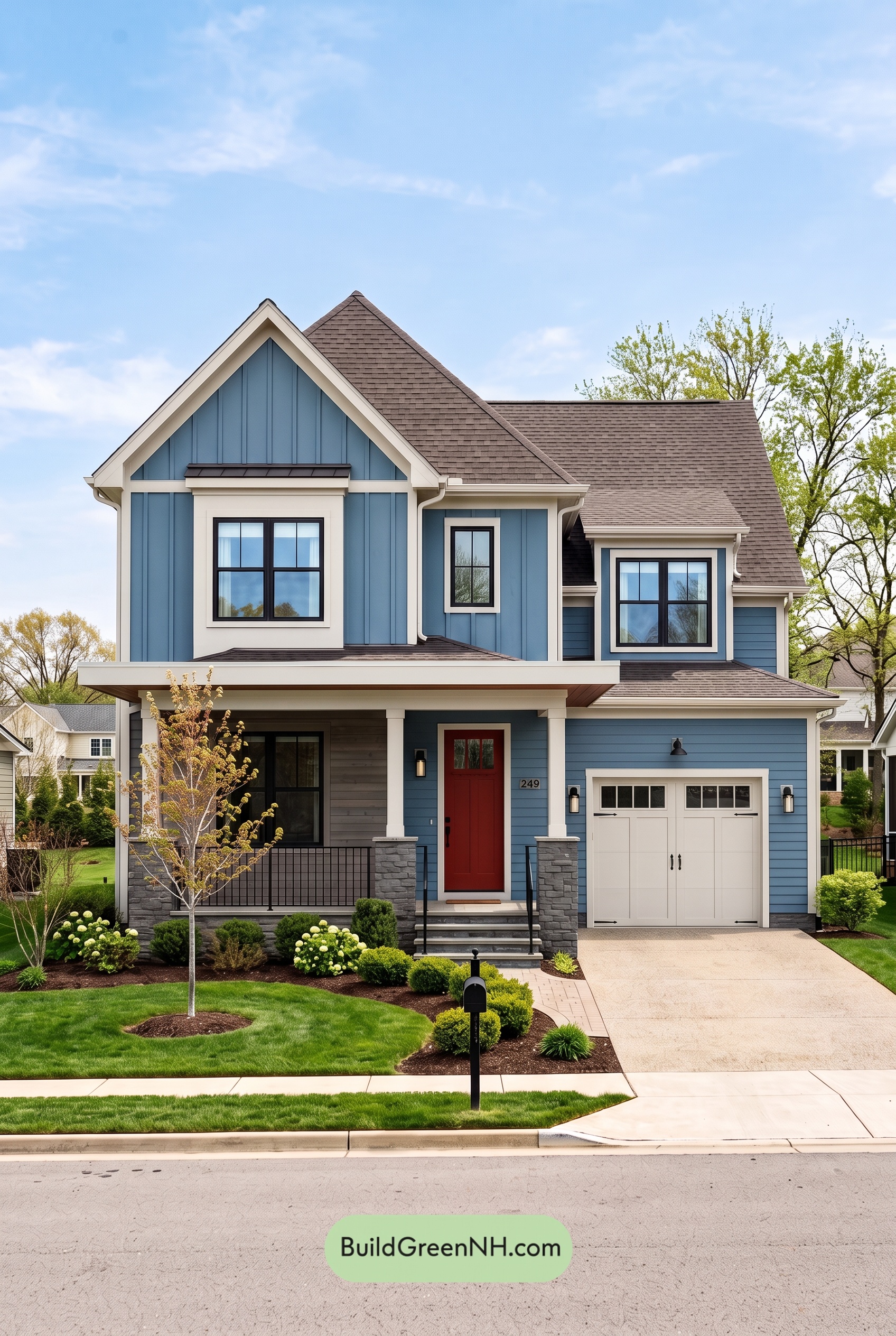 Blue House Front Door Color Scheme: Denim Poppy
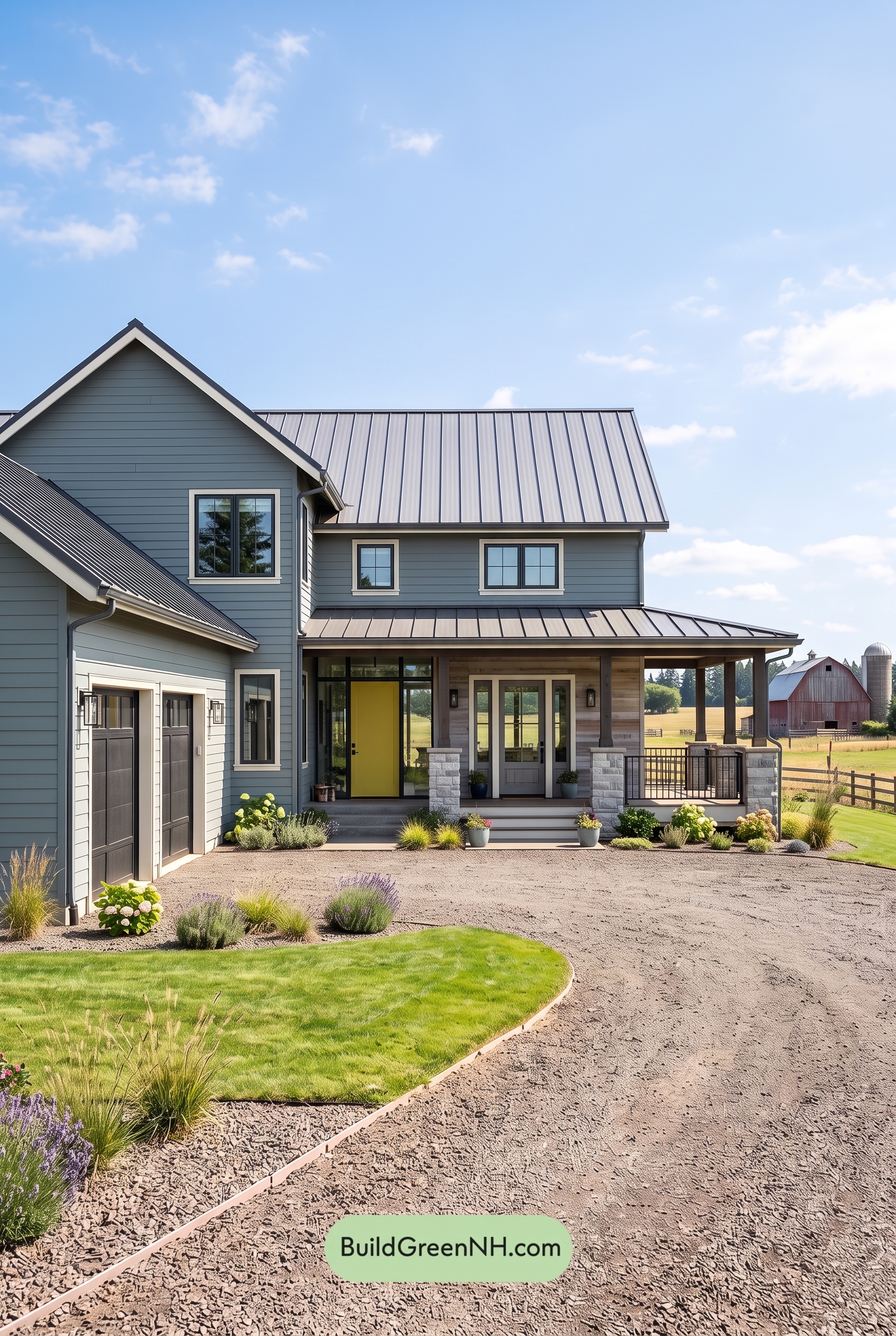 Blue House Front Door Color Scheme: Slate Citron
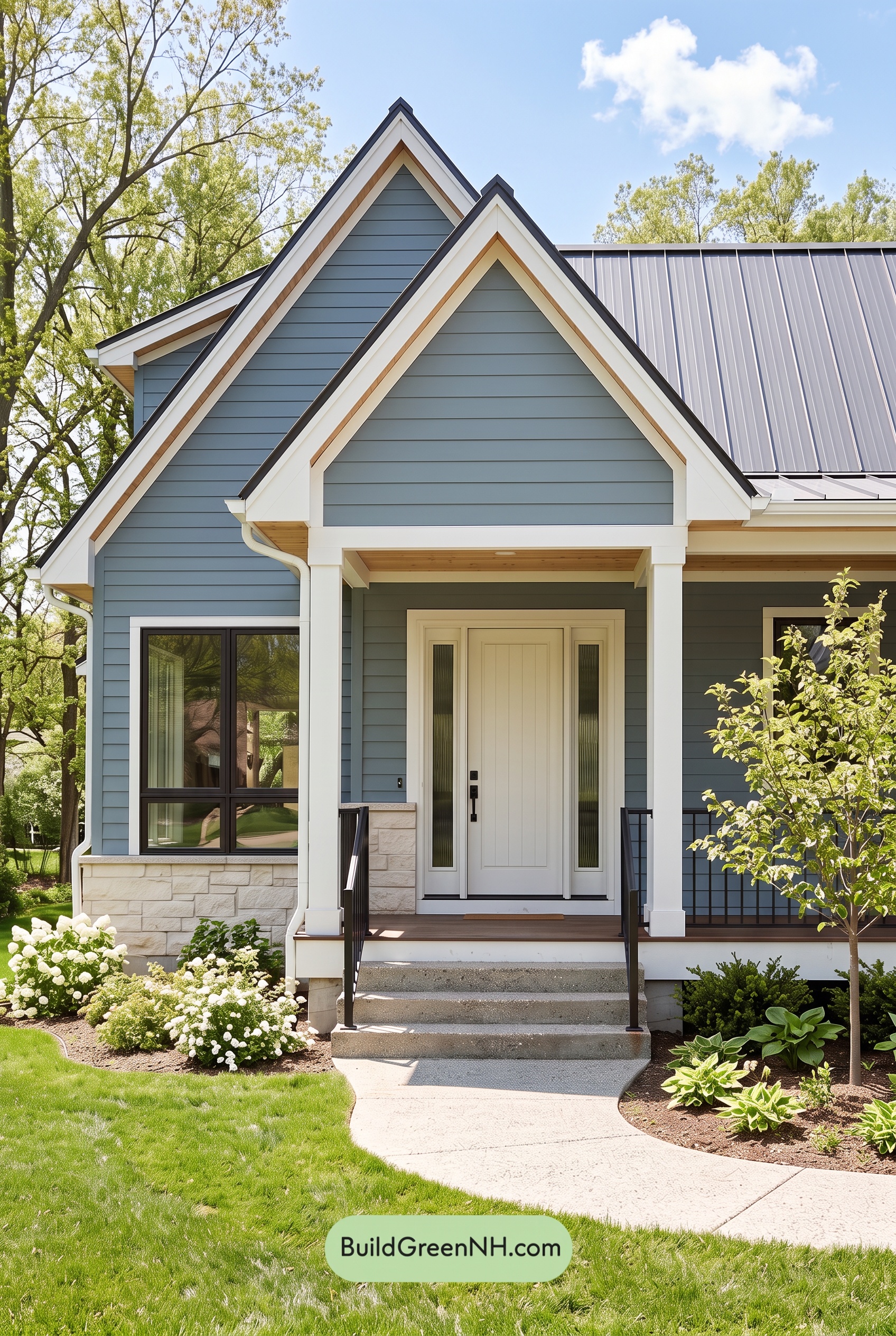 Blue House Front Door Color Scheme: Mist Blue Haven
Table of Contents