Last updated on
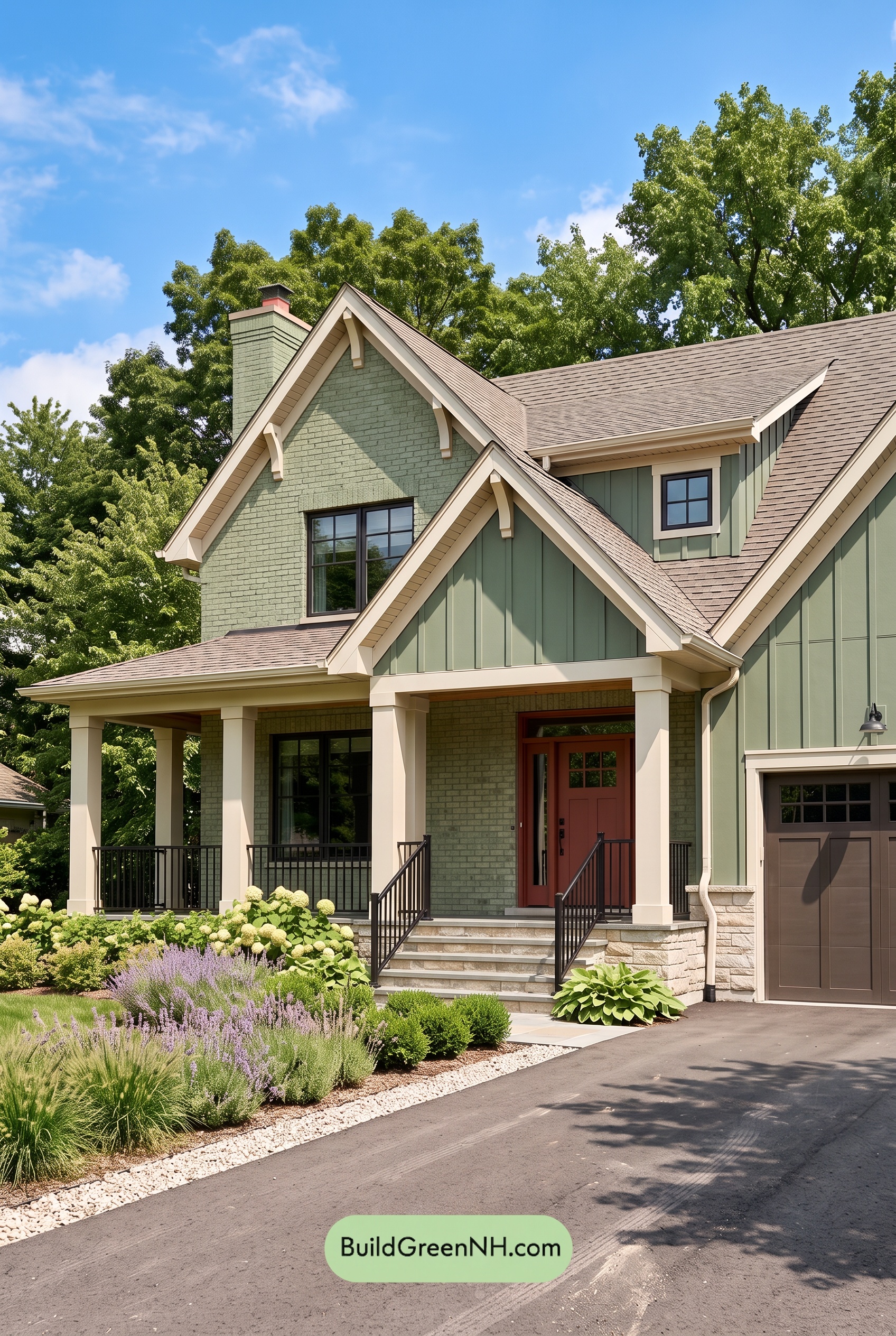

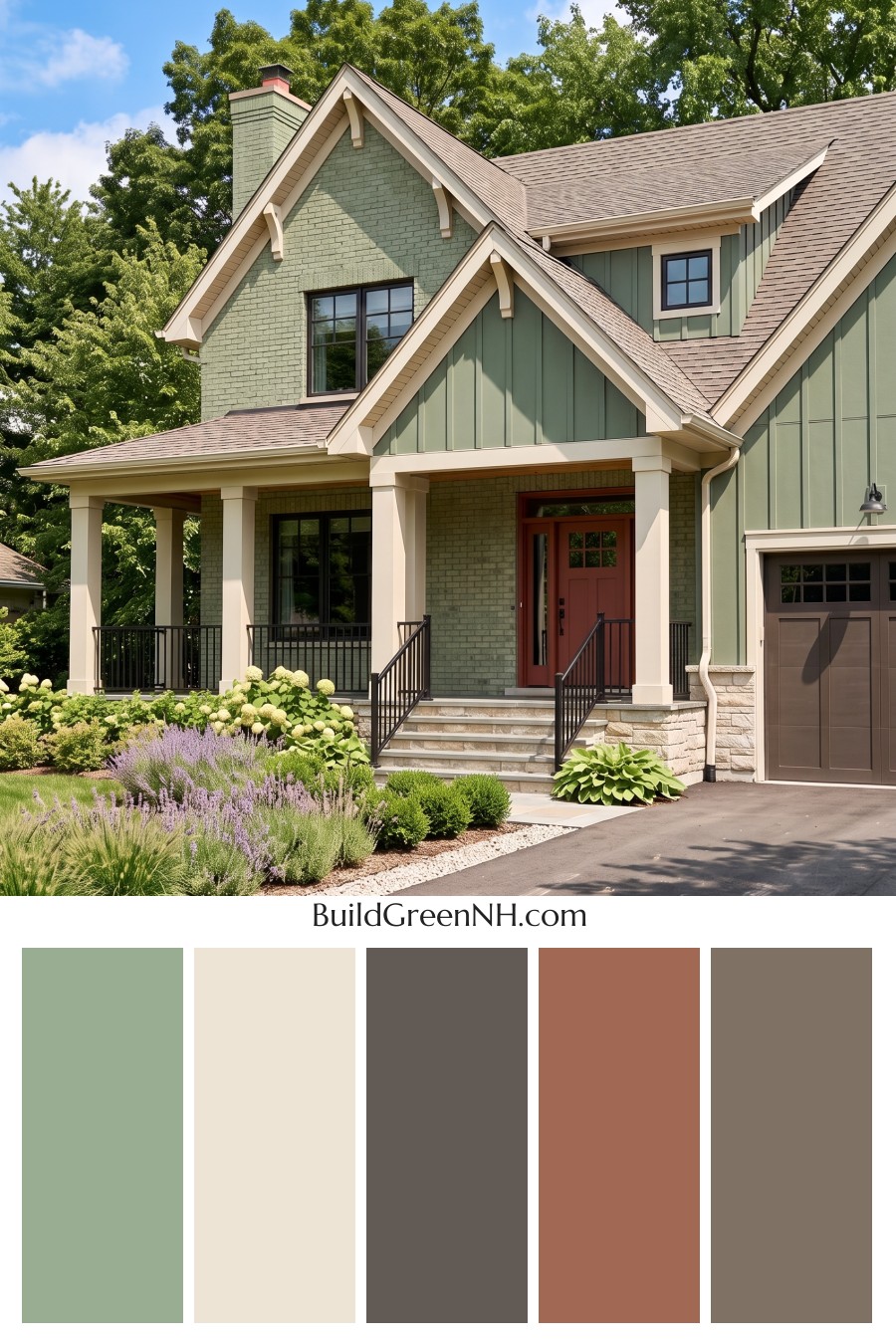
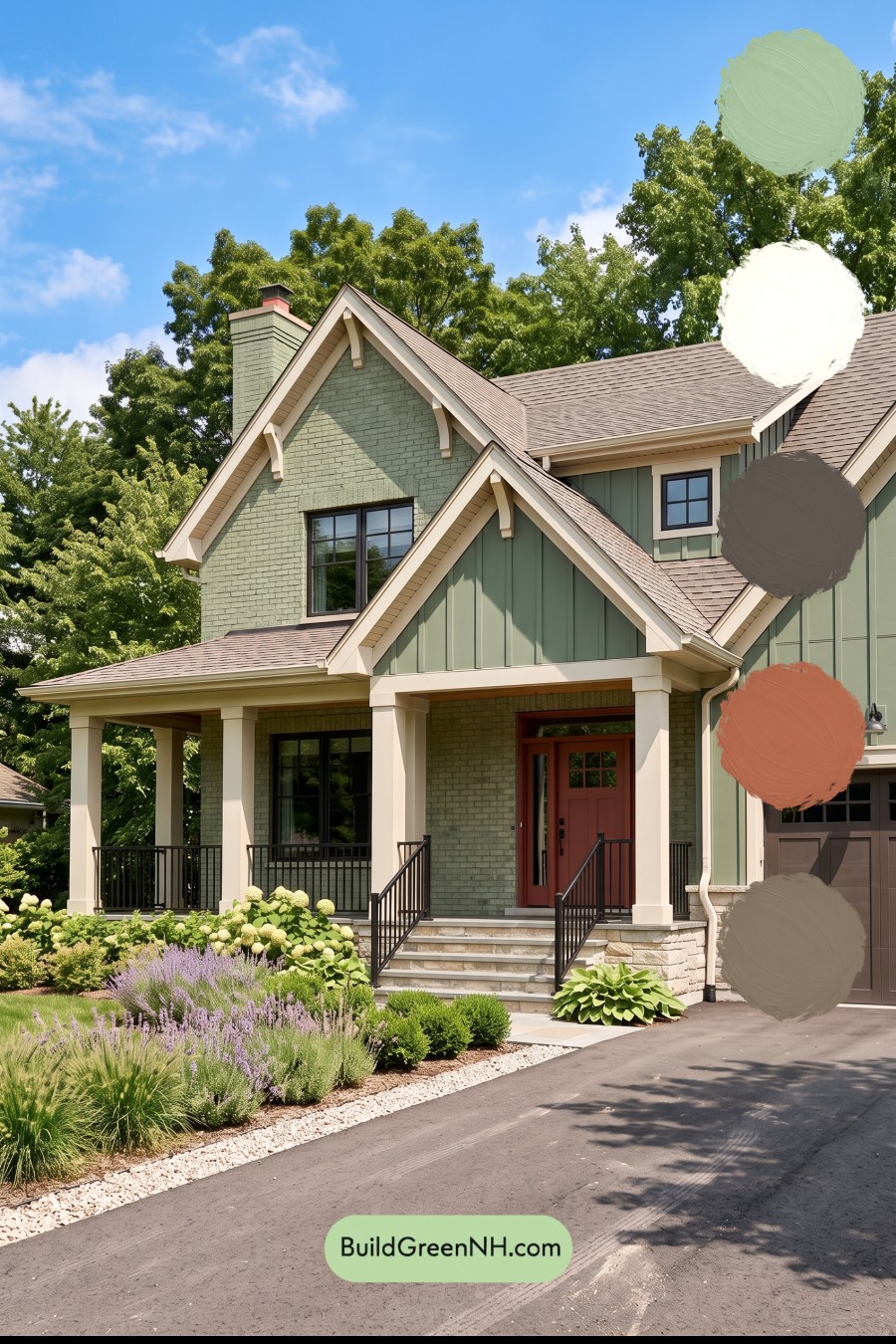
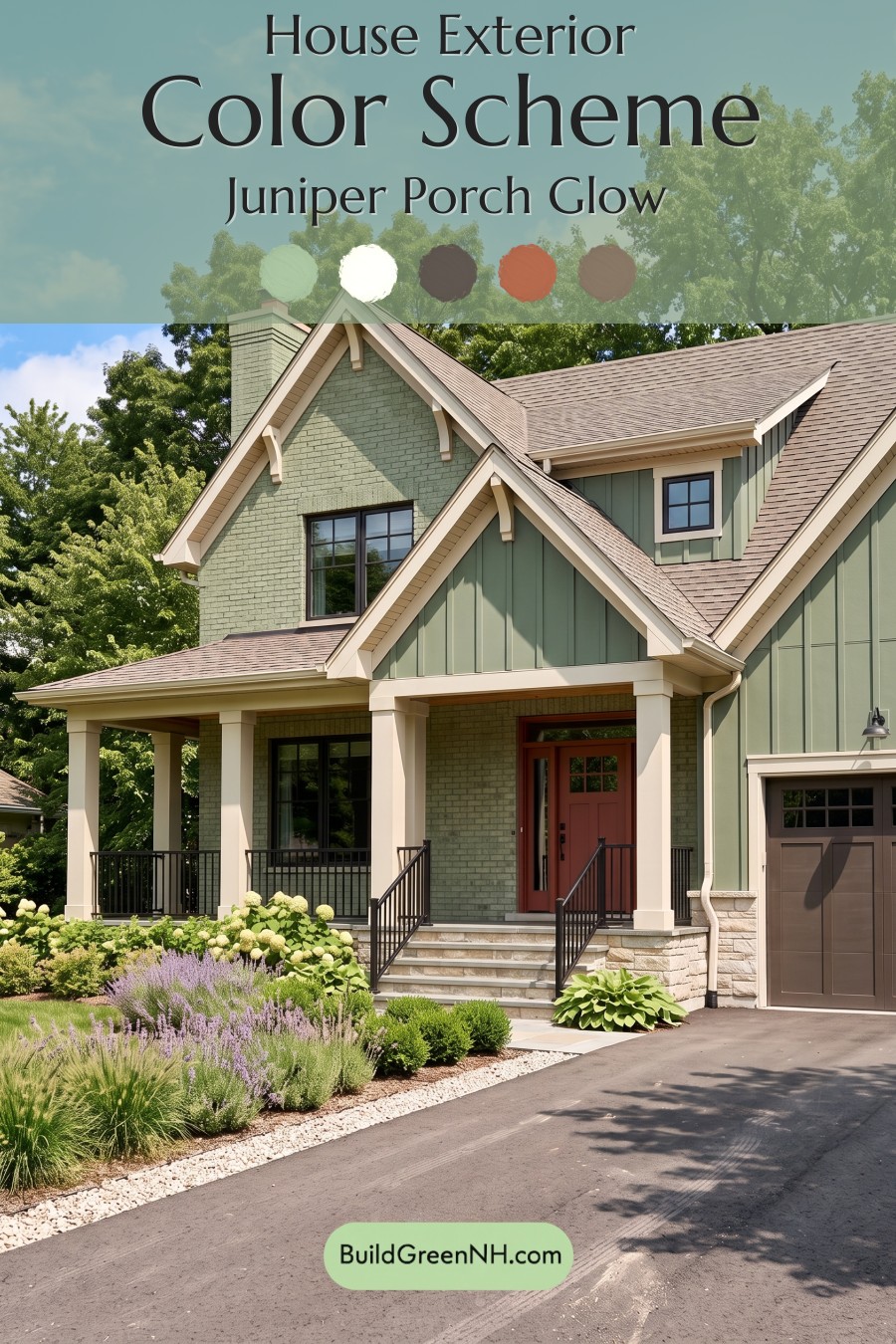
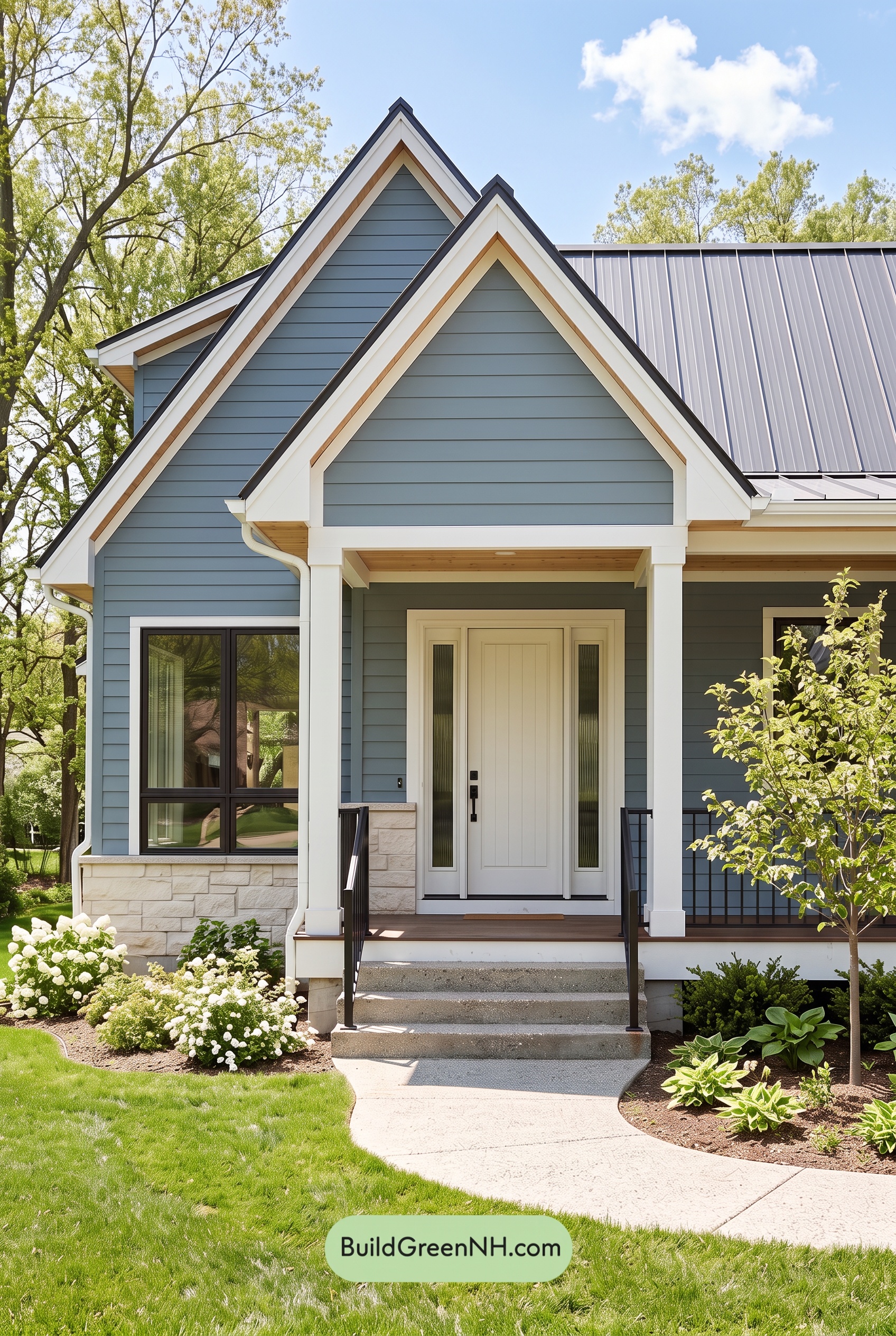
This layered green, beige, and brown exterior scheme feels timelessly welcoming while giving the home’s dramatic rooflines and architectural details a beautifully polished presence.
A Soft Green Foundation
The main exterior is wrapped in a muted, earthy green that feels calm, grounded, and naturally at home among the surrounding landscape. This soft green appears across both the vertical siding and painted brick, creating continuity while allowing each material’s texture to bring something different to the façade.
On the siding, the green reads clean and tailored, emphasizing the tall gables and crisp vertical lines. Across the brick, the same gentle green takes on a more textured, heritage-inspired character. Together, these surfaces make the house feel substantial without becoming heavy.
Warm Beige That Defines Every Detail
A light, warm beige trim provides the ideal lift against the green body color. It traces the roof edges, gable outlines, fascia, and window surrounds with enough contrast to make the home’s layered architecture easy to appreciate from the street.
The porch columns share this creamy beige shade, giving the entry a bright and inviting sense of structure. Because the trim is warm rather than stark, it softens the sharp angles of the roofline and keeps the whole palette relaxed and residential.
Rich Brown Anchors
Deep brown window frames add a refined, grounded contrast to the softer exterior colors. Their dark outline gives the windows visual depth and creates a handsome connection to the blackened railing details near the porch and stairs.
At the entry, a warm reddish-brown front door becomes an especially welcoming focal point. It stands out from the green brick without overpowering it, offering a subtle touch of warmth at the place guests naturally approach. The darker brown garage door echoes the window frames and provides balance along the wider side of the façade.
A Roof Color That Ties It Together
The roof’s weathered medium brown tone acts as a quiet bridge between the warm beige trim and the dark brown accents. Its soft, neutral character gives the home a settled, traditional feel while allowing the green exterior to remain the main visual feature.
This is a thoughtful palette built on gentle contrast: an organic green base, light beige architectural framing, and rich brown details for definition. The result is polished but never fussy—a welcoming exterior that feels connected to its leafy setting in every season.
Next, see how this color scheme looks under different lighting simulations throughout the day.
Overcast
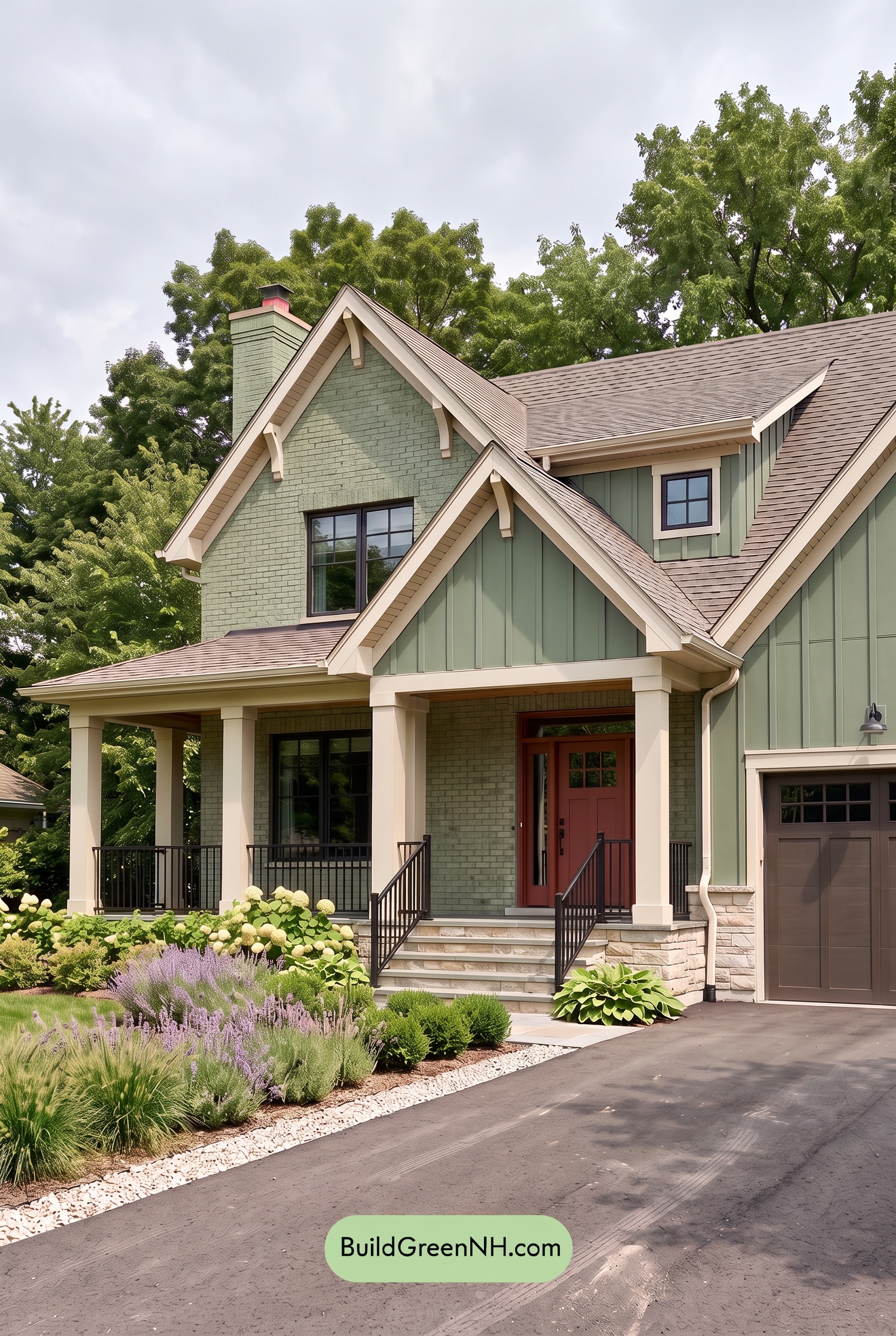
Under overcast skies, the soft green exterior takes on a quieter, slightly grayer cast than it shows in neutral daylight, with its saturation appearing more restrained and its warmth less pronounced. The beige trim and columns feel gentler and more muted, while the brown details read deeper and steadier without direct sun to pull warm highlights forward.
Cloud-filtered light softens sharp shadows along the gables, porch, and siding, reducing contrast while allowing the layered architectural lines to feel calm and cohesive. The overall mood becomes more tailored and serene: a balanced blend of softened warm neutrals, grounded brown accents, and a subdued green backdrop.
Golden Hour
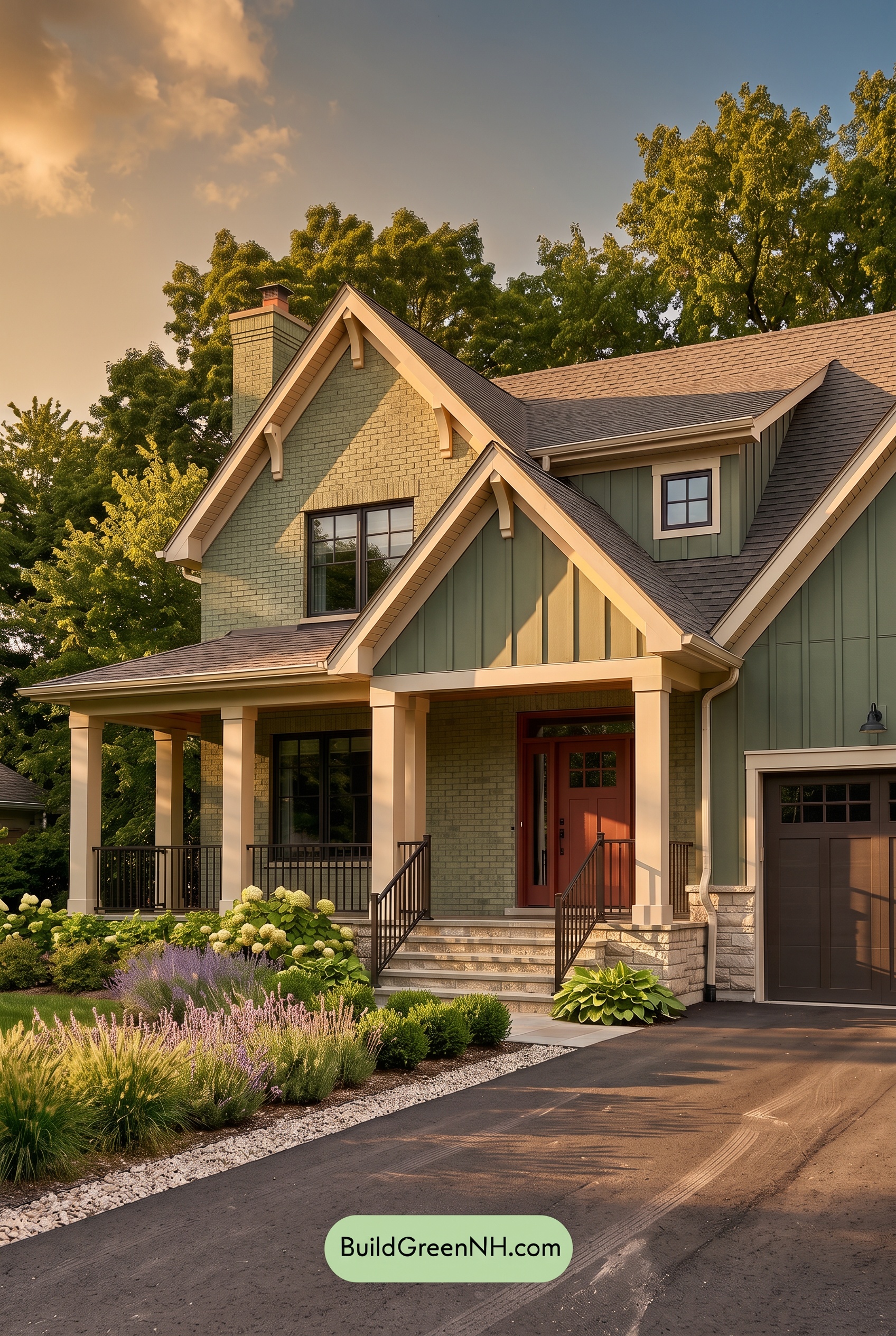
Under Golden Hour, the green siding takes on a softer, more muted cast than it shows in neutral daylight, with its earthy undertones becoming more pronounced. The beige trim and columns gather a gentle honeyed warmth, appearing richer and more luminous where the low sun touches them.
Longer shadows deepen the brown window frames, railings, garage door, and entry into a moodier counterpoint, sharpening the home’s architectural lines without feeling harsh. Compared with the clearer contrast of neutral daylight, this warm, angled light creates a welcoming, layered look that feels calm, cozy, and inviting.
Shade
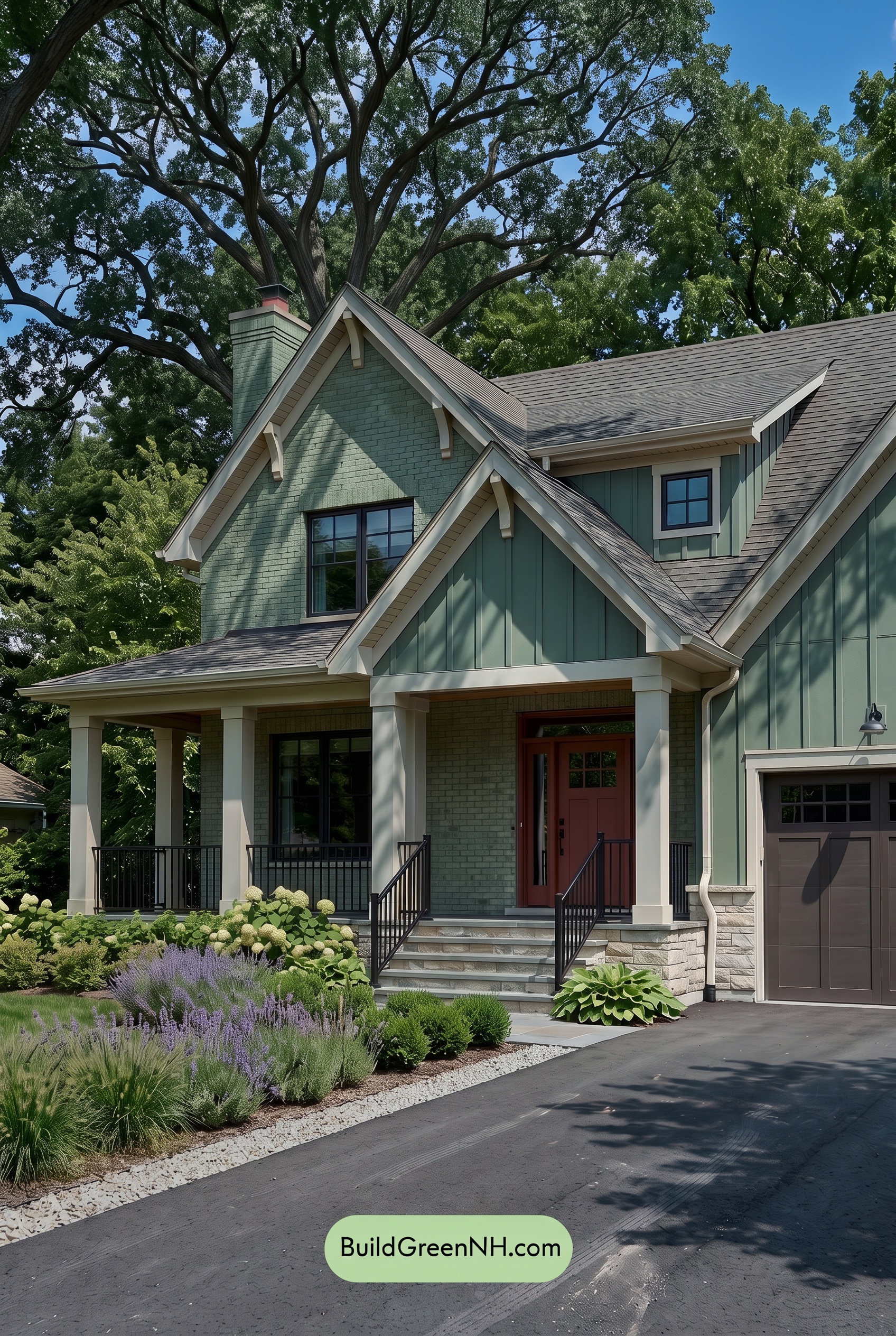
In shade, the green exterior takes on a deeper, quieter cast than it would in neutral daylight, with its saturation appearing more restrained and its undertones feeling cooler. Dappled shadows create soft variation across the façade, giving the overall palette a layered, woodland-inspired mood.
The warm beige trim and columns appear gentler and less bright beneath the tree canopy, while the brown details deepen and provide stronger definition around the entry, windows, and garage. This lower-light setting heightens contrast in the darkest accents without making the scheme feel harsh, creating a calm, grounded welcome.
Nighttime
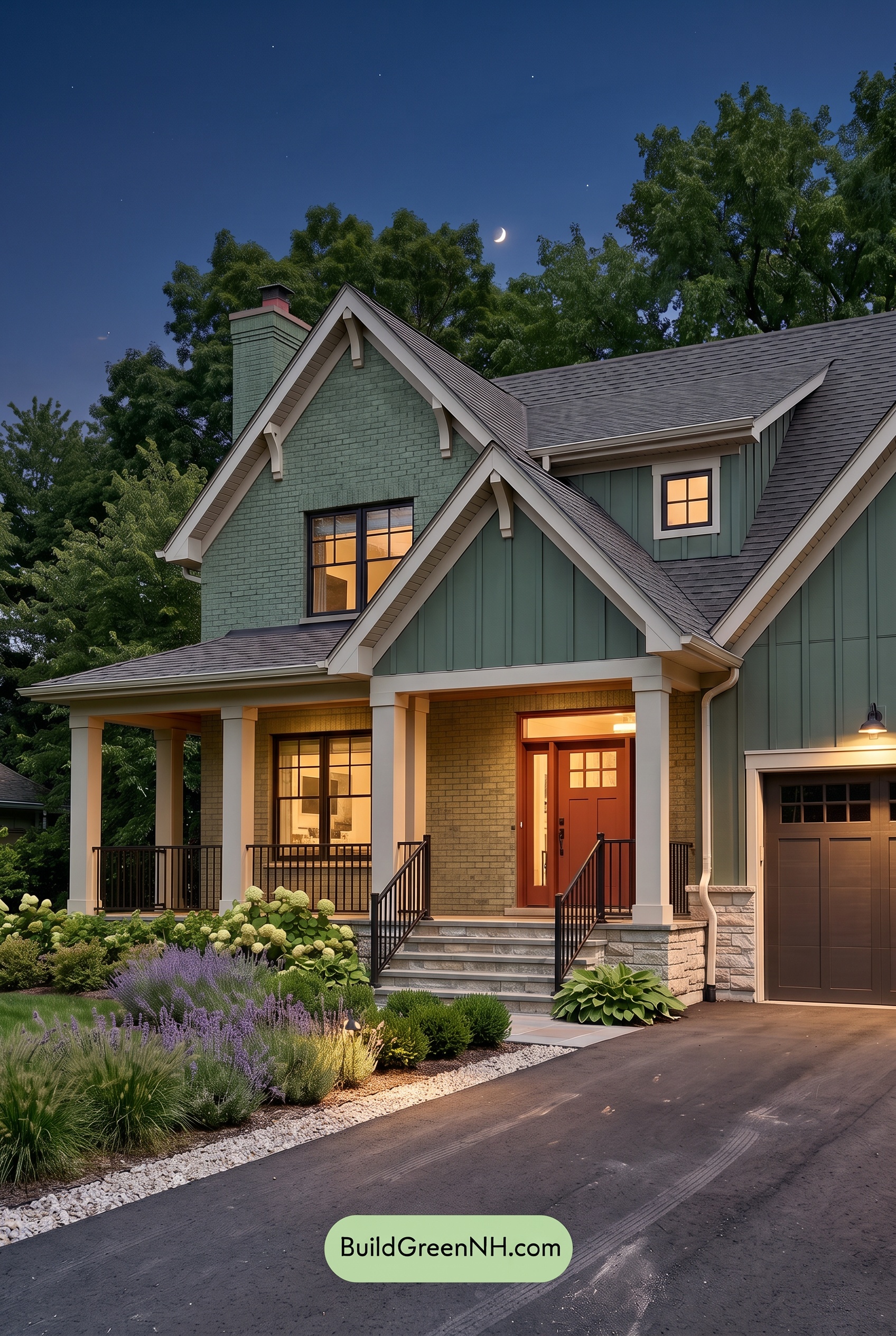
At night, the green exterior takes on a deeper, more muted character than it has in neutral daylight, with its cooler undertones settling into the shadows. The brown accents become richer and more dramatic, while the beige trim and columns catch the available light, creating crisp highlights that define the rooflines and porch.
Warm light from the windows and entry softens the surrounding neutrals and brings an inviting glow to the facade. This mix of luminous warm areas and darkened recesses increases contrast, giving the home a more layered, intimate mood than its evenly balanced daytime appearance.
Pin these for later:
Want More?
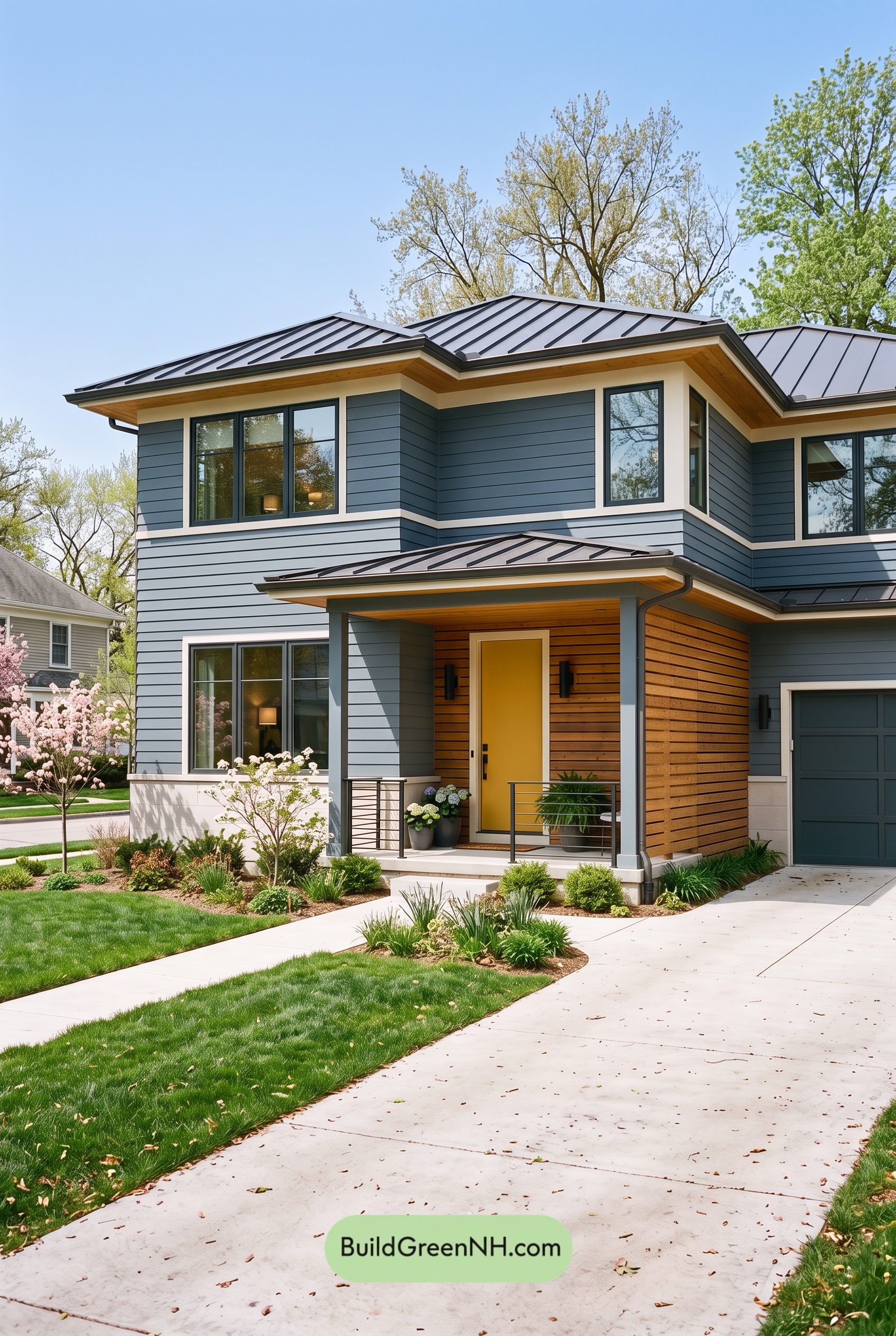 Blue House Front Door Color Scheme: Harbor Saffron
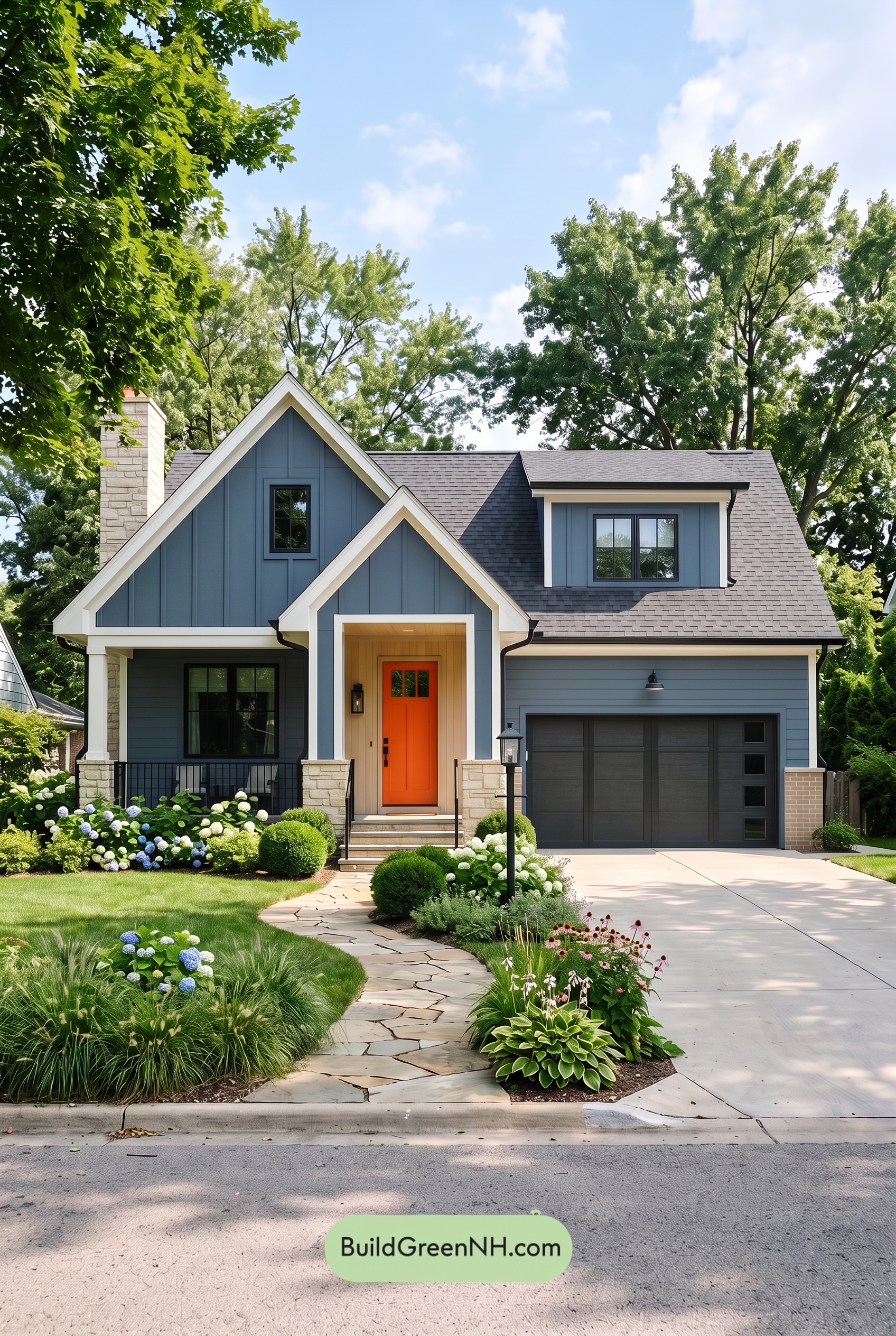 Blue House Front Door Color Scheme: Cobalt Persimmon
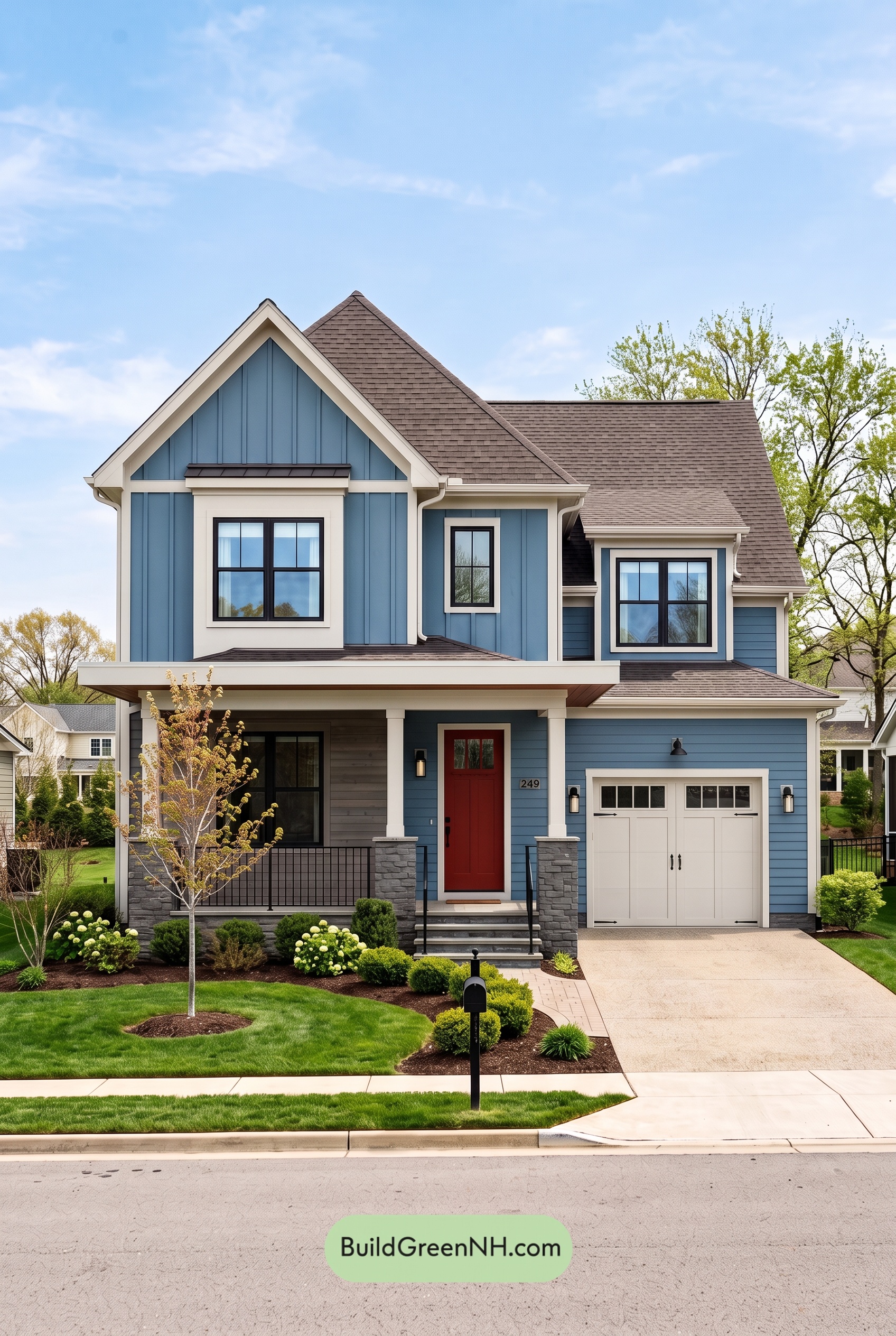 Blue House Front Door Color Scheme: Denim Poppy
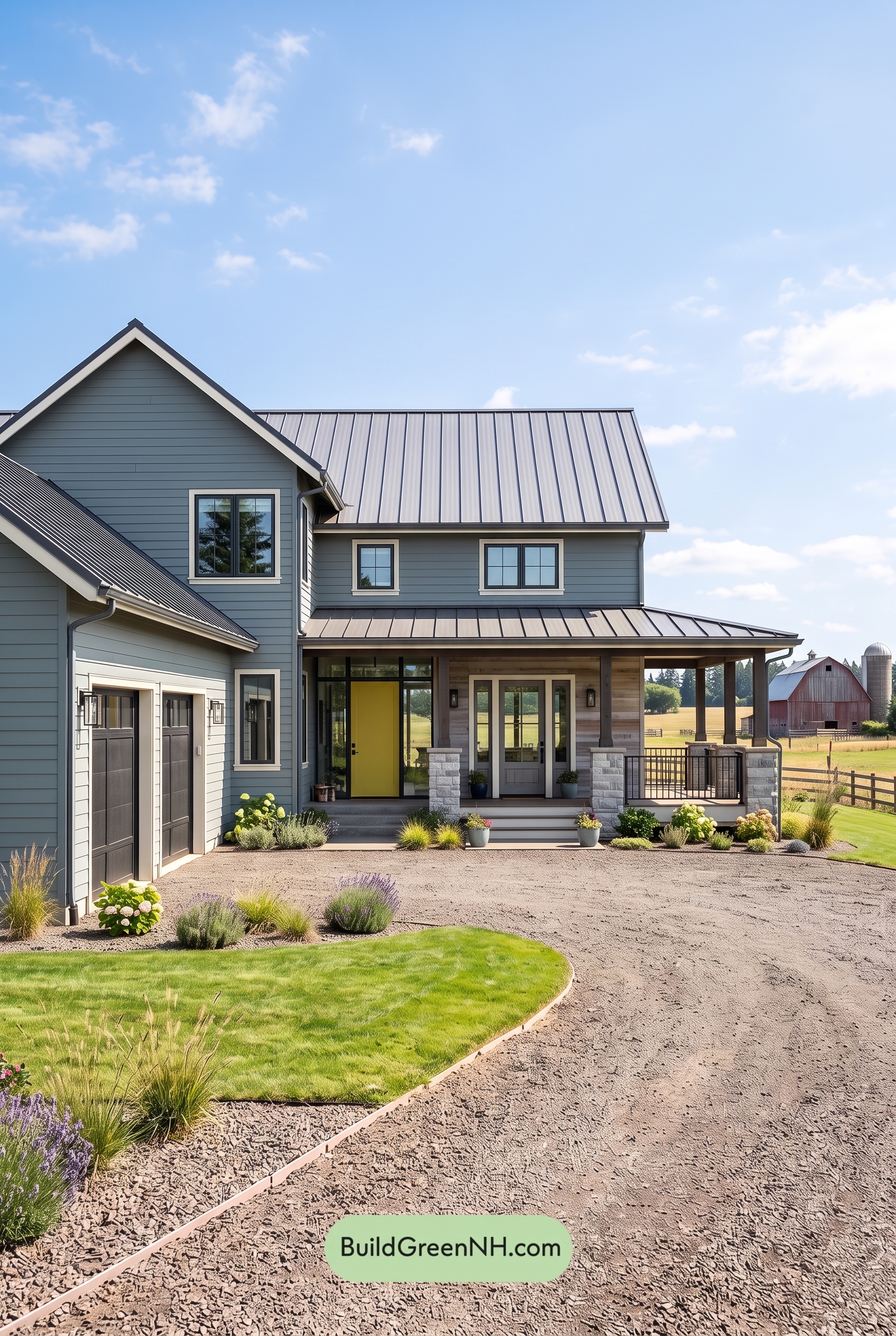 Blue House Front Door Color Scheme: Slate Citron
 Blue House Front Door Color Scheme: Mist Blue Haven
Table of Contents