Last updated on
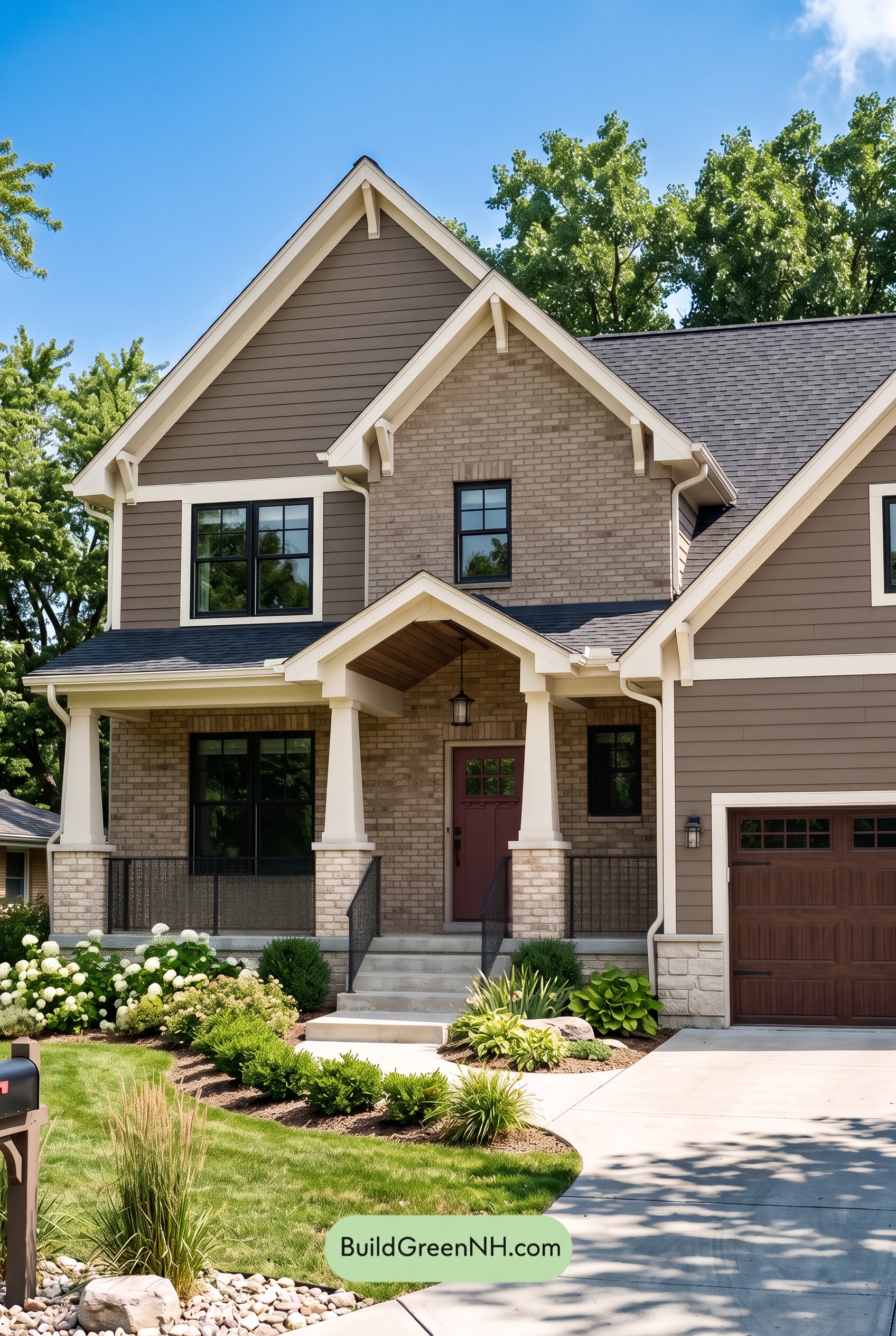

This layered blend of warm neutrals, dark definition, and rich wood-toned accents gives the home a polished presence that feels both welcoming and enduring.
A Warm, Layered Foundation
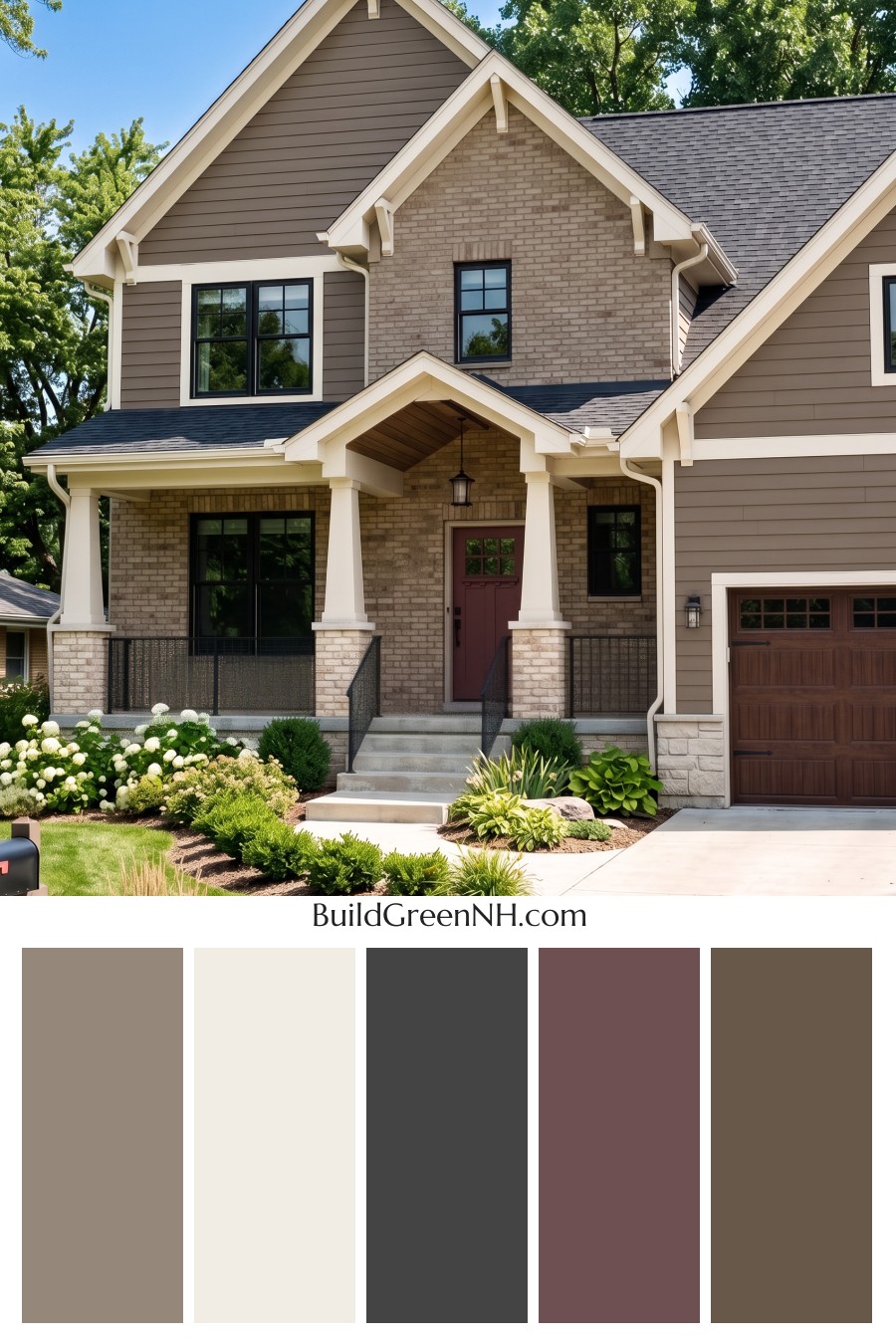
The exterior begins with soft beige siding and a coordinating mix of warm beige masonry, creating a relaxed, cohesive base across the façade. Slight variations in depth between these neutral surfaces keep the large elevation from feeling flat, while the horizontal siding adds a clean, tailored rhythm beneath the prominent gables.
The result is grounded and inviting: warm enough to feel at home among the landscaping, yet refined enough to complement the home’s substantial architectural details.
Creamy Trim That Highlights the Architecture
A light creamy beige trim outlines the rooflines, gables, windows, and porch structure with crisp clarity. This brighter shade lifts the deeper neutral siding and masonry, drawing attention to the layered peaks, decorative brackets, and substantial porch columns.
Using the same light trim on the columns and gable details creates continuity from top to bottom. It also gives the front entry a sense of structure and ceremony without making the exterior feel overly formal.
Dark Framing for Contrast
Deep charcoal-gray window frames provide the scheme’s sharpest contrast. Their dark finish gives each window a strong, graphic edge against the lighter siding, trim, and brickwork, helping the tall windows read as intentional architectural features rather than simply openings in the wall.
The matching dark gray railings repeat that definition at the porch and steps. This small but effective connection ties the lower level to the window details above and lends the home a subtly modern finish.
Rich Brown Details at the Entry
The front door introduces a deep brown shade with a warm, reddish undertone, creating a natural focal point beneath the porch. It stands out from the surrounding neutrals while still belonging to the home’s earthy palette.
A similarly rich brown garage door balances the entry color on the opposite side of the façade. Together, these wood-inspired tones add warmth and weight, preventing the creamy trim and beige walls from feeling too pale or uniform.
A Roof Color That Grounds the Design
The medium-to-deep gray roof anchors the composition and works beautifully with the charcoal-gray window frames and railings. Its cool, shadowy presence provides contrast to the warm beige exterior while emphasizing the home’s dramatic roofline.
Overall, this is a carefully balanced color scheme: warm beige tones create comfort, creamy trim adds brightness, dark gray accents bring definition, and deep brown details deliver a welcoming finish. It feels classic, substantial, and effortlessly connected to the surrounding greenery.
Next, see how this color scheme looks under different lighting simulations throughout the day.
Overcast
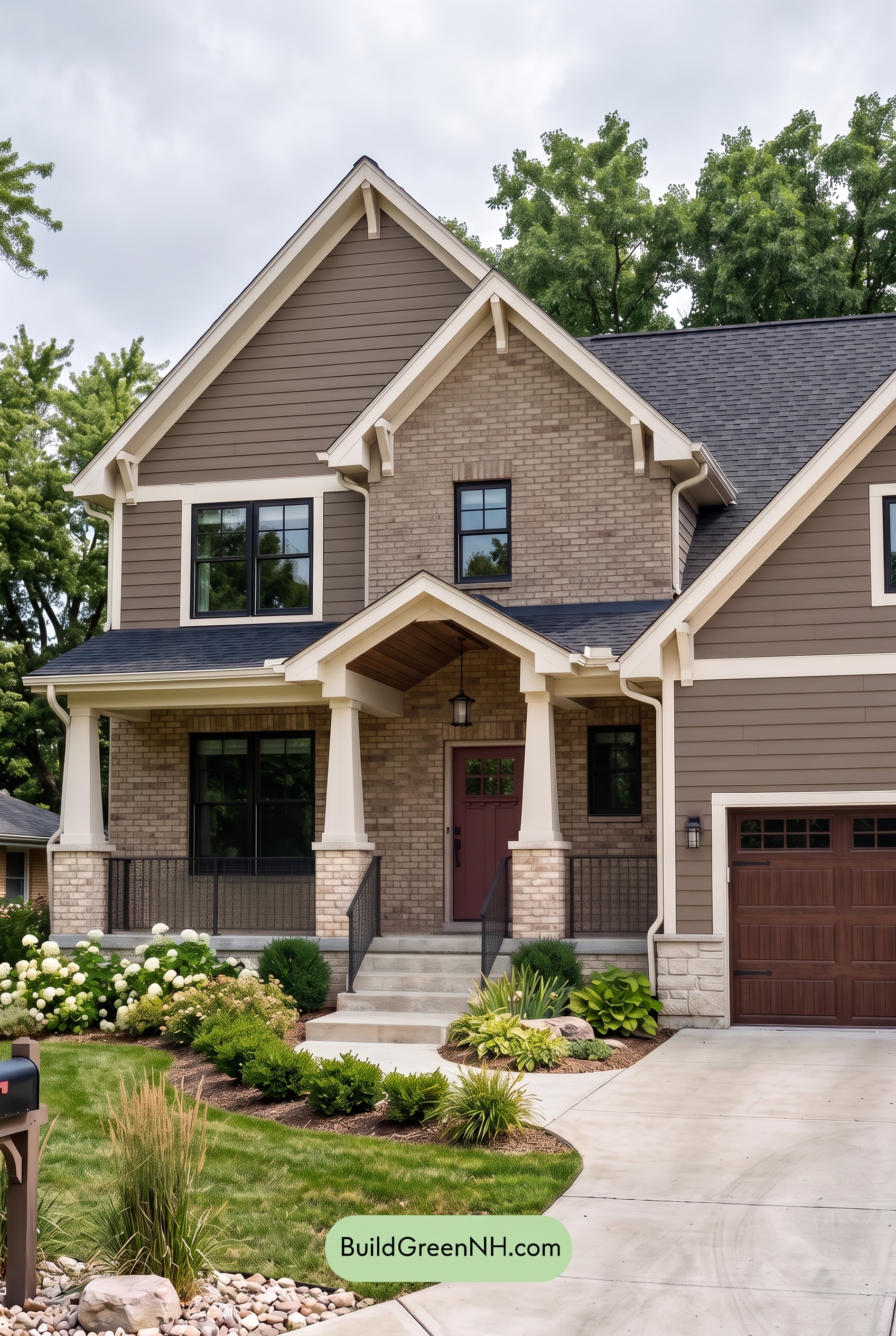
Under overcast skies, the beige wall and trim shades appear softer and slightly less saturated than they do in neutral daylight, with their warmth becoming more muted and refined. The even, diffused light reduces sharp highlights across the siding and brick, allowing the home’s layered neutral palette to feel calm, cohesive, and quietly welcoming.
The deeper gray window frames and railings gain a little more visual weight in the softened light, while the brown front and garage doors read richer and more grounded. With fewer crisp shadows beneath the gables and porch, contrast becomes gentler, creating a polished, restful mood rather than the brighter, more defined look seen in neutral daylight.
Golden Hour
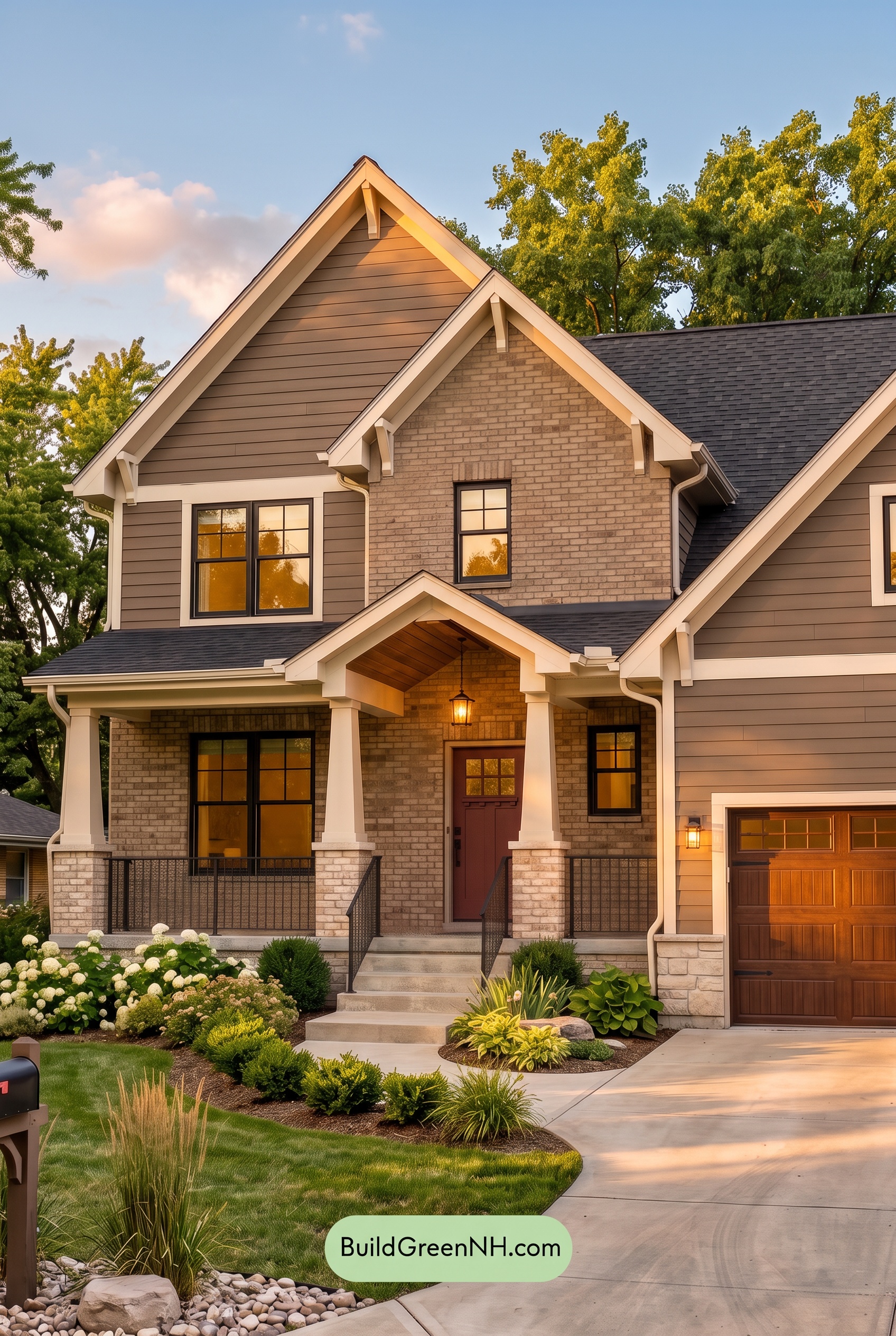
Under Golden Hour, the beige exterior shifts from its balanced neutral-daylight appearance to a richer, softly glowing warmth. Sunlit walls and trim take on a more golden cast and appear slightly more saturated, while the brown door and garage door gain depth and an inviting, woodsy warmth.
As the low light stretches shadows across the siding, brick, and porch, the gray window frames and railings read deeper and more defined, creating stronger contrast against the illuminated warm neutrals. The result is a layered, welcoming mood—cozier and more dramatic than the cleaner, flatter look seen in neutral daylight.
Shade
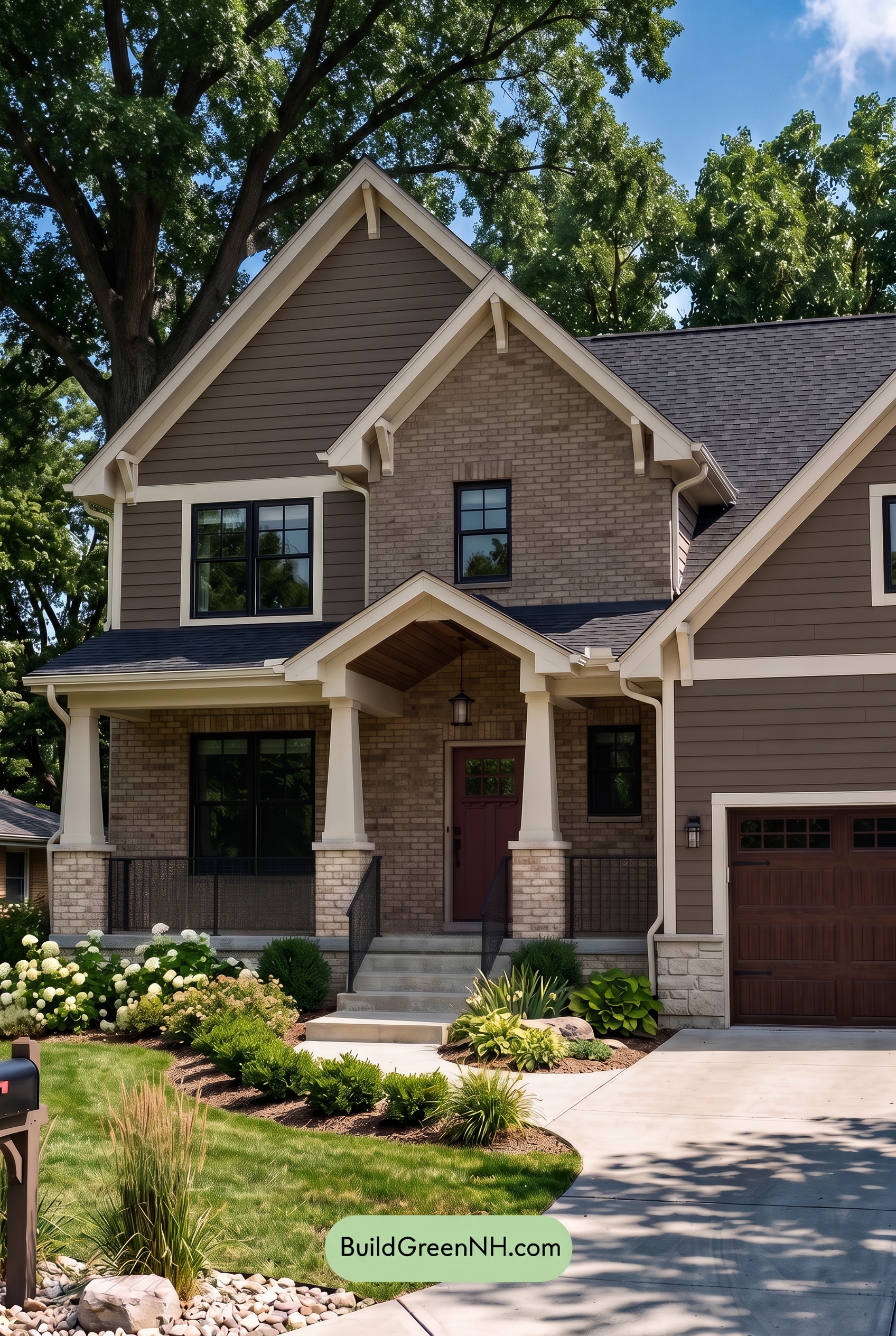
In shade, the beige exterior softens and becomes more muted than it appears in neutral daylight, with its warm undertones reading quieter and more refined. The brown door and garage take on a deeper, richer presence, while the gray window frames and railings look slightly cooler against the subdued walls.
Tree-filtered shadows lower overall saturation and create stronger light-to-dark contrast across the siding, brick, and architectural trim. This shifting pattern gives the facade a calm, layered mood: bright beige details still lift the rooflines, while the darker brown and gray accents provide crisp definition without feeling harsh.
Nighttime
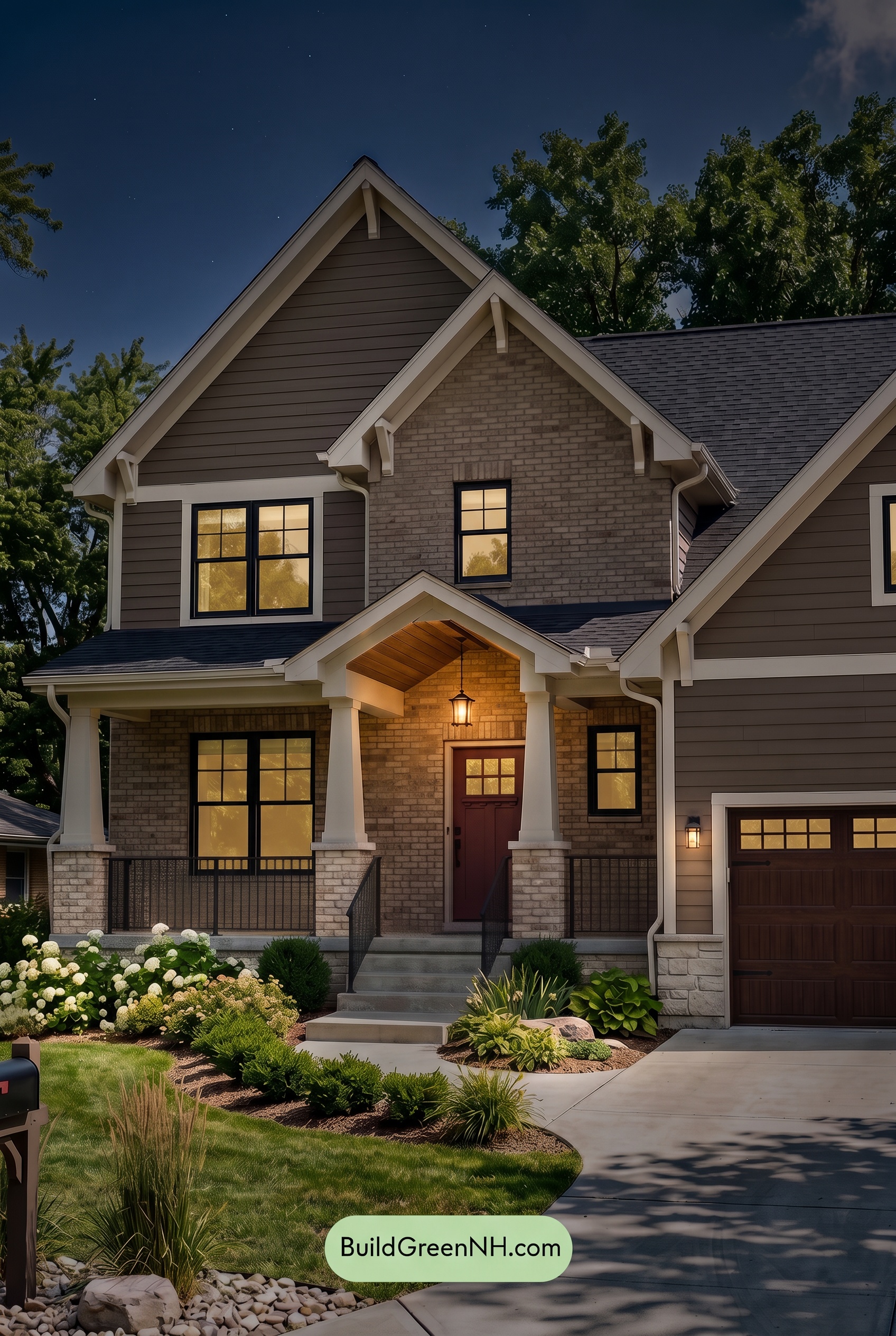
At night, the beige exterior shades take on a softer, more muted character than they show in neutral daylight. Warm porch and window lighting draws out their golden undertones near the entry, while the upper walls and recessed areas settle into deeper, quieter shadows. This shift lowers overall saturation and gives the façade a layered, inviting glow.
The brown door and garage shades appear richer and more dramatic against the illuminated beige details, while the gray window frames and railings recede into crisp, near-black outlines. The stronger light-to-shadow contrast sharpens the architecture and creates a calm, welcoming mood with a touch of evening drama.
Pin these for later:
Want More?
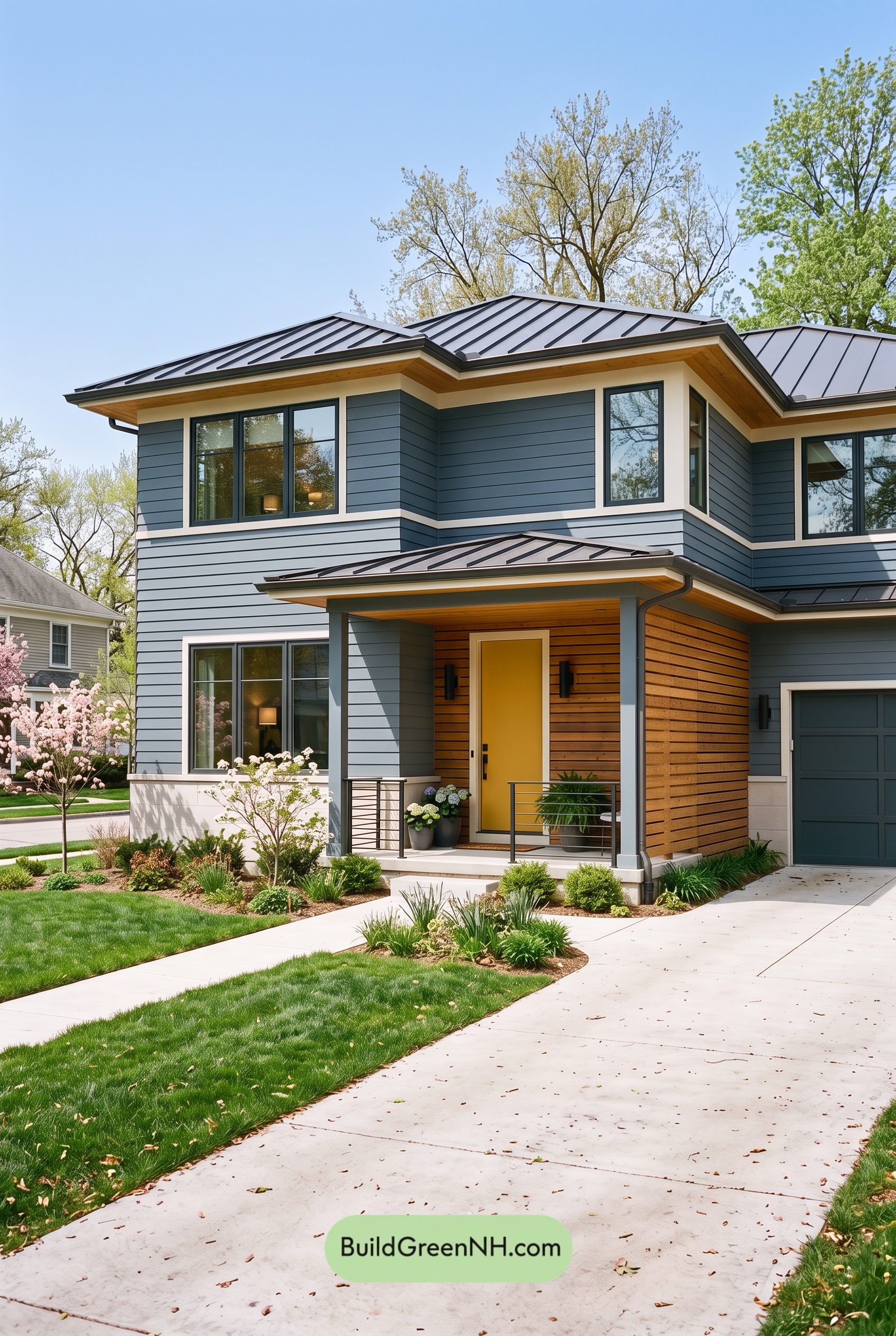 Blue House Front Door Color Scheme: Harbor Saffron
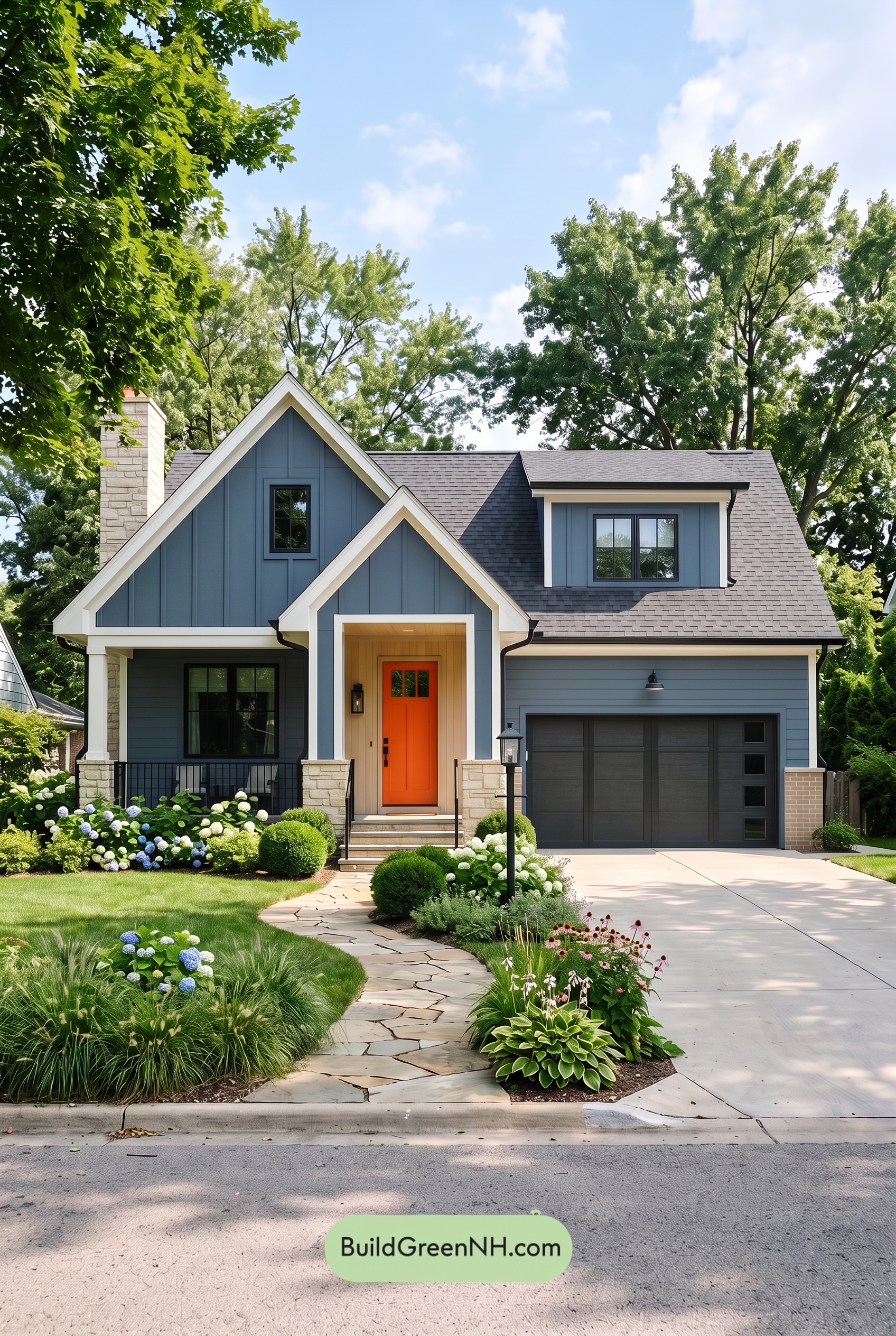 Blue House Front Door Color Scheme: Cobalt Persimmon
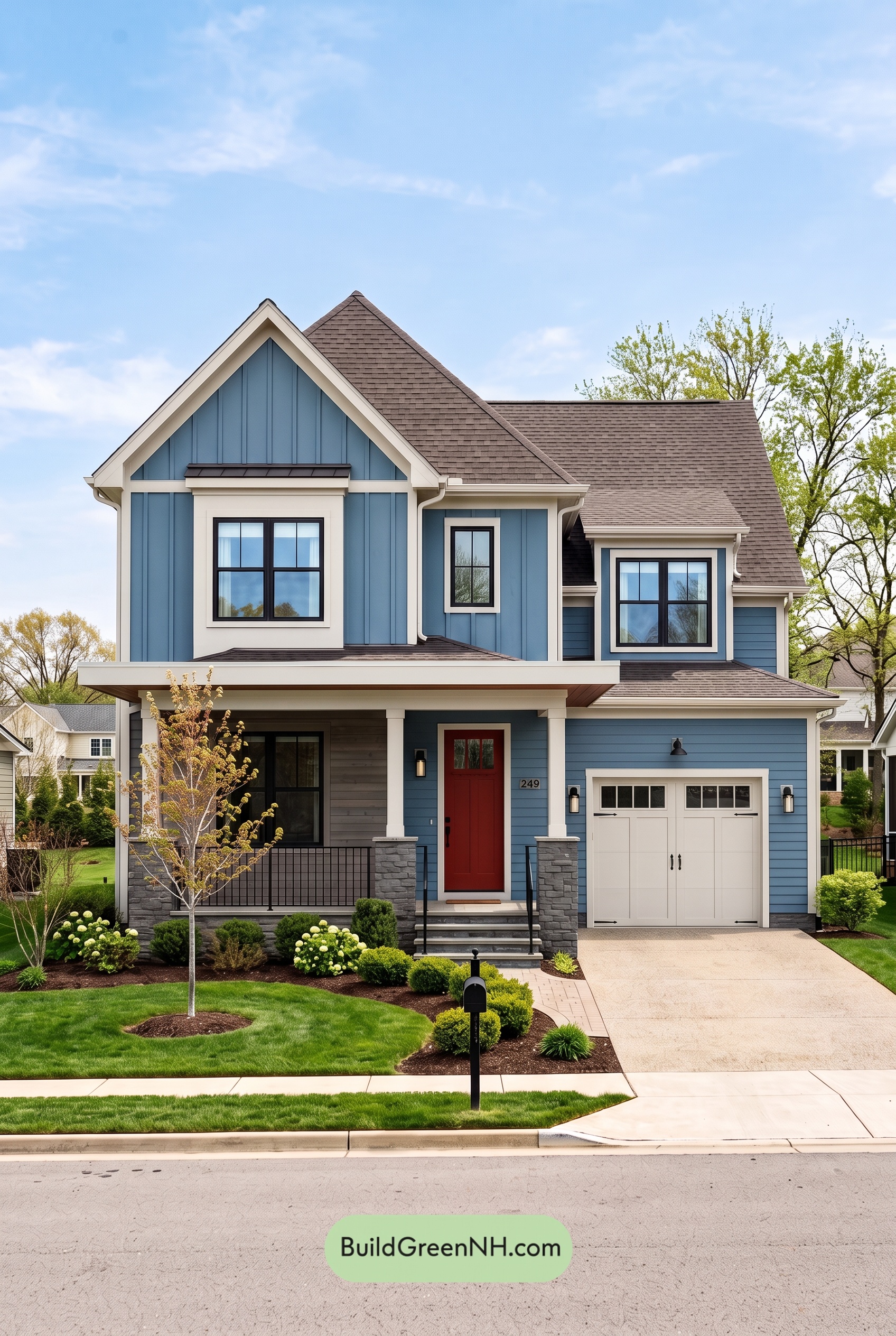 Blue House Front Door Color Scheme: Denim Poppy
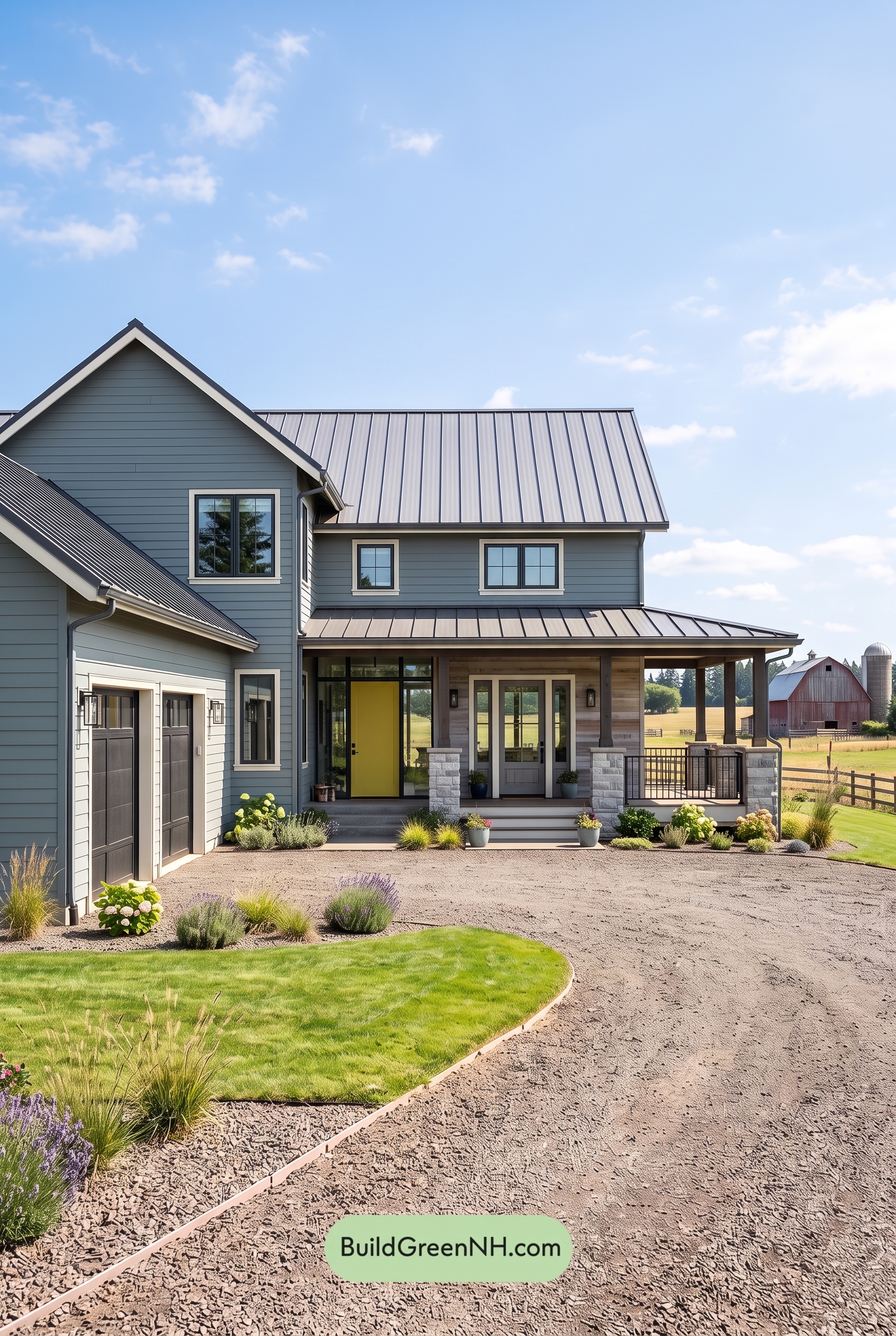 Blue House Front Door Color Scheme: Slate Citron
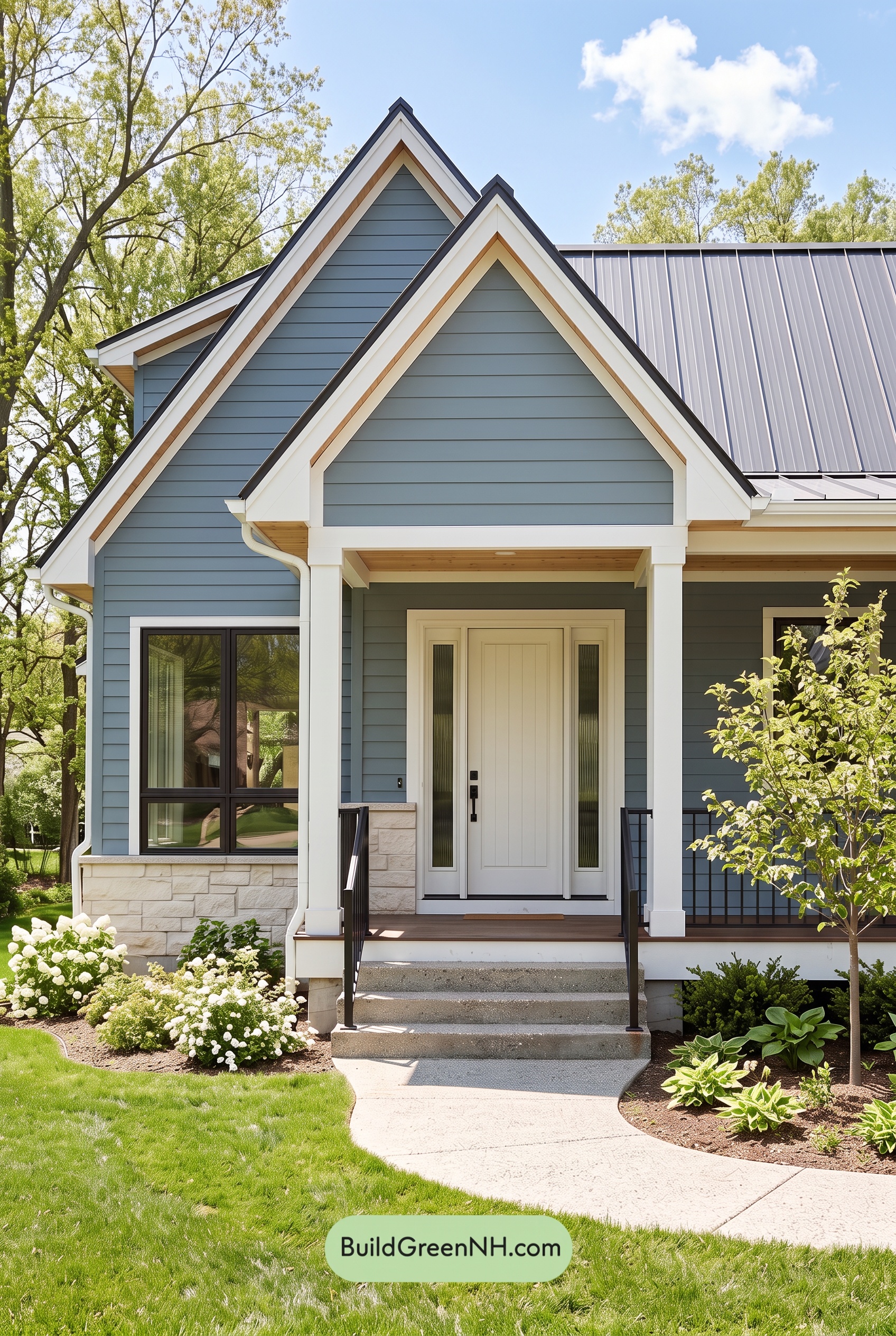 Blue House Front Door Color Scheme: Mist Blue Haven
Table of Contents