Last updated on
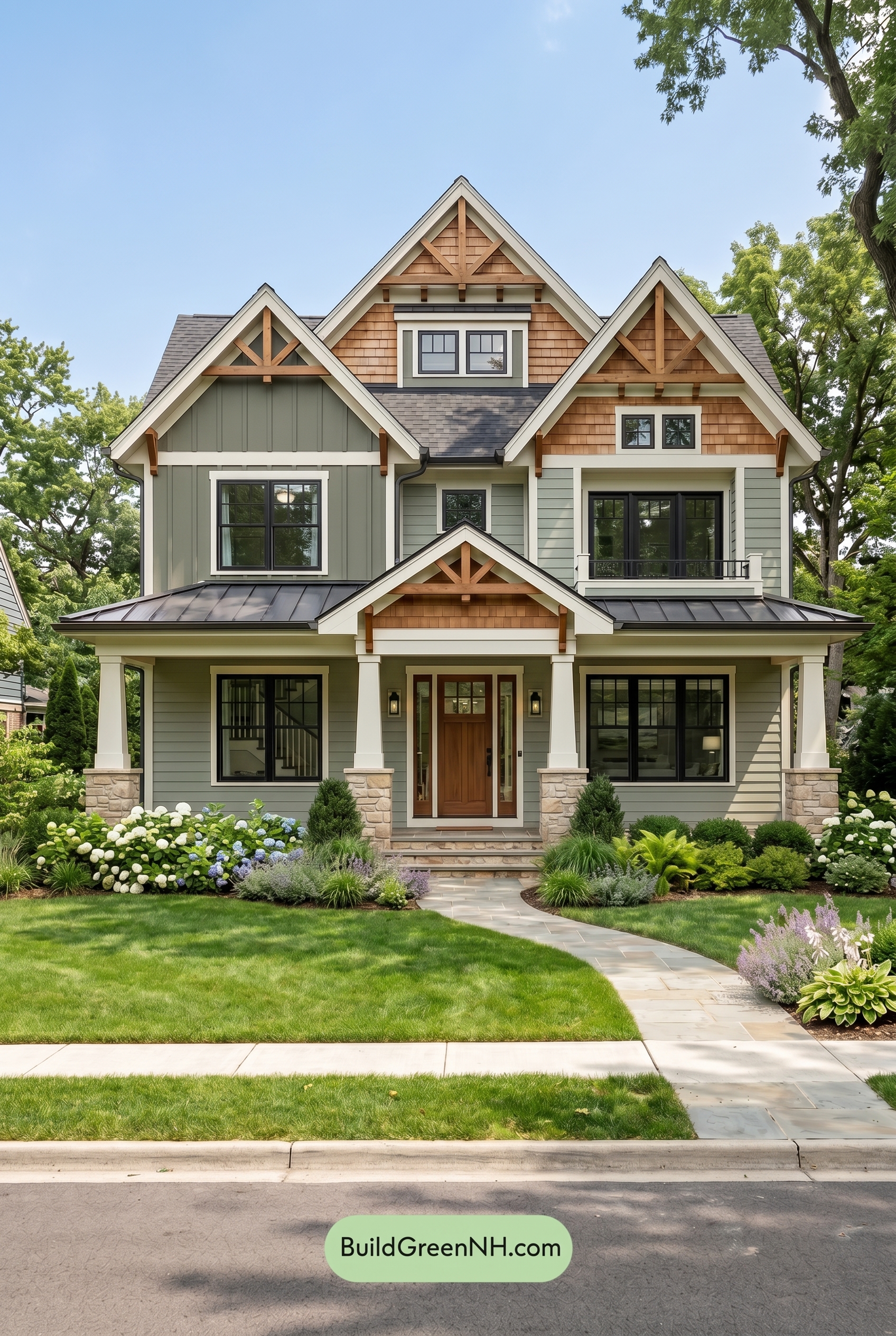

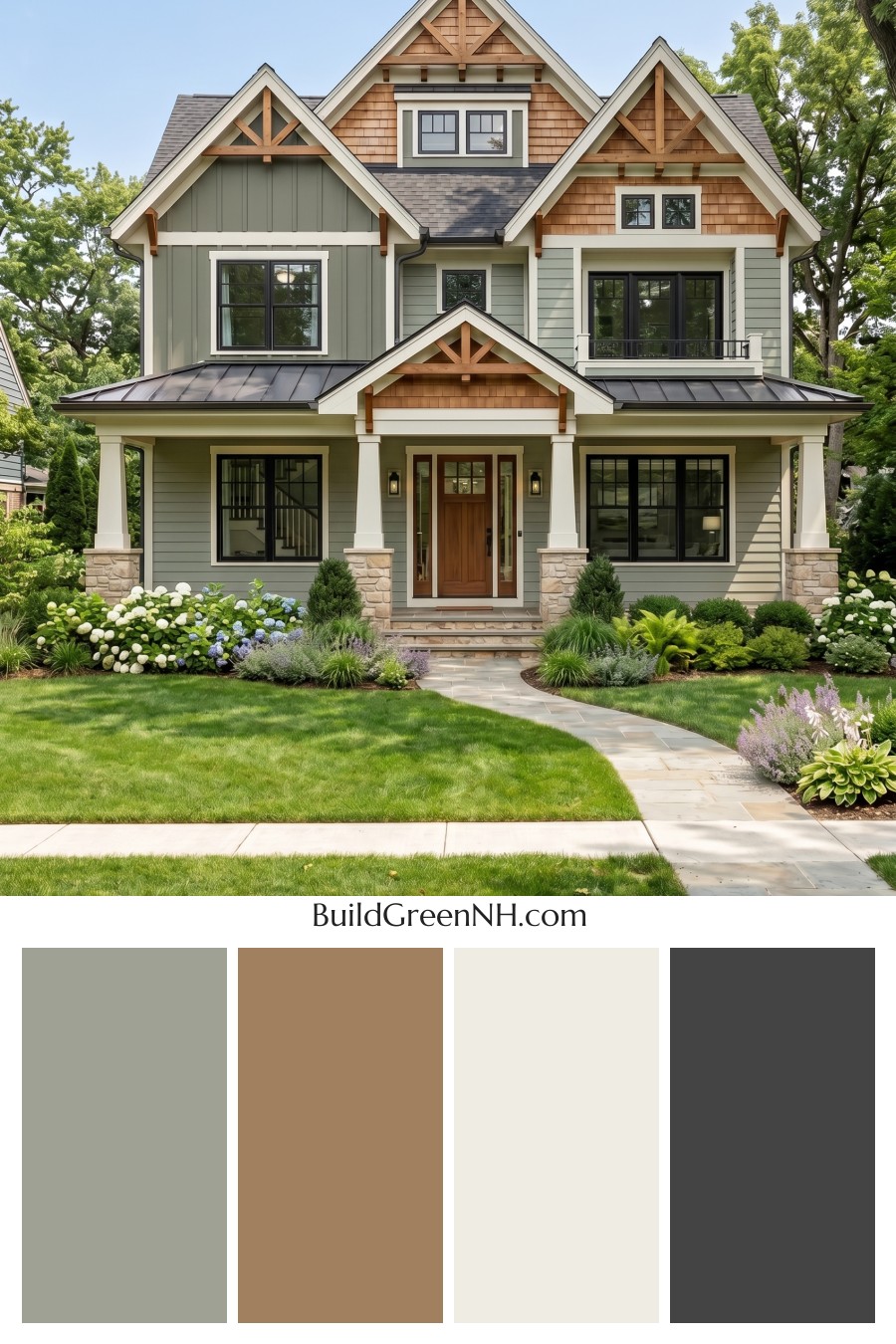
This exterior color scheme feels polished yet welcoming, balancing soft gray siding, warm brown details, and crisp white trim with just the right amount of contrast.
A Layered Gray Foundation
The main body of the house is wrapped in a muted gray shade that gives the exterior a calm, grounded presence. It has enough depth to feel substantial, but it stays soft enough to let the architectural details shine. Across the lower siding and larger wall areas, this gray family color creates a steady backdrop that feels classic, relaxed, and very livable.
What makes this gray especially appealing is how well it works with the surrounding landscape. Against the green lawn, leafy trees, and layered plantings, the siding feels natural rather than stark. It gives the home a refined look without making it feel too formal.
Warm Brown Gables Add Character
The upper wall sections introduce a warm brown shade that instantly adds texture and charm. Used in the gables, this brown family color brings a handcrafted quality to the exterior, especially where it appears alongside the decorative wood-style accents. It gives the house a cozy, lodge-inspired touch while still feeling crisp and upscale.
This pairing of gray and brown is one of the strongest parts of the palette. The gray keeps everything calm and composed, while the brown adds warmth and personality. Together, they create a balanced mix of cool and warm tones, which helps the home feel both fresh and inviting.
Crisp White Trim Keeps Everything Bright
The trim is finished in a clean white shade, and it plays a huge role in defining the home’s shape. Around the gables, windows, porch, and rooflines, the white trim outlines the architecture with sharp, elegant contrast. It makes the layered roof peaks feel more intentional and gives the facade a bright, finished edge.
The white columns on the porch also help lighten the lower portion of the house. They frame the entry beautifully and create a sense of structure. Because the home has several strong rooflines and detailed upper sections, this white family shade keeps the overall look from feeling too heavy.
Dark Gray Accents Bring Definition
The window frames and railings lean into the gray family as well, but in a much deeper shade. This darker gray creates clean definition against the softer siding and white trim. It gives the windows a bold, modern outline without overwhelming the more traditional character of the home.
The roof continues that grounded effect with a deep gray tone. It visually anchors the house and ties in beautifully with the darker window frames and railings. Because the roof is substantial, choosing a gray shade here helps the entire palette feel cohesive from top to bottom.
A Warm Brown Front Door Welcomes You In
The front door repeats the brown family in a richer, warmer shade, which is a smart choice. It connects to the gable accents above while giving the entry a clear focal point. The result is welcoming but not loud.
Set between the white trim and soft gray siding, the door feels naturally highlighted. It adds warmth right where the home needs it most: at the entry. This is the kind of detail that makes a house feel approachable before anyone even steps onto the porch.
Why the Palette Works So Well
This exterior succeeds because each color has a clear role. The soft gray siding provides calm coverage. The warm brown upper sections add texture and character. The white trim and columns brighten the architecture. The darker gray window frames, railings, and roof bring contrast and structure.
Nothing feels random. Every shade relates to another part of the exterior, which creates a pleasing sense of rhythm. The brown details echo the front door, the dark gray accents connect with the roof, and the white trim ties the many peaks and porch elements together.
The Overall Mood
The mood is inviting, refined, and quietly rustic. There is a strong sense of craftsmanship here, thanks to the warm brown gables and decorative accents, but the gray siding and clean white trim keep the look polished. It feels like a home designed to be admired from the curb and enjoyed every day.
This is a beautiful example of how a balanced exterior palette can feel both timeless and current. The colors are understated, but the contrast is thoughtful. The result is a home that feels warm, elegant, and perfectly at home in its leafy setting.
Next, see how this color scheme looks under different lighting simulations throughout the day.
Overcast
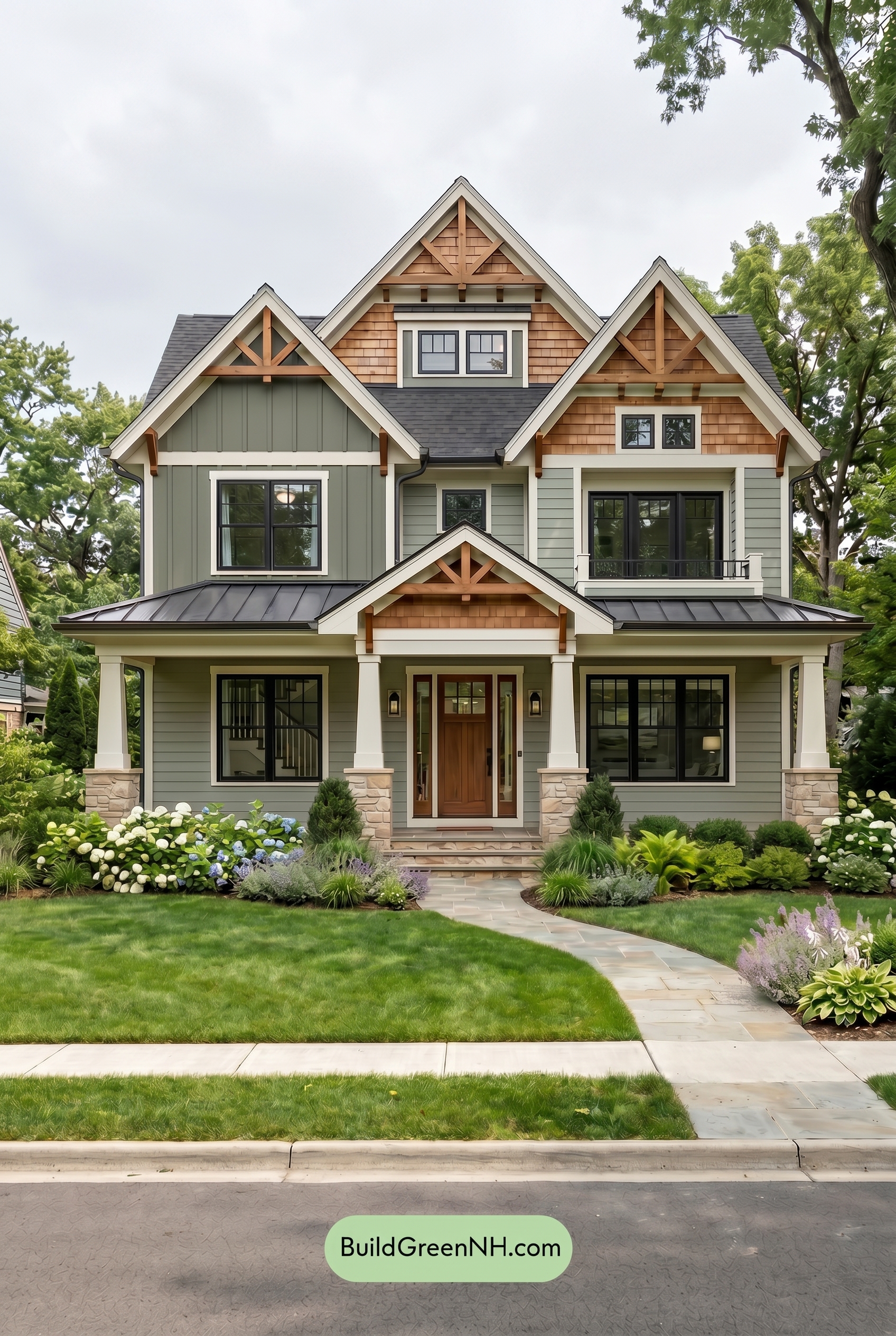
Under overcast light, the gray siding looks more muted and slightly deeper than it would in neutral daylight, with its saturation dialed down and its cooler side brought forward. The white trim and columns lose some of their crisp brightness, becoming softer and less stark against the main walls.
The brown gables and front door appear less golden and more subdued, trading sunny warmth for a calm, grounded richness. With shadows softened and contrast lowered, the dark gray frames and railings feel gentler, giving the whole exterior a quieter, more relaxed mood.
Golden Hour
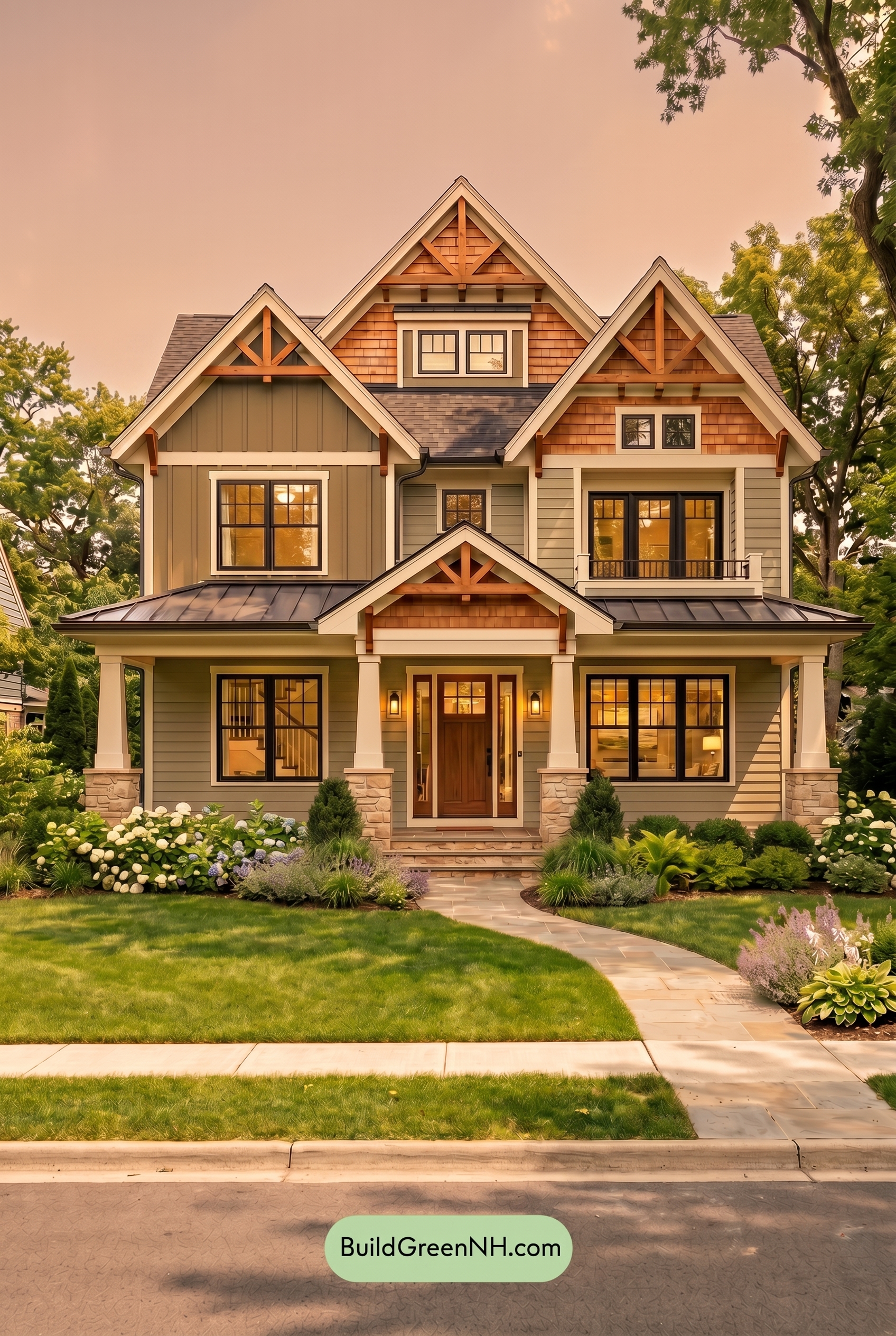
In neutral daylight, the gray family on the main walls would read cleaner and cooler, but Golden Hour wraps it in a soft, warm cast that makes the shade feel earthier and more relaxed. The brown family in the upper siding, beams, and door gains saturation, shifting richer and more honeyed, while the white family on the trim and columns feels creamier and gentler instead of crisp.
The low sun also stretches shadows under the gables, porch roof, and trim, deepening the darker gray accents and making the contrast feel more dramatic. Overall, Golden Hour gives the exterior a cozier, more welcoming mood, trading the clarity of neutral daylight for warmth, depth, and a softly glowing finish.
Shade
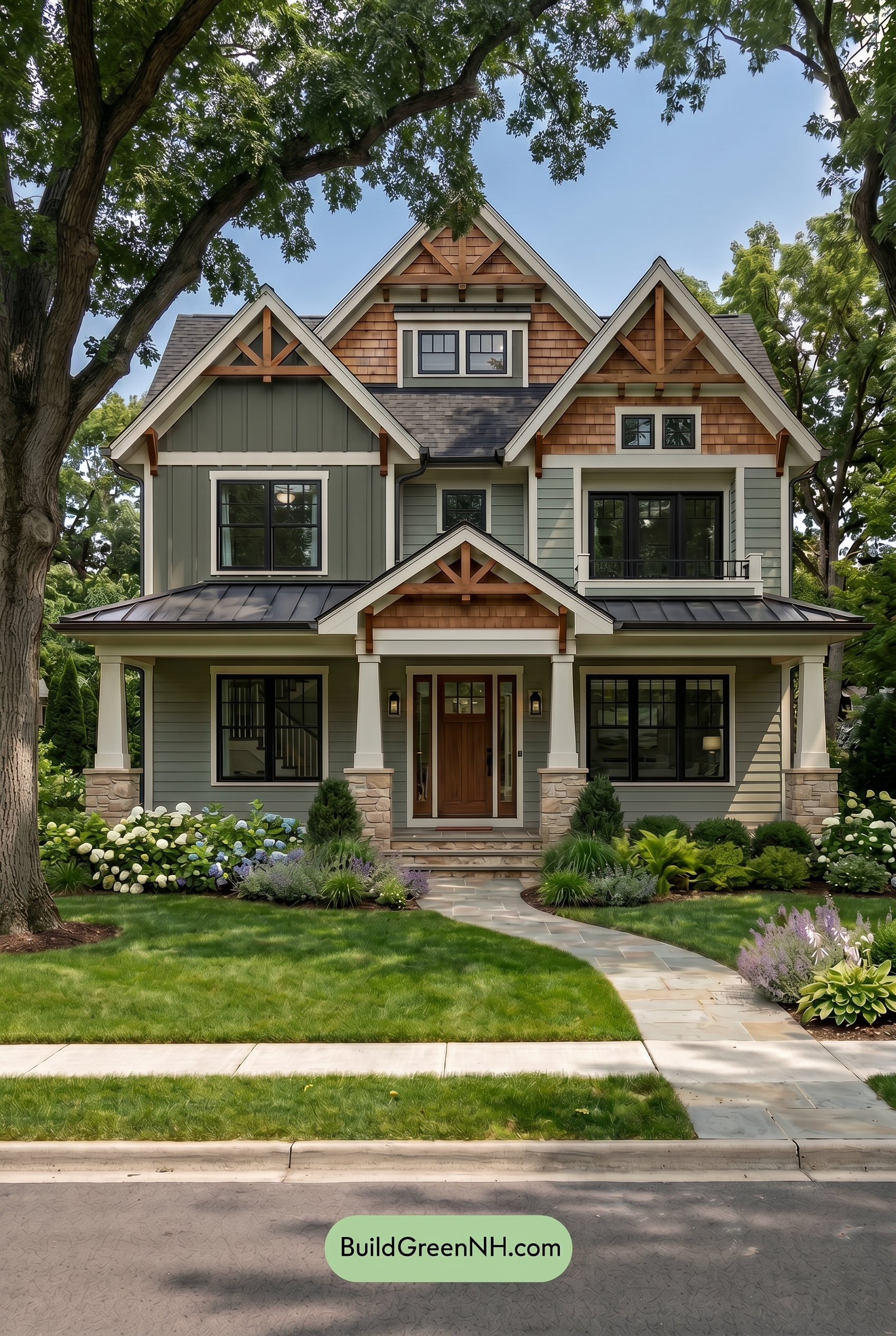
In shade, the gray family on the main walls reads deeper and slightly cooler than it would in neutral daylight, with lower saturation and a softer, more tucked-in feel. Shadows gather under the gables and porch roof, giving the siding more dimension while making the gray window frames and railings feel crisper by comparison.
The brown family on the upper walls and front door loses a bit of sunlit warmth in shade, shifting toward a richer, quieter tone. The white family trim and columns appear less bright than in neutral daylight, but their contrast still frames the house beautifully, creating a calm, sheltered mood with a polished layered look.
Nighttime
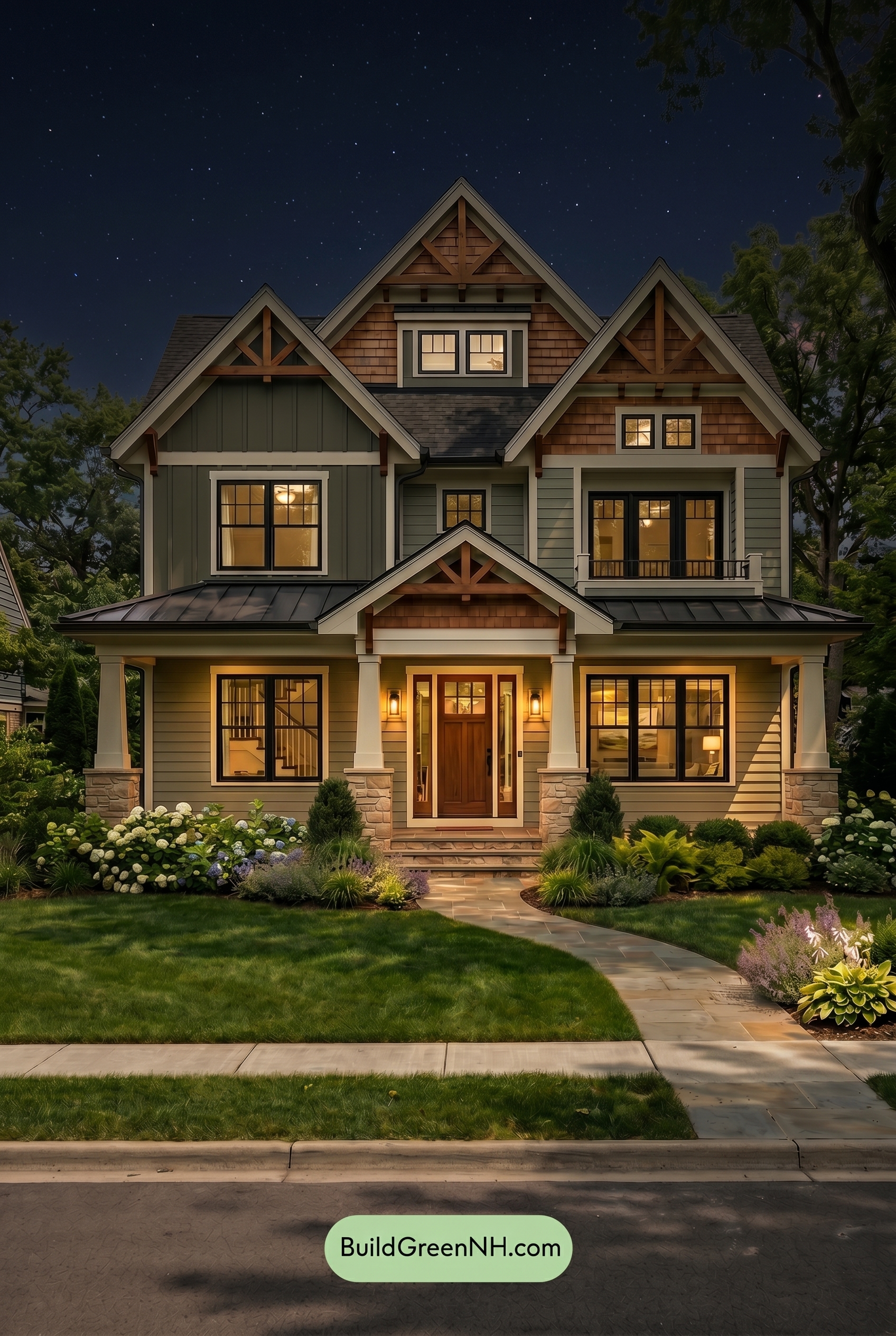
At night, the gray family on the main walls appears deeper and more saturated than it would in neutral daylight, with shadows giving the siding a richer, quieter presence. The white family trim and columns catch the available light, creating sharper contrast along the rooflines, windows, and porch details.
The brown family on the upper walls and front door feels warmer under the glow from the windows and exterior fixtures, shifting from earthy and balanced in daylight to cozy and inviting after dark. Overall, nighttime lighting adds drama, softens some warm neutrals, and gives the whole exterior a more intimate, welcoming mood.
Pin these for later
Want More?
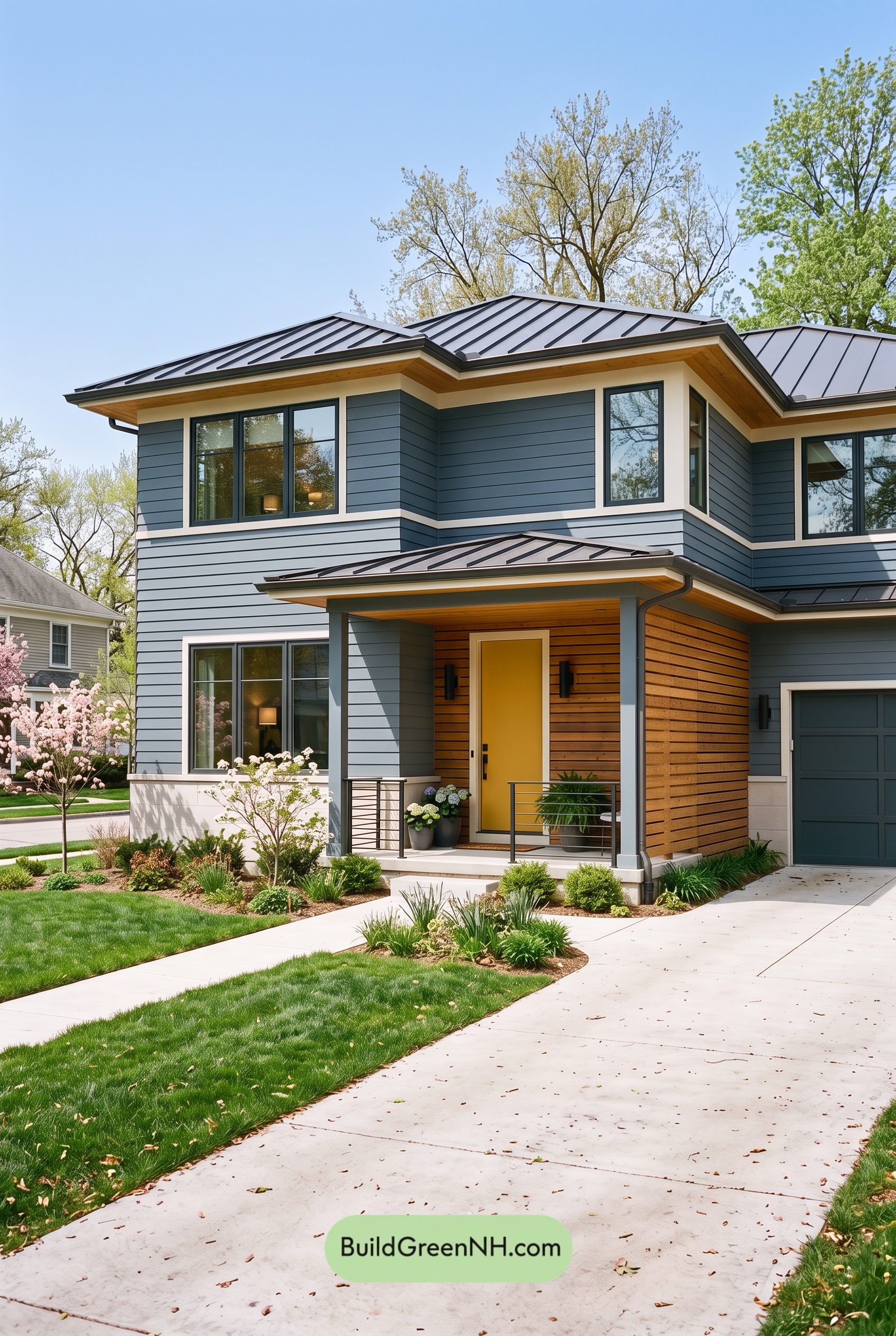 Blue House Front Door Color Scheme: Harbor Saffron
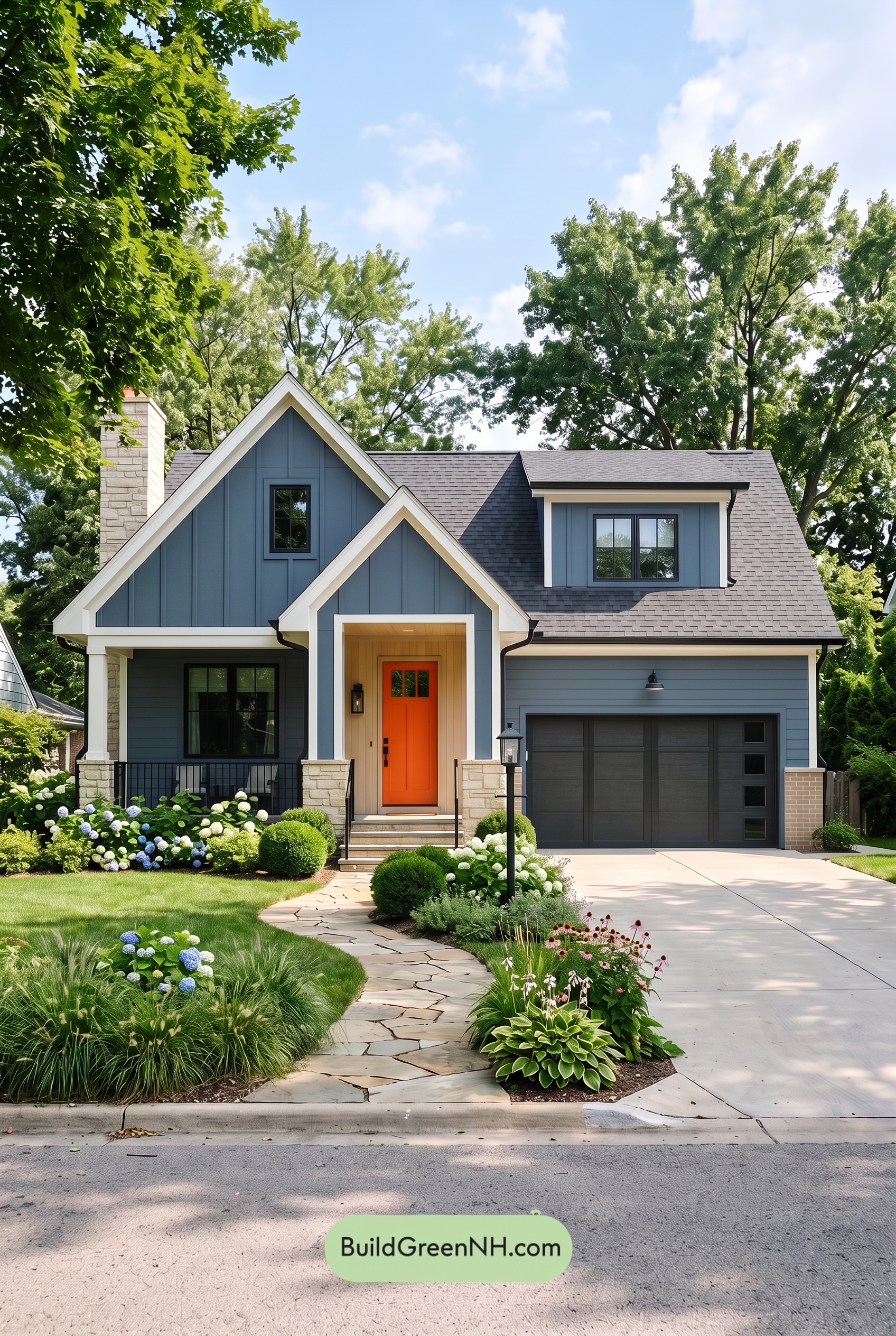 Blue House Front Door Color Scheme: Cobalt Persimmon
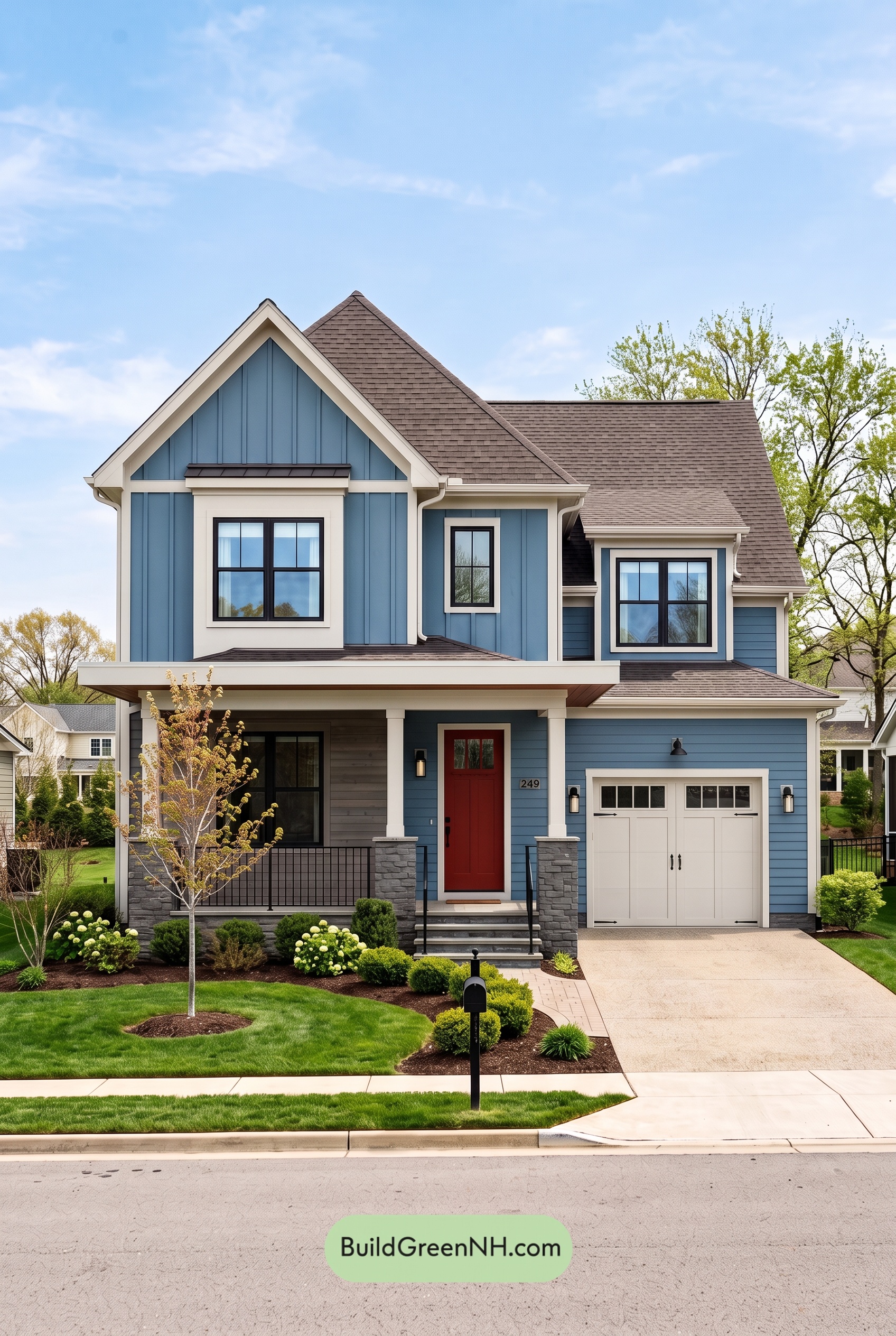 Blue House Front Door Color Scheme: Denim Poppy
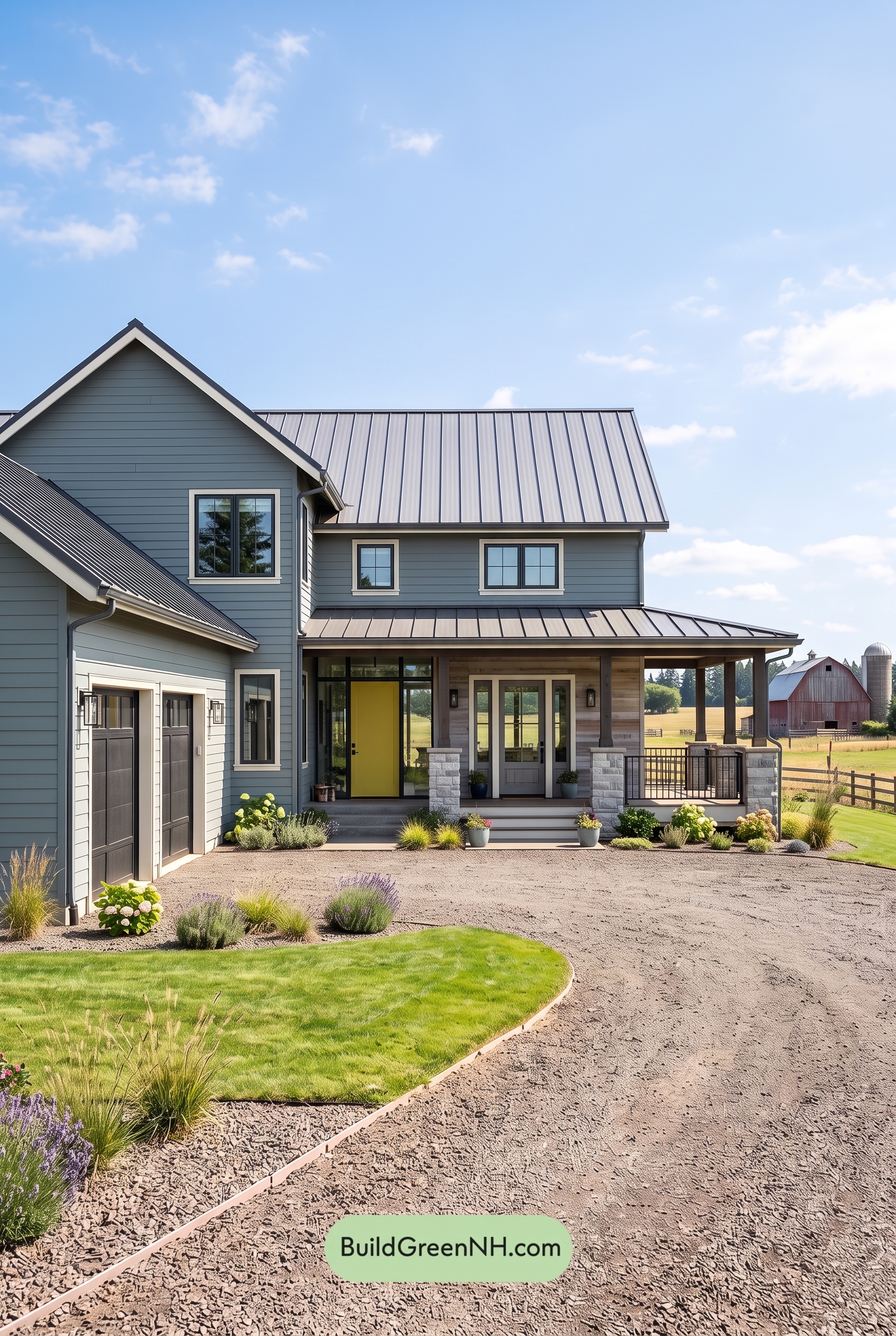 Blue House Front Door Color Scheme: Slate Citron
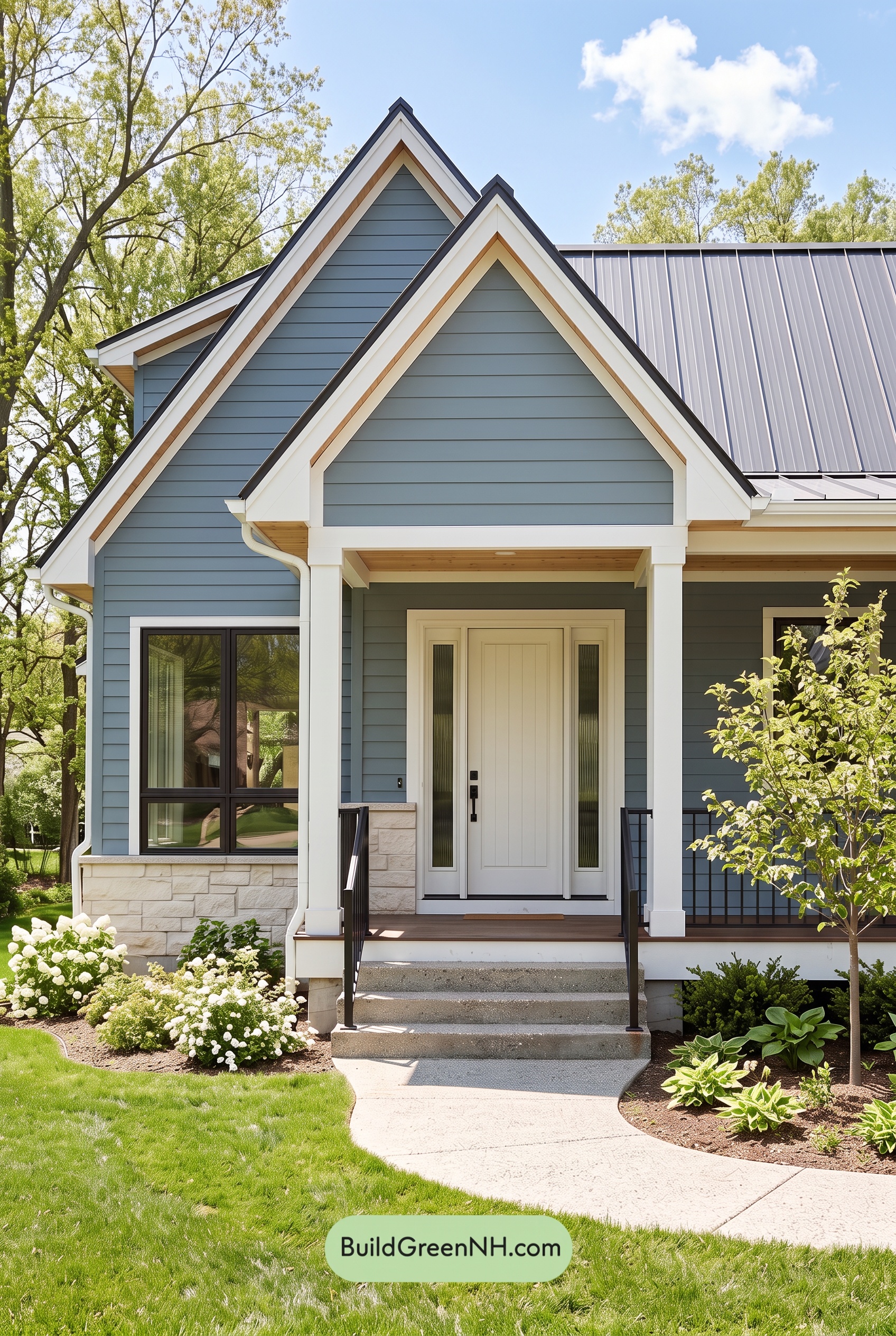 Blue House Front Door Color Scheme: Mist Blue Haven
Table of Contents