Last updated on
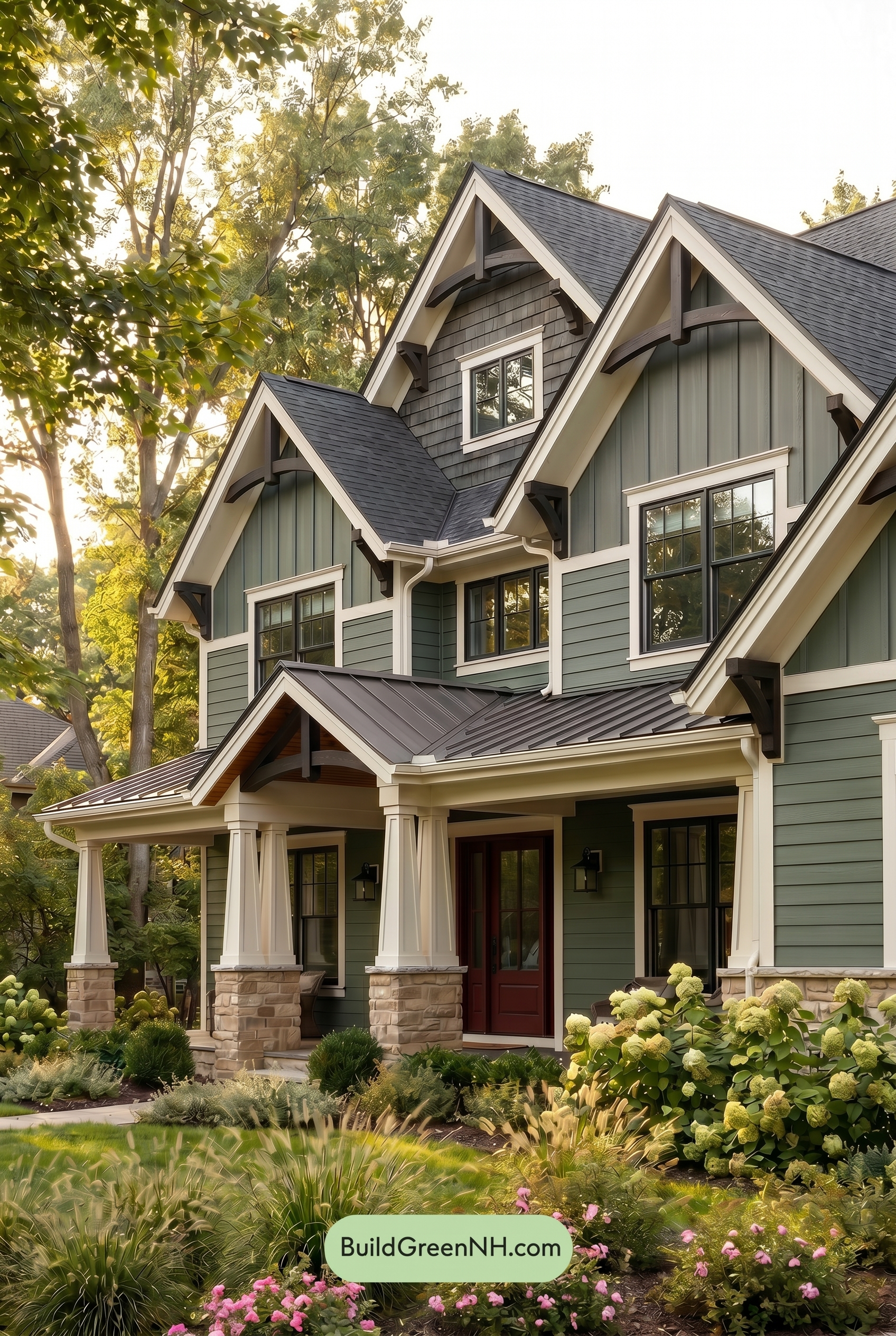

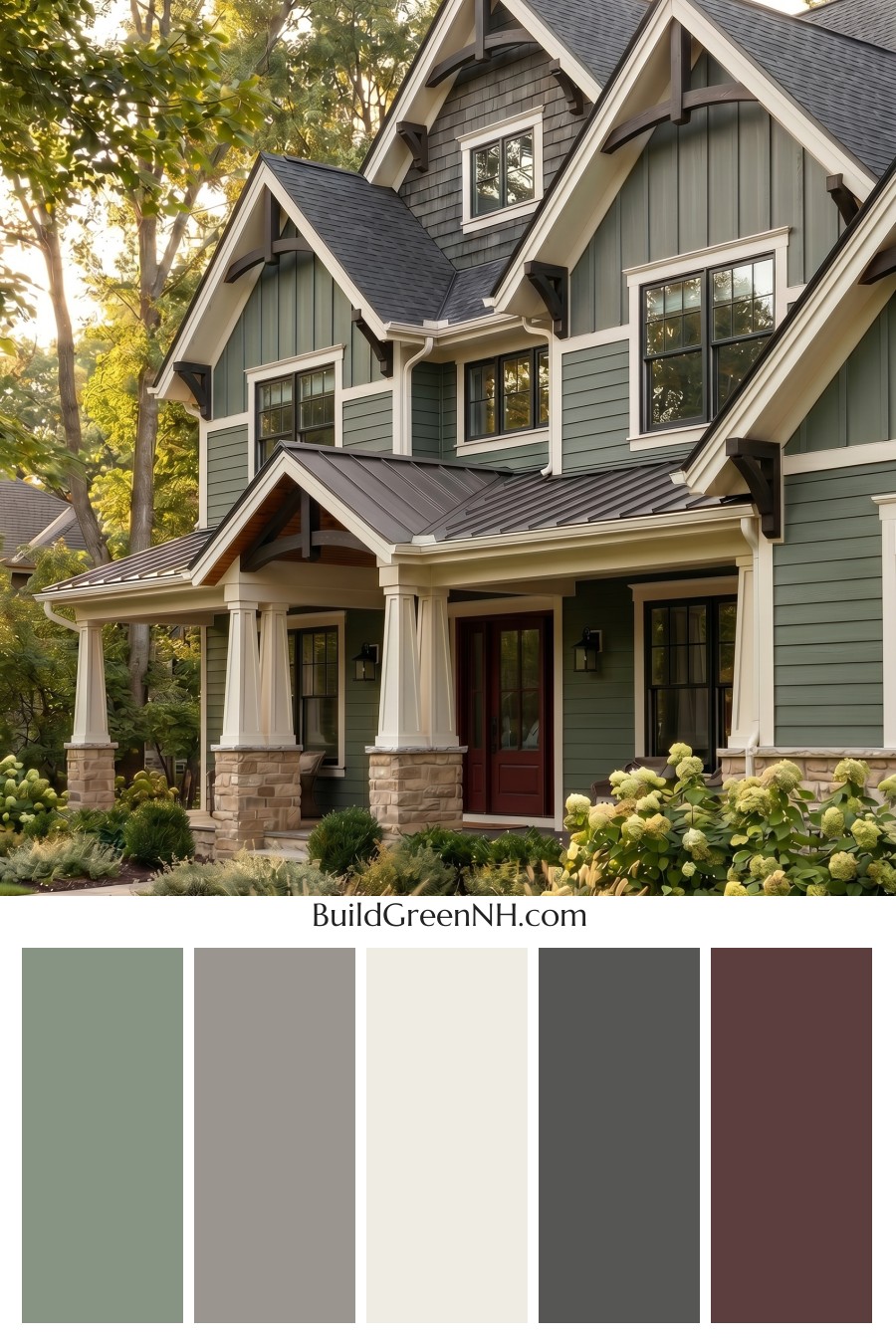
This layered gray-and-white exterior feels timeless, welcoming, and wonderfully grounded because every shade has a clear job.
A Soft Gray Foundation
The main siding uses a muted gray shade with a gentle, nature-friendly softness. It gives the home a calm presence without feeling flat or cold. Across the lower walls, the horizontal siding feels classic and relaxed, while the upper gables introduce a slightly different gray treatment that adds texture and depth.
That shift between siding styles keeps the exterior visually interesting. The gray family stays consistent, but the mix of surfaces lets light and shadow create subtle variation from one section of the house to the next.
Crisp White Trim That Defines the Architecture
The white trim is one of the strongest features of this scheme. It outlines the steep gables, frames the windows, highlights the porch, and gives the entire home a clean, polished edge. Against the softer gray siding, this shade of white feels bright but not stark.
The white columns continue that fresh look at the entry, making the porch feel open and inviting. They also help balance the height of the home, pulling the eye from the roofline down to the welcoming front steps.
Gray Window Frames and Darker Accents
The window frames stay within the gray family, which creates a refined, coordinated look. Because they are deeper than the trim, they add definition without competing with the white details.
Darker accent pieces under the gables and along the roof supports bring a handsome contrast. These deeper brown-gray tones give the exterior a crafted feel and emphasize the home’s strong architectural lines.
A Warm Brown Front Door
The front door introduces a rich brown shade that warms up the cooler gray palette. It acts as a natural focal point, especially beneath the porch where the darker entry color feels cozy and grounded.
This touch of brown is important. It keeps the exterior from feeling too crisp or formal, adding a welcoming note that pairs beautifully with the surrounding stonework and landscape.
The Roof Completes the Look
The roof leans into a deep charcoal gray family, giving the home a strong cap and anchoring the lighter trim below. Its darker tone works especially well with the gray siding and the deeper accent brackets, creating a cohesive top-to-bottom palette.
The result is balanced and architectural. Nothing feels accidental. The gray siding softens the home, the white trim sharpens it, the dark accents add structure, and the brown door brings warmth right where it matters most.
Overall Mood
This color scheme feels calm, elegant, and tucked into its natural setting. It has the charm of a classic craftsman-inspired exterior, but the restrained gray-and-white palette gives it a fresh, updated quality.
It is a great example of how a neutral exterior can still feel full of personality. By layering soft gray shades, crisp white details, deeper gray accents, and a warm brown entry, the home feels both sophisticated and genuinely inviting.
Next, see how this color scheme looks under different lighting simulations throughout the day.
Overcast
Under overcast light, the gray shades on the main and upper walls lose a bit of saturation and warmth compared with neutral daylight, taking on a cooler, mistier cast. Soft cloud cover flattens harsh highlights, so the white trim and columns feel gentler and less bright, while the gray window frames blend more quietly into the facade.
Shadows become broader and softer, reducing the crisp contrast between siding, trim, and architectural details. The brown front door appears deeper and more subdued, adding a calm, grounded note; overall, the palette shifts from clean and defined to serene, muted, and slightly cozier.
Golden Hour
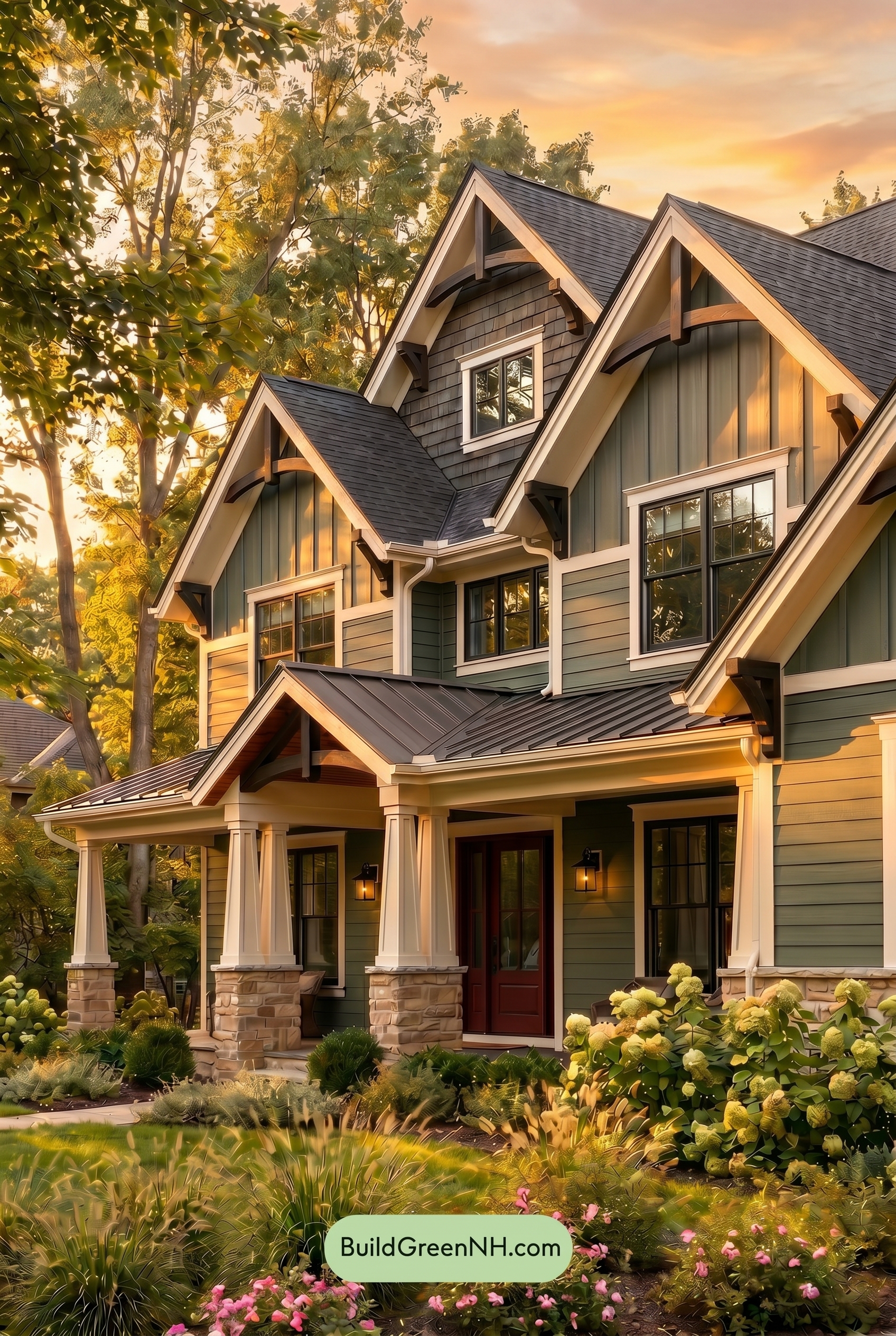
Compared with neutral daylight, Golden Hour gives the gray siding and upper walls a warmer, more saturated cast, softening their cooler edges into an earthier gray shade. The white trim and columns pick up a gentle creamy glow, so the architectural lines feel less crisp and more welcoming.
Longer shadows under the gables, porch roof, and window frames deepen the darker gray details, adding contrast against the bright white family accents. The brown front door feels richer and warmer, helping the whole exterior shift from clean and balanced in daylight to cozy, dimensional, and quietly dramatic.
Shade
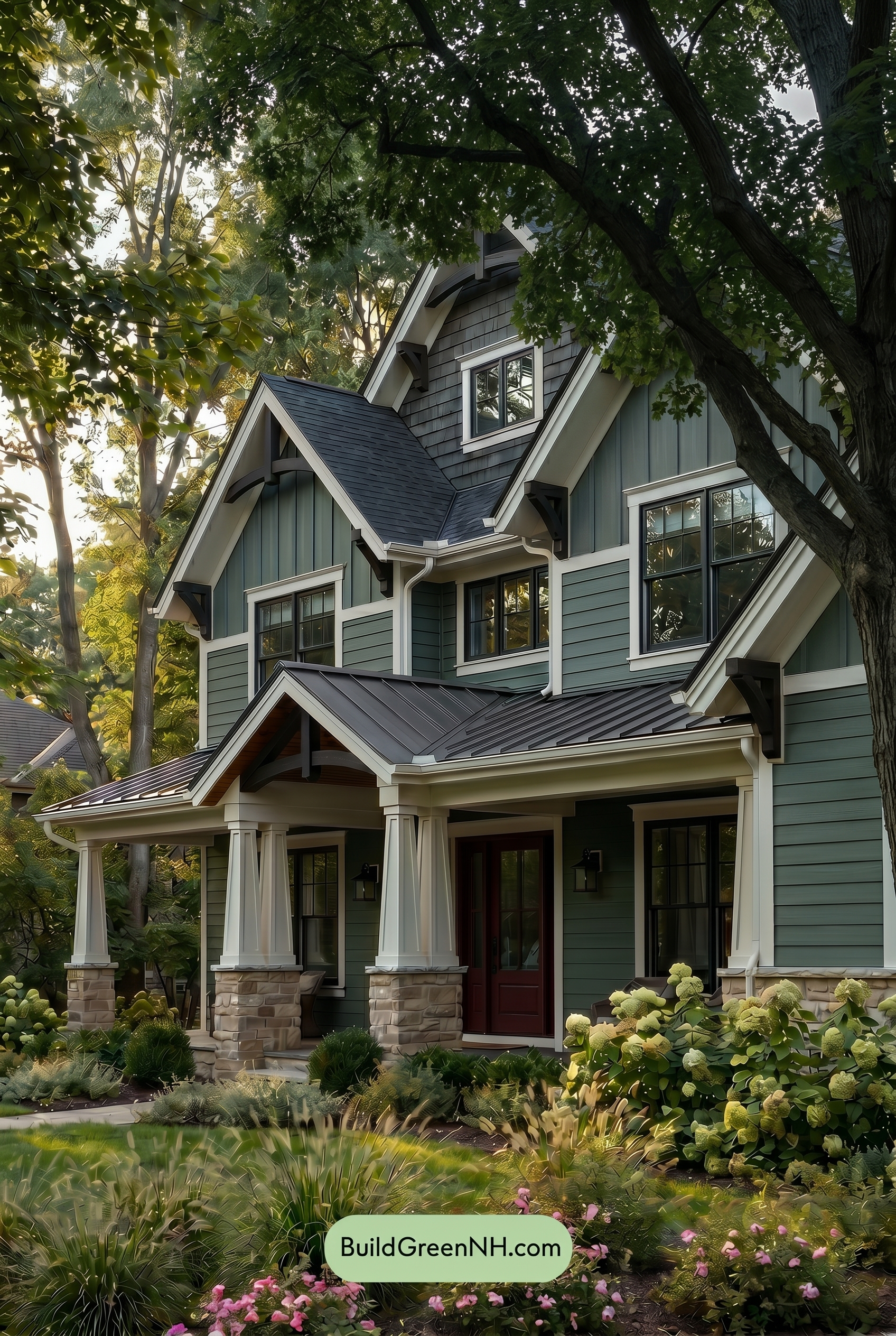
In shade, the gray siding reads deeper and cooler than it would in neutral daylight, with its saturation feeling more subdued and its shadowed areas pulling toward softer blue-gray and green-gray impressions. The upper gray sections gain a quieter, more layered look, while the white trim and columns lose some crisp brightness and feel creamier, gentler, and less stark.
The added shadows increase depth around the windows, rooflines, and porch, making the dark gray accents feel bolder by contrast. The brown front door appears richer and warmer in the filtered light, giving the overall palette a calm, tucked-away mood that feels more intimate and woodland-inspired than it would under clear, even daylight.
Nighttime
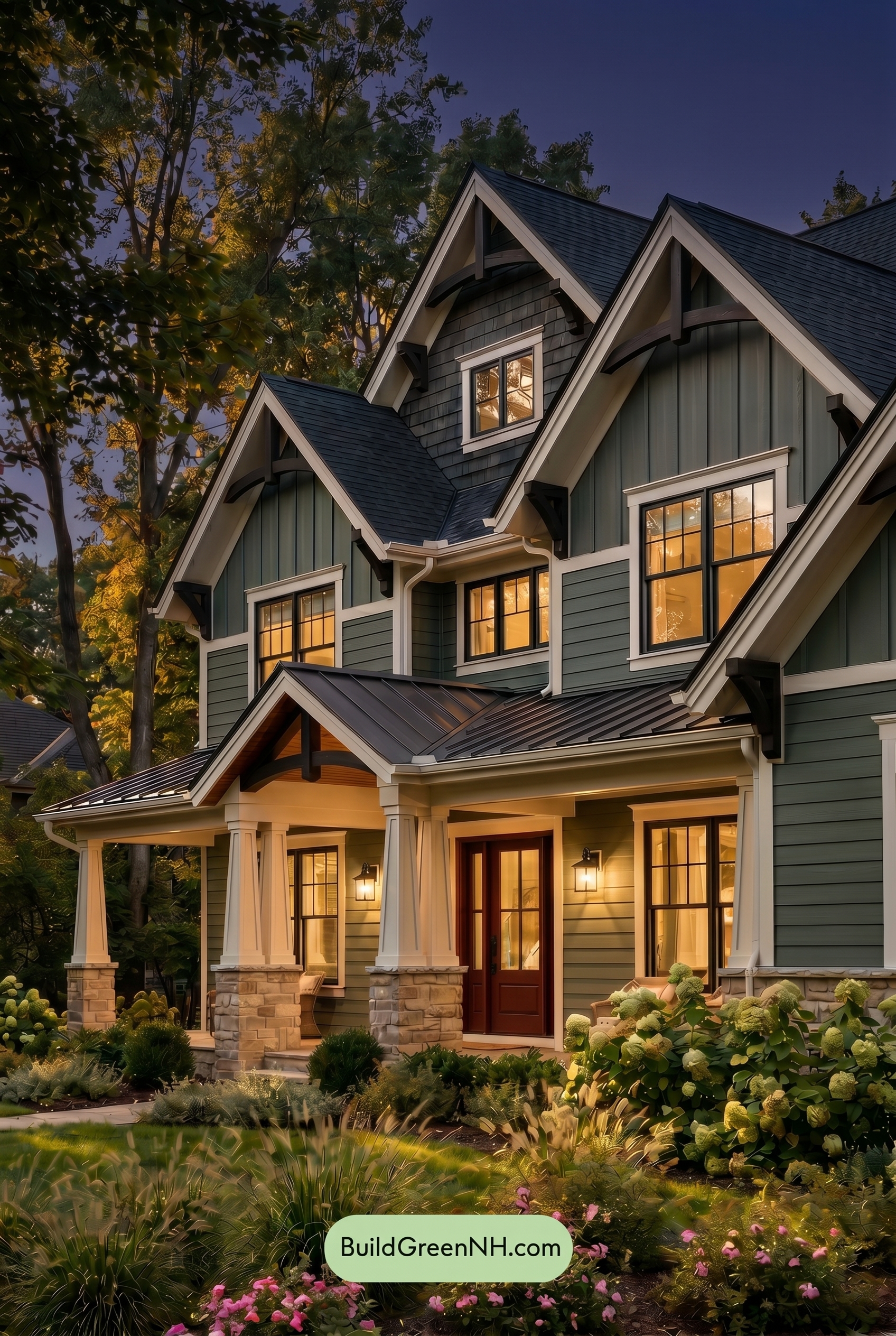
At nighttime, the gray family on the exterior reads deeper and more saturated than it would in neutral daylight, with shadowed areas shifting toward moodier charcoal and slate-like shades. The white family brightens where porch and window lighting touches it, creating sharper contrast along the trim, columns, and rooflines.
Warm interior light softens the cooler gray shades and adds a cozy glow around the openings, while the brown family at the entry feels richer and more inviting. Compared to daylight’s clearer balance, the overall mood becomes more dramatic, intimate, and layered, with strong shadows giving the home extra depth.
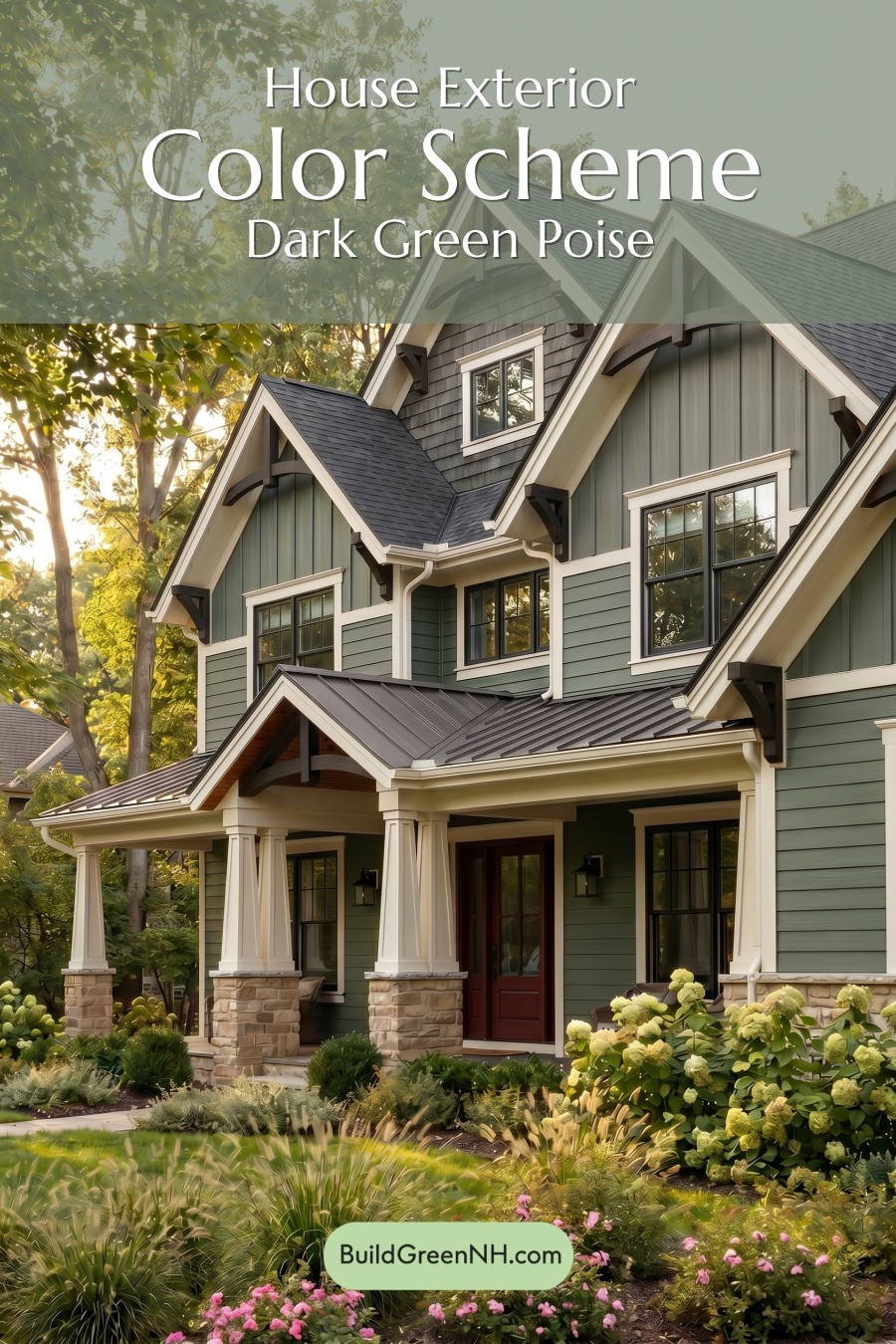
Pin these for later
Want More?
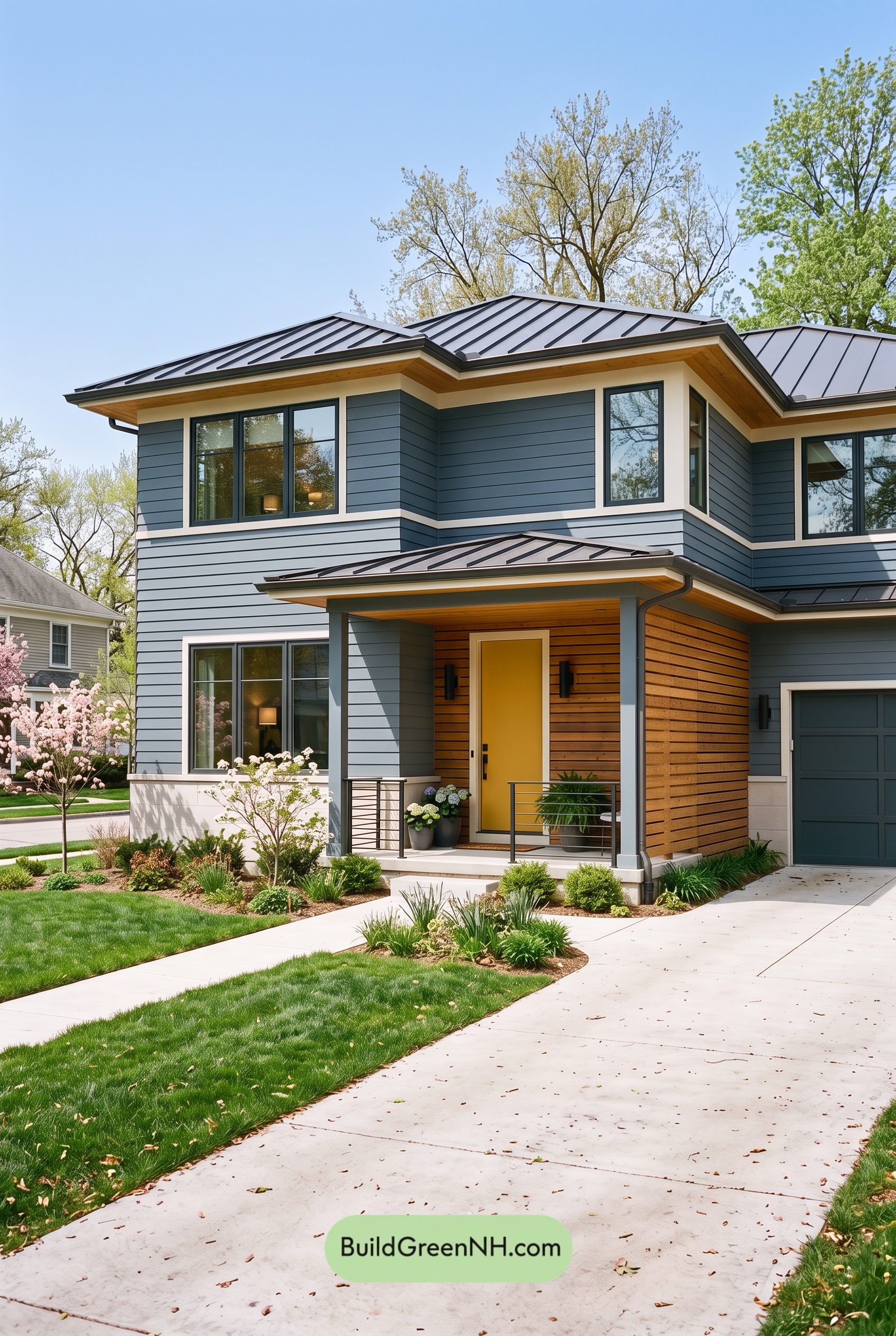 Blue House Front Door Color Scheme: Harbor Saffron
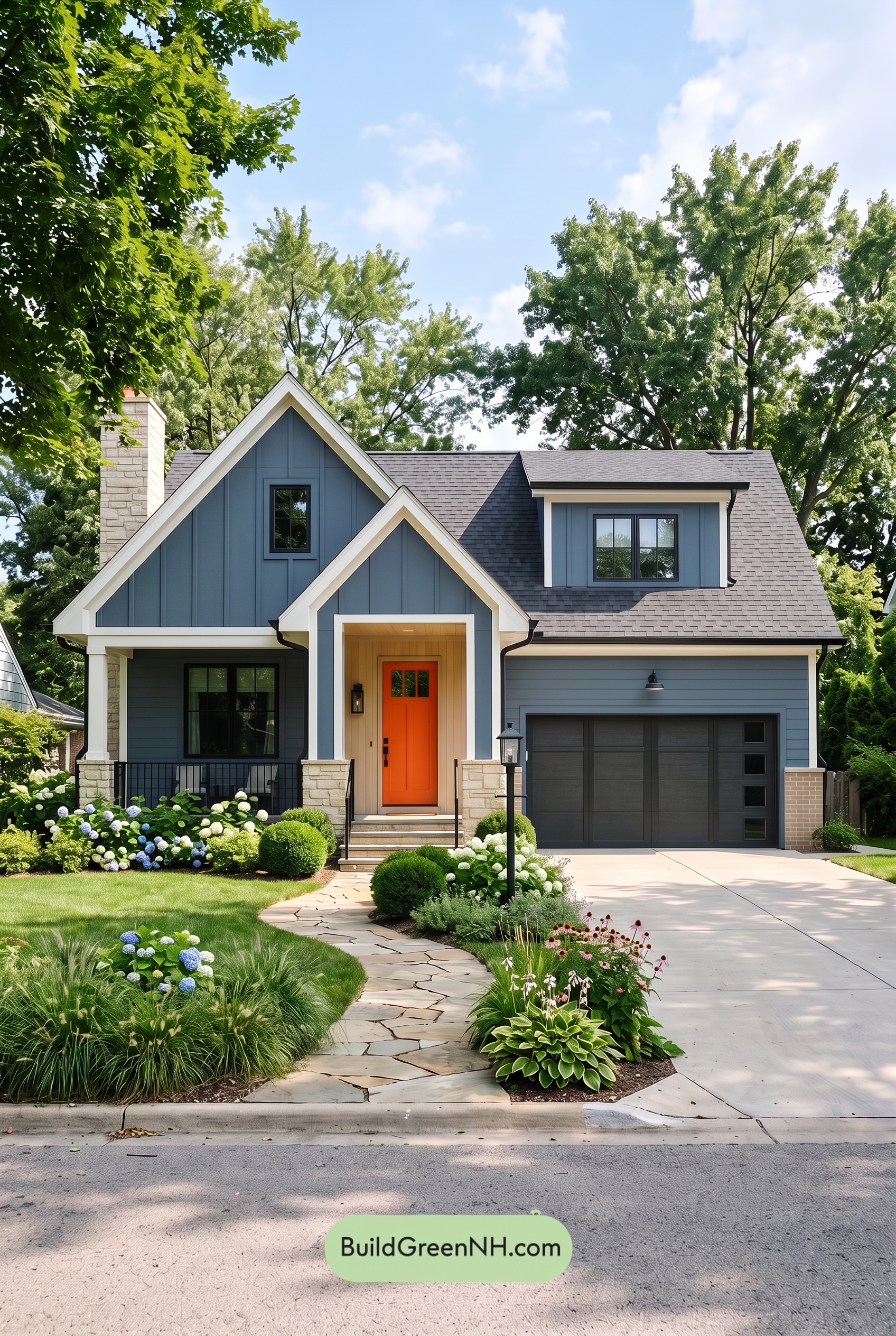 Blue House Front Door Color Scheme: Cobalt Persimmon
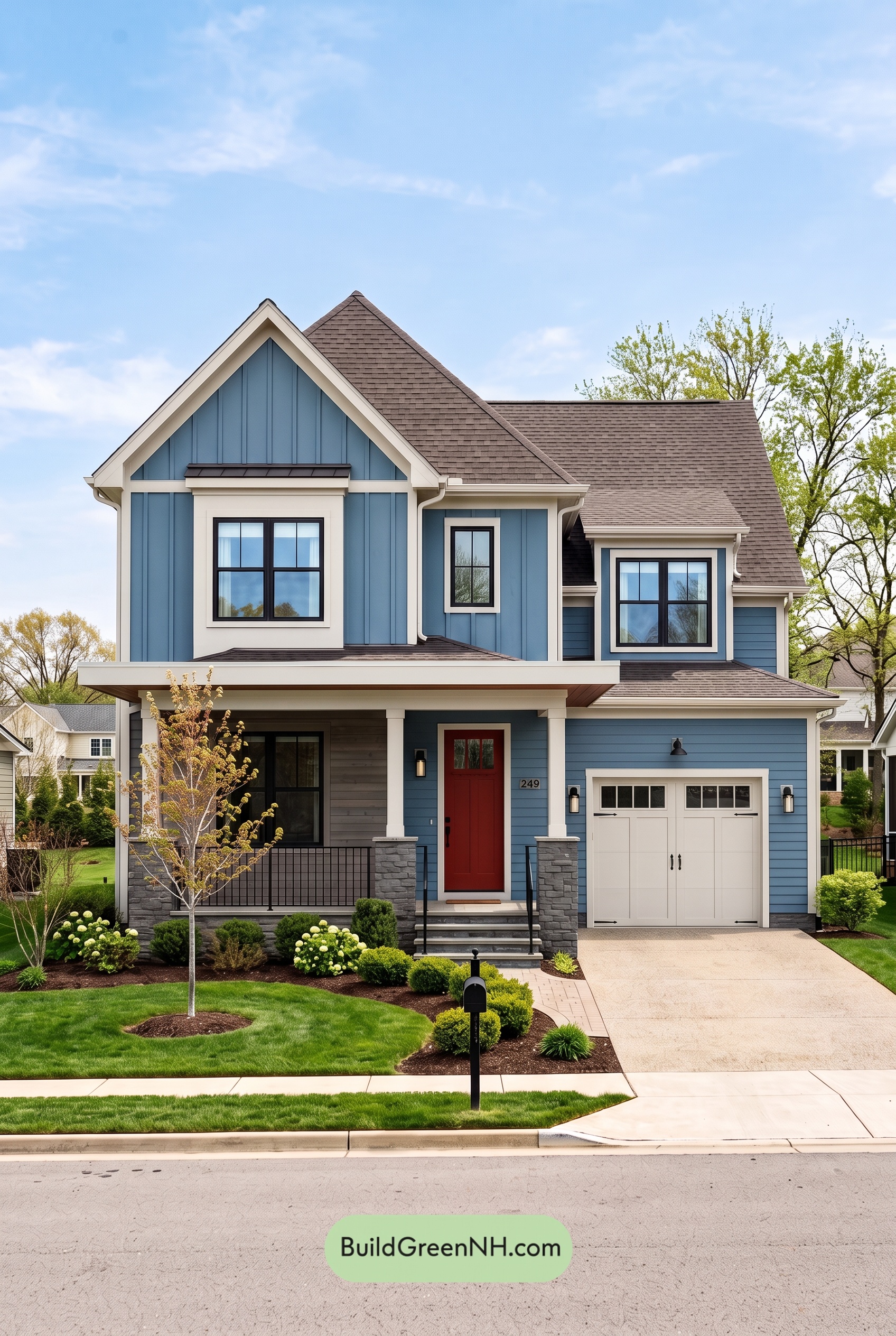 Blue House Front Door Color Scheme: Denim Poppy
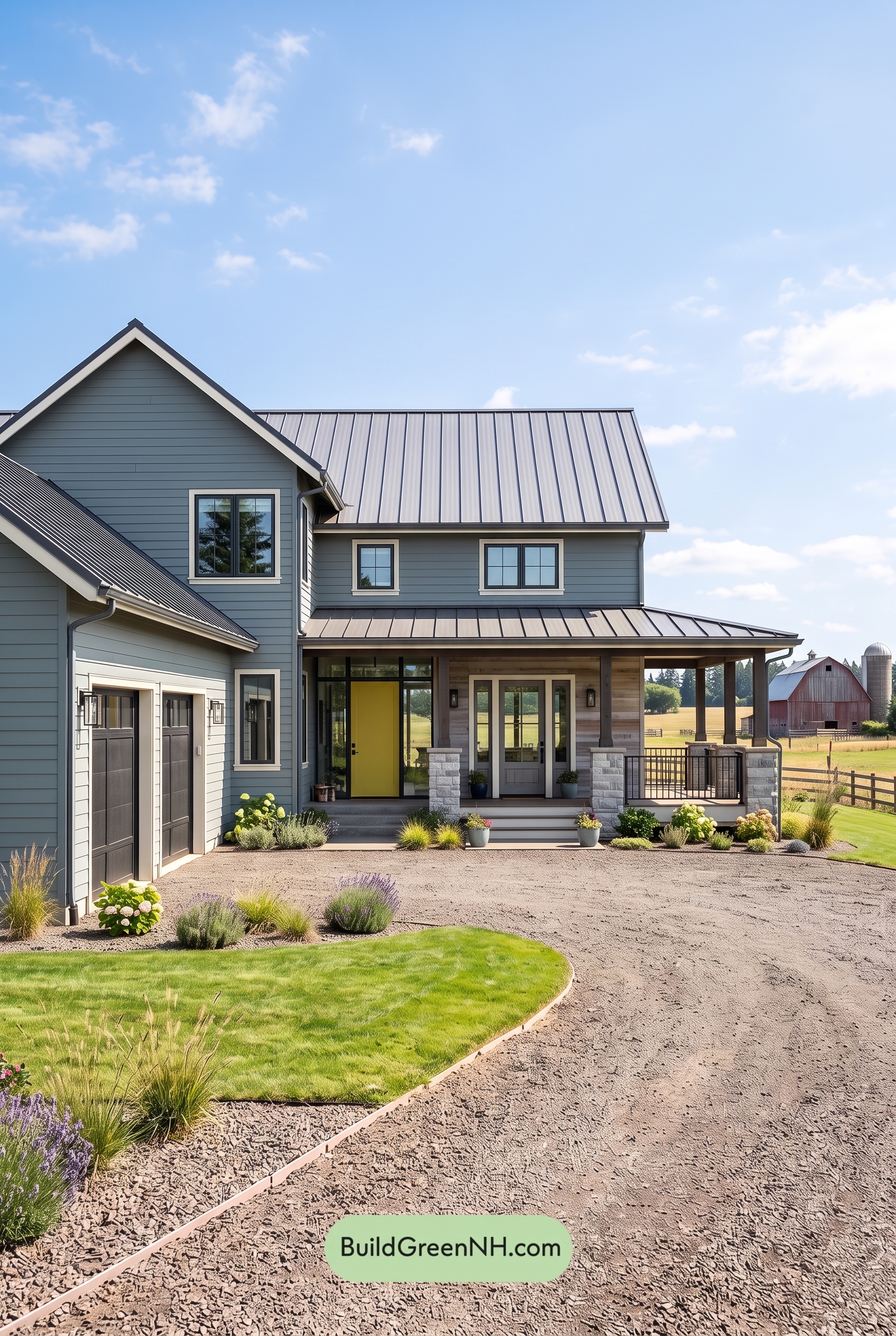 Blue House Front Door Color Scheme: Slate Citron
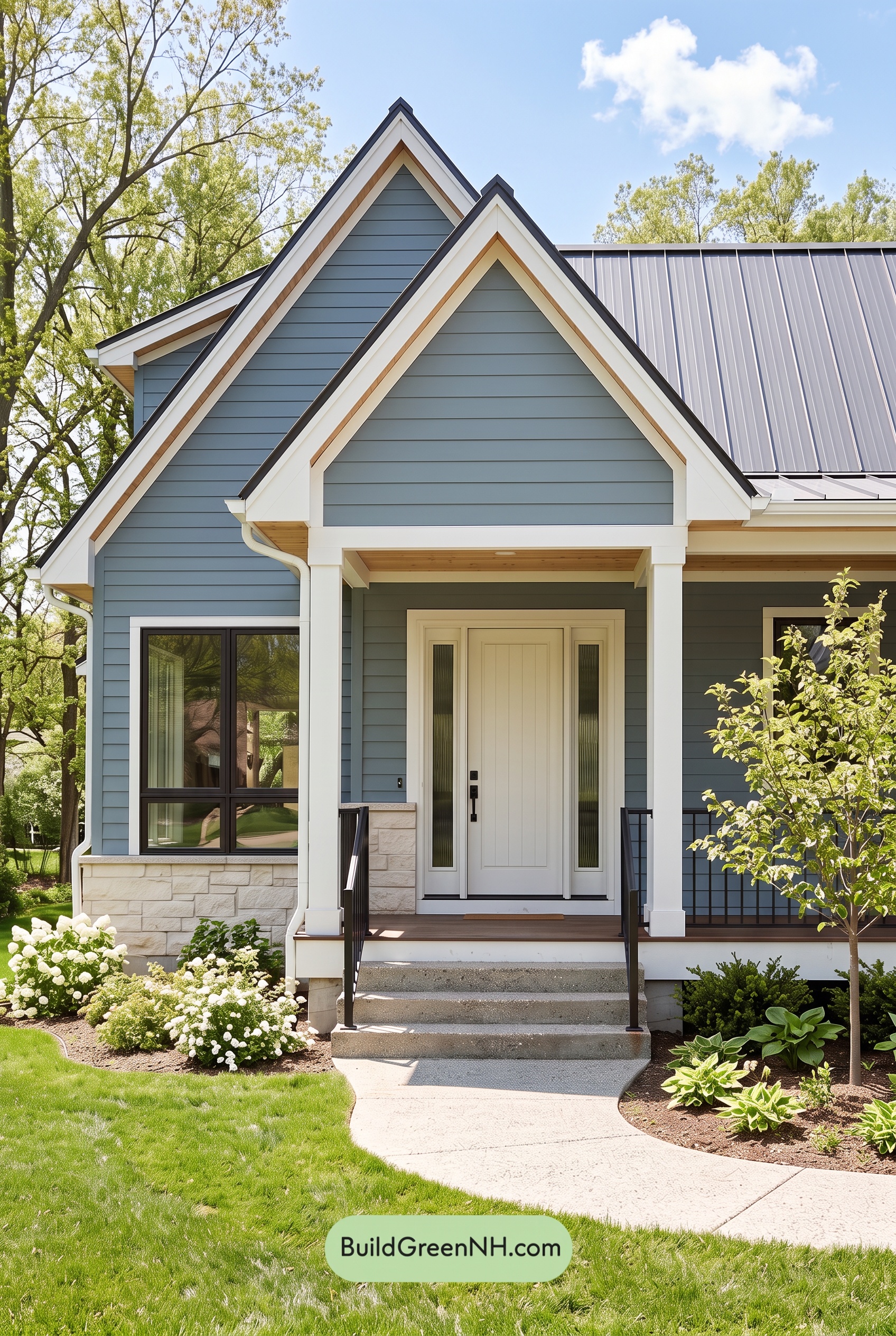 Blue House Front Door Color Scheme: Mist Blue Haven
Table of Contents