Last updated on
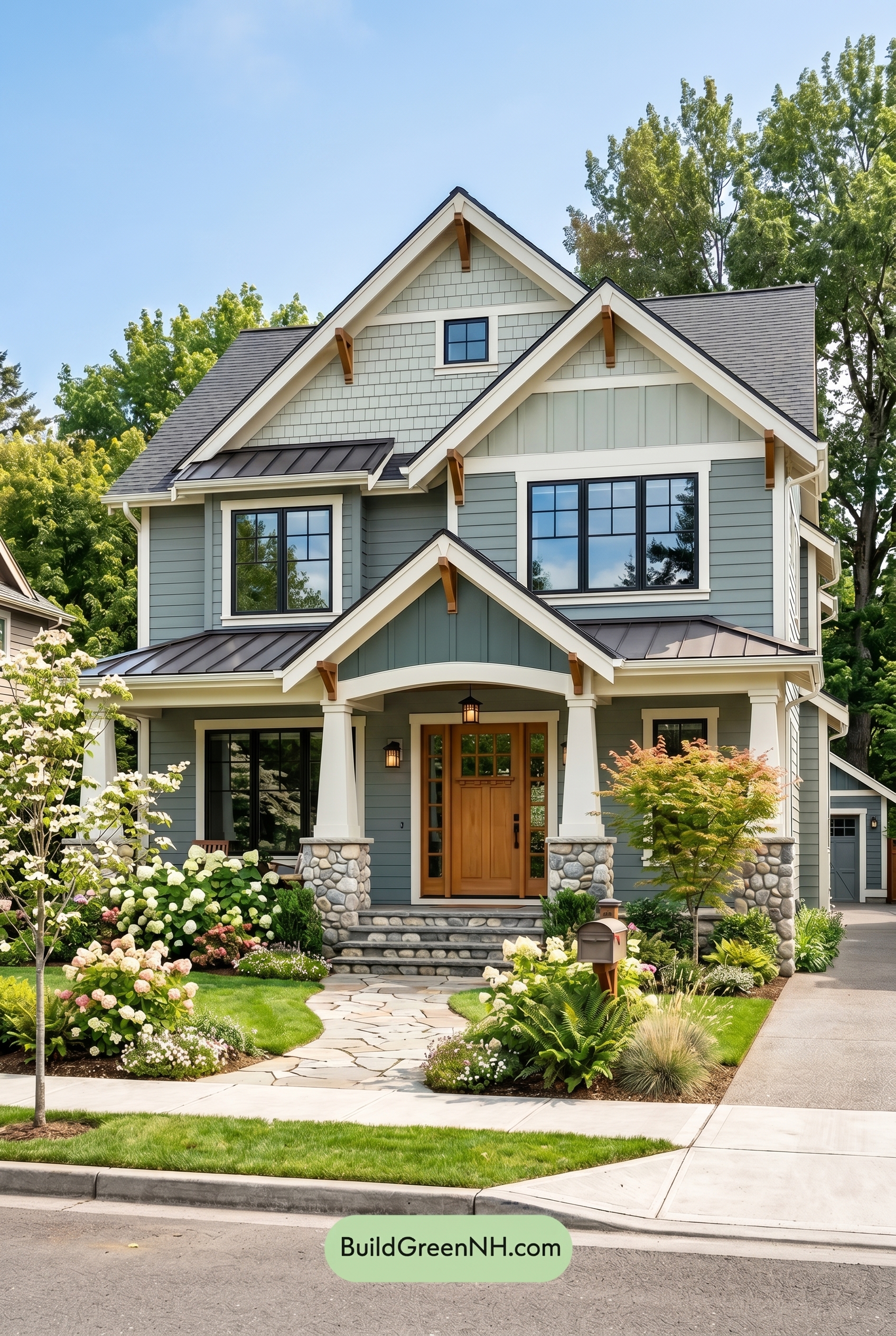

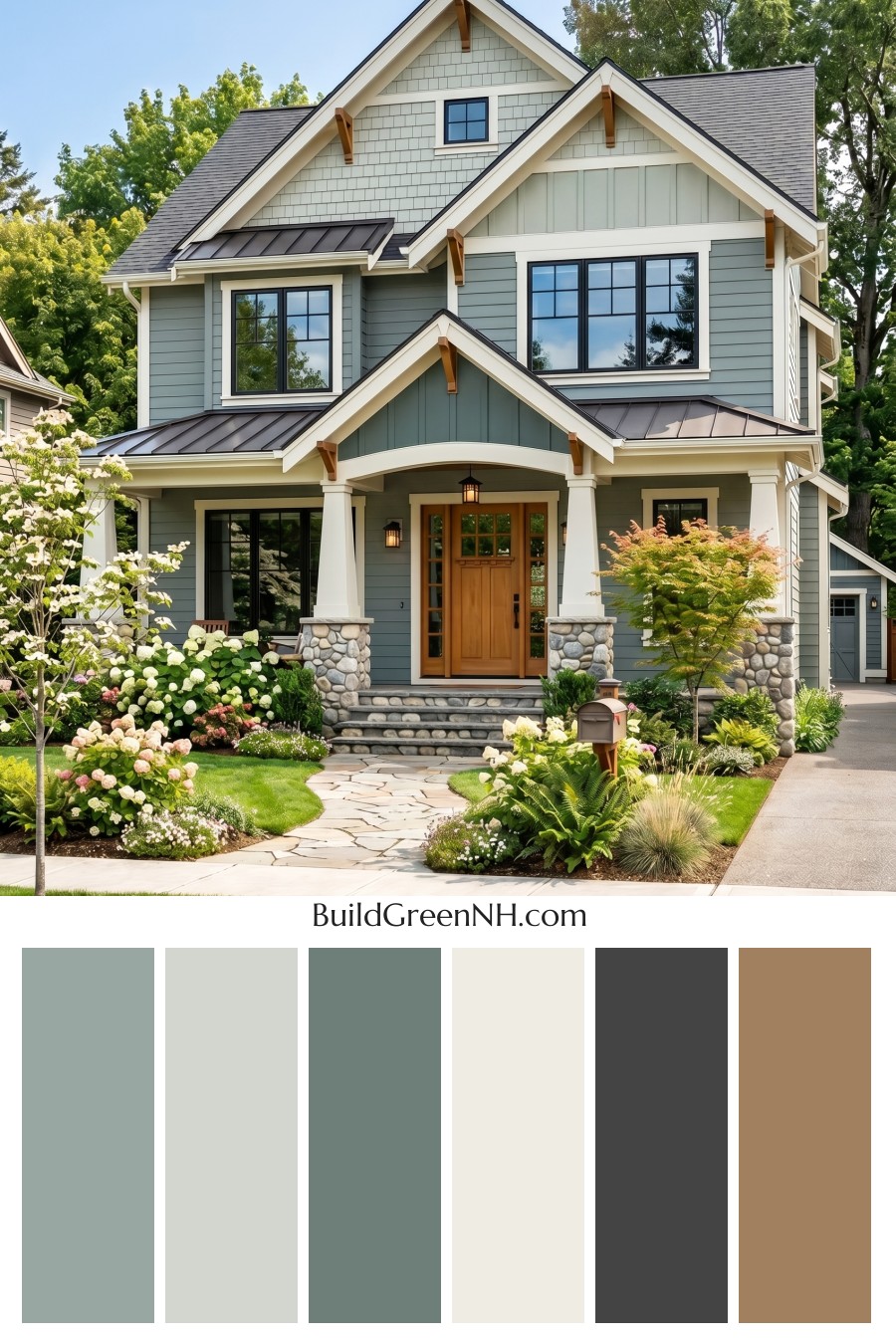
This layered gray, green, white, and brown palette gives the home a polished Craftsman charm that feels fresh, grounded, and beautifully connected to the landscape.
A Soft Gray Foundation
The main siding is wrapped in a calm medium gray shade that gives the house a steady, welcoming presence. It works especially well on the horizontal siding, where the color feels classic but not heavy. On the upper gables, a lighter gray shade adds subtle variation, helping the shingle-style details stand out without making the exterior feel busy.
Green Accents That Feel Natural
The muted green accents are one of the strongest features of this color scheme. Used on select gable areas and repeated on the garage door, this soft green shade brings in an earthy note that echoes the surrounding trees and landscaping. It adds personality while still feeling refined and timeless.
Crisp White Trim for Structure
The warm white trim outlines the rooflines, windows, porch, columns, and architectural details with clean definition. Against the gray and green siding, the white family creates a bright, tailored finish. The porch columns feel substantial and elegant in this shade, giving the entry a fresh, inviting frame.
Deep Gray Details Add Contrast
The window frames and roof details lean into a deep charcoal gray shade, which gives the home a crisp modern edge. This darker gray creates contrast without feeling stark. It also ties beautifully into the roof, making the upper portions of the house feel cohesive and well balanced.
A Warm Brown Front Door
The front door brings in a rich brown shade that warms up the entire exterior. Surrounded by white trim and soft gray siding, the brown family becomes a natural focal point. It feels friendly, handcrafted, and perfectly suited to the home’s Craftsman-inspired details.
Why the Palette Works
This scheme succeeds because every color has a clear role. The gray siding provides calm structure, the green accents add softness and character, the white trim sharpens the architecture, and the brown door introduces warmth. Together, the colors create a home that feels sophisticated but approachable, detailed but not overdone.
The overall mood is fresh, serene, and rooted in nature. It is a beautiful example of how layered neutrals and gentle earthy shades can make a large exterior feel welcoming, graceful, and full of curb appeal.
Next, see how this color scheme looks under different lighting simulations throughout the day.
Overcast
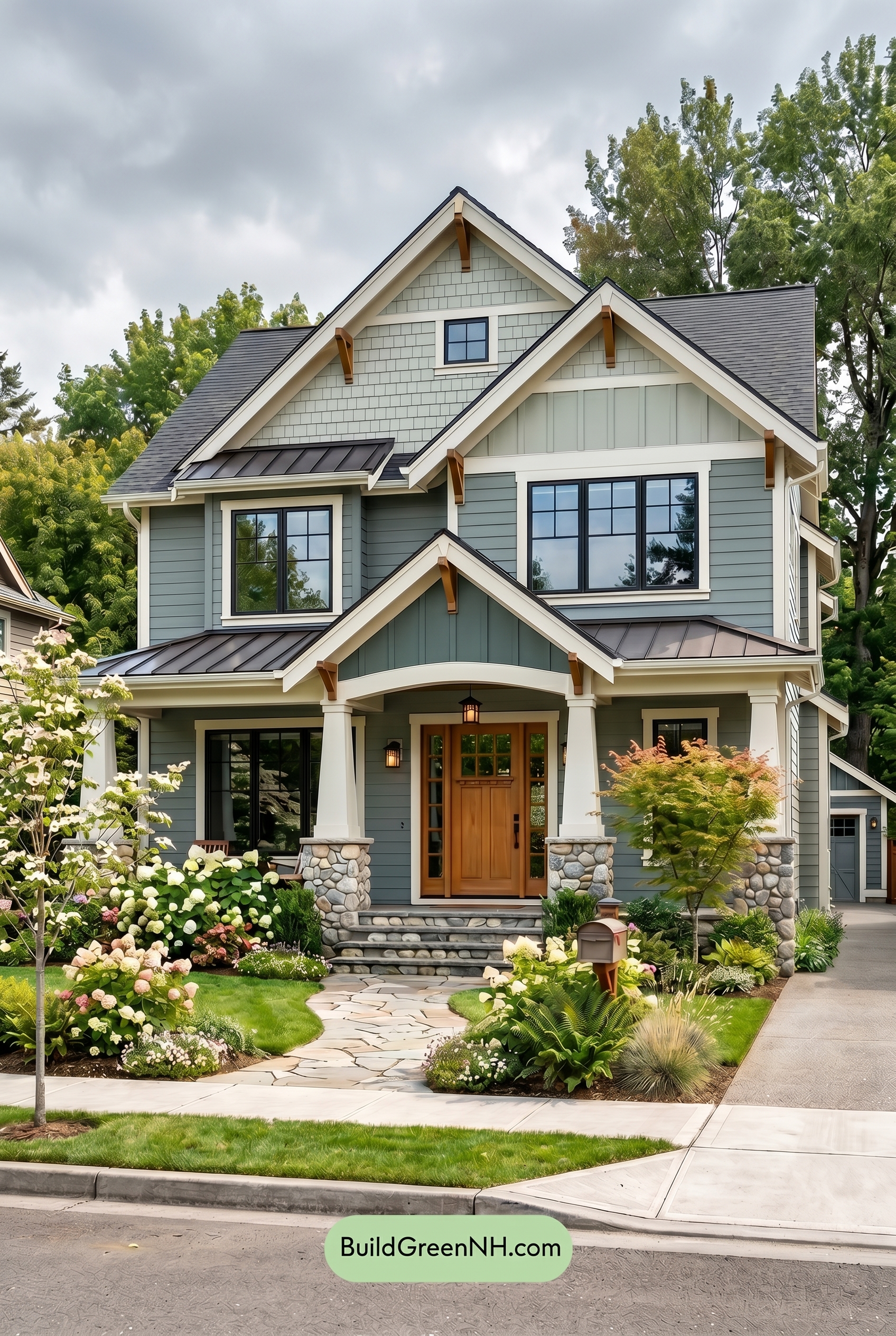
Under overcast lighting, the gray siding reads cooler and more subdued than it would in neutral daylight, with its saturation gently muted. The green accents deepen into a softer, moodier shade, while the white trim and columns lose some brightness and feel calmer rather than crisp.
Because the light is diffused, shadows flatten and contrast softens across the gables, trim, and window frames. The brown front door appears less golden and more grounded, giving the whole exterior a quieter, cozier mood with a refined, misty feel.
Golden Hour
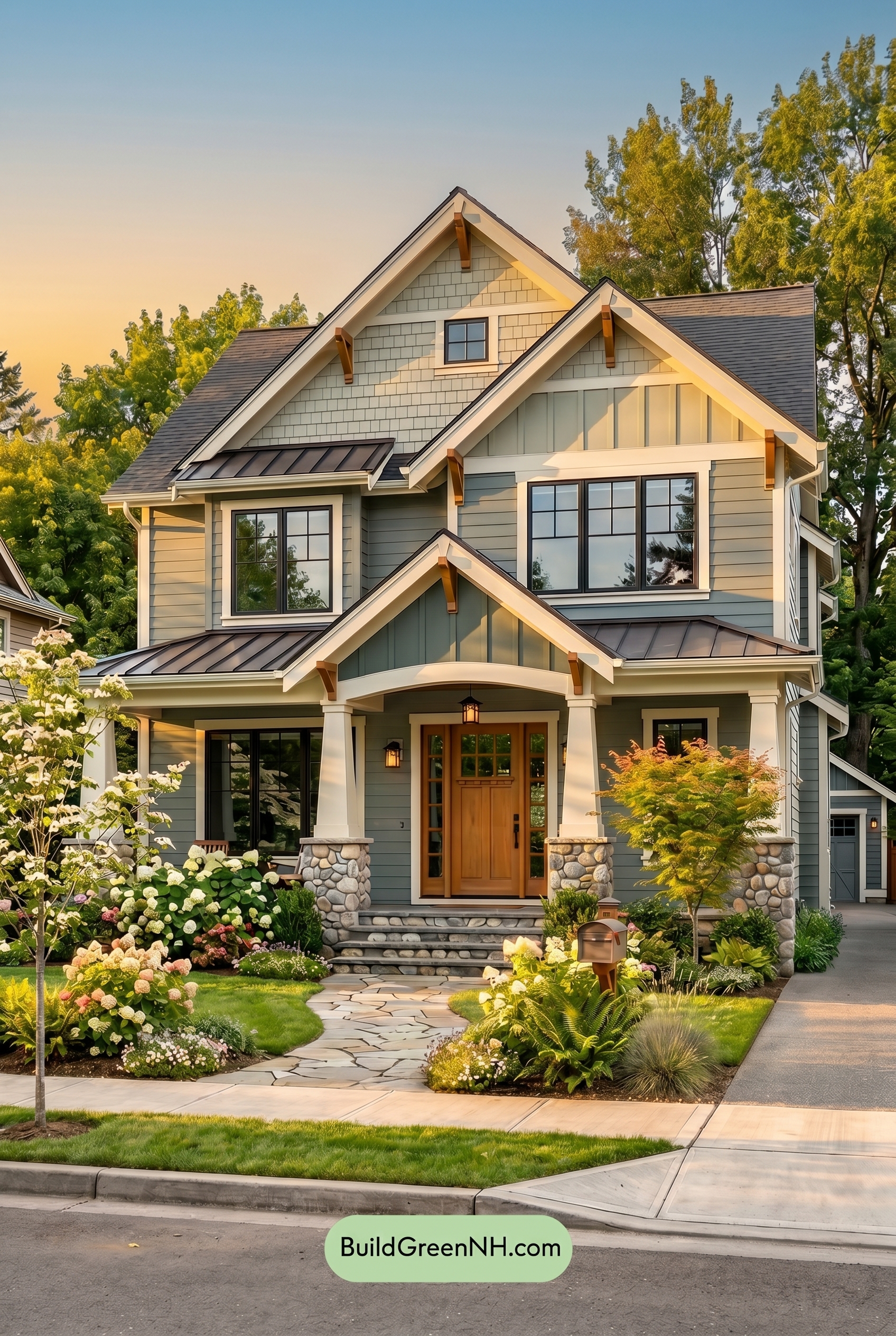
Under Golden Hour light, the gray siding shifts warmer and softer than it would in neutral daylight, taking on a gentle, sun-washed quality. The green accents feel slightly richer and more saturated, while the white trim glows with a creamy warmth that reduces the crispness seen in cooler midday light.
Longer shadows deepen the darker gray window frames and add stronger contrast around the trim, gables, and porch details. The brown front door appears warmer and more inviting, giving the whole exterior a relaxed, welcoming mood with softer edges and a more dimensional finish.
Shade
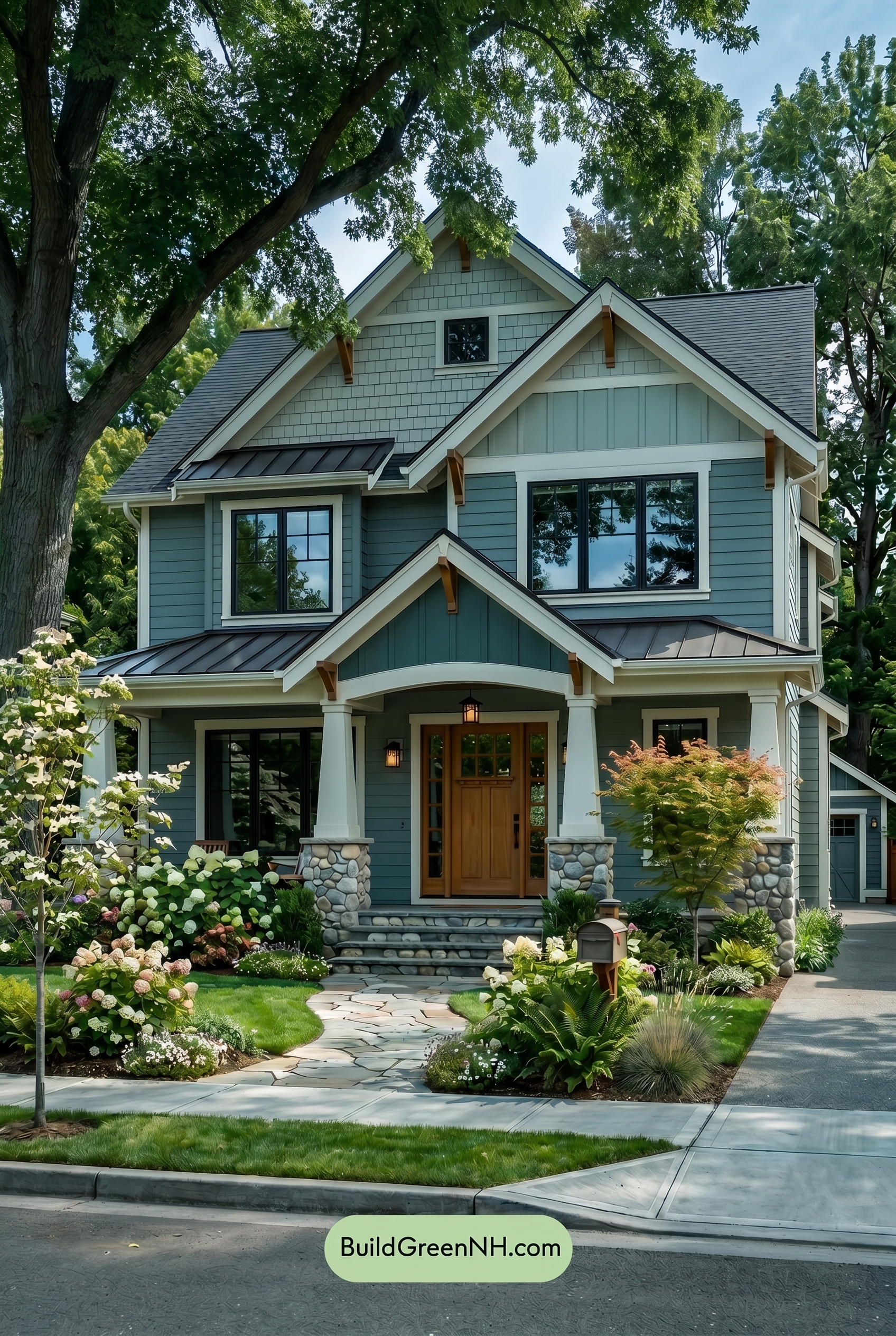
In shade, the gray siding reads cooler and a touch more saturated than it would in neutral daylight, giving the house a calm, tucked-into-the-trees feeling. The green accents deepen and become moodier, while the white trim softens from crisp and bright to a gentler off-white presence.
Shadows under the overhangs add depth to the layered façade, slightly lowering contrast across the gray and green families while making the trim and columns stand out in a quieter way. The brown front door loses some warmth compared to neutral daylight, shifting from sunny and golden to richer and more grounded.
Nighttime
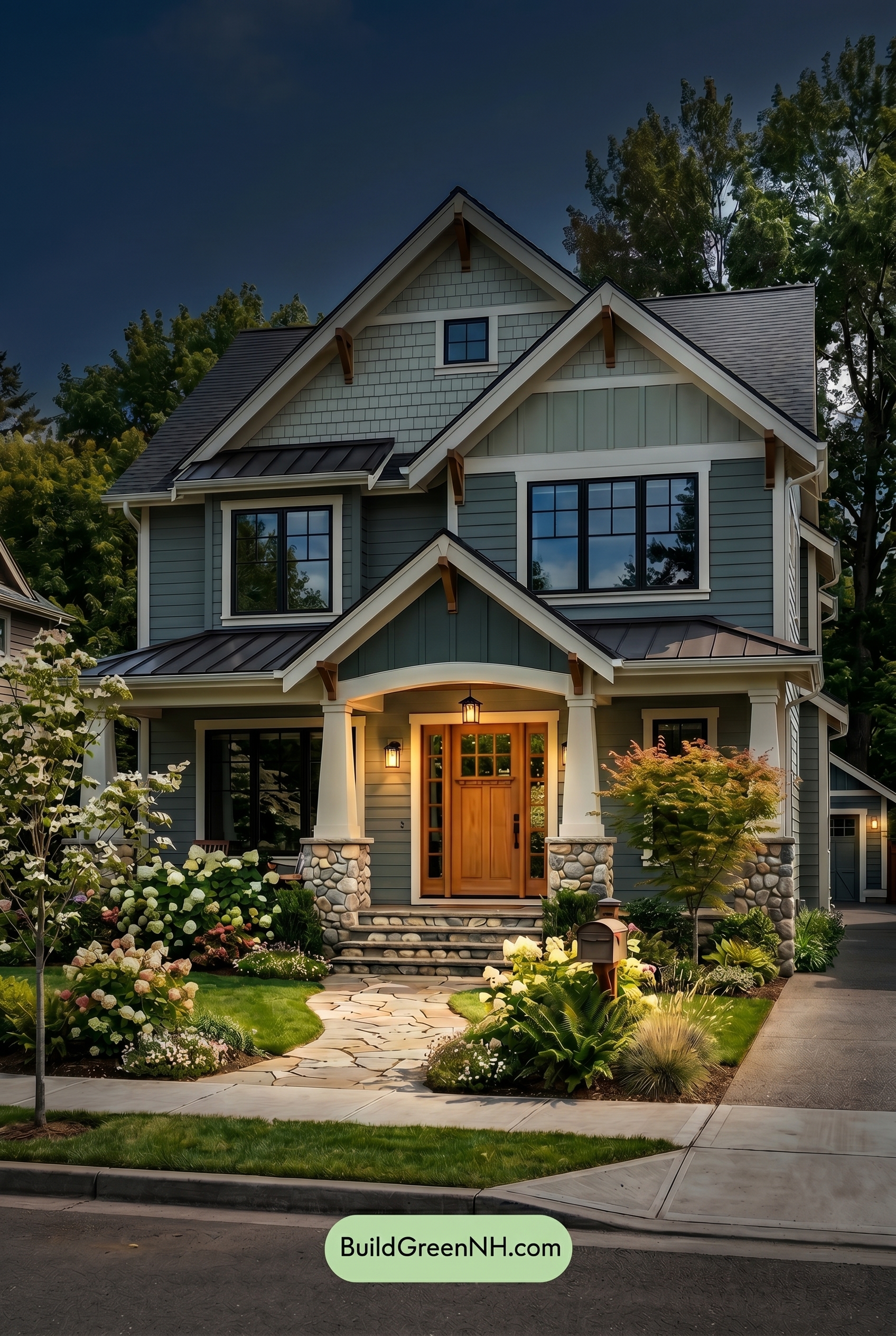
At nighttime, the gray siding shifts from a balanced daylight neutral into a deeper, cooler shade, with shadows making the upper details feel more dimensional. The green accents gain richness in the darker areas, appearing more saturated and grounded, while the white trim and columns pick up a soft glow where the porch lighting touches them.
Compared to neutral daylight, the warm light near the entry brings out a golden warmth in the brown door and softens the surrounding neutrals. The contrast becomes stronger overall: dark window frames and rooflines feel crisper, shadowed corners become moodier, and the whole exterior takes on a cozy, welcoming evening character.
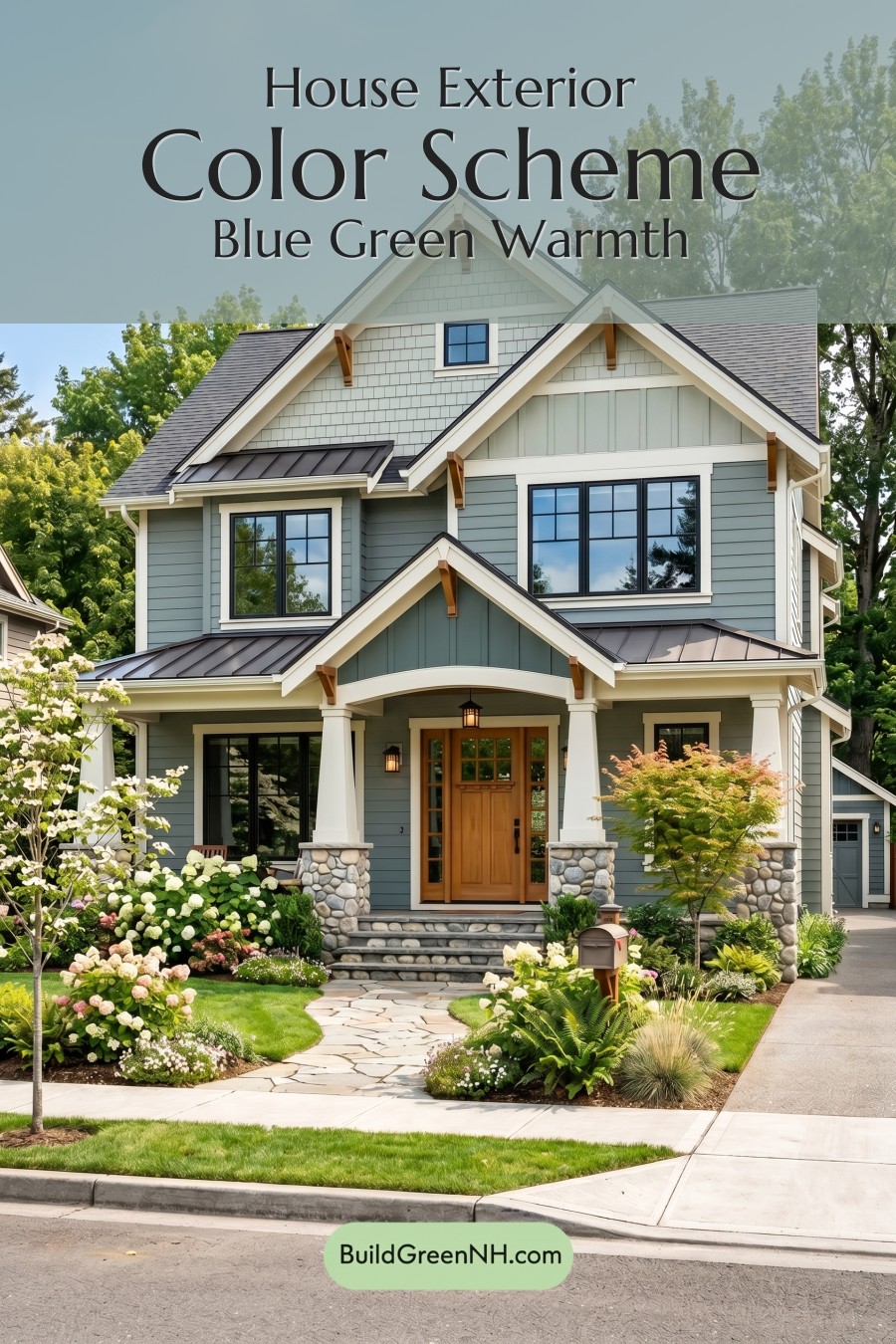
Pin these for later
Want More?
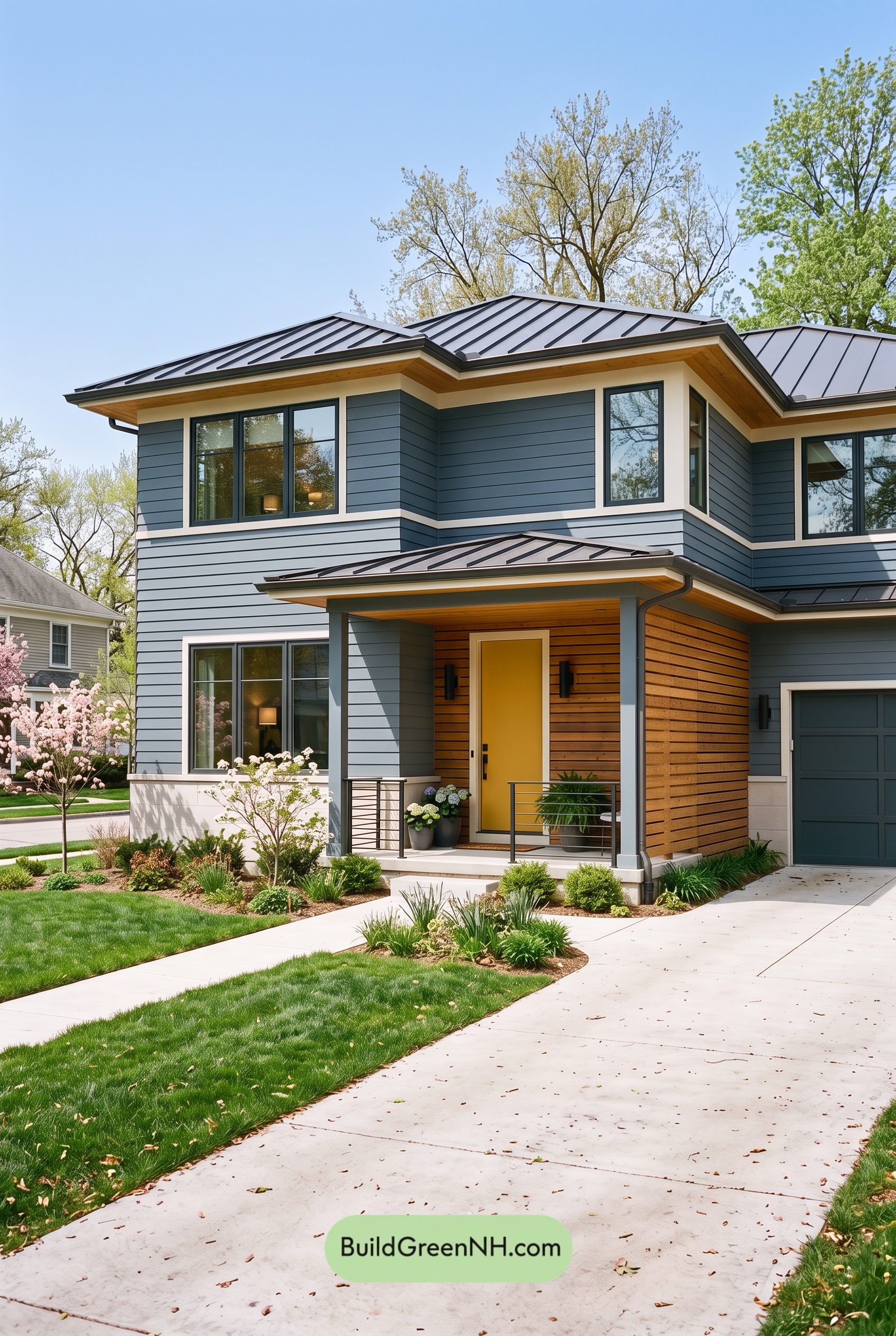 Blue House Front Door Color Scheme: Harbor Saffron
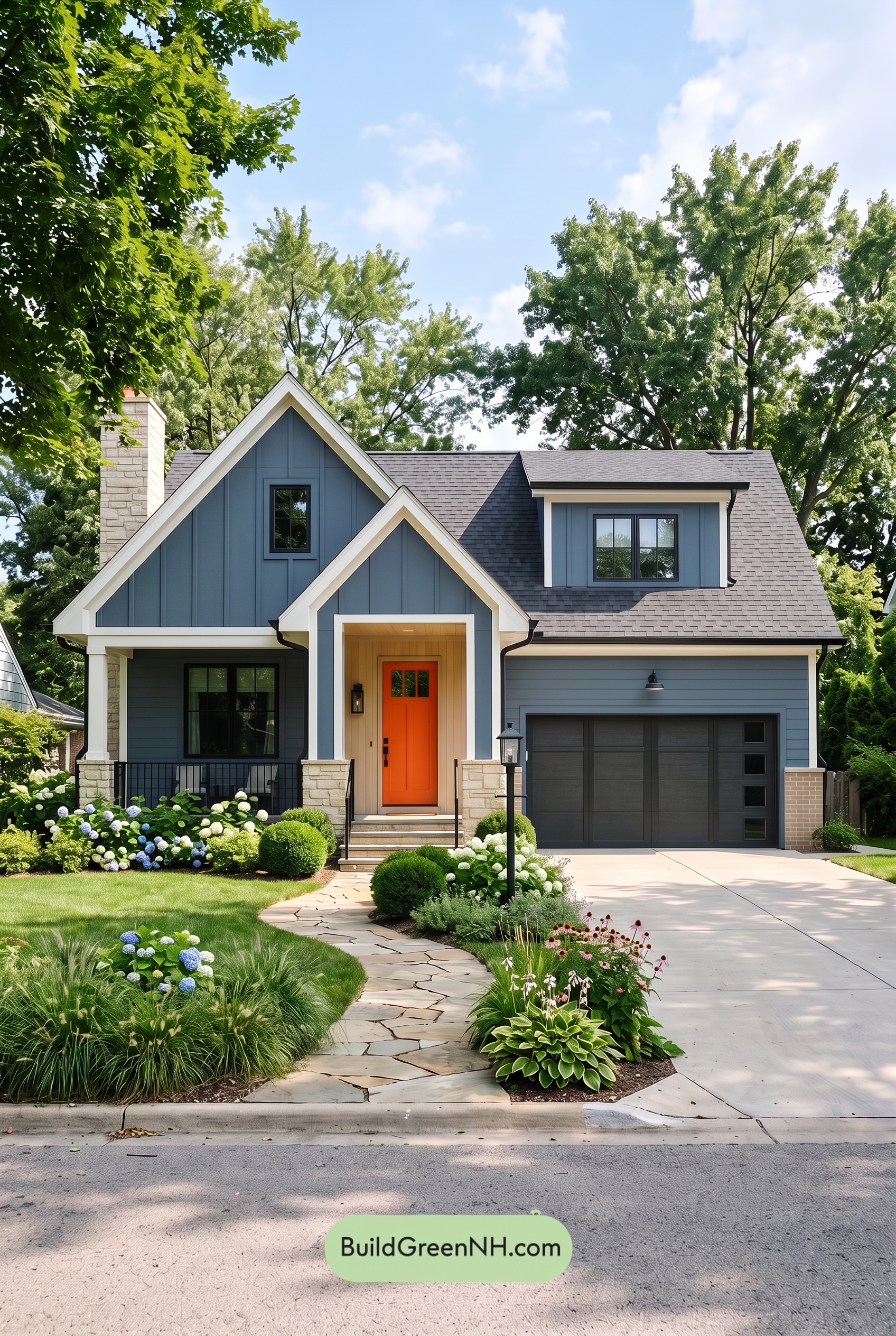 Blue House Front Door Color Scheme: Cobalt Persimmon
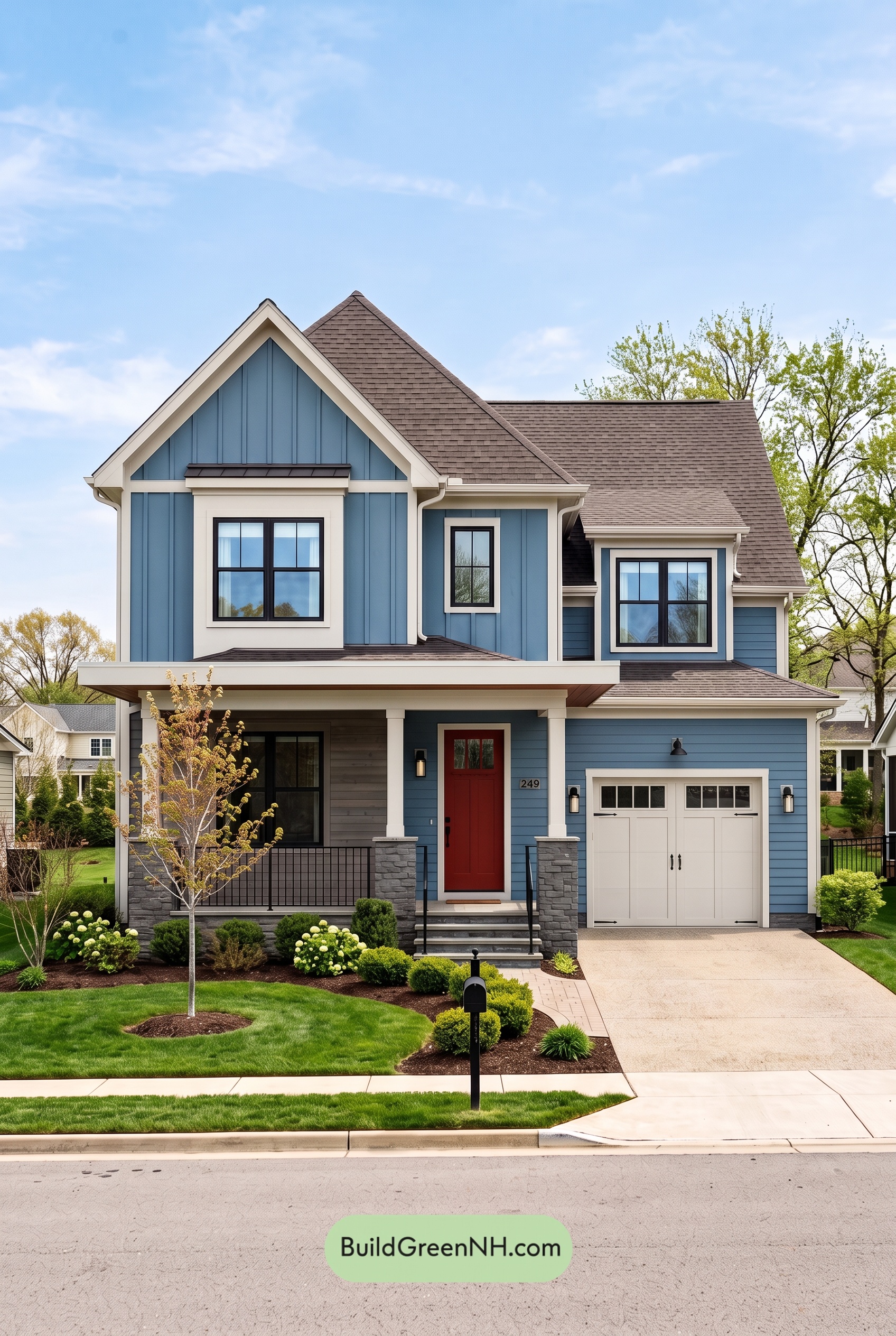 Blue House Front Door Color Scheme: Denim Poppy
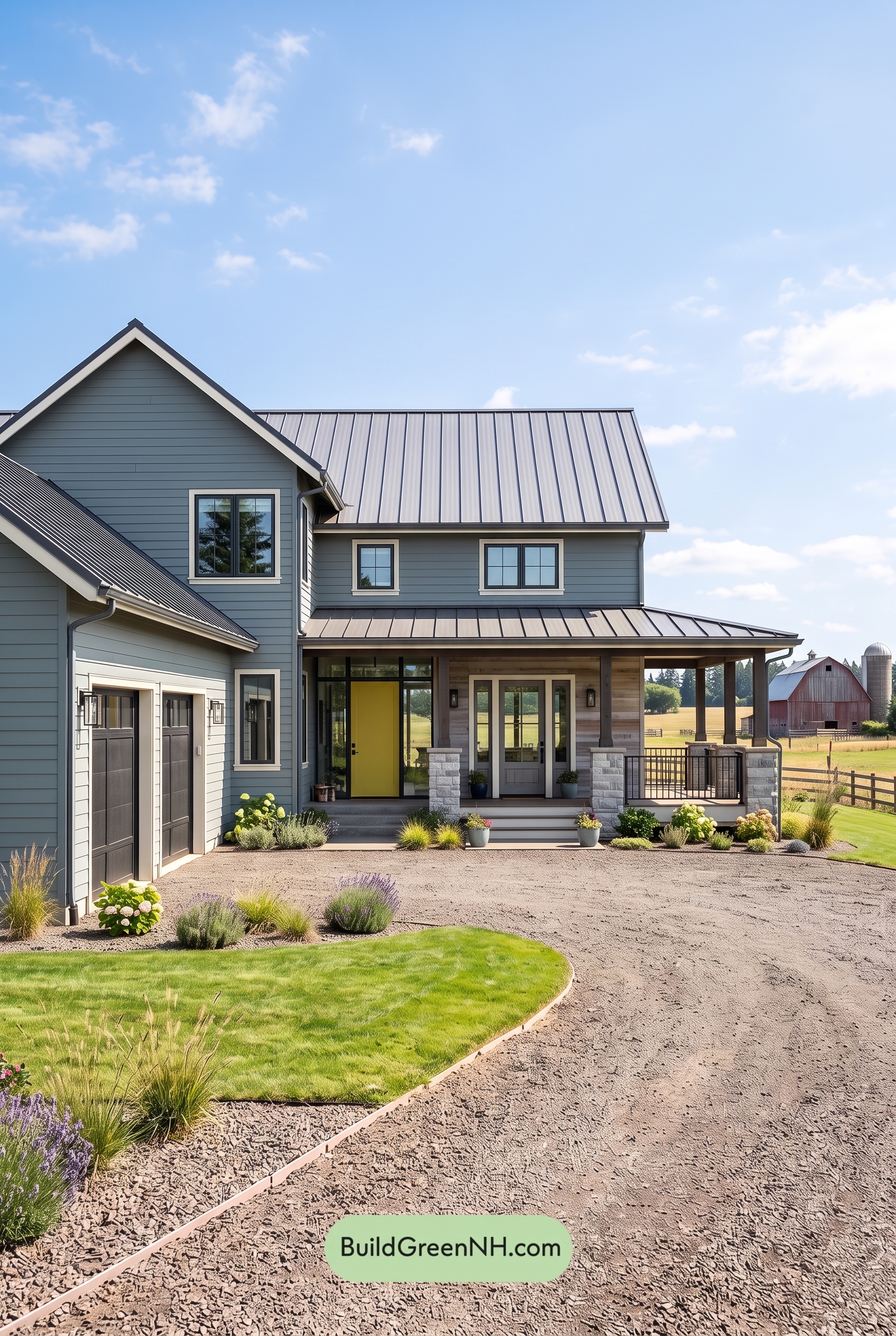 Blue House Front Door Color Scheme: Slate Citron
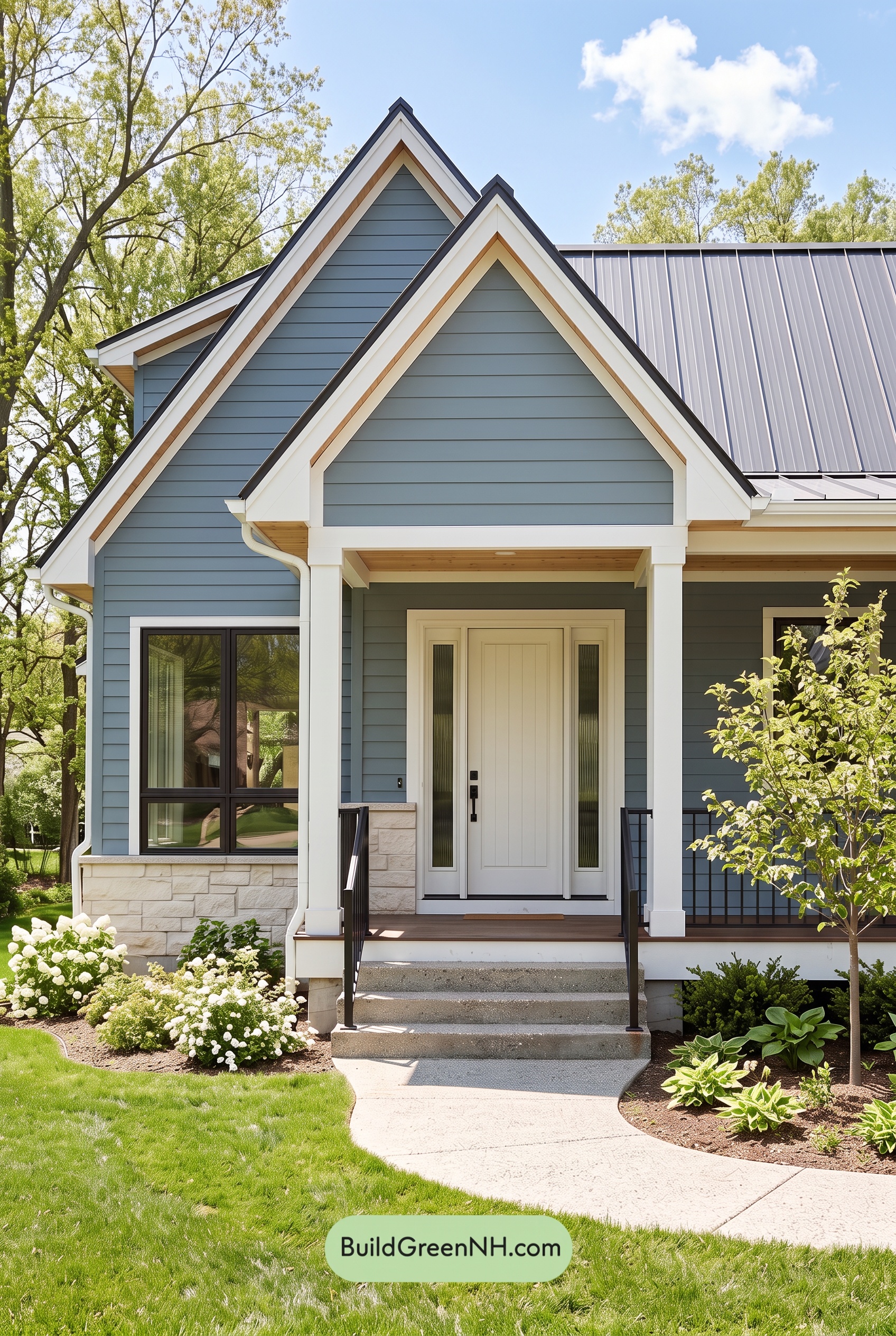 Blue House Front Door Color Scheme: Mist Blue Haven
Table of Contents