Last updated on
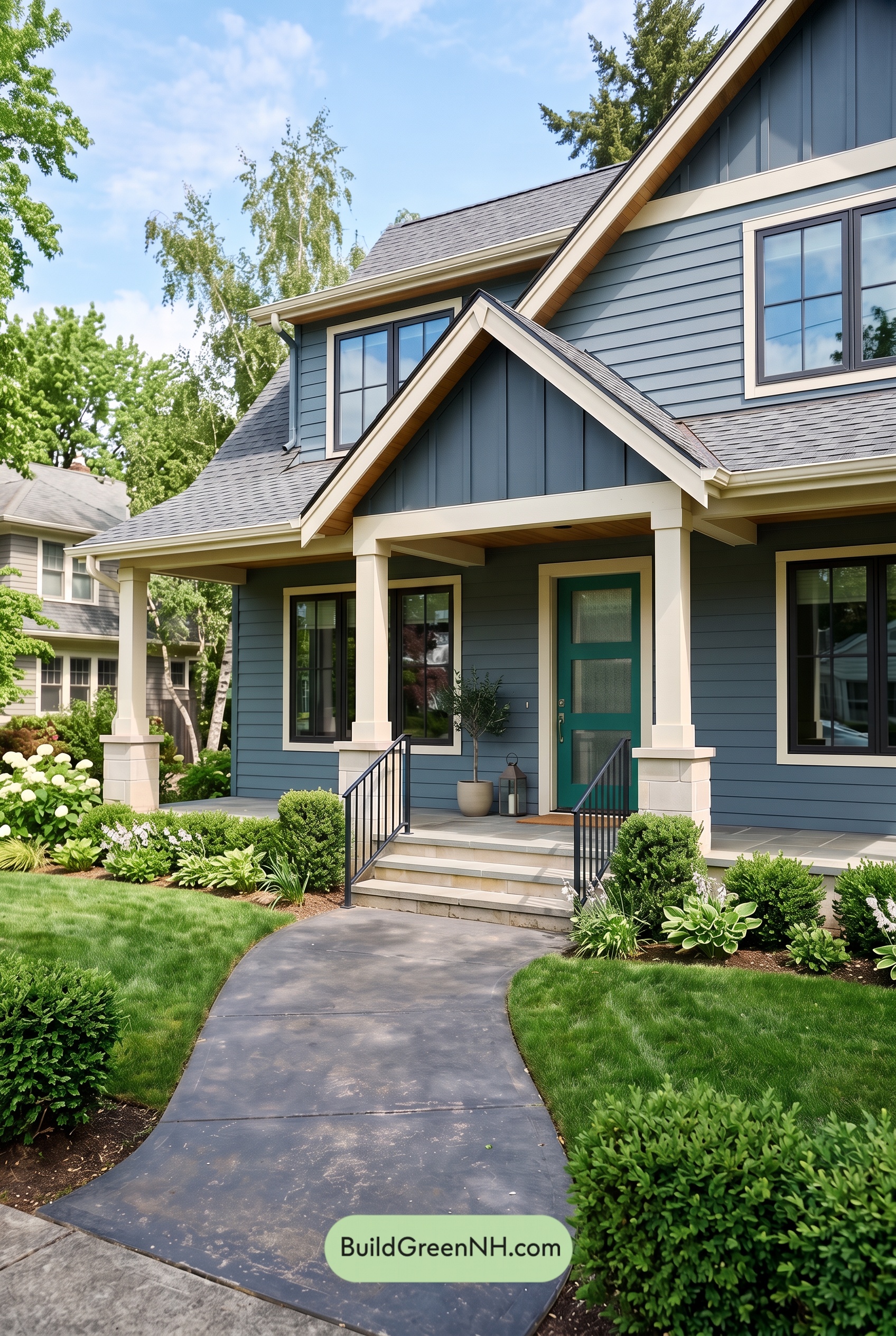

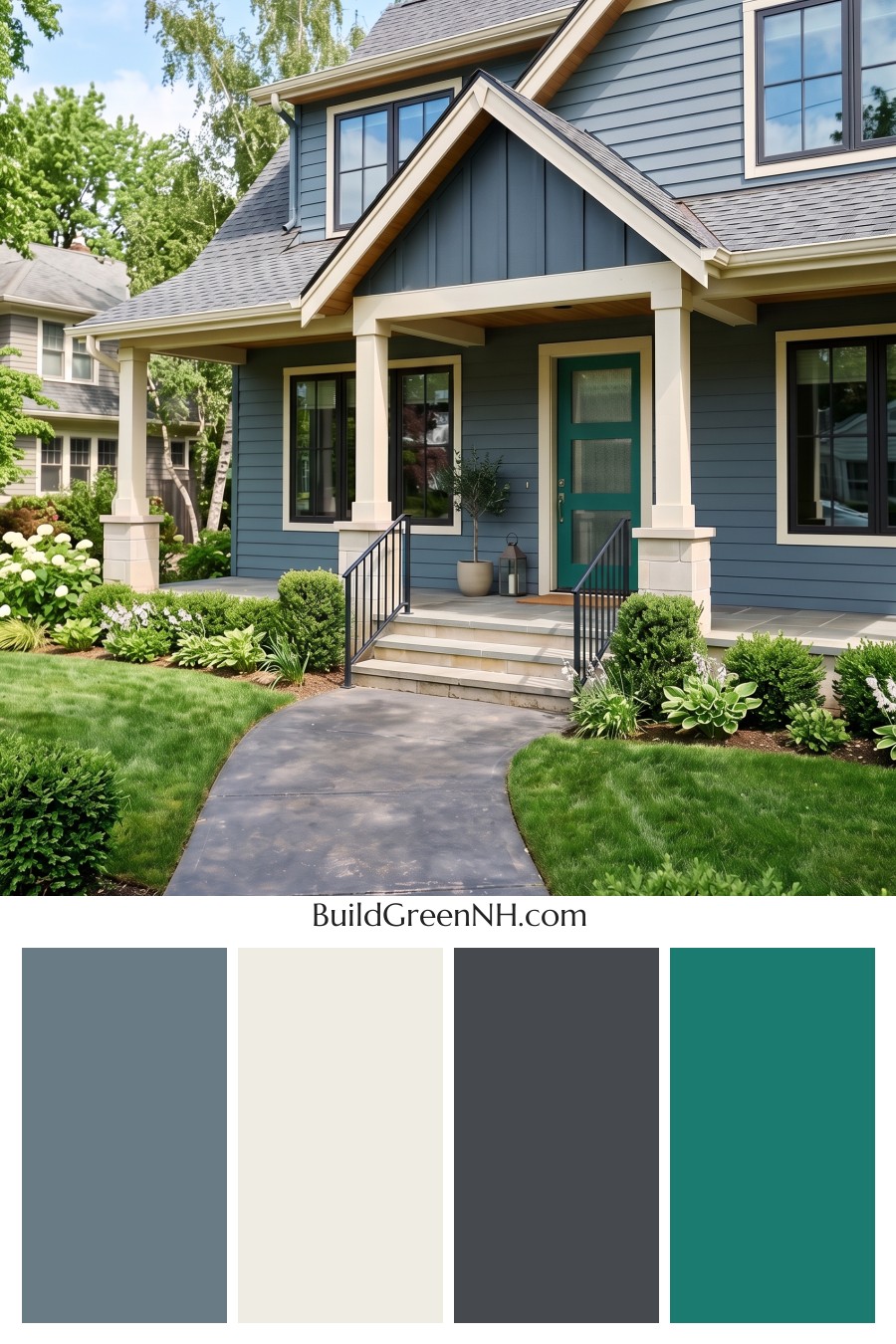
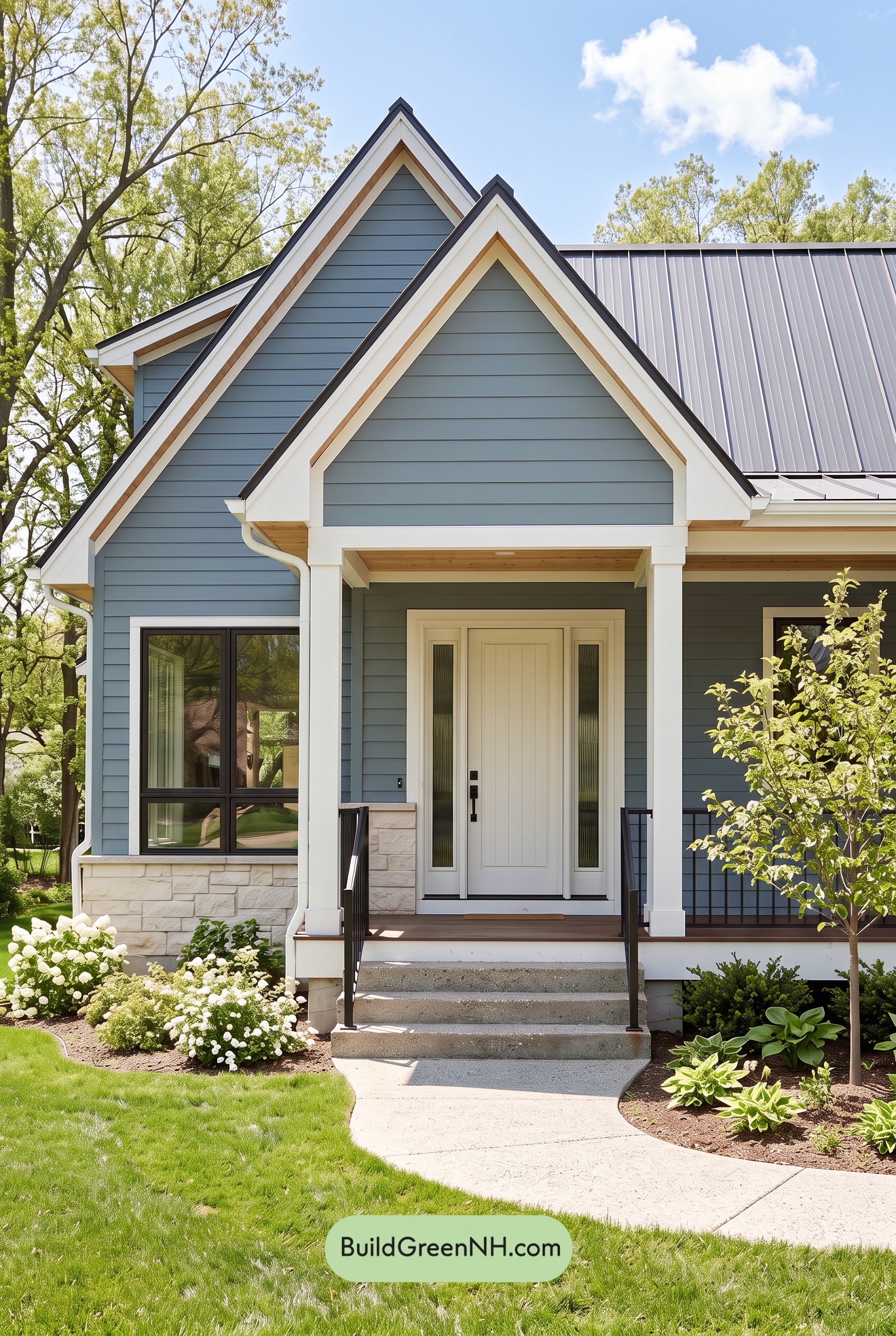
This layered blue, white, and charcoal exterior palette feels polished yet welcoming, giving the home crisp architectural definition without losing its relaxed charm.
A Calm Blue Foundation
A muted medium blue covers the main siding, creating a serene backdrop that feels especially at home among leafy landscaping and bright skies. The horizontal siding carries this cool shade across the facade, while the vertical gable detailing adds subtle texture without interrupting the cohesive look.
Because the blue is softened rather than overly bright, it gives the house a timeless, livable character. It feels fresh in daylight, elegant in shadow, and substantial enough to balance the home’s strong rooflines.
Bright Trim That Defines Every Detail
Soft white trim outlines the windows, roof edges, gables, and porch structure with clean contrast. This light shade brings attention to the craftsmanship of the exterior, making the layered eaves and peaked gables feel sharper and more intentional.
The white porch columns extend that brightness down to the entry, creating a gracious transition between the blue siding and the pale stone at the column bases. Together, these lighter elements keep the exterior from feeling heavy and give the front porch an open, inviting presence.
Deep Gray Accents Add Structure
Deep charcoal-gray window frames introduce a tailored, grounding accent against the blue siding and white trim. Their dark tone gives the windows a more defined appearance, reinforcing the home’s modern craftsman-inspired character.
The railings repeat that same dark gray family at the steps, creating a visual link from the entry upward to the windows and roof. A dark gray roof completes the composition, offering a strong cap that anchors the lighter and cooler shades below.
A Front Door with Personality
The front door brings a richer blue-green shade into the scheme, offering a more saturated moment at the heart of the porch. It stands out from the softer blue siding while still belonging naturally within the cool-toned palette.
This deeper accent gives the entry a focal point without competing with the architecture. Framed by white trim and flanked by dark railings, the door feels both cheerful and refined.
The Overall Mood
This exterior color scheme is calm, crisp, and quietly confident. The muted blue siding provides softness, the white trim supplies brightness, and the charcoal-gray accents create enough depth to keep every layer of the facade distinct.
It is a beautifully balanced approach for a home that wants to feel classic but current: cool enough to feel sophisticated, bright enough to feel welcoming, and detailed enough to make the architecture shine.
Next, see how this color scheme looks under different lighting simulations throughout the day.
Overcast
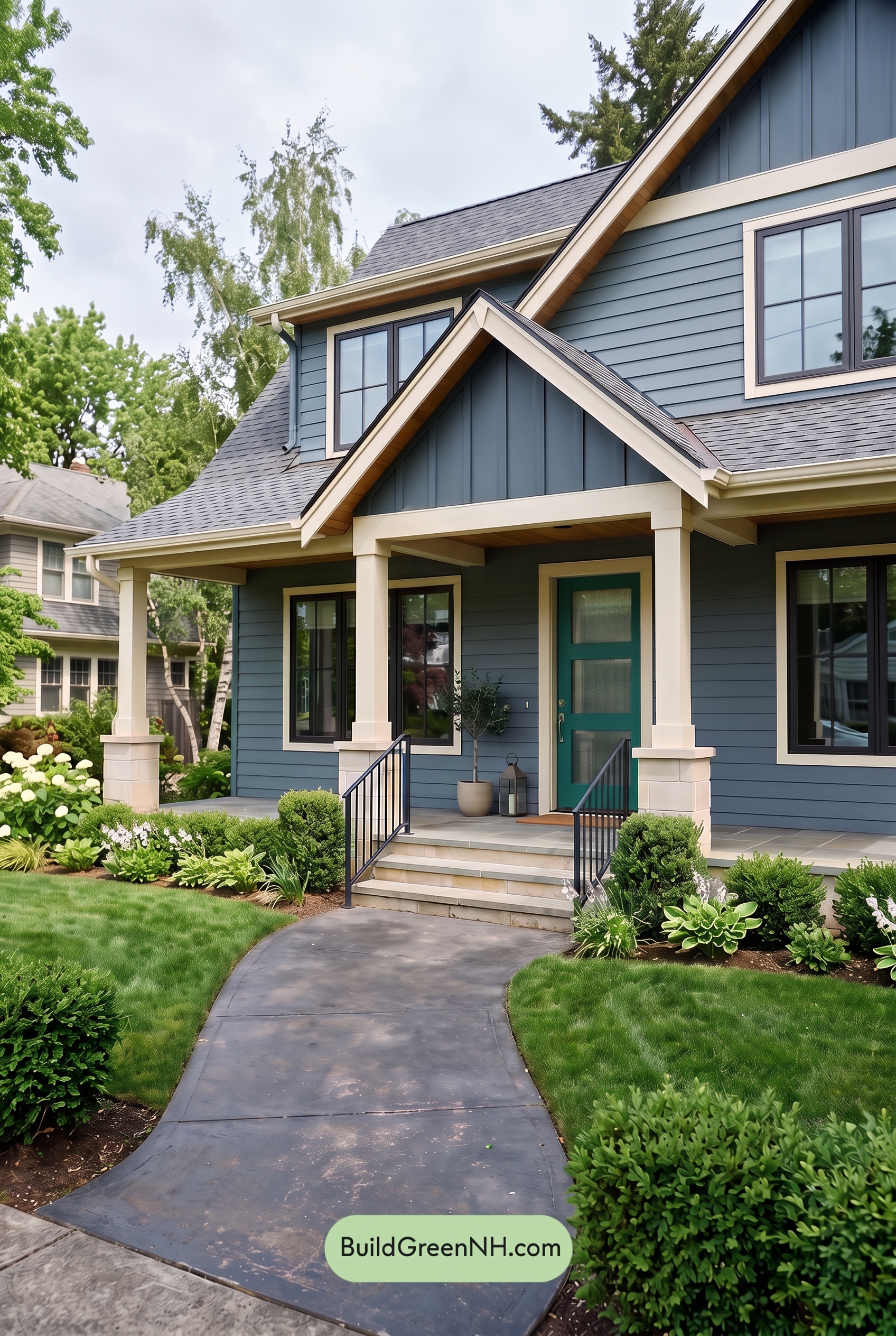
Under overcast skies, the blue siding takes on a quieter, slightly deeper cast than it does in neutral daylight, with its saturation appearing more restrained and its cool character more pronounced. The blue entry door remains a welcoming focal point, though its richness softens without direct sun.
The white trim and columns lose some crisp brightness and read as gentler, warmer light neutrals, while the gray window frames and railings blend into softer shadows. With fewer sharp highlights and less contrast across the façade, the home feels calm, tailored, and inviting rather than bright and high-energy.
Golden Hour
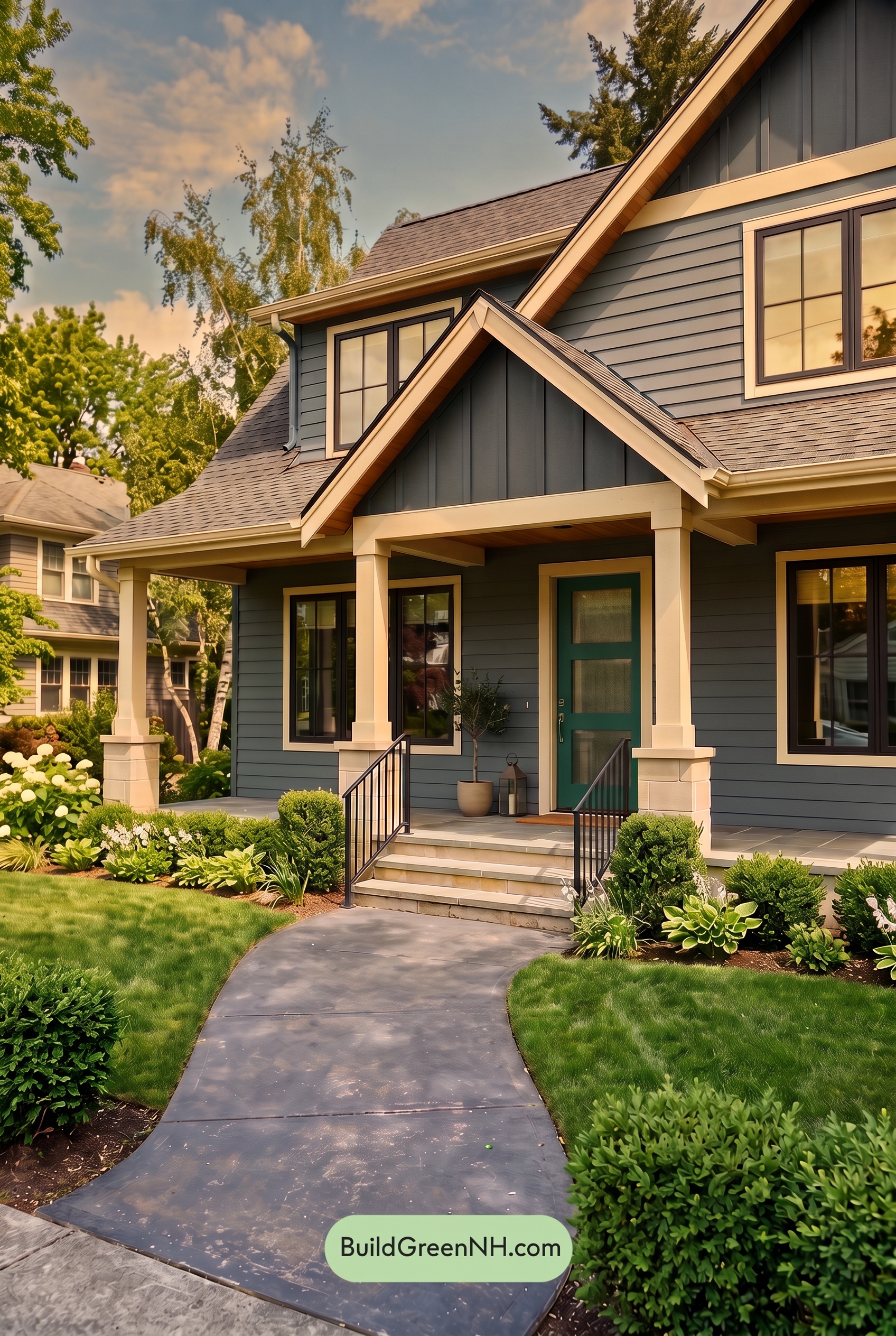
Golden Hour lends the blue siding a softer, slightly warmer cast than neutral daylight, while its saturation feels richer along the sunlit planes and more muted where the porch and gables fall into shade. The blue entry becomes deeper and more inviting, creating a stronger focal point against the glowing exterior.
White trim and columns shift from crisp, bright white to a creamy warm neutral, catching the low light and outlining the rooflines with a gentle glow. Meanwhile, the gray window frames and railings settle into darker, moodier shades, sharpening the contrast around the illuminated trim and giving the façade a calm, welcoming evening character.
Shade
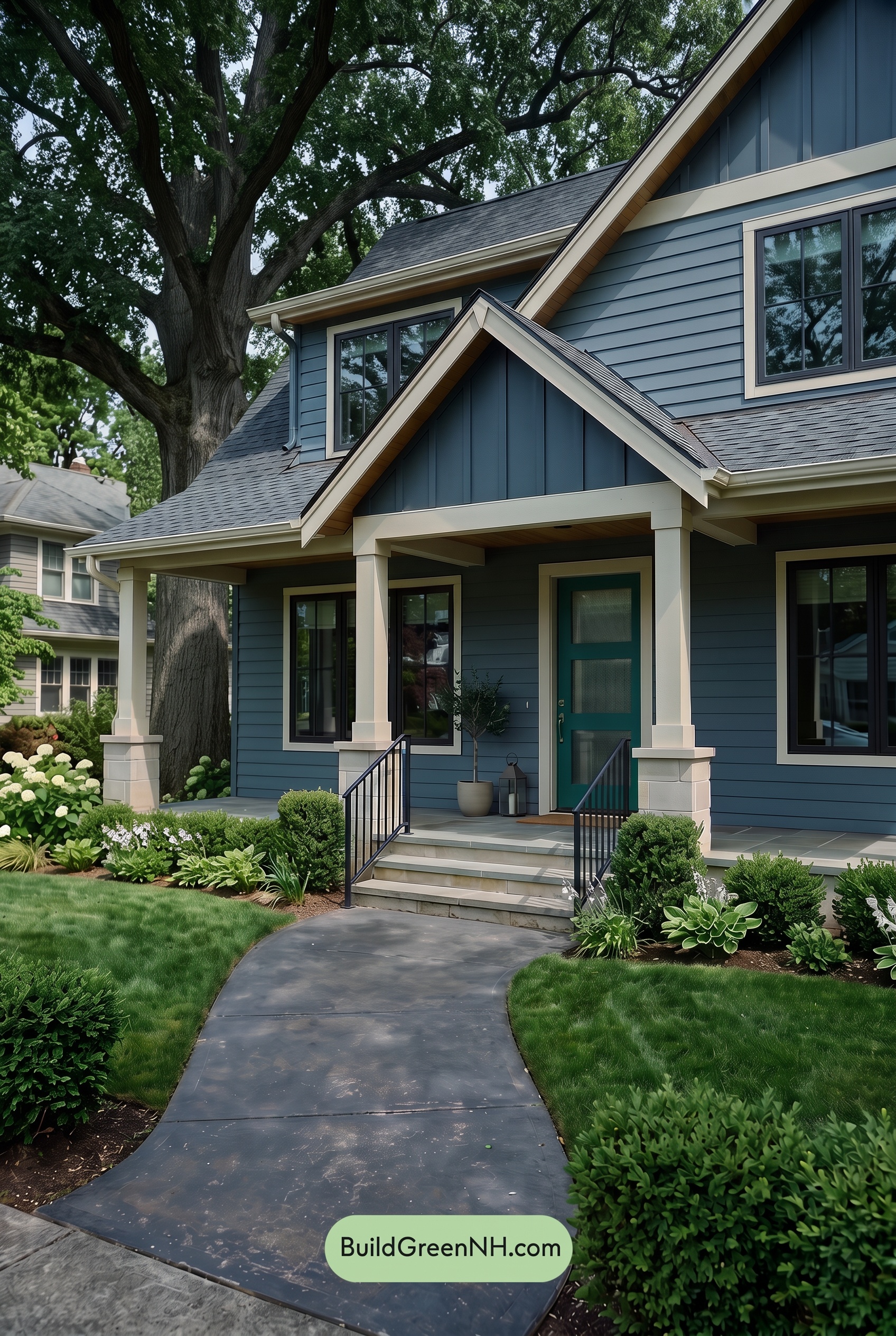
In shade, the blue exterior takes on a deeper, more muted character than it would in neutral daylight, with its saturation appearing calmer and its cooler undertones more pronounced. Shadows settle into the siding and porch recesses, giving the facade added dimension while creating a quieter, more grounded mood.
The light neutral trim and columns soften slightly under the tree canopy, reading less bright but still offering crisp contrast against the darkened blue and gray details. The deeper blue at the entry becomes especially inviting in the lower light, while the gray accents recede gracefully to keep the overall palette polished and serene.
Nighttime
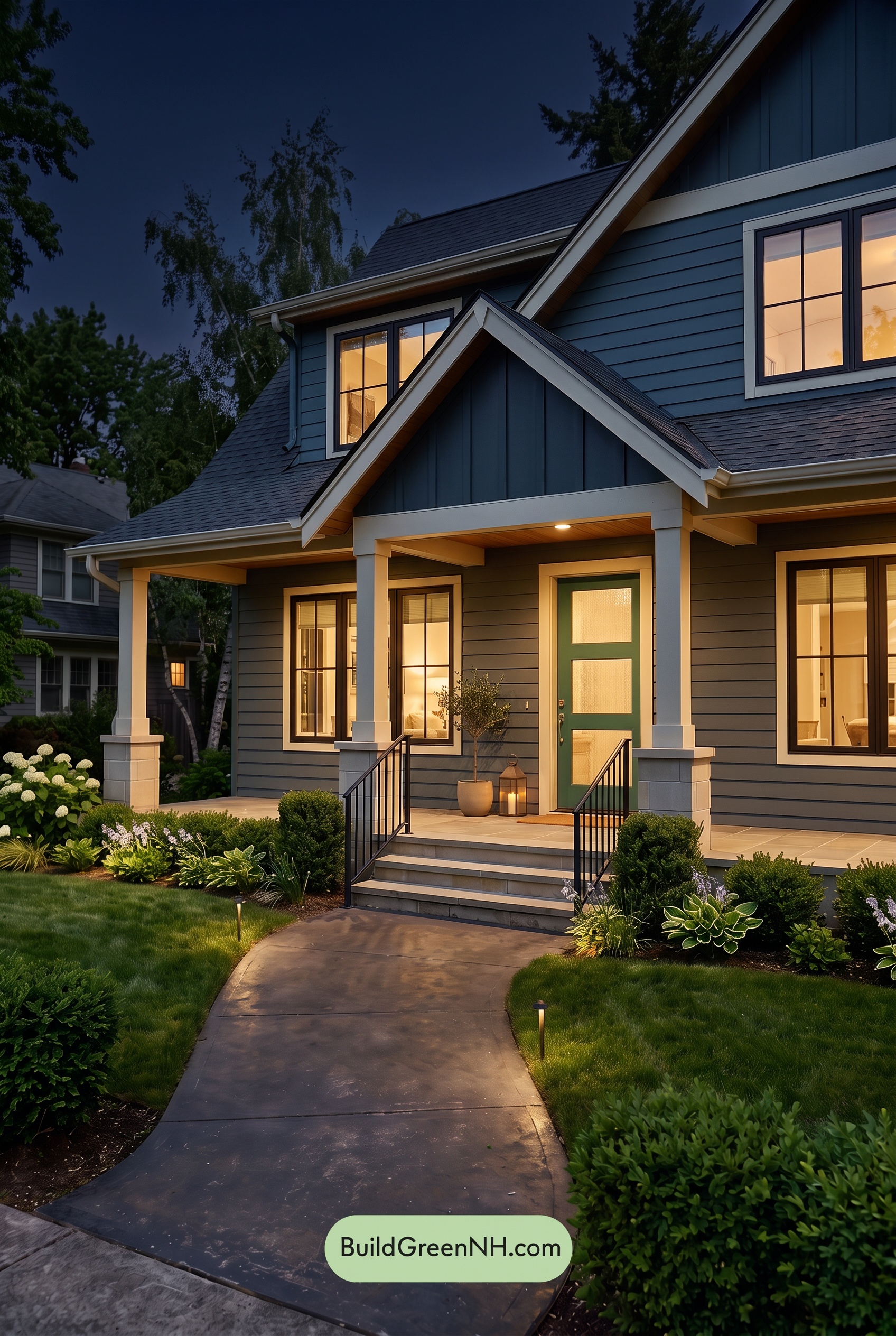
At night, the blue siding deepens into a richer, more subdued shade, with its saturation softened by the cool darkness. In place of daylight’s even clarity, shadowed planes recede while the white trim and columns catch the available light, creating crisper contrast around the rooflines, porch, and windows.
Warm interior and porch lighting adds a welcoming glow that makes nearby white and gray details feel softer and slightly warmer. The darker gray frames and railings become more graphic against the illuminated areas, while the blue entry door takes on a calm, intimate presence—giving the whole exterior a cozy, polished nighttime mood.
Pin these for later:
Want More?
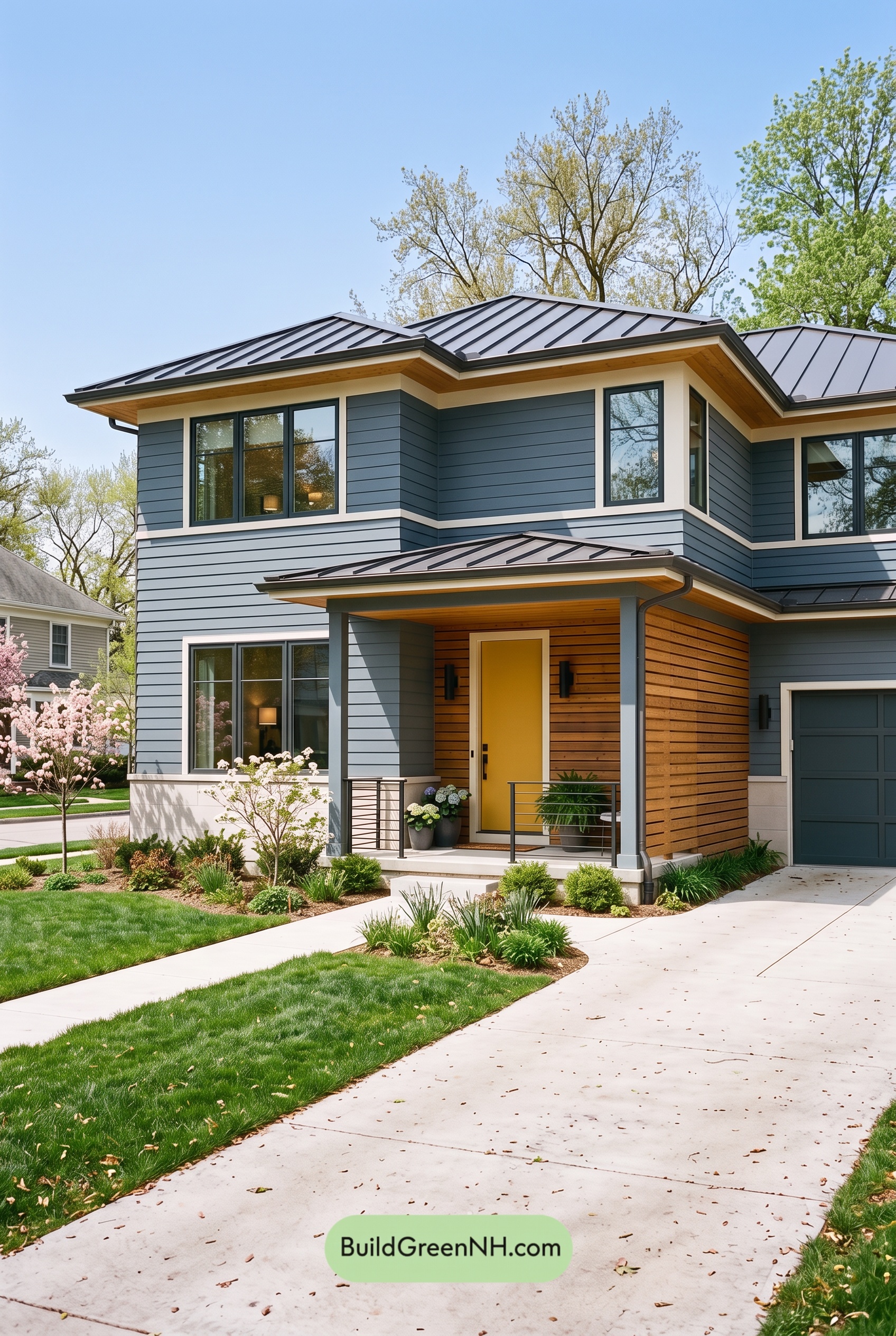 Blue House Front Door Color Scheme: Harbor Saffron
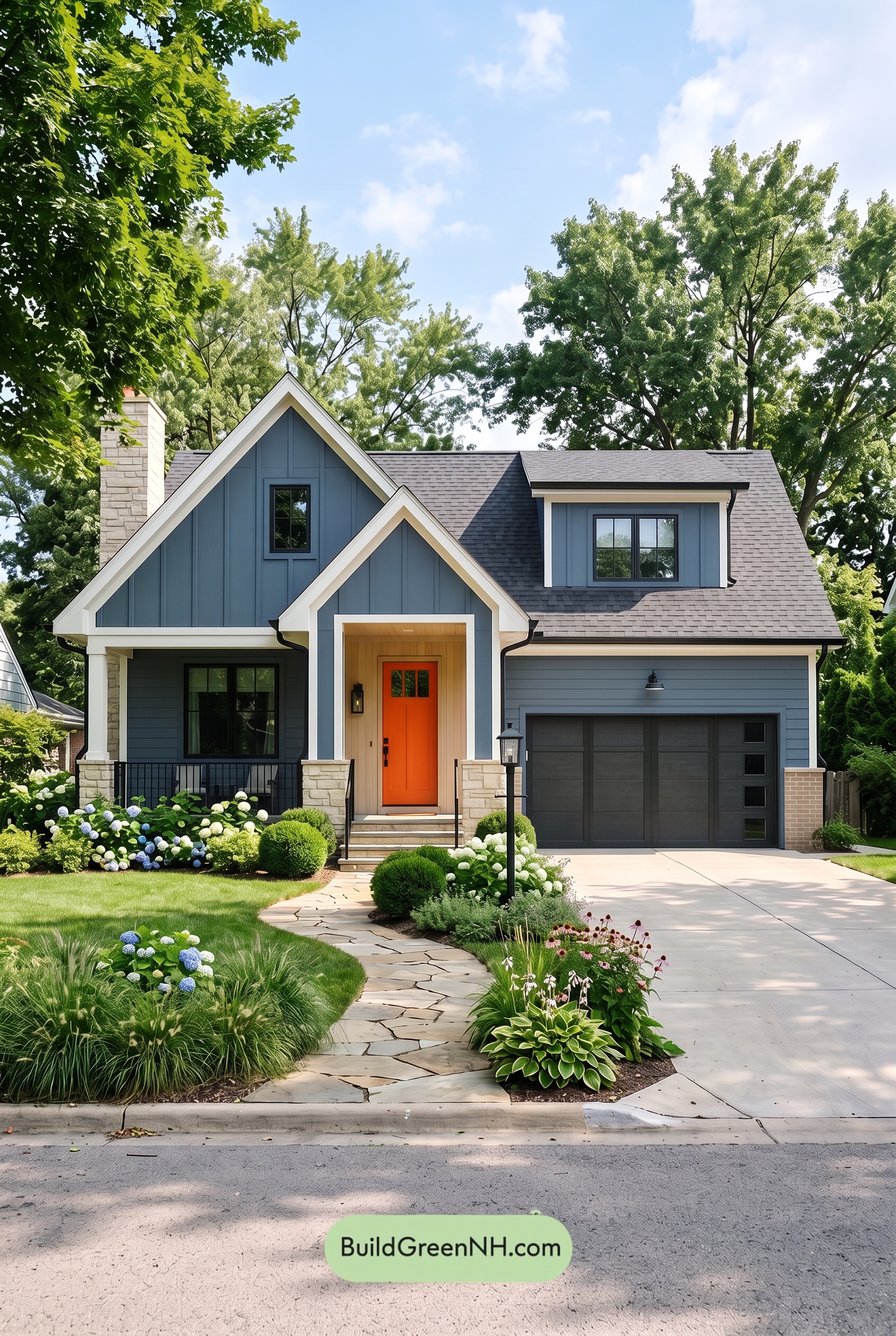 Blue House Front Door Color Scheme: Cobalt Persimmon
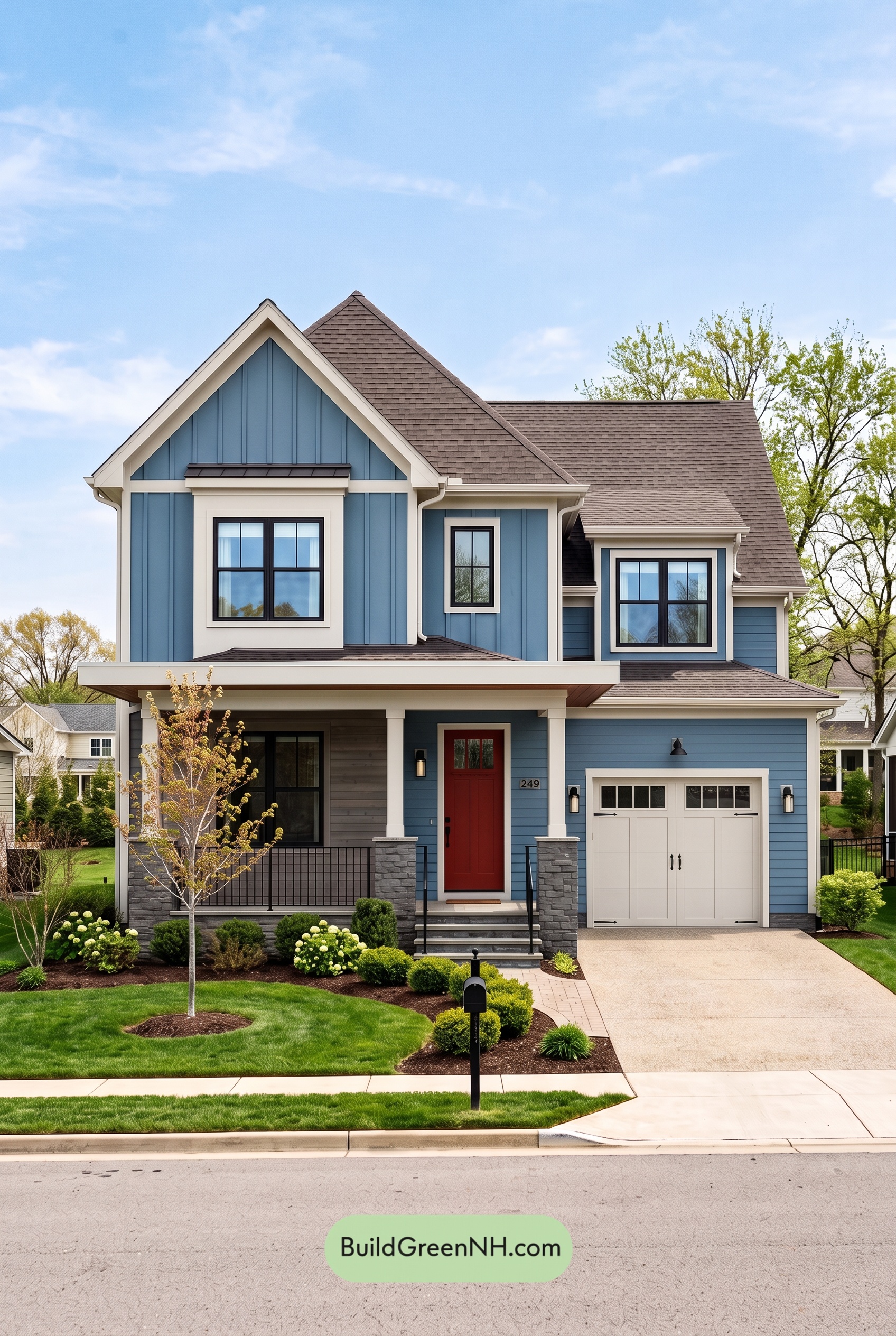 Blue House Front Door Color Scheme: Denim Poppy
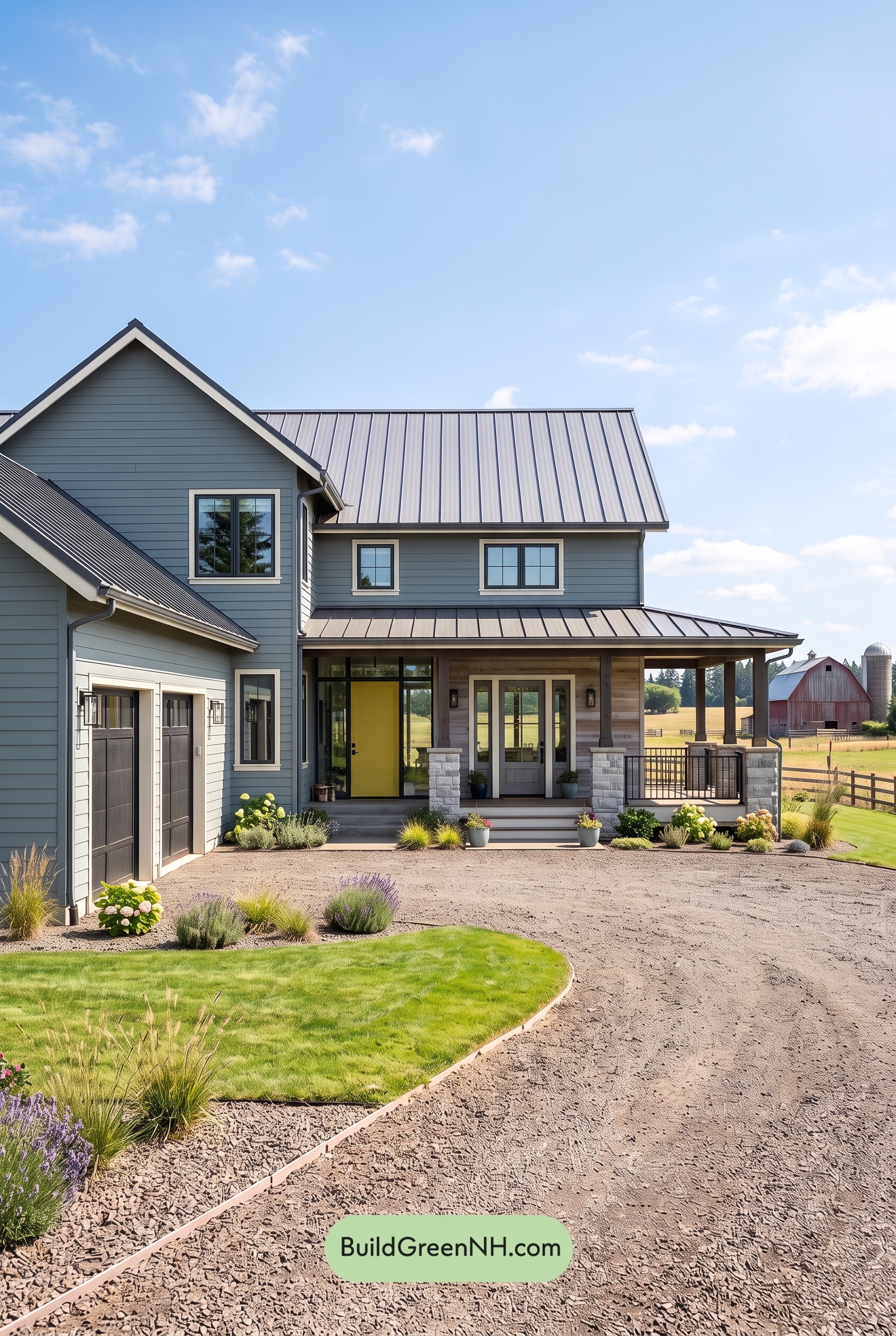 Blue House Front Door Color Scheme: Slate Citron
 Blue House Front Door Color Scheme: Mist Blue Haven
Table of Contents