Last updated on
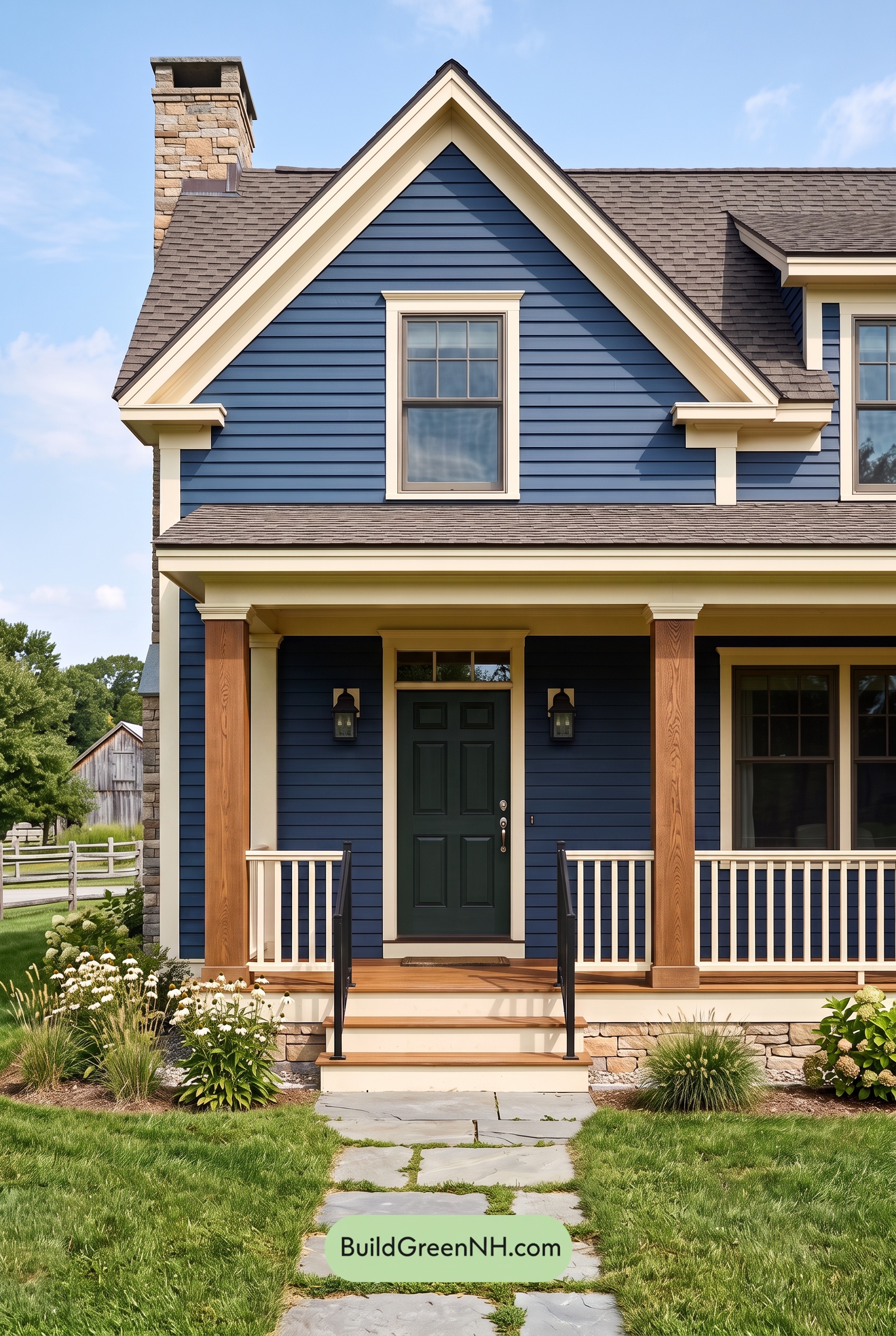

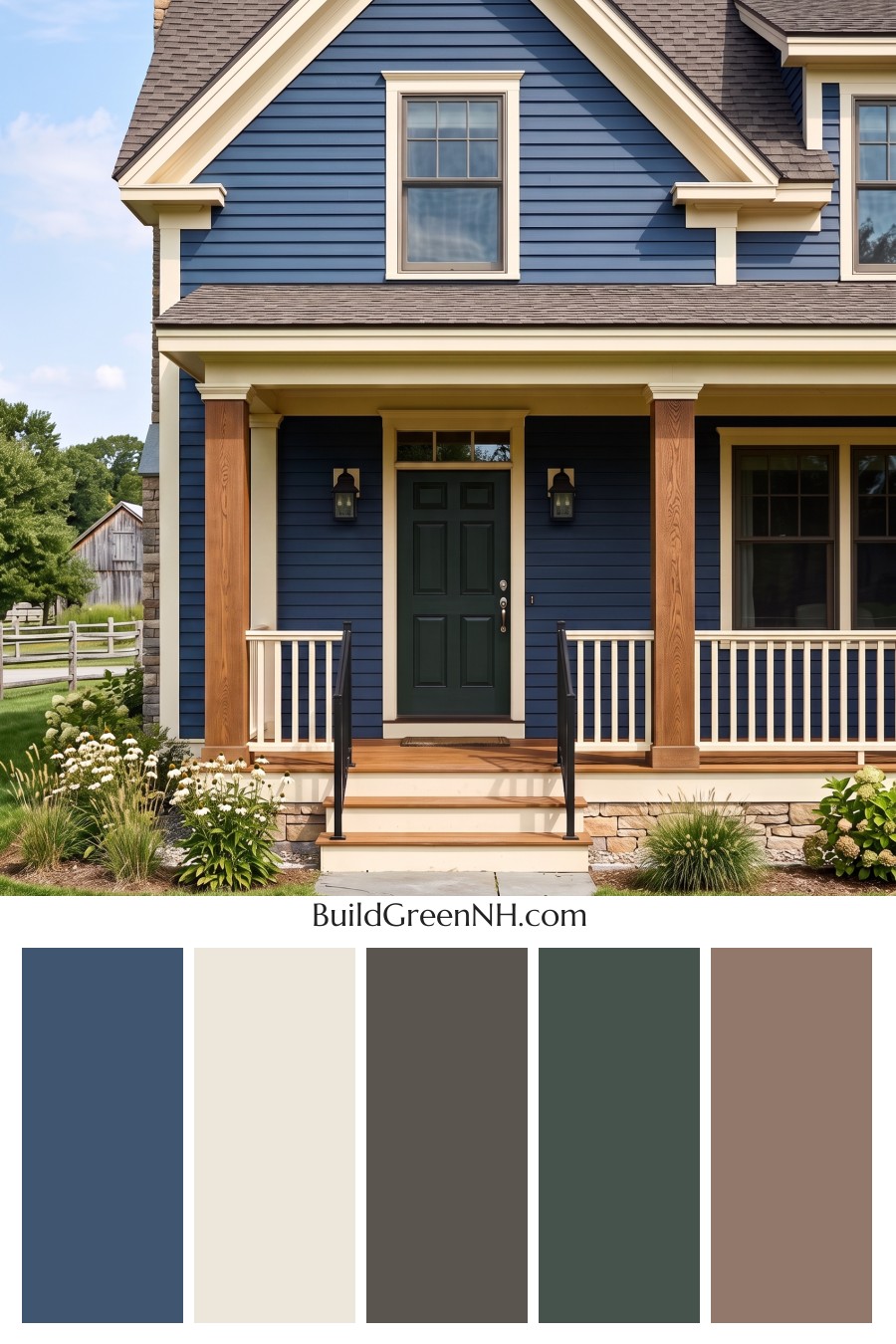
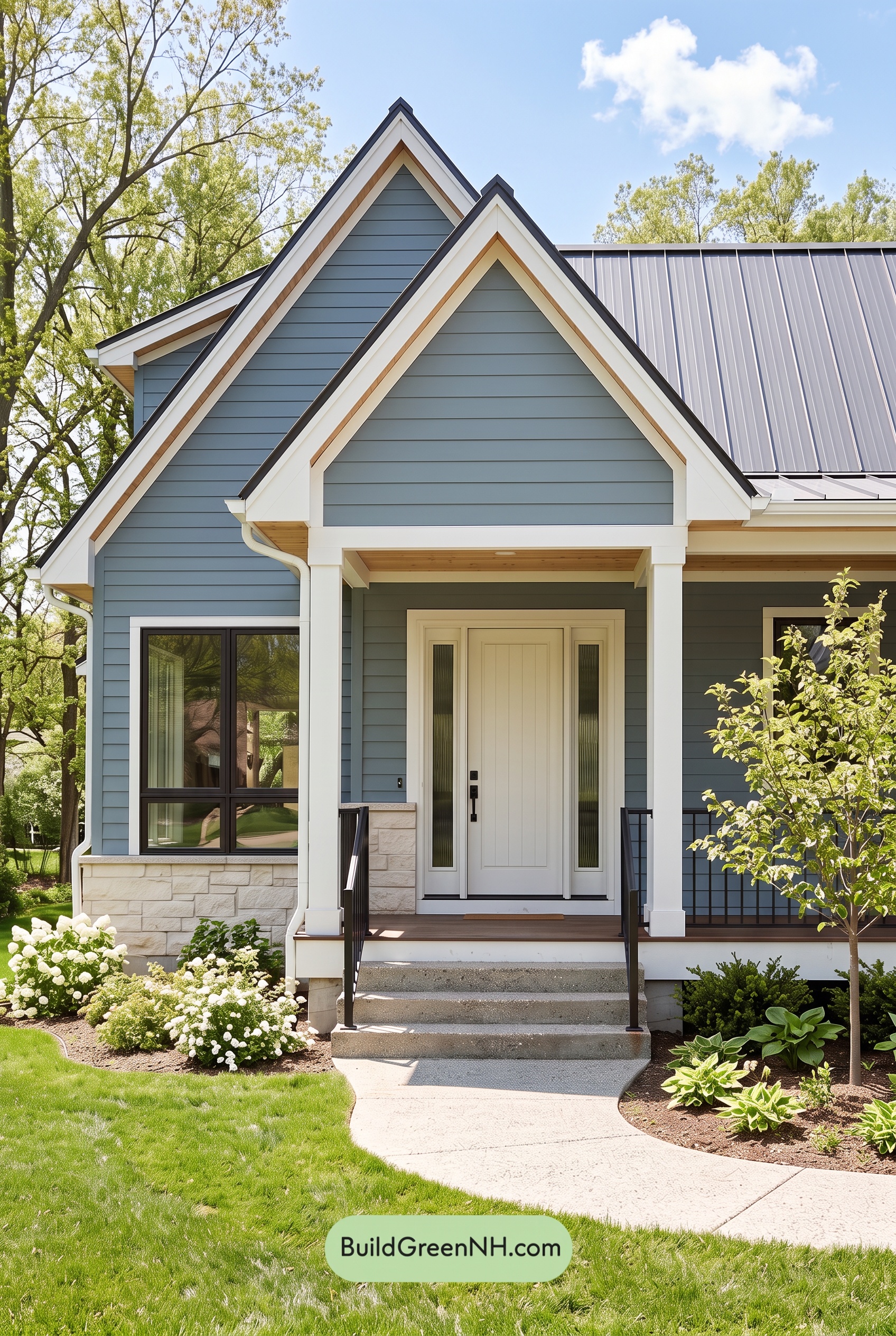
This deep blue, warm white, natural brown, and dark green exterior palette feels timeless, polished, and instantly welcoming.
A Rich Blue Foundation
The siding is dressed in a deep, muted blue that gives the home a confident presence without feeling overly formal. Its cool depth emphasizes the crisp horizontal lines of the facade and creates a beautiful backdrop for every lighter architectural detail. The shade feels classic enough for a traditional home while still bringing a fresh, tailored character to the exterior.
Warm White Trim That Defines the Details
A soft warm white trim brightens the rooflines, gables, window surrounds, porch structure, and railings. This lighter shade is especially effective around the steep front gable, where it draws attention to the home’s height and graceful symmetry. Against the blue siding, the trim looks clean and luminous rather than stark.
The same warm white continues along the porch railings and lower trim, tying the entry area neatly to the upper facade. Repeating this shade across several exterior elements keeps the design cohesive from curb to roof peak.
Natural Brown Adds Warmth and Texture
Medium warm brown window frames and porch columns introduce a natural, grounding note. Their wood-inspired warmth softens the cool blue siding and prevents the palette from feeling too nautical or crisp. The brown tones also echo the earthy variation in the stonework, creating an easy transition between the home and the surrounding landscape.
The dark neutral roof supports this layered look beautifully. Its subdued, weathered character sits quietly above the stronger siding color, while the stone chimney adds more warm gray and sandy brown texture to the composition.
A Deep Green Door Creates a Memorable Entry
The front door in a nearly black forest green provides the perfect focal point. It is darker than the siding, but its green undertone keeps it connected to the garden and lawn. Framed in warm white and flanked by natural brown columns, the door feels intentional, refined, and inviting.
Dark railing accents near the steps add another tailored contrast, reinforcing the depth of the entry without competing with the door. Together, these darker touches give the porch a sense of structure and visual weight.
Classic, Welcoming, and Well Balanced
This scheme succeeds because it balances cool and warm tones with care. The deep blue siding brings calm sophistication, the warm white trim supplies brightness, the brown details add an organic feel, and the dark green door delivers a subtle moment of personality. The result is a home exterior that feels rooted in tradition yet fresh enough to stand out beautifully in every season.
Next, see how this color scheme looks under different lighting simulations throughout the day.
Overcast
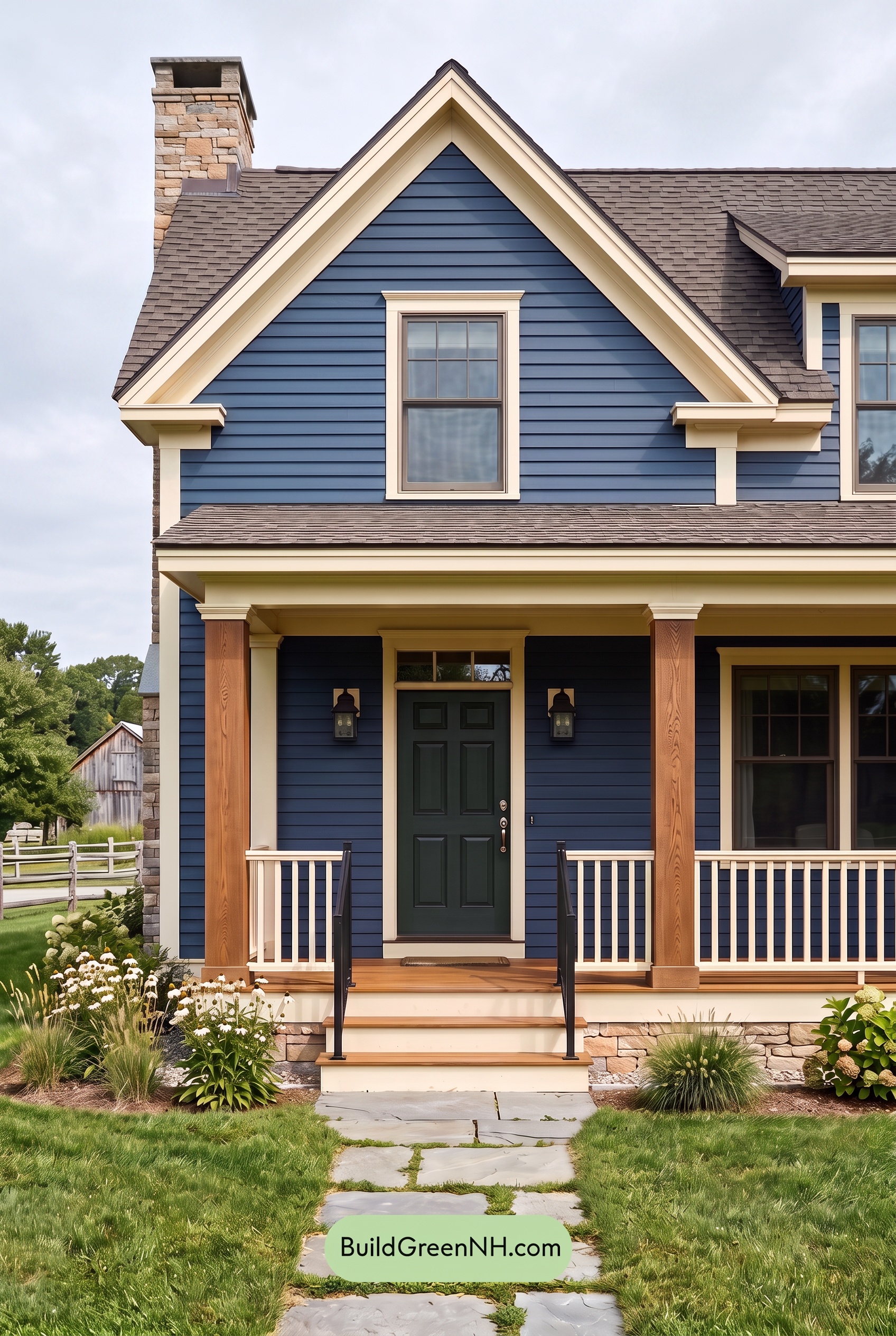
Under overcast skies, the blue siding reads a touch deeper and more subdued than it does in neutral daylight, with its saturation softened by the cool, diffused light. The warm white trim and railings lose some of their sunlit glow, appearing creamier and quieter, while the brown frames and columns feel less golden and more naturally grounded.
Because clouds soften direct shadows, the facade takes on a smoother, lower-contrast look, allowing the green door to blend more gently into the overall palette. The result is a calm, refined mood: less crisp and bright than neutral daylight, but beautifully cohesive and welcoming.
Golden Hour
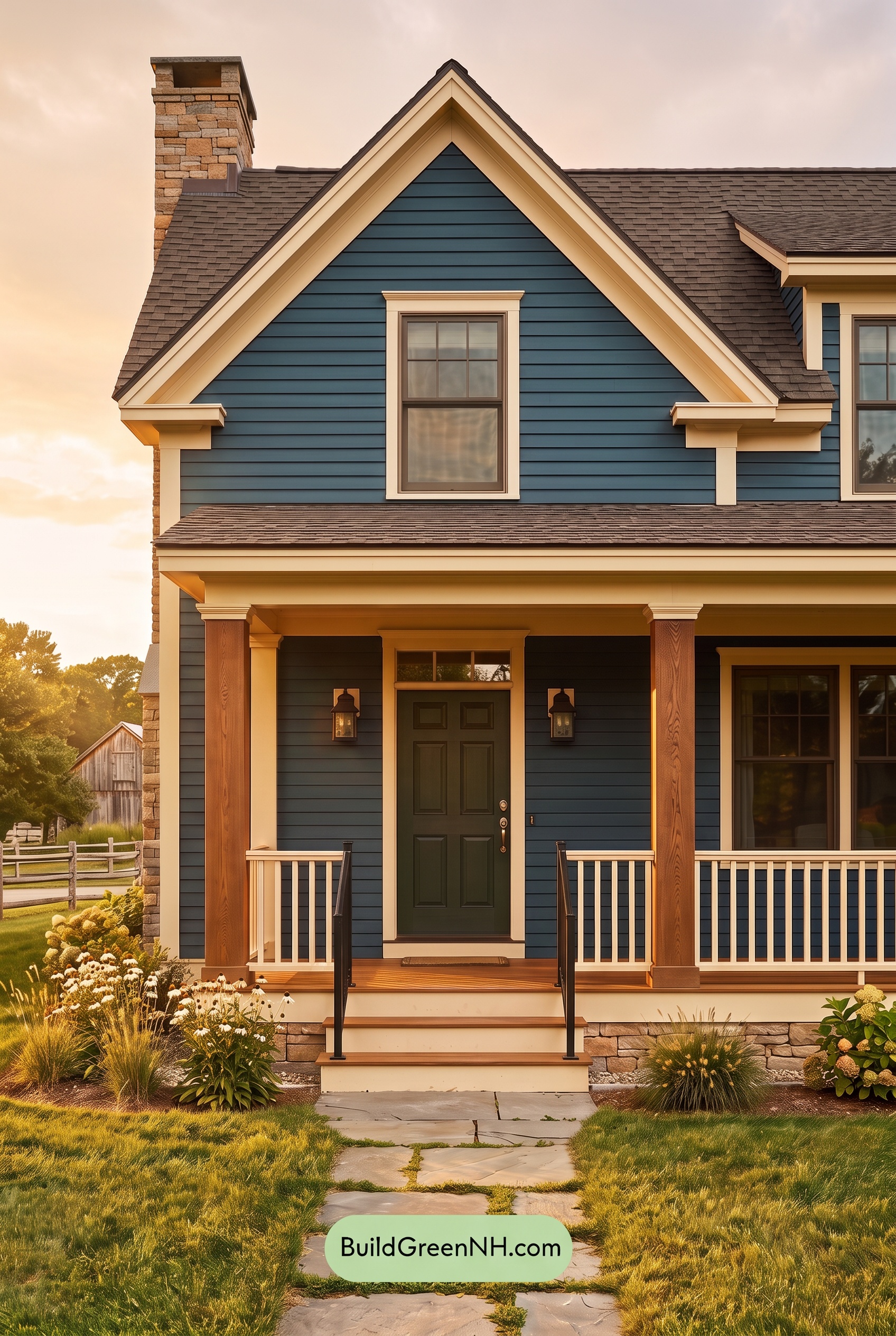
Under neutral daylight, the blue siding reads crisp and balanced, with the light trim providing clean, bright definition. At Golden Hour, the low, warm light softens that contrast: the blue takes on a deeper, slightly muted cast, while the pale trim and railings glow with a creamy warmth. The brown window frames and columns become richer and more pronounced, adding a welcoming, natural depth.
Longer shadows settle beneath the rooflines, porch, and siding courses, making the architecture feel more layered and dimensional. The green entry door appears darker and more grounded against the warmed façade, while the overall palette shifts from fresh and tailored in daylight to cozy, saturated, and inviting in the evening glow.
Shade
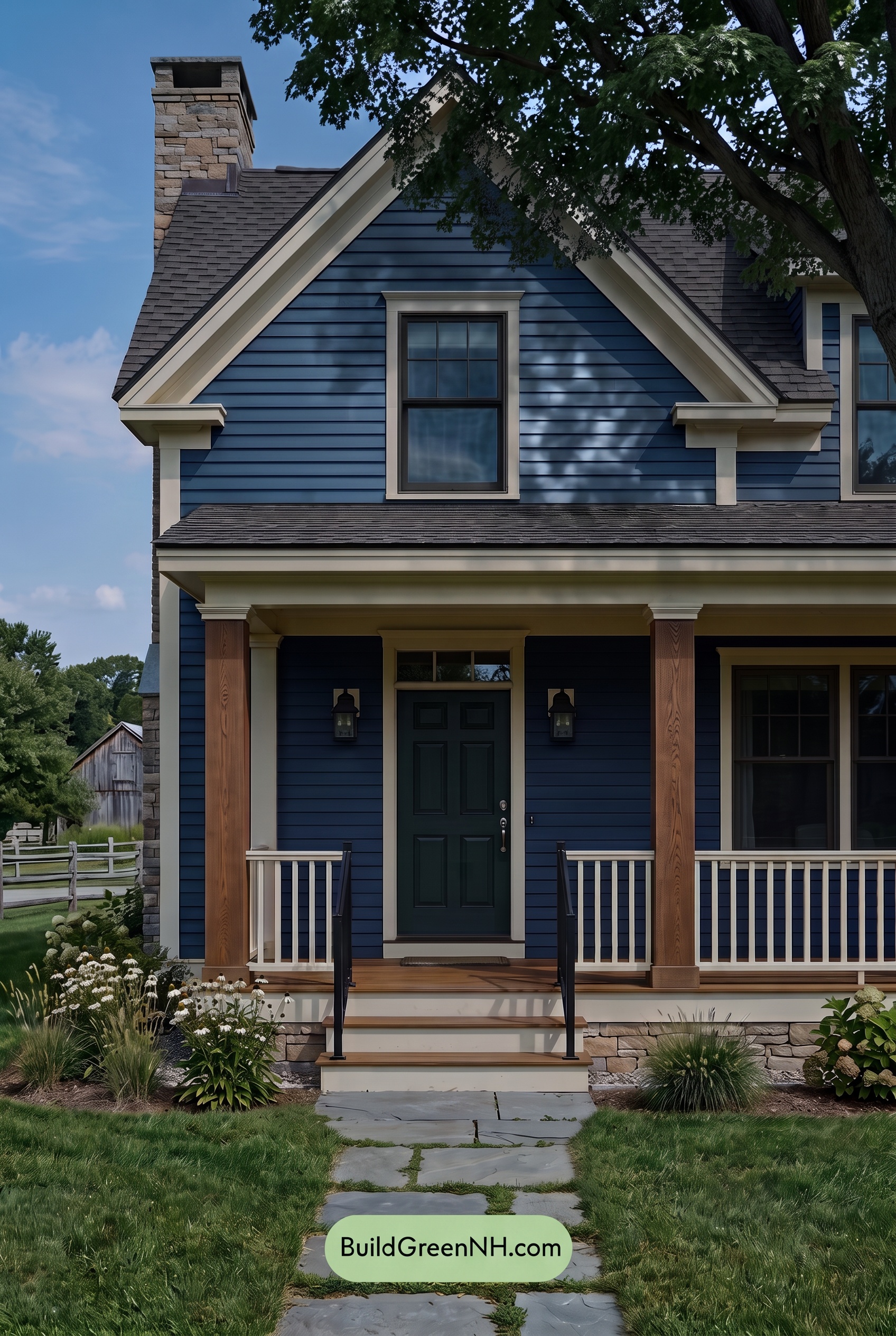
In shade, the blue siding takes on a deeper, calmer character than it would in neutral daylight, with its saturation reading richer and slightly cooler across the recessed areas. Dappled tree shadows create bands of darker blue that emphasize the horizontal siding and give the façade a layered, tailored look.
The light trim and railings lose some brightness in the softer light, shifting toward a gentler warm-neutral impression rather than a crisp highlight. Against these subdued pale accents, the brown columns feel warmer and more grounded, while the deep green entry becomes moodier and more inviting. Overall, shade lowers contrast in the broad surfaces but heightens the architectural drama where sun and shadow meet.
Nighttime
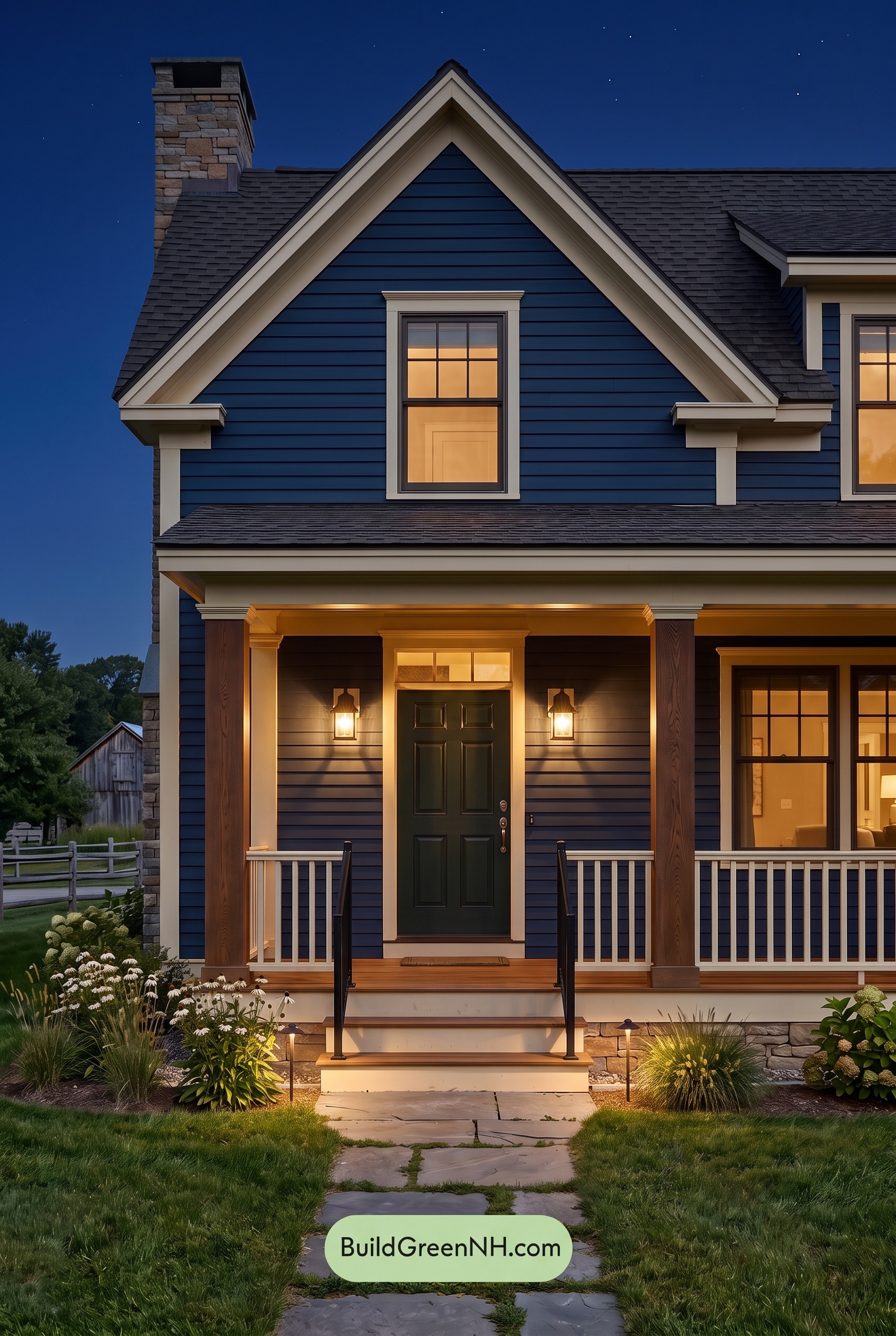
At night, the blue siding takes on a deeper, more saturated character than it shows in neutral daylight, settling into the shadows with a calm, dramatic presence. The light trim and railings appear softer and warmer near the porch illumination, creating crisp contrast against the darkened blue while keeping the architectural edges visible.
Warm lighting enriches the brown columns and window frames, bringing out a welcoming depth that daylight presents more evenly. The green front door recedes into a moodier shade in the shaded areas, then gains a subtle warmth around the entry lights, making the porch feel intimate, layered, and inviting.
Pin these for later:
Want More?
 Blue House Front Door Color Scheme: Harbor Saffron
 Blue House Front Door Color Scheme: Cobalt Persimmon
 Blue House Front Door Color Scheme: Denim Poppy
 Blue House Front Door Color Scheme: Slate Citron
 Blue House Front Door Color Scheme: Mist Blue Haven
Table of Contents