Last updated on
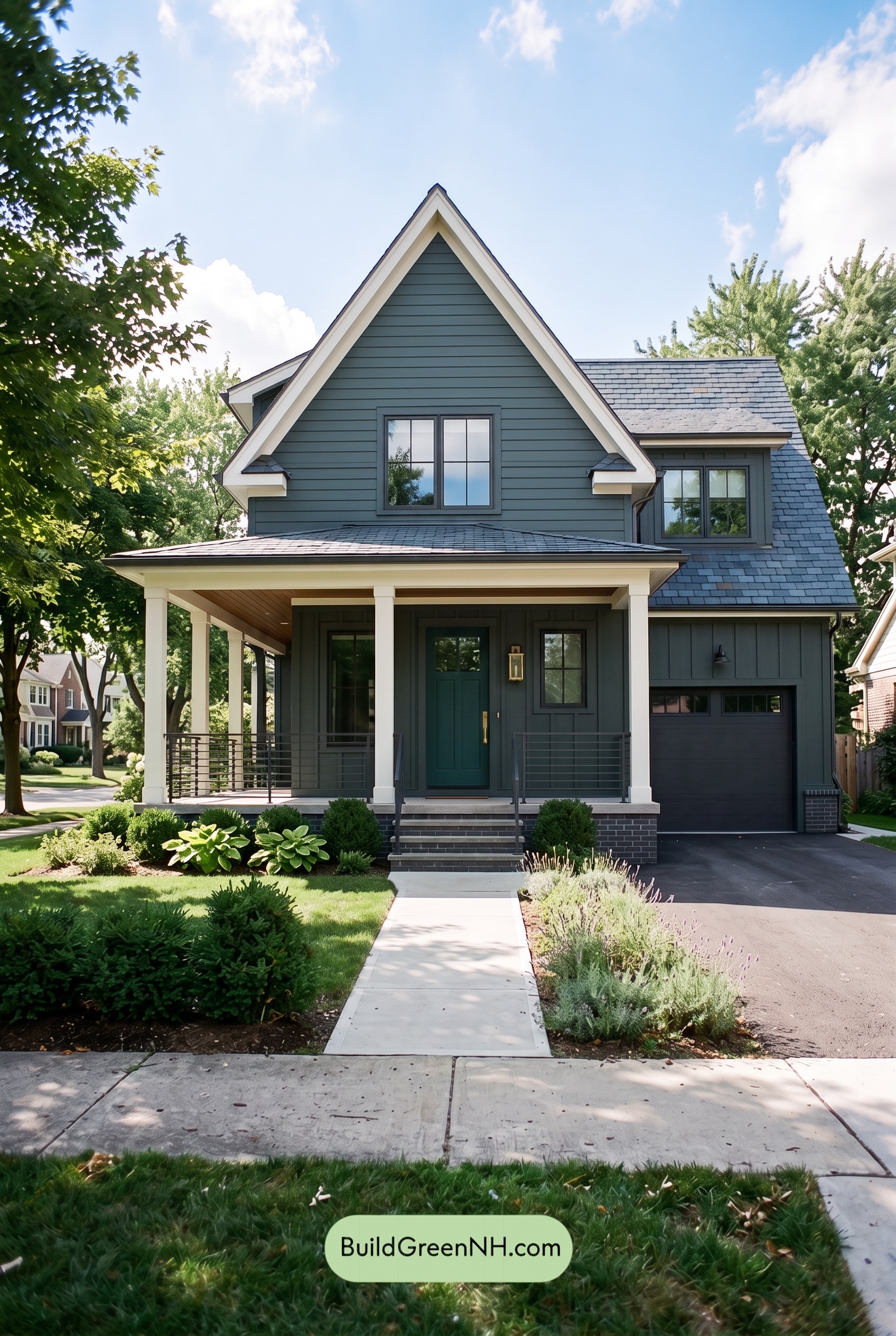

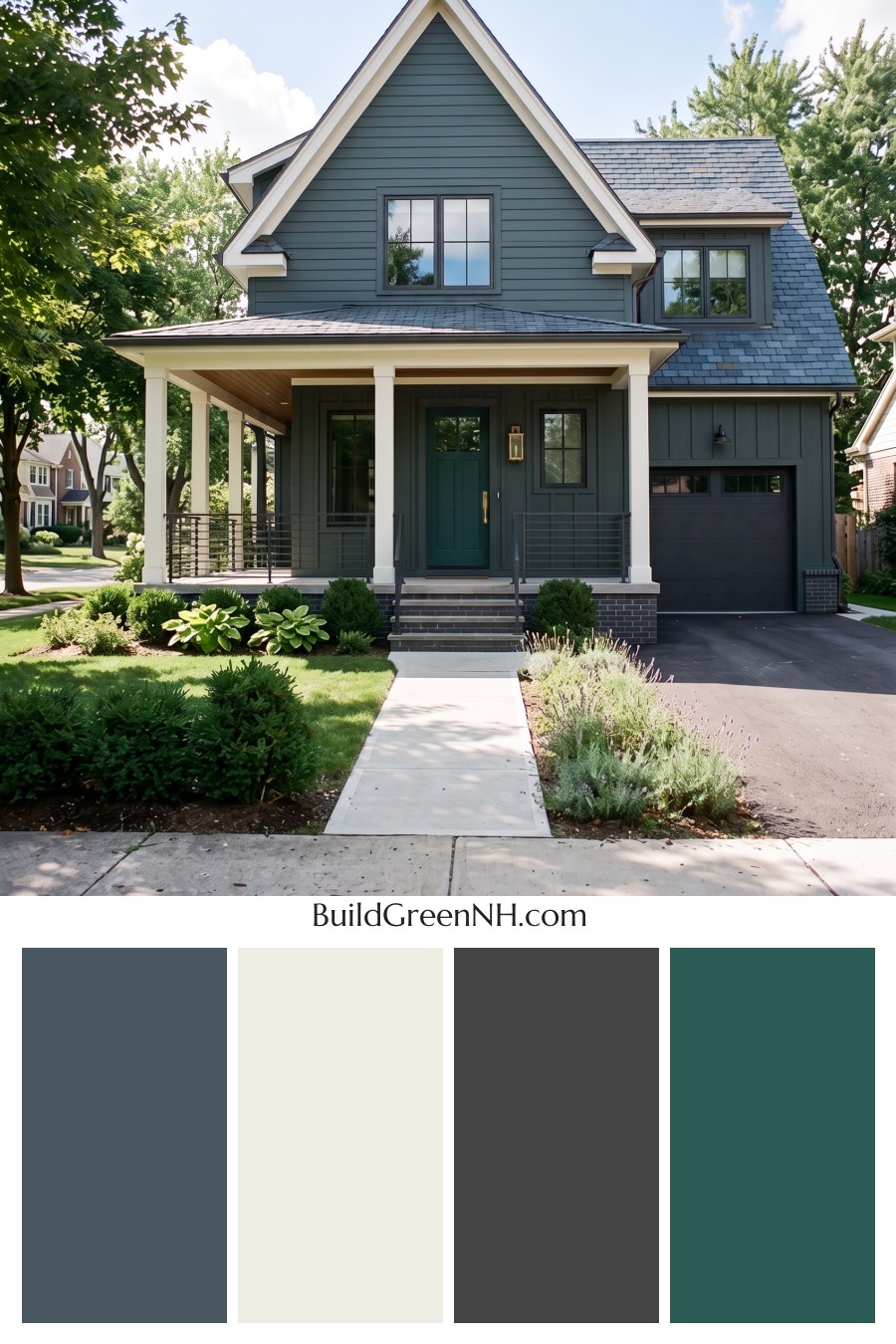
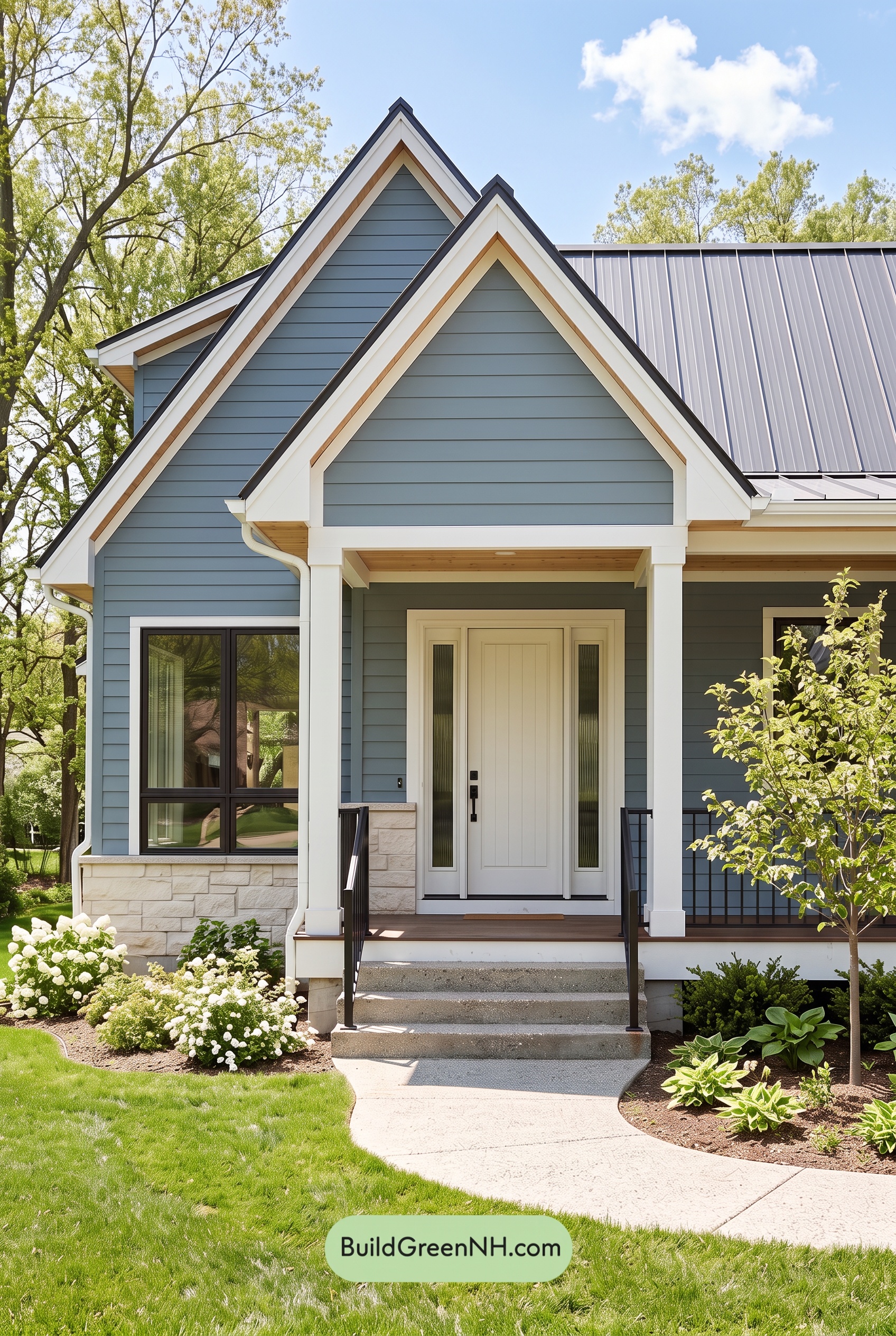
This layered blue, white, and charcoal exterior scheme gives the home a polished presence that feels both timeless and confidently modern.
A Calm Blue Foundation
The siding is finished in a muted, blue-gray shade that brings depth to the tall gables and broad front façade without feeling heavy. Its softened, slightly cool character suits the home’s clean lines beautifully, while the horizontal siding adds subtle texture across the upper levels and porch areas.
This is a blue family shade with impressive versatility: it feels crisp in bright daylight, yet becomes richer and more intimate in shaded areas beneath the porch. Against the surrounding greenery, it creates a composed, welcoming backdrop rather than competing with the landscape.
Bright Trim That Defines the Architecture
Warm white trim traces the rooflines, gables, eaves, and porch structure with striking clarity. The contrast is especially effective around the steep front gable, where the light trim sharpens the home’s silhouette and gives the roofline a tailored finish.
The same warm white appears on the porch columns and fascia, visually lifting the entry and balancing the darker body color. Because this light shade is used consistently, every architectural element feels connected—from the upper gable to the covered porch below.
Charcoal Details Add Modern Weight
Deep charcoal-gray window frames establish a crisp outline against the softer blue-gray siding. Their dark, grounded quality makes the windows read as intentional architectural features, not simply openings in the wall. The effect is clean and contemporary, especially with the divided window panes.
The garage door continues that charcoal-gray family in a broad, streamlined expanse. Rather than disappearing, it anchors the right side of the façade and works in harmony with the dark gray roof. Matching gray railings bring the same refined note to the front steps and porch, tying functional details into the larger palette.
A Rich Blue Entry Accent
The front door introduces a deeper blue-green shade that gives the entry its own quiet moment. It is darker and more saturated than the siding, so it naturally draws the eye toward the porch without breaking the home’s restrained color story.
Set between warm white columns and framed by charcoal-gray details, the door feels elegant and inviting. Small warm metallic accents near the entry add a gentle glow, making this deeper blue-green focal point feel even more welcoming.
Overall Mood: Tailored, Inviting, and Enduring
This exterior succeeds because each color family has a clear role. The muted blue-gray siding provides calm, the warm white trim adds brightness, and the charcoal-gray roof, frames, railings, and garage door supply structure. The deeper blue-green entry adds just enough contrast to create a memorable arrival.
Together, these shades deliver a home that feels established but fresh—equally at ease among mature trees, lush planting beds, and a neighborhood streetscape. It is a balanced scheme with enough contrast for curb appeal and enough softness to remain inviting year after year.
Next, see how this color scheme looks under different lighting simulations throughout the day.
Overcast
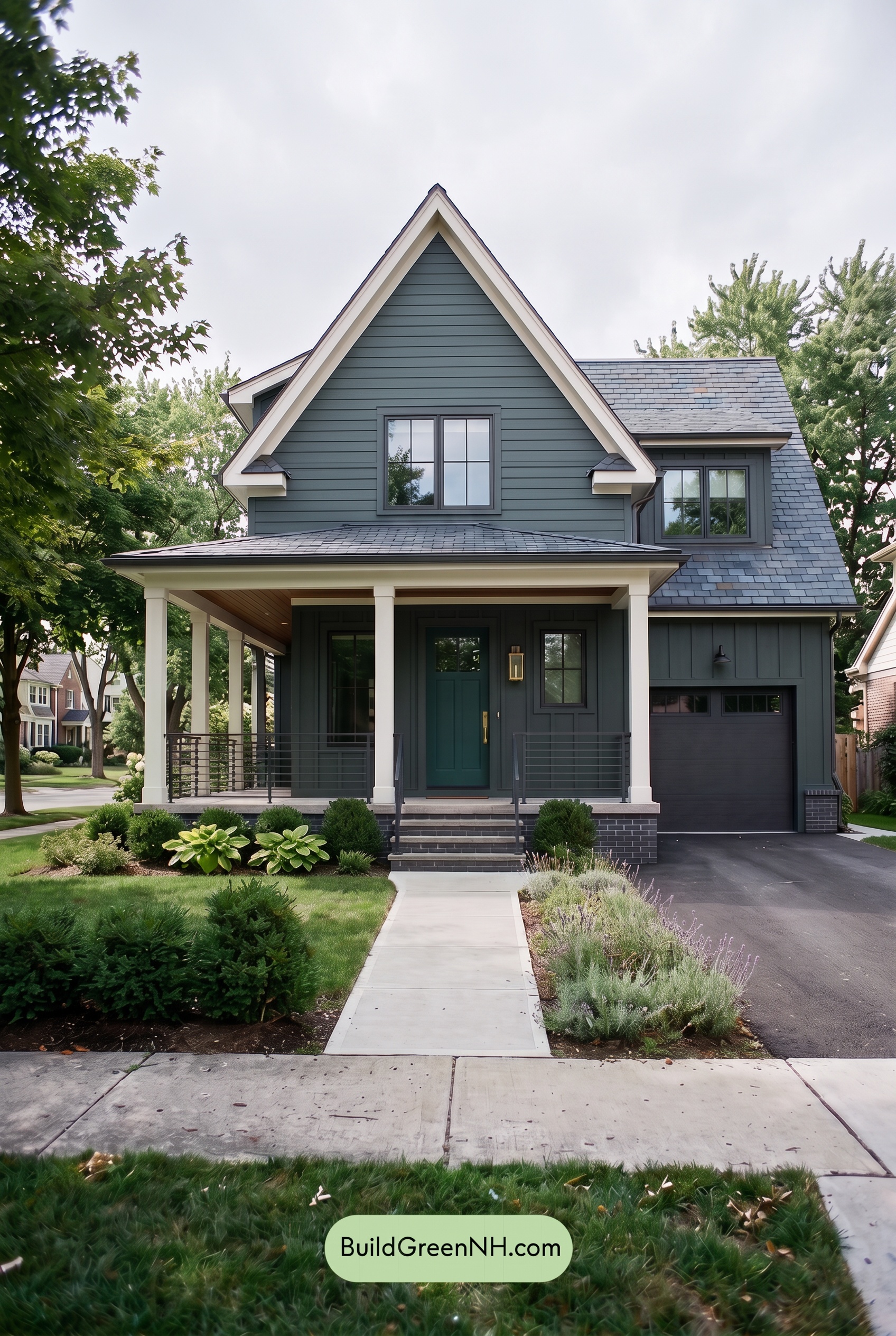
Under overcast skies, the blue siding takes on a deeper, quieter character than it has in neutral daylight, with softened saturation and a slightly cooler cast. The blue at the entry feels richer and more grounded, while the gray window frames, railings, and garage door settle into a smooth, cohesive mid-to-dark neutral range.
Without strong sun, shadows become broader and less dramatic, reducing the crisp contrast between the white trim and darker exterior elements. The white details appear softer and less warm, giving the facade a calm, polished mood that feels more understated and architectural.
Golden Hour
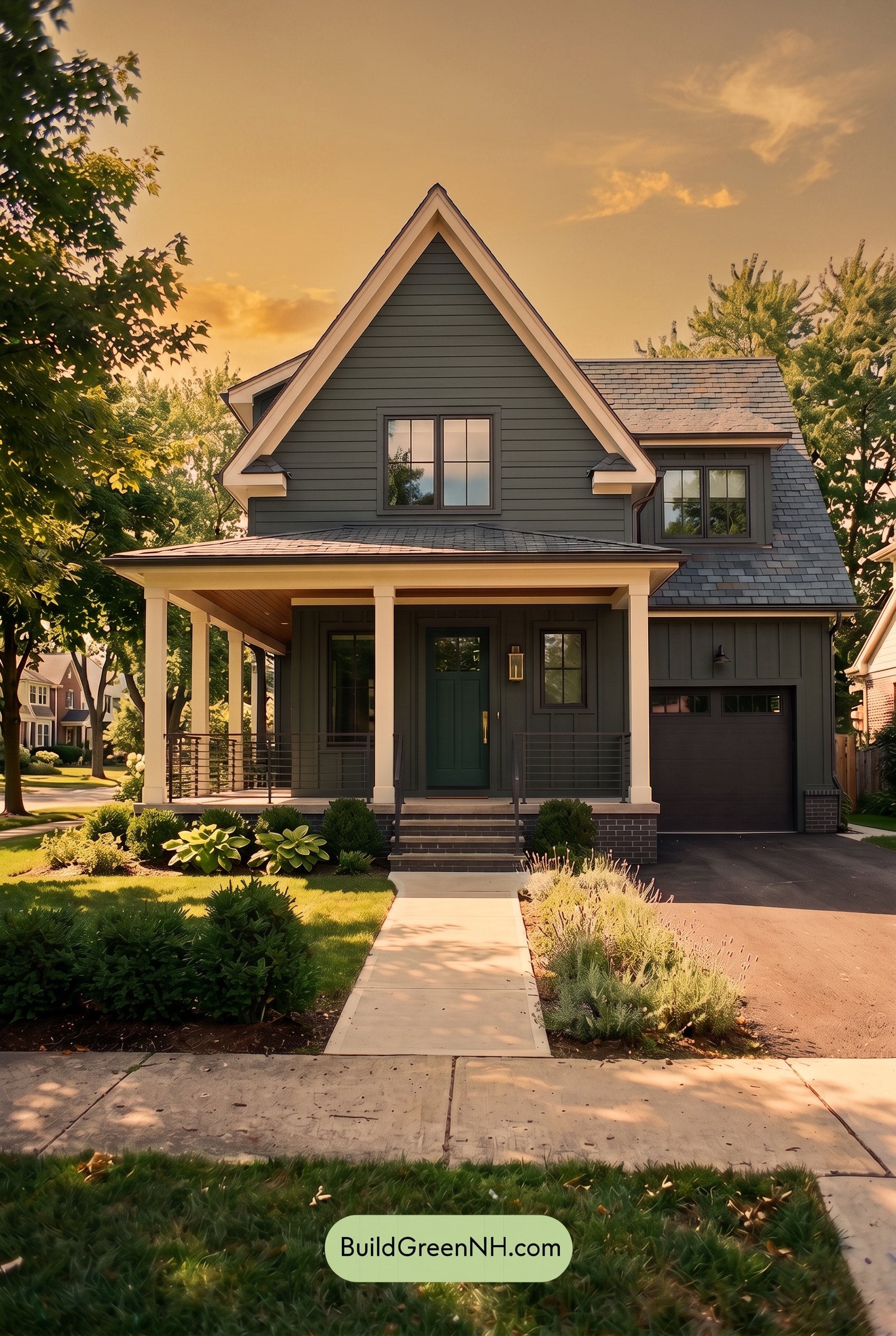
Under Golden Hour, the blue exterior takes on a softer, smokier cast than it shows in neutral daylight, while its deeper areas become more saturated and dramatic. The blue entry reads richer in the low sun, creating a welcoming focal point against the surrounding shaded facade.
The white trim and columns shift from crisp and bright to a gentle creamy warmth, while the gray frames, railings, and garage door gain deeper, moodier shadows. This warmer light lowers the starkness of the contrast yet sharpens the home’s architectural depth, giving the whole exterior a calm, inviting evening presence.
Shade
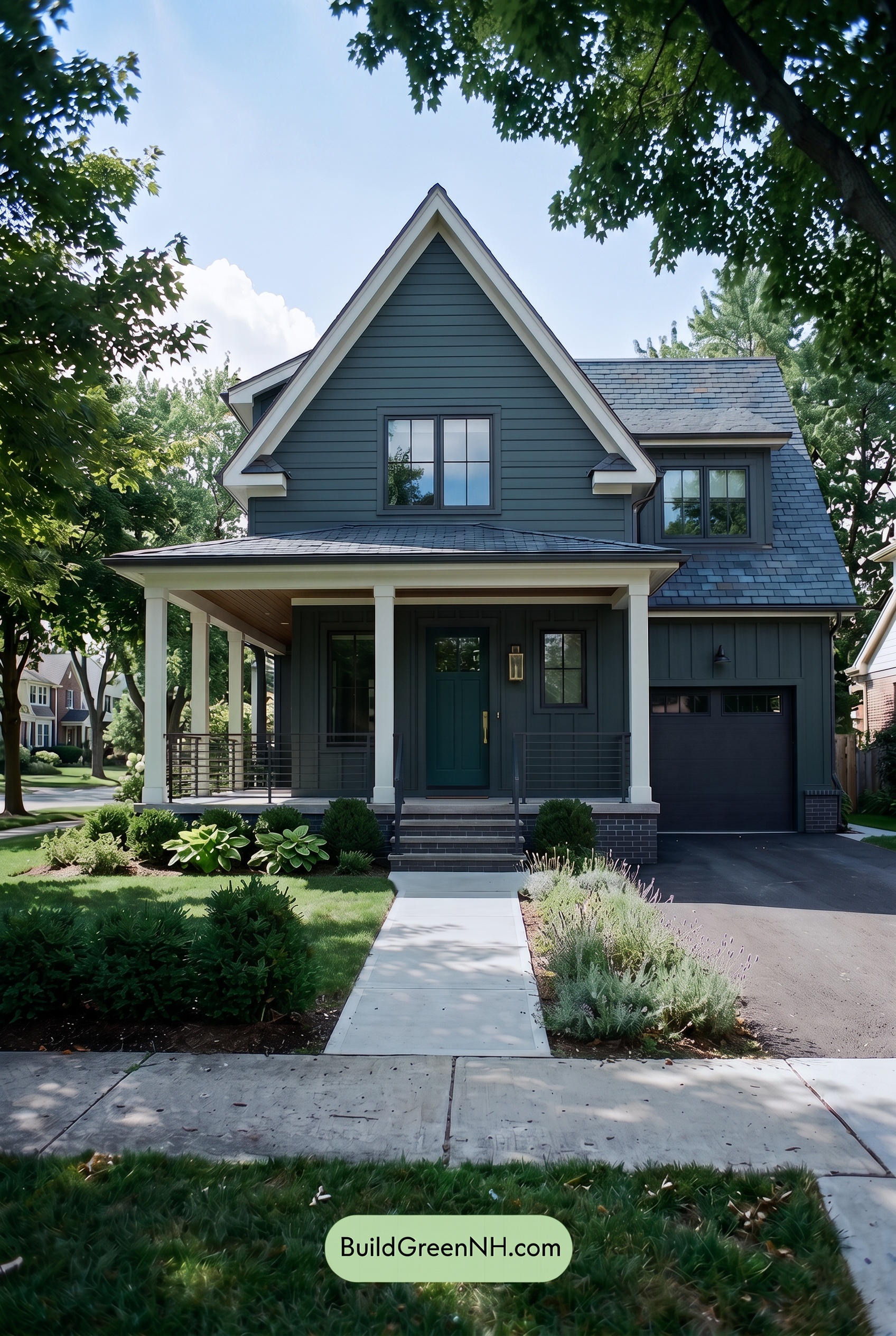
In shade, the blue exterior takes on a deeper, more muted character than it shows in neutral daylight, with its cooler undertones becoming more pronounced and its saturation appearing slightly softened. The darker blue at the entry reads richer and more dramatic, while the gray details settle into a quieter, cooler range that reinforces the home’s tailored look.
The white trim and columns lose some of their bright daylight crispness in the shadows, shifting toward a softer, more subdued neutral. That gentler contrast lets the shaded blue surfaces feel calm and enveloping, while the layered shadows along the porch, siding, and roofline add depth and give the façade a composed, inviting mood.
Nighttime
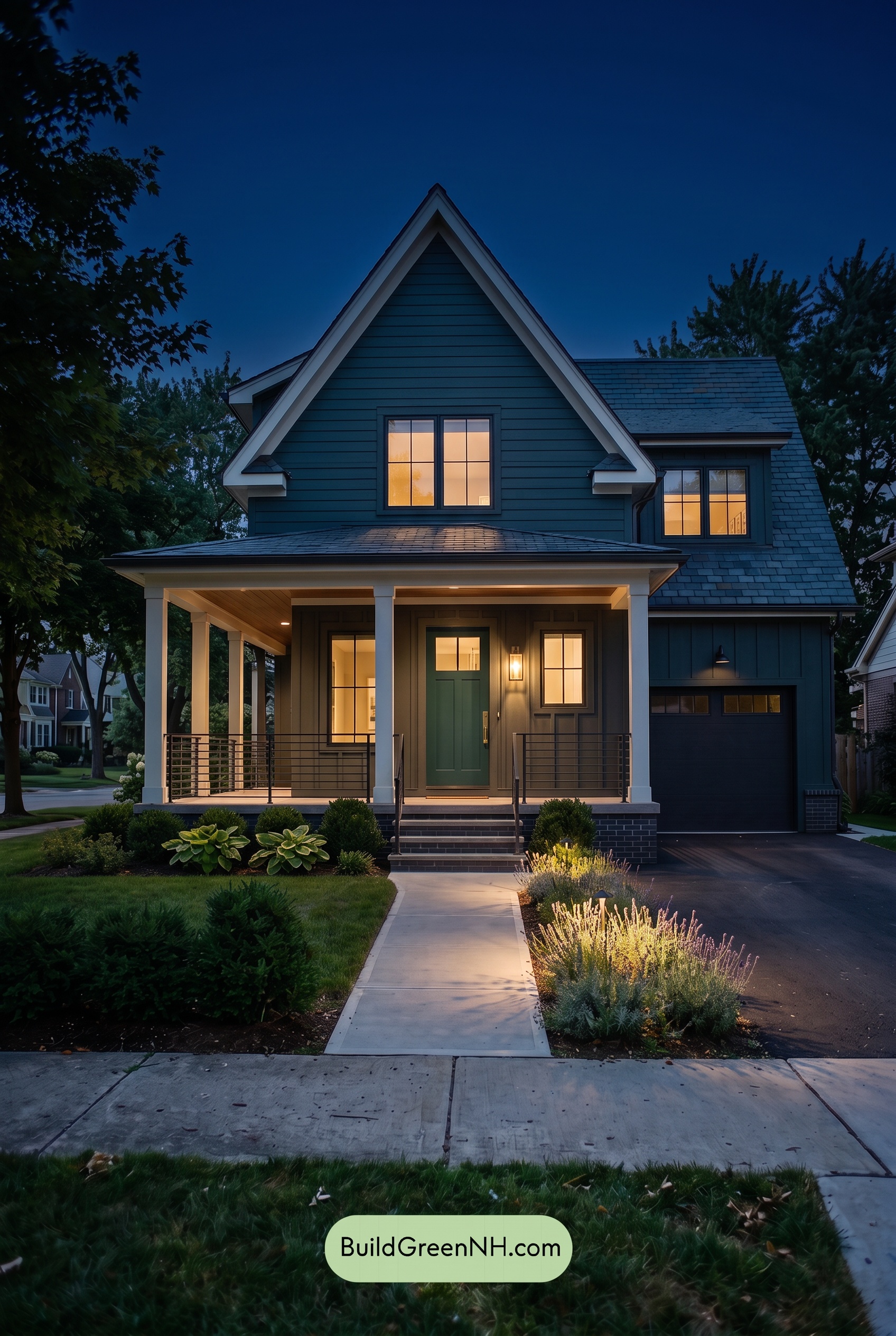
At night, the blue exterior deepens into a more dramatic, low-saturation shade, while the gray elements recede into cool shadow. Compared with neutral daylight, the white trim and columns appear softer and slightly warmer under the porch lighting, creating a crisp outline around the darker façade.
Warm interior and entry lighting heighten the contrast, making the blue front door feel richer and more inviting against the surrounding shadows. The result is a calm, polished mood: cool blue and gray shades give the home nighttime depth, while the warm glow adds comfort and an approachable focal point.
Pin these for later:
Want More?
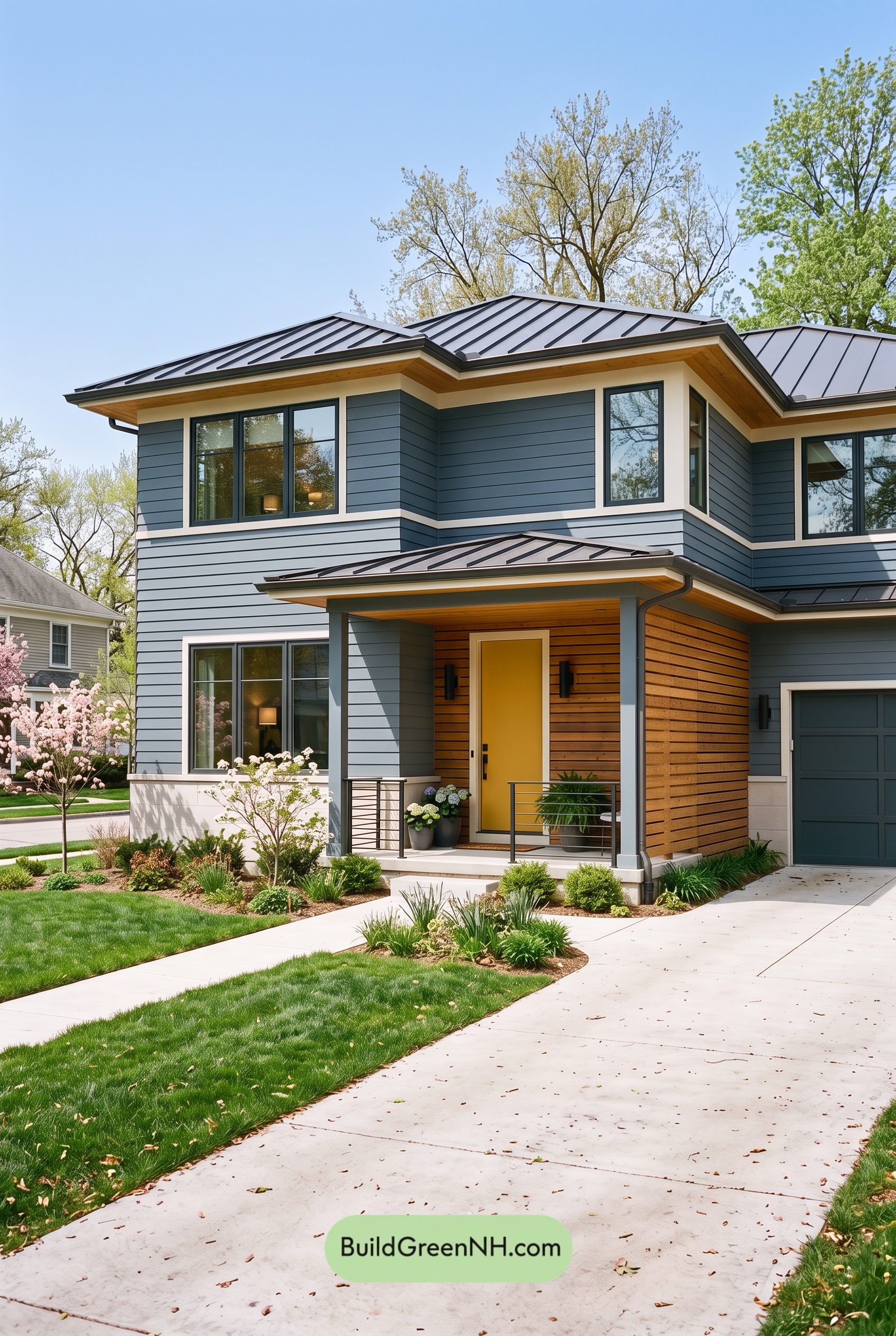 Blue House Front Door Color Scheme: Harbor Saffron
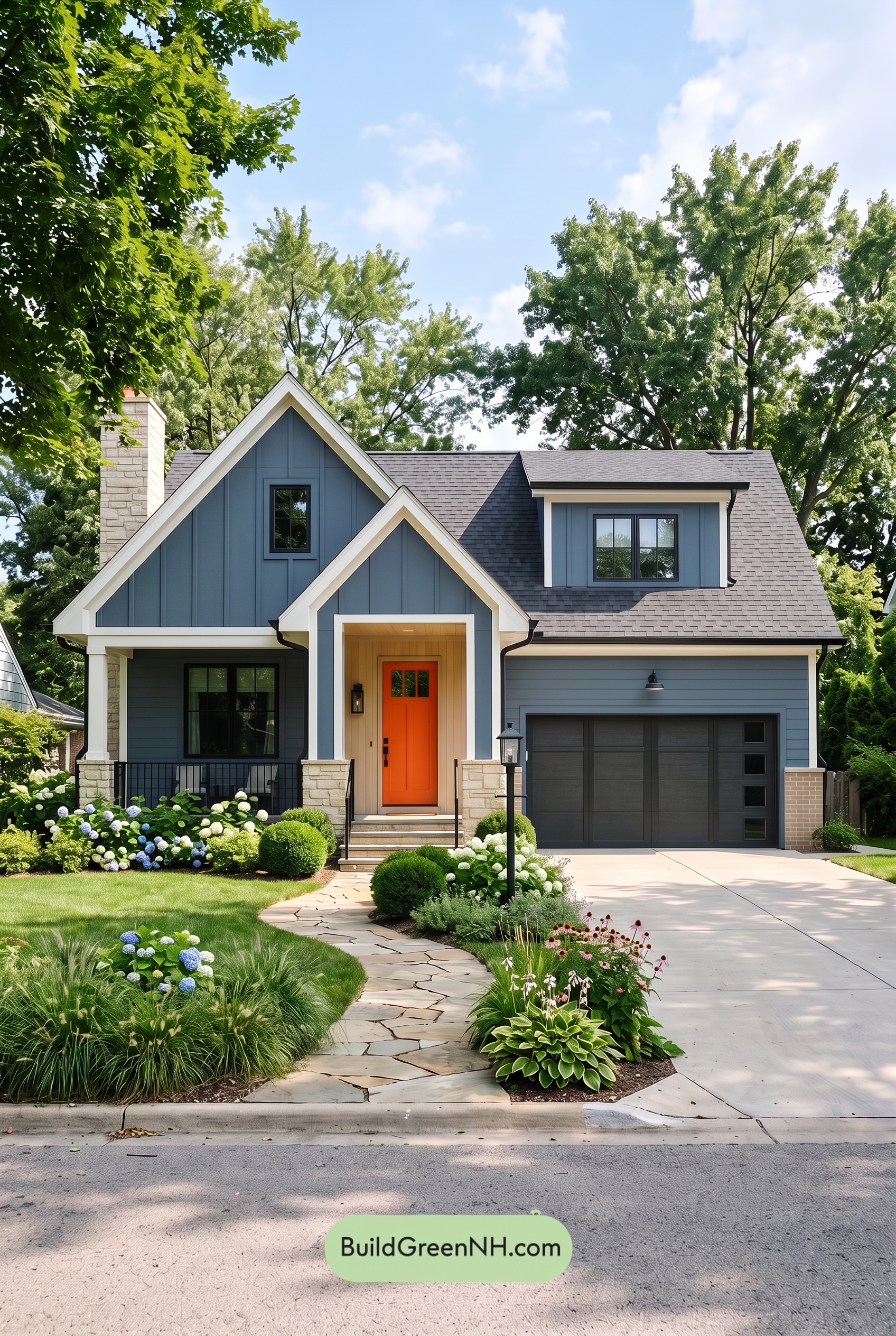 Blue House Front Door Color Scheme: Cobalt Persimmon
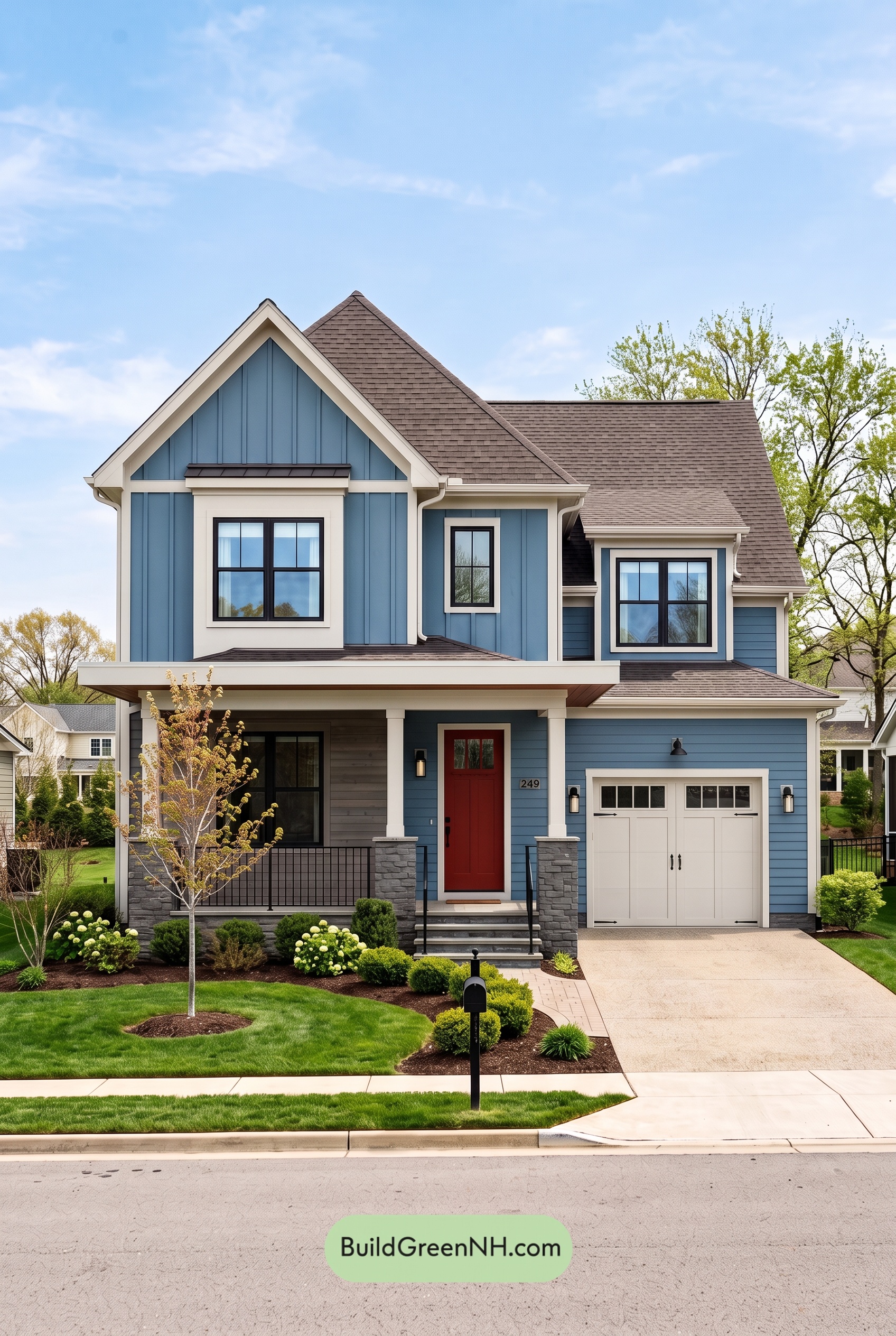 Blue House Front Door Color Scheme: Denim Poppy
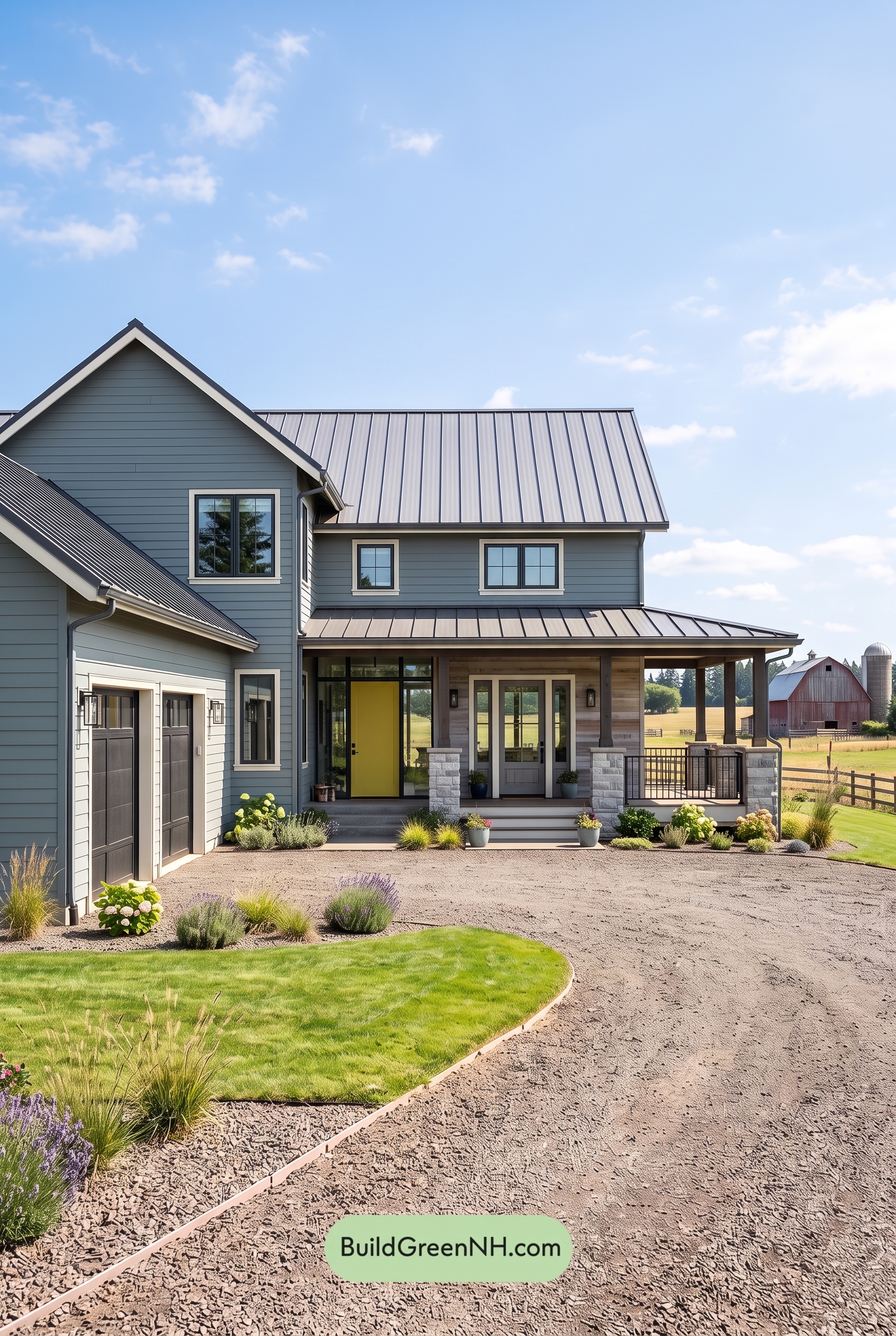 Blue House Front Door Color Scheme: Slate Citron
 Blue House Front Door Color Scheme: Mist Blue Haven
Table of Contents